
Showing 5 items matching "florence night"
-
 Returned Nurses RSL Sub-branch
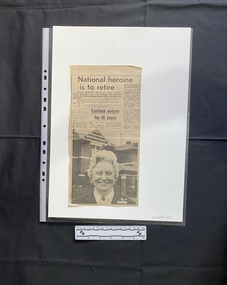
Newspaper - Newspaper clipping, National heroine is to retire, [1977]
... ...Florence Night...WW2 WWII World War Two Vivian St Vivian Statham Perth 13th AGH AIF Army Nurses Vyner Brooke Banka Strait Banka Straits Florence Night Florence Nightingale Medal A newspaper clipping consisting of titles, four columns of text and a black and white photo of a middle aged woman outside a building. ...Vivian Bullwinkel (Mrs Frank Statham), matron of Fairfield Hospital since 1961, is to retire after sixteen years. Born in Kapunda, South Australia, Vivian did her training at the Broken Hill District Hospital from 1934-39, moving on to a private hospital in Hamilton, the Jessie McPherson Hospital, Melbourne, after graduation. She served with the 13th Australian General Hospital, Australian Imperial Force, from 1941 in Singapore and Johore Bahru. Vivian was the sole survivor of the [Banka Island Massacre], followed by three years as a prisoner of war in Sumatra and Banka Island. After the war Vivian was the matron of Heidelberg General Hospital from 1956-60. In 1963 she became trustee for the National War Memorial, Canberra, and was appointed deputy principal commandant of the Australian Red Cross Society.A newspaper clipping consisting of titles, four columns of text and a black and white photo of a middle aged woman outside a building.ww2, wwii, world war two, vivian st, vivian statham, perth, 13th agh, aif, army nurses, vyner brooke, banka strait, banka straits, florence night, florence nightingale medal -
 Returned Nurses RSL Sub-branch
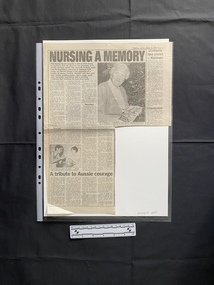
Newspaper - Newspaper clipping, Herald Sun, 'Nursing a memory' ' A tribute to Aussie courage', October 26 1991
... ...Florence Night...WW2 WWII World War Two Vivian Statham 13th AGH AIF Army Nurses Vyner Brooke Banka Strait Banka Straits Florence Night Florence Nightingale Medal Muntok Malacca Iole Harper Australian Army Nurses Wanganella Katong Perth Red Cross English Kingsley Heidelberg Repatriation Hospital Fairfield Hospital Wilma Oram 13th 13th Australian General Hospital Murtoa Warrnambool Allies Singapore Johore Baru Wilma Young Cardinia Jessie Simons In Japanese Hands - Australian Nurses as POWs Jessie Hookaway Tasmania British Singapore Harbour Banka Island Empire Star Prisoner of war Palembang Sumatra Malay Dutch Ex-Prisoners of War Association of Australia Sir Edward 'Weary' Dunlop Max Lee Glen Waverley Jenny Greer A large newspaper clipping consisting of two stories with titles and four columns of text each. ...Nursing a memory Several of the nurse survivors of the Banka Straits tragedy share their stories and personal recollections of the war. Some nurses wrote books, some talk about staying optimistic while being POWs, others say they've never stopped being stunned by the war years. Fifty years after the Banka Straits tragedy and the years the POWs spent in camps in Sumatra, the poignancy has not been dulled, and has been etched into the memories of the nurses who survived. Betty Jeffery, now in her 80's, says that despite the hardships she faced, it change her life for the better. When the ship, the Vyner Broooke, was bombes she was in the water for seventy hours. In the POW camps they slept on concrete floors and starved as food was allowed to rot just out of reach. The nurses that endured so much together have stayed in touch. Betty has also written a highly successful book, 'White Coolies', based on diaries of her experience. Of all the nurses Vivian Bullwinkel is the most celebrated, her story being one of ultimate survival. One of a group of about 100 survivors after the sinking of the Vyner Brooke, she and the others thought the Japanese wouldn't kill such a large number when they surrendered to them. The Australian soldiers were bayonetted, the nurses and civilians were lined up in the sea and shot. Vivian played dead. A tribute to Aussie courage A brief recounting of the sinking of the Vyner Brooke and the survivors' three and a half years as prisoners of war of the Japanese. Of the sixty-five who attempted to evacuate Singapore on the Vyner Brooke, twenty-four made it home to Australia. A memorial to the brave Australian nurses has been organised to ensure their contribution is remembered forever.A large newspaper clipping consisting of two stories with titles and four columns of text each. The larger story also has two black and white photos, on of an older woman holding a book, and the other of two young women leaning in toward each otherww2, wwii, world war two, vivian statham, 13th agh, aif, army nurses, vyner brooke, banka strait, banka straits, florence night, florence nightingale medal, muntok, malacca, iole harper, australian army nurses, wanganella, katong, perth, red cross, english, kingsley, heidelberg repatriation hospital, fairfield hospital, wilma oram, 13th, 13th australian general hospital, murtoa, warrnambool, allies, singapore, johore baru, wilma young, cardinia, jessie simons, in japanese hands - australian nurses as pows, jessie hookaway, tasmania, british, singapore harbour, banka island, empire star, prisoner of war, palembang, sumatra, malay, dutch, ex-prisoners of war association of australia, sir edward 'weary' dunlop, max lee, glen waverley, jenny greer -
 Eltham District Historical Society Inc
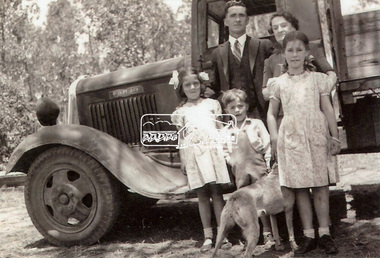
Photograph, Frank Stokes with his mother Florence (nee West) and children, Dorothy (left), David (centre) and Beryl (right), Stokes Orchard, Nyora Road, Eltham, c.1950, 1950c
... Florence was visiting from England at the time. Frank Stokes first traveled to the district by train in 1944 to find land with the intention to establish an orchard. By chance he met Arthur Bird of Bird Orchard (bounded by Pitt Street, Eucalyptus Road and Wattle Grove) and they got talking over their common interest. Arthur put Frank up for the night...Florence was visiting from England at the time. Frank Stokes first traveled to the district by train in 1944 to find land with the intention to establish an orchard. By chance he met Arthur Bird of Bird Orchard (bounded by Pitt Street, Eucalyptus Road and Wattle Grove) and they got talking over their common interest. Arthur put Frank up for the night ...Frank's mother Florence was visiting from England at the time. Frank Stokes first traveled to the district by train in 1944 to find land with the intention to establish an orchard. By chance he met Arthur Bird of Bird Orchard (bounded by Pitt Street, Eucalyptus Road and Wattle Grove) and they got talking over their common interest. Arthur put Frank up for the night and pointed out the land, part of Crown Allotment 15, Section 5, Parish of Nillumbik (CA15) somewhat diagonally opposite Bird Orchard. Frank bought the land and for the next two years would travel by train from Melbourne to Eltham every weekend establishing Stokes Orchard and building a home for his family, which they eventually moved into in 1946. In the mid 1970s the Shire of Eltham divided the orchard up into numerous rate-able parcel lots, which became affordable for Frank. As a consequence Stokes Orchard was turned into a housing development by Macquarie Builders and marketed as the Stokes Orchard Estate in two stages; Stage 1 encompassing Scarlet Ash Court, Ironbark Close and Peppermint Grove bounded by Nyora and Eucalyptus roads c.1976 and Stage 2 encompassing Stokes Place, Orchard Way, The Crest and The Lookout bound by Nyora and Diosma roads c.1979. The development of Orchard Way, The Crest and The Lookout did not proceed as planned due to the lack of the sewer along Diosma Road and so many of the proposed lots were incorporated into five-acre parcels instead.Representative of the orchard growing areas of ElthamDigital file only - Digitised by EDHS from a scrapbook (containing commercially printed photos of digital scans) on loan from Beryl Bradbury (nee Stokes), daughter of Frank Stokes.1950, beryl bradbury (nee stokes), beryl bradbury (nee stokes) collection, david stokes, dorothy stokes, eltham, flatbed truck, florence stokes (nee west), frank stokes, nyora road, stokes orchard -
 Royal District Nursing Service (now known as Bolton Clarke)
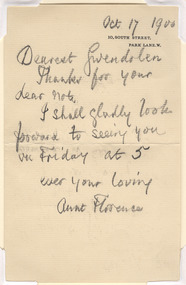
Photograph - Document/Letter, 1900
... Florence set a high standard of care with fresh air, hygiene, clean clothing, sufficient food and regular dressing of wounds being carried out. She realized the importance of psychological needs, and soldiers were assisted to write letters to relatives, and took part in education and recreational activities. Of a night ...A letter dated 8th May 1973 details how the letter from Florence Nightingale was forwarded to Mrs E.G. (Janet) Wilson in 1955 by Gwendolen, Florence Nightingale's niece. The explanatory letter was forwarded by Elsa Halenstein and given to Royal District Nursing Service and remains in its Archives. From 1948 Mrs. Wilson served on the Committee of Management of Melbourne District Nursing Society (later Service), serving as President from October 1964-1967. In 1949 Mrs. Hallenstein served on the MDNS Committee of Management, becoming President of the now Royal District Nursing Service from 1967-1974. Florence Nightingale was the founder of modern nursing. Melbourne District Nursing Society (MDNS) only employed Trained nurses from its inception in 1885. They followed Florence Nightingale's basic rules of good hygiene, cleanliness, good nutrition and fresh air, which they learned during their Nursing Training at a Hospital, and taught to their patients by instruction and demonstration. In those days Trained nurses were called 'Nurse'. In 1892 MDNS employed Lucy Smith who, through the Nightingale Fund, did her nursing training at the Nightingale Training School at St. Thomas's Hospital in London. She was the first nurse from this school to work at MDNS. Florence Nightingale, born on the 12th of May 1820, was named after the place of her birth in Italy. Born into a wealthy family she was schooled at home where she excelled in her studies; spoke several languages fluently, and was taught home management. She believed she was ‘called’ to reduce human suffering and tended to ill members of her family and tenants on the family estate. She worked as a nurse at Salisbury Infirmary where she learned about nursing sanitation and hospital practice. Florence then enrolled at the Institution of Protestant Deaconesses at Kaiserswerth, Germany where she learned basic nursing skills, the importance of patient observation, and hospital organization. In 1853 she became Superintendent of the Institution for Sick Gentlewomen in Distressed Circumstances in London, where she reformed health care, working conditions, and hospital efficiency. The Crimean War broke out in late 1853 and a newspaper reported the injured and sick soldiers were being cared for by an “incompetent and ineffective medical establishment and that most basic supplies were not available for care”. After an outcry from the public, Florence was asked to lead a group of 38 nurses, whom she had trained, to Scutari where the wounded soldiers were sent. After arriving at the Barrack Hospital in October 1854, she found the soldiers were being cared for in overcrowded and filthy conditions; contaminated water, faeces on the floors and rats running freely. There were few supplies and equipment. Florence bought supplies and equipment and found help to assist in the laundry. The wards were scrubbed from floor to ceiling. Florence set a high standard of care with fresh air, hygiene, clean clothing, sufficient food and regular dressing of wounds being carried out. She realized the importance of psychological needs, and soldiers were assisted to write letters to relatives, and took part in education and recreational activities. Of a night Florence walked through the wards, carrying a lamp to light her way, to check on ill and wounded soldiers and became known as “The Lady with the Lamp”. She gained the respect of the soldiers and the establishment, and later, the public through the soldier’s letters and reports in the newspaper. After visiting Crimea she contracted ‘Crimean Fever’ from which she never really recovered. When she returned to London she was regarded a heroine. The public had given freely to buy her a gift but Florence preferred this money be used to establish a fund, which became known as the Nightingale Fund. Florence had kept excellent records on the running of the Barrack Hospital, medical and nursing staff efficiency, and the causes of illness and death. Many nurses from the training school became Matrons in many countries throughout the world. Florence pushed the Government for legislation to improve drainage and sanitation in homes and in the building of hospitals with fresh air a priority. She wrote the book ‘Notes on Nursing’ and many writings on health reform. She died, aged 90 years, in her home at 10 South Street, Park Lane on the 13th of August 1910. A handwritten letter, written in lead pencil, by Florence Nightingale. It is written to her niece Gwendolen.. The letter is on buff coloured paper and has the date 'Oct 17 1900'/ written in the top right hand corner; below this is, in capital letters, the two line black printed address - '10, South Street,/ Park Lane, W'/ is stamped. The bulk of the letter reads over eight lines: "Dearest Gwendolen",/ "Thanks for your / dear note,/ I shall gladly look / forward to seeing you, / on Friday at 5 ,/ ever your loving, / Aunt Florence./ . rdns, royal district nursing service, miss florence nightingale, mrs e.g. (janet) wilson, mrs d. (elsa) hallenstein -
 Melbourne Legacy
Letter, Intermediate Legacy Club, 1975
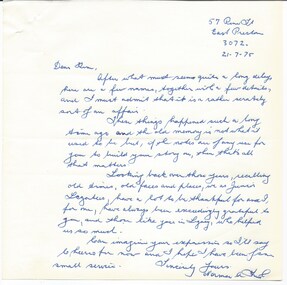
... Florence Pittard - which was the first marriage between junior legatees. He had been a naval cadet in the 1928 compulsory training and later joined the CMF where he was closely associated with L/ Stan Savige. He rose to rank of Major in AIF. Jack and Tom Kennedy, his brothers were in the Lacrosse team and his sister Molly in the JLC for years. G Billiet, a first nighter...Florence Pittard - which was the first marriage between junior legatees. He had been a naval cadet in the 1928 compulsory training and later joined the CMF where he was closely associated with L/ Stan Savige. He rose to rank of Major in AIF. Jack and Tom Kennedy, his brothers were in the Lacrosse team and his sister Molly in the JLC for years. G Billiet, a first nighter ...A letter written by Norm Smith and addressed to Kem Kemsley on 21 July 1975. It outlines recollections compiled by Norm Smith about the Intermediate Legacy Club (ILC) and individual members. His letter mentions 'Looking back over those years, recalling old time, old faces and places, we as Junior Legatees have a lot to be thankful for and I, for one, have always been exceedingly grateful to you, and those like you in legacy, who helped us so much.' Graham Billiet's letter dated 23 Mar 1974, mentions taking Frank Doolan to the reunion in 1974. Graham felt the ILC was winding down and was only running on half steam. He gives ILC members' addresses. Norm Smith's letter includes: Ted Kennedy, was the first president of the ILC, he was 'tall rangy lad with fiery red hair' who worked for United Distillers Ltd for 40 years (mostly in Brisbane where he joined Brisbane Legacy). Had been a keen junior legatee and taken part in Literary and Debating group and the Dramatic group where he met his future wife, Florence Pittard - which was the first marriage between junior legatees. He had been a naval cadet in the 1928 compulsory training and later joined the CMF where he was closely associated with L/ Stan Savige. He rose to rank of Major in AIF. Jack and Tom Kennedy, his brothers were in the Lacrosse team and his sister Molly in the JLC for years. G Billiet, a first nighter, very well known to legatees of the time. Bill Johnston, a studious type, went to MHS and university, became a Solicitor. Served in the RAAF as a Flight Lieut. Frank Corrie, prominent Junior Legatee in the Literary and Debating group, a fitter and turner by trade, was on JLC cricket and lacrosse teams, joined the AIF. Fred Hollingsworth, a motor mechanic, he joined CIG. He joined the AIF and served in the Middle East, and was one of the Rats of Tobruk as a sergeant. Bert Hollingsworth (brother of Fred) also in AIF and rank of Lieut. Is a past president of ILC. Bert Wood, a past president, worked for Victorian Railways, moved to Coolangatta. Dan Fitzgerald, active in the Drama group of JLC, worked as an announcer at the ABC. Alan Davidson, keen gymnast - particularly wrestling, helped with Alan Beattie (instructor of boys classes). Roy Davidson (brother of Alan) joined the AIF, afterwards joined M&MTB as a driver, married a Junior Legacy girl. Their younger brother Arthur was also in the lacrosse team. Roy Gilbert, keen junior legatee took part in Literary and Debating group and the Dramatic group and lacrosse team. Worked for Vacuum Oil Co., a past president of ILC and also married a Junior Legatee, Miss Lil Edmunds. Served in the AIF and was a Lieutenant in the Middle East. 'Jimmy' MacGregor, a colourful and handsome Junior Legatee, born in Collingwood, was one of L/ Stan Savige original contacts. Keen JLC gymnast and member of the football team. Worked at the Ret. Soldiers Woollen Mills in Geelong and was in the Geelong ILC. Frank 'Happy' Holliday, was in the lacrosse team, foundation member of ILC and past president. Served with the RAAF as an air frame fitter. Worked for L/ Con Fahle in the printing workshop for 40 years. Howard Auterey, joined the RAAF during the war and returned work for the State Saving bank before retiring in Warrnambool. Norman Smith, was working as an apprentice with M&MTB, took interest in Literary and Debating group and was in the lacrosse team. Was ILC president in 1946. Enliseted in the RAAF as airframe fitter. Retired from M&MTB after serving 50 years, married for 40 years to a daughter of an original Anzac who has also been an active member of the Ladies ILC for many years. Background: The ILC was formed in 1929. The idea of the club sprang from those boys who had outgrown the Junior Legacy Club. In the early days it fielded a lacrosse team and it was this that mainly held the members together (formed under guidance of L/ Jimmy Downing). Enthusiasm wained after a few years as it lacked a solid objective. The answer came from one of its members and in 1938 they founded the Don Esses Club. This was a club for the children of incapacitated ex-servicemen which met every Thursday night at 7.30 run by the ILC members. The name came from the signallers' code Disabled Servicemen's Sons. During the second world war 80% of the members of the ILC enlisted in the services. Leaving only 8 members that could not join due to ill health or reserved occupations. They continued the Don Esses and whatever aid they could to Legacy. ILC members had always helped Legacy where possible including being camp leaders or camp staff, with the annual demonstrations, and coffee stalls at the ANZAC dawn service. Post second world war some ILC members were nominated into Legacy, others drifted away in civil occupations. It was found difficult to recruit new blood into the ILC and eventually membership waned when the boys from the Don Esses clubs found other youth activities to join. The ILC ceased to meet regularly in the mid fifties. However a strong comradeship still existed between members and they would meet in one anothers homes. Members were always ready to help the senior Legacy Club in any way in their power and still helped at Christmas parties and summer camps. ILC was a service rendering organisation and was self governing. Non-sectarian and non-political, the members were ex-junior legatees over 18 years of age. After serving in World War 2 members were eligible to become members of Legacy. Was in a folder of material collated about the ILC by an early archive committee. A record of a Junior Legatee recording what he knew about ILC members and their life outside of Legacy in response to a request from L/ Kem Kemsley. It could have been part of the early archive committee working to capture Legacy history.White note paper x 18 pages handwritten by Norm Smith about the ILC members and a handwritten letter x 3 pages from Graham Billiet about ILC members with addresses.ilc, membership, junior legatee
