
Showing 44 items matching "fruit tins"
-
 Montmorency–Eltham RSL Sub Branch
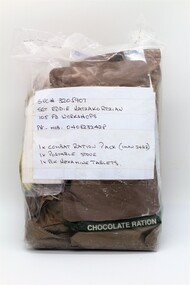
Functional object - Ration Pack (Large), February 2006
... ...fruit tins...Eg Tube of choc flavoured confectionery cream spread, tube of sweetened condensed milk, satchets of chocolate drink powder, packets of biscuit Krispie multipack, tins of fruit....ration pack fruit tins chocolate satchets Label reads SVC# 3205907 Sgt. ...Plastic bag containing multiple items. Eg Tube of choc flavoured confectionery cream spread, tube of sweetened condensed milk, satchets of chocolate drink powder, packets of biscuit Krispie multipack, tins of fruit.Label reads SVC# 3205907 Sgt. Eddie Hatzakortzian 105 DD Workshops Ph:- 0408232428 1 x Combat Ration Pack (1Man 24hr), 1 x Portable Stove, 1 X Pck Hexamine Tabletsration pack, fruit tins, chocolate satchets -
 Merbein District Historical Society
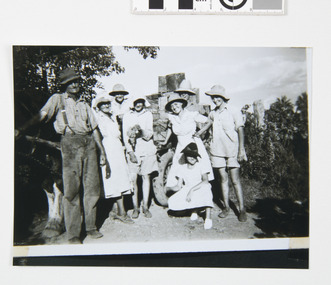
Photograph - Curtis Family Merbein West picking, Picking season Curtis family Merbein West
... dried fruit picking dip tins Merbein West horse-drawn grapes...dried fruit picking dip tins Merbein West horse-drawn grapes Curtis family L-R Harry Hilda Bill Marjory(holding grapes) May Fred Isobelle Alison(in front) Photographic reproduction in black and white Picking season Curtis family Merbein West Photograph Curtis Family Merbein West picking ...Photographic reproduction in black and whiteCurtis family L-R Harry Hilda Bill Marjory(holding grapes) May Fred Isobelle Alison(in front)dried fruit picking dip tins merbein west horse-drawn grapes -
 Clunes Museum
Artwork, other - LABEL
... USED ON TINS OF FRUIT SALAD....USED ON TINS OF FRUIT SALAD. local history commerce labels KOMET BRAND. ...USED ON TINS OF FRUIT SALAD.ADVERTISING LABEL "KOMET" TWO TONED BLUE LABEL. KOMET FRUIT SALAD.KOMET BRAND. PURE SELECTED AUSTRALIAN FRUIT.local history, commerce, labels -
 Emerald Museum & Nobelius Heritage Park
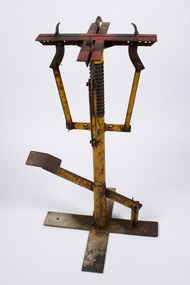
Tool - Hole Punch - Nursery Tool, c. 1940s-60s
... In the 1940s, the Nobelius nursery began to lift trees from the ground and sell them in pots rather than as bare-rooted plants; at this time, plastic was not yet widely available and many discarded biscuit or fruit tins were reused as pots. Potted trees required regular watering, and holes in the bottom of the pot for water to run out from; this hole punch may have facilitated an easier potting process until the popularisation of plastic pots in the 1960s....In the 1940s, the Nobelius nursery began to lift trees from the ground and sell them in pots rather than as bare-rooted plants; at this time, plastic was not yet widely available and many discarded biscuit or fruit tins were reused as pots. Potted trees required regular watering, and holes in the bottom of the pot for water to run out from; this hole punch may have facilitated an easier potting process until the popularisation of plastic pots in the 1960s. ...We have been unable to find a brand name or identify any identical items online or in other collections, indicating that this may be a custom-made tool designed specifically for use on a nursery - potentially C.A. Nobelius' nursery. It appears to be a foot-pedal operated hole punch, designed to reliably puncture metal pots for orchard trees. In the 1940s, the Nobelius nursery began to lift trees from the ground and sell them in pots rather than as bare-rooted plants; at this time, plastic was not yet widely available and many discarded biscuit or fruit tins were reused as pots. Potted trees required regular watering, and holes in the bottom of the pot for water to run out from; this hole punch may have facilitated an easier potting process until the popularisation of plastic pots in the 1960s.This item was a tool used in nursery practices in the 1940s, potentially including on the Nobelius nursery. Similar items are rare or difficult to find.This item rests on a cross base, with holes in each of the cross arms to allow it to be secured. The lower third of the central shaft is hollow, allowing for a foot pedal to descend through it. The middle third of the shaft is also hollow, with a loose central section affixed to the foot pedal moving up and down within it. In the upper third of the shaft, the hollow outer layer ends, and the mobile inner shaft is wrapped in a spring and affixed to the crossbar at the top of the item. Four small fixed crossbars also emerge from the sides of the middle third, attached to vertical rods through a rotating joint; the vertical rods attach with another rotating joint to pieces emerging through through the upper crossbar surface and ending with sharp points. The base and central shaft was painted yellow, and the upper crossbar head is painted red, though both are heavily faded. Together, these parts form a contraption that, when the foot pedal is pressed down, pulls the head downwards, in the process rotating the pointed pieces inwards to puncture the item placed on the head. When pressure is released, the spring returns the head to its initial position.N/Anursery, tools -
Tatura Irrigation & Wartime Camps Museum
Book, Kyela, 1973
... Colour photo of tin of fruit on back cover. Blue, red, yellow logo on front cover....History of Western Goulburn Valley Fruit industry. includes Cooper and Brewer genealogy kyabram preserving co books history local Beige cover, title in gold, colour sketch of paddlesteamer. Vol. 1 No. 5 1971-1973. Colour photo of tin ...Journal of Kyabram & District Historical Society 1971-1973. History of Western Goulburn Valley Fruit industry. includes Cooper and Brewer genealogyBeige cover, title in gold, colour sketch of paddlesteamer. Vol. 1 No. 5 1971-1973. Colour photo of tin of fruit on back cover. Blue, red, yellow logo on front cover.kyabram preserving co, books, history, local -
 Bendigo Military Museum
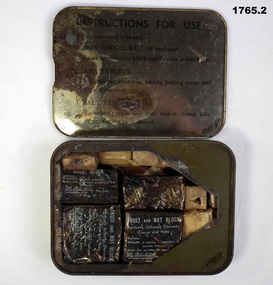
Accessory - RATION PACK, C.1939 - 45
... Emergency Ration pack issued to RAAF .1) Tin containing fruit and nut blocks, hot chocolate, salt tablets , tea tablets. .2) Lid for tin, inside is printed instructions for use. ...Refer Cat No 1760.4 Ration pack emergency RAAF accessory Emergency Ration pack issued to RAAF .1) Tin containing fruit and nut blocks, hot chocolate, salt tablets , tea tablets. .2) Lid for tin, inside is printed instructions for use. ...Item issued to Victor Henry Evans No 418655 RAAF. Refer Cat No 1760.4Emergency Ration pack issued to RAAF .1) Tin containing fruit and nut blocks, hot chocolate, salt tablets , tea tablets. .2) Lid for tin, inside is printed instructions for use. Remnants of sellotape on both items .1) and .2) Khaki colour.ration pack, emergency, raaf, accessory -
 Flagstaff Hill Maritime Museum and Village
Container - Biscuit Tin, Swallow and Ariell Pty Ltd, Mid-19th to mid-20th century
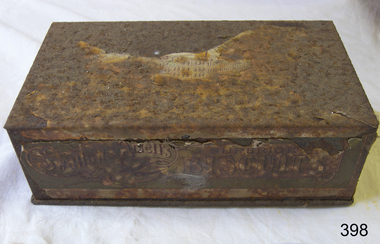
... fruit. Renowned for its patriotic fundraising campaigns during both world wars, it diverted most of its biscuits and plum puddings to the Australian and US services in World War II. Company employees were filmed leaving work in 1905 in the Salvation Army film unit's first sponsored industrial documentary film. The surviving opening sequences are held by ScreenSound Australia. The company was delisted on 5 August 1964 following acquisition of more than 95% of its capital by the Australian Biscuit Co. The factory was later registered by the National Trust and converted into units. https://www.emelbourne.net.au/biogs/EM01456b.htm This biscuit tin ...This tin was made in Melbourne and contained Swallows and Ariells biscuits. The label was written in four languages. The biscuits may have been made for export or perhaps for immigrants now living in Australia. Australia's first biscuit company was founded in 1854 by Thomas Swallow. Within five years he had taken in a partner, T.H. Ariell. After Ariell died in 1875, F.T. Derham was appointed partner and managing director in 1877, a position held by several generations of his descendants. By the early 1880s the Port Melbourne factory extended to 3 acres (1.2 ha), and the company owned flourmills and sugar plantations in the Goulburn Valley and Northern Queensland. With no equal outside Great Britain, Swallow & Ariell was the fifth largest biscuit company in the world, manufacturing over 100 varieties, including the common ship biscuit (an original product) and meat biscuits (apparently taken by Burke and Wills on their ill-fated expedition). The company also boasted popular sideline products, including cakes, plum puddings, ice-cream and dried fruit. Renowned for its patriotic fundraising campaigns during both world wars, it diverted most of its biscuits and plum puddings to the Australian and US services in World War II. Company employees were filmed leaving work in 1905 in the Salvation Army film unit's first sponsored industrial documentary film. The surviving opening sequences are held by ScreenSound Australia. The company was delisted on 5 August 1964 following acquisition of more than 95% of its capital by the Australian Biscuit Co. The factory was later registered by the National Trust and converted into units. https://www.emelbourne.net.au/biogs/EM01456b.htmThis biscuit tin is representative of local Melbourne and Victorian produce. The label was in four languages, perhaps for export or for local immigrants. The firm Swallow and Ariells Pty Ltd was a very early manufacture and was in business for over 100 years.Rectangular tin container with attached lid. Label advertises Swallow and Ariells biscuits. Made in Melbourne. The label is written in four languages. The trademark, a swallow, is on the tin. The tin is very badly corroded.'Swallow and Ariells Superior Melbourne Biscuits' Trademark: image [swallow]flagstaff hill, warrnambool, shipwrecked-coast, flagstaff-hill, flagstaff-hill-maritime-museum, maritime-museum, shipwreck-coast, flagstaff-hill-maritime-village, metal craft, tin ware, biscuit box, biscuit tin, food container, melbourne biscuit maker, swallow, thomas swallow, thomas ariell, ariell -
 Flagstaff Hill Maritime Museum and Village
Vehicle - Wagon, H.H. Smith & Co. Baker, Circa 1930s - 1940s
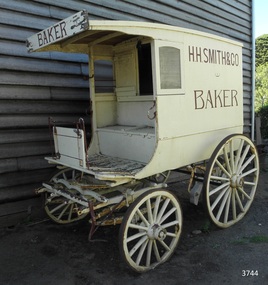
... Tin, Sandwich and Vienna. Some shapes were easily divided into half by breaking them apart, therefore the baker could make two-quarter loaves from a half loaf, satisfying different needs. There was the option of white or brown bread, sweet buns, fruit...Tin, Sandwich and Vienna. Some shapes were easily divided into half by breaking them apart, therefore the baker could make two-quarter loaves from a half loaf, satisfying different needs. There was the option of white or brown bread, sweet buns, fruit ...This baker’s wagon or cart transported and delivered bread and other baked goods in the Warrnambool area. It currently has advertising for H.H. Smith & Co. Henry Huntington Smith (1857-1941) owned and operated his Warrnambool bakery in the late 19th and early 20th century. However, the design of the wagon is similar to those used by local bakers in the 1930s and 1940s and probably originated from Stephenson’s Bakery in Warrnambool, which operated around that time. The wagon’s original internal shelves were removed in the early days of Flagstaff Hill so that children could have rides around the village in a horse-driven cart. BAKERS’ HISTORY There were many bakeries in Warrnambool in the 19th to mid-20th century. Each bread bakery made horse and cart deliveries in its allocated zone. SMITH’S BAKERY; – as shown on the wagon’s signage. Henry Huntington Smith (1857-1941) was born and educated in Warrnambool. He worked at Davis’ steam biscuit factory in Timor Street before he began his own bakery business in 1885 near the corner of Fairy and Koroit Streets. A few years later Smith built a new bakery on the corner of Fairy and Lava Street where it still stands today (2025) as Monaghan’s Pharmacy. The building was designed by James McLeod in 1892 as a bakehouse, shop and residence for Smith The address was known locally as Smith’s Corner. Next door to the bakery, at 136 Fairy Street, were stables built by Jobbins and McLeod in 1886 for William Cust. A photograph in the archives of the Warrnambool and District Historical Society shows the 1892 building with four fancy horse-drawn wagons on the street with white-clad drivers and a promotional stand erected with 5 bakers in uniform and the signage “H H Smith & Co, Pastry Cooks and Confectioners”. One of the wagons appears to have “H H Smith” painted on the side. H.H. Smith & Co. placed an Advertisement in the Weekly Times in December 1896 promoting its business as bakers, confectioners and pastry cooks, praising their shop as an ‘ornament to the town’ with ‘neat appointments’ and ‘dainty decorations’. It also boasted of supplying a large number of customers within a twelve-mile radius of Warrnambool. In November 1919 The Warrnambool Standard announced the marriage of Henry H Smith, Mayor of Warrnambool, to Jeannie Samson-Goodman in East Adelaide. In the same newspaper was a notice that Frank Crossley was to open as baker and pastry cook in H.H. Smith’s premises. As well as being the proprietor of the H.H. Smith Bakery, Henry Huntington Smith was a Councillor for the Warrnambool Municipality from 1913 to 1937 and Mayer for two terms. In December 1919 during his first term as Mayor, he was honoured for the work he had done with returning soldiers after World War I, receiving a document in recognition of this work, presented by the Mothers, Wives and Sisters of returned soldiers. Smith was very interested and involved in the community in many roles, including being the Vice President of the first Warrnambool and District Historical Society. STEPHENSON’S BAKERY: – believed to be the past owner of the wagon. The last owner of the bakery was Harold Stephenson. Stephenson was enlisted in the A.I.F. and was invalided home in 1943 before the end of the Second World War. He also served as a Councillor from 1958 to 1976, during which time he served six terms as Mayor for the City of Warrnambool (1966-1973) while he had the bakery. He was very involved in many local organisations including the Warrnambool Surf Life Saving Club and the Road Race Committee. He died in 1985, lauded as being one of Warrnambool’s “most distinguished civic leaders”. It has been said that the baker injured in World War II invented a special contraption to enable him to get up into the wagon and that he alerted his customers that he was in their vicinity by blowing a whistle. The customers would come out and choose their bread from the back of his wagon then pay him for it. However, another account is given by a man who once earned pocket money by helping the baker on his rounds. He says that it was Stephenson, the owner and manager of the bakery, and not the delivery baker who received a significant injury during the war, making him unable to climb the stairs of his upstairs accommodation at the bakery, therefore causing him to sleep downstairs. At this time in the early to late 1940 Stephenson’s bakery had three wagons, one for each of the delivery rounds. The wagons were painted black and yellow. Two of the drivers were Stan Lake and Ali (Alec) Dean who both had wagons with the covered cabin design. The third driver was Bill Lake who had a flat wagon. Stan Lake delivered in the area around Lava and Koroit Streets, Ali Dean had another round and Bill Lake had the Dennington area. Bread continued to be delivered into the 1960s but by this time the delivery vehicles were motorised. The goods produced at Stephenson’s bakery included bread baked in different shaped tins such as High Tin, Sandwich and Vienna. Some shapes were easily divided into half by breaking them apart, therefore the baker could make two-quarter loaves from a half loaf, satisfying different needs. There was the option of white or brown bread, sweet buns, fruit buns and Boston buns. The baker’s assistant was known to take great delight in ‘trimming’ the broken halves of excess bread and crust, enjoying his treat. THE BAKERY PREMISES: – Southeast corner of Fairy and Lava Streets, Warrnambool. The building retains the original cast iron veranda. Above the veranda, a motif of a wheat sheaf in ornamental plaster can be seen. Inside the building, there are still some of the original fittings. The building was classified by the National Trust in August 1979. After the Second World War, an official system of zoning was introduced as a fair way for the baking industry to operate. In 1949 different pricing was introduced by the Government for either delivered or retail purchased bread. Many of the small local bakeries went out of business after the Government banned zoning. The way was made open for the larger bread manufacturers to enter the local market with cheaper prices. Some of those companies were Mc Queens, Tip Top, Twisties, and Sunicrust, (Mc Queens ‘new’ bakery building was where the current Toyworld shop now stands, is, in the Ozone carpark.) O’Grady’s Bakery, later changing hands and known as Burkes Bakery, was on Fairy Street near the Timor Street intersection, on the North West side. There was also a bakery named Almay. The baker’s wagon is significant because of its association with H.H. Smith’s Bakery in Warrnambool.. The H.H. Smith’s Bakery building on the corner of Fairy and Lava Streets, built in 1892, is classified by the National Trust, August 1979. Smith Street Warrnambool was named after Henry Huntington Smith, who was a Warrnambool Councillor 1913 – 1937 and Mayor 1919 – 1921. Baker’s wagon, often referred to as a baker’s cart. Four wheeled horse-drawn delivery wagon, front wheels smaller than rear wheels. Wagon is clad with metal sheets and lined with varnished timber panels. Wheels have metal rims, wooden spokes and rear wheels have wooden brake pads. Horse shaft is timber with metal fittings. Front has a metal lamp holder, brake lever, metal hand grips and decorative metal foot plates. The wagon has suspension leaves on back and sides and double suspension leaves on the front. Driver’s area at front has a roof, glass side windows and wooden box seat with hinged compartment accessing wagon storage area. Door above back of seat has buckled leather handgrip strap attached, door slides open for access to wagon area. Back of wagon has a wooden step and a split door; top door has ventilation louvers, both doors have metal latches. Wagon is painted cream with brown trim and signage and green step. Remnants of red and green paint are visible; underside of seat panel is painted grey. Wagon advertises H.H. Smith & Co. Baker, a Warrnambool business established in 1885, but is of a more modern design seen around 1930’s and 1940’s and most likely belonging to Stephenson's bakery. Brown signwriting on sides of wagon “H.R. SMITH & CO. / BAKER” Brown signwriting across front of wagon “BAKER” warrnambool, shipwrecked-coast, flagstaff-hill, flagstaff-hill-maritime-museum, maritime-museum, shipwreck-coast, flagstaff-hill-maritime-village, shipwrecked-artefact, great ocean road, baker’s wagon, h.h. smith baker, warrnambool, henry h smith, jeannie samson-goodman, frank crossley, mayor of city of warrnambool, vice president of warrnambool and district historical society, stephenson’s bakery warrnambool, harold stephenson, warrnambool surf life saving club, road race committee, national trust building, stan lake, bill lake, ali dean, 19th and 20th century bakers, davies steam biscuit factory warrnambool, james mcleod building designer, jobbins and mcleod, william cust, h h smith & co, pastry cooks and confectioners, bakery trade, bread delivery wagon -
 Orbost & District Historical Society
preserving jar, 1915 - 1975
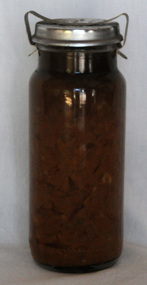
... fruit and vegetables with earlier market gardeners They preserved their produce for use all year. Fowlers Vacola preserving kits were common in most kitchens. food-preservation Fowlers-Vacola container-glass On lid Fowlers Vacola Size 3 Top of jar- embossed with the words Fowlers Vacola A brown glass Fowler's Vacola preserving jar filled with pickles. It is a No. 27 bottle with a size 3 metal clip. It has an 850ml capacity. The lid has metal tension clips which are secured during the canning process and are removed once a vacuum seal has formed. The lid is tin ...This preserving jar was used in the first half of the 20th century to preserve cooked food - pickles. Preserving home produce in bottles is a method that applies heat to food in a closed glass home canning jar to stop the natural spoilage that would otherwise take place. It removes air from the jar to create a seal. he bottling process forms an air tight seal between the bottle and the lid. Residents of Orbost have long been self sufficient growing their own fruit and vegetables with earlier market gardeners They preserved their produce for use all year. Fowlers Vacola preserving kits were common in most kitchens.A brown glass Fowler's Vacola preserving jar filled with pickles. It is a No. 27 bottle with a size 3 metal clip. It has an 850ml capacity. The lid has metal tension clips which are secured during the canning process and are removed once a vacuum seal has formed. The lid is tin-plated with a lacquer coating, double-coated on the underside.On lid Fowlers Vacola Size 3 Top of jar- embossed with the words Fowlers Vacola food-preservation fowlers-vacola container-glass -
Mission to Seafarers Victoria
Letter - Correspondence, 14/06/1951
... Alette is writing to thank Mrs Hayes for a parcel of tinned foods and dried fruit that Allan asked his mother to send. ...Alette is writing to thank Mrs Hayes for a parcel of tinned foods and dried fruit that Allan asked his mother to send. ...Alette is writing to thank Mrs Hayes for a parcel of tinned foods and dried fruit that Allan asked his mother to send. She writes "... we have not not very much fruit in Norway at this time of the year."Quinn CollectionA self-folding letter written in green ink (0874.a) headed Oslo and dated 14/06/51. It is from Alette Andersen to Mrs K Hayes, 14 Fitzroy Street, St Kilda, Victoria, Australia. The return address is C/- Fru Strom, Neuberg gt. GB.,Oslo, Norway. letters-from-abroad, allan quinn, norway, oslo, alette andersen -
 Montmorency–Eltham RSL Sub Branch
Equipment - Ration Pack Emergency, WWII
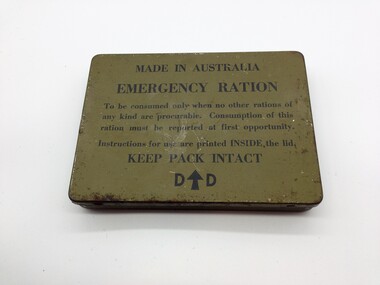
... FRUIT RATION & MILK TABLETS: MEAT & VEG. RATION: WWII emergency ration pack used by Australian Armed Forces. Small rectangular shaped khaki green painted tin plate metal container with lid. ...WWII emergency ration pack used by Australian Armed Forces.WWII emergency ration pack used by Australian Armed ForcesWWII emergency ration pack used by Australian Armed Forces. Small rectangular shaped khaki green painted tin plate metal container with lid. Black ink printed usage instructions on the front and rear of the lid. Department of Defence logo printed on front cover.On front of the lid. MADE IN AUSTRALIA EMERGENCY RATION To be consumed only when no other rations of any kind are procurable. Consumption of this fation must be reported at first oppurtunity. Instructions for use are printed INSIDE the lid. KEEP PACK INTACT D(up arrow)D On rear of the lid INSTRUCTIONS FOR USE FRUIT RATION & MILK TABLETS: MEAT & VEG. RATION: ration pack, emergency, wwii, australian armed forces -
 Red Cliffs Military Museum
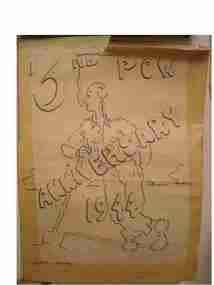
Menu, POW Dinner Menu 1944, 1944 (exact)
... Peach Melba Fruit Salad and Cream/ Carlton Puding, Apple pie and Cream/ Ice Cream/ Coffee.// Page 2: Menu/ Horses Manoeures/ Etwas./ Yeatecomme,Tinned Tomato Bully./ Tons of it./ Salmon Red. ...Peach Melba Fruit Salad and Cream/ Carlton Puding, Apple pie and Cream/ Ice Cream/ Coffee.// Page 2: Menu/ Horses Manoeures/ Etwas./ Yeatecomme,Tinned Tomato Bully./ Tons of it./ Salmon Red. ...Forms part of the A.J. (Blue) Roddy VX8007 Collection2 sheets of card used to make a menu, hand sketched xartoon on front in grey lead and ink of soldier leaning on a shovel. Inside is two menus. One is the ideal menu the second is the real menu, (Very Humerous) all hand written in ink. Brought home from POW camp by A.J. (Blue) Roddy VX8007Front page: 3rd POW/ Anniversary/ 1944/ Bottom Left corner: Notsch 10811/GW Page 1: MENU/ Hors-d'oeuores/Soup./ Consomme Minestrone Tomato Bouillon/ Fish/ Whiting Dover Soles Oysters./ Emtree/ Roast beef and Yorkshire Pudding/ Roast Pork and White sauce./ Grilled chops and peas./ Dessert. Peach Melba Fruit Salad and Cream/ Carlton Puding, Apple pie and Cream/ Ice Cream/ Coffee.// Page 2: Menu/ Horses Manoeures/ Etwas./ Yeatecomme,Tinned Tomato Bully./ Tons of it./ Salmon Red. Salmon Pink. Sardines Varied./ Enter./ Roast Bully and "Bengers" Yorkshire Pudding./ Roast Meat Roll and Horse radish sauce/ Garlic sausage Grilled spick and Etwas./ Desserted./ Rice Custard, custard,/ Fruit salad and klim, Notsch duff./ Currant Pudding and custard./ Cold klim./ Coffee - if lucky tea./ Captivity Plonk./ K.G.H. Schnapps, Soft Drinks/ Beer cocktails.of, world, war, prisoner, roddy, a j blue, menu, war11, notsch, 1944, stalag, xv111a -
 Halls Gap & Grampians Historical Society
Magazine - B/W, C 1915
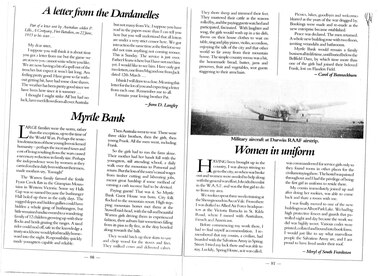
... With laughter and song, the girls would wash up in a tin dish, throw on their house clothes to wait on table, sing and play piano, violin, accordion, enjoying the talk of the city and that other world so far away from their mountain home. The simple country menu was a hit, and the homemade bread, butter, jams and preserves, fruit...With laughter and song, the girls would wash up in a tin dish, throw on their house clothes to wait on table, sing and play piano, violin, accordion, enjoying the talk of the city and that other world so far away from their mountain home. The simple country menu was a hit, and the homemade bread, butter, jams and preserves, fruit ...Large families were the norm, rather than the exception up to the time of the World wars. perhaps the senseless destruction of those young lives sickened humanity- perhaps the increased taxes and cost of living resulting from the wars caused a necessary reduction in family size. Perhaps the independence won by women as they carried on their daily lives without their men, made mothers say, "Enough" The Warren family farmed the fertile Fyans Creek flats in the Grampian Mountains of Western Victoria. Some say Halls Gap was so named because the bushranger Hall holed up there in the early days. The rugged slopes and hidden gullies could have hidden a whole gang of bushrangers, but little remained undiscovered to a wandering family of 12 children growing up with their flocks and herds grazing the ranges. A tired rider could nod off, safe in the knowledge a trusty stockhorse would plod steadily homeward into the night. Responsibility quickly made youngsters capable and reliable. Then Australia went to war. There were three older brothers, then the girls, then young Frank. All the men went, including Frank. So the girls had to run the farm alone. Their mother had her hands full with the youngsters, still attending school, a daily walk over the mountain to Pomonal and return. But the loss of the men's casual wages from timber cutting and labouring jobs, meant great hardship is some method of earning a cash income had to be devised. Paying guests! That was it. So Myrtle Bank Guest House was born. City folk flocked to the mountain resort. High stepping mountain horses met them at the Stawell raid-head, with the tall and beautiful Warren girls driving them in experienced fashion, their auburn hair sometimes falling from its pins to fly free, as the dray bowled along towards the hills. The would hitch up their skirts to saw and chop wood for the stoves and fires. They milked cows and delivered calves. They shore sheep and trimmed their feet. They mustered their cattle as the seasons rolled by, and the paying guests watched and participated, fascinated. With laughter and song, the girls would wash up in a tin dish, throw on their house clothes to wait on table, sing and play piano, violin, accordion, enjoying the talk of the city and that other world so far away from their mountain home. The simple country menu was a hit, and the homemade bread, butter, jams and preserves, fruit and vegetables sent guests staggering to their armchairs. Picnics, hikes, goodbyes and welcomes blurred as the years of the war dragged by. Bookings were made and remade as the new enterprise became established. Peace was declared. the men returned A whole new building rose with two floors, inviting verandahs and bathrooms. Myrtle Bank would remain a family business all its lifetime, until buried below the Bellfield Dam, by which time more than one the girls had joined their beloved Frank, lost on Flanders Field. Article in book or magazine describing life at Myrtlebank during war years Other article written from letter from soldier P Lillis to his sister 3rd article of woman from country enlisting in WAAF Submitted by Carol of Bannockburn, Submitted by D Langley Submitted by Meryl of South Frankstonaccommodation, myrtlebank, people, warren -
 Bendigo Military Museum
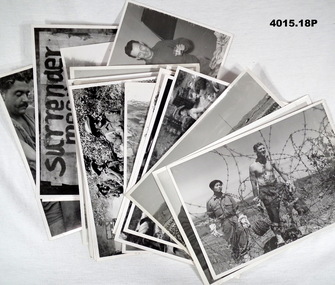
Photograph - MILITARY PHOTOGRAPHS, 1950 - 1956
... (.7) Group of men lining up receiving rations. (.8) Three soldiers sitting each with a tin of Golden Circle fruit or juice. (.9) Group of Officers lined up behind sand bags... (.7) Group of men lining up receiving rations. (.8) Three soldiers sitting each with a tin of Golden Circle fruit or juice. (.9) Group of Officers lined up behind sand bags ...All photos relate to the collection of Francis William (Dinky) DEAN BEM, VX93960 2nd AIF, 3742 1 RAR, 1943 - 1975. Refer Cat No 124.2 for his service history. The photos are believed to be taken during 1 RAR’s 2nd tour of Korea 1954 - 56. BCFK (British Commonwealth Foce Korea)All photos are B & W. (.1) Two soldiers beside a sign holding a bottle of beer. (.2) Shows a hand painted sign on a timber boards. (.3) Same sign on a single board. (.4) An Australian and Korean soldier laying barb wire. (.5) two soldiers in winter clothes holding a box of rations. (.6) Large parade of Australian soldiers with a camp and buildings in the back ground. (.7) Group of men lining up receiving rations. (.8) Three soldiers sitting each with a tin of Golden Circle fruit or juice. (.9) Group of Officers lined up behind sand bags. (.10) Group of soldiers lined up on the ground with explosions in front of them. (.11) Australian soldier in a trench with radio equipment gear on. (.12) Five Australian soldiers on a road with a Jeep in the rear. (.13) Five soldiers silhouetted against a bush back ground. (.14) Australian soldiers in open ground firing mortars. (.15) Nine soldiers in the back of a truck, Frank Dean on the left in front. (.16) two soldiers, one being supported by the other. (.17) Three soldiers, one in white apron cutting up bread. (.18) Soldier in a trench wearing a steel helmet.All photos have on the rear stamped in purple; “Photo No, please credit to Public relations HQ BCFK” military, british common wealth force korea -
 Bendigo Military Museum
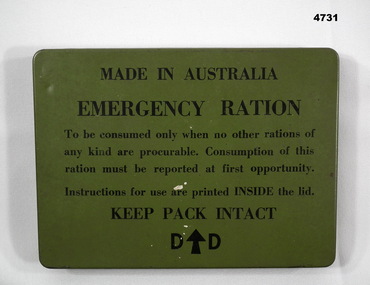
Container - EMERGENCY RATION, Department of Defence
... The Insructions for use contain items, “Fruit ration & milk tablets to be eaten as is, the meat & veg ration can be eaten either of 3 ways, as is, add 3 times its bulk of water or moisten and fry as a rissoles” Emergency ration containers On lid,” Made in Australia, Emergency Ration, keep pack intact, D (arrow up) D” Tin, green colour, rectangular shape, lid has print in black on the front, inside has “Instructions for use” on the lid, the container has no print or other on. ...The Insructions for use contain items, “Fruit ration & milk tablets to be eaten as is, the meat & veg ration can be eaten either of 3 ways, as is, add 3 times its bulk of water or moisten and fry as a rissoles”Tin, green colour, rectangular shape, lid has print in black on the front, inside has “Instructions for use” on the lid, the container has no print or other on.On lid,” Made in Australia, Emergency Ration, keep pack intact, D (arrow up) D”emergency ration, containers -
 Bendigo Historical Society Inc.
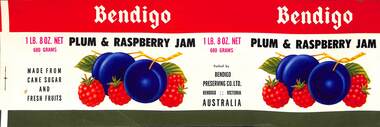
Ephemera - JAM AND TINNED FRUIT LABELS: BENDIGO PRESERVING CO. LTD
... Ephemera JAM AND TINNED FRUIT LABELS: BENDIGO PRESERVING CO. LTD ...Bendigo Preserving Company was a major fruit and jam manufacturer that operated in Garsed Street, Bendigo from 1921 until the 1970s. It was a big local employer and sold products under the labels such as 'Digger', 'Golden Bells' and 'Golden Bar'.a Label from container of Plum & Raspberry Jam made by Bendigo Preserving Co. Ltd. b Label from container of Apricot Jam made by Bendigo Preserving Co. Ltd. c Label from tinned pears made by Bendigo Preserving Co. Ltd. d Label from container of Plum Jam made by Bendigo Preserving Co. Ltd.a 'PLUM & RASPBERRY JAM' 'MADE FROM CANE SUGAR AND FRESH FRUITS' '1LB. 8 0Z. NET, 680 GRAMS' 'Packed by BENDIGO PRESERVING CO. LTD., BENDIGO, VICTORIA, AUSTRALIA'. b 'APRICOT JAM' 'MADE FROM CANE SUGAR AND FRESH FRUITS' '1LB. 8 OZ., 680 GRAMS' 'Packed by BENDIGO PRESRVING CO. LTD., BENDIGO, VICTORIA, AUSTRALIA'. c 'BARTLETT PEARS HALVES IN HEAVY SYRUP' '1 LB. NET' 'PRODUCT OF AUSTRALIA, BENDIGO PRESERVING CO. LTD., BENDIGO, AUSTRALIA'. d 'GOLDEN BAR JAM ORLEAN PLUM JAM' 'CONTENTS NOT LESS THAN 1LB. 8 OZS. NET' 'MADE FROM FRUIT AND CANE SUGAR' 'THE BENDIGO PRESERVING CO. LTD., BENDIGO, VICTORIA, AUSTRALIA'. business, retail, jam, tinned fruit, bendigo preserving co. ltd. -
 Bendigo Historical Society Inc.
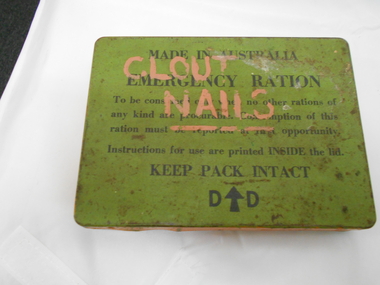
Tool - PITTOCK COLLECTION: AUSTRALIAN EMERGENCY RATIONS TIN, MARKED CLOUT NAILS
... Pittock tools collection: Australian Emergency Rations tin, marked Clout Nails, though tin is empty. Instructions for use of the emergency fruit ration and milk tablets, and meat & veg ration, are noted on the internal lid of the tin. ...Pittock tools collection: Australian Emergency Rations tin, marked Clout Nails, though tin is empty. Instructions for use of the emergency fruit ration and milk tablets, and meat & veg ration, are noted on the internal lid of the tin. ...Pittock tools collection: Australian Emergency Rations tin, marked Clout Nails, though tin is empty. Instructions for use of the emergency fruit ration and milk tablets, and meat & veg ration, are noted on the internal lid of the tin. Item stored in Pittock Coach Builder's Box, reference 13000.1. -
 Bendigo Historical Society Inc.
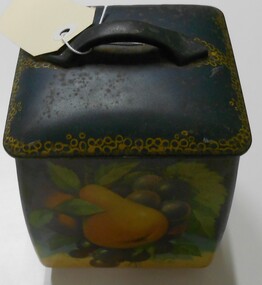
Container - TEA TIN
... Tea tin, no markings, paintings of fruit on green and lemon background on four sides. ...DOMESTIC EQUIPMENT Containers tea tin Tea tin, no markings, paintings of fruit on green and lemon background on four sides. ...Tea tin, no markings, paintings of fruit on green and lemon background on four sides. Lid is green with gold trim on edges.domestic equipment, containers, tea tin -
 Bendigo Historical Society Inc.
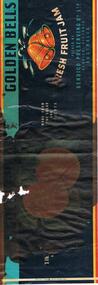
Ephemera - NORM GILLIES COLLECTION: BENDIGO PRESERVING CO. LABEL
... Golden Bells Jam Label - Apricot Jam - packed by Bendigo Preserving Company Fresh Fruit Jam - made from cane sugar and apricots 1 lb. 8 oz. tin damaged label highly water marked...Norm Gillies Bendigo Businesses Bendigo Preserving Company The speciality Press Limited Golden Bells Jam Label - Apricot Jam - packed by Bendigo Preserving Company Fresh Fruit Jam - made from cane sugar and apricots 1 lb. 8 oz. tin damaged label highly water marked Ephemera NORM GILLIES COLLECTION: BENDIGO PRESERVING CO. ...Golden Bells Jam Label - Apricot Jam - packed by Bendigo Preserving Company Fresh Fruit Jam - made from cane sugar and apricots 1 lb. 8 oz. tin damaged label highly water markedThe speciality Press Limitednorm gillies, bendigo businesses, bendigo preserving company -
Coal Creek Community Park & Museum
Tin, jam
... Tall cylindrical tin with pictures of a peacock and fruit on sides, coloured green, yellow, red, blue, brown, orange and grey....Tall cylindrical tin with pictures of a peacock and fruit on sides, coloured green, yellow, red, blue, brown, orange and grey. ...Tall cylindrical tin with pictures of a peacock and fruit on sides, coloured green, yellow, red, blue, brown, orange and grey.Peacock's Tasmanian Jam, 1 lb. net. Angela Burdette plum. -
Coal Creek Community Park & Museum
Tin, jam
... Cylindrical tin, sealed at both ends, with label depicting fruit in orange, light blue and dark blue around sides....Cylindrical tin, sealed at both ends, with label depicting fruit in orange, light blue and dark blue around sides. ...Cylindrical tin, sealed at both ends, with label depicting fruit in orange, light blue and dark blue around sides.Golden Bar Jam Grapefruit Marmalade from the Golden City of Bendigo. -
Coal Creek Community Park & Museum
Tin, jam
... Cylindrical tin, sealed at both ends, with label depicting fruit in orange, light blue and dark blue around sides. ...Cylindrical tin, sealed at both ends, with label depicting fruit in orange, light blue and dark blue around sides. ...Cylindrical tin, sealed at both ends, with label depicting fruit in orange, light blue and dark blue around sides. Golden Bar Jam Light Plum Jam from the Golden City of Bendigo. -
Coal Creek Community Park & Museum
Tin, jam
... Black Horse brand Jams and Canned Fruit Cylindrical tin with label around sides depicting peaches in red, black, apricot and yellow and a black horse. ...Cylindrical tin with label around sides depicting peaches in red, black, apricot and yellow and a black horse.Black Horse brand Jams and Canned Fruit -
Coal Creek Community Park & Museum
Tin, jelly crystals
... Cylindrical shaped tin with push on lid, label depicting fruit with text in red, yellow, green and dark blue colours....Cylindrical shaped tin with push on lid, label depicting fruit with text in red, yellow, green and dark blue colours. ...Cylindrical shaped tin with push on lid, label depicting fruit with text in red, yellow, green and dark blue colours.Pioneer Jelly Crystals. Lemon. -
Coal Creek Community Park & Museum
Tin, food, MacRobertsons
... Flat rectangular tin with hinged lid, base colour dark blue, covered all over with gold hatching pattern, picture of fruit and text on top....Flat rectangular tin with hinged lid, base colour dark blue, covered all over with gold hatching pattern, picture of fruit and text on top. ...Flat rectangular tin with hinged lid, base colour dark blue, covered all over with gold hatching pattern, picture of fruit and text on top.Crystallized MacRobertson's Preserved Fruits. Choicest and richest quality 1 lb nett. -
 Eltham District Historical Society Inc
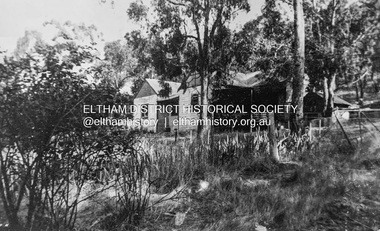
Photograph - Digital copy of photograph, Former Griffith family home, Banoon Road, Eltham, c.1955
... tin shed to the rear but toward the east of the house. I assume this is what people were thinking of when reference was made to the ‘’packing shed’. When I was small in the 50s, the shed was no longer being used for fruit packing but by the Griffith family as storage. ...tin shed to the rear but toward the east of the house. I assume this is what people were thinking of when reference was made to the ‘’packing shed’. When I was small in the 50s, the shed was no longer being used for fruit packing but by the Griffith family as storage. ...Former family home of Mr. Frederick Eldred (Fred) Griffith in the 1950s, where present day Griffith Park is situated on the Yarra River at Eltham. Fred Griffith was also a Councillor (1945, 1951-1953) and former Shire President (1951) of the Shire of Eltham. Faye Walker (nee Harris) spent her first ten years living in the house. She recalls "there was a huge tin shed to the rear but toward the east of the house. I assume this is what people were thinking of when reference was made to the ‘’packing shed’. When I was small in the 50s, the shed was no longer being used for fruit packing but by the Griffith family as storage. Many of the pear trees remained but were no longer a commercial venture. We used to sneak up to the shed to read the National Geographic Magazines."griffith park, eltham, frederick eldred griffith, faye walker (nee harris) collection -
 Warrnambool and District Historical Society Inc.
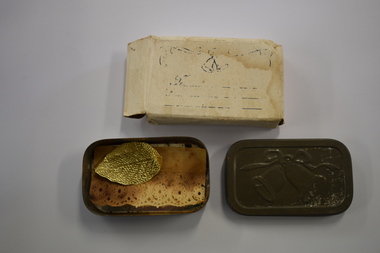
Container - Wedding cake container
... fruit cake with long keeping qualities. It is unknown to whom this wedding souvenir belonged. This item has social significance wedding cake warrnambool Small rectangular tine with rounded corners inside a plain white cardboard box. Wedding bells are imprinted on the lid of the tin ...It has long been a tradition to distribute a piece of wedding cake to guests who attend a wedding. Traditional wedding cake is a rich fruit cake with long keeping qualities. It is unknown to whom this wedding souvenir belonged.This item has social significanceSmall rectangular tine with rounded corners inside a plain white cardboard box. Wedding bells are imprinted on the lid of the tin.wedding cake, warrnambool -
 Bendigo Historical Society Inc.
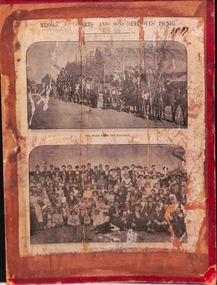
Photograph - Messrs A. Roberts and Sons Employees Picnic 1897, 1897
... Undoubtedly he observed much machinery among the tin mines of Cornwall and absorbed the principles of sound engineering design and high-grade workmanship, which bore fruit in his later years in Sandhurst (Bendigo). ...Undoubtedly he observed much machinery among the tin mines of Cornwall and absorbed the principles of sound engineering design and high-grade workmanship, which bore fruit in his later years in Sandhurst (Bendigo). ...Abraham Roberts (1819-1897), ironfounder, was born on 13 July 1819 in Cornwall, England, son of Abraham Roberts, blacksmith, and his wife Mary, née Pentreath. Nothing is known of his education and early training but it is likely that he served an engineering apprenticeship and worked in engineering workshops in Cornwall. Undoubtedly he observed much machinery among the tin mines of Cornwall and absorbed the principles of sound engineering design and high-grade workmanship, which bore fruit in his later years in Sandhurst (Bendigo). On 19 August 1841 he married Elizabeth Tonkin at the parish church at Paul, Cornwall. Roberts arrived on Bendigo in 1853 with his family and engaged in gold-prospecting, then about 1861 opened the United Iron Works, a small engineering shop in Williamson Street, making forge and hand tools. With expansion the business moved to Mitchell Street, until by 1880 it absorbed an entire block covering three acres (1.2 ha) in the heart of the town and employed nearly two hundred men. Three of his sons, William, Abraham and Arthur, helped to run A. Roberts & Sons. As well as being a skilful and enterprising engineer, Roberts was a shrewd businessman, who anticipated that the market for machinery on the local goldfields would diminish, and widened the sphere of his activities accordingly. Though the requirements of the mining industry maintained the firm, no class of foundry work was ignored. Roberts secured orders for machinery for the two major Broken Hill mines and built steam winding engines for several Western Australian mines, as well as undertaking orders for machinery in South Africa and New Zealand. He introduced poppet-heads constructed of steel to the Bendigo goldfield and the 105-head stamp battery for Lansell's Big Blue mine was the largest quartz-crushing battery in Australia at that time. The pair of steam winding engines built by his works for the Hustler's Royal Reserve Co. were the largest on the Bendigo field. The company also carried out steamship repairs, bridgework and many important railway contracts and in 1891 supplied the largest outlet valves in Victoria at Laanecoorie weir.Two photographs in black and white of the picnic for employees of Messrs A. Roberts and Sons in 1897. Photographs are mounted on piece of red cardboard. A. Roberts and Sons owned a foundry that was established in 1865. The event was noted in the Bendigo Advertiser on 18 March 1901.'1897' in ink top right hand corner.bendigo, foundry, roberts and sons, picnic, 1897 -
 Embroiderers Guild, Victoria
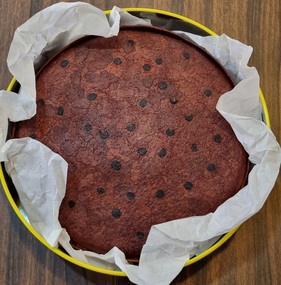
Textile - Embroidered Cake in Tin, Amanda (Mandy) Ginsberg
... Imitation embroidered fruit cake in traditional cake tin. Made of textiles embellished with freestyle machine embroidery....Imitation fruit cake made by Amanda Ginsberg for an exhibition at The Embroiderers Guild Victoria celebrating efforts made by women at home during World War 1 Cake ANZAC War Women Imitation embroidered fruit cake in traditional cake tin. Made of textiles embellished with freestyle machine embroidery. ...Imitation fruit cake made by Amanda Ginsberg for an exhibition at The Embroiderers Guild Victoria celebrating efforts made by women at home during World War 1Imitation embroidered fruit cake in traditional cake tin. Made of textiles embellished with freestyle machine embroidery.cake, anzac, war, women -
 Embroiderers Guild, Victoria
Textile - Embroidered Cake in Tin, Amanda (Mandy) Ginsberg
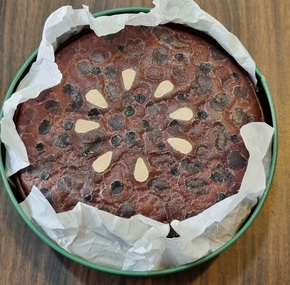
... Imitation embroidered fruit cake in traditional cake tin. Made of textiles embellished with freestyle machine embroidery....Imitation fruit cake made by Amanda Ginsberg for an exhibition at The Embroiderers Guild Victoria celebrating efforts made by women at home during World War 1 Cake ANZAC War Women Imitation embroidered fruit cake in traditional cake tin. Made of textiles embellished with freestyle machine embroidery. ...Imitation fruit cake made by Amanda Ginsberg for an exhibition at The Embroiderers Guild Victoria celebrating efforts made by women at home during World War 1Imitation embroidered fruit cake in traditional cake tin. Made of textiles embellished with freestyle machine embroidery.cake, anzac, war, women
