
Showing 79 items matching "george penny"
-
 4th/19th Prince of Wales's Light Horse Regiment Unit History Room
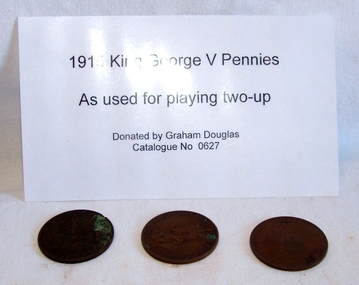
Coins, Penny, Australian (3), Australian Mint, 1915
... KIng George V pennies were the coins of choice for playing 2 up during World War 1...3 x Australian 1915 King George V pennies...KIng George V pennies were the coins of choice for playing 2 up during World War 1 pennies 2 up world war 1 3 x Australian 1915 King George V pennies Coins, Penny, Australian (3) Australian Mint ...KIng George V pennies were the coins of choice for playing 2 up during World War 13 x Australian 1915 King George V penniespennies, 2 up, world war 1 -
 Montmorency–Eltham RSL Sub Branch
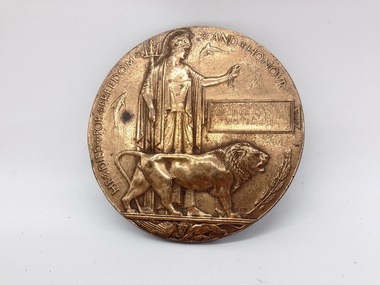
Plaque - Memorial Plaque (Dead Man's Penny) - George Daniel Whitbourn, Dead Man’s Penny
... Memorial Plaque (Dead Man's Penny) - George Daniel Whitbourn... Plaque Memorial Plaque (Dead Man's Penny) - George Daniel Whitbourn ...Presented to next of kin of George Daniel WhitbournCircular Plaque presented to next of kin of soldier killed in action in WW1."HE DIED FOR FREEDOM AND HONOVR" (sic) GEORGE DANIEL WHITBOURN -
 Glenelg Shire Council Cultural Collection
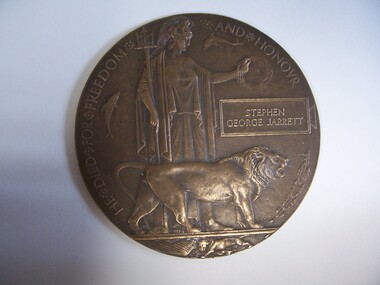
Medal - Death Penny - Stephen George Jarrett, n.d
... Death Penny - Stephen George Jarrett...Medal Death Penny - Stephen George Jarrett ...Displayed at History HouseBronze medallion with a relief depiction of a lion in profile, facing right, standing in front of a woman in Grecian robes, wearing a plumed helmet with a lion on it, and holding a trident in her right hand and a laurel wreath in her left hand. On left is a leaping dolphin.Front: E. CKP (lower right) He died for freedom and Honour (around edge) 10 (lower left) Stephen/George jarrett (centre right) Back: M (Lower centre)jarrett, death penny, world war i, wwi -
 Clunes Museum
Coin, 1951
... COIN, GEORGE V1 PENNY, 1951...LOCAL HISTORY NUMISMATIC COINS COINS COIN, GEORGE V1 PENNY, 1951 Coin COIN ...COIN, GEORGE V1 PENNY, 1951local history, numismatic, coins, coins -
Federation University Historical Collection
Book - Ledger, Ballarat Technical Art School and Ballarat School of Mines Rough Cash Book, 1896-1901, 1896-1901
... ...george penny...The Ballarat Technical Art School was a division of the Ballarat School of Mines ballarat technical art school frank young r. hager g.w. kelly\drawing carpentry smelting treatment assay w. wilson yong treatment of pyrites g.m. vare alfred seely t. trengrove w. pearce c.v. day john heinz m. ditchburn d. ditchburn w. baragwanath g. cornell chemistry w. wardle j.j. carroll julia carroll h. murphy d.m. lenehan joh caley h. fleahy alfred gordon effie dulfer b. lloyd p. papenhager h.j. waller k. malcolm esther daniel john watson harry leggo r. john allan basil reid e. wasley w. richard edgar lamb rita webb sophia mccartney arnold cowdell thomas glover m. hamburger r. allan r.w. holmes a. dobbie a. slade w. pepper r. gilpin w.a. gossman james a. bass w.t. bass thomas lynch stanley batten murial hart essie herbert david o. nightingale george p. hayes j.a. powell w. amor c.f. wilson bertram g. wheal thomas wade h. woodward v. symons robert j. allan thomas woolcock john w. williams r. shand william caldwell charles lyons ruby webb a. trehowan nicholas white thomas commons otto rieglhuth james kidd james bass justus angwin john munro james ronaldson a.b. osborne g.j. boudry john sprague leslie c. langsford john don waller e. hearman j.c. pickford edwinn penn w.g. price thomas mann william brokenshire john blayney arthur mccooey samuel walmsley matilda lees e.w. campbell ernest wiliams william john pearce w.l. bailleu thomas proctor daisy ditchburn maurice hamburger james dando nelson humphrey james pyke james c. pickford john coad george richard pratt ferguson boyce ernest whettle william lamb john cawley christina watson ivor davies percy la gerche norman gaunt william bolte leonard p. seal alex young george penny w. caircross harold frew robert allan james h. holst george green herbert semmens john ronaldson william robinson james paterson walter douglas louisa roberts james swenson austin woods herbert hillman william cairncross harry blyth john craford william h. callister clare gartery daisy batten j. attenborough herbert o'neilk j.f. lynch fred holst a. doepel horace giles john perry samuel morrow thomas hawthorn george britnall alan j. acton jessie cantwell franci a. horsfall william stubbs john sutherland percy russell richard walsh oliver jager garfield bolton thomas vincent james holst j.a. hill william charles hughes a. vale james lonie karl moore A hard covered ledger with marbled cover and brown tape spine. ...The Ballarat Technical Art School was a division of the Ballarat School of MinesA hard covered ledger with marbled cover and brown tape spine. It includes students names. A selection of names can be found in the keywords.ballarat technical art school, frank young, r. hager, g.w. kelly\drawing, carpentry, smelting, treatment, assay, w. wilson yong, treatment of pyrites, g.m. vare, alfred seely, t. trengrove, w. pearce, c.v. day, john heinz, m. ditchburn, d. ditchburn, w. baragwanath, g. cornell, chemistry, w. wardle, j.j. carroll, julia carroll, h. murphy, d.m. lenehan, joh caley, h. fleahy, alfred gordon, effie dulfer, b. lloyd, p. papenhager, h.j. waller, k. malcolm, esther daniel, john watson, harry leggo, r. john allan, basil reid, e. wasley, w. richard, edgar lamb, rita webb, sophia mccartney, arnold cowdell, thomas glover, m. hamburger, r. allan, r.w. holmes, a. dobbie, a. slade, w. pepper, r. gilpin, w.a. gossman, james a. bass, w.t. bass, thomas lynch, stanley batten, murial hart, essie herbert, david o. nightingale, george p. hayes, j.a. powell, w. amor, c.f. wilson, bertram g. wheal, thomas wade, h. woodward, v. symons, robert j. allan, thomas woolcock, john w. williams, r. shand, william caldwell, charles lyons, ruby webb, a. trehowan, nicholas white, thomas commons, otto rieglhuth, james kidd, james bass, justus angwin, john munro, james ronaldson, a.b. osborne, g.j. boudry, john sprague, leslie c. langsford, john don, waller e. hearman, j.c. pickford, edwinn penn, w.g. price, thomas mann, william brokenshire, john blayney, arthur mccooey, samuel walmsley, matilda lees, e.w. campbell, ernest wiliams, william john pearce, w.l. bailleu, thomas proctor, daisy ditchburn, maurice hamburger, james dando, nelson humphrey, james pyke, james c. pickford, john coad, george richard pratt, ferguson boyce, ernest whettle, william lamb, john cawley, christina watson, ivor davies, percy la gerche, norman gaunt, william bolte, leonard p. seal, alex young, george penny, w. caircross, harold frew, robert allan, james h. holst, george green, herbert semmens, john ronaldson, william robinson, james paterson, walter douglas, louisa roberts, james swenson, austin woods, herbert hillman, william cairncross, harry blyth, john craford, william h. callister, clare gartery, daisy batten, j. attenborough, herbert o'neilk, j.f. lynch, fred holst, a. doepel, horace giles, john perry, samuel morrow, thomas hawthorn, george britnall, alan j. acton, jessie cantwell, franci a. horsfall, william stubbs, john sutherland, percy russell, richard walsh, oliver jager, garfield bolton, thomas vincent, james holst, j.a. hill, william charles hughes, a. vale, james lonie, karl moore -
Frankston RSL Sub Branch
Letter
... penny...george v...ww1 world war 1 dead mans penny great war 1914 1918 memorial plaque commemorative plaque kings penny george v Letterhead inscription consist of a coat of arms and the words BUCKINGHAM PALACE Text is "I join with my grateful people in sending you this memorial of a brave life given for others in the Great War." ...Letter that accompanied the 1914 - 1918 Memorial Plaque and scroll presented to the families of allied service personnel who died during or as a result of the First World War. This letter is sent from Buckingham Palace, London and is signed by King George IV.Letterhead inscription consist of a coat of arms and the words BUCKINGHAM PALACE Text is "I join with my grateful people in sending you this memorial of a brave life given for others in the Great War." Signed by GEORGE Vww1, world war 1, dead mans penny, great war, 1914 1918 memorial plaque, commemorative plaque, kings penny, george v -
 Myrtleford and District Historical Society
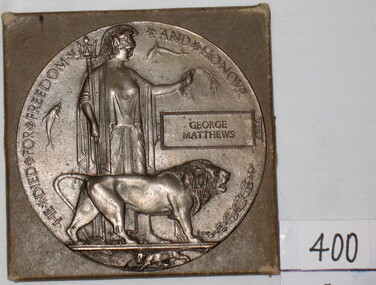
Memorial Plaque, Memorial Plaque Factory, "Dead Man's Penny", Circa 1921
... Memorial Plaque Dead Man's Penny George Matthews...The "Dead Man's Penny" of Private George Matthews (24/1744) is a district link to the First World War. ...George Matthews' enlistment in New Zealand is an indicator of the migratory nature of men involved in gold mining after the decline of the industry in Victoria and New South Wales in the late 19th century Memorial Plaque Dead Man's Penny George Matthews Name engraved: GEORGE MATTHEWS A World War 1 memorial plaque issued to next-of-kin of all British and Empire service personnel who died as a result of the war. ...The "Dead Man's Penny" of Private George Matthews (24/1744) is a district link to the First World War. George enlisted with the Otago Regiment, New Zealand Expeditionary Force as a rifleman. Born in 1891, he was a former pupil of Myrtleford State School 955 and was one of four first cousins killed in action and recorded in a memorial window and honour board at the Uniting (formerly Methodist) Church, the Soldier's Memorial Square and on the State School Honour Board. George's parents, John and Mary Matthews,received the plaque in a pack, together with a letter and commemorative scroll from King George V. George Matthews is buried at the Caterpillar Valley (N.Z.) Memorial, France, having died on October 1, 1916, aged 25. The memorial plaque links local family tragedy to world conflict. It represents the impact of such events must have had on small town communities. George Matthews' enlistment in New Zealand is an indicator of the migratory nature of men involved in gold mining after the decline of the industry in Victoria and New South Wales in the late 19th centuryA World War 1 memorial plaque issued to next-of-kin of all British and Empire service personnel who died as a result of the war. They were round and cast in bronze, hence their similarity to the much smaller penny coin. The plaque includes an image of Britannia, holding a trident and standing with a lion. Britannia holds an oak leaf above the deceased's name, which is recorded without rank. Two dolphins swim around Britannia, symbolizing sea power, and at the base a second lion is tearing apart the German eagle. Around the picture a legend reads: "He died for freedom and Honour"Name engraved: GEORGE MATTHEWSmemorial plaque dead man's penny george matthews -
 Warrnambool and District Historical Society Inc.
Numismatics, Coin Collection
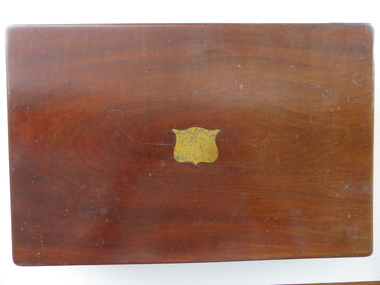
... ‘Australian Pre-Decimal Coinage’ ‘Edward V11, Threepence & Sixpence, 1910’ ‘George V, Halfpenny, Penny, Threepence, Sixpence, Shilling, Florin, 1911-1936’ ‘George V1, Halfpenny, Penny, Threepence, Sixpence, Shilling, Florin, 1938-1952’ ‘Elizabeth 11, Halfpenny, Penny, Threepence, Sixpence, Shilling, Florin. 1963-1963’ ...Decimal Currency in Australia Pre-Decimal Currency in Australia History of Warrnambool ‘Australian Pre-Decimal Coinage’ ‘Edward V11, Threepence & Sixpence, 1910’ ‘George V, Halfpenny, Penny, Threepence, Sixpence, Shilling, Florin, 1911-1936’ ‘George V1, Halfpenny, Penny, Threepence, Sixpence, Shilling, Florin, 1938-1952’ ‘Elizabeth 11, Halfpenny, Penny, Threepence, Sixpence, Shilling, Florin. 1963-1963’ This is a collection of coins in a wooden box. ...These coins were in use in Australia during the 20th century up to 1965. The coinage was based on the imperial system with the basic currency unit being the pound. In February 1966 decimal coinage was introduced in Australia with the basic currency unit being the dollar (equivalent in value to half a pound or ten shillings). This collection of coins shows what coins looked like in Australia before the introduction of decimal currency. It is a very useful display item. This is a collection of coins in a wooden box. The wood is polished and has brass hinges on the lid and a brass lock and keyhole on the box’s side. The lid is lined with blue felt and on the top of the lid is a much-scratched brass shield (intended for inscribing a name). Inside the box there is a clear piece of glass over the coins which are pasted onto a piece of buff-coloured paper. There are 40 coins in the box. The heading is hand written (calligraphy) in black ink and the other information is type-written. ‘Australian Pre-Decimal Coinage’ ‘Edward V11, Threepence & Sixpence, 1910’ ‘George V, Halfpenny, Penny, Threepence, Sixpence, Shilling, Florin, 1911-1936’ ‘George V1, Halfpenny, Penny, Threepence, Sixpence, Shilling, Florin, 1938-1952’ ‘Elizabeth 11, Halfpenny, Penny, Threepence, Sixpence, Shilling, Florin. 1963-1963’ decimal currency in australia, pre-decimal currency in australia, history of warrnambool -
 Bendigo Military Museum
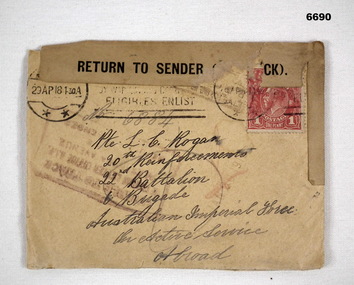
Letter - LETTER, UNOPENED, 1918
... Unopened letter - light brown paper, envelope, black print and handwriting, red one penny King George stamp....Unopened letter - light brown paper, envelope, black print and handwriting, red one penny King George stamp. Letter LETTER, UNOPENED ...Letter sent originally by sister but reg'n No. wrong so not delivered but returned 23 April 1918. Soldier KIA in June 1918. Linten Cypus Rogan see Cat No 6947A.Unopened letter - light brown paper, envelope, black print and handwriting, red one penny King George stamp.Return to Sender: No. 6884 Pte L. C. Rogan, 20th Reinforcements 22nd Battalion 6th Brigade Australian Imperial Force on Active Service Abroad.passchendaele barracks trust, unopened envelope, l.c. rogan, ww1 -
Lakes Entrance Historical Society
Functional object - Collection of English and Australian Coins, 1855 - 1935
... Edward V11 1 penny and 2 half-pennies. Australian Florin. George V 4 half-pennies. Australian 1 cent and 2 cents....Edward V11 1 penny and 2 half-pennies. Australian Florin. George V 4 half-pennies. Australian 1 cent and 2 cents. ...Queen Victoria 3 pennies and 3 half-pennies. Edward V11 1 penny and 2 half-pennies. Australian Florin. George V 4 half-pennies. Australian 1 cent and 2 cents.economic history, currency, collections -
 Bendigo Historical Society Inc.
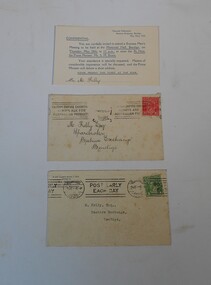
Document - Kelly and Allsop collection: envelopes and invitation
... One of the envelopes has a red King George V 1 penny stamps, the other a green king George V stamp. ...One of the envelopes has a red King George V 1 penny stamps, the other a green king George V stamp. ...Two empty envelopes addressed to Mr. Kelly esq. The envelops are empty. One of the envelopes has a red King George V 1 penny stamps, the other a green king George V stamp. Invitation to Mr. Kelly to attend a business men's meeting to be held at the Memorial Hall, Bendigo on Thursday, May 28th at 11 am to meet the Prime Minister, Mr. S.M. Bruce.beehive exchange, kelly stockbroker -
 Bendigo Historical Society Inc.
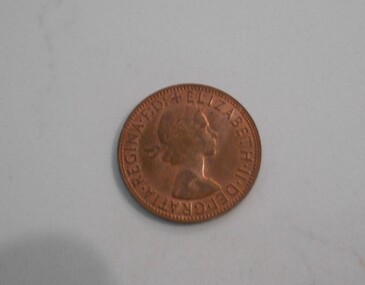
Coin - GRAHAM HOOKEY COLLECTION: AUSTRALIAN PENNIES
... Thirty one pennies. King George V dates include: 1911, 1912, 1916, 1917, 1919, 1920, 1921, 1922, 1923, 1924, 1928, 1929, 1932, 1933, 1934 and 1936. ...NUMISMATICS Coins - australian pennies Thirty one pennies. King George V dates include: 1911, 1912, 1916, 1917, 1919, 1920, 1921, 1922, 1923, 1924, 1928, 1929, 1932, 1933, 1934 and 1936. ...Thirty one pennies. King George V dates include: 1911, 1912, 1916, 1917, 1919, 1920, 1921, 1922, 1923, 1924, 1928, 1929, 1932, 1933, 1934 and 1936. King George VI include: 1943 and 1947. Queen Elizabeth II 1964. The coins are all circulated and in various conditions.numismatics, coins - australian, pennies -
 Ithacan Historical Society
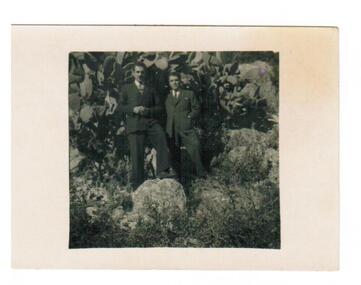
Photograph, Alexandratos brothers - Ithaca, c1950s
... Pictured in Ithaca are Stathi and Spiro Alexandratos who are the brothers of Yianni Alexandratos who lived in Melbourne until returning to live permanently in Greece with his wife Zoi and children Penny and George in the early 1970s. In the early 1900s their father Giorgos Alexandratos was a partner in the 'Alexandra Bros' London Café at 25 Elizabeth Street. ...Pictured in Ithaca are Stathi and Spiro Alexandratos who are the brothers of Yianni Alexandratos who lived in Melbourne until returning to live permanently in Greece with his wife Zoi and children Penny and George in the early 1970s. In the early 1900s their father Giorgos Alexandratos was a partner in the 'Alexandra Bros' London Café at 25 Elizabeth Street. ...Pictured in Ithaca are Stathi and Spiro Alexandratos who are the brothers of Yianni Alexandratos who lived in Melbourne until returning to live permanently in Greece with his wife Zoi and children Penny and George in the early 1970s. In the early 1900s their father Giorgos Alexandratos was a partner in the 'Alexandra Bros' London Café at 25 Elizabeth Street. Giorgos was a founding member of the Ithacan Philanthropic Society. He eventually returned permanently to Ithaca where his three sons were born.A small black and white photograph of two men dressed in suits standing in a rock garden and in front of a tall prickly pear cactus. The small photograph is surrounded with a white frame.Written in Greek on the back: STATHIS ALEXANDROS SPIROS ALEXANDROScafes, alexandratos brothers -
 Kew Historical Society Inc
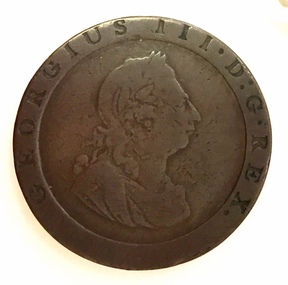
Memorabilia - Lock of hair of Thomas Henty (1775-1839) in a hollowed Cartwheel Penny
... This King George III 1797 penny, colloquially described as a ‘Cartwheel’ because of its large size and thick rim, was manufactured in Great Britain from 1797-99. ...This King George III 1797 penny, colloquially described as a ‘Cartwheel’ because of its large size and thick rim, was manufactured in Great Britain from 1797-99. ...This King George III 1797 penny, colloquially described as a ‘Cartwheel’ because of its large size and thick rim, was manufactured in Great Britain from 1797-99. The penny and the twopence were the first coins shipped to New South Wales by the British Government. In 1800, Governor King issued a proclamation that forbade their export. This coin is one of the 132,000 coins sent to Australia in 1800. It is not uncommon to find cartwheel pennies used as containers. They were reputedly used to conceal a more valuable coin or for smuggling. The penny was purchased by the Society as part of a small collection of Henty memorabilia and portraits from the owner of Moorabool Antiques, Geelong in 2021, which had in turn acquired the item from the estate of Dennis Alston of Alston's Antiques in Hamilton, Victoria.This cartwheel penny, used to contain a lock of hair of Thomas Henty (1775-1838), is of statewide significance to Tasmania, where he settled and died, and to Victoria, where his children and their descendants were notable pioneers, squatters and subsequently landowners in the Western District. The item is also of national significance for its strong connection to the Henty family, notable British settlers of southeastern and southwestern Australia in the 1830s. The connection to Kew (Vic.) is that members of the Henty family owned important mansions in Kew in the 19th century. Thomas Henty was the father of Stephen George Henty of 'Findon', and Francis Henty of 'Merino Downs' in the Western District and 'Field Place', Kew. Numerous members of the Henty family are buried in the Boroondara General Cemetery.Object of personal memorabilia. Coiled and bound lock of hair of Thomas Henty contained in a hollowed-out copper 'cartwheel' penny.OBVERSE: Georgius III . D : G . REX / REVERSE: Britannia 1797 / SELLER'S LABEL: Lock of hair from the late Thomas Henty, born 1775thomas henty, henty family, launceston, west tarring -- sussex (uk), tasmanian pioneers, australia - early settlers, cartwheel pennies -
 Orbost & District Historical Society
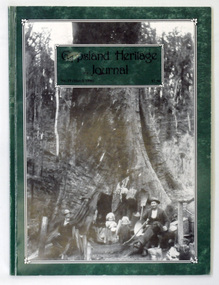
Journal, Gippsland Heritage Journal, March 1996
... The main photo is by Max Lowenhardt and shows John Green, Mrs Eva Penny (inside the tree and hardly visible) nursing Charlie, May, George and Nicolas Penny. ...The main photo is by Max Lowenhardt and shows John Green, Mrs Eva Penny (inside the tree and hardly visible) nursing Charlie, May, George and Nicolas Penny. ...The main photo is by Max Lowenhardt and shows John Green, Mrs Eva Penny (inside the tree and hardly visible) nursing Charlie, May, George and Nicolas Penny. Colin Silcock wrote of the tree on p.39 that the family lived int he hollowed-out butt for nine months in 1906-1907. It was 20 feet across at floor level with 12 feet of head room inside. Nicholas Penny ring-barked the tree in 1905, with it being 130 feet high with the top broken off. The fires the following year destroyed the tent in which he was living and hollowed out the tree. After "making a few alterations" Penny moved in and brought his wife and children across from Outtrim. They later built a more permanent home. The tree was destroyed in the 1926 bushfires. (ref Linda Barraclough)This magazine is a useful reference on Gippsland history.A 64 pp magazine, titled Gippsland Heritage Journal. It has a dark green cover with a photograph of the "Penny Tree" . The magazine is dated March 1996 and cost $7.50. It contains stories and photographs on the history of Gippsland.There is a library bar code on the outside back cover.gippsland-heritage-journal penny-tree history-gippsland -
 Bendigo Historical Society Inc.
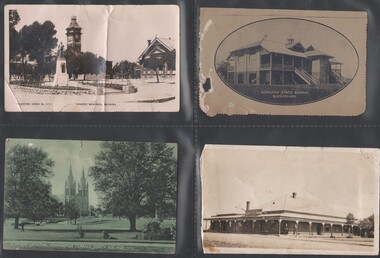
Postcard - Mabel Tully Collection: Four sepia postcards - tourist postcards of Adelaide, Hamilton QLD., Manangatang and Mildura, early 1900s
... Card addressed to Miss Mabel Tully and a one penny King George V stamp impressed on the card 11123.14 B - Manangatang Hotel, a single storey building with a veranda on the corner frontages and two men under the veranda. ...Card addressed to Miss Mabel Tully and a one penny King George V stamp impressed on the card 11123.14 B - Manangatang Hotel, a single storey building with a veranda on the corner frontages and two men under the veranda. ...Mabel Beatrice Josephine Tully was born to John Patrick Tully and Mary Elizabeth Dole at White Hills on 16.07.1896.. Mabel lived in the family home at 61 Charleston Rd. Bendigo and was employed as a saleswoman until she married John (Jack) Killeen in 1925. Jack was a junior postal worker. Mabel's father John Tully died on 11.08.1926. In 1927 Mabel and Jack were living at 70 Abbott Street Bendigo. Mabel did home duties and Jack was employed as a postal linesman. In 1931 Mabel and Jack were living back at 61 Charleston Rd Sandhursr East. In 1937 Jack was working as a barman, and as a fruiterer in 1943. Mabel's mother died 11.01.1941. Mabel's husband Jack Killeen died on 22.06.1975 aged 79 years. Mabel died on 7.01.1987 aged 90 years. She is buried in the White Hills Cemetery.Mabel Tully Collection: Four sepia tourist postcards of townscapes circa 1915 11123.14 A - Hamilton State School, Queensland shows a two storey "Queenslander" school. Card addressed to Miss Mabel Tully and a one penny King George V stamp impressed on the card 11123.14 B - Manangatang Hotel, a single storey building with a veranda on the corner frontages and two men under the veranda. Postcard is post marked 3 May 1915. 11123.14 C - Chaffey Memorial, Mildura (Valentine series N0. 1178) shows the memorial with a clock tower and period single storey in the background. Postcard has a holiday message to "Mum & Mabel from Marie, with eight "X kisses" the card was not sent through the mail. 11123.14 D - green toned postcard shows St. Paul's cathedral, Pennington Terrace, North Adelaide across parkland.A handwritten message on each of two postcardsmabel tully, diverse postcards -
 Flagstaff Hill Maritime Museum and Village
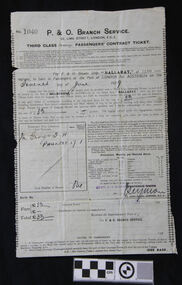
Document - Ticket, voyage, P & O Branch Service, P & O, Australia via The Cape Service, Bef.3rd June 1929
... They again went ashore for a meal at four-pence a head and a bottle of lemonade for a penny. George and another passenger walked to the slums area and were shocked at the state of it compared to Britain’s slums. ...They again went ashore for a meal at four-pence a head and a bottle of lemonade for a penny. George and another passenger walked to the slums area and were shocked at the state of it compared to Britain’s slums. ...The bearer of this ticket was George Thomas Henry Phillpot, who was only 17 years old when he sailed on the S.S. Ballarat (II), built in 1921. (The first S.S. Ballarat was built in 1911 and sunk after being hit by a torpedo in 1917 while serving during WWI). George relates his trip from England to Australia, summarised as follows: He caught a bus from Bolton to Manchester, in the north west U.K., then the train from Manchester to London and the boat train to Tilbury Docks (near Gravesend). On the morning of June 7th 1929, the ship S.S. Ballarat sailed down the Thames estuary and into the English Channel. The next port of call was Southampton, UK, to take on board some technical equipment. The S.S. Ballarat then sailed through the Bay of Biscay. Instead of taking the customary route around the Cape of Good Hope, this trip, on her maiden voyage, was through the Suez Canal. She sailed through the Straits of Gibraltar, into the Mediterranean Sea and on to Malta, where George and others paid a local boat owner to take them ashore for a short time. They then sailed to Port Said, stopping to load cargo, then at night through the Suez Canal. They woke up early the next morning to watch the locals working on the banks of the canal. The excessive heat on board the ship caused much illness. As they travelled through the Red Sea, the heat and the smell of oil also caused sickness. On they went through the Arabian Sea to Colombo, the capital of Sri Lanka (which at that time was called Ceylon). A Navigation Slip, donated together with this ticket, shows the coordinates for a location 16 miles from Colombo. They again went ashore for a meal at four-pence a head and a bottle of lemonade for a penny. George and another passenger walked to the slums area and were shocked at the state of it compared to Britain’s slums. They then sailed via the Indian Ocean to Fremantle, stopping again for goods to be unloaded. While ashore, they played a game of soccer against the ship’s crew. Then on to Port Adelaide via the Great Australian Bight. Here they shopped for suitable clothing under the advice of some Australian passengers. They then arrived at Port of Melbourne on July 20th 1929, and two days later (on George’s mother’s birthday). George left for Warrnambool. He received his Citizenship Award in 1971. He conducted an electrical retail business in Liebig Street for many years. His son William became principal of the accounting business Sinclair and Wilson, on the retirement of Bill Sinclair, and was actively involved in support of many community organisations. His daughter-in-law, Glenys Phillpot, is actively involved in the Warrnambool community and local government. George was one of 3 orphans on the S.S. Ballarat. (The daughter and son-in-law of one of the other orphans also live in Warrnambool.) Herbert B.G. Larkin, whose rubber-stamped name appears on the ticket, later migrated to Australia and passed away in NSW in 1944. Of Historical Significance, this ticket is for the ship’s maiden voyage via the Suez Canal route (previously the ship travelled via the Cape of Good Hope). It is also the only existing ticket for the "S.S. Ballarat"(3rd) in our collection. Socially, it shows the fare, luggage restrictions, conditions and weekly provisions for a third-class passenger’s voyage from London to Melbourne, which has research potential. This ticket is also of significance to the Local Community, giving the background of the ancestor of a local family. It was also of Personal Significance to the bearer as he kept and preserved it in his possession for at least 46 years before donating it to our museum, together with a Navigation Slip, a map and a summary of his journey to Australia.Third Class steerage Passenger’s Contract Ticket, accompanied by the Navigation Slip, for passage on board the P & O line’s steamer, S.S. Ballarat, to Australia via the Cape Service, from Port of London to Port of Melbourne. The ticket contract is printed on both sides of a thin paper page. The documents have been completed by hand, and the pages have creases as though they have been folded. Details include the date of sailing, amount paid, and the signature of the P & O Branch Service’s representative. The contract ticket lists weekly provisions for the voyage, a disclaimer of the shipping company, a list of dangerous goods not to be carried on board, and fines. The page has straight edges, top and bottom, and perforated edges on the sides; some perforation holes are complete. A small fleur de lies is printed along the inside of each perforation, forming a decorative left and right border. Stamps and inscriptions are on the contract ticket and navigation slip, which also has a black and white photo of a steam ship.The ticket has been stamped in black, No. ‘1040’. Handwritten details are in black pen and ink. Date of departure: ‘Seventh June [192]9’ for the cost of,’33’ [poind], and the sum of ‘33’ pounds is acknowledged as received. ‘Mr George T.H. PHILLPOT’, the age is written as ‘17’, equal to the status of ‘1’ adult, the total number of persons is ‘One’. The fare is handwritten in pen £’33’ and the total £’33’. It has a purple stamp ‘HERBT. B G LARKIN’ and a crossed out stamp ‘FREDERICK WHITE, A handwritten signature ‘_Seymore’. Under the signature, the date is stamped ‘3 JUNE 1929’.warrnambool, shipwrecked coast, flagstaff hill, flagstaff hill maritime museum, maritime museum, shipwreck coast, flagstaff hill maritime village, s.s.ballarat, phillpot, 7 june 1929, george phillpot, george t.h. phillpot, third class passenger, steerage passenger, herbert b g larkin, ticket, voyage, p & o, australia via the cape, cape of good hope, suez canal, passengers’ contract ticket, navigation slip, s.s. ballarat, steamship, 1929, 3-6-1929, 7-6-1929, third-class, steerage, port of london, port of melboune, 33 pounds, george thomas henry phillpot, herbt. b g larkin, _seymore, bolton, manchester, english channel, southampton, bay of biscay, straits of gibraltar, maritia, port said, arabian sea, colombo, sri lanka, ceylon, indian ocean, fremantle, port adelaide, citizenship, 1971, herbert b.g. larkin, s.s. ballarat ii, -
 Flagstaff Hill Maritime Museum and Village
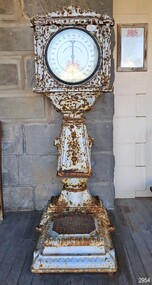
Instrument - Scale, Weighing Machine, G. Salter & Co, 1884-1909
... penny scale...coin in slot scale...Eastern Scale Co. Pty. Ltd....British Royal Coat of Arms...Royal Letters Patent...Letters Patent...health...ending machine...coin-operated machine...Percival Everett...Weighing Machine Co....George...penny scale coin in slot scale Eastern Scale Co. Pty. Ltd. British Royal Coat of Arms Royal Letters Patent Letters Patent health ending machine coin-operated machine Percival Everett Weighing Machine Co. George ...This ornate, Victorian-era automatic weighing machine was made in England around 1884-1909, by George Salter and Co. of West Bromwich, UK, makers of scales since 1760. It is protected by Queen Victoria’s Royal Letters Patent, signed in 1900. The scale stood outside the Warrnambool Post Office in Timor Street from around 1909 to 1966, as shown on postcards and photographs held at the State Library of Victoria. The scale is identified by the Serial Number '665', and was installed by the distributors, the Australasian Automatic Weighing Machine Co. Ltd.. The scale’s weight measurements were in Imperial stones and pounds up to 20 stone (127 kg). The scale’s face included charts of average weights, for men, women, boys and girls, by various heights, in feet and inches. The coin slot and its face were converted to metric measurements by the Eastern Scale Company Pty. Ltd; that firm was registered on October 2, 1974. The Australasian Automatic Weighing Machine Co. Ltd was a large supplier of weighing scales in Australia and held the Royal Letters patent for their machines, distributing them in prominent locations. In 1902, the firm was listed under the Import Entries Passed at His Majesty’s Customs, importing into Sydney, NSW, eight cases of scales. In 1911, the company asked permission from the Port Pirie Corporation to install a machine in Alexander Street. In 1913, the company applied to the City of Sydney to install machines around the city, including at the tram depot. One application mentions “… three machines in three places for three pounds per year”. In 1923, the firm tendered for the right to place Automatic Weighing Machines on railway and tram premises throughout New South Wales, subsequently for five-year terms, in return for a fixed payment per machine and a portion of the revenue to the NSW Government. In 1928, the Sydney Harbour Trust gave the firm the right to place the weighing machines on various ferry jetties. The firm was still operating in 1941, advertising for two boys aged 14-16 for the workshop and messages, at the Rialto building, 497 Collins St., Melbourne. On December 21, 1946, the Commonwealth government invited offers to tender for the right to place automatic weighing machines on postal premises throughout the six states; the successful company then made arrangements with the federal Postmaster General's Department to place machines outside post offices across the country. A few years later, on September 11, 1950, the firm's Adelaide branch ceased trading. From 11th July 1950, the Australian and Eastern Engineering Company Pty. Ltd took over at the same premises, at 179 Pirie Street, Adelaide. The Perth branch ceased business in WA on July 6th, 1950. Percival Everitt invented and patented the automatic, coin-operated personal scale design. Everitt was a Norfolk-born engineer and regarded as the father of the coin-operated industry. As a young man in 1877, he invented a hay and corn pitcher, a turnip thinner in 1878 and an Automatic Travelling Anchor in 1880. But his fame came in 1883 with the first postcard-vending machine, over a hundred of which he distributed around London. In 1884, he patented one of his many inventions, the coin-operated scales for use in public places; for many people, it was their first exposure to coin-operated machines. His success prompted the formation of the Weighing Machine Company in 1885. Further inventions followed: a blow tester in 1887, the machine for testing a person's grip in 1888, and in 1889, the dispensing machine for hiring out opera glasses, and a device for shutting down the coin entry slot if the machine was empty. In 1890, he invented a fortune-telling machine. Everitt sadly did not make his fortune; he died suddenly in February 1893, in his late forties, with £71 to his name. George Salter & Co., West Bromwich, England, produced automatic weighing scale machines from Everitt’s patented design, and advertised them as suitable for hotels, pleasure gardens, theatres, exhibition halls, clubs, baths and places of public resort. The company was established in 1760 by brothers Richard and William Salter, and manufactured springs and pocket steelyards (spring balances). After several generations, the company was taken over in 1855 by a nephew, George, and renamed George Salter & Co. In 1884, Salter registered the trademark of a Staffordshire knot pierced by an arrow. The company's expanded range of products included the first coin-operated public weighing machines in the 1880s and, in 1895, the first English-made typewriter. In 1915, Salter became a limited company, Geo. Salter & Co. Ltd. When the last George Salter died in 1917, the company passed into the hands of other relatives, but continued to grow before being bought out by Staveley Industries in 1973. Despite several subsequent mergers, the Salter name continues to be seen on household products such as digital scales. This patented, coin-operated weight machine is significant for its association with Percival Everitt, the inventor of the world’s first slot machine, with the renowned maker of scales, G. Salter & Co., which began operating in 1760, and also with the Australasian Automatic Weighing Scale Co., which imported and widely distributed the scales throughout Australia from the early-to-mid 20th century. It is a rare example of an early vending machine used in public places from the late 19th through to the mid-20th century. These machines were the early step in the evolution of coin-in-the-slot machines, which are still used today. The scales give a glimpse into our history; they became quickly popular with the public, which, until then, had little access to weight scales apart from those at medical services. They also provided inexpensive entertainment for families, especially while waiting for trains or visiting the post office. The machines were also attractive and lucrative to the distributors; once installed, they required very little maintenance, and their low cost to customers kept the money coming in. This automatic weighing machine is also significant for its decades of service to the local and regional community of Warrnambool, for personal and commercial purposes. A public coin-operated weighing scale, also called a penny scale. It is a large, silver-painted cast metal stand with a square top on a pedestal that flares outwards to join a rectangular platform base with posts on the side and corners that may have had fitted wheels. The round, white face on top has red and black measurements and inscriptions. A slim indicator with a point at one end and an arc at the other is attached to the face’s centre. The coin slot is above the face, on the left, and the scale’s identification number is engraved on an oval plate on the right. Moulded motifs decorate the pedestal’s front and are repeated on its sides; they depict a tall, narrow urn with a bowl on top and fancy scrolls on either side. There is a decorative panel across the front top of the stand. The top of the pedestal has a small keyhole. The size of the coin slot fitted a penny coin, and the weight measurements on the face were in Imperial stones and pounds. Quite some time after 1966, when Australia introduced new decimal weights, measurements and currency, the scale was updated; the coin slot size was changed, and a new face with metric measurements was installed. The scale now accepts a $1 coin (one dollar) and the scale measures weight in kilograms and grams, from 0 to 125 kg.. The rear of the scale has a small, rectangular metal plate with printed text. The scale was made by G Salter & Co. of West Bromwich, UK, distributed by the Australasian Automatic Weighing Platform Co., and updated to metric measurements by Eastern Scale Co. Pty Ltd. It was previously installed at the Warrnambool Post Office. Engraved on an oval plate on the right: "665" Top centre of the face, in red: "$1 coin" Top of face: "EASTERN SCALE CO. PTY LTD" Base of face, in red: "[Royal Coat of Arms of Britain]" with words, below in red: "BY ROYAL LETTERS PATENT" Around the face, in black: "[numbers 0 to 125, in increments 5, and makes between the numbers for each 500g]" "kg" Below the face, moulded letters within a shield: "AUSTRALASIAN AUTOMATIC WEIGHING MACHINES CO. LTD." At the back of the weighing platform: "G SALTER & CO. / WEST BROMWICH", remnants of logo “[Staffordshire knot pierced by an arrow]” Plate on rear: THIS SCALE REMAINS THE PROPERTY OF EASTERN SCALE CO. PTY. LTD., 8 GEORGE COURT, GREENSBOROUGH, VIC, 3088. PHONE (03 ) _ 34 _ _ 33” (434 9333 ?_flagstaff hill, warrnambool, maritime village, maritime museum, flagstaff hill maritime museum and village, shipwreck coast, great ocean road, scale, weighing scale, salter, australasian, 1 dollar, $1 coin, 1p, 1 penny coin, penny scale, coin in slot scale, eastern scale co. pty. ltd., british royal coat of arms, royal letters patent, letters patent, health, ending machine, coin-operated machine, percival everett, weighing machine co., george salter & co., g salter & co, west bromwich, vending machine, weights & balances, measurements, slot machine, coin operated machine, penny-in-the-slot, coin fed, coin op scale, weights & measures, australasian automatic weighing machine co. ltd., warrnambool post office, machine 665, no. 665, blalnce technology, scales and weights, weights and measures, penny weight scales, vintage, weighing machine, coin in the slot, coin operated, public scale, public weighing machine, penny-weighing machines, penny weighing machines, penny scales, coin operated weighing machine, scale weighing machine -
 Federation University Historical Collection
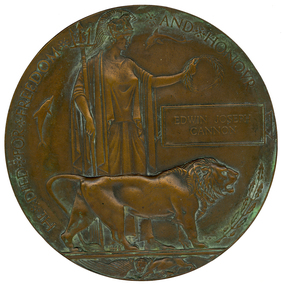
Medal - Numismatics, 'Dead Man's Penny' for Edwin Joseph 'Ted' Cannon, c1919
... The Dead Man’s Penny was accompanied by a letter from King George V, stating ‘I join with my grateful people in sending you this memorial of a brave life given for others in the Great War’....The Dead Man’s Penny was accompanied by a letter from King George V, stating ‘I join with my grateful people in sending you this memorial of a brave life given for others in the Great War’. ...The Dead Man’s Penny is a commemorative medallion which was presented to the next-of-kin of the men and women from England and the Empire who died during World War One. The Dead Man’s Penny was accompanied by a letter from King George V, stating ‘I join with my grateful people in sending you this memorial of a brave life given for others in the Great War’.[http://nma.gov.au/blogs/education/2010/11/14/dead-mans-penny/] Popularly known as the "Dead Man’s Penny", because of the similarity in appearance to the somewhat smaller penny coin. 1,355,000 plaques were issued, which used a total of 450 tonnes of bronze, and continued to be issued into the 1930s to commemorate people who died as a consequence of the war. [http://en.wikipedia.org/wiki/Memorial_Plaque_(medallion)] It was decided that the design of the plaque was to be picked from submissions made in a public competition. Over 800 designs were submitted and the competition was won by the sculptor and medallist Edward Carter Preston with his design called Pyramus, receiving a first place prize of £250.[http://en.wikipedia.org/wiki/Memorial_Plaque_(medallion)] They were initially made at the Memorial Plaque Factory, 54/56 Church Road, Acton, W3, London from 1919. Early plaques did not have a number stamped on them but later ones have a number stamped behind the lion's back leg. [http://en.wikipedia.org/wiki/Memorial_Plaque_(medallion)] Ted Cannon's plaquette does not have a stamped number. Ted Cannon was a gifted artist and cartoonist who studied at the Ballarat School of Mines Technical Art School. During the Battle of Pozieres on the Western Front Ted Cannon worked with the Scout Platoon sketching the enemy's gun emplacements. Ted proved invaluable to the Brigade and brought he came under the attention of the Australian High Command. On 13 September 1916 Ted was given a special assignment for General C.B.B. White. Ted was sent out forward of the Old Mill at Verbrandenmolen (in the Ypres Salient) to draw a panorama of the German lines in the area from Hill 60 to The Bluff. It was a hazardous task and Ted was warned to be careful. Tragically he was sniped by an enemy machine-gunner and sustained severe abdominal wounds. Stretcher-bearers rushed him to the 17th Casualty Clearing Station where he was operated on by the doctors at 8.30 that night. With little chance of success, but ever resilient, Ted remained conscious almost to the end. He died early in the morning of the 14 September 1916. His body was buried in the large Military Cemetery at Lijssenthoek. The effects of the late Ted Cannon were returned to his parents. These were an autograph book, three brushes, prayer book, housewife, whistle, book, hymn book, curios. Another listing gives his effects as "identity disc, letters, photos, wallet, 2 books, Mexican Dollar, 1 cent (Ceylon), 3 German Straps, Fountain Pen, Cigarette-holder, Franc Note, 50 centimes Note, devotional book, mirror, rosary, scapula, metal ring, two combs, book of views, nail clippers, badges, tie clip, Egyptian stamp.[http://recordsearch.naa.gov.au/scripts/Imagine.asp?B=3202589] Ted Cannon was an only child. It is not known how the 'Dead Man's Penny' came into the ownership of the donor, but it is thought that it may have been left in a house owned by the donor's mother. Further information on Ted Cannon can be found at http://bih.ballarat.edu.au/index.php/Edwin_J._Cannon and http://www.ballarat.edu.au/about-ub/history/art-and-historical-collection/ub-honour-roll/c/edwin-joseph-ted-cannon-1895-1916Large bronze medallion or plaquette featuring an image of Lady Britannia surrounded by two dolphins (representing Britain’s sea power) and a lion (representing Britain) standing over a defeated eagle (symbolising Germany). Around the outer edge of the medallion are the words ‘He died for freedom and honour’. Next to Lady Britannia is the deceased solider’s name, with no rank provided to show equality in their sacrifice. (http://nma.gov.au/blogs/education/2010/11/14/dead-mans-penny) The plaque was distributed throughout the British Empire, and the first plaques were distributed in Australia in 1922 "Returned home" by W. & O. Mayne, 2013. ted cannon, edwin joseph cannon, cannon, world war 1, world war -
Federation University Historical Collection
Book - Catalogue, Art by Wendouree ... Creative Endeavours, 2011
... Penny Bryne...Lloyd Crump...Roy Dalgarno...Margaret Delahuntley Spencer...Mark Douglass...John Eagle...Jennifer Franklin...Gilda Gude...Nornie Gude...LEila Guyner...Fiona Hiscock...Andeson Hunt...Ena Joyce...Robyn Lea...Kerrie LEishman...Jim McKay...James McMurtie...John Pasquarelli...Julien Phillips...Mary Rasmussen...Rodney Read...Joanna Ruchel...George...Ballarat Grammar School Artists David Thomas John Jones Bob Bath herbert werner frederick de nully Bob Braszell Ross Adams Tiffany Ambler Rosemary Anderson Clarice Beckett JOanne Blight Penny Bryne Lloyd Crump Roy Dalgarno Margaret Delahuntley Spencer Mark Douglass John Eagle Jennifer Franklin Gilda Gude Nornie Gude LEila Guyner Fiona Hiscock Andeson Hunt Ena Joyce Robyn Lea Kerrie LEishman Jim McKay James McMurtie John Pasquarelli Julien Phillips Mary Rasmussen Rodney Read Joanna Ruchel George Seddon Sue Sedgwick Beverley Singleton Steve Walsh Marshall White Naomi White David Williams Konrad Winkler Laura Woodward A booklet highlighting artists who were educated at Ballarat Grammar School. ...A booklet highlighting artists who were educated at Ballarat Grammar School.ballarat grammar school, artists, david thomas, john jones, bob bath, herbert werner frederick de nully, bob braszell, ross adams, tiffany ambler, rosemary anderson, clarice beckett, joanne blight, penny bryne, lloyd crump, roy dalgarno, margaret delahuntley spencer, mark douglass, john eagle, jennifer franklin, gilda gude, nornie gude, leila guyner, fiona hiscock, andeson hunt, ena joyce, robyn lea, kerrie leishman, jim mckay, james mcmurtie, john pasquarelli, julien phillips, mary rasmussen, rodney read, joanna ruchel, george seddon, sue sedgwick, beverley singleton, steve walsh, marshall white, naomi white, david williams, konrad winkler, laura woodward -
 Ballarat Clarendon College
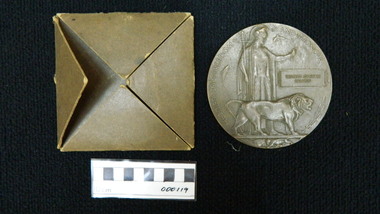
Memorial plaque
... penny...king-george...Captain (then Lieut) Bob Salmon M.C. on one occasion worked for 7 nights straight in No Man's Land and is credited with rescuing nearly 300 of our wounded." wiff-salmon world-war-one death-penny king-george war-memorabilia ballarat-college royal-flying-corps 1912 wilfred-graham-salmon Inscribed around face of medallion: He died for freedom and honour A rectangular tablet cast on front of medallion inscribed 'Wilfred Graham Salmon'. ...The WWI Death Plaque (Death Penny) was issued to the next of kin of servicemen/women who fell in the Great War 1914 -1918.The memorial plaque would be accompanied by a Memorial Scroll, a letter from Buckingham Palace and often a letter from the deceased's commanding officer. They would not usually arrive as a single package, but as a series of separate mailings. In this case we have the letter from Buckingham Palace. Wilfred (Wiff) Graham Salmon attended Ballarat College 1902 - 1910. He enlisted in 1915 and embarked as a driver with the 4th Field Artillery Brigade. He transferred to the Royal Flusing Corps in 1916. He was killed fighting raiders over the Thames Valley near London on 7 July 1917. 'Wiff' was reputedly the first person to die defending London from a foreign invader since the time of the Norman Conquest. His brother Robert Arthur Salmon was also an old collegian. Other possible family members who are old collegians include Nellie Florence Salmon (ent CPLC 1907; DB 1.8.1899), John Walter Salmon (ent BC 1898; DB 22.11.1889), Geoffrey Salmon (ent BC 1910; DB 3/11/1896). Wilfred's brother Robert (Bob) Salmon is mentioned in the school's 1964 history by Gordon Meins p.68..."Captain (then Lieut) Bob Salmon M.C. on one occasion worked for 7 nights straight in No Man's Land and is credited with rescuing nearly 300 of our wounded." Round disk cast in bronze gunmetal, which incorporates the following; an image of Britannia holding an oak spray with leaves and acorns, an imperial lion, two dolphins representing Britain's sea power, the emblem of Imperial Germany's eagle being torn to pieces by another lion. The medallion is incased in a heavy card envelope and is accompanied by a letter signed by King George Inscribed around face of medallion: He died for freedom and honour A rectangular tablet cast on front of medallion inscribed 'Wilfred Graham Salmon'.wiff-salmon, world-war-one, death-penny, king-george, war-memorabilia, ballarat-college, royal-flying-corps, 1912, wilfred-graham-salmon -
 Ballarat Clarendon College
Albert Telfer White (1918) collection
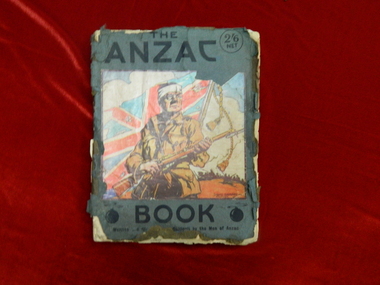
... Collections of items including: Bayonet, Carl Eickhorn, Solingen, (29.A.159 engraved on handle) Trench shovel The ANZAC book 1916 (flyleaf inscribed: No 2012 / Pte A T White / H Quarters / 22nd Battalion / 6th Inf Brigade / France) Gallipoli medal with documentation First World War Mothers’ and Widows’ Badge Next of Kin Memorial Plaque (Death Penny) and accompanying letter from King George V Imperial War Graves Commission documentation and photograph Australia Graves Services In Memory card and photograph Documentation relating to Australian War Memorial Roll of Honour, Learmonth Memorial Wall, Ballarat and Learmonth Avenues of Honours Documentation from the Australian Army Records office Documentation relating to Military Medal, 1914/15 Star, British War Medal and Victory Medal (whereabouts unknown, November 2016) Portraiture of Albert Telfer White as a child, as a young adult (civilian dress), in full kit (A I E F formal), and at camp 1915 Portraiture of sisters Cis, Addie, Bessie, Evelyn (with personal inscriptions) Four postcards (one with letter from Albert ‘at sea’ to his mother - undated) Death notice (unreferenced newspaper clipping) Biographical and family relationship details Photocopy of The White Family 1906 showing (standing) Adeline, Leslie, Harold (father), Muriel (mother), William; (seated) Albert, John (Grandfather), Elizabeth, Allan, Elizabeth (Grandmother), Evelyn (baby) and Benjamin ...Collections of items including: Bayonet, Carl Eickhorn, Solingen, (29.A.159 engraved on handle) Trench shovel The ANZAC book 1916 (flyleaf inscribed: No 2012 / Pte A T White / H Quarters / 22nd Battalion / 6th Inf Brigade / France) Gallipoli medal with documentation First World War Mothers’ and Widows’ Badge Next of Kin Memorial Plaque (Death Penny) and accompanying letter from King George V Imperial War Graves Commission documentation and photograph Australia Graves Services In Memory card and photograph Documentation relating to Australian War Memorial Roll of Honour, Learmonth Memorial Wall, Ballarat and Learmonth Avenues of Honours Documentation from the Australian Army Records office Documentation relating to Military Medal, 1914/15 Star, British War Medal and Victory Medal (whereabouts unknown, November 2016) Portraiture of Albert Telfer White as a child, as a young adult (civilian dress), in full kit (A I E F formal), and at camp 1915 Portraiture of sisters Cis, Addie, Bessie, Evelyn (with personal inscriptions) Four postcards (one with letter from Albert ‘at sea’ to his mother - undated) Death notice (unreferenced newspaper clipping) Biographical and family relationship details Photocopy of The White Family 1906 showing (standing) Adeline, Leslie, Harold (father), Muriel (mother), William; (seated) Albert, John (Grandfather), Elizabeth, Allan, Elizabeth (Grandmother), Evelyn (baby) and Benjamin Albert Telfer White (1918) collection ...Significant items relating to Albert Telfer White who entered Ballarat College April 1912 and left December 1918. Albert was born 29 June 1897 at his home 'Ashford Vale" farm, Cuthbert's Road, Cardigan. Albert, a second generation Australian, was the fourth son and sixth of eleven children born to dairy farmer John White and his wife Elizabeth, nee Douglas. Albert attended Bunker's Hill State School prior to enrolling at Ballarat College. After College he obtained employment with the engineering firm Ronaldson and Tippett in Ballarat. Following his eighteenth birthday Albert enlisted in the AIF in Ballarat with the rank of Private, No 2012. He embarked for the Middle East with 23rd Battalion on 26 August 1915 and was 'taken on strength at the Gallipoli Peninsular 25 October 1915". On 10 January 1916 Albert was posted to Alexandria, Egypt and during this time he was able to meet with his aunt Rose Douglas, an Australian Army Nursing Sister. This was a great comfort to his family. Albert was sent to France 19 March 1916 and transferred to the 22nd Battalion. He was mentioned in dispatches for 'good and gallant conduct' 5 August (1917?). Albert was hospitalised 30 March 1918, rejoined 22nd Battalion 3 June 1918, wounded in action 3 October 1918 but died of wounds at Rouen 10 October 1918. news of his death was received by his family n Australia just prior to the armistice. Albert Telfer White's sacrifice is commemorated at Ballarat College, Avenue of Honour Ballarat (Tree 1214), Ballarat Shire Honour Avenue Learmonth (Tree 163) and the Australian War Memorial Canberra. (These notes provided by family November 2016)Collections of items including: Bayonet, Carl Eickhorn, Solingen, (29.A.159 engraved on handle) Trench shovel The ANZAC book 1916 (flyleaf inscribed: No 2012 / Pte A T White / H Quarters / 22nd Battalion / 6th Inf Brigade / France) Gallipoli medal with documentation First World War Mothers’ and Widows’ Badge Next of Kin Memorial Plaque (Death Penny) and accompanying letter from King George V Imperial War Graves Commission documentation and photograph Australia Graves Services In Memory card and photograph Documentation relating to Australian War Memorial Roll of Honour, Learmonth Memorial Wall, Ballarat and Learmonth Avenues of Honours Documentation from the Australian Army Records office Documentation relating to Military Medal, 1914/15 Star, British War Medal and Victory Medal (whereabouts unknown, November 2016) Portraiture of Albert Telfer White as a child, as a young adult (civilian dress), in full kit (A I E F formal), and at camp 1915 Portraiture of sisters Cis, Addie, Bessie, Evelyn (with personal inscriptions) Four postcards (one with letter from Albert ‘at sea’ to his mother - undated) Death notice (unreferenced newspaper clipping) Biographical and family relationship details Photocopy of The White Family 1906 showing (standing) Adeline, Leslie, Harold (father), Muriel (mother), William; (seated) Albert, John (Grandfather), Elizabeth, Allan, Elizabeth (Grandmother), Evelyn (baby) and Benjamin The ANZAC book 1916 (flyleaf inscribed: No 2012 / Pte A T White / H Quarters / 22nd Battalion / 6th Inf Brigade / France) Gallipoli medal: engraved on reverse: A T WHITE Embossed lettering on death penny: ALBERT TELFER WHITE Handwritten on reverse of portraits: Lovingly yours / Cis / 21/11/17; your / loving sister / Addie; your loving / sister / Evelyn; Yours lovingly / Bessie Handwritten on back of postcard of ship H M A T 'Anchisis' 14.3.16: Dear Mother, I am sending you a card / of the boat we are on. Our deck is right / on the back. I have marked it with an X. / We are not allowed to put the date on or / where we are. I am sitting on the deck now / holding the card in my hand so it is hard / to write. We are together yet haven't been / separated Bill, Matt and myself. Haven't / had anything to do. I will write a couple / of letters now. Albert Handwritten on back of postcard photograph of Albert at camp: 30th September 1915 / Dear Mother / There is a studio at the / camp so Matt and I got our Photos / taken yesterday morning, & got them/ this morning. I am sending / Ciss one of Matt.albert-telfer-white, ballarat college, world-war-one, avenue-of-honour -
 Federation University Historical Collection
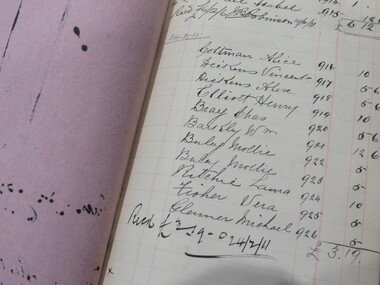
Book - Ledger, Ballarat Technical Arts School Student Fees Ledger, 1907-1914, 1907-1914
... penny...r. bieske...f. pattendon...e.g. bailymay booth...nelliw evans...gertie evans...e. baker...c. brittain...ralph leyland...e. tipping...mary sheehan...may chenery...j. bickart...e. perry...m. bessemeres...george...The Ballarat Technical Art School opened in 1907 as a division of the Ballarat School of Mines. ballarat technical art school h.w. malin lilliam moyle queens college .doris walker emily turnbull viola jackson c.w. sergeant hilda wardell hettie gilbert alice benoit ella morrow d.g. johnston p. brokenshire edna tweedie millicent white dorisn walker isla gray mollie brophy annie speak c.v. clegg agnes w. reid nin z. woinarski bessie yates bessie landles jean mcdonald harold herbert harold h. herbert lizzie develin florrie sides fletcher j. crane catherine ronald gertrude owen m.d. hamilton clara v. clegg leslie sim ida barker charlotte turner florrie barnes james n. boyce leo coburn carrie peters mabel chapman fred mcintyre elsie rich henry c. hart g. bannerman jack meadows preston white lyn hamilton a. murray lillian moyle nina davies maggie kittelty m. snell samuel mee agnes carley ida delina katherine dillon nellie mccubbin lila lynch e. owen g. owen d. owen alice m. coltman ruby bawden elsie joy ellen j. norton herbert rich g. medwell maria loader agnes gibb quennie young a.e. kennedy o. geddes ruby l. smith roy proctor elsie naples w.b.g. mcdonald cecil brittain elsie fawcett g. calvert albert coates catherine hogan may vercoe daisy saunders dora furness matilda johnson gordon steele c.w. sargeant e. cornell irene hewitt wilie finn clare clegg jessie mccallum c.f. white e. kilsall kate morris ella garrett winnie trompf ellie mckissock oswald gedded doris walker elsie tipping rose smith daisy lewellin eliza frank una e. fitts may wasley grace medwell mollie laffey a. duck pearl sergent e. penny r. bieske f. pattendon e.g. bailymay booth nelliw evans gertie evans e. baker c. brittain ralph leyland e. tipping mary sheehan may chenery j. bickart e. perry m. bessemeres george richardson f. mcintyre h. fern d. little o. tolputt arthur toop p. lakeland charles j. rawlings jack hooly thomas pattenden elsie finch ernest murfett gordone steele frank power n.j. coote william ewart patrick ryan david walker john perry vera lindsay robert cooper violet leadbeater maggie skelton clara mann laura ritchie james m. johnston ida brown ethel butcher michael glenane f.j. branigan keith booth henry elliot reg cutter stan westcott frank king lottie finch ladies art association pauline lakeland cyril thermeyer albert berryman stanley lindsay joseph bickart alf berryman leo hewitt hilda tweedie vera carroll lionel davies isabel kiel alex dickens henry elliott mollie buley meg moore harrie fern eileen conway minnie buchanan thomas price edward stewart joy lugg olive grainger m. heinz d. gooch p. moon g. bailey charles bray daisy dickman george calvert florence sides tom hannah eileen blake ethel benoit ruby oaff chrissie ware harrie wilson muriel cornel phoebe wilkinson fanny kay john norcott stewart o'loughlan m. featherstone f. tweedie a. corbould d. allanby f. buchanan l. cody v. fisher r. murphy hilda jamieson bessie eason phyllis palmer lila hall vera hall anie walton ruby stevens dorotthy davison ethel hancock anas ross lizzie williams lional davies leslie page frank page lilian bell may henry doreen mclean dorothy dobson helen mcintosh charles fraser murial cornell j.b. sutcliffe dorothy dawson emma mavin agnes lumsden virginia kerr emily figgis beryl craddock winnie treloar gladstone procter f.w. procter Effie Baker Ledger with brown and blue marbled paper cover and brown tape spine. ...The Ballarat Technical Art School opened in 1907 as a division of the Ballarat School of Mines.Ledger with brown and blue marbled paper cover and brown tape spine. Some names are listed under keywords.ballarat technical art school, h.w. malin, lilliam moyle, queens college, .doris walker, emily turnbull, viola jackson, c.w. sergeant, hilda wardell, hettie gilbert, alice benoit, ella morrow, d.g. johnston, p. brokenshire, edna tweedie, millicent white, dorisn walker, isla gray, mollie brophy, annie speak, c.v. clegg, agnes w. reid, nin z. woinarski, bessie yates, bessie landles, jean mcdonald, harold herbert, harold h. herbert, lizzie develin, florrie sides, fletcher j. crane, catherine ronald, gertrude owen, m.d. hamilton, clara v. clegg, leslie sim, ida barker, charlotte turner, florrie barnes, james n. boyce, leo coburn, carrie peters, mabel chapman, fred mcintyre, elsie rich, henry c. hart, g. bannerman, jack meadows, preston white, lyn hamilton, a. murray, lillian moyle, nina davies, maggie kittelty, m. snell, samuel mee, agnes carley, ida delina, katherine dillon, nellie mccubbin, lila lynch, e. owen, g. owen, d. owen, alice m. coltman, ruby bawden, elsie joy, ellen j. norton, herbert rich, g. medwell, maria loader, agnes gibb, quennie young, a.e. kennedy, o. geddes, ruby l. smith, roy proctor, elsie naples, w.b.g. mcdonald, cecil brittain, elsie fawcett, g. calvert, albert coates, catherine hogan, may vercoe, daisy saunders, dora furness, matilda johnson, gordon steele, c.w. sargeant, e. cornell, irene hewitt, wilie finn, clare clegg, jessie mccallum, c.f. white, e. kilsall, kate morris, ella garrett, winnie trompf, ellie mckissock, oswald gedded, doris walker, elsie tipping, rose smith, daisy lewellin, eliza frank, una e. fitts, may wasley, grace medwell, mollie laffey, a. duck, pearl sergent, e. penny, r. bieske, f. pattendon, e.g. bailymay booth, nelliw evans, gertie evans, e. baker, c. brittain, ralph leyland, e. tipping, mary sheehan, may chenery, j. bickart, e. perry, m. bessemeres, george richardson, f. mcintyre, h. fern, d. little, o. tolputt, arthur toop, p. lakeland, charles j. rawlings, jack hooly, thomas pattenden, elsie finch, ernest murfett, gordone steele, frank power, n.j. coote, william ewart, patrick ryan, david walker, john perry, vera lindsay, robert cooper, violet leadbeater, maggie skelton, clara mann, laura ritchie, james m. johnston, ida brown, ethel butcher, michael glenane, f.j. branigan, keith booth, henry elliot, reg cutter, stan westcott, frank king, lottie finch, ladies art association, pauline lakeland, cyril thermeyer, albert berryman, stanley lindsay, joseph bickart, alf berryman, leo hewitt, hilda tweedie, vera carroll, lionel davies, isabel kiel, alex dickens, henry elliott, mollie buley, meg moore, harrie fern, eileen conway, minnie buchanan, thomas price, edward stewart, joy lugg, olive grainger, m. heinz, d. gooch, p. moon, g. bailey, charles bray, daisy dickman, george calvert, florence sides, tom hannah, eileen blake, ethel benoit, ruby oaff, chrissie ware, harrie wilson, muriel cornel, phoebe wilkinson, fanny kay, john norcott, stewart o'loughlan, m. featherstone, f. tweedie, a. corbould, d. allanby, f. buchanan, l. cody, v. fisher, r. murphy, hilda jamieson, bessie eason, phyllis palmer, lila hall, vera hall, anie walton, ruby stevens, dorotthy davison, ethel hancock, anas ross, lizzie williams, lional davies, leslie page, frank page, lilian bell, may henry, doreen mclean, dorothy dobson, helen mcintosh, charles fraser, murial cornell, j.b. sutcliffe, dorothy dawson, emma mavin, agnes lumsden, virginia kerr, emily figgis, beryl craddock, winnie treloar, gladstone procter, f.w. procter, effie baker -
 Federation University Historical Collection
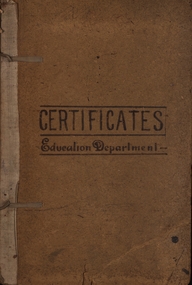
Book - Documents, Certificates - Education Department - Ballarat School of Mines & Ballarat Junior Technical School, 1916-1945
... george gingell...gladys kopke...gilbert tippert...a e caldercoat...tessie bibby...thelma coulter...william mayo...stanley hillman...james capuano...r g benn...a h keast...f h penny...These records were written to record the names of the students of the Ballarat School of Mines who attained their certificates in the areas of their study.It covers the years between 1916 and 1945. ballarat school of mines certificates education department victoria awards ashley baker c c brittain john dulfer a r lepp h m rowlands william skilbeck n c timworth l h vernon g c b williams albert e williams a l ronaldson allan bernaldo guido brelaz p chatham w h clutterbuck h a sutherland r valentine h g wakeling w l coltman r s dale e l fidge a a gribble carl schache c h beanland e biddington r goodyear amy heintz george baragwanath a hepburn w h morrow thomas o'bern j a bath harry d o'bern edwin a brophy alfred boyce andrew elder alan v gilpin angus r leask arthur lockett ernest h praetz hubert e siemering john e skilbeck edgar j t tippett noel brelaz lenard curnow marjory dermer ivan j galloway john o'loughlin raymond proctor maud williams henry corrie alan ludbrook harry nicholls j blaikie h ewert h goldsmith h thum-yuem h almeida r falla l hillman j scarff girls junior technical certificate 1926 olga dulfer annie dellaca mary hopwood g a fella r hepburn p jacobi g rumpff f lester lorna f geary robert m serjeant f longhurst kingsley callister nellie campi george gingell gladys kopke gilbert tippert a e caldercoat tessie bibby thelma coulter william mayo stanley hillman james capuano r g benn a h keast f h penny a w pound e a steane l g valpied e j capuano alfred w barnes harvey j maddern philip c maddern allan w pound james h pound william selkirk a d senior eric a steane geoffrey w shorten r w warnock i a h adams valda m penberthy n l spielvogel h c tippett d b lamb marjory coward norman jelbart victor lepp alan c leviston edwin mclenehan joy e young chung b hollioake a l spence allan pilvin e j skilbeck k g haines All handwritten A cardboard foolscap folder containing lined and ruled pages containing the handwritten names and awards of the students of the Ballarat School of Mines and some from the Ballarat Junior Technical School, receiving certificates from the Victorian Education Department commencing in 1916 and finishing in 1945. ...These records were written to record the names of the students of the Ballarat School of Mines who attained their certificates in the areas of their study.It covers the years between 1916 and 1945.A cardboard foolscap folder containing lined and ruled pages containing the handwritten names and awards of the students of the Ballarat School of Mines and some from the Ballarat Junior Technical School, receiving certificates from the Victorian Education Department commencing in 1916 and finishing in 1945. Towards the end are several pages of type written records. Glued to the front cover are copies of three letters from the Education Department dated 1923, 1927 and 1930.All handwritten ballarat school of mines, certificates, education department victoria, awards, ashley baker, c c brittain, john dulfer, a r lepp, h m rowlands, william skilbeck, n c timworth, l h vernon, g c b williams, albert e williams, a l ronaldson, allan bernaldo, guido brelaz, p chatham, w h clutterbuck, h a sutherland, r valentine, h g wakeling, w l coltman, r s dale, e l fidge, a a gribble, carl schache, c h beanland, e biddington, r goodyear, amy heintz, george baragwanath, a hepburn, w h morrow, thomas o'bern, j a bath, harry d o'bern, edwin a brophy, alfred boyce, andrew elder, alan v gilpin, angus r leask, arthur lockett, ernest h praetz, hubert e siemering, john e skilbeck, edgar j t tippett, noel brelaz, lenard curnow, marjory dermer, ivan j galloway, john o'loughlin, raymond proctor, maud williams, henry corrie, alan ludbrook, harry nicholls, j blaikie, h ewert, h goldsmith, h thum-yuem, h almeida, r falla, l hillman, j scarff, girls junior technical certificate 1926, olga dulfer, annie dellaca, mary hopwood, g a fella, r hepburn, p jacobi, g rumpff, f lester, lorna f geary, robert m serjeant, f longhurst, kingsley callister, nellie campi, george gingell, gladys kopke, gilbert tippert, a e caldercoat, tessie bibby, thelma coulter, william mayo, stanley hillman, james capuano, r g benn, a h keast, f h penny, a w pound, e a steane, l g valpied, e j capuano, alfred w barnes, harvey j maddern, philip c maddern, allan w pound, james h pound, william selkirk, a d senior, eric a steane, geoffrey w shorten, r w warnock, i a h adams, valda m penberthy, n l spielvogel, h c tippett, d b lamb, marjory coward, norman jelbart, victor lepp, alan c leviston, edwin mclenehan, joy e young chung, b hollioake, a l spence, allan pilvin, e j skilbeck, k g haines -
Federation University Historical Collection
Booklet, Ballarat School of Mines Students' Magazine, 1930, 1930
... penny...w. useback...r. andre...h. jones...l. frees...c. annand...j. colbourne...h. caddy...v. leigh...m. grace...k. windsor...o. lyons...i. jackman...m. norris...o. dulfer...k. useback...n. saunders...b. saunders...f. saunders...g. wilcock...miss milvena...m. fogarty...e. george...-colonet rober law r. s. russell sir humphry davy a. j. bell henry kum yuen t. h. trengrove r. downey a. sussex j. alexander l. prendergast j. walters j. downey a. hall-jones a. fletcher e. loveland r. elsworth a. richards j. allen k. mclachlan f. penny w. useback r. andre h. jones l. frees c. annand j. colbourne h. caddy v. leigh m. grace k. windsor o. lyons i. jackman m. norris o. dulfer k. useback n. saunders b. saunders f. saunders g. wilcock miss milvena m. fogarty e. george j. rowling g. dunstan e. j. t. tippett e. h. schache g. e. baragwanath richard young c. c. fisher frances m. holmes Maroon soft cover with gold inscriptions and border on front cover, 56 pages including advertisements. ...Ballarat School of Mines Students' Magazine, 1930, Editorial, Obituary - Daniel Walker & Lieut.-Colonel Robert Law, Personal, Social and Educational, Fumes from the Lab, Sir Humphry Davy, News from China, Arts & Crafts Gossip, Sport, Echoes of the Past, Commercial Notes, The Junior Techs, The "Chem." Trip 1930 Maroon soft cover with gold inscriptions and border on front cover, 56 pages including advertisements.ballarat school of mines students' magazine 1930, staff, sports, s. hillman, a. mclachlan, j. young, r. montgomery, a. williams, a. raworth, a. bosher, j. maude, dr. j. r. pound, b. pemberthy, w. watson, daniel walker, lieut.-colonet rober law, r. s. russell, sir humphry davy, a. j. bell, henry kum yuen, t. h. trengrove, r. downey, a. sussex, j. alexander, l. prendergast, j. walters, j. downey, a. hall-jones, a. fletcher, e. loveland, r. elsworth, a. richards, j. allen, k. mclachlan, f. penny, w. useback, r. andre, h. jones, l. frees, c. annand, j. colbourne, h. caddy, v. leigh, m. grace, k. windsor, o. lyons, i. jackman, m. norris, o. dulfer, k. useback, n. saunders, b. saunders, f. saunders, g. wilcock, miss milvena, m. fogarty, e. george, j. rowling, g. dunstan, e. j. t. tippett, e. h. schache, g. e. baragwanath, richard young, c. c. fisher, frances m. holmes -
 Flagstaff Hill Maritime Museum and Village
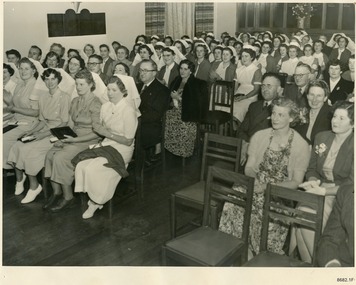
Work on paper - Photograph with envelope, Dr. W. R. Angus Warrnambool & District Base Hospital, c1951
... This sepia photograph is from circa 1950s and came in an envelope with a postage mark commemorating the Australian Jubilee of 1901 and a 2-penny stamp with King George VI. The photo includes Dr. ...This sepia photograph is from circa 1950s and came in an envelope with a postage mark commemorating the Australian Jubilee of 1901 and a 2-penny stamp with King George VI. The photo includes Dr. ...This photograph is part of the “W.R. Angus Collection” that includes historical medical equipment, surgical instruments and material once belonging to Dr Edward Ryan and Dr Thomas Francis Ryan, (both of Nhill, Victoria) as well as Dr Angus’ own belongings. The Collection’s history spans the medical practices of the two Doctors Ryan, from 1885-1926 plus that of Dr Angus, up until 1969. This sepia photograph is from circa 1950s and came in an envelope with a postage mark commemorating the Australian Jubilee of 1901 and a 2-penny stamp with King George VI. The photo includes Dr. Angus in the second row wearing glasses, his wife Mrs. Angus seated behind in the third row. John Lindsay, Committee Member WDBH, is possibly in the third row on the right. It is probably Sister June H. Stewart, Matron, wearing glasses is seated behind Mrs. Angus. Mr. J. Taylor was Hon. Treasurer. All these names are inscribed on the back of the photograph. The envelope that the photo came is has a note “NURSES GRADUATION WARRNAMBOOL HOSPITAL ?1951/PHOTOGRAPH OF GRADS. The 1951 Report of the Warrnambool and District Base Hospital cites McMillian as a Committee Member, Mr. Taylor as Honorary Treasurer and Dr. Angus was Medical Officer to Diseases of the Eye, Ear, Nose and Throat. It is wondered if this building is the one used by the hospital and removed to 54 Banyan Street, Warrnambool for the use of Legacy? The W.R. Angus Collection is significant for still being located at the site it is connected with, Doctor Angus being the last Port Medical Officer in Warrnambool. The collection of medical instruments and other equipment is culturally significant, being an historical example of medicine from late 19th to mid-20th century. Dr Angus assisted Dr Tom Ryan, a pioneer in the use of X-rays and in ocular surgery.Sepia photograph of nurses and guests seated in rows at an official function. MR McMILLAN/MR J NED TAYLOR/MRS J TAYLOR/ SISTER STEWART/ DR W R ANGUS/MRS ANGUS/Ralph Illidge WARRNAMBOOL on the back of the photograph.flagstaff hill, warrnambool, maritime village, maritime museum, flagstaff hill maritime museum and village, shipwreck coast, great ocean road, dr. w.r. angus, dr. roy angus, warrnambool & district base hospital, nurses graduation, ralph illidge, 1951 warrnambool, jubilee year australia, 1901-1951, ophthalmology -
 Orbost & District Historical Society
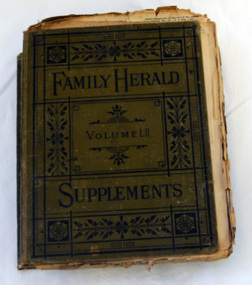
books, William Clowes and Sons Limited, Family Herald Supplements, 1897
... penny. These are Volumes LX1; XX11; LX; L11 and L11. The Family Herald was a weekly domestic magazine from 1843 - 1949. Launched by George...penny. These are Volumes LX1; XX11; LX; L11 and L11. The Family Herald was a weekly domestic magazine from 1843 - 1949. Launched by George ...The family Herald Supplements were advertised as "the favourite ladies' magazine, a pioneer of penny novels with one complete novel in each issue" It was issued every Monday and cost one penny. These are Volumes LX1; XX11; LX; L11 and L11. The Family Herald was a weekly domestic magazine from 1843 - 1949. Launched by George Biggs in 1842, it was re-established in May 1843 with James Elishama Smith and mechanised printing.Women’s magazines increased in popularity throughout the 1800s as printing technology advanced and consumerism grew. In the latter half of the 1880s and 1890s, magazine publication and circulation became less expensive and more accessible.These volumes are typical of the popular magazines designed especially for women. A set of five volumes of "The Family Herald Supplements". All have olive green covers with black print ornate borders.magazine journal family-herald-supplement -
 Flagstaff Hill Maritime Museum and Village
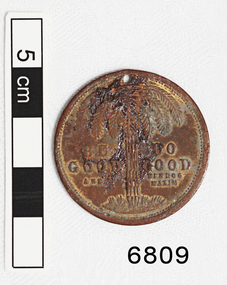
Medal - Commemorative, Edward William Cole, Coles Book Arcade, Federation of the World, 1885
... George Dean suggests that the medals were also given in change at Christmas time, and could be used to operate amusement machines (presumably including the symphonion (clockwork instrument) and hens, although these only required one penny to operate). ...George Dean suggests that the medals were also given in change at Christmas time, and could be used to operate amusement machines (presumably including the symphonion (clockwork instrument) and hens, although these only required one penny to operate). ...The medal was issued by Cole's Book Arcade, with the proverb “Federation of the World, Be Good and Do Good”, circa 1885. This nickel-plated medal is one of a series of medals offering maxims and proverbs issued by E.W. Cole (Edward William Cole), owner of his Book Arcade. He called the medals 'little missionaries for the spread of educative knowledge' According to Sydney Endicott, an employee of Cole, customers were charged three pence for these medals (which he prefers to call tokens) which, when the Arcade was particularly busy, gave them admission to the second-hand books' gallery where the orchestra played. Each medal could be exchanged for thee pence worth of goods, but most were kept. The pierced ones were sometimes worn as pendants or on pocket watch chains. The medals served as perpetual advertisements of the Arcade (Victorian Historical Magazine, February 1962). George Dean suggests that the medals were also given in change at Christmas time, and could be used to operate amusement machines (presumably including the symphonion (clockwork instrument) and hens, although these only required one penny to operate). Cole had his first medal stuck in 1879 and his last one in 1903. The medals were variously gilded, silvered or bronzed, replicating the coinage and then circulating, or plated with nickel or white metal. The metal blanks were usually made of copper or brass, but some might have been bronze; aluminium was also sometimes used. In all, perhaps 300,000 medals were struck, in 97 different types or designs. Only 50 types are known to have circulated according to George Dean's 1988 book "A Handbook on E.W. Cole: His Book Arcade, Tokens and Medals'.The medal is significant for its association with Cole's Book Arcade in Melbourne, established in the 1870s. The unique shop not only had new books, but secondhand books, and many curious and interesting objects and musical treats. Cole's Book Arcade, at the time, was known as one of the wonders of 'marvellous Melbourne. it closed in 1929.Nickle plated bronze medal or token, round, featuring a tree fern and a thought provoking maxim. The medal was issued by E W Cole, Book Arcade, in Melbourne. Obverse: "BE GOOD AND" "DO GOOD" "HINDOO MAXIM" "PURE THOUGHTS" "PURE WORDS" "PURE DEEDS" "PARSES MAXIM" Reverse: "PURE / THOUGHTS / PURE WORDS / PURE DEEDS / PARSEE MAXIM" and below rainbow in tiny letters; "FEDERATION OF THE / WORLD MEDALS / ISSUED / BY E.W. COLE / BOOK ARCADE MELBOURNE"flagstaff hill, warrnambool, flagstaff-hill-maritime-museum, maritime-museum, shipwreck-coast, flagstaff-hill-maritime-village, medal, maxims, coles arcade melbourne, federation of the world, advertising token, edward william cole, book arcade, e w cole, cole's book arcade -
 Flagstaff Hill Maritime Museum and Village
Souvenir - Money box, OXO Ltd, ca. 12-5-1937
... George Gilbert of Uruguay to produce Liebig’s Extract of Meat, the forerunner of OXO . In the late 1890s, OXO produced a liquid form of the meat extract and in 1899 registered the OXO trademark worldwide, and in 1900 in the UK. In 1910 the OXO 'penny...George Gilbert of Uruguay to produce Liebig’s Extract of Meat, the forerunner of OXO . In the late 1890s, OXO produced a liquid form of the meat extract and in 1899 registered the OXO trademark worldwide, and in 1900 in the UK. In 1910 the OXO 'penny ...Metal money boxes shaped like common familiar objects became popular in the 18th century. In the 20th century, they were used to promote and advertise events and businesses. In the 1950s metal money boxes shaped like a bank building were given away to children by their parents' bank to encourage them to save money. This metal money box was produced for the company of OXO Ltd of London. It was made specifically as a souvenir of the Coronation of King George VI of England, which happened on May 12, 1937. OXO Ltd. still makes OXO stock cubes, which contain a concentrated meat extract. The cubes are used to flavour soups, gravy, casseroles and other food recipes to enhance their flavour. The cubes are removed from their foil wrapper then crumbled into the dish and mixed with the ingredients. Chemist Justus von Liebig worked with engineer George Gilbert of Uruguay to produce Liebig’s Extract of Meat, the forerunner of OXO . In the late 1890s, OXO produced a liquid form of the meat extract and in 1899 registered the OXO trademark worldwide, and in 1900 in the UK. In 1910 the OXO 'penny' cube was in production and proved very popular. The money box is significant for its connection to British Monarch, King George IV, who reigned from 1932-1952. It is also significant for its connection to the OXO cube, a very well knon brand of food additive from the mid-19th century to current times.Souvenir money box, oval cylinder with domed, pull-off lid and framed coin slot, with seams on each side. It once contained six OXO Cubes. The red tin with gold tin has the Royal Insignia of King George VI and Elizabeth on one side and the Royal medallion-style portrait of King George VI and Elizabeth on the other side. There is an inscription on the base and floral decorations on the sides. It was produced for OXO Ltd, Thames House, London, England, to commemorate the coronation of King George V1 and Elizabeth on May 12th 1937.Logo, Royal Insignia: "[Crown] over "G VI R" Medallion-style Portrait image: "GEORGE VI AND ELIZABETH MAY 12TH 1937" around " (Image of King George VI and Elizabeth) " Printed on base: "CORONATION / SOUVENIR MONEY BOX / CONTAINING / 6 OXO CUBES / BRAND / OXO LTD., THAMES HOUSE, / LONDON, ENGLAND."flagstaff hill, flagstaff hill maritime museum and village, warrnambool, maritime museum, maritime village, great ocean road, shipwreck coast, money box, money safe, commemorative money box, coronation king george iv, 1937, vintage money box, oxo cube, numismatics -
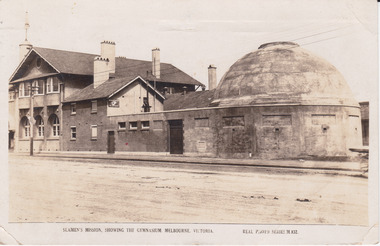 Mission to Seafarers Victoria
Postcard - Postcard, Stamped, Valentines Real Photo Series, Seamen's Mission Showing the Gymnasium, Melbourne, Victoria, c. 1921
... Sepia tone postcard written at the back with green one penny stamp depicting King George V...george v Written in black ink: Address: Mister N. Fleming / 24. Norlington Rd / Leytonstone E 11 / Essex / England SS P. Auckland / Melbourne / 19.4.1926 / Dear Norman / Sepia tone postcard written at the back with green one penny stamp depicting King George V Seamen's Mission Showing the Gymnasium, Melbourne, Victoria Postcard Postcard, Stamped Valentines Real Photo Series ...The postcard addressed to Norman Fleming, was written on the 19th of April 1926This rare postcard is the earliest image showing the newly built gymnasium.Sepia tone postcard written at the back with green one penny stamp depicting King George VWritten in black ink: Address: Mister N. Fleming / 24. Norlington Rd / Leytonstone E 11 / Essex / England SS P. Auckland / Melbourne / 19.4.1926 / Dear Norman / gymnasium, norla dome, flinders street, seamen's mission, mission to seamen, mission to seafarers, walter richmond butler (1864–1949), king george v
