
Showing 93 items matching "giant tree"
-
 Marysville & District Historical Society
Document (item) - Word document, Rene de Koning, The Cumberland Giant Tree, 09-11-2022
... The Cumberland Giant Tree...An account of the early history of the Cumberland Giant Tree near Marysville in Victoria....An account of the early history of the Cumberland Giant Tree near Marysville in Victoria....An account of the early history of the Cumberland Giant Tree near Marysville in Victoria. An account of the early history of the Cumberland Giant Tree near Marysville in Victoria. ...An account of the early history of the Cumberland Giant Tree near Marysville in Victoria.An account of the early history of the Cumberland Giant Tree near Marysville in Victoria. The Big Tree was, at one stage, known to be the tallest hardwood tree in the world standing at 92 meters (301ft, 6 inches). However, it was reduced to 84 meters by a wind storm in 1959. It is a mountain ash. There is a walking track through the forest to the Big Tree.big tree, mountain ash, cambarville, victoria, marysville -
 Emerald Museum & Nobelius Heritage Park
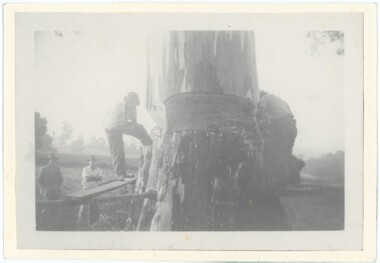
Photograph, Felling a Giant Tree, c. Early 20th Century
... Felling a Giant Tree...Copy 1 Reverse: "Copy only / Felling a giant tree at / Conner's Monbulk date unknown" Copy 2 Annotation: "Took 5 hours & 3 men to saw a / big tree down. ...Each has different handwritten annotations, which are included in this entry. Felling a Giant Tree Photograph ...Logging was a major industry in the region for decades. Before the advent of power tools, loggers would first make a 'scarf' in the trunk - a notch made with axes where the saw can more easily rest - before taking a large saw to the wood to cut through the rest of the trunk.Forestry was a vital industry to the region; this example from Monbulk is a good demonstration of the pre-power tools methods of treecutting.The main item is a black and white photograph mounted on cream card. The reverse of the card is blank with the exception of a museum accession number in the bottom-right. The photograph is centered on a large tree, taking up about the central quarter of the shot. Two men are elevated off the ground on either side of the tree, while two more stand on the ground to the left of the shot looking at the camera. The two men around the tree are in the process of sawing through it, with a large cut (including the 'scarf', a notch made with axes) already visible. There are two other copies of this photograph in our collection, both printed on ordinary printer paper. Each has different handwritten annotations, which are included in this entry.Copy 1 Reverse: "Copy only / Felling a giant tree at / Conner's Monbulk date unknown" Copy 2 Annotation: "Took 5 hours & 3 men to saw a / big tree down. Scarf in first 7ft cross cut saw."industry, monbulk, forestry -
 Horsham Regional Art Gallery
Photograph, Nicholas CAIRE, Giant tree bridge, Gippsland, n.d
... Giant tree bridge, Gippsland...silver albumen photograph on card Giant tree bridge, Gippsland Photograph Nicholas CAIRE ...Gift of Jeff and Jill Jenkinson, 2007silver albumen photograph on card -
 Marysville & District Historical Society
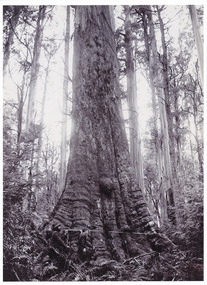
Photograph (item) - Black and white photograph, Nicholas John Caire, 1878-1904
... An early black and white photograph of a Cumberland Valley giant tree....An early black and white photograph of a Cumberland Valley giant tree....An early black and white photograph of a Cumberland Valley giant tree. An early black and white photograph of a Cumberland Valley giant tree. ...An early black and white photograph of a Cumberland Valley giant tree.An early black and white photograph of a Cumberland Valley giant tree. This photograph was taken by Nicholas John Caire between 1878 and 1904. Nicholas John Caire was born in 1837 in Guernsey. He arrived in Adelaide about 1860 along with his parents who encouraged his early interest in photography. He opened a studio in Adelaide in 1867 after traveling extensively throughout the Gippsland taking photographs. After marrying in 1870 he moved to Talbot in Victoria until 1876 when he opened a studio in the Royal Arcade in Melbourne. After 1885 Nicholas John Caire gave up his city work and made his home in South Yarra and devoted the rest of his life to outdoor photography, specializing in the bush, the gullies, and the mountains of south-eastern Victoria. big tree, mountain ash, cambarville, victoria, photograph, cumberland valley, nicholas john caire -
 Marysville & District Historical Society
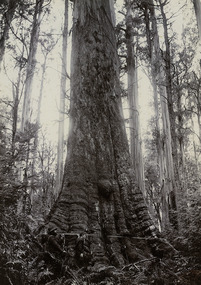
Photograph (Item) - Black and white photograph, Nicholas John Caire, 1878-1904
... Shows two men measuring around the base of a Cumberland Valley giant tree. ...Shows two men measuring around the base of a Cumberland Valley giant tree. ...Shows two men measuring around the base of a Cumberland Valley giant tree. An early black and white photograph of a Cumberland Valley giant tree. ...Shows two men measuring around the base of a Cumberland Valley giant tree. An early black and white photograph of a Cumberland Valley giant tree. This photograph was taken by Nicholas John Caire between 1878 and 1904. Nicholas John Caire was born in 1837 in Guernsey. He arrived in Adelaide about 1860 along with his parents who encouraged his early interest in photography. He opened a studio in Adelaide in 1867 after traveling extensively throughout the Gippsland taking photographs. After marrying in 1870 he moved to Talbot in Victoria until 1876 when he opened a studio in the Royal Arcade in Melbourne. After 1885 Nicholas John Caire gave up his city work and made his home in South Yarra and devoted the rest of his life to outdoor photography, specializing in the bush, the gullies, and the mountains of south-eastern Victoria. big tree, mountain ash, cambarville, victoria, photograph, cumberland valley, nicholas john caire -
 Orbost & District Historical Society
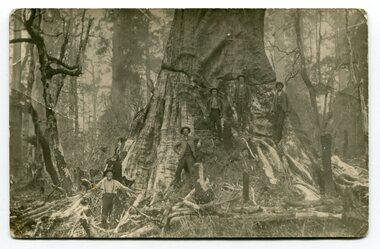
Photograph - large tree, c.1890-1910
... giant tree...Because the location of the tree is not known, this photograph has only a general significance to the Orbost & District Historical Society's collection. giant tree none A b/w photo/postcard of five men standing around the butt of a gigantic tree. ...This photograph represents a gigantic forest tree which is in the process of being cut down. There is no certainty that this tree was located in the Orbost region. However, it does represent the forest practices of previous time. Because the location of the tree is not known, this photograph has only a general significance to the Orbost & District Historical Society's collection. A b/w photo/postcard of five men standing around the butt of a gigantic tree. A mark around the tree looks like an axe or saw mark. The tree is in a dense bushland setting. nonegiant tree -
 Mt Dandenong & District Historical Society Inc.
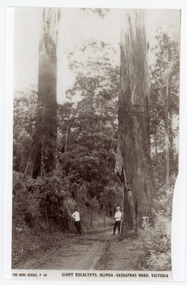
Photograph, Giant Eucalypts, Olinda-Sassafras Road. Victoria
... Copy of Rose Series post card P. 69 showing two men standing alongside giant trees on the Olinda-Sassafras Road....Copy of Rose Series post card P. 69 showing two men standing alongside giant trees on the Olinda-Sassafras Road. Giant Eucalypts, Olinda-Sassafras Road. ...Rose Series post card # P.69 .The Sassafras - Olinda Road showing giant Eucalypts. The two men in the photograph most probably worked for The Rose Series Post card company. They often appear in photographs - probably to give perspective.Copy of Rose Series post card P. 69 showing two men standing alongside giant trees on the Olinda-Sassafras Road.On front: THE ROSE SERIES P. 69 GIANT EUCALYPTS, OLINDA-SASSAFRAS ROAD, VICTORIA.sassafras, olinda, sassafras-olinda road, olinda-sassafras road, rose series, post cards, eucalypts, road -
 Marysville & District Historical Society
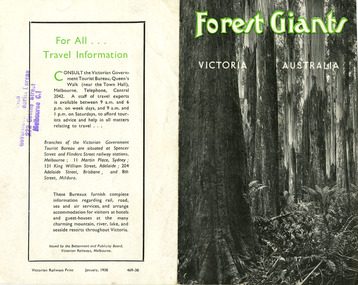
Ephemera (Item) - Information brochure, Victorian Government Tourist Bureau, Forest Giants Victoria Australia, 01-1938
... An information brochure on where to see tall trees, Forest Giants, in Victoria, including Marysville, that was published in January, 1938....An information brochure on where to see tall trees, Forest Giants, in Victoria, including Marysville, that was published in January, 1938....An information brochure on where to see tall trees, Forest Giants, in Victoria, including Marysville, that was published in January, 1938. ...An information brochure on where to see tall trees, Forest Giants, in Victoria, including Marysville, that was published in January, 1938.An information brochure on where to see tall trees, Forest Giants, in Victoria, including Marysville, that was published in January, 1938.Victorian Railways Print January, 1938 469-38 Stamp of Victorian/ Government Tourist Bureau/ 272 Collins Street/ Melbourne C.1victoria, australia, victorian government tourist bureau, betterment and publicity board, victorian railways, white mountain ash, red mountain ash, messmate, blue gum, mountain ash, cumberland valley, marysville, mount monda, healesville, acheron way, alpine highway, omeo, baw baws, strzelecki ranges, otway ranges, warburton, yarra junction, noojee, bulga and tarra valley park, yarram, turton's pass, otway forest, beech forest, apollo bay, information brochure, brochure -
 Federation University Historical Collection
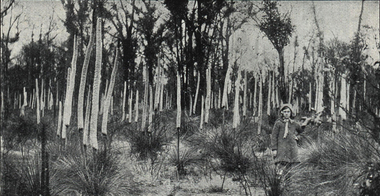
Photograph, Giant Grass Trees at Mount Clear, c1923, c1923
... Black and white image of a scene at Mt Clear near Ballarat, featuring giant grass trees. ...mount clear grass trees flora Black and white image of a scene at Mt Clear near Ballarat, featuring giant grass trees. ...Black and white image of a scene at Mt Clear near Ballarat, featuring giant grass trees. mount clear, grass trees, flora -
University of Melbourne, Burnley Campus Archives
Slide - Glass slide, 1891-1905
... 'The Giant Gum-Tree (Eucalyptus regnans' F v M.)' Photograph of pages from books. ...australian native plants eucalyptus ferdinand von mueller 'The Giant Gum-Tree (Eucalyptus regnans' F v M.)' Photograph of pages from books. ...'The Giant Gum-Tree (Eucalyptus regnans' F v M.)' Photograph of pages from books. Line drawings of parts of the plant. australian native plants, eucalyptus, ferdinand von mueller -
Bendigo Historical Society Inc.
Document - Forests Commission of Victoria Northern Area Fire Protection Policy, Statement, Future Bush Fire Policy, Plan for Fire Control, 1938-1939
... Flames leaped large distances, and giant trees were blown out of the ground by fierce winds. ...Flames leaped large distances, and giant trees were blown out of the ground by fierce winds. ...Fanned by powerful winds, the Black Friday fires (13 January 1939) swept rapidly across large areas of Victoria, causing widespread destruction. Flames leaped large distances, and giant trees were blown out of the ground by fierce winds. Large pieces of burning bark (embers) were carried for kilometres, starting new fires in places that had not previously been affected by flames. Almost two million hectares burned across the state. Large areas of state forest, containing giant stands of Mountain Ash and other valuable timbers, were destroyed. As a result, approximately 575,000 hectares of reserved forest and 780,000 hectares of Crown land burned.Four Files Forests Commission of Victoria Northern Area Report on the 1938-39 Fire Season; and the Fire Protection Policy in Respect of Field activities Prior to the Incidence of the 1939 Fires. history, bendigo, forests commision of victoria, 1939 bush fires -
 Mt Dandenong & District Historical Society Inc.
Photograph
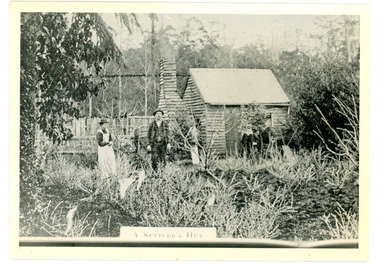
... John Keogh was a big Irishman and cleared many of the giant trees on his Lot 7. They had little water for their crops so grew gooseberries and red currants rather than the more valuable strawberries. ...John Keogh was a big Irishman and cleared many of the giant trees on his Lot 7. They had little water for their crops so grew gooseberries and red currants rather than the more valuable strawberries. ...The Keoghs took up Lot 7 in the Village Settlement in 1905. John Keogh was a big Irishman and cleared many of the giant trees on his Lot 7. They had little water for their crops so grew gooseberries and red currants rather than the more valuable strawberries. Mrs Keogh (nee Cleary) inherited money in 1906 and they built a new weatherboard house. The original bush hut remained as the kitchen. Son James (Jimmie) married Mary Walsh, a teacher at the local school. Jimmie built the small shop on the triangle of land cut off when the CRB road went through. Jimmie and his wife left the district when he joined Victoria Police. Jimmie came back to the area and finally sold the land of Lot 7 to Rimington's Nurseries. He moved his family to Kilsyth. In 1939 the shop was moved across the road to be used as an office by the road builders. It burned down that year.Black and white photograph of a man, woman and young male standing outside a wooden hut. There are crop remnants in the foreground and a wooden paling fence behind the hut. A label on the front reads A SETTLER'S HUT. Reverse of photograph has handwritten description by John Lundy-Clarke.Front: A SETTLER'S HUT Reverse: 1905 Keogh's hut on Falls Road then Main Road. This was later the kitchen of their extended home as described in the narrative "Mountain of Struggle". The figures are - Mrs Keogh. John Keogh settler. Son James Keogh.keogh, john keogh, james keogh, jimmie keogh, mary walsh, cleary, shop, store, gooseberries, rimington's nursery -
 Melton City Libraries
Photograph, Edna and Bon's family camp trip at Apollo Bay, 1948
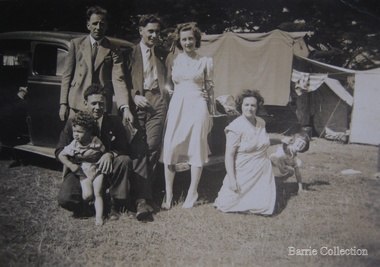
... The tree ferns with their dripping moisture and the giant trees and the unmistakeable small of the eucalypts. ...The tree ferns with their dripping moisture and the giant trees and the unmistakeable small of the eucalypts. ...Wendy Barrie's memories of Apollo Bay The camping trips were a yearly event after the harvest had finished. The trip down to the beach was a much-anticipated event heading out through Parwan and to Geelong leaving behind the hot and dusty plains and our parents relieved to have the hard work of harvesting left behind. The Otways in the distance were reached with great anticipation, Mum in the car and Dad in the Truck ahead of us anxiously winding through the narrow roads and negotiating the hairpin bends and breathing in the cool fresh air of the forest, and keeping an eye out of the log trucks that might come sweeping the corner. The tree ferns with their dripping moisture and the giant trees and the unmistakeable small of the eucalypts. Great excitement was when we caught our first view of the sea from the highest point of the road and then is was the cautious drive the sea level to the sight of the blue ocean with the white of the waves crashing on the rocks and the pristine sand. The water from the Wild Dog and Skenes creek trickling onto the ocean. The tree ferns with their dripping moisture and the giant trees and the unmistakeable smell of the eucalypts. The return journey was usually taken on the Great Ocean Road, it was considered safer to be on the inside of the road. In the early days it was very narrow and passing oncoming cars was taken very cautiously. Landslides and floods sometimes meant we would take the inland route. One year the bridges were washed away and bailey bridges were erected to keep the road open. Rock falls off the cliffs were common Stops on the way home gave us our last chance for our feet in the sand and a swim in the ocean. By the time we reached the hill at Angle Sea the vast blue ocean was behind us and we trekked back through Geelong- Bacchus road and the plains of stubble and the dry grass, and sometimes evidence of burnt patches from a bush fire. The closest we came to a pool at home was the concrete sheep trough at the gate to the work sheds. It was filled with bore water pumped from the nearby windmill. Edna, Bon and their family members at their camp site in Apollo Baylocal identities -
Tatura Irrigation & Wartime Camps Museum
Photograph - copy, Original 1943, copy 1989
... Two sisters, Asche and Wilson, the Army Chaplain, posed in front of giant eucalyptus and other trees and fences in background partially obscured by morning fog....Two sisters, Asche and Wilson, the Army Chaplain, posed in front of giant eucalyptus and other trees and fences in background partially obscured by morning fog. ...WW2 Internment Camp 1, Tatura, hospital staff and army chaplain.A.A.N.S. Two sisters, Asche and Wilson, the Army Chaplain, posed in front of giant eucalyptus and other trees and fences in background partially obscured by morning fog.internment camp 1, a.a.n.s., camp hospitals, sister asche, sister wilson, army chaplain -
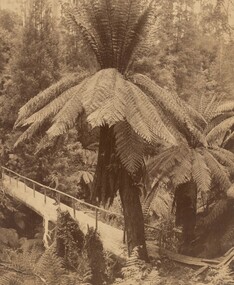
![Giant fern trees: Splitters' Track, Black Spur / [by] Nicholas Caire, circa 1876](/media/collectors/550653872162f11fb04854aa/items/57774978d0cdd10a5c123cdb/item-media/57774a0fd0cdd10a5c1297aa/item-fit-380x285.jpg?cb=6) Kew Historical Society Inc
Kew Historical Society IncPhotograph, Anglo-Australasian Photographic Company, Giant fern trees: Splitters' Track, Black Spur, c. 1876
... printed in ink on support l.c.: GIANT FERN TREES: SPLITTERS' TRACK, BLACK SPUR. / COPYRIGHT REGISTERED. printed in ink (vertically) on support reverse u.c.l.: J.W. ...His vision of the Australian bush and pioneer life had a counterpart in the works of Henry Lawson and other nationalist poets, authors and painters. landscape photography nicholas caire black spur - victoria printed in ink on support l.c.: GIANT FERN TREES: SPLITTERS' TRACK, BLACK SPUR. / COPYRIGHT REGISTERED. printed in ink (vertically) on support reverse u.c.l.: J.W. ...Nicholas Caire was born on Guernsey in the Channel Islands in 1837. He arrived in Adelaide with his parents in about 1860. In 1867, following photographic journeys in Gippsland, he opened a studio in Adelaide. From 1870 to 1876 he lived and worked in Talbot in Central Victoria. In 1876 he purchased T. F. Chuck's studios in the Royal Arcade Melbourne. In 1885, following the introduction of dry plate photography, he began a series of landscape series, which were commercially successful. As a photographer, he travelled extensively through Victoria, photographing places few of his contemporaries had previously seen. He died in 1918. Reference: Jack Cato, 'Caire, Nicholas John (1837–1918)', Australian Dictionary of Biography.An original, rare photograph from the series 'Views of Victoria: General Series' by the photographer, Nicholas Caire (1837-1918). The series of 60 photographs that comprise the series was issued c. 1876 and reinforced a neo-Romantic view of the Australian landscape to which a growing nationalist movement would respond. Nicholas Caire was active as a photographer in Australia from 1858 until his death in 1918. His vision of the Australian bush and pioneer life had a counterpart in the works of Henry Lawson and other nationalist poets, authors and painters.Albumen silver photograph mounted on boardprinted in ink on support l.c.: GIANT FERN TREES: SPLITTERS' TRACK, BLACK SPUR. / COPYRIGHT REGISTERED. printed in ink (vertically) on support reverse u.c.l.: J.W. FORBES, Agent, printed in ink (vertically) on support reverse c.l.: ANGLO-AUSTRALASIAN PHOTOGRAPHIC COMPANY, MELBOURNE. printed in ink (vertically) on support reverse c.: VIEWS OF VICTORIA. / (GENERAL SERIES.) / No. 8. / GIANT FERN TREES: SPLITTERS' TRACK, BLACK SPUR. / The scene which this illustration represents is situated on Morley's Creek, at the foot of the Black Spur, and is / about a mile and a half from the Township of Fernshawe. The Fern Trees in this locality are of gigantic growth, / measuring 50 feet in height, the fronds of which are from 12 to 15 feet long. This excessive growth is attributable / to the great number of springs flowing into the creek, thereby causing the surrounding soil to be in a continual / state of moisture. printed in ink (vertically) on support reverse l.c.l.: 10 Temple Court, Collins Street West.landscape photography, nicholas caire, black spur - victoria -
 Bendigo Historical Society Inc.
Document - RESEARCH NOTES: ONE TREE HILL, STORMWATER CHANNEL, ANTHONY TROILLOPE, HORSE TRAMWAY TO GOLDEN SQUARE
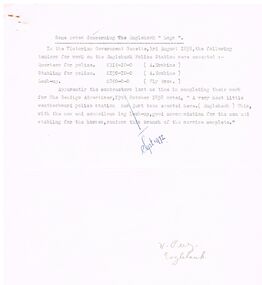
... Mentioned are: - Some Notes Concerning The Eaglehawk Logs, Damaging the Stormwater Channel, where some Chinese were digging away the Creek, the cutting down of the giant gum tree which gave One Tree Hill its name, How Anthony Trollope saw Bendigo in the 1870's, A Proposed Horse Tramway to Golden Square, Society’s' Trip to Bridgewater Flour Mill, A talk on a trip to Malaya by Mr D Hester, Society News and Happenings, Old Bendigonians and Safety Cages,...Mentioned are: - Some Notes Concerning The Eaglehawk Logs, Damaging the Stormwater Channel, where some Chinese were digging away the Creek, the cutting down of the giant gum tree which gave One Tree Hill its name, How Anthony Trollope saw Bendigo in the 1870's, A Proposed Horse Tramway to Golden Square, Society’s' Trip to Bridgewater Flour Mill, A talk on a trip to Malaya by Mr D Hester, Society News and Happenings, Old Bendigonians and Safety Cages, Document RESEARCH NOTES: ONE TREE HILL, STORMWATER CHANNEL, ANTHONY TROILLOPE, HORSE TRAMWAY TO GOLDEN SQUARE ...Typed and handwritten notes. Mentioned are: - Some Notes Concerning The Eaglehawk Logs, Damaging the Stormwater Channel, where some Chinese were digging away the Creek, the cutting down of the giant gum tree which gave One Tree Hill its name, How Anthony Trollope saw Bendigo in the 1870's, A Proposed Horse Tramway to Golden Square, Society’s' Trip to Bridgewater Flour Mill, A talk on a trip to Malaya by Mr D Hester, Society News and Happenings, Old Bendigonians and Safety Cages,document, various notes, eaglehawk logs, bendigo advertiser 19/10/1858, damaging the stormwater channel, bendigo advertiser 11/8/1872, harneys bridge, gas works, constable rogers, constable james bradley, joch, john o'c hattam, one tree hill, ryan, trollope's fabulous bendigo, anthony trollope, 'trollope’s australia', nelson press, alex h stone, bendigo advertiser 5/7/1897, mr peter ellis, cr hoskins, horse tramway, historical society, water wheel flour mill, june parry, mr pat wodetzki, mr leo wodetzki, neil murray, mr k hester, mr wes harry, mr i hendry, mr henry jackson, mr connelly, mr irons, mr harney, dr smith, dr hoyle, rev dr bachaus, rev dr nish, rev joseph dare, hon angus mackay, mr haverfield, mr j k robshaw, w p neal, mr george lansell, hon j h abbott, m l c, mr j casey, dr james boyd, dr atkinson, dr easie, mr t h henderson, old beehive, francis brothers, mr john crowley, mr jacob cohn, art gallery, mr hugh mcdevitt, mr alexander bayne, mr f sciallero, camp reserve, hon w i winter-irvine, mr george avery fletcher, great central goldfield of victoria, safety cages, bendigo advertiser, j h seymour, mr horwood, new chum and victoria tribute company, james watson, seymour's patent safety cage, londerry tribute, national show sandhurst, h banfield, mr a llewllyn, 'dear old bendigo', thomas bracken, mr william heffernan, mr edward (ned) ryan, mr samuel bastard, mr charles bird, mcpherson and co, fern hill club, mr george tolhurst, tolhurst brothers, union bank, mr lawrence ryan, mr shadrack jones, charley armstrong, armstrong brothers, mr abraham solomen, mr bladiere mr r t wheeler -
 Kew Historical Society Inc
Photograph, Colin Campbell, The Old Gum Tree, 1961
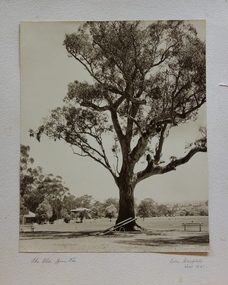
... In 1910, a photograph of ‘The Oldest Inhabitant: A Giant Red-gum Tree’ in the Park was included in the Jubilee History of Kew. ...In 1910, a photograph of ‘The Oldest Inhabitant: A Giant Red-gum Tree’ in the Park was included in the Jubilee History of Kew. ...In 1871, Victoria Park, beside the Boroondara General Cemetery was set aside as a public reserve. As the Park developed, exotic plants were added to existing specimens. In 1910, a photograph of ‘The Oldest Inhabitant: A Giant Red-gum Tree’ in the Park was included in the Jubilee History of Kew. Fifty-one years later the tree was re-photographed by Colin Campbell. A 2007 Master Plan developed for the City of Boroondara advises the retention of this now dead River Red Gum, including a ‘managed risk zone’ and planting under the heavily lopped tree.‘The Old Gum Tree’ in Victoria Park. In the distance a game of cricket is being played on the oval. The old grandstand can be seen in the photo. Photographer Colin Campbell 1961. THE OLD GUM TREE / COLIN CAMPBELL KEW 1961victoria park (kew), colin campbell (photographer), victoria park, red gum tree, eucalypts, kew (vic.) -- historic trees -
![Giant Red Gum. Victoria Park [Kew]](/media/collectors/550653872162f11fb04854aa/items/658f5e1a101c4283c6ae8194/item-media/658f5e76101c4283c6ae8404/item-fit-380x285.jpg?cb=6) Kew Historical Society Inc
Kew Historical Society IncPhotograph - Giant Red Gum. Victoria Park [Kew], c.1950
... In 1910, a photograph of ‘The Oldest Inhabitant: A Giant Red-gum Tree’ in the Park was included in the Jubilee History of Kew. ...In 1910, a photograph of ‘The Oldest Inhabitant: A Giant Red-gum Tree’ in the Park was included in the Jubilee History of Kew. ...In 1871, Victoria Park, beside the Boroondara General Cemetery was set aside as a public reserve. As the Park developed, exotic plants were added to existing specimens. In 1910, a photograph of ‘The Oldest Inhabitant: A Giant Red-gum Tree’ in the Park was included in the Jubilee History of Kew. Fifty-one years later the tree was re-photographed by Colin Campbell. A 2007 Master Plan developed for the City of Boroondara advises the retention of this now dead River Red Gum, including a ‘managed risk zone’ and planting under the heavily lopped tree.This work forms part of the collection assembled by the historian Dorothy Rogers (1905-1973), donated to the Kew Historical Society by her son in 2015. The manuscripts, photographs, maps, and documents were sourced by her from both family and local collections or produced as references for her print publications. Many were directly used by Rogers in writing ‘Lovely Old Homes of Kew’ (1961) and 'A History of Kew' (1973), or the numerous articles on local history that she produced for suburban newspapers. Most of the photographs in the collection include detailed annotations in her hand. The Rogers Collection provides a comprehensive insight into the working habits of a historian from the 1960s to the 1970s. Small monochrome snapshot of the former giant River Red Gum that until it died was a major feature of Victoria Park, Kew. In the background is the red brick wall of the Boroondara General (Kew) Cemetery.Annotation verso: "Giant Red Gum. Victoria Park. Still there over 100 yrs old"dorothy rogers, victoria park (kew), river red gums -
Tatura Irrigation & Wartime Camps Museum
Photographic plates, : AUSTRAL DRY PLATE, T. Baker & Co., Austral Laboratory, Glass photographic plates, c.1900
... Two of the same two men standing in the base of an aged, giant gum tree; one of gig and tied up horse.|PLATES :|Small girl in best frock on cane stool.|* Parents and small girl standing.|* Mr and Mrs Williams sen. standing in front of their home in Hogan Street near Presbyterian Church. ...Two of the same two men standing in the base of an aged, giant gum tree; one of gig and tied up horse.|PLATES :|Small girl in best frock on cane stool.|* Parents and small girl standing.|* Mr and Mrs Williams sen. standing in front of their home in Hogan Street near Presbyterian Church. ...Glass photographic plates discovered by Mr. Jack Smith in the ceiling of the weatherboard cottage attached to Williams Bros. Store, cnr. Hogan & Thomson Streets, in 1973. Mr Smith had purchased the Cleckheaton Woolen Mills factory which had been built around the original Williams Store, c. 1960. Gifted to Tatura Museum in 1992 by Jack Smith, 55 Service Street Tatura, 3616. Frank Williams family & house, Tatura.|Baptist hymns.|Goulburn River.|Victorian coastal scenery. Glass photographic plates and prints consisting of:|Members of Francis Williams family.|Williams home, Hogan Street, Tatura.|Hymns from Glass photographic plates. (28 plates and 5 prints) - Photographic prints (3) Possibly members of Francis Williams family,| c. 1900 . Two of the same two men standing in the base of an aged, giant gum tree; one of gig and tied up horse.|PLATES :|Small girl in best frock on cane stool.|* Parents and small girl standing.|* Mr and Mrs Williams sen. standing in front of their home in Hogan Street near Presbyterian Church. Note: the picket fence.|* Wiiliams' daughters on picnic at Goulburn River. c. "Picnic at Hanging Rock" film era.|* Young lady seated on cane chair (High pleated collar and bib on frock)|* Two small sisters - one with elaborate black lace collar on her frock, the other seated on a cane chair, holding her doll. c.1900|* Gaunt aged gum tree with two men standing in V-shaped hole in base, Goulburn River.|* Horse tied to tree beside Goulburn River.|Note: All above items in box marked "Austral Dry Plates".|* 18 glass plates of hymns from Baptist hymn book.|Note: The Williams family were devout Baptists.|* Plate of rugged coastline ? Great Ocean Way Victoria?|* Plate of rock stacks - ? " London bridge and smaller bridge.|* (3) Prints of the two rock bridges in the ocean off shore.photography, photograph, slides, film -
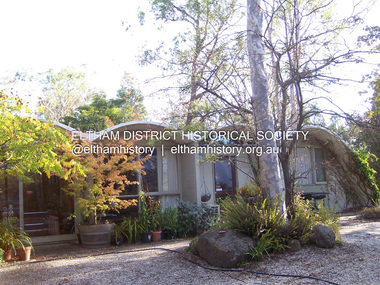 Eltham District Historical Society Inc
Photograph - Digital Photograph, Marguerite Marshall, Rice House, 69 Ryans Road, Eltham, 27 March 2007
... The shell-like structure, partially screened by giant trees and cacti, was inspired by the Arch of Ctesiphon south of Baghdad, built in the second century.1 Cement with a waterproofing agent was applied in layers to a form of regularly spaced timber arches tightly covered by hessian. ...The shell-like structure, partially screened by giant trees and cacti, was inspired by the Arch of Ctesiphon south of Baghdad, built in the second century.1 Cement with a waterproofing agent was applied in layers to a form of regularly spaced timber arches tightly covered by hessian. ...Built in 1953, the Rice House was leading Melbourne architect Kevin Borland's first commssion and was one of two houses of its kind. The design of the shell-like structure was inspired by the Arch of Ctesiphon, built in the second century south of Baghdad. Cement with a waterproofing agent was applied in layers to a form of regularly spaced timber arches covered in hessian. This ctesiphon system was developed in the United Kingdom by engineer J.H. de Waller in 1947. Commissioned in 1951 by Harrie and Lorna Rice, after Harrie, then an art student, met Borland at The Age Small Homes Service. Borland suggested they buy land in Eltham because at that time it was the only council in Melbourne that would grant a permit for such an innovative house. Covered under Victorian Heritage. Inspired by an ancient arch in Iraq, a house stands on top of a hill in a private position, off Ryans Road, Eltham. One of only two houses of its kind, it was leading Melbourne architect Kevin Borland’s first commissioned house, which he built in 1953. The shell-like structure, partially screened by giant trees and cacti, was inspired by the Arch of Ctesiphon south of Baghdad, built in the second century.1 Cement with a waterproofing agent was applied in layers to a form of regularly spaced timber arches tightly covered by hessian. This ctesiphon system was developed in the United Kingdom by engineer J H de Waller in 1947. This house was the first of three such structures built in Victoria, of which only one other remains, although substantially altered.2 It is the Wood House and supermarket, at the corner of Cleveland Road and High Street Road, Ashwood, designed by Robin Boyd in 1952. The Rice House demonstrates Kevin Borland’s innovative and experimental work. It is an outstanding example of the post-war period of experimentation in domestic architecture in Melbourne – by Robin Boyd, Kevin Borland and others – for The Age Small Homes Service from 1947 to 1953. This was partly an expression of late-Modernism and also necessitated by the post-war shortage of building materials. In Eltham, the post-war shortage of building materials largely resulted in mud-brick houses. Examples of Borland’s public work include contributions to the Olympic Swimming Pool in Melbourne and the Preshil Junior School in Kew. After more than 50 years of living in the house, Harrie and Lorna Rice still love it. Facing north-east with large windows overlooking the garden and two courtyards, it is well lit and benefits from a through breeze. The couple commissioned the extraordinary house after Harrie, then an art student, met Borland in 1951 at The Age Small Homes Service. Harrie was so impressed by the recently graduated Borland’s enthusiasm, that he asked him to design them an interesting house for a low budget. The unusual design presented several hurdles for the young couple before they could construct it. Borland suggested that they buy land in Eltham, because at that time it had the only council in Melbourne that would allow such an innovative house. Another hurdle was to gain finance for this remarkable house. The State Savings Bank Manager refused finance on the grounds that it was ‘unliveable’ and a ‘disgrace’. Fortunately, through a family connection, the couple borrowed money from the National Bank. But they discovered years later, that the bank’s evaluation stated the two ‘concrete sheds’ were of no value! The house built in off-white concrete, consists of two sections. The main house has four arches supported by brick and concrete walls that create a series of inter-connected rooms. Inside, the ceiling follows the roofline. Originally this section was only ten square metres, because of building restrictions at the time. But in 1973 Borland added two rooms and a carport. The second structure of two arches was originally a garage and a studio for art teacher Harrie Rice. To accommodate the growing family, in the mid 1950s, Borland converted the second structure into two children’s bedrooms, a kitchenette, a bathroom and a living room. The two structures were originally linked by a covered way of suspended draped-concrete, but this collapsed in the 1980s. The design has several maintenance problems. Cracks developed where two halves of the shells were joined. Then the material sprayed over the cracks became brittle, causing leaks. Fortunately Harrie found another material he could use. The valleys between the arches collect water, requiring annual painting with a waterproof material to prevent leaking. Lorna framed the house with native and exotic plants, which provide privacy and as a bonus, the garden attracted the rare Eltham Copper Butterfly. Published: Nillumbik Now and Then / Marguerite Marshall 2008; photographs Alan King with Marguerite Marshall.; p157 Comments about the Rice House on Lost Eltham page on Facebook June 2018 https://www.facebook.com/Lost-Eltham-1535993463348408/ Kate Borland: My dad designed this house. It is the Rice house and it is being renovated to its original glory as we speak.... Katherine Fox: I remember Harry and Lorna's, there was a secret room...! And the best loo with a view as I recall. Katherine Fox: Love this house! Wish I'd known it was up for sale. Looking forward to seeing progress if possible...If I recall correctly, the concrete swag over the walk-way collapsed at some stage. Marcus Skipper: In our little green Landrover, my dad and Alister Knox drove up dirt roads, a dirt track through the bush and finally to the ridge to check out this joint in about 1960. After the war at some time, they were all together at RMIT studying building design. Alister was the only one to graduate. A situation that resulted, my father would joke, in Alister having a career wherein his qualifications exceeded his talent. World Peace had broken out and all were hip to the ‘People’s’ century. Kevin went with the Modernist’s concrete, Alister went with the peasant’s mudbrick. “If this is the future,” my dad said,”I don’t like it.” And we drove back to medieval Montsalvat.This collection of almost 130 photos about places and people within the Shire of Nillumbik, an urban and rural municipality in Melbourne's north, contributes to an understanding of the history of the Shire. Published in 2008 immediately prior to the Black Saturday bushfires of February 7, 2009, it documents sites that were impacted, and in some cases destroyed by the fires. It includes photographs taken especially for the publication, creating a unique time capsule representing the Shire in the early 21st century. It remains the most recent comprehenesive publication devoted to the Shire's history connecting local residents to the past. nillumbik now and then (marshall-king) collection, eltham, rice house, ryans road, kevin borland -
Vision Australia
Film - Video recording, 20th Century movies from RVIB, 1940s
... RVIB sign, outside front of RVIB building and a group of adults sit on benches under the giant central trees, children have running races, children cheer and one receives a ribbon for her sash that is over her school uniform, a woman writes down the results, a man uses a device, various shots of children, games such as ball tossing, winding up string race, younger children have a running race holding hands with nursing staff. 28. ...RVIB sign, outside front of RVIB building and a group of adults sit on benches under the giant central trees, children have running races, children cheer and one receives a ribbon for her sash that is over her school uniform, a woman writes down the results, a man uses a device, various shots of children, games such as ball tossing, winding up string race, younger children have a running race holding hands with nursing staff. 28. ...Various movies made by the RVIB and transferred on to digital media. These were created for raising awareness of the RVIB and to appeal for donations from the general public. Most are assumed to be from the 1940s. 1. Brief image of children at RVIB. Various girls knitting in the grounds of St Kilda road, with a quick cutaway to two babies in prams. In the middle of the girls is a globe with a rainbow style surround that reads "The sun will never set on our Empire / Because we have the will to win!" The Australia flag and Union Jack flutter above the words and in the middle is the AIF rising sun badge. There is a brief shot of uniformed girls holding up a rug. 2. Two men stand beside a Clarke and Smith talking book player. One man guides the other to the cartridge and to open the cartridge mailing container. 3. "The work and play of the babies and children give our supporters never ending interest and enthusiasm!" A boy weaving cane on to a timber frame, a girl reads her piano music as she plays, whilst another writes in Braille. 4. "This girl is studying for her leaving Certificate to enter the University for the Degree of Bachelor of Arts!" Phyllis Lawson at a typewriter, a classroom of students and a girl reading a book. 5. "Arithmetic and algebra sums are worked out by steel pins placed in octagonal holes." Students using a Taylor's Slate. 6. "Born into a world of darkness. They depend upon for the LIGHT! Through education, training, recreation." A teacher helps a girl read a raised map, a boy finds the South American landmass on the globe, and a boy feels his way around a toy galleon. 7. "You can quite understand why the School Inspector said the manual training and work of our pupils would do credit to a normal School!" A boy adjusts the rear wheels of a wooden model biplane and spins the propeller when done. 8. "Little fingers which are frequently stiff and clumsy through lack of training are guided into confidence and self help." Various children are shown weaving canework baskets or stringing beads, and a younger child creates plasticine models. 9. "Out of the Shadows of ignorance into the Sunshine" of Happy, useful Citizenship. With your help!" Two children make a bed in a dormitory, a girl brushes her teeth and washes and dries her hands in a dormitory bathroom, children eat with napkins tucked under their chins at tables covered in cloth and with flower centrepieces in a dining room, and girls in various costumes dance in the garden. 10. "They afford an object lesson on how to tackle and vanquish misfortune!" Four children row an adult on Albert Park Lake, children play on a swing carousel next to a building on which is painted 'Blind Babies Nursery', a boy winds up a train and places in on the track, and two children play with blocks. 11. "And now we come to our blind toddlers! Our Nursery School is the only one in the Southern Hemisphere!" Children play with dolls, a playhouse and a rocker swing. 12. "Only for your support their lives might have been pitiful tragedies!" Children cuddle or play with soft toys, rocker swing and playhouse whilst a younger child sits in a chair. 13. "All that sight means stimulates our minds to express the sympathy of our heart to them." Three girls sing their dolls to sleep as they cradle and rock them. 14. Outside of St Kilda Road building from various views. 15. "Our hostels for young blind." Raleigh Street hostel. 16. "The Lighthouse is the symbol of the Institute's activities. It spreads light through education and training into the lives of all eligible blind babies, children and adults of Victoria! A peep into our factories!" View of factory building, workers making millet brooms, weaving mats and basket weaving. 17. "Although our income totals 40,000 pounds annually the hand made articles of our sightless workers have to be sold at a heavy loss to compete with machine made goods! This loss, and the 10,000 pounds given annually in compassionate allowances to the adult blind to help them to support their wives and families can only be maintained by donations from Citizens!" Various workers making a range of brooms in the factory. 18. "All our blind adults live in their own homes. They receive 36,000 pounds annually, including nearly 10,000 pounds in compassionate allowances! We can NEVER THEREFORE BE SELF SUPPORTING." The range of goods produced by RVIB (baskets, mats, brooms and brushes) is shown hanging from the swing carousel in the children's playground. "Our blind workers can support their wives and families by constant employment only if Citizens ask Storekeepers for "BLIND INSTITUTE" goods. 19. A man adjusts the dampeners on a piano. "Please engage our expert blind piano tuners and repairers. They attend to more than 1000 pianos and pianolas every year!" A man puts in a row of dampeners and then tunes the piano. 20. "Our gymnasium, social, dancing, cricket and other forms of recreation give the sightless endless pleasure!" Male on a stationary bike, using a skipping rope, weightlifting and Greco-Roman wrestling in the gym, men playing cricket, people playing cards, a tile game, dominoes, checkers and a pinball game. 21. A girl using a wireless set. "For many years now we have given and maintained FREE wireless sets to all needy applicants throughout Victoria!" Girl puts on headphones and adjusts the dials. 22. " "TALKING BOOKS" have now been invented for the education and entertainment of the sightless. Literature of all kinds is thereby read to them by means of special records." A boy puts on headphones to listening to a recording. 23. Couples dance as the RVIB Orchestra plays on stage. Plates of cakes are passed around a table amongst tired dancers. The camera pans across the four piece orchestra (piano, saxophone, drummer and double bass). 24. "To lighten their darkness is a work of mercy! Please help us to give them The courage of usefulness, The privilege of work, The happiness of comradeship". 25. Various people at a meeting, one with a dog guide at his feet and some with dark glasses. Three men stand near a Clarke & Smith cartridge player talking. Two of them appeared earlier. 26. Women working in a room. A man gives dictation to a women, who is using possibly a Stainsby-Wayne embossed shorthand typewriter, a telephone operator connects calls, a man takes notes on a Stainsby-Wayne crab writer, a room full of people working, a metal device moves between two springs and two men work with timber. 27. RVIB sign, outside front of RVIB building and a group of adults sit on benches under the giant central trees, children have running races, children cheer and one receives a ribbon for her sash that is over her school uniform, a woman writes down the results, a man uses a device, various shots of children, games such as ball tossing, winding up string race, younger children have a running race holding hands with nursing staff. 28. "Melbourne, Blind Childrens' Annual Sports". Outside of RVIB building and sign, children compete in a variety of games as adults watch on. 29. "Melbourne, Swimming Under Handicap". Children walking along a street, past a Holden, to enter the City Baths. Inside they swim, learn to swim, jump and dive into the pool under the watchful gaze of a group of women. This portion of the film then is repeated in segments.1 colour video recordings with no soundroyal victorian institute for the blind, phyllis gration, rvib nursery, rvib school, rvib orchestra, braille equipment, braille music, recreation, fundraising, education, employment, buildings, raleigh street hostel, audio books -
Federation University Historical Collection
Newsclip, Ballarat Courier, Big Cats May Roam Area, 2012
... giant cats. In 2013 his book, co-authored with Simon Townsend, "Snarls from the tea-Tree: A History of Victorian Big cat Folkore" was published....giant cats. In 2013 his book, co-authored with Simon Townsend, "Snarls from the tea-Tree: A History of Victorian Big cat Folkore" was published. ...Dr David Waldron has spent years trawling through government documents and speaking to old farmers and policemen trying to gather as much information as possible for a book on the subject of giant cats. In 2013 his book, co-authored with Simon Townsend, "Snarls from the tea-Tree: A History of Victorian Big cat Folkore" was published.Half a page from an undated Ballarat Courier with information relating to big cats in the Australian bush. It also includes an image of Dr David Waldron. The article is a response to the findings of Noel Judd of Smythesdale who reported the death of a Shetland pony , and found paw prints of a large cat nearby. Dy David Waldron considered plaster casts of the paw print and concluded they were almost certainly not made by a cat.australian animal folklore collections, big cats, smythesdale, waldron, judd -
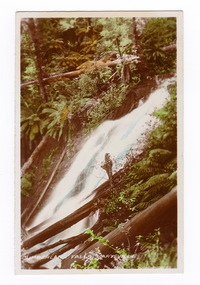 Marysville & District Historical Society
Photograph (item) - Colour tinted photograph, Valentine Publishing Co. Pty. Ltd, Cumberland Falls, Marysville. No.3, 1923-1963
... Cambarville is notable for its giant mountain ash (Eucalyptus regnans) trees within the Cumberland Memorial Scenic Reserve, and relics from former sawmills and gold mining. ...An early colour tinted photograph of the Cumberland Falls near Marysville in Victoria. This photograph was published by the Valentine Publishing Co Pty. Ltd. as a souvenir of Marysville.An early colour tinted photograph of the Cumberland Falls near Marysville in Victoria. These falls are located on the Marysville-Wood's Point Road. Cambarville is notable for its giant mountain ash (Eucalyptus regnans) trees within the Cumberland Memorial Scenic Reserve, and relics from former sawmills and gold mining. The Big Culvert is located nearby on the Marysville-Woods Point Road, which was historically part of the Yarra Track. Cambarville was established as a timber mill town in the 1940s. Timber mill owners A Cameron and FJ Barton named Cambarville. They established the mill to salvage timber from trees destroyed in the 1939 bushfires. Cambarville was impacted by the 2009 Black Saturday bushfires and any remaining structures were destroyed.cumberland falls, waterfalls, marysville, victoria, valentine publishing co, souvenir, a cameron, fj barton, cambarville, marysville-wood's point road, eucalyptus regnans, big culvert, yarra track, timber milling, 1939 bushfires, black saturday bushfires -
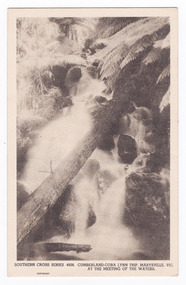 Marysville & District Historical Society
Postcard (item) - Black and white postcard, Rose Stereograph Company, Cumberland-Cora Lynn Trip, Marysville, Vic. At the Meeting of the Waters, 1913-1967
... Cambarville is notable for its giant mountain ash (Eucalyptus regnans) trees within the Cumberland Memorial Scenic Reserve, and relics from former sawmills and gold mining. ...A postcard in a series produced by the Rose Stereograph Company in Victoria, Australia.A black and white photograph of the Cora-Lynn waterfalls at the Meeting of the Waters near the Cumberland Creek. These falls are located on the Marysville-Wood's Point Road. Cambarville is notable for its giant mountain ash (Eucalyptus regnans) trees within the Cumberland Memorial Scenic Reserve, and relics from former sawmills and gold mining. The Big Culvert is located nearby on the Marysville-Woods Point Road, which was historically part of the Yarra Track. Cambarville was established as a timber mill town in the 1940s. Timber mill owners A Cameron and FJ Barton named Cambarville. They established the mill to salvage timber from trees destroyed in the 1939 bushfires. Cambarville was impacted by the 2009 Black Saturday bushfires and any remaining structures were destroyed. This postcard was produced by the Rose Stereograph Company as a souvenir of Marysville.POST CARD. Correspondence/ Addresscora lynn falls, waterfalls, cumberland valley, cumberland creek, marysville, victoria, southern cross series, 4938, postcard, souvenir, meeting of the waters, marysville-wood's point road, cambarville, eucalyptus regnans, big culvert, cumberland memorial scenic reserve, a cameron, fj barton, 1939 bushfires, 2009 black saturday bushfires, rose stereograph company -
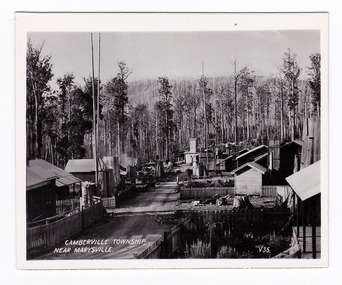 Marysville & District Historical Society
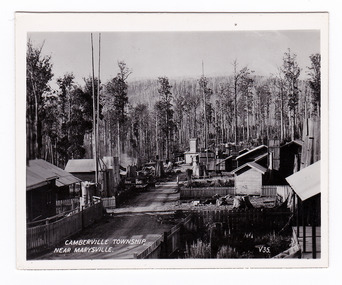
Photograph (item) - Black and white photograph, Valentine Publishing Co. Pty. Ltd, Camberville Township, Near Marysville. V. 35, 1923-1963
... Cambarville is notable for its giant mountain ash (Eucalyptus regnans) trees within the Cumberland Memorial Scenic Reserve, and relics from former sawmills and gold mining. ...An early black and white photograph of the township of Cambarville near Marysville in Victoria.An early black and white photograph of the township of Cambarville near Marysville in Victoria. Cambarville is notable for its giant mountain ash (Eucalyptus regnans) trees within the Cumberland Memorial Scenic Reserve, and relics from former sawmills and gold mining. The Big Culvert is located nearby on the Marysville-Woods Point Road, which was historically part of the Yarra Track. Cambarville was established as a timber mill town in the 1940s. Timber mill owners A Cameron and FJ Barton named Cambarville. They established the mill to salvage timber from trees destroyed in the 1939 bushfires. Cambarville was impacted by the 2009 Black Saturday bushfires and any remaining structures were destroyed. This photograph was produced by Valentine Publishing Co as a souvenir of Marysville.marysville, victoria, photograph, valentine publishing co, souvenir, cambarville, cumberland valley, cumberland scenic reserve, big culvert, marysville-wood's point road, yarra track, a cameron, fj barton, 1939 bushfires, 2009 black saturday bushfires -
 Marysville & District Historical Society
Photograph (item) - Black and white photograph, Valentine Publishing Co. Pty. Ltd, Camberville Township, Near Marysville. V. 35, 1923-1963
... Cambarville is notable for its giant mountain ash (Eucalyptus regnans) trees within the Cumberland Memorial Scenic Reserve, and relics from former sawmills and gold mining. ...An early black and white photograph of the township of Cambarville near Marysville in Victoria.An early black and white photograph of the township of Camberville near Marysville in Victoria. Cambarville is notable for its giant mountain ash (Eucalyptus regnans) trees within the Cumberland Memorial Scenic Reserve, and relics from former sawmills and gold mining. The Big Culvert is located nearby on the Marysville-Woods Point Road, which was historically part of the Yarra Track. Cambarville was established as a timber mill town in the 1940s. Timber mill owners A Cameron and FJ Barton named Cambarville. They established the mill to salvage timber from trees destroyed in the 1939 bushfires. Cambarville was impacted by the 2009 Black Saturday bushfires and any remaining structures were destroyed. This photograph was produced by Valentine Publishing Co as a souvenir of Marysville.marysville, victoria, photograph, valentine publishing co, souvenir, cambarville, cumberland valley, cumberland scenic reserve, big culvert, marysville-wood's point road, yarra track, a cameron, fj barton, 1939 bushfires, 2009 black saturday bushfires -
 Marysville & District Historical Society
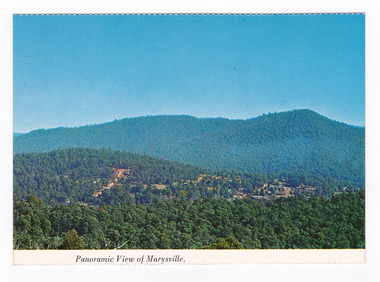
Postcard (item) - Colour postcard, Nucolorvue Productions Pty. Ltd, Panoramic View of Marysville, Pre 2009
... The Cumberland Valley is notable for its giant mountain ash (Eucalyptus regnans) trees within the Cumberland Memorial Scenic Reserve, and relics from former sawmills and gold mining. ...A colour photograph of the view of Marysville from Barton's Lookout which is near the Cumberland Valley in Victoria.A colour photograph of the view of Marysville from Barton's Lookout which is near the Cumberland Valley in Victoria. The Cumberland Valley is notable for its giant mountain ash (Eucalyptus regnans) trees within the Cumberland Memorial Scenic Reserve, and relics from former sawmills and gold mining. The Big Culvert is located nearby on the Marysville-Woods Point Road, which was historically part of the Yarra Track. Cambarville, which is in the Cumberland Valley, was established as a timber mill town in the 1940s. Timber mill owners A Cameron and FJ Barton named Cambarville. They established the mill to salvage timber from trees destroyed in the 1939 bushfires. Cambarville was impacted by the 2009 Black Saturday bushfires and any remaining structures were destroyed. Barton's Lookout was named after a member of the Barton Family who were amongst Marysville's earliest pioneering families. This postcard was produced by Nucolorvue Productions as a souvenir of Marysville.NU-COLOR-VUE/ OF/ AUSTRALIA MARYSVILLE, VICTORIA Panoramic View of Marysville from/ CUMBERLAND. PLACE/ STAMP/ HERE POST CARD NUC.171 - NUCOLORVUE PRODUCTIONS PTY. LTD./ COPYRIGHT Printed in Australiamarysville, barton's lookout, victoria, nucolorvue productions, postcard, souvenir, cumberland valley, cumberland memorial scenic reserve, big culvert, marysville-wood's point road, yarra track, mining, timber mills, a cameron, fj barton, cambarville, 1939 bushfires, 2009 black saturday bushfires -
 Marysville & District Historical Society
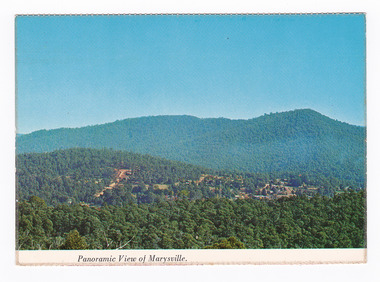
Postcard (item) - Colour postcard, Nucolorvue Productions Pty. Ltd, Panoramic View of Marysville, Pre 2009
... The Cumberland Valley is notable for its giant mountain ash (Eucalyptus regnans) trees within the Cumberland Memorial Scenic Reserve, and relics from former sawmills and gold mining. ...A colour photograph of the view of Marysville from Barton's Lookout which is near the Cumberland Valley in Victoria.A colour photograph of the view of Marysville from Barton's Lookout which is near the Cumberland Valley in Victoria. The Cumberland Valley is notable for its giant mountain ash (Eucalyptus regnans) trees within the Cumberland Memorial Scenic Reserve, and relics from former sawmills and gold mining. The Big Culvert is located nearby on the Marysville-Woods Point Road, which was historically part of the Yarra Track. Cambarville, which is in the Cumberland Valley, was established as a timber mill town in the 1940s. Timber mill owners A Cameron and FJ Barton named Cambarville. They established the mill to salvage timber from trees destroyed in the 1939 bushfires. Cambarville was impacted by the 2009 Black Saturday bushfires and any remaining structures were destroyed. Barton's Lookout was named after a member of the Barton Family who were amongst Marysville's earliest pioneering families. This postcard was produced by Nucolorvue Productions as a souvenir of Marysville.NU-COLOR-VUE/ OF/ AUSTRALIA MARYSVILLE, VICTORIA Panoramic View of Marysville from/ CUMBERLAND. PLACE/ STAMP/ HERE POST CARD NUC.171 - NUCOLORVUE PRODUCTIONS PTY. LTD./ COPYRIGHT Printed in Australia Hi There! how are you? fine I hope....Hows school/ treating you?/ Isn't it beautiful now Autumns back again./ You'll have to come up soon and see us, where/ really you/ Ok! it beautiful, the air so fresh and/ clean it makes you want to cry. There are/ so many magnificent and brill marysville, barton's lookout, victoria, nucolorvue productions, postcard, souvenir, cumberland valley, cumberland memorial scenic reserve, big culvert, marysville-wood's point road, yarra track, mining, timber mills, a cameron, fj barton, cambarville, 1939 bushfires, 2009 black saturday bushfires -
 Marysville & District Historical Society
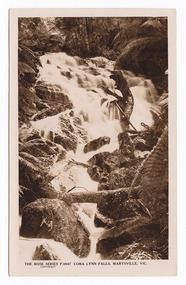
Postcard (item) - Black and white postcard, Rose Stereograph Company, Cora Lynn Falls, Marysville, Vic, 1913-1967
... Cambarville is notable for its giant mountain ash (Eucalyptus regnans) trees within the Cumberland Memorial Scenic Reserve, and relics from former sawmills and gold mining. ...A postcard in a series produced by the Rose Stereograph Company in Victoria, Australia as a souvenir of Marysville.An early black and white photograph of the Cora Lynn Falls in Marysville, Victoria. These falls are located on the Marysville-Wood's Point Road. Cambarville is notable for its giant mountain ash (Eucalyptus regnans) trees within the Cumberland Memorial Scenic Reserve, and relics from former sawmills and gold mining. The Big Culvert is located nearby on the Marysville - Woods Point Road, which was historically part of the Yarra Track. Cambarville was established as a timber mill town in the 1940s. Timber mill owners A Cameron and FJ Barton named Cambarville. They established the mill to salvage timber from trees destroyed in the 1939 bushfires. Cambarville was impacted by the 2009 Black Saturday bushfires and any remaining structures were destroyed.POST CARD REAL PHOTO THE "ROSE" SERIES DE LUXE PRODUCED IN AUSTRALIA Published by The Rose Stereograph Co./ Armadale, Victoriamarysville, victoria, photograph, cora lynn falls, waterfalls, rose series postcard, rose stereograph company, souvenir, cambarville, marysville-wood's point road, eucalyptus regnans, cumberland memorial scenic reserve, mining, big culvert, yarra track, a cameron, fj barton, 1939 bushfires, 2009 black saturday bushfires, timber mills, p. 4947 -
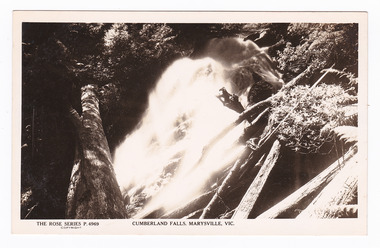 Marysville & District Historical Society
Postcard (item) - Black and white postcard, Rose Stereograph Company, Cumberland Falls, Marysville, Vic, 1913-1967
... Cambarville is notable for its giant mountain ash (Eucalyptus regnans) trees within the Cumberland Memorial Scenic Reserve, and relics from former sawmills and gold mining. ...A postcard in a series produced by the Rose Stereograph Company in Victoria, Australia as a souvenir of Marysville.A black and white photograph of the Cumberland Falls which are in Cambarville. These falls are located on the Marysville-Wood's Point Road. Cambarville is notable for its giant mountain ash (Eucalyptus regnans) trees within the Cumberland Memorial Scenic Reserve, and relics from former sawmills and gold mining. The Big Culvert is located nearby on the Marysville - Woods Point Road, which was historically part of the Yarra Track. Cambarville was established as a timber mill town in the 1940s. Timber mill owners A Cameron and FJ Barton named Cambarville. They established the mill to salvage timber from trees destroyed in the 1939 bushfires. Cambarville was impacted by the 2009 Black Saturday bushfires and any remaining structures were destroyed.POST CARD The "Rose" Series/ De Luxe A Real Photograph/ Produced in Australia Published by the Rose Stereograph Co.,/ Armadale, Victoria.cumberland falls, cambarville, marysville, victoria, waterfalls, rose series postcard, postcard, souvenir, mountain ash, mining, timber mills, big culvert, yarra track, a cameron, fj barton, black saturday bushfires, 1939 bushfires, eucalyptus regnans, p. 4969
