
Showing 374 items matching "glass artist"
-
 Eltham District Historical Society Inc
Folder, Peter Glass
... Folder of information on Peter Glass, Artist, Eltham,...Peter Glass Folder of information on Peter Glass, Artist, Eltham, Peter Glass Folder ...Folder of information on Peter Glass, Artist, Eltham,peter glass -
Women's Art Register
Archive (Collection) - Ede Horton Artist Archive
... Glass Artist...Glass Artist Archive Ede Horton Artist Archive ...glass artistglass artist -
Women's Art Register
Archive (Collection) - Deann Campbell Artist Archive
... Glass... Artist Books...Symbolism Spirituality Printmaking Sculpture Installation Glass Artist Books Archive Deann Campbell Artist Archive ...symbolism, spirituality, printmaking, sculpture, installation, glass, artist bookssymbolism, spirituality, printmaking, sculpture, installation, glass, artist books -
Women's Art Register
Archive (Series) - Horton, Ede. Artist File 1
... Glass Artist...Glass Artist Foolscap white archival 4 flap folder or document wallet Archive Horton, Ede. ...Artwork Image, List of Works.glass artistglass artist -
Women's Art Register
Archive (Series) - Campbell, Deann. Artist File 1
... Glass... Artist Books...Symbolism Spirituality Printmaking Sculpture Installation Glass Artist Books Foolscap white archival 4 flap folder or document wallet Archive Campbell, Deann. ...Newspaper Clippingssymbolism, spirituality, printmaking, sculpture, installation, glass, artist bookssymbolism, spirituality, printmaking, sculpture, installation, glass, artist books -
Women's Art Register
Archive (Series) - Ede Horton. Duplicate File 1
... Glass Artist...Glass Artist Foolscap manilla file Archive Ede Horton. ...Artwork Image, List of Works.glass artistglass artist -
Women's Art Register
Archive (Series) - Deann Campbell. Duplicate File 1
... Glass... Artist Books...Printmaking Sculpture Installation Glass Artist Books Symbolism Spirituality Foolscap manilla file Archive Deann Campbell. ...Newspaper Clippingsprintmaking, sculpture, installation, glass, artist books, symbolism, spiritualityprintmaking, sculpture, installation, glass, artist books, symbolism, spirituality -
Whitehorse Historical Society Inc.
Document, Nunawading Bicentennial Leadlight Mural, 1988
... Correspondence regarding the placing of glassworks in Nunawading on the register of the Australian Association of Glass Artists, includes copy of the design....City of Nunawading Ausglass Nunawading Bicentennial Leadlight Group Correspondence regarding the placing of glassworks in Nunawading on the register of the Australian Association of Glass Artists, includes copy of the design. Correspondence regarding the placing of glassworks in Nunawading on the register of the Australian Association of Glass Artists, includes copy of the design. ...Correspondence regarding the placing of glassworks in Nunawading on the register of the Australian Association of Glass Artists, includes copy of the design.Correspondence regarding the placing of glassworks in Nunawading on the register of the Australian Association of Glass Artists, includes copy of the design.Correspondence regarding the placing of glassworks in Nunawading on the register of the Australian Association of Glass Artists, includes copy of the design.city of nunawading, ausglass, nunawading bicentennial leadlight group -
 Bendigo Historical Society Inc.
Photograph - W.D. MASON COLLECTION: JACOB (JACK) VALSTAR
... Photograph attached on cardboard of Jacob (Jack) Valstar - stained glass artist - 8/8/1908-22/11/1978...PERSON Individual Jacob Valstar Photograph attached on cardboard of Jacob (Jack) Valstar - stained glass artist - 8/8/1908-22/11/1978 Photograph W.D. ...Photograph attached on cardboard of Jacob (Jack) Valstar - stained glass artist - 8/8/1908-22/11/1978person, individual, jacob valstar -
 Greensborough Historical Society
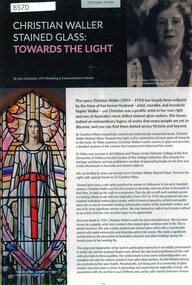
Article - Article, Newsletter, Christian Waller stained glass: towards the light
... Article on female stained glass artist Christian Waller, published in the National Trust of Victoria newsletter. ...Article on female stained glass artist Christian Waller, published in the National Trust of Victoria newsletter. ...Article on female stained glass artist Christian Waller, published in the National Trust of Victoria newsletter. Ms Waller's Ivanhoe home "Waller House" is operated by the National Trust open, but not to the public in 2024 while undertaking restoration.2 p., text and colour imageschristian waller, stained glass, artists, ivanhoe, national trust of australia (victoria) -
 St Vincent's Hospital Melbourne Archives
Artwork, other - Painting, Circa 1966-1967
... Artwork is framed in a black frame but is not behind glass. The artist is unknown....Artwork is framed in a black frame but is not behind glass. The artist is unknown. Artwork, other Painting ...This painting was presented to the St Vincent's civilian medical team by the people of An Giang Province, Vietnam, in recognition of their work in the area. St Vincent's sent four civilian clinical teams to Long Xuyen, South Vietnam, 1965 - 1966 as part of an aid program administered by the Australian Department of External Affairs to assist Vietnamese medical and paramedical personnel and provide medical aid to everyone who needed it. The service of the Australian civilian teams who went to Vietnam 1964 - 1972 was recognised with a special plaque within the grounds of the Australian War Memorial in October 2008. This item has historical significance because it is a memento of the hospital's involvement in a nationally significant wartime aid program to South Vietnam. Landscape painting of deer near a forest stream. Painted in the traditional Vietnamese style using lacquer and paint. Artwork is framed in a black frame but is not behind glass. The artist is unknown.Plaque is attached at lower left corner and translated reads: The people of An Giang Province / are extremely grateful to the Australian Surgical Team.st vincent's hospital melbourne, paintings, artworks, south vietnam, medical aid -
 Geoffrey Kaye Museum of Anaesthetic History
Decorative object - Vase, Glassware, Robert Wynne, c.2012
... The artist Robert Wynne is an accomplished glass artist in Australia. His artworks are held in significant public and private collections nation wide and overseas. ...The artist Robert Wynne is an accomplished glass artist in Australia. His artworks are held in significant public and private collections nation wide and overseas. ...Dr Briscoe was appointed Dean of the Faculty of Pain Medicine in 2008 and gifted the vase at the end of her term in 2010. Dr Briscoe was the first woman to be appointed Dean of the Faculty. The artist Robert Wynne is an accomplished glass artist in Australia. His artworks are held in significant public and private collections nation wide and overseas. Public collections include the Tasmanian Museum and Art Gallery, Artbank and the Queensland Contemporary Art Gallery. Wynne's artworks are also part of the private collections of Bill Clinton, Sir Elton John and the Royal Family Collection of Japan.Tear shaped, emerald green, hand-blown glassEtched on base - DENIZENdr briscoe, penelope (penny), wynne, robert, dean, faculty of pain medicine, fpm -
Federation University Art Collection
Drawing, 'Copse' by Tony Hanning, 2015
... Tony HANNING (1950- ) Dr Tony Hanning is an internationally recognised glass artist whose work is represented in all major collections in Australia and many overseas collections including the V&A Museum in London and the Tacoma Art Museum in the USA. ...Tony HANNING (1950- ) Dr Tony Hanning is an internationally recognised glass artist whose work is represented in all major collections in Australia and many overseas collections including the V&A Museum in London and the Tacoma Art Museum in the USA. ...Tony HANNING (1950- ) Dr Tony Hanning is an internationally recognised glass artist whose work is represented in all major collections in Australia and many overseas collections including the V&A Museum in London and the Tacoma Art Museum in the USA. The imagery in Tony Hanning's work often is representative of the Gippsland landscape. He has a PhD from Mondash University (2008), a Master of Arts from Monash University (1998); and a Diploma, Visual Arts, Gippsland Institute of Advanced Education, Monash University, Melbourne (1971). From 1971-1980 Tony Hanning was the Director of Latrobe Valley Arts Centre (later Latrobe Regional Gallery, Morwell)Framed and mounted charcoal drawing depicting large trees (conifers and probably deciduous) in a field rendered with hatchingLower right, signed Tony Hanning '15tony hanning, staffmember, landscape, trees, treescape, alumni -
 Eltham District Historical Society Inc
Negative - Photograph, Harry Gilham, Memorial for Peter Glass and Cecile Madeleine Glass, Eltham Cemetery, 1 Aug 2007
... Peter Glass (Arthur William) Artist A.I.L.A. 28.8.1917 - 28.12.1997 And his loving wife Cecile Madeleine 23.2.1927 - 6.2.2006 Rest In Peace...Peter Glass (Arthur William) Artist A.I.L.A. 28.8.1917 - 28.12.1997 And his loving wife Cecile Madeleine 23.2.1927 - 6.2.2006 Rest In Peace Eltham Cemetery Gravestones Memorials Cecile Madeleine Glass Peter Glass 35mm colour negative Kodak Gold GC 400-9 6 film strips, 1 of 25 frames Memorial for Peter Glass and Cecile Madeleine Glass, Eltham Cemetery Negative Photograph Harry Gilham ...Peter Glass (Arthur William) Artist A.I.L.A. 28.8.1917 - 28.12.1997 And his loving wife Cecile Madeleine 23.2.1927 - 6.2.2006 Rest In Peaceeltham cemetery, gravestones, memorials, cecile madeleine glass, peter glass -
 Federation University Art Collection
Artwork, other - Artwork - Glass Plate, Tony Hanning, [Glass Platter] by Tony Hanning, 1998
... Tony HANNING (1950- ) Dr Tony Hanning is an internationally recognised glass artist whose work is represented in all major collections in Australia and many overseas collections including the V&A Museum in London and the Tacoma Art Museum in the USA. ...Tony HANNING (1950- ) Dr Tony Hanning is an internationally recognised glass artist whose work is represented in all major collections in Australia and many overseas collections including the V&A Museum in London and the Tacoma Art Museum in the USA. ...Tony HANNING (1950- ) Dr Tony Hanning is an internationally recognised glass artist whose work is represented in all major collections in Australia and many overseas collections including the V&A Museum in London and the Tacoma Art Museum in the USA. He pioneered the ‘cased’ glass technique that involves two layers of different coloured glass carved in a cameo-like fashion. The imagery in Tony Hanning's work often is representitive of the Gippsland landscape. He has a PhD from Monash Univversity (2008); Master of Arts from Monash University (1998); and a Diploma, Visual Arts, Gippsland Institute of Advanced Education, Monash University, Melbourne (1971). From 1971-1980 Tony Hanning was the Director of Latrobe Valley Arts centre (later Latrobe Regional Gallery, Morwell) Glass platetony hanning, glass, artwork, gippsland campus, churchill, alumni, staffmember -
 Mission to Seafarers Victoria
Artwork, other - Stained glass window, William Aikman (1868-1959), In memory of William Digges Latouche Balden, 1947
... The window commissionned by his parents, was made by William Aikman (1868-1959), a reknown scottish stained-glass artist, and sent from England. Padre Oliver had met them during a voyage to England. ...The window commissionned by his parents, was made by William Aikman (1868-1959), a reknown scottish stained-glass artist, and sent from England. Padre Oliver had met them during a voyage to England. ...William Digges Latouche Balden was an 18 year-old cadet on the Samarkund. He and three other crew members: William Archibald Jones, 35 (ship mate), Christopher Ewbank, 19 (third officer) and George P. Worsp, 45 (chief steward) died of oxygen starvation in the ballast tank of the ship on 20 August 1945 while in Geelong. Padre Oliver delivered a service in the St Peter chapel, on the 26th of August 1945, in the 4 men's memory. The window commissionned by his parents, was made by William Aikman (1868-1959), a reknown scottish stained-glass artist, and sent from England. Padre Oliver had met them during a voyage to England. It was unveiled on the 10 April 1949. This is the only imported window and according to Brownwyn Hughes the best quality one from all the opter windows.Arched windows depicting St Nicholas, patron Saint of Ships and Sailors, floating on the sea with a gallon shilling in the background. The small portrait of William Digges La Touche Balden, set within a laurel wreath in the window’s lower section.st peter chapel, flinders street, mission to seafarers, seamen's mission, mission to seamen, st peter, sailors, seamen, stained glass windows, win, memorial chapel, ww2, samarkand, william digges latouche balden, cadets, officers, geelong, deaths, victory ship, merchant navy, st nicholas, galleon, william aikman (1868-1959), christopher ewbank, george p. worsp, william archibald jones -
 Flagstaff Hill Maritime Museum and Village
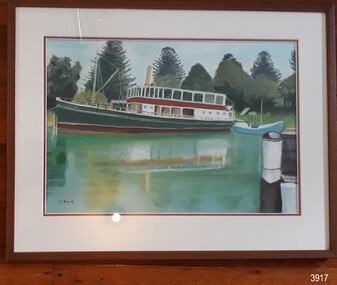
Painting - Maritime painting, Carmel Beavis, The Rowitta, 2012
... Picture, coloured pastel work on canvas in timber frame behind glass. The artist, Carmel Beavis, depicts the steam boat “Rowitta” moored beside the historic lifeboat “Warrnambool” on the lake at Flagstaff Hill Maritime Village. .... / Price: $” Handwritten on artist’s label “250.00” Framer’s printed label “Warrnambool / Picture Framing / & Gallery / 42 Kepler St, Warrnambool 3280 03 5561 5722 / www.wboolframing.com.au” Picture, coloured pastel work on canvas in timber frame behind glass. ...The artist’s comment on her work: “The Rowitta”, Flagstaff Hill. Warrnambool: "This boat was the venue for our daughter’s Wedding. The pastel work was undertaken after a beautiful day at Flagstaff Hill in 2012. I enjoyed working with the shadows and the foliage. Carmel Beavis” The popular steam ferry Rowitta is featured in this pastel picture on canvas by local artist Carmel Beavis. The iconic Norfolk pines stand tall against a blue sky, while colourful reflections shimmer in Flagstaff Hill’s harbour. The historic lifeboat “Warrnambool” is dwarfed by Rowitta’s size. Carmel’s daughter celebrated her wedding on board the Rowitta, which had been a very popular exhibit visitors for around forty years. This picture is one of several that were created by Carmel for her family and friends as a memento of the wedding and a way to keep the memory of Rowitta alive. Some of Carmel’s other works illustrate Flagstaff Hill’s 2017 publication “Tearooms Cookbook”. Some of Carmel’s paintings featured in the Tearooms Cookbook, produced around 2017 for fundraising for Flagstaff Hill. The Rowitta was a timber steam ferry built in Hobart in 1909 using planks of Huon and Karri wood. She was a favourite of sightseeing passengers along Tasmania’s Tamar and Derwent rivers for 30 years. Rowitta was also known as Tarkarri and Sorrentoand had worked as a coastal trading vessel between Devonport and Melbourne as well as along the southern coast of Australia. In 1974 Rowitta was purchased by Flagstaff Hilt to convert into a representation of the Speculant, a historic and locally significant sailing ship listed on the Victorian Heritage Database. (The Speculant was built in Scotland in 1895 and traded timber between the United Kingdom and Russia. Warrnambool’s P J McGennan & Co. then bought her to trade pine timber from New Zealand to Victorian ports and cargo to Melbourne. She was the largest ship ever registered with Warrnambool as her home port, playing a key role in the early 1900s in the Port of Warrnambool. In 1911, on her way to Melbourne, she was wrecked near Cape Otway. None of the nine crew lost their lives.) The promised funds for converting Rowitta into the Speculant were no longer available, so she was restored back to her original configuration. She represented the importance of coastal traders to transport, trade and communication in Australia times before rail and motor vehicles. Sadly, in 2015 the time had come to demolish the Rowitta due to her excessive deterioration and the high cost of on-going repairs. She had given over 100 years of service and pleasure to those who knew her. Early in 2019 Carmel gifted this picture to her friend Shirley Lindsay, who had been President of Wadas Artist Society. A few months later Shirley and her husband John (founding Director of Flagstaff Hill Maritime Village) thought the picture would be appropriate to Flagstaff Hill and presented it with pleasure to the Friends of Flagstaff Hill group later that year.The Rowitta represents the importance of coastal traders to transport, trade and communication in Australia before rail and motor vehicles. The painting is also significant as a record of an exhibit at Flagstaff Hill Maritime Village from is early beginnings. The painting is locally significant for being connected to a local and well known artist Carmel Beavis.Picture, coloured pastel work on canvas in timber frame behind glass. The artist, Carmel Beavis, depicts the steam boat “Rowitta” moored beside the historic lifeboat “Warrnambool” on the lake at Flagstaff Hill Maritime Village. The Rowitta is reflected in the water. The background includes the iconic Norfolk Pine trees. The work was framed by Warrnambool Picture Framing & Gallery in 2012.Signed on front, bottom left “C.L. Beavis”. Artist’s printed label on reverse “The Rowitta, Flagstaff Hill. Warrnambool: / This boat was the venue for our daughter’s / Wedding. / The pastel work was undertaken after a/ Beautiful day at Flagstaff Hill in 2012. / I enjoyed working with the shadows and / The foliage. / Carmel Beavis / Warrnambool. VIC. 3280. / Telephone (03) 5562 1806. / Price: $” Handwritten on artist’s label “250.00” Framer’s printed label “Warrnambool / Picture Framing / & Gallery / 42 Kepler St, Warrnambool 3280 03 5561 5722 / www.wboolframing.com.au” flagstaff hill, warrnambool, shipwrecked coast, flagstaff hill maritime museum, maritime museum, shipwreck coast, flagstaff hill maritime village, great ocean road, picture, pastel, carmel beavis, rowitta steam boat, warrnambool picture framer & gallery, wedding on the rowitta, the rowitta, tearooms cookbook, hobart steam ferry rowitta 1909, tarkarri, speculant, coastal trading vessel, p j mcgennan & co, peter mcgennan, sorrento -
 Bendigo Historical Society Inc.
Document - W.D.MASON COLLECTION: LETTER CARD, 3 Feb 1939
... Mason, Lead light artist, Glass merchant, Queen Street, Bendigo. ...Mason, Lead light artist, Glass merchant, Queen Street, Bendigo. ...Document , W.D.Mason Collection, Letter Card dated 3.2.1939 to Mr. W. Mason, Lead light artist, Glass merchant, Queen Street, Bendigo. Letter from ''one who knows''., probably a disgruntled driver.business, retail, w d mason -
 Federation University Art Collection
Ceramic, Robert Wynne, 'Vessel' by Robert Wynne, c1979
... During his final year he met visiting glass artist, Nick Mount, who had recently established a studio within Monash University. ...During his final year he met visiting glass artist, Nick Mount, who had recently established a studio within Monash University. ...Robert WYNNE (1959- ) Born Yarram, Victoria Robert Wynne studied a Diploma of Visual Arts at the Gippsland Institute of Advanced Education (now Federation University) from 1977 to 1979, and a Graduate Diploma of Visual Arts in 1981 majoring in Ceramics. During his final year he met visiting glass artist, Nick Mount, who had recently established a studio within Monash University. Robert was captivated by glass blowing and worked with Mount in those heady, pioneering days and carries with him many of the lessons he learned from Nick. Rob Wynne completed a Masters Degree in Glass at the California State University and visited private glass studios in the USA. In 1991 he established his own studio, Denizen Glass Design at Manly, New South Wales, where he produces a range of hand-blown glass including smaller production work and large, one-off sculptural pieces. Hand thrown and paddled form vessel featuring salt glaze.john edye, ceramics, jan feder memorial ceramics collection, gippsland, alumni -
Frankston RSL Sub Branch
Framed Gravure Print, unknown, 2015
... The print is mounted with a brown wooden frame and glass front. Artist is Erol Yildirim, born 1959 in Bolu, Turkey. ...artists name "Erol YILDIRIM 2015" Framed print produced by the gravure process. The print is in sepia tonings and depicts a military scene, presumably Turkish. The print is mounted with a brown wooden frame and glass ...Framed print produced by the gravure process. The print is in sepia tonings and depicts a military scene, presumably Turkish. The print is mounted with a brown wooden frame and glass front. Artist is Erol Yildirim, born 1959 in Bolu, Turkey. The print is number 51 of 100 and is dated 2015. This print was presented to the President and members of the Frankston RSL Sub Branch by the people of Turkey in early 2015 (just prior to the 100th Anniversary of the Gallipoli landing). The rear of the print has a brief biography of the artist and an explanation of the process used to produce the print attached. There is also a 'with compliments' slip from the Embassy of Turkey, Canberra attached.This print is marked "51/100" and has the artists name "Erol YILDIRIM 2015" -
Frankston RSL Sub Branch
Framed Artwork, Sketch of Frankston RSL Clubrooms, Davey Street, 1972
... artist Marie Minton, dated 1972. The artwork is an ink drawing with watercolour tonings and depicts the Frankston RSL Sub Branch clubrooms of the time. The artwork is mounted with a gold coloured wooden frame and glass...artist Marie Minton, dated 1972. The artwork is an ink drawing with watercolour tonings and depicts the Frankston RSL Sub Branch clubrooms of the time. The artwork is mounted with a gold coloured wooden frame and glass ...Framed artwork produced by artist Marie Minton, dated 1972. The artwork is an ink drawing with watercolour tonings and depicts the Frankston RSL Sub Branch clubrooms of the time. The artwork is mounted with a gold coloured wooden frame and glass front. Artist, Marie Minton was apparently the daughter of a member of the time, Laurie Minton. This scene is of a Frankston landmark building on the corner of Davey Street and Young Street, Frankston locally known as the 'Plowman Residence'. Prior to being the clubrooms of the Frankston RSL Sub Branch this building was the family home of Dr Sidney Plowman. In Dr Plowman's time the building was known as the 'The Lofts' and was his residence and operated as a private hospital, the building was constructed ca 1900. Dr Plowman died in May 1932. Title 'Frankston RSL' and the artist's name 'Marie Minton '72' appear on the front lower area of the sketch. The rear has the following note inscribed "Sketch of RSL clubrooms Davey St. by Marie Minton daughter of member (Laurie)" -
 Eltham District Historical Society Inc
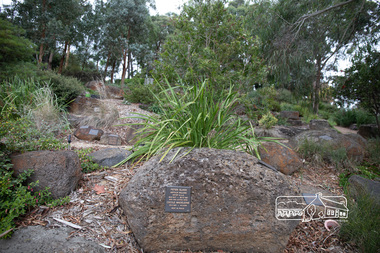
Photograph, Peter Pidgeon, Memorial to Peter Glass and Cecile Glass, Eltham Cemetery, Victoria, 5 April 2021
... Peter Glass (Arthur William) Artist A.I.L.A. 28.8.1917 - 28.12.1997 and his loving wife Cecile Madeleine 23.2.1927 - 6.2.2006 Rest In Peace...Peter Glass (Arthur William) Artist A.I.L.A. 28.8.1917 - 28.12.1997 and his loving wife Cecile Madeleine 23.2.1927 - 6.2.2006 Rest In Peace eltham cemetery gravestones heritage excursion Cecile Madeleine Glass Peter Glass Born Digital Memorial to Peter Glass and Cecile Glass, Eltham Cemetery, Victoria Photograph Photograph Peter Pidgeon ...In 1938, Arthur William Glass (known as Peter Glass) was studying painting under Max Meldrum. Much of their inspiration came from the Eltham bush and the nearby Yarra River. With his friends jazz musicians Graeme and Roger Bell, Peter bought land at the top of John Street: enchanted by Montsalvat, he had the objective of building a mud-brick house. War intervened, but then in 1948 he began working for Alistair Knox as a carpenter and mud-brick builder. By then, Peter had married, necessitating a larger house, which he built with help from Alistair Knox. As a trained architectural draftsman, Peter later progressed to working for Alistair in that role, eventually running the drafting office during the 1960s. He was deeply involved in the foundation of the Australian Institute of Landscape Architects, and went on to design many gardens, some in partnership with Alistair Knox and Gordon Ford. He died in 1997 and is buried in Eltham Cemetery with his wife Cecile. Peter Glass (Arthur William) Artist A.I.L.A. 28.8.1917 - 28.12.1997 and his loving wife Cecile Madeleine 23.2.1927 - 6.2.2006 Rest In PeaceBorn Digitaleltham cemetery, gravestones, heritage excursion, cecile madeleine glass, peter glass -
 Glenelg Shire Council Cultural Collection
Drawing, Collin Elwyn Woolcock, Astroloma Humifusum (Cranberry Heath), 1982
... Work mounted in double matt (taupe on sage) under glass in gold frame. Artists signature next to last flower study, lower left....artist's signature, lower left in image) (coloured pencil). Back: 10 (upper left) (pen) Different detail studies of plant. From top-bottom, right to left are a side study of red flower with elongated petals in tube shape. Stem with three pale-gree leaves. Top view of dark green leaf with serated edges. Stem and flower bud study. 2 stems joined with many clusters of spikey green leaves coming off central stems and 6 flowers and 3-4 buds. A seed study. A view into tube of flower. Work mounted in double matt (taupe on sage) under glass ...Part of "Woolcock Gallery Collection" Exhibition 1989 CEMA.Different detail studies of plant. From top-bottom, right to left are a side study of red flower with elongated petals in tube shape. Stem with three pale-gree leaves. Top view of dark green leaf with serated edges. Stem and flower bud study. 2 stems joined with many clusters of spikey green leaves coming off central stems and 6 flowers and 3-4 buds. A seed study. A view into tube of flower. Work mounted in double matt (taupe on sage) under glass in gold frame. Artists signature next to last flower study, lower left.Front: Astroloma humifusum (Cranberry Heath). CEW/82 (artist's signature, lower left in image) (coloured pencil). Back: 10 (upper left) (pen)cema, botanical, collin woolcock -
 St Kilda Historical Society
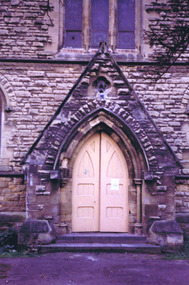
Photograph, Christ Church St Kilda exterior - images collection #2
... The Church has a varied collection of stained glass, including work by leading stained glass firms and artists in Victoria in the nineteenth and early twentieth century: Ferguson & Urie, William Montgomery and Brooks Robinson. ...The Church has a varied collection of stained glass, including work by leading stained glass firms and artists in Victoria in the nineteenth and early twentieth century: Ferguson & Urie, William Montgomery and Brooks Robinson. ...Christ Church was constructed in 1854-57 and designed in Decorated Gothic style by Albert Purchase & Charles Swyer. It was enlarged in 1874 and 1881 to the designs of Sydney W Smith. It is one of four main buildings constructed on land granted to the Church of England in 1855 and named Church Square. The other buildings are the bishop's residence, vicarage and parish hall. Heritage Victoria describes it as a 'rare and significant square in the history of town planning in Victoria which demonstrates the importance of the church to the community'. It is built from rarely used undressed random coursed sandstone from Point King Sorrento. It is located at 14 Acland Street, St Kilda. The triangular rose window is said to have been modelled on Lichfield Cathedral and shows outstanding craftsmanship. According to Heritage Victoria, the only other known example in Victoria is at St Georges Presbyterian Church in East St Kilda, designed by the same architect, Albert Purchas. The Church has a varied collection of stained glass, including work by leading stained glass firms and artists in Victoria in the nineteenth and early twentieth century: Ferguson & Urie, William Montgomery and Brooks Robinson. The 'shipwreck window,' north west transept, is an historically significant memorial window dedicated to Miles and William Dalzell Nicholson, the second and third sons of the Hon. William Nicholson, M.L.A, a Lord Mayor of Melbourne and Premier of Victoria in the 1850s. Miles, died in England on 27 April 1874. His younger brother William died in the wreck of the ‘British Admiral’ off King Island on 23 May 1874. The images show the condition of the church at the time they were taken (c 2012). Signs of deterioration can be seen. The bell is not rung any more because of damage to the stonework.There has been some remedial work since and the National Trust of Australia conducted a heritage restoration appeal.churches, acland street, purchase, swyer, st kilda, christ church -
 Eltham District Historical Society Inc
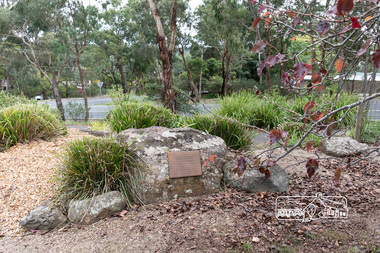
Photograph, Peter Pidgeon, Memorial to Gordon Craig Ford, Landscape Designer, Eltham Cemetery, Victoria, 5 April 2021
... He came to Eltham in 1948 and bought a block of land in John Street extending through to Pitt Street. Artist Peter Glass lived opposite in John Street. ...He came to Eltham in 1948 and bought a block of land in John Street extending through to Pitt Street. Artist Peter Glass lived opposite in John Street. ...Gordon Ford was a conservationist and a pioneer of natural-style landscaping. He came to Eltham in 1948 and bought a block of land in John Street extending through to Pitt Street. Artist Peter Glass lived opposite in John Street. Early on, Gordon worked for Alistair Knox on construction of the mudbrick Busst house amongst others. At the same time, with the help of friends including artist Clifton Pugh, he progressively built his own house ‘Fülling’, which "grew like Topsy" utilising a variety of second-hand materials. His main focus, which became his life-long occupation, was garden landscaping. Inspired by Edna Walling and Ellis Stones, he sought to reflect the bush settings of rural Victoria where he had grown up. Commissions included Monash University and countless industrial sites but designing for the archetypal quarter-acre block gave him the most satisfaction. He had a huge impact on the look of gardens in Australia from the 1950s, creating seemingly natural bush environments by carefully integrating indigenous and exotic plantings. Gordon died in 1999 and is buried in Eltham Cemetery; the gravesite is marked by a plaque. Another plaque (away from his grave) notes his landscaping design work within the cemetery grounds and at Alistair Knox Park. Gordon Craig Ford Landscape Designer 30. 8 .1918 - 16. 6. 1999 Eltham Cemetery Trustee fom 1987 - 1999 Gordon settled in Eltham in 1948 He was a conservationist and a pioneer of natural style landscaping, continuing design and construction until his death. His local work and influence can be seen in many private gardens, the Eltham Cemetery and the Alistair Knox Park.Born Digitaleltham cemetery, gravestones, gordon craig ford -
 Eltham District Historical Society Inc
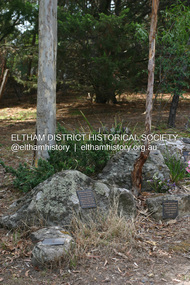
Photograph - Digital Photograph, Alan King, Grave of Gordon Ford, Eltham Cemetery, Victoria, 27 January 2008
... He came to Eltham in 1948 and bought a block of land in John Street extending through to Pitt Street. Artist Peter Glass lived opposite in John Street. ...He came to Eltham in 1948 and bought a block of land in John Street extending through to Pitt Street. Artist Peter Glass lived opposite in John Street. ...Gordon Ford was a conservationist and a pioneer of natural-style landscaping. He came to Eltham in 1948 and bought a block of land in John Street extending through to Pitt Street. Artist Peter Glass lived opposite in John Street. Early on, Gordon worked for Alistair Knox on construction of the mudbrick Busst house amongst others. At the same time, with the help of friends including artist Clifton Pugh, he progressively built his own house ‘Fülling’, which "grew like Topsy" utilising a variety of second-hand materials. His main focus, which became his life-long occupation, was garden landscaping. Inspired by Edna Walling and Ellis Stones, he sought to reflect the bush settings of rural Victoria where he had grown up. Commissions included Monash University and countless industrial sites but designing for the archetypal quarter-acre block gave him the most satisfaction. He had a huge impact on the look of gardens in Australia from the 1950s, creating seemingly natural bush environments by carefully integrating indigenous and exotic plantings. Gordon died in 1999 and is buried in Eltham Cemetery; the gravesite in a natural landscape setting is marked by a plaque. Another plaque (away from his grave) notes his landscaping design work within the cemetery grounds and at Alistair Knox Park. Gordon Craig Ford 30-8-1918 - 16-6-1999 Landscape designer Loved and respected Husband of Gwen, father Of Angela, Emma, Ben, Cassie, Dailan, Caitlin. A good life lived well Published: Nillumbik Now and Then / Marguerite Marshall 2008; photographs Alan King with Marguerite Marshall.; p55This collection of almost 130 photos about places and people within the Shire of Nillumbik, an urban and rural municipality in Melbourne's north, contributes to an understanding of the history of the Shire. Published in 2008 immediately prior to the Black Saturday bushfires of February 7, 2009, it documents sites that were impacted, and in some cases destroyed by the fires. It includes photographs taken especially for the publication, creating a unique time capsule representing the Shire in the early 21st century. It remains the most recent comprehenesive publication devoted to the Shire's history connecting local residents to the past. nillumbik now and then (marshall-king) collection, graves, eltham cemetery, gordon craig ford, gravestones, gwen ford, memorials -
 Eltham District Historical Society Inc
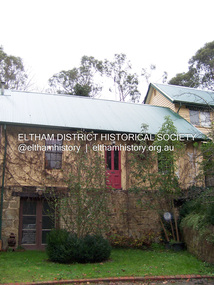
Photograph - Digital Photograph, Marguerite Marshall, Souter House, 23 Falkiner Street, Eltham, 20 June 2008
... She employed landscape designer Gordon Ford, artist Peter Glass and Tim Burstall. The house originally had a cellar for making and storing wine, reputedly the first made in the district according to Alistair Knox in his book ‘We are what we stand on’ (p33). ...She employed landscape designer Gordon Ford, artist Peter Glass and Tim Burstall. The house originally had a cellar for making and storing wine, reputedly the first made in the district according to Alistair Knox in his book ‘We are what we stand on’ (p33). ...Originally built in the 1850s by Charles Souter from earth excavated from his property. It was a forerunner for a building style that was later to be synonymous with Eltham. The house is historically significant as the oldest mud brick building in the Shire of Nillumbik, as one of less than half a dozen buildings from the 1850s that survive in the Shire. It underwent several additions and alterations between c.1950s-1980s. It is also significant for its associations with Mervyn Skipper from the well-known Eltham family who was one of the founders of the artist's colony at Montsalvat. The house is architecturally significant because its north section was designed by the noted 'Eltham-style' architect, Alistair Knox, and the two long Oregon beams supporting the main floor were added by the noted 'Eltham-style' builder, Horrie Judd who built the southern room. A onetime tenant in the house, Judd built many Eltham houses and was a major builder of Montsalvat. The 1934 flood destroyed the south wall and the house remained unoccupied for some time. Sonia Skipper, one of Montsalvat’s builders who also worked for Alistair Knox oversaw rebuilding it. She employed landscape designer Gordon Ford, artist Peter Glass and Tim Burstall. The house originally had a cellar for making and storing wine, reputedly the first made in the district according to Alistair Knox in his book ‘We are what we stand on’ (p33). Water would seep into the cellar so Sonia’s father and then owner of the house, Mervyn Skipper bulldozed a channel outside to divert it. The Brocksopp family purchased the house in 1950 and added an outside door to the cellar and converted it into a gallery. Covered under Heritage Overlay, Nillumbik Planning Scheme. Published: Nillumbik Now and Then / Marguerite Marshall 2008; photographs Alan King with Marguerite Marshall.; p51This collection of almost 130 photos about places and people within the Shire of Nillumbik, an urban and rural municipality in Melbourne's north, contributes to an understanding of the history of the Shire. Published in 2008 immediately prior to the Black Saturday bushfires of February 7, 2009, it documents sites that were impacted, and in some cases destroyed by the fires. It includes photographs taken especially for the publication, creating a unique time capsule representing the Shire in the early 21st century. It remains the most recent comprehenesive publication devoted to the Shire's history connecting local residents to the past. nillumbik now and then (marshall-king) collection, eltham, falkiner street, mud brick building, mudbrick houses, souter house -
 Eltham District Historical Society Inc
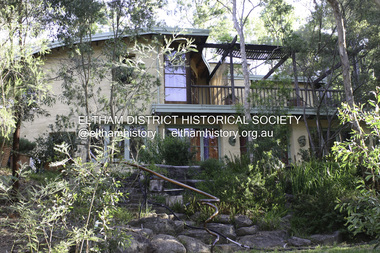
Photograph - Digital Photograph, Alan King, Busst House, cnr Silver Street and Kerrie Crescent, Eltham, 2 February 2008
... Those who built their own houses, included film maker Tim Burstall, artists Peter Glass, Clifton Pugh, Matcham Skipper, Sonia Skipper and husband Jo Hannan. ...Those who built their own houses, included film maker Tim Burstall, artists Peter Glass, Clifton Pugh, Matcham Skipper, Sonia Skipper and husband Jo Hannan. ...Considered the best of the early mud-brick houses built by Alistair Knox. Covered under Heritage Overlay, Nillumbik Planning Scheme. Published: Nillumbik Now and Then / Marguerite Marshall 2008; photographs Alan King with Marguerite Marshall.; p143 The Busst house hidden by trees at the corner of Silver Street and Kerrie Crescent is considered the best of the early mud-brick houses built by Eltham architect, Alistair Knox. Knox himself said, that the Busst house was the most mature mud-brick house designed at that period. ‘It related with true understanding to its steep site and expressed the flexibility of earth building ………to develop a new sense of flowing form and shape’. Built in 1948 for artist Phyl Busst, a former art student at Montsalvat, the house helped usher in Eltham Shire’s distinctive mud-brick residential character. Knox was the pivotal figure of the style developed from the 1950s to the 1970s. Scarcity of building materials after World War Two encouraged mud-brick building because earth was a cheap and plentiful building medium. But when Knox began building in mud-brick in 1947, no council in Victoria knew anything of this ancient art and he needed a permit. Fortunately the Commonwealth Experimental Building Station at Ryde in NSW, had been experimenting with earth construction to help overcome the shortages of that time. They published a pamphlet that became available in Melbourne on the same day the Eltham Council was to consider whether the earth building should be allowed. Knox caught one of the three morning trains to the city in those days and bought several copies of the pamphlet to give to each councillor. On his return he found the councillors standing on the steps of the shire offices after lunch at the local hotel. He heard that earth building had been discussed before lunch and that they were not in favor of it. Knox gave each councillor a pamphlet. They passed that plan and by doing so, opened the door for all future earth building in Victoria and by default, in Australia. Mud-brick houses attracted artists to Eltham, for their aesthetic appeal and because they were cheap. Those who built their own houses, included film maker Tim Burstall, artists Peter Glass, Clifton Pugh, Matcham Skipper, Sonia Skipper and husband Jo Hannan. For Knox, mud-brick building was more than just a cheap building medium. He saw it as harmonising with the surrounding bush and as a way of counteracting the growing materialism of the age. He wrote of its impact on ‘ 20th century man. It should counteract the confusion that the perpetual flow of high technology products have upon him ..’ Building the Busst house on a steep site was difficult because most earth-moving equipment was then in its infancy. For instance drilling for explosives was done by hand, which was a slow and painful process. Knox, assisted by his foreman Horrie Judd and Gordon Ford (who was to become a famous landscape designer), built two large main rooms - a living room/ kitchen downstairs - and upstairs, a studio/bedroom. The studio/bedroom opens onto the balcony, which covers the living area. The bath made of solid concrete by stonemason Jack Fabro, is particularly deep. Sunshine pours through the three French windows of the north-east facing kitchen/living area, which is lined with timber. The large hearth can fit a family around the fire while the timber floors and solomite (compressed straw) ceilings add to the cosy atmosphere. The garden is thick with trees, and in the late 1990s, Ford put in a pool near the original dry wall he had built as a young man.This collection of almost 130 photos about places and people within the Shire of Nillumbik, an urban and rural municipality in Melbourne's north, contributes to an understanding of the history of the Shire. Published in 2008 immediately prior to the Black Saturday bushfires of February 7, 2009, it documents sites that were impacted, and in some cases destroyed by the fires. It includes photographs taken especially for the publication, creating a unique time capsule representing the Shire in the early 21st century. It remains the most recent comprehenesive publication devoted to the Shire's history connecting local residents to the past. nillumbik now and then (marshall-king) collection, alistair knox, alistair knox design, busst house, kerrie crescent, mudbrick construction, mudbrick houses, silver street -
 Eltham District Historical Society Inc
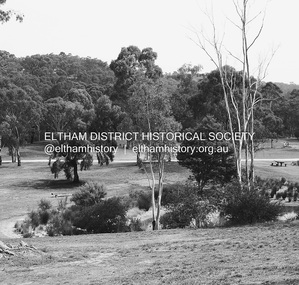
Photograph - Digital Photograph, Alan King, Alistair Knox Park, Eltham, 2008
... The park designers were four major forces in the urban bush landscape garden –Knox, landscape designer Gordon Ford, artist Peter Glass and landscaper Ivan Stranger. The National Trust citation for the park, originally called Eltham Town Park, includes the Eltham railway trestle bridge and the Shillinglaw Cottage. ...The park designers were four major forces in the urban bush landscape garden –Knox, landscape designer Gordon Ford, artist Peter Glass and landscaper Ivan Stranger. The National Trust citation for the park, originally called Eltham Town Park, includes the Eltham railway trestle bridge and the Shillinglaw Cottage. ...Alistair Knox Park, an oasis of peace and beauty. Covered under National Trust of Australia (Victoria) Landscape Significance and Heritage Overlay, Nillumbik Planning Scheme. Published: Nillumbik Now and Then / Marguerite Marshall 2008; photographs Alan King with Marguerite Marshall.; p173 It is hard to imagine that the Alistair Knox Park, an oasis of peace and beauty beside busy Main Road, Eltham, was once the township’s rubbish dump. It was only in the 1970s that the tip was transformed into this beautiful six hectare space, which later earned it a National Trust Landscape classification. Before its life as a dump, the area was used for small farms. Thanks largely to the foresight and efforts of local environmental builder Alistair Knox, the park was designed sympathetically with the character of the wider Eltham landscape. Then, appropriately, the park was named after Knox, who was an Eltham Shire Councillor from 1971 to 1975 and Shire President in 1975. The park designers were four major forces in the urban bush landscape garden –Knox, landscape designer Gordon Ford, artist Peter Glass and landscaper Ivan Stranger. The National Trust citation for the park, originally called Eltham Town Park, includes the Eltham railway trestle bridge and the Shillinglaw Cottage. The citation states ‘the semi-natural setting of the parkland provides a landscape which is evocative of the history of the area’. Manna Gums (Eucalyptus viminalis) and Candlebarks (Eucalyptus rubida) are significant features. Most of the park’s construction was directed by Bob Grant, Superintendent of the Parks and Gardens Department for the Eltham Shire Council. First plantings occurred in Arbour Week in 1973, then the lake and botanic area were completed in 1975, with Federal Government funding, and the toilet block in 1978. Bounded by the Eltham railway line, Panther Place, Main Road, Bridge and Susan Streets, the park is in a valley about a kilometre wide overlooked by steep hills at the east and west. The Diamond Creek flows through it and the picturesque historic timber trestle railway bridge edges the north. Informal plantings of Australian indigenous and native species in open and undulating grassed settings blend with the natural landscape of the Diamond Creek to the west. The bush-style plants, particularly around the creek, balance with open lawns, paths and a cascade flowing from a small lake to another below. A footbridge over the creek leads to the park’s west. The park includes an adventure playground and barbecue areas. The park stands on part of the land bought from the Crown in 1851 by Josiah Holloway, who subdivided it into allotments and which he called Little Eltham. Most of the land was subdivided into residential lots, but the creek valley, on which the park stands, was subdivided into farm-size lots, used mainly for orchards and grazing. One of the earliest owners was John Hicks Petty, who in 1874 bought a plot from Holloway. Other families who owned properties in that area, included Rees, Clark, Waterfall, Graham, Hill and Morant. In 1901 the railway was built through the area. Jock Read, an Eltham resident since around 1920, remembers several farms in the 1920s and ’30s that occupied the site of today’s park. A poultry farm, which extended from present day Panther Place, was owned by the Gahan family. Next to that farm was another for grazing cattle owned by Jack Carrucan. Beside this was land owned by John Lyon. A doctor lived beside this, and at the north-west corner of Bridge Street and Main Road stood a memorial to the soldiers who died in World War One, which was later moved to the RSL site. Mr Read also remembers other farms and orchards west of the creek In the early 1960s the Eltham Council began buying these farms and in the late 1960s turned the areas east of the Diamond Creek into a garbage tip. When this was filled above the creek’s flood plain, the tip was moved to the west of the creek.This collection of almost 130 photos about places and people within the Shire of Nillumbik, an urban and rural municipality in Melbourne's north, contributes to an understanding of the history of the Shire. Published in 2008 immediately prior to the Black Saturday bushfires of February 7, 2009, it documents sites that were impacted, and in some cases destroyed by the fires. It includes photographs taken especially for the publication, creating a unique time capsule representing the Shire in the early 21st century. It remains the most recent comprehenesive publication devoted to the Shire's history connecting local residents to the past. nillumbik now and then (marshall-king) collection, alistair knox park, eltham -
 Eltham District Historical Society Inc
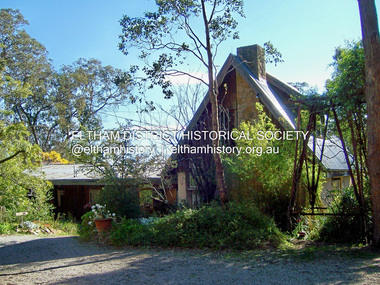
Photograph - Digital Photograph, Marguerite Marshall, Former home of Professor William MacMahon Ball, York Street, Eltham, 24 May 2007
... The wall of her room had fallen down – fortunately away from her! In 1950 artist Peter Glass – another neighbour and later landscape designer – built Katrine a mud-brick pottery. ...The wall of her room had fallen down – fortunately away from her! In 1950 artist Peter Glass – another neighbour and later landscape designer – built Katrine a mud-brick pottery. ...Situated at the eastern end of York Street, Eltham, 'Shinrone', the former home of Professor William (Mac) MacMahon Ball was one of the first in the Shire of Eltham to incorporate mud-brick. Professor MacMahon Ball, a political scientist, writer, broadcaster and diplomat and family moved to York Street, Eltham in 1945 into a timber cottage built around the 1890s and in poor repair. Mac asked Alistair Knox to renovate the home and he expanded the living area and added verandahs. In 1948 Montsalvat artist and sculptor Sonia Skipper supervised the building of most of the mud-brick studio. Neighbour Gordon Ford made the mud-bricks. Mac also asked John Harcourt, who had worked with him as a journalist in shortwave broadcasting, to build a pise (rammed earth) and stone addition to the largely timber house. Harcourt built two bedrooms - including an attic bedroom - a balcony with a shower and toilet, a nd a fireplace and chimney of local stone. Published: Nillumbik Now and Then / Marguerite Marshall 2008; photographs Alan King with Marguerite Marshall.; p141 At the eastern tip of York Street, Eltham, stands Shinrone, the former home of one of Australia’s intellectual leaders. Professor William Macmahon Ball, was one of the first to bring Asia as a foreign policy issue to the Australian public.1 He was a political scientist, writer, broadcaster and diplomat. The house was one of the first in Eltham Shire to incorporate mud-brick,2 because of the acute shortage of building materials after World War Two. Its novice builders later become leaders in Eltham’s built and garden design. Mac (as he was usually called), who was the son of a Church of England minister, was born in Casterton, Victoria in 1901 and died in 1986. In 1945 he helped establish the United Nations, as political consultant to the Australian Delegation at the San Francisco Conference.3 Then in 1946 Mac was appointed British Commonwealth Representative on the Allied Council for Japan, which is recorded in detail in his diary.4 In 1948 Mac led an Australian Government Goodwill Mission to South East Asia. However, Mac was perhaps most successful as an academic and public speaker.5 He was a commentator on the Australian Broadcasting Commission, from the early 1930s to the early 1960s. He was also Controller of the Short-Wave Broadcasting Unit during World War Two, which later became Radio Australia. From 1923 he taught at The University of Melbourne, then became foundation Professor of Political Science in 1949 and was Chair until his retirement in 1968.6 In 1942, as the government expected a Japanese invasion, Mac’s wife Katrine and their only child Jenny, moved from Kew to Eltham as temporary evacuees. However Mac and Katrine lived in Eltham for almost the rest of their lives. After staying with friends, they rented a house in Reynolds Road, where, as it was wartime, they needed to keep horses for transport and a cow and poultry for milk and eggs. In 1945 the family moved to the house at York Street, which was then a timber cottage, built around the 1890s and in poor repair. The underground well, cellar and part of the garden are all that remain of what stood on the original 18 acre (7.3ha) allotment. Thanks largely to Katrine’s hard work, the house was gradually renovated and extended. The long rambling house was partially built by several young neighbours, who were inspired by the cheap mud-brick and stone building style of Montsalvat, the Eltham artists’ colony. Mac asked Alistair Knox to renovate Shinrone, named after an Irish village near Katrine’s family home. Knox later popularised the mud-brick style of house construction, for which Eltham became known. He expanded the living area and added verandas. In 1948 Montsalvat artist and sculptor Sonia Skipper supervised the building of most of the mud-brick studio. Another neighbour, Gordon Ford, who was to have a major influence on the Australian garden style, made the mud-bricks. Mac also asked John Harcourt, who had worked with him as a journalist in short-wave broadcasting, to build a pisé (rammed earth) and stone addition to the largely timber house. Harcourt built two bedrooms – including an attic bedroom – a balcony with a shower and toilet, and a fireplace and chimney of local sandstone. With pioneering work naturally came mistakes, including one particularly dramatic incident when Harcourt was building walls with unsupported sections. Jenny Ellis, Mac’s daughter, remembers being awakened from sleep by a thundering shudder. The wall of her room had fallen down – fortunately away from her! In 1950 artist Peter Glass – another neighbour and later landscape designer – built Katrine a mud-brick pottery. As a result, the house features at one end Harcourt’s characteristic steep gable roof, while at the other the flatter construction characteristic of Knox. Mac referred to the home as the Eltham ‘experimental building site’.7 Surprisingly, the combination works, perhaps partly because it has the warm inviting feel of timber, mud-brick and stone.This collection of almost 130 photos about places and people within the Shire of Nillumbik, an urban and rural municipality in Melbourne's north, contributes to an understanding of the history of the Shire. Published in 2008 immediately prior to the Black Saturday bushfires of February 7, 2009, it documents sites that were impacted, and in some cases destroyed by the fires. It includes photographs taken especially for the publication, creating a unique time capsule representing the Shire in the early 21st century. It remains the most recent comprehenesive publication devoted to the Shire's history connecting local residents to the past. nillumbik now and then (marshall-king) collection, eltham, alistair knox, gordon ford, john harcourt, mudbrick construction, pise construction, professor macmahon ball, shinrone, sonia skipper, york street
