
Showing 148 items matching "gothic style"
-
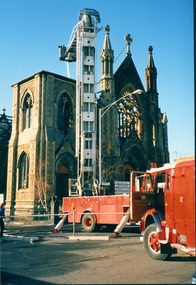 Uniting Church Archives - Synod of Victoria
16 August 1988
... cairns memorial, dr adam cairns, chalmers church, powlett st. east melbourne, australasian sketcher, reed henderson smart, gothic style, presbyterian, twentyman askew...The original design for 'a handsome and commodious edifice in the early English Gothic style capable of seating 750 persons' was described and illustrated in The Australasian Sketcher (January 1883). ...The original design for 'a handsome and commodious edifice in the early English Gothic style capable of seating 750 persons' was described and illustrated in The Australasian Sketcher (January 1883). ...The foundation stone for the Cairns Memorial Church in East Melbourne was laid on 20 November 1882, and construction began in 1883 to a design produced by architects Reed, Henderson and Smart of Melbourne. The church was named in memory of the Rev. Dr. Adam Cairns (1802-1881), late pastor of Chalmers Church on Eastern Hill. Cairns was born in Scotland and ministered there until coming to Melbourne in 1853, where he served as a minister until 1876. The church in East Melbourne was intended to accommodate those who had seceded from Chalmers Church and formed themselves into a new charge. The original design for 'a handsome and commodious edifice in the early English Gothic style capable of seating 750 persons' was described and illustrated in The Australasian Sketcher (January 1883). The interior was to be octagonal in form, with the organ and choir placed in the southern transept. The first portion of the church was opened in November 1883, but was soon found, under the popular ministry of the Rev. G.D. Buchanan, to be too small for the congregation. A new design by the architects Twentyman and Askew was developed, and the first part of the redesigned building was opened on 5 October 1884. The completed building was opened on 17 April 1887. Built from Barrabool Hills stone with Waurn Ponds freestone dressings, it consisted of a nave and transepts, with raking floor, a substantial undercroft and the base of an incomplete tower and spire to the north-west. The church was gutted by fire in August 1988 and was subsequently redeveloped as an apartment complex. The congregation of Cairns Memorial now worships at Richmond-Collingwood, or at St. Michael's Collins Street. Colour photo showing the partial demolition of the Cairns Memorial Church in Powlett St. East Melbourne after it had been destroyed by fire on 15 August 1988.cairns memorial, dr adam cairns, chalmers church, powlett st. east melbourne, australasian sketcher, reed henderson smart, gothic style, presbyterian, twentyman askew -
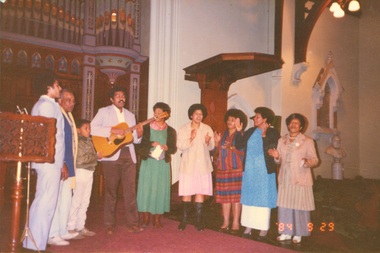 Uniting Church Archives - Synod of Victoria
Photograph, 29 September 1984
... cairns memorial, dr adam cairns, chalmers church, powlett st. east melbourne, australasian sketcher, reed henderson smart, gothic style, presbyterian, twentyman askew...The original design for 'a handsome and commodious edifice in the early English Gothic style capable of seating 750 persons' was described and illustrated in The Australasian Sketcher (January 1883). ...The original design for 'a handsome and commodious edifice in the early English Gothic style capable of seating 750 persons' was described and illustrated in The Australasian Sketcher (January 1883). ...The foundation stone for the Cairns Memorial Church in East Melbourne was laid on 20 November 1882, and construction began in 1883 to a design produced by architects Reed, Henderson and Smart of Melbourne. The church was named in memory of the Rev. Dr. Adam Cairns (1802-1881), late pastor of Chalmers Church on Eastern Hill. Cairns was born in Scotland and ministered there until coming to Melbourne in 1853, where he served as a minister until 1876. The church in East Melbourne was intended to accommodate those who had seceded from Chalmers Church and formed themselves into a new charge. The original design for 'a handsome and commodious edifice in the early English Gothic style capable of seating 750 persons' was described and illustrated in The Australasian Sketcher (January 1883). The interior was to be octagonal in form, with the organ and choir placed in the southern transept. The first portion of the church was opened in November 1883, but was soon found, under the popular ministry of the Rev. G.D. Buchanan, to be too small for the congregation. A new design by the architects Twentyman and Askew was developed, and the first part of the redesigned building was opened on 5 October 1884. The completed building was opened on 17 April 1887. Built from Barrabool Hills stone with Waurn Ponds freestone dressings, it consisted of a nave and transepts, with raking floor, a substantial undercroft and the base of an incomplete tower and spire to the north-west. The church was gutted by fire in August 1988 and was subsequently redeveloped as an apartment complex. The congregation of Cairns Memorial now worships at Richmond-Collingwood, or at St. Michael's Collins Street. Colour photo showing a group of Fijians singing to a guitar accompaniment in the apse of the Cairns Memorial Church East Melbourne.cairns memorial, dr adam cairns, chalmers church, powlett st. east melbourne, australasian sketcher, reed henderson smart, gothic style, presbyterian, twentyman askew, fijians -
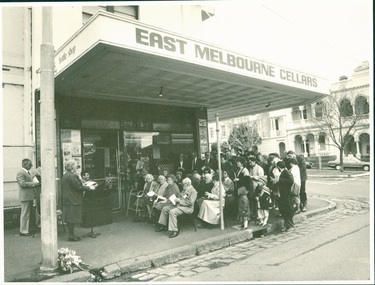 Uniting Church Archives - Synod of Victoria
Photograph, 21 August 1988
... cairns memorial, dr adam cairns, chalmers church, powlett st. east melbourne, australasian sketcher, reed henderson smart, gothic style, presbyterian, twentyman askew...The original design for 'a handsome and commodious edifice in the early English Gothic style capable of seating 750 persons' was described and illustrated in The Australasian Sketcher (January 1883). ...The original design for 'a handsome and commodious edifice in the early English Gothic style capable of seating 750 persons' was described and illustrated in The Australasian Sketcher (January 1883). ...The foundation stone for the Cairns Memorial Church in East Melbourne was laid on 20 November 1882, and construction began in 1883 to a design produced by architects Reed, Henderson and Smart of Melbourne. The church was named in memory of the Rev. Dr. Adam Cairns (1802-1881), late pastor of Chalmers Church on Eastern Hill. Cairns was born in Scotland and ministered there until coming to Melbourne in 1853, where he served as a minister until 1876. The church in East Melbourne was intended to accommodate those who had seceded from Chalmers Church and formed themselves into a new charge. The original design for 'a handsome and commodious edifice in the early English Gothic style capable of seating 750 persons' was described and illustrated in The Australasian Sketcher (January 1883). The interior was to be octagonal in form, with the organ and choir placed in the southern transept. The first portion of the church was opened in November 1883, but was soon found, under the popular ministry of the Rev. G.D. Buchanan, to be too small for the congregation. A new design by the architects Twentyman and Askew was developed, and the first part of the redesigned building was opened on 5 October 1884. The completed building was opened on 17 April 1887. Built from Barrabool Hills stone with Waurn Ponds freestone dressings, it consisted of a nave and transepts, with raking floor, a substantial undercroft and the base of an incomplete tower and spire to the north-west. The church was gutted by fire in August 1988 and was subsequently redeveloped as an apartment complex. The congregation of Cairns Memorial now worships at Richmond-Collingwood, or at St. Michael's Collins Street. B & W photograph showing the congregation of the Cairns Memorial Church attending a service held under the verandah of the East Melbourne Cellars (Cheers Bottle Shop) after fire had destroyed their church on 15 August 1988.cairns memorial, dr adam cairns, chalmers church, powlett st. east melbourne, australasian sketcher, reed henderson smart, gothic style, presbyterian, twentyman askew, fijians, east melbourne cellars, cheers bottle shop -
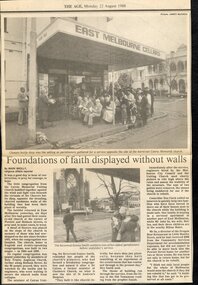 Uniting Church Archives - Synod of Victoria
Photograph - Newspaper cutting, 22 August 1988
... cairns memorial, dr adam cairns, chalmers church, powlett st. east melbourne, australasian sketcher, reed henderson smart, gothic style, presbyterian, twentyman askew...The original design for 'a handsome and commodious edifice in the early English Gothic style capable of seating 750 persons' was described and illustrated in The Australasian Sketcher (January 1883). ...The original design for 'a handsome and commodious edifice in the early English Gothic style capable of seating 750 persons' was described and illustrated in The Australasian Sketcher (January 1883). ...The foundation stone for the Cairns Memorial Church in East Melbourne was laid on 20 November 1882, and construction began in 1883 to a design produced by architects Reed, Henderson and Smart of Melbourne. The church was named in memory of the Rev. Dr. Adam Cairns (1802-1881), late pastor of Chalmers Church on Eastern Hill. Cairns was born in Scotland and ministered there until coming to Melbourne in 1853, where he served as a minister until 1876. The church in East Melbourne was intended to accommodate those who had seceded from Chalmers Church and formed themselves into a new charge. The original design for 'a handsome and commodious edifice in the early English Gothic style capable of seating 750 persons' was described and illustrated in The Australasian Sketcher (January 1883). The interior was to be octagonal in form, with the organ and choir placed in the southern transept. The first portion of the church was opened in November 1883, but was soon found, under the popular ministry of the Rev. G.D. Buchanan, to be too small for the congregation. A new design by the architects Twentyman and Askew was developed, and the first part of the redesigned building was opened on 5 October 1884. The completed building was opened on 17 April 1887. Built from Barrabool Hills stone with Waurn Ponds freestone dressings, it consisted of a nave and transepts, with raking floor, a substantial undercroft and the base of an incomplete tower and spire to the north-west. The church was gutted by fire in August 1988 and was subsequently redeveloped as an apartment complex. The congregation of Cairns Memorial now worships at Richmond-Collingwood, or at St. Michael's Collins Street. B & W newspaper cutting from The Age newspaper on 22 August 1988.Caption: "The Rev Eunice Smith comforts two of her oldest parishioners before yesterday's service"cairns memorial, dr adam cairns, chalmers church, powlett st. east melbourne, australasian sketcher, reed henderson smart, gothic style, presbyterian, twentyman askew, fijians, east melbourne cellars, cheers bottle shop, the age newspaper, rev. eunice smith -
 Winchelsea and District Historical Society
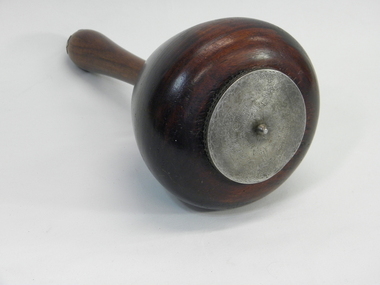
commemorative mallet, 22.01.1908
... wooden mallet with gothic style silver/pewter work. inscription on base of mallet...../ On the occasion of his laying the foundation stone of the Shire Hall 22. 1.08 wooden mallet with gothic style silver/pewter work. inscription on base of mallet. commemorative mallet ...The current Shire hall was built 1908 to replace the original shire hall which was demolished due to crumbling plaster in the brickwork. This mallet was used in the opening ceremony of the new shire hall to ceremonially lay the foundation stone at the commencement of the construction of the new hall.This item commemorates the opening of one of Winchelsea's most attractive heritage buildings.The old Shire office now known locally as the "tea trooms" was the political and administrational centre of the Winchelsea Shire before the amalgamation and formation of the Surf Coast Shire.wooden mallet with gothic style silver/pewter work. inscription on base of mallet.Presented to/ Cr. J. Mathison J.P./ President. Shire of Winchelsea./ On the occasion of his laying the foundation stone of the Shire Hall 22. 1.08winchelsea, shire, mallet, opening, ceremony, foundation stone, j. mathison, silverwork, wood work, relic, artefact, new shire hall, president, councillor -
 Bendigo Military Museum
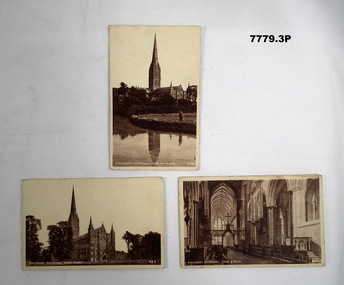
Postcard - POSTCARD - SALISBURY, UK, J Welch and Sons, c. WW1
... Sepia toned photograph of the exterior of a gothic style cathedral with spire and two lantern towers. 2. ...Sepia toned photograph of the exterior of a gothic style cathedral with spire and two lantern towers. 2. ...Postcards sent by R.H. Baron to his mother, sisters and Elsie. Part of the "Robert H. Baron" No 3596 and Cooper Collections. See Catalogue No. 1981P for details of Baron's service.1. Sepia toned photograph of the exterior of a gothic style cathedral with spire and two lantern towers. 2. Sepia toned photograph of a cathedral with spire from a river location. 3. Sepia toned photograph of the nave and choir of a gothic style cathedral.1. Salisbury Cathedral, West front. Handwritten in pencil on back: 'Letter to R.H. Baron's sisters' - no date. 2. Salisbury Cathedral from the River. Handwritten in pencil and black ink: ' Letter to R. H. Baron's mother. Ink section indecipherable. - no date. 3. Salisbury Cathedral, choir and nave. Handwritten in black ink: 'Dear Elsie etc'.robert h. baron, cooper collection, postcards, salisbury uk, ww1 -
 Sunbury Family History and Heritage Society Inc.
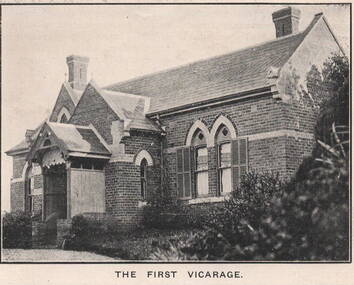
Photograph, 'Priorswood' Vicarage
... A print of a non-digital black and white photograph of a Gothic style brick home with a slate roof....Sunbury Vicarages A print of a non-digital black and white photograph of a Gothic style brick home with a slate roof. 'Priorswood' Vicarage Photograph ...The grand home is the first Church of England vicarage, 'Priorswood' to be built in Sunbury. It was sited at the east end of Station Street on Vicarage Hill and about a kilometre from St. Mary's Church in O'Shanassy Street. The distance between the two buildings presented a problem especially when the vicar had to negotiate a natural waterway across the lower end of Station Street after heavy rain. In 1914 a new Federation style vicarage was built adjacent to the church in O'Shanassy Street and was replaced in the 1960s with a more modern building, which was demolished in the 2020s to make way for 8 Oaks Community Centre.'Priorswood' is now a private home and has a local heritage listing.A print of a non-digital black and white photograph of a Gothic style brick home with a slate roof.'priorswood' vicarage, st. mary's church of england., sunbury, vicarages -
 Linton and District Historical Society Inc
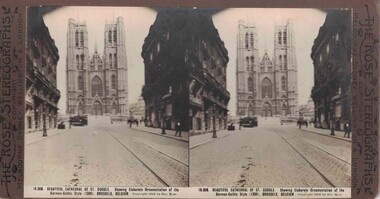
Stereograph, The Rose Stereographs, Melbourne, Sydney, Wellington and London, 16,006 Beautiful Cathedral of St. Gudule, Brussels, Belgium, Copyright 1912
... Showing Elaborate Ornamentation of the / German-Gothic Style (1300), BRUSSELS, BELGIUM....Showing Elaborate Ornamentation of the / German-Gothic Style (1300), BRUSSELS, BELGIUM. Stereograph of two black and white images. ...One of two sets of stereographs donated by the O'Beirne family along with a stereoscope for viewing (Stereoscope is Registration no. 2014-51).Stereograph of two black and white images. Image shows a road leading to the front of an elaborate cathedral.16,006. THE BEAUTIFUL CATHEDRAL OF ST. GUDULE. Showing Elaborate Ornamentation of the / German-Gothic Style (1300), BRUSSELS, BELGIUM.stereographs -
 Glen Eira Historical Society
Letter - Elsternwick Congregational Church – Caulfield Union Church
... ... Gothic Style...McLoghlin Jim Architectural Styles Gothic Style Caulfield Caulfield Historical Society Gregson W. ...One page of Caulfield Council’s E.S. and P. Committee agenda, item and minutes dated 14/05/1971 concerning permit application from St. John’s Uniting Church for the Victorian Music Theatre Pty Ltd to Conduct singing lessons in the church building. Typed letter dated 08/12/1987 from National Trust to St. John’s Parish noting the Trust’s classification of the church building and the accompanying citation. Typed letter dated 20/07/1988 from the historic buildings council to Caulfield Historical Society concerning the hearing to discuss inclusion of the church building on the register to be held on 24/08/1988. Copy of historic building council’s agenda item undated describing the significance of the former Union Church. Thirteen page assessment of the architectural significance of the former Union Church dated 24/08/1988 by Anne Neale. Includes sketch of the exterior and references. Handwritten notations by Jim O’Loghlin dated 24/08/1988. Photocopy of the page from the Victoria Government Gazette dated 05/10/1988 advertising the amendment of the register of historic buildings to include the former Union Church building. A twelve page document produced by the Historic Buildings Council Victoria, date unknown, which describes the council’s operations and activities.st. john’s parish of the uniting church, e.s. and p. committee, congregational church, orrong road, victorian music theatre pty ltd, king street, glen huntly road, melbourne neon ltd, balaclava road, whiteway neon p.l., n. and d. panagiotou, nepean highway, h.c. sleigh ltd., poath road, carden w. j., warren r.p., talbot avenue, new l. mrs., elsternwick, zoning, st. georges road, architectural features, caulfield union church, towers, de lacy evans george, mcmurtie mcnaughton and stewart, glen eira road, neale anne i., mcloghlin jim, architectural styles, gothic style, caulfield, caulfield historical society, gregson w. rev., st. aloysius caulfield, brick -
Glen Eira Historical Society
Letter - Glenfern
... ... Gothic style...Inkerman Road Caulfield St Kilda Ostberg H Glenfern Architectural styles Architectural features Boyd family Boyd Captain Gothic style Letter Glenfern ...A one page photocopy of a letter dated 14/02/1978 from S R Birch, administrator of the National Trust, notifying Miss H Ostberg that the early classification of Glenfern by the Trust now has a citation.inkerman road, caulfield, st kilda, ostberg h, glenfern, architectural styles, architectural features, boyd family, boyd captain, gothic style -
Glen Eira Historical Society
Article - Glenfern
... ... Gothic style...Clark Mary Ryllis Boyd family Glenfern St Kilda East Boyd Thomas Boyd John Theodore Boyd William Boyd Lucy Boyd Emma Minnie Inkerman Road Inkerman Street Boyd Arthur Merric Boyd Lily Laing Charles Terry Leonard Architects Watson Thomas Wesley College Colleges à Beckett Emma Ostberg John Ostberg Amy Cooke Max Heathcote Richard Ned Kelly Ledger Heath Griffiths Rachel Films Labassa Rippon Lea Boyd Ethel Caulfield Historical Society Gothic style Architectural features Martin Lucy Boyd Merric Hotham Street Boyd Max Article Glenfern ...Two hand written one page letters from Brenda M. Niall, dated 11/05/1983 and 03/06/1983 respectively, to R. Ballantyne of the Caulfield Historical Society, requesting information on the property Glenfern. One page newspaper article entitled INSPIRING THE ARTS from THE AGE, dated 04/05/2002, regarding Glenfern and the Boyd family by Mary Ryllis Clark. Includes photographs of two paintings and one photograph of the home.niall brenda m., clark mary ryllis, boyd family, glenfern, st kilda east, boyd thomas, boyd john theodore, boyd william, boyd lucy, boyd emma minnie, inkerman road, inkerman street, boyd arthur merric, boyd lily, laing charles, terry leonard, architects, watson thomas, wesley college, colleges, à beckett emma, ostberg john, ostberg amy, cooke max, heathcote richard, ned kelly, ledger heath, griffiths rachel, films, labassa, rippon lea, boyd ethel, caulfield historical society, gothic style, architectural features, martin lucy, boyd merric, hotham street, boyd max -
Glen Eira Historical Society
Article - Glenfern
... ... Gothic style...Dexter Nancy Glenfern Gothic style Balaclava Ostberg Amy Ostberg Sarah Ann Caulfield McDonell Francis Boyd John Theodore Thomas Boyd Martin Macdonald Alix Architectural Styles St Kilda East Inkerman Road Inkerman Street Article Glenfern ...Newspaper article in THE AGE, dated Friday 06/07/1973, entitled GOTHIC GABLES, STORY TO MATCH by Alix Macdonald regarding the property Glenfern. Includes funeral notices in THE SUN dated 05/04/1984 and 09/04/1984, for Amy Ostberg owner of Glenfern.dexter nancy, glenfern, gothic style, balaclava, ostberg amy, ostberg sarah ann, caulfield, mcdonell francis, boyd john theodore thomas, boyd martin, macdonald alix, architectural styles, st kilda east, inkerman road, inkerman street -
Glen Eira Historical Society
Article - Glenfern
... ... Gothic style...Inkerman Road Glenfern Gothic revival architecture Gothic style Bakewell John St Kilda East Hotham Street McDonnell Francis Mansions Laing Charles Watson Thomas du Frayer Agnes Boyd John Boyd Lucy Hennessy M. ...Caulfield Conservation Study conducted by Andrew Ward in October 1994, outlining a description of the gothic revival architectural aspects of Glenfern. It includes the history of the owners and the forthcoming recommendations for planning scheme control. Includes three exterior photographs.inkerman road, glenfern, gothic revival architecture, gothic style, bakewell john, st kilda east, hotham street, mcdonnell francis, mansions, laing charles, watson thomas, du frayer agnes, boyd john, boyd lucy, hennessy m., architect, smith and johnson, danne mary, primary school, newington college, ostberg anders, inkerman street, ostberg sarah, mair agnes, glenfern college, ostberg amy, ostberg ebba, stables -
 Glen Eira Historical Society
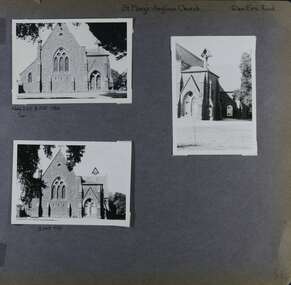
Album - Album page, St Mary's Anglican Church, Glen Eira Road, Circa 1972
... french-influenced Low and Mixed Gothic style...The building is locally important as a historic focus for Anglican worship and early mission activity whilst its architectural grandeur is expressive of mid Victorian Caulfield's status as a suburban location for the Metropolis gentry. trevor hart 1880's elsternwick glen eira road st kilda east church of england gothic st mary's bluestone apsidal sanctuary spirelet trumeau anglican 1870's caulfield north french-influenced Low and Mixed Gothic style Hand written: St Mary's Anglican Church Eira Road [top right] / Neg 235 8 Oct 1966 [under top left photo] / 3 Sep 1972 [under bottom left photo] / 56 [bottom right] Page 56 of Photograph Album with three exterior photographs (two portrait and one landscape) of St Mary's Anglican Church. ...This photograph is part of the Caulfield Historical Album 1972. This album was created in approximately 1972 as part of a project by the Caulfield Historical Society to assist in identifying buildings worthy of preservation. The album is related to a Survey the Caulfield Historical Society developed in collaboration with the National Trust of Australia (Victoria) and Caulfield City Council to identify historic buildings within the City of Caulfield that warranted the protection of a National Trust Classification. Principal photographer thought to be Trevor Hart, member of Caulfield Historical Society. Most photographs were taken between 1966-1972 with a small number of photographs being older and from unknown sources. All photographs are black and white except where stated, with 386 photographs over 198 pages.From the Victorian Heritage Register Database - Citation for St Mary's Anglican Church https://vhd.heritagecouncil.vic.gov.au/places/43715 (as at 14/10/2020) St Mary's has architectural significance as a representative example of French influenced Low and Mixed Gothic (see stylistic Typology in National Trust's Historic Churches Study) and is further distinguished by its use of bluestone, entirely without relief. French influence is demonstrated by the high nave, apsidal sanctuary, spirelet and trumeau. The building is locally important as a historic focus for Anglican worship and early mission activity whilst its architectural grandeur is expressive of mid Victorian Caulfield's status as a suburban location for the Metropolis gentry.Page 56 of Photograph Album with three exterior photographs (two portrait and one landscape) of St Mary's Anglican Church.Hand written: St Mary's Anglican Church Eira Road [top right] / Neg 235 8 Oct 1966 [under top left photo] / 3 Sep 1972 [under bottom left photo] / 56 [bottom right] trevor hart, 1880's, elsternwick, glen eira road, st kilda east, church of england, gothic, st mary's, bluestone, apsidal sanctuary, spirelet, trumeau, anglican, 1870's, caulfield north, french-influenced low and mixed gothic style -
 Glen Eira Historical Society
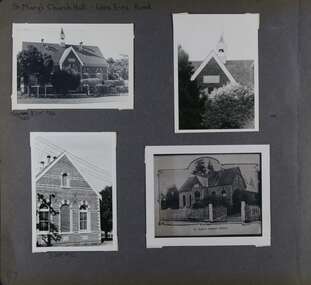
Album - Album page, St Mary's Church Hall, Glen Eira Road, Circa 1972
... ...gothic style...Its use of polychrome brick is locally conspicuous whilst the adoption of the Gothic Style not only underlines its Christian foundations but relates to the comparable schools of the Public Works Department of the same period. trevor hart 1880's elsternwick glen eira road st kilda east church of england st mary's caulfield north st mary's anglican church hall hood crescent jubilee school polychrome brickwork curved windows church hall queen victoria’s jubilee victorian sunday schools st Mary's jubilee school gothic style Hand written: St Mary's Church Hall - Glen Eira Road [top left] / Neg 233 8 Oct 1966 [under top left photo] / 3 Sept 1972 [under bottom left photo] / bottom right photo titled "St Mary's Sunday School" / 57 [bottom left] Page 57 of Photograph Album with four exterior photographs (2 portrait and 2 landscape) of St Mary's Church Hall. ...This photograph is part of the Caulfield Historical Album 1972. This album was created in approximately 1972 as part of a project by the Caulfield Historical Society to assist in identifying buildings worthy of preservation. The album is related to a Survey the Caulfield Historical Society developed in collaboration with the National Trust of Australia (Victoria) and Caulfield City Council to identify historic buildings within the City of Caulfield that warranted the protection of a National Trust Classification. Principal photographer thought to be Trevor Hart, member of Caulfield Historical Society. Most photographs were taken between 1966-1972 with a small number of photographs being older and from unknown sources. All photographs are black and white except where stated, with 386 photographs over 198 pages. The Jubilee School on the corner of Hood Crescent and Glen Eira Road was built in 1887 AD to commemorate Queen Victoria’s Jubilee.Victorian Heritage Database https://vhd.heritagecouncil.vic.gov.au/places/43705 The former St Mary's Jubilee School is locally significant as an early purpose built church school, associated with St Mary's Church. Its use of polychrome brick is locally conspicuous whilst the adoption of the Gothic Style not only underlines its Christian foundations but relates to the comparable schools of the Public Works Department of the same period.Page 57 of Photograph Album with four exterior photographs (2 portrait and 2 landscape) of St Mary's Church Hall. Bottom right photograph is a photo of a photo.Hand written: St Mary's Church Hall - Glen Eira Road [top left] / Neg 233 8 Oct 1966 [under top left photo] / 3 Sept 1972 [under bottom left photo] / bottom right photo titled "St Mary's Sunday School" / 57 [bottom left] trevor hart, 1880's, elsternwick, glen eira road, st kilda east, church of england, st mary's, caulfield north, st mary's anglican church hall, hood crescent, jubilee school, polychrome brickwork, curved windows, church hall, queen victoria’s jubilee, victorian, sunday schools, st mary's jubilee school, gothic style -
 Glen Eira Historical Society
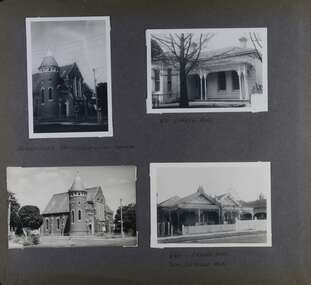
Album - Album page, Orrong Road, Circa 1972
... ...early french gothic style...In 1894 it was bought by the Congregationalists and continued as a Congregational Church until the formation of the Uniting Church. trevor hart elsternwick congregational church king street orrong road church elsternwick red brick former union church early french gothic style architects george de lacy evans baptist church conical towers houses Handwritten: ELSTERNWICK CONGREGATIONAL CHURCH [under top left photo] / 82 ORRONG ROAD [under top right photo] / 663-1 ORRONG ROAD / SEMI - DETACHED PAIR / 165 [bottom left] Page 165 of Photograph Album with four photographs, two of a church with the other two of houses on Orrong Road. ...This photograph is part of the Caulfield Historical Album 1972. This album was created in approximately 1972 as part of a project by the Caulfield Historical Society to assist in identifying buildings worthy of preservation. The album is related to a Survey the Caulfield Historical Society developed in collaboration with the National Trust of Australia (Victoria) and Caulfield City Council to identify historic buildings within the City of Caulfield that warranted the protection of a National Trust Classification. Principal photographer thought to be Trevor Hart, member of Caulfield Historical Society. Most photographs were taken between 1966-1972 with a small number of photographs being older and from unknown sources. All photographs are black and white except where stated, with 386 photographs over 198 pages. Victorian Heritage Database H0704 FORMER UNION CHURCH 84-86 ORRONG ROAD ELSTERNWICK https://vhd.heritagecouncil.vic.gov.au/places/428 The Former Union Church, Elsternwick, designed by the architect George de Lacy Evans, and erected in 1889-90 is a building of historical and architectural significance for the following reasons:- (1) it is a rare and well- developed example of the early French Gothic manner as popularised through the muscular Victorian re-interpretation of English architect William Burgess, which in turn were derived from the publications of EE Viollet-le-Duc. Other Victorian cases of detailing derived from Viollet-le-Duc include Barwon Park (1868), the Presbyterian Church at Skipton (1871), the Bourke Street West Police Station by Bindley and Brittingham (PWD) dating from 1888-9 and the Lutheran Manse, East Melbourne by JAB Koch (1890). However, none of these buildings relates closely in form to the Union Church, Elsternwick. The only building which has been identified as closely comparable is The Bairnsdale Court House by AJ Macdonald (PWD) which dates from 1892. (2) the use of bright red brickwork is of significance, as the Former Union Church is believed to be only the second church building in Victoria to employ this material as a matter of conscious choice. Amongst red brick churches, it is thought to be preceded only by Reed, Henderson And Smart's Sacred Heart (1884), a Renaissance inspired design. (3) the building is believed to be a rare, possibly unique, surviving example of a church building erected for dual use by the Congregationalists and Baptists. In 1894 it was bought by the Congregationalists and continued as a Congregational Church until the formation of the Uniting Church.Page 165 of Photograph Album with four photographs, two of a church with the other two of houses on Orrong Road.Handwritten: ELSTERNWICK CONGREGATIONAL CHURCH [under top left photo] / 82 ORRONG ROAD [under top right photo] / 663-1 ORRONG ROAD / SEMI - DETACHED PAIR / 165 [bottom left]trevor hart, elsternwick congregational church, king street, orrong road, church, elsternwick, red brick, former union church, early french gothic style, architects, george de lacy evans, baptist church, conical towers, houses -
Glen Eira Historical Society
Letter - St. Mary’s Church, Caulfield
... ... Gothic Style...Architectural Features Gothic Style Porches Plaques Tudor Style Shelford C.E.G.G.S. ...Two documents about St. Mary’s Jubilee School. Roneoed correspondence to W.S. Feltham from S.R. Birch dated 22/03/1973 giving notification classification of St. Mary’s Jubilee School by the National Trust of Australia (Victoria). Caulfield Conservation Study by Andrew Ward in 1994 for Shelford, St. Mary’s Jubilee School. He describes the architecture and gives a brief history. The photocopied document includes a poorly reproduced photo.st. mary’s jubilee school, schools, glen eira road, hood crescent, caulfield, feltham w.s., webb charles, birch s. r., architectural features, gothic style, porches, plaques, tudor style, shelford c.e.g.g.s., st. mary’s church -
Glen Eira Historical Society
Letter - Trinity Congregational Church, Glen Huntly
... ... Gothic Style...Historic Buildings Council Glen Huntly Hart Trevor Grey Karen Timber houses Filbert Street Old Calendar Greek Primitive Methodists Caulfield South Orthodox Church El Nido Grove Lyons Street Porches Market gardens. Gothic Style Congregationalists Ward Andrew Architectural features Architectural Styles Letter Trinity Congregational Church, Glen Huntly ...Roneod letter from the National Trust, Victoria, to the Congregational Union of Victoria. The correspondence gives notification that the church has been placed in the classified List and should be preserved. Dated 20/03/1973. Correspondence from Department of Planning Victoria, advising the Caulfield Historical Society, that the H. B. Council has chosen not to recommend the building for addition to the Historic Buildings Register Dated 08/10/1982. Extracted From Caulfield Conservation Study By Andrew Ward Dated January 1995 Describing Trinity Congregational Church. Includes Brief History Of The Church And Description Of Architectural Features.trinity congregational church., moran b., preston joane, grange road, caulfield., historic buildings council, glen huntly, hart trevor, grey karen, timber houses, filbert street, old calendar greek, primitive methodists, caulfield south, orthodox church, el nido grove, lyons street, porches, market gardens., gothic style, congregationalists, ward andrew, architectural features, architectural styles -
 Box Hill Historical Society
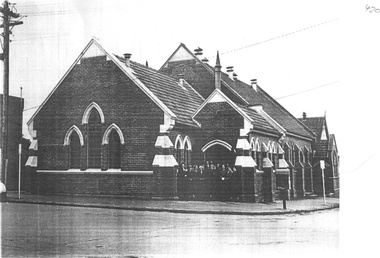
Photograph - Churches
... ...Gothic style...Baptist Church, Box Hill, on the corner of Station Street and Ellingworth Parade Baptist Church Churches Station Street Ellingworth Parade Gothic style B&w photo Photograph Churches ...Baptist Church, Box Hill, on the corner of Station Street and Ellingworth ParadeB&w photobaptist church, churches, station street, ellingworth parade, gothic style -
 Surrey Hills Historical Society Collection
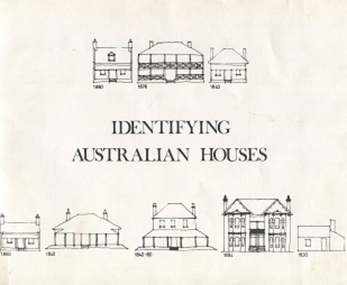
Book, Identifying Australian Houses
... ...gothic style...It will help in recognising the characteristics of buildings of different eras, as well as their individual architectural elements. architectural styles brickworks gothic style regency style italianate style federation style This booklet has been compiled as an aid to identifying Australian houses c1829-1900. ...This booklet has been compiled as an aid to identifying Australian houses c1829-1900. It will help in recognising the characteristics of buildings of different eras, as well as their individual architectural elements.This booklet has been compiled as an aid to identifying Australian houses c1829-1900. It will help in recognising the characteristics of buildings of different eras, as well as their individual architectural elements.architectural styles, brickworks, gothic style, regency style, italianate style, federation style -
 Glen Eira Historical Society
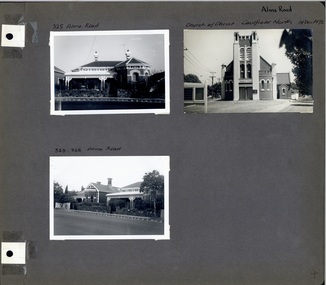
Album - Album page, Alma Road, circa 1972
... style...gothic architectural style...It successfully addresses its triangular site by placing the belltower at the apex, deploying Romanesque and Gothic elements freely and to dramatic effect, heightened by the symbolism of the Cross (compare Robert Haddon's St Stephens in Balaclava Road of 1926). caulfield north trevor hart alma road houses churches church of christ caulfield north dandenong road bell towers romanesque architectural style gothic architectural style bi-chromatic brickwork cast iron work verandahs victorian architectural style Handwritten in black pen: Alma Road [top right of page] / 325 Alma Road [above top left photograph] / Church of Christ Caulfield North 14 Dec 1972 [above top right photograph] / 323-325 Alma Road [above bottom left photograph] / 4 [bottom right] Page 4 of Photograph Album including three black and white photographs of properties on Alma Road. ...This photograph is part of the Caulfield Historical Album 1972 but first photo on page has been mis-labelled as this house is 323 Alma Road. It follows that third photo label should be 325-323 Alma Road (reading left to right). This album was created in approximately 1972 as part of a project by the Caulfield Historical Society to assist in identifying buildings worthy of preservation. The album is related to a Survey the Caulfield Historical Society developed in collaboration with the National Trust of Australia (Victoria) and Caulfield City Council to identify historic buildings within the City of Caulfield that warranted the protection of a National Trust Classification. Principal photographer thought to be Trevor Hart, member of Caulfield Historical Society. Most photographs were taken between 1966-1972 with a small number of photographs being older and from unknown sources. All photographs are black and white except where stated, with 386 photographs over 198 pages. Church of Christ, 514 Dandenong Rd, Caulfield https://vhd.heritagecouncil.vic.gov.au/places/43594 The Dandenong Road Church of Christ has regional importance as a landmark building along the Dandenong Road. It successfully addresses its triangular site by placing the belltower at the apex, deploying Romanesque and Gothic elements freely and to dramatic effect, heightened by the symbolism of the Cross (compare Robert Haddon's St Stephens in Balaclava Road of 1926).Page 4 of Photograph Album including three black and white photographs of properties on Alma Road. Two photographs are in the top half of the page and the third is in the bottom left hand side.Handwritten in black pen: Alma Road [top right of page] / 325 Alma Road [above top left photograph] / Church of Christ Caulfield North 14 Dec 1972 [above top right photograph] / 323-325 Alma Road [above bottom left photograph] / 4 [bottom right]caulfield north, trevor hart, alma road, houses, churches, church of christ caulfield north, dandenong road, bell towers, romanesque architectural style, gothic architectural style, bi-chromatic brickwork, cast iron work, verandahs, victorian architectural style -
 Lilydale RSL Sub Branch
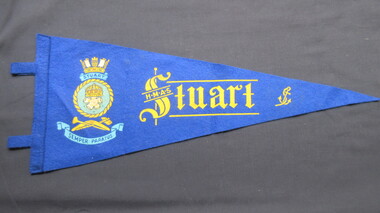
Souvenir, Allwood Arts, Pennant - HMAS Stuart
... HMAS and STUART in Gothic -style lettering. The crest features a Tudor Crown above a central emblem which is a traditional heraldic design for RAN vesels...HMAS and STUART in Gothic -style lettering. The crest features a Tudor Crown above a central emblem which is a traditional heraldic design for RAN vesels Triangular blue felt with text and emblem printed on one face. ...Triangular blue felt with text and emblem printed on one face.HMAS and STUART in Gothic -style lettering. The crest features a Tudor Crown above a central emblem which is a traditional heraldic design for RAN vesels -
 Wodonga & District Historical Society Inc
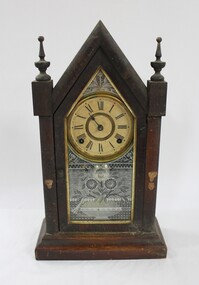
Functional object - 'Ansonia' Clock c. late 19th - early 20th century
... A gothic style steeple wooden clock with gold and white embellishments, and Roman numeral numbering on the clock face. ...Clock America American Ansonia The Ansonia Clock Company Under pendulum inside glass interior case: "ANSONIA CLOCK COMPANY/U.S." A gothic style steeple wooden clock with gold and white embellishments, and Roman numeral numbering on the clock face. ...This clock was manufactured by American clock company Ansonia in the late 19th - early twentieth century. Ansonia Clock was one of the major 19th century American clock manufacturers, producing millions of clocks between its incorporation in Connecticut in 1850, and its closure in 1929. In 1877 production moved from Connecticut to New York City, where inventor Thomas Edison visited the factory to experiment in combining clocks with his newly invented phonograph (an early form of gramophone). This clock is significant for its rarity due to age. A gothic style steeple wooden clock with gold and white embellishments, and Roman numeral numbering on the clock face. The interior of the clock is accessed by a hinged glass door. Under pendulum inside glass interior case: "ANSONIA CLOCK COMPANY/U.S."clock, america, american, ansonia, the ansonia clock company -
 Sunbury Family History and Heritage Society Inc.
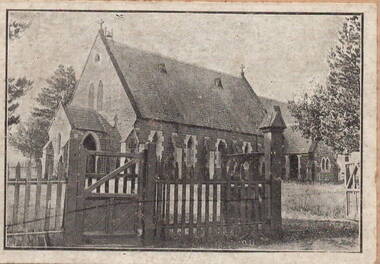
Photograph, St. Mary's Anglican Church - Sunbury
... A scanned copy of an old black and white photograph of a simple Gothic style bluestone church with a slate roof. ...Sunbury O'Shanassy Street sunbury village green A scanned copy of an old black and white photograph of a simple Gothic style bluestone church with a slate roof. ...This is a photograph of St. Mary's Anglican Church in Sunbury, which is located in O'Shanassy Street in Sunbury. The congregation celebrated the official opening of their church in 1867. Services are still conducted in the church. It is one of two churches that are situated in The Village Green.St. Mary's Church of England is one of the oldest churches in the district.A scanned copy of an old black and white photograph of a simple Gothic style bluestone church with a slate roof. A wooden fence and gates are in the foreground of the building. The photograph has a cream border.st. mary's church of england., sunbury, o'shanassy street, sunbury village green -
 Federation University Historical Collection
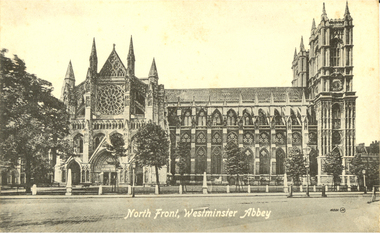
Postcard - black and white, North Front, Westminster Abbey, London, England, c198
... The north front of Westminster Abbey is built in Gothic Style....The north front of Westminster Abbey is built in Gothic Style. chatham-holmes family collection westminster abbey architecture church postcard Gothic Black and white postcard showing the architectural wonder of Westminster Abbey and its north front. ...The north front of Westminster Abbey is built in Gothic Style.Black and white postcard showing the architectural wonder of Westminster Abbey and its north front. chatham-holmes family collection, westminster abbey, architecture, church, postcard, gothic -
 Glen Eira Historical Society
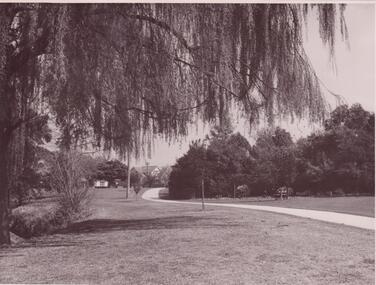
Document - Springthorpe Gardens
... ... Gothic Revival Style...Old Melbourne Hospital Gates Architectural Features Gothic Revival Style Springthorpe Dr. Neerim Road Architectural Styles Victorian Style Gardens Reserves Parks Springthorpe Gardens Ward Andrew Caulfield Conservation Study City of Caulfield Hermes Studios Carnegie Document Springthorpe Gardens ...This file contains two items. Three photocopied images and an extract from Andrew Ward’s 1994 Caulfield Conservation Study about the former Old Melbourne Hospital gates which now stand in Springthorpe Reserve, Neerim Road, Murrumbeena, dated July 1995. Two original black and white photographs, produced by Hermes Studios, and one black and white non-original photograph copy of one of the original black and white photographs, depicting Springthorpe Gardens and Springthorpe gates, date unknown.springthorpe, springthorpe reserve, melbourne hospital, springthorpe j.w. dr., joyous garge, murrumbeena, springthorpe mrs., caulfield city council, caulfield, official buildings, municipal chambers, municipal offices, town halls, local government, arthur street, tuckett street, tyers s.w. cr., old melbourne hospital, gates, architectural features, gothic revival style, springthorpe dr., neerim road, architectural styles, victorian style, gardens, reserves, parks, springthorpe gardens, ward andrew, caulfield conservation study, city of caulfield, hermes studios, carnegie -
Glen Eira Historical Society
Letter - Lirrewa
... ... Gothic revival style...Lirrewa Lirrewa Grove O’Donnell J Fulton Thomas Land subdivisions Glen Eira Road Glen Huntly Road Kooyong Road Tennant Dr Cox James Dr Brooks Walter Richard Baby health care Bryce Percy H Sylverly House names Market gardens Chinese community Langdon Montague William Langdon Henry Joseph Rosecraddock Langdon Elizabeth Tarqua St Marys church Caulfield Hawthorn Road Lirrewa Grove Stables Architectural features Brooks Gladys Brooks Walter Councillors Scott Robert Redcliff Mr Architects McCulloch Mr Teachers Office workers Farmer Mr Ward Andrew Mansions Verandahs Slate tiles Fountains Leadlights Fireplaces Grant RS Black RS Anderson P Russell Edwin R Cast ironwork Flats Marble Mantel pieces Gothic revival style Brick Arches Letter Lirrewa ...Four articles on Lirrewa’s history, conservation study and notes on architectural features and correspondence from National trust to Mrs W Brooks. Photocopy of an extract from Caulfied Historical Newsletter (No 4 April 1973) containing 2 articles about Lirrewa and Caulfield (one by J O’Donnell, one by Mrs AP Bell) Photocopied extract from the Caulfield Conservation study detailing history and features of Lirrewa written by Andrew Ward (January 1995) Handwritten notes on architectural features of home and hand drawn designs of side and centre windows and design above all main room doors. Includes typed directory listings from 1886 to 1921. Date and author unknown Copy of correspondence to Mrs W Brooks from the Administration National Trust of Australia regarding classification Lirrewa 20/03/1973 and stables.lirrewa, lirrewa grove, o’donnell j, fulton thomas, land subdivisions, glen eira road, glen huntly road, kooyong road, tennant dr, cox james dr, brooks walter richard, baby health care, bryce percy h, sylverly, house names, market gardens, chinese community, langdon montague william, langdon henry joseph, rosecraddock, langdon elizabeth, tarqua, st marys church, caulfield, hawthorn road, lirrewa grove, stables, architectural features, brooks gladys, brooks walter, councillors, scott robert, redcliff mr, architects, mcculloch mr, teachers, office workers, farmer mr, ward andrew, mansions, verandahs, slate tiles, fountains, leadlights, fireplaces, grant rs, black rs, anderson p, russell edwin r, cast ironwork, flats, marble, mantel pieces, gothic revival style, brick, arches -
 Bendigo Military Museum
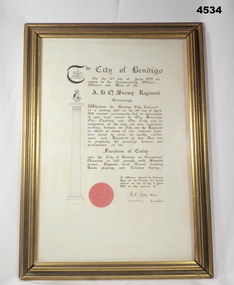
Certificate - FREEDOM OF ENTRY, FRAMED
... Certificate - Parchment, white, printing possibly old gothic style, black ink. City of Bendigo seal is red and embossed. ...Certificate - Parchment, white, printing possibly old gothic style, black ink. City of Bendigo seal is red and embossed. ...Freedom of Entry is a ceremonial privilege granted to military units, allowing them to march through a city or town with full military honors, symbolizing trust and community ties. Freedom of Entry has its roots in military traditions dating back to ancient Rome, where soldiers were not allowed to enter the city without permission due to concerns about maintaining order. This practice evolved over centuries, particularly after the English Civil War, when loyal military units were granted the right to enter cities as a mark of honor and trust. In contemporary times, Freedom of Entry is a formal honor bestowed by local governments on military units, allowing them to march through the streets with swords drawn, drums beating, and colors flying. This event typically includes a ceremonial parade, where the unit is challenged by local authorities, symbolizing the community's recognition of the military's service and commitment. The granting of Freedom of Entry represents the highest civic honor a city can confer on a military unit. It strengthens the bond between the military and the local community, acknowledging the unit's historical ties and contributions. Events celebrating Freedom of Entry often draw large crowds, showcasing community support for the armed forces. The Certificate of Freedom of Entry to Bendigo was granted to A.H.Q Survey Regt in 1970. Signed by JCH Jeffrey, Mayor. This was a great honor to be granted to the unitCertificate and frame. Frame - gold tinted wooden frame, rectangular, glass. Certificate - Parchment, white, printing possibly old gothic style, black ink. City of Bendigo seal is red and embossed. Survey Regiment crest and City of Bendigo crest. freedom, royal australian survey corps, rasvy, fortuna, army survey regiment, army svy regt, asr -
 Bendigo Military Museum
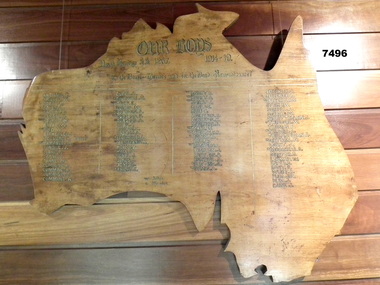
Honour Board - OUR BOYS - NORTH BENDIGO 551267 1914-1919, Unknown
... The title names at the top are gothic style with shadow. It has 4 columns of names. ...The title names at the top are gothic style with shadow. It has 4 columns of names. ...This is a large timber outline of Australia (No Tasmania). It is varnished with a light colour. The title names at the top are gothic style with shadow. It has 4 columns of names. It shows 14 dead and 16 wounded. The last line of the title states:- "TO THE BRAVE - HONOR; AND FOR THE DEAD - REMEMBRANCE!"ww1, honour board, north bendigo school -
 Lakes Entrance Historical Society
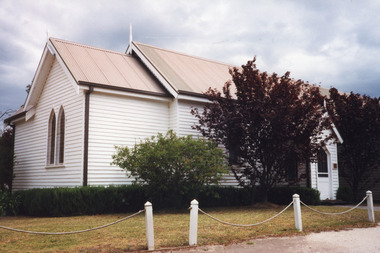
Photograph - St John's Anglican Church Metung 1999
... Colour photograph of St John's Anglican Church, Metung, showing a timber English Gothic style church with gable roofs over nave, chancel, porches etc. ...Religion Churches Colour photograph of St John's Anglican Church, Metung, showing a timber English Gothic style church with gable roofs over nave, chancel, porches etc. ...Original Church built late 1880's on John King's property, moved to present site 1897. Church Hall built after WWI by voluntary labour, later enlarged.Colour photograph of St John's Anglican Church, Metung, showing a timber English Gothic style church with gable roofs over nave, chancel, porches etc. Lancet windows with peripheral glazing bars. Turned finials on roofs including belfrey roof. Bollard and chain fence. Metung Victoriareligion, churches
