
Showing 1383 items matching "historical records of victoria"
-
 Dandenong & District Historical Society
Book - Historical Records of Victoria, Michael Cannon, Historical Records of Victoria, 1981
... Historical Records of Victoria - ...Historical Records of Victoria...Beginnings of Permanent Government People and Places of 1797-1854 Early History of Victoria Printed Titles - Spine Soft Cover Outer- Board Hard Cover, Paper Pages Historical Records of Victoria Book Historical Records of Victoria - Michael Cannon Pauline Jones ...Early History of VictoriaSoft Cover Outer- Board Hard Cover, Paper Pagesnon-fictionEarly History of Victoriapeople and places of 1797-1854 -
 Victorian Aboriginal Corporation for Languages
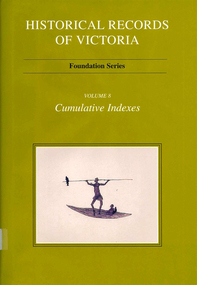
Book, Ian Macfarlane, Historical records of Victoria : foundation series : volume 8 : cumulative indexes, 2002
... Historical records of Victoria : foundation series : volume 8 : cumulative indexes...An index to the series ?Historical Records of Victoria,? covering the 7 previous volumes....Victorian history b&w illustrations An index to the series ?Historical Records of Victoria,? covering the 7 previous volumes. ...An index to the series ?Historical Records of Victoria,? covering the 7 previous volumes.b&w illustrationsvictorian history, -
 Bendigo Historical Society Inc.
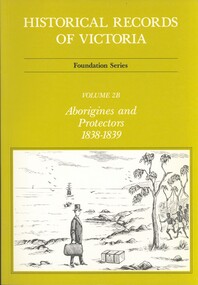
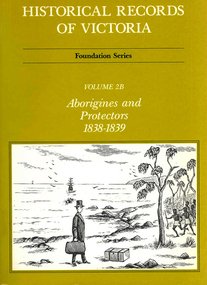
Book - HISTORICAL RECORDS OF VICTORIA, 1983
... HISTORICAL RECORDS OF VICTORIA....Historical records of Victoria Volume 2B Aborigines and Protectors 1838-1839. ...Book HISTORICAL RECORDS OF VICTORIA. ...Historical records of Victoria Volume 2B Aborigines and Protectors 1838-1839. Published by Victorian Government Printing Office, 438 pages with black and white illustrations.Public Records Officebook -
 Bendigo Historical Society Inc.
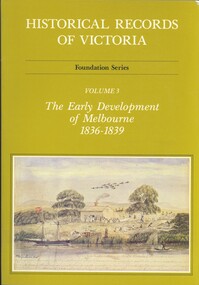
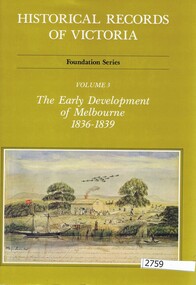
Book - HISTORICAL RECORDS OF VICTORIA VOLUME 3, 1984
... HISTORICAL RECORDS OF VICTORIA VOLUME 3...Historical records of Victoria Volume 3 The Early Development of Melbourne 1836-1839. ...Book HISTORICAL RECORDS OF VICTORIA VOLUME 3 ...Historical records of Victoria Volume 3 The Early Development of Melbourne 1836-1839. Published by Victorian Government Printing Office, 670 pages with black and white illustrations & maps.Public Records Officecottage, miners -
 Bendigo Historical Society Inc.
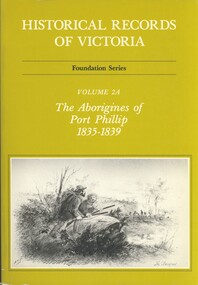
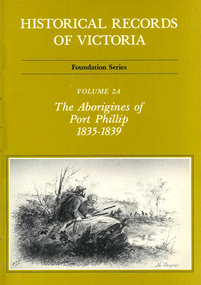
Book - HISTORICAL RECORDS OF VICTORIA VOLUME 2A, 1982
... HISTORICAL RECORDS OF VICTORIA VOLUME 2A...Historical Records of Victoria Volume 2A The Aborigines of Port Phillip 1835-1839. ...Book HISTORICAL RECORDS OF VICTORIA VOLUME 2A ...Historical Records of Victoria Volume 2A The Aborigines of Port Phillip 1835-1839. Published by Victorian Government Printing Office, 361 pages with black & white illustrations and maps.Public Records Officevictoria, history, aborigines -
 Greensborough Historical Society
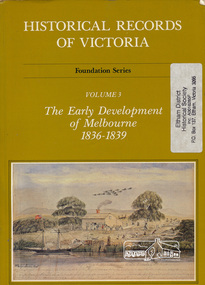
Book, Michael Cannon, Historical Records of Victoria. Volume Three: The Early development of Melbourne, 1836-1839
... Historical Records of Victoria. Volume Three: The Early development of Melbourne...Contains all official documents that could be located on important aspects of the founding of Melbourne during the years 1836 to 1839. melbourne melbourne history 670 p., black & white and col. illus. Historical Records of Victoria. Volume Three: The Early development of Melbourne Book Michael Cannon Victorian Government Printing Office ...Contains all official documents that could be located on important aspects of the founding of Melbourne during the years 1836 to 1839.670 p., black & white and col. illus.melbourne, melbourne history -
 Eltham District Historical Society Inc
Book, Michael Cannon, Historical Records of Victoria volume 3 edited by Michael Cannon, 1984
... Historical Records of Victoria volume 3 edited by Michael Cannon...Official documents on important aspects of the founding of Melbourne 1836 to 1839. melbourne founding of ISBN 0724183043 or 0724182594 670 pages : illustrations, 27 cm. Historical Records of Victoria volume 3 edited by Michael Cannon Book Public Record Office Victoria Michael Cannon Ian Macfarlane ...Official documents on important aspects of the founding of Melbourne 1836 to 1839.670 pages : illustrations, 27 cm.ISBN 0724183043 or 0724182594melbourne founding of -
 Victorian Aboriginal Corporation for Languages
Book, Ian Macfarlane, Historical records of Victoria : foundation series : volume 2A : the Aborigines of Port Phillip 1835-1839, 1982
... Historical records of Victoria : foundation series : volume 2A : the Aborigines of Port Phillip 1835-1839...Evolution of policy in Sydney, 1838. Historical records of Victoria : foundation series : volume 2A : the Aborigines of Port Phillip 1835-1839 Book Ian Macfarlane ...Reproductions of various transactions and reports dealing with Aboriginal people in Port Phillip in the period 1835-39, beginning with some of the earliest reports and tracing the evolution of government interaction and policy towards Aborigines in the 19th century. Covers mission work, government reports, the native police, conflicts with squatters, with numerous illustrations and original reports. Contents: Part I, Evolution of British policy Ch. 1. Proposals to appoint protectors of aborigines Ch. 2. Racial conflict in the year of official settlement at Port Phillip Ch. 3. House of Commons Select Committee on Aborigines Part II, The Wesleyan Mission at Buntingdale Ch. 4. Establishment and early operations of the Wesleyan mission Part III, The Government acts Ch. 5. Establishing the first government mission 1835-7 Ch. 6. Food and clothing for the Aborigines Ch. 7. Punishment of Aborigines found drunk, 1836-8 Ch. 8. Operations of the government mission, November 1837 to March 1839 Ch. 9. First attempt to form a native police corps Part IV, Growing conflict with squatters, 1837-8 Ch. 10. The disappearance of Gellibrand and Hesse Ch. 11. Attacks in the Western District Ch. 12. Attacks on the overland routes to Port Phillip Ch. 13. Evolution of policy in Sydney, 1838.b&w illustrations, b&w photographs, tables, document reproductionsvictorian history, colonisation, justice system -
 Victorian Aboriginal Corporation for Languages
Book, Ian Macfarlane, Historical records of Victoria : foundation series : volume 2B : Aborigines and protectors 1838-1839, 1983
... Historical records of Victoria : foundation series : volume 2B : Aborigines and protectors 1838-1839...Includes studies of the establishment of an Aboriginal Protectorate, the Native Police, missions, and includes numerous reports by various protectors about events in their districts and government policy towards Aboriginal people. Historical records of Victoria : foundation series : volume 2B : Aborigines and protectors 1838-1839 Book Ian Macfarlane ...Reproductions of various transactions and reports relating to Aboriginal people in Port Phillip in the period 1838-39. Includes studies of the establishment of an Aboriginal Protectorate, the Native Police, missions, and includes numerous reports by various protectors about events in their districts and government policy towards Aboriginal people.b&w illustrations, b&w photographs, tablesvictorian history, james dredge, william thomas, yarra, westernport, sievwright, mount macedon, goulburn river, john montagu, maria robinson, worredy, trucanini, george augustus robinson, tunermenerwail, jackia jackia, george langhorne, benbow, nerrebrunin, billibellary -
 Victorian Aboriginal Corporation for Languages
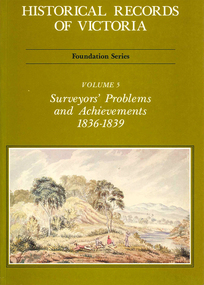
Book, Michael Cannon, Historical records of Victoria : foundation series : volume 5 : surveyors? problems and achievements 1836-1839, 1988
... Historical records of Victoria : foundation series : volume 5 : surveyors? ...Victorian history Port Phillip Robert Hoddle Monee Monee Creek Geelong Barwon River Werribee River maps, b&w illustrations, b&w photographs, tables Reproductions of various transactions and reports dealing with the surveying history of Port Phillip, including letters, maps, illustrations, tables, and a detailed history of the surveying of Victoria. Historical records of Victoria : foundation series : volume 5 : surveyors? ...Reproductions of various transactions and reports dealing with the surveying history of Port Phillip, including letters, maps, illustrations, tables, and a detailed history of the surveying of Victoria.maps, b&w illustrations, b&w photographs, tablesvictorian history, port phillip, robert hoddle, monee monee creek, geelong, barwon river, werribee river -
 Victorian Aboriginal Corporation for Languages
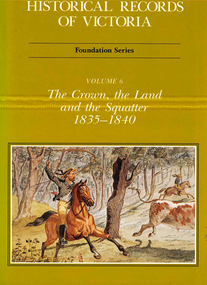
Book, Michael Cannon, Historical records of Victoria : foundation series : volume 6 : the crown, the land and the squatter 1835-1840, 1991
... Historical records of Victoria : foundation series : volume 6 : the crown, the land and the squatter 1835-1840...life and land use during this period. Historical records of Victoria : foundation series : volume 6 : the crown, the land and the squatter 1835-1840 Book Michael Cannon Ian Macfarlane ...Reproductions of various transactions and reports dealing with squatting, land tenure and agricultural production in Port Phillip in the years 1835-1840. A history of land grants, surveying, squatters? life and land use during this period.maps, b&w illustrations, colour illustrationsvictorian history -
 Victorian Aboriginal Corporation for Languages
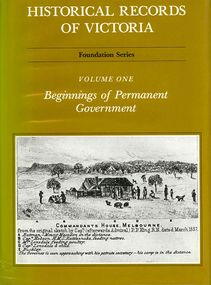
Book, Pauline Jones, Historical records of Victoria : volume 1 : beginnings of permanent government, 1981
... Historical records of Victoria : volume 1 : beginnings of permanent government...reports, bills, requisitions, prices, police reports, and miscellaneous other documents dealing with the early administration of Port Phillip. Historical records of Victoria : volume 1 : beginnings of permanent government Book Pauline Jones ...Reproductions of various transactions and reports dealing with the early government of Port Phillip, including laws, surveyors? and administrators? reports, bills, requisitions, prices, police reports, and miscellaneous other documents dealing with the early administration of Port Phillip.victorian history, port phillip, governor bourke, geelong, john batman, treaty, william lonsdale, william buckley, werribee -
Dandenong & District Historical Society
Book, Michael Cannon, Historical Records of Victoria, 1982
... Historical Records of Victoria...Aborigines of Port Phillip 1835-1839 Titles on spine Paper Cover and Board Cover Paper Pages Historical Records of Victoria Book Michael Cannon Ian Macfarlane ...Paper Cover and Board Cover Paper Pagesnon-fiction -
Southern Sherbrooke Historical Society Inc.
Book - Local History, Victorian Government Printing Office on behalf of the Government of Victoria, Historical Records Of Victoria, Vol. 3, 1984
... Historical Records Of Victoria, Vol. 3...A collection of documents concerning the development of Melbourne, Victoria, Australia, compiled by the Public Records Office, Victoria. Historical Records Of Victoria, Vol. 3 Book - Local History Victorian Government Printing Office on behalf of the Government of Victoria Victorian Government Printing Office ...pp.xix, 670, paperback book, maps, photos, colour plates, index. A collection of documents concerning the development of Melbourne, Victoria, Australia, compiled by the Public Records Office, Victoria.foundation of melbourne -
 Warrnambool and District Historical Society Inc.
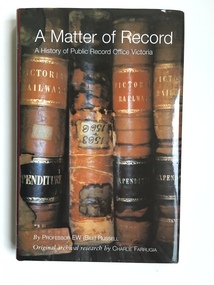
Book, A Matter of Record, 2003
... record office...professor bill russell...charlie farrugia...historical records of victoria...Record Office, Victoria. It was written by Professor Bill Russell and produced in 2003. The research by Charlie Farrugia that enabled the book to be written was carried out entirely using the Public Record Office archives. The book documents the 1903 beginnings of the Public Record Office from a small collection in the possession of the Melbourne Public Library through to the important 1973 Victorian Public Records Act to the present day institution at North Melbourne. The Melbourne Public Library, the Historical...Record Office of Victoria and that concern more directly the history of Warrnambool and district. Many local Warrnambool and district residents use the facilities at the Public Record Office at North Melbourne and the link between that institution and Warrnambool historical groups is important. public record office professor bill russell charlie farrugia historical records of victoria Front Cover: ‘A Matter of Record, A History of Public Record Office Victoria by Professor E W (Bill) Russell, Original archival research by Charlie Farrugia.’ ...This book gives the history of the Public Record Office, Victoria. It was written by Professor Bill Russell and produced in 2003. The research by Charlie Farrugia that enabled the book to be written was carried out entirely using the Public Record Office archives. The book documents the 1903 beginnings of the Public Record Office from a small collection in the possession of the Melbourne Public Library through to the important 1973 Victorian Public Records Act to the present day institution at North Melbourne. The Melbourne Public Library, the Historical Society of Victoria and the History School of the University of Melbourne were early contributors to the preservation of Victoria’s archives. This book is in the library of the Warrnambool and District Historical Society and is an important reference for us in regard to the history of archival preservation of historical documents in our State. In addition we are a Place of Deposit for historical records that are surplus to the requirements of the Public Record Office of Victoria and that concern more directly the history of Warrnambool and district. Many local Warrnambool and district residents use the facilities at the Public Record Office at North Melbourne and the link between that institution and Warrnambool historical groups is important. This is a hard cover book of 227 pages. The cover is black with gold lettering on the spine. The dust cover is dark red with printed material about the author and the book’s contents. The front of the dust cover has an illustration of four Victorian Railways ledgers in sepia tones and the back of the dust cover has a small illustration in brown and white of a heritage label. The book has a Contents page, an Acknowledgement page, a Foreword, an Introduction, eight chapters, Appendices, Notes and References and an Index. The book is a 2003 history of the Public Record Office of Victoria written by Professor Bill Russell and researched by Charlie Farrugia. Front Cover: ‘A Matter of Record, A History of Public Record Office Victoria by Professor E W (Bill) Russell, Original archival research by Charlie Farrugia.’ Spine: ‘A Matter of Record, Russell, Public Record Office Victoria’. public record office, professor bill russell, charlie farrugia, historical records of victoria -
 Bendigo Historical Society Inc.
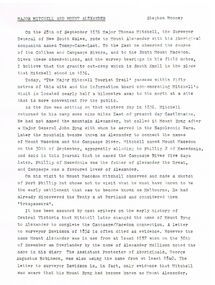
Document - MAJOR MITCHELL AND MOUNT ALEXANDER
... ... Historical Records of Victoria Vol 1...DOCUMENT Major Mitchell and Mount Alexander Tommy-Came-Last The Major Mitchell Tourist Trail Major General John Byng Phillip of Macedonia Alexander the Great Henty s Surveyor Davidson Alexander Mollison George Augustus Robinson William Morton Mr Charles Hotson Ebden John Randell Public Library of Melbourne Les Blake Governor Burke Phillip Parker King Crown Solicitor Henry Field Gurner Arthur Phillip Hume Australia Felix Expedition L Blake Place Names of Victoria G Brenmer Booklet for Secondary Schools M Cannon Historical Records of Victoria Vol 1 J H L Cumpston Thomas Mitchell Surveyor General and Explorer H F Gurner Chronicle of Port Phillip T L Mitchell Three Expeditions into the Interior of Eastern Australia A F Mollison An Overlanding Diary W L Morton Adventures of a Pioneer M S 5188 Itinerary from the Journal of the Exploring Expedition returning from Portland Bay M S 5189 Mitchell's 1837 Map J O Randell Pastoral Settlement in Northern Victoria Vol 1 Pastoral Settlement in Northern Victoria Vol 2 Records of the Victorian Archaeological Survey Number 5 Journals of George Augustus Robinson T C Sargent Some Peninsular Names in Australia Felix W H Wells A Geographical Dictionary or Gazetteer of the Australian Colonies Typed notes mentioning the naming of Mount Alexander, Coliban, Campaspe and who named them. ...Typed notes mentioning the naming of Mount Alexander, Coliban, Campaspe and who named them. Also the origins of the names.document, major mitchell and mount alexander, tommy-came-last, the major mitchell tourist trail, major general john byng, phillip of macedonia, alexander the great, henty s, surveyor davidson, alexander mollison, george augustus robinson, william morton, mr charles hotson ebden, john randell, public library of melbourne, les blake, governor burke, phillip parker king, crown solicitor henry field gurner, arthur phillip, hume, australia felix expedition, l blake, place names of victoria, g brenmer, booklet for secondary schools, m cannon, historical records of victoria vol 1, j h l cumpston, thomas mitchell surveyor general and explorer, h f gurner, chronicle of port phillip, t l mitchell, three expeditions into the interior of eastern australia, a f mollison, an overlanding diary, w l morton, adventures of a pioneer, m s 5188, itinerary from the journal of the exploring expedition returning from portland bay, m s 5189, mitchell's 1837 map, j o randell, pastoral settlement in northern victoria vol 1, pastoral settlement in northern victoria vol 2, records of the victorian archaeological survey number 5, journals of george augustus robinson, t c sargent, some peninsular names in australia felix, w h wells, a geographical dictionary or gazetteer of the australian colonies -
 Bendigo Historical Society Inc.
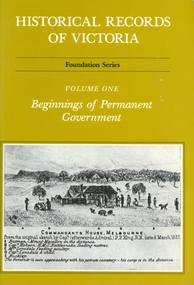
Book - HISRORICAL RECORDS OF VICTORIA VOLUME ONE, 1981
... Historical records of Victoria volume one Beginnings of Permanent Government Published by Victorian Government Printing Office, 570 pages with black and white illustrations....VICTORIA History government Public Record Office Historical records of Victoria volume one Beginnings of Permanent Government Published by Victorian Government Printing Office, 570 pages with black and white illustrations. ...Historical records of Victoria volume one Beginnings of Permanent Government Published by Victorian Government Printing Office, 570 pages with black and white illustrations.Public Record Officevictoria, history, government -
 Greensborough Historical Society
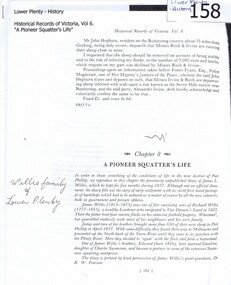
Article - Article, Journal, Public Records Office Victoria, A Pioneer Squatter's Life, 2006
... This is a chapter from Historical Records of Victoria / editor-in-chief, Michael Cannon ; [compiled by the Public Records Office]. ...This is a chapter from Historical Records of Victoria / editor-in-chief, Michael Cannon ; [compiled by the Public Records Office]. ...The Willis family were early settlers at Lower Plenty, just near where the hotel and old bridge are today. This is a chapter from Historical Records of Victoria / editor-in-chief, Michael Cannon ; [compiled by the Public Records Office]. Vol. 6. The Crown, the land, and the squatter, 1835-1840.Diary of James L Willis from 1837, portraying hardships suffered in the young colony of Victoria.24 page photocopy of chapter of a book. Digitised copy included.Handwritten inscription on front page: Willis family of Lower Plentywillis family, plenty river, yarra river, lower plenty, james willis -
Eltham District Historical Society Inc
Document - Folder, Willis, James L
... Contents Photocopy, Historical Records of Victoria, Volume 6, pp182-200: Diary of James L Willis for part of 1837....Contents Photocopy, Historical Records of Victoria, Volume 6, pp182-200: Diary of James L Willis for part of 1837. ...James L Willis migrated to Van Diemen's Land in 1823 and moved to the Port Phillip District in 1837, squatting near the junction of the Yarra and Plenty Rivers. Contents Photocopy, Historical Records of Victoria, Volume 6, pp182-200: Diary of James L Willis for part of 1837.Newspaper clippings, A4 photocopies, etcjames l willis, richard willis, edward willis, caroline swanston, yarra river, plenty river -
Greensborough Historical Society
Article, The Willis Diary by Anne Paul. Based on A Pioneer Squatter's Life, 09/04/1837o
... Anne has reviewed and analysed this chapter from Historical Records of Victoria, Vol. 6. The Crown, the land, and the squatter, 1835-1840. ...Anne has reviewed and analysed this chapter from Historical Records of Victoria, Vol. 6. The Crown, the land, and the squatter, 1835-1840. ...The Willis Diary by GHS member Anne Paul is based on A Pioneer Squatter's Life (Item158). The Willis family were early settlers at Lower Plenty, just near where the hotel and old bridge are today. Anne has reviewed and analysed this chapter from Historical Records of Victoria, Vol. 6. The Crown, the land, and the squatter, 1835-1840. She includes further information on the Willis family and photographs of the archaeological dig at the Bridge Inn Hotel Mernda in 2017.Diary of James L Willis from 1837, portraying hardships suffered in the young colony of Victoria.15 page, text and colour illustrations. Digital copy.willis family, plenty river, lower plenty, james willis, bridge inn hotel mernda -
Greensborough Historical Society
Article, A Squatter's life on the Plenty River at 'Wanstead' by Anne Paul, 09/04/1837o
... Anne has reviewed and analysed this chapter from Historical Records of Victoria, Vol. 6. The Crown, the land, and the squatter, 1835-1840. ...Anne has reviewed and analysed this chapter from Historical Records of Victoria, Vol. 6. The Crown, the land, and the squatter, 1835-1840. ...The Willis Diary by GHS member Anne Paul is based on A Pioneer Squatter's Life (Item158). The Willis family were early settlers at Lower Plenty, just near where the hotel and old bridge are today. Anne has reviewed and analysed this chapter from Historical Records of Victoria, Vol. 6. The Crown, the land, and the squatter, 1835-1840. She includes further information on the Willis family and photographs of the archaeological dig at the Bridge Inn Hotel Mernda in 2017.Diary of James L Willis from 1837, portraying hardships suffered in the young colony of Victoria.10 pages, text and colour illustrations. Abridged hard copy of item 4491.willis family, plenty river, lower plenty, james willis, bridge inn hotel mernda -
 The 5th/6th Battalion Royal Victoria Regiment Historical Collection
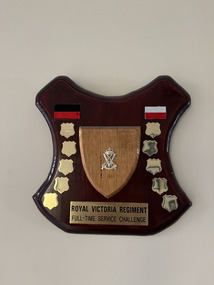
Honour Board - Royal Victoria Regiment Full Time Service Challenge
... Historical record of the Royal Victoria Regiment full-time service challenge winner...Historical record of the Royal Victoria Regiment full-time service challenge winner Royal Victoria Regiment Full-Time Service Challenge, with the wooden board and 10 metal shield, only 2 shield has details inserted. ...Historical record of the Royal Victoria Regiment full-time service challenge winnerRoyal Victoria Regiment Full-Time Service Challenge, with the wooden board and 10 metal shield, only 2 shield has details inserted. Two different colour patches are fixed onto the wooden board -
 Flagstaff Hill Maritime Museum and Village
Newspaper - Newspaper clipping, The Loch Ard : An Epic Wreck : Death of Eva Carmichael, ca. April 1934
... historical significance for its association with the wreck of the sailing ship LOCH ARD, which is now listed on the Victorian Heritage Register S417. The article records an eye witness account of the rescue of the only two survivors from the Loch Ard wreck. flagstaff hill warrnambool shipwrecked-coast flagstaff-hill flagstaff-hill-maritime-museum maritime-museum shipwreck-coast flagstaff-hill-maritime-village warrnambool standard eva carmichael loch ard eveline townshend tom pearce eveline victoria townsend Thomas Achilles Townshend County Cork Ireland Loch Ard survivors Port Campbell Victoria Royal Reade 1-6-1878 W. ...“On the 8th April 1934, at her residence in Bedford, England, Eveline Victoria Townshend, widow of the late Thomas Achilles Townshend, C.E. of County Cork, Ireland, died in her 74th year. Mrs Townshend was the Eva Carmichael who, with the late Tom Pearce, were the only two survivors of the ship Loch Ard, which was wrecked near Port Campbell, on 1st June, 1878 ....”. [Transcription of the article is attached]. Captain Gibbs was master of the Loch Ard, an iron clipper of 1623 tons, which was wrecked on Mutton Bird Island, one mile east of Sherbrook River. The two survivors, Carmichael, a passenger and Pearce, a member of the crew, were washed through the mouth of the gorge, which now bears the name of the ill-fated ship. The impact of the ship was so violent that the deck was torn clean off the hull, which now lies in 70 fathoms of water. (edited version of the same article)The newspaper article is of local, state and national historical significance for its association with the wreck of the sailing ship LOCH ARD, which is now listed on the Victorian Heritage Register S417. The article records an eye witness account of the rescue of the only two survivors from the Loch Ard wreck. A newspaper cutting from the Warrnambool Standard in 1934. It contains the obituary notice of Eva Carmichael (Townshend), the only female survivor of the LOCH ARD shipwreck in 1878. She died on 8 April 1934, a widow in England, in her 74th year. This original newspaper cutting has yellowed and creased with age. The article in the cutting is incomplete. flagstaff hill, warrnambool, shipwrecked-coast, flagstaff-hill, flagstaff-hill-maritime-museum, maritime-museum, shipwreck-coast, flagstaff-hill-maritime-village, warrnambool standard, eva carmichael, loch ard, eveline townshend, tom pearce, eveline victoria townsend, thomas achilles townshend, county cork, ireland, loch ard survivors, port campbell victoria, royal reade, 1-6-1878, w. c. till, eye witness account, george ford, glenample homestead, princetown, gibson, w. shields, mckenzie, robertson, robert strasenburg, loch venacher, robert pearce, tss hobsons bay -
 Flagstaff Hill Maritime Museum and Village
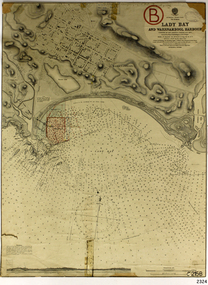
Document - Navigation Chart, Admiralty Office, Lady Bay and Warrnambool Harbour, 1893
... Victoria and significant in the development of Victorian coastal shipping. It is also significant for its connection with British harbour engineer, Sir John Coode. The chart is a historical record ...This navigation cart of Lady Bay and Warrnambool Harbour was originally surveyed in 1870 but this version includes the update for magnetic variation in 1893. Since the printing of the chart several annotations have been added. These include an additional stamp dated 15-8-1910, a handwritten comment across the top of the page dated August 1910, and another handwritten comment regarding the ‘Proposed Extension of Dock’ dated 19-2-1925, plus connected drawings, notes and figures. The 1925 proposal on this chart may have been a reaction to the Royal Commission of 1923, when the damaged stonework on the seaward side of the Warrnambool Breakwater, caused by the action of the sea, was the subject of enquiry. A conference between the Public Works, Water Commission and the Harbour Trust concluded that it would less costly to make repairs to prevent further damage rather than replaced the damage portion of the wall. A contract was raised in late 1924 to deposit rubble on the damaged side of the breakwater to minimise the Southern Ocean’s destructive action and work had started by August 1925. The Breakwater construction had begun in 1874 and was completed in 1890. The Victorian Government had commissioned Sir John Coode, a British harbour engineer, to present a plan to complete the Warrnambool Breakwater but his original plan was too expensive. He prepared a revised plan for a shorter structure. The construction proved to be too short to protect adequately from the weather and didn't allow enough depth for larger vessels to come into port. The decreasing trade was further affected by siltation in the bay due to the breakwater, and the completion of the railway line. The situation of the harbour became a real problem by 1910 and required continuous dredging. In 1914 the Breakwater was extended but proved to be a failure because the work began to subside and by 1920 about two thirds of the harbour was silted up. Alterations made in the 1920's increased the silting problem and by the 1940's the harbour was no longer used. More alterations were made in the 1950's and 1960's. This chart is significant for its strong connection to the maritime history of Warrnambool Harbour and Lady Bay and the Warrnambool Breakwater. The Warrnambool Breakwater is registered as a place of significance on the Victorian Heritage Database (VHR H2024). The Warrnambool Breakwater is one of the most important late 19th century maritime engineering projects in Victoria and significant in the development of Victorian coastal shipping. It is also significant for its connection with British harbour engineer, Sir John Coode. The chart is a historical record of structures existing in 1893; the Warrnambool Jetties, Warrnambool Breakwater in Lady Bay, the leading lights (lighthouses), streets, roads, bridges and many buildings. It also shows the lay of the land and seabed. Navigation Chart: Lady Bay and Warrnambool Harbour, Australia - South Coast - Victoria. Surveyed by Nav. Lieut. H.J. Stanley, R.N., 1870. Updated for Magnetic Variation, 1893. The rectangular chart is printed on heavy cream paper. Stamps are shaped rectangular, oval and round. Around the Breakwater and Jetty area are handwritten notes, dotted and joined lines, numbers and signatures, and shading of red and green. The chart shows the surrounds of Warrnambool Harbour, Lady Bay, the Breakwater and Jetty, roads, bridges and the streets in Warrnambool. It has sounding details, and angles of line from the leading lights.Stamp, rectangular, including "AUG 1910" Stamp, double oval " - - - -CHART" Stamp, hand drawn, red circle, with "B" inside Hand written note "22-8-1910 - - - - - of surveying C. Ca - - - request of 15-8-10 [initials] " Notes and lines in red pen, including a grid of sounding numbers: "1300" "1050" "1200" "Possible Extension of Dock" "19-2-25" "Dock Dredged to 20 Ft" Notes and lines in blue pen "Extension of Dock to accommodate vessels drawing 20 Feet" and "Light not visible south of this line" Red dots (4) with yellow highlight at both leading lights, breakwater and jettyflagstaff hill, warrnambool, flagstaff hill maritime museum & village, maritime museum, maritime village, shipwreck coast, map, chart, navigation chart, plan, lady bay, warrnambool harbour, port of warrnambool, breakwater, jetty, pier, dock extension, proposed extension, vhr h2024, 1870, 1893, 1910, 1925, warrnambool town late 1800s, warrnambool streets late 1800s royal commission, 1923, public works, water commission, harbour trust, victorian harbours, sir jon coode -
 Flagstaff Hill Maritime Museum and Village
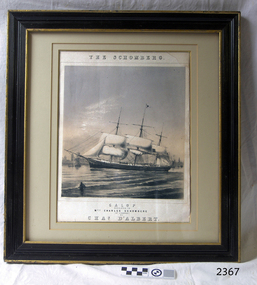
Lithograph, The Schomberg
... records between Europe and Australia. Flagstaff Hill’s collection of artefacts from the Schomberg is significant for its association with the shipwreck, The collection is primarily significant because of the relationship between the objects, as together they have a high potential to interpret the story of the Schomberg. It is archaeologically significant as the remains of an international passenger Ship. It is historically significant for representing aspects of Victoria’s ...When the ship Schomberg was launched in 1855, she was considered the most perfect clipper ship ever to be built. James Blaine’s Black Ball Line had commissioned her to be built for their fleet of passenger liners. At a cost of £43,103, the Aberdeen builders designed her to sail faster than the quick clippers designed by North American Donald McKay. She was a three masted wooden clipper ship, built with diagonal planking of British oak with layers of Scottish larch. This luxury vessel was designed to transport emigrants to Melbourne in superior comfort. She had ventilation ducts to provide air to the lower decks and a dining saloon, smoking room, library and bathrooms for the first class passengers. At the launch of Schomberg’s maiden voyage, her master Captain ‘Bully’ Forbes, drunkenly predicted that he would make the journey between Liverpool and Melbourne in 60 days. Schomberg departed Liverpool on 6 October 1855 with 430 passengers and 3000 tons cargo including iron rails and equipment intended the build the Geelong Railway and a bridge over the Yarra from Melbourne to Hawthorn. The winds were poor as Schomberg sailed across the equator, slowing her journey considerably. She was 78 days out of Liverpool when she ran aground on a sand-spit near Peterborough, Victoria, on 27 December; the sand spit and the currents were not marked on Forbes’s map. Overnight, the crew launched a lifeboat to find a safe place to land the ship’s passengers. The scouting party returned to Schomberg and advised Forbes that it was best to wait until morning because the rough seas could easily overturn the small lifeboats. The ship’s Chief Officer spotted SS Queen at dawn and signalled the steamer. The master of the SS Queen approached the stranded vessel and all of Schomberg’s passengers were able to disembark safely. The Black Ball Line’s Melbourne agent sent a steamer to retrieve the passengers’ baggage from the Schomberg. Other steamers helped unload her cargo until the weather changed and prevented the salvage teams from accessing the ship. Local merchants Manifold & Bostock bought the wreck and cargo, but did not attempt to salvage the cargo still on board the ship. They eventually sold it on to a Melbourne businessman and two seafarers. After two of the men drowned when they tried to reach Schomberg, salvage efforts were abandoned.32 In 1975, divers from Flagstaff Hill, including Peter Ronald, found an ornate communion set at the wreck. The set comprised a jug, two chalices, a plate and a lid. The lid did not fit any of the other objects and in 1978 a piece of the lid broke off, revealing a glint of gold. As museum staff carefully examined the lid and removed marine growth, they found a diamond ring, which is currently on display in the Great Circle Gallery.33 Flagstaff Hill also holds ship fittings and equipment, personal effects, a lithograph, tickets and photograph from the Schomberg. Most of the artefacts were salvaged from the wreck by Peter Ronald, former director of Flagstaff Hill. The Schomberg, which is on the Victorian Heritage Register (VHR S612), has great historical significance as a rare example of a large, fast clipper ship on the England to Australia run, carrying emigrants at the time of the Victorian gold rush. She represents the technical advances made to break sailing records between Europe and Australia. Flagstaff Hill’s collection of artefacts from the Schomberg is significant for its association with the shipwreck, The collection is primarily significant because of the relationship between the objects, as together they have a high potential to interpret the story of the Schomberg. It is archaeologically significant as the remains of an international passenger Ship. It is historically significant for representing aspects of Victoria’s shipping history and for its association with the shipwreck and the ship, which was designed to be fastest and most luxurious of its day Lithograph of the Schomberg. The vessel is partially rigged with a buoy in the foreground. Behind the vessel are a number of small boats. The writing on the lithograph states "The Schomberg, GALOP Dedicated to Mrs Charles Schomberg (of Liverpool) by Chas D'Albert" Two names BRANDARD and M & N HANHART.IMP on bottom of lithograph.warrnambool, flagstaff-hill, flagstaff-hill-maritime-museum, maritime-museum, shipwreck-coast, flagstaff-hill-maritime-village, schomberg, shipwrecked-artefact, clipper ship, black ball line, 1855 shipwreck, aberdeen clipper ship, captain forbes, peterborough shipwreck, ss queen, brandard, lithograph, m & n hanhart.imp -
 Flagstaff Hill Maritime Museum and Village
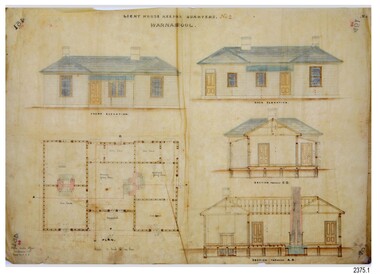
Document - Plans, Lighthouse Keeper's Quarters Warrnambool, 1858-1909
... record of the people, process and departments involved in bringing the complex into fruition. The plans are significant to the Complex, which is now listed on the Victorian Heritage Register, H1520, for being of historical, scientific (technological) and architectural significance to the State of Victoria. ...The set of seven 1858 plans shows proposed plans for the original Lighthouse Complex that was built on Middle Island in 1858-1859. The whole complex was then transferred to Flagstaff Hill in 1871. The plan, dated 1909, is for proposed additions and repairs to the Quarters at Flagstaff Hill. The plan 'Alterations and Additions' shows alternate plans for changes to the quarters at the Flagstaff Hill location. This plan has no date. The Complex comprised the Lighthouse, the Lighthouse Keepers’ Quarters, the Store (now called the Chart Room) and a Privy, which was not included in these plans. The Keeper’s bluestone Quarters was a cottage divided into two compartments, one for each keeper and his family. The bluestone Store was divided into three; a store, a workshop an oil store (or office). The Privy comprised of a small building also divided into two separate, back-to-back toilets, one for each Keeper and his family. The Flagstaff Hill Keeper's Quarters have had extensions and additions at various times, and these have also been removed at various other times. THE PLANS - *Dec. 1858 (12/58) ‘Lighthouse Keepers Quarters No.2 Warrnambool’ (2375.01)* Public Works Office Melbourne – Front and Back elevations, sections, and floor plan. The drawing shows timber walls. [The floor plan is the closest plan to the current building, however, the walls are timber in this plan.] *Nov. 1858 – No.3 ‘Lighthouse Keepers Quarters Warrnambool’ (2375.02)* Office of Public Works, Melbourne – Back and End elevations and section through. The drawing shows stone walls. One side; Senior Keeper’s bedroom, living room and kitchen with storeroom. Another side; is the Assistant’s bedroom, living room and storeroom. *Nov. 1858 - No.4 ‘Lighthouse Stores Warrnambool’ (2375.03)* Office of Public Works – Front, Side and end elevations, centre section. The drawing shows stone walls. *Nov. 1858 – No.4, ‘Lighthouse Stores No. 2 Warrnambool’ (2375.04)* Office of Public Works – Front, side and end elevations, centre section. The drawing shows timber walls. *Nov. 1858 – ‘Details Lighthouse Keepers Quarters No. 2 Warrnambool’ (2375.05)* Public Works Office Melbourne. The plan shows the foundations, joists and eaves. The drawing shows timber walls. (Nov. 1858 – ‘No.4 ‘Lighthouse No. 2 – Warrnambool’ (2375.06)* Public Works Melbourne (Part of the paper is missing). This plan shows an octagonal tower, internal stairs, a balcony landing, and a weather vane on top. *November 1858 – No. 1, ‘Lighthouse – Warrnambool’ (2375.07)* Office of Public Works Melbourne. This plan shows a round tower, including the stairs, windows on the tower and the weather vane on the top. *4/3/9 [1909] – ‘Additions and Repairs, Lighthouse Quarters, Warrnambool, General Plan’ (2375.8)* Department of Public Works Melbourne’s official stamp is signed by Croft. It shows the floor plans of the Store, Upper Lighthouse and the Quarters. The Store building has three sections; a Store, Work-Shop and Office, with an internal wall between them and separate entries. The Quarters are divided into two dwellings. The Senior Keeper’s side on the left has fireplaces in two of the three bedrooms and there is a pantry and wash house. The Assistant’s side has no fireplaces in the bedrooms and there’s no pantry or washhouse. These plans include proposed changes to the buildings. The Senior Keeper’s Quarters would have a partition on bedroom 2, a bath with plumbing and drainage, a wall moved and a built-in side porch. The Store would also have a built-in porch. The undated plan 'Additions and Alterations' (2375.9) shows alternative arrangements for water tanks, plumbing and such. WARRNAMBOOL'S LADY BAY LIGHTHOUSES- In the 1800s ships sailing from England to Australia began to use Bass Strait as a faster route to Melbourne. Small navigation errors led to many tragic shipwrecks. From 1848 lighthouses were operating along Victoria’s southern coast as a guide for sailors. Coastal towns such as Warrnambool grew and the exchange of trade and passengers were of great benefit. However, the uncertain weather changes, relatively shallow waters and treacherous, hidden rocky reefs were not suitable for a Harbour and in the 1840s and 1850s there were many shipwrecks in the area, with some even stranded in its Lady Bay harbour. A jetty was built in 1850 and a flagstaff to guide seafarers was placed up high on what became known now as Flagstaff Hill. In November 1857 the Victorian Government recommended that Warrnambool Harbour had beacons and two lighthouses to guide vessels into and out of the Harbour safely. The white light of the Middle Island lighthouse was to be used for the first time on September 1, 1859. The red light of the Beach Lighthouse, a wooden obelisk structure, was first operated on March 25, 1860, but in 1868 this light was ‘discontinued’ due to it being too low. Melbourne’s Department of Public Works decided to relocate the Middle Island Lighthouse Complex - Lighthouse, Keeper’s Quarters, Privy, Store Room and even water tanks - to Flagstaff Hill. The lower obelisk was shortened, and a protruding gallery, railing, and external ladder were added, as well as the light from the Beach Lighthouse. A green guiding light was erected on the end of the jetty. The transfer of the Complex began in March 1871. Each shaped stone of the lighthouse was carefully numbered, removed then reassembled on Flagstaff Hill. In 1872 the well was sunk behind the Lighthouse Keeper’s Cottage. The Keepers and families had left Middle Island in April and moved to Flagstaff Hill in October 1871. Vessels entering Lady Bay align the Upper and Lower Lighthouse towers during the day and the lights at night. The Upper Lighthouse is a round tower, the Lower Light is square. The Lighthouses were categorised as harbour lights rather than coastal lights, so they remain under the control of the Victorian Government’s Ports and Harbours section. The lights were originally powered by oil, then acetylene gas, later by electricity, and then converted to solar power in 1988. In 1993 the solar panel was replaced by a battery charger. A decision was made in 1936 to replace the lighthouses’ lights with unattended lights that no longer required Keepers and Assistants. At least 29 Keepers had attended to the lighthouse from its opening in 1859 to when the last official Lightkeepers left In April 1916. The Warrnambool Harbour Board rented out the Quarters from 1916 to 1936. The Board closed down but the rentals continued with other unknown landlords. In the 1970s the Flagstaff Hill Planning Board was set up under the chairmanship of John Lindsay. The Board was to make recommendations to the Warrnambool City Council regarding the use of the buildings and the rest of the Crown Land on the site. The Flagstaff Hill Maritime Village opened in 1975 and began renovating the Cottage in stages, during which time evidence of a 1920s fire was found in the eastern section of the cottage. Additions of a porch on the west and a washroom on the east were made in the 1980s. The western part of the building is now a Shipwreck Museum and the east has returned to a late 19th-century Lighthouse Keeper’s cottage and includes the screen made by Assistant Lighthouse Keeper Thomas Hope during one of his two periods of service there. THE LIGHTHOUSE KEEPERS Lighthouse Keepers were responsible for keeping their Lighthouse’s lights shining at night. They kept a lookout for passing vessels and changes in weather. They were expected to clean, polish and maintain the equipment and buildings. They kept regular and detailed records of who was on watch, and the time the light was lit, trimmed and extinguished. They kept a journal about other events that occurred. They keep regular, accurate Meteorological Logs. It was expected that they were competent in Morse code signalling. They would be called to help in times of disasters and shipwrecks, and to give official statements about these events. Many Lighthouse Keepers also volunteered as members of the lifeboat crew. The Lady Bay lighthouses were officially classified as small, so the Keepers had the official titles of Senior Assistant Lighthouse Keeper and Assistant Lighthouse Keeper. They were employed by the Public Service and paid rent to live in the Lighthouse Quarters. They were compulsorily retired at the age of 60, with most receiving a superannuation payment. Despite their time-consuming duties, there was time to follow hobbies and crafts such as growing vegetables, playing musical instruments, making models of buildings including lighthouses, and crafting furniture pieces. An example of a keeper’s skills is the carved fire screen made by /assistant Keeper Thomas Hope in the early 20th century and displayed in the Lighthouse Keeper’s cottage at Flagstaff Hill. The last occupants of the Middle Island Complex were Senior Keeper Robert Deverell, his Assistant Keeper, Andrew Farncombe, and their families. They all became the first occupants at the Lady Bay Lighthouse Keepers’ Quarters on Merri Street. The Warrnambool Lighthouse Complex plans are the origin of what is now the Lady Bay Lighthouse Complex. They are a record of the people, process and departments involved in bringing the complex into fruition. The plans are significant to the Complex, which is now listed on the Victorian Heritage Register, H1520, for being of historical, scientific (technological) and architectural significance to the State of Victoria. The Complex is significant as an example of early colonial development. The plan are significant for their connection with the important navigational function of the Lighthouses, a function still being performed to this day. The plans are also significant as an example of a product from the Public Works Department in Victoria in the mid-to-late 19th century. The structures built to these plans still stand strong. Plans for the Lighthouse Complex in Warrnambool, including Lighthouses, Keeper's Quarters and Stores. Seven of the plans are on thin fragile paper, one is on thicker, stronger paper. The drawings have been made in pens coloured red and black. They originate from Public Works in Melbourne. Seven were drawn in 1858, one in 1904, the other is not dated.Dec. 1858 - Lighthouse Keepers Quarters No.2 Warrnambool. Public Works Office Melbourne. Nov. 1858 - No.3 ‘Lighthouse Keepers Quarters Warrnambool. Public Works Office Melbourne. Nov. 1858 - No.4 ‘Lighthouse Stores Warrnambool. Office of Public Works. Nov. 1858 - No.4, ‘Lighthouse Stores No. 2 Warrnambool. Office of Public Works. Nov. 1858 - Details Lighthouse Keepers Quarters No. 2 Warrnambool. Public Works Office Melbourne. Nov. 1858 - No.4 ‘Lighthouse No. 2 – Warrnambool. Public Works Melbourne. Nov. 1858 - No. 1, Lighthouse - Warrnambool. Office of Public Works Melbourne. 4/3/9 [1909] - Additions and Repairs, Lighthouse Quarters, Warrnambool, General Plan. Department of Public Works Melbourne. SIGNED "Croft" "15A" on reverse [no date] - Lighthouse Quarters Warrnambool, Additions and Alterations. "9A" on reverseflagstaff hill, warrnambool, lighthouse keeper's cottage, lighthouse residence, lighthouse, plans, public works, melbourne, flagstaff hill maritime museum, maritime museum, shipwreck coast, flagstaff hill maritime village, chart room, quarters, privy, middle island, beach lighthouse, obelisk, lighthouse keeper, assistant keeper, lighthouse complex, lady bay, lady bay complex, keepers, upper lighthouse, lower lighthouse, ports and harbours, cottage, harbour board, flagstaff hill planning board, meteorological record, robert deverell, andrew farncombe, warrnambool port, warrnambool harbour, residence, alterations, repairs, department of works, light keeper -
 Flagstaff Hill Maritime Museum and Village
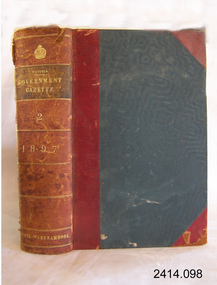
Book - Reference/Colonial Government Notification Gazette, Robert Smith Brain, The Victoria Government Gazette 1897 Vol 2 /102, 1897
... recorded and distributed. As an individual issue, the 1897 Gazette is not a landmark historical document in itself gazettes were routine administrative publications, issued weekly and sometimes more often. As the colony's official record, their significance is cumulative and archival for research purposes rather than as a dramatic publication, given that they are the primary legal record of government actions taken in colonial Victoria. ...The Victoria Government Gazette and other government documents from 1887 were printed and published by Robert S. Brain, Government Printer, Melbourne. Brain held the position of Victorian Government Printer through the 1890s and into the early 1900s. The same imprint appears on other official Victorian publications from that era, such as the annual reports of the Board for the Protection of the Aborigines and the colony's Statistical Register. There wasn't really an editor in the modern sense the Gazette was compiled and issued under the authority of the colonial government, via the Chief Secretary's Department, with Brain's printing office producing and publishing it.Hard cover book. The Victorian Government Gazette 1897 Vol 2 /102 Printer: Robert Smith, Brain Publisher: Robert Smith, Brain Publisher: Authority of The Colonial Government Date: 1897 Further Information: Textured hard cover bound book leather burgundy colour spine with gilt lettering, covers embossed blue cloth & reinforced corners to front and back cover. non-fictionThe Victoria Government Gazette and other government documents from 1887 were printed and published by Robert S. Brain, Government Printer, Melbourne. Brain held the position of Victorian Government Printer through the 1890s and into the early 1900s. The same imprint appears on other official Victorian publications from that era, such as the annual reports of the Board for the Protection of the Aborigines and the colony's Statistical Register. There wasn't really an editor in the modern sense the Gazette was compiled and issued under the authority of the colonial government, via the Chief Secretary's Department, with Brain's printing office producing and publishing it.flagstaff hill, warrnambool, shipwrecked-coast, flagstaff-hill, flagstaff-hill-maritime-museum, maritime-museum, shipwreck-coast, flagstaff-hill-maritime-village, book, the victoria government gazette 1897, the victoria government gazette 1897 2 vol 102, the victoria government gazette -
 Flagstaff Hill Maritime Museum and Village
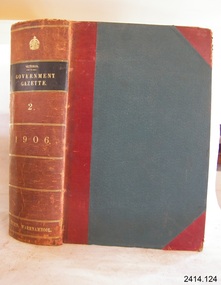
Book - Reference/Colonial Government Notification Gazette, James Kemp, The Victorian Government Gazette 1906 Vol 2 /129, 1906
... historical document in itself as gazettes were routine administrative publications, issued weekly and sometimes more often. As the colony's official record, their significance is cumulative and archival for research purposes rather than as a dramatic publication, given that they are the primary legal record of government actions taken in colonial Victoria. ...The Victoria Government Gazette and other government documents from 1887 were printed and published by Robert S. Brain, Government Printer, Melbourne. Brain held the position of Victorian Government Printer through the 1890s and into the early 1900s. The same imprint appears on other official Victorian publications from that era, such as the annual reports of the Board for the Protection of the Aborigines and the colony's Statistical Register. There wasn't really an editor in the modern sense the Gazette was compiled and issued under the authority of the colonial government, via the Chief Secretary's Department, with Brain's printing office producing and publishing it. In May 1906, James Kemp succeeded him, serving as Government Printer from May 1906 to August 1912, with the title of Acting Government Printer right at the very start of his tenure he was stepping into the role Brain had just vacated, and by later in December 1906 he was signing gazettes in that capacity, apparently before his appointment was made permanent. Then in 1913 Albert James Mullett took over the role starting from January 1913.Hard cover book. The Victorian Government Gazette 1906 Vol 2 /129 Printer: James Kemp Publisher: James Kemp Publisher: Authority of The Colonial Government Date: 1906 Further Information: Textured hard cover bound book leather burgundy colour spine with gilt lettering, covers embossed blue cloth & reinforced corners to front and back cover. non-fictionThe Victoria Government Gazette and other government documents from 1887 were printed and published by Robert S. Brain, Government Printer, Melbourne. Brain held the position of Victorian Government Printer through the 1890s and into the early 1900s. The same imprint appears on other official Victorian publications from that era, such as the annual reports of the Board for the Protection of the Aborigines and the colony's Statistical Register. There wasn't really an editor in the modern sense the Gazette was compiled and issued under the authority of the colonial government, via the Chief Secretary's Department, with Brain's printing office producing and publishing it. In May 1906, James Kemp succeeded him, serving as Government Printer from May 1906 to August 1912, with the title of Acting Government Printer right at the very start of his tenure he was stepping into the role Brain had just vacated, and by later in December 1906 he was signing gazettes in that capacity, apparently before his appointment was made permanent. Then in 1913 Albert James Mullett took over the role starting from January 1913. flagstaff hill, warrnambool, shipwrecked-coast, flagstaff-hill, flagstaff-hill-maritime-museum, maritime-museum, shipwreck-coast, flagstaff-hill-maritime-village, book, the victoria government gazette 1906 2 vol 129, the victoria government gazette 1906, the victoria government gazette -
 Flagstaff Hill Maritime Museum and Village
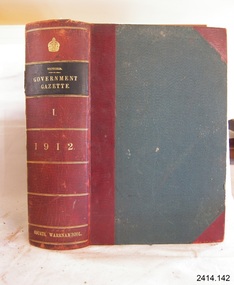
Book - Reference/State Government Notification Gazette, Albert John Mullett, The Victorian Government Gazette 1912 Vol 1 /146, 1912
... He oversaw the printing of major historical works including the landmark reference books during his tenure, such as the comprehensive Handbook to Victoria compiled for the British Association for the Advancement of Science's 1914 Australian meeting, and the detailed Education Department's Record of War Service (1914–1919) published in 1921. ...He oversaw the printing of major historical works including the landmark reference books during his tenure, such as the comprehensive Handbook to Victoria compiled for the British Association for the Advancement of Science's 1914 Australian meeting, and the detailed Education Department's Record of War Service (1914–1919) published in 1921. ...The Victoria Government Gazette and other government documents from 1887 were printed and published by Robert S. Brain, Government Printer, Melbourne. Brain held the position of Victorian Government Printer through the 1890s and into the early 1900s. The same imprint appears on other official Victorian publications from that era, such as the annual reports of the Board for the Protection of the Aborigines and the colony's Statistical Register. There wasn't really an editor in the modern sense the Gazette was compiled and issued under the authority of the colonial government, via the Chief Secretary's Department, with Brain's printing office producing and publishing it. In May 1906, James Kemp succeeded him, serving as Government Printer from May 1906 to August 1912, with the title of Acting Government Printer right at the very start of his tenure he was stepping into the role Brain had just vacated, and by later in December 1906 he was signing gazettes in that capacity, apparently before his appointment was made permanent. Then in 1912 Albert John Mullett took over the role starting from January 1912 the same way Kemp had as Acting Government Printer with his appointment made permanent in 1913 where he served all through the 1920s.Hard cover book. The Victorian Government Gazette 1912 Vol 1 /146 Printer: Albert John Mullett Publisher: Albert John Mullett Publisher: Authority of The Colonial Government Date: 1912 Further Information: Textured hard cover bound book leather burgundy colour spine with gilt lettering, covers embossed blue cloth & reinforced corners to front and back cover. non-fictionThe Victoria Government Gazette and other government documents from 1887 were printed and published by Robert S. Brain, Government Printer, Melbourne. Brain held the position of Victorian Government Printer through the 1890s and into the early 1900s. The same imprint appears on other official Victorian publications from that era, such as the annual reports of the Board for the Protection of the Aborigines and the colony's Statistical Register. There wasn't really an editor in the modern sense the Gazette was compiled and issued under the authority of the colonial government, via the Chief Secretary's Department, with Brain's printing office producing and publishing it. In May 1906, James Kemp succeeded him, serving as Government Printer from May 1906 to August 1912, with the title of Acting Government Printer right at the very start of his tenure he was stepping into the role Brain had just vacated, and by later in December 1906 he was signing gazettes in that capacity, apparently before his appointment was made permanent. Then in 1912 Albert John Mullett took over the role starting from January 1912 the same way Kemp had as Acting Government Printer with his appointment made permanent in 1913 where he served all through the 1920s. flagstaff hill, warrnambool, shipwrecked-coast, flagstaff-hill, flagstaff-hill-maritime-museum, maritime-museum, shipwreck-coast, flagstaff-hill-maritime-village, book, the victoria government gazette 1912 1 vol 146, the victoria government gazette 1912, the victoria government gazette -
 Flagstaff Hill Maritime Museum and Village
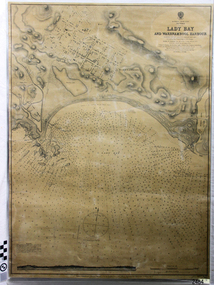
Document - Navigation Chart, Admiralty Office, Lady Bay and Warrnambool Harbour, 03/04/1871
... historical record of structures existing in 1870; the Warrnambool Jetties, Lady Bay, the leading lights (lighthouses), streets, roads, bridges and many buildings. It also shows the lay of the land and seabed. flagstaff hill warrnambool chart of lady bay warrnambool 1870 warrnambool harbour cartography navigation warrnambool breakwater 1871 AUSTRALIA – SOUTH COAST / VICTORIA Lady Bay 1870 Nav. ...This Chart titled “Lady Bay and Warrnambool Harbour” was surveyed by Nav. Lieut. H.J. Stanley, of Britain's Royal Navy, in 1870 and printed in April 1871. The chart was made before the Warrnambool Breakwater was built (construction had begun in 1874 and was completed in 1890). The chart includes Directions for entering Lady Bay, Warrnambool Harbour. These are "Vessels entering Warrnambool Harbour must bring the Red Light in sight and steer in with it in line with the upper white Light bearing North, until the Green Light on the Jetty is opened, when steer towards it and anchor. The best anchorage is in 2 ¼ fms [fathoms)] of water, about a cable from ledge off Breakwater rock. Or where convenient, according to draught of water, only endeavouring to anchor as close as possible to Breakwater rock. It is not safe to enter or leave the Harbour in south westerly or Southerly gales.” This chart is significant for its strong connection to the maritime history of Warrnambool Harbour and Lady Bay, and eventually to the Warrnambool Breakwater. The Warrnambool Breakwater is registered as a place of significance on the Victorian Heritage Database (VHR H2024). A copy of the same chart was used to plan several submissions for future changes to the jetty and breakwater. The chart is a historical record of structures existing in 1870; the Warrnambool Jetties, Lady Bay, the leading lights (lighthouses), streets, roads, bridges and many buildings. It also shows the lay of the land and seabed.Canvas chart of Australia, South Coast, Victoria Title: Lady Bay and Warrnambool Harbour Surveyed by Nav. Lieut. H.J. Stanley, R.N., 1870. Magnet Variation, 1870 Published April 3, 1871, by the Admiralty, London. Directions for vessels entering Warrnambool Harbour are printed on the chart. The chart has a lacquer or seal over it.Top of chart has logo "HYDROGRAPHER OFFICE" "Price Eighteen Pence". "Engraved by Edward Weller" Along bottom of Chart: “London… Published at the Admiralty, 3rd April 1871, under the Superintendence of Rear Admiral G.H. Richards, F.R.S. Hydrographer, Corrections July 71” Bottom of chart “Australia South Coast Victoria Lady Bay and Warrnambool Harbour. 2494”flagstaff hill, warrnambool, chart of lady bay warrnambool 1870, warrnambool harbour, cartography, navigation, warrnambool breakwater, 1871, australia – south coast / victoria, lady bay, 1870, nav. lieut. h.j. stanley, r.n, directions for entering warrnambool harbour, hydrographer office, rear admiral g.h. richards, edward weller, port of warrnambool, flagstaff hill maritime museum & village, maritime museum, maritime village, shipwreck coast, map, chart, navigation chart, admiralty chart, breakwater, jetty, pier, vhr h2024
