
Showing 23 items matching "hospital catering"
-
![Cover page of 'Case history of tea services at the Alfred Hospital Melbourne' [ca.1950] , The tea bureau](/media/collectors/50187a8f023fd7201471f198/items/69d4a39f40348e1414e3d4e3/item-media/69d5c2177219387d705efe35/item-fit-380x285.jpg?cb=6) Alfred Hospital Nurses League - Nursing History Collection
Alfred Hospital Nurses League - Nursing History CollectionDocument - Report, The Tea Bureau, Case history of tea services at the Alfred Hospital Melbourne, [ca.1950]
... ...Hospital catering... at the Alfred Hospital in 1950 Alred Hospital Hospital catering tea making Previous catalogue number at top right of cover page Unbound, photocopied, illustrated document. ...Report was made to advise the Alfred Hospital of the most appropriate equipment to purchase for tea making. Also provides information about numbers of staff, patients (in, out and casualty) and capacity of dining rooms.Gives insight into catering at the Alfred Hospital in 1950Unbound, photocopied, illustrated document. Cover page has black print detailing title and publisher, Their is also an illustration of a proposed redenelopment of the Alfred HospitalPrevious catalogue number at top right of cover pagealred hospital, hospital catering, tea making -
 Ringwood and District Historical Society
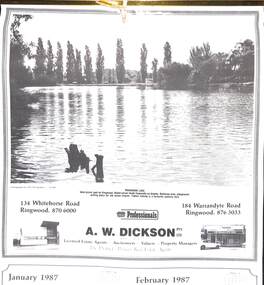
Souvenir, Complimentary A.W.Dickson Real Estate Agents calendars - 1987 and 1988.1987 calendar with photographic images of local Ringwood features and 1988 calendar featuring local Ringwood land sale promotional images from early 20th Century
... The opening of casualty facilities was welcomed by locals as previously Box Hill Hospital catered for the entre area. (September October 1987) EASTLAND - Opened October 1967. ...The opening of casualty facilities was welcomed by locals as previously Box Hill Hospital catered for the entre area. (September October 1987) EASTLAND - Opened October 1967. ...A.W.Dickson was a Real Estate Agent in Ringwood for many years. These calendars show the local buildings of the day. For example the original Eastland 's building of 1967, Maroondah Hospital 1976 and the Civic Centre now the Karralyka Centre.1 1987 calendar with six black and white photos of buildings and vistas around Ringwood with monthly dates in lower quarter of page. 2 1988 calendar with six posters advertising early 20th century land sales in Ringwood, Heathmont and Ringwood East with dates in lower quarter of page Compiled by A.W.Dickson Pty. Ltd. Real Estate Agent. Photographed by C.M.S. Photographers - 725 9441 (January February 1987) RINGWOOD LAKE - Ideal picnic spot for Ringwood Model power boats frequently on display. Barbecue area, playground, resting place for old steam engine. Yabbie netting is a favourite pastime here. (March April 1987) CLOCK TOWER - Moved from its former site on Warrandyte Road corner in 1967 and re-built in its present location, brick by brick. A wreath laying ceremony is held here on Anzac day each year. (May June 1987) RINGWOOD AQUATIC CENTRE - A world class swimming facility opened in 1986 at a cost of $3 million. Featuring the latest ozone water treatment techniques. In summer folding doors can be opened to give access to existing outdoor pools and sunbathing area. (July August 1987) MAROONDAH HOSPITAL - Opened in 1976 after many years of fund raising efforts by local people. The opening of casualty facilities was welcomed by locals as previously Box Hill Hospital catered for the entre area. (September October 1987) EASTLAND - Opened October 1967. Built on a former football oval. Now about to undergo major extensions to cater for Ringwood's population growth into the 21st Century. November December 1987 CIVIC CENTRE - Built on the site of a former antimony mine behind the council offices. Now the venue for many activities and a local point for Ringwood's Cultural Life. -
 Federation University Historical Collection
Booklet - Annual Report, Ballarat and District Base Hospital, Ballarat and District Base Hospital Annual Reports (1977, 1978, 1981), 1977 - 1981
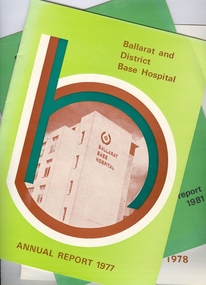
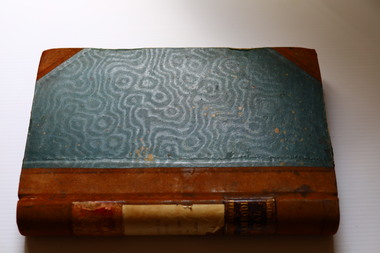
... In 1978 the hospital not only caters for general nursing and midwifery training, but also provides under graduate training for medical students."...In 1978 the hospital not only caters for general nursing and midwifery training, but also provides under graduate training for medical students." edgar bartrop ballarat college of advanced education nursing nurse bcae ballarat base hospital shirley falkinder shirley ogden school of nursing nurse educaiton pathology radiology m stevens winsome menedue trained nurses league contributers 3 booklets, each of about 20 pages. 1977 is light green covered, 1978 white with brown text, and 1981 mid green covered. ...Before the training of nurses at the Ballarat College of Advanced Education (now University of Ballarat) Ballarat nurses trained at the Ballarat Base Hospital. The 1978 Annual report gives the following hospital background: 'The foundation stone for the original 42 bed hospital was laid on the existing site on 25th December, 1855. Ballarat at that time had a population of between 40,000 and 50,000 people, with the demands on the hospital services being mainly for medical care resulting from mining accidents. Medical, Nursing and General care were provided by the resident Surgeon, matron and wardsmen. Financial support depended on donations from churches masonic lodges, the public and bequests. The hospital today provides centralized health services and specialist medical, surgical and ancillart assistance to the communities in the Central Highlands Region. The trend in hospital financing today has changed and is based to a large extent on State and Commonwealth Grants. Contribution from the public remain important particulalry in the purchase of equipement and ultimately the services provided by the hospital. Since 1887 the Ballarat Base Hospital has been an important training centre for nurses. In 1978 the hospital not only caters for general nursing and midwifery training, but also provides under graduate training for medical students."3 booklets, each of about 20 pages. 1977 is light green covered, 1978 white with brown text, and 1981 mid green covered.edgar bartrop, ballarat college of advanced education, nursing, nurse, bcae, ballarat base hospital, shirley falkinder, shirley ogden, school of nursing, nurse educaiton, pathology, radiology, m stevens, winsome menedue, trained nurses league, contributers -
 The Beechworth Burke Museum
Photograph - Stereoscopic Photograph
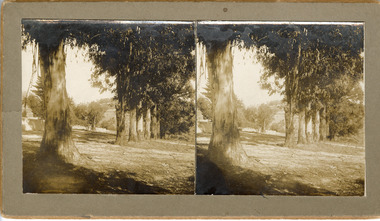
... Started in 1857, it was Beechworth's first hospital and the only hospital between Melbourne and New South Wales. It was a philanthropic institution catering to the poor. ...Started in 1857, it was Beechworth's first hospital and the only hospital between Melbourne and New South Wales. It was a philanthropic institution catering to the poor. ...This stereoscopic photograph depicts the grounds and mature trees of the Former Ovens District Hospital. Started in 1857, it was Beechworth's first hospital and the only hospital between Melbourne and New South Wales. It was a philanthropic institution catering to the poor. In 1874, the sweeping gardens were laid out by Dr. Jenkyns and featured over 200 species of trees including fruit trees, shrubs and vegetable and flower gardens. Patients could enjoy the view from a rotunda. The section photographed was known as 'Little Canada', and an isolation ward was added there in 1890. Since the hospital's closure in 1940, only the front facade and gardens remain. The gardens are now known as Centennial Park and retain many of the original mature trees.This stereoscopic photograph has aesthetic significance as it beautifully captures the sanitorium-like restorative atmosphere of the hospital gardens. It also has historical significance as it depicts the grounds of the Ovens District Hospital and the nature of hospital gardens in the nineteenth and early twentieth century.Sepia square stereoscopic photograph printed on matte photographic paper mounted on card.Reverse: 1997.2687/A02687/Trees in Hospital Grounds/(Little Canada)/Beechworth Note: Trees in the O+D hospital grounds/(Little Canada)/A02687/1997.2687former ovens district hospital, ovens district hospital, little canada, hospital garden, jenkyns, centennial park -
 Flagstaff Hill Maritime Museum and Village
Textile - Seat Squabs, mid-20th century
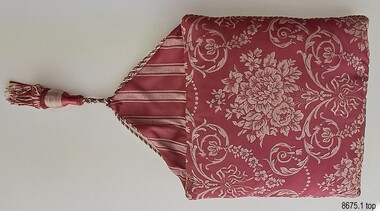
... Hospital. The St Nicholas’ Seamen’s Church at Flagstaff Hill was officially opened by His Worship the Mayor, Cr. John Lindsay, on Sunday, 11th October 1981. The event included a service of thanksgiving conducted by the Warrnambool Ministers Fraternal. Since then, the Chapel has been the historic venue for many weddings. This pair of seat squabs is historically significant for its origin in the St Nicholas Mission to Seamen's Church in Williamstown, established in 1857 to cater ...The term 'seat squabs' is no longer commonly used, but is sometimes referred to in the upholstery and motor vehicle industries. Squabs are padded cushions frequently added to wooden chairs or benches to add comfort to their hard forms. They have been made to an 18th-to-19th-century pattern using beautiful, richly coloured satin fabric and fancy cord tassels. The weighted flap at the rear of the squabs helps to keep them in place on the chair, and could be used on the top of the backrest instead of on the seat. These days, squabs are attached with fabric ties or hook-and-loop tabs. These seat squabs were once used in the St Nicholas Seamen's Church at 139 Nelson Place, Williamstown, Victoria, which was purchased and furnished around 1943. The furniture and furnishings are now part of the St. Nicholas Seamen's Church collection. DETAILED HISTORY of the Missions to Seamen: - The Missions to Seamen is an Anglican (Church of England) charity that has served the world’s seafarers since 1856. It was inspired by the work of Rev. John Ashley, who, 20 years earlier, had pioneered a ministry to seafarers in the Bristol Channel in Great Britain. When Ashley retired, others continued the work, founding the Missions to Seamen. It adopted a Flying Angel as its symbol, inspired by a verse from the Bible in Revelation 14. Today, over 200 world ports have Missions to Seamen centres and chaplains. A Missions to Seamen’s club warmly welcomes sailors of all colours, creeds and races and provides a wide range of facilities. The Missions to Seamen organisation changed its name to the Mission to Seafarers in 2000, continuing to include Missions to Seamen clubs in Victoria’s cities of Melbourne, Portland, Geelong and Hastings. Flagstaff Hill’s St Nicholas’ Seamen’s Church is named after its namesake from Williamstown, Victoria, which began in 1857. Bishop Perry opened the first Sailors’ Church, which was known as ‘Bethel’, on an old hulk floating in Hobson’s Bay, Port of Melbourne. In 1860, a Sailors’ Rest started operating from rented premises in Williamstown. In 1878, the Sailors’ Church moved into an old Wesleyan chapel in Ann Street. By the end of that year, they managed to purchase the building, which they had already refurbished. In 1883, they affiliated with the Victorian Seamen’s Mission. A few years later, in 1906, the building had to be demolished because it was no longer safe. While they raised funds for a new building, the Sailors’ Rest temporarily moved to premises in front of Customs House in Nelson Place. Around this time, in 1906, the Ladies Harbour Lights Guild was formed in Australia to support and raise funds for the Mission to Seamen organisation in Melbourne. Two of the most significant ladies of the Guild were founding members Ethel Godfrey and Alice Sibthorpe. During the Mission's time at Siddeley Street, Melbourne, the activities of the Guild raised funds for the Mission to Seamen's Chapel at their new, and still current, premises in Flinders Street, Melbourne, opened in 1917. The Guild continued its important work until the 1960s. In 1908, the Williamstown Mission had enough money to purchase the former Mascotte skating rink on Thompson Street, Williamstown. In August of that year, they were inaugurated into the Victorian Missions to Seamen. They continued at that venue for a few decades. In 1943, the former ES&A Bank building at 139 Nelson Place, Williamstown, was purchased for the new Mission to Seaman’s Club. The official opening was on May 6th, 1944. It was described as a ‘distinctive little building’. Funds had previously been raised for the building and furnishing of the chapel at the rear. The chapel was named St Nicholas’ Seamen’s Church, after St Nicholas, fourth-century bishop and patron saint of sailors. Services were held on Wednesdays and Sundays. The church was supported by the Williamstown Lightkeepers’ Auxiliary, newly founded by Mrs Ethel Margaret Musther in 1943, as well as the Harbour Lights Guild and the League of Soldiers’ and Sailors’ Friends. The Williamstown Mission to Seamen’s Church operated until 1966, when large international ships no longer used the Port of Williamstown. The Commonwealth Government then leased the premises. In the formative years of Flagstaff Hill Maritime Village, the Advisory Board decided to include a Missions to Seamen Chapel and Recreation Room in its village. The Missions organisation was a significant feature of ports during the late 1800s and early 1900s, the period that the Village represents. They often erected Missions to house social and worshipful activities for seamen. Flagstaff Hill’s curator, Mr Ken Marshman, approached the Melbourne Board of Management of Missions to Seamen regarding the Williamstown branch. Consequently, the Board permitted the furnishings of the Williamstown chapel to be transferred to Flagstaff Hill Maritime Village. A provision of the transfer was that the Victoria Missions to Seamen be recognised, that the items would remain as a collection, and that the chapel would be called St Nicholas Seamen’s Church and conduct Divine services. The donation was approved on 21st May 1979. Flagstaff Hill's St. Nicholas Seamen's Church: - The idea behind Flagstaff Hill’s Missions to Seamen’s Church was partly driven by the offer of Stained Glass Memorial Windows that originated from the Warrnambool and District Base Hospital, which was undergoing multi-storey expansion in the late 1960s and early 1970s. The hospital’s Manager/Secretary was eager to see the historic window installed in a suitable place. The church, or chapel, was designed by a local architectural draftsman in collaboration with the Flagstaff Hill Planning Board and was constructed by Mr Leon Habel. The designers hoped the church would be used for formal worship, such as weddings, funerals, and multi-denominational special services like war commemorations. Its design was inspired by the ‘Missions to Seamen’ buildings in Portland and the Port of Melbourne. The furniture and furnishings were placed as accurately as possible according to photographs of the Williamstown St Nicholas Seamen’s Church and with assistance from local clergy. The Recreation Room was furnished and arranged on advice from experienced members of the Missions to Seamen organisation. A framed document in the building recognises the donor of the furnishings, Victoria Missions to Seamen, and includes the names of some original donors and their donated item/s. The building’s design incorporates local features such as Warrnambool sandstone, which was no longer commercially available but was procured from demolished buildings and uniformly cut to use as a veneer over the stronger Mt. Gambier stone. Also, traditional green American roofing slate was used, sourced from the 1908 local shipwreck “Falls of Halladale” by Flagstaff Hill volunteer divers. The bell tower includes a bell believed to be from a local shipwreck. Additional furnishings were acquired locally, and several items were donated by Warrnambool residents. Light fittings in both rooms were assembled to simulate 19th-century gas light fittings. The stained-glass window at the back of the church is a memorial to Dr Connell, a well-respected member of the Warrnambool community. It was originally installed in 1928 in the main building of Warrnambool Hospital. The St Nicholas’ Seamen’s Church at Flagstaff Hill was officially opened by His Worship the Mayor, Cr. John Lindsay, on Sunday, 11th October 1981. The event included a service of thanksgiving conducted by the Warrnambool Ministers Fraternal. Since then, the Chapel has been the historic venue for many weddings. This pair of seat squabs is historically significant for its origin in the St Nicholas Mission to Seamen's Church in Williamstown, established in 1857 to cater for seafarers’ physical, social, and spiritual needs. The organisation originated in Bristol, England, when a Seamen's Mission was formed in 1837. The squabs are also significant for their use in the St Nicholas Missions to Seamen's chapel, Williamstown, as the original building is now listed on the Victorian Heritage Register. Squabs or padded seat cushions, a pair of two. These 18th to 19th-century design squabs have crimson and cream satin fabric on top and underneath, and weighted tassels are attached to their rear corners. They can be used for comfort on hard seats and benches. The squabs were furnishings from the Missions to Seamen chapel in Williamstown, and they are now part of the St Nicholas Seamen's Church Collection.flagstaff hill, warrnambool, shipwrecked-coast, flagstaff-hill, flagstaff-hill-maritime-museum, maritime-museum, shipwreck-coast, flagstaff-hill-maritime-village, st nicholas mission to seamen's church williamstown, mission to seamen williamstown, mission to seamen victoria, st nicholas mission to seamen, st nicholas seamen's church, religion, religious service, sailor's rest, ladies harbour light guild, squab, seat covers, cushions, squabs, religious furnishing, padded seats, seating, accessory -
 Eltham District Historical Society Inc
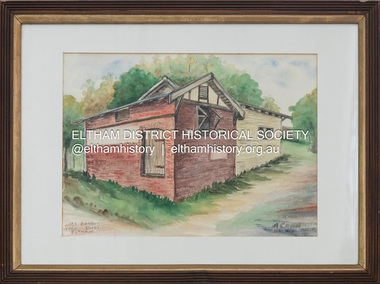
Painting, Audrey Cahn, Old Bakery, York Street, Eltham, May 1974
... During the war Audrey was in charge of catering at the Heidelberg Military Hospital – again the appointment of a women caused some unrest. ...During the war Audrey was in charge of catering at the Heidelberg Military Hospital – again the appointment of a women caused some unrest. ...Painted for the Shire of Eltham Historical Society by Audrey Cahn, a member of our Society for many years and Vice President till 1978. Audrey was the sister of the late Charis Palling, founding president of our Society. She had remained a member for many years although she had moved from her family home at Warrandyte to live with her daughter in New South Wales. Audrey had been blind for some years but maintained a local interest by having our Newsletter read to her. Audrey's associations with Warrandyte started because her father Professor Osbourne had bought 60 acres in 1904. " Gold mining was beginning to die out and Warrandyte was a decaying area. Land was cheap because of the lack of transport and the soil was poor for farming” Audrey said. Audrey first attended school in the city at the Church of England Girls Grammar School and was always a bit rebellious. “If I felt some restrictions were unfair or some judgement unjust, I resented it”. Audrey got into Agricultural Science at Melbourne University and in 1928 was the second women to get such a degree. Audrey married in 1926, and later divorced Leslie Cahn an architect. They had twin daughters whom she left with her parents in Warrandyte while she studied dietetics during the depression. She found employment as a microbiologist at the Kraft/Walker Milk and Cheese Factory in Drouin - she drove home at weekends to see her daughters who were then at boarding school. During the war Audrey was in charge of catering at the Heidelberg Military Hospital – again the appointment of a women caused some unrest. She was in the army for more than 4 years and achieved the rank of General which-made her the most highly-ranked-woman at the hospital. After the war she became a senior lecturer in Dietetics at Melbourne University, again being aware of the limitations her gender brought to promotion possibilities. During her time at the university, she undertook a series of studies in nutritional biochemistry. Of especial note is the analysis of common dietary foods so that the composition and calorific value, the data that was needed for inclusion in Food tables - that professional sports people and weight-watchers so avidly follow today! She was an early proponent of the need to reduce fat intake and to substitute saturated fats with polyunsaturated fatty acids. In the 1950's Audrey and fellow workers established norms for the growth of Australian children to be compared with British and American children. Over 17 years they concluded that Australian children were overweight and inactive - what is new! She bought a cottage in Warrandyte as her home. In 1968 she retired to further develop her other interests as a potter and painter. Audrey was a foundation member of the group of potters that set up Potters Cottage. Audrey died in 2008 aged 102. (Ref:Newsletter No. 185 March 2009)art, artwork, audrey cahn, eltham, old bakery, york street -
 Warrnambool and District Historical Society Inc.
Administrative record (Collection) - Warrnambool Hospital Records, Warrnambool Hospital Records
... The facility was named the Villiers and Heytesbury Hospital and Benevolent Asylum and later the Warrnambool Hospital and Benevolent Asylum, reflecting that the main function of the hospital in the 19th century was to cater for the sick (mostly those in poor circumstances) and to provide accommodation for the elderly poor. ...The facility was named the Villiers and Heytesbury Hospital and Benevolent Asylum and later the Warrnambool Hospital and Benevolent Asylum, reflecting that the main function of the hospital in the 19th century was to cater for the sick (mostly those in poor circumstances) and to provide accommodation for the elderly poor. ...Records handed to the Warrnambool & District Historical Society by Warrnambool Hospital AuthoritiesEnsuring maintenance and preservation of Warrnambool Hospital recordsLedgers and other material kept in A3 Archival boxes and housed on shelves in the W.D.H.S. Archives RoomLedgers and other Historical records of the Warrnambool Hospital including Letter Books, Annual Reports, Cash Books, Donors' Registers, Receipts and Expenditure Registers and Committee Minute Bookswarrnambool hospital and benevolent asylum, warrnambool base hospital, south west health carewarrnambool hospital and benevolent asylum, warrnambool base hospital, south west health care -
 Kiewa Valley Historical Society
Veil - Nurse's
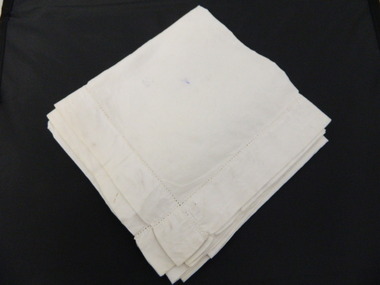
... Tawonga and district hospital was the only hospital in the Upper Kiewa Valley and was then moved to Mt Beauty to cater for the increased population due to the Kiewa Hydro Scheme. ...Tawonga and district hospital was the only hospital in the Upper Kiewa Valley and was then moved to Mt Beauty to cater for the increased population due to the Kiewa Hydro Scheme. ...This nurses veil is preventative of what was part of nurses uniforms in the mid 1900's. Tawonga and district hospital was the only hospital in the Upper Kiewa Valley and was then moved to Mt Beauty to cater for the increased population due to the Kiewa Hydro Scheme. Many of the hospital equipment KVHS has in its collection is from the time when the hospital was moved to Mt Beauty. This veil could also be from this period.This has historic significance due to being representative of what nurses wore in the Tawonga and district hospital during the mid 1900's. As KVHS has many hospital instruments in its collection from the towns hospital the veil has good interpretive capacity and is in a good condition to be placed on display. White linen fabric with 3-4 cm bound edging.nurse's uniform. civilian uniform. veil. headwear. tawonga and district hospital. -
 Bendigo Historical Society Inc.
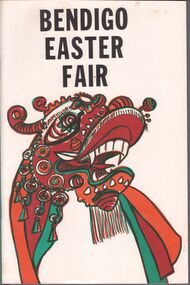
Booklet - Griffith Collection: 'BENDIGO EASTER FAIR', 1974
... The fair has many events that cater to all tastes and interests from art shows to antique sales to easter egg hunts. The fair aimed to raise money for the Bendigo Hospital and the Benevolent Asylum and still continues to donate amounts to charity....The fair has many events that cater to all tastes and interests from art shows to antique sales to easter egg hunts. The fair aimed to raise money for the Bendigo Hospital and the Benevolent Asylum and still continues to donate amounts to charity. 1974 Bendigo Easter Fair Loong Sun Loong Chinese Association Booklet with white cardboard covers with black printing and picture of a dragon on front in colours of red, orange and green. ...The first Bendigo Easter Fair was in 1871 and from its outset the Chinese community of Bendigo was involved. The Fair has evolved into a 3-4 day event with several parades including the current Chinese Dragon Dai Gum Loong. The fair has many events that cater to all tastes and interests from art shows to antique sales to easter egg hunts. The fair aimed to raise money for the Bendigo Hospital and the Benevolent Asylum and still continues to donate amounts to charity.Booklet with white cardboard covers with black printing and picture of a dragon on front in colours of red, orange and green. Brown staining on the back cover. Pages inside are cream coloured with black printing. Numerous black and white photographs throughout the publication. The publisher and the printer are not mentioned in the booklet. The publication includes a program for the Easter Fari for 1974.1974, bendigo easter fair, loong, sun loong, chinese association -
 Bendigo Historical Society Inc.
Document - PAUL HOWARD MACGILLIVRAY CERTIFICATE, 1873
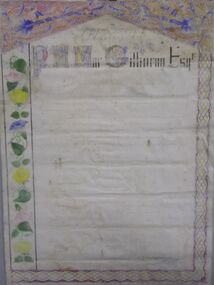
... In 1873, following the end of his hospital appointment, MacGillivray transitioned to independent private practice in Bendigo, establishing a solo operation that catered to the mining community's medical needs. ...In 1873, following the end of his hospital appointment, MacGillivray transitioned to independent private practice in Bendigo, establishing a solo operation that catered to the mining community's medical needs. ...Paul Howard McGillivray (1834 - 1895) : In 1862, Paul Howard MacGillivray was appointed resident surgeon at Bendigo Hospital, succeeding Dr. Atkinson, a position he held until 1873.[ During this tenure, he managed patient care amid the rapid population growth and health challenges of the Victorian goldfields, where mining accidents, infectious diseases, and injuries were prevalent. His role involved overseeing surgical operations and general medical services for a burgeoning community, contributing to the hospital's development as a key institution in regional healthcare. MacGillivray's surgical expertise was particularly evident in his focus on hydatid cysts, a common affliction in colonial Australia due to environmental factors. He authored three papers on the subject between 1865 and 1872, published in medical journals, which detailed innovative management techniques including excision methods and post-operative outcomes. These works emphasized conservative approaches alongside surgical intervention, drawing from cases encountered at Bendigo Hospital, and helped advance local understanding of the disease's treatment. In 1873, following the end of his hospital appointment, MacGillivray transitioned to independent private practice in Bendigo, establishing a solo operation that catered to the mining community's medical needs. This shift allowed him greater flexibility in serving patients affected by occupational hazards and chronic conditions, building on his foundational experience in Williamstown. His practice quickly gained prominence for reliable surgical care in the region. Paul Howard McGillivray died in Bendigo on 9th. July, 1895, at his residence on the corner of Forest and Rowan Streets. https://grokipedia.com/page/paul_macgillivrayHand written certificate of appreciation presented to P. H. MacGillivray, Resident Surgeon, Bendigo Gold District General Hospital from the patients upon his resignation. On stiff paper with a hand painted border of leaves, flowers and patterns in blue, green, yellow and pink. Markings - Sandhurst October 1873.paul howard macgillivray, sandhurst, bendigo hospital, mcgillivray museum, bendigo school of mines -
 National Vietnam Veterans Museum (NVVM)
Photograph, Gibbons, Denis, Preparing Evening Meal 1
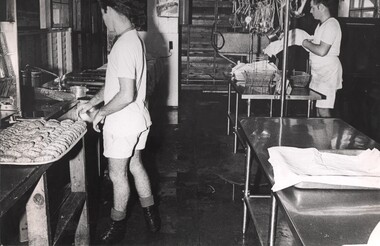
... A black and white photograph of two cooks from the Royal Australian Catering Corps preparing the evening meal for staff and patients at the 1st Australian Field Hospital, Vung Tau, South Vietnam. ...Photograph 1st Australian Field Hospital Vung Tau Royal Australian Catering Corps Gibbons Collection Catalogue Denis Gibbons Photographer Vietnam War Cooks A black and white photograph of two cooks from the Royal Australian Catering Corps preparing the evening meal for staff and patients at the 1st Australian Field Hospital, Vung Tau, South Vietnam. ...Denis Gibbons (1937 – 2011) Trained with the Australian Army, before travelling to Vietnam in January 1966, Denis stayed with the 1st Australian Task Force in Nui Dat working as a photographer. For almost five years Gibbons toured with nine Australian infantry battalions, posting compelling war images from within many combat zones before being flown out in late November 1970 after sustaining injuries. The images held within the National Vietnam Veterans Museum make up the Gibbons Collection.A black and white photograph of two cooks from the Royal Australian Catering Corps preparing the evening meal for staff and patients at the 1st Australian Field Hospital, Vung Tau, South Vietnam. Specialist meals were provided for some casualty and medical patients.photograph, 1st australian field hospital, vung tau, royal australian catering corps, gibbons collection catalogue, denis gibbons, photographer, vietnam war, cooks -
 National Vietnam Veterans Museum (NVVM)
Photograph, Gibbons, Denis, Preparing Evening Meal 2
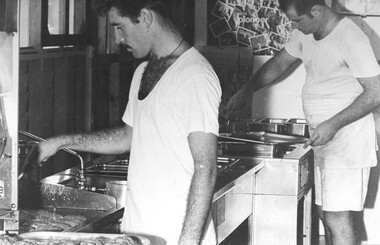
... A black and white photograph of the kitchen at the1st Australian Field Hospital, Vung Tau, South Vietnam. Cooks from the Royal Australian Army Catering Corps prepare the evening meal for hospital staff and patients....Photograph 1st Australian Field Hospital Vung Tau Royal Australian Catering Corps Gibbons Collection Catalogue Denis Gibbons Photographer Vietnam War Cooks A black and white photograph of the kitchen at the1st Australian Field Hospital, Vung Tau, South Vietnam. ...Denis Gibbons (1937 – 2011) Trained with the Australian Army, before travelling to Vietnam in January 1966, Denis stayed with the 1st Australian Task Force in Nui Dat working as a photographer. For almost five years Gibbons toured with nine Australian infantry battalions, posting compelling war images from within many combat zones before being flown out in late November 1970 after sustaining injuries. The images held within the National Vietnam Veterans Museum make up the Gibbons Collection. A black and white photograph of the kitchen at the1st Australian Field Hospital, Vung Tau, South Vietnam. Cooks from the Royal Australian Army Catering Corps prepare the evening meal for hospital staff and patients.photograph, 1st australian field hospital, vung tau, royal australian catering corps, gibbons collection catalogue, denis gibbons, photographer, vietnam war, cooks -
 National Vietnam Veterans Museum (NVVM)
Photograph, Gibbons, Denis, Preparing Evening Meal 3
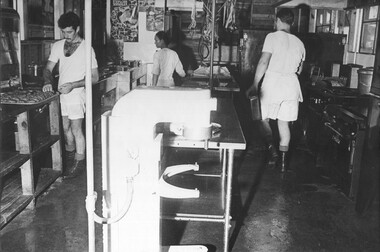
... Photograph 1st Australian Field Hospital Vung Tau Royal Australian Catering Corps Cooks Gibbons Collection Catalogue Denis Gibbons Photographer Vietnam War Catering Female Vietnamese Staff A black and white photograph of cooks, and female civilian Vietnamese kitchen staff person, preparing an evening at the 1st Australian Field Hospital, Vung Tau, South Vietnam. ...Denis Gibbons (1937 – 2011) Trained with the Australian Army, before travelling to Vietnam in January 1966, Denis stayed with the 1st Australian Task Force in Nui Dat working as a photographer. For almost five years Gibbons toured with nine Australian infantry battalions, posting compelling war images from within many combat zones before being flown out in late November 1970 after sustaining injuries. The images held within the National Vietnam Veterans Museum make up the Gibbons Collection. .A black and white photograph of cooks, and female civilian Vietnamese kitchen staff person, preparing an evening at the 1st Australian Field Hospital, Vung Tau, South Vietnam. As well as a standard menu for the Unit personnel, the cooks prepared special menus for the sick and wounded.photograph, 1st australian field hospital, vung tau, royal australian catering corps, cooks, gibbons collection catalogue, denis gibbons, photographer, vietnam war, catering, female vietnamese staff -
 Kiewa Valley Historical Society
Photographs - Tawonga District General Hospital - Set of 21
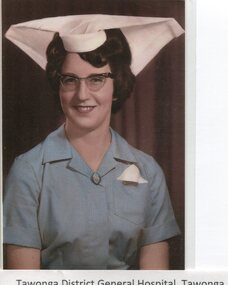
... In the early years Tawonga District General Hospital had the second highest birth rate in Australia; 9. The men’s ward catered for men only in the early years of the hospitals operation; 10. ...In the early years Tawonga District General Hospital had the second highest birth rate in Australia; 9. The men’s ward catered for men only in the early years of the hospitals operation; 10. ...In the early stages of the Kiewa Hydro-Electric Scheme the State Electricity Commission took over the financial and construction responsibility of the Tawonga District General Hospital building at a cost of 27,000 pounds. This included the removal and re-erection of the ex-military Bonegilla ward from Wodonga while in addition they carried out all the necessary building works that allowed the hospital to operate as a functional unit. The work was completed and handed over to the Hospital Committee of Management on September 1, 1949. Local residents raised 3,400 pounds through fund raising. The balance was met by the SEC and the Hospital and Charities Commission. The initial project was to provide for a basic temporary hospital which was later to include an Operating Theatre, Offices, Store, Mortuary and a Nurse’s Home, until the establishment of a permanent medical premises. Following the opening, 455 patients were admitted to the Tawonga District General Hospital and 254 operations were performed in the first year. The hospital relocated to Mount Beauty in the former SEC administration offices located in the town centre. Official opening of the 18 bed Tawonga District General Hospital on April 29 in 1961. Alpine Health CEO Mr Lyndon Seys oversaw the opening of the new Mount Beauty Hospital in November 2001 alongside Board of Management President Mr Andrew Randell, other board members and politicians. The Kiewa Hydro-Electric Scheme the State Electricity Commission played a pivotal part in the planning and initial funding of the Tawonga District General Hospital, with a view to providing medical support for its many workers on the Hydro scheme. Later, spouse and family members of workers were also able to access medical assistance The hospital was originally located in Tawonga away from the majority of the patients as the Hospital and Charities Board was not prepared to have it within the SEC controlled area. It was not until the gate at Tawonga South was taken down that the hospital was moved to the main centre of population at Mount Beauty. 1. Early nurses uniform; 2. Hospital Opening Ceremony; 3-7. Nursing Staff; 8. Delivery Room; 9. Mens Ward; 10.Enclosed Veranda; 11. Main Ward; 12-13. Kitchen; 14. Opening Ceremony 1949; 15.Original Hospital at Tawonga; 16-18. Relocated Hospital at Mt Beauty; 19. Rear of hospital and Matron’s quarters; 20. Hospital and Kiewa Valley House; 21. Renovated Hospital in 20001.Tawonga District General Hospital Tawonga; 2. Kiewa construction engineer Mr HHC Williams speaking at the opening of the hospital. Health Minister the Hon CP Gartside performed the official opening. L to R: TH Mitchell MLA; Manager of the hospital Mr RH Kronberg (obscured) Hon CP Gartside; CL McVilley; LT Knevitt; Matron AI Tarnish & W Sealey: 4. Dedicated Nursing Staff; 5. Nurse Campbell (nee Reid); 6. Sister Seager 1955 (nee Janice Burnett. First District Nurse; 7. L to R: Sister F Rosengrove; Sister J Griffiths; Matron AI Tarnish; Nurse D Satori; Nurse D Tregonning; Sister E Hill & Sister S O’Shannessy; 8. In the early years Tawonga District General Hospital had the second highest birth rate in Australia; 9. The men’s ward catered for men only in the early years of the hospitals operation; 10. The enclosed verandah at the original Tawonga District General Hospital allowed for an additional 10 beds; 11. Tawonga District General Hospital, Tawonga Main Ward. Ward ready and waiting for patients at Tawonga Hospital. Complete with lovely vases of flowers for every bed. Nice touch by the nurses; 12. Kitchen of Tawonga District General Hospital, Mt Beauty. The hospital kitchen provided meals for patients and a 3 course dinner for Meals on Wheels. In 1977, 11,795 meals were produced at an average cost of $2.60 per meal; 13. Tawonga District General Hospital, Tawonga. Kitchen. Kitchen staff employed in the old Tawonga District General Hospital 1949-1961; 14. The official opening ceremony of the Tawonga District General Hospital, 1949. The official ceremony was attended by a large number of residents and Tawonga District General Hospital was open for public inspection; 15. Original Tawonga District General Hospital transported form Bonegilla began operations in 1949; 16. In 1961, the Tawonga District General Hospital relocated to take a central position in the town of Mt Beauty in the former SEC Administration building; 19. The rear of the Tawonga District General Hospital and Matron’s house seen from Holland St, Mt Beauty during a snow storm in the mid 1960’s; 21. Tawonga District General Hospital & Kiewa Valley House, 2000. tawonga district hospital, mt beauty hospital, medical, health care, s.e.c. -
 Ballarat Tramway Museum
Slide - 27 mm sq slide/s - set of 5, Andrew Howlett, Tram 26 on private tour - View Point line, Mar. 1969
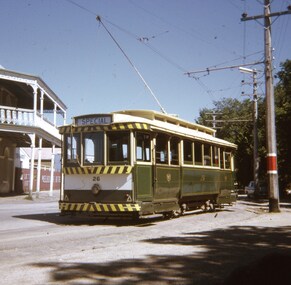
... Set of four Colour slides, Kodak white cardboard mount, developed March 1969 of a special tram that apparently ran from the depot via View Point, shunted at Ripon St and again at Hospital corner. ..1 - No. 26 running a special in Wendouree Parade, View Point, with the Lake View Hotel. .2 - ditto - and a catering company in the view, as well as a Telephone box. .3 - running from Ripon St into Sturt St. .4 - shunting at Hospital corner - then possibly crossed 34 at Parker St Loop - see 7668. .5 - ditto, but before .4, with the tram rounding the corner from the North side of Sturt St into Drummond St. ...Ballarat Tramways trams View Point Wendouree Parade Ripon St Hospital Corner Sturt St Tours tram 26 Set of four Colour slides, Kodak white cardboard mount, developed March 1969 of a special tram that apparently ran from the depot via View Point, shunted at Ripon St and again at Hospital corner. ..1 - No. 26 running a special in Wendouree Parade, View Point, with the Lake View Hotel. .2 - ditto - and a catering company in the view, as well as a Telephone box. .3 - running from Ripon St into Sturt St. .4 - shunting at Hospital corner - then possibly crossed 34 at Parker St Loop - see 7668. .5 - ditto, but before .4, with the tram rounding the corner from the North side of Sturt St into Drummond St. ...Yields information about a special tram service during March 1969 and some unusual moves.Set of four Colour slides, Kodak white cardboard mount, developed March 1969 of a special tram that apparently ran from the depot via View Point, shunted at Ripon St and again at Hospital corner. ..1 - No. 26 running a special in Wendouree Parade, View Point, with the Lake View Hotel. .2 - ditto - and a catering company in the view, as well as a Telephone box. .3 - running from Ripon St into Sturt St. .4 - shunting at Hospital corner - then possibly crossed 34 at Parker St Loop - see 7668. .5 - ditto, but before .4, with the tram rounding the corner from the North side of Sturt St into Drummond St. It would then appear that the tram then reversed a bit before going back into Sturt St onto the South side. One of a series of tour photos - see Reg item 7667, 7668, 7683 and 7701.ballarat, tramways, trams, view point, wendouree parade, ripon st, hospital corner, sturt st, tours, tram 26 -
 Sunshine and District Historical Society Incorporated
Film - James Hazewinkel Celebrating His 80th Birthday 1987 Video, 25th July 1987
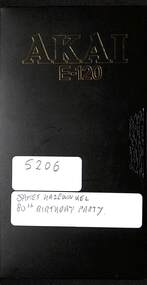
... Hospital, Melbourne - Burial: Melton Cemetery, Section 12, Compartment 5A, Grave 27 Family and Relationships. - Father of: Faye (and father‑in‑law of Kerry) - Grandfather of: Julie, Shayne, Belinda, Rebecca - Great‑grandfather of: Six great‑grandsons - Siblings: Albert, Adelaide, Harold (all deceased by 1999), and Emily - Close companion: Noel Nicholls, who cared for him for 20 years James Hazewinkel Hewson Street Melton Mr James Hazewinkel Born 26/7/1907 Celebrating his 80th Birthday at home 7 Hewson Street Melton on Saturday 25/7/1987 Catered by Mrs Larson and Noel Nicholls VHS Video Tape This tape has been digitaised. ...The video of Mr. James Hazewinkel celebrating his 80th birthday at his home, 7 Hewson Street, Melton. Identity and Life. - Full name: James Munro Hazewinkel - Born: 26 July 1907 - Died: 15 August 1999, aged 92 - Place of death: St Vincent’s Hospital, Melbourne - Burial: Melton Cemetery, Section 12, Compartment 5A, Grave 27 Family and Relationships. - Father of: Faye (and father‑in‑law of Kerry) - Grandfather of: Julie, Shayne, Belinda, Rebecca - Great‑grandfather of: Six great‑grandsons - Siblings: Albert, Adelaide, Harold (all deceased by 1999), and Emily - Close companion: Noel Nicholls, who cared for him for 20 yearsMr James Hazewinkel Born 26/7/1907 Celebrating his 80th Birthday at home 7 Hewson Street Melton on Saturday 25/7/1987 Catered by Mrs Larson and Noel Nichollsjames hazewinkel, hewson street, melton -
 Kew Historical Society Inc
Book, Allen & Unwin, Proper Care: Heidelberg Repatriation Hospital 1940s-1990s, 1994
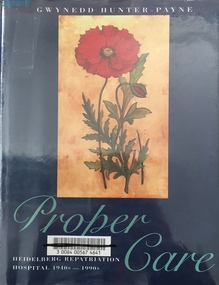
... Traces the story of the Heidelberg Repatriation Hospital from its creation in 1947 as an institution to cater exclusively to the needs of ex-service personnel. ...Traces the story of the Heidelberg Repatriation Hospital from its creation in 1947 as an institution to cater exclusively to the needs of ex-service personnel. Due to this limited ambit, despite its achievements and its status as a teaching hospital, both hospital and staff have had to battle for recognition from the general medical community.St. Leonards, N.S.W. : Allen & Unwin, 1994 xiii, 313 p. : ill., ports. ; 24 cm. non-fictionTraces the story of the Heidelberg Repatriation Hospital from its creation in 1947 as an institution to cater exclusively to the needs of ex-service personnel. Due to this limited ambit, despite its achievements and its status as a teaching hospital, both hospital and staff have had to battle for recognition from the general medical community.repatriation general hospital (heidelberg, veterans' hospitals -- victoria -- heidelberg -- history., teaching hospitals -- victoria -- heidelberg -- history. -
 Northern District School of Nursing. Managed by Bendigo Historical Society Inc.
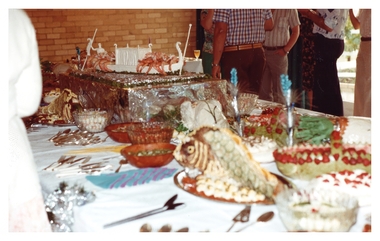
Photograph - Catering - the Banquet Staff Party, 8594.49, 1980s
... hospitals. The Northern District School of Nursing operated from Lister House, Rowan Street, Bendigo. It was the first independent school of nursing in Victoria and continued until it closed in 1989. NDSN Nursing lister house bendigo Six colour photos of a banquet for the Staff Party 8594.49 Photograph Catering ...The Northern District School of Nursing opened in 1950 in to address the issues around nurse recruitment, training and education that had previously been hospital based. The residential school was to provide theoretical and in-house education and practical training over three years. The students would also receive practical hands-on training in the wards of associated hospitals. The Northern District School of Nursing operated from Lister House, Rowan Street, Bendigo. It was the first independent school of nursing in Victoria and continued until it closed in 1989.Six colour photos of a banquet for the Staff Partyndsn, nursing, lister house, bendigo -
 Department of Health and Human Services
Photograph, Berry Street Kindergarten
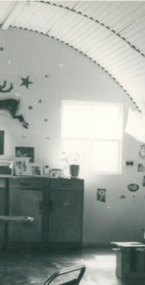
... In 1976 Berry Street made application to change its category 2 Children's Home classification to category 1, as it was now catering for a wider range of children. It had ceased to be a babies’ home and hospital, and had started providing child and family care, including residential care. ...In 1976 Berry Street made application to change its category 2 Children's Home classification to category 1, as it was now catering for a wider range of children. It had ceased to be a babies’ home and hospital, and had started providing child and family care, including residential care. ...In 1877 the Victorian Infant Asylum was founded in Kew. In 1881, the asylum relocated to Berry Street in East Melbourne. By 1908, it was called the Foundling Hospital and Infants Home. It was non-denominational and controlled by a committee of management. By 1956, Berry Street consisted of a Mothercraft Training Centre and two main residential units: Berry Street for infants aged zero to 18 months, and Vale Street for toddlers aged zero to two years old. In August 1956, Berry Street was declared an approved category 2 Children's Home. In 1960, Vale Street was converted to an adult nursing home. In 1964, the name was changed to Berry Street Babies Home and Hospital. Berry Street was also an approved adoption agency. By 1968, Berry Street comprised the Training School for Mothercraft Nurses, the adoption agency, an infant life-protection house, a long-stay home for children to three years of age (the toddlers’ wing) and a small house for unmarried mothers. The home's infant life-protection work was seen as a critical agency function, particularly where family illness was putting pressure on mothers and Berry Street was able to provide respite and support. By the late 1960s, 30–40 adoptions annually were being arranged from Berry Street. By 1974 the home's orientation had shifted. Four family group homes had been established (two in Burwood, one in Ashburton and one in St Kilda), the mothercraft training function had been phased out, the toddlers wing converted to day care, and the main building (containing the nursery, administration, kitchen, dining room and single mothers accommodation) was demolished in favour of four home units, which housed 24 children, supervised by cottage parents. Berry Street provided short term, emergency and residential care for 'protection of infant' cases and state wards. Two flats were also established for short-term family accommodation. The nurses’ home was converted to house the home’s administration function and a social work service. The social work service coordinated family aid and family counselling services, and a neighbourhood house. In 1975 Berry Street also provided short-term care for 42 Vietnamese children brought to Australia in the official government-sponsored airlift. In 1976 Berry Street made application to change its category 2 Children's Home classification to category 1, as it was now catering for a wider range of children. It had ceased to be a babies’ home and hospital, and had started providing child and family care, including residential care. In 1977 Berry Street to established a family group home in Richmond to house children affected by the closure of St Cuthbert's Children's Home in Colac. Berry Street changed its name to Berry Street Child and Family Care in 1977. In 1978, the range of services provided by Berry Street Child and Family Care consisted of a social work counselling service, a financial aide, a family aide program using volunteers, two temporary accommodation units each housing eight children, an information and referral service, a neighbourhood house in Richmond, a day care centre for 36 children, and four family group homes. In 1980–81 the family group homes in Burwood were sold and the resources moved to the Richmond area. In 1994, Sutherland Youth and Family Services Inc. amalgamated into Berry Street Inc. During the 1990s, Berry Street combined with the Sutherland Community Resource Centre in Watsonia in Melbourne’s northern region. The agency operates today as Berry Street Victoria and has service centres across metropolitan and country Victoria. https://www.findingrecords.dhhs.vic.gov.au/CollectionResultsPage/BerryStreet -
 Wodonga & District Historical Society Inc
Photograph - Hut 97 Bonegilla Migrant Experience
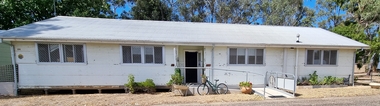
... catering services. From 1949 until 1965 the Bonegilla Reception and Training Centre operated without a military presence. Bonegilla Migrant Reception and Training Centre was made up of 24 blocks. It had its own churches, banks, sporting fields, cinema, hospital...catering services. From 1949 until 1965 the Bonegilla Reception and Training Centre operated without a military presence. Bonegilla Migrant Reception and Training Centre was made up of 24 blocks. It had its own churches, banks, sporting fields, cinema, hospital ...Bonegilla Army Base and Migrant Reception Centre began when funds were allocated to build Bonegilla Army Camp in June 1940. Builders began to erect about 600 huts prior to the Army moving in during September of that year. Between 1942 - 1943 it was enlarged to 848 buildings. In 1947 Bonegilla Reception and Training Centre began operating with the Army providing transport, security and catering services. From 1949 until 1965 the Bonegilla Reception and Training Centre operated without a military presence. Bonegilla Migrant Reception and Training Centre was made up of 24 blocks. It had its own churches, banks, sporting fields, cinema, hospital, police station and railway platform. It became the largest and longest operating reception centre in the post-war era. More than 300,000 migrants passed through its doors between 1947 and 1971, with most of those originating from non-English speaking European countries. From1965 with the increased Australian commitment to the Vietnam War and the need to find accommodation to train National Servicemen for Vietnam, the Army negotiated with the Department of Immigration to take over several blocks at Bonegilla. In 1971 the Reception Centre closed and the site reverted to the Army. After 1971 the Army undertook a major site redevelopment with the construction of Latchford Barracks as the Army Apprentice School. Later Latchford Barracks was redeveloped into part of the Army Logistic Training Centre. Between 1978 and 1982, nearly all of the centre was demolished in a major redevelopment. The new replacement buildings were formally opened as Latchford Barracks in 1983. Demolition of the buildings prompted calls for recognition of the site and the role it had played in Australia’s post-World War II Immigration program. After much discussion between the Department of Army and Heritage and local groups about the significance of the site, the Australian Heritage Commission proceeded with its listing on the Register of the National Estate. A Conservation Management Plan was prepared for Block 19 in 1996. The Army transferred Block 19 to the Victorian Government. In 2002 Heritage Victoria listed Block 19 on the State Heritage Register, giving attention to both the migrant and army connections with the site. Hut 97 at Bonegilla Migrant Experience is the home of the Wodonga & District Historical Society Inc.This image is significant because it records a building which is part of the Bonegilla Migrant Reception Centre which played a critical role as the largest and longest operating Migrant Reception Centre in Australia.A colour photo of Hut 97 at Block 19, Bonegilla Migrant Experience, now the home of Wodonga & District Historical Society Inc.hut 97 bonegilla migrant experience, wodonga & district historical society, immigration australia -
 Returned Nurses RSL Sub-branch
Book - Hardcover book, Gwynedd Hunter-Payne, Proper Care : Heidelberg Repartriation Hospital 1940s -1990s, 1994
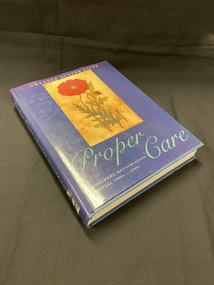
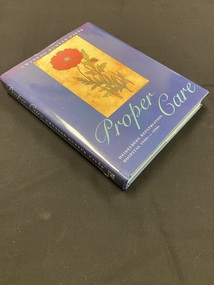
... Veterans hospitals Heidelberg Repartriation Hospital Teaching hospitals Repartriation General Hospital Heidelberg 'Proper Care traces the story of the Heidelberg Repartriation Hospital in Melbourne from its creation, when it took over the 115th (Heidelberg) Military Hospital in 1947. Catering exclusively to the needs of ex-service personnel, the 'Repat' as it is generally known, developed a strong sense of community among staff and patients. ...'Proper Care traces the story of the Heidelberg Repartriation Hospital in Melbourne from its creation, when it took over the 115th (Heidelberg) Military Hospital in 1947. Catering exclusively to the needs of ex-service personnel, the 'Repat' as it is generally known, developed a strong sense of community among staff and patients. Staff were often ex-service themselves, and for many years the hospital administration retained a strong military flavour.' - from inside dustjacket.Hardback book with a dark blue dustjacket. Along the spine the title is printed in light aqua script, followed by the printed text of the sub-title and author's name, there is a mark on the bottom of the spine where a sticker has previously been removed. The front shows an image of a red flower with some greenery set in a light brown rectangle, below which the title is again printed in light aqua script.non-fiction'Proper Care traces the story of the Heidelberg Repartriation Hospital in Melbourne from its creation, when it took over the 115th (Heidelberg) Military Hospital in 1947. Catering exclusively to the needs of ex-service personnel, the 'Repat' as it is generally known, developed a strong sense of community among staff and patients. Staff were often ex-service themselves, and for many years the hospital administration retained a strong military flavour.' - from inside dustjacket. veterans hospitals, heidelberg repartriation hospital, teaching hospitals, repartriation general hospital heidelberg -
 Returned Nurses RSL Sub-branch
Book - Hardcover book, Gwynedd Hunter-Payne, Proper Care : Heidelberg Repartriation Hospital 1940s -1990s, 1994
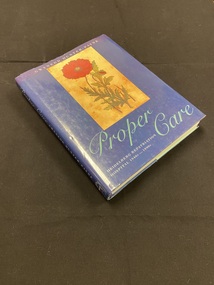
... Veterans hospitals Heidelberg Repartriation Hospital Teaching hospitals Repartriation General Hospital Heidelberg 'Proper Care traces the story of the Heidelberg Repartriation Hospital in Melbourne from its creation, when it took over the 115th (Heidelberg) Military Hospital in 1947. Catering exclusively to the needs of ex-service personnel, the 'Repat' as it is generally known, developed a strong sense of community among staff and patients. ...'Proper Care traces the story of the Heidelberg Repartriation Hospital in Melbourne from its creation, when it took over the 115th (Heidelberg) Military Hospital in 1947. Catering exclusively to the needs of ex-service personnel, the 'Repat' as it is generally known, developed a strong sense of community among staff and patients. Staff were often ex-service themselves, and for many years the hospital administration retained a strong military flavour.' - from inside dustjacket.Hardback book with a dark blue dustjacket. Along the spine the title is printed in light aqua script, followed by the printed text of the sub-title and author's name, there is a mark on the bottom of the spine where a sticker has previously been removed. The front shows an image of a red flower with some greenery set in a light brown rectangle, below which the title is again printed in light aqua script.non-fiction'Proper Care traces the story of the Heidelberg Repartriation Hospital in Melbourne from its creation, when it took over the 115th (Heidelberg) Military Hospital in 1947. Catering exclusively to the needs of ex-service personnel, the 'Repat' as it is generally known, developed a strong sense of community among staff and patients. Staff were often ex-service themselves, and for many years the hospital administration retained a strong military flavour.' - from inside dustjacket. veterans hospitals, heidelberg repartriation hospital, teaching hospitals, repartriation general hospital heidelberg -
 Returned Nurses RSL Sub-branch
Book - Hardcover book, Gwynedd Hunter-Payne, Proper Care : Heidelberg Repartriation Hospital 1940s -1990s, 1994
... Veterans hospitals Heidelberg Repartriation Hospital Teaching hospitals Repartriation General Hospital Heidelberg 'Proper Care traces the story of the Heidelberg Repartriation Hospital in Melbourne from its creation, when it took over the 115th (Heidelberg) Military Hospital in 1947. Catering exclusively to the needs of ex-service personnel, the 'Repat' as it is generally known, developed a strong sense of community among staff and patients. ...'Proper Care traces the story of the Heidelberg Repartriation Hospital in Melbourne from its creation, when it took over the 115th (Heidelberg) Military Hospital in 1947. Catering exclusively to the needs of ex-service personnel, the 'Repat' as it is generally known, developed a strong sense of community among staff and patients. Staff were often ex-service themselves, and for many years the hospital administration retained a strong military flavour.' - from inside dustjacket.Hardback book with a dark blue dustjacket. Along the spine the title is printed in light aqua script, followed by the printed text of the sub-title and author's name, there is a mark on the bottom of the spine where a sticker has previously been removed. The front shows an image of a red flower with some greenery set in a light brown rectangle, below which the title is again printed in light aqua script.non-fiction'Proper Care traces the story of the Heidelberg Repartriation Hospital in Melbourne from its creation, when it took over the 115th (Heidelberg) Military Hospital in 1947. Catering exclusively to the needs of ex-service personnel, the 'Repat' as it is generally known, developed a strong sense of community among staff and patients. Staff were often ex-service themselves, and for many years the hospital administration retained a strong military flavour.' - from inside dustjacket. veterans hospitals, heidelberg repartriation hospital, teaching hospitals, repartriation general hospital heidelberg
