
Showing 72 items matching "house furnishings"
-
 Bendigo Historical Society Inc.
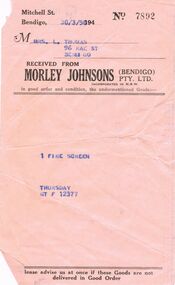
Document - MORLEY JOHNSONS RECEIPT, 30/03/1950
... ...house furnishings...BUSINESS Retail house furnishings Morley Johnsons Receipt: Pink paper with black print and blue ink. ...William Morley Johnson established a stock and general auctioneers business in Kyneton in 1886 before opening a furniture store in Bendigo in 1897. The initial business operated from Pall Mall opposite the Post Office and then moved to 23 Mitchell Street in 1898. In 1906 the business moved to Sydney. It became a public company in 1952 and ceased business in 1964.Morley Johnsons Receipt: Pink paper with black print and blue ink. Mitchell St. Bendigo. No. 7892. Dated 30/03/1950. To: Mrs Thomas, 95 Rae St, Bendigo Received from Morley Johnsons (Bendigo) Pty Ltd. Incorporated in N.S.W. in good order and condition, the undermentioned Goods:- 1 Fire Screen. Thursday GT F 12377. Please advise us at once if these goods are not delivered in Good order. Small tear left top. Box 625business, retail, house furnishings -
 Bendigo Historical Society Inc.
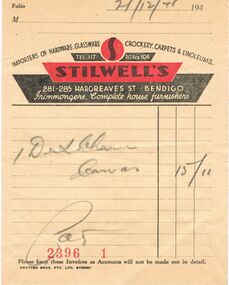
Document - STILWELL'S INVOICE, 21/12/1948
... ...house furnishings...The shop further developed and advertised as selling furniture, home furnishings and Hardware BUSINESS Retail house furnishings Stilwell's Pratten Bros. Pty. Ltd. ...Brothers Frederick and Ernest Stillwell opened a hardware and general ironmongery in Hargreaves St Bendigo in 1895. They were later joined by Roy Stillwell. The shop further developed and advertised as selling furniture, home furnishings and HardwareStilwell's Invoice: Cream Paper with black and red print, dated 21/12/1948. Invoice No. 2396 1. Importers of hardware, Glassware, Crockery, Carpets & Linoleums. Tel 117. P.O. Box 104. Stilwell's. 281-285 Hargreaves St. Bendigo. Ironmongers. Complete House Furnishers. Please keep these Invoices as Accounts will not be made out in detail. Box 625Pratten Bros. Pty. Ltd. Sydneybusiness, retail, house furnishings, stilwell's -
 Bendigo Historical Society Inc.
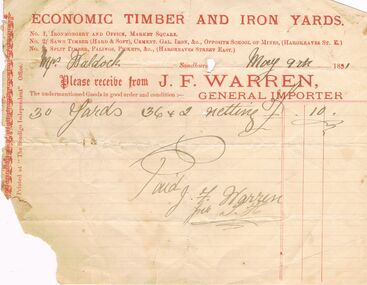
Document - J.F.WARREN INVOICE, 9/05/1891
... ...house furnishings...BUSINESS Retail house furnishings J.F. Warren. Mrs Waldock. Printed at 'The Bendigo Independent' Office. ...John Frederick Warren was born in England in 1834. After coming to Australia, he married Rebecca Baird in 1868. He initially tried his hand at mining before establishing his timber and iron works. He retired in 1902 and lived at "Bowden", Barnard Street, until his death 21/10/1912. Following his retirement, the business was continued by his son John Frederick Warren jnr (b. 1879).J.F.Warren Invoice: Cream paper with red print. Torn left bottom half. Economic Timber and Iron yards. NO. 1 Ironmongery and Office, Market Square. No 2 Sawn Timber (Hard & Soft), Cement. Gal. Iron. &c. Opposite School of Mines, (Hargreaves St. E.) No. 3 Split Timber, Palings, Pickets, &c. (Hargreaves Street East). To: Mrs Waldock. Sandhurst May 9th 1891. Please receive from J.F Warren, The undermentioned Goods in good order and condition:- General Importer. For 30 Yards 36 x 2 netting £10. Paid J.F.Warren per S. H. Box 625.Printed at 'The Bendigo Independent' Office.business, retail, house furnishings, j.f. warren. mrs waldock. -
 Bendigo Historical Society Inc.
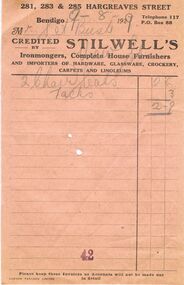
Document - STILWELL'S INVOICE, 09/08/1929
... ...house furnishings...The shop further developed and advertised as selling furniture, home furnishings and Hardware BUSINESS Retail house furnishings Stilwell's. S.A. Bush Lamson Paragon Limited Stilwell's Invoice: Pink paper with black print. ...Brothers Frederick and Ernest Stillwell opened a hardware and general ironmongery in Hargreaves St Bendigo in 1895. They were later joined by Roy Stillwell. The shop further developed and advertised as selling furniture, home furnishings and HardwareStilwell's Invoice: Pink paper with black print. Hole in the centre. No. 42 Dated 09/08/1929. 281,283 & 285 Hargreaves Street. Bendigo. Telephone 117. P.O. Box 88. Mr S.A. Bush. Credited by Stilwell's. Ironmongers, Complete House Furnishers and importers of hardware, Glassware, Crockery, Carpets and Linoleums. Invoice for 2 Chair Seats, Tacks. Please keep these Invoices as Accounts will not be made out in detail. Box 625Lamson Paragon Limitedbusiness, retail, house furnishings, stilwell's. s.a. bush -
 Bendigo Historical Society Inc.
Document - WILLIAM LUNN INVOICE, 30/04/1923
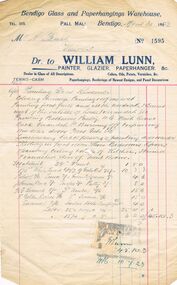
... ...house furnishings...BUSINESS Retail house furnishings William Lunn. A Bush William Lunn Invoice: Cream paper with navy print and red and light blue lines. ...William Lunn (1833-1916) was born i England where he learned cabinetmaking. He came to Australia in 1855 and initially partook in mining and puddling. He then became a salesman for Mr Henry King, painter and decorator. When King died in 1868, Lunn bought the business. In 1906 Lunn married the widow, Ann Jane Newman (nee Pinnell) . Ann and her first husband were neighbours of William Lunn who lived in "Esperence", Wills Street. Even whilst in business, Lunn remained an active mining investor.William Lunn Invoice: Cream paper with navy print and red and light blue lines. Dated April 30th 1923. Bendigo Glass and paper hangings Warehouse, TEL. 315 PALL MALL, Bendigo. Invoice no. 1595. Mr A Bush View Street. Dr. to William Lunn, Painter, Glazier, Paperhanger. &c. Dealer in glass of All Descriptions. Colours, Oils, Paints, Varnishes, &c. Terms - Cash. Paper hangings, Borderings of Newest designs, and panel Decorations. Invoice is for work to be carried out Painting etc, also lists materials and price. At the bottom is a orange Stamp Duty 2 pence stamp. Box 625business, retail, house furnishings, william lunn. a bush -
 Bendigo Historical Society Inc.
Document - WILLIAN LUNN INVOICE, 31/05/1923
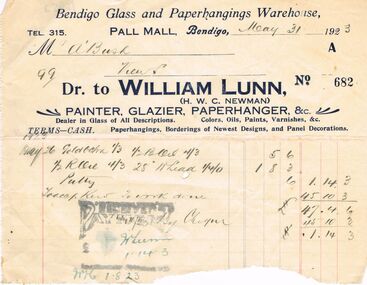
... ...house furnishings...BUSINESS Retail house furnishings William Lunn. A Bush William Lunn Invoice: Dated May 31st 1923 No 682. . ...William Lunn (1833-1916) was born i England where he learned cabinetmaking. He came to Australia in 1855 and initially partook in mining and puddling. He then became a salesman for Mr Henry King, painter and decorator. When King died in 1868, Lunn bought the business. In 1906 Lunn married the widow, Ann Jane Newman (nee Pinnell) . Ann and her first husband were neighbours of William Lunn who lived in "Esperence", Wills Street. Even whilst in business, Lunn remained an active mining investor.William Lunn Invoice: Dated May 31st 1923 No 682. . Cream paper with Navy Blue print, invoice is torn at the bottom. Bendigo Glass and Paperhangings Warehouse, Tel 315, PALL MALL, Bendigo. Mr A Bush, 99 View Strees. Dr to William Lunn (H.W. C. Newman) Painter, Glazier, Paperhanger, &c. Dealer in Glass of All descriptions. Colors, Oils, Paints, Varnishes, &c. Terms - Cash Paperhangings, Borderings of Newest Designs and Panel Decorations. Some items listed. Box 625business, retail, house furnishings, william lunn. a bush -
 Bendigo Historical Society Inc.
Document - MORLEY JOHNSON'S INVOICE, 27/09/1949
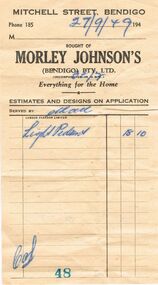
... ...house furnishings...BUSINESS Retail house furnishings Morley Johnson's Morley Johnson's Invoice: Cream coloured with Mitchell Street, Bendigo Phone 185 27/09/1949. ...William Morley Johnson established a stock and general auctioneers business in Kyneton in 1886 before opening a furniture store in Bendigo in 1897. The initial business operated from Pall Mall opposite the Post Office and then moved to 23 Mitchell Street in 1898. In 1906 the business moved to Sydney. It became a public company in 1952 and ceased business in 1964.Morley Johnson's Invoice: Cream coloured with Mitchell Street, Bendigo Phone 185 27/09/1949. Bought of Morley Johnson's (Bendigo) Pty Ltd. (Incorporated in N.S.W. Everything for the Home. Estimates and Designs on Application. Served By Mall for a light pendant. No 48. Box 625business, retail, house furnishings, morley johnson's -
 Bendigo Historical Society Inc.
Document - MORLEY JOHNSON'S INVOICE, 8/04/1949
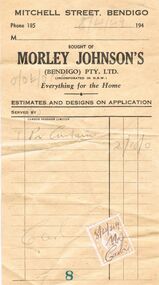
... ...house furnishings...BUSINESS Retail house furnishings Morley Johnson's. Morley Johnson's Invoice: Cream coloured with address Mitchell Street, Bendigo. ...William Morley Johnson established a stock and general auctioneers business in Kyneton in 1886 before opening a furniture store in Bendigo in 1897. The initial business operated from Pall Mall opposite the Post Office and then moved to 23 Mitchell Street in 1898. In 1906 the business moved to Sydney. It became a public company in 1952 and ceased business in 1964.Morley Johnson's Invoice: Cream coloured with address Mitchell Street, Bendigo. Phone 185. Dated 8/04/1949. Brought of Morley Johnson's (Bendigo) Pty Ltd. (Incorporated in N.S.W.) Everything for the Home. Estimated and Designs on application. Served By. Lamson Paragon Limited. Mustard Victorian Stamp Duty 2d stamp. Invoice no.8. Box 625business, retail, house furnishings, morley johnson's. -
 Bendigo Historical Society Inc.
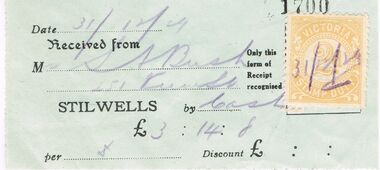
Document - STILWELLS RECEIPT, 31/12/1929
... ...house furnishings...BUSINESS Retail house furnishings Stilwell's. Mr S. A. Bush Stilwell's Receipt: green colour no. 1700 Date 31/12/29. ...Stilwell's Receipt: green colour no. 1700 Date 31/12/29. Received from Mr S. A. Bush. 251 View St. Stilwell's by Cash. It has a mustard 2d Victorian Stamp Duty Stamp. Box 625business, retail, house furnishings, stilwell's. mr s. a. bush -
 Bendigo Historical Society Inc.
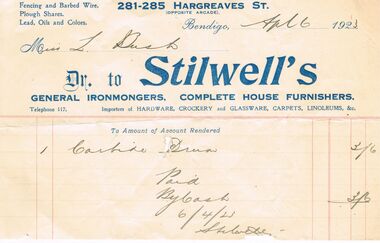
Document - STILWELL'S INVOICE, 1923
... ...house furnishings...BUSINESS Retail house furnishings Stilwell's Furnishers. Hargreaves Street Bendigo Stilwell's Invoice: Cream in colour with Fencing and Barbed Wire, Plough Shares. ...Stilwell's Invoice: Cream in colour with Fencing and Barbed Wire, Plough Shares. Lead, Oils and colors. 281-285 Hargreaves St. Bendigo April 6th 1923. Dr. to Stilwell's. General Ironmongers, Complete House Furnishers. Phone 117. Importers of Hardware, Crockery and Glassware, Carpets, Linoleums, &cc. Addressed to Miss L. Bush for 1 drum of Carbide.(used for lamps) Hole in the center of paper. Box 625business, retail, house furnishings, stilwell's furnishers. hargreaves street bendigo -
 Bendigo Historical Society Inc.
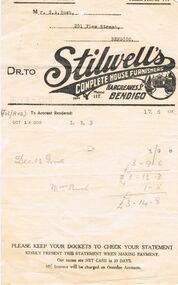
Document - STILWELLS STATEMENT, 1/11/1929
... ...house furnishings...BUSINESS Retail house furnishings Mr S. A. Bush. Stilwell's Complete House Furnishers. ...Stilwell's Statement: Monthly Statement Telephone 117. Cream paper with Mr S. A. Bush, 251 View Street Bendigo. Dr To Stilwell's Complete House Furnishers, Hargreaves St Bendigo. Underneath has a logo of a circle with a house. At the bottom it states the terms are Net Cash in 30 days. 10% Interest will be charged on Overdue Accounts. Dated Nov, 1st 1929. Box 625business, retail, house furnishings, mr s. a. bush. stilwell's complete house furnishers. -
 Kew Historical Society Inc
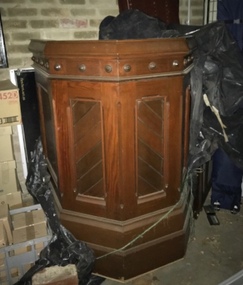
Furniture, Wooden Court Room Witness Box, 1880s
... ...court house furnishings...An original witness box from a Victorian Court House. kew court house court house furnishings Large and heavy wooden witness box from a Victorian court house. ...Witness Box, sourced during the period of renovation of the Kew Court House, believing that it was an original item of furniture from the building. Based on an examination of the woods in the item by heritage consultants, it was deemed not to be original to the building. As the item had been donated, the item could not be returned. For many years, it has been stored in teh basement of Kew Library.An original witness box from a Victorian Court House.Large and heavy wooden witness box from a Victorian court house.kew court house, court house furnishings -
 Bendigo Historical Society Inc.
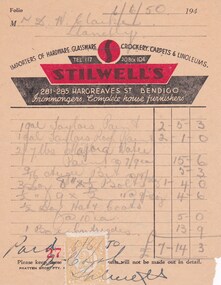
Document - DONALD CLARKE COLLECTION: STILWELL'S INVOICE
... Invoice from Stilwell's ironmongers and house furnishings, 281-285 Hargreaves Street, Bendigo Invoice printed in two colours....Invoice from Stilwell's ironmongers and house furnishings, 281-285 Hargreaves Street, Bendigo Invoice printed in two colours. ...Invoice for Mr D. W. Clarke dated 01/06/1950 ; for various hardware items for £7.14.03. Invoice from Stilwell's ironmongers and house furnishings, 281-285 Hargreaves Street, Bendigo Invoice printed in two colours.business, retail, stilwell's -
 Buninyong & District Historical Society
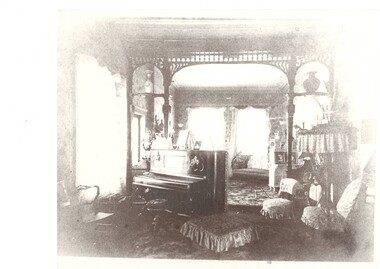
Photograph - Interior view of the drawing room at the Fisken home, Lal Lal, Interior of the Fisken home, Lal Lal
... House interior....Furnishings...House interior. Furnishings. Period decor. Piano and stool. ...Good, but faded and not a very sharp imagehouse interior., furnishings., period decor., piano and stool. -
 Ballarat Tramway Museum
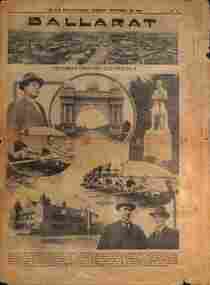
Newspaper - The Sun News Pictorial Supplement, Herald Sun, "Ballarat", 30/9/1924
... Page 13 - Civic Identities - A E Kenny, Frederick Brawn MLC, W R Elsworth, Frank Herman, Alex Bell MLC, notes on Ballarat Power supply ESCo and SECV - Yallourn vs local generation, and an advertisement for Tyler's men's clothing and house furnishings. Page 14 - Ballarat sports, Cr Robert Cooke, South St, Craigs Hotel, photo of Ballarat Woollen Mills, the observatory, and an advert for A M Heath, Booksellers, stationer. ...Page 13 - Civic Identities - A E Kenny, Frederick Brawn MLC, W R Elsworth, Frank Herman, Alex Bell MLC, notes on Ballarat Power supply ESCo and SECV - Yallourn vs local generation, and an advertisement for Tyler's men's clothing and house furnishings. Page 14 - Ballarat sports, Cr Robert Cooke, South St, Craigs Hotel, photo of Ballarat Woollen Mills, the observatory, and an advert for A M Heath, Booksellers, stationer. ...Newspaper supplement to The Sun News Pictorial, Tuesday 30/9/1924 - "Victoria Country Centres - No. 4". Has extensive notes on Ballarat, its history, civic history, and personalities. or figures. Page 11 - photo from the Town Hall, Avenue of Honour Arch, rowing, Hospital including W J Hoare, R H Ramsey of the Ballarat Cricket Association, Mr Charlie Suffren, J R Jopling, R W Todd. Page 12 - Ballarat and district history, industry, statistics, School of Mines. Has a photo of the Lydiard St Methodist church. Page 13 - Civic Identities - A E Kenny, Frederick Brawn MLC, W R Elsworth, Frank Herman, Alex Bell MLC, notes on Ballarat Power supply ESCo and SECV - Yallourn vs local generation, and an advertisement for Tyler's men's clothing and house furnishings. Page 14 - Ballarat sports, Cr Robert Cooke, South St, Craigs Hotel, photo of Ballarat Woollen Mills, the observatory, and an advert for A M Heath, Booksellers, stationer. Page 15 - Advert for Barlow Motors, Mining exchange building, Buick and Vauxhall motor cars Page 16 - South St competition adverts, schools, Mayor Levy, W J Coghlan, railway and wheat traffic, Myer's woollen mill, J T Walker furniture. Page 17 - advert to T M Burke - real estate - Forest St estate Page 18 - photos of the Executive's office, the Water Board - F Brown, A Farrer, W Brazenor, J C Fletcher, F W Saunders and G M Searle. Football league - A A O'Dea, W R Elsworth, J R Cooke, Cr F Besemeres. Brind's Diestillery of Dunnstown - Frank Brind and Harold Gill. W Ware boxing. Photos of St Andrew's Kirk and live livestock market with Graeme Dowling, Gold diggings. Page 19 - Council officers - G F Morton, A Levy, H Finch, J Pascoe, C J Liddiard, W McIntosh, W P Pryor and E R Marchani. South St Society W W Harris, W H Pearson, W S Sampson, A A King, F J Martell, F S Herman, A A O'Dea. Photos of Woollen mill, Sunshine biscuits, Ballarat Water pipe, Golf Club, Ballarat High School, Bridge St with tram and Golden Point monument. Page 20 - notes on racing, red cross - Mrs James Coghlan, fire brigade, sewerage scheme. Photo of Ballarat Freezing Co meat works with adverts for Craig's Hotel and the Ballarat Trustees Executors & Agency Co. Page 21 - General items re Tylers, city of statues, George Hotel, Barlow's cars, Eva Chemist, Dr W A Spring - racing, with an advert for Millers the Clothiers, Page 22 - Ballarat streets, Adam Lindsay Gordon cottage in grounds of Craig's Hotel, Miller's clothing store, with adverts for the Annual Spring agricultural show, and EVA's pharmacy. Page 23 - Photo of Sturt and Lydiard St with two trams, one possibly 13 in an accident with a motor car, photos of McDonald gates, Loreto Abbey with a racing people - Dave Barry, C L Fox, andHarry McGoldrick. Has adverts for Gribble suits and J T Walker furnishers. Page 24 - notes on real estate, stock agents, with photos of Miss McDonald of Red Cross, Mr and Mrs James Allan, Mr H H Osborne, and an advert for Sunshine Biscuits. Page 25 - Photos of the School of Mines, Orphanage, football crowd and Miss D Balten and Miss K Kennedy tennis with adverts for Macleod and Booth stock and station agents and The George Hotel. Page 26 - advert for Melbourne Sub-division company - Capitol House Melbourne.Yields information about Ballarat, its civic history, and personalities in 1924.Newspaper, 16 printed pages with photographs.ballarat, ballarat history, civic history, tramways, accidents -
 Eltham District Historical Society Inc
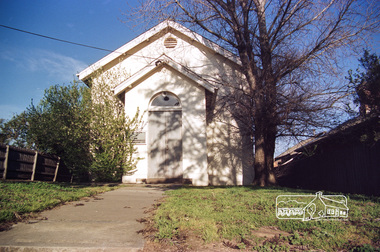
Photograph, Doug Orford, Eltham Courthouse, 730 Main Road, Eltham, 1985, 1985
... This building is a fine example of a very early small brick country court house which retains its furnishings and has important associations with the early history of the Eltham township. ...This building is a fine example of a very early small brick country court house which retains its furnishings and has important associations with the early history of the Eltham township. ...This building is a fine example of a very early small brick country court house which retains its furnishings and has important associations with the early history of the Eltham township. It was used for Eltham Road Board meetings in the 1860s and later to provide additional school accommodation. It is the oldest public building remaining in Eltham and forms an important group in historic and streetscape terms with the adjoining former police residence. The survival of the furnishings (of unknown origins) is of particular significance given the building's age. This building, and the former police residence beside it, were constructed as a result of a petition by five Eltham residents in 1857. The nearest police were at Heidelberg eight miles away or at the Caledonia Diggings 21 miles away. After the construction of the Court of Petty Sessions at Eltham in 1859-60 (which was designed by the Public Works Department and built by a Mr Duncan for a cost of 536 pounds), it was used for a variety of purposes. Eltham Road Board meetings were held there until 1868 when the board was transferred to Kangaroo Ground and as the Road Board Secretary's office, until this was transferred to Wingrove Cottage in 1867. It was used as an overflow for the Dalton Street School in 1875. According to National Trust records, the Eltham Court House is a relatively rare building type. There are only six other known examples of similar small brick country court houses in the state which have small projecting entry porches and a gabled form. Roll of 35mm colour negative film, 7 stripsFuji 100Neltham, eltham courthouse, main road -
 Flagstaff Hill Maritime Museum and Village
Photograph - Historical, religious, mid-20th century
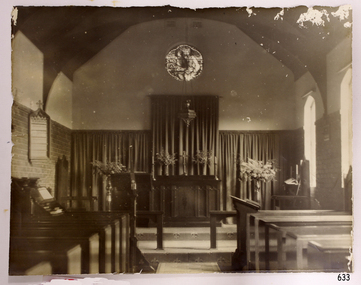
... house social and worshipful activities for seamen. Flagstaff Hill’s curator, Mr Ken Marshman, approached the Melbourne Board of Management of Missions to Seamen regarding the Williamstown branch. Consequently, the Board permitted the furnishings...house social and worshipful activities for seamen. Flagstaff Hill’s curator, Mr Ken Marshman, approached the Melbourne Board of Management of Missions to Seamen regarding the Williamstown branch. Consequently, the Board permitted the furnishings ...This photograph records the interior of St Nicholas Seamen's Church at 139 Nelson Place, Williamstown, Victoria, which was purchased and furnished around 1943. The furniture and furnishings are now part of the St. Nicholas Seamen's Church collection. HISTORY of the Missions to Seamen: - DETAILED HISTORY of the Missions to Seamen: - The Missions to Seamen is an Anglican (Church of England) charity that has served the world’s seafarers since 1856. It was inspired by the work of Rev. John Ashley, who, 20 years earlier, had pioneered a ministry to seafarers in the Bristol Channel in Great Britain. When Ashley retired, others continued the work, founding the Missions to Seamen. It adopted a Flying Angel as its symbol, inspired by a verse from the Bible in Revelation 14. Today, over 200 world ports have Missions to Seamen centres and chaplains. A Missions to Seamen’s Club warmly welcomes sailors of all colours, creeds and races and provides a wide range of facilities. The Missions to Seamen organisation changed its name to the Mission to Seafarers in 2000, continuing to include Missions to Seamen clubs in Victoria’s cities of Melbourne, Portland, Geelong and Hastings. Flagstaff Hill’s St Nicholas’ Seamen’s Church is named after its namesake from Williamstown, Victoria, which began in 1857. Bishop Perry opened the first Sailors’ Church there, known as ‘Bethel’, on an old hulk floating in Hobson’s Bay, Port of Melbourne. In 1860, a Sailors’ Rest started operating from rented premises in Williamstown. In 1878, the Sailors’ Church moved into an old Wesleyan chapel in Ann Street. By the end of that year, they managed to purchase the building, which they had already refurbished. In 1883, they affiliated with the Victorian Seamen’s Mission. A few years later, in 1906, the building had to be demolished because it was no longer safe. While they raised funds for a new building, the Sailors’ Rest temporarily moved to premises in front of Customs House in Nelson Place. Around this time, in 1906, the Ladies Harbour Lights Guild was formed in Australia to support and raise funds for the Mission to Seamen organisation in Melbourne. Two of the most significant ladies of the Guild were founding members Ethel Godfrey and Alice Sibthorpe. During the Mission's time at Siddeley Street, Melbourne, the activities of the Guild raised funds for the Mission to Seamen's Chapel at their new, and still current, premises in Flinders Street, Melbourne, opened in 1917. The Guild continued its important work until the 1960s. In 1908, the Williamstown Mission had enough money to purchase the former Mascotte skating rink on Thompson Street, Williamstown. In August of that year, they were inaugurated into the Victorian Missions to Seamen. They continued at that venue for a few decades. In 1943, the former ES&A Bank building at 139 Nelson Place, Williamstown, was purchased to become the new Mission to Seamen’s Club. On May 6th, 1944, it was officially opened, described as a ‘distinctive little building’. Funds had previously been raised for the building and furnishing of the chapel at the rear. The chapel was named St Nicholas’ Seamen’s Church, after St Nicholas, fourth-century bishop and patron saint of sailors. Services were held on Wednesdays and Sundays. The church was supported by the Williamstown Lightkeepers’ Auxiliary, newly founded by Mrs Ethel Margaret Musther in 1943, as well as the Harbour Lights Guild and the League of Soldiers’ and Sailors’ Friends. The Williamstown Mission to Seamen’s Church operated until 1966, when large international ships no longer used the Port of Williamstown. The Commonwealth Government then leased the premises. In the formative years of Flagstaff Hill Maritime Village, the Advisory Board decided to include a Missions to Seamen Chapel and Recreation Room in its village. The Missions organisation was a significant feature of ports during the late 1800s and early 1900s, the period that the Village represents. They often erected Missions to house social and worshipful activities for seamen. Flagstaff Hill’s curator, Mr Ken Marshman, approached the Melbourne Board of Management of Missions to Seamen regarding the Williamstown branch. Consequently, the Board permitted the furnishings of the Williamstown chapel to be transferred to Flagstaff Hill Maritime Village. A provision of the transfer was that the Victoria Missions to Seamen be recognised, that the items would remain as a collection, and that the chapel would be called St Nicholas Seamen’s Church and conduct Divine services. The donation was approved on 21st May 1979. Flagstaff Hill's St. Nicholas Seamen's Church: - The idea behind Flagstaff Hill’s Missions to Seamen’s Church was partly driven by the offer of Stained Glass Memorial Windows that originated from the Warrnambool and District Base Hospital, which was undergoing multi-storey expansion in the late 1960s and early 1970s. The hospital’s Manager/Secretary was eager to see the historic window installed in a suitable place. The church, or chapel, was designed by a local architectural draftsman in collaboration with the Flagstaff Hill Planning Board and was constructed by Mr Leon Habel. The designers hoped that the church would be used for formal worship such as weddings, funerals, and multi-denominational special services like war commemorations. The design is inspired by the ‘Missions to Seamen’ buildings in Portland and the Port of Melbourne. The furniture and furnishings were placed as accurately as possible according to photographs of the Williamstown St Nicholas Seamen’s Church and with assistance from local clergy. The Recreation Room was furnished and arranged on advice from experienced members of the Missions to Seamen organisation. A framed document in the building recognises the donor of the furnishings, Victoria Missions to Seamen, and includes the names of some original donors and their donated item/s. The building’s design incorporates local features such as Warrnambool sandstone, which was no longer commercially available but was procured from demolished buildings and uniformly cut to use as a veneer over the stronger Mt. Gambier stone. Also, traditional green American roofing slate was used, sourced from the 1908 local shipwreck “Falls of Halladale” by Flagstaff Hill volunteer divers. The bell tower includes a bell believed to be from a local shipwreck. Additional furnishings were acquired locally, along with several items donated by Warrnambool residents. Light fittings in both rooms were assembled to simulate 19th-century gas light fittings. The stained-glass window at the back of the church is a memorial to Dr Connell, a well-respected member of the Warrnambool community. It was originally installed in 1928 in the main building of Warrnambool Hospital. The St Nicholas’ Seamen’s Church at Flagstaff Hill was officially opened by His Worship the Mayor, Cr. John Lindsay, on Sunday, 11th October 1981. The event included a service of thanksgiving conducted by the Warrnambool Ministers Fraternal. Since then, the Chapel has been the historic venue for many weddings. This photograph is significant through its association with the St Nicholas' Mission to Seamen Church in Williamstown, Melbourne, established in 1857. The building in the photograph is the former English, Scottish and Australian Bank (ES&A bank), also known as the Mission to Seamen. It is listed on the Victorian Heritage Database for having local historic and aesthetic interest. Photograph of St Nicholas Seamen's Church, Williamstown. Sepia photograph. The photograph shows the inside of the Chapel of Mission to Seamen, including organ, pews and other furniture and furnishings. There is a circular stained glass window high on the back wall depicting a sailor at the helm of a ship and a man standing behind him and pointing the way - "Christ Showing The Helmsman The Way". A Sanctuary Light is suspended from the ceiling. The Sanctuary chars are visible. This shows the St Nicholas Seamen's Church in Williamstown, the furnishings and furniture of which is now part of the St Nicholas Seamen's Church Collection’.flagstaff hill, warrnambool, shipwrecked-coast, flagstaff-hill, flagstaff-hill-maritime-museum, maritime-museum, shipwreck-coast, flagstaff-hill-maritime-village, st nicholas mission to seamen's church williamstown, mission to seamen williamstown, mission to seamen victoria, st nicholas mission to seamen, chapel window, christ showing the helmsman the way, stained glass window, st nicholas seamen's church, religion, religious service, sailor's rest, ladies harbour light guild -
 Flagstaff Hill Maritime Museum and Village
Artwork, other - Window, circa 1928
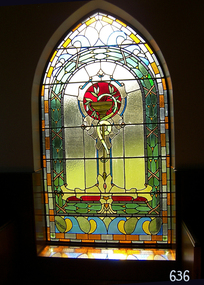
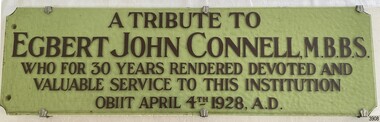
... house social and worshipful activities for seamen. The materials used in the building include sandstone recycled from nineteenth-century buildings demolished in Warrnambool and American slate tiles retrieved from the 1908 wreck of the FALLS OF HALLADALE. Most of the chapel furnishings...house social and worshipful activities for seamen. The materials used in the building include sandstone recycled from nineteenth-century buildings demolished in Warrnambool and American slate tiles retrieved from the 1908 wreck of the FALLS OF HALLADALE. Most of the chapel furnishings ...This religiously themed window is situated in the western (weather) wall of the St. Nicholas Mission to Seamen’s Church building in the Flagstaff Hill Maritime Village. It was crafted circa 1928. ABOUT THE WINDOW This window, once known as the Dr Connell Memorial Window, was a feature of an external wall adjacent to the Women’s Children’s Wards of Warrnambool Hospital. Honorary Doctors had played a significant role in the operation of the hospital between the years 1900 to 1939. One of these doctors was Dr. Connell, who passed away in 1928. The green glass plaque is also a registered object in Flagstaff Hill's Collection. Its inscription dedicates the window to Dr. Connell. The inscription reads: “A tribute to Egbert John Connell M.B.B.S. who for 30 years rendered devoted and valuable service to this institution. Obiit April 4th 1928 A.D." A paragraph in the book ‘A History of the Warrnambool Base Hospital’ by Forth and Yule describes the role of the Honorary Doctors - “At the start of the period the senior-part time medical officer was replaced by the junior resident medical officer and control of beds and the right to operate were given to the honorary medical officers...and these men dominated the Warrnambool medical world in the years before the Second World War.” Dr. Connell leased ‘Ambleside’, 192 Koroit Street, in the early 20th century, following Dr Teed who had previously run his medical practice there. In 1914 Dr Connell purchased the property and continued his private practice there until his death in 1928. He also took a prominent part in hospital work, both as physician and surgeon, and often acted as spokesmen for the Honorary Doctors. According to colleague Dr. Horace Holmes’ subsequent notes, it was after the close of the First World War, and the following years of the world-wide pneumonic influenza epidemic, that Dr. Connell himself contracted pneumonia and died. His family and friends then recognised his work by gifting the memorial window in his honour to the Hospital. By the mid-1970s the old wards at the hospital had been replaced and there was no obvious place for the window. Discussions between the previous and past Hospital managers, the Anglican Diocese, and Flagstaff Hill Planning Board, led to its installation in its present position in St Nicholas Seamen’s Church and the memorial plaque was later installed beside the window. St NICHOLAS SEAMEN’S CHURCH, Anglican Church Flagstaff Hill’s Mission to Seamen was opened in 1981. Its conception was partly motivated by the offer of Stained Glass Memorial Windows from the local Warrnambool and District Base Hospital, which was undergoing multi-storey development in the late 1960’s and early 1970’s. The Manager/Secretary at the time was keen to see the historical windows installed in an appropriate location. The chapel was designed by a local architectural draftsman in conjunction with members of the Planning Board of Flagstaff Hill, and built by Mr Leon Habel. The vision of the designers included the hope that the church be used for formal worship such as weddings and funeral, and for multi-denominational special services such as War commemorations. The design is based on the ‘Mission to Seamen’ buildings in both Portland and Port Melbourne. These types of buildings were often erected to house social and worshipful activities for seamen. The materials used in the building include sandstone recycled from nineteenth-century buildings demolished in Warrnambool and American slate tiles retrieved from the 1908 wreck of the FALLS OF HALLADALE. Most of the chapel furnishings came from the Williamstown Missions to Seamen, which was consecrated in 1946 but later decommissioned. These artefacts range from the altar cloth to the hymn board and include a visually stunning round stained glass widow called ‘Christ Guiding the Helmsman’. However the provenance of this particular artefact, large western window, is local. This stained glass memorial window is of local, historical and social significance, linking local history and heritage with one of Warrnambool's doctors, Dr. Egbert John Connell (d. 1928), who gave 30 years of dedicated, medical service to the local citizens.Stained glass leadlight window in Gothic arched metal frame with six horizontal reinforcing rods. Image depicts a golden flat-bowled baptismal font on a slender stand with foliage proceeding from it. The image is internally framed by a Roman arch of coloured glass and surrounding rectangular and breaking-wave shapes. (The window was previously known locally as the Dr. Connell Memorial Window and a plaque dedicated to Dr. Connell is catalogued separately. See Context notes for details.)flagstaff hill, warrnambool, shipwrecked coast, flagstaff hill maritime museum, maritime museum, shipwreck coast, flagstaff hill maritime village, great ocean road, chapel window, stained glass window, warrnambool and district base hospital, st nicholas mission to seamen’s church, williamstown mission to seamen, dr egbert connell, ambleside warrnambool, leon habel builder, falls of halladale slate, memorial window, commemorative window, dr connell -
 Flagstaff Hill Maritime Museum and Village
Print - Religious Print, Reinthal & Newman, Jesus Chrisus, ca 1906 - 1960s
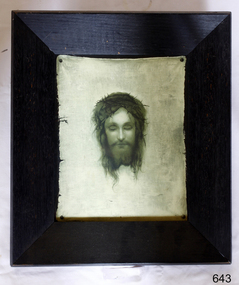
... House of Art...Williamstown Lighthouse Keepers' Auxiliary...Flagstaff Hill Maritime Museum and Village...Maritime Museum...Maritime Village...Shipwreck Coast...Great Ocean Road...worship service...St Nicholas Seamen’s Church...Williamstown...St Nicholas Missions to Seamen’s Church Williamstown...Missions to Seamen...St Nicholas Missions to Seamen’s Church Flagstaff Hill...Anglican church...church furnishings...House of Art, NY, which continued into the 1950s. The print was donated by the Williamstown Lightkeepers' Auxiliary to become part of the original furnishings of St Nicholas Seamen's Church, Williamstown, Victoria. ...House of Art, NY, which continued into the 1950s. The print was donated by the Williamstown Lightkeepers' Auxiliary to become part of the original furnishings of St Nicholas Seamen's Church, Williamstown, Victoria. ...Print of an original oil painting created in 1874 (these numbers are in the top left corner) by artist Gabriel Max ("Gab Max" is in the top right corner) and reproduced by Kodak. The reproduction was likely made for the Mission to Seamen from the early 1906 to the 1960s to hang in its chapel. The publisher Reinthal & Newman, New York, was in business between 1906 and 1928. The company originally published postcards, but from 1920, it published prints of art from original works of famous and not-so-well-known artists. The published items were distributed by the House of Art, NY, which continued into the 1950s. The print was donated by the Williamstown Lightkeepers' Auxiliary to become part of the original furnishings of St Nicholas Seamen's Church, Williamstown, Victoria. The church was operated by the Mission to Seamen organisation. THE MISSIONS TO SEAMEN (Brief History): - The Missions to Seamen was an Anglican charity in Great Britain that has served the world's seafarers since 1856. Its symbol is a Flying Angel, inspired by a Bible verse. Today, there are centres in over 200 ports worldwide where seamen of all backgrounds are offered a warm welcome and provided with a wide range of facilities. In Victoria, the organisation began in Williamstown in 1857 as a Sailors’ Church, also known as ‘Bethel’ or the ‘Floating Church’ in an old hulk floating in Hobson’s Bay, Port of Melbourne. It soon became part of the Missions to Seamen, Victoria. In 2000, the organisation, now named Mission to Seafarers, still operated locally in Melbourne, Portland, Geelong and Hastings. The Ladies’ Harbour Lights Guild was formed in 1906 to support the Missions to Seamen in Melbourne and other centres, such as Williamstown. Two of the most significant ladies of the Guild were founder Ethel Augusta Godfrey and foundation member Alice Sibthorpe Tracy (who established a branch of the Guild in Warrnambool in 1920). The Guild continued its work until the 1960s. In 1943, a former Williamstown bank was purchased for the Missions to Seamen Club. The chapel was named St Nicholas’ Seamen’s Church and was supported by the Ladies’ Harbour Lights Guild, the Williamstown Lightkeepers’ Auxiliary and the League of Soldiers’ and Sailors’ Friends. It ceased operation in 1966. A Missions to Seamen Chapel and Recreation Room was a significant feature of ports during the late 1800s and 1900s. It seemed appropriate for Flagstaff Hill to include such a representation within the new Maritime Village, and the Melbourne Board of Management of Missions to Seamen Victoria gave its permission on 21st May 1979 for the entire furnishings of the Williamstown chapel to be transferred to Flagstaff Hill. The St Nicholas Seamen’s Church was officially opened on October 11, 1981, and resembles the Williamstown chapel. The print is significant because of its association with the Mission to Seamen in Williamstown, Victoria, and the Williamstown Lightkeepers' Auxiliary. This organisation had strong connections to the colonisation of Victoria by people travelling and arriving by sea. The picture is also significant as a representation of 19th-century religious art by Gabriel Cornelius von Max.Print of an oil painting representing Jesus Christ, closed eyes, tear on cheek, with a crown of thorns, titled “Jesus Christus”, produced in 1874 by 19th-century artist Gabriel Cornelius von Max (GAB MAX). Print on paper; black and grey drawing on beige canvas-look background with image of fixing pins in each corner, edges look like torn fabric. Published by Reinthal & Newman, New York. Print is behind glass, mounted in a heavy wooden frame that is painted dark brown. The reverse has numbers on a small white label. The base of the reverse has two small holes, each with indentations from something round. The backing board has indentations from nails no longer there. There are remnants of the original hanging wire, but this has been replaced. Part of the St Nicholas Seamen's Church Collection.FRONT: Top left :1874” Top right “GAB MAX” [Gabriel Cornelius von Max] Handwritten script under the picture “Jesus Christus”. Printed bottom left on front “A33 © REINTHAL & NEWMAN PUBS. N.Y.” REVERSE: “162” written in black felt pen on white label. Pencilled on reverse "11 3/8 x 9 1/4" and "Kodak" and other indecipherable markings.flagstaff hill, warrnambool, shipwrecked-coast, flagstaff-hill, flagstaff-hill-maritime-museum, maritime-museum, shipwreck-coast, flagstaff-hill-maritime-village, christian art, picture of jesus christ, jesus christus, photographic print of jesus christ, missions to seamen victoria, mission to seafarers, flying angel’s club, religious worship, reinthal & newman new york, jesus christ with crown of thorns, religion, religious service, sailors rest, bethel sailors’ church, bethel floating church, ladies harbour light guild, harbor lights guild, joy club for fighters, ladies lightkeepers’ auxiliary, st nicholas mission to seamen church williamstown, mission to seamen williamstown, st nicholas seamen’s church flagstaff hill, 139 nelson place williamstown, print, religious print, jesus christ, 1874, 19th century artist, gabriel cornelius von max, gab max, gabriel max, reinthal & newman, oil painting, st nicholas seamen's church, a33 © reinthal & newman pubs. n.y., kodak, house of art, williamstown lighthouse keepers' auxiliary, flagstaff hill maritime museum and village, maritime museum, maritime village, shipwreck coast, great ocean road, worship service, st nicholas seamen’s church, williamstown, st nicholas missions to seamen’s church williamstown, missions to seamen, st nicholas missions to seamen’s church flagstaff hill, anglican church, church furnishings, religious furnishings -
 Flagstaff Hill Maritime Museum and Village
Coat rack
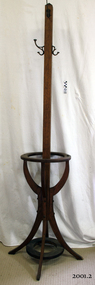
... The front hall was the introduction to the house, and as such was an important part of the Victorian home. Furnishings were selected not only to make it a useful place to hang a hat and coat, store an umbrella and leave a calling card but also to show family wealth, social position and knowledge of current styles. ...The front hall was the introduction to the house, and as such was an important part of the Victorian home. Furnishings were selected not only to make it a useful place to hang a hat and coat, store an umbrella and leave a calling card but also to show family wealth, social position and knowledge of current styles. ...A hat coat and umbrella stand is a device used to store hats and often coats on, and umbrellas within. Some catalogues in Europe marketed this furniture as a portmanteau from the French words Porter (carry) and Manteau (cloak). The front hall was the introduction to the house, and as such was an important part of the Victorian home. Furnishings were selected not only to make it a useful place to hang a hat and coat, store an umbrella and leave a calling card but also to show family wealth, social position and knowledge of current styles. A hall stand or a hat rack was the most important piece of furniture in homes at this time. New and more elaborate designs began to appear about 1840, as homes became larger and social visits became more structured. Usually made of wood and standing at least 1.5 meters tall, they have a single-pole making up most of the height, with a sturdy base to prevent toppling, and an array of lengthy pegs or hooks at the top for placement of hats. Smaller houses had smaller front halls, so a single-pole type as by the 1920s houses had become smaller. A household furniture item possibly from the 1920s that was common in houses from the early 1840s, it's significance is social, demonstrating how furniture trends change over time with the more elaborate the item the more social standing was attributed to the owners' position in society. even today persons association and ownership with inanimate objects tend to represent their social standing along with their financial and community acceptability. Coat rack with four curved legs, circular holder for umbrellas and walking sticks. Four metal hooks, screwed onto main column of stand. Condition: one curved leg broken. 2 hooks broken.Noneflagstaff hill, warrnambool, shipwrecked-coast, flagstaff-hill, flagstaff-hill-maritime-museum, maritime-museum, shipwreck-coast, flagstaff-hill-maritime-village -
 Flagstaff Hill Maritime Museum and Village
Plaque - Commemorative, circa 1928
... house social and worshipful activities for seamen. The materials used in the building include sandstone recycled from nineteenth-century buildings demolished in Warrnambool and American slate tiles retrieved from the 1908 wreck of the FALLS OF HALLADALE. Most of the chapel furnishings...house social and worshipful activities for seamen. The materials used in the building include sandstone recycled from nineteenth-century buildings demolished in Warrnambool and American slate tiles retrieved from the 1908 wreck of the FALLS OF HALLADALE. Most of the chapel furnishings ...This commemorative plaque refers to the religiously themed window situated in the western (weather) wall of the St. Nicholas Mission to Seamen’s Church building in the Flagstaff Hill Maritime Village. It was crafted circa 1928. ABOUT THE WINDOW The window, to which this plaque belongs was once known as the Dr Connell Memorial Window, which was a feature of an external wall adjacent to the Women’s Children’s Wards of Warrnambool Hospital. Honorary Doctors had played a significant role in the operation of the hospital between the years 1900 to 1939. One of these doctors was Dr. Connell, who passed away in 1928. A paragraph in the book ‘A History of the Warrnambool Base Hospital’ by Forth and Yule describes the role of the Honorary Doctors - “At the start of the period the senior-part time medical officer was replaced by the junior resident medical officer and control of beds and the right to operate were given to the honorary medical officers...and these men dominated the Warrnambool medical world in the years before the Second World War.” Dr. Connell leased ‘Ambleside’, 192 Koroit Street, in the early 20th century, following Dr Teed who had previously run his medical practice there. In 1914 Dr Connell purchased the property and continued his private practice there until his death in 1928. He also took a prominent part in hospital work, both as physician and surgeon, and often acted as spokesmen for the Honorary Doctors. According to colleague Dr. Horace Holmes’ subsequent notes, it was after the close of the First World War, and the following years of the world-wide pneumonic influenza epidemic, that Dr. Connell himself contracted pneumonia and died. His family and friends then recognised his work by gifting the memorial window in his honour to the Hospital. By the mid-1970s the old wards at the hospital had been replaced and there was no obvious place for the window. Discussions between the previous and past Hospital managers, the Anglican Diocese, and Flagstaff Hill Planning Board, led to its installation in its present position in St Nicholas Seamen’s Church. It was installed without the bottom section of stained glass, which was inscribed as a memorial to Dr. Connell. St NICHOLAS SEAMEN’S CHURCH, Anglican Church Flagstaff Hill’s Mission to Seamen was opened in 1981. Its conception was partly motivated by the offer of Stained Glass Memorial Windows from the local Warrnambool and District Base Hospital, which was undergoing multi-storey development in the late 1960’s and early 1970’s. The Manager/Secretary at the time was keen to see the historical windows installed in an appropriate location. The chapel was designed by a local architectural draftsman in conjunction with members of the Planning Board of Flagstaff Hill, and built by Mr Leon Habel. The vision of the designers included the hope that the church be used for formal worship such as weddings and funeral, and for multi-denominational special services such as War commemorations. The design is based on the ‘Mission to Seamen’ buildings in both Portland and Port Melbourne. These types of buildings were often erected to house social and worshipful activities for seamen. The materials used in the building include sandstone recycled from nineteenth-century buildings demolished in Warrnambool and American slate tiles retrieved from the 1908 wreck of the FALLS OF HALLADALE. Most of the chapel furnishings came from the Williamstown Missions to Seamen, which was consecrated in 1946 but later decommissioned. These artefacts range from the altar cloth to the hymn board and include a visually stunning round stained glass widow called ‘Christ Guiding the Helmsman’. However the provenance of this particular artefact, large western window, is local.This plaque is significant because of its association with stained glass memorial window is of local, historical and social significance, linking local history and heritage with one of Warrnambool's doctors, Dr. Egbert John Connell (d. 1928), who gave 30 years of dedicated, medical service to the local citizens.Plaque, opaque, pale green glass rectangle mounted on white timber board and held in place with six decorative silver coloured clasps. Five rows of printed, capitalised text are fixed on the top surface. The plaque is companion to the commemorative, stained glass window installed in the St. Nicholas Mission to Seamen's Church at Flagstaff Hill. (The window was previously known locally as the Dr. Connell Memorial Window.)"A TRIBUTE TO / EGBERT JOHN CONNELL, M.B.B.S. / WHO FOR 30 YEARS RENDERED DEVOTED AND / VALUABLE SERVICE TO THIS INSTITUTION / OBIIT APRIL 4th 1928, A.D."flagstaff hill, warrnambool, shipwrecked coast, flagstaff hill maritime museum, maritime museum, shipwreck coast, flagstaff hill maritime village, great ocean road, chapel window, stained glass window, warrnambool and district base hospital, st nicholas mission to seamen’s church, williamstown mission to seamen, dr egbert connell, ambleside warrnambool, leon habel builder, falls of halladale slate, memorial window, commemorative window, dr connell, commemorative plaque, plaque, edgar mcconnell -
 Flagstaff Hill Maritime Museum and Village
Textile - Seat Squabs, mid-20th century
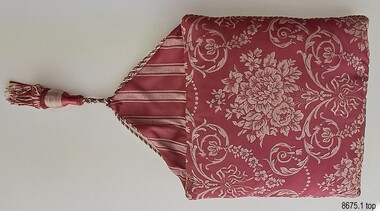
... house social and worshipful activities for seamen. Flagstaff Hill’s curator, Mr Ken Marshman, approached the Melbourne Board of Management of Missions to Seamen regarding the Williamstown branch. Consequently, the Board permitted the furnishings...house social and worshipful activities for seamen. Flagstaff Hill’s curator, Mr Ken Marshman, approached the Melbourne Board of Management of Missions to Seamen regarding the Williamstown branch. Consequently, the Board permitted the furnishings ...The term 'seat squabs' is no longer commonly used, but is sometimes referred to in the upholstery and motor vehicle industries. Squabs are padded cushions frequently added to wooden chairs or benches to add comfort to their hard forms. They have been made to an 18th-to-19th-century pattern using beautiful, richly coloured satin fabric and fancy cord tassels. The weighted flap at the rear of the squabs helps to keep them in place on the chair, and could be used on the top of the backrest instead of on the seat. These days, squabs are attached with fabric ties or hook-and-loop tabs. These seat squabs were once used in the St Nicholas Seamen's Church at 139 Nelson Place, Williamstown, Victoria, which was purchased and furnished around 1943. The furniture and furnishings are now part of the St. Nicholas Seamen's Church collection. DETAILED HISTORY of the Missions to Seamen: - The Missions to Seamen is an Anglican (Church of England) charity that has served the world’s seafarers since 1856. It was inspired by the work of Rev. John Ashley, who, 20 years earlier, had pioneered a ministry to seafarers in the Bristol Channel in Great Britain. When Ashley retired, others continued the work, founding the Missions to Seamen. It adopted a Flying Angel as its symbol, inspired by a verse from the Bible in Revelation 14. Today, over 200 world ports have Missions to Seamen centres and chaplains. A Missions to Seamen’s club warmly welcomes sailors of all colours, creeds and races and provides a wide range of facilities. The Missions to Seamen organisation changed its name to the Mission to Seafarers in 2000, continuing to include Missions to Seamen clubs in Victoria’s cities of Melbourne, Portland, Geelong and Hastings. Flagstaff Hill’s St Nicholas’ Seamen’s Church is named after its namesake from Williamstown, Victoria, which began in 1857. Bishop Perry opened the first Sailors’ Church, which was known as ‘Bethel’, on an old hulk floating in Hobson’s Bay, Port of Melbourne. In 1860, a Sailors’ Rest started operating from rented premises in Williamstown. In 1878, the Sailors’ Church moved into an old Wesleyan chapel in Ann Street. By the end of that year, they managed to purchase the building, which they had already refurbished. In 1883, they affiliated with the Victorian Seamen’s Mission. A few years later, in 1906, the building had to be demolished because it was no longer safe. While they raised funds for a new building, the Sailors’ Rest temporarily moved to premises in front of Customs House in Nelson Place. Around this time, in 1906, the Ladies Harbour Lights Guild was formed in Australia to support and raise funds for the Mission to Seamen organisation in Melbourne. Two of the most significant ladies of the Guild were founding members Ethel Godfrey and Alice Sibthorpe. During the Mission's time at Siddeley Street, Melbourne, the activities of the Guild raised funds for the Mission to Seamen's Chapel at their new, and still current, premises in Flinders Street, Melbourne, opened in 1917. The Guild continued its important work until the 1960s. In 1908, the Williamstown Mission had enough money to purchase the former Mascotte skating rink on Thompson Street, Williamstown. In August of that year, they were inaugurated into the Victorian Missions to Seamen. They continued at that venue for a few decades. In 1943, the former ES&A Bank building at 139 Nelson Place, Williamstown, was purchased for the new Mission to Seaman’s Club. The official opening was on May 6th, 1944. It was described as a ‘distinctive little building’. Funds had previously been raised for the building and furnishing of the chapel at the rear. The chapel was named St Nicholas’ Seamen’s Church, after St Nicholas, fourth-century bishop and patron saint of sailors. Services were held on Wednesdays and Sundays. The church was supported by the Williamstown Lightkeepers’ Auxiliary, newly founded by Mrs Ethel Margaret Musther in 1943, as well as the Harbour Lights Guild and the League of Soldiers’ and Sailors’ Friends. The Williamstown Mission to Seamen’s Church operated until 1966, when large international ships no longer used the Port of Williamstown. The Commonwealth Government then leased the premises. In the formative years of Flagstaff Hill Maritime Village, the Advisory Board decided to include a Missions to Seamen Chapel and Recreation Room in its village. The Missions organisation was a significant feature of ports during the late 1800s and early 1900s, the period that the Village represents. They often erected Missions to house social and worshipful activities for seamen. Flagstaff Hill’s curator, Mr Ken Marshman, approached the Melbourne Board of Management of Missions to Seamen regarding the Williamstown branch. Consequently, the Board permitted the furnishings of the Williamstown chapel to be transferred to Flagstaff Hill Maritime Village. A provision of the transfer was that the Victoria Missions to Seamen be recognised, that the items would remain as a collection, and that the chapel would be called St Nicholas Seamen’s Church and conduct Divine services. The donation was approved on 21st May 1979. Flagstaff Hill's St. Nicholas Seamen's Church: - The idea behind Flagstaff Hill’s Missions to Seamen’s Church was partly driven by the offer of Stained Glass Memorial Windows that originated from the Warrnambool and District Base Hospital, which was undergoing multi-storey expansion in the late 1960s and early 1970s. The hospital’s Manager/Secretary was eager to see the historic window installed in a suitable place. The church, or chapel, was designed by a local architectural draftsman in collaboration with the Flagstaff Hill Planning Board and was constructed by Mr Leon Habel. The designers hoped the church would be used for formal worship, such as weddings, funerals, and multi-denominational special services like war commemorations. Its design was inspired by the ‘Missions to Seamen’ buildings in Portland and the Port of Melbourne. The furniture and furnishings were placed as accurately as possible according to photographs of the Williamstown St Nicholas Seamen’s Church and with assistance from local clergy. The Recreation Room was furnished and arranged on advice from experienced members of the Missions to Seamen organisation. A framed document in the building recognises the donor of the furnishings, Victoria Missions to Seamen, and includes the names of some original donors and their donated item/s. The building’s design incorporates local features such as Warrnambool sandstone, which was no longer commercially available but was procured from demolished buildings and uniformly cut to use as a veneer over the stronger Mt. Gambier stone. Also, traditional green American roofing slate was used, sourced from the 1908 local shipwreck “Falls of Halladale” by Flagstaff Hill volunteer divers. The bell tower includes a bell believed to be from a local shipwreck. Additional furnishings were acquired locally, and several items were donated by Warrnambool residents. Light fittings in both rooms were assembled to simulate 19th-century gas light fittings. The stained-glass window at the back of the church is a memorial to Dr Connell, a well-respected member of the Warrnambool community. It was originally installed in 1928 in the main building of Warrnambool Hospital. The St Nicholas’ Seamen’s Church at Flagstaff Hill was officially opened by His Worship the Mayor, Cr. John Lindsay, on Sunday, 11th October 1981. The event included a service of thanksgiving conducted by the Warrnambool Ministers Fraternal. Since then, the Chapel has been the historic venue for many weddings. This pair of seat squabs is historically significant for its origin in the St Nicholas Mission to Seamen's Church in Williamstown, established in 1857 to cater for seafarers’ physical, social, and spiritual needs. The organisation originated in Bristol, England, when a Seamen's Mission was formed in 1837. The squabs are also significant for their use in the St Nicholas Missions to Seamen's chapel, Williamstown, as the original building is now listed on the Victorian Heritage Register. Squabs or padded seat cushions, a pair of two. These 18th to 19th-century design squabs have crimson and cream satin fabric on top and underneath, and weighted tassels are attached to their rear corners. They can be used for comfort on hard seats and benches. The squabs were furnishings from the Missions to Seamen chapel in Williamstown, and they are now part of the St Nicholas Seamen's Church Collection.flagstaff hill, warrnambool, shipwrecked-coast, flagstaff-hill, flagstaff-hill-maritime-museum, maritime-museum, shipwreck-coast, flagstaff-hill-maritime-village, st nicholas mission to seamen's church williamstown, mission to seamen williamstown, mission to seamen victoria, st nicholas mission to seamen, st nicholas seamen's church, religion, religious service, sailor's rest, ladies harbour light guild, squab, seat covers, cushions, squabs, religious furnishing, padded seats, seating, accessory -
 Flagstaff Hill Maritime Museum and Village
Mangle, late 19th century
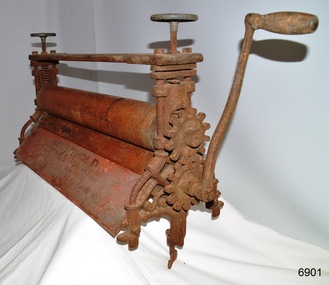
... furnishings of "Birchwood", the 1852 home of Dr Henderson when Dr. Angus purchased his home and medical practice in Koroit St, Warrnambool. The wooden rollers date the mangle to one of the earlier models manufactured. ABOUT THE “W.R.ANGUS COLLECTION” Doctor William Roy Angus M.B., B.S., Adel., 1923, F.R.C.S. Edin.,1928 (also known as Dr Roy Angus) was born in Murrumbeena, Victoria in 1901 and lived until 1970. He qualified as a doctor in 1923 at University of Adelaide, was Resident Medical Officer at the Royal Adelaide Hospital in 1924 and for a period was house...furnishings of "Birchwood", the 1852 home of Dr Henderson when Dr. Angus purchased his home and medical practice in Koroit St, Warrnambool. The wooden rollers date the mangle to one of the earlier models manufactured. ABOUT THE “W.R.ANGUS COLLECTION” Doctor William Roy Angus M.B., B.S., Adel., 1923, F.R.C.S. Edin.,1928 (also known as Dr Roy Angus) was born in Murrumbeena, Victoria in 1901 and lived until 1970. He qualified as a doctor in 1923 at University of Adelaide, was Resident Medical Officer at the Royal Adelaide Hospital in 1924 and for a period was house ...This mangle, sometimes referred to as a wringer, was donated to Flagstaff Hill Maritime Village by the family of Doctor William Roy Angus, Surgeon and Oculist. It is part of the “W.R. Angus Collection” includes historical medical equipment, surgical instruments and material once belonging to Dr Edward Ryan and Dr Thomas Francis Ryan, (both of Nhill, Victoria) as well as Dr Angus’ own belongings. The Collection’s history spans the medical practices of the two Doctors Ryan, from 1885-1926 plus that of Dr Angus, up until 1969. The mangle was used in laundries to squeeze water from washed items and hasten the drying process. This particular wringer is larger that the usual household design and was possibly amongst the original furnishings of "Birchwood", the 1852 home of Dr Henderson when Dr. Angus purchased his home and medical practice in Koroit St, Warrnambool. The wooden rollers date the mangle to one of the earlier models manufactured. ABOUT THE “W.R.ANGUS COLLECTION” Doctor William Roy Angus M.B., B.S., Adel., 1923, F.R.C.S. Edin.,1928 (also known as Dr Roy Angus) was born in Murrumbeena, Victoria in 1901 and lived until 1970. He qualified as a doctor in 1923 at University of Adelaide, was Resident Medical Officer at the Royal Adelaide Hospital in 1924 and for a period was house surgeon to Sir (then Mr.) Henry Simpson Newland. Dr Angus was briefly an Assistant to Dr Riddell of Kapunda, then commenced private practice at Curramulka, Yorke Peninsula, SA, where he was physician, surgeon and chemist. In 1926, he was appointed as new Medical Assistant to Dr Thomas Francis Ryan (T.F. Ryan, or Tom), in Nhill, Victoria, where his experiences included radiology and pharmacy. In 1927 he was Acting House Surgeon in Dr Tom Ryan’s absence. Dr Angus had become engaged to Gladys Forsyth and they decided he further his studies overseas in the UK in 1927. He studied at London University College Hospital and at Edinburgh Royal Infirmary and in 1928, was awarded FRCS (Fellow from the Royal College of Surgeons), Edinburgh. He worked his passage back to Australia as a Ship’s Surgeon on the on the Australian Commonwealth Line’s T.S.S. Largs Bay. Dr Angus married Gladys in 1929, in Ballarat. (They went on to have one son (Graham 1932, born in SA) and two daughters (Helen (died 12/07/1996) and Berenice (Berry), both born at Mira, Nhill ) According to Berry, her mother Gladys made a lot of their clothes. She was very talented and did some lovely embroidery including lingerie for her trousseau and beautifully handmade baby clothes. Dr Angus was a ‘flying doctor’ for the A.I.M. (Australian Inland Ministry) Aerial Medical Service in 1928 . Its first station was in the remote town of Oodnadatta, where Dr Angus was stationed. He was locum tenens there on North-South Railway at 21 Mile Camp. He took up this ‘flying doctor’ position in response to a call from Dr John Flynn; the organisation was later known as the Flying Doctor Service, then the Royal Flying Doctor Service. A lot of his work during this time involved dental surgery also. Between 1928-1932 he was surgeon at the Curramulka Hospital, Yorke Peninsula, South Australia. In 1933 Dr Angus returned to Nhill and purchased a share of the Nelson Street practice and Mira hospital (a 2 bed ward at the Nelson Street Practice) from Dr Les Middleton one of the Middleton Brothers, the current owners of what previously once Dr Tom Ryan’s practice. Dr Tom and his brother had worked as surgeons included eye surgery. Dr Tom Ryan performed many of his operations in the Mira private hospital on his premises. He had been House Surgeon at the Nhill Hospital 1902-1926. Dr Tom Ryan had one of the only two pieces of radiology equipment in Victoria during his practicing years – The Royal Melbourne Hospital had the other one. Over the years Dr Tom Ryan had gradually set up what was effectively a training school for country general-practitioner-surgeons. Each patient was carefully examined, including using the X-ray machine, and any surgery was discussed and planned with Dr Ryan’s assistants several days in advance. Dr Angus gained experience in using the X-ray machine there during his time as assistant to Dr Ryan. When Dr Angus bought into the Nelson Street premises in Nhill he was also appointed as the Nhill Hospital’s Honorary House Surgeon 1933-1938. His practitioner’s plate from his Nhill surgery is now mounted on the doorway to the Port Medical Office at Flagstaff Hill Maritime Village, Warrnambool. When Dr Angus took up practice in the Dr Edward and Dr Tom Ryan’s old premises he obtained their extensive collection of historical medical equipment and materials spanning 1884-1926. A large part of this collection is now on display at the Port Medical Office at Flagstaff Hill Maritime Village in Warrnambool. In 1939 Dr Angus and his family moved to Warrnambool where he purchased “Birchwood,” the 1852 home and medical practice of Dr John Hunter Henderson, at 214 Koroit Street. (This property was sold in1965 to the State Government and is now the site of the Warrnambool Police Station. and an ALDI sore is on the land that was once their tennis court). The Angus family was able to afford gardeners, cooks and maids; their home was a popular place for visiting dignitaries to stay whilst visiting Warrnambool. Dr Angus had his own silk worm farm at home in a Mulberry tree. His young daughter used his centrifuge for spinning the silk. Dr Angus was appointed on a part-time basis as Port Medical Officer (Health Officer) in Warrnambool and held this position until the 1940’s when the government no longer required the service of a Port Medical Officer in Warrnambool; he was thus Warrnambool’s last serving Port Medical Officer. (Masters of immigrant ships arriving in port reported incidents of diseases, illness and death and the Port Medical Officer made a decision on whether the ship required Quarantine and for how long, in this way preventing contagious illness from spreading from new immigrants to the residents already in the colony.) Dr Angus was a member of the Australian Medical Association, for 35 years and surgeon at the Warrnambool Base Hospital 1939-1942, He served as a Surgeon Captain during WWII1942-45, in Ballarat, Victoria, and in Bonegilla, N.S.W., completing his service just before the end of the war due to suffering from a heart attack. During his convalescence he carved an intricate and ‘most artistic’ chess set from the material that dentures were made from. He then studied ophthalmology at the Royal Melbourne Eye and Ear Hospital and created cosmetically superior artificial eyes by pioneering using the intrascleral cartilage. Angus received accolades from the Ophthalmological Society of Australasia for this work. He returned to Warrnambool to commence practice as an ophthalmologist, pioneering in artificial eye improvements. He was Honorary Consultant Ophthalmologist to Warrnambool Base Hospital for 31 years. He made monthly visits to Portland as a visiting surgeon, to perform eye surgery. He represented the Victorian South-West subdivision of the Australian Medical Association as its secretary between 1949 and 1956 and as chairman from 1956 to 1958. In 1968 Dr Angus was elected member of Spain’s Barraquer Institute of Barcelona after his research work in Intrasclearal cartilage grafting, becoming one of the few Australian ophthalmologists to receive this honour, and in the following year presented his final paper on Living Intrasclearal Cartilage Implants at the Inaugural Meeting of the Australian College of Ophthalmologists in Melbourne In his personal life Dr Angus was a Presbyterian and treated Sunday as a Sabbath, a day of rest. He would visit 3 or 4 country patients on a Sunday, taking his children along ‘for the ride’ and to visit with him. Sunday evenings he would play the pianola and sing Scottish songs to his family. One of Dr Angus’ patients was Margaret MacKenzie, author of a book on local shipwrecks that she’d seen as an eye witness from the late 1880’s in Peterborough, Victoria. In the early 1950’s Dr Angus, painted a picture of a shipwreck for the cover jacket of Margaret’s book, Shipwrecks and More Shipwrecks. She was blind in later life and her daughter wrote the actual book for her. Dr Angus and his wife Gladys were very involved in Warrnambool’s society with a strong interest in civic affairs. He had an interest in people and the community They were both involved in the creation of Flagstaff Hill, including the layout of the gardens. After his death (28th March 1970) his family requested his practitioner’s plate, medical instruments and some personal belongings be displayed in the Port Medical Office surgery at Flagstaff Hill Maritime Village, and be called the “W. R. Angus Collection”. The W.R. Angus Collection is significant for still being located at the site it is connected with, Doctor Angus being the last Port Medical Officer in Warrnambool. The collection of medical instruments and other equipment is culturally significant, being an historical example of medicine from late 19th to mid-20th century. Dr Angus assisted Dr Tom Ryan, a pioneer in the use of X-rays and in ocular surgery. Large mangle (or wringer) with wooden handle, hardwood wooden rollers and metal stand, part of the W.R. Angus Collection. Household clothes mangle with steel ball bearings, made by the American Wringer Co. New York, U.S.A. Brand and details are printed on side. Printed on side; "HOUSEHOLD / CLOTHES MANGLE / STEEL BALL BEARINGS / THE AMERICAN WRINGER Co, NEW YORK, USA” and on top "NO. HARDWOOD ROLLERS 124"flagstaff hill, warrnambool, shipwrecked coast, flagstaff hill maritime museum, maritime museum, shipwreck coast, flagstaff hill maritime village, great ocean road, dr w r angus, dr ryan, surgical instrument, t.s.s. largs bay, warrnambool base hospital, nhill base hospital, mira hospital, flying doctor, clothes mangle, clothes wringer, laundry equipment, the american wringer company, mangle with wooden rollers, mangle with settl bearings -
 Flagstaff Hill Maritime Museum and Village
Work on paper - Religious Portrait Print, Herbert Beecroft, artist, The Lord turned and looked upon Peter … and Peter remembered, 1947
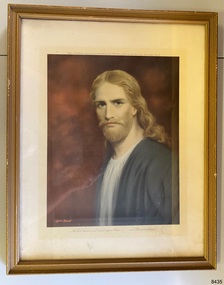
... The original is displayed at John Wesley’s House & The Museum of Methodism in Islington, England. This print was part of the original furnishings donated by the Williamstown Lightkeepers' Auxiliary to the St Nicholas' Mission to Seamen's Church at 139 Nelson Place, Williamstown, Victoria, operated by the Missions to Seamen organisation. ...The original is displayed at John Wesley’s House & The Museum of Methodism in Islington, England. This print was part of the original furnishings donated by the Williamstown Lightkeepers' Auxiliary to the St Nicholas' Mission to Seamen's Church at 139 Nelson Place, Williamstown, Victoria, operated by the Missions to Seamen organisation. ...This print of Christ is slightly smaller than the original 1927 oil painting by Herbert Beecroft, which is titled “Christ” and measures, in centimetres, 60 high by 50 wide. The original is displayed at John Wesley’s House & The Museum of Methodism in Islington, England. This print was part of the original furnishings donated by the Williamstown Lightkeepers' Auxiliary to the St Nicholas' Mission to Seamen's Church at 139 Nelson Place, Williamstown, Victoria, operated by the Missions to Seamen organisation. The title of the print is taken from the Holy Bible, from the New Testament book of Luke, chapter 22 verse 61, which is a famous Christian account of Jesus being betrayed by Peter, which leads to Jesus’ crucifixion; “And the Lord turned, and looked upon Peter. And Peter remembered the word of the Lord, how he had said unto him, Before the cock crow, thou shalt deny me thrice.”. The print was published in 1942 by the National Sunday School Union in England, now known as the National Christian Education Council. The NSSU was established in Britain in 1803 to promote Sunday Schools in Britain and overseas. The organisation produced many publications, including training manuals and materials for Sunday School teachers. Herbert Beecroft 1864-1951, also known as Lawrence Herbert Beecroft, was an early 20th-century artist. He and his wife emigrated from England to Sydney, Australia, in 1905. He worked as a painter, illustrator, miniaturist, lightning cartoonist, and lecturer. From 1927, Beecroft painted a series of portraits of Jesus Christ, prints of which made many worldwide sales. He entered a miniature portrait in the 1921 inaugural Archibald Prize competition. It was one of forty-one entries but the title was unknown. It was probably JF Archibald, the person who endowed the prize, first awarded in 1921. THE MISSIONS TO SEAMEN (Brief History): - The Missions to Seamen was an Anglican charity in Great Britain that has served the world's seafarers since 1856. Its symbol is a Flying Angel, inspired by a Bible verse. Today, there are centres in over 200 ports worldwide where seamen of all backgrounds are offered a warm welcome and provided with a wide range of facilities. In Victoria, the organisation began in Williamstown in 1857 as a Sailors’ Church, also known as ‘Bethel’ or the ‘Floating Church’ in an old hulk floating in Hobson’s Bay, Port of Melbourne. It soon became part of the Missions to Seamen, Victoria. In 2000, the organisation, now named Mission to Seafarers, still operated locally in Melbourne, Portland, Geelong and Hastings. The Ladies’ Harbour Lights Guild was formed in 1906 to support the Missions to Seamen in Melbourne and other centres, such as Williamstown. Two of the most significant ladies of the Guild were founder Ethel Augusta Godfrey and foundation member Alice Sibthorpe Tracy (who established a branch of the Guild in Warrnambool in 1920). The Guild continued its work until the 1960s. In 1943, a former Williamstown bank was purchased for the Missions to Seamen Club. The chapel was named St Nicholas’ Seamen’s Church and was supported by the Ladies’ Harbour Lights Guild, the Williamstown Lightkeepers’ Auxiliary and the League of Soldiers’ and Sailors’ Friends. It ceased operation in 1966. A Missions to Seamen Chapel and Recreation Room was a significant feature of ports during the late 1800s and 1900s. It seemed appropriate for Flagstaff Hill to include such a representation within the new Maritime Village, and the Melbourne Board of Management of Missions to Seamen Victoria gave its permission on 21st May 1979 for the entire furnishings of the Williamstown chapel to be transferred to Flagstaff Hill. The St Nicholas Seamen’s Church was officially opened on October 11, 1981, and resembles the Williamstown chapel. This print of Christ, originally painted by Herbert Beecroft, represents the social movement in the early 20th century to educate all children in good morals and Christianity. The book is historically significant for its connection to the Missions to Seamen and to the Williamstown Lightkeepers' Auxiliary, an organisation of women, formed to support seafarers. A religious portrait of the artist’s impression of Jesus. The print is in a gilt timber frame behind glass. The frame has eyelets and wire for hanging. The backing paper lifts to reveal a handwritten pencil inscription. The portrait shows a male figure from the waist up facing the viewer but turned slightly to his right. He has long wavy blond hair, a moustache and a beard. He wears a blue-grey robe over a collarless white shirt. The background is red-brown. It is the artist’s impression of Jesus. The whole frame-mat has script text above and below the print, giving its title, and details of the publisher and producer. This print was produced from an original 1927 oil painting by Herbert Beecroft. It was published in 1942 by The National Sunday School Union in London and produced by Frost & Reed Ltd., England. This print is part of the St. Nicholas Seamen's Church Collection. Handwritten script on the mat; “Published in 1942 by the National Sunday School Union, 4 Black Friars Lane, London, EC4. Produced by Frost & Reed Ltd., Bristol & London. Printed in England. Copyright.” and, “The Lord turned and looked upon Peter … and Peter remembered” Signature on bottom left “Herbert Beecroft” In pencil on backboard under back paper “H 89 / 12”. Pen on white tape “155”flagstaff hill, warrnambool, maritime village, maritime museum, shipwreck coast, great ocean road, print, religious, vintage, 1942, herbert beecroft, lawrence herbert beecroft, archibald prize winner, early 20th-century, artist, oil painting, luke 22:61, flagstaff hill maritime museum and village, religion, religious service, religious worship, worship service, st nicholas seamen’s church, williamstown, missions to seamen victoria, mission to seafarers, st nicholas missions to seamen’s church williamstown, missions to seamen, st nicholas missions to seamen’s church flagstaff hill, 139 nelson place williamstown, anglican church, church furnishings, religious furnishings, seating, williamstown lightkeepers' auxiliary -
 City of Moorabbin Historical Society (Operating the Box Cottage Museum)
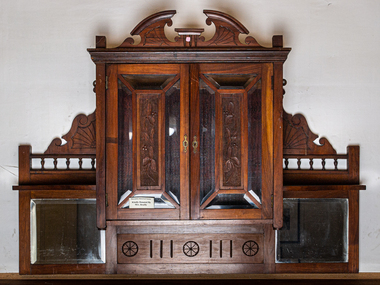
Furniture, Overmantel carved wood c1900, c1900
... housed the fire for cooking and baking, and served as the nucleus of family gatherings. As the Victorian age progressed, fireplaces became more ornate, with overmantels and columns.This elaborately carved wood overmantel was used in the family home of Mrs Brailly in Moorabbin Shire c1900 This ornately carved wood overmantel cupboard is an example of the furnishings early settlers used to make their houses attractivec1900 mantel piece, overmantel cupboards, mrs brailly, box cottage ormond, box william, box elizabeth, early settlers, market gardeners, cooking utensils, kitchenware, castiron cooking pots, blacksmiths, slow cooking, moorabbin shire, bentleigh, mckinnon, highett, cheltenham, An elaborately carved wood overmantel c1900 Furniture, Overmantel carved wood c1900 Unrecorded carpenter ...Early fireplaces were very wide and deep, which allowed for multiple pots to be cooking simultaneously, but also caused a lot of heat loss As the hub of the house, a burning hearth provided heat, housed the fire for cooking and baking, and served as the nucleus of family gatherings. As the Victorian age progressed, fireplaces became more ornate, with overmantels and columns.This elaborately carved wood overmantel was used in the family home of Mrs Brailly in Moorabbin Shire c1900This ornately carved wood overmantel cupboard is an example of the furnishings early settlers used to make their houses attractivec1900An elaborately carved wood overmantel c1900mantel piece, overmantel cupboards, mrs brailly, box cottage ormond, box william, box elizabeth, early settlers, market gardeners, cooking utensils, kitchenware, castiron cooking pots, blacksmiths, slow cooking, moorabbin shire, bentleigh, mckinnon, highett, cheltenham, -
 Orbost & District Historical Society
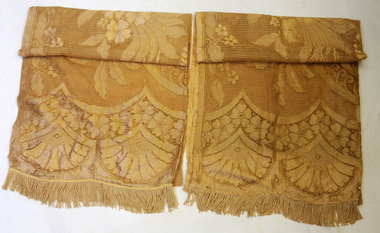
curtains, c. 1890 - 1920
... Used in a house in the Orbost district. manchester - furnishings Two coffee coloured openweave curtains with a scalloped fringe around the bottom. curtains ...Used in a house in the Orbost district.Two coffee coloured openweave curtains with a scalloped fringe around the bottom. manchester - furnishings -
 Ringwood and District Historical Society
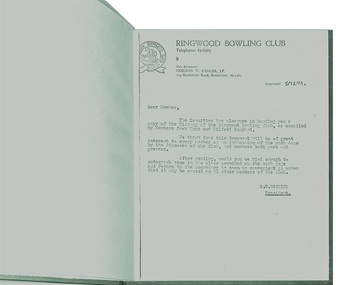
Book, Short History of Ringwood Bowling Club from 1929 -1961
... Ten months later the first Annual Report stated that " the green was ready for sowing, a Club House with a billiard table , donations of light fittings and furnishings by members and committee and a balance sheet showing assets over liabilities of £446,3,8." ...Ten months later the first Annual Report stated that " the green was ready for sowing, a Club House with a billiard table , donations of light fittings and furnishings by members and committee and a balance sheet showing assets over liabilities of £446,3,8." ...The idea for a Bowling Club was started by Mr. Bert Cocks, the Manager of the State Savings Bank when he arrived in Ringwood in 1929 but it took two years before a suitable site and was found and in 1931 the club as formed. Ther were 57 foundation members. The President was Councillor Arthur Blood and W. Cox, Secretary. Ten months later the first Annual Report stated that " the green was ready for sowing, a Club House with a billiard table , donations of light fittings and furnishings by members and committee and a balance sheet showing assets over liabilities of £446,3,8." The book continues until 1961.It was compiled by Members Jack Knox and Wilfred Bamford.Plain green hard-covered book (untitled) with 25 typed pages. Letter to members inviting them to read the story and pass the book onto other members. Foreword by the President in 1961 -
 Glen Eira Historical Society
Document - St. Georges Road, 68, Elsternwick
... Two evaluations, one for the house dated 05/05/1954, and one for the furnishings inside the house....Belle Vue Young Stephen Locksley Cutts Herbert Robertson David Robertson Ada Edwards Joseph Cording William Rybajzen Jeko Szaul Bullock Hilary Landells Rosalind Brighton Historical Society Architectural Features Houses Land Values Furnishings Brick Houses Verandahs Cast Iron Work Edwards Mrs Document St. ...Two documents about the history and features of this property. A typed report about the ownership and occupancy from 1906 to 1978 of 68 St. Georges Road dated 21/07/1987 researched by Hailary Bullock and Rosalind Landells with handwritten working notes. Two evaluations, one for the house dated 05/05/1954, and one for the furnishings inside the house.st. georges road, george road, elsternwick, frederick sargood estate, sargood f., ripponlea, ring c., wrigley leslie j., belle vue, young stephen, locksley, cutts herbert, robertson david, robertson ada, edwards joseph, cording william, rybajzen jeko szaul, bullock hilary, landells rosalind, brighton historical society, architectural features, houses, land values, furnishings, brick houses, verandahs, cast iron work, edwards mrs -
Glen Eira Historical Society
Article - Joyous Gard
... Furnishings... Brick houses... Edwardian style... Doctors... Dentists... Architectural styles... Architectural features... House...Joyous Gard Springthorpe John William Springthorpe Annie Constance Inglis Annie Constance Springthorpe Dorothy Springthorpe Enid Springthorpe Lancelot John Springthorpe Daisie Johnstone Daisie Evelyn Murrumbeena Gilbert Web Tuckett Arthur Mrs Guilfoyle Mr Springthorpe Memorial Omama Road Neerim Road Caulfield City Council Tyers S Johnstone Jessie Louise Boyd Merric Springthorpe Guy Gardens Garden plants Furnishings Brick houses Edwardian style Doctors Dentists Architectural styles Architectural features House names Article Joyous Gard ...A photocopy of a four page article in Table Talk, dated 01/01/1925, describing Joyous Gard, the Murrumbeena home of Dr J W Springthorpe. The article includes nine photographs of the house exterior and garden, the house interior and Dr and Mrs Springthorpe. It mentions that Mrs Arthur Tuckett laid out the garden, helped out by Mr Guilfoyle in the planning of it. The file also includes a photocopy of the obituary of Dr Springthorpe, published in The Argus newspaper on 24/04/1933. The obituary includes a photograph of Dr Springthorpe. Also included in the file is a list of references relevant to Dr John Springthorpe compiled by Maureen Jones on 09/11/2011. The file also includes a photocopy of a two page article by Maureen Jones, published in The Ancestor magazine in 06/2003, about Dr Springthorpe and his second wife Daisie. The article includes a photograph of the Springthorpe Memorial. The file also includes a printout of an email, dated 14/11/2001, from Maureen Jones to the Glen Eira Historical Society, providing the details of the Exhibition Inner Worlds – Portraits and Psychology, at the University of Melbourne from 18/04/2012 to 22/07/2012, which includes Dr Springthorpe.joyous gard, springthorpe john william, springthorpe annie constance, inglis annie constance, springthorpe dorothy, springthorpe enid, springthorpe lancelot john, springthorpe daisie, johnstone daisie evelyn, murrumbeena, gilbert web, tuckett arthur mrs, guilfoyle mr, springthorpe memorial, omama road, neerim road, caulfield city council, tyers s, johnstone jessie louise, boyd merric, springthorpe guy, gardens, garden plants, furnishings, brick houses, edwardian style, doctors, dentists, architectural styles, architectural features, house names -
Glen Eira Historical Society
Document - Merrimu, Dandenong Road, 1300, Murrumbeena
... house and now a reception venue. The pamphlet also details the service provided for wedding receptions to be held at Merrimu as well as the menus and prices per person. Dandenong Road Poath Road Murumbeena Merrimu Acacia Room Ultonia Wilmoth Jospeh Alfred Wilmoth Christian Mary Wilmoth Robin S Langford Clement Victorian Style Ships Weddings Menus Stairs Paintings Furnishings Architectural features Architectural styles Reception rooms Wilmoth Ross Document Merrimu, Dandenong Road, 1300, Murrumbeena ...A pamphlet detailing a brief history of Merrimu as a house and now a reception venue. The pamphlet also details the service provided for wedding receptions to be held at Merrimu as well as the menus and prices per person.dandenong road, poath road, murumbeena, merrimu, acacia room, ultonia, wilmoth jospeh alfred, wilmoth christian mary, wilmoth robin s, langford clement, victorian style, ships, weddings, menus, stairs, paintings, furnishings, architectural features, architectural styles, reception rooms, wilmoth ross
