
Showing 57 items matching "infant feeding"
-
 Royal Australian and New Zealand College of Obstetricians & Gynaecologists (RANZCOG)
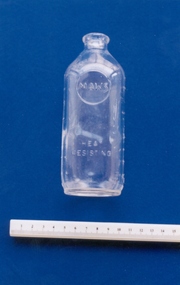
Glass infant feeding bottle, Maws, Maws
... Glass infant feeding bottle, Maws...Infant feeding...It continued trading as such until the company was sold to an American company (ITT) in 1973. Infant feeding Infant care Clear glass feeding bottle with four rounded edges, tapering to s short neck. ...Maws were a well known British medical instrument and supply manufacturer. Originating as J and S Maw in 1828, the company changed names a number of times and was renamed Maws Pharmacy Supplies Limited in 1940. It continued trading as such until the company was sold to an American company (ITT) in 1973. Clear glass feeding bottle with four rounded edges, tapering to s short neck. Calibrations for ounces and mls imprinted on opposite sides of the bottle. Bottle in inscribed "MAWS" and "HEAT RESISTING". On base, "MADE IN BELGIUM".infant feeding, infant care -
 Royal Australian and New Zealand College of Obstetricians & Gynaecologists (RANZCOG)
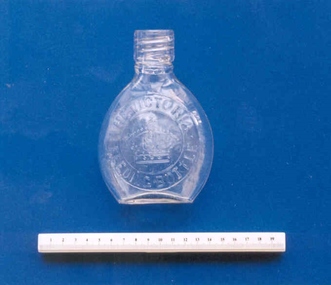
Infant feeding bottle, 'The Victoria Feeding Bottle', 1900 (approximate)
... Infant feeding bottle, 'The Victoria Feeding Bottle'...Infant feeding...The bottle has a flat shaped bottom to allow it to balance on a surface while being used. Infant feeding bottle, 'The Victoria Feeding Bottle' ...This design was modelled on Queen Victoria's nursery bottles and would have been in use during mid 1880s to the early 1900s. This item is very similar to the Alexandra Feeding Bottle featured in the Maws catalogue of 1868. It was named after the then Princess Alexandra of Wales, later Queen Alexandra. This model had a glass stopper and a long rubber tube which connected at one end to a teat and to a glass tube at the other. The fittings were very difficult to clean and would hold milk particles, making them a breeding ground for the formation of bacteria. Sterilisation of feeding bottles by boiling, and boiling of milk and water, were not practiced effectively at this time.Globular shaped feeding bottle embossed with a crown on the upper surface. Next of bottle fitted with a glass thread. Writing imprinted on front of bottle, inside a ring, reads "THE VICTORIA FEEDING BOTTLE". The bottle has a flat shaped bottom to allow it to balance on a surface while being used."THE VICTORIA FEEDING BOTTLE"infant feeding, infant care -
 Royal Australian and New Zealand College of Obstetricians & Gynaecologists (RANZCOG)
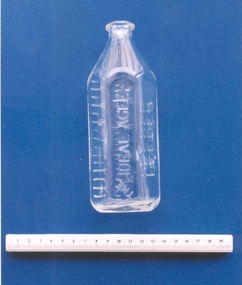
Infant feeding bottle, 'The Ideal Agee', Crown Crystal Glass, c. 1961-63
... Infant feeding bottle, 'The Ideal Agee'...Infant feeding...Text inscribed on bottle reads " THE IDEAL AGEE/PYREX/FEEDER". Infant feeding bottle, 'The Ideal Agee' Crown Crystal Glass ...Crown Crystal Glass were an Australian glass manufacturer, who were the Australian vendors for Pyrex from 1926, importing from the UK. In 1961, Crown Crystal Glass began manufacturing their own Pyrex, under the name Agee Pyrex (until 1963), Crown Agee Pyrex (late 1960s), Crown Pyrex (1970s), Crown Ovenware (1970s) and Pyrex Ovenware (late 1970s until early 1980s). Source: That Retro Piece, 'PYREX | Australian', https://thatretropiece.com/collections/pyrex-australian "The use of pyrex bottles became more prevalent in Australia in the second half of the 20th century and baby’s bottles made of pyrex were popular as they were easily sterilised in the home environment." Source: Warrnambool and District Historical Society Inc., 'Bottle, The Perfect Agee Feeding Bottle, Mid 20th century', https://victoriancollections.net.au/items/592fe71ad0cdd520341b3954Octagonal glass bottle tapering to a narrow neck. Calibrations for ounces and mls imprinted on the sides of the bottle. Text inscribed on bottle reads " THE IDEAL AGEE/PYREX/FEEDER"."THE IDEAL AGEE/PYREX/FEEDER"infant feeding, infant care -
 Royal Australian and New Zealand College of Obstetricians & Gynaecologists (RANZCOG)
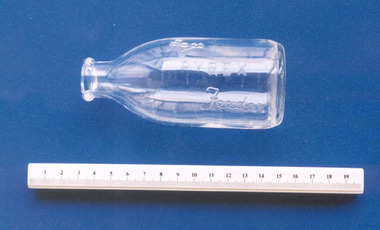
Infant feeding bottle, 'Agee Pyrex Feeder', Crown Crystal Glass, c. 1961-63
... Infant feeding bottle, 'Agee Pyrex Feeder'...Infant feeding...Small feeding bottles were used to feed milk to newborns or juice to older infants. Crown Crystal Glass were an Australian glass manufacturer, who were the Australian vendors for Pyrex from 1926, importing from the UK. ...Embossed on side of bottle: "Agee/ PYREX/ Feeder". Infant feeding bottle, 'Agee Pyrex Feeder' Crown Crystal Glass ...Small feeding bottles were used to feed milk to newborns or juice to older infants. Crown Crystal Glass were an Australian glass manufacturer, who were the Australian vendors for Pyrex from 1926, importing from the UK. In 1961, Crown Crystal Glass began manufacturing their own Pyrex, under the name Agee Pyrex (until 1963), Crown Agee Pyrex (late 1960s), Crown Pyrex (1970s), Crown Ovenware (1970s) and Pyrex Ovenware (late 1970s until early 1980s). Source: That Retro Piece, 'PYREX | Australian', https://thatretropiece.com/collections/pyrex-australian "The use of pyrex bottles became more prevalent in Australia in the second half of the 20th century and baby’s bottles made of pyrex were popular as they were easily sterilised in the home environment." Source: Warrnambool and District Historical Society Inc., 'Bottle, The Perfect Agee Feeding Bottle, Mid 20th century', https://victoriancollections.net.au/items/592fe71ad0cdd520341b3954Small clear glass bottle with a short narrow neck. Imprinted with calibrations for ounces (0-4) and millilitres (0-120). Embossed on side of bottle: "Agee/ PYREX/ Feeder".infant feeding, infant care -
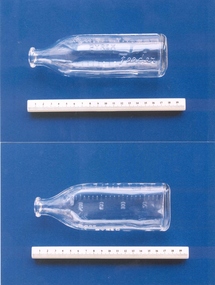 Royal Australian and New Zealand College of Obstetricians & Gynaecologists (RANZCOG)
Infant feeding bottle, 'Agee Pyrex Feeder', Crown Crystal Glass, c. 1961-63
... Infant feeding bottle, 'Agee Pyrex Feeder'...Infant feeding...Embossed on the side: "Agee/PYREX/Feeder". Infant feeding bottle, 'Agee Pyrex Feeder' Crown Crystal Glass ...Crown Crystal Glass were an Australian glass manufacturer, who were the Australian vendors for Pyrex from 1926, importing from the UK. In 1961, Crown Crystal Glass began manufacturing their own Pyrex, under the name Agee Pyrex (until 1963), Crown Agee Pyrex (late 1960s), Crown Pyrex (1970s), Crown Ovenware (1970s) and Pyrex Ovenware (late 1970s until early 1980s). Source: That Retro Piece, 'PYREX | Australian', https://thatretropiece.com/collections/pyrex-australian "The use of pyrex bottles became more prevalent in Australia in the second half of the 20th century and baby’s bottles made of pyrex were popular as they were easily sterilised in the home environment." Source: Warrnambool and District Historical Society Inc., 'Bottle, The Perfect Agee Feeding Bottle, Mid 20th century', https://victoriancollections.net.au/items/592fe71ad0cdd520341b3954 Clear glass bottle tapering to a short narrow neck. Calibrations embossed on the glass in ounces (0-8) and mls (0-240). Embossed on the side: "Agee/PYREX/Feeder"."Agee/PYREX/Feeder"infant feeding, infant care -
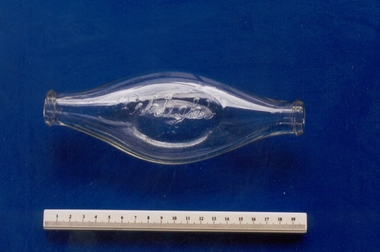 Royal Australian and New Zealand College of Obstetricians & Gynaecologists (RANZCOG)
'Liptight' infant feeding bottle, National, U.K
... 'Liptight' infant feeding bottle...Infant feeding...Purchased from an Antique shop in Willunga, South Australia by Dr Malcolm Barnett, who then donated it to the collection. Infant feeding Infant care "LIPTIGHT" Glass feeding bottle. ...Purchased from an Antique shop in Willunga, South Australia by Dr Malcolm Barnett, who then donated it to the collection.Glass feeding bottle. Bottle is loosely banana shaped, with a wider section in the middle narrowing to a neck at either end. The bottle has a flat base and is embossed with the word "Liptight" at top."LIPTIGHT"infant feeding, infant care -
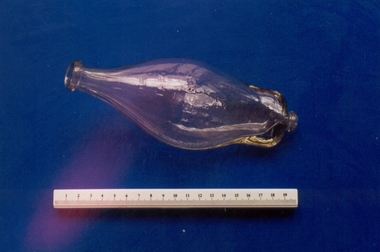 Royal Australian and New Zealand College of Obstetricians & Gynaecologists (RANZCOG)
'The Sitar Feeder' infant feeding bottle, c. 1940
... 'The Sitar Feeder' infant feeding bottle...Infant feeding...Purchased from an antique shop in Willunga, South Australia by Dr Malcolm Barnett, who then donated it to the collection. Infant feeding Infant care 'THE/SITAR/FEEDER" Glass feeding bottle. ...Purchased from an antique shop in Willunga, South Australia by Dr Malcolm Barnett, who then donated it to the collection.Glass feeding bottle. Bulbous glass bottle with openings at either end. The upper surface is rounded, and the bottom surface is angled to allow the bottle to sit on a flat surface. The upper end has a wider neck suitable for a rubber teat, whilst the lower end is narrower and may have had a valve attachment. Graduated measurement markings for tablespoons and ounces run along each side of the bottle. Embossed writing on underside of bottle reads "REG NO/47457", and on upper side reads "THE/SITAR/FEEDER/8 OZ/OR/225 ML".'THE/SITAR/FEEDER"infant feeding, infant care -
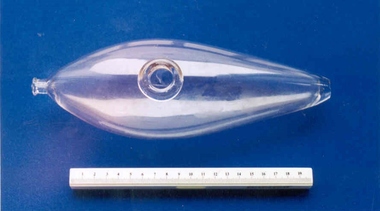 Royal Australian and New Zealand College of Obstetricians & Gynaecologists (RANZCOG)
Domestic object - Infant feeding bottle associated with 'Auntie' Maud Pepper
... Infant feeding bottle associated with 'Auntie' Maud Pepper...Infant feeding...Additional sensitive notes on file. Infant feeding Infant care Glass boat-shaped feeding bottle with one end flattened and a spout at the other. ...Prue Forster believes this to be the bottle given to her by 'Auntie' Maud Pepper, for Frank Forster's collection. Prue met her when she was working for the Aboriginal Health Service (1980-1993). 'Auntie' Maud Pepper was living in Preston at the time but had come from the Western District. The bottle was her own and she told Prue how fine material was used over the mouthpiece instead of a rubber teat. 'Auntie' Maud Pepper was a founder of ACES (the Aboriginal Elders Residence & Convalescent Home.) Additional sensitive notes on file.Glass boat-shaped feeding bottle with one end flattened and a spout at the other. There is a larger opening with a lip on the top surface. There is a small chip on the flattened end.infant feeding, infant care -
 Royal Australian and New Zealand College of Obstetricians & Gynaecologists (RANZCOG)
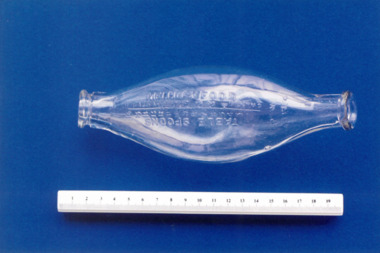
Infant feeding bottle, Mellin's, Mellin's Food, c. 1900 to 1940
... Infant feeding bottle, Mellin's...Infant feeding...Feeding bottles of this shape were on sale from 1900 for about 40 years. The Allenbury feeder devised by Allen & Hanburys, U.K. was the first of this type. They were easier to clean and the mild flow was easier to regulate. Source: Kevill-Davies, Sally. "Yesterday's Children: The Antiques and History of Childcare" Mellin's Food was a company which produced patent milk solids and cereal preparations from c1860s. English food chemist Gustav Mellin developed an infant...ISBN 9780199734962. Infant feeding Infant care Glass feeding bottle. ...Feeding bottles of this shape were on sale from 1900 for about 40 years. The Allenbury feeder devised by Allen & Hanburys, U.K. was the first of this type. They were easier to clean and the mild flow was easier to regulate. Source: Kevill-Davies, Sally. "Yesterday's Children: The Antiques and History of Childcare" Mellin's Food was a company which produced patent milk solids and cereal preparations from c1860s. English food chemist Gustav Mellin developed an infant food formula in the late 1860s, dubbed Mellin's Food, which became the most widely used mass produced food at this time. Source: Andrew Smith (2013). "Baby Food". The Oxford Encyclopedia of Food and Drink in America. ISBN 9780199734962. Glass feeding bottle. Bottle is loosely boat shaped with flat base, and neck and openings at either end. There is a small flattened area on the base to allow the bottle to balance. Writing embossed into bottle reads 'MELLIN'S FOOD' and 'TABLE SPOONS'. Graduated markings for months of age and tablespoons. Visible join seams on bottle.infant feeding, infant care -
 Royal Australian and New Zealand College of Obstetricians & Gynaecologists (RANZCOG)
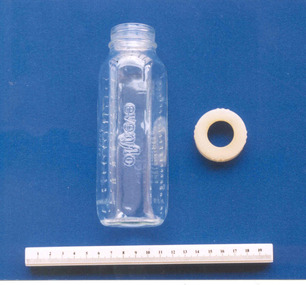
Infant feeding bottle collected by Dr Frank Forster, Johnson & Johnson, 1965
... Infant feeding bottle collected by Dr Frank Forster...Infant feeding...Text on base reads "FF (in circle) 18" Infant feeding bottle collected by Dr Frank Forster Johnson & Johnson ...Part of Frank Forster's baby feeding bottle collection. In Australia, this type of bottle was known as "Truflow"; and was manufactured by Johnson & Johnson. The missing 'c' on this bottle makes this bottle rare and of greater value than similar ones with the correct spelling. (Verbal communication: Helen Johnson) In Australia this type of bottle was known as "Truflow" which was also manufactured by Johnson & Johnson.Broadly cylindrical glass bottle, but flattened to create six sides. Graduations in ounces and cubic centimetres written on two sides. With cream coloured plastic top. The first 'c' in cubic is missing in the text on the bottle. Bottle carries the text "evenflo", "MADE IN U.S.A", "BOTTLE CONFIG. R". Text on base reads "FF (in circle) 18"infant feeding, dr frank forster -
 Royal Australian and New Zealand College of Obstetricians & Gynaecologists (RANZCOG)
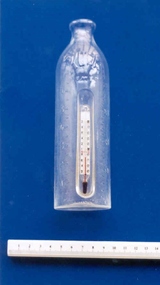
Infant feeding bottle with thermometer, 'Kuwa', Germany, c. 1925
... Infant feeding bottle with thermometer, 'Kuwa', Germany...Infant feeding...Embossed on the neck of the bottle: "Kuwa" and "Made in Germany" on the lower front of bottle near the base. Infant feeding bottle with thermometer, 'Kuwa', Germany ...The neck of this bottle is quite wide and would have been fitted with quite a large teat. The use of an inbuilt thermometer on this bottle by the manufacturers, Kuwa, was quite innovative.Cylindrical glass feeding bottle, with calibrations for 1 to 8 (ounces) and 50 to 200 (mls). There is a vertical recess in centre front of the bottle, which contains a thermometer. There are two vertical seams in the glass, and a longitudinal bubble in the glass near the neck. Embossed on the neck of the bottle: "Kuwa" and "Made in Germany" on the lower front of bottle near the base."KUWA"; "MADE IN GERMANY"infant feeding -
 Royal Australian and New Zealand College of Obstetricians & Gynaecologists (RANZCOG)
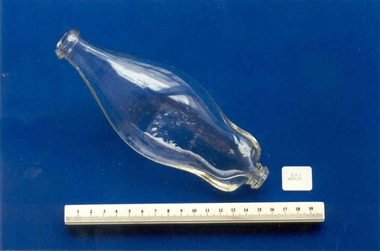
'The Star Feeder' infant feeding bottle, c. 1925
... 'The Star Feeder' infant feeding bottle...'The Star Feeder' infant feeding bottle ...Bulbous clear glass bottle with necks/openings at either end. Embossed lettering reading "The/STAR/Feeder" on the front/top of bottle. Underside of the bottle is flat to allow for the bottle to sit on a flat surface. "HOWRAH" embossed on underside.The/STAR/Feeder; HOWRAHinfant care -
 Alfred Hospital Nurses League - Nursing History Collection
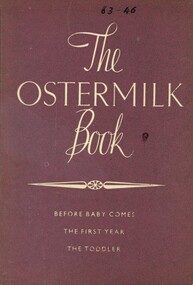
Booklet, Glaxo Laboratories LImited, The Ostermilk Book, 1954
... ...infant feeding...Vintage booklet providing practicl advice on topics like pregnancy, infant feeding, sleeping and general child care. ...Vintage booklet providing practicl advice on topics like pregnancy, infant feeding, sleeping and general child care. ...Vintage booklet providing practicl advice on topics like pregnancy, infant feeding, sleeping and general child care. Also promoted Ostermilk, a dried-milk baby formulaInsight into mothercaft practices in the 1950'sBound booklet, brown cover with white print detailing title. Previous catalogue number handwritten [black ink] at centre top of front cover. Handwritten at top right of title page 'P. Goble 1955' [black ink]mothercraft, pregnancy, infant nutrition, infant development, infant feeding -
 Royal Australian and New Zealand College of Obstetricians & Gynaecologists (RANZCOG)
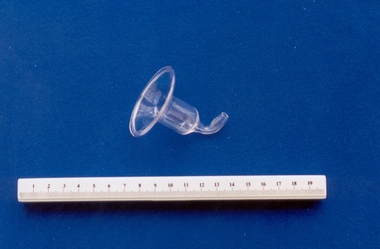
Glass nipple shield associated with midwife Mary Howlett, c. 1866 - 1920
... Infant feeding...'Breasts, Bottles & Babies - A History of Infant Feeding', 1986) ...'Breasts, Bottles & Babies - A History of Infant Feeding', 1986) Mary Howlett (1840-1922) began practising as a country midwife in 1866 in the western district of Victoria. ...A rubber teat would be attached to the top of this nipple shield for breast feeding. From 1801 onwards, nipple shields were available in a variety of materials, such as pewter, horn, bone, ivory, wood, glass and silver. They varied in shape from a bell to a flatter, cap shaped appliance. With the application of the nipple shield, the baby was able to take milk from the breast without giving added trauma to the nipples. In the ante partum period the nipple shield could be worn to assist in drawing out flat nipples; or, as it was known during this period, for the formation of "new nipples". (Fildes, Valerie. 'Breasts, Bottles & Babies - A History of Infant Feeding', 1986) Mary Howlett (1840-1922) began practising as a country midwife in 1866 in the western district of Victoria. She qualified as a 'ladies monthly nurse' in 1887 and continued to practise as a nurse and midwife until 1920. She began her six months training at the Melbourne Lying-In Hospital. She was known by many as 'Auntie', and her career spanned more than 50 years. Mrs Howlett's midwifery box and contents were given to Dr Frank Forster, and he donated them to the museum collection in 1993. Glass nipple shield. Shape resembles that of a bell.infant feeding, midwifery -
 Royal Australian and New Zealand College of Obstetricians & Gynaecologists (RANZCOG)
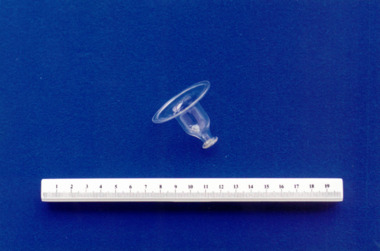
Glass nipple shield associated with midwife Mary Howlett, c. 1866 - 1920
... ...Infant feeding...'Breasts, Bottles & Babies - A History of Infant Feeding', 1986) ...'Breasts, Bottles & Babies - A History of Infant Feeding', 1986) Mary Howlett (1840-1922) began practising as a country midwife in 1866 in the western district of Victoria. ...A rubber teat would be attached to the top of this nipple shield for breast feeding. From 1801 onwards, nipple shields were available in a variety of materials, such as pewter, horn, bone, ivory, wood, glass and silver. They varied in shape from a bell to a flatter, cap shaped appliance. With the application of the nipple shield, the baby was able to take milk from the breast without giving added trauma to the nipples. In the ante partum period the nipple shield could be worn to assist in drawing out flat nipples; or, as it was known during this period, in the formation of "new nipples". (Fildes, Valerie. 'Breasts, Bottles & Babies - A History of Infant Feeding', 1986) Mary Howlett (1840-1922) began practising as a country midwife in 1866 in the western district of Victoria. She qualified as a 'ladies monthly nurse' in 1887 and continued to practise as a nurse and midwife until 1920. She began her six months training at the Melbourne Lying-In Hospital. She was known by many as 'Auntie', and her career spanned more than 50 years. Mrs Howlett's midwifery box and contents were given to Dr Frank Forster, and he donated them to the museum collection in 1993.Glass nipple shield. Shape resembles that of a bell.midwifery, infant feeding -
 Royal Australian and New Zealand College of Obstetricians & Gynaecologists (RANZCOG)
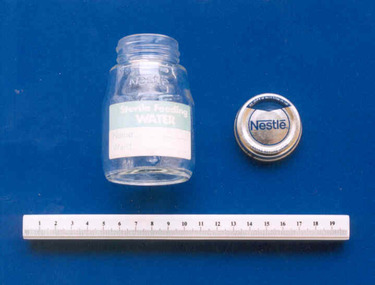
Bottle for sterile water, Nestle, Nestle
... Infant feeding...These bottles were used in hospital maternity wards to relieve baby's thirst, particularly in the immediate postpartum before the mother's milk came in. Infant feeding Infant care Small clear glass bottle tapering to a wide neck with a thread for a screw top. ...These bottles were used in hospital maternity wards to relieve baby's thirst, particularly in the immediate postpartum before the mother's milk came in.Small clear glass bottle tapering to a wide neck with a thread for a screw top. Metal screw top lid. Calibrations embossed on glass in millilitres (0-120). Embossed on front of bottle: 'Nestle'. Printing on paper label adhered to bottle reads 'Sterile Feeding/Water/Name/Ward'.infant feeding, infant care -
 Alfred Hospital Nurses League - Nursing History Collection
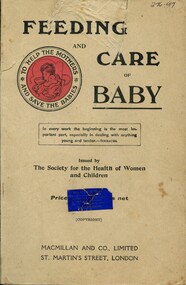
Book - Illustrated Book, F. Truby King 1858-1938, Feeding and care of baby, 1921
... ...infant feeding...Of significance to the AHNL as many graduates went on to complete infant welfare training Infant nutrition infant feeding infant welfare Contempory [1917] advice on the care and feeding of babies, including a strict routine On the front cover there is a small rectangular sicker with booksellers' details [Robertson and Mullens Melbourne] Previous catalogue number handwritten [black ink] at top right of front cover. ...Contempory [1917] advice on the care and feeding of babies, including a strict routineIllustrated book with cream cover and black print. Title on front cover and spine. Also on front cover is a quote by Socrates ' In every work the beginning is the most important part, especially in dealing with anything young and tender'. There is also an illustration of a woman holding a baby [black ink on orange background, within a circular margin containing the words 'TO HELP THE MOTHERS AND SAVE THE BABIES' on the front cover. On the back cover is a list of other books by Truby Kingnon-fictionContempory [1917] advice on the care and feeding of babies, including a strict routineinfant nutrition, infant feeding, infant welfare -
 Port Fairy Historical Society Museum and Archives
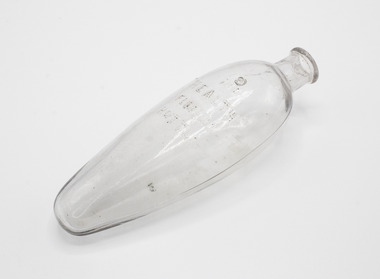
Domestic object - Baby Bottle, c.1900
... ...infant feeding...The "Health" Feeding Bottle domestic items infant feeding baby bottle feeding bottle glass bottle infant bottle milk feeding bottle The health feeding bottle moulded in the glass Baby's feeding bottle, marked for tablespoons and with a breathing hole. clear glass ovoid in shape Domestic object Baby Bottle ...The "Health" Feeding BottleBaby's feeding bottle, marked for tablespoons and with a breathing hole. clear glass ovoid in shapeThe health feeding bottle moulded in the glassdomestic items, infant feeding, baby bottle, feeding bottle, glass bottle, infant bottle, milk feeding bottle -
 Royal Australian and New Zealand College of Obstetricians & Gynaecologists (RANZCOG)
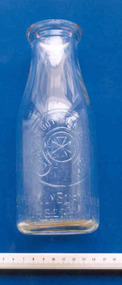
Talbot Milk Supply milk bottle
... Infant feeding...It provided free uncontaminated milk to needy families, since many infant deaths and illnesses were traceable to unsuitable or adulterated food. Infant feeding A wide necked milk bottle made of clear glass. ...This style of milk bottle began to appear in Australia in the 1930s. The number stamped on the base indicated the dairy to which the bottle belonged. Nursery milk had a higher guaranteed fat content than ordinary milk. Lady Talbot, the wife of a Victorian Governor, was associated with the movement that was to become the Free Kindergarten Union in 1908. The Talbot Milk Institute was associated with the Union. It provided free uncontaminated milk to needy families, since many infant deaths and illnesses were traceable to unsuitable or adulterated food. A wide necked milk bottle made of clear glass. Embossed in an arc on the front of the bottle: 'Lady Talbot Milk Supply Co. Specially supervised nursery milk.' Also embossed on base: '62'.infant feeding -
 Royal Australian and New Zealand College of Obstetricians & Gynaecologists (RANZCOG)
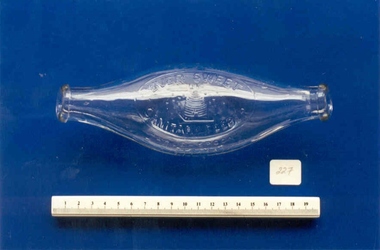
'Ever Sweet Sanitary Feeder' used by Gerard Anderson, 1922
... ...Infant feeding...This feeder was used by the parents of Gerard Anderson to feed him Lactogen in 1922. Correspondence on file from donor. Infant care Infant feeding 'EVER SWEET/SANITARY FEEDER' Clear glass feeding bottle. ...This feeder was used by the parents of Gerard Anderson to feed him Lactogen in 1922. Correspondence on file from donor.Clear glass feeding bottle. Bottle is curved, somewhat resembling the shape of a banana, with a bottle neck at either end. A flat depression on the underside allows the object to lie on a flat surface. The back of the bottle is marked in ounces, and the front is marked in tablespoons. Embossed on the front is a picture of a beehive on a stand with the words: 'EVER SWEET/SANITARY FEEDER'.'EVER SWEET/SANITARY FEEDER'infant care, infant feeding -
 Royal Australian and New Zealand College of Obstetricians & Gynaecologists (RANZCOG)
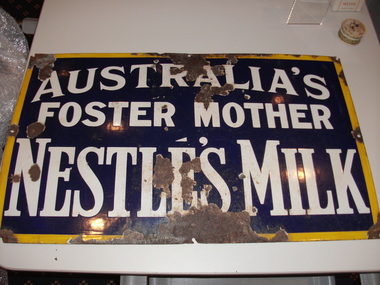
Sign, advertising, 1930s
... Infant feeding...Most likely purchased by former curator Melissa Campbell from a market or antique store. Infant feeding Advertising sign, enamel paint on metal, "AUSTRALIA'S/ FOSTER MOTHER/ NESTLE'S MILK". ...Most likely purchased by former curator Melissa Campbell from a market or antique store.Advertising sign, enamel paint on metal, "AUSTRALIA'S/ FOSTER MOTHER/ NESTLE'S MILK". H 45..0.x w 75.4cminfant feeding -
 Royal Australian and New Zealand College of Obstetricians & Gynaecologists (RANZCOG)
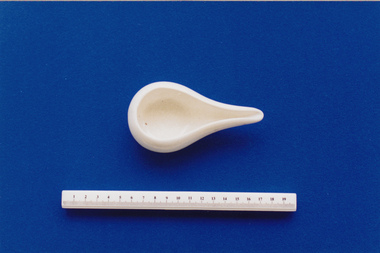
Pap boat associated with midwife Mary Howlett, c. 1866-1920, 1880 (approximate)
... ...Infant feeding...They were used to feed pap to infants or invalids. Pap was a mixture of breadcrumbs, flour, rice or barley mixed with fluids such as broth, milk (if the infant was lucky), water, wine and even beer, to aid the digestion of pap it was often pre-chewed by the nurse or nanny. ...Mrs Howlett's midwifery box and contents were given to Dr Frank Forster, and he donated them to the museum collection in 1993. Infant care Infant feeding Midwifery Small round white china container with an extended slim lip. ...Pap boats date from approximately 1710 and were in extensive use until the end of the nineteenth century. They were used to feed pap to infants or invalids. Pap was a mixture of breadcrumbs, flour, rice or barley mixed with fluids such as broth, milk (if the infant was lucky), water, wine and even beer, to aid the digestion of pap it was often pre-chewed by the nurse or nanny. Pap was a popular form of infant nutrition for almost 300 years and used in many well to do homes. For unwanted or illegitimate infants in foundling homes it was often the only form of sustenance, however, and as a result the mortality rate was appallingly high. Despite a growing number of experts advising against the use of pap, it nevertheless persisted as a major source of infant nutrition in many nurseries until the late 1800’s, largely due to the ignorance of nannies and nurses who took great delight in disregarding the advice of physicians, who they believed were usurping their position in the household. ‘Nanny knows best’.(Amgueddfa Cymru - National Museum Wales, 'Pap Boat')Mary Howlett (1840-1922) began practising as a country midwife in 1866 in the western district of Victoria. She qualified as a 'ladies monthly nurse' in 1887 and continued to practise as a nurse and midwife until 1920. She began her six months training at the Melbourne Lying-In Hospital. She was known by many as 'Auntie', and her career spanned more than 50 years. Mrs Howlett's midwifery box and contents were given to Dr Frank Forster, and he donated them to the museum collection in 1993. Small round white china container with an extended slim lip. Fluid capacity approximately 30-90ml. The boat has been made from two moulded sections. infant care, infant feeding, midwifery -
 Royal Australian and New Zealand College of Obstetricians & Gynaecologists (RANZCOG)
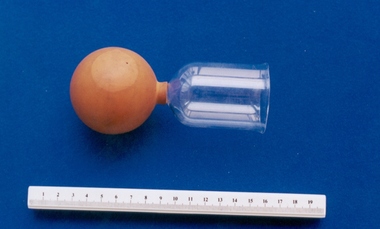
Cupping glass associated with midwife Mary Howlett, c. 1866 - 1920
... ...Infant feeding...Mrs Howlett's midwifery box and contents were given to Dr Frank Forster, and he donated them to the museum collection in 1993. Midwifery Infant feeding Cupping glass, consisting of a glass tube connection and red rubber hand pump. ...Cupping glasses were in use from the early 1700s onwards. Their purpose was to draw the nipple out from the areola in preparation for breast feeding. They were also used for expressing small quantities of breast milk. Other possible uses include drawing fluid from other parts of the body for conditions such as oedema of the limbs or abdomen.Mary Howlett (1840-1922) began practising as a country midwife in 1866 in the western district of Victoria. She qualified as a 'ladies monthly nurse' in 1887 and continued to practise as a nurse and midwife until 1920. She began her six months training at the Melbourne Lying-In Hospital. She was known by many as 'Auntie', and her career spanned more than 50 years. Mrs Howlett's midwifery box and contents were given to Dr Frank Forster, and he donated them to the museum collection in 1993. Cupping glass, consisting of a glass tube connection and red rubber hand pump.midwifery, infant feeding -
 Royal Australian and New Zealand College of Obstetricians & Gynaecologists (RANZCOG)
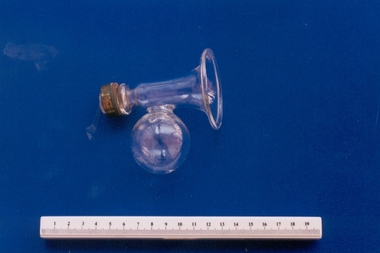
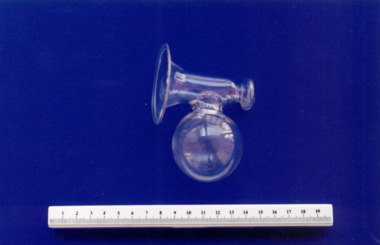
Breast pump associated with midwife Mary Howlett, c. 1866 - 1920
... Infant feeding...infant. These pumps were in use from the early 1920s to the late 1960s. They can also be used to stimulate lactation. These pumps were widely used in the 1950s by mothers of premature babies. The milk was expressed by hand in the home, then transported to the hospital to feed...Mrs Howlett's midwifery box and contents were given to Dr Frank Forster, and he donated them to the museum collection in 1993. Infant feeding Midwifery Glass breast pump with brass screw attachment and remnants of rubber pump. ...These breast pumps were also known as breast relievers or breast exhausters. They were a refinement of the much earlier 'sucking glass'. The breast pump was refined during the Victorian age. Glass breast pumps were used to manually express milk for the infant. These pumps were in use from the early 1920s to the late 1960s. They can also be used to stimulate lactation. These pumps were widely used in the 1950s by mothers of premature babies. The milk was expressed by hand in the home, then transported to the hospital to feed the premature infant. Mary Howlett (1840-1922) began practising as a country midwife in 1866 in the western district of Victoria. She qualified as a 'ladies monthly nurse' in 1887 and continued to practise as a nurse and midwife until 1920.She began her six months training at the Melbourne Lying-In Hospital. She was known by many as 'Auntie', and her career spanned more than 50 years. Mrs Howlett's midwifery box and contents were given to Dr Frank Forster, and he donated them to the museum collection in 1993.Glass breast pump with brass screw attachment and remnants of rubber pump. Pump is loosely bell shaped with a glass bowl attached to the side of the bell.infant feeding, midwifery -
 Royal Australian and New Zealand College of Obstetricians & Gynaecologists (RANZCOG)
Breast pump associated with midwife Mary Howlett, c. 1866 - 1920
... Infant feeding...infant. These pumps were in use from the early 1920s to the late 1960s. They can also be used to stimulate lactation. These pumps were widely used in the 1950s by mothers of premature babies. The milk was expressed by hand in the home, then transported to the hospital to feed...Mrs Howlett's midwifery box and contents were given to Dr Frank Forster, and he donated them to the museum collection in 1993. Infant feeding Midwifery Glass breast pump. Pump is loosely bell shaped with a glass bowl attached to the side of the bell. ...These breast pumps were also known as breast relievers or breast exhausters. They were a refinement of the much earlier 'sucking glass'. The breast pump was refined during the Victorian age. Glass breast pumps were used to manually express milk for the infant. These pumps were in use from the early 1920s to the late 1960s. They can also be used to stimulate lactation. These pumps were widely used in the 1950s by mothers of premature babies. The milk was expressed by hand in the home, then transported to the hospital to feed the premature infant. Mary Howlett (1840-1922) began practising as a country midwife in 1866 in the western district of Victoria. She qualified as a 'ladies monthly nurse' in 1887 and continued to practise as a nurse and midwife until 1920.She began her six months training at the Melbourne Lying-In Hospital. She was known by many as 'Auntie', and her career spanned more than 50 years. Mrs Howlett's midwifery box and contents were given to Dr Frank Forster, and he donated them to the museum collection in 1993.Glass breast pump. Pump is loosely bell shaped with a glass bowl attached to the side of the bell.infant feeding, midwifery -
![Front cover of 'Pre-natal booklet: a practical guide for every expectant mother' [c.1950's], Depatment of Health, Victoria](/media/collectors/50187a8f023fd7201471f198/items/69cb1db6f42e5f9dda44028b/item-media/69cd973f5c213022b0d32de3/item-fit-380x285.jpg?cb=6) Alfred Hospital Nurses League - Nursing History Collection
Alfred Hospital Nurses League - Nursing History CollectionBooklet - Illustrated Booklet, Department of Health, Victoria, Pre-natal booklet: a practical guide for every expectant mother, [ca.1950's]
... ...infant feeding...Vintage textbook served as a practical guide for expectant mothers and fathers Insight into health care practices in the 1950's Prenatal care pregnancy infant feeding Hand written on front cover is the previous catalogue number [b;ack ink] and B Satchell [blue ink] handwritten at base of title page 'Beverley Satchell/Tweedle baby Hospital/Melbourne/Match 1965 Illustrated stapled booklet wih white cover. ...Vintage textbook served as a practical guide for expectant mothers and fathersInsight into health care practices in the 1950'sIllustrated stapled booklet wih white cover. On front cover there is a coloured drawing of a baby by Betty Paterson. Printed in blue above this illustration are the publishers details and title below Hand written on front cover is the previous catalogue number [b;ack ink] and B Satchell [blue ink] handwritten at base of title page 'Beverley Satchell/Tweedle baby Hospital/Melbourne/Match 1965prenatal care, pregnancy, infant feeding -
 Linton and District Historical Society Inc
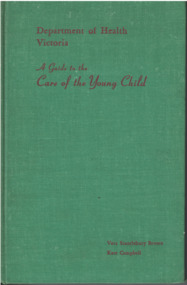
Textbook written by Dr Vera Scantlebury, A Guide to the Care of the Young Child, 1958
... First compiled by Dr Vera Scantlebury Brown and published as a "Guide to Infant Feeding". Book revised (with Kate Campbell) in 1941, 1951 and 1958. ...First compiled by Dr Vera Scantlebury Brown and published as a "Guide to Infant Feeding". Book revised (with Kate Campbell) in 1941, 1951 and 1958. ...Vera Scantlebury Brown was born in Linton in 1889, a daughter of Dr George Scantlebury and his wife Catherine, née Baynes. Vera undertook medical training at Melbourne University between 1907 and 1913. After serving in the British Army Medical Unit during World War I, she worked in various positions in Melbourne hospitals and then studied in the US and Canada. In 1926 she was appointed Director of Infant Welfare by the recently established Victorian Department of Health, and became responsible for the development of maternal, infant and pre-school services in Victoria. In 2023 a statue of Vera Scantlebury was erected in Linton's Avenue of Honour in Denison Street. This copy of the book appears to have been owned/used by Barbara Safstrom of Linton.Textbook for nursing students and other health professionals. First compiled by Dr Vera Scantlebury Brown and published as a "Guide to Infant Feeding". Book revised (with Kate Campbell) in 1941, 1951 and 1958. Pages 346 p.: index, tables.Inscribed top right of front endpaper: 'Barbara Saftstrom / FF8269'.vera scantlebury, kate campbell, 'a guide to the care of the young child' [textbook] -
 Alfred Hospital Nurses League - Nursing History Collection
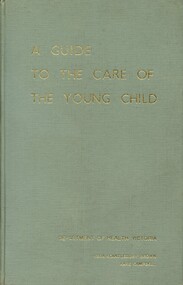
Book - Textbook, Vera Scantlebury Brown 1889-1946 et al, A guide to the care of the young child, 1963
... First published under this title in 1947, it evolved from an earlier manual titled 'The guide to infant feeding' ...First published under this title in 1947, it evolved from an earlier manual titled 'The guide to infant feeding' Authors were pioneers in Austalian paediatrics infant welfare infant nutrition paediatrics infectious diseases vitamin deficency Historic textbook covering topics ranging from infant nutrition and hygeine to the management of pre school children Inside front cover there is a printed black and white donation sticker: black Maltese cross in circle, 'This book was donated to Alfred Archival Association Nursing Division by'. ...Historic textbook covering topics ranging from infant nutrition and hygeine to the management of pre school childrenIllustrated textbook with pale olivegreen cloth binding. Title, authors and publisher stamped in gilt on front cover and spinenon-fictionHistoric textbook covering topics ranging from infant nutrition and hygeine to the management of pre school childreninfant welfare, infant nutrition, paediatrics, infectious diseases, vitamin deficency -
 Woods' Farming and Heritage Museum
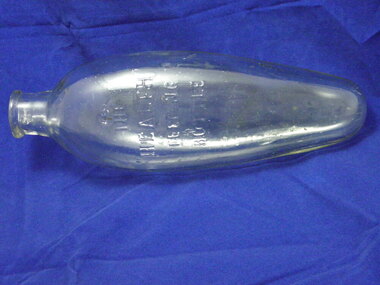
Baby Bottle, 1920
... ...infant bottle...milk feeding...This bottle was used by Dorothy Taylor nee Rowe as a baby in 1920, who was born in Murtoa and grew up in Wal Wal. baby bottle feeding bottle babies bottle glass bottle infant bottle milk feeding bottle Top side - "THE / "HEALTH" / FEEDING / BOTTLE" Bottom side - " TABLE-SPOONS " Has measurements 18, 16,14,12,10,8,6,4,2. ...This bottle was used by Dorothy Taylor nee Rowe as a baby in 1920, who was born in Murtoa and grew up in Wal Wal.Baby Bottle made of clear glass, chilli shape, with hole on top of bottle to allow air into bottle as baby feeds.with raised descriptionTop side - "THE / "HEALTH" / FEEDING / BOTTLE" Bottom side - " TABLE-SPOONS " Has measurements 18, 16,14,12,10,8,6,4,2.baby bottle, feeding bottle, babies bottle, glass bottle, infant bottle, milk feeding bottle -
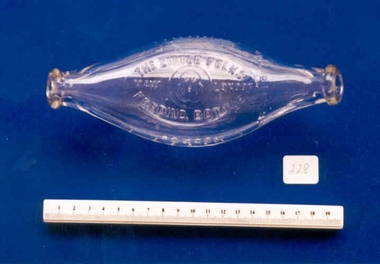 Royal Australian and New Zealand College of Obstetricians & Gynaecologists (RANZCOG)
'The Little Folks' Feeding Bottle, Maw, c. 1895 - 1910
... Clear glass infant feeding bottle. Bottle is somewhat like a banana in shape, with a bottle neck at each end. ...'THE LITTLE FOLKS/FEEDING BOTTLE', 'MAW LONDON' Clear glass infant feeding bottle. Bottle is somewhat like a banana in shape, with a bottle neck at each end. ...Clear glass infant feeding bottle. Bottle is somewhat like a banana in shape, with a bottle neck at each end. There is a flattened oval section of glass on the underside of the bottle to allow the bottle to sit on a flat surface. Embossed on front of bottle: ' THE LITTLE FOLKS'/MAW LONDON/FEEDING BOTTLE'. Calibrations are marked in ounces and in tablespoons.'THE LITTLE FOLKS/FEEDING BOTTLE', 'MAW LONDON'
