
Showing 32 items matching "irish linen"
-
 Greensborough Historical Society
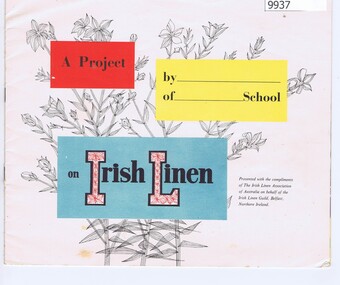
Booklet, Australian Instructional Films Pty Ltd. Sydney, A Project on Irish Linen
... A Project on Irish Linen...irish linen...School project booklet on Irish Linen in Northern Ireland, with yarn samples...School project booklet on Irish Linen in Northern Ireland, with yarn samples irish linen ireland school project material 12 page booket with coloured and black and white images, black and red text A Project on Irish Linen Booklet Booklet Australian Instructional Films Pty Ltd. ...School project booklet on Irish Linen in Northern Ireland, with yarn samples12 page booket with coloured and black and white images, black and red textirish linen, ireland, school project material -
 Embroiderers Guild, Victoria
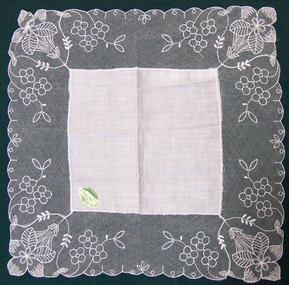
Accessory - Irish Linen and Net Embroidery Handkerchief, 1980-2000
... Irish Linen and Net Embroidery Handkerchief...Irish linen centre with a wide border of machine made net embroidery in a floral pattern....Accessory Irish Linen and Net Embroidery Handkerchief ...Irish linen centre with a wide border of machine made net embroidery in a floral pattern.handkerchief, 1980-2000 -
 Nhill Aviation Heritage Centre
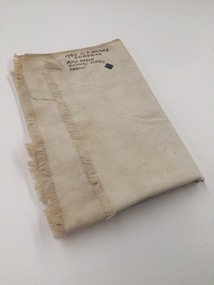
Memorabilia - Iris linen aircraft fabric
... ...irish linen...small quantity of Irish linen fabric from No.2 Air Park Bankstown where many Ansons were repaired and overhauled during the war...aircraft covering fabric, Irish linen...small quantity of Irish linen fabric from No.2 Air Park Bankstown where many Ansons were repaired and overhauled during the war linen fabric irish linen Dixon Avro Anson aircraft covering fabric, Irish linen Memorabilia Iris linen aircraft fabric ...small quantity of Irish linen fabric from No.2 Air Park Bankstown where many Ansons were repaired and overhauled during the waraircraft covering fabric, Irish linenlinen, fabric, irish linen, dixon, avro anson -
 Bendigo Historical Society Inc.
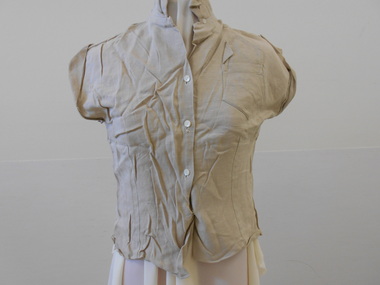
Clothing - LADIES LINEN BLOUSE, 1960's-1970's
... ...ladies irish linen blouse...In a Moygashel. Pure Irish Linen...In a Moygashel. Pure Irish Linen Beige linen ladies blouse. Foldover collar. ...Beige linen ladies blouse. Foldover collar. Sleeveless with turned back cuffs at arm holes 7 cm at shoulder. Front opening with three 1 cm white plastic buttons and one press-stud 12 cm above the waist. Front made of two pieces with 24 cm dart from hemline. Breast pocket on LHS with turn over flap. Back made from one piece with 23 cm darts from hemline.Label inside back neckline ''SPORTSCRAFT'' Regd. In a Moygashel. Pure Irish Linencostume, female, ladies irish linen blouse -
 National Wool Museum
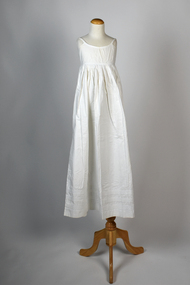
Clothing - Petticoat, Eliza Lynon, 19th century
... Irish linen...19th century Irish linen Christening gown and matching petticoat donated by Ruth Starkey. ...White Irish linen bodiced petticoat with three sets of three pin tucks at hem. ...19th century Irish linen Christening gown and matching petticoat donated by Ruth Starkey. ...19th century Irish linen Christening gown and matching petticoat donated by Ruth Starkey. The Christening gown and petticoat have been in the family for around 170 years, passed to generations. They were sewn by Eliza Lynon in Enniskillen, Northern Ireland. The following history has been provided by Ruth Starkey: • Town of origin is Enniskillen, Northern Ireland, sewn by Eliza Lynon. • The gown came to Australia with Eliza Lynon on the Red Jacket in 1855. • Eliza married Joseph Dobbyn (who was a member of the Royal Inniskilling Fusiliers Regiment) at Christ Church Geelong. • They built a home at 150 McKillop St, Geelong. Melrose was the name of the home. • Family name Dobbyn - Joseph Wilson Dobbyn b. 07/04/1844 - d 12/10/1892 and Elizabeth (Eliza b 12/03/1847 d 26/08/1934) and passed to Eliza Jane, Jessie Victoria Mary and Lucy Ellen Dobbyn (sisters). • Lucy Ellen nee Dobbyn, married Herbert Blunt, Boatbuilder Geelong at Christ Church Geelong • All lived at 150 McKillop St Geelong over the years • Passed to Marjorie May Fearn born nee Blunt who was baptized at Christ Church Geelong 29/5/1915 • Passed to Ann Rosemary Starkey nee Fearn • Passed to Ruth Norelle Starkey (me) I was baptized at Christ Church Geelong. • I am the great- great granddaughter of Joseph and Eliza and the great granddaughter of Herbert and Lucy.White Irish linen bodiced petticoat with three sets of three pin tucks at hem. Skirt is attached with cartridge pleating and constructed with French seams. The bodice ties at the back with drawstrings at the neck and waist.irish linen, christening, religion, children's clothing, ceremonial, church, geelong, red jacket ship, enniskillen, christ church geelong, northern ireland -
 National Wool Museum
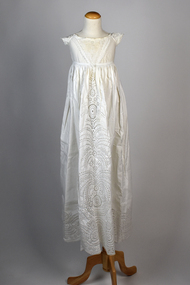
Clothing - Christening Gown, Eliza Lynon, 19th century
... Irish linen...19th century Irish linen Christening gown and matching petticoat donated by Ruth Starkey. ...Irish linen Christening gown with cutwork anglais. ...19th century Irish linen Christening gown and matching petticoat donated by Ruth Starkey. ...19th century Irish linen Christening gown and matching petticoat donated by Ruth Starkey. The Christening gown and petticoat have been in the family for around 170 years, passed to generations. They were sewn by Eliza Lynon in Enniskillen, Northern Ireland. The following history has been provided by Ruth Starkey: • Town of origin is Enniskillen, Northern Ireland, sewn by Eliza Lynon. • The gown came to Australia with Eliza Lynon on the Red Jacket in 1855. • Eliza married Joseph Dobbyn (who was a member of the Royal Inniskilling Fusiliers Regiment) at Christ Church Geelong. • They built a home at 150 McKillop St, Geelong. Melrose was the name of the home. • Family name Dobbyn - Joseph Wilson Dobbyn b. 07/04/1844 - d 12/10/1892 and Elizabeth (Eliza b 12/03/1847 d 26/08/1934) and passed to Eliza Jane, Jessie Victoria Mary and Lucy Ellen Dobbyn (sisters). • Lucy Ellen nee Dobbyn, married Herbert Blunt, Boatbuilder Geelong at Christ Church Geelong • All lived at 150 McKillop St Geelong over the years • Passed to Marjorie May Fearn born nee Blunt who was baptized at Christ Church Geelong 29/5/1915 • Passed to Ann Rosemary Starkey nee Fearn • Passed to Ruth Norelle Starkey (me) I was baptized at Christ Church Geelong. • I am the great- great granddaughter of Joseph and Eliza and the great granddaughter of Herbert and Lucy.Irish linen Christening gown with cutwork anglais. Cutwork along hem is scalloped with a central motif going down the centre front of the body. Bodice is embroidered in a v shape at the front and has cutwork embroidered sleeves. Skirt is attached to the bodice with cartridge pleats.irish linen, christening, religion, children's clothing, ceremonial, church, geelong, red jacket ship, enniskillen, christ church geelong, northern ireland -
 Kiewa Valley Historical Society
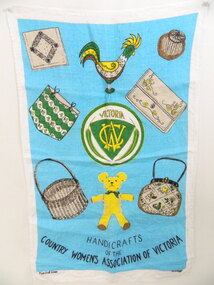
Towel Tea CWA
... Handicrafts / of the / Country Women's Association of Victoria - along the bottom Pure Irish Linen - bottom left Dummay - bottom right...This tea towel would have been used at a later date possibly for fund raising as the group continued to meet and work together. tea towel cwa tawonga kitchen linen Handicrafts / of the / Country Women's Association of Victoria - along the bottom Pure Irish Linen - bottom left Dummay - bottom right This large blue green, yellow, brown and black with a white border, linen, tea towel has the CWA logo in the middle with pictures of handcrafted items surrounding it. ...The Tawonga branch of the C.W.A. commenced on the 7th Feb. 1946 and often combined activities with the other branches in the Kiewa Valley. The C.W.A. aimed to improve health, welfare and education for women and children in the country.Women living in Tawonga were mostly on farms and, in 1946, when the branch commenced would have been feeling more remote with WW11 having had an effect of available workers and the well being of the women and children. This tea towel would have been used at a later date possibly for fund raising as the group continued to meet and work together.This large blue green, yellow, brown and black with a white border, linen, tea towel has the CWA logo in the middle with pictures of handcrafted items surrounding it. Along the bottom is printed: "Handicrafts / of the / Country Women's Association of Victoria."Handicrafts / of the / Country Women's Association of Victoria - along the bottom Pure Irish Linen - bottom left Dummay - bottom righttea towel, cwa, tawonga, kitchen, linen -
 Whitehorse Historical Society Inc.
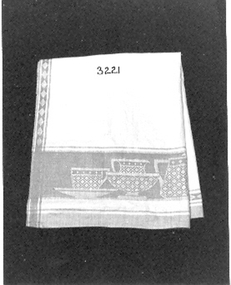
Domestic object - Tea Towel
... Cream irish linen tea towels with printed green border on three sides. 10cm green band, with printed cup and saucer on fourth side....domestic items cleaning manchester work cloths Cream irish linen tea towels with printed green border on three sides. 10cm green band, with printed cup and saucer on fourth side. ...Cream irish linen tea towels with printed green border on three sides. 10cm green band, with printed cup and saucer on fourth side.domestic items, cleaning, manchester, work cloths -
 Embroiderers Guild, Victoria
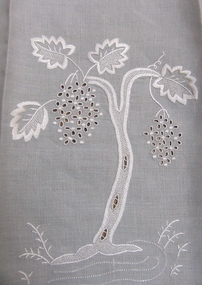
Textile - Marghab Madeira Hand towel, Marghab Company
... The Marghabs took advantage of this reputation, producing textiles that were skilfully hand-embroidered on the highest quality Irish linen and a form of organdie called Margandie, made in Switzerland, and harder wearing than usual organdie. ...The Marghabs took advantage of this reputation, producing textiles that were skilfully hand-embroidered on the highest quality Irish linen and a form of organdie called Margandie, made in Switzerland, and harder wearing than usual organdie. ...Marghab Linens Ltd. was a company specialising in table linens founded on Madeira in 1933 by British Cypriot Emile Marghab and his South Dakotan wife Vera (née Way); and disestablished in 1980.The company was also known as Emile Marghab Inc. Since 1850, when Madeiran natives were introduced to hand embroidery as a means of industry, the islands had been renowned for their needlework. The Marghabs took advantage of this reputation, producing textiles that were skilfully hand-embroidered on the highest quality Irish linen and a form of organdie called Margandie, made in Switzerland, and harder wearing than usual organdie. The linens were designed by Vera, and hand-embroidered as a home industry by the women on Madeira, who Vera insisted received payment per stitch - which for a single place mat could amount to seventy thousand stitches.Pale grey linen hand towel with white embroidery, cutwork and applique. The design is of a tree with blossoms.madeira work, surface stitchery, hand towel -
 Embroiderers Guild, Victoria
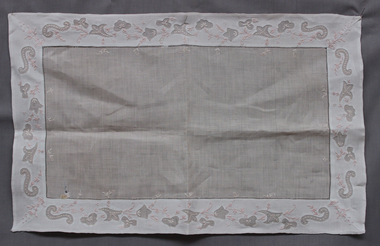
Textile - Madeira Work Embroidered Mat, 20 th C
... The Marghabs took advantage of this reputation, producing textiles that were skilfully hand-embroidered on the highest quality Irish linen and a form of organdie called Margandie, made in Switzerland, and harder wearing than usual organdie. ...The Marghabs took advantage of this reputation, producing textiles that were skilfully hand-embroidered on the highest quality Irish linen and a form of organdie called Margandie, made in Switzerland, and harder wearing than usual organdie. ...Marghab Linens Ltd. was a company specialising in table linens founded on Madeira in 1933 by British Cypriot Emile Marghab and his South Dakotan wife Vera (née Way); and disestablished in 1980.The company was also known as Emile Marghab Inc. Since 1850, when Madeiran natives were introduced to hand embroidery as a means of industry, the islands had been renowned for their needlework. The Marghabs took advantage of this reputation, producing textiles that were skilfully hand-embroidered on the highest quality Irish linen and a form of organdie called Margandie, made in Switzerland, and harder wearing than usual organdie. The linens were designed by Vera, and hand-embroidered as a home industry by the women on Madeira, who Vera insisted received payment per stitch - which for a single place mat could amount to seventy thousand stitches.Pale peach mat with white border with Madeira work and embroidery in a pattern of scrolls and flowersembroidery, madeira, marghab, mats -
 Embroiderers Guild, Victoria
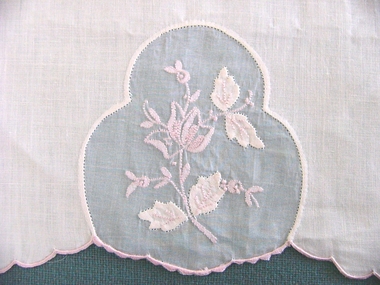
Textile - Marghab Shadow Work Mat, mid 20th century
... The Marghabs took advantage of this reputation, producing textiles that were skilfully hand-embroidered on the highest quality Irish linen and a form of organdie called Margandie, made in Switzerland, and harder wearing than usual organdie. ...The Marghabs took advantage of this reputation, producing textiles that were skilfully hand-embroidered on the highest quality Irish linen and a form of organdie called Margandie, made in Switzerland, and harder wearing than usual organdie. ...Marghab Linens Ltd. was a company specialising in table linens founded on Madeira in 1933 by British Cypriot Emile Marghab and his South Dakotan wife Vera (née Way); and disestablished in 1980.The company was also known as Emile Marghab Inc. Since 1850, when Madeiran natives were introduced to hand embroidery as a means of industry, the islands had been renowned for their needlework. The Marghabs took advantage of this reputation, producing textiles that were skilfully hand-embroidered on the highest quality Irish linen and a form of organdie called Margandie, made in Switzerland, and harder wearing than usual organdie. The linens were designed by Vera, and hand-embroidered as a home industry by the women on Madeira, who Vera insisted received payment per stitch - which for a single place mat could amount to seventy thousand stitches.Fine pale pink linen with an inset panel in organza, featuring a spray of flowers in shadow work. Fine padded and scalloped buttonhole edge. Marghab.embroidery, shadow work, towels, madeira, 1940-60 -
 Embroiderers Guild, Victoria
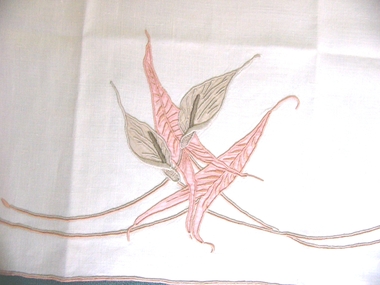
Textile - Embroidered Hand Towel, Mid 20th century
... The Marghabs took advantage of this reputation, producing textiles that were skilfully hand-embroidered on the highest quality Irish linen and a form of organdie called Margandie, made in Switzerland, and harder wearing than usual organdie. ...The Marghabs took advantage of this reputation, producing textiles that were skilfully hand-embroidered on the highest quality Irish linen and a form of organdie called Margandie, made in Switzerland, and harder wearing than usual organdie. ...Marghab Linens Ltd. was a company specialising in table linens founded on Madeira in 1933 by British Cypriot Emile Marghab and his South Dakotan wife Vera (née Way); and disestablished in 1980.The company was also known as Emile Marghab Inc. Since 1850, when Madeiran natives were introduced to hand embroidery as a means of industry, the islands had been renowned for their needlework. The Marghabs took advantage of this reputation, producing textiles that were skilfully hand-embroidered on the highest quality Irish linen and a form of organdie called Margandie, made in Switzerland, and harder wearing than usual organdie. The linens were designed by Vera, and hand-embroidered as a home industry by the women on Madeira, who Vera insisted received payment per stitch - which for a single place mat could amount to seventy thousand stitches.Cream linen with a design of pink and brown. lilies and leaves in applique, satin stitch and couching. Marghab.embroidery, towels, surface stitchery, madeira, 1940-60 -
 Embroiderers Guild, Victoria
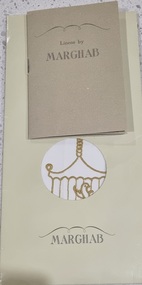
Textile - Marghab Linen Hand Towel
... The Marghabs took advantage of this reputation, producing textiles that were skilfully hand-embroidered on the highest quality Irish linen and a form of organdie called Margandie, made in Switzerland, and harder wearing than usual organdie. ...The Marghabs took advantage of this reputation, producing textiles that were skilfully hand-embroidered on the highest quality Irish linen and a form of organdie called Margandie, made in Switzerland, and harder wearing than usual organdie. ...Marghab Linens Ltd. was a company specialising in table linens founded on Madeira in 1933 by British Cypriot Emile Marghab and his South Dakotan wife Vera (née Way); and disestablished in 1980.The company was also known as Emile Marghab Inc. Since 1850, when Madeiran natives were introduced to hand embroidery as a means of industry, the islands had been renowned for their needlework. The Marghabs took advantage of this reputation, producing textiles that were skilfully hand-embroidered on the highest quality Irish linen and a form of organdie called Margandie, made in Switzerland, and harder wearing than usual organdie. The linens were designed by Vera, and hand-embroidered as a home industry by the women on Madeira, who Vera insisted received payment per stitch - which for a single place mat could amount to seventy thousand stitches.Marghab linen hand towel in original card envelope with accompanying description. -
 Embroiderers Guild, Victoria
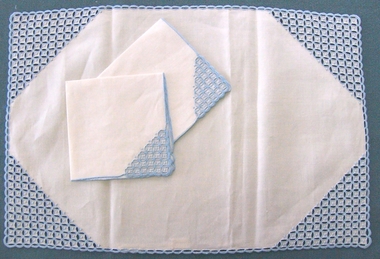
Textile - Tray Cloth and Napkins, Marghab, Late 20th century
... The Marghabs took advantage of this reputation, producing textiles that were skilfully hand-embroidered on the highest quality Irish linen and a form of organdie called Margandie, made in Switzerland, and harder wearing than usual organdie. ...The Marghabs took advantage of this reputation, producing textiles that were skilfully hand-embroidered on the highest quality Irish linen and a form of organdie called Margandie, made in Switzerland, and harder wearing than usual organdie. ...Marghab Linens Ltd. was a company specialising in table linens founded on Madeira in 1933 by British Cypriot Emile Marghab and his South Dakotan wife Vera (née Way); and disestablished in 1980.The company was also known as Emile Marghab Inc. Since 1850, when Madeiran natives were introduced to hand embroidery as a means of industry, the islands had been renowned for their needlework. The Marghabs took advantage of this reputation, producing textiles that were skilfully hand-embroidered on the highest quality Irish linen and a form of organdie called Margandie, made in Switzerland, and harder wearing than usual organdie. The linens were designed by Vera, and hand-embroidered as a home industry by the women on Madeira, who Vera insisted received payment per stitch - which for a single place mat could amount to seventy thousand stitches. Made by Marghab, and sold at Georges store, Collins St., Melbourne.Cream linen with diagonal designs of flower heads in one corner of napkins and four corners of tray cloth. All edged in buttonhole stitch. Flower centres are dots of satin stitch.embroidery, mats, madeira work, madeira, 1960-80 -
 Embroiderers Guild, Victoria
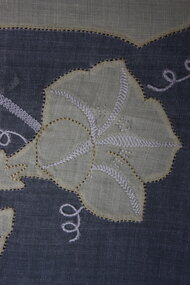
Textile - Marghab Madeira Embroidery Mat, 20thC
... The Marghabs took advantage of this reputation, producing textiles that were skilfully hand-embroidered on the highest quality Irish linen and a form of organdy called Margandie, made in Switzerland, and harder wearing than usual organdy. ...The Marghabs took advantage of this reputation, producing textiles that were skilfully hand-embroidered on the highest quality Irish linen and a form of organdy called Margandie, made in Switzerland, and harder wearing than usual organdy. ...Marghab Linens Ltd. was a company specialising in table linens founded on Madeira in 1933 by British Cypriot Emile Marghab and his South Dakotan wife Vera (née Way); and disestablished in 1980. The company was also known as Emile Marghab Inc. Since 1850, when Madeiran natives were introduced to hand embroidery as a means of industry, the islands had been renowned for their needlework. The Marghabs took advantage of this reputation, producing textiles that were skilfully hand-embroidered on the highest quality Irish linen and a form of organdy called Margandie, made in Switzerland, and harder wearing than usual organdy. The linens were designed by Vera, and hand-embroidered as a home industry by the women on Madeira, who Vera insisted received payment per stitch - which for a single place mat could amount to seventy thousand stitches. Marghab linens were retailed through leading American department stores such as Lord & Taylor, Marshall Field's, and Neiman Marcus. In 1945 Vera Marghab was awarded the Neiman Marcus Fashion Award. Emile died in 1947, and his wife took charge of the business until its disestablishment in 1980. She died in 1995. While linens have continued to be produced by Madeira since Marghab closed in 1980, as of 2015 the quality and workmanship in Marghab's output remains highly regarded. In 1970, the South Dakota Art Museum were gifted nearly eight hundred examples of Marghab linens, followed by many gifts from Vera and her trustees. The Marghab Gallery was dedicated in 1970. As of 2015, the museum's holdings are described as the world's most complete collection of Marghab linens, with over three hundred patterns and almost 2800 objects. The museum holds at least one example of almost every design produced, but deaccessioned and sold off all the duplicates at auction in 2005 in order to raise money for building work. At the time of the auction, it was noted that Marghab linens had previously sold for hundreds of dollars over their reserve prices, and that it was extremely difficult to find matched sets.Part of 6 pieces Marghab/Madeira embroidery. a) Yellow and white organdie mat with convolvulus in 2 corners.embroidery, madeira, marghab, mats, madeira embroidery -
 Embroiderers Guild, Victoria
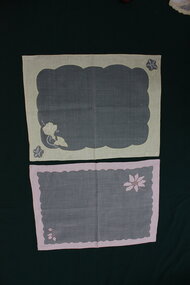
Textile - Marghab Madeira Embroidery Mats, 20thC
... The Marghabs took advantage of this reputation, producing textiles that were skilfully hand-embroidered on the highest quality Irish linen and a form of organdy called Margandie, made in Switzerland, and harder wearing than usual organdy. ...The Marghabs took advantage of this reputation, producing textiles that were skilfully hand-embroidered on the highest quality Irish linen and a form of organdy called Margandie, made in Switzerland, and harder wearing than usual organdy. ...Marghab Linens Ltd. was a company specialising in table linens founded on Madeira in 1933 by British Cypriot Emile Marghab and his South Dakotan wife Vera (née Way); and disestablished in 1980. The company was also known as Emile Marghab Inc. Since 1850, when Madeiran natives were introduced to hand embroidery as a means of industry, the islands had been renowned for their needlework. The Marghabs took advantage of this reputation, producing textiles that were skilfully hand-embroidered on the highest quality Irish linen and a form of organdy called Margandie, made in Switzerland, and harder wearing than usual organdy. The linens were designed by Vera, and hand-embroidered as a home industry by the women on Madeira, who Vera insisted received payment per stitch - which for a single place mat could amount to seventy thousand stitches. Marghab linens were retailed through leading American department stores such as Lord & Taylor, Marshall Field's, and Neiman Marcus. In 1945 Vera Marghab was awarded the Neiman Marcus Fashion Award. Emile died in 1947, and his wife took charge of the business until its disestablishment in 1980. She died in 1995. While linens have continued to be produced by Madeira since Marghab closed in 1980, as of 2015 the quality and workmanship in Marghab's output remains highly regarded. In 1970, the South Dakota Art Museum were gifted nearly eight hundred examples of Marghab linens, followed by many gifts from Vera and her trustees. The Marghab Gallery was dedicated in 1970. As of 2015, the museum's holdings are described as the world's most complete collection of Marghab linens, with over three hundred patterns and almost 2800 objects. The museum holds at least one example of almost every design produced, but deaccessioned and sold off all the duplicates at auction in 2005 in order to raise money for building work. At the time of the auction, it was noted that Marghab linens had previously sold for hundreds of dollars over their reserve prices, and that it was extremely difficult to find matched sets.Part of 6 pieces Marghab/Madeira embroidery. Pink organdie mat with flowers in opposite corners.embroidery, madeira, marghab, mats, madeira embroidery -
 Embroiderers Guild, Victoria
Textile - Marghab Madeira Embroidery Mats, 20thC
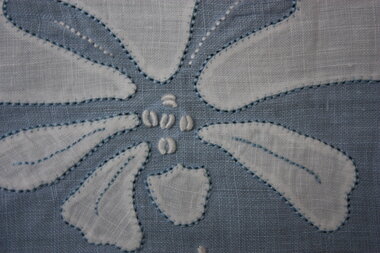
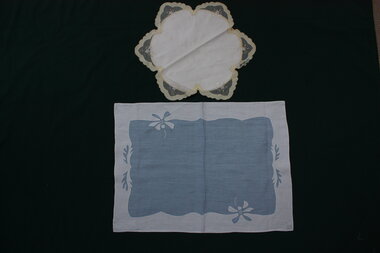
... The Marghabs took advantage of this reputation, producing textiles that were skilfully hand-embroidered on the highest quality Irish linen and a form of organdy called Margandie, made in Switzerland, and harder wearing than usual organdy. ...The Marghabs took advantage of this reputation, producing textiles that were skilfully hand-embroidered on the highest quality Irish linen and a form of organdy called Margandie, made in Switzerland, and harder wearing than usual organdy. ...Marghab Linens Ltd. was a company specialising in table linens founded on Madeira in 1933 by British Cypriot Emile Marghab and his South Dakotan wife Vera (née Way); and disestablished in 1980. The company was also known as Emile Marghab Inc. Since 1850, when Madeiran natives were introduced to hand embroidery as a means of industry, the islands had been renowned for their needlework. The Marghabs took advantage of this reputation, producing textiles that were skilfully hand-embroidered on the highest quality Irish linen and a form of organdy called Margandie, made in Switzerland, and harder wearing than usual organdy. The linens were designed by Vera, and hand-embroidered as a home industry by the women on Madeira, who Vera insisted received payment per stitch - which for a single place mat could amount to seventy thousand stitches. Marghab linens were retailed through leading American department stores such as Lord & Taylor, Marshall Field's, and Neiman Marcus. In 1945 Vera Marghab was awarded the Neiman Marcus Fashion Award. Emile died in 1947, and his wife took charge of the business until its disestablishment in 1980. She died in 1995. While linens have continued to be produced by Madeira since Marghab closed in 1980, as of 2015 the quality and workmanship in Marghab's output remains highly regarded. In 1970, the South Dakota Art Museum were gifted nearly eight hundred examples of Marghab linens, followed by many gifts from Vera and her trustees. The Marghab Gallery was dedicated in 1970. As of 2015, the museum's holdings are described as the world's most complete collection of Marghab linens, with over three hundred patterns and almost 2800 objects. The museum holds at least one example of almost every design produced, but deaccessioned and sold off all the duplicates at auction in 2005 in order to raise money for building work. At the time of the auction, it was noted that Marghab linens had previously sold for hundreds of dollars over their reserve prices, and that it was extremely difficult to find matched sets.Part of 6 pieces Marghab/Madeira embroidery. e) Blue and white cotton mat with applique flowers in border.embroidery, madeira, marghab, mats, madeira embroidery -
 Embroiderers Guild, Victoria
Textile - Marghab Madeira Embroidery Mats, 20thC
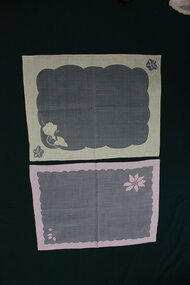
... The Marghabs took advantage of this reputation, producing textiles that were skilfully hand-embroidered on the highest quality Irish linen and a form of organdy called Margandie, made in Switzerland, and harder wearing than usual organdy. ...The Marghabs took advantage of this reputation, producing textiles that were skilfully hand-embroidered on the highest quality Irish linen and a form of organdy called Margandie, made in Switzerland, and harder wearing than usual organdy. ...Marghab Linens Ltd. was a company specialising in table linens founded on Madeira in 1933 by British Cypriot Emile Marghab and his South Dakotan wife Vera (née Way); and disestablished in 1980. The company was also known as Emile Marghab Inc. Since 1850, when Madeiran natives were introduced to hand embroidery as a means of industry, the islands had been renowned for their needlework. The Marghabs took advantage of this reputation, producing textiles that were skilfully hand-embroidered on the highest quality Irish linen and a form of organdy called Margandie, made in Switzerland, and harder wearing than usual organdy. The linens were designed by Vera, and hand-embroidered as a home industry by the women on Madeira, who Vera insisted received payment per stitch - which for a single place mat could amount to seventy thousand stitches. Marghab linens were retailed through leading American department stores such as Lord & Taylor, Marshall Field's, and Neiman Marcus. In 1945 Vera Marghab was awarded the Neiman Marcus Fashion Award. Emile died in 1947, and his wife took charge of the business until its disestablishment in 1980. She died in 1995. While linens have continued to be produced by Madeira since Marghab closed in 1980, as of 2015 the quality and workmanship in Marghab's output remains highly regarded. In 1970, the South Dakota Art Museum were gifted nearly eight hundred examples of Marghab linens, followed by many gifts from Vera and her trustees. The Marghab Gallery was dedicated in 1970. As of 2015, the museum's holdings are described as the world's most complete collection of Marghab linens, with over three hundred patterns and almost 2800 objects. The museum holds at least one example of almost every design produced, but deaccessioned and sold off all the duplicates at auction in 2005 in order to raise money for building work. At the time of the auction, it was noted that Marghab linens had previously sold for hundreds of dollars over their reserve prices, and that it was extremely difficult to find matched sets.Part of 6 pieces Marghab/Madeira embroidery. f) Yellow and white scone holder with shadow embroideryembroidery, madeira, marghab, mats, madeira embroidery -
 Embroiderers Guild, Victoria
Textile - Marghab Madeira Embroidery Mats, 20thC
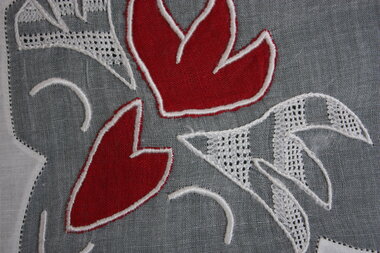
... The Marghabs took advantage of this reputation, producing textiles that were skilfully hand-embroidered on the highest quality Irish linen and a form of organdy called Margandie, made in Switzerland, and harder wearing than usual organdy. ...The Marghabs took advantage of this reputation, producing textiles that were skilfully hand-embroidered on the highest quality Irish linen and a form of organdy called Margandie, made in Switzerland, and harder wearing than usual organdy. ...Marghab Linens Ltd. was a company specialising in table linens founded on Madeira in 1933 by British Cypriot Emile Marghab and his South Dakotan wife Vera (née Way); and disestablished in 1980. The company was also known as Emile Marghab Inc. Since 1850, when Madeiran natives were introduced to hand embroidery as a means of industry, the islands had been renowned for their needlework. The Marghabs took advantage of this reputation, producing textiles that were skilfully hand-embroidered on the highest quality Irish linen and a form of organdy called Margandie, made in Switzerland, and harder wearing than usual organdy. The linens were designed by Vera, and hand-embroidered as a home industry by the women on Madeira, who Vera insisted received payment per stitch - which for a single place mat could amount to seventy thousand stitches. Marghab linens were retailed through leading American department stores such as Lord & Taylor, Marshall Field's, and Neiman Marcus. In 1945 Vera Marghab was awarded the Neiman Marcus Fashion Award. Emile died in 1947, and his wife took charge of the business until its disestablishment in 1980. She died in 1995. While linens have continued to be produced by Madeira since Marghab closed in 1980, as of 2015 the quality and workmanship in Marghab's output remains highly regarded. In 1970, the South Dakota Art Museum were gifted nearly eight hundred examples of Marghab linens, followed by many gifts from Vera and her trustees. The Marghab Gallery was dedicated in 1970. As of 2015, the museum's holdings are described as the world's most complete collection of Marghab linens, with over three hundred patterns and almost 2800 objects. The museum holds at least one example of almost every design produced, but deaccessioned and sold off all the duplicates at auction in 2005 in order to raise money for building work. At the time of the auction, it was noted that Marghab linens had previously sold for hundreds of dollars over their reserve prices, and that it was extremely difficult to find matched sets.Part of 6 pieces Marghab/Madeira embroidery. d) White organdie mat with red and white spray. embroidery, madeira, marghab, mats, madeira embroidery -
 Embroiderers Guild, Victoria
Textile - Marghab Madeira Embroidery Mats, 20thC
... The Marghabs took advantage of this reputation, producing textiles that were skilfully hand-embroidered on the highest quality Irish linen and a form of organdy called Margandie, made in Switzerland, and harder wearing than usual organdy. ...The Marghabs took advantage of this reputation, producing textiles that were skilfully hand-embroidered on the highest quality Irish linen and a form of organdy called Margandie, made in Switzerland, and harder wearing than usual organdy. ...Marghab Linens Ltd. was a company specialising in table linens founded on Madeira in 1933 by British Cypriot Emile Marghab and his South Dakotan wife Vera (née Way); and disestablished in 1980. The company was also known as Emile Marghab Inc. Since 1850, when Madeiran natives were introduced to hand embroidery as a means of industry, the islands had been renowned for their needlework. The Marghabs took advantage of this reputation, producing textiles that were skilfully hand-embroidered on the highest quality Irish linen and a form of organdy called Margandie, made in Switzerland, and harder wearing than usual organdy. The linens were designed by Vera, and hand-embroidered as a home industry by the women on Madeira, who Vera insisted received payment per stitch - which for a single place mat could amount to seventy thousand stitches. Marghab linens were retailed through leading American department stores such as Lord & Taylor, Marshall Field's, and Neiman Marcus. In 1945 Vera Marghab was awarded the Neiman Marcus Fashion Award. Emile died in 1947, and his wife took charge of the business until its disestablishment in 1980. She died in 1995. While linens have continued to be produced by Madeira since Marghab closed in 1980, as of 2015 the quality and workmanship in Marghab's output remains highly regarded. In 1970, the South Dakota Art Museum were gifted nearly eight hundred examples of Marghab linens, followed by many gifts from Vera and her trustees. The Marghab Gallery was dedicated in 1970. As of 2015, the museum's holdings are described as the world's most complete collection of Marghab linens, with over three hundred patterns and almost 2800 objects. The museum holds at least one example of almost every design produced, but deaccessioned and sold off all the duplicates at auction in 2005 in order to raise money for building work. At the time of the auction, it was noted that Marghab linens had previously sold for hundreds of dollars over their reserve prices, and that it was extremely difficult to find matched sets.Part of 6 pieces Marghab/Madeira embroidery. Pink organdie mat with flowers in opposite corners embroidery, madeira, marghab, mats, madeira embroidery -
 Williamstown Historical Society Inc
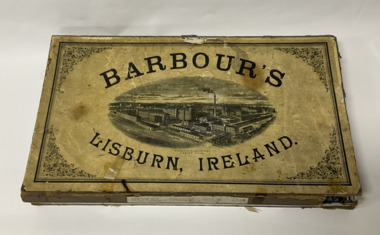
Textile - Barbour's thread box
... The Barbour family business dates back to 1783 when John Barbour (1765-1823), moved to Ireland and began manufacturing linen thread at the Plantation, Lisburn, in 1784. ...linen sewing thread. The thead is sorted into hanks, and grouped into seven small cardboard boxes. The inside of the lid shows drawings of a range of products made by the company. The top of the lid shows a drawing of Hilden Mill in Lisburn Ireland...On Inside of the lid: "Barbour's LINEN THREAD/WM BARBOUR & SONS, LDT/LINEN THREAD AND SHOE THREAD/MANUFACTURERS/LISBURN IRELAND" On top of the lid: BARBOURS LISBURN, IRELAND/Barbour's Hilden Mills/Royal Irish Silk or Pure White Lustrous Linnen Thread"...The Barbour family business dates back to 1783 when John Barbour (1765-1823), moved to Ireland and began manufacturing linen thread at the Plantation, Lisburn, in 1784. ...The Barbour family business dates back to 1783 when John Barbour (1765-1823), moved to Ireland and began manufacturing linen thread at the Plantation, Lisburn, in 1784. His second son, William (1797-1875) transferred the business to Hilden, on the banks of the Lagan. Here thread was spun, bleached and dyed, and by 1837 over 300 people were employed at the factory. By 1898 William Barbour & Sons was renamed the Linen Thread Co., the largest producer of linen thread in the world. Hilden Mill finally closed its doors in 2006. This box of thread dates to pre-1898, as it carries the company name of William Barbour and Sons. Lidded cardboard box containing a variety of silk and linen sewing thread. The thead is sorted into hanks, and grouped into seven small cardboard boxes. The inside of the lid shows drawings of a range of products made by the company. The top of the lid shows a drawing of Hilden Mill in Lisburn Ireland. On Inside of the lid: "Barbour's LINEN THREAD/WM BARBOUR & SONS, LDT/LINEN THREAD AND SHOE THREAD/MANUFACTURERS/LISBURN IRELAND" On top of the lid: BARBOURS LISBURN, IRELAND/Barbour's Hilden Mills/Royal Irish Silk or Pure White Lustrous Linnen Thread" -
 Flagstaff Hill Maritime Museum and Village
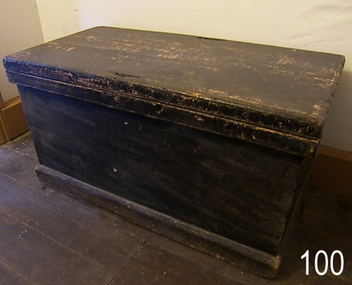
Furniture - Linen Chest, First half of the 19th Century
... Ireland, with Jane Fleming, when she migrated to Australia arriving at Port Fairy in approximately 1863. Jane Flemming was about 6 or 7 years old at the time and later was to become the mother of Mary Jane Giles (nee Flemming). This chest is one of many 19th century items of furniture, linen...Ireland, with Jane Fleming, when she migrated to Australia arriving at Port Fairy in approximately 1863. Jane Flemming was about 6 or 7 years old at the time and later was to become the mother of Mary Jane Giles (nee Flemming). This chest is one of many 19th century items of furniture, linen ...This chest came from County Cavan, North Ireland, with Jane Fleming, when she migrated to Australia arriving at Port Fairy in approximately 1863. Jane Flemming was about 6 or 7 years old at the time and later was to become the mother of Mary Jane Giles (nee Flemming). This chest is one of many 19th century items of furniture, linen and crockery donated to Flagstaff Hill Maritime Village by, Vera and Aurelin Giles. The items are associated with Warrnambool and the Giles Family history. Items donated by the family have come to be known as the “Giles Collection”. Many items in the Lighthouse Keeper’s Cottage were donated by Vera and Aurelin Giles and mostly came from the home of Vera’s parents-in-law, Henry Giles and his wife Mary Jane (nee Freckleton) who married in 1880 and whose photos are on display in the parlour. Henry was born at Tower Hill in 1858, and was a labourer on the construction of the Warrnambool Breakwater before leaving in 1895 for around seven years to build bridges in NSW. Mary Jane was born in 1860 at Cooramook and she attended Mailor’s Flat State School and where she eventually was to become a student teacher. After which she became a governess at “Injemiara” where her grandfather, Francis Freckleton, had once owned land. Henry and Mary’s family consisted of six, some of the children were born at Mailor’s Flat and later some children at Wangoom. They lived with their parents at Wangoom and Purnim west, and this is where Henry died in 1933 and Mary Jane in 1940.The chest is of historical significance as an example of an early piece of furniture brought to Australia by Jane Flemming when she migrated to Australia during the mid 19th century. The chest is associated with the Giles family as Jane later was to become the mother Of Mary Jane Giles (nee Flemming). The Giles family collection is of social and historical significance at a local level, because it not only illustrates the level of material support the Warrnambool community gave to Flagstaff Hill during it’s establishment. But the Giles collection also gives us today a snapshot into what domestic life was like in early colonial times prior to Federation. Linen chest wood construction with hinged lid and lock. Hinges are brass. Painted black. ( Giles Collection)Noneflagstaff hill, warrnambool, shipwrecked coast, flagstaff hill maritime museum, shipwreck coast, flagstaff hill maritime village, wooden chest, cabin trunk, giles collection, henry giles, tower hill, cooramook, mailor’s flat, wangoom, 19th century household goods, jane flemming, mary jane giles, linen chest -
 Orbost & District Historical Society
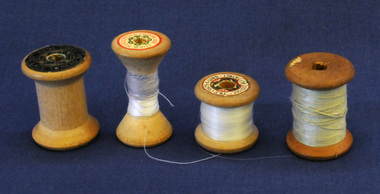
cotton reels, first half 20th century
... Four wooden cotton reels. 2495.1 is an empty reel with paper labels at both ends. " Best Linen lace thread Barbours No 50 200 yards Wm Barbour & Sons Ltd Lisburn Ireland" 2495.2 is a wooden reel with thick linen thread. ...Helena Warren was a popular Orbost identity who was well known as an accomplished photographer and needleworker, needlework cotton-reels Warren-Helena Four wooden cotton reels. 2495.1 is an empty reel with paper labels at both ends. " Best Linen lace thread Barbours No 50 200 yards Wm Barbour & Sons Ltd Lisburn Ireland" 2495.2 is a wooden reel with thick linen thread. ...These cotton reels were owned and used by Helena Warren of Newmerella. Helena Francis Warren (nee McKeown) was married to William John Warren and lived in Newmerella. She was a fine amateur photographer who supplied the photos for the Back-To-Orbost celebration book in 1937 and also designed the Back-To-Orbost badge. She was known for her soft toy making. (by Ivy Rodwell in from Personalities and Stories of the Early Orbost District by Mary Gilbert).Helena Warren was a popular Orbost identity who was well known as an accomplished photographer and needleworker,Four wooden cotton reels. 2495.1 is an empty reel with paper labels at both ends. " Best Linen lace thread Barbours No 50 200 yards Wm Barbour & Sons Ltd Lisburn Ireland" 2495.2 is a wooden reel with thick linen thread. On one end " H11 underlined" 2495.3 is a narrow wooden reel with white thread and grey wound over it. It has paper labels at both ends. " J. & P. Coats 500 yards No 50 457 metres - Chain Brand Mercerised Cotton MR WHITE" 2495.4 is a wooden reel with synthetic thread - one paper label. "J. & P. Coats 6 Cord 200 yards 40 183 metres"needlework cotton-reels warren-helena -
 Embroiderers Guild, Victoria
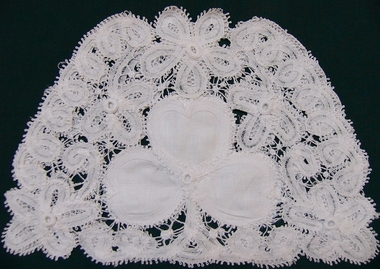
Textile - Tape Lace Tea Cosy Cover, 1920-40
... linen centre. An interesting feature is the picots round the edge. The design suggests shamrocks and is possibly Irish. ...Lace Tape lace 1920-40 Ireland Tape lace tea cosy cover with linen centre. An interesting feature is the picots round the edge. ...Tape lace tea cosy cover with linen centre. An interesting feature is the picots round the edge. The design suggests shamrocks and is possibly Irish. Cotton tape, Cotton threadslace, tape lace, 1920-40, ireland -
 Clunes Museum
Functional object - LINEN & CROCHET CLOTH
... LINEN CROCHET CLOTH FROM SHRIGLEY HOME IN SERVICE STREET CLUNES. HANNAH SHRIGLEY- NEE PARKER, OWNED CLOTH, CAME FROM LIMERICK, IRELAND, INHERITED BY WINIFRED MCLENNAN....LINEN CROCHET CLOTH FROM SHRIGLEY HOME IN SERVICE STREET CLUNES. HANNAH SHRIGLEY- NEE PARKER, OWNED CLOTH, CAME FROM LIMERICK, IRELAND, INHERITED BY WINIFRED MCLENNAN. local history manchester table linen crick shrigley mc lennan lazarus. ...LINEN CROCHET CLOTH FROM SHRIGLEY HOME IN SERVICE STREET CLUNES. HANNAH SHRIGLEY- NEE PARKER, OWNED CLOTH, CAME FROM LIMERICK, IRELAND, INHERITED BY WINIFRED MCLENNAN.WHITE LINEN TABLECLOTH, DEEP CROCHET EDGINGlocal history, manchester, table linen, crick, shrigley, mc lennan, lazarus. -
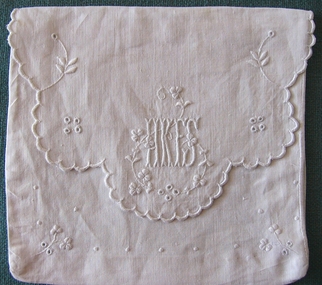 Embroiderers Guild, Victoria
Accessory - Irish White Work Handkerchief Sachet, Early 20th century
... Embroidery Sachets 1900-20 Ireland Whitework H.K.E.S. in satin stitch. White work on off white linen, satin stitched leaves, eyelets and stem stitch. ...White work on off white linen, satin stitched leaves, eyelets and stem stitch. Buttonhole scalloped edge of front flap. Gusseted pocket with shamrocks at bottom left and right sides. Machine constructed with French seams.H.K.E.S. in satin stitch.embroidery, sachets, 1900-20, ireland, whitework -
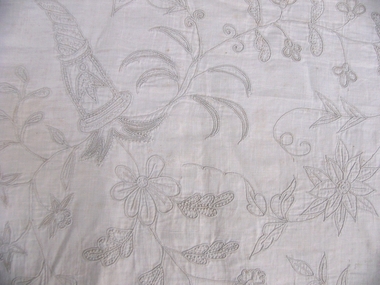 Embroiderers Guild, Victoria
Domestic Object - Irish Knotted Work Bed Cover, 18th Century
... Embroidery Whitework Bedcover 18th Century Ireland Knotted linen thread couched onto white linen bed cover. ...Donor's mother brought this from the west of Ireland in 1950. Said to have been embroidered by her grandmother and her ladies in 1780-1800. (This may be a later rather than actual date). Knotting was a genteel pastime for leisured ladies requiring little concentration, so conversation could be carried out. Favoured at Court and practised in England in the late 17th C in William and Mary's reign and Queen Anne's reign in the early 18th C.Knotting was a genteel pastime for leisured ladies requiring little concentration, so conversation could be carried out. Favoured at Court and practised in England in the late 17th C in William and Mary's reign and Queen Anne's reign in the early 18th C. A knotting shuttle, larger than a tatting shuttle, made knots at every quarter inch or 6 mm intervals in string, linen, silk or wool. Mrs Mary Delaney enjoyed knotting and preferred linen thread which was stronger. The Ulster Museum in Belfast holds an embroidered bedcover by Delany, one of the few complete pieces of embroidery made by her. The threads between the knots was dependent on the thickness of the thread. This fashionable occupation was often mocked by men, Sir Charles Sedley, a wit and libertine wrote a verse mocking Queen Mary, the dull Protestant wife of William 111: "Blest we, who from such queens are freed/ Who, buy vain superstition led,/ Are always telling beads;/But here's a queen now, thanks to God/ Who, when she rides in Coach abroad/ Is always knotting threads. In the Spectator of 1712 it was suggested that men might take up knotting. Dr Johnson attempted to learn the skill but told Boswell "I once tried knotting: Dempster's sister undertook to teach me, but I could not learn it." Knotted linen thread couched onto white linen bed cover. embroidery, whitework, bedcover, 18th century, ireland -
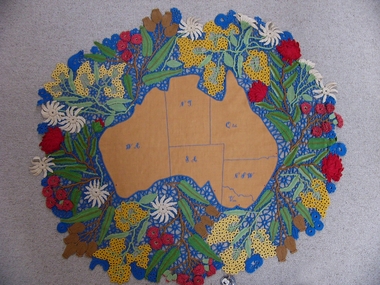 Embroiderers Guild, Victoria
Textile - Map of Australia, Early 20th century ? before Canberra?
... Irish crochet style. Australian flower motifs (waratah, wattle, flowering gum, flannel flower, nuts) in a wide border around a brown linen map of Australia with the States (less Tasmania) A.C.T. stitched on....Irish crochet style. Australian flower motifs (waratah, wattle, flowering gum, flannel flower, nuts) in a wide border around a brown linen map of Australia with the States (less Tasmania) A.C.T. stitched on. ...This piece belonged to Miss Doris Tye, donated to the Guild by Miss M. Harris (member)Bright, multicoloured (red, green, blue, yellow, brown, pink and cream) Irish crochet style. Australian flower motifs (waratah, wattle, flowering gum, flannel flower, nuts) in a wide border around a brown linen map of Australia with the States (less Tasmania) A.C.T. stitched on.Initials of the States, Vic, N.S.W., Qld, S.A. N.T. and W.A.crochet, maps, 1900-20, australia -
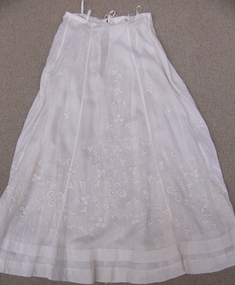 Embroiderers Guild, Victoria
Clothing - Petticoat, Early 1900's
... Embroidery Garments Whitework Ireland 1900-20 White fine linen embroidered by hand, with shamrocks. ...White fine linen embroidered by hand, with shamrocks. Satin stitch and stem stitch. There is a wide tuck above the hemline, and an opening at centre back waistline with a tape tie. May have been part of a dress.embroidery, garments, whitework, ireland, 1900-20 -
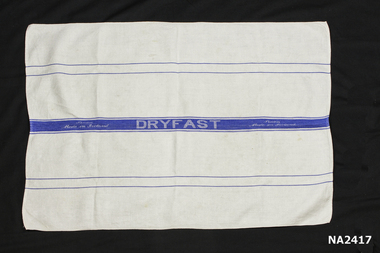 Whitehorse Historical Society Inc.
Domestic object - Tea Towel
... domestic items cleaning Made in Ireland|Dryfast White linen tea towel with blue stripes. ...White linen tea towel with blue stripes.Made in Ireland|Dryfastdomestic items, cleaning
