
Showing 18 items matching "james forsyth"
-
 Orbost & District Historical Society
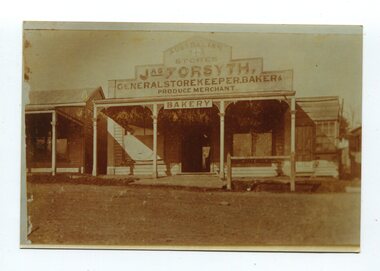
Photograph - James Forsyth store, Orbost, 1880s
... James Forsyth store, Orbost ......James Forsyth...James Forsyth's shop was one of the first in Orbost, dating from the 1880s. ...James Forsyth's shop was one of the first in Orbost, dating from the 1880s. ...James Forsyth's shop was one of the first in Orbost, dating from the 1880s. It was located in the southern section of Nicholson Street, on the eastern side. This building later became Frank and Gladys Matthews shop. The building was demolished in the early 2000s to make way for a Foodworks Supermarket. This photograph shows the Forsyth shop which was one of the earliest in Orbost. A b/w photograph of a shop front on a street. Verandah posts at the front, along with a separate hitching rail. Above the front of the building are painted the words JAS FORSYTH, General Storekeeper, Baker and Produce Merchant. Australian Stores. The word BAKERY is written above the entrance. This photo appears to be a copy, not an original photo. as above orbost, james forsyth, grocer -
 Lakes Entrance Historical Society
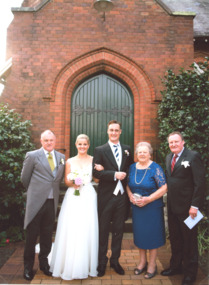
Photograph - Hancock Wedding 2016, Hancock family, 1/04/2016 12:00:00 AM
... Colour photograph of family group taken at wedding of James Edward Charles Forsyth Hancock to Jane Elspeth McWhennell, named are Trevor Hancock father, Brian Hancock uncle, Shirley Hancock grandmother, at St Clements Anglican Church Mosman NSW. ...Hancock Family Wedding Events Colour photograph of family group taken at wedding of James Edward Charles Forsyth Hancock to Jane Elspeth McWhennell, named are Trevor Hancock father, Brian Hancock uncle, Shirley Hancock grandmother, at St Clements Anglican Church Mosman NSW. ...Colour photograph of family group taken at wedding of James Edward Charles Forsyth Hancock to Jane Elspeth McWhennell, named are Trevor Hancock father, Brian Hancock uncle, Shirley Hancock grandmother, at St Clements Anglican Church Mosman NSW. hancock family, wedding, events -
 Federation University Historical Collection
Document - Details of applicants for OHM course, VIOSH: Ballarat College of Advanced Education Occupational Hazard Management Applicants, Intake 12B, 1988
... james browning (withdrew)...sharon burnell (withdrew)...mary-anne camp...alastair carmichael...christopher cooper...william denton (withdrew)...neil dine...suzanne forsyth...Intake 12A merged with 12B due to this. viosh victorian institute of occupational safety and health occupational hazard management ballarat college of advanced education ballarat university college university of ballarat federation university john arente geoffrey brabrook james browning (withdrew) sharon burnell (withdrew) mary-anne camp alastair carmichael christopher cooper william denton (withdrew) neil dine suzanne forsyth alan hawes peter hondros murray johnson (withdrew) stephen lesbirel (withdrew) stanley mccartney (withdrew) anthony mckinlay kenneth clean (withdrew) trevor mann edward mitchell elise moore (withdrew) john morony john o'neill roland parfenovics (withdrew) shaun quinn (withdrew) edward renton christopher st john (withdrew) christopher schaper lynette schrader barbara stack ivanka sucher maggie thomson cheerily tillman antonius van maanenbell (withdrew) VIOSH: Ballarat College of Advanced Education Occupational Hazard Management Applicants, Intake 12B, 1988 Document Details of applicants for OHM course ...Victorian Institute of Occupational Safety and Health (VIOSH) Australia is the Asia-Pacific centre for teaching and research in occupational health and safety (OHS) and is known as one of Australia's leaders on the field. VIOSH has a global reputation for its innovative approach within the field of OHS management. VIOSH had its first intake of students in 1979. At that time the Institution was known as the Ballarat College of Advanced Education. In 1990 it became known as Ballarat University College, then in 1994 as University of Ballarat. It was 2014 that it became Federation University. VIOSH Australia students are safety managers, senior advisors and experienced OHS professionals. They come from all over Australia and industry. Students are taught active research and enquiry; rather than textbook learning and a one-size fits all approach. VIOSH accepts people into the Graduate Diploma of Occupational Hazard Management who have no undergraduate degree - on the basis of extensive work experience and knowledge. Each application required details of their work occupation and the company work department they were employed in. Not all of those who applied began the OHM course. Some withdrew - no indication of reason. Intake 12A merged with 12B due to this.viosh, victorian institute of occupational safety and health, occupational hazard management, ballarat college of advanced education, ballarat university college, university of ballarat, federation university, john arente, geoffrey brabrook, james browning (withdrew), sharon burnell (withdrew), mary-anne camp, alastair carmichael, christopher cooper, william denton (withdrew), neil dine, suzanne forsyth, alan hawes, peter hondros, murray johnson (withdrew), stephen lesbirel (withdrew), stanley mccartney (withdrew), anthony mckinlay, kenneth clean (withdrew), trevor mann, edward mitchell, elise moore (withdrew), john morony, john o'neill, roland parfenovics (withdrew), shaun quinn (withdrew), edward renton, christopher st john (withdrew), christopher schaper, lynette schrader, barbara stack, ivanka sucher, maggie thomson, cheerily tillman, antonius van maanenbell (withdrew) -
 Flagstaff Hill Maritime Museum and Village
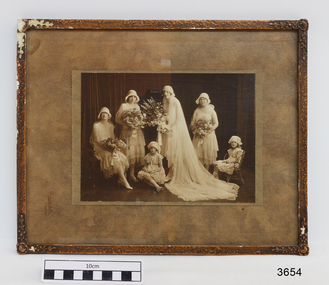
Photograph - Wedding group, c. 1929
... Dr Angus assisted Dr Tom Ryan, a pioneer in the use of X-rays and in ocular surgery. flagstaff hill warrnambool shipwrecked coast flagstaff hill maritime museum maritime museum shipwreck coast flagstaff hill maritime village great ocean road dr w r angus gladys forsyth angus - forsyth wedding marriage of dr w.r. angus wedding photograph photographic record wedding 1929 Label on back of frame with Framer’s details “James Hooper, Picture Framer, 120 Rundle St. ...This wedding photograph shows the bridal party and bride-to-be, Gladys Forsyth. The wedding was held in Ballarat. The photograph was donated to Flagstaff Hill Maritime Village by the family of Doctor William Roy Angus, Surgeon and Oculist. It is part of the “W.R. Angus Collection” that includes historical medical equipment, surgical instruments and material once belonging to Dr Edward Ryan and Dr Thomas Francis Ryan, (both of Nhill, Victoria) as well as Dr Angus’ own belongings. The Collection’s history spans the medical practices of the two Doctors Ryan, from 1885-1926 plus that of Dr Angus, up until 1969. ABOUT THE “W.R.ANGUS COLLECTION” Doctor William Roy Angus M.B., B.S., Adel., 1923, F.R.C.S. Edin.,1928 (also known as Dr Roy Angus) was born in Murrumbeena, Victoria in 1901 and lived until 1970. He qualified as a doctor in 1923 at University of Adelaide, was Resident Medical Officer at the Royal Adelaide Hospital in 1924 and for a period was house surgeon to Sir (then Mr.) Henry Simpson Newland. Dr Angus was briefly an Assistant to Dr Riddell of Kapunda, then commenced private practice at Curramulka, Yorke Peninsula, SA, where he was physician, surgeon and chemist. In 1926, he was appointed as new Medical Assistant to Dr Thomas Francis Ryan (T.F. Ryan, or Tom), in Nhill, Victoria, where his experiences included radiology and pharmacy. In 1927 he was Acting House Surgeon in Dr Tom Ryan’s absence. Dr Angus had become engaged to Gladys Forsyth and they decided he would take time to further his studies overseas in the UK in 1927. He studied at London University College Hospital and at Edinburgh Royal Infirmary and in 1928, was awarded FRCS (Fellow from the Royal College of Surgeons), Edinburgh. He worked his passage back to Australia as a Ship’s Surgeon on the on the Australian Commonwealth Line’s T.S.S. Largs Bay. Dr Angus married Gladys in 1929, in Ballarat. (They went on to have one son (Graham 1932, born in SA) and two daughters (Helen (died 12/07/1996) and Berenice (Berry), both born at Mira, Nhill ) Dr Angus was a ‘flying doctor’ for the A.I.M. (Australian Inland Ministry) Aerial Medical Service in 1928 . The organisation began in South Australia through the Presbyterian Church in that year, with its first station being in the remote town of Oodnadatta, where Dr Angus was stationed. He was locum tenens there on North-South Railway at 21 Mile Camp. He took up this ‘flying doctor’ position in response to a call from Dr John Flynn; the organisation was later known as the Flying Doctor Service, then the Royal Flying Doctor Service. A lot of his work during this time involved dental surgery also. Between 1928-1932 he was surgeon at the Curramulka Hospital, Yorke Peninsula, South Australia. In 1933 Dr Angus returned to Nhill where he’d previously worked as Medical Assistant and purchased a share of the Nelson Street practice and Mira hospital from Dr Les Middleton one of the Middleton Brothers, the current owners of what was once Dr Tom Ryan’s practice. Dr L Middleton was House Surgeon to the Nhill Hospital 1926-1933, when he resigned. [Dr Tom Ryan’s practice had originally belonged to his older brother Dr Edward Ryan, who came to Nhill in 1885. Dr Edward saw patients at his rooms, firstly in Victoria Street and in 1886 in Nelson Street, until 1901. The Nelson Street practice also had a 2 bed ward, called Mira Private Hospital ). Dr Edward Ryan was House Surgeon at the Nhill Hospital 1884-1902 . He also had occasions where he successfully performed veterinary surgery for the local farmers too. Dr Tom Ryan then purchased the practice from his brother in 1901. Both Dr Edward and Dr Tom Ryan work as surgeons included eye surgery. Dr Tom Ryan performed many of his operations in the Mira private hospital on his premises. He too was House Surgeon at the Nhill Hospital 1902-1926. Dr Tom Ryan had one of the only two pieces of radiology equipment in Victoria during his practicing years – The Royal Melbourne Hospital had the other one. Over the years Dr Tom Ryan gradually set up what was effectively a training school for country general-practitioner-surgeons. Each patient was carefully examined, including using the X-ray machine, and any surgery was discussed and planned with Dr Ryan’s assistants several days in advance. Dr Angus gained experience in using the X-ray machine there during his time as assistant to Dr Ryan. Dr Tom Ryan moved from Nhill in 1926. He became a Fellow of the Royal Australasian College of Surgeons in 1927, soon after its formation, a rare accolade for a doctor outside any of the major cities. He remained a bachelor and died suddenly on 7th Dec 1955, aged 91, at his home in Ararat. Scholarships and prizes are still awarded to medical students in the honour of Dr T.F. Ryan and his father, Dr Michael Ryan, and brother, John Patrick Ryan. ] When Dr Angus bought into the Nelson Street premises in Nhill he was also appointed as the Nhill Hospital’s Honorary House Surgeon 1933-1938. His practitioner’s plate from his Nhill surgery states “HOURS Daily, except Tuesdays, Fridays and Saturday afternoons, 9-10am, 2-4pm, 7-8pm. Sundays by appointment”. This plate is now mounted on the doorway to the Port Medical Office at Flagstaff Hill Maritime Village, Warrnambool. Dr Edward Ryan and Dr Tom Ryan had an extensive collection of historical medical equipment and materials spanning 1884-1926 and when Dr Angus took up practice in their old premises he obtained this collection, a large part of which is now on display at the Port Medical Office at Flagstaff Hill Maritime Village in Warrnambool. During his time in Nhill Dr Angus was involved in the merging of the Mira Hospital and Nhill Public Hospital into one public hospital and the property titles passed on to Nhill Hospital in 1939. In 1939 Dr Angus and his family moved to Warrnambool where he purchased “Birchwood,” the 1852 home and medical practice of Dr John Hunter Henderson, at 214 Koroit Street. (This property was sold in1965 to the State Government and is now the site of the Warrnambool Police Station. ). The Angus family was able to afford gardeners, cooks and maids; their home was a popular place for visiting dignitaries to stay whilst visiting Warrnambool. Dr Angus had his own silk worm farm at home in a Mulberry tree. His young daughter used his centrifuge for spinning the silk. Dr Angus was appointed on a part-time basis as Port Medical Officer (Health Officer) in Warrnambool and held this position until the 1940’s when the government no longer required the service of a Port Medical Officer in Warrnambool; he was thus Warrnambool’s last serving Port Medical Officer. (The duties of a Port Medical Officer were outlined by the Colonial Secretary on 21st June, 1839 under the terms of the Quarantine Act. Masters of immigrant ships arriving in port reported incidents of diseases, illness and death and the Port Medical Officer made a decision on whether the ship required Quarantine and for how long, in this way preventing contagious illness from spreading from new immigrants to the residents already in the colony.) Dr Angus was a member of the Australian Medical Association, for 35 years and surgeon at the Warrnambool Base Hospital 1939-1942, He served as a Surgeon Captain during WWII 1941-45, in Ballarat, Victoria, and in Bonegilla, N.S.W., completing his service just before the end of the war due to suffering from a heart attack. During his convalescence he carved an intricate and ‘most artistic’ chess set from the material that dentures were made from. He then studied ophthalmology at the Royal Melbourne Eye and Ear Hospital and created cosmetically superior artificial eyes by pioneering using the intrascleral cartilage. Angus received accolades from the Ophthalmological Society of Australasia for this work. He returned to Warrnambool to commence practice as an ophthalmologist, pioneering in artificial eye improvements. He was Honorary Consultant Ophthalmologist to Warrnambool Base Hospital for 31 years. He made monthly visits to Portland as a visiting surgeon, to perform eye surgery. He represented the Victorian South-West subdivision of the Australian Medical Association as its secretary between 1949 and 1956 and as chairman from 1956 to 1958. In 1968 Dr Angus was elected member of Spain’s Barraquer Institute of Barcelona after his research work in Intrasclearal cartilage grafting, becoming one of the few Australian ophthalmologists to receive this honour, and in the following year presented his final paper on Living Intrasclearal Cartilage Implants at the Inaugural Meeting of the Australian College of Ophthalmologists in Melbourne In his personal life Dr Angus was a Presbyterian and treated Sunday as a Sabbath, a day of rest. He would visit 3 or 4 country patients on a Sunday, taking his children along ‘for the ride’ and to visit with him. Sunday evenings he would play the pianola and sing Scottish songs to his family. One of Dr Angus’ patients was Margaret MacKenzie, author of a book on local shipwrecks that she’d seen as an eye witness from the late 1880’s in Peterborough, Victoria. In the early 1950’s Dr Angus, painted a picture of a shipwreck for the cover jacket of Margaret’s book, Shipwrecks and More Shipwrecks. She was blind in later life and her daughter wrote the actual book for her. Dr Angus and his wife Gladys were very involved in Warrnambool’s society with a strong interest in civic affairs. Their interests included organisations such as Red Cross, Rostrum, Warrnambool and District Historical Society (founding members), Wine and Food Society, Steering Committee for Tertiary Education in Warrnambool, Local National Trust, Good Neighbour Council, Housing Commission Advisory Board, United Services Institute, Legion of Ex-Servicemen, Olympic Pool Committee, Food for Britain Organisation, Warrnambool Hospital, Anti-Cancer Council, Boys’ Club, Charitable Council, National Fitness Council and Air Raid Precautions Group. He was also a member of the Steam Preservation Society and derived much pleasure from a steam traction engine on his farm. He had an interest in people and the community He and his wife Gladys were both involved in the creation of Flagstaff Hill, including the layout of the gardens. After his death (28th March 1970) his family requested his practitioner’s plate, medical instruments and some personal belongings be displayed in the Port Medical Office surgery at Flagstaff Hill Maritime Village, and be called the “W. R. Angus Collection”. The W.R. Angus Collection is significant for still being located at the site it is connected with, Doctor Angus being the last Port Medical Officer in Warrnambool. The collection of medical instruments and other equipment is culturally significant, being an historical example of medicine from late 19th to mid-20th century. Dr Angus assisted Dr Tom Ryan, a pioneer in the use of X-rays and in ocular surgery. Framed, glass covered photograph, sepia colour, Dr.W.R. Angus’ bride-to-be (Gladys) with her three (3) bridesmaids and two (2) flower girls. Frame’s edging is embossed with roses in the corners. Photograph was framed in Adelaide. Framer’s details are on the back of the frame.Label on back of frame with Framer’s details “James Hooper, Picture Framer, 120 Rundle St. Adelaide” flagstaff hill, warrnambool, shipwrecked coast, flagstaff hill maritime museum, maritime museum, shipwreck coast, flagstaff hill maritime village, great ocean road, dr w r angus, gladys forsyth, angus - forsyth wedding, marriage of dr w.r. angus, wedding photograph, photographic record wedding 1929 -
 Flagstaff Hill Maritime Museum and Village
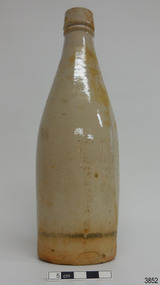
Ceramic - Stoneware Bottle, Dundas Pottery, Late 1800s to early 1900s
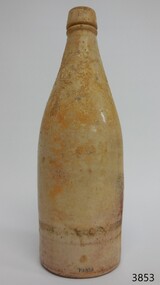
... Forsyth and John Mc Coll. Located where the Forth and Clyde Canal joined the Monkland Canal, North of Glasgow. Johnstone sold the pottery in 1835 to Robert Cochran and James Couper. ...Forsyth and John Mc Coll. Located where the Forth and Clyde Canal joined the Monkland Canal, North of Glasgow. Johnstone sold the pottery in 1835 to Robert Cochran and James Couper. ...This bottle was made in Scotland and recovered decades later from a shipwreck along the coast of Victoria. It may have been amongst the ship's cargo, its provisions or amongst a passenger's personal luggage. It is now part of the John Chance collection. Stoneware bottles similar to this one were in common use during the mid-to-late 19th century. They were used to store and transport. The bottles were handmade using either a potter's wheel or in moulds such as a plaster mould, which gave the bottles uniformity in size and shape. The bottle would then be fired and glazed in a hot kiln. Makers often identified their bottles with the impression of a small symbol or adding a colour to the mouth. The manufacturer usually stamped their bottles with their name and logo, and sometimes a message that the bottle remained their property and should be returned to them. The bottles could then be cleaned and refilled. DUNDAS POTTERY WORKS - The Dundas Pottery works were established in 1828 by William Johnstone in partnership with John Forsyth and John Mc Coll. Located where the Forth and Clyde Canal joined the Monkland Canal, North of Glasgow. Johnstone sold the pottery in 1835 to Robert Cochran and James Couper. Mc Coll was retained as manager until 1837when in 1839 Cochran & Couper sold the pottery and purchased the St Rollex Glass Works. George Duncan took over briefly but died in 1841, with the pottery possibly being run by his widow Helen and a potter named Alexander Paul. James Miller was the manager at the time and he bought the pottery in 1856, in partnership with John Moody. Miller's long and careful stewardship of the pottery saw success from the export market which allowed him to purchase the North British pottery in 1867 until 1874 when it was sold. In 1875, Miller, in partnership with John Young, leased part of Caledonian Pottery, naming it Crown Pottery, however, it burned down in 1879. In the early 1880s, Young extended the pottery and named it Milton Pottery. Miller’s son, James W., became a partner in Milton pottery in 1905. James Miller Snr died in 1905 and the company continued as a limited liability company, being sold to the Borax Consolidation Ltd in 1929, but it was unsuccessful and Possil pottery purchased some of the company's equipment before it finally closed in 1932. From 1828 until the James Miller period of circa 1856, the pottery produced salt-glazed stoneware for the local industrial trade; mainly bottles and drain pipes. James Miller produced various bottles, whisky and acid jars, casks, butter crocks, jam jars and domestic wares in Bristol glaze. He streamlined the water filter manufacturing, which had become a specialty of the pottery, and a dedicated section of the pottery was created solely for their production, which was exported worldwide. This stoneware bottle is historically significant for its manufacture and use in the late 19th to the early 20th century. This bottle is historically significant for its connection with the well-known stoneware manufacturers, Dundas Pottery of Glasgow, Scotland. The bottle is also significant as it was recovered by John Chance, a diver, from a wreck on the coast of Victoria in the 1960s-70s. Items that come from several wrecks along Victoria's coast have since been donated to the Flagstaff Hill Maritime Village’s museum collection by his family, illustrating this item’s level of historical value. Bottle, salt glazed stoneware, beige, sealed with wax, discolouration above base. Inscriptions stamped near base. Stamp: [symbol of concentric ovals], text within the symbol "PORT DUNDAS POTTERY COY." and "GLASGOW". Stamp:[Symbol - square with short vertical line in centre of base line] flagstaff hill, warrnambool, flagstaff hill maritime museum, maritime museum, shipwreck coast, flagstaff hill maritime village, great ocean road, shipwreck artefact, stoneware, ironstone, pottery, bottle, port dundas pottery, glasgow, john chance, antique bottle, william johnstone -
 Flagstaff Hill Maritime Museum and Village
Ceramic - Stoneware Bottle, Dundas Pottery, 1856-1910
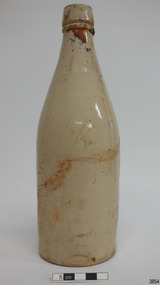
... Forsyth and John Mc Coll. Located where the Forth and Clyde Canal joined the Monkland Canal, North of Glasgow. Johnstone sold the pottery in 1835 to Robert Cochran and James Couper. ...Forsyth and John Mc Coll. Located where the Forth and Clyde Canal joined the Monkland Canal, North of Glasgow. Johnstone sold the pottery in 1835 to Robert Cochran and James Couper. ...This bottle is part of the John Chance Collection of shipwreck artefacts. The Dundas Pottery works were established in 1828 by William Johnstone in partnership with John Forsyth and John Mc Coll. Located where the Forth and Clyde Canal joined the Monkland Canal, North of Glasgow. Johnstone sold the pottery in 1835 to Robert Cochran and James Couper. Mc Coll was retained as manager until 1837when in 1839 Cochran & Couper sold the pottery and purchased the St Rollex Glass Works. George Duncan took over briefly but died in 1841, with the pottery possibly being run by his widow Helen and a potter named Alexander Paul. James Miller was the manager at the time and he bought the pottery in 1856, in partnership with John Moody. Miller's long and careful stewardship of the pottery saw success from the export market which allowed him to purchase the North British pottery in 1867 until 1874 when it was sold. In 1875, Miller, in partnership with John Young, leased part of Caledonian Pottery, naming it Crown Pottery, however, it burned down in 1879. In the early 1880s, Young extended the pottery and named it Milton Pottery. Miller’s son, James W., became a partner in Milton pottery in 1905. James Miller Snr died in 1905 and the company continued as a limited liability company, being sold to the Borax Consolidation Ltd in 1929, but it was unsuccessful and Possil pottery purchased some of the company's equipment before it finally closed in 1932. From 1828 until the James Miller period of circa 1856, the pottery produced salt-glazed stoneware for the local industrial trade; mainly bottles and drain pipes. James Miller produced various bottles, whisky and acid jars, casks, butter crocks, jam jars and domestic wares in Bristol glaze. He streamlined the water filter manufacturing, which had become a speciality of the pottery, and a dedicated section of the pottery was created solely for their production, which was exported worldwide. A significant item of salt-glazed ceramic stoneware made by the Dundas potteries in Scotland who were renowned for making quality ironstone pottery. The bottle that was in common use throughout the British colonies and America for the containment of ale The bottle is also significant as it was recovered by John Chance, a diver, from a wreck on the coast of Victoria in the 1960s-70s. Items that come from several wrecks along Victoria's coast have since been donated to the Flagstaff Hill Maritime museum collection by his family Illustrating the level of historical value the subject item has.Beige salt glazed stoneware, bottle with discolorations above base. Manufacturer's oval Inscription lozenge stamped near base. Stamp: [symbol of concentric ovals], text within the symbol "PORT DUNDAS POTTERY COY." and "GLASGOW". Stamp:[Symbol - square with short vertical line in centre of base line]flagstaff hill, warrnambool, flagstaff hill maritime museum, maritime museum, shipwreck coast, flagstaff hill maritime village, great ocean road, john chance, stoneware bottle, pottery, port dundas pottery, william johnstone, bottles, shipwreck artefact, stoneware, ironstone, bottle, glasgow, antique bottle -
 Flagstaff Hill Maritime Museum and Village
Ceramic - Stoneware Bottle, Dundas Pottery, Late 1800s to early 1900s
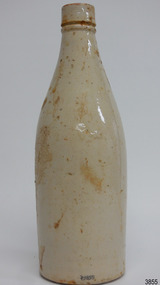
... Forsyth and John Mc Coll. Located where the Forth and Clyde Canal joined the Monkland Canal, North of Glasgow. Johnstone sold the pottery in 1835 to Robert Cochran and James Couper. ...Forsyth and John Mc Coll. Located where the Forth and Clyde Canal joined the Monkland Canal, North of Glasgow. Johnstone sold the pottery in 1835 to Robert Cochran and James Couper. ...This bottle was made in Scotland and recovered decades later from a shipwreck along the coast of Victoria. It may have been amongst the ship's cargo, its provisions or amongst a passenger's personal luggage. It is now part of the John Chance collection. Stoneware bottles similar to this one were in common use during the mid-to-late 19th century. They were used to store and transport. The bottles were handmade using either a potter's wheel or in moulds such as a plaster mould, which gave the bottles uniformity in size and shape. The bottle would then be fired and glazed in a hot kiln. Makers often identified their bottles with the impression of a small symbol or adding a colour to the mouth. The manufacturer usually stamped their bottles with their name and logo, and sometimes a message that the bottle remained their property and should be returned to them. The bottles could then be cleaned and refilled. DUNDAS POTTERY WORKS - The Dundas Pottery works were established in 1828 by William Johnstone in partnership with John Forsyth and John Mc Coll. Located where the Forth and Clyde Canal joined the Monkland Canal, North of Glasgow. Johnstone sold the pottery in 1835 to Robert Cochran and James Couper. Mc Coll was retained as manager until 1837when in 1839 Cochran & Couper sold the pottery and purchased the St Rollex Glass Works. George Duncan took over briefly but died in 1841, with the pottery possibly being run by his widow Helen and a potter named Alexander Paul. James Miller was the manager at the time and he bought the pottery in 1856, in partnership with John Moody. Miller's long and careful stewardship of the pottery saw success from the export market which allowed him to purchase the North British pottery in 1867 until 1874 when it was sold. In 1875, Miller, in partnership with John Young, leased part of Caledonian Pottery, naming it Crown Pottery, however, it burned down in 1879. In the early 1880s, Young extended the pottery and named it Milton Pottery. Miller’s son, James W., became a partner in Milton pottery in 1905. James Miller Snr died in 1905 and the company continued as a limited liability company, being sold to the Borax Consolidation Ltd in 1929, but it was unsuccessful and Possil pottery purchased some of the company's equipment before it finally closed in 1932. From 1828 until the James Miller period of circa 1856, the pottery produced salt-glazed stoneware for the local industrial trade; mainly bottles and drain pipes. James Miller produced various bottles, whisky and acid jars, casks, butter crocks, jam jars and domestic wares in Bristol glaze. He streamlined the water filter manufacturing, which had become a speciality of the pottery, and a dedicated section of the pottery was created solely for their production, which was exported worldwide. This stoneware bottle is historically significant for its manufacture and use in the late 19th to the early 20th century. This bottle is historically significant for its connection with the well-known stoneware manufacturers, Dundas Pottery of Glasgow, Scotland. The bottle is also significant as it was recovered by John Chance, a diver, from a wreck on the coast of Victoria in the 1960s-70s. Items that come from several wrecks along Victoria's coast have since been donated to the Flagstaff Hill Maritime Village’s museum collection by his family, illustrating this item’s level of historical value.Bottle, salt glazed stoneware, beige, sealed with wax, some discolouration above base. Inscription stamped near base..Stamp: [symbol of concentric ovals], text within the symbol "PORT DUNDAS POTTERY COY." and "GLASGOW". Stamp:[Symbol - square with short vertical line in centre of base line]flagstaff hill, warrnambool, flagstaff hill maritime museum, maritime museum, shipwreck coast, flagstaff hill maritime village, great ocean road, john chance, shipwreck artefact, stoneware, ironstone, pottery, bottle, port dundas pottery, glasgow, antique bottle, william johnstone -
 Flagstaff Hill Maritime Museum and Village
Ceramic - Stoneware Bottle, Dundas Pottery, Late 1800s to early 1900s
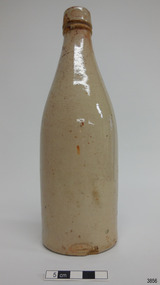
... Forsyth and John Mc Coll. Located where the Forth and Clyde Canal joined the Monkland Canal, North of Glasgow. Johnstone sold the pottery in 1835 to Robert Cochran and James Couper. ...Forsyth and John Mc Coll. Located where the Forth and Clyde Canal joined the Monkland Canal, North of Glasgow. Johnstone sold the pottery in 1835 to Robert Cochran and James Couper. ...This bottle was made in Scotland and recovered decades later from a shipwreck along the coast of Victoria. It may have been amongst the ship's cargo, its provisions or amongst a passenger's personal luggage. It is now part of the John Chance collection. Stoneware bottles similar to this one were in common use during the mid-to-late 19th century. They were used to store and transport. The bottles were handmade using either a potter's wheel or in moulds such as a plaster mould, which gave the bottles uniformity in size and shape. The bottle would then be fired and glazed in a hot kiln. Makers often identified their bottles with the impression of a small symbol or adding a colour to the mouth. The manufacturer usually stamped their bottles with their name and logo, and sometimes a message that the bottle remained their property and should be returned to them. The bottles could then be cleaned and refilled. DUNDAS POTTERY WORKS - The Dundas Pottery works were established in 1828 by William Johnstone in partnership with John Forsyth and John Mc Coll. Located where the Forth and Clyde Canal joined the Monkland Canal, North of Glasgow. Johnstone sold the pottery in 1835 to Robert Cochran and James Couper. Mc Coll was retained as manager until 1837when in 1839 Cochran & Couper sold the pottery and purchased the St Rollex Glass Works. George Duncan took over briefly but died in 1841, with the pottery possibly being run by his widow Helen and a potter named Alexander Paul. James Miller was the manager at the time and he bought the pottery in 1856, in partnership with John Moody. Miller's long and careful stewardship of the pottery saw success from the export market which allowed him to purchase the North British pottery in 1867 until 1874 when it was sold. In 1875, Miller, in partnership with John Young, leased part of Caledonian Pottery, naming it Crown Pottery, however, it burned down in 1879. In the early 1880s, Young extended the pottery and named it Milton Pottery. Miller’s son, James W., became a partner in Milton pottery in 1905. James Miller Snr died in 1905 and the company continued as a limited liability company, being sold to the Borax Consolidation Ltd in 1929, but it was unsuccessful and Possil pottery purchased some of the company's equipment before it finally closed in 1932. From 1828 until the James Miller period of circa 1856, the pottery produced salt-glazed stoneware for the local industrial trade; mainly bottles and drain pipes. James Miller produced various bottles, whisky and acid jars, casks, butter crocks, jam jars and domestic wares in Bristol glaze. He streamlined the water filter manufacturing, which had become a speciality of the pottery, and a dedicated section of the pottery was created solely for their production, which was exported worldwide.This stoneware bottle is historically significant for its manufacture and use in the late 19th to the early 20th century. This bottle is historically significant for its connection with the well-known stoneware manufacturers, Dundas Pottery of Glasgow, Scotland. The bottle is also significant as it was recovered by John Chance, a diver, from a wreck on the coast of Victoria in the 1960s-70s. Items that come from several wrecks along Victoria's coast have since been donated to the Flagstaff Hill Maritime Village’s museum collection by his family, illustrating this item’s level of historical value.Bottle, salt glazed stoneware, beige, part sealed with wax and cork, very little discolouration. Inscriptions stamped near base.Stamp: [symbol of concentric ovals], text within the symbol "PORT DUNDAS POTTERY COY." and "GLASGOW". Stamp:[Symbol - square with short vertical line in centre of base line]flagstaff hill, warrnambool, flagstaff hill maritime museum, maritime museum, shipwreck coast, flagstaff hill maritime village, great ocean road, john chance, shipwreck artefact, stoneware, ironstone, pottery, bottle, port dundas pottery, glasgow, antique bottle, william johnstone -
 Flagstaff Hill Maritime Museum and Village
Ceramic - Stoneware Bottle, Dundas Pottery, Late 1800s to early 1900s
... Forsyth and John Mc Coll. Located where the Forth and Clyde Canal joined the Monkland Canal, North of Glasgow. Johnstone sold the pottery in 1835 to Robert Cochran and James Couper. ...Forsyth and John Mc Coll. Located where the Forth and Clyde Canal joined the Monkland Canal, North of Glasgow. Johnstone sold the pottery in 1835 to Robert Cochran and James Couper. ...This bottle was made in Scotland and recovered decades later from a shipwreck along the coast of Victoria. It may have been amongst the ship's cargo, its provisions or amongst a passenger's personal luggage. It is now part of the John Chance collection. Stoneware bottles similar to this one were in common use during the mid-to-late 19th century. They were used to store and transport. The bottles were handmade using either a potter's wheel or in moulds such as a plaster mould, which gave the bottles uniformity in size and shape. The bottle would then be fired and glazed in a hot kiln. Makers often identified their bottles with the impression of a small symbol or adding a colour to the mouth. The manufacturer usually stamped their bottles with their name and logo, and sometimes a message that the bottle remained their property and should be returned to them. The bottles could then be cleaned and refilled. DUNDAS POTTERY WORKS - The Dundas Pottery works were established in 1828 by William Johnstone in partnership with John Forsyth and John Mc Coll. Located where the Forth and Clyde Canal joined the Monkland Canal, North of Glasgow. Johnstone sold the pottery in 1835 to Robert Cochran and James Couper. Mc Coll was retained as manager until 1837when in 1839 Cochran & Couper sold the pottery and purchased the St Rollex Glass Works. George Duncan took over briefly but died in 1841, with the pottery possibly being run by his widow Helen and a potter named Alexander Paul. James Miller was the manager at the time and he bought the pottery in 1856, in partnership with John Moody. Miller's long and careful stewardship of the pottery saw success from the export market which allowed him to purchase the North British pottery in 1867 until 1874 when it was sold. In 1875, Miller, in partnership with John Young, leased part of Caledonian Pottery, naming it Crown Pottery, however, it burned down in 1879. In the early 1880s, Young extended the pottery and named it Milton Pottery. Miller’s son, James W., became a partner in Milton pottery in 1905. James Miller Snr died in 1905 and the company continued as a limited liability company, being sold to the Borax Consolidation Ltd in 1929, but it was unsuccessful and Possil pottery purchased some of the company's equipment before it finally closed in 1932. From 1828 until the James Miller period of circa 1856, the pottery produced salt-glazed stoneware for the local industrial trade; mainly bottles and drain pipes. James Miller produced various bottles, whisky and acid jars, casks, butter crocks, jam jars and domestic wares in Bristol glaze. He streamlined the water filter manufacturing, which had become a specialty of the pottery, and a dedicated section of the pottery was created solely for their production, which was exported worldwide.This stoneware bottle is historically significant for its manufacture and use in the late 19th to the early 20th century. This bottle is historically significant for its connection with the well-known stoneware manufacturers, Dundas Pottery of Glasgow, Scotland. The bottle is also significant as it was recovered by John Chance, a diver, from a wreck on the coast of Victoria in the 1960s-70s. Items that come from several wrecks along Victoria's coast have since been donated to the Flagstaff Hill Maritime Village’s museum collection by his family, illustrating this item’s level of historical value.Bottle, salt glazed stoneware, beige, sealed with cork, no discolouration . Inscriptions stamped near base.Stamp: [symbol of concentric ovals], text within the symbol "PORT DUNDAS POTTERY COY." and "GLASGOW". Stamp:[Symbol - square with short vertical line in centre of base line]flagstaff hill, warrnambool, flagstaff hill maritime museum, maritime museum, shipwreck coast, flagstaff hill maritime village, great ocean road, john chance, shipwreck artefact, stoneware, ironstone, pottery, bottle, port dundas pottery, glasgow, antique bottle, william johnstone -
 Flagstaff Hill Maritime Museum and Village
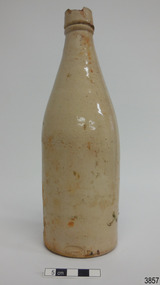
Ceramic - Stoneware Bottle, Dundas Pottery, Late 1800s to early 1900s
... Forsyth and John Mc Coll. Located where the Forth and Clyde Canal joined the Monkland Canal, North of Glasgow. Johnstone sold the pottery in 1835 to Robert Cochran and James Couper. ...Forsyth and John Mc Coll. Located where the Forth and Clyde Canal joined the Monkland Canal, North of Glasgow. Johnstone sold the pottery in 1835 to Robert Cochran and James Couper. ...This bottle was made in Scotland and recovered decades later from a shipwreck along the coast of Victoria. It may have been amongst the ship's cargo, its provisions or amongst a passenger's personal luggage. It is now part of the John Chance collection. Stoneware bottles similar to this one were in common use during the mid-to-late 19th century. They were used to store and transport. The bottles were handmade using either a potter's wheel or in moulds such as a plaster mould, which gave the bottles uniformity in size and shape. The bottle would then be fired and glazed in a hot kiln. Makers often identified their bottles with the impression of a small symbol or adding a colour to the mouth. The manufacturer usually stamped their bottles with their name and logo, and sometimes a message that the bottle remained their property and should be returned to them. The bottles could then be cleaned and refilled. DUNDAS POTTERY WORKS - The Dundas Pottery works were established in 1828 by William Johnstone in partnership with John Forsyth and John Mc Coll. Located where the Forth and Clyde Canal joined the Monkland Canal, North of Glasgow. Johnstone sold the pottery in 1835 to Robert Cochran and James Couper. Mc Coll was retained as manager until 1837when in 1839 Cochran & Couper sold the pottery and purchased the St Rollex Glass Works. George Duncan took over briefly but died in 1841, with the pottery possibly being run by his widow Helen and a potter named Alexander Paul. James Miller was the manager at the time and he bought the pottery in 1856, in partnership with John Moody. Miller's long and careful stewardship of the pottery saw success from the export market which allowed him to purchase the North British pottery in 1867 until 1874 when it was sold. In 1875, Miller, in partnership with John Young, leased part of Caledonian Pottery, naming it Crown Pottery, however, it burned down in 1879. In the early 1880s, Young extended the pottery and named it Milton Pottery. Miller’s son, James W., became a partner in Milton pottery in 1905. James Miller Snr died in 1905 and the company continued as a limited liability company, being sold to the Borax Consolidation Ltd in 1929, but it was unsuccessful and Possil pottery purchased some of the company's equipment before it finally closed in 1932. From 1828 until the James Miller period of circa 1856, the pottery produced salt-glazed stoneware for the local industrial trade; mainly bottles and drain pipes. James Miller produced various bottles, whisky and acid jars, casks, butter crocks, jam jars and domestic wares in Bristol glaze. He streamlined the water filter manufacturing, which had become a specialty of the pottery, and a dedicated section of the pottery was created solely for their production, which was exported worldwide.This stoneware bottle is historically significant for its manufacture and use in the late 19th to the early 20th century. This bottle is historically significant for its connection with the well-known stoneware manufacturers, Dundas Pottery of Glasgow, Scotland. The bottle is also significant as it was recovered by John Chance, a diver, from a wreck on the coast of Victoria in the 1960s-70s. Items that come from several wrecks along Victoria's coast have since been donated to the Flagstaff Hill Maritime Village’s museum collection by his family, illustrating this item’s level of historical value.Bottle, salt glazed stoneware, beige, large chip on lip of bottle. Inscription stamped near base.Stamp: [symbol of concentric ovals], text within the symbol "PORT DUNDAS POTTERY COY." and "GLASGOW". Stamp:[Symbol - square with short vertical line in centre of base line]flagstaff hill, warrnambool, flagstaff hill maritime museum, maritime museum, shipwreck coast, flagstaff hill maritime village, great ocean road, john chance, shipwreck artefact, stoneware, ironstone, pottery, bottle, port dundas pottery, glasgow, antique bottle, william johnstone -
 Flagstaff Hill Maritime Museum and Village
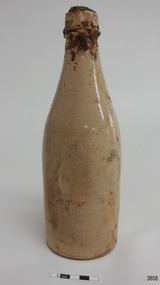
Ceramic - Stoneware Bottle, Dundas Pottery, Late 1800s to early 1900s
... Forsyth and John Mc Coll. Located where the Forth and Clyde Canal joined the Monkland Canal, North of Glasgow. Johnstone sold the pottery in 1835 to Robert Cochran and James Couper. ...Forsyth and John Mc Coll. Located where the Forth and Clyde Canal joined the Monkland Canal, North of Glasgow. Johnstone sold the pottery in 1835 to Robert Cochran and James Couper. ...This bottle was made in Scotland and recovered decades later from a shipwreck along the coast of Victoria. It may have been amongst the ship's cargo, its provisions or amongst a passenger's personal luggage. It is now part of the John Chance collection. Stoneware bottles similar to this one were in common use during the mid-to-late 19th century. They were used to store and transport. The bottles were handmade using either a potter's wheel or in moulds such as a plaster mould, which gave the bottles uniformity in size and shape. The bottle would then be fired and glazed in a hot kiln. Makers often identified their bottles with the impression of a small symbol or adding a colour to the mouth. The manufacturer usually stamped their bottles with their name and logo, and sometimes a message that the bottle remained their property and should be returned to them. The bottles could then be cleaned and refilled. DUNDAS POTTERY WORKS - The Dundas Pottery works were established in 1828 by William Johnstone in partnership with John Forsyth and John Mc Coll. Located where the Forth and Clyde Canal joined the Monkland Canal, North of Glasgow. Johnstone sold the pottery in 1835 to Robert Cochran and James Couper. Mc Coll was retained as manager until 1837 when in 1839 Cochran & Couper sold the pottery and purchased the St Rollex Glass Works. George Duncan took over briefly but died in 1841, with the pottery possibly being run by his widow Helen and a potter named Alexander Paul. James Miller was the manager at the time and he bought the pottery in 1856, in partnership with John Moody. Miller's long and careful stewardship of the pottery saw success from the export market which allowed him to purchase the North British pottery in 1867 until 1874 when it was sold. In 1875, Miller, in partnership with John Young, leased part of Caledonian Pottery, naming it Crown Pottery, however, it burned down in 1879. In the early 1880s, Young extended the pottery and named it Milton Pottery. Miller’s son, James W., became a partner in Milton pottery in 1905. James Miller Snr died in 1905 and the company continued as a limited liability company, being sold to the Borax Consolidation Ltd in 1929, but it was unsuccessful and Possil pottery purchased some of the company's equipment before it finally closed in 1932. From 1828 until the James Miller period of circa 1856, the pottery produced salt-glazed stoneware for the local industrial trade; mainly bottles and drain pipes. James Miller produced various bottles, whisky and acid jars, casks, butter crocks, jam jars and domestic wares in Bristol glaze. He streamlined the water filter manufacturing, which had become a speciality of the pottery, and a dedicated section of the pottery was created solely for their production, which was exported worldwide.This stoneware bottle is historically significant for its manufacture and use in the late 19th to the early 20th century. This bottle is historically significant for its connection with the well-known stoneware manufacturers, Dundas Pottery of Glasgow, Scotland. The bottle is also significant as it was recovered by John Chance, a diver, from a wreck on the coast of Victoria in the 1960s-70s. Items that come from several wrecks along Victoria's coast have since been donated to the Flagstaff Hill Maritime Village’s museum collection by his family, illustrating this item’s level of historical value.Bottle, salt glazed stoneware, beige, sealed with cork and wax, discolouration on upper part. Inscription stamped near base.Stamp: [symbol of concentric ovals], text within the symbol "PORT DUNDAS POTTERY COY." and "GLASGOW". Stamp:[Symbol - square with short vertical line in centre of base line]flagstaff hill, warrnambool, flagstaff hill maritime museum, maritime museum, shipwreck coast, flagstaff hill maritime village, great ocean road, john chance, shipwreck artefact, stoneware, ironstone pottery, bottle, port dundas pottery, glasgow, antique bottle, william johnstone -
 Flagstaff Hill Maritime Museum and Village
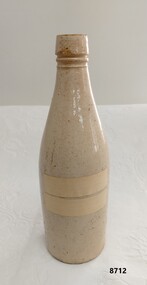
Container - Stone Ware Bottle, Port Dundas Pottery, Circa early 1870's
... Forsyth and John Mc Coll. Located where the Forth and Clyde Canal joined the Monkland Canal, North of Glasgow. Johnstone sold the pottery in 1835 to Robert Cochran and James Couper. ...Forsyth and John Mc Coll. Located where the Forth and Clyde Canal joined the Monkland Canal, North of Glasgow. Johnstone sold the pottery in 1835 to Robert Cochran and James Couper. ...This bottle was made at the Dundas Pottery Works, in Glasgow, Scotland and recovered from the shipwreck of the Loch Ard. Stoneware bottles similar to this one were in common use during the mid-to-late 19th century. They were used to store and transport beverages like ginger beer, porter or stout. The bottles were handmade using either a potter's wheel or in moulds such as a plaster mould, which gave the bottles uniformity in size and shape. The bottle would then be fired and glazed in a hot kiln. Makers often identified their bottles with the impression of a small symbol or adding a colour to the mouth. The manufacturer usually stamped their bottles with their name and logo, and sometimes a message that the bottle remained their property and should be returned to them. The bottles could then be cleaned and refilled. DUNDAS POTTERY WORKS - The Dundas Pottery works were established in 1828 by William Johnstone in partnership with John Forsyth and John Mc Coll. Located where the Forth and Clyde Canal joined the Monkland Canal, North of Glasgow. Johnstone sold the pottery in 1835 to Robert Cochran and James Couper. Mc Coll was retained as manager until 1837when in 1839 Cochran & Couper sold the pottery and purchased the St Rollex Glass Works. George Duncan took over briefly but died in 1841, with the pottery possibly being run by his widow Helen and a potter named Alexander Paul. James Miller was the manager at the time and he bought the pottery in 1856, in partnership with John Moody. Miller's long and careful stewardship of the pottery saw success from the export market which allowed him to purchase the North British pottery in 1867 until 1874 when it was sold. In 1875, Miller, in partnership with John Young, leased part of Caledonian Pottery, naming it Crown Pottery, however, it burned down in 1879. In the early 1880s, Young extended the pottery and named it Milton Pottery. Miller’s son, James W., became a partner in Milton pottery in 1905. James Miller Snr died in 1905 and the company continued as a limited liability company, being sold to the Borax Consolidation Ltd in 1929, but it was unsuccessful and Possil pottery purchased some of the company's equipment before it finally closed in 1932. From 1828 until the James Miller period of circa 1856, the pottery produced salt-glazed stoneware for the local industrial trade; mainly bottles and drain pipes. James Miller produced various bottles, whisky and acid jars, casks, butter crocks, jam jars and domestic wares in Bristol glaze. He streamlined the water filter manufacturing, which had become a specialty of the pottery, and a dedicated section of the pottery was created solely for their production, which was exported worldwide. It was salvaged from the Loch Ard. The ship Loch Ard was built on the River Clyde in Scotland in 1873 for the prestigious Loch Line of colonial clipper ships, designed for the Australian run. It sailed from England on 1 March 1878 carrying 37 crew, 17 passengers and a diverse general cargo ranging from luxury items to bulk railway iron. On 1 June 1878, emerging from fog and hearing too late the sound of breakers against the tall limestone cliffs, the vessel struck the southern foot of Mutton Bird Island and sank in 23 metres of water. Of the fifty-four people on board only two survived, one young male crewman, Tom Pearce, and one young female passenger, Eva Carmichael. This ink bottle was given to George Shields - a member of the Shields family who have had a long association with the wreck of the Loch Ard. In 1878, following the wreck of the Loch Ard and the subsequent rescue of Eva Carmichael, Eva was taken to Glenample station (near Princetown) to recuperate. It was during this period that Eva became great friends with Jane Shields (an Aunt of George Shields) - a friendship that continued throughout their lives. At that time, Jane was a young woman living in Princetown with her parents and siblings. Many of the Shields family continued to have a great interest in the Loch Ard and several generations of the family are buried in the Loch Ard cemetery.This stoneware bottle is historically significant for its manufacture and use in trade and transport in the late 19th to the early 20th century. This bottle is historically significant for its connection with the well-known stoneware manufacturers, Dundas Pottery of Glasgow, Scotland. The shipwreck of the Loch Ard is of significance for Victoria and is registered on the Victorian Heritage Register ( S 417). Flagstaff Hill has a varied collection of artefact's from Loch Ard and its collection is significant for being one of the largest accumulation of artefact's from this notable Victorian shipwreck of which the subject items are a small part. The collection's objects give us a snapshot of how we can interpret the story of this tragic event. The collection is also archaeologically significant as it represents aspects of Victoria's shipping history that allows us to interpret Victoria's social and historical themes of the time. Through is associated with the worst and best-known shipwreck in Victoria's history.A beige coloured,salt glazed stoneware bottle with gently tapered sides and a speckled finish. It has two narrow channels around the neck and is missing a stopper. Two 8.5 centimetre pieces of tape, with very faded writing, are stuck horizontally on the side of the bottle. The bottom of the bottle has brown discolouration. It has an oval shaped stamp with a makers' name and location on bottom side of bottle.On tape - "STONE BOTTLE SALVAGED / FROM WRECK OF LOCH ARD/ SUNK NEAR PORT CAMPBELL/ ? 1878" "1624 TNS SAILING SHIP / ONLY 2 SURVIVORS OUT OF / 54 PEOPLE ON BOARD/ NOW KNOWN AS LOCH ARD GORGE" Stamp - "PORT DUNDAS POTTERY / GLASGOW" Symbol - Stamp square with "D"flagstaff hill maritime museum and village, warrnambool, great ocean road, shipwreck coast, loch ard, stoneware bottle, port dundas pottery, shields family, ginger beer bottle, loch ard salvage, loch ard artefact -
Tatura Irrigation & Wartime Camps Museum
Photograph, Tatura Scouts 1931, 2001
... Forsyth...N Stewart...R Dunlop...Len Mills...Lionel Pay...Marc Sorleigh...James...Back: J Steen, Reg Maskell, Kevin Phair, Les Maskell, R Glover, L Seaborn SM Standing: Roly Canobi, William Geals, Ross Forsyth, N Stewart, R Dunlop, Len Mills, Lionel Pay Kneeling: Marc Sorleigh, James Crawford, Joe Magee, Clive Plant, Ron Jordon, Ted Price Front: R Attwood, M Montgomery, J McIntyre, K Phair, Athol Stewart....Back: J Steen, Reg Maskell, Kevin Phair, Les Maskell, R Glover, L Seaborn SM Standing: Roly Canobi, William Geals, Ross Forsyth, N Stewart, R Dunlop, Len Mills, Lionel Pay Kneeling: Marc Sorleigh, James Crawford, Joe Magee, Clive Plant, Ron Jordon, Ted Price Front: R Attwood, M Montgomery, J McIntyre, K Phair, Athol Stewart. photograph J Steen Reg Maskell Kevin Phair Les Maskell R Glover L Seaborn Roly Canobi William Geals Ross Forsyth N Stewart R Dunlop Len Mills Lionel Pay Marc Sorleigh James Crawford Joe Magee Clive Plant Ron Jordon Ted Price R Attwood M Montgomery J McIntyre K Phair Athol Stewart Photograph of Tatura Scouts c 1931. ...Photographed by Albert Hampton. Back: J Steen, Reg Maskell, Kevin Phair, Les Maskell, R Glover, L Seaborn SM Standing: Roly Canobi, William Geals, Ross Forsyth, N Stewart, R Dunlop, Len Mills, Lionel Pay Kneeling: Marc Sorleigh, James Crawford, Joe Magee, Clive Plant, Ron Jordon, Ted Price Front: R Attwood, M Montgomery, J McIntyre, K Phair, Athol Stewart.Photograph of Tatura Scouts c 1931.photograph, j steen, reg maskell, kevin phair, les maskell, r glover, l seaborn, roly canobi, william geals, ross forsyth, n stewart, r dunlop, len mills, lionel pay, marc sorleigh, james crawford, joe magee, clive plant, ron jordon, ted price, r attwood, m montgomery, j mcintyre, k phair, athol stewart -
Tatura Irrigation & Wartime Camps Museum
Certificate of Title, Subdivisions, 1879 and 1930
... james bruce...edward hanley...chew yen...ah poy...loo way...ah dick...charles mitchell...lionel martin...douglas forsyth...Title Deeds for property in Tatura tatura relationship folders certificate of title lease thomas hogan john hogan john james hanlon edward glover arthur burke james brady andrew collie jean hunter sydney embling john maher arthur goyen patrick o'toole philipe dove george wildon edwin harden cuthbert corke lee chung hugh barnes george manning francis williams john fawkner michael walshe alexander ferguson rose gullett john gibb william taylor richard casey anthony grover arthur grover charles brady elizabeth davey frank williams honora culkin alexander park stephen reville richard carr charles grover henry mccarthy james bruce edward hanley chew yen ah poy loo way ah dick charles mitchell lionel martin douglas forsyth catherine wilson mabel heath patrick mcnamara micheal cussen james wilson bazeley documents legal 2 certificates of title showing subdivisions made over several years. ...Title Deeds for property in Tatura2 certificates of title showing subdivisions made over several years. Vol. 5655:Folio 1130935 dated 16/5/1930 and Vol.1182: Folio 236330 dated 23/12/1869. Lease between Thomas Hogan and W F Bazeley dated 7th July 1911 for land in Hogan Street known as Slaughter Yard Paddock .Also lease dated 1911. In buff coloured legal envelope with number "2678" and "Hogan - Thomas" written in red on outside.tatura, relationship folders, certificate of title, lease, thomas hogan, john hogan, john james hanlon, edward glover, arthur burke, james brady, andrew collie, jean hunter, sydney embling, john maher, arthur goyen, patrick o'toole, philipe dove, george wildon, edwin harden, cuthbert corke, lee chung, hugh barnes, george manning, francis williams, john fawkner, michael walshe, alexander ferguson, rose gullett, john gibb, william taylor, richard casey, anthony grover, arthur grover, charles brady, elizabeth davey, frank williams, honora culkin, alexander park, stephen reville, richard carr, charles grover, henry mccarthy, james bruce, edward hanley, chew yen, ah poy, loo way, ah dick, charles mitchell, lionel martin, douglas forsyth, catherine wilson, mabel heath, patrick mcnamara, micheal cussen, james wilson, bazeley, documents, legal -
Tatura Irrigation & Wartime Camps Museum
Photograph, 2001
... |Standing: Roly Canobie; Wm.Geals; Ross Forsyth; N.Stewart; R.Dunlop; Ken Mills; L.Seabourne.S.M.|Kneeling: Max Sorleigh; James Crawford; Joe Magee; Clive Plant; Ron Jordan: Ted Price....|Standing: Roly Canobie; Wm.Geals; Ross Forsyth; N.Stewart; R.Dunlop; Ken Mills; L.Seabourne.S.M.|Kneeling: Max Sorleigh; James Crawford; Joe Magee; Clive Plant; Ron Jordan: Ted Price. ...Photograph of Tatura Scouts c.1931 - Back: J.Steen; Reg.Maskell; Kevin Phair; Les Maskell; R.Glover.|Standing: Roly Canobie; Wm.Geals; Ross Forsyth; N.Stewart; R.Dunlop; Ken Mills; L.Seabourne.S.M.|Kneeling: Max Sorleigh; James Crawford; Joe Magee; Clive Plant; Ron Jordan: Ted Price.|Front: R.Attwood; M.Montgomery; J.McIntyre; K.Phair: Atholphotograph, people -
 Melton City Libraries
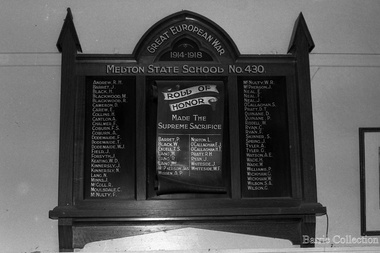
Photograph, Melton State School 430 honour board, 1970
... James A • BLACKWOOD, Roy .. • CAMERON David or (Donald) William M • CAREW, Edward Edward M • COLLINS, H John Henry H Thomas CC M • CANTLON, A Alfred CC • CHALMER, Frank Ernest CC M • COBURN, A Frederick CC M • COBURN, FS CC M • DODEMAIDE, Frank William • DODEMAIDE, Thomas .. • DODEMAIDE, W J William John M • FIELD, J • FORSYTH J • KEATING, WD William Edward M • KINNERSLY James Edward CC • KINNERSLY Norman Chas Edward CC • LANG Norman William • MINNS, J CC M • McCOLL R Alex R J. ...James A • BLACKWOOD, Roy .. • CAMERON David or (Donald) William M • CAREW, Edward Edward M • COLLINS, H John Henry H Thomas CC M • CANTLON, A Alfred CC • CHALMER, Frank Ernest CC M • COBURN, A Frederick CC M • COBURN, FS CC M • DODEMAIDE, Frank William • DODEMAIDE, Thomas .. • DODEMAIDE, W J William John M • FIELD, J • FORSYTH J • KEATING, WD William Edward M • KINNERSLY James Edward CC • KINNERSLY Norman Chas Edward CC • LANG Norman William • MINNS, J CC M • McCOLL R Alex R J. ...HONOR BOARD Melton State School No 430 Supreme Sacrifice • BARRET, P Peter Maurice Barrett Number 5051 Rank: Private Unit: Private Date of death 18th August 1918 of wounds age 21 St Sever Cemetery Extension, Rouen, France Started school August 1904 5 years 10 months Previous school St Michaels Nth Melb Son of Maurice Barrett labourer Melton Brother of John Barrett • BLACK, William William M • EXELL, T S Number 2758 Rank: Trooper 3rd Battalion Imperial Camel Corps Date of death 30th November 1917 of wounds aged 20 years Cairo War Memorial Cemetery Egypt Started school September 1907 aged 10 Previous school Boisdale 3017 Son of George, farmer Melton Railway Station (Melton South) Year of 1918 • LANG, Horace Thomas Number 903 Rank: Corporal Unit: 24th Battalion Date of death: 5th May 1917. Court if enquiry confirmed Dec 1917. Aged 24 Date of birth 27th April 1893 Spring Hill – Kyneton Commemorated Villers-Bretonneux France Started school November 1997. Father: Thomas Lang Teacher Melton 430 Brother of Thomas Lang died 18th July 1918 buried Cairo • LANG, R William Roy Number 2818 Rank: Driver Unit: 1st Australian Light Horse Machine Gen Squadron Date of death 31st October 1917 of wounds Beersheba War Cemetery Israel Started school October 1899 Aged 9 Previous school Camperdown SS 114 Date of Birth: 24th Jan 1890 Son of William John and Mary Lang of Langlands Jandowae Queensland Nephew of Thomas Lang Melton • LANG, Thomas John Thomas NZ CC M Number 15/118 Rank: Lieutenant Unit: Army Pay Department Date of death 18th July 1918 of disease Cairo War Memorial Cemetery Started school November 1896 aged 16 years - Previous school Coliban 1920 Son of Thomas Lang, teacher Melton No 430 • McPHERSON Jas Mrs M: James Sept 1897 Previous Graham St Port Melb Son of Alexander farmer Melton • MISSEN, A P Frederick M Started school August 1899 age 7 years Son of Frederick, fruiterer Melton His sister Adelaide May 11years Previous Ascot Vale 2608 • NORTON, Lewis Thomas CC M Number 1809 Rank: Private Unit: 29th Battalion (Infantry) Date of death 30th September 1918 Cemetery Bellicourt British Cemetery, France Started school March 1901 age 9 years Previous school Galaquil Son of Thomas Norton of Parwan • O’CALLAGHAN, EJ Edward Edward M • O’CALLAGHAN, HT Thomas .. M Number 3859 Rank: Private Unit: 57th Battalion (Infanrty) Date of death 26th September 1917 Bedford House Cemetery, Belgium Started school 11th March 1901 Aged 10 years Father: John O’Callaghan farmer of Melton • PRATT, R H Robert Henry Number: 2203 Rank: Private Unit: 46th Battalion (Infantry) Date of death, 12th April 1917 Favreuil British Cemetery, France Started school in May 1903 aged 6 years Father: Matthew Pratt, Labourer Melton • RYAN J James or John David: RYAN J ? Started August 1896 Previous Christian Brother St Kilda John 11-5 or James 9-11 Charles 6-11 returned from WW1 Frank 8-5 returned Father Daniel Publican • WHITESIDE, John Edward M Number 2182 Rank: Trooper Unit 13th Light Horse Date of death 4th September 1918 of illness aged 29 years Alexandria (Hadra) War Memorial Cemetery, Egypt Started school July 1897 age 8 Son of Edward Whiteside Labourer Melton Brother of Edward. • WHITESIDE, W F Number: 3995 Rank: Private Unit: 22nd Battlion Date of death, 28th July 1916, died of wounds aged 21 years Puchevillers British Cemetery, France Started school in 1901 Year of birth circa 1895 Brother Edward died 4th September 1918 Father: Edward Whiteside. Labourer Year of 1917 • ANDREW. R H • BARRETT, J John Maurice • BLACK, Harold David • BLACKWOOD, Maxwell James A • BLACKWOOD, Roy .. • CAMERON David or (Donald) William M • CAREW, Edward Edward M • COLLINS, H John Henry H Thomas CC M • CANTLON, A Alfred CC • CHALMER, Frank Ernest CC M • COBURN, A Frederick CC M • COBURN, FS CC M • DODEMAIDE, Frank William • DODEMAIDE, Thomas .. • DODEMAIDE, W J William John M • FIELD, J • FORSYTH J • KEATING, WD William Edward M • KINNERSLY James Edward CC • KINNERSLY Norman Chas Edward CC • LANG Norman William • MINNS, J CC M • McCOLL R Alex R J. McColl • MOULSDALE Charles William M • McNULTY, Frederick James CC • McNULTY, W R CC • McPHERSON J which one? • NEAL, Elvine J Neal M • NEAL, Frank John M • NEAL, John William John M (husband of Isabella) • O’CALLAGHAN, Stephen Edward M • PRATT, David T Matthew CC M • QUINANE, David Peter • QUINANE, Peter .. • RIDDELL, William M • RYAN, Charles Daniel • RYAN Frank .. • SKINNER, Stanley John S’John CC M • SPRING, James George • TYLER, A • TYLER, George George • WATSON, Albert Ernest Alexander M • WADE, Howard James • WADE, Walter .. might be connected with CC • WILLIAMS, Percy Mr Williams • WICKHAM, George George M • WICKHAM, W M • WILSON, Stanley [ Alfred and Maude] M • WILSON, Gordon .. M SUPREME SACRIFICE Roll of Honor Melton State School No 430 Years of 1916,1917 and 1918 -
Merbein District Historical Society
Book, From Battlefield to Block (c 2003), 1914-1918
... Forsyth... Henry Furze... Robert Norman... James...Merbein West Settlement Arthur Shugg John Clayton Fraser Ludbrook William John Kirwin Thomas Murphy George Bowden Horace Allen Anthony Verryk-Fleetwood Peter Murphy William Hamilton Henry Duffield Douglas McTaggart George Picton Robert Lawson Williams Forsyth Henry Furze Robert Norman James Thomas Edwin Pegler James Buxton Christopher Barry Sidney Wells Clarence Wescombe Arthur Geer Charles Woodham Bruce Lillywhite Howard Iredale William Sargentson John Pasini Friedrich Bosenberg William Phayer William Smythe William Williams Walter Freeman James Philpott Frederick Carey Alexander McArthur Leslie Mayne Herbert Heaysman Sydney Soliague William Allen Alfred Rawlings John McKay Neil "Boss" McGinty John Young Louis Wilson Albert Stewart Leopold Pearce Joseph Kinniburgh Joseph Hopkins Christian Fleck Herbert Hunt Thomas McDonald Walter Sibley Harry Ford William Smith Albert Skinner Frederick Kneebone Bert Kinniburgh Hector Down James Scott William Murphy Thomas Pryor Archibald McDougall John Hennessy Gustav Johnson Adrian Brown Rudolph Fechner John Box Edward Higgins John Wolstenhome Percival Bailey Percy Bull Edward O'Connor Roddy Larkin Malcolm McKenzie Edward Lawler George Steege Tom Cupper Charles Johns Frederick Langdon George McDonnell Alfred Bridley Raoul Gelly Arthur Morrison Herbert Sutherland Nelson Wellington James Lane Roy Jerom Frederick Treen William Thompson Rupert Hayes James Box Sidney Flenley Leslie Goodie John Sutton Thomas Hanley Keith Wood Herbert Chambers Mortimer Plane John McMahon Robin McDonnell Thomas Kennedy Harry Bull Ernest Smith Walter Allen Lawrence Mayne James Shillington Frederick Goucher Frederick Handasyde Rupert Hammet Clive Kneebone Thomas McKenzie James Hudson Walter Galbraith Walter Smythe Lindsay Cameron John Rainbow John Alexander Henry Flenley Guy Palmer Walter Bruce Birdwoodton From Battlefield to Block (c 2003) Book ...merbein west settlement, arthur shugg, john clayton, fraser ludbrook, william john kirwin, thomas murphy, george bowden, horace allen, anthony verryk-fleetwood, peter murphy, william hamilton, henry duffield, douglas mctaggart, george picton, robert lawson, williams forsyth, henry furze, robert norman, james thomas, edwin pegler, james buxton, christopher barry, sidney wells, clarence wescombe, arthur geer, charles woodham, bruce lillywhite, howard iredale, william sargentson, john pasini, friedrich bosenberg, william phayer, william smythe, william williams, walter freeman, james philpott, frederick carey, alexander mcarthur, leslie mayne, herbert heaysman, sydney soliague, william allen, alfred rawlings, john mckay, neil "boss" mcginty, john young, louis wilson, albert stewart, leopold pearce, joseph kinniburgh, joseph hopkins, christian fleck, herbert hunt, thomas mcdonald, walter sibley, harry ford, william smith, albert skinner, frederick kneebone, bert kinniburgh, hector down, james scott, william murphy, thomas pryor, archibald mcdougall, john hennessy, gustav johnson, adrian brown, rudolph fechner, john box, edward higgins, john wolstenhome, percival bailey, percy bull, edward o'connor, roddy larkin, malcolm mckenzie, edward lawler, george steege, tom cupper, charles johns, frederick langdon, george mcdonnell, alfred bridley, raoul gelly, arthur morrison, herbert sutherland, nelson wellington, james lane, roy jerom, frederick treen, william thompson, rupert hayes, james box, sidney flenley, leslie goodie, john sutton, thomas hanley, keith wood, herbert chambers, mortimer plane, john mcmahon, robin mcdonnell, thomas kennedy, harry bull, ernest smith, walter allen, lawrence mayne, james shillington, frederick goucher, frederick handasyde, rupert hammet, clive kneebone, thomas mckenzie, james hudson, walter galbraith, walter smythe, lindsay cameron, john rainbow, john alexander, henry flenley, guy palmer, walter bruce, birdwoodton -
 Federation University Historical Collection
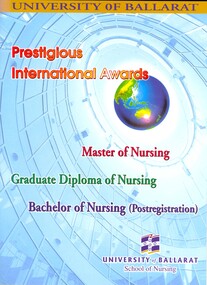
Booklet - Course Information, University of Ballarat Master of Nursing Graduate Diploma of Nursing, Bachelor of Nursing, c2002
... james...ballarat...sue turale...allan donelly...eileen sellers...brendan baker...claire bell...hannelore best...katherine birkin...cecil deans...judith forsyth...The University of Ballarat is a predecessor institution of Federation University Australia. university of ballarat nursing david james ballarat sue turale allan donelly eileen sellers brendan baker claire bell hannelore best katherine birkin cecil deans judith forsyth neil gracie jennifer macgill kerry peart elizabeth crouch tulsa baker debra demeye gwen ford gillian fox paul henderson traci leung natisha sands mary tabarsi tsang cannas yu janine smith sundram sivamalai maris strickland dianne thompson david lee bernice whitaker robyn irish christopher brown leann brown michael reynolds peter swan christine o'connor shen genshen Blue soft covered booklet relating to the University of Ballarat Master of Nursing Graduate Diploma of Nursing, Bachelor of Nursing (Postregistration) University of Ballarat Master of Nursing Graduate Diploma of Nursing, Bachelor of Nursing Booklet Course Information ...The University of Ballarat is a predecessor institution of Federation University Australia.Blue soft covered booklet relating to the University of Ballarat Master of Nursing Graduate Diploma of Nursing, Bachelor of Nursing (Postregistration)university of ballarat, nursing, david james, ballarat, sue turale, allan donelly, eileen sellers, brendan baker, claire bell, hannelore best, katherine birkin, cecil deans, judith forsyth, neil gracie, jennifer macgill, kerry peart, elizabeth crouch, tulsa baker, debra demeye, gwen ford, gillian fox, paul henderson, traci leung, natisha sands, mary tabarsi tsang, cannas yu, janine smith, sundram sivamalai, maris strickland, dianne thompson, david lee, bernice whitaker, robyn irish, christopher brown, leann brown, michael reynolds, peter swan, christine o'connor, shen genshen
