
Showing 431 items matching "john english"
-
 Bendigo Historical Society Inc.
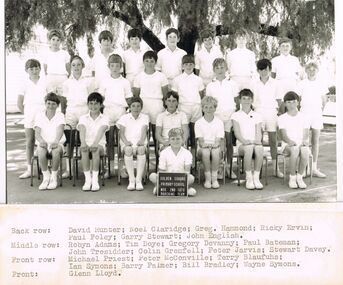
Photograph - GOLDEN SQUARE LAUREL STREET P.S. COLLECTION: PHOTOGRAPH MARCHING TEAM
... ... John English...The twenty three boys are; David Hunter, Noel Claridge, Greg Hammond, Ricky Ervin, Paul Foley, Garry Stewart, John English, Robyn Adams, Tim Doye, Gregory Devanny, Paul Bateman, John Tresidder, Colin Grenfell, Peter Jarvis, Stewart Davey, Michael Priest, Peter McConville, Terry Blaufuhs, Ian Symons, Barry Palmer, Bill Bradley, Wayne Symons and Glenn Lloyd....The twenty three boys are; David Hunter, Noel Claridge, Greg Hammond, Ricky Ervin, Paul Foley, Garry Stewart, John English, Robyn Adams, Tim Doye, Gregory Devanny, Paul Bateman, John Tresidder, Colin Grenfell, Peter Jarvis, Stewart Davey, Michael Priest, Peter McConville, Terry Blaufuhs, Ian Symons, Barry Palmer, Bill Bradley, Wayne Symons and Glenn Lloyd. ...Black and white photograph of the Golden Square Primary School boys Marching Team. Date Nov. 2nd 1970. The twenty three boys are; David Hunter, Noel Claridge, Greg Hammond, Ricky Ervin, Paul Foley, Garry Stewart, John English, Robyn Adams, Tim Doye, Gregory Devanny, Paul Bateman, John Tresidder, Colin Grenfell, Peter Jarvis, Stewart Davey, Michael Priest, Peter McConville, Terry Blaufuhs, Ian Symons, Barry Palmer, Bill Bradley, Wayne Symons and Glenn Lloyd.education, primary, golden square laurel st p.s., golden square laurel street p.s. collection - photograph marching team, david hunter, noel claridge, greg hammond, ricky ervin, paul foley, garry stewart, john english, robyn adams, tim doye, gregory devanny, paul bateman, john tresidder, colin grenfell, peter jarvis, stewart davey, michael priest, peter mcconville, terry blaufuhs, ian symons, barry palmer, bill bradley, wayne symons, glenn lloyd -
 Old Colonists' Association of Ballarat Inc.
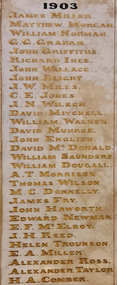
Photograph - Photograph - Colour, Marble Honour Boards listing benefactors to the Ballarat Old Colonists' Associations in 1903, c1903
... ...John English...Jones John Nolble Wilson david Mitchell William Walker David Munrow John English David McDonald William Saunders William Dougall A.T. ...Jones John Nolble Wilson david Mitchell William Walker David Munrow John English David McDonald William Saunders William Dougall A.T. ...Marble Honour Boards listing benefactors to the Ballarat Old Colonists' Associations. The name was added to the boards the year of the donors death. 1903 James Miller Matthew Morgan William Norman G.G. Graham John Griffiths Richard Ince John Wallace John Blight J.W. Mills C.E. Jones John Nolble Wilson david Mitchell William Walker David Munrow John English David McDonald William Saunders William Dougall A.T. Morrison Thomas Wilson M.C. Donnelly James Fry John Haworth Edward Newman E.F. McElroy J.H. Reed Helen Trounson E.A. Miller Alexander Ross Alexander Taylor H.A. Comber old colonists' association, marbles, james miller, matthew morgan, william norman, g.g. graham, john griffiths, richard ince, john wallace, john blight, j.w. mills, c.e. jones, john nolble wilson, david mitchell, william walker, david munrow, john english, david mcdonald, william saunders, william dougall, a.t. morrison, thomas wilson, m.c. donnelly, james fry, john haworth, edward newman, e.f. mcelroy, j.h. reed, helen trounson, e.a. miller, alexander ross, alexander taylor, h.a. comber -
 Old Colonists' Association of Ballarat Inc.
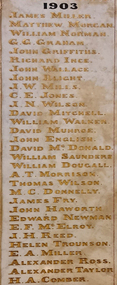
Photograph - Photograph - Colour, Marble Honour Boards listing benefactors to the Ballarat Old Colonists' Associations in 1903, 09/06/2022
... ...John English...Jones John Noble Wilson David Mitchell William Walker David Munroe John English David McDonald William Saunders William Dougall A.T. ...Jones John Noble Wilson David Mitchell William Walker David Munroe John English David McDonald William Saunders William Dougall A.T. ...Marble Honour Boards listing benefactors to the Ballarat Old Colonists' Associations. The name was added to the boards the year of the donors death. 1903 James Miller Matthew Morgan William Norman G.G. Graham John Grifiths Richard Ince John Wallace John Blight J.W. Mills C.E. Jones John Noble Wilson David Mitchell William Walker David Munroe John English David McDonald William Saunders William Dougall A.T. Morrison Thomas Wilson M.C. Donnelly James Fry John Haworth Edward Newman E.F. McElroy J.H. Reed Helen Trounson E.A. Miller Alexander Ross Alexander Taylor H.A. Comber old colonists' association, marbles, james miller, matthew morgan, william norman, g.g. graham, john grifiths, richard ince, john wallace, john blight, j.w. mills, c.e. jones, john noble wilson, david mitchell, william walker, david munroe, john english, david mcdonald, william saunders, william dougall, a.t. morrison, thomas wilson, m.c. donnelly, james fry, john haworth, edward newman, e.f. mcelroy, j.h. reed, helen trounson, e.a. miller, alexander ross, alexander taylor, h.a. comber -
 Phillip Island and District Historical Society Inc.
Book, SYMONDS, John Addington, life of Benvenuto Cellini, newly translated into English by John Addington Symonds ; with mezzotint portrait, and sixteen reproductiions of Cellini's works, 1925
... life of Benvenuto Cellini, newly translated into English by John Addington Symonds ; with mezzotint portrait, and sixteen reproductiions of Cellini's works...Stamped 'Cowes Public Library'. life of Benvenuto Cellini, newly translated into English by John Addington Symonds ; with mezzotint portrait, and sixteen reproductiions of Cellini's works Book SYMONDS, John Addington Macmillan ...Labelled 'Himmer Bequest'. Stamped 'Cowes Public Library'. -
 Old Colonists' Association of Ballarat Inc.
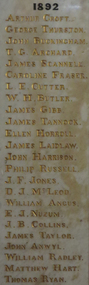
Photograph - Photograph - Colour, Marble Honour Boards listing benefactors to the Ballarat Old Colonists' Associations
... ...John English...Jones John Noble Wilson David Mitchell William Walner David Munroe John English David McDonald William Saunders William Dougall A.T. ...Jones John Noble Wilson David Mitchell William Walner David Munroe John English David McDonald William Saunders William Dougall A.T. ...The Old Colonists' Hall opened in 1887.Marble Honour Boards listing benefactors to the Ballarat Old Colonists' Associations. The name was added to the boards the year of the donors death. 1892 Arthur Croft George Thurston John Buckingham T.G. Archard James Scannele Caroline Fraser L.E. Cutter W.H. Butler James Gibb James Tannock Ellen Horroll James Laidlaw John Harrison Philip Russell J.F Jones D.J. McLeod William Angus E.J. Nuzum J.B. Collins James Taylor John Anwyl William Radley Matthew Hart Thomas Ryan 1897 William Taylor Joseph Langfon W.C. Phillips Henry Dobson Peter Brose Edwin Parr John Magor Natale D'Angri Lawson Ure James Malcolm Robert Sim W.J. Clarke F.N. Martin William Kelly Edward Hrose Francis Edwards William Kay James Simpson J.R. Hopkins W. Booth 1898 John Peart J.J. Cahir Joseph Betts Thomas Rowlands George Brown Rudolph Stephens James Houston John McPhee Alban Atwood David Fitzpatrick L.H. Kopke Henry Morrison William Bones Henry Morris 1899 Alexander Miller David McNaught C.W. Langtree John Twentyman Nathaniel Trench Adam Bennett James Gay C.B. Retallack James Richardson Thomas Hawkins John Taylor D.F. Stalker William Laplau John Jarvie J.E. Morris James Harrison J.S. Paterson Henry Leggo W.J. Seeley Charles Stewart James Vigar J.J. Cahir Joseph Betts Thomas Rowlands George Brown Rudolph Stephens James Houston John McPhee Alban Atwood David Fitzpatrick L.H. Kopke Henry Morrison William Bones Henry Morris 1900 Peter Le Page W.H. Barnard George Perry George Eason James Ivey 1903 James Miller Matthew Morgan William Norman G.G. Graham John Griffiths Richard Ince John Wallace John Blight J.W. Mills C.E. Jones John Noble Wilson David Mitchell William Walner David Munroe John English David McDonald William Saunders William Dougall A.T. Morrison Thomas Wilson M.C. Donnelly James Fry John Haworth Edward Newman E.F. McElroy J.H. Reed Helen Trounson E.A. Miller Alexander Ross Alexander Taylor H.A. Comber 1909 John Blyth Charles Tunbridge Henry Gore Walter Owen Charles Rowsell Edward Elliott Charles Robinson T.J. Wills R.S. Hager Henry Fields T. Paterson William Woodridge A. Morrah Adam Scott J.C. Shepherd J. Holland J. Cochran G. Lovitt J. Haig G. Sharp J. Dulfer R. Davidson E. Lillingston T. Raw 1911 W.H. Uren John Paterson H.J. Summerscales James Oddie W.H. Malyon T.E. Gill Agnes D. McIntosh John Wright Andrew Byrne Thomas Greenwood H.W. Morrow James Lambert E.E. Eberhard John Reid T.W. Purdue H.J. Symons John Lynch 1915 William Bell D.B. Wheeler Richard Baker M.L.C. W.B. Bradshaw Betsy F. Graham A.J. Hare C.V. Day J.P. Smart Lieutenant Colonel A.H. White Dr R.C. Lindsay Andrew Cant T.C. Coates E. Goodwin Thomas Lyle 1916 James Long John King Junior G.A. Brown C.E. House G.T. Jones Hon. R.T. Vale J.G. Tucker H. Baber J. Lammin D. Lillingstone George Becher Laurence Clark William Brazenor A. Clinton William Little W.B. Bannerman J.H Peady James Lamb 1917 J.C. Charles Joseph Fields John McPhail John Lombard Thomas Lyle H.L. Pobjoy E.E. Llewellyn E.C. Dermer John M. Bickett Hon. J.Y. McDonald Capt. J.W. Pearce. M.C. Joseph Pounder 1918 Lieutenant E.S. Holgate Grace Valkins J.C. Brough Thomas Mitchell George Buchanan J.H. Ward T. Davey A.B. Berry Corporal L.J. Malin G.H. Abrams James Tyler 1919 T.C. Anderson Agnes Murray G. Donaghy F. Opie Thomas Bodycomb Harry D. Davies John Clarke R.L. Medwell G.N. Robinson Isaiah Pearce A.R. Tunbridge H.C. Handford F.G. Fraser F. Carver J.S. Douglas Hon. Alfred Deakin T.J. McConnellarthur croft, george thurston, john buckingham, t.g. archard, james scannele, caroline fraser, l.e. cutter, w.h. butler, james gibb, james tannock, ellen horroll, james laidlaw, john harrison, philip russell, j.f jones, d.j. mcleod, william angus, e.j. nuzum, j.b. collins, james taylor, john anwyl, william radley, matthew hart, thomas ryan, william taylor, joseph langfon, w.c. phillips, henry dobson, peter brose, edwin parr, john magor, natale d'angri, lawson ure, james malcolm, robert sim, w.j. clarke, f.n. martin, william kelly, edward hrose, francis edwards, william kay, james simpson, j.r. hopkins, w. booth, john peart, j.j. cahir, joseph betts, thomas rowlands, george brown, rudolph stephens, james houston, john mcphee, alban atwood, david fitzpatrick, l.h. kopke, henry morrison, william bones, henry morris, alexander miller, david mcnaught, c.w. langtree, john twentyman, nathaniel trench, adam bennett, james gay, c.b. retallack, james richardson, thomas hawkins, john taylor, d.f. stalker, william laplau, john jarvie, j.e. morris, james harrison, j.s. paterson, henry leggo, w.j. seeley, charles stewart, james vigar, j.j. cahir, joseph betts, thomas rowlands, george brown, rudolph stephens, james houston, john mcphee, alban atwood, david fitzpatrick, l.h. kopke, henry morrison, william bones, henry morris, 1900, peter le page, w.h. barnard, george perry, george eason, james ivey, james miller, matthew morgan, william norman, g.g. graham, john griffiths, richard ince, john wallace, john blight, j.w. mills, c.e. jones, john noble wilson, david mitchell, william walner, david munroe, john english, david mcdonald, william saunders, william dougall, a.t. morrison, thomas wilson, m.c. donnelly, james fry, john haworth, edward newman, e.f. mcelroy, j.h. reed, helen trounson, e.a. miller, alexander ross, alexander taylor, h.a. comber, john blyth, charles tunbridge, henry gore, walter owen, charles rowsell, edward elliott, charles robinson, t.j. wills, r.s. hager, henry fields, t. paterson, william woodridge, a. morrah, adam scott, j.c. shepherd, j. holland, j. cochran, g. lovitt, j. haig, g. sharp, j. dulfer, r. davidson, e. lillingston, t. raw, w.h. uren, john paterson, h.j. summerscales, james oddie, w.h. malyon, t.e. gill, agnes d. mcintosh, john wright, andrew byrne, thomas greenwood, h.w. morrow, james lambert, e.e. eberhard, john reid, t.w. purdue, h.j. symons, john lynch, william bell, d.b. wheeler, richard baker m.l.c., w.b. bradshaw, betsy f. graham, a.j. hare, c.v. day, j.p. smart, lieutenant colonel a.h. white, dr r.c. lindsay, andrew cant, t.c. coates, e. goodwin, thomas lyle, james long, john king junior, g.a. brown, c.e. house, g.t. jones, hon. r.t. vale, j.g. tucker, h. baber, j. lammin, d. lillingstone, george becher, laurence clark, william brazenor, a. clinton, william little, w.b. bannerman, j.h peady, james lamb, 1917, j.c. charles, joseph fields, john mcphail, john lombard, thomas lyle, h.l. pobjoy, e.e. llewellyn, e.c. dermer, john m. bickett, hon. j.y. mcdonald, capt. j.w. pearce. m.c., joseph pounder, lieutenant e.s. holgate, grace valkins, j.c. brough, thomas mitchell, george buchanan, j.h. ward, t. davey, a.b. berry, corporal l.j. malin, g.h. abrams, james tyler, t.c. anderson, agnes murray, g. donaghy, f. opie, thomas bodycomb, harry d. davies, john clarke, r.l. medwell, g.n. robinson, isaiah pearce, a.r. tunbridge, h.c. handford, f.g. fraser, f. carver, j.s. douglas, hon. alfred deakin, t.j. mcconnell -
 Embroiderers Guild, Victoria
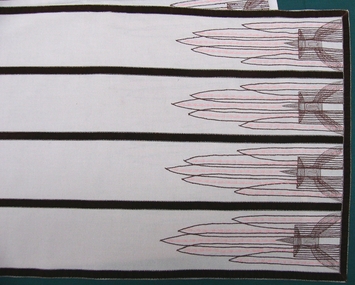
Textile - Stole, Edith M. John, Mid 20th century
... Designed and worked by Edith M. John (English embroiderer), Doncaster School of Art, England. ...Designed and worked by Edith M. John (English embroiderer), Doncaster School of Art, England. ...Designed and worked by Edith M. John (English embroiderer), Doncaster School of Art, England. Design was inspired by fountain near school.Machine embroidery on grey wool fabric in pink and brown with brown velvet trim. Design depicts stylised fountains.embroidery, machine embroidery, stoles, 1960-80, england -
 Federation University Historical Collection
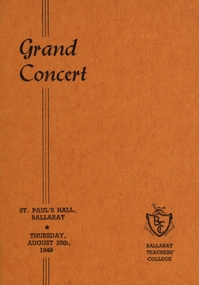
Programme, Harry Brown and Co, Ballarat Teachers' College Grand Concert Programme, 1949, 1949
... john blackie...lorraine english...grand concert ballarat teachers' college programme college choir margaret blaby shirley freckleton donald evans richard stowell john blackie lorraine english neil tippett choral club pat nield david collins phys. ed club joan addinsall nancy lee sylvia read beverley thorpe jean holland margaret hives moira connellan valda kelly leonard mcrae mary gearing lesley latch wallace wall Yellow coloured program from the Grand Concert of the Ballarat Teachers' College held at St Paul's Hall, Ballarat, Thursday August 25th 1949. ...Yellow coloured program from the Grand Concert of the Ballarat Teachers' College held at St Paul's Hall, Ballarat, Thursday August 25th 1949. Includes the name of the performance and the performer/s.grand concert, ballarat teachers' college, programme, college choir, margaret blaby, shirley freckleton, donald evans, richard stowell, john blackie, lorraine english, neil tippett, choral club, pat nield, david collins, phys. ed club, joan addinsall, nancy lee, sylvia read, beverley thorpe, jean holland, margaret hives, moira connellan, valda kelly, leonard mcrae, mary gearing, lesley latch, wallace wall -
 Bendigo Historical Society Inc.
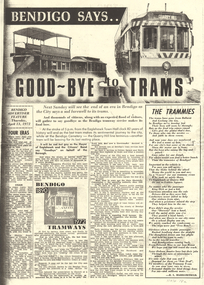
Newspaper - LONG GULLY HISTORY GROUP COLLECTION: BENDIGO SAYS GOOD-BYE TO THE TRAMS
... ... John Henderson... The English...BHS Collection BENDIGO History long gully history group The Long Gully History Group - Bendigo Says Good-bye to the Trams The Electric Supply Company of Victoria State Electricity Commission of Victoria Cr D E Elliott The City Council Bendigo Trust Sandhurst and Eaglehawk Tramway Company Bendigo Tramway Company Battery Trams Steam Trams Electric Trams R L Harrowfield Tom Griffiths Baby Health Centre Miss Tavenor's Sweet Shop Needle Mine The Robbie Burns Hotel Eaglehawk Wine Saloon Town Hall Hotel Hooley's Dress Fabrics Kevin Anstee Bert Knight Bendigo Curtain Service Graham O'Donahoo John Henderson The English Electric Traction Company Princess Theatre Upper Reserve Five Lions Hercules Mine Needle loop (Needle Mine) Jim Collins Arch Robinson's Seat St Liborius Church Virginia Mine Upper Reserve (QEO) Bendigo Tram History Gibson's Blum's Powney's View Point Newsagency City Offices Hopetoun Hotel ? ...BHS CollectionCopy (2 pages) of a Bendigo Advertiser Feature dated Thursday, April 13, 1972 titled Bendigo Says. Good-bye to the Trams. Article contains photos of trams, a photo of a conductor assisting an elderly lady with a shopping jeep and a photo of trams and people at the Alexander Fountain. The article mentions Four Eras of Trams, a poem titled 'The Trammies' by R L Harrowfield, some men who worked on the trams and tasks they did, some accidents, local identities, and some of Tom Griffiths memories.bendigo, history, long gully history group, the long gully history group - bendigo says good-bye to the trams, the electric supply company of victoria, state electricity commission of victoria, cr d e elliott, the city council, bendigo trust, sandhurst and eaglehawk tramway company, bendigo tramway company, battery trams, steam trams, electric trams, r l harrowfield, tom griffiths, baby health centre, miss tavenor's sweet shop, needle mine, the robbie burns hotel, eaglehawk wine saloon, town hall hotel, hooley's dress fabrics, kevin anstee, bert knight, bendigo curtain service, graham o'donahoo, john henderson, the english electric traction company, princess theatre, upper reserve, five lions, hercules mine, needle loop (needle mine), jim collins, arch robinson's seat, st liborius church, virginia mine, upper reserve (qeo), bendigo tram history, gibson's, blum's, powney's, view point newsagency, city offices, hopetoun hotel, ?ob & dorothy mills' concern, gillies bros pty ltd -
 Mrs Aeneas Gunn Memorial Library
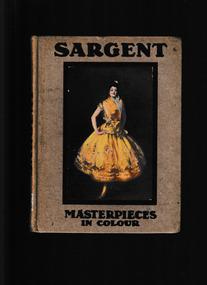
Book, T.C. & E.C. Jack, Sargent, 189
... Painting - English...John...Painting - English John Singer Sargent 1856-1925 An illustrated catalogue of the works of John Sargent Ill, p.80. ...An illustrated catalogue of the works of John SargentIll, p.80.non-fictionAn illustrated catalogue of the works of John Sargentpainting - english, john singer sargent 1856-1925 -
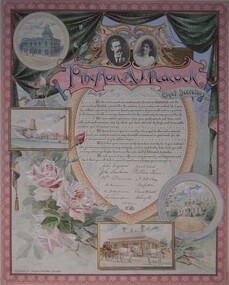 Creswick Museum
Illuminated address, circa 1900
... The names listed on the illuminated address were all prominent men in the Borough and Shire of Creswick. John English, John Leishman, Jonah Ward, William Thomas, W. ...The names listed on the illuminated address were all prominent men in the Borough and Shire of Creswick. John English, John Leishman, Jonah Ward, William Thomas, W. ...Alexander Peacock and Millie Holden married on January 1st 1901 the day of Australian Federation. The names listed on the illuminated address were all prominent men in the Borough and Shire of Creswick. John English, John Leishman, Jonah Ward, William Thomas, W. Davies, J. Tait, H. Hammon, D. Luttet, L.D. Watson, D. McGarth, G. Maughan, Illuminated address to Hon. A.J. Peacock, Chief Secretary of Victoria. It has cameos of Creswick Town Hall, Peacock's home, Creswick Goldfields Hospital and gold mine. It has portraits of both Alexander Peacock and Millie Holden as printed on the announcement of their engagement. The address is signed by prominent citizens of Creswick.alexander peacock, millie holden, millie peacock, creswick -
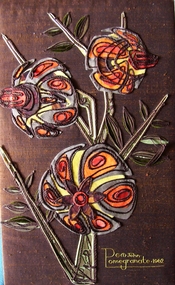 Embroiderers Guild, Victoria
Textile - " Pomegranates " Panel, Edith M. John, 1962
... Edith M. John. Well known English embroiderer....Edith M. John. Well known English embroiderer. Embroidery Panels Applique 1940-60 England E.M. ...Bought by Mrs Oates from London 1962. Edith M. John. Well known English embroiderer.Modern applique embroidery depicting pomegranates in green, brown and orange with detail worked in cords and threads.E.M. John, Pomegranates 1962embroidery, panels, applique, 1940-60, england -
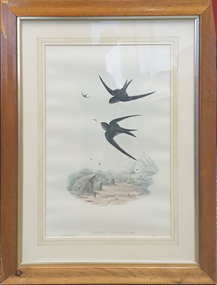 Federation University Art Collection
Print, John Gould, Cypselus Infumatus, 1866
... John GOULD (1804-1881) English ornitologicalmartist who published a number of monographs on birds....John GOULD (1804-1881) English ornitologicalmartist who published a number of monographs on birds. available palm roof-swift bird LL JGould & HCRichter del et lith centre Cypselus Infumatus, Sclat. ...John GOULD (1804-1881) English ornitologicalmartist who published a number of monographs on birds.Framed, hand coloured lithograph. Published by John Gould. The mount has a hand coloured border. The plate id from "Birds of Asia" LL JGould & HCRichter del et lith centre Cypselus Infumatus, Sclat. Walter; Imp.available, palm roof-swift, bird -
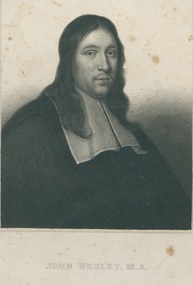 Uniting Church Archives - Synod of Victoria
Printed etching
... John Wesley (1636 - 1678) English nonconformist minister was the grandfather of John and Charles Wesley. ...John Wesley (1636 - 1678) English nonconformist minister was the grandfather of John and Charles Wesley. ...John Wesley (1636 - 1678) English nonconformist minister was the grandfather of John and Charles Wesley. He graduated M.A. from New Hall Inn OxfordB & W printed etching of John Wesley M.A. john wesley, charles wesley, oxford -
Tatura Irrigation & Wartime Camps Museum
DVD, John Burgan, Friendly Enemy Alien, 2006
... Filmed by John Burgan, an English documentary maker for Berlin TV History Channel. ...Filmed by John Burgan, an English documentary maker for Berlin TV History Channel. ...Filmed by John Burgan, an English documentary maker for Berlin TV History Channel. Filmed in Sydney, Melbourne, Narua, Dunera Jewish refugee internees and Afghan illegal boat people. Discussing circumstances and treatment of coming Enemy Aliens coming to Australia in 1940 and 2001.Clear plastic large DVD case. DVD is sky blue with silver pattern and textjohn burgan, berlin tv history channel, jewish refugees, afghan illegal boat people, documentaries -
 Greensborough Historical Society
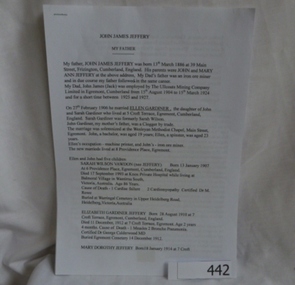
Article - Genealogical document, John James Jeffery, 2008
... Details the life and family history of John James Jeffery, his English roots and his time in Greensborough as a poultry farmer. ...Details the life and family history of John James Jeffery, his English roots and his time in Greensborough as a poultry farmer. ...Details the life and family history of John James Jeffery, his English roots and his time in Greensborough as a poultry farmer. Prepared by his son John Jefferey in 2008.Gives the origin of Jeffery Court (off Nepean St).2 x A4 pages.Family history of John James Jeffery, john james jeffrey, poultry farm, nepean street, greensborough, arthur street greensborough. -
Phillip Island and District Historical Society Inc.
Book, Robertson, Vagabond papers : sketches of Melbourne life, in light & shade. Third Series, 1877
... John Stanley James, an English-born immigrant, became famous in Australia under double-blind pen-names, “the Vagabond” and “Julian Thomas.” ...John Stanley James, an English-born immigrant, became famous in Australia under double-blind pen-names, “the Vagabond” and “Julian Thomas.” ...John Stanley James, an English-born immigrant, became famous in Australia under double-blind pen-names, “the Vagabond” and “Julian Thomas.” His deception was so effective that he was even buried under a false name.Small green coloured hardback with black and white illustrations.Labelled: Cowes Free Public Library. Phillip Island Historical Society, Cleeland Bequest. Inscribed: Yours rightfully "The Vagabond".melbourne history, john stanley james, sport, horse racing, pentridge, orphans -
Phillip Island and District Historical Society Inc.
Book, Robertson, Vagabond papers : sketches of Melbourne life, in light & shade. Fourth series 1877, 1877
... John Stanley James, an English-born immigrant, became famous in Australia under double-blind pen-names, “the Vagabond” and “Julian Thomas.” ...John Stanley James, an English-born immigrant, became famous in Australia under double-blind pen-names, “the Vagabond” and “Julian Thomas.” ...John Stanley James, an English-born immigrant, became famous in Australia under double-blind pen-names, “the Vagabond” and “Julian Thomas.” His deception was so effective that he was even buried under a false name.small mauve hardback with balck and white sketches.Labelled: Cowes Free Public Library. Phillip Island Historical Society, Cleeland Bequest.aborigines, melbourne, parliament -
 Bendigo Military Museum
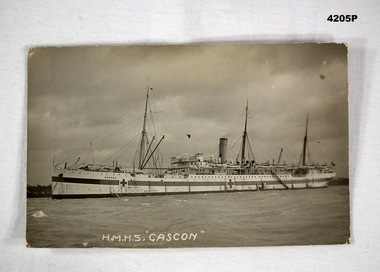
Postcard - POSTCARDS, PHOTOGRAPHIC WW1, 2.6.1915
... He was WIA 3 times altogether. English is believed to be John Graham English No 51 A Coy 5th Batt AIF, WIA 25.4.1915 GSW to left foot. ...He was WIA 3 times altogether. English is believed to be John Graham English No 51 A Coy 5th Batt AIF, WIA 25.4.1915 GSW to left foot. ...Letter content, “Dear Marjorie, This is a picture of the ship I was taken to when wounded. I am now in hospital and doing well. I was very lucky to get of so light. Sgt Major English and Sheehan were both wounded. I will write more as soon as I can use my right hand, Love to all from Chas”. Chas is, Charles Bowmont Taylor MC, No 99 A Coy 5th Batt AIF - 57th Batt AIF, WIA 25.4.1915 GSW to right hand. Sheehan is believed to be, Edward Robert Sheehan No 97 A Coy 5th Batt AIF, WIA 25.4.1915 BW to Knee (Bullet wound). He was WIA 3 times altogether. English is believed to be John Graham English No 51 A Coy 5th Batt AIF, WIA 25.4.1915 GSW to left foot. He was WIA once more. Refer also 4206.2. Photo print of the Hospital Ship HMHS “Gascon”. Black and white image, this is a three master one funnel with a large strip down the side broken by 3 crosses. The rear is correspondence and dated.On the rear in hand, “Hospital 2.6.15”hospital ships, postcards -
 Warrnambool and District Historical Society Inc.
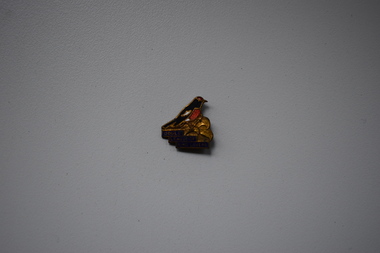
Badges, Swann & Hudson, Gould League of Bird Lovers, 1950s
... It was named after the English ornithologist, John Gould and his wife Elizabeth. ...It was named after the English ornithologist, John Gould and his wife Elizabeth. ...This is a badge of the Gould League of Bird Lovers. This organization was formed in 1909 in Victoria and was initially sponsored by the Education Department of Victoria. It was named after the English ornithologist, John Gould and his wife Elizabeth. The initial aim was to encourage school children to protect native birds and their eggs. Today the aim of the group has been widened to include education for environmental sustainability. In 1967 the name was changed to Gould League and in 2006 it became Gould Group Ltd. This badge has no known local provenance but many school children in Warrnambool in the 20th century and even today have belonged to the Gould League of Bird Lovers and the badge is retained as a memento of what was once an important organization for school children in Victoria. This is an irregular-shaped metal badge with the image of a red-capped robin, bronze-coloured tree branch and gold printing on a blue base. The back has a metal clip.Gould League of Bird Lovers Swann & Hudson Frankston gould league of bird lovers, history of warrnambool, john gould, ornithologist -
Warrnambool and District Historical Society Inc.
Photograph - Framed photograph of John Bennett, John E. Bennett, 1926
... This photograph was taken when John Bennett was the Chairman of the North Western Woollen Mills Company of Stawell in 1926. English...This photograph was taken when John Bennett was the Chairman of the North Western Woollen Mills Company of Stawell in 1926. English ...This photograph was taken when John Bennett was the Chairman of the North Western Woollen Mills Company of Stawell in 1926. English born John Bennett came to Warrnambool in1909 and was the first manager of the Warrnambool Woollen Mill. He went back to Yorkshire in England to purchase equipment before the opening of the Mill in 1910. He was manager of the Warrnambool Woollen Mill for nearly 20 years, finishing in 1928 and dying in the same year. The Warrnambool Woollen Mill was a major 20th Century industry, closing in the year 2000.This photograph is of considerable significance as a memento of the first manager of the Warrnambool Woollen Mill one of the most important industries in Warrnambool's history.This is a black and white photograph in a circular wooden frame, with a wooden mount covered with a concave glass. It has a plaque at the base with white printing.John E. Bennett First Chairman of Directors North Western Woollen Mills Pty. Ltd. 1926warrnambool woollen mill -
4th/19th Prince of Wales's Light Horse Regiment Unit History Room
Medal, South Atlantic Medal
... The reverse side has the Falkland Islands' coat of arms, which bears the words "DESIRE THE RIGHT" (an allusion to English explorer John Davis' ship, "Desire"). A laurel wreath and the words "SOUTH ATLANTIC MEDAL" make up the border. ...The reverse side has the Falkland Islands' coat of arms, which bears the words "DESIRE THE RIGHT" (an allusion to English explorer John Davis' ship, "Desire"). A laurel wreath and the words "SOUTH ATLANTIC MEDAL" make up the border. ...The South Atlantic Medal is a British campaign medal awarded to British military personnel and civilians for service in the Falklands War of 1982, between the United Kingdom and Argentina; 29,700 were issued. The South Atlantic Medal Association was formed in 1997. The medal is a coin, made of cupronickel, 36 mm in diameter, and was struck by the Royal Mint and issued by the Army Medal Office, Droitwich. The obverse side bears a crowned effigy of the The Queen. Like a modern British coin, it has the abbreviated form of ELIZABETH II DEI GRATIA REGINA FIDEI DEFENSOR ("Elizabeth II, by the grace of God, Queen and Defender of the Faith") on the border and the Queen is facing to the right. The reverse side has the Falkland Islands' coat of arms, which bears the words "DESIRE THE RIGHT" (an allusion to English explorer John Davis' ship, "Desire"). A laurel wreath and the words "SOUTH ATLANTIC MEDAL" make up the border. CPL J FINLAY (number) RAFmedal, south atlantic, falklands -
 Bendigo Historical Society Inc.
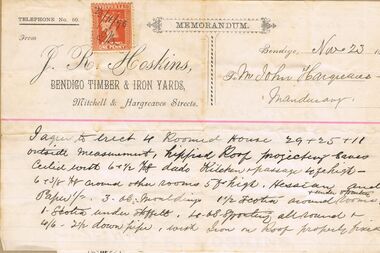
Document - LUDERMAN COLLECTION: SPRING GULLY, MANDURANG DOCUMENTS
... Father's name John Hargreaves (English) mother's name Hosannah Hargreaves nee Billman'; 2 scrip certificates issued by 'Tanners Gold Mining Compagnie Pipers Hill, Sheepwash' overwritten on top of document ( underneath North Lord Warden Tribute Co., ) scrip certificate issued to John B. ...Father's name John Hargreaves (English) mother's name Hosannah Hargreaves nee Billman'; 2 scrip certificates issued by 'Tanners Gold Mining Compagnie Pipers Hill, Sheepwash' overwritten on top of document ( underneath North Lord Warden Tribute Co., ) scrip certificate issued to John B. ...Document. Pastel Drawing Book, 'Bulldog' Series No. 589, containing series of invoices and documents relating to the Hargreaves family. Items stuck in book in order includes: invoices from J.R. Hoskin, Bendigo Timber and Iron Yards relating to construction of residence in Spring Gully (1896); Certificate of Registration of Residence Area for Thomas Snowdon, adjoining Hargreaves residence 200 yards from Reservoir; Elector's Right for John Billman Hargreaves of Mandurang, Tanner; handwritten note (Bairnsdale 24.1.34) on John Billman Hargreaves born 1861 on 14 June on Sheepwash Creek in Mandurang riding Shire of Strathfieldsaye near Bendigo possibly registered at Strathfieldsaye, Kangaroo Flat or Bendigo. Father's name John Hargreaves (English) mother's name Hosannah Hargreaves nee Billman'; 2 scrip certificates issued by 'Tanners Gold Mining Compagnie Pipers Hill, Sheepwash' overwritten on top of document ( underneath North Lord Warden Tribute Co., ) scrip certificate issued to John B. Hargreaves on 25 September 1882; invoice Jas. Knowlton, late J. Moody, watchmaker and jeweller, No. 1 Bath Corner, Bendigo 3.8.1895 for Diamond brooch; invoice H. Credginton watchmaker and jeweller and optician for 1 gem ring. Loose document inside contains written advice re taking wool off sheep skins and curing hides.person, individual, hargreaves, hoskins, hargreaves, snowdon, elector's right, tanner's gold mining compagnie, north lord warden tribute co., knowlton, credgington -
 Nillumbik Shire Council
Painting: Adriane Strampp (b.1960 Wisconsin, USA), Adriane Strampp, Into the Night, 1987
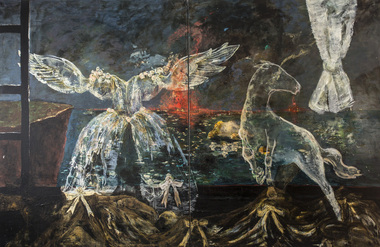
... Strampp was largely influenced by both the new German Neo-Expressionists of the time and by English artist John Walker, which is evident in this painting. ...Strampp was largely influenced by both the new German Neo-Expressionists of the time and by English artist John Walker, which is evident in this painting. ...Strampp lived and worked at Clifton Pugh's artist colony Dunmoochin from 1980 to 1985. 'Into the Night' is Strampps' "own marriage painting". The wedding dress and horse, "a symbol of virility and passion" represents Strampp and the background landscape was inspired by her stay in Somerset, England. The cliff edge on the left symbolises "an audacious step into the future." The painting "is of a bride, passionate yet absent, about to embark upon a new journey in life, and of the voyage ahead. It is about acknowledging the past, and having the courage to move forward. To take risks". Strampp was largely influenced by both the new German Neo-Expressionists of the time and by English artist John Walker, which is evident in this painting. Her work took on popular stylistic trends and themes of the time, which included a painterly aesthetic and an energetic application of the medium, which transferred to an emotional and or personal connection to subject matter that was communicated symbolically. Strampp is an artist of national significance. This work encompasses themes and a style of painting (Neo - Expressionism) that was prevalent during the time of its making in the eighties. This work represents a transition from Strampp's highly regarded early paintings of heroic horses in the mid to late 1980’s to her highly regarded paintings of contemporary wedding and/or armour-like bodices dresses of the 1990s. Both the 'horse' and 'dress' were often set in empty backgrounds or dreamy/foreboding landscapes. Painted in oil on linen (x2) in a 'Neo-Expressionist' style, 'Into the Night' depicts a ghostly white horse to the right of the painting looking away from a ghostly white wedding dress to the left of the painting. The dress has sprouted white wings and is adorned with bows on the bottom edge of the dress and roses on the sleeves. The dress seems full bodied although there is no figure. The dress and horse are placed in the foreground on a stage like platform with a white curtain framing the picture to the right, and a black ladder and brown cliff edge framing the picture to the left. The background depicts a foreboding and dark cloudy sky and seascape with a firery red landscape burning on the horizon. Signed low right (1988.7b VA) with brush in purple (light) 'Adriane Strampp 87'. into the night, neo expressionism, wedding dress, horse, symbolism, painting, seascape, dramatic, emotional, poetic, strampp -
 Flagstaff Hill Maritime Museum and Village
Ceramic - Stoneware Bottle, Doulton Lambeth, Circa 1870 - 1890
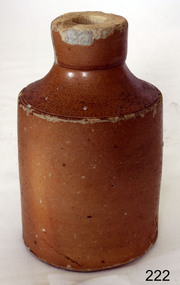
... The Royal Doulton company began as a partnership between John Doulton, Martha Jones, and John Wattis an English ceramic and home accessories manufacturer founded in 1815. ...The Royal Doulton company began as a partnership between John Doulton, Martha Jones, and John Wattis an English ceramic and home accessories manufacturer founded in 1815. ...The Royal Doulton company began as a partnership between John Doulton, Martha Jones, and John Wattis an English ceramic and home accessories manufacturer founded in 1815. Operating originally in Vauxhall, London, later moving to Lambeth, in 1882 it opened a factory in Burslem, Stoke-on-Trent, in the centre of English pottery. The business was specialised in making salt-glazed stoneware articles, including utilitarian or decorative bottles, jugs and jars, much of it intended for inns and pubs. The backbone of the business was a wide range of utilitarian wares, mostly stone wares, including storage jars, tankards and the like, and later extending to pipes for drains, lavatories and other bathroom ceramics. From 1853 to 1902 its wares were marked Doulton & Co., then from 1902, when a royal warrant was given, Royal Doulton. The company always made some more decorative items, initially still mostly stoneware, and from the 1860s the firm made considerable efforts to get a reputation for design, in which it was largely successful, as one of the first British makers of art pottery. Initially, this was done through artistic stoneware's made in Lambeth, but in 1882 the firm bought a Burslem factory, which was mainly intended for making bone china table wares and decorative items. An early utilitarian stoneware item made by a well-known company that specialised in making salt-glazed items that later earned a reputation for making stoneware art objects.Ink bottle, brown salt glazed stoneware with narrow mouth tamped Doulton Lambeth cork missing. Stamp impressed into clay on edge "(2)32 / Doulton / Lambeth" flagstaff hill, warrnambool, shipwrecked coast, flagstaff hill maritime museum, flagstaff hill maritime village, great ocean road, stoneware, stoneware jar, doulton lambeth, kitchen ware, salt glazed -
 Flagstaff Hill Maritime Museum and Village
Container - Ink Bottle, Royal Doulton, Late 19th to early-20th century
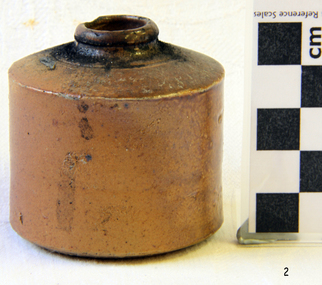
... The Royal Doulton company began as a partnership between John Doulton, Martha Jones, and John Watt was an English ceramic and home accessories manufacturer founded in 1815. ...The Royal Doulton company began as a partnership between John Doulton, Martha Jones, and John Watt was an English ceramic and home accessories manufacturer founded in 1815. ...The Royal Doulton company began as a partnership between John Doulton, Martha Jones, and John Watt was an English ceramic and home accessories manufacturer founded in 1815. Operating originally in Vauxhall, London, later moving to Lambeth, in 1882 it opened a factory in Burslem, Stoke-on-Trent, in the centre of English pottery. The business was specialised in making salt-glazed stoneware articles, including utilitarian or decorative bottles, jugs and jars, much of it intended for inns and pubs. The backbone of the business was a wide range of utilitarian wares, mostly stonewares, including storage jars, tankards and the like, and later extending to pipes for drains, lavatories and other bathroom ceramics. From 1853 to 1902 its wares were marked Doulton & Co., then from 1902, when a royal warrant was given, Royal Doulton. The company always made some more decorative items, initially still mostly stoneware, and from the 1860s the firm made considerable efforts to get a reputation for design, in which it was largely successful, as one of the first British makers of art pottery. Initially, this was done through artistic stoneware's made in Lambeth, but in 1882 the firm bought a Burslem factory, which was mainly intended for making bone China table wares and decorative items. An early utilitarian stoneware item made by a well-known company that specialised in making salt-glazed items that later earned a reputation for making stoneware art objects. This ink well is historically significant as it represents the method of hand written communication that was still common up until the mid-20th century, before fountain pens and ballpoint pens took over in popularity and convenience.Ceramic, salt-glazed, mid-brown ink bottle. It has a small round mouth, rounded lip that extends past neck, wide shoulders, straight sides, flat base. Handmade. The surface is matt. there are flecks of dark brown in the clay. The bottle has marks on the side.Noneflagstaff hill, warrnambool, shipwreck coast, flagstaff hill maritime museum, flagstaff hill maritime village, great ocean road, shipwreck artefact, writing equipment, writing accessory, office equipment, stationery, domestic, stoneware, clay, ceramic, pottery, inkwell, penny ink well, nib pen, dip pen, ink, hand writing, record keeping, household, business, vintage, blotting paper, ink bottle, dwarf ink, salt glazed -
 Federation University Historical Collection
Book - Ledger, Ballarat School of Mines Donation Book, 1878 - 1895, 1878-1895
... Balhausen, Ballarat
3472. John English, Smeaton - three samples of auriferous wash dirt
3607. ...Balhausen, Ballarat
3472. John English, Smeaton - three samples of auriferous wash dirt
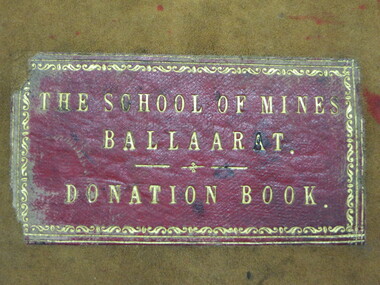
3607. ...The Donation Book relates to the Ballarat School of Mines Museum which opened in 1872. Very few of these items are still held by Federation University. The Museum was emptied in the 1960s with items being distrubuted to the Ballarat Historical Society, returned to original lenders (ie Pern Collection), of disposed of. Donations to the Ballarat School of Mines include: 34. M. Hamburger, Ballarat - bunsen burner 41. W.H. Shaw, Phoenix Foundry - 81 nos of 'Engineer' 89. Juvenile Industrial Exhibition Association Committee per Joseph Flude - dies used for striking medals awarded to successful exhibits. 165. Ferdinand Von Mueller 172 Ferdinand Von Mueller o hortus siccus 6 197. James Stoddart 203. Edward Gazzard, North Creswick - Model of safety Cage invented and made by donor 218. E. Morey 222. Alfred Lestor 228. J.J. Sleep, Ballarat, patent Lever escarpment Clock (displayed in laboratories) 237. Bernard Smith (Warden) per favor of James M. Bickett - Bust of Mr John Lynch, Smythesdale. (Note: This item is not in the present Federation University Historical Collection) 241. James Oddie, J.P., Ballarat, Copy of 'the Chemist and Druggist' 267. John Lynch Junior, Smythesdale - Cast of "Golden Age" nugget, found at Browns by Co-operative party, 12 men. Weight 75 oz, 12 dwts, 12 grs.(Note: This item is not in the present Federation University Historical Collection) 270. Isaac Davis, Main Road, Ballarat 294. W. H. Shaw, Ballarat - 94 nos of 'The Engineer' 295. Rivett Henry Bland, Clunes - Specimen of water pipe from the Port Phillip Company's mine encrusted with carbonites of lime and magnesium (Note: This item is not in the present Federation University Historical Collection) 299. D.J. Williams, Queenscliff - 1 case shells from Fiji 305. C. Retallack, Ballarat 314. William Henry Shaw, Ballarat - glass case 323. W. Longley, Ballarat - Botanical Specimen (Note: This item is not in the present Federation University Historical Collection) 327. W. H. Angove, Perth 337. J. Cosmo Newbery, B Sc, Melbourne 343. James Hector, M.D., New Zealand 353. R.S. Mitchell, Ballarat - 8 specimens live plants (medicinal) (for the Ballarat School of Mines Garden) 355. W. Magee, Ballarat - Sugar cane plants and seeds (for the Ballarat School of Mines Garden) 363. James Hector, Wellington, new Zealand 371. William Wesley, 28 Essex St, Strand, London - Scientific book circular 380. Jacob Upfold (deceased) per favor of the trustees - bequest of steam engine indicator and belongings (boothe and case) 381. Joseph Mitchell, 22 Macarthur Street, Ballarat - sod of turf cut from Warboy's High Few, County Huntingdon, England, 1872. 394. W.H. Barnard 401. James Orr 418. F. Ratte, Sydney 440. Alfred Mica Smith, Sandhurst (Bendigo), Inaugural Address, delivered to the Bendigo School of Mines Science Society, June 20. 1881 by P.H. Macgillivray, MA, MRCS, FLS, President. (Note: This item is not in the present Federation University Historical Collection) (Note: This item is not in the present Federation University Historical Collection) 446. C. C. Shoppee, Ballarat 462. Dr Bunce, Ballarat 468. James Black, Mining Manager "Kerrit Bureet' 479. J.S. North, Mining Manager No. 2 Queen Co, Black Hill Ballarat. 505. Smith Tibbitts - A block of ancient leaves from the Nigtingbool Estate near Haddon on the Ballarat district from shaft 80 feet deep. (Note: This item is not in the present Federation University Historical Collection) 512. F.W. Niven, Ballarat - "A Handy Book to Tasmania" 522. James Hector, Wellington, New Zealand 549. C.E. Grainger, Manager Ballarat Woollen Mills - samples of dyed and raw wools 600. (4 July 1882) Henry Sutton, Ballarat - 13th annual report of the Aeronautical Society of Great Britain; 2 papers from the Proceedings of the Royal Society, nos 217 and 218- 1882, "One a new electrical storage battery by Henry Sutton, Ballarat, Victoria. 608. H. Glenny J.P., Ballarat - Specimen of Asbestos from Tasmania 610. M.H. Edelmann, Munich, Germany 674. W.H. Shaw, Phoenix Foundry - Steel boring 95 feet long taken from bed-plate of locomotive engine. 675 - H.R. Hancock J.P. pre favour Mr James Pryor, Moonta Mines 676. Baron Ferdinand Von Mueller KCMG, etc, Melbourne 678. E.F.A. Gaunt, Royal Navy, H.M.S. Nelson, per favour Lyde Gaunt - Specimen of manganese ore from the mines - Russell - New Zealand 728. Dr Pinnock, Ballarat 760. Simon Morrison, Ballarat 784. James Shugg, Hamilton - 1 case fossils from Muddy Creek, near Hamilton. (Note: This item is not in the present Federation University Historical Collection) 786. W. Bolam (inspector of Schools), Melbourne - 2 spears and 1 fishing prong Fijian 806. James Oddie, Ballarat 708. Henry G. Hanks, San Francisco 786. W. Bolam (Inspector of Government Schools Melbourne) - 2 spears and one fishing prong Fijian 824. Henrique Gorceixm Onro Preto, Brazil 840. W. Laplau, Ballarat - Gas furnace with a large assortment of fittings, also large gas holder and oil-heating apparatus 854. Robert Borch, Main Road, Ballarat - Improved safety chain (Note: This item is not in the present Federation University Historical Collection) 928. James Oddie 944. James P. Munroe, Registrar, Massachusetts 952. L.E. Cutter per favour of Mr F.J. Martell - Unexploded bomb shell from the Eureka Stockade 957. H. Glenny, Hobart 962. George Hart, Ballarat - eagle 976. Henry Sutton, Ballarat - 1 volume "Plattner on the Blowpipe" 978. J.W. Flatow, 45 Madeline Street, Carlton, Melbourne 984. Charles C Shoppee Ballarat - Copies of ancient coins 989-95 - Specimens from Moonta, South Australia 985. W.H. Wooster BOlwarra - books microscope related 1179. James Oddie - Live hedgehog 1181 C. Crisp, Bacchus Marsh, Portugal Copper Coin, 1785 1248 James Oddie, Solomon Islands - Bow and arrows & Spears 1285. C. Colyer, Smythesdale 1327. John L. McKenna, Smeaton - Fragment of Stone Axe. 1395. Mrs O. Skoglund, Nerrina 1428. Daniel Brophy, Ballarat - Collection of mineral specimen form Silverton (Collected by Mrs James Murray) 1442. Henry Sutton, Ballarat - Specimens of fossil fruits collected at Haddon by Charles Brown. 1444. Mining Department - Underground Mine Workings from Band of Hope and others. 1517. W.H. Wooster, Ballarat 1592. Bishop of Ballarat - Stone Axe and other native items 1669. H. McHaffier, Napoleons - 1 Spanish silver coin 1681. James Oddie, Dunedin 1688. W. Burbridge, Ballarat - Native Tomahawk from Metung 1708. A. Doepel, Ballarat 1712. Marty Guerin, Ballarat 1735. Bella Guerin. M.A., Ballarat - Copy Wide Awake Vol 1 No 7 May 28th 1887 and The Bulletin, March 19th 1887. 1747. Bella Geurin M.A., Ballarat - Copy Wide Awake Vol 1 No 8 June 4 1887 1751. Bella Geurin M.A., Ballarat - Copy Wide Awake Vol 1 No 9 June 11th 1887 1842. Linnean Society, London England - Charter, By Laws, Proceedings, Transactions, Journals 1853. W.J. Corbould, Silverton, NSW - chloride of silver from Pinnacles, Broken Hill, Silverton 1888. W. J. Corbould, Sample of metallic silver from Silverton, NSW 1928. E. Morey, Ballarat - Steam Engine 1937. Henry Sutton A.S.I.E., Ballarat - Plate Electric Machine, chimes and Sportman (number crossed out) 1951. Henry Sutton A.S.I.E., Ballarat - Plate Electric Machine, chimes and Sportman 1981. Harrie Wood (per W.H.B.[Barnard?), Ballarat 1996. W.H. Shaw, Phoenix Foundry - Papers "The Vict Engineer July 1887, May June July August 1888 and others 2014. Harrie Wood, Sydney - Report Department of Mines, 18872027. W.J. Bechervaise - Copy of Book by Baldwin Spencer 2034. A.G. Randall - Native Hatchet 2045. W.H. Corbould, Silverton, Collection of silver ores 2051. Fowler, Tarnagulla - Native Tomahawk 2123-2131. James Oddie, London 2163. Roff. F. Taplier, Sturt Street - Native Tomahawk 2178. Syd. Johnson, Meredith - Native Tomahawk, Greenstone 2184. Mr Tupp for Hall - Native Spear and Club 2292. Emmanuel Steinfeld, Melbourne 2313. A. Atwood, Rowlands Factory, Dana Street 2361. Dr Pinnock, Ballarat - Collection of Living Sponges 2363. P. Curnow, Ballarat - Piece of wood with stone naturally embedded 2364. R. Dowling, Waubra 2875. Mrs C, Flude, Ballarat - Collection of (5) mineral specimens 3460. Joseph Weir, Ballarat - Sample of rolled Annibar 3466. J. Hart, Ballarat - Native Shield - supposed to have been made by King Billy 4784. Mr. O. Woolnaugh, Pleasant Street - Four Native Tomahawks 6469. L. Balhausen, Ballarat 3472. John English, Smeaton - three samples of auriferous wash dirt 3607. Columbia College, New York - Handbook of Information of the Columbia College in the Ciry of New York 1892-3. 3672. L.A. Samuels, Bendigo 3724. P. Paperhagen 3736. The Late Rivett Henry Bland per John Noble Wilson - Collection of mineral specimens and fossils 3752. G.A. Denny, South Africa 3755. J. Carroll, Ballarat - Specimen of Native bread found in Ballarat East. 4765. J. Donnelly, Springs, Bungaree I. Fowler, Coolgardie, Specimen of Gold Bearing Quartz ballarat school of mines, doantions, museum, ballarat school of mines museum, safety cage, botanical garden, materia medica garden, library, bella guerin, james oddie, phoenix foundry, w.h. shaw, john lynch, henry sutton, aboriginal, stone axe, tomahawk, geological specimens, moonta, fedinand krause, oddie collection of minerals, thomas bath, spears, solomon islands, king billy, bows and arrows, ancient coins, birds eggs, snakes -
 Flagstaff Hill Maritime Museum and Village
Container - Ink Bottle, Royal Doulton, 1853-1878
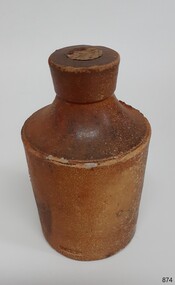
... The ink bottle was made by the Royal Doulton company which began as a partnership between John Doulton, Martha Jones, and John Wattis an English ceramic and home accessories manufacturer founded in 1815. ...The ink bottle was made by the Royal Doulton company which began as a partnership between John Doulton, Martha Jones, and John Wattis an English ceramic and home accessories manufacturer founded in 1815. ...The ink bottle was made by the Royal Doulton company which began as a partnership between John Doulton, Martha Jones, and John Wattis an English ceramic and home accessories manufacturer founded in 1815. Operating initially in Vauxhall, London, it later moved to Lambeth, In1882 it opened a factory in Burslem, Stoke on Trent, in the centre of English pottery. The business specialised in making salt-glazed stoneware articles, including utilitarian or decorative bottles, jugs and jars, much of it intended for inns and pubs. The backbone of the business was a wide range of utilitarian wares, mostly stoneware's, including storage jars, tankards and the like, and later extending to pipes for drains, lavatories and other bathroom ceramics. From 1853 to 1902 its wares were marked Doulton & Co., then from 1902, when a royal warrant was given, wares were marked Royal Doulton. The company always made some more decorative items, initially still mostly stoneware, and from the 1860s the firm made considerable efforts to get a reputation for design, in which it was largely successful, as one of the first British makers of art pottery. Initially, this was done through artistic stoneware made in Lambeth, but in 1882 the firm bought a Burslem factory, which was mainly intended for making bone china table wares and decorative items. History of the Loch Ard: The Loch Ard got its name from ”Loch Ard” a loch that lies to the west of Aberfoyle, and the east of Loch Lomond. It means "high lake" in Scottish Gaelic. The vessel belonged to the famous Loch Line which sailed many vessels from England to Australia. The Loch Ard was built in Glasgow by Barclay, Curdle and Co. in 1873, the vessel was a three-masted square-rigged iron sailing ship that measured 79.87 meters in length, 11.58 m in width, and 7 m in depth with a gross tonnage of 1693 tons with a mainmast that measured a massive 45.7 m in height. Loch Ard made three trips to Australia and one trip to Calcutta before its fateful voyage. Loch Ard left England on March 2, 1878, under the command of 29-year-old Captain Gibbs, who was newly married. The ship was bound for Melbourne with a crew of 37, plus 17 passengers. The general cargo reflected the affluence of Melbourne at the time. Onboard were straw hats, umbrellas, perfumes, clay pipes, pianos, clocks, confectionery, linen and candles, as well as a heavier load of railway irons, cement, lead and copper. There were other items included that were intended for display in the Melbourne International Exhibition of 1880. The voyage to Port Phillip was long but uneventful. Then at 3 am on June 1, 1878, Captain Gibbs was expecting to see land. But the Loch Ard was running into a fog which greatly reduced visibility. Captain Gibbs was becoming anxious as there was no sign of land or the Cape Otway lighthouse. At 4 am the fog lifted and a lookout aloft announced that he could see breakers. The sheer cliffs of Victoria's west coast came into view, and Captain Gibbs realised that the ship was much closer to them than expected. He ordered as much sail to be set as time would permit and then attempted to steer the vessel out to sea. On coming head-on into the wind, the ship lost momentum, the sails fell limp and Loch Ard's bow swung back towards land. Gibbs then ordered the anchors to be released in an attempt to hold their position. The anchors sank some 50 fathoms - but did not hold. By this time the ship was among the breakers and the tall cliffs of Mutton Bird Island rose behind. Just half a mile from the coast, the ship's bow was suddenly pulled around by the anchor. The captain tried to tack out to sea, but the ship struck a reef at the base of Mutton Bird Island, near Port Campbell. Waves subsequently broke over the ship and the top deck became loosened from the hull. The masts and rigging came crashing down knocking passengers and crew overboard. When a lifeboat was finally launched, it crashed into the side of Loch Ard and capsized. Tom Pearce, who had launched the boat, managed to cling to its overturned hull and shelter beneath it. He drifted out to sea and then on the flood tide came into what is now known as Lochard Gorge. He swam to shore, bruised and dazed, and found a cave in which to shelter. Some of the crew stayed below deck to shelter from the falling rigging but drowned when the ship slipped off the reef into deeper water. Eva Carmichael a passenger had raced onto the deck to find out what was happening only to be confronted by towering cliffs looming above the stricken ship. In all the chaos, Captain Gibbs grabbed Eva and said, "If you are saved Eva, let my dear wife know that I died like a sailor". That was the last Eva Carmichael saw of the captain. She was swept off the ship by a huge wave. Eva saw Tom Pearce on a small rocky beach and yelled to attract his attention. He dived in and swam to the exhausted woman and dragged her to shore. He took her to the cave and broke the open case of brandy which had washed up on the beach. He opened a bottle to revive the unconscious woman. A few hours later Tom scaled a cliff in search of help. He followed hoof prints and came by chance upon two men from nearby Glenample Station three and a half miles away. In a complete state of exhaustion, he told the men of the tragedy. Tom then returned to the gorge while the two men rode back to the station to get help. By the time they reached Loch Ard Gorge, it was cold and dark. The two shipwreck survivors were taken to Glenample Station to recover. Eva stayed at the station for six weeks before returning to Ireland by steamship. In Melbourne, Tom Pearce received a hero's welcome. He was presented with the first gold medal of the Royal Humane Society of Victoria and a £1000 cheque from the Victorian Government. Concerts were performed to honour the young man's bravery and to raise money for those who lost family in the disaster. Of the 54 crew members and passengers on board, only two survived: the apprentice, Tom Pearce and the young woman passenger, Eva Carmichael, who lost her family in the tragedy. Ten days after the Lochard tragedy, salvage rights to the wreck were sold at auction for £2,120. Cargo valued at £3,000 was salvaged and placed on the beach, but most washed back into the sea when another storm developed. The wreck of Lochard still lies at the base of Mutton Bird Island. Much of the cargo has now been salvaged and some items were washed up into Lochard Gorge. Cargo and artefacts have also been illegally salvaged over many years before protective legislation was introduced in March 1982. One of the most unlikely pieces of cargo to have survived the shipwreck was a Minton majolica peacock- one of only nine in the world. The peacock was destined for the Melbourne 1880 International Exhibition. It had been well packed, which gave it adequate protection during the violent storm. Today the Minton peacock can be seen at the Flagstaff Hill Maritime Museum in Warrnambool. From Australia's most dramatic shipwreck, it has now become Australia's most valuable shipwreck artifact and is one of very few 'objects' on the Victorian State Heritage Register.An early utilitarian stoneware item made by a well-known company that specialised in making salt-glazed items that later earned a reputation for making stoneware art objects. Of additional significance is that it was recovered from the wreck of the Loch Ard. A shipwreck that is of additional significance as it is registered on the Victorian Heritage Register ( S 417). Flagstaff Hill has a varied collection of artefacts from Loch Ard and its collection is significant for being one of the largest accumulations of artefacts from this notable Victorian shipwreck of which the subject items are a small part. The collections objects give us a snapshot of how we can interpret the story of this tragic event. The collection is also archaeologically significant as it represents aspects of Victoria's shipping history that allows us to interpret Victoria's social and historical themes of the time. Through is associated with the worst and best-known shipwreck in Victoria's history. Salt glazed stoneware ink bottle, large capacity, tapered lip and body, two-tone brown with some encrustation on surface, still sealed with cork. Inscription in clay. Recovered from the wreck of the LOCH ARD.Stamped into clay "DOULTON LAMBETH"flagstaff hill, warrnambool, flagstaff hill maritime museum, shipwreck coast, flagstaff hill maritime village, great ocean road, loch line, loch ard, captain gibbs, eva carmichael, tom pearce, glenample station, mutton bird island, loch ard gorge, ink bottle, bulk ink bottle, writing accessory, stationery, stoneware, doulton lambeth, royal doulton, writing equipment -
 Flagstaff Hill Maritime Museum and Village
Photograph - Portrait, David Charles McArthur, Superintendent, Bank of Australasia 1867-1876
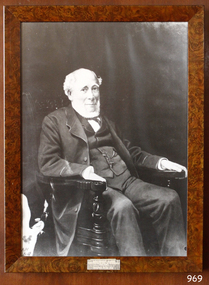
... John's Church, Heidelberg, commemorates him with a stained-glass window entitled 'King David'. The McArthur Gallery in the National Gallery of Victoria is also named after him. (David's brother, Donald, moved from Sydney to Melbourne in 1836 with the first government survey team.) ABOUT THE BANK OF AUSTRALASIA In 1836 the Bank of Australasia was established in London by Royal Charter. In 1951 the bank merged with the Union Bank of Australia, to form ANZ Bank Limited. In 1970 it merged with the English...John's Church, Heidelberg, commemorates him with a stained-glass window entitled 'King David'. The McArthur Gallery in the National Gallery of Victoria is also named after him. (David's brother, Donald, moved from Sydney to Melbourne in 1836 with the first government survey team.) ABOUT THE BANK OF AUSTRALASIA In 1836 the Bank of Australasia was established in London by Royal Charter. In 1951 the bank merged with the Union Bank of Australia, to form ANZ Bank Limited. In 1970 it merged with the English ...The subject of this photograph, David Charteris McArthur, was the founding manager of the Bank of Australasia in Port Phillip (Melbourne). McArthur was born in 1808 in Gloucester, England, and educated in Scotland. He worked for an insurance firm in Edinburgh, where in 1835 he married Caroline, nee Wright. McArthur and his family party sailed from the U.K. to arrive in Sydney in October 1835, where he joined the Bank of Australasia when it opened in Sydney in December. McArthur sailed to Melbourne in August 1838 with 3000 pounds in coins, protected by armed guards and two bulldogs, to open the Melbourne branch of the Bank of Australasia. The branch grew quickly, servicing both private and government customers. He opened many branches in the goldfields during the 1850s. In 1862, he was appointed as general inspector of branches. He spent time with the bank in New Zealand. On his return to Melbourne, at age 57, he was put in charge of the entire bank. McArthur lived in the hills of Heidelberg, Melbourne. He was the first chairman of Associated Banks and was an advisor to politicians and merchants. He was retired in October 1876 by the London directors and given a free trip to London, an annuity and a seat on the bank’s Advisory Board. McArthur was active in the community, being a member of the Mechanics’ Institute, on the committee that advised Governor Hotham on the Colony’s finances, chairman of the Heidelberg Road Board, one of the original trustees of the Library of Victoria in 1853 and president of the trustees of the Public Library, Museums and National Gallery of Victoria in 1880-83. He was also on many other community organisations. He died in his home “Charterisville” in East Ivanhoe in 1887. He and Caroline had no children. The Melbourne branch of Australia and New Zealand Bank has a portrait of McArthur in its boardroom. St John's Church, Heidelberg, commemorates him with a stained-glass window entitled 'King David'. The McArthur Gallery in the National Gallery of Victoria is also named after him. (David's brother, Donald, moved from Sydney to Melbourne in 1836 with the first government survey team.) ABOUT THE BANK OF AUSTRALASIA In 1836 the Bank of Australasia was established in London by Royal Charter. In 1951 the bank merged with the Union Bank of Australia, to form ANZ Bank Limited. In 1970 it merged with the English, Scottish and Australian Bank to become Australia and New Zealand Banking Group Limited. Since that time the ANZ has acquired other banks and introduced Internet banking and mobile banking. BANK OF AUSTRALASIA IN WARRNAMBOOL The Bank of Australasia first opened in Warrnambool in July 1854 in a building on Merri Street. The manager was Mr Samuel Hannaford. The bank then purchased and moved to a stone building on the corner of Timor and Gibson Streets, previously owned by Cramond and Dickson and almost opposite the Examiner’s office. In January 1957 Mr W.H. Palmer became the new manager and was there until November 1869. The bank then built its own building on the corner of Timor and Kepler Streets in 1859. Mr Basil Spence, the teller, was appointed acting manager in 1869 and Mr H.B. Chomley was the next appointed manager, in April 1873 and was still manager in 1886. The municipality of Warrnambool first banked with the Bank of Australasia from 1856 to April 1857. David Charteris McArthur served as the founding manager of the Bank of Australasia. His leadership marked a significant chapter in Warrnambool's early commercial development. The municipality of Warrnambool relied on the Bank of Australasia as its official bank from 1856 until April 1857. This period is symbolised by a photograph of McArthur, which represents the origins of Warrnambool's commercial history and its early financial infrastructure.Photograph; portrait of David Charteris McArthur. Heavily retouched black and white print in plain brown varnished frame, behind glass, with plaque on lower edge and inscription lower left corner.Lower left corner "A-H 1-9". Engraved on plaque "DAVID CHARTERS MCARTHUR \ SUPERINTENDENT \ BANK OF AUSTRALASIA \ 1867-1876"flagstaff hill, warrnambool, shipwrecked-coast, flagstaff-hill, flagstaff-hill-maritime-museum, maritime-museum, shipwreck-coast, flagstaff-hill-maritime-village, bank of australasia, david charteris mcarthur, superintendent bank of australasia, colonial commerce, manager bank of australasia melbourne, colonial bank, warrnambool bank of australasia, shipwrecked coast, flagstaff hill maritime museum, maritime museum, shipwreck coast, flagstaff hill maritime village, great ocean road, boa, union bank, australia & new zealand bank, anz bank, david charters mcarthur, d c mcarthur -
 Flagstaff Hill Maritime Museum and Village
Photograph - Historical, religious, mid-20th century
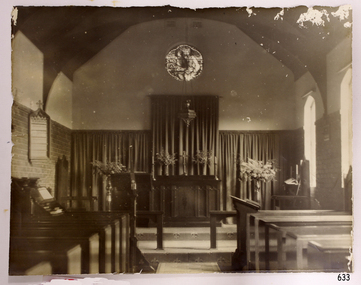
... John Lindsay, on Sunday, 11th October 1981. The event included a service of thanksgiving conducted by the Warrnambool Ministers Fraternal. Since then, the Chapel has been the historic venue for many weddings. This photograph is significant through its association with the St Nicholas' Mission to Seamen Church in Williamstown, Melbourne, established in 1857. The building in the photograph is the former English ...This photograph records the interior of St Nicholas Seamen's Church at 139 Nelson Place, Williamstown, Victoria, which was purchased and furnished around 1943. The furniture and furnishings are now part of the St. Nicholas Seamen's Church collection. HISTORY of the Missions to Seamen: - DETAILED HISTORY of the Missions to Seamen: - The Missions to Seamen is an Anglican (Church of England) charity that has served the world’s seafarers since 1856. It was inspired by the work of Rev. John Ashley, who, 20 years earlier, had pioneered a ministry to seafarers in the Bristol Channel in Great Britain. When Ashley retired, others continued the work, founding the Missions to Seamen. It adopted a Flying Angel as its symbol, inspired by a verse from the Bible in Revelation 14. Today, over 200 world ports have Missions to Seamen centres and chaplains. A Missions to Seamen’s Club warmly welcomes sailors of all colours, creeds and races and provides a wide range of facilities. The Missions to Seamen organisation changed its name to the Mission to Seafarers in 2000, continuing to include Missions to Seamen clubs in Victoria’s cities of Melbourne, Portland, Geelong and Hastings. Flagstaff Hill’s St Nicholas’ Seamen’s Church is named after its namesake from Williamstown, Victoria, which began in 1857. Bishop Perry opened the first Sailors’ Church there, known as ‘Bethel’, on an old hulk floating in Hobson’s Bay, Port of Melbourne. In 1860, a Sailors’ Rest started operating from rented premises in Williamstown. In 1878, the Sailors’ Church moved into an old Wesleyan chapel in Ann Street. By the end of that year, they managed to purchase the building, which they had already refurbished. In 1883, they affiliated with the Victorian Seamen’s Mission. A few years later, in 1906, the building had to be demolished because it was no longer safe. While they raised funds for a new building, the Sailors’ Rest temporarily moved to premises in front of Customs House in Nelson Place. Around this time, in 1906, the Ladies Harbour Lights Guild was formed in Australia to support and raise funds for the Mission to Seamen organisation in Melbourne. Two of the most significant ladies of the Guild were founding members Ethel Godfrey and Alice Sibthorpe. During the Mission's time at Siddeley Street, Melbourne, the activities of the Guild raised funds for the Mission to Seamen's Chapel at their new, and still current, premises in Flinders Street, Melbourne, opened in 1917. The Guild continued its important work until the 1960s. In 1908, the Williamstown Mission had enough money to purchase the former Mascotte skating rink on Thompson Street, Williamstown. In August of that year, they were inaugurated into the Victorian Missions to Seamen. They continued at that venue for a few decades. In 1943, the former ES&A Bank building at 139 Nelson Place, Williamstown, was purchased to become the new Mission to Seamen’s Club. On May 6th, 1944, it was officially opened, described as a ‘distinctive little building’. Funds had previously been raised for the building and furnishing of the chapel at the rear. The chapel was named St Nicholas’ Seamen’s Church, after St Nicholas, fourth-century bishop and patron saint of sailors. Services were held on Wednesdays and Sundays. The church was supported by the Williamstown Lightkeepers’ Auxiliary, newly founded by Mrs Ethel Margaret Musther in 1943, as well as the Harbour Lights Guild and the League of Soldiers’ and Sailors’ Friends. The Williamstown Mission to Seamen’s Church operated until 1966, when large international ships no longer used the Port of Williamstown. The Commonwealth Government then leased the premises. In the formative years of Flagstaff Hill Maritime Village, the Advisory Board decided to include a Missions to Seamen Chapel and Recreation Room in its village. The Missions organisation was a significant feature of ports during the late 1800s and early 1900s, the period that the Village represents. They often erected Missions to house social and worshipful activities for seamen. Flagstaff Hill’s curator, Mr Ken Marshman, approached the Melbourne Board of Management of Missions to Seamen regarding the Williamstown branch. Consequently, the Board permitted the furnishings of the Williamstown chapel to be transferred to Flagstaff Hill Maritime Village. A provision of the transfer was that the Victoria Missions to Seamen be recognised, that the items would remain as a collection, and that the chapel would be called St Nicholas Seamen’s Church and conduct Divine services. The donation was approved on 21st May 1979. Flagstaff Hill's St. Nicholas Seamen's Church: - The idea behind Flagstaff Hill’s Missions to Seamen’s Church was partly driven by the offer of Stained Glass Memorial Windows that originated from the Warrnambool and District Base Hospital, which was undergoing multi-storey expansion in the late 1960s and early 1970s. The hospital’s Manager/Secretary was eager to see the historic window installed in a suitable place. The church, or chapel, was designed by a local architectural draftsman in collaboration with the Flagstaff Hill Planning Board and was constructed by Mr Leon Habel. The designers hoped that the church would be used for formal worship such as weddings, funerals, and multi-denominational special services like war commemorations. The design is inspired by the ‘Missions to Seamen’ buildings in Portland and the Port of Melbourne. The furniture and furnishings were placed as accurately as possible according to photographs of the Williamstown St Nicholas Seamen’s Church and with assistance from local clergy. The Recreation Room was furnished and arranged on advice from experienced members of the Missions to Seamen organisation. A framed document in the building recognises the donor of the furnishings, Victoria Missions to Seamen, and includes the names of some original donors and their donated item/s. The building’s design incorporates local features such as Warrnambool sandstone, which was no longer commercially available but was procured from demolished buildings and uniformly cut to use as a veneer over the stronger Mt. Gambier stone. Also, traditional green American roofing slate was used, sourced from the 1908 local shipwreck “Falls of Halladale” by Flagstaff Hill volunteer divers. The bell tower includes a bell believed to be from a local shipwreck. Additional furnishings were acquired locally, along with several items donated by Warrnambool residents. Light fittings in both rooms were assembled to simulate 19th-century gas light fittings. The stained-glass window at the back of the church is a memorial to Dr Connell, a well-respected member of the Warrnambool community. It was originally installed in 1928 in the main building of Warrnambool Hospital. The St Nicholas’ Seamen’s Church at Flagstaff Hill was officially opened by His Worship the Mayor, Cr. John Lindsay, on Sunday, 11th October 1981. The event included a service of thanksgiving conducted by the Warrnambool Ministers Fraternal. Since then, the Chapel has been the historic venue for many weddings. This photograph is significant through its association with the St Nicholas' Mission to Seamen Church in Williamstown, Melbourne, established in 1857. The building in the photograph is the former English, Scottish and Australian Bank (ES&A bank), also known as the Mission to Seamen. It is listed on the Victorian Heritage Database for having local historic and aesthetic interest. Photograph of St Nicholas Seamen's Church, Williamstown. Sepia photograph. The photograph shows the inside of the Chapel of Mission to Seamen, including organ, pews and other furniture and furnishings. There is a circular stained glass window high on the back wall depicting a sailor at the helm of a ship and a man standing behind him and pointing the way - "Christ Showing The Helmsman The Way". A Sanctuary Light is suspended from the ceiling. The Sanctuary chars are visible. This shows the St Nicholas Seamen's Church in Williamstown, the furnishings and furniture of which is now part of the St Nicholas Seamen's Church Collection’.flagstaff hill, warrnambool, shipwrecked-coast, flagstaff-hill, flagstaff-hill-maritime-museum, maritime-museum, shipwreck-coast, flagstaff-hill-maritime-village, st nicholas mission to seamen's church williamstown, mission to seamen williamstown, mission to seamen victoria, st nicholas mission to seamen, chapel window, christ showing the helmsman the way, stained glass window, st nicholas seamen's church, religion, religious service, sailor's rest, ladies harbour light guild -
 Flagstaff Hill Maritime Museum and Village
Book - Reference, William J Goudie, D. Sc., Professor (William john Goudie), Steam Turbines, 1922
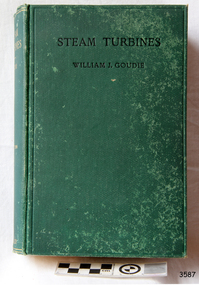
... John Couldie D. Sc, was a mechanical engineer who had practical experience in a marine consulting engineering service and lectured in the theory and practice of mechanical engineering.This book is an example of the development of technology that contributed to the evolution of steam turbines. The book is also significant for its connection to the publisher Longmans, Green and Co., of London, a firm that has been established for over two centuries, renowned for publishing encyclopedias, dictionaries, books on English grammar, textbooks, poetry, reference books, novels, magazines and more. ...This textbook was written for engineering students by Scottish Professor, William J Goudie, D. Sc., (1868-1945). He was a member of the Institution of Mechanical Engineers, a member of the Institution of Engineers and Shipbuilders in Scotland, an Associate Member of the Institution of Civil Engineers, James Watt Chair of Mechanical Engineering, University of Glasgow, and Professor of "The Theory and practice of Heat Engines" in the University of Glasgow. He wrote several papers and books on the topics of mechanical speed and power. The publisher firm, Longmans, Green & Co., was originally founded in 1724 in London by Thomas Longman under the name Longman. In August of that year, he bought the two shops and goods of William Taylor and set up his publishing house there at 39 Paternoster Row. The shops were called Black Swan and Ship, and it is said that the 'ship' sign was the inspiration for Longman's Logo. After many changes of name and management, the firm was incorporated in 1926 as Longmans, Green & Co. Pty Ltd. The firm was acquired by Pearson in 1968 and was known as Pearson Longman or Pearson PLC. The first practical steam turbine was built in 1884 by Charles Parsons and this became the beginning of generating electricity and powering large ships. The author of Steam Turbines, Professor William John Couldie D. Sc, was a mechanical engineer who had practical experience in a marine consulting engineering service and lectured in the theory and practice of mechanical engineering.This book is an example of the development of technology that contributed to the evolution of steam turbines. The book is also significant for its connection to the publisher Longmans, Green and Co., of London, a firm that has been established for over two centuries, renowned for publishing encyclopedias, dictionaries, books on English grammar, textbooks, poetry, reference books, novels, magazines and more.Steam Turbines, by William J. Goudie, D. Sc., Second edition, rewritten and enlarged. Published by Longmans, Green & Co. in 1922. The book has a textured green hardcover with a printed black title on the front cover and a gold embossed title on the spine. The fly page describes the contents. It states the author's credentials and the book's features - 329 illustrations and numerous examples.. The logo of Longmans, Green & Co. is on the fly page. It is a line drawing of a shield above a leafy wreath border surrounding a sailing ship at sea with a plaque below. Inscriptions are on the shield and plaque.On the shield: "L & Co" [Longman Green & Co.] On the plaque: "1724" [date business was established]flagstaff hill, flagstaff hill maritime museum and village, warrnambool, maritime museum, maritime village, great ocean road, shipwreck coast, steam turbines, longmans green and co, paternoster row london, ship logo, engineering studies, textbook, 1922, longmans green and co., l & co., 1724, institution of mechanical engineers, institution of engineers and shipbuilders scotland, institution of civil engineers, james watt professor of "the theory and practice of heat engines", thomas longman, paternoster row, william goudie, william j goudie, professor william j goudie d. sc., james watt chair of mechanical engineering, steam turbine, marine turbines, steam power
