
Showing 108 items matching "kew childrens cottages"
-
 Kew Historical Society Inc
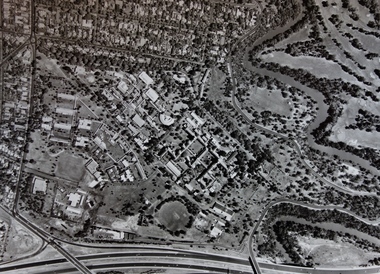
Photograph - Aerial Photograph, Aerial Photograph of Willsmere, circa 1980, c. 1980
... ...Kew Childrens Cottages...Kew Cottages, and doctors/clergy residences on the north side of Wills Street, before the State Government sold the land for residential development. The doctors residences in Wills street were made of 'Glen Iris' Olympic Bricks. According to neighbours of the time most of the buildings were demolished overnight in the 1980s. kew cottages eastern freeway willsmere yarra river aerial photographs -- kew (vic) kew boulevard Willsmere Mental Hospital kew mental hospital Kew Childrens Cottages Aerial photograph of Willsmere and the Kew Cottages bounded by the Boulevard, the Chandler Highway, Princess Street and Fellows Street. ...This aerial photograph shows the Kew Cottages, and doctors/clergy residences on the north side of Wills Street, before the State Government sold the land for residential development. The doctors residences in Wills street were made of 'Glen Iris' Olympic Bricks. According to neighbours of the time most of the buildings were demolished overnight in the 1980s.Aerial photograph of Willsmere and the Kew Cottages bounded by the Boulevard, the Chandler Highway, Princess Street and Fellows Street. The roundabout at the intersection of Princess Street, Wills Street, and Eglinton Street is at the top left. The Eastern Freeway is at the lower edge of the photograph.kew cottages, eastern freeway, willsmere, yarra river, aerial photographs -- kew (vic), kew boulevard, willsmere mental hospital, kew mental hospital, kew childrens cottages -
 Kew Historical Society Inc
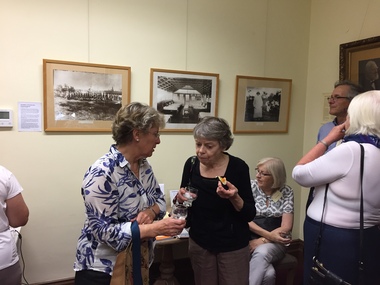
Photograph - Photographs [Series], Robert Baker, Exhibition: Around the Bend , Asylums on the Yarra, Kew Court House, 2017, 03/03/2017
... kew historical society - exhibitions...childrens cottages...An exhibition, mounted by the Kew Historical Society, featuring a number of photographs and objects exploring the historical roles of the asylum in our culture, focusing on the Yarra Bend Asylum, the Kew Lunatic Asylum (later Willsmere Hospital) and the Kew Children’s Cottages. ...Institutions featured were: Yarra Bend Asylum, Kew Lunatic Asylum, and the Children's Cottages Kew. The exhibition was opened by Astrid Judge. ...An exhibition, mounted by the Kew Historical Society, featuring a number of photographs and objects exploring the historical roles of the asylum in our culture, focusing on the Yarra Bend Asylum, the Kew Lunatic Asylum (later Willsmere Hospital) and the Kew Children’s Cottages. kew historical society - exhibitions childrens cottages kew yarra bend asylum kew lunatic asylum Photographs of the opening night of the exhibition on asylums by the Yarra, organised as part of the Kew Festival 2017. ...An exhibition, mounted by the Kew Historical Society, featuring a number of photographs and objects exploring the historical roles of the asylum in our culture, focusing on the Yarra Bend Asylum, the Kew Lunatic Asylum (later Willsmere Hospital) and the Kew Children’s Cottages. Photographs of the opening night of the exhibition on asylums by the Yarra, organised as part of the Kew Festival 2017. Institutions featured were: Yarra Bend Asylum, Kew Lunatic Asylum, and the Children's Cottages Kew. The exhibition was opened by Astrid Judge. The co-curators were Robert Baker and Judith Scurfield.kew historical society - exhibitions, childrens cottages kew, yarra bend asylum, kew lunatic asylum -
 Kew Historical Society Inc
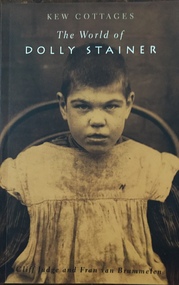
Book, Fran van Brummelen et al, Kew Cottages: The World of Dolly Stainer, 1992
... Institutional and personal biography of the life of Dolly Stainer in the Children's Cottages Kew ...Institutional and personal biography of the life of Dolly Stainer in the Children's Cottages Kew kew cottages (kew, vic.) dolly stainer vi, 226 p. : ill., ports. ; 23 cm. ...vi, 226 p. : ill., ports. ; 23 cm. non-fictionkew cottages (kew, vic.), dolly stainer -
 Kew Historical Society Inc
Book, Fran van Brummelen et al, Kew Cottages: The World of Dolly Stainer, 2002
... Institutional and personal biography of the life of Dolly Stainer in the Children's Cottages Kew ...Institutional and personal biography of the life of Dolly Stainer in the Children's Cottages Kew dolly stainer children's cottages kew (kew, vic.) vi, 226 p. : ill., ports. ; 23 cm. ...vi, 226 p. : ill., ports. ; 23 cm. non-fictiondolly stainer, children's cottages kew (kew, vic.) -
 Kew Historical Society Inc
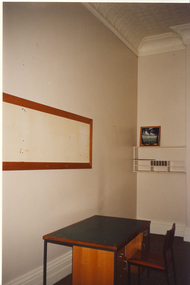
Photograph, Former Willsmere (Kew) Mental Hospital
... Later it was called Kew Children’s Cottages (1929-62), Kew Training Centre (1962-c.97), and Kew Residential Services (c.1997-2008). ...Later it was called Kew Children’s Cottages (1929-62), Kew Training Centre (1962-c.97), and Kew Residential Services (c.1997-2008). ...The former Kew Lunatic Asylum, was commenced in 1856 and opened in 1872. At various stages of the institution's history it was named the Kew Lunatic Asylum (1872-1956), Kew Mental Hospital (1956-1960s), Willsmere Mental Hospital (c.1960s-1982), and the Willsmere Unit (1982-1989). The Kew Idiot Ward/Asylum (1887-1929) was initially part of the Asylum. Later it was called Kew Children’s Cottages (1929-62), Kew Training Centre (1962-c.97), and Kew Residential Services (c.1997-2008). Most of the records relating to these former institutions are held by the relevant Government Department or by the Public Record Office Victoria. Due to the location of these two institutions in Kew, the Kew Historical Society also holds an extensive photographic archive as well as significant collections of personal papers collected by staff who worked at these institutions.This photograph is one of a series donated to the Society by the photographer, taken following the closure of the Willsmere Unit, and before its redevelopment as a private residential complex. The series is historically significant in that it depicts interior and exterior views of the former institution that were subsequently altered or demolished during redevelopment. A number of the 'views' are socially significant as they allow us to examine the ways in which public institutional architecture in the 19th and 20th centuries responded to the needs of those with perceived mental health issues. Colour snapshot of a part or section of the former Willsmere (Kew) Mental Hospital, taken following its decommissioning and before its sale and redevelopment.kew lunatic asylum, kew mental hospital, willsmere mental hospital, willsmere unit, health & human services, mental health, institutional architecture -
 Kew Historical Society Inc
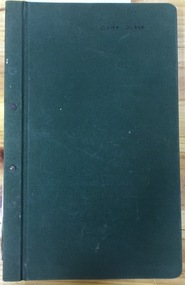
Document, Irena Higgins, Kew Children's Cottages, 1952-1964
... . ---, (---), Admission to Children’s Cottages Kew, p.1. ---, (---), Admissions Procedure, pp.1-2. ---, (---), Chaplaincy, p.1. ---, (---), Children’s Cottages and Special School Kew - Open for Education Week, p.1. ---, (---), Children’s Cottages Kew, p. 1-2. ---, (---), Children’s Cottages Kew, p.1. ---, (---), Children’s Cottages, Kew - Pathology Request and Report Form, p. 1. ---, (---), Children’s Cottages? .... ---, (---), Admission to Children’s Cottages Kew, p.1. ---, (---), Admissions Procedure, pp.1-2. ---, (---), Chaplaincy, p.1. ---, (---), Children’s Cottages and Special School Kew - Open for Education Week, p.1. ---, (---), Children’s Cottages Kew, p. 1-2. ---, (---), Children’s Cottages Kew, p.1. ---, (---), Children’s Cottages, Kew - Pathology Request and Report Form, p. 1. ---, (---), Children’s Cottages? ...---, ---, Cottages Liaison Committee members, pp. 4&5 ---, (---), (Untitled), p.4. ---, (---), [Memo re feedback from Official Visitors Conference at Royal Park], p.1. ---, (---), [Patient profile proforma], pp.1-2. ---, (---), Admission to Children’s Cottages Kew, p.1. ---, (---), Admissions Procedure, pp.1-2. ---, (---), Chaplaincy, p.1. ---, (---), Children’s Cottages and Special School Kew - Open for Education Week, p.1. ---, (---), Children’s Cottages Kew, p. 1-2. ---, (---), Children’s Cottages Kew, p.1. ---, (---), Children’s Cottages, Kew - Pathology Request and Report Form, p. 1. ---, (---), Children’s Cottages? Kew, pp.1-4 ---, (---), Extracts From the Report of Dr. J. V. McCreery, first Superintendent, p.1. ---, (---), Kew Cottages Training Centre Brochure, pp.1. ---, (---), Kew Special School, pp.1-2. ---, (---), Notes for General Guidance of Officers in Charge of Idiot Children, p.1. ---, (---), Notes for General Guidance of Officers in Charge of Idiot Children, p.1. ---, (---), Notes for Student Groups, pp.1-6. ---, (---), Physiotherapy at the Children’s Cottages Kew, p.1. ---, (---), Preface to Brochure on Cottages, pp.1-2. ---, (---), The administrative staff comprises …, pp.1-2. ---, (---), Untitled, p.2. ---, (1958, 29 August), Notes from a meeting of Superintendents with Dr Dax and other superintendents, p.1. ---, (1958, October - December), Proposed Survey of Children’s Cottages, Kew, pp.1-6., and Case Sheet pp. 1-5. ---, (1961, 2 November), Untitled letter regarding finances and upgrades, p.1. ---, (1962, 25 October), Memorandum, p.1. ---, (1962), Children’s Cottages Kew [overview of activities], p.1. ---, (1962), Report for the Year 1962 [statistics], p.1. ---, (1963), The Children’s Cottages Kew, pp.1-3. ---, (1964, 10 September), Merchandise Project Children’s Welfare Fund, Kew Cottages Parents Association, p.1. ---, (1964, 26 May), [Draft] Preface to Brochure on Cottages, pp.1-2. ---, (1964, October), Report to the Twelfth Annual (Perth) Conference: Australian Council for the Mentally Retarded, Kew Cottages Parents Association, pp.1-2. ---, (1964), Children’s Welfare Fund: Disbursements July 1963 - September 1964. [Brady, Dr W.A.] , (---), Transfer of Patients from One Institution to Another, pp.1-3. [Higgins, Irena], (---), The Formation and Development of Kew Children’s Cottages Parent’s Association, pp.1-6. Ashburner, J.B., (---, ---), Notes and Instructions, Kew Mental Hospital, p.1. Ashburner, J.B., (1954, 1 April), Notices and Instructions, Kew Mental Hospital, pp.1-2. Ashburner, J.B., (1954, 10 February), Notices and Instructions, Kew Mental Hospital, pp.1-3. Ashburner, J.B., (1954, 10 March), Notices and Instructions, Kew Mental Hospital, p.1. Ashburner, J.B., (1954, 11 March), Notices and Instructions, Kew Mental Hospital, pp.1-4. Ashburner, J.B., (1954, 11 May), Notes and Instructions, Kew Mental Hospital, p.1. Ashburner, J.B., (1954, 12 March), Notices and Instructions, Kew Mental Hospital, pp.1-4. Ashburner, J.B., (1954, 12 May), Notes and Instructions, Kew Mental Hospital, p.1. Ashburner, J.B., (1954, 13 August), Notes and Instructions, Kew Mental Hospital, p.1. Ashburner, J.B., (1954, 13 May), Notes and Instructions, Kew Mental Hospital, pp.1-3. Ashburner, J.B., (1954, 14 April), Notes and Instructions, Kew Mental Hospital, pp.1-2. Ashburner, J.B., (1954, 15 April), Notes and Instructions, Kew Mental Hospital, p.1. Ashburner, J.B., (1954, 15 June), Notes and Instructions, Kew Mental Hospital, p.1-2. Ashburner, J.B., (1954, 16 July), Notes and Instructions, Kew Mental Hospital, p.1. Ashburner, J.B., (1954, 19 February), Notes and Instructions, Kew Mental Hospital, pp.1-2. Ashburner, J.B., (1954, 19 October), Notes and Instructions, Kew Mental Hospital, p.1. Ashburner, J.B., (1954, 2 April), Notices and Instructions, Kew Mental Hospital, pp.1-2. Ashburner, J.B., (1954, 2 July), Notes and Instructions, Kew Mental Hospital, p.1. Ashburner, J.B., (1954, 2 March), Annual Report for 1952, Kew Mental Hospital, pp.1-4. Ashburner, J.B., (1954, 20 August), Notes and Instructions, Kew Mental Hospital, pp.1-2. Ashburner, J.B., (1954, 21 October), Notes and Instructions, Kew Mental Hospital, p.1. Ashburner, J.B., (1954, 23 February), Notices and Instruction - Succinic Acid Treatment, Kew Mental Hospital, pp.1-2 Ashburner, J.B., (1954, 23 June), Notes and Instructions, Kew Mental Hospital, pp.1-2. Ashburner, J.B., (1954, 23 March), Notices and Instructions, Kew Mental Hospital, pp.1-2. Ashburner, J.B., (1954, 25 May), Notes and Instructions, Kew Mental Hospital, p.1. Ashburner, J.B., (1954, 27 April), Notes and Instructions, Kew Mental Hospital, pp.1-3. Ashburner, J.B., (1954, 27 May), Notes and Instructions, Kew Mental Hospital, p.1. Ashburner, J.B., (1954, 28 July), Notes and Instructions, Kew Mental Hospital, pp.1-2. Ashburner, J.B., (1954, 29 July), Notes and Instructions, Kew Mental Hospital, p.1. Ashburner, J.B., (1954, 3 September), Notes and Instructions, Kew Mental Hospital, p.1. Ashburner, J.B., (1954, 31 March), Notices and Instructions - Rations, Kew Mental Hospital, pp.1-4. Ashburner, J.B., (1954, 4 June), Notes and Instructions, Kew Mental Hospital, p.1. Ashburner, J.B., (1954, 4 May), Notes and Instructions, Kew Mental Hospital, p.1. Ashburner, J.B., (1954, 4 October), Notes and Instructions, Kew Mental Hospital, p.1. Ashburner, J.B., (1954, 6 April), Notes and Instructions, Kew Mental Hospital, p.1. Ashburner, J.B., (1954, 6 October), Notes and Instructions, Kew Mental Hospital, pp.1-2. Ashburner, J.B., (1954, 7 July), Notes and Instructions, Kew Mental Hospital, p.1. Ashburner, J.B., (1954, 5 February), Notices and Instructions, Kew Mental Hospital, p.1. Brady Dr. W.A. (1960, December), Newsletter to parents, pp.1-5 Brady, Dr W.A. (1965, 28 May), Letter to The Secretary, Mental Health Authority regarding waiting lists, p.1. Brady, Dr. W.A. (1963, 28 February) Annual Report [to the Secretary of the Mental Health Authority], pp.1-15 Brady, W.A., (1954, 9 April), Notes and Instructions, Kew Mental Hospital, pp.1-2. Brady, W.A., (1954, 15 December), Notes and Instructions, Kew Mental Hospital, p.1. Brady, W.A., (1954, 7 December), Notes and Instructions, Kew Mental Hospital, p.1. Brady, W.A., (1954, 9 November), Notes and Instructions, Kew Mental Hospital, p.1. Brady, W.A., (1955, 13 December), Notes and Instructions, Kew Mental Hospital, p.1. Brady, W.A., (1955, 14 December), Notes and Instructions, Kew Mental Hospital, p.1. Brady, W.A., (1955, 15 July), Notes and Instructions, Kew Mental Hospital, p.1. Brady, W.A., (1955, 20 June), Notes and Instructions, Kew Mental Hospital, p.1. Brady, W.A., (1955, 24 June), Notes and Instructions, Kew Mental Hospital, p.1. Brady, W.A., (1955, 24 October), Notes and Instructions, Kew Mental Hospital, p.1. Brady, W.A., (1955, 25 August), Notes and Instructions, Kew Mental Hospital, p.1. Brady, W.A., (1955, 29 March), Notes and Instructions, Kew Mental Hospital, p.1. Brady, W.A., (1955, 5 December), Notes and Instructions, Kew Mental Hospital, p.1. Brady, W.A., (1955, 8 November), Notes and Instructions, Kew Mental Hospital, p.1. Brady, W.A., (1955, 9 May), Notes and Instructions, Kew Mental Hospital, p.1. Brady, W.A., (1956, 6 January), Notes and Instructions, Kew Mental Hospital, p.1. Brady, W.A., (1961, 8 December), Invitation to a screening of Dr. Pitt’s “Brookland Experiment”, p.1. Brazier, ‘Mac’ (1964, February), Newsletter, Kew Cottages Parents Association, pp.1-2. Brazier, ‘Mac’, (1964, June), Newsletter, Kew Cottages Parents Association, pp.1-4. Brazier, ‘Mac’, (1964, April), Newsletter, Kew Cottages Parents Association, pp.1-4. Brazier, ‘Mac’, (1964, August), Newsletter, Kew Cottages Parents Association, pp.1-4. Brazier, ‘Mac’, (1964, December), Newsletter, Kew Cottages Parents Association, pp.1-4. [3 copies]. Brazier, ‘Mac’, (1964, July), Newsletter, Kew Cottages Parents Association, pp.1-4. Brazier, ‘Mac’, (1964, May), Newsletter, Kew Cottages Parents Association, pp.1-4. Brazier, ‘Mac’, (1964, November), Newsletter, Kew Cottages Parents Association, pp.1-5. Brazier, ‘Mac’, (1964, October), Newsletter, Kew Cottages Parents Association, pp.1-6. Brazier, ‘Mac’, (1964, September), Newsletter, Kew Cottages Parents Association, pp.1-4. Brazier, Betty (1964, 26 April), Letter to I Higgins re Distribution of newsletters to staff, Kew Cottages Parents Association. (p.1) Dale, (1964), A Few Facts About the Children’s Cottages Kew Fordyce, J., (1956, 13 January), Notes and Instructions, Kew Mental Hospital, p.1. Higgins, Irena (---), A Short History of the Children’s Cottages, Kew, pp.1-2. Higgins, Irena (1966, 28 November), Letter to Dr Brady regarding waiting lists, pp.1-3. Higgins, Irena, (---), ‘Children’s Cottages’, Kew, p. 1-2. Loveless, L.W., (1963, 18 July), [Commonwealth Department of Social Services] ‘Approval of Children’s Cottages as an endowed Institution’, p.1. M.H. 11, Schedule 17 Section 41 (2) (b), ‘Request of Medical Practitioner for Admission of Voluntary patient to a Training Centre or Private Training Centre’, Mental Health Regulations 1962, p.1. M.H. 12, Section 41 (10) (a) (b) (c), ‘Order for the Discharge of a Voluntary Patient’, Mental Health Regulations 1962, p.1. M.H. 13, Section 41 (10) (d), ‘Application for Discharge by Voluntary Patient and Order for Discharge’, Mental Health Regulations 1962, p.1. M.H. 14, Section 41 (1), Application for Leave of Absence for Voluntary Patient, Mental Health Regulations 1962, p.1. M.H. 2, Schedule 9 Section 41 (a) 41 (b) 42 (1) 43 (1) 44 (1) 48, 59 (1) (2) ‘Statement of Personal Details of Patient’, Mental Health Regulations 1962, p.1-2. M.H. 21, Schedule 9 Section 44 (1) 48 and 52, Medical Approval for Admission to Training Centre, Mental Health Regulations 1962, pp.1-2. M.H. 22, Schedule 25 Section 44, Request to Receive a Patient into a Training Centre, Mental Health Regulations 1962, p.1. M.H. 33, Schedule 40, Section 62, Notice of Death, Mental Health Regulations 1962, p.1. M.H. 37, Section 87 (1), Application and Approval for Trial Leave, Recommended and Approved Patients, Mental Health Regulations 1962, p.1. M.H. 39, Section 93 (1), Order of Superintendent for Discharge of Patient on Leave Upon Production of Medical Certificate, Mental Health Regulations 1962, p.1. M.H. 40, Section 94 (1), Order of Superintendent for Discharge of Patient, Mental Health Regulations 1962, p.1. M.H. 43, Section 102, Consent of the Chief medical Officer or Superintendent for Anaethesia or Surgical Operation Upon a Patient, Mental Health Regulations 1962, p. 1. M.H. 7, Schedule 14 Section 41 (2) (a) (i) and (ii), ‘Application for Admission of Voluntary Patient to a Training Centre or Private Training Centre by Parent or Guardian’, Mental Health Regulations 1962, p.1. M.H. 9, Schedule 16 Section 41 (2) (a) (ii), ‘Application for Admission to a Training Centre as a Voluntary Patient’, Mental Health Regulations 1962, p.1. Medical Officers (1958, 11 October), Percentage of deaths and statistics for the years 1955 to 1957, Report to Dr. E.C. Dax, Chairman, Mental Health Authority, pp. 1-2. Plumridge, Len, (1964), Statement of Receipts & Expenditure 1963-1964: Children’s Welfare Fund, Kew Cottages Parents Association, p.1. Temby, E., (---), The Kew Cottages Parents’ Association, p. 1-2. Temby, Ethel, (1964, October), Proceedings of the Twelfth Annual Conference, Australian Council for the Mentally Retarded, pp.1-2. Temby, Ethel, (1964, September), [Information Committee] Sixth Annual Report pp.1-2 Temby, Ethel, (1964, September), Information Committee: Sixth Annual Report, pp.1-2 Wann, E.M., (1956, 16 March), Memo [regarding the overcrowding crisis], p. 1. WM.7663 (---), Children’s Cottages Kew E.4 [overview and personnel], pp. 1-2.An important manuscript comprising original and reproduced materials from the period 1952-1964 assembled by and for senior staff at the Children's Cottages, Kew.Sorted folio of original manuscripts and printed material from the 1950s and 1960s relating to the Kew Cottages created by Irena Higgins, senior social worker at the Kew Mental Hospital and Kew Cottages. The material later formed part of the collection of Dr Cliff Judge, resident psychiatrist at the Cottages. Material within the folio includes original typescripts created by Irena Higgins, copies of newsletters by various Superintendent and Deputy Superintendent Psychiatrists including Dr A.W. Brady, and published and unpublished reports to relevant mental health departments.mental health - victoria - history, chidren's cottages - kew, irana higgins, dr cliff judge, dr. a.w. brady -
 Kew Historical Society Inc
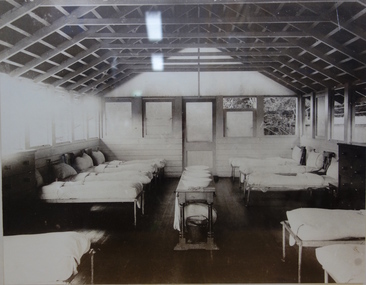
Photograph - Tent Dormitory, Kew Cottages
... The Children's Cottages at Kew were first opened in 1887 as the "Idiot Ward" of Kew Asylum. ...The Children's Cottages at Kew were first opened in 1887 as the "Idiot Ward" of Kew Asylum. ...The Children's Cottages at Kew were first opened in 1887 as the "Idiot Ward" of Kew Asylum. Located on the asylum's grounds, the children's cottages were established to provide separate accommodation for child inmates who had previously been housed with adult patients. Although the Cottages only admitted children as patients, many of those children remained in residence at the Cottages as adults. The function of the institution was to provide accommodation and educational instruction for intellectually disabled children. Some Wards of the State and other various "difficult" children were also admitted.Shortly after opening, the Idiot Ward began functioning separately from the Kew Lunatic Asylum, and became known as the Kew Idiot Asylum from 1887 until c.1929. From 1929 they have been known as the "Children's Cottages, Kew" or alternatively "Kew Cottages Training Centre". The institution was finally closed in July 2008. [Source: Wikipedia, 2016]One of a series of framed historical photographs of the Kew Cottages that once formed part of the collection of the Kew Cottages Historical Society, founded by Dr. Cliff Judge and Fran Van Brummelen in the 1980s. The set contains both copies of originals in other collections such as the Public Record Office Victoria and photographs taken by Dr Judge for his books on intellectual disability in Victoria. The significance of the set of framed photographs is that they provide a curated collection of images of the development of the Cottages over a one hundred year period.Framed photograph, forming part of the Kew Cottages collection, donated by the Kew Cottages Historical Society 1987-1993 in 1993. Dr. Judge was a consultant psychiatrist at the cottages for 14 years, as well as an author and vocal advocate for the intellectually disabled and their families."An old dormitory in the year 1973. It is still in use as a therapy room and store. Originally these buildings were called tents. Open air treatment was used to cure bad cases of insanity."kew cottages, dr cliff judge, kew cottages historical society 1987-1993 -
 Kew Historical Society Inc
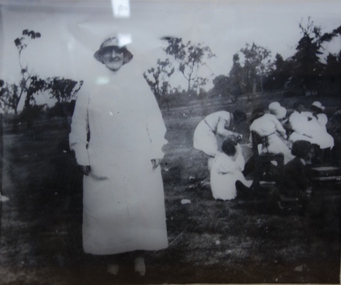
Photograph - Matron Malloy, Kew Cottages
... The Children's Cottages at Kew were first opened in 1887 as the "Idiot Ward" of Kew Asylum. ...The Children's Cottages at Kew were first opened in 1887 as the "Idiot Ward" of Kew Asylum. ...The Children's Cottages at Kew were first opened in 1887 as the "Idiot Ward" of Kew Asylum. Located on the asylum's grounds, the children's cottages were established to provide separate accommodation for child inmates who had previously been housed with adult patients. Although the Cottages only admitted children as patients, many of those children remained in residence at the Cottages as adults. The function of the institution was to provide accommodation and educational instruction for intellectually disabled children. Some Wards of the State and other various "difficult" children were also admitted.Shortly after opening, the Idiot Ward began functioning separately from the Kew Lunatic Asylum, and became known as the Kew Idiot Asylum from 1887 until c.1929. From 1929 they have been known as the "Children's Cottages, Kew" or alternatively "Kew Cottages Training Centre". The institution was finally closed in July 2008. [Source: Wikipedia, 2016]One of a series of framed historical photographs of the Kew Cottages that once formed part of the collection of the Kew Cottages Historical Society, founded by Dr. Cliff Judge and Fran Van Brummelen in the 1980s. The set contains both copies of originals in other collections such as the Public Record Office Victoria and photographs taken by Dr Judge for his books on intellectual disability in Victoria. The significance of the set of framed photographs is that they provide a curated collection of images of the development of the Cottages over a one hundred year period.Framed photograph, forming part of the Kew Cottages collection, donated by Kew Cottages Historical Society 1987-1993 in 1993. Dr. Judge was a consultant psychiatrist at the cottages for 14 years, as well as an author and vocal advocate for the intellectually disabled and their families."Kew Cottages - Matron Malloy 19..-1944. Matron Molloy of Kew CCE until about 1944"kew cottages, matron maud molloy, kew cottages historical society 1987-1993 -
 Kew Historical Society Inc
Photograph - Kew Cottages, Yard
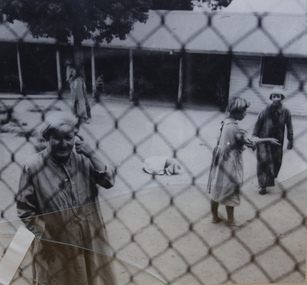
... The Children's Cottages at Kew were first opened in 1887 as the "Idiot Ward" of Kew Asylum. ...The Children's Cottages at Kew were first opened in 1887 as the "Idiot Ward" of Kew Asylum. ...The Children's Cottages at Kew were first opened in 1887 as the "Idiot Ward" of Kew Asylum. Located on the asylum's grounds, the children's cottages were established to provide separate accommodation for child inmates who had previously been housed with adult patients. Although the Cottages only admitted children as patients, many of those children remained in residence at the Cottages as adults. The function of the institution was to provide accommodation and educational instruction for intellectually disabled children. Some Wards of the State and other various "difficult" children were also admitted.Shortly after opening, the Idiot Ward began functioning separately from the Kew Lunatic Asylum, and became known as the Kew Idiot Asylum from 1887 until c.1929. From 1929 they have been known as the "Children's Cottages, Kew" or alternatively "Kew Cottages Training Centre". The institution was finally closed in July 2008. [Source: Wikipedia, 2016]One of a series of framed historical photographs of the Kew Cottages that once formed part of the collection of the Kew Cottages Historical Society, founded by Dr. Cliff Judge and Fran Van Brummelen in the 1980s. The set contains both copies of originals in other collections such as the Public Record Office Victoria and photographs taken by Dr Judge for his books on intellectual disability in Victoria. The significance of the set of framed photographs is that they provide a curated collection of images of the development of the Cottages over a one hundred year period.Framed photograph, forming part of the Kew Cottages collection, donated by Kew Cottages Historical Society 1987-1993 in 1993. Dr. Judge was a consultant psychiatrist at the cottages for 14 years, as well as an author and vocal advocate for the intellectually disabled and their families.Kew Cottages - Yard 1926/27. The yard of what was previously ward 26/27. New unit 7/8. kew cottages, dr cliff judge, kew cottages historical society 1987-1993 -
 Kew Historical Society Inc
Photograph - 12 Bed Dormitory, Kew Cottages
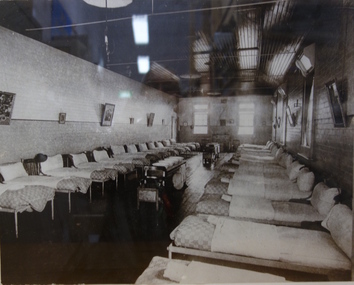
... The Children's Cottages at Kew were first opened in 1887 as the "Idiot Ward" of Kew Asylum. ...The Children's Cottages at Kew were first opened in 1887 as the "Idiot Ward" of Kew Asylum. ...The Children's Cottages at Kew were first opened in 1887 as the "Idiot Ward" of Kew Asylum. Located on the asylum's grounds, the children's cottages were established to provide separate accommodation for child inmates who had previously been housed with adult patients. Although the Cottages only admitted children as patients, many of those children remained in residence at the Cottages as adults. The function of the institution was to provide accommodation and educational instruction for intellectually disabled children. Some Wards of the State and other various "difficult" children were also admitted.Shortly after opening, the Idiot Ward began functioning separately from the Kew Lunatic Asylum, and became known as the Kew Idiot Asylum from 1887 until c.1929. From 1929 they have been known as the "Children's Cottages, Kew" or alternatively "Kew Cottages Training Centre". The institution was finally closed in July 2008. [Source: Wikipedia, 2016]One of a series of framed historical photographs of the Kew Cottages that once formed part of the collection of the Kew Cottages Historical Society, founded by Dr. Cliff Judge and Fran Van Brummelen in the 1980s. The set contains both copies of originals in other collections such as the Public Record Office Victoria and photographs taken by Dr Judge for his books on intellectual disability in Victoria. The significance of the set of framed photographs is that they provide a curated collection of images of the development of the Cottages over a one hundred year period.Framed photograph, forming part of the Kew Cottages collection, donated by Kew Cottages Historical Society 1987-1993 in 1993. Dr. Judge was a consultant psychiatrist at the cottages for 14 years, as well as an author and vocal advocate for the intellectually disabled and their families.Kew Cottages - Dormitory (12 beds). A dormitory at the Cottages.kew cottages, dr cliff judge, kew cottages historical society 1987-1993 -
 Kew Historical Society Inc
Photograph - Boys Exercising, Kew Cottages, c.1900
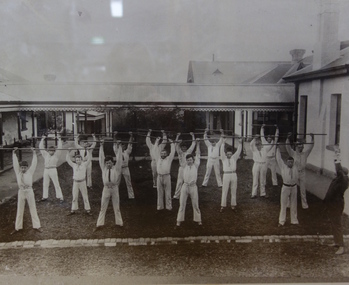
... The Children's Cottages at Kew were first opened in 1887 as the "Idiot Ward" of Kew Asylum. ...The Children's Cottages at Kew were first opened in 1887 as the "Idiot Ward" of Kew Asylum. ...The Children's Cottages at Kew were first opened in 1887 as the "Idiot Ward" of Kew Asylum. Located on the asylum's grounds, the children's cottages were established to provide separate accommodation for child inmates who had previously been housed with adult patients. Although the Cottages only admitted children as patients, many of those children remained in residence at the Cottages as adults. The function of the institution was to provide accommodation and educational instruction for intellectually disabled children. Some Wards of the State and other various "difficult" children were also admitted.Shortly after opening, the Idiot Ward began functioning separately from the Kew Lunatic Asylum, and became known as the Kew Idiot Asylum from 1887 until c.1929. From 1929 they have been known as the "Children's Cottages, Kew" or alternatively "Kew Cottages Training Centre". The institution was finally closed in July 2008. [Source: Wikipedia, 2016]One of a series of framed historical photographs of the Kew Cottages that once formed part of the collection of the Kew Cottages Historical Society, founded by Dr. Cliff Judge and Fran Van Brummelen in the 1980s. The set contains both copies of originals in other collections such as the Public Record Office Victoria and photographs taken by Dr Judge for his books on intellectual disability in Victoria. The significance of the set of framed photographs is that they provide a curated collection of images of the development of the Cottages over a one hundred year period.Framed photograph, forming part of the Kew Cottages collection, donated by Kew Cottages Historical Society 1987-1993 in 1993. Dr. Judge was a consultant psychiatrist at the cottages for 14 years, as well as an author and vocal advocate for the intellectually disabled and their families."Kew Cottages - 1973 [sic] Boys exercising. Boys of the Cottages. The Superintendent's Office, right (until 1973). Wards 12 and 13 left."kew cottages, dr cliff judge, kew cottages historical society 1987-1993 -
 Kew Historical Society Inc
Photograph - Wards 11,12,13,13A, Kew Cottages
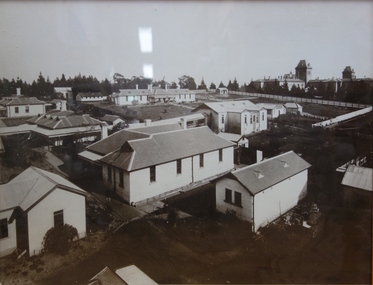
... The Children's Cottages at Kew were first opened in 1887 as the "Idiot Ward" of Kew Asylum. ...The Children's Cottages at Kew were first opened in 1887 as the "Idiot Ward" of Kew Asylum. ...The Children's Cottages at Kew were first opened in 1887 as the "Idiot Ward" of Kew Asylum. Located on the asylum's grounds, the children's cottages were established to provide separate accommodation for child inmates who had previously been housed with adult patients. Although the Cottages only admitted children as patients, many of those children remained in residence at the Cottages as adults. The function of the institution was to provide accommodation and educational instruction for intellectually disabled children. Some Wards of the State and other various "difficult" children were also admitted.Shortly after opening, the Idiot Ward began functioning separately from the Kew Lunatic Asylum, and became known as the Kew Idiot Asylum from 1887 until c.1929. From 1929 they have been known as the "Children's Cottages, Kew" or alternatively "Kew Cottages Training Centre". The institution was finally closed in July 2008. [Source: Wikipedia, 2016]One of a series of framed historical photographs of the Kew Cottages that once formed part of the collection of the Kew Cottages Historical Society, founded by Dr. Cliff Judge and Fran Van Brummelen in the 1980s. The set contains both copies of originals in other collections such as the Public Record Office Victoria and photographs taken by Dr Judge for his books on intellectual disability in Victoria. The significance of the set of framed photographs is that they provide a curated collection of images of the development of the Cottages over a one hundred year period.Framed photograph, forming part of the Kew Cottages collection, donated by Kew Cottages Historical Society 1987-1993 in 1993. Dr. Judge was a consultant psychiatrist at the cottages for 14 years, as well as an author and vocal advocate for the intellectually disabled and their families."Kew Cottages - Wards 11,12,13,13A. Wards 11, 12, 13 and 13A. The Hospital Ward is in the background. Ward 13A was demolished in 1966."kew cottages, dr cliff judge, kew cottages historical society 1987-1993 -
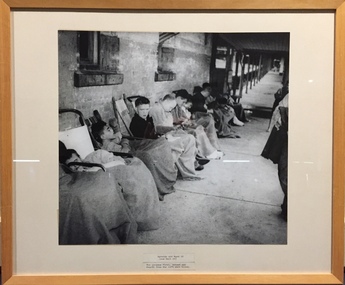 Kew Historical Society Inc
Photograph - Outside Old Ward 12, Kew Cottages
... The Children's Cottages at Kew were first opened in 1887 as the "Idiot Ward" of Kew Asylum. ...The Children's Cottages at Kew were first opened in 1887 as the "Idiot Ward" of Kew Asylum. ...The Children's Cottages at Kew were first opened in 1887 as the "Idiot Ward" of Kew Asylum. Located on the asylum's grounds, the children's cottages were established to provide separate accommodation for child inmates who had previously been housed with adult patients. Although the Cottages only admitted children as patients, many of those children remained in residence at the Cottages as adults. The function of the institution was to provide accommodation and educational instruction for intellectually disabled children. Some Wards of the State and other various "difficult" children were also admitted.Shortly after opening, the Idiot Ward began functioning separately from the Kew Lunatic Asylum, and became known as the Kew Idiot Asylum from 1887 until c.1929. From 1929 they have been known as the "Children's Cottages, Kew" or alternatively "Kew Cottages Training Centre". The institution was finally closed in July 2008. [Source: Wikipedia, 2016]Framed photograph, forming part of the Kew Cottages collection, donated by Dr Cliff Judge in 1993. Dr. Judge was a consultant psychiatrist at the cottages for 14 years, as well as an author and vocal advocate for the intellectually disabled and their families."Kew Cottages - Outside Old Ward 12. Outside old Ward 12 (now Unit 10). The persons first, second and fourth from the left were blind."kew cottages, dr cliff judge, kew cottages historical society 1987-1993 -
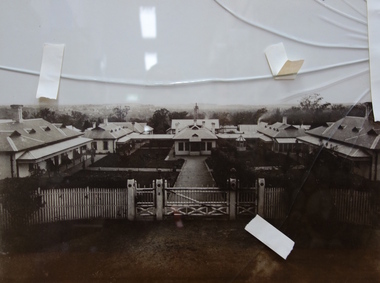 Kew Historical Society Inc
Photograph - Wards 11,12,13 & Old Conference Room, Kew Cottages
... The Children's Cottages at Kew were first opened in 1887 as the "Idiot Ward" of Kew Asylum. ...The Children's Cottages at Kew were first opened in 1887 as the "Idiot Ward" of Kew Asylum. ...The Children's Cottages at Kew were first opened in 1887 as the "Idiot Ward" of Kew Asylum. Located on the asylum's grounds, the children's cottages were established to provide separate accommodation for child inmates who had previously been housed with adult patients. Although the Cottages only admitted children as patients, many of those children remained in residence at the Cottages as adults. The function of the institution was to provide accommodation and educational instruction for intellectually disabled children. Some Wards of the State and other various "difficult" children were also admitted.Shortly after opening, the Idiot Ward began functioning separately from the Kew Lunatic Asylum, and became known as the Kew Idiot Asylum from 1887 until c.1929. From 1929 they have been known as the "Children's Cottages, Kew" or alternatively "Kew Cottages Training Centre". The institution was finally closed in July 2008. [Source: Wikipedia, 2016]One of a series of framed historical photographs of the Kew Cottages that once formed part of the collection of the Kew Cottages Historical Society, founded by Dr. Cliff Judge and Fran Van Brummelen in the 1980s. The set contains both copies of originals in other collections such as the Public Record Office Victoria and photographs taken by Dr Judge for his books on intellectual disability in Victoria. The significance of the set of framed photographs is that they provide a curated collection of images of the development of the Cottages over a one hundred year period.Framed photograph, forming part of the Kew Cottages collection, donated by Dr Cliff Judge in 1993. Dr. Judge was a consultant psychiatrist at the cottages for 14 years, as well as an author and vocal advocate for the intellectually disabled and their families. [Conservation note: Broken glass to be replaced]"Kew Cottages - Wards 11,12,13 & Old Conference Room. Left to right - Wards 11, 12 and 13. Old Conference Room - Wards 23, 22 and 21."kew cottages, dr cliff judge, kew cottages historical society 1987-1993 -
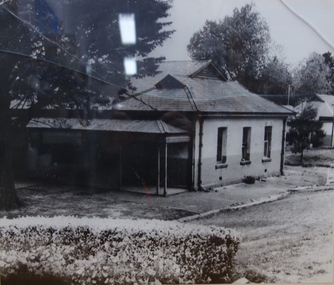 Kew Historical Society Inc
Photograph - Old Ward 21 (The Nursery), Kew Cottages
... The Children's Cottages at Kew were first opened in 1887 as the "Idiot Ward" of Kew Asylum. ...The Children's Cottages at Kew were first opened in 1887 as the "Idiot Ward" of Kew Asylum. ...The Children's Cottages at Kew were first opened in 1887 as the "Idiot Ward" of Kew Asylum. Located on the asylum's grounds, the children's cottages were established to provide separate accommodation for child inmates who had previously been housed with adult patients. Although the Cottages only admitted children as patients, many of those children remained in residence at the Cottages as adults. The function of the institution was to provide accommodation and educational instruction for intellectually disabled children. Some Wards of the State and other various "difficult" children were also admitted.Shortly after opening, the Idiot Ward began functioning separately from the Kew Lunatic Asylum, and became known as the Kew Idiot Asylum from 1887 until c.1929. From 1929 they have been known as the "Children's Cottages, Kew" or alternatively "Kew Cottages Training Centre". The institution was finally closed in July 2008. [Source: Wikipedia, 2016]One of a series of framed historical photographs of the Kew Cottages that once formed part of the collection of the Kew Cottages Historical Society, founded by Dr. Cliff Judge and Fran Van Brummelen in the 1980s. The set contains both copies of originals in other collections such as the Public Record Office Victoria and photographs taken by Dr Judge for his books on intellectual disability in Victoria. The significance of the set of framed photographs is that they provide a curated collection of images of the development of the Cottages over a one hundred year period.Framed photograph, forming part of the Kew Cottages collection, donated by Dr Cliff Judge in 1993. Dr. Judge was a consultant psychiatrist at the cottages for 14 years, as well as an author and vocal advocate for the intellectually disabled and their families. [Conservation note: Glass to be replaced]"Kew Cottages - Old Ward 21 (The Nursery). Old Ward 21, previously the 'nursery', and demolished in 1973 to make way for units 4 and 5. "kew cottages, dr cliff judge, kew cottages historical society 1987-1993 -
![Airing Court Shed [demolished 1976], Kew Cottages](/media/collectors/550653872162f11fb04854aa/items/57a01944d0cdd121042a07ed/item-media/57a019f6d0cdd121042a4183/item-fit-380x285.jpg?cb=6) Kew Historical Society Inc
Kew Historical Society IncPhotograph - Airing Court Shed, Kew Cottages
... The Children's Cottages at Kew were first opened in 1887 as the "Idiot Ward" of Kew Asylum. ...The Children's Cottages at Kew were first opened in 1887 as the "Idiot Ward" of Kew Asylum. ...The Children's Cottages at Kew were first opened in 1887 as the "Idiot Ward" of Kew Asylum. Located on the asylum's grounds, the children's cottages were established to provide separate accommodation for child inmates who had previously been housed with adult patients. Although the Cottages only admitted children as patients, many of those children remained in residence at the Cottages as adults. The function of the institution was to provide accommodation and educational instruction for intellectually disabled children. Some Wards of the State and other various "difficult" children were also admitted.Shortly after opening, the Idiot Ward began functioning separately from the Kew Lunatic Asylum, and became known as the Kew Idiot Asylum from 1887 until c.1929. From 1929 they have been known as the "Children's Cottages, Kew" or alternatively "Kew Cottages Training Centre". The institution was finally closed in July 2008. [Source: Wikipedia, 2016]One of a series of framed historical photographs of the Kew Cottages that once formed part of the collection of the Kew Cottages Historical Society, founded by Dr. Cliff Judge and Fran Van Brummelen in the 1980s. The set contains both copies of originals in other collections such as the Public Record Office Victoria and photographs taken by Dr Judge for his books on intellectual disability in Victoria. The significance of the set of framed photographs is that they provide a curated collection of images of the development of the Cottages over a one hundred year period.Framed photograph, forming part of the Kew Cottages collection, donated by Kew Cottages Historical Society 1987-1993 in 1993. Dr. Judge was a consultant psychiatrist at the cottages for 14 years, as well as an author and vocal advocate for the intellectually disabled and their families." Kew Cottages - Airing Court Shed demolished 1976. The building in the foreground was a so-called 'airing-court-shed'. The other building is an old Court Pell hut (ex Royal Park) transported here after World War II. There were two other such huts behind this. All these buildings were demolished in 1976 to make way for the Graham Perkins Unit."kew cottages, dr cliff judge, kew cottages historical society 1987-1993 -
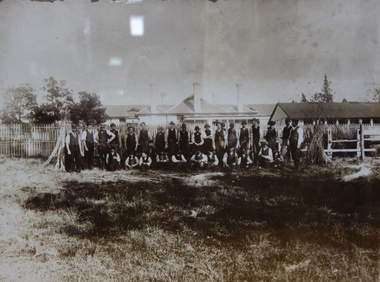 Kew Historical Society Inc
Photograph - Group of 30 Men, Kew Cottages
... The Children's Cottages at Kew were first opened in 1887 as the "Idiot Ward" of Kew Asylum. ...The Children's Cottages at Kew were first opened in 1887 as the "Idiot Ward" of Kew Asylum. ...The Children's Cottages at Kew were first opened in 1887 as the "Idiot Ward" of Kew Asylum. Located on the asylum's grounds, the children's cottages were established to provide separate accommodation for child inmates who had previously been housed with adult patients. Although the Cottages only admitted children as patients, many of those children remained in residence at the Cottages as adults. The function of the institution was to provide accommodation and educational instruction for intellectually disabled children. Some Wards of the State and other various "difficult" children were also admitted.Shortly after opening, the Idiot Ward began functioning separately from the Kew Lunatic Asylum, and became known as the Kew Idiot Asylum from 1887 until c.1929. From 1929 they have been known as the "Children's Cottages, Kew" or alternatively "Kew Cottages Training Centre". The institution was finally closed in July 2008. [Source: Wikipedia, 2016]One of a series of framed historical photographs of the Kew Cottages that once formed part of the collection of the Kew Cottages Historical Society, founded by Dr. Cliff Judge and Fran Van Brummelen in the 1980s. The set contains both copies of originals in other collections such as the Public Record Office Victoria and photographs taken by Dr Judge for his books on intellectual disability in Victoria. The significance of the set of framed photographs is that they provide a curated collection of images of the development of the Cottages over a one hundred year period.Framed photograph, forming part of the Kew Cottages collection, donated by Kew Cottages Historical Society 1987-1993 in 1993. Dr. Judge was a consultant psychiatrist at the cottages for 14 years, as well as an author and vocal advocate for the intellectually disabled and their families."Kew Cottages - Group of 30 Men – Hospital Ward in Background. The Hospital Ward in the background."kew cottages, dr cliff judge, kew cottages historical society 1987-1993 -
 Kew Historical Society Inc
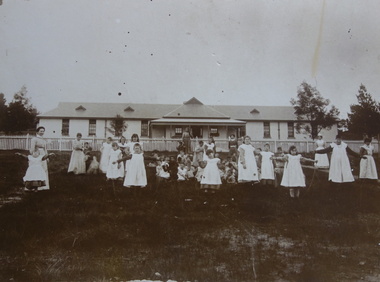
Photograph - Girls in front of Ward 25, Kew Cottages
... The Children's Cottages at Kew were first opened in 1887 as the "Idiot Ward" of Kew Asylum. ...The Children's Cottages at Kew were first opened in 1887 as the "Idiot Ward" of Kew Asylum. ...The Children's Cottages at Kew were first opened in 1887 as the "Idiot Ward" of Kew Asylum. Located on the asylum's grounds, the children's cottages were established to provide separate accommodation for child inmates who had previously been housed with adult patients. Although the Cottages only admitted children as patients, many of those children remained in residence at the Cottages as adults. The function of the institution was to provide accommodation and educational instruction for intellectually disabled children. Some Wards of the State and other various "difficult" children were also admitted.Shortly after opening, the Idiot Ward began functioning separately from the Kew Lunatic Asylum, and became known as the Kew Idiot Asylum from 1887 until c.1929. From 1929 they have been known as the "Children's Cottages, Kew" or alternatively "Kew Cottages Training Centre". The institution was finally closed in July 2008. [Source: Wikipedia, 2016]One of a series of framed historical photographs of the Kew Cottages that once formed part of the collection of the Kew Cottages Historical Society, founded by Dr. Cliff Judge and Fran Van Brummelen in the 1980s. The set contains both copies of originals in other collections such as the Public Record Office Victoria and photographs taken by Dr Judge for his books on intellectual disability in Victoria. The significance of the set of framed photographs is that they provide a curated collection of images of the development of the Cottages over a one hundred year period.Framed photograph, forming part of the Kew Cottages collection, donated by Kew Cottages Historical Society 1987-1993 in 1993. Dr. Judge was a consultant psychiatrist at the cottages for 14 years, as well as an author and vocal advocate for the intellectually disabled and their families."Kew Cottages. Girls in front of Ward 25."kew cottages, dr cliff judge, kew cottages historical society 1987-1993 -
![Notes for General Guidance of Officers in Charge of Idiot Children [Kew Cottages]](/media/collectors/550653872162f11fb04854aa/items/57a01b87d0cdd121042ac868/item-media/5e8a822a21ea671a7caf7140/item-fit-380x285.jpg?cb=6) Kew Historical Society Inc
Kew Historical Society IncDocument, Notes for General Guidance of Officers in Charge of Idiot Children
... The Children's Cottages at Kew were first opened in 1887 as the "Idiot Ward" of Kew Asylum. ..."Kew Cottages - ‘Notes for General Guidance of Officers in Charge of Idiot Children’... Lunatic Asylum, and became known as the Kew Idiot Asylum from 1887 until c.1929. From 1929 they have been known as the "Children's Cottages, Kew" or alternatively "Kew Cottages Training Centre". ...The Children's Cottages at Kew were first opened in 1887 as the "Idiot Ward" of Kew Asylum. Located on the asylum's grounds, the children's cottages were established to provide separate accommodation for child inmates who had previously been housed with adult patients. Although the Cottages only admitted children as patients, many of those children remained in residence at the Cottages as adults. The function of the institution was to provide accommodation and educational instruction for intellectually disabled children. Some Wards of the State and other various "difficult" children were also admitted.Shortly after opening, the Idiot Ward began functioning separately from the Kew Lunatic Asylum, and became known as the Kew Idiot Asylum from 1887 until c.1929. From 1929 they have been known as the "Children's Cottages, Kew" or alternatively "Kew Cottages Training Centre". The institution was finally closed in July 2008. [Source: Wikipedia, 2016]Framed document, forming part of the Kew Cottages collection, donated by Kew Cottages Historical Society 1987-1993 in 1993. Dr. Judge was a consultant psychiatrist at the cottages for 14 years, as well as an author and vocal advocate for the intellectually disabled and their families."Kew Cottages - ‘Notes for General Guidance of Officers in Charge of Idiot Children’kew cottages, dr cliff judge, kew cottages historical society 1987-1993 -
 Kew Historical Society Inc
Archive (collection) - Irena Higgins : Fol.1 Disability & Mental Health, 1951-2008
... She initially worked at the Victorian Society for Crippled Children, then in 1951, applied for a mental health position at the Kew Cottages. ...She initially worked at the Victorian Society for Crippled Children, then in 1951, applied for a mental health position at the Kew Cottages. ...Irena Higgins (1951-2014) > Barbara Higgins (2015) > Kew Historical Society (2015)Professional papersCollection > Series > Sub-series (folder) > ItemKew Cottages: Introduction | Mental Retardation in Victoria: an historical perspective (1963) | Chronology of Kew Cottages | Kew Cottages Children's Training Centre | Work Evaluation Sheet for training purposes | History of Kew Cottages 1871-1986 | Kew Children's Cottages [booklet] | Social Work Department [including history of Children's Cottages] | Organising Playground Activities [letters] | Map of Kew Cottages | Role of the Social Worker [notes] | Notes for Student Groups (1968) [incl. reel-to-reel inside] | Annual Report for 1967 | Play Centre [letter] | Writing re Training of Children | Admission Procedure | 'Residential Care of the Retarded" (Seminar 1974) | Report on the Children's Cottages (1979) | Kew Cottages 1887-1987 Centenary Xmas Cardsdepartment of health (vic.), mental hygiene authority (vic.), mental health authority (vic.), health commission of victoria, community services victoria, department of health and community services, department of human services, kew cottages, kew children’s cottages, kew training centre, kew residential servicesdepartment of health (vic.), mental hygiene authority (vic.), mental health authority (vic.), health commission of victoria, community services victoria, department of health and community services, department of human services, kew cottages, kew children’s cottages, kew training centre, kew residential services -
Kew Historical Society Inc
Archive (collection) - Irena Higgins : Fol.3 Disability & Mental Health, 1951-2008
... She initially worked at the Victorian Society for Crippled Children, then in 1951, applied for a mental health position at the Kew Cottages. ...She initially worked at the Victorian Society for Crippled Children, then in 1951, applied for a mental health position at the Kew Cottages. ...Irena Higgins (1951-2014) > Barbara Higgins (2015) > Kew Historical Society (2015)Professional papersCollection > Series > Sub-series (folder) > ItemSundry items: Sexuality and the law in Australia (People with an intellectual disability) | About your child who is Mongoloid (PH) | A study of Mongoloid Children (IH & PH) | A study of children with Mongolism need in the home compared to those reared away from the home | The intellectually handicapped child | Social history proforma | Intellectually handicapped children - education & training | Community Services and unmet community needs - a well rounded program for the retarded | Australia Citizen Ltd (magazine re mental retardation) | Aspects of rehabilitation 1964 (occupational therapy) | Need for a special unit for the assessment and treatment of intellectually disabled | Adolescents with social and or psychiatric problems | Training and recreational (activities of residents at Strathmont Centre) | The need of additional community facilities for intellectually handicapped children | Report - 1966? | The handicap of cerebral palsy.department of health (vic.), mental hygiene authority (vic.), mental health authority (vic.), health commission of victoria, community services victoria, department of health and community services, department of human services, kew cottages, kew children’s cottages, kew training centre, kew residential servicesdepartment of health (vic.), mental hygiene authority (vic.), mental health authority (vic.), health commission of victoria, community services victoria, department of health and community services, department of human services, kew cottages, kew children’s cottages, kew training centre, kew residential services -
Kew Historical Society Inc
Archive (collection) - Irena Higgins : Fol.4 Disability & Mental Health, 1951-2008
... She initially worked at the Victorian Society for Crippled Children, then in 1951, applied for a mental health position at the Kew Cottages. ...She initially worked at the Victorian Society for Crippled Children, then in 1951, applied for a mental health position at the Kew Cottages. ...Irena Higgins (1951-2014) > Barbara Higgins (2015) > Kew Historical Society (2015)Professional papersCollection > Series > Sub-series (folder) > ItemWaiting Lists - Correspondence, referrals, reports at Cottages and Sunbury | Letter to Dr Brady | Letter from Dr Dax to Irena Higgins | Referrals | Waiting lists | Letter re centre in Colac | Interim Report on the Analysis of the waiting list for residential training centres of the Victorian Mental Health Authority | Some action taken | Sunbury waiting lists.department of health (vic.), mental hygiene authority (vic.), mental health authority (vic.), health commission of victoria, community services victoria, department of health and community services, department of human services, kew cottages, kew children’s cottages, kew training centre, kew residential servicesdepartment of health (vic.), mental hygiene authority (vic.), mental health authority (vic.), health commission of victoria, community services victoria, department of health and community services, department of human services, kew cottages, kew children’s cottages, kew training centre, kew residential services -
Kew Historical Society Inc
Journal, Kew Historical Society, Newsletter No.125, December 2018
... Institutional Memory [Kew Mental Hospital, Children’s Cottages Kew] / Robert Baker p.1. ...Institutional Memory [Kew Mental Hospital, Children’s Cottages Kew] / Robert Baker p.1. Vale: Max Sartori, Anne Glasson, Mel Lawrence p2. Society News: Events, Exhibitions p3. What does it Mean to be Significant / Emma Russell p4. ‘Howly” Trinity Church and the Henty Family / Suzanne McWha p6. What’s in a Name: 63 Wellington Street / David White p8. New Acquisitions for the Collection / Robert Baker p.9. Vincent Buckley: a Catholic literary intellectual / Desley Reid p10. Membership & Donations p12.Published quarterly since 1977, the newsletters of the Kew Historical Society contain significant research by members exploring relevant aspects of the Victorian and Australian Framework of Historical Themes. Frequently, articles on people, places and artefacts are the only source of information about an aspect of Kew, and Melbourne’s history.non-fictionInstitutional Memory [Kew Mental Hospital, Children’s Cottages Kew] / Robert Baker p.1. Vale: Max Sartori, Anne Glasson, Mel Lawrence p2. Society News: Events, Exhibitions p3. What does it Mean to be Significant / Emma Russell p4. ‘Howly” Trinity Church and the Henty Family / Suzanne McWha p6. What’s in a Name: 63 Wellington Street / David White p8. New Acquisitions for the Collection / Robert Baker p.9. Vincent Buckley: a Catholic literary intellectual / Desley Reid p10. Membership & Donations p12. -
 Kew Historical Society Inc
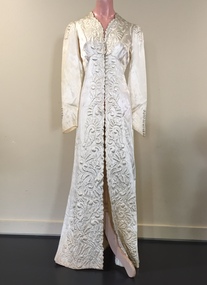
Clothing - White Satin Quilted Bridal Coat, 1939
... Kew resident was at one stage President of the Children's Book Council of Australia. She was also a member of the Kew Historical Society. The coat was donated by her daughter, Mrs Helen Tutt. costumes wedding dresses wedding coats peg young helen tutt fashion design fashion -- united kingdom fashion -- 1930s Transcript of accompanying letter: Red Cottage Mallory Road Hove 4 Sussex England July 21.39 Dear Faith I have been up to London today to Rosemary's (Peggy) wedding. ...The bridal coat was part of a wedding ensemble worn by Peg Young in 1939. The final two images in the carousel include a wedding photograph of Peg and her husband. A letter accompanying the donation on file describes the outfit as: "Rosemary [Peg] looked very nice indeed in a simple white satin dress that made her look very tall and slim. It had trimming round the neck, down the front and on the shoulders that looked like quilting, with a little gold in it, and she wore gold slippers and a lovely lace veil, lent by Auntie Nellie. She carried a large sheaf of bright red roses." Mrs Peg Young, a Kew resident was at one stage President of the Children's Book Council of Australia. She was also a member of the Kew Historical Society. The coat was donated by her daughter, Mrs Helen Tutt.Floor-length satin bridal coat with a buttoned full length opening at the front extending the length of the garment. The front of the coat is hand-quilted in an abstract design of arabesques. The buttons are covered with the same satin fabric as the coat. Accompanying the dress there is a photo of the couple on the steps of the unnamed church in London and a letter describing the event, including the coat. MEASUREMENTS (CM): Shoulder 35 x Waist 74 x Front 146 x Back 146cmTranscript of accompanying letter: Red Cottage Mallory Road Hove 4 Sussex England July 21.39 Dear Faith I have been up to London today to Rosemary's (Peggy) wedding. Though you might like to hear about it. To my mind the one sad part was that your Uncle Bertie and your adopted sister could not be there. Daisy (Margaret) has been simply splendid in all she has done. Rosemary looks very nice indeed in a simple white satin dress that made her look very tall & slim. It had trimming round the neck down the front & on the shoulders that looked like quilting, with a little gold in it, & she wore gold slippers & a lovely lace veil lent by Auntie Nellie. She carried a large sheaf of bright red roses. Her two bridesmaids were Mary & Brenda. They wore the same bridesmaids dresses as they wore at their sister Peggy's wedding a few weeks ago. They were very pale blue satin, simply made, with long skirts & they had lovely little flat bouquets made of the heads of all sorts of flowers out in the gold holder which I am sending you & tied round the handle with gold ribbon. They had wreaths of the same flowers in their hair. Nevil gave Rosemary away."costumes, wedding dresses, wedding coats, peg young, helen tutt, fashion design, fashion -- united kingdom, fashion -- 1930s -
Canterbury History Group
Book, James Nicolas, The mystery of Fairyland, Kew, 2017
... Grace Tabulo Fairyland Cottage Social life "In 1965 in Kew, Melbourne, 88-year-old Grace Tabulo passed away at her 1860's home, Fairyland. This ended more than 20 years that Grace and her Gallipoli veteran husband Jim had made their home a tourist attraction for children in the local area and beyond. ..."In 1965 in Kew, Melbourne, 88-year-old Grace Tabulo passed away at her 1860's home, Fairyland. This ended more than 20 years that Grace and her Gallipoli veteran husband Jim had made their home a tourist attraction for children in the local area and beyond. With exhibits, stories, concerts and celebrations for events like Empire Day, Fairyland was featured in newspapers and magazines in Melbourne and abroad. It was a unique place in a more innocent time that had a profound effect on all those who went there. What motivated this couple to dedicate their lives to their community? And what are some of the mysteries that lie behind this story? This is a window into post-war Melbourne suburbia which celebrates a wonderful couple and their lives' work. " (source: TroveBook which researchs the story of Grace and Jim Tabulo and their 1860's home, Fairyland in Kew. Includes photographs and Appendix with some entries from the visitors book. 109 pagesnon-fiction"In 1965 in Kew, Melbourne, 88-year-old Grace Tabulo passed away at her 1860's home, Fairyland. This ended more than 20 years that Grace and her Gallipoli veteran husband Jim had made their home a tourist attraction for children in the local area and beyond. With exhibits, stories, concerts and celebrations for events like Empire Day, Fairyland was featured in newspapers and magazines in Melbourne and abroad. It was a unique place in a more innocent time that had a profound effect on all those who went there. What motivated this couple to dedicate their lives to their community? And what are some of the mysteries that lie behind this story? This is a window into post-war Melbourne suburbia which celebrates a wonderful couple and their lives' work. " (source: Trovegrace tabulo, fairyland cottage, social life -
 Kew Historical Society Inc
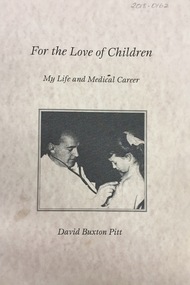
Book, For the Love of Children: my life and medical career / by David Buxton Pitt, 1999, 1999
... In 1959, he joined the Kew Cottages workforce, where he practised for 17 years and improved the conditions for the children. ...In 1959, he joined the Kew Cottages workforce, where he practised for 17 years and improved the conditions for the children. ...Dr David Pitt was Australian paediatrician. In 1959, he joined the Kew Cottages workforce, where he practised for 17 years and improved the conditions for the children. He was a pioneer in the identification of rare syndromes using computers. The Cottages anabled him to contribute to the day to day care of disadvantaged people in the Australian community, while continuing his research. Pitt left Kew in 1976. (Source: Wikipedia). This book by David Pitt once formed part of the collection of Dr Cliff Judge, resident psychiatrist at the Cottages, and was donated by a daughter in 2018.xiv, 208 p. : ill., ports. ; 30 cm.mental health - victoria - history, chidren's cottages - kew, dr cliff judge, dr david pitt -
 Kew Historical Society Inc
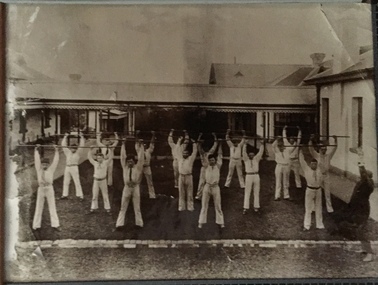
Photograph, Boys and Men Exercising, Children's Cottages (Kew), circa 1900, c.1900
... cottages - kew dr cliff judge Large unframed photograph in poor condition of boys and men exercising at the Kew Cottages. The photograph once formed part of the collection of Dr Cliff Judge, resident psychiatrist at the Cottages, and was donated by one of his daughters in 2018. Boys and Men Exercising, Children's ...Large unframed photograph in poor condition of boys and men exercising at the Kew Cottages. The photograph once formed part of the collection of Dr Cliff Judge, resident psychiatrist at the Cottages, and was donated by one of his daughters in 2018. mental health - victoria - history, chidren's cottages - kew, dr cliff judge -
Kew Historical Society Inc
Journal (Series) - Visitor Books from 'Fairyland', 1949-1965
... cottage in Malmsbury Street, Kew. Their social significance is that they record in the immediate post war period the values and beliefs of children and adults who visited this historically significant tourist attraction. jim tabulo grace tabulo fairyland tourism - kew - 1945-1965 gardens - kew (vic) 57 Malsbury street -- Kew (Vic.) houses -- Kew (Vic.) ...Grace Tabulo > Dorothy Rogers > Kew Historical SocietyVisitor booksPrimary Values; Provenance Order'Fairyland', the home and garden of Jim and Grace Tabulo was a major local, state and international tourist attraction located at 57 Malmsbury Street, Kew. A series of visitor books record the messages of child and adult visitors to the house from the 1940s to the 1960s. These manuscripts are historically significant primary sources relating to Fairyland. They record the values and beliefs of child and adult visitors during the period of its operation as a tourist destination.jim tabulo, grace tabulo, fairyland, tourism - kew - 1945-1965, gardens - kew (vic), 57 malsbury street -- kew (vic.), houses -- kew (vic.)jim tabulo, grace tabulo, fairyland, tourism - kew - 1945-1965, gardens - kew (vic), 57 malsbury street -- kew (vic.), houses -- kew (vic.) -
![Book, Payment by Results: Kew Cottages' First Hundred Years 1887-1987 / [by] Arthur Lloyd, 1987](/media/collectors/550653872162f11fb04854aa/items/5d03442821ea7b09504cb575/item-media/5d03444b21ea7b09504d1721/item-fit-380x285.jpg?cb=6) Kew Historical Society Inc
Kew Historical Society IncBook, Payment by Results: Kew Cottages' First Hundred Years 1887-1987 / [by] Arthur Lloyd, 1987
... childrens cottages - kew (vic)...childrens cottages - kew (vic) people with mental disabilities institutional care - victoria - kew viii, 120 p., [4] p. of col. plates : ill., ports Payment by Results: Kew Cottages' First Hundred Years 1887-1987 / [by] Arthur Lloyd Book Book Kew Cottages & St. ...viii, 120 p., [4] p. of col. plates : ill., portschildrens cottages - kew (vic), people with mental disabilities, institutional care - victoria - kew -
![Civilization and Mental Retardation: A history of the care and treatment of intellectually disabled people / [by] Cliff Judge](/media/collectors/550653872162f11fb04854aa/items/5d03449221ea7b09504e067b/item-media/5ebbc1e521ea670348e1b49b/item-fit-380x285.jpg?cb=6) Kew Historical Society Inc
Kew Historical Society IncBook, Civilization and Mental Retardation: A history of the care and treatment of intellectually disabled people / [by] Cliff Judge, 1987
... childrens cottages - kew (vic)...childrens cottages - kew (vic) mental health - victoria - history 86 p. : ill., ports Civilization and Mental Retardation: A history of the care and treatment of intellectually disabled people / [by] Cliff Judge Book Book C J Publishing ...86 p. : ill., portschildrens cottages - kew (vic), mental health - victoria - history
