
Showing 12 items matching "knight grand cross of the order of the bath"
-
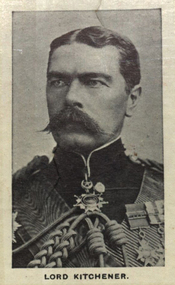 Federation University Historical Collection
Photograph (black & White), Horatio Herbert Kitchener, 1st Earl Kitchener - South Africa
... knight of the order of st patrick...knight of the order of the garter...knight grand cross of the order of st michael and st george...knight grand cross of the order of the bath...Awards he received include: Knight of the Order of the Garter; Knight of the Order of St Patrick; Knight Grand Cross of the Order of the Bath; Member of the Order of Merit; Knight Grand Commander of the Order of the Star of India; Knight Grand Cross of the Order of St Michael and St George; Knight Grand Commander of the Order of the Indian Empire. ...Awards he received include: Knight of the Order of the Garter; Knight of the Order of St Patrick; Knight Grand Cross of the Order of the Bath; Member of the Order of Merit; Knight Grand Commander of the Order of the Star of India; Knight Grand Cross of the Order of St Michael and St George; Knight Grand Commander of the Order of the Indian Empire. battle of omdurman sudan kitchener earl scorched earth policy boers concentration camps colonial administrator knight of the order of st patrick knight of the order of the garter knight grand cross of the order of st michael and st george knight grand cross of the order of the bath member of the order of merit knight grand commander of the order of the star of india knight grand commander of the order of the indian empire Individual imagae take from photographed poster of tobacco and cigarette cards. ...For his achievements in the Battle of Omdurman and Sudan in 1898, Kitchener was made Lord Kitchener of Khartoum, becoming an Earl - qualifying peer of mid-rank. Kitchener was a senior British Army officer and colonial administrator who won notoriety for his campaigns, most especially his scorched earth policy against the Boers and his establishment of concentration camps during the Second Boer War. Awards he received include: Knight of the Order of the Garter; Knight of the Order of St Patrick; Knight Grand Cross of the Order of the Bath; Member of the Order of Merit; Knight Grand Commander of the Order of the Star of India; Knight Grand Cross of the Order of St Michael and St George; Knight Grand Commander of the Order of the Indian Empire. Individual imagae take from photographed poster of tobacco and cigarette cards.battle of omdurman, sudan, kitchener, earl, scorched earth policy, boers, concentration camps, colonial administrator, knight of the order of st patrick, knight of the order of the garter, knight grand cross of the order of st michael and st george, knight grand cross of the order of the bath, member of the order of merit, knight grand commander of the order of the star of india, knight grand commander of the order of the indian empire -
 Federation University Historical Collection
Photograph (black & White), Sir Alfred Milner - South Africa
... order of the bath...knight grand cross of the order of the bath...Honours Awarded: Companion of the Order of the Bath (1894); Knight Commander of the Order of the Bath (1895); Knight GrandCross of the Order of St Michael and St George (1897); Knight Grand Cross of the Order of the Bath (1901); Knight of the Order of the Garter (1921). ...Honours Awarded: Companion of the Order of the Bath (1894); Knight Commander of the Order of the Bath (1895); Knight GrandCross of the Order of St Michael and St George (1897); Knight Grand Cross of the Order of the Bath (1901); Knight of the Order of the Garter (1921). alfred milner 1st viscount milner statesman colonial administrator high commissioner governor of cape colony transvaal south africa companion of the order of the bath knight grand cross of the order of the bath knight grand cross of the order of st michael and st george knight of the order of the garter Individual image from photographed poster of tobacco and cigarette cards Sir Alfred Milner - South Africa Photograph (black & White) ...Alfred Milner, 1st Viscount Milner was a British statesman and colonial administrator. He played an influential role in the formulation of foreign and domestic policy from mid 1890s to early 1920s. In 1897he became High Commissioner for South Africa and Governor of Cape Colony. He pushed the Transvaal Republic to war, oversaw the war and organised the reconstruction after the war. Milner left South Africa in 1905 after being involved in many of the changes that took place while he was there. Honours Awarded: Companion of the Order of the Bath (1894); Knight Commander of the Order of the Bath (1895); Knight GrandCross of the Order of St Michael and St George (1897); Knight Grand Cross of the Order of the Bath (1901); Knight of the Order of the Garter (1921). Individual image from photographed poster of tobacco and cigarette cardsalfred milner, 1st viscount milner, statesman, colonial administrator, high commissioner, governor of cape colony, transvaal, south africa, companion of the order of the bath, knight grand cross of the order of the bath, knight grand cross of the order of st michael and st george, knight of the order of the garter -
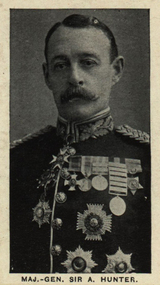 Federation University Historical Collection
Photograph (black & White), Major-General Sir Archibald Hunter - South Africa
... knight grand cross of the order of the bath...He was awarded Knight Grand Cross of the Order of the Bath, Knight Grand Cross of the Royal Victorian Order, Territorial Decoration Legion of Honour (France)...He was awarded Knight Grand Cross of the Order of the Bath, Knight Grand Cross of the Royal Victorian Order, Territorial Decoration Legion of Honour (France) second boer war major generl archibald hunter natal field force battle of ladysmith general officer commanding sir george white guerrilla warfare orange free state brandwater basin marthinus prinsloo knight grand cross of the order of the bath knight grand crossof the royal victorian order legion of honour (france) Individual image taken from photographed poster of tobacco and cigarette cards Major-General Sir Archibald Hunter - South Africa Photograph (black & White) ...At the outbreak of the Second Boer War, Major General Hunter was on the staff of Sir George White's Natal Field Force during the Battle of Ladysmith in Natal. He led a small raid against some of the Boers' guns, disabled them and relieved the town. Promotion followed and he became General Officer Commanding 10th Division. The Division was sent to join Lord Roberts' army camped at the captured Orange Free State capital. Hunter led them in the march on Pretoria. Once Pretoria was captured they still had to deal with Guerrilla Warfare and Hunter was sent south as overall commander of five columns that converged on the Free State army camped at Brandwater Basin, forcing the surrender of 4,314 Boers led by Marthinus Prinsloo. He was awarded Knight Grand Cross of the Order of the Bath, Knight Grand Cross of the Royal Victorian Order, Territorial Decoration Legion of Honour (France)Individual image taken from photographed poster of tobacco and cigarette cardssecond boer war, major generl, archibald hunter, natal field force, battle of ladysmith, general officer commanding, sir george white, guerrilla warfare, orange free state, brandwater basin, marthinus prinsloo, knight grand cross of the order of the bath, knight grand crossof the royal victorian order, legion of honour (france) -
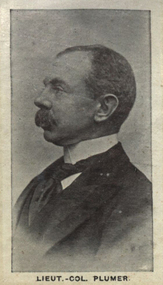 Federation University Historical Collection
Photograph (black & White), Lieutenant-Colonel Herbert Charles Onslow Plumer - South Africa
... knight grand cross of the order of st michael and st george...knight grand cross of the order of the bath...Knight Grand Cross of the Order of the Bath (1918; Knight Grand Cross of the Order of St Michael and St George (1916); Knight Grand Cross of the Royal Victorian Order (1917); Knight Grand Cross of the Order of the British Empire (1924); Knight of Grace of the Venerable Order Of St John (1925); Legion of Honour (France-!...Knight Grand Cross of the Order of the Bath (1918; Knight Grand Cross of the Order of St Michael and St George (1916); Knight Grand Cross of the Royal Victorian Order (1917); Knight Grand Cross of the Order of the British Empire (1924); Knight of Grace of the Venerable Order Of St John (1925); Legion of Honour (France-! ...His military career led him to become appointed as assistant military secretary to the General Officer Commanding Cape Colony in 1895. He went to Southern Rhodesia in 1896 to disarm the local police force following the Jameson Raid and then later to command the Matabele Relief Force during the Second Matabele War. In 1899 he returned to Southern Rhodesia as Lieutenant-Colonel where he led the Siege of Mafeking during the Second Boer War. Plumer returned to the United kingdom in 1904 and received an audience with King Edward VI. Lord Kitchener, Commander-in-Chief in South Africa stated "invariable displayed military qualifications of a very high order.Few officers have rendered better service." Plumer received many honours - British and foreign. Knight Grand Cross of the Order of the Bath (1918; Knight Grand Cross of the Order of St Michael and St George (1916); Knight Grand Cross of the Royal Victorian Order (1917); Knight Grand Cross of the Order of the British Empire (1924); Knight of Grace of the Venerable Order Of St John (1925); Legion of Honour (France-!917); Croix de Guerre (Belgium-1918); Croix de Guerre with Palm ( France-1919); Distinguished Service Medal (United States-1919); Grand Cordon, Order of the Rising Sun (1921) Individual image from photographed poster of tobacco and cigarette cards.cape colony, southern rhodesia, jameson raid, matabele rrelief force, second matabele war, siege of mafeking, second boer war, lord kitchener, knight grand cross of the order of st michael and st george, knight grand cross of the order of the bath, knight grand crossof the royal victorian order, knight grand cross of the order of the british empire, knight of grace of the venerable order of st john, legion of honour, croix de guerra, croix de guerra with palm, distinguished service medal, grand cordon, order of the rising sun -
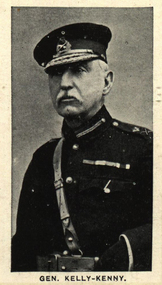 Federation University Historical Collection
Photograph (black & White), General Sir Thomas Kelly-Kenny - South Africa Forces
... knight commander of the order of the bath...war office...king...king edward vii...knight grand cross...Knight Commander of the Order of the Bath and received a knighthood in a private audience. Once again others tried to have him moved from the War Office but the King intervened again and he remained in his position. He was conferred with the Knight Grand Cross...Knight Commander of the Order of the Bath and received a knighthood in a private audience. Once again others tried to have him moved from the War Office but the King intervened again and he remained in his position. He was conferred with the Knight Grand Cross ...As well as his army positions, Kelly-Kenny was very interested in politics in his native County Clare. In the Second Anglo-Boer War he was , as a Lieutenant-General, General Officer Commanding the 6th Division of the South African field forces. He was twice mentioned in dispatches and received the Queen's South African Medal with four clasps. He was involved in the relief of Kimberley, the battles of Paardeberg, Poplar Grove and Driefontein. Lieutenant-General Kitchener was appointed commander and over-ruled Kelly-Kenny's plan to besiege Cronji and bombard his force from a safe distance. Kitchener ordered an assault on the Boer trenches. The result was "Bloody Sunday" - an unnecessary sacrifice of hundreds of lives on the British side. Kelly-Kenny was involved in the engagements at Poplar Grove and Driefontein where the 6th Division distinguished itself. These were viewed as key to destroying the Boer morale and winning the war. General Kelly-Kenny was a close friend of King Edward VII. Appointments made, at the insistence of the King, were often challenged. Due to his loyalty and abilities Kelly-Kenny was appointed Knight Commander of the Order of the Bath and received a knighthood in a private audience. Once again others tried to have him moved from the War Office but the King intervened again and he remained in his position. He was conferred with the Knight Grand Cross of the Order of the Bath (1904), Grand Cross of the Red Eagle (1905 - Germany), Grand Cross of the Rising Sun (1906 - Japan) and on his return to Britain he received the Knight Grand Cross of the Royal Victorian Order (1906) Individual image taken from photographed poster of tobacco and cigarette cards.kell-kenny, county clare, lieutenant-general, kimberley, queen's south african medal, paardeberg, poplar grove, driefontein, kitchener, bloody sunday, cronji, boer war, trenches, knight commander of the order of the bath, war office, king, king edward vii, knight grand cross of the order of the bath, grand cross of the red eagle, grand cross of the rising sun, knight grand cross of the royal victorian order -
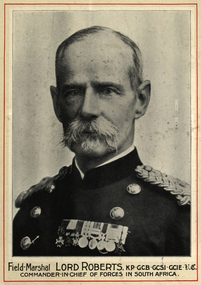 Federation University Historical Collection
Photograph (black & White), Field-Marshall Lord Roberts, Commander-in-Chief - South Africa
... cross...companion of the order of the bath...knight commander of the order of the bath...knight grand...Roberts received many awards: Victoria Cross (1858-India); Companion of the Order of the Bath (1872-Afghanistan); Knight Commander of the Order of the Bath (1878-Afghanistan);Knight Grand Cross of the Order of the Bath (1880-Afghanistan) and Companion of the Order of the Indian Empire in the same year. ...Roberts received many awards: Victoria Cross (1858-India); Companion of the Order of the Bath (1872-Afghanistan); Knight Commander of the Order of the Bath (1878-Afghanistan);Knight Grand Cross of the Order of the Bath (1880-Afghanistan) and Companion of the Order of the Indian Empire in the same year. ...Frederick Sleigh Roberts, 1st Earl Roberts was a British Soldier who served in India, Abyssinia and Afghanistan before leading the British Forces to success in the Second Boer War. He became the last Commander-in-Chief of the Forces before the post was abolished in 1904. While in South Africa he was at the Siege of Kimberley, the Battle of Paardeberg, the Battle of Poplar Grove, the Battle of Diamond Hill and the Battle of Bergendal. Roberts received many awards: Victoria Cross (1858-India); Companion of the Order of the Bath (1872-Afghanistan); Knight Commander of the Order of the Bath (1878-Afghanistan);Knight Grand Cross of the Order of the Bath (1880-Afghanistan) and Companion of the Order of the Indian Empire in the same year. He was Commander-in Chief, India in 1885 was advanced to Knight Commander of the Order of India (1887) and then Knight Grand Commander of the Order of the Indian Empire later that year. He became Knight Grand Commander of the Order of the Star of India. The same year he relinquished his Indian command and became Commander-in-Chief of British Forces in 1895 made a Knight of the Order of St Patrick. In 1899 he returned to South Africa to take overall command of British Forces in the Second Boer War. December 1900 Roberts handed over command to Lord Kitchener and returned to England where more honours were awarded. He was made a Knight of the Order of the Garter; created Earl Roberts of Kandahar, Pretoria and Waterford and Viscount St Pierre. He became a Knight of Grace of the Order of St John (1901) and then Knight of Justice of the Order of St John. The Kaiser awarded him the German Order of the Black Eagle and was among the original recipients of the Order of Merit in the 1902 Coronation Honours. Roberts died in 1914. He was given and State Funeral and buried in St Paul's Cathedral.Individual image taken from photographed poster of tobacco and cigarette cards.frederick sleigh roberts, earl roberts, india, abyssinia, afghanistan, british forces, second boer war, commander-in-chief, south africa, siege of kimberley, battle of paardeberg, battle of poplar grove, battle of diamond hill, battle of bergendal, victoria cross, companion of the order of the bath, knight commander of the order of the bath, knight grand cross of the order of the bath, companion of the order of the indian empire, knight commander of the order of india, knight grand commander of the order of the indian empire, knight grand commander of the order of the star of india, knight of the order of st patrick, knight of the order of the garter, viscount st pierre, knight of grace of the order of st john, knight of justice of the order of st john, order of the black eagle, order of merit, st paul's cathedral, london -
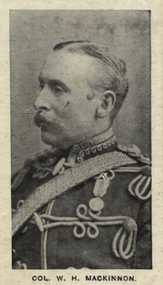 Federation University Historical Collection
Photograph (black & White), Colonel William Henry MacKinnon - South Africa
... MacKinnon was awarded with the Knight Grand Cross of the Order of the Bath and Knight Commander of the Royal Victorian Order....MacKinnon was awarded with the Knight Grand Cross of the Order of the Bath and Knight Commander of the Royal Victorian Order. malta india assistantadjutant general second boer war city of london volunteers colonel south africa Individual image from photographed poster of tobacco and cigarette cards Colonel William Henry MacKinnon - South Africa Photograph (black & White) ...After serving in Malta and India, he became Assistant Adjutant General at Home District in 1893. After the outbreak of the Second Boer War he was appointed Colonel commandant of the City of London Volunteers who proceeded to South Africa. This corps included infantry, mounted infantry and artillery. They were in South Africa from January 1900 until October 1900, returning to England. The corps was disbanded in December 1900. MacKinnon was awarded with the Knight Grand Cross of the Order of the Bath and Knight Commander of the Royal Victorian Order.Individual image from photographed poster of tobacco and cigarette cardsmalta, india, assistantadjutant general, second boer war, city of london volunteers, colonel, south africa -
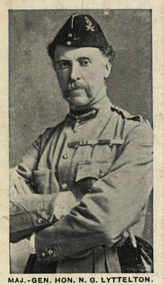 Federation University Historical Collection
Photograph (black & White), Major-General, Honorable Neville Gerald Lyttelton - South Africa
... knight commander of the order of the bath...royal hospital chelsea...order of osmanieh (ottoman empire)...knight grand cross...knighted as Knight Commander of the Order of the Bath. He retired in 1912 and under insistence by the King was appointed as Governor of the Royal Hospital Chelsea from that time until his death there in 1931. Other awards received were Knight Grand Cross...knighted as Knight Commander of the Order of the Bath. He retired in 1912 and under insistence by the King was appointed as Governor of the Royal Hospital Chelsea from that time until his death there in 1931. Other awards received were Knight Grand Cross ...Lyttelton served in the Second Boer War as Commander of the 4th Brigade from 1899. He temporarily became General Officer Commanding the 2nd Division and the commanded the 4th Division. The Division was involved in the Battle of Spion Kop and the Battle of Vaal Krantz, leading to the Relief of Ladysmith 1900. Lord Roberts referred to Lyttelton as an officer "with great coolness under fire, and considerable tactical knowledge and resource........an excellent commander in the field." Following the end of the Boer War in 1902, Lyttelton became Commander-in-Chief of the whole of South Africa. He and his wife sought to repair relations with the Boer community. In the South Africa honours of 1902 Lyttelton was knighted as Knight Commander of the Order of the Bath. He retired in 1912 and under insistence by the King was appointed as Governor of the Royal Hospital Chelsea from that time until his death there in 1931. Other awards received were Knight Grand Cross of the Order of the Bath; Knight Grand Cross of the Royal Victorian Order; Order of Osmanieh (Ottoman Empire)Individual image taken from photographed poster of tobacco and cigarette cards.neville gerald lyttelton, second boer war, commander, 4th brigade, battle of spion kop, battle of vaal krantz, relief of ladysmith, lord roberts, commander-in-chief, south africa, knight commander of the order of the bath, royal hospital chelsea, order of osmanieh (ottoman empire), knight grand cross of the royal victorian order -
 Bendigo Military Museum
Award - MEDALS, MINIATURE
... Order of the Bath Knight Cross. 2. Order of the Bath KCB (Military) Neck Badge. 3. Order of St Michael and Saint George Knights Grand Cross. 4. ...Order of the Bath Knight Cross. 2. Order of the Bath KCB (Military) Neck Badge. 3. Order of St Michael and Saint George Knights Grand Cross. 4. ...Miniature Medals, six (6) all original court mounted. 1. Order of the Bath Knight Cross. 2. Order of the Bath KCB (Military) Neck Badge. 3. Order of St Michael and Saint George Knights Grand Cross. 4. Order of the Indian Empire Knights Grand Commander. 5. The Knights Batchelor's Badge.passchendaele barracks trust, pbt171to176, bob english collection, miniature medals -
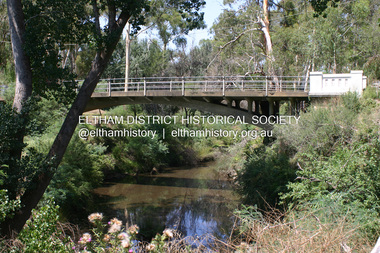 Eltham District Historical Society Inc
Photograph - Digital Photograph, Alan King, Monash Bridge, Hurstbridge, 23 January 2008
... His brilliance was recognised with his awards: Knight Grand Cross of the Order of St. Michael and St. George, and Knight Commander of the Bath. ...His brilliance was recognised with his awards: Knight Grand Cross of the Order of St. Michael and St. George, and Knight Commander of the Bath. ...Monash Bridge spans the Diamond Creek at Hurstbridge. It was built in 1917 for the Shires of Heidelberg, Eltham and Whittlesea. It is considered Nillumbik Shire's finest engineered bridge and was construced by the engineering company of Sir John Monash. Covered under Heritage Overlay, Nillumbik Planning Scheme. Published: Nillumbik Now and Then / Marguerite Marshall 2008; photographs Alan King with Marguerite Marshall.; p117 Monash Bridge is considered the Shire’s finest engineered bridge and was constructed by the engineering company of that great Australian, Sir John Monash.1 The bridge spans Diamond Creek on the Hurstbridge-Arthurs Creek Road, linking Hurstbridge with Yarrambat and Arthurs Creek. Monash Bridge, also called Hurst’s Bridge, was built in 1917, by the Reinforced Concrete and Monier Pipe Construction Company Pty Ltd, for the Shires of Heidelberg, Eltham and Whittlesea. Although Monash was probably in action overseas during World War One when the bridge was designed and constructed, he evolved the basic design in the 1900s and it was a standard design for the firm. However J A Laing, a designer at the firm, was probably the designer, as his initials are on bridge drawings held by the Eltham District Historical Society.2 The bridge is an excellent early Australian example of an open spandrel reinforced concrete arch bridge and has a single span of 29 metres. It is unusual in Victoria, but similar to many reinforced concrete arch bridges in Europe and America, built from the late 19th century. In Victoria, Monash pioneered the use of reinforced concrete – then a revolutionary construction material. His company, Monash & Anderson, had the exclusive licence for the Monier patent for the system of reinforced concrete construction for Victoria and New South Wales. A well-known example of the Monier arch bridge is the Morell Bridge in South Yarra. The sweeping arch of the Monash Bridge combines grace and utility and blends with the surrounding rural landscape. Its design and construction have allowed it to carry increasing volumes of heavy traffic, but in modern times the one lane is considered by some to prevent easy passage through Hurstbridge. However others consider this an asset to deter too much more traffic, which would diminish Hurstbridge’s charming rural character.3 This is the third bridge across the Diamond Creek at this site. The original bridge was a log bridge upstream, constructed in the 1850s by early settler, Henry Hurst, after whom Hurstbridge was named. The bridge spanned the creek, where it divided his family’s property. In the 1880s a timber bridge replaced it, known as Hurst’s Bridge. However a more permanent bridge was considered necessary when the new railway arrived in 1912, bringing with it expectations of growth in the town and the surrounding fruit-growing district. Monash Bridge’s official opening on November 3, 1917 was a gala occasion, which took place before about 1000 spectators. Two who attended the opening had a particularly sound knowledge of the locality. One was Fred Hurst, Henry’s brother, who used to ford the creek at or near the bridge’s site more than 50 years before. The other was John McDonald of Arthurs Creek, who had built the old wooden bridge over the creek about 40 years earlier.4 Although John Monash was a fine engineer, his fame came from his brilliant war career, rather than from his engineering or his many other achievements. Monash was Corps Commander of the Australian Forces. His brilliance was recognised with his awards: Knight Grand Cross of the Order of St. Michael and St. George, and Knight Commander of the Bath. Monash was also decorated by the French, Belgian, and American Governments.5 After the war, Monash worked in many prominent civilian positions, the most notable as head of the Victorian State Electricity Commission. He was a leading and loved public figure, involved in many public and private organisations. He was president of the Australian Zionist Federation and involved in the Boy Scouts. Monash University is named after him. By the 1920s Monash was probably regarded as the greatest living Australian.6 Despite most of his life working as an administrator and leader, rather than a fighting soldier, he became integral to the ANZAC legend. Monash died in 1931.This collection of almost 130 photos about places and people within the Shire of Nillumbik, an urban and rural municipality in Melbourne's north, contributes to an understanding of the history of the Shire. Published in 2008 immediately prior to the Black Saturday bushfires of February 7, 2009, it documents sites that were impacted, and in some cases destroyed by the fires. It includes photographs taken especially for the publication, creating a unique time capsule representing the Shire in the early 21st century. It remains the most recent comprehenesive publication devoted to the Shire's history connecting local residents to the past. nillumbik now and then (marshall-king) collection, hurstbridge, monash bridge -
 Uniting Church Archives - Synod of Victoria
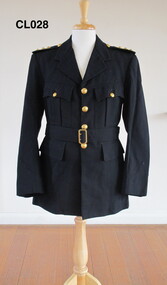
Uniform - Jacket, Australian Military Chaplain, c1942
... The four-sided "star" or "pip" has been used to designate officer rank in the British and Australian armies for many years and is a stylized version of the very elaborate star of the Knight Grand Cross of the military division of the Most Honourable Order of the Bath, one of Great Britain's four senior orders of knighthood. ...The four-sided "star" or "pip" has been used to designate officer rank in the British and Australian armies for many years and is a stylized version of the very elaborate star of the Knight Grand Cross of the military division of the Most Honourable Order of the Bath, one of Great Britain's four senior orders of knighthood. ...This military jacket is an Australian military Chaplain's jacket. It has three 'pips' on the epaulets. The four-sided "star" or "pip" has been used to designate officer rank in the British and Australian armies for many years and is a stylized version of the very elaborate star of the Knight Grand Cross of the military division of the Most Honourable Order of the Bath, one of Great Britain's four senior orders of knighthood. The original badge contains the motto "Tria Juncta in Uno", which means "Three Joined in One", and refers to the union of the three kingdoms of the British Isles (England/Wales, Scotland and Ireland). https://corregidor.org/acgq/web_redirect_3628.3645.8883/forum_pages/omh_1104.htmlBlack wool belted jacket with four Australian Military Forces brass buttons and pleated breast pockets and front pockets. The jacket has epaulets with three pips, or rank insignia, and an Australian Military Forces button. The belt has a brass buckle and has leather tabs at the back which are buttoned to a fabric carrier to keep the belt in place. -
 Moorabbin Air Museum
Badge (item) - Military Badge, British Army Officers Rank Insignia
... Military Badge, British Army Officers Rank Insignia, also known as "pip' or "star" which is derived from the Star of the knight Grand Cross of the Military Division of the Most Honourable Order of the Bath. ...Military Badge, British Army Officers Rank Insignia, also known as "pip' or "star" which is derived from the Star of the knight Grand Cross of the Military Division of the Most Honourable Order of the Bath. ...
