
Showing 190 items matching "ladies' accessory"
-
 Clunes Museum
Clothing - GLOVES
... WHITE GLOVES - LADIES ACCESSORIES - NYLON MATERIAL. PRESS STUD AT WRIST. ...accessories costumes accessories - ladies GLOVES WHITE GLOVES - LADIES ACCESSORIES - NYLON MATERIAL. ...WHITE GLOVES - LADIES ACCESSORIES - NYLON MATERIAL. PRESS STUD AT WRIST. STRAIGHT MACHINE STITCHING ON BACK OF GLOVE TO DECORATE.accessories, costumes accessories - ladies, gloves -
 Flagstaff Hill Maritime Museum and Village
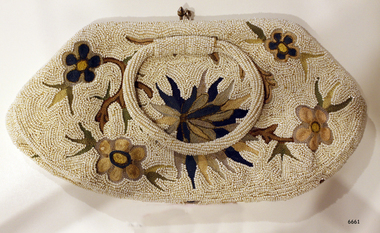
Accessory - Bag, 1930's
... ...ladies' accessory...Elsie Dale was the first Sister to work in the newly established Baby Health Centre in Warrnambool. flagstaff hill warrnambool shipwrecked coast flagstaff hill maritime museum maritime museum shipwreck coast flagstaff hill maritime village great ocean road chamberlain dale lees stone betty stone warrnambool pioneers elsie dale miss lake lyndoch handbag purse evening bag beaded handbag beaded purse ladies' accessory clutch purse Warrnambool Baby Health Centre Infant Welfare Centre Beaded evening bag or clutch purse. ...In the words of Donor, Betty Stone, "Owned by my aunt Mrs Elsie Mary (nee Dale) Towers, born 24 December 1895, daughter of Ellis and Ann Dale, of Latrigg, Wangoom, Warrnambool. This beaded bag was a personal gift from Miss Lake to Elsie Dale sometime in the early 1930s. Miss Lake was a member of a leading Warrnambool family whose property Lyndoch was situated by the banks of the Hopkins River. After completing her nursing course at Warrnambool Hospital and working there for a time, Elsie Dale was appointed Sister-in-Charge of the newly formed Baby Health Centre, which initially operated in temporary accommodation at or near the Council Chambers. In 1928 the Centre moved into new brick premises on Liebig Street. The building comprised of five rooms, a back yard and a front veranda where mothers parked their prams. The Warrnambool Standard reported in February 1928. The purpose of the Clinic is to the saving of infant's life. Many mothers attended the Clinic in the former location. They were able to acquire valuable knowledge from Sister Dale who is in charge of the Clinic and also have their infants weighed and measured each week. During the early days of the Centre Miss Lake, as a patron, took a keen interest in all aspects of the Centre and co-operated very closely with Sister Dale. Miss Lake would often call in at the centre while her uniformed chauffeur would wait beside her limousine parked in the street outside the Baby Heath Centre. I also recall my aunt driving to Lyndoch to discuss matters concerning the Centre with Miss Lake. Miss Lake purchased this evening bag in England, and upon her return from her overseas tour in the early 1930s, presented it to Sister Dale as a token of appreciation. Dedicated to her vocation, Sister Dale gave unstintingly of her effort, time and resources to create an attractive venue for mothers to visit. Her contribution to the welfare of all mothers and babies in the Warrnambool area, particularly during the Depression years, was considerable. Sister Dale, who drove a Dodge Tourer car, visited mothers in their homes when necessary and regularly visited the indigenous settlement at Framlingham. Amongst my early childhood memories are those of accompanying my aunt when she drove to the Nestles factory at Dennington to purchase large tins of dried milk baby food which she then delivered to the mothers who lived at the Framlingham settlement. Sister Elsie Dale retired in 1949 and moved to Mooroopna after her marriage to Solomon Towers. (Died aged 75 years 27 July 1971) (Note: For additional information please refer to Betty Stone’s book “Pioneers and Places - A History of three Warrnambool Pioneering Families” ie. Chamberlain, Dale and Lees Families)This item is associated with the families of Chamberlain, Dale and Lees. These families are listed in the "Pioneers' Register" for Warrnambool Township and the Shire, 1835-1900, published by A.I.G.S. Warrnambool Branch. Elsie Dale was the first Sister to work in the newly established Baby Health Centre in Warrnambool.Beaded evening bag or clutch purse. The bag was a gift to Elsie Dale from friend Miss Lake, purchased in England early 1930's. The fabric is covered in tiny white beads and features a floral design in browns and greens. The bag has two bead-covered handles and the lining includes a small pocket. Part of the 'Chamberlain Dale Lees Collection'.flagstaff hill, warrnambool, shipwrecked coast, flagstaff hill maritime museum, maritime museum, shipwreck coast, flagstaff hill maritime village, great ocean road, chamberlain, dale, lees, stone, betty stone, warrnambool pioneers, elsie dale, miss lake, lyndoch, handbag, purse, evening bag, beaded handbag, beaded purse, ladies' accessory, clutch purse, warrnambool baby health centre, infant welfare centre -
 Clunes Museum
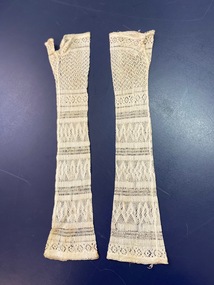
Accessory - GLOVES
... ...LADIES ACCESSORY...FAWCETT FAMILY LADIES ACCESSORY 2 LACE EVENING GLOVES. CREAM COLOURED ELBOW LENGTH LACE MITTEN STYLE GLOVES. ...2 LACE EVENING GLOVES. CREAM COLOURED ELBOW LENGTH LACE MITTEN STYLE GLOVES. FINELY WOVEN.fawcett family, ladies accessory -
 Flagstaff Hill Maritime Museum and Village
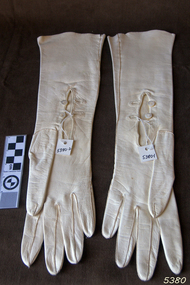
Clothing - Gloves, c. 1910
... ...ladies fashion accessory c. 1910...These kid gloves are representative of ladies fashion of the early 1900s flagstaff hill warrnambool shipwrecked coast flagstaff hill maritime museum maritime museum shipwreck coast flagstaff hill maritime village great ocean road mrs w.n. barnard w.n. barnard of portland victoria ladies fashion c. 1910 ladies fashion accessory c. 1910 ladies white kid gloves c. 1910 A pair of lady's long white kid gloves. ...This pair of ladies white kid gloves once belonged to Mrs W N Barnard of Portland, c. 1910.These kid gloves are representative of ladies fashion of the early 1900sA pair of lady's long white kid gloves. Two button closures at the wrist of each glove. Hems are machined, and buttonholes and edging are hand-finished. Circa 1910.flagstaff hill, warrnambool, shipwrecked coast, flagstaff hill maritime museum, maritime museum, shipwreck coast, flagstaff hill maritime village, great ocean road, mrs w.n. barnard, w.n. barnard of portland victoria, ladies fashion c. 1910, ladies fashion accessory c. 1910, ladies white kid gloves c. 1910 -
 Flagstaff Hill Maritime Museum and Village
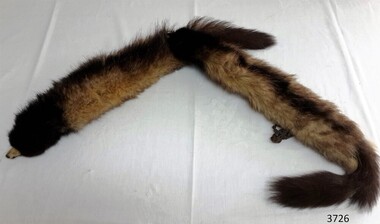
Fur Stole, 1940-s - 1950s
... ladies clothing...fashion accessory of 1950’s...This fur collar is representative of fashion accessories in Warrnambool and District in the 1940's - 1950's flagstaff hill warrnambool shipwrecked coast flagstaff hill maritime museum maritime museum shipwreck coast flagstaff hill maritime village great ocean road mustelidae fur stole mustel fur fur stole with body head and legs fur stole made with animals ladies clothing fashion accessory of 1950’s fashion of south west victoria Fur stole, ladies; comprising two animals with heads and legs, stitched together to form a stole. ...The donors of the fur stole come from a local family in the Warrnambool area. They believe the fur stole is around 60 years old. The stole belonged to the donor’s mother, now deceased, who wore it to local balls and dances as an accessories and maybe for warmth too! The donors believe the fur could have been purchased in Melbourne or Toorak. The fur is likely to be from the Mustelidae family, which is the largest family of carnivorous mammals. They inhabit all continents except Australia and Antarctica. This species includes the weasel, badger, otter, marten, ferret, sable, mink, stoat (ermine) and wolverine. The fur is thick and dense close to the skin, indicating that it is the winter coat of the animal. This fur collar is representative of fashion accessories in Warrnambool and District in the 1940's - 1950'sFur stole, ladies; comprising two animals with heads and legs, stitched together to form a stole. The fur is believed to be the winter fur of animals from the mustel family and is not as soft as rabbit fur. The first head has only the nose, the second head has nose and eyes. The heads are dark brown, each animal has a dark brown stripe the length of its fawn coloured back. Tails are dark but not as dark as the head. The stole can be clasped together using a decorative knotted brown tie and hook, or by using the clip attached to the snout of the front animal. 1940-s - 1950s.flagstaff hill, warrnambool, shipwrecked coast, flagstaff hill maritime museum, maritime museum, shipwreck coast, flagstaff hill maritime village, great ocean road, mustelidae fur stole, mustel fur, fur stole with body head and legs, fur stole made with animals, ladies clothing, fashion accessory of 1950’s, fashion of south west victoria -
 Ringwood and District Historical Society
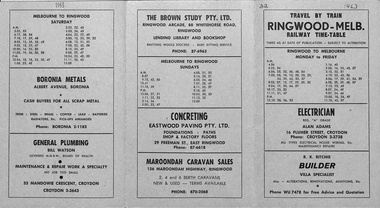
Document, Railway Time Table. Ringwood to Melbourne and Melbourne to Ringwood from 1963
... Miles & Son of Ringwood), Women's, Men's & Children's Wear - (Louis Economy Shop of Ringwood), Painting, Decorating & Paperhanging (D.G Jeffs of Heathmont), Fruiterer and Greengrocer (Vincenzo Condello of Ringwood), Pygmalion Ladies' Accessories (Ringwood Arcade), Boronia Metals (Albert Ave, Boronia), General Plumbing (Bill Watson of Croydon), The Brown Study - Lending Library and Bookshop (Ringwood), Concreting - Eastwood Paving Pty Ltd (East Ringwood), Maroondah Caravan Sales (Ringwood), ...Miles & Son of Ringwood), Women's, Men's & Children's Wear - (Louis Economy Shop of Ringwood), Painting, Decorating & Paperhanging (D.G Jeffs of Heathmont), Fruiterer and Greengrocer (Vincenzo Condello of Ringwood), Pygmalion Ladies' Accessories (Ringwood Arcade), Boronia Metals (Albert Ave, Boronia), General Plumbing (Bill Watson of Croydon), The Brown Study - Lending Library and Bookshop (Ringwood), Concreting - Eastwood Paving Pty Ltd (East Ringwood), Maroondah Caravan Sales (Ringwood), Railway Time Table. ...Light green coloured tri-fold card with black printing. Ringwood to Melbourne and Melbourne to Ringwood timetables, includes Monday to Friday, a separate Saturday and separate Sunday listings. Most of the front and back of folding card contains advertisements, including Electrician (Alan Adams of Croydon), Builder (R.K. Ritchie - villa specialist), Fuel Merchant (H. Tortice of Ringwood), Grass Cutting (C.G. Pattenden of Adelaide St, Ringwood), Motor Mowers Sales and Service (John Salisbury of Ringwood), TV Radio Service (D.G. Hill of Heathmont), Real Estate Agent (A.T. Miles & Son of Ringwood), Women's, Men's & Children's Wear - (Louis Economy Shop of Ringwood), Painting, Decorating & Paperhanging (D.G Jeffs of Heathmont), Fruiterer and Greengrocer (Vincenzo Condello of Ringwood), Pygmalion Ladies' Accessories (Ringwood Arcade), Boronia Metals (Albert Ave, Boronia), General Plumbing (Bill Watson of Croydon), The Brown Study - Lending Library and Bookshop (Ringwood), Concreting - Eastwood Paving Pty Ltd (East Ringwood), Maroondah Caravan Sales (Ringwood), -
 Flagstaff Hill Maritime Museum and Village
Ceremonial object - Kneeling Mat, ca. 1944
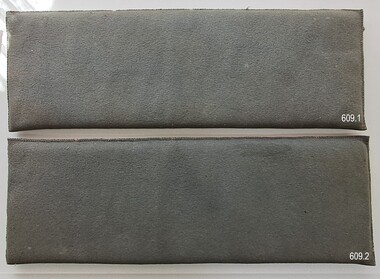
... ladies harbour light guild...lightkeepers’ auxiliary...missions to seamen victoria...mission to seafarers...flying angel’s club...st nicholas seaman’s church williamstown...st nicholas mission to seamen church williamstown...mission to seamen williamstown...st nicholas seamen’s church flagstaff hill...139 nelson place williamstown...religious worship...anglican church...prayer accessory...The organisation originated in Bristol, England, when a Seamen's Mission was formed in 1837. flagstaff hill warrnambool shipwrecked coast flagstaff hill maritime museum maritime museum shipwreck coast flagstaff hill maritime village great ocean road religion religious service sailors rest bethel sailors’ church bethel floating church ladies harbour light guild lightkeepers’ auxiliary missions to seamen victoria mission to seafarers flying angel’s club st nicholas seaman’s church williamstown st nicholas mission to seamen church williamstown mission to seamen williamstown st nicholas seamen’s church flagstaff hill 139 nelson place williamstown religious worship anglican church prayer accessory kneeling mat prayer mat religious custom religious tradition Mat, quantity of two. ...This pair of comfortable kneeling mats is from the original furnishings of St Nicholas Seamen's Church, Williamstown, operated by the Williamstown Missions to Seamen organisation. THE MISSIONS TO SEAMEN (Brief History): - The Missions to Seamen was an Anglican charity that has served seafarers of the world since 1856 in Great Britain. Its symbol is a Flying Angel, inspired by a Bible verse. Today, there are centres in over 200 ports worldwide where seamen of all backgrounds are offered a warm welcome and provided with a wide range of facilities. In Victoria, the organisation began in Williamstown in 1857 as a Sailors’ Church, also known as ‘Bethel’ or the ‘Floating Church’ in an old hulk floating in Hobson’s Bay, Port of Melbourne. It soon became part of the Missions to Seamen, Victoria. In the year 2000, the organisation, now named Mission to Seafarers, still operated locally in Melbourne, Portland, Geelong and Hastings. The Ladies’ Harbour Lights Guild was formed in 1906 to support the Missions to Seamen in Melbourne and other centres, such as Williamstown. Two of the most significant ladies of the Guild were founder Ethel Augusta Godfrey and foundation member Alice Sibthorpe Tracy (who established a branch of the Guild in Warrnambool in 1920). The Guild continued its work until the 1960s. In 1943, a former Williamstown bank was purchased for the Missions to Seaman Club. The chapel was named St Nicholas’ Seamen’s Church and was supported by the Ladies’ Harbour Lights Guild, the Williamstown Lightkeepers’ Auxiliary and the League of Soldiers’ and Sailors’ Friends. It ceased operation in 1966. A Missions to Seamen Chapel and Recreation Room was a significant feature of ports during the late 1800s and into the 1900s. It seemed appropriate for Flagstaff Hill to include such a representation within the new Maritime Village, so the Melbourne Board of Management of Missions to Seamen Victoria gave its permission on 21st May 1979 for the entire furnishings of the Williamstown chapel to be transferred to Flagstaff Hill. The St Nicholas Seamen’s Church was officially opened on October 11, 1981, and closely resembles the Williamstown chapel. This pair of kneeling mats is historically significant for its origin in the St Nicholas Mission to Seamen's Church in Williamstown, established in 1857 to cater for seafarers’ physical, social, and spiritual needs. The organisation originated in Bristol, England, when a Seamen's Mission was formed in 1837. Mat, quantity of two. Kneeling mats used during prayer. Mats are rectangular and made of blue cloth with sewn edges and padding inside. The mats are part of the St. Nicholas Seamen's Church Williamstown Collection.flagstaff hill, warrnambool, shipwrecked coast, flagstaff hill maritime museum, maritime museum, shipwreck coast, flagstaff hill maritime village, great ocean road, religion, religious service, sailors rest, bethel sailors’ church, bethel floating church, ladies harbour light guild, lightkeepers’ auxiliary, missions to seamen victoria, mission to seafarers, flying angel’s club, st nicholas seaman’s church williamstown, st nicholas mission to seamen church williamstown, mission to seamen williamstown, st nicholas seamen’s church flagstaff hill, 139 nelson place williamstown, religious worship, anglican church, prayer accessory, kneeling mat, prayer mat, religious custom, religious tradition -
 Flagstaff Hill Maritime Museum and Village
Furniture - Book Rest, circa 1930
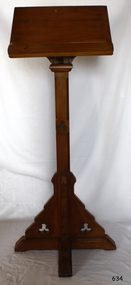
... accessory...Flagstaff Hill...Warrnambool...Shipwrecked coast...Flagstaff Hill Maritime Museum...Maritime Museum...Shipwreck coast...Flagstaff Hill Maritime Village...Great Ocean Road...Religion...Sailors Rest...Bethel Sailors’ Church...Bethel Floating Church...Ladies...The connection of this item to the Mission to Seamen and to the Ladies Lightkeepers’ Auxiliary highlights the strong community awareness of the life of people at sea, their dangers and hardships, and their need for physical, financial, spiritual and moral support. religious service missions to seamen victoria church furniture religious worship lectern book rest bible rest preaching accessory Flagstaff Hill Warrnambool Shipwrecked coast Flagstaff Hill Maritime Museum Maritime Museum Shipwreck coast Flagstaff Hill Maritime Village Great Ocean Road Religion Sailors Rest Bethel Sailors’ Church Bethel Floating Church Ladies Harbour Light Guild Harbor Lights Guild Joy Club for Fighters Ladies Lightkeepers’ Auxiliary Mission to Seafarers Flying Angel’s Club St Nicholas Seamen’s Church Williamstown St Nicholas Mission to Seamen Church Williamstown Mission to Seamen Williamstown St Nicholas Seamen’s Church Flagstaff Hill 139 Nelson Place Williamstown Religious furniture Anglican Church altar book rest Book rest, or lectern: This is a traditional book rest made of kauri pine with column support. ...This altar book rest, also called a lectern, was part of the original furnishings of the St Nicholas' Mission to Seamen's Church at 139 Nelson Place, Williamstown, Victoria, operated by the Mission to Seamen organisation. THE MISSIONS TO SEAMEN (Brief History): - The Missions to Seamen was an Anglican charity in Great Britain that has served the world's seafarers since 1856. Its symbol is a Flying Angel, inspired by a Bible verse. Today, there are centres in over 200 ports worldwide where seamen of all backgrounds are offered a warm welcome and provided with a wide range of facilities. In Victoria, the organisation began in Williamstown in 1857 as a Sailors’ Church, also known as ‘Bethel’ or the ‘Floating Church’ in an old hulk floating in Hobson’s Bay, Port of Melbourne. It soon became part of the Missions to Seamen, Victoria. In 2000, the organisation, now named Mission to Seafarers, still operated locally in Melbourne, Portland, Geelong and Hastings. The Ladies’ Harbour Lights Guild was formed in 1906 to support the Missions to Seamen in Melbourne and other centres, such as Williamstown. Two of the most significant ladies of the Guild were founder Ethel Augusta Godfrey and foundation member Alice Sibthorpe Tracy (who established a branch of the Guild in Warrnambool in 1920). The Guild continued its work until the 1960s. In 1943, a former Williamstown bank was purchased for the Missions to Seamen Club. The chapel was named St Nicholas’ Seamen’s Church and was supported by the Ladies’ Harbour Lights Guild, the Williamstown Lightkeepers’ Auxiliary and the League of Soldiers’ and Sailors’ Friends. It ceased operation in 1966. A Missions to Seamen Chapel and Recreation Room was a significant feature of ports during the late 1800s and 1900s. It seemed appropriate for Flagstaff Hill to include such a representation within the new Maritime Village, and the Melbourne Board of Management of Missions to Seamen Victoria gave its permission on 21st May 1979 for the entire furnishings of the Williamstown chapel to be transferred to Flagstaff Hill. The St Nicholas Seamen’s Church was officially opened on October 11, 1981, and resembles the Williamstown chapel. This altar book rest is significant historically for its origin in the St Nicholas Mission to Seamen's Church in Williamstown, established in 1857 to cater for the physical, social, and spiritual needs of seafarers. It originated in Bristol, England when a Seamen's Mission was formed in 1837. The lectern is historically significant for its connection to the Ladies Lightkeepers’ Auxiliary, an organisation of women, formed to support seafarers. The connection of this item to the Mission to Seamen and to the Ladies Lightkeepers’ Auxiliary highlights the strong community awareness of the life of people at sea, their dangers and hardships, and their need for physical, financial, spiritual and moral support. Book rest, or lectern: This is a traditional book rest made of kauri pine with column support. The top section, designed to support a Bible, has an angled backrest and shelf. The item has some decorative cutaway relief. This book restis part of the St. Nicholas Seamen's Church Collection. religious service, missions to seamen victoria, church furniture, religious worship, lectern, book rest, bible rest, preaching accessory, flagstaff hill, warrnambool, shipwrecked coast, flagstaff hill maritime museum, maritime museum, shipwreck coast, flagstaff hill maritime village, great ocean road, religion, sailors rest, bethel sailors’ church, bethel floating church, ladies harbour light guild, harbor lights guild, joy club for fighters, ladies lightkeepers’ auxiliary, mission to seafarers, flying angel’s club, st nicholas seamen’s church williamstown, st nicholas mission to seamen church williamstown, mission to seamen williamstown, st nicholas seamen’s church flagstaff hill, 139 nelson place williamstown, religious furniture, anglican church, altar book rest -
 Flagstaff Hill Maritime Museum and Village
Instrument - Fob Watch, ca 1878
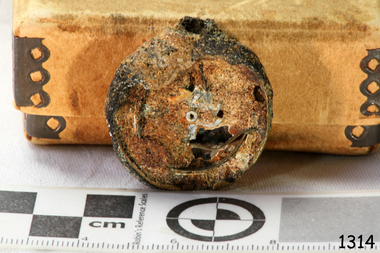
... ladies fob watch...gold watch...fob watch...pocket watch...horology...accessory...Flagstaff Hill Warrnambool Shipwreck Coast Flagstaff Hill Maritime Museum maritime museum Flagstaff Hill Maritime Village Great Ocean Road Loch Ard Eva Carmichael Tom Pearce Loch Ard Gorge Loch Ard souvenir Port Campbell Miss Carmichael Mrs Carmichael Dr Carmichael 1878 Loch Ard: the wreck that became a legend ladies fob watch gold watch fob watch pocket watch horology accessory time keeping scientific instrument ladies' watch ladies' pocket watch lady's watch souvenir watch survivor clocks and watches diagonally striped envelope lining Firenze Busta Earliera Florence italy Glencove Portsea Victoria 1905 1917 Nepean Hotel Moreton Morton Elizabeth Morton Mrs J. ...The story of this gold fob watch is intriguing. The letter is dated March 6, 1905, 27 years after the Loch Ard was wrecked. It appears to be a quick personal note from a relative or friend who briefly writes the history of the enclosed ‘souvenir’ watch, found in Loch Ard Gorge at Port Campbell. Although the finder is not named, it is likely the letter’s author. The writer mentions that the letter and watch would be sent once photographs of the area where the watch was found had been added. The fancy, lined envelope’s date stamp is October 12th, 1917 (12.10.17), almost 12 years after the letter was written. It has a postmark from Florence (Firenze), Italy. The handwriting on the envelope differs from that of the letter, and there is no further mention of photographs being included. The condition of the watch certainly shows the effects of time in the sea. Some inner workings can be seen through broken encrustations and missing sections of its case. The winding knob on the top is recognisable even though it is covered by sand and other adhesions from the sea. Its dainty size and gold case suggest that it was made for a well-to-do female. The watch, envelope and letter were donated along with a 1971 newspaper cutting, all neatly folded and tucked with the watch into a small, strong cardboard box with metal reinforcing on the corners and a fitted lid. The newspaper article gives context to the watch, telling the story of the Loch Ard shipwreck tragedy and the two survivors, but does not refer to the watch. Perhaps one of the 17 passengers sailing on the Loch Ard, including members of the Carmichael family, owned the watch, or maybe it was amongst the cargo, as the ship’s manifest includes ‘clocks and watches £25’. . Considering the dates of the letter and the envelope, did the finder of the ‘souvenir’ watch take it to Europe? Was it used for good luck during service in the military? . Comparing the different writing on the letter and the envelope, does it suggest that the watch’s finder was overseas and asked someone to send the envelope to the intended recipient, with postage from Italy? ABOUT the address, “Glencove”: The details on the envelope are faint and obscured by stiff creases in the paper. The address appears to be “Mrs J. Mortton, Glencove, Portsea, Victoria, Australia”; though the family at that address had the surname “Morton”. Mrs J. Morton, formerly Elizabeth Ford, married her second husband, James Morton, in 1904, the year before the date of the letter. The couple lived at the Nepean Hotel before they were at “Glencove”. Although they never owned that property, it was their home when James died in 1937. Elizabeth’s nephew, Alfred Sandle Ford (1894-1981), and a nephew-in-law were overseas during World War I. Alfred Ford had moved to Melbourne as a young boy with his father. He entered service as Second Lieutenant in 1915, naming his father, Alfred Sandle Ford, as his next of kin. He served in Egypt, France and Belgium with the Australian Imperial Forces as a member of the Field Artillery Brigades. He returned to Melbourne in 1919 and worked in Richmond and Box Hill. He later married Frances Whyburn. Previously, in 1872, Elizabeth Ford’s sister, Julia Ford, acquired the 1-acre property with a 3-room house that became known as “Glencove”, Portsea. The building was originally the first school in the area, established before Crown Land sales. In the Parish of Nepean, it was first assessed for rates in 1871. Julia Ford (1843-1912) and Elizabeth Ford (1859-1957) were daughters of James Sandle Ford (1811-1890), a well-known pioneer of Portsea, formerly a convict limeburner. James Ford acquired several Crown allotments in Portsea. In 1872, he converted his old hotel into the large residential establishment known as the Nepean Hotel, which his family largely ran until it was demolished in 1971. During those years, different family members lived at the Nepean Hotel or Glencove. In 1877, Julia Ford married a significant landowner, John Cain, a limeburner from Rye. They had five daughters, four of whom were never married; Kathleen (1880-1949), Mabel (1881-1973), who was the last family member to own the house until her death, Hilda (1884-1974) and Julia Ethel (1888-1949). Some of the newspaper records refer to “Glencove”, Portsea, inform that: 1927 - Dr. and Mrs. J. E. Shilliday are staying with Mrs. R. B. Sanderson at Glencove. (Australasian) 1937 - James Morton died at his property, Glencove, Portsea, aged 83 years (Argus) 1949 - Julia Ethel Cain died at Glencove, Portsea. (Argus) 1949 - Probate application by sisters of Julia Ethel Cain, deceased, formerly of Nepean Hotel, Portsea, but late of Glencove, Nepean Highway, Portsea. The connection of the watch with the sands of Loch Ard Gorge and to the ship Loch Ard contributes to our knowledge of personal items brought to Australia in 1878, whether as the belongings of a passenger or as cargo; a gold watch would be intended for a wealthy buyer. The little artefact helps us understand the survival of artefacts in the powerful sea, over a quarter of a century after the wreck of the ship. Although many people would have visited the shipwreck site, the length of time before it was found helps us understand the effects of the sea on shipwreck artefacts. The survival of the carefully packaged watch and related documents shows the respectful understanding of preservation of historic artefacts, even from almost 150 years ago at the time of writing (2025). Ladies' fob watch, thought to be gold. It is now covered in encrustation. A bump on the edge would be the winding mechanism for the watch. A small section of the back of the case has broken away, and an engraved surface can be seen. Face and hands are missing, revealing the spring workings inside. Donated with the watch were two documents and a newspaper cutting about the story of the shipwreck of the Loch Ard. They are all in a strong cardboard box with reinforced corners on the base and lid. Found at Loch Ard Gorge and said to have been from the Loch Ard. The three donated documents are: - 1. A rectangular envelope made of cream waxy paper lined with black and white diagonally striped paper. The top right corner, usually meant for a postage stamp, has been torn off, partly exposing text on a rectangular printed logo. A round black postmark stamp near the top centre shows the post office location and date. The address on the front is handwritten in black ink. The creases on the envelope suggest it has been folded three times. 2. A letter on cream rectangular paper features clear, handwritten script in black ink. The unevenly cut bottom edge has two short black vertical lines, possibly the tops of tall written letters. There are creases where the page has been folded three times. 3. A newspaper clipping featuring text, an illustration, and handwritten details of the newspaper’s source.1. Envelope: - Address: ”Australia (per Postage) / [looks like “Mrs J. Mortton”] / Glencove, (Portsea) / Victoria” Postmark: “FIRENZE” 12 10 17” “ - - - -PORTEN – (illegible)” Logo inside envelope: “BUSTA BRE--- / Earliera Lialia” [Italian; Busta = envelope, Earliera == earlier] 2. Letter: - “I am sending you a ‘souvenir’ from the wreck of the Loch Ard 28 years ago at Port Campbell. It is the remains of a lady’s gold watch found in the gorge where Miss Carmichael & Tom Pearce (the only two saved) were washed up. This souvenir was lying there ever since. I went down into the awful gorge & saw the cave where these two unfortunates (or fortunate perhaps, as they were saved) lived until rescued. I also saw the graves of those who were washed up from the wreck. One grave contains Dr and Mrs Carmichael & six of their children. Later on, when I can get some good views of that wild coast I will send them to you. 6/3/05.” 3. Newspaper cutting: - History of the Lochard. Refer to the Sydney Morning Herald, Nov. 28th, 1971: “Loch Ard: the wreck that became a legend” flagstaff hill, warrnambool, shipwreck coast, flagstaff hill maritime museum, maritime museum, flagstaff hill maritime village, great ocean road, loch ard, eva carmichael, tom pearce, loch ard gorge, loch ard souvenir, port campbell, miss carmichael, mrs carmichael, dr carmichael, 1878, loch ard: the wreck that became a legend, ladies fob watch, gold watch, fob watch, pocket watch, horology, accessory, time keeping, scientific instrument, ladies' watch, ladies' pocket watch, lady's watch, souvenir watch, survivor, clocks and watches, diagonally striped envelope lining, firenze, busta, earliera, florence, italy, glencove, portsea, victoria, 1905, 1917, nepean hotel, moreton, morton, elizabeth morton, mrs j. morton, james morton, elizabeth ford, julia ford, alfred sandle ford, frances whyburn, james sandle ford, john cain, kathleen cain, mabel cain, hilda cain, julia ethel cain, australian imperial forces, field artillery brigades, limeburner -
 The Beechworth Burke Museum
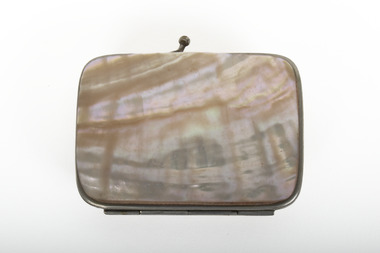
Functional object - Ladies Coin Purse
... Burke Museum Social History Accessories Mother of Pearl Nacre Australian industry A01154 A small rectangular purse with silver edging and half clasp, covered in white and cream coloured shell (mother of pearl?) Functional object Ladies ...Specific historical and contextual information pertaining to this object is unknown. There are no hallmarks or documentation to indicate provenance or historical significance. This coin purse appears to have a covering made of mother of pearl. Evidence of interest from over 20,000 years ago mark Aboriginal groups in Australia as some of the first people to value the power and beauty of pearlshell, while evidence of Australian pearlshell being taken across the sea to other countries dates back as early as the 1500s. The 1850s-60s saw the beginnings of the Australian pearling industry. Following the popularisation of plastic for items such as buttons the pearlshell market waned in the mid-twentieth century but was soon after began to re-forge in Australia with a new industry of cultured pearl farms. Most of Australian's pearling industry was initially located in Western Australia and off the Torres Strait Islands. The Australian War Memorial notes on their website that many tokens made from mother of pearl were sent home to loved ones throughout World Wars One and Two from the Middle East, England, the South West Pacific, Australia and elsewhere, but that unfortunately provenance such as the manufacture and sale of many of these items is not recorded.The social history objects held in the Burke Museum's collection help to tell the stories of Beechworth's past by showing the social, cultural, and economic aspects of the town's history.A small rectangular purse with silver edging and half clasp, covered in white and cream coloured shell (mother of pearl?)A01154burke museum, social history, accessories, mother of pearl, nacre, australian industry -
Bright & District Historical Society operating the Bright Museum
Parasol
... parasol sunshade ladies accessories Burnt and painted floral design on handle Pink and cream with black stripes. ...Pink and cream with black stripes. Cotton. Carved cane and wooden handleBurnt and painted floral design on handleparasol, sunshade, ladies accessories -
Bright & District Historical Society operating the Bright Museum
Gloves Ladies
... gloves leather buttons stitching ladies accessories Black/Navy blue leather gloves with buttons at wrist with contrast stitching. 00061.1 : Left glove 00061.2 : Right glove Gloves Ladies ...Black/Navy blue leather gloves with buttons at wrist with contrast stitching. 00061.1 : Left glove 00061.2 : Right glovegloves, leather, buttons, stitching, ladies accessories -
Bright & District Historical Society operating the Bright Museum
Collar, Ladies lace, c1875
... Weston, Porepunkah lace tie bow collar ladies accessories taffeta Black lace and taffeta with taffeta ties in front Collar, Ladies lace ...Handmade, belonged to Mrs. Weston, PorepunkahBlack lace and taffeta with taffeta ties in frontlace, tie, bow, collar, ladies accessories, taffeta -
Bright & District Historical Society operating the Bright Museum
gloves, Ladies
... gloves embroidery evening wear costume. ladies accessories Ladies white gloves, 3/4 length polyester embroidered with a floral and leaf design. 00098.1 : Left glove 00098.2 : Right glove gloves, Ladies ...Ladies white gloves, 3/4 length polyester embroidered with a floral and leaf design. 00098.1 : Left glove 00098.2 : Right glovegloves, embroidery, evening wear, costume., ladies accessories -
 Flagstaff Hill Maritime Museum and Village
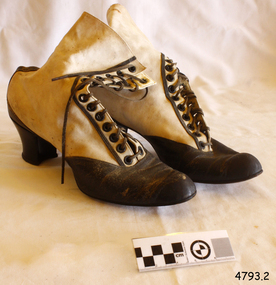
Boots
... flagstaff hill warrnambool shipwrecked-coast flagstaff-hill flagstaff-hill-maritime-museum maritime-museum shipwreck-coast flagstaff-hill-maritime-village short boots ladies boots ladies footwear ladies clothing accessories ladies fashion women's footwear women's boots Stamped into leather "T. ...A pair of women's short boots, black & white lace-up style. Brand T. Jerome.Stamped into leather "T. Jerome'flagstaff hill, warrnambool, shipwrecked-coast, flagstaff-hill, flagstaff-hill-maritime-museum, maritime-museum, shipwreck-coast, flagstaff-hill-maritime-village, short boots, ladies boots, ladies footwear, ladies clothing accessories, ladies fashion, women's footwear, women's boots -
Bright & District Historical Society operating the Bright Museum
Glove box and gloves
... glove box gloves lacquerware cotton leather eveningwear ladies accessories costumes 00099.4 : No. 329 00099.1 : Black lacquered glove box with white flower design on lid. ...00099.1 : Black lacquered glove box with white flower design on lid. Red lacquer interior. 00099.2 : Pair of white cotton short gloves. 00099.3 : Pair of beige cotton short gloves. 00099.4 : Pair of beige leather short gloves.00099.4 : No. 329glove box, gloves, lacquerware, cotton, leather, eveningwear, ladies accessories, costumes -
 Federation University Historical Collection
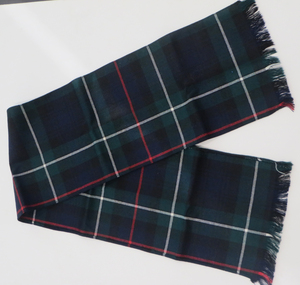
Clothing - Costume Accessories, Mackenzie Tartan Scarf, c1953
... She was also the set and costume designer for Junior Light Opera Company. margaret bennett ballarat ladies' pipe band alumni highland pipe band margaret reynolds tartan scarf mackenzie tartan City of Ballaarat Pipe Band, Life Member on the front Inscribed on the back is Drum Major Margaret Bennett A handmade Mackenzie Tartan Scarf, with a red, white, green and dark blue pattern and fringed ends Mackenzie Tartan Scarf Clothing Costume Accessories ...Margaret Bennett was a student at Ballarat Teachers' College in 1949. She attended the Ballarat School of Mines as a full-time day student for three years, gaining her Diploma of Art in 1972. She was Drum Major of the Ballarat Ladies' Pipe Band from c1954-1955. She was also the set and costume designer for Junior Light Opera Company. A handmade Mackenzie Tartan Scarf, with a red, white, green and dark blue pattern and fringed endsCity of Ballaarat Pipe Band, Life Member on the front Inscribed on the back is Drum Major Margaret Bennettmargaret bennett, ballarat ladies' pipe band, alumni, highland pipe band, margaret reynolds, tartan, scarf, mackenzie tartan -
 Federation University Historical Collection
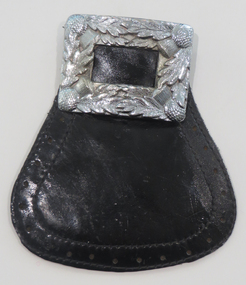
Uniform - Costume Accessories, Shoe Buckle
... ladies' pipe band alumni highland pipe band shoe buckle scotch thistle M. Bennett is written on the back of the leather buckle One leather and pewter shoe buckle, with the pewter buckle engraved with images of scotch thistles. On the back is a leather loop through which the shoelaces were tied. Gift of Margaret Bennett, 2019 Shoe Buckle Uniform Costume Accessories ...Margaret Bennett was a student at Ballarat Teachers' College in 1949. She attended the Ballarat School of Mines as a full-time day student for three years, gaining her Diploma of Art in 1972. She was Drum Major of the Ballarat Ladies' Pipe Band from c1954-1955 and wore this shoe buckle in that role. She was also the set and costume designer for Junior Light Opera Company. One leather and pewter shoe buckle, with the pewter buckle engraved with images of scotch thistles. On the back is a leather loop through which the shoelaces were tied. Gift of Margaret Bennett, 2019M. Bennett is written on the back of the leather buckle margaret bennett, ballarat ladies' pipe band, alumni, highland pipe band, shoe buckle, scotch thistle -
 Federation University Historical Collection
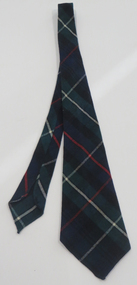
Clothing - Costume Accessories, Mackenzie Tartan Tie
... She was also the set and costume designer for Junior Light Opera Company. margaret bennett ballarat ladies' pipe band alumni highland pipe band tie mackenzie tartan tartan wool A handmade tie in Mackenzie Tartan. Gift of Margaret Bennett, 2019 Mackenzie Tartan Tie Clothing Costume Accessories ...Margaret Bennett was a student at Ballarat Teachers' College in 1949. She attended the Ballarat School of Mines as a full-time day student for three years, gaining her Diploma of Art in 1972. She was Drum Major of the Ballarat Ladies' Pipe Band from c1954-1955. She was also the set and costume designer for Junior Light Opera Company. A handmade tie in Mackenzie Tartan. Gift of Margaret Bennett, 2019margaret bennett, ballarat ladies' pipe band, alumni, highland pipe band, tie, mackenzie tartan, tartan, wool -
 Federation University Historical Collection
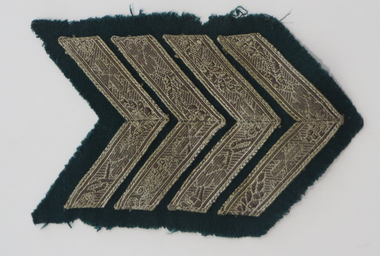
Uniform - Costume Accessories, Epaulette
... She was also the set and costume designer for Junior Light Opera Company. ballarat ladies' pipe band alumni highland pipe band tie tartan wool epaulette An epaulette with the rank of major - four arrows in brownish gold - embroidered onto a piece of dark green material. Epaulette Uniform Costume Accessories ...Margaret Bennett was a student at Ballarat Teachers' College in 1949. She attended the Ballarat School of Mines as a full-time day student for three years, gaining her Diploma of Art in 1972. She was Drum Major of the Ballarat Ladies' Pipe Band from c1954-1955. She was also the set and costume designer for Junior Light Opera Company. An epaulette with the rank of major - four arrows in brownish gold - embroidered onto a piece of dark green material. ballarat ladies' pipe band, alumni, highland pipe band, tie, tartan, wool, epaulette -
 Ballarat Clarendon College
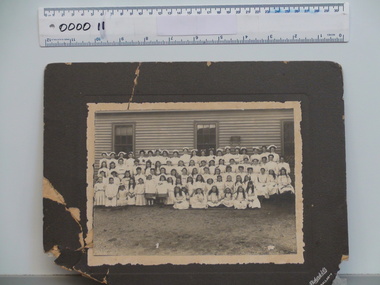
Photograph, 1908 (estimated)
... accessories and added costuming are fascinating. The sport detail from the basketball hoop is significant. This photograph has social significance because of its detail regarding female school activities in the early 1900s. 1908 uniform richardson clarendon ladies college costume menagerie hilda farmer avenel halls sylvia eyres ella morrow florence sides gertie owen laela williams lorna dowler emma buchanan phyllis doepel daisy llewellyn adeline purser sophie anderson helen mathieson d brophy lily wright margaret dowler dulce deardon gladys small marjory howe jessie kelsall erica mckay pearl eyres iris llewellyn edith bishop marjorie walker violet howard hazel wlls effie white mimi murphy carrie miners edith murphy irene palamountain miss allan marjorie salmon dollie snow naomi franklin elsie powell rachael kennedy rose paull sylvia barnett esther lilah emblling trixie kliender chrissie anderson agnes wheen kitty dawbarn hazel clements m serjeant dolly gill beryl bach dorothy nicholas frances gill meg moore jessie eyres blanche murphy merle booth melba mcconnel edna clark betty lester bessie hoad madge dearden kate cameron olive mathews grace nicholas mollie souter isabel mctaggart madge llewellyn mollie mary buley alice ralph ruth tyler rebecca abraham joyce eyres nellie salmon Printed on front righthand bottom corner of mount: 'Richards & Co/Ballarat' Black and white photograph mounted on grey card of Clarendon Ladies College student cohort in 1908. ...This extraordinary record of the student cohort in 1908 reveals many aspects of school life in the early 1900's. The fashions, hair coiffure and accessories and added costuming are fascinating. The sport detail from the basketball hoop is significant. This photograph has social significance because of its detail regarding female school activities in the early 1900s. Black and white photograph mounted on grey card of Clarendon Ladies College student cohort in 1908. The students are arranged in five tiered rows. The photograph is taken against wall of a timber building. There is a basketball net fixed to the wall above the last row. Many of the girls are wearing fancy hats, some decorated with birds. Two young girls in the front row wear poster boards over their clothing advertising an event not to be missed; something to do with a menagerie. All the students are dressed in white, some in dresses, some n skirts and blouses and many have aprons over their skirts. The photograph is accompanied with a typed list of namesPrinted on front righthand bottom corner of mount: 'Richards & Co/Ballarat'1908, uniform, richardson, clarendon ladies college, costume, menagerie, hilda farmer, avenel halls, sylvia eyres, ella morrow, florence sides, gertie owen, laela williams, lorna dowler, emma buchanan, phyllis doepel, daisy llewellyn, adeline purser, sophie anderson, helen mathieson, d brophy, lily wright, margaret dowler, dulce deardon, gladys small, marjory howe, jessie kelsall, erica mckay, pearl eyres, iris llewellyn, edith bishop, marjorie walker, violet howard, hazel wlls, effie white, mimi murphy, carrie miners, edith murphy, irene palamountain, miss allan, marjorie salmon, dollie snow, naomi franklin, elsie powell, rachael kennedy, rose paull, sylvia barnett, esther, lilah emblling, trixie kliender, chrissie anderson, agnes wheen, kitty dawbarn, hazel clements, m serjeant, dolly gill, beryl bach, dorothy nicholas, frances gill, meg moore, jessie eyres, blanche murphy, merle booth, melba mcconnel, edna clark, betty lester, bessie hoad, madge dearden, kate cameron, olive mathews, grace nicholas, mollie souter, isabel mctaggart, madge llewellyn, mollie mary buley, alice ralph, ruth tyler, rebecca abraham, joyce eyres, nellie salmon -
 Ballarat Clarendon College
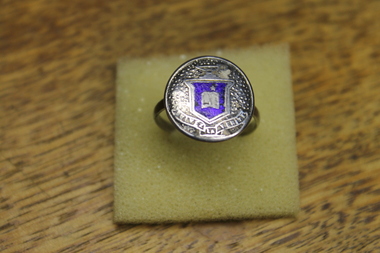
Ring
... Historical significance to the school because it is the only example of its type. ring Clarendon-Presbyterian-Ladies-College C-P-L-C Valerie-Dale uniform-accessories school-momentos 1930's Toni-Kicinski jewellery Inscribed below crest: 'SUIVEX LAS VERITE' Verso: 'ST.? ...The ring was the property of Valerie Dale who attended CPLC in the 1930's. It was donated to the school by her daughter in 2012. The ring is the first of its type to be returned to the school. The ring was accompanied with Valerie's school hatband and a blank school-produced Christmas card. Historical significance to the school because it is the only example of its type. Clarendon Presbyterian Ladies College silver ring with blue enamelled crest and motto Inscribed below crest: 'SUIVEX LAS VERITE' Verso: 'ST.?11'ring, clarendon-presbyterian-ladies-college, c-p-l-c, valerie-dale, uniform-accessories, school-momentos, 1930's, toni-kicinski, jewellery, -
 Ballarat Clarendon College
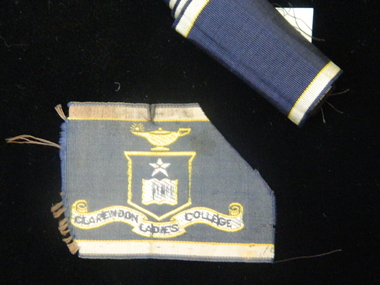
Hat band, Clarendon Ladies College hat band fragments
... These ribbons were worn on the Clarendon Ladies College (CLC) uniform summer and winter hat. The CLC accessories were worn in the 1900 - 1910 era. ...These ribbons were worn on the Clarendon Ladies College (CLC) uniform summer and winter hat. The CLC accessories were worn in the 1900 - 1910 era. ...These ribbons were worn on the Clarendon Ladies College (CLC) uniform summer and winter hat. The CLC accessories were worn in the 1900 - 1910 era. After 1920 the school changed its name to Clarendon Presbyterian Ladies College and the crest reflected ths change. Prior to the early 1900s students wore dark skirts and white blouses and ribbon ties. Formal photographs taken at Speech Night saw the girls in frilled and lace white dresses. Fragment of navy blue ribbon with white border and fine gold line between white and navy; Clarendon ladies College crest embroidered; the fragment is accompanied by a roll of the same ribbonCLC crestclarendon-ladies-college, hat-band, 1900s, 1910s, uniform, hat -
 Flagstaff Hill Maritime Museum and Village
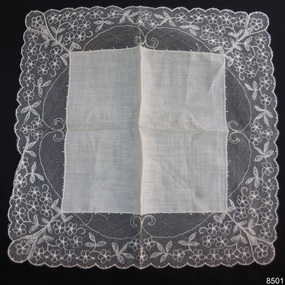
Accessory - Handkerchief, c. 19th century
... accessory...silk handkerchief...fine handcraft...needlecraft...ladies...It is also an example of women's fashion accessories in the late 19th and early 20th century. flagstaff hill warrnambool shipwrecked coast flagstaff hill maritime museum maritime museum shipwreck coast flagstaff hill maritime village great ocean road handkerchief lace handkerchief woman's handkerchief women's accessory silk handkerchief fine handcraft needlecraft ladies' handkerchief 1900s White starched silk handkerchief, square shape, very soft fabric edged with 5cm embroidered net lace. ...The handkerchief was on display at Flagstaff Hill reception area from 2008-2105 as an example of fine needlework with a lace pattern typical of the early 1900's. During that era the house mistress would often carry two handkerchiefs, one for blowing her nose and one out on show, perhaps in an apron pocket.This handkerchief is an example of fine handmade needlework. It is also an example of women's fashion accessories in the late 19th and early 20th century.White starched silk handkerchief, square shape, very soft fabric edged with 5cm embroidered net lace. Net was embroidered as a strip then joined at corners. The design is backstitched then the lace has been joined to the fabric using blanket stitch. flagstaff hill, warrnambool, shipwrecked coast, flagstaff hill maritime museum, maritime museum, shipwreck coast, flagstaff hill maritime village, great ocean road, handkerchief, lace handkerchief, woman's handkerchief, women's accessory, silk handkerchief, fine handcraft, needlecraft, ladies' handkerchief, 1900s -
 Flagstaff Hill Maritime Museum and Village
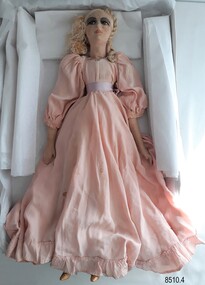
Leisure object - Boudoir Doll, c. early 1900s
... accessories. Dressmakers would show these dolls to their customers. Ladies would then place their order and the dressmakers would make the dress to their size. ...accessories. Dressmakers would show these dolls to their customers. Ladies would then place their order and the dressmakers would make the dress to their size. ...The donor was given this doll about 50 years ago by her grandfather (in the late 1960s). He used to be a handyman at a high rise building in St Kilda, Melbourne. He had been doing some work for one of the old ladies and she gave him the doll to give to his granddaughter, who collected dolls. The doll has spent a few years at the Nagambie museum until it closed down and returned to the donor The origins or age of the doll are unknown. Originally it was thought to be a Fashion Doll dating from around the 1880s but the painted face together with the bisque legs and gold painted shoes are similar to those found on Boudoir Dolls (also known as Bed Dolls, Sofa Dolls, Flapper Dolls and French Dolls) of the early 20th century. Fashion dolls were sent from fashion houses to advertise the latest styles, fabrics, trims, hairstyles and accessories. Dressmakers would show these dolls to their customers. Ladies would then place their order and the dressmakers would make the dress to their size. The dressmakers would learn the construction techniques from examining the dolls. Boudoir Dolls dolls usually had no maker's marks and were primarily used as bedroom decorations for ladies rather than as children's toys. This doll appears to date at about the early part of the 20th century, but the petticoats are much older - possibly from a child's christening gown. At the time that the donor received the doll, it had a coloured lace over-gown that was badly torn so her mother removed it to replace with more lace but this never eventuated. The pink silk dress also appears to have been remodelled into a 19th century style with gathered sleeves and a gathered skirt. This fashion or boudoir doll is significant for being a rare example of a doll made in the late 19th or early 20th centuries. The doll is wearing clothing representing the fashion for young girls in that era. The doll is also significant as an item possibly used by fashion houses and dressmakers to advertise the latest fashions in clothing, trims, accessories and hairstyles. A doll such as this may have been found in a Victorian dressmaker's premises for use as a pattern and technique template and for a display to customers. It may also have been used as a decorative item in a lady's bedroom.Female boudoir doll with silk face and body, and porcelain lower arms and legs. She has plaited blonde silk hair. Her painted face has brown eyes and her shoes are painted gold. The doll is dressed in a long pink puffed-sleeve dress with a gathered waist and a ruffle at the hem. A pink ribbon around her waist is tied at the back. There are small silver balls hand-stitched around the neckline. She has a white, hand-embroidered lace petticoat and bloomers.warrnambool, flagstaff hill maritime museum, shipwreck coast, flagstaff hill maritime village, great ocean road, doll, boudoir doll, female doll, dressmaker's doll, display doll, late 1800s doll, fashion doll, antique doll, 19th century doll, children's fashion, girl's fashion, late 1800s children's fashion, early 20th century doll, composite doll, french doll -
 Flagstaff Hill Maritime Museum and Village
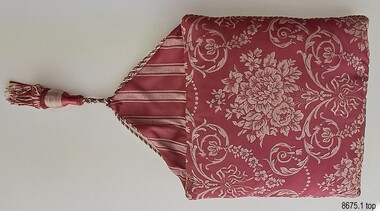
Textile - Seat Squabs, mid-20th century
... ladies harbour light guild...squab...seat covers...cushions...squabs...religious furnishing...padded seats...seating...accessory...The squabs are also significant for their use in the St Nicholas Missions to Seamen's chapel, Williamstown, as the original building is now listed on the Victorian Heritage Register. flagstaff hill warrnambool shipwrecked-coast flagstaff-hill flagstaff-hill-maritime-museum maritime-museum shipwreck-coast flagstaff-hill-maritime-village st nicholas mission to seamen's church williamstown mission to seamen williamstown mission to seamen victoria st nicholas mission to seamen st nicholas seamen's church religion religious service sailor's rest ladies harbour light guild squab seat covers cushions squabs religious furnishing padded seats seating accessory Squabs or padded seat cushions, a pair of two. ...The term 'seat squabs' is no longer commonly used, but is sometimes referred to in the upholstery and motor vehicle industries. Squabs are padded cushions frequently added to wooden chairs or benches to add comfort to their hard forms. They have been made to an 18th-to-19th-century pattern using beautiful, richly coloured satin fabric and fancy cord tassels. The weighted flap at the rear of the squabs helps to keep them in place on the chair, and could be used on the top of the backrest instead of on the seat. These days, squabs are attached with fabric ties or hook-and-loop tabs. These seat squabs were once used in the St Nicholas Seamen's Church at 139 Nelson Place, Williamstown, Victoria, which was purchased and furnished around 1943. The furniture and furnishings are now part of the St. Nicholas Seamen's Church collection. DETAILED HISTORY of the Missions to Seamen: - The Missions to Seamen is an Anglican (Church of England) charity that has served the world’s seafarers since 1856. It was inspired by the work of Rev. John Ashley, who, 20 years earlier, had pioneered a ministry to seafarers in the Bristol Channel in Great Britain. When Ashley retired, others continued the work, founding the Missions to Seamen. It adopted a Flying Angel as its symbol, inspired by a verse from the Bible in Revelation 14. Today, over 200 world ports have Missions to Seamen centres and chaplains. A Missions to Seamen’s club warmly welcomes sailors of all colours, creeds and races and provides a wide range of facilities. The Missions to Seamen organisation changed its name to the Mission to Seafarers in 2000, continuing to include Missions to Seamen clubs in Victoria’s cities of Melbourne, Portland, Geelong and Hastings. Flagstaff Hill’s St Nicholas’ Seamen’s Church is named after its namesake from Williamstown, Victoria, which began in 1857. Bishop Perry opened the first Sailors’ Church, which was known as ‘Bethel’, on an old hulk floating in Hobson’s Bay, Port of Melbourne. In 1860, a Sailors’ Rest started operating from rented premises in Williamstown. In 1878, the Sailors’ Church moved into an old Wesleyan chapel in Ann Street. By the end of that year, they managed to purchase the building, which they had already refurbished. In 1883, they affiliated with the Victorian Seamen’s Mission. A few years later, in 1906, the building had to be demolished because it was no longer safe. While they raised funds for a new building, the Sailors’ Rest temporarily moved to premises in front of Customs House in Nelson Place. Around this time, in 1906, the Ladies Harbour Lights Guild was formed in Australia to support and raise funds for the Mission to Seamen organisation in Melbourne. Two of the most significant ladies of the Guild were founding members Ethel Godfrey and Alice Sibthorpe. During the Mission's time at Siddeley Street, Melbourne, the activities of the Guild raised funds for the Mission to Seamen's Chapel at their new, and still current, premises in Flinders Street, Melbourne, opened in 1917. The Guild continued its important work until the 1960s. In 1908, the Williamstown Mission had enough money to purchase the former Mascotte skating rink on Thompson Street, Williamstown. In August of that year, they were inaugurated into the Victorian Missions to Seamen. They continued at that venue for a few decades. In 1943, the former ES&A Bank building at 139 Nelson Place, Williamstown, was purchased for the new Mission to Seaman’s Club. The official opening was on May 6th, 1944. It was described as a ‘distinctive little building’. Funds had previously been raised for the building and furnishing of the chapel at the rear. The chapel was named St Nicholas’ Seamen’s Church, after St Nicholas, fourth-century bishop and patron saint of sailors. Services were held on Wednesdays and Sundays. The church was supported by the Williamstown Lightkeepers’ Auxiliary, newly founded by Mrs Ethel Margaret Musther in 1943, as well as the Harbour Lights Guild and the League of Soldiers’ and Sailors’ Friends. The Williamstown Mission to Seamen’s Church operated until 1966, when large international ships no longer used the Port of Williamstown. The Commonwealth Government then leased the premises. In the formative years of Flagstaff Hill Maritime Village, the Advisory Board decided to include a Missions to Seamen Chapel and Recreation Room in its village. The Missions organisation was a significant feature of ports during the late 1800s and early 1900s, the period that the Village represents. They often erected Missions to house social and worshipful activities for seamen. Flagstaff Hill’s curator, Mr Ken Marshman, approached the Melbourne Board of Management of Missions to Seamen regarding the Williamstown branch. Consequently, the Board permitted the furnishings of the Williamstown chapel to be transferred to Flagstaff Hill Maritime Village. A provision of the transfer was that the Victoria Missions to Seamen be recognised, that the items would remain as a collection, and that the chapel would be called St Nicholas Seamen’s Church and conduct Divine services. The donation was approved on 21st May 1979. Flagstaff Hill's St. Nicholas Seamen's Church: - The idea behind Flagstaff Hill’s Missions to Seamen’s Church was partly driven by the offer of Stained Glass Memorial Windows that originated from the Warrnambool and District Base Hospital, which was undergoing multi-storey expansion in the late 1960s and early 1970s. The hospital’s Manager/Secretary was eager to see the historic window installed in a suitable place. The church, or chapel, was designed by a local architectural draftsman in collaboration with the Flagstaff Hill Planning Board and was constructed by Mr Leon Habel. The designers hoped the church would be used for formal worship, such as weddings, funerals, and multi-denominational special services like war commemorations. Its design was inspired by the ‘Missions to Seamen’ buildings in Portland and the Port of Melbourne. The furniture and furnishings were placed as accurately as possible according to photographs of the Williamstown St Nicholas Seamen’s Church and with assistance from local clergy. The Recreation Room was furnished and arranged on advice from experienced members of the Missions to Seamen organisation. A framed document in the building recognises the donor of the furnishings, Victoria Missions to Seamen, and includes the names of some original donors and their donated item/s. The building’s design incorporates local features such as Warrnambool sandstone, which was no longer commercially available but was procured from demolished buildings and uniformly cut to use as a veneer over the stronger Mt. Gambier stone. Also, traditional green American roofing slate was used, sourced from the 1908 local shipwreck “Falls of Halladale” by Flagstaff Hill volunteer divers. The bell tower includes a bell believed to be from a local shipwreck. Additional furnishings were acquired locally, and several items were donated by Warrnambool residents. Light fittings in both rooms were assembled to simulate 19th-century gas light fittings. The stained-glass window at the back of the church is a memorial to Dr Connell, a well-respected member of the Warrnambool community. It was originally installed in 1928 in the main building of Warrnambool Hospital. The St Nicholas’ Seamen’s Church at Flagstaff Hill was officially opened by His Worship the Mayor, Cr. John Lindsay, on Sunday, 11th October 1981. The event included a service of thanksgiving conducted by the Warrnambool Ministers Fraternal. Since then, the Chapel has been the historic venue for many weddings. This pair of seat squabs is historically significant for its origin in the St Nicholas Mission to Seamen's Church in Williamstown, established in 1857 to cater for seafarers’ physical, social, and spiritual needs. The organisation originated in Bristol, England, when a Seamen's Mission was formed in 1837. The squabs are also significant for their use in the St Nicholas Missions to Seamen's chapel, Williamstown, as the original building is now listed on the Victorian Heritage Register. Squabs or padded seat cushions, a pair of two. These 18th to 19th-century design squabs have crimson and cream satin fabric on top and underneath, and weighted tassels are attached to their rear corners. They can be used for comfort on hard seats and benches. The squabs were furnishings from the Missions to Seamen chapel in Williamstown, and they are now part of the St Nicholas Seamen's Church Collection.flagstaff hill, warrnambool, shipwrecked-coast, flagstaff-hill, flagstaff-hill-maritime-museum, maritime-museum, shipwreck-coast, flagstaff-hill-maritime-village, st nicholas mission to seamen's church williamstown, mission to seamen williamstown, mission to seamen victoria, st nicholas mission to seamen, st nicholas seamen's church, religion, religious service, sailor's rest, ladies harbour light guild, squab, seat covers, cushions, squabs, religious furnishing, padded seats, seating, accessory -
 Flagstaff Hill Maritime Museum and Village
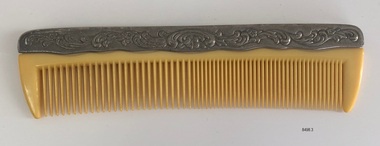
Accessory - Comb, Circa late 1800s or early 1900s
... accessories available to and used by women in the late 1800s and early 1900s. Historically, it is linked to a local import business ‘Staffordshire House’ in Liebig St Warrnambool, where it most likely came from. Flagstaff Hill Warrnambool Flagstaff Hill Maritime Museum and Village Maritime Village Maritime Museum Shipwreck Coast Great Ocean Road Vanity Set Pewter Silver Plate Toilet Set Harbours Master's house Staffordshire House Celluloid Comb A ladies hair comb which features an ornate flower design on the pewter (or possibly silver-plated) edge. ...The comb is part of a vanity set owned by a woman who lived in the Harbour Master's house at Warrnambool in the late 1800s and early 1900s. The set was possibly a wedding gift from her mother-in-law, Caroline Edwards, a local business woman who was an importer of 'china and fancy goods' along with her husband Thomas Myers Edwards. The Edwards owned Staffordshire House a business in Timor St (and later Liebig St) from 1876. The comb is an example of a valued possession of women at the time and could signify social standing. It was also a functional accessory used on a daily basis.The item is significant socially as an example of accessories available to and used by women in the late 1800s and early 1900s. Historically, it is linked to a local import business ‘Staffordshire House’ in Liebig St Warrnambool, where it most likely came from. A ladies hair comb which features an ornate flower design on the pewter (or possibly silver-plated) edge. The comb teeth are most likely made of celluloid.flagstaff hill, warrnambool, flagstaff hill maritime museum and village, maritime village, maritime museum, shipwreck coast, great ocean road, vanity set, pewter, silver plate, toilet set, harbours master's house, staffordshire house, celluloid, comb -
 City of Moorabbin Historical Society (Operating the Box Cottage Museum)
Personal Effects, Cigarette holder bakelite, c1940
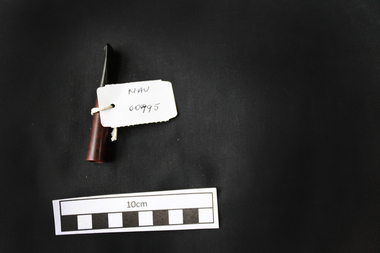
... accessory, a slender tube in which a cigarette is held for smoking. Most frequently made of silver, jade or bakelite, which was popular in the past but now wholly replaced by modern plastics, cigarette holders were considered an essential part of ladies' fashion from the mid-1910s through the early-1970s. ...accessory, a slender tube in which a cigarette is held for smoking. Most frequently made of silver, jade or bakelite, which was popular in the past but now wholly replaced by modern plastics, cigarette holders were considered an essential part of ladies' fashion from the mid-1910s through the early-1970s. ...A cigarette holder is a fashion accessory, a slender tube in which a cigarette is held for smoking. Most frequently made of silver, jade or bakelite, which was popular in the past but now wholly replaced by modern plastics, cigarette holders were considered an essential part of ladies' fashion from the mid-1910s through the early-1970s. Traditionally, men's cigarette holders were no more than 4 inches ( 10cm ) long The holder was also used as a practical accessory, as before the advent of filtered cigarettes in the 1960s, the holder served several purposes. A holder kept tobacco flakes out of the smoker's mouth, kept the thin cigarette paper from sticking and tearing on the smoker's lips, prevented nicotine stains on fingers, cooled and mellowed the smoke and kept side-stream smoke from stinging the smoker's eyes A Bakelite gentleman's cigarette holder c1940cigarettes, cigars, tobacco, bakelite, plastic, market gardeners, pioneers, moorabbin, cheltenham, bentleigh -
Glenelg Shire Council Cultural Collection
Accessory - Badge - Portland Ladies Pipe Band, n.d
... Portland Ladies Pipe Band music band Badge, round, Portland Ladies Pipe Band - "Dinna Forget Portland Ladies", pink print on white background with image of a Scotsman in kilt Accessory Badge - Portland Ladies Pipe Band ...Badge, round, Portland Ladies Pipe Band - "Dinna Forget Portland Ladies", pink print on white background with image of a Scotsman in kiltportland ladies pipe band, music, band -
Glenelg Shire Council Cultural Collection
Souvenir - HANDKERCHIEF, 'Greetings from Portland' Handkerchief, 1900s
... Portland handkerchief local history costume ladies accessories Cream silk handkerchief, scalloped edge, gold-rimmed painted image of kookaburra in one corner, sitting on brand, pink flowers, green leaves, all outlined in gold paint 'KOOKABURRA' Greetings from Portland Vic' in gold paint, beneath image 'Greetings from Portland' Handkerchief Souvenir HANDKERCHIEF ...Cream silk handkerchief, scalloped edge, gold-rimmed painted image of kookaburra in one corner, sitting on brand, pink flowers, green leaves, all outlined in gold paint 'KOOKABURRA' Greetings from Portland Vic' in gold paint, beneath imageportland, handkerchief, local history, costume, ladies accessories
