
Showing 126 items matching "late-victorian style"
-
 Surrey Hills Historical Society Collection
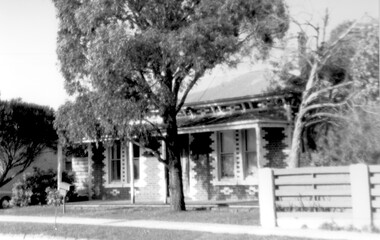
Photograph, 1 Russell Street, Surrey Hills in 1988
... victorian style...(miss) elizabeth wilson...(mrs) elizabeth burrell...james herbert burrell...aleck burrell...william (bill) spencer burrell...elsie may burrell...(miss) annie mary brock...(mrs) annie mary ginnane...john james ginnane...(miss) mary ellen ginnane...michael thomas ginnane; (miss) annie florence ginnane; william patrick ginnane; elizabeth catherine ginnane; patrick leo ginnanean)...late...A black and white photograph taken on an angle from across the street of a mid-late Victorian style cottage with multi-coloured brickwork. ...(mr) james burrell blacksmiths canterbury road surrey hills fire officers (mr) michael ginnane station masters fire stations mid-victorian style (miss) elizabeth wilson (mrs) elizabeth burrell james herbert burrell aleck burrell william (bill) spencer burrell elsie may burrell (miss) annie mary brock (mrs) annie mary ginnane john james ginnane (miss) mary ellen ginnane michael thomas ginnane; (miss) annie florence ginnane; william patrick ginnane; elizabeth catherine ginnane; patrick leo ginnanean) late-victorian style russell street A black and white photograph taken on an angle from across the street of a mid-late Victorian style cottage with multi-coloured brickwork. ...1 Russell Street was built in 1888 and from 1888–1905 (maybe 1911, as his death notice says he died at Russell Street) it was the home of James Burrell, a blacksmith. His smithy was on the corner of Canterbury Road. In 1893 a block of land (No.3 ) was bought to establish the fire station and James Burrell acted as fire officer and stored the reel and hose until the station was built. From 1911–1928 it was the fire station residence, as the brigade gained status. James Burrell (1860-1911) married Elizabeth Wilson (1862-1925). She was daughter of Edward Wilson. They had 4 children: James Herbert, known as Bert (1888-1953); Aleck (1890-1951); William Spencer, known as Bill, (1893-1976) and Elsie May (1898-1990). Both James and Elizabeth Burrell are buried in Burwood Cemetery. From 1930–1943 Michael Ginnane, retired station master, and members of his family lived in the house. Michael Ginnane (1864-1935) married Annie Mary Brock (1868-1945). Both were born in the Ballarat area. They had 10 children. From 1913-1917 he was station master at Woodend. In the 1925 electoral rolls the family is listed as living at Surrey Hills station. There was a station master's house adjacent to the station (demolished and the site now part of the car park accessed off Blackburn Street). They are again listed here in the 1925 electoral roll. By 1931 they are at 1 Russell Street and he is listed as a retired station master. The following children lived in Surrey Hills: John James (Clerk) - 1922 Mary Ellen (HD) - 1922, 1925, 1931 Michael Thomas (labourer) - 1922 Annie Florence (dressmaker) - 1925, 1931 William Patrick (railwayman) - 1925 Elizabeth Catherine (sales) - 1931 Patrick Leo (postman) - 1931. A black and white photograph taken on an angle from across the street of a mid-late Victorian style cottage with multi-coloured brickwork. There is a large tree in the front garden, no fence and a letterbox on a lean.(mr) james burrell, blacksmiths, canterbury road, surrey hills, fire officers, (mr) michael ginnane, station masters, fire stations, mid-victorian style, (miss) elizabeth wilson, (mrs) elizabeth burrell, james herbert burrell, aleck burrell, william (bill) spencer burrell, elsie may burrell, (miss) annie mary brock, (mrs) annie mary ginnane, john james ginnane, (miss) mary ellen ginnane, michael thomas ginnane; (miss) annie florence ginnane; william patrick ginnane; elizabeth catherine ginnane; patrick leo ginnanean), late-victorian style, russell street -
 Surrey Hills Historical Society Collection
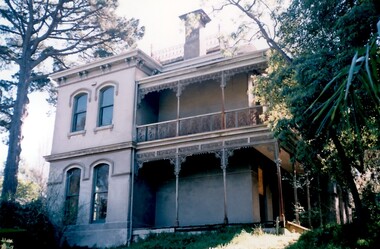
Photograph, Medlow in 1900, 1990
... ...Late Victorian Boom style...Possibly Late Victorian Boom style....Possibly Late Victorian Boom style. Medlow Warrigal Road Surrey Hills Late Victorian Boom style house styles A coloured photograph of a two storey house with an L-shaped verandah around the lower and upper level. ...A coloured photograph of a two storey house with an L-shaped verandah around the lower and upper level. Possibly Late Victorian Boom style.A coloured photograph of a two storey house with an L-shaped verandah around the lower and upper level.medlow, warrigal road, surrey hills, late victorian boom style, house styles -
 Glen Eira Historical Society
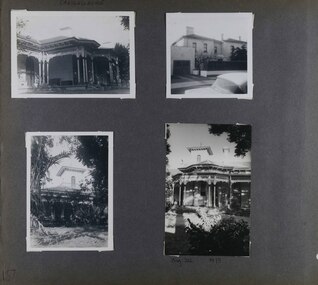
Album - Album page, Craigellachie, 273 Orrong Road, Circa 1972
... ...late victorian style...The Araucaria bidwilli is notable as a fine example of a species infrequently planted in Melbourne and rarely found in private suburban gardens. trevor hart verandah orrong road tower cast iron lacework curved windows decorative brackets italianate mansion 1870's william pearson inkerman street apartments spire decorative plaster work rendered walls arched windows moulded ornaments 1860's lynedoch avenue classical style caulfield north craigellachie st kilda east late victorian style garages (private) gardens cast iron work ailanthus altissima araucaria bidwilli trees Handwritten: CRAIGELLACHIE [top left] / Neg 212 1973 [under bottom right photo] / 157 [bottom left] Page 157 - four photographs of Craigellachie - exterior views. ...This photograph is part of the Caulfield Historical Album 1972. This album was created in approximately 1972 as part of a project by the Caulfield Historical Society to assist in identifying buildings worthy of preservation. The album is related to a Survey the Caulfield Historical Society developed in collaboration with the National Trust of Australia (Victoria) and Caulfield City Council to identify historic buildings within the City of Caulfield that warranted the protection of a National Trust Classification. Principal photographer thought to be Trevor Hart, member of Caulfield Historical Society. Most photographs were taken between 1966-1972 with a small number of photographs being older and from unknown sources. All photographs are black and white except where stated, with 386 photographs over 198 pages. From Victorian Heritage Database citation for HO40 Craigellachie 2b & 2c Lynedoch Avenue Caulfield North https://vhd.heritagecouncil.vic.gov.au/places/35209 as at (28/10/2020) Craigellachie" is situated at No. 2B Lynedoch Avenue, Caulfield North, and was built for the noted investor, pastoralist and politician, William Pearson, not earlier than 1864 and possible in 1876, undergoing several substantial and contributory extensions during the nineteenth century. It is historically and aesthetically significant. From Victorian Heritage Database citation for HO40 Craigellachie https://vhd.heritagecouncil.vic.gov.au/places/35209 as at (28/10/2020) It is historically significant (Criterion A) as the Melbourne home of William Pearson, MLA, MLC and principal shareholder in Walhalla's Long Tunnel Extended Gold Mining Co. which sustained the township well past the turn of the twentieth century and occupied fifth place amongst Victoria's richest mines. It is aesthetically significant (Criterion E) for its capacity to demonstrate Pearson's continuing financial success throughout the mid to late nineteenth century, the additions associated with the tower being most noteworthy as an example of the lasting appeal of the Italian Style, popularized in the pattern books of the day. The Ailanthus altissima (Tree of Heaven) is significant as an outstanding example of a species that is rare in cultivation, as well as for its very high aesthetic value. The Araucaria bidwilli is notable as a fine example of a species infrequently planted in Melbourne and rarely found in private suburban gardens.Page 157 - four photographs of Craigellachie - exterior views. Handwritten: CRAIGELLACHIE [top left] / Neg 212 1973 [under bottom right photo] / 157 [bottom left]trevor hart, verandah, orrong road, tower, cast iron lacework, curved windows, decorative brackets, italianate, mansion, 1870's, william pearson, inkerman street, apartments, spire, decorative plaster work, rendered walls, arched windows, moulded ornaments, 1860's, lynedoch avenue, classical style, caulfield north, craigellachie, st kilda east, late victorian style, garages (private), gardens, cast iron work, ailanthus altissima, araucaria bidwilli, trees -
 Glen Eira Historical Society
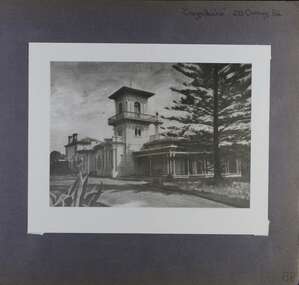
Album - Album page, Craigellachie, 273 Orrong Road, Circa 1972
... ...late victorian style...The Araucaria bidwilli is notable as a fine example of a species infrequently planted in Melbourne and rarely found in private suburban gardens. trevor hart verandah orrong road tower curved windows decorative brackets rendered craigellache italianate mansion 1870's william pearson inkerman street apartments spire decorative plaster work rendered walls ornamentation arched windows moulded ornaments 1860's lynedoch avenue classical style caulfield north craigellachie land subdivision gardens late victorian style cast iron work st kilda east ailanthus altissima araucaria bidwilli trees Handwritten: "Craigellachie" 273 Orrong Road [top right] / 158 [bottom right] Page 158 of Photograph Album with one image of Craigellachie's exterior. ...This photograph is part of the Caulfield Historical Album 1972. This album was created in approximately 1972 as part of a project by the Caulfield Historical Society to assist in identifying buildings worthy of preservation. The album is related to a Survey the Caulfield Historical Society developed in collaboration with the National Trust of Australia (Victoria) and Caulfield City Council to identify historic buildings within the City of Caulfield that warranted the protection of a National Trust Classification. Principal photographer thought to be Trevor Hart, member of Caulfield Historical Society. Most photographs were taken between 1966-1972 with a small number of photographs being older and from unknown sources. All photographs are black and white except where stated, with 386 photographs over 198 pages. From Victorian Heritage Database citation for HO40 Craigellachie 2b & 2c Lynedoch Avenue Caulfield North https://vhd.heritagecouncil.vic.gov.au/places/35209 as at (28/10/2020) Craigellachie" is situated at No. 2B Lynedoch Avenue, Caulfield North, and was built for the noted investor, pastoralist and politician, William Pearson, not earlier than 1864 and possible in 1876, undergoing several substantial and contributory extensions during the nineteenth century. It is historically and aesthetically significant. From Victorian Heritage Database citation for HO40 Craigellachie https://vhd.heritagecouncil.vic.gov.au/places/35209 as at (28/10/2020) It is historically significant (Criterion A) as the Melbourne home of William Pearson, MLA, MLC and principal shareholder in Walhalla's Long Tunnel Extended Gold Mining Co. which sustained the township well past the turn of the twentieth century and occupied fifth place amongst Victoria's richest mines. It is aesthetically significant (Criterion E) for its capacity to demonstrate Pearson's continuing financial success throughout the mid to late nineteenth century, the additions associated with the tower being most noteworthy as an example of the lasting appeal of the Italian Style, popularized in the pattern books of the day. The Ailanthus altissima (Tree of Heaven) is significant as an outstanding example of a species that is rare in cultivation, as well as for its very high aesthetic value. The Araucaria bidwilli is notable as a fine example of a species infrequently planted in Melbourne and rarely found in private suburban gardens.Page 158 of Photograph Album with one image of Craigellachie's exterior. Handwritten: "Craigellachie" 273 Orrong Road [top right] / 158 [bottom right]trevor hart, verandah, orrong road, tower, curved windows, decorative brackets, rendered, craigellache, italianate, mansion, 1870's, william pearson, inkerman street, apartments, spire, decorative plaster work, rendered walls, ornamentation, arched windows, moulded ornaments, 1860's, lynedoch avenue, classical style, caulfield north, craigellachie, land subdivision, gardens, late victorian style, cast iron work, st kilda east, ailanthus altissima, araucaria bidwilli, trees -
 Glen Eira Historical Society
Album - Album page, Craigellachie, 273 Orrong Road, Circa 1972
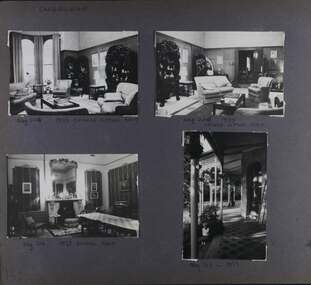
... ...late victorian style...The Araucaria bidwilli is notable as a fine example of a species infrequently planted in Melbourne and rarely found in private suburban gardens. trevor hart verandah orrong road tower curved windows decorative brackets craigellache italianate mansion 1870's william pearson inkerman street apartments spire decorative plaster work rendered walls arched windows moulded ornaments 1860's lynedoch avenue classical style caulfield north craigellachie land subdivision gardens late victorian style cast iron work st kilda east dining rooms sitting rooms furnishings tiles Handwritten: CRAIGELLACHIE [top left] / Neg 224 1973 CHINESE SITTING ROOM [under top right photo] / Neg 226 1973 / CHINESE SITTING ROOM [under top right photo] / Neg 214 1973 DINING ROOM [under bottom left photo] / Neg 213 - 1973 [under bottom right photo] / 159 [bottom left] Page 159 - four photographs of Craigellachie - three room interiors and along the verandah. ...This photograph is part of the Caulfield Historical Album 1972. This album was created in approximately 1972 as part of a project by the Caulfield Historical Society to assist in identifying buildings worthy of preservation. The album is related to a Survey the Caulfield Historical Society developed in collaboration with the National Trust of Australia (Victoria) and Caulfield City Council to identify historic buildings within the City of Caulfield that warranted the protection of a National Trust Classification. Principal photographer thought to be Trevor Hart, member of Caulfield Historical Society. Most photographs were taken between 1966-1972 with a small number of photographs being older and from unknown sources. All photographs are black and white except where stated, with 386 photographs over 198 pages. From Victorian Heritage Database citation for HO40 Craigellachie 2b & 2c Lynedoch Avenue Caulfield North https://vhd.heritagecouncil.vic.gov.au/places/35209 as at (28/10/2020) Craigellachie" is situated at No. 2B Lynedoch Avenue, Caulfield North, and was built for the noted investor, pastoralist and politician, William Pearson, not earlier than 1864 and possible in 1876, undergoing several substantial and contributory extensions during the nineteenth century. It is historically and aesthetically significant. From Victorian Heritage Database citation for HO40 Craigellachie https://vhd.heritagecouncil.vic.gov.au/places/35209 as at (28/10/2020) It is historically significant (Criterion A) as the Melbourne home of William Pearson, MLA, MLC and principal shareholder in Walhalla's Long Tunnel Extended Gold Mining Co. which sustained the township well past the turn of the twentieth century and occupied fifth place amongst Victoria's richest mines. It is aesthetically significant (Criterion E) for its capacity to demonstrate Pearson's continuing financial success throughout the mid to late nineteenth century, the additions associated with the tower being most noteworthy as an example of the lasting appeal of the Italian Style, popularized in the pattern books of the day. The Ailanthus altissima (Tree of Heaven) is significant as an outstanding example of a species that is rare in cultivation, as well as for its very high aesthetic value. The Araucaria bidwilli is notable as a fine example of a species infrequently planted in Melbourne and rarely found in private suburban gardens.Page 159 - four photographs of Craigellachie - three room interiors and along the verandah. Handwritten: CRAIGELLACHIE [top left] / Neg 224 1973 CHINESE SITTING ROOM [under top right photo] / Neg 226 1973 / CHINESE SITTING ROOM [under top right photo] / Neg 214 1973 DINING ROOM [under bottom left photo] / Neg 213 - 1973 [under bottom right photo] / 159 [bottom left]trevor hart, verandah, orrong road, tower, curved windows, decorative brackets, craigellache, italianate, mansion, 1870's, william pearson, inkerman street, apartments, spire, decorative plaster work, rendered walls, arched windows, moulded ornaments, 1860's, lynedoch avenue, classical style, caulfield north, craigellachie, land subdivision, gardens, late victorian style, cast iron work, st kilda east, dining rooms, sitting rooms, furnishings, tiles -
 Glen Eira Historical Society
Album - Album page, Craigellachie, 273 Orrong Road, Circa 1972
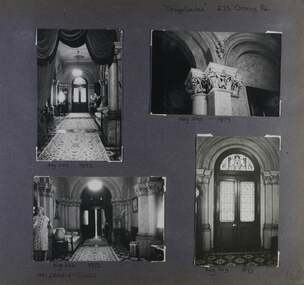
... ...late victorian style...The Araucaria bidwilli is notable as a fine example of a species infrequently planted in Melbourne and rarely found in private suburban gardens. trevor hart orrong road italianate mansion 1870's william pearson inkerman street decorative plaster work rendered walls ornamentation moulded ornaments 1860's lynedoch avenue classical style caulfield north craigellachie late victorian style st kilda east hallways arched doors stained glass mrs francis furnishings Handwritten: "Craigellachie" 273 Orrong Road [top right] / 156 [bottom right] Page 160 - four photographs of Craigellachie interiors. ...This photograph is part of the Caulfield Historical Album 1972. This album was created in approximately 1972 as part of a project by the Caulfield Historical Society to assist in identifying buildings worthy of preservation. The album is related to a Survey the Caulfield Historical Society developed in collaboration with the National Trust of Australia (Victoria) and Caulfield City Council to identify historic buildings within the City of Caulfield that warranted the protection of a National Trust Classification. Principal photographer thought to be Trevor Hart, member of Caulfield Historical Society. Most photographs were taken between 1966-1972 with a small number of photographs being older and from unknown sources. All photographs are black and white except where stated, with 386 photographs over 198 pages. From Victorian Heritage Database citation for HO40 Craigellachie 2b & 2c Lynedoch Avenue Caulfield North https://vhd.heritagecouncil.vic.gov.au/places/35209 as at (28/10/2020) Craigellachie" is situated at No. 2B Lynedoch Avenue, Caulfield North, and was built for the noted investor, pastoralist and politician, William Pearson, not earlier than 1864 and possible in 1876, undergoing several substantial and contributory extensions during the nineteenth century. It is historically and aesthetically significant.From Victorian Heritage Database citation for HO40 Craigellachie https://vhd.heritagecouncil.vic.gov.au/places/35209 as at (28/10/2020) It is historically significant (Criterion A) as the Melbourne home of William Pearson, MLA, MLC and principal shareholder in Walhalla's Long Tunnel Extended Gold Mining Co. which sustained the township well past the turn of the twentieth century and occupied fifth place amongst Victoria's richest mines. It is aesthetically significant (Criterion E) for its capacity to demonstrate Pearson's continuing financial success throughout the mid to late nineteenth century, the additions associated with the tower being most noteworthy as an example of the lasting appeal of the Italian Style, popularized in the pattern books of the day. The Ailanthus altissima (Tree of Heaven) is significant as an outstanding example of a species that is rare in cultivation, as well as for its very high aesthetic value. The Araucaria bidwilli is notable as a fine example of a species infrequently planted in Melbourne and rarely found in private suburban gardens.Page 160 - four photographs of Craigellachie interiors. Handwritten: "Craigellachie" 273 Orrong Road [top right] / 156 [bottom right]trevor hart, orrong road, italianate, mansion, 1870's, william pearson, inkerman street, decorative plaster work, rendered walls, ornamentation, moulded ornaments, 1860's, lynedoch avenue, classical style, caulfield north, craigellachie, late victorian style, st kilda east, hallways, arched doors, stained glass, mrs francis, furnishings -
 Glen Eira Historical Society
Album - Album page, Craigellachie, 273 Orrong Road, Circa 1972
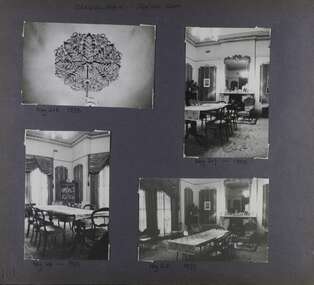
... ...late victorian style...The Araucaria bidwilli is notable as a fine example of a species infrequently planted in Melbourne and rarely found in private suburban gardens. trevor hart orrong road curved windows italianate mansion 1870's william pearson inkerman street decorative plaster work rendered walls moulded ornaments 1860's lynedoch avenue classical style caulfield north craigellachie land subdivision late victorian style dining rooms ceiling roses furnishings fireplaces st kilda east Handwritten: CRAIGELLACHIE DINING ROOM [top left] / Neg 218 1973 [under top left photo] / Neg 217 - 1973 [under top right photo] / Neg 216- 1973 [under bottom left photo] / Neg 215 1973 [under bottom right photo] / 161 [bottom left] Page 161 - four photographs of Craigellachie dining room Craigellachie, 273 Orrong Road Album Album page ...This photograph is part of the Caulfield Historical Album 1972. This album was created in approximately 1972 as part of a project by the Caulfield Historical Society to assist in identifying buildings worthy of preservation. The album is related to a Survey the Caulfield Historical Society developed in collaboration with the National Trust of Australia (Victoria) and Caulfield City Council to identify historic buildings within the City of Caulfield that warranted the protection of a National Trust Classification. Principal photographer thought to be Trevor Hart, member of Caulfield Historical Society. Most photographs were taken between 1966-1972 with a small number of photographs being older and from unknown sources. All photographs are black and white except where stated, with 386 photographs over 198 pages. From Victorian Heritage Database citation for HO40 Craigellachie 2b & 2c Lynedoch Avenue Caulfield North https://vhd.heritagecouncil.vic.gov.au/places/35209 as at (28/10/2020) Craigellachie" is situated at No. 2B Lynedoch Avenue, Caulfield North, and was built for the noted investor, pastoralist and politician, William Pearson, not earlier than 1864 and possible in 1876, undergoing several substantial and contributory extensions during the nineteenth century. It is historically and aesthetically significant. From Victorian Heritage Database citation for HO40 Craigellachie https://vhd.heritagecouncil.vic.gov.au/places/35209 as at (28/10/2020) It is historically significant (Criterion A) as the Melbourne home of William Pearson, MLA, MLC and principal shareholder in Walhalla's Long Tunnel Extended Gold Mining Co. which sustained the township well past the turn of the twentieth century and occupied fifth place amongst Victoria's richest mines. It is aesthetically significant (Criterion E) for its capacity to demonstrate Pearson's continuing financial success throughout the mid to late nineteenth century, the additions associated with the tower being most noteworthy as an example of the lasting appeal of the Italian Style, popularized in the pattern books of the day. The Ailanthus altissima (Tree of Heaven) is significant as an outstanding example of a species that is rare in cultivation, as well as for its very high aesthetic value. The Araucaria bidwilli is notable as a fine example of a species infrequently planted in Melbourne and rarely found in private suburban gardens.Page 161 - four photographs of Craigellachie dining room Handwritten: CRAIGELLACHIE DINING ROOM [top left] / Neg 218 1973 [under top left photo] / Neg 217 - 1973 [under top right photo] / Neg 216- 1973 [under bottom left photo] / Neg 215 1973 [under bottom right photo] / 161 [bottom left]trevor hart, orrong road, curved windows, italianate, mansion, 1870's, william pearson, inkerman street, decorative plaster work, rendered walls, moulded ornaments, 1860's, lynedoch avenue, classical style, caulfield north, craigellachie, land subdivision, late victorian style, dining rooms, ceiling roses, furnishings, fireplaces, st kilda east -
 Glen Eira Historical Society
Album - Album page, St Joseph's Presbytery, Orrong Road, Circa 1972
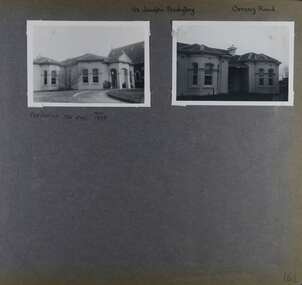
... ...late victorian style...St Joseph's buildings and grounds are contributory properties to HO72 Elsternwick Estate and environs - City of Glen Eira. trevor hart orrong road curved windows decorative brackets arched windows bay window portico slate roof st joseph's presbytery catholic church st joseph's church st joseph's primary school porte cochere the ems elsternwick rendered walls clergy residences drives late victorian style house names Handwritten: St Joseph's Presbytery Orrong Road [top right] / PREVIOUSLY "THE EMS" 1908 [under left photo] / 162 [bottom right] Page 162 - two photographs of St Joseph's Presbytery, Orrong Road. ...This photograph is part of the Caulfield Historical Album 1972. This album was created in approximately 1972 as part of a project by the Caulfield Historical Society to assist in identifying buildings worthy of preservation. The album is related to a Survey the Caulfield Historical Society developed in collaboration with the National Trust of Australia (Victoria) and Caulfield City Council to identify historic buildings within the City of Caulfield that warranted the protection of a National Trust Classification. Principal photographer thought to be Trevor Hart, member of Caulfield Historical Society. Most photographs were taken between 1966-1972 with a small number of photographs being older and from unknown sources. All photographs are black and white except where stated, with 386 photographs over 198 pages. St Joseph's buildings and grounds are contributory properties to HO72 Elsternwick Estate and environs - City of Glen Eira.Page 162 - two photographs of St Joseph's Presbytery, Orrong Road.Handwritten: St Joseph's Presbytery Orrong Road [top right] / PREVIOUSLY "THE EMS" 1908 [under left photo] / 162 [bottom right]trevor hart, orrong road, curved windows, decorative brackets, arched windows, bay window, portico, slate roof, st joseph's presbytery, catholic church, st joseph's church, st joseph's primary school, porte cochere, the ems, elsternwick, rendered walls, clergy residences, drives, late victorian style, house names -
 Glen Eira Historical Society
Album - Album page, Cromarty, Sandham Street, Circa 1972
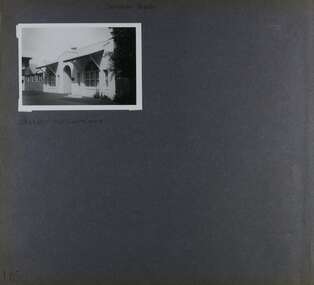
... ...late victorian style...Classified 26/11/1970 Victorian Heritage Database citation for HO61 Presentation Convent, 28 Sandham Street Elsternwick https://vhd.heritagecouncil.vic.gov.au/places/35476 A substantial two storeyed stuccoed asymmetrical Italianate villa residence, representative of its period, with two storeyed cast iron verandah and projecting facetted bay with trabeated treatment to the ground floor and round arched upper level windows with distinctive moulds. trevor hart chimneys porch cast iron lacework school education presentation sisters catholic girls college balcony verandah presentation convent sandham street victorian villa residence villa residence cast iron frieze cast iron columns protruding bay bay window 1880's double storey cromarty chiselhurst chisel hurst horatio beauchamp elsternwick classrooms class rooms late victorian style arched windows Handwritten: SANDHAM STREET [top] / CROMARTY - OLD CLASSROOMS [under photo] / 185 [bottom left] Page 185 of Photograph Album with one photograph of Cromarty. ...This photograph is part of the Caulfield Historical Album 1972. This album was created as part of a project from approximately 1966-1972 by the Caulfield Historical Society to assist in identifying buildings worthy of preservation. This album is related to a Survey the Caulfield Historical Society developed in collaboration with the National Trust of Australia Victoria and Caulfield City Council to identify historic buildings within the City of Caulfield that warranted the protection of a National Trust Classification. Photographers Jenny O’Donnell and Trevor Hart, members of Caulfield Historical Society. Some photographs are older and from unknown sources. All photographs are black and white except where stated. From Victorian Heritage Database citation for HO61 Presentation Convent, 28 Sandham Street Elsternwick https://vhd.heritagecouncil.vic.gov.au/places/35476 (as at 1/11/2020) The "Presentation Convent" is locally significant as a substantial late Victorian villa residence in Elsternwick and for its more recent role in the educational and spiritual lives of the community. https://vhd.heritagecouncil.vic.gov.au/places/65716 (as at 21/08/2021) National Trust Property No B2713 Typical of period but yet interesting for association with Horatio Beauchamp. Classified 26/11/1970 Victorian Heritage Database citation for HO61 Presentation Convent, 28 Sandham Street Elsternwick https://vhd.heritagecouncil.vic.gov.au/places/35476 A substantial two storeyed stuccoed asymmetrical Italianate villa residence, representative of its period, with two storeyed cast iron verandah and projecting facetted bay with trabeated treatment to the ground floor and round arched upper level windows with distinctive moulds.Page 185 of Photograph Album with one photograph of Cromarty.Handwritten: SANDHAM STREET [top] / CROMARTY - OLD CLASSROOMS [under photo] / 185 [bottom left]trevor hart, chimneys, porch, cast iron lacework, school, education, presentation sisters, catholic girls college, balcony, verandah, presentation convent, sandham street, victorian villa residence, villa residence, cast iron frieze, cast iron columns, protruding bay, bay window, 1880's, double storey, cromarty, chiselhurst, chisel hurst, horatio beauchamp, elsternwick, classrooms, class rooms, late victorian style, arched windows -
 Surrey Hills Historical Society Collection
Photograph, 5 Suffolk Road - Surrey Hills Mounted Police Station (Dem.)
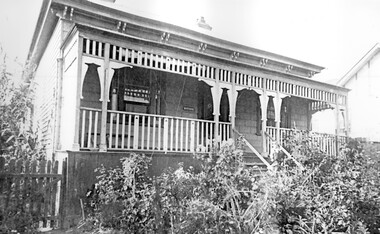
... A black and white photograph showing a mid to late Victorian style weatherboard house with decorative brackets under the eaves. ...David McPhie, ex-police force, lived here with his family from 1923-c.1950. surrey hills mounted police suffolk road surrey hills wyclif church police Gilbert McCallum Archie McCallum David Mcphie A black and white photograph showing a mid to late Victorian style weatherboard house with decorative brackets under the eaves. ...Surrey Hills Mounted Police Station was located at 5 Suffolk Road (dem.) from 1889-1914. It was a police residence with two rooms as the police office and workshop. There were stables on the back fence. The property adjoined Wyclif Church in Norfolk Road. Gilbert McCallum rented from c.1914-1923 when he built a home in Westminster Street. It is his son Archie who can just be seen on the front steps. Archie remembers the 2 storied stables with a gantry for hauling feed sacks up with a block and tackle, then a polished wood slide to send the feed down. The McCallum children and local friends found this to be a marvellous slide. David McPhie, ex-police force, lived here with his family from 1923-c.1950. A black and white photograph showing a mid to late Victorian style weatherboard house with decorative brackets under the eaves. The verandah is of timber with decorative timber fretwork.surrey hills mounted police, suffolk road, surrey hills, wyclif church, police, gilbert mccallum, archie mccallum, david mcphie -
 Glen Eira Historical Society
Album - Album page, Seymour Road, Circa 1972
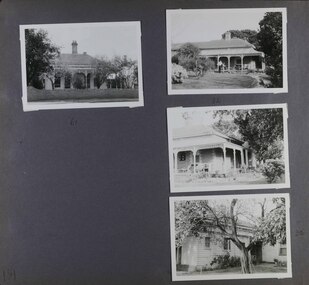
... late victorian...italianate style...This is not yet finalised. trevor hart elsternwick seymour road late victorian italianate style verandahs cast iron work gardens Handwritten: 61 [under top left photo] / 32 [under top right photo] / 32 [beside bottom right photo] / 191 [bottom left] Page 191 of Photograph Album with four photographs of two different properties on Seymour Road. ...This album was created in approximately 1972 as part of a project by the Caulfield Historical Society to assist in identifying buildings worthy of preservation. The album is related to a Survey the Caulfield Historical Society developed in collaboration with the National Trust of Australia (Victoria) and Caulfield City Council to identify historic buildings within the City of Caulfield that warranted the protection of a National Trust Classification. Principal photographer thought to be Trevor Hart, member of Caulfield Historical Society. Most photographs were taken between 1966-1972 with a small number of photographs being older and from unknown sources. All photographs are black and white except where stated, with 386 photographs over 198 pages. As at 22/08/2021, 61 Seymour Road is included in the HO179 Beemery Park Precinct which C204glen Amendment seeks to add to the Glen Eira Planning Scheme (amongst others). This is not yet finalised.Page 191 of Photograph Album with four photographs of two different properties on Seymour Road. One photo on the left, with the other three all on the right. Handwritten: 61 [under top left photo] / 32 [under top right photo] / 32 [beside bottom right photo] / 191 [bottom left]trevor hart, elsternwick, seymour road, late victorian, italianate style, verandahs, cast iron work, gardens -
 Bendigo Historical Society Inc.
Book - WHAT HOUSE IS THAT? A GUIDE TO VICTORIA'S HOUSING STYLES, 2004
... ... Late Victorian Boom Style...HOUSES Housing styles colours architecture. Early Victorian Mid Victorian Late Victorian Boom Style Queen Anne Edwardian Californian Bungalow Early Modern Modern What House is That? ...This book was produced as a joint project by Heritage Victoria and the Building Commission to celebrate the Year of the Built Environment. It is a guide to historical housing styles in Victoria.What House is That? A Guide to Victoria's Housing Styles. Housing styles, colours, architecture. Photographs & illustrations. 27 pages. Green sft coverhouses, housing styles, colours, architecture. early victorian, mid victorian, late victorian boom style, queen anne, edwardian, californian bungalow, early modern, modern -
 Surrey Hills Historical Society Collection
Photograph, Nick Pote, Medlow in 1990, 1990
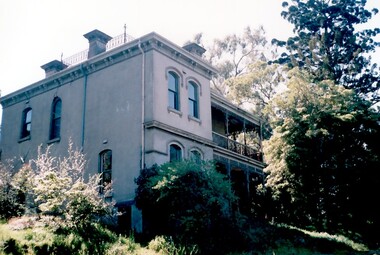
... ...late victorian boom style...The property was left to the National Trust of Victoria but the costs of maintenance forced the Trust to sell it and it has returned to private ownership. medlow house names warrigal road surrey hills (mrs) catherine bull (miss) norma bull house styles late victorian boom style (miss) catherine perrier (Mr) (Dr) richard joseph bull (Mr) ronald joseph bull (Lt) (Col) (Mr) william mcgregor cairncross (Mr) william mcgregor cairncross (Mr) cyrus hay cairncross willcyrus garden parties fundraising world war, 1914-1918 A coloured photograph of the west side of a rendered two storey building. ...Built in 1889. Was known as 'Willcyrus' during the occupancy of Lieutenant Colonel (Lt Col) William McGregor Cairncross and family. It was named after two of his sons - Sergeant William McGregor Cairncross and Trooper Cyrus Hay Cairncross, who served with the 2nd Scottish Horse during the Boer War and in British units in the First World War. Lt Col Cairncross served at the Victoria Barracks in Melbourne for 25 years. During the Boer War he was controller of stores at Victoria Barracks. It was renamed 'Medlow' when it became the home of Dr Richard Joseph Bull (1874-1927) and his wife Catherine Grace, nee Perrier (1884-1972) in 1911. Richard Joseph Bull was the Director of Bacteriology at Melbourne University. Norma was a noted artist and was born in Hawthorn in 1906; her brother Ronald Richard was born in Surrey Hills in 1912. Fundraising events were held there during the First World War. The property was left to the National Trust of Victoria but the costs of maintenance forced the Trust to sell it and it has returned to private ownership.A coloured photograph of the west side of a rendered two storey building. There are well established trees in the garden.medlow, house names, warrigal road, surrey hills, (mrs) catherine bull, (miss) norma bull, house styles, late victorian boom style, (miss) catherine perrier, (mr) (dr) richard joseph bull, (mr) ronald joseph bull, (lt) (col) (mr) william mcgregor cairncross, (mr) william mcgregor cairncross, (mr) cyrus hay cairncross, willcyrus, garden parties, fundraising, world war, 1914-1918 -
 Surrey Hills Historical Society Collection
Photograph, Nick Pote, Medlow in 1990, 1990
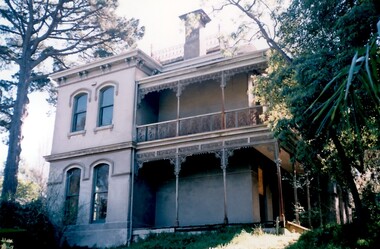
... ...late victorian boom style...The property was left to the National Trust of Victoria but the costs of maintenance forced the Trust to sell it and it has returned to private ownership. medlow house names warrigal road surrey hills (mrs) catherine bull (miss) norma bull house styles late victorian boom style (miss) catherine perrier (Mr) richard joseph bull (Mr) ronald joseph bull (Lt) (Col) (Mr) william mcgregor cairncross (Mr) william mcgregor cairncross (Mr) cyrus hay cairncross willcyrus garden parties fundraising world war, 1914-1918 A coloured photograph of the south side of a rendered two-storey Victorian-style building. ...Built in 1889. Was known as 'Willcyrus' during the occupancy of Lieutenant Colonel (Lt Col) William McGregor Cairncross and family. It was named after two of his sons - Sergeant William McGregor Cairncross and Trooper Cyrus Hay Cairncross, who served with the 2nd Scottish Horse during the Boer War and in British units in the First World War. Lt Col Cairncross served at the Victoria Barracks in Melbourne for 25 years. During the Boer War he was controller of stores at Victoria Barracks. It was renamed 'Medlow' when it became the home of Dr Richard Joseph Bull (1874-1927) and his wife Catherine Grace, nee Perrier (1884-1972) in 1911. Richard Joseph Bull was the Director of Bacteriology at Melbourne University. Norma was a noted artist and was born in Hawthorn in 1906; her brother Ronald Richard was born in Surrey Hills in 1912. Fundraising events were held there during the First World War. The property was left to the National Trust of Victoria but the costs of maintenance forced the Trust to sell it and it has returned to private ownership.A coloured photograph of the south side of a rendered two-storey Victorian-style building. There are well established trees in the garden.medlow, house names, warrigal road, surrey hills, (mrs) catherine bull, (miss) norma bull, house styles, late victorian boom style, (miss) catherine perrier, (mr) richard joseph bull, (mr) ronald joseph bull, (lt) (col) (mr) william mcgregor cairncross, (mr) william mcgregor cairncross, (mr) cyrus hay cairncross, willcyrus, garden parties, fundraising, world war, 1914-1918 -
 Surrey Hills Historical Society Collection
Photograph, Nick Pote, Medlow in 1990, 1990
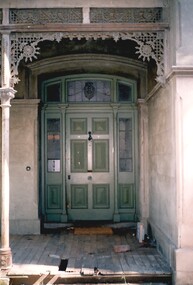
... ...late victorian boom style...The property was left to the National Trust of Victoria but the costs of maintenance forced the Trust to sell it and it has returned to private ownership. medlow house names warrigal road surrey hills (mrs) catherine bull (miss) norma bull house styles late victorian boom style (miss) catherine perrier (Mr) (Dr) richard joseph bull (Mr) ronald joseph bull (Lt) (Col) (Mr) william mcgregor cairncross (Mr) william mcgregor cairncross (Mr) cyrus hay cairncross willcyrus garden parties fundraising world war, 1914-1918 A coloured photograph of the front door of 'Medlow'. ...Built in 1889. Was known as 'Willcyrus' during the occupancy of Lieutenant Colonel (Lt Col) William McGregor Cairncross and family. It was named after two of his sons - Sergeant William McGregor Cairncross and Trooper Cyrus Hay Cairncross, who served with the 2nd Scottish Horse during the Boer War and in British units in the First World War. Lt Col Cairncross served at the Victoria Barracks in Melbourne for 25 years. During the Boer War he was controller of stores at Victoria Barracks. It was renamed 'Medlow' when it became the home of Dr Richard Joseph Bull (1874-1927) and his wife Catherine Grace, nee Perrier (1884-1972) in 1911. Richard Joseph Bull was the Director of Bacteriology at Melbourne University. Norma was a noted artist and was born in Hawthorn in 1906; her brother Ronald Richard was born in Surrey Hills in 1912. Fundraising events were held there during the First World War. The property was left to the National Trust of Victoria but the costs of maintenance forced the Trust to sell it and it has returned to private ownership.A coloured photograph of the front door of 'Medlow'. The paintwork is tired and part of the wooden veranda is degraded.medlow, house names, warrigal road, surrey hills, (mrs) catherine bull, (miss) norma bull, house styles, late victorian boom style, (miss) catherine perrier, (mr) (dr) richard joseph bull, (mr) ronald joseph bull, (lt) (col) (mr) william mcgregor cairncross, (mr) william mcgregor cairncross, (mr) cyrus hay cairncross, willcyrus, garden parties, fundraising, world war, 1914-1918 -
 Surrey Hills Historical Society Collection
Photograph, Nick Pote, Medlow in 1990, 1990
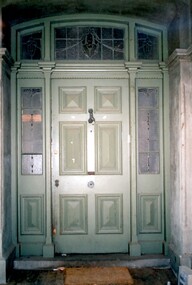
... ...late victorian boom style...The property was left to the National Trust of Victoria but the costs of maintenance forced the Trust to sell it and it has returned to private ownership. medlow house names warrigal road surrey hills (mrs) catherine bull (miss) norma bull house styles late victorian boom style (miss) catherine perrier (mr) richard joseph bull (mr) ronald joseph bull (lt) (col) (mr) william mcgregor cairncross (mr) william mcgregor cairncross (mr) cyrus hay cairncross willcyrus garden parties fundraising first world war A close-up coloured photograph of the front door of 'Medlow'. ...Built in 1889. Was known as 'Willcyrus' during the occupancy of Lieutenant Colonel (Lt Col) William McGregor Cairncross and family. It was named after two of his sons - Sergeant William McGregor Cairncross and Trooper Cyrus Hay Cairncross, who served with the 2nd Scottish Horse during the Boer War and in British units in the First World War. Lt Col Cairncross served at the Victoria Barracks in Melbourne for 25 years. During the Boer War he was controller of stores at Victoria Barracks. It was renamed 'Medlow' when it became the home of Dr Richard Joseph Bull (1874-1927) and his wife Catherine Grace, nee Perrier (1884-1972) in 1911. Richard Joseph Bull was the Director of Bacteriology at Melbourne University. Norma was a noted artist and was born in Hawthorn in 1906; her brother Ronald Richard was born in Surrey Hills in 1912. Fundraising events were held there during the First World War. The property was left to the National Trust of Victoria but the costs of maintenance forced the Trust to sell it and it has returned to private ownership.A close-up coloured photograph of the front door of 'Medlow'. medlow, house names, warrigal road, surrey hills, (mrs) catherine bull, (miss) norma bull, house styles, late victorian boom style, (miss) catherine perrier, (mr) richard joseph bull, (mr) ronald joseph bull, (lt) (col) (mr) william mcgregor cairncross, (mr) william mcgregor cairncross, (mr) cyrus hay cairncross, willcyrus, garden parties, fundraising, first world war -
 Surrey Hills Historical Society Collection
Photograph, Nick Pote, Medlow in 1990, 1990
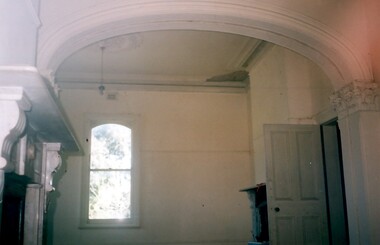
... ...late victorian boom style...The property was left to the National Trust of Victoria but the costs of maintenance forced the Trust to sell it and it has returned to private ownership. medlow house names warrigal road surrey hills (mrs) catherine bull (miss) norma bull house styles late victorian boom style (miss) catherine perrier (mr) richard joseph bull (mr) ronald joseph bull (lt) (col) (mr) william mcgregor cairncross (mr) william mcgregor cairncross (mr) cyrus hay cairncross willcyrus garden parties fundraising world war, 1914-1918 A coloured photograph of one of the rooms of 'Medlow' with an ornate mantle and archway. ...Built in 1889. Was known as 'Willcyrus' during the occupancy of Lieutenant Colonel (Lt Col) William McGregor Cairncross and family. It was named after two of his sons - Sergeant William McGregor Cairncross and Trooper Cyrus Hay Cairncross, who served with the 2nd Scottish Horse during the Boer War and in British units in the First World War. Lt Col Cairncross served at the Victoria Barracks in Melbourne for 25 years. During the Boer War he was controller of stores at Victoria Barracks. It was renamed 'Medlow' when it became the home of Dr Richard Joseph Bull (1874-1927) and his wife Catherine Grace, nee Perrier (1884-1972) in 1911. Richard Joseph Bull was the Director of Bacteriology at Melbourne University. Norma was a noted artist and was born in Hawthorn in 1906; her brother Ronald Richard was born in Surrey Hills in 1912. Fundraising events were held there during the First World War. The property was left to the National Trust of Victoria but the costs of maintenance forced the Trust to sell it and it has returned to private ownership.A coloured photograph of one of the rooms of 'Medlow' with an ornate mantle and archway. The paintwork is tired and there is damage to a corner section of the ceiling.medlow, house names, warrigal road, surrey hills, (mrs) catherine bull, (miss) norma bull, house styles, late victorian boom style, (miss) catherine perrier, (mr) richard joseph bull, (mr) ronald joseph bull, (lt) (col) (mr) william mcgregor cairncross, (mr) william mcgregor cairncross, (mr) cyrus hay cairncross, willcyrus, garden parties, fundraising, world war, 1914-1918 -
 Surrey Hills Historical Society Collection
Photograph, Nick Pote, Medlow in 1990, 1990
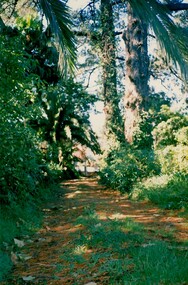
... ...late victorian boom style...The property was left to the National Trust of Victoria but the costs of maintenance forced the Trust to sell it and it has returned to private ownership. medlow house names warrigal road surrey hills (mrs) catherine bull (miss) norma bull house styles late victorian boom style (miss) catherine perrier (mr) (dr) richard joseph bull (mr) ronald joseph bull (lt) (col) (mr) william mcgregor cairncross (mr) william mcgregor cairncross (mr) cyrus hay cairncross willcyrus garden parties fundraising world war, 1914-1918 A coloured photograph taken up the driveway of 'Medlow'. ...Built in 1889. Was known as 'Willcyrus' during the occupancy of Lieutenant Colonel (Lt Col) William McGregor Cairncross and family. It was named after two of his sons - Sergeant William McGregor Cairncross and Trooper Cyrus Hay Cairncross, who served with the 2nd Scottish Horse during the Boer War and in British units in the First World War. Lt Col Cairncross served at the Victoria Barracks in Melbourne for 25 years. During the Boer War he was controller of stores at Victoria Barracks. It was renamed 'Medlow' when it became the home of Dr Richard Joseph Bull (1874-1927) and his wife Catherine Grace, nee Perrier (1884-1972) in 1911. Richard Joseph Bull was the Director of Bacteriology at Melbourne University. Norma was a noted artist and was born in Hawthorn in 1906; her brother Ronald Richard was born in Surrey Hills in 1912. Fundraising events were held there during the First World War. The property was left to the National Trust of Victoria but the costs of maintenance forced the Trust to sell it and it has returned to private ownership.A coloured photograph taken up the driveway of 'Medlow'. It is covered with what appears to be pine needles and some weeds up the centre. There are large trees overhanging the drive and the garden appears to be somewhat overgrown. medlow, house names, warrigal road, surrey hills, (mrs) catherine bull, (miss) norma bull, house styles, late victorian boom style, (miss) catherine perrier, (mr) (dr) richard joseph bull, (mr) ronald joseph bull, (lt) (col) (mr) william mcgregor cairncross, (mr) william mcgregor cairncross, (mr) cyrus hay cairncross, willcyrus, garden parties, fundraising, world war, 1914-1918 -
 Surrey Hills Historical Society Collection
Photograph, Nick Pote, Medlow in 1990, 1990
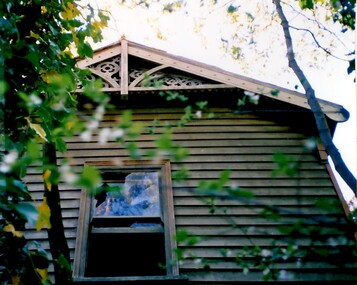
... ...late victorian boom style...The property was left to the National Trust of Victoria but the costs of maintenance forced the Trust to sell it and it has returned to private ownership. medlow house names warrigal road surrey hills (mrs) catherine bull (miss) norma bull house styles late victorian boom style (miss) catherine perrier (mr) richard joseph bull (mr) ronald joseph bull (lt) (col) (mr) william mcgregor cairncross (mr) william mcgregor cairncross (mr) cyrus hay cairncross willcyrus garden parties fundraising first world war A coloured photograph of a timber building in the grounds of 'Medlow'. ...Built in 1889. Was known as 'Willcyrus' during the occupancy of Lieutenant Colonel (Lt Col) William McGregor Cairncross and family. It was named after two of his sons - Sergeant William McGregor Cairncross and Trooper Cyrus Hay Cairncross, who served with the 2nd Scottish Horse during the Boer War and in British units in the First World War. Lt Col Cairncross served at the Victoria Barracks in Melbourne for 25 years. During the Boer War he was controller of stores at Victoria Barracks. It was renamed 'Medlow' when it became the home of Dr Richard Joseph Bull (1874-1927) and his wife Catherine Grace, nee Perrier (1884-1972) in 1911. Richard Joseph Bull was the Director of Bacteriology at Melbourne University. Norma was a noted artist and was born in Hawthorn in 1906; her brother Ronald Richard was born in Surrey Hills in 1912. Fundraising events were held there during the First World War. The property was left to the National Trust of Victoria but the costs of maintenance forced the Trust to sell it and it has returned to private ownership.A coloured photograph of a timber building in the grounds of 'Medlow'. It has ornate barge boards and fretwork. The glass in the window is broken.medlow, house names, warrigal road, surrey hills, (mrs) catherine bull, (miss) norma bull, house styles, late victorian boom style, (miss) catherine perrier, (mr) richard joseph bull, (mr) ronald joseph bull, (lt) (col) (mr) william mcgregor cairncross, (mr) william mcgregor cairncross, (mr) cyrus hay cairncross, willcyrus, garden parties, fundraising, first world war -
 Lakes Entrance Historical Society
Photograph - Hall at Swan Reach, Victoria, 1999
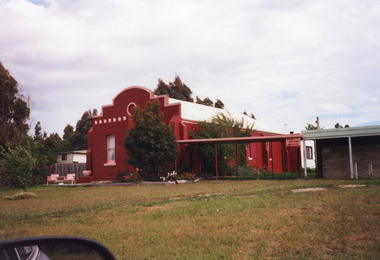
... Colour photograph of a late Victorian style brick hall painted burgundy with pink trim around the windows, oculus ventilator set in facade. ...Halls Historic Buildings Colour photograph of a late Victorian style brick hall painted burgundy with pink trim around the windows, oculus ventilator set in facade. ...Opened 2 May 1895 on site of old hall / school, Mechanics Hall 1930's, supper room added to rear.Colour photograph of a late Victorian style brick hall painted burgundy with pink trim around the windows, oculus ventilator set in facade. Side walls and front angles are buttressed. Hall set on south side of Princes Highway at Swan Reach, Victoria.halls, historic buildings -
 Lakes Entrance Historical Society
Photograph - Nithsdale, Esplanade Lakes Entrance 1920's
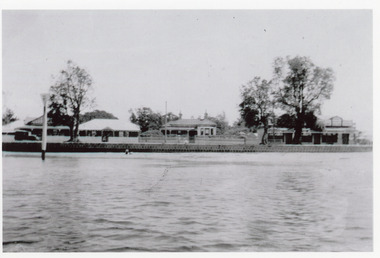
... Black and white photograph of a late Victorian style dwelling on Esplanade. Iron hipped roof veranda on twosides, bay window in front room. ...Houses Local History People Black and white photograph of a late Victorian style dwelling on Esplanade. Iron hipped roof veranda on twosides, bay window in front room. ...'Nithsdale' built c1890 by Barke Brothers, early storekeepers of Lakes Entrance, occupied by William, John and Mrs Jane Barke (mother). After c1920 lived in by members of the Coate/Symmons families. Later sold to Zagami and Crea, then lived in by Richard and Marlene Rijs in the late 1970s/early 1980s. Later again sold to Tromp and relocated to Lake Tyers Beach in the late 1980s or early 1990s.Black and white photograph of a late Victorian style dwelling on Esplanade. Iron hipped roof veranda on twosides, bay window in front room. Two chimneys, picket fence. Set between guest house and general store. View of lake and bluestone wall in foreground. Lakes Entrance Victoriahouses, local history, people -
 Surrey Hills Historical Society Collection
Photograph, Kenneth Tudor Hall, 'You Yangs' 15 Russell Street, 1988, 1988
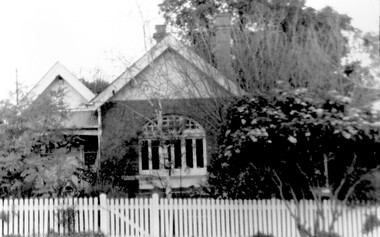
... A black and white photograph of a house, possibly late Victorian Boom Style. There is a distinctive arched window at the front and a picket fence runs along the front of the property....The house is extant in 2020. russell street (mr) john raeburn surrey hills house names (mr) theodore hendy surrey hills school scouts barton street 'you yangs' (miss) Jane nelson harkins (mrs) jane nelson reaburn A black and white photograph of a house, possibly late Victorian Boom Style. There is a distinctive arched window at the front and a picket fence runs along the front of the property. ...Known as ‘You Yangs’, 15 Russell Street was built in 1891. 1898–1900: Home of Mr and Mrs John Reaburn, later of 'Fairbank', Union Road. John Reaburn (1873-1963); Jane (Jeannie) Nelson Harkins (1875-1959) 1922–1954: Theodore Hendy and family. Mr Hendy spent some time in South Africa gaining architectural experience. One of his houses, in Barton Street, near the Surrey College has some features which may well relate to South African architecture. He also extended and updated the Surrey Hills Primary School buildings. He was impressed by Baden Powell whom he met in Sth Africa and when he heard about the scouting movement being launched in 1907, he took up the idea and started Surrey Hills Scouts in 1909. The house is extant in 2020. A black and white photograph of a house, possibly late Victorian Boom Style. There is a distinctive arched window at the front and a picket fence runs along the front of the property.russell street, (mr) john raeburn, surrey hills, house names, (mr) theodore hendy, surrey hills school, scouts, barton street, 'you yangs', (miss) jane nelson harkins, (mrs) jane nelson reaburn -
 Surrey Hills Historical Society Collection
Photograph, 7-9 Russell Street 'Vavau' / 'Handsworth'
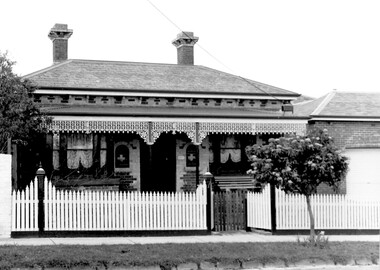
... A black and white photograph of a late Victorian Boom Style house with ornate filigree lacework on the verandah. ...late 1950s; Ruth Theodoris and her husband Peter bought it; sold 1986. The house is extant in 2020 and was last sold in May 2009 for $1,315,000. Real estate agent photos from the time reveal it has had a large extension at the rear. surrey hills russell street (mr) george jackson (mr) arthur greenwood (mrs) alice jackson jeweller (mrs) ruth theodoris (mr) peter theodoris victorian boom style vavau handsworth house names (mr) george legge A black and white photograph of a late Victorian Boom Style house with ornate filigree lacework on the verandah. ...7-9 Russell Street has had 2 house names: ‘Vavau’ and ‘Handsworth’. Early occupants were: 1887–1892: George Legge, builder. 1892-1902: Arthur Greenwood – storeman and missionary in Tonga, hence the house name ‘Vavau.’ 1902–1950s: Mr and Mrs George Jackson and family of 10 children. Alice Jackson was a specialist manufacturing jeweller and set up a jewellery business with her husband. He and the family continued it until late 1950s. 1978–1986: Sold in late 1950s; Ruth Theodoris and her husband Peter bought it; sold 1986. The house is extant in 2020 and was last sold in May 2009 for $1,315,000. Real estate agent photos from the time reveal it has had a large extension at the rear. A black and white photograph of a late Victorian Boom Style house with ornate filigree lacework on the verandah. There is a picket fence along the front. Scalloped lace curtains adorn the front windows.surrey hills, russell street, (mr) george jackson, (mr) arthur greenwood, (mrs) alice jackson, jeweller, (mrs) ruth theodoris, (mr) peter theodoris, victorian boom style, vavau, handsworth, house names, (mr) george legge -
 Bendigo Historical Society Inc.
Document - National Trust Collection: Bendigo Fire Station View Street, 1960-1980s
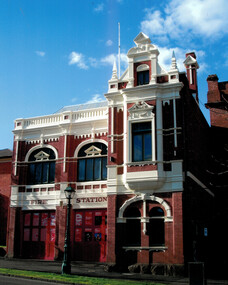
... The red brick, white plaster relief trimmings and window frames with greenish lead-light decoration, all reflect the late Victorian style of the building. The ground floor contained an engine station and call room with stalls to accomodate three horses immediately behind. ...The red brick, white plaster relief trimmings and window frames with greenish lead-light decoration, all reflect the late Victorian style of the building. The ground floor contained an engine station and call room with stalls to accomodate three horses immediately behind. ...In 1889 the three central fire brigades of Bendigo were amalgamated and a new fire station was erected in View Street (the third to be built on this site). This two storied brick building designed by Wm. Beebe forms an integral past of the View Street landscape. The red brick, white plaster relief trimmings and window frames with greenish lead-light decoration, all reflect the late Victorian style of the building. The ground floor contained an engine station and call room with stalls to accomodate three horses immediately behind. Upstairs in the main building is a handsome drill hall.Series of letters between Miss Starke and Miss Mathison re classification of the building by the National Trust; Letter to the Country Fire Authority (CFA) re classification; Media Release; National Trust data survey form; two photos of the fire station. This item contains the following six documents: 3084.44a Bendigo Fire Station View Street Bendigo Coloured Photo 3084.44b Bendigo Fire Station View Street black and white photo, street view, about 1960 3084.44c Letters related to the classification of the Bendigo Fire Station View Street Bendigo. It was classified by the National Trust in June 1977 3084.44d National Trust of Victoria Data Survey Sheet and notes on the history of the Bendigo Fire Station, View Street, Bendigo 3084.44e This document is a 1977 media release from the National Trust of Australia (Victoria) announcing the classification of two historic buildings in Bendigo: Bendigo Fire Station (View Street)Designed by architect William Beebe in 1899.Features elaborate neo-classic rendered ornament.Former Butcher's Shop (Happy Valley Road & Wells Street) Front section dates from about 1872.Originally opened by Conrad Heinze (later Mayor of Bendigo) and his brothers.Weatherboard cottage with timber verandah and scrolled valance.Built in three stages, reflecting family growth. 3084.44f Letters re fittings in the former Bendigo Fire Station, View St Bendigo 1984history, national trust bendigo collection, bendigo, bendigo fire station -
 Embroiderers Guild, Victoria
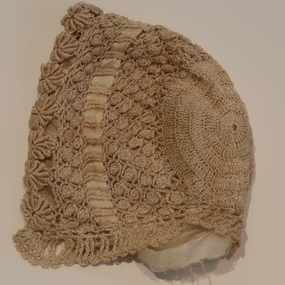
Clothing - Silk Crochet Baby's Bonnet
... Late Victorian or early Edwardian style baby bonnet....Late Victorian or early Edwardian style baby bonnet. Peach coloured silk crochet baby's bonnet with silk ribbon tie. ...Late Victorian or early Edwardian style baby bonnet.Peach coloured silk crochet baby's bonnet with silk ribbon tie. -
 Flagstaff Hill Maritime Museum and Village
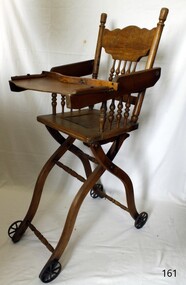
Furniture - Childs high chair, 1890 - 1900
... Many American manufactures made this type of wooden high chair called an “Eastlake” style and many did not mark their work so it is difficult to determine the subject items exact provenance. A significant item giving a snapshot into the evolution of children's furniture and domestic life during the late Victorian era. flagstaff hill warrnambool shipwrecked coast flagstaff hill maritime museum shipwreck coast flagstaff hill maritime village great ocean road high chair potty chair baby furniture kitchen furniture Carved picture of a child to back of seat Convertible pressed back Victorian era high chair with convertible frame, cast iron wheels, Furniture Childs high chair ...It appears that the earliest form of child's high chair is attributed to Jonathan Jacobs (1845-1919) a cabinet maker of Browningsville, Pennsylvania USA around the mid to late 19th century. However, children’s chairs from the 18th century and earlier were being used and are in many museum collections around the world that show woodworkers were adapting chair designs for younger users in Europe and America at this time.An early children's wooden high chair probably made in America around 1890-1900. Many American manufactures made this type of wooden high chair called an “Eastlake” style and many did not mark their work so it is difficult to determine the subject items exact provenance. A significant item giving a snapshot into the evolution of children's furniture and domestic life during the late Victorian era.Convertible pressed back Victorian era high chair with convertible frame, cast iron wheels, Carved picture of a child to back of seatflagstaff hill, warrnambool, shipwrecked coast, flagstaff hill maritime museum, shipwreck coast, flagstaff hill maritime village, great ocean road, high chair, potty chair, baby furniture, kitchen furniture -
 Federation University Historical Collection
Black and white photograph - copy, Ballarat Post Office and Academy of Art on corner of Sturt and Lydiard Streets - c1890, c1890
... Victorian Italianate style. Arched headed windows on the ground floor originally formed a colonnade. These were filled in later to provide more internal space. ...Victorian Italianate style. Arched headed windows on the ground floor originally formed a colonnade. These were filled in later to provide more internal space. former ballarat post office colonnade victorian italianate victorian italianate style arched windows sturt street lydiard street Black and white photograph - copy of the original. ...First section of the Post Office built 1864. Second section which included a tower was built in 1885. Built in the Victorian Italianate style. Arched headed windows on the ground floor originally formed a colonnade. These were filled in later to provide more internal space. Black and white photograph - copy of the original. Shows former Ballarat Post Office. Horse drawn carriages outside. Another building shown is "Academy of Art" with name above. This cannot be determined.former ballarat post office, colonnade, victorian italianate, victorian italianate style, arched windows, sturt street, lydiard street -
 Flagstaff Hill Maritime Museum and Village
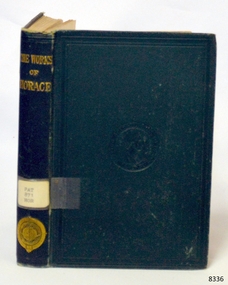
Book - Lyrical Poems, Samuel Lee (Translator), The Works of Horace, 1890
... late 19th century. While Lonsdale brought the classical traditions of Oxford to their partnerships, Lee provided the rigorous structural lens typical of the Cambridge style of linguistics. Working in tandem, Lee and Lonsdale recognized a critical gap in Victorian...late 19th century. While Lonsdale brought the classical traditions of Oxford to their partnerships, Lee provided the rigorous structural lens typical of the Cambridge style of linguistics. Working in tandem, Lee and Lonsdale recognized a critical gap in Victorian ...The original author of this work was Quintus Horatius Flaccus, one of the leading Roman lyric poets during the time of Augustus Caesar (1st century BCE). This volume features the complete surviving works of Horace, rendered entirely into English prose. It includes his famous Odes, or lyrical poems, as well as his earlier poems on politics and social issues of the time. It also features his Satires, which offer humorous commentaries on Roman life, and his Epistles, or letters in verse, which include his highly influential work on literary criticism, the Ars Poetica (or The Art of Poetry).The Works of Horace Author: James Lonsdale and Samuel Lee Publisher: Macmillan And Co Date: 1890 Further Information: non-fictionThe original author of this work was Quintus Horatius Flaccus, one of the leading Roman lyric poets during the time of Augustus Caesar (1st century BCE). This volume features the complete surviving works of Horace, rendered entirely into English prose. It includes his famous Odes, or lyrical poems, as well as his earlier poems on politics and social issues of the time. It also features his Satires, which offer humorous commentaries on Roman life, and his Epistles, or letters in verse, which include his highly influential work on literary criticism, the Ars Poetica (or The Art of Poetry).flagstaff hill, warrnambool, shipwrecked coast, flagstaff hill maritime museum, maritime museum, shipwreck coast, flagstaff hill maritime village, great ocean road, book, pattison collection, warrnambool library, warrnambool mechanics’ institute, ralph eric pattison, corangamite regional library service, warrnambool city librarian, mechanics’ institute library, victorian library board, warrnambool books and records, warrnambool children’s library, the works of horace, samuel lee, james lonsdale, latin translated text -
 Flagstaff Hill Maritime Museum and Village
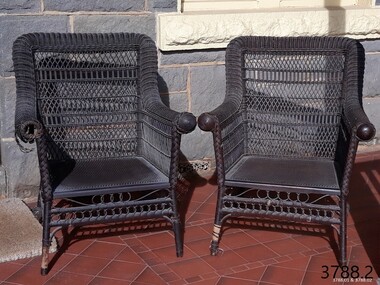
Furniture - Armchair, 1897-1921
... victorian style furniture...domestic furniture late...The wicker furniture is a fine example of late 19th and early 20th century lightweight domestic furniture that is today a very collectible item and quite rare and valuable. flagstaff hill warrnambool shipwrecked coast flagstaff hill maritime museum shipwreck coast great ocean road giles collection giles family henry and mary jane giles tower hill cooramook warrnambool breakwater mailor’s flat wangoom 19th century furniture wicker armchairs rolled serpentine wicker work cane armchair classic wicker furniture victorian style furniture domestic furniture late 19th century chair armchair woven cane wicker rolled serpentine MANUFA - Heywood B – GARDNE Heywood Brothers & Wakefield Company USA Tag, orange with black print: “MANUFA - Heywood B – GARDNE” Armchair: pair of wicker armchairs, painted dark brown. ...These cane chairs are one of many 19th-century items of furniture, linen and crockery donated to Flagstaff Hill Maritime Village by Vera and Aurelin Giles. The items are associated with Warrnambool and the Giles Family history. Items donated by the family have come to be known as the Giles Collection. Many items in the Lighthouse Keeper’s Cottage were donated by Vera and Aurelin Giles and mostly came from the home of Vera’s parents-in-law, Henry Giles and his wife Mary Jane (nee Freckleton), who married in 1880 and whose photos are on display in the parlour. Henry was born at Tower Hill in 1858 and was a labourer on the construction of the Warrnambool Breakwater before leaving in 1895 for around seven years to build bridges in NSW. Mary Jane was born in 1860 at Cooramook, and she attended Mailor’s Flat State School and where she eventually became a student teacher. After which she became a governess at “Injemiara”, where her grandfather, Francis Freckleton, had once owned land. Henry and Mary’s family consisted of six; some of the children were born at Mailor’s Flat, and later, some children were born at Wangoom. They lived with their parents at Wangoom and Purnim west, and this is where Henry died in 1933 and Mary Jane in 1940. Heywood & Wakefield Furniture Co: - The Heywood-Wakefield Company is an American furniture manufacturer established in 1897. It went on to become a major presence in the US. Its older products are considered collectibles and have been featured on television antique programs. The Heywood brothers established themselves in 1826 as furniture makers, and the Wakefield Company began in 1855 as a separate company. Both firms produced wicker and rattan furniture, and as these products became increasingly popular towards the end of the century, they became serious rivals. In 1897, the companies merged as Heywood Brothers & Wakefield Company (this name was changed to Heywood-Wakefield Company in 1921), purchasing Washburn-Heywood Chair Company in 1916, Oregon Chair Company in 1920, and Lloyd Manufacturing Company in 1921. While its wooden furniture plant in Gardner, Massachusetts, closed in 1979, a branch in Menominee, Michigan, continued to manufacture metal outdoor seats, auditorium seats, and school furniture. The Heywood-Wakefield Company Complex in Gardner was added to the National Historic Register in 1983. The South Beach Furniture Company acquired the rights to the name in 1994 and reproduces its wooden furniture. Both founding companies produced wicker and rattan furniture in the late 19th century. The wicker styles drew on the Aesthetic Movement and Japanese influences simpler designs arose in the wake of the Arts and Crafts Movement. The merged entity stayed abreast of wicker furniture trends by hiring designers such as Paul Frankl and Donald Deskey during the 1920s. Its furniture was exhibited at the 1933 Century of Progress exhibition and the 1964 New York World's Fair. During the 1930s and 1940s, Heywood-Wakefield began producing furniture using sleek designs based on French Art Deco.The Giles family collection has social significance at a local level because it illustrates the level of material support the Warrnambool community gave to Flagstaff Hill when the village and museum were established. The wicker furniture is a fine example of late 19th and early 20th century lightweight domestic furniture that is today a very collectible item and quite rare and valuable.Armchair: pair of wicker armchairs, painted dark brown. The open wicker weave pattern of a traditional Asian design extends from the seat up to the armrests and completely over the backrest, plus across the front of the chair below the seat. The seat is very firmly woven and fitted into a timber frame. A reinforcing pattern of wicker work covers the top edges of the armrests and backrest in one piece and folds around to the underside, referred to as rolled serpentine arms and back. The hollow ends of the armrests are filled with a circular knob of wicker work. The back legs are also completed with decorative wicker knobs. The frames are constructed from bamboo. One chair base (3788.1) has been strengthened with metal bracing. The other chair (3788.2) has the remnants of an orange manufacturer’s tag fixed to the base. The chairs were made from 1897 to 1921 by Heywood Brothers & Wakefield Company, USA. These chairs are part of the Giles Collection.Tag, orange with black print: “MANUFA - Heywood B – GARDNE”flagstaff hill, warrnambool, shipwrecked coast, flagstaff hill maritime museum, shipwreck coast, great ocean road, giles collection, giles family, henry and mary jane giles, tower hill, cooramook, warrnambool breakwater, mailor’s flat, wangoom, 19th century furniture, wicker armchairs, rolled serpentine wicker work, cane armchair, classic wicker furniture, victorian style furniture, domestic furniture late 19th century, chair, armchair, woven cane, wicker, rolled serpentine, manufa - heywood b – gardne, heywood brothers & wakefield company, usa -
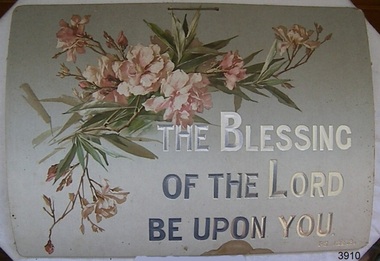 Flagstaff Hill Maritime Museum and Village
Decorative object - Wall Decoration, 1850 to 1901
... late Victorian era, from the 1880s to the early 1900s, in which Queen Victoria ruled England. The queen’s influence was felt throughout the world, including in the United States and Australia where Victorian values shaped society and style, especially in home décor. ...late Victorian era, from the 1880s to the early 1900s, in which Queen Victoria ruled England. The queen’s influence was felt throughout the world, including in the United States and Australia where Victorian values shaped society and style, especially in home décor. ...This item is part of the Giles Collection, dating back to the late Victorian era, from the 1880s to the early 1900s, in which Queen Victoria ruled England. The queen’s influence was felt throughout the world, including in the United States and Australia where Victorian values shaped society and style, especially in home décor. This period’s distinct style presents an eclectic mix of highly ornamented furniture, wallpaper, and knick-knacks. Particularly in terms of furniture, and the characteristic floral patterns and rich, contrasting colours, wall hangings that enjoyed the height of their popularity during the Victorian era were of the spiritual type with either embroidered or punched paper religious motto or bible quote. Mottoes were commonly hung high up on the wall or in an area of prominence, to remind the viewer of their important message, such as “He Leadeth Me” and “Honesty, Industry, and Sobriety.” Short and pithy, they embodied the ideals of Victorian society. Technological advances contributed to the boom of religious mottoes whereas before the Industrial Revolution home décor of this sort was handmade and therefore minimal, now consumers could purchase and fill their homes with all sorts of mass-produced ephemera goods similar to the subject item. Many of these mass-produced period pieces still exist today, often in their original frames, ceramic, enamelled or paper formats. Flagstaff maritime museum has many examples of mottoes on display that serve to reflect the period in which values of home, faith, and Christianity were very prominent in everyday Victorian society. The Giles Family There are many 19th century items of furniture, linen and crockery donated to Flagstaff Hill Maritime Village by Vera and Aurelin Giles. The items are associated with the Giles Family and are known as the “Giles Collection”. These items mostly came from the simple home of Vera’s parents-in-law, Henry Giles and his wife Mary Jane (nee Freckleton), whose photos are in the parlour. They married in 1880. Henry Giles was born at Tower Hill in 1858. He was a labourer on the construction of the Breakwater before leaving in 1895 to build bridges in N.S.W. for about seven years. Mary Jane was born in 1860 at Cooramook. She attended Mailor’s Flat State School where she was also a student teacher before, as a family legend has it, she became a governess at “Injemiara” where her grandfather, Francis Freckleton, once owned land. Henry and Mary’s family of six, some of whom were born at Mailor’s Flat and later children at Wangoom, lived with their parents at Wangoom and Purnim west, where Henry died in 1933 and Mary Jane in 1940.The Giles family collection has social significance at a local level, because it illustrates the level of material support the Warrnambool community gave to Flagstaff Hill when the Museum was established. This wall decoration reflects the social values and attitudes of the late Victorian era that was used to promote good Christian and moral values in many households. These items of decoration were very popular at this time and the subject item is significant as it gives a snapshot into the social norms of past generations. Printed card wall hanging with floral design. Religious text on the sign is embossed onto the card and highlighted in silver print. There is a handwritten ink inscription, and a pencil inscription, on the back. A string is attached to two holes on top of the card. Embossed"THE BLESSING / OF THE LORD/ BE UPON YOU." "PS 129.8." In pencil "H/S" In ink "To dear Granny with lots of love / from Dorothy. X X."flagstaff hill, warrnambool, shipwrecked coast, flagstaff hill maritime museum, shipwreck coast, great ocean road, paper wall decoration, religious, home decoration, societal values, victorian moral values, wall hanging, wall decoration, spiritual decoration, bible verse, giles collection
