
Showing 39 items matching "lewis guns"
-
 Bendigo Military Museum
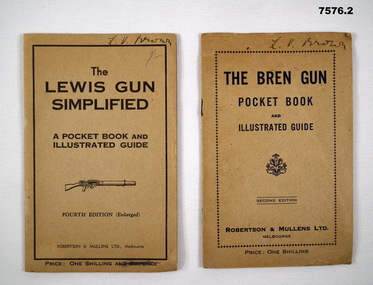
Manual - LEWIS AND BREN GUNS, ROBERTSON & MULLENS LTD, Unknown
... LEWIS AND BREN GUNS...Lewis Gun...Lewis Gun was used in WW1. Lewis and Bren Gun were used in WW2....1. Lewis Gun. This is a pocket size notebook. ...Lewis Gun was used in WW1. Lewis and Bren Gun were used in WW2. ...Lewis Gun was used in WW1. Lewis and Bren Gun were used in WW2.1. Lewis Gun. This is a pocket size notebook. Khaki colour, printing is in black ink. It shows the title and drawing of a Lewis Gun. Fourth Edition (enlarged). Inside are illustrations of Lewis Gun Parts. 2. Bren Gun. Pocket size notebook. Pocket book and illustrated guide. Second edition. Inside are written instructions and illustrations of Bren Gun parts.1. Written on top front is - “L.V. Brown”, “1/-“ 2. Written on top front is - “L.V. Brown”.lewis gun, bren gun, manuals -
 The 5th/6th Battalion Royal Victoria Regiment Historical Collection
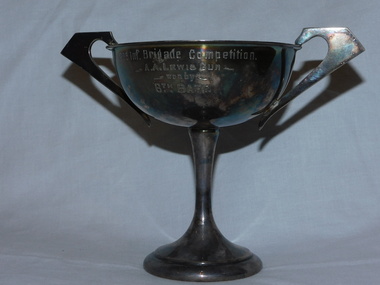
Award - Trophy, 2nd inf Brigade Competition - A.A Lewis Gun won by 6th Batt
... 2nd inf Brigade Competition - A.A Lewis Gun won by 6th Batt....2nd infantry Brigade Competition A.A. Lewis Gun...2nd inf Brigade Competition - A.A Lewis Gun won by 6th Batt....2nd inf Brigade Competition - A.A Lewis Gun won by 6th Batt....2nd infantry Brigade Competition A.A. Lewis Gun 5/6 RVR 5/6 RVR 2nd Battalion 2nd inf Brigade Competition - A.A Lewis Gun won by 6th Batt. 2nd inf Brigade Competition - A.A Lewis Gun won by 6th Batt. 2nd inf Brigade Competition - A.A Lewis Gun won by 6th Batt. ...2nd infantry Brigade Competition A.A. Lewis Gun2nd inf Brigade Competition - A.A Lewis Gun won by 6th Batt.2nd inf Brigade Competition - A.A Lewis Gun won by 6th Batt.5/6 rvr, 5/6 rvr 2nd battalion -
 Dandenong/Cranbourne RSL Sub Branch
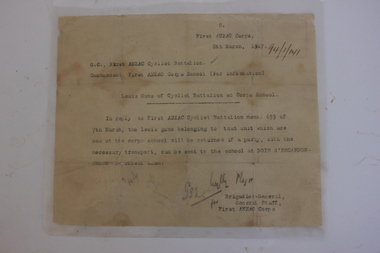
Letter - Letter, First ANZAC CORPS 1917, 8 March 1917
... ...lewis guns...WWI letter regarding Lewis Guns of Cyclist Battalion at First ANZAC Corps School..... / Commandant, First ANZAC Corps School .... / Lewis Guns of Cyclist Battalion at Corps School. / In reply to First ANZAC Cyclist Battalion memo. 653 of 7th march, the lewis guns belonging to that unit which are now at the corps school will be returned if a party, with the necessary transport, can be sent to the school at BOIS d'ESCARDON-NEUSE to collect them / Brigadier-General, / General Staff, / First ANZAC Corps"...WWI letter regarding Lewis Guns of Cyclist Battalion at First ANZAC Corps School. anzac corps first anzac corps school lewis guns cyclist battalion "First ANZAC Corps / 8th March 1917 / 94/1/141 ... / O.C., First ANZAC Cyclist Battalion. / Commandant, First ANZAC Corps School .... / Lewis Guns of Cyclist Battalion at Corps School. / In reply to First ANZAC Cyclist Battalion memo. 653 of 7th march, the lewis guns belonging to that unit which are now at the corps school will be returned if a party, with the necessary transport, can be sent to the school at BOIS d'ESCARDON-NEUSE to collect them / Brigadier-General, / General Staff, / First ANZAC Corps" Laminated letter. ...WWI letter regarding Lewis Guns of Cyclist Battalion at First ANZAC Corps School.Laminated letter. Typed on a typewriter."First ANZAC Corps / 8th March 1917 / 94/1/141 ... / O.C., First ANZAC Cyclist Battalion. / Commandant, First ANZAC Corps School .... / Lewis Guns of Cyclist Battalion at Corps School. / In reply to First ANZAC Cyclist Battalion memo. 653 of 7th march, the lewis guns belonging to that unit which are now at the corps school will be returned if a party, with the necessary transport, can be sent to the school at BOIS d'ESCARDON-NEUSE to collect them / Brigadier-General, / General Staff, / First ANZAC Corps"anzac corps, first anzac corps school, lewis guns, cyclist battalion -
 Moorabbin Air Museum
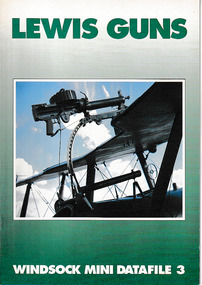
Magazine (item) - (SP) Windsock Mini Datafile No 003 - Lewis Guns
... (SP) Windsock Mini Datafile No 003 - Lewis Guns...Magazine (SP) Windsock Mini Datafile No 003 - Lewis Guns ... -
 The 5th/6th Battalion Royal Victoria Regiment Historical Collection
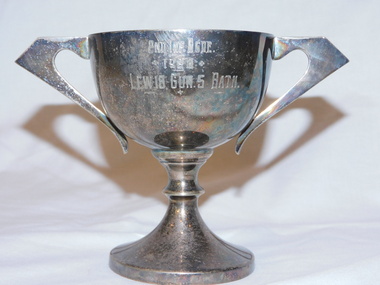
Award - Trophy, 2ND INF BGDE 1928 LEWIS GUN.5 BATN
... 2ND INF BGDE 1928 LEWIS GUN.5 BATN ......1928 Lewis Gun... 2ND INF BGDE 1928 LEWIS GUN.5 BATN...2ND INF BGDE 1928 LEWIS GUN.5 BATN...2ND INF BGDE 1928 LEWIS GUN.5 BATN 5/6 RVR 5/6 2ND Infantry Brigade 1928 1928 Lewis Gun 2ND INF BGDE 1928 LEWIS GUN.5 BATN Small sized trophy - Both handles intact and shaped like upside down hocky sticks/ nike logos - 2ND INF BGDE 1928 LEWIS GUN.5 BATN Award Trophy ...2ND INF BGDE 1928 LEWIS GUN.5 BATNSmall sized trophy - Both handles intact and shaped like upside down hocky sticks/ nike logos -2ND INF BGDE 1928 LEWIS GUN.5 BATN5/6 rvr, 5/6 2nd infantry brigade 1928, 1928 lewis gun -
 The 5th/6th Battalion Royal Victoria Regiment Historical Collection
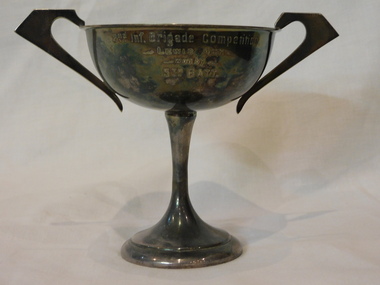
Award - Trophy, 2nd INF Brigade Competition - Lewis Gun - Won by 5th Batt
... 2nd INF Brigade Competition - Lewis Gun - Won by 5th Batt......Lewis Gun...2nd INF Brigade Competition - Lewis Gun - Won by 5th Batt...2nd INF Brigade Competition Lewis Gun Won by 5th Batt...2nd INF Brigade Competition - Lewis Gun - Won by 5th Batt 5/6 RVR 5/6 RVR Pipes and Drums 2nd INF Brigade Competition Lewis Gun 5th Batt 2nd INF Brigade Competition Lewis Gun Won by 5th Batt Small - Mid size trophy with upside down hockey stick/nike logo handles that are intact. ...2nd INF Brigade Competition - Lewis Gun - Won by 5th BattSmall - Mid size trophy with upside down hockey stick/nike logo handles that are intact. Base of trophy has VSR Trust written. 2nd INF Brigade Competition Lewis Gun Won by 5th Batt5/6 rvr, 5/6 rvr pipes and drums, 2nd inf brigade competition, lewis gun, 5th batt -
 4th/19th Prince of Wales's Light Horse Regiment Unit History Room
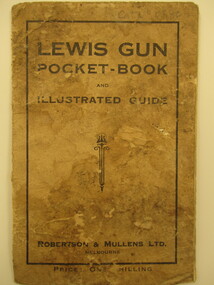
Book, The National Press Pty Ltd, Lewis Gun Pocket Book & Illustrated Guide, pre 1914
... Lewis Gun Pocket Book & Illustrated Guide......lewis machine gun...Unfortunately, the Lewis Gun was still in service in theAustralian Army at the outbreak of World War 2...Soft covered book, detailing the parts and their function, correction of stoppages etc of the Lewis machine gun...Unfortunately, the Lewis Gun was still in service in theAustralian Army at the outbreak of World War 2 handbook lewis machine gun Robertson & Mullens Ltd Melbourne Price One Shilling Soft covered book, detailing the parts and their function, correction of stoppages etc of the Lewis machine gun Lewis Gun Pocket Book & Illustrated Guide Book Book The National Press Pty Ltd ...Hand book for machine gun used by Light Horse Regiments during the Great War. Unfortunately, the Lewis Gun was still in service in theAustralian Army at the outbreak of World War 2Soft covered book, detailing the parts and their function, correction of stoppages etc of the Lewis machine gunRobertson & Mullens Ltd Melbourne Price One Shillinghandbook, lewis machine gun -
 Bendigo Military Museum
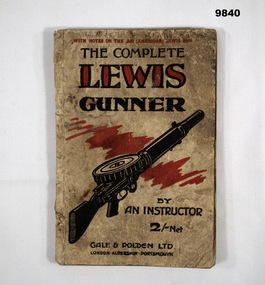
Manual - THE COMPLETE LEWIS GUNNER, Gale & Polden Limited, c.WW1
... ...Lewis Gun...From front cover; "WITH NOTES ON THE .300 (AMERICAN) LEWIS GUN/ THE COMPLETE LEWIS GUNNER/ BY AN INSTRUCTOR". ...Illustrated front - sketch of a Lewis gun. 76 pages - cut, plain, white paper. ...From front cover; "WITH NOTES ON THE .300 (AMERICAN) LEWIS GUN/ THE COMPLETE LEWIS GUNNER/ BY AN INSTRUCTOR". ...From front cover; "WITH NOTES ON THE .300 (AMERICAN) LEWIS GUN/ THE COMPLETE LEWIS GUNNER/ BY AN INSTRUCTOR". Part of the William (Bill) THOMASON Collection. Refer Cat. No. 4136P for more items.Soft cover book. Cover - beige colour cardboard, with black and red ink print on front and back. Illustrated front - sketch of a Lewis gun. 76 pages - cut, plain, white paper. Illustrated black and white photographs and technical diagrams. End paper - with black ink print information. Front end paper - "FOREWORD BY THE AUTHOR" - handwritten information.Handwritten information - blue ink pen. "?? K. ARNELL".publications, books, instruction manual, lewis gun, william (bill) thomason collection -
 4th/19th Prince of Wales's Light Horse Regiment Unit History Room
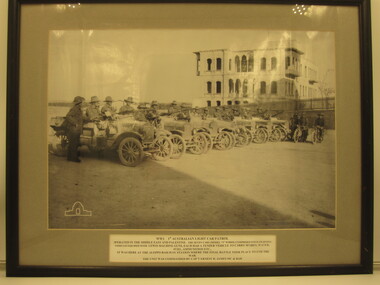
Photograph - Framed Photograph, WW1 1st Australian Light Car Patrol
... 7 Ford Model T vehicles fitted with Lewis Machine Guns...The seven cars (Model "T" Fords) comprised four fighting vehicles equipped with Lewis machine guns. Each had a tender vehicle to carry spares, water, fuel, ammunition etc. ...See Inscription WW1 1st Australian Light Car Patrol 7 Ford Model T vehicles fitted with Lewis Machine Guns AWM logo. Caption: WW1 1st Australian Light Car Patrol. ...See InscriptionFramed B&W photo of 7 patrol cars with crews at Aleppo Railway Station, Syria. Two motor cycles are in shotAWM logo. Caption: WW1 1st Australian Light Car Patrol. Operated in the Middle East and Palestine. The seven cars (Model "T" Fords) comprised four fighting vehicles equipped with Lewis machine guns. Each had a tender vehicle to carry spares, water, fuel, ammunition etc. It was here at Aleppo Railway Station where the final battle took place to end the war. The unit was commanded by Cap't Ernest H James MC & Barww1 1st australian light car patrol, 7 ford model t vehicles fitted with lewis machine guns -
 Bendigo Military Museum
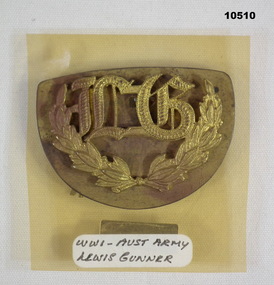
Badge - LEWIS GUNNERS BADGE, Unknown
... ...Lewis Guns...WW1 Badge Lewis Guns On the celluloid is a white label. ...A medium size brass badge. The letters are gothic style. Left and right sides have a laurel branch. The rear of the badge has 3 loops. A brass plate, semi circular in shape is held on the back of the badge with 3 clips which are all brass. The badge and back plate are mounted on a plain piece of celluloid.On the celluloid is a white label. "WW1 Aust Army Lewis Gunner".ww1, badge, lewis guns -
 Bendigo Military Museum
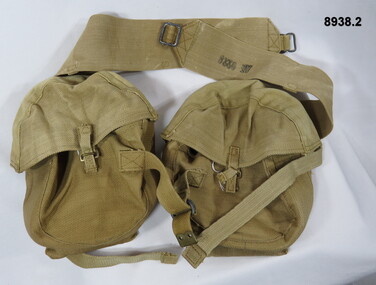
Equipment - MAGAZINE POUCH, BHG Ltd, 1944
... ...Lewis gun drum pouch...1. & 2. 1944 British WWII khaki web Lewis Gun double drum pouches complete with sholder strap, designed to be worn in sets of four pouches with capacity of eight (8) drum magazines to suit a Lewis Gun....“A5 LT/ BHG LTD 1944^” 1. & 2. 1944 British WWII khaki web Lewis Gun double drum pouches complete with sholder strap, designed to be worn in sets of four pouches with capacity of eight (8) drum magazines to suit a Lewis Gun. ...1. & 2. 1944 British WWII khaki web Lewis Gun double drum pouches complete with sholder strap, designed to be worn in sets of four pouches with capacity of eight (8) drum magazines to suit a Lewis Gun.On shoulder strap - “AE0220 = AE 0220” On inside of flap. “A5 LT/ BHG LTD 1944^”passchendaele barracks trust, pbt251, equipment, lewis gun drum pouch -
 Bendigo Military Museum
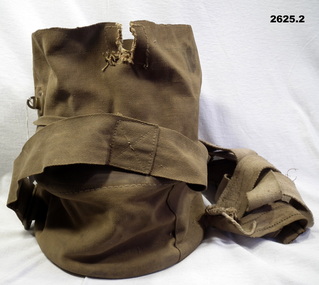
Container - MAGAZINE CARRIER, Hampton & Sons Ltd, 1918
... .1) Khaki canvas carrier for a Lewis 303 in. gun ammunition magazine, canvas belt & metal loops. .2) x 2 Khaki canvas straps with metal buckles....“Carriers magazine Lewis 303 in. gun 1918 Goordy”...military history - ammunition carrier military equipment Passchendaele barracks trust “Carriers magazine Lewis 303 in. gun 1918 Goordy” .1) Khaki canvas carrier for a Lewis 303 in. gun ammunition magazine, canvas belt & metal loops. .2) x 2 Khaki canvas straps with metal buckles. ....1) Khaki canvas carrier for a Lewis 303 in. gun ammunition magazine, canvas belt & metal loops. .2) x 2 Khaki canvas straps with metal buckles.“Carriers magazine Lewis 303 in. gun 1918 Goordy”military history - ammunition carrier, military equipment, passchendaele barracks trust -
 Tatura Irrigation & Wartime Camps Museum
Booklet, Robertson & Mullers LTD, The Lewis Gun Simplified, 1940s
... The Lewis Gun Simplified...lewis gun...A pocket book and illustrated guide to the Lewis Gun...A pocket book and illustrated guide to the Lewis Gun lewis gun military J. J. Muir VDC Buff-coloured card covered booklet with black print. ...A pocket book and illustrated guide to the Lewis GunBuff-coloured card covered booklet with black print. Drawing of gun in centre of front cover, text hinged to cover, illustrated price: one shilling, fifth edition (enlarged) 10 pagesJ. J. Muir VDClewis gun, military -
 Bendigo Military Museum
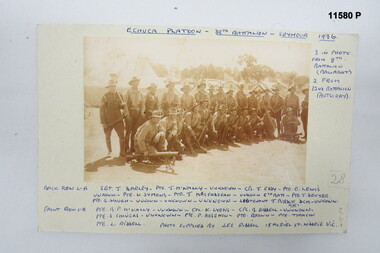
Photograph - 38th BATTALION 1936, c.1936
... Sepia photograph mounted on cream card backing showing a group of soldiers standing and kneeling with a Lewis Gun. Tents and trees in background. Title and identification of troops in blue pen. ...Sepia photograph mounted on cream card backing showing a group of soldiers standing and kneeling with a Lewis Gun. Tents and trees in background. Title and identification of troops in blue pen. ...Sepia photograph mounted on cream card backing showing a group of soldiers standing and kneeling with a Lewis Gun. Tents and trees in background. Title and identification of troops in blue pen. Accompanied by a two page handwritten letter with background information relating to photograph.1. On the front in blue pen "Echuca Platoon - 38th Battalion - Seymour 1936. Three in the photo are from 8th Battalion (Ballarat) two from 32nd Battalion (Footscray). Named personnel. 2. Attached handwritten letter from Les Riddell. Rear of photo PBT 28.passchendaele barracks trust, pbt 28, photograph, 38th battalion, echuca platoon -
 Australian Army Museum of Western Australia
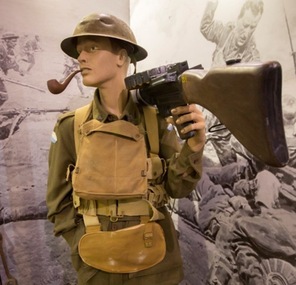
Diorama, 2015
... amiens, last 100 days, lewis gun, spring offensive...The figure shows details of the Lewis gun and webbing including the documented but irregular positioning of the entrenching tool....The figure shows details of the Lewis gun and webbing including the documented but irregular positioning of the entrenching tool. ...This diorama is the introductory feature in the World War 1 Gallery - 1918 experience. The figure shows details of the Lewis gun and webbing including the documented but irregular positioning of the entrenching tool.The diorama text discusses the transition from manpower to firepower with the restructure of infantry battalions to incorporate more light machine guns and to give the platoon an all round versus specialist capability. The increase in firepower and the reduction to three from four battalions in an infantry regiment in part offset the decline in voluntary recruitment. The offensive capabilities of an infantry battalion was therefore generally maintained but with 700 men instead of 1100 when fully manned .1:1 scale diorama showing a Lewis gunner of 44th Battalion, 11th Brigade, 3rd Division, Australian Imperial Force in May 1918amiens, last 100 days, lewis gun, spring offensive -
 Bendigo Military Museum
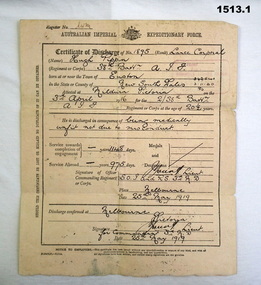
Administrative record - DOCUMENTS, 1916-19
... Yellowish colour. .2 Paper re 2nd Anzac corps Lewis Gun School, re H Pippin 1895 passing 9th Course Lewis Gun, dated 20th Oct 17. ...Yellowish colour. .2 Paper re 2nd Anzac corps Lewis Gun School, re H Pippin 1895 passing 9th Course Lewis Gun, dated 20th Oct 17. ...Hughy Pippin. Refer 1502 medals..1 Discharge certificate re Hugh Pippin 1895 LCpl 38th Batt AIF, VB No 43552, No 125852. Yellowish colour. .2 Paper re 2nd Anzac corps Lewis Gun School, re H Pippin 1895 passing 9th Course Lewis Gun, dated 20th Oct 17. Paper is yellowed, writing is in ink. .3 Leave pass re. H Pippin 1895. Leave dates 14/4/19-25/4/19. Yellowed paper. .4 Gift diary from Australian Comforts Fund 1919. Red fabric cover with silver circle with red star and letters "ACF". Rear has silver rising sun badge. Only 2 pages remaining..4 "This diary belongs to H Pippin, Euston, Regt No 1895, rank Cpl"documents-certificates, diaries, military history -
 Bendigo Military Museum
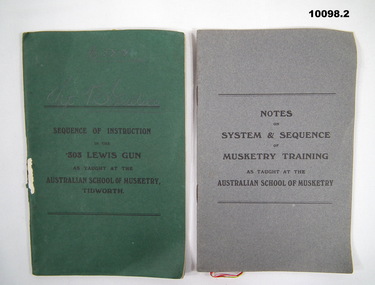
Manual - INSTRUCTION MANUALS, 1918
... ...Lewis Gun...Green cover, 44 page booklet with sequence of instructions in the .303 Lewis Gun as taught at the Australian School of Musketry, Tidworth. ...Collection of William (Bill) Thomason V E Giudice Manuals Lewis Gun Name: “V E Giudice”on front of book 1. ..."V E Giudice" as an NCO had instruction on various systems and items involved in training for battle. Part of the collection of Sgt V E Giudice, No. 53730. Cat No. 10031P. Overall part of the collection of William (Bill) Thomason. Cat No. 4136P.1. Green cover, 44 page booklet with sequence of instructions in the .303 Lewis Gun as taught at the Australian School of Musketry, Tidworth. Looks at how gun is used and maintained with tables on spares and drawings on structure. 2. Grey covered, 18 page booklet for notes on system and sequence of musketry training as taught at the Australian School of Musketry.Name: “V E Giudice”on front of book 1. Name: “V E Giudice” written on inside front of Book no. 2.collection of william (bill) thomason, v e giudice, manuals, lewis gun -
4th/19th Prince of Wales's Light Horse Regiment Unit History Room
Document, Robert Bruce, The Lewis Gun (Product Information), 20/10/2002
... The Lewis Gun (Product Information)...Lewis Gun...A five page article about the history, manufacture and use of the Lewis Machine Gun reproduced from Find articles.com , written by Robert Bruce...Lewis Gun A five page article about the history, manufacture and use of the Lewis Machine Gun reproduced from Find articles.com , written by Robert Bruce The Lewis Gun (Product Information) Document Robert Bruce ...A five page article about the history, manufacture and use of the Lewis Machine Gun reproduced from Find articles.com , written by Robert Brucelewis gun -
 Bendigo Historical Society Inc.
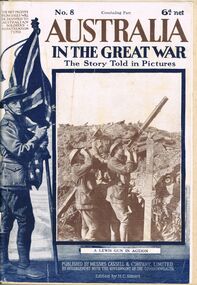
Book - LYDIA CHANCELLOR COLLECTION: AUSTRALIA IN THE GREAT WAR. THE STORY TOLD IN PICTURES
... A photo on the front cover shows a soldier in action with a Lewis gun. Edited by H.C. Smart. No. 8 concluding part. ...A photo on the front cover shows a soldier in action with a Lewis gun. Edited by H.C. Smart. No. 8 concluding part. ...A soft covered book titled 'Australia in the Great War. The Story told in Pictures.' A photo on the front cover shows a soldier in action with a Lewis gun. Edited by H.C. Smart. No. 8 concluding part. Contains 8 coverless booklets, pages.1 - 191. 6 pence net. Published by Messrs Cassell & Company Limited by arrangement with the Government of the Commonwealth.H.C. Smart (Ed.) Published by Messrs Cassell & Company Limited. Edited by H.C. Smart.history, australian, war, lydia chancellor, collection, world war i, war, australian history, history, the great war, books, war documents, war photos, photos, photography -
 4th/19th Prince of Wales's Light Horse Regiment Unit History Room
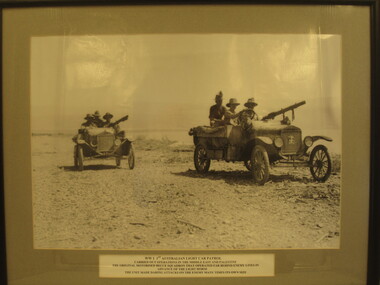
Photograph - Framed Photograph, WW1 1st Australian Light Car Patrol, c 1918
... Each vehicle is fitted with a Lewis Machine Gun...Each vehicle is fitted with a Lewis Machine Gun WW1 1st Australian Light Car Patrol Photograph Framed Photograph ...Refer inscriptionsFramed B&W photo of two Model T Ford vehicles, with crews, of 1st Australian Light Car Patrol. Each vehicle is fitted with a Lewis Machine GunAustralian War Memorial watermark. Caption: WW1 1st Australian Light Car Patrol Carried out operations in the Middle East and Palestine. The original motorised recce squadron that operated far behind enemy lines in advance of the Light Horse. The unit made daring attacks on the enemy many times its own size.ww1 1st australian light car patrol c1918, model t ford vehicles with crew -
 Bendigo Military Museum
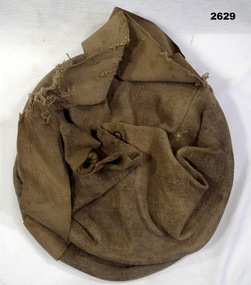
Equipment - MAGAZINE CARRIER, Hampton & Sons Ltd, 1918
... Black printed label: "Carriers magazine Lewis 303 in. Gun Hampton & Sons Ltd 1918"...Items from 17th Light Horse Regiment collection. containers - military military history - army - equipment passchendaele barracks trust Black printed label: "Carriers magazine Lewis 303 in. Gun Hampton & Sons Ltd 1918" Khaki canvas bag, cylindrical shape, khaki canvas strap with metal/brass buckle to bag, brass x 2 fasteners, black printed label on side of bag. ...Items from 17th Light Horse Regiment collection.Khaki canvas bag, cylindrical shape, khaki canvas strap with metal/brass buckle to bag, brass x 2 fasteners, black printed label on side of bag.Black printed label: "Carriers magazine Lewis 303 in. Gun Hampton & Sons Ltd 1918"containers - military, military history - army - equipment, passchendaele barracks trust -
 Bendigo Military Museum
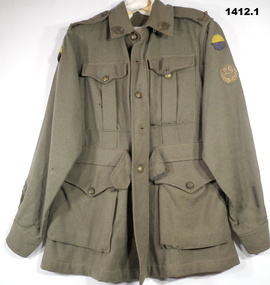
Uniform - JACKET AND SLOUCH HAT - WW1, Dalter Lucas & Sons (1910) Ltd, 1918
... .1) Coat, Battle Dress, Kahki, includes 2 x “Australia” shoulder badges, 2 x “Rising Sun” epaulette badges, 2 x “yellow over purple” colour patches, 3 x “service chevrons”, 1 x “Empire Wounded stripe”, 1 x “Lewis Gun” cloth badge, all metal buttons intact as well as waist belt. .2) Hat, Slouch, kahki fur felt, cotton pugaree, leather head band, Rising sun badge, no chin strap....It appears to be of a similar style to those issued to Gurkha troops due to the thickness of the felt, the three rows of stitching around the brim and the use of a press stud to pin up the left hand side of the brim. uniforms military clothing costume accessories - male .2) Pressed into the hat band appears to be; “Dalter Lucas & sons (1910) Ltd, BURY 1918” .1) Coat, Battle Dress, Kahki, includes 2 x “Australia” shoulder badges, 2 x “Rising Sun” epaulette badges, 2 x “yellow over purple” colour patches, 3 x “service chevrons”, 1 x “Empire Wounded stripe”, 1 x “Lewis Gun” cloth badge, all metal buttons intact as well as waist belt. .2) Hat, Slouch, kahki fur felt, cotton pugaree, leather head band, Rising sun badge, no chin strap. ...Slouch hat and Uniform jacket belonging to Edwin James JONES No 3511 AIF. Refer 1367.5 for his service history. The hat was manufactured in 1918 by Dalter Lucas & Sons Bury, UK. It appears to be of a similar style to those issued to Gurkha troops due to the thickness of the felt, the three rows of stitching around the brim and the use of a press stud to pin up the left hand side of the brim..1) Coat, Battle Dress, Kahki, includes 2 x “Australia” shoulder badges, 2 x “Rising Sun” epaulette badges, 2 x “yellow over purple” colour patches, 3 x “service chevrons”, 1 x “Empire Wounded stripe”, 1 x “Lewis Gun” cloth badge, all metal buttons intact as well as waist belt. .2) Hat, Slouch, kahki fur felt, cotton pugaree, leather head band, Rising sun badge, no chin strap..2) Pressed into the hat band appears to be; “Dalter Lucas & sons (1910) Ltd, BURY 1918”uniforms, military clothing, costume accessories - male -
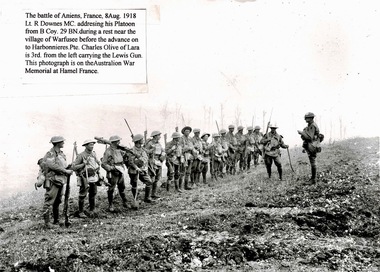 Lara RSL Sub Branch
Photo, The Battle of Amiens,France,8Aug,1918
... The battle of Amiens,France,8thAug.1918.Lt R Downes MC.addressing his Platoon from B Coy.29 BN.during a rest near the village of Warfusee before the advance on to Harbonnieres.Pte Charles Olive of Lara is 3rd,from the left carrying the Lewis Gun. He was killed in action three weeks later charging a German machine gun post. ...Though the Allies at Amiens failed to continue their impressive success in the days following August 8, the damage had been done. ww1, battle of amiens, australian army, lara r.s.l. pte charles olive. awm accession no e2790 The battle of Amiens,France,8thAug.1918.Lt R Downes MC.addressing his Platoon from B Coy.29 BN.during a rest near the village of Warfusee before the advance on to Harbonnieres.Pte Charles Olive of Lara is 3rd,from the left carrying the Lewis Gun. He was killed in action three weeks later charging a German machine gun post. ...The Battle of Amiens, also known as the Third Battle of Picardy (French: 3ème Bataille de Picardie), was the opening phase of the Allied offensive which began on 8 August 1918, later known as the Hundred Days Offensive, that ultimately led to the end of the First World War.By the end of August 8—dubbed “the black day of the German army” by Ludendorff—the Allies had penetrated German lines around the Somme with a gap some 15 miles long. Of the 27, 000 German casualties on August 8, an unprecedented proportion—12,000—had surrendered to the enemy. Though the Allies at Amiens failed to continue their impressive success in the days following August 8, the damage had been done.Rectangular shaped black and white photograph.The battle of Amiens,France,8thAug.1918.Lt R Downes MC.addressing his Platoon from B Coy.29 BN.during a rest near the village of Warfusee before the advance on to Harbonnieres.Pte Charles Olive of Lara is 3rd,from the left carrying the Lewis Gun. He was killed in action three weeks later charging a German machine gun post. Earlier in the day, he had successfully taken two machine gun posts. Photo from Australian War Memorial, Canberra.ww1, battle of amiens, australian army, lara r.s.l. pte charles olive., awm accession no e2790 -
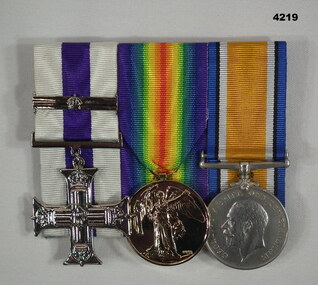 Bendigo Military Museum
Award - MEDAL SET WW1, Post 1919
... Embarked for England on 20.6.1916, Hospital at sea with Influenza 7.7.1916 then Bronchitis 31.7.1916, returned to unit 2.8.1916, promoted Sgt 25.9.1916, embark for France 22.11.1916, promoted to CSM 13.1.1917, promoted to 2nd Lieutenant 17.5.1917, Hospital 23.8.1917 with Haemorrhoids, rejoin unit 8.9.1917, promoted to Lieutenant 13.9.1917, Hospital with Debility 28.11.1917, rejoin unit 5.12.1917, to England 31.12.1917 re Musketry and Lewis Gun school, rejoin unit 1.7.1918, during the Great offensive on the 10th/12th and 31st August 1918 he is awarded the Military Cross and Bar to the MC, within a few days he is hospitalised in England with Aneurism on 2.9.1918. ...Embarked for England on 20.6.1916, Hospital at sea with Influenza 7.7.1916 then Bronchitis 31.7.1916, returned to unit 2.8.1916, promoted Sgt 25.9.1916, embark for France 22.11.1916, promoted to CSM 13.1.1917, promoted to 2nd Lieutenant 17.5.1917, Hospital 23.8.1917 with Haemorrhoids, rejoin unit 8.9.1917, promoted to Lieutenant 13.9.1917, Hospital with Debility 28.11.1917, rejoin unit 5.12.1917, to England 31.12.1917 re Musketry and Lewis Gun school, rejoin unit 1.7.1918, during the Great offensive on the 10th/12th and 31st August 1918 he is awarded the Military Cross and Bar to the MC, within a few days he is hospitalised in England with Aneurism on 2.9.1918. ...Frederick James Baxter (born Bendigo, enlisted Bendigo) enlisted in the AIF on 22.2.1916 age 23 years as a L/Cpl in B Coy 38th Bn No 708. Embarked for England on 20.6.1916, Hospital at sea with Influenza 7.7.1916 then Bronchitis 31.7.1916, returned to unit 2.8.1916, promoted Sgt 25.9.1916, embark for France 22.11.1916, promoted to CSM 13.1.1917, promoted to 2nd Lieutenant 17.5.1917, Hospital 23.8.1917 with Haemorrhoids, rejoin unit 8.9.1917, promoted to Lieutenant 13.9.1917, Hospital with Debility 28.11.1917, rejoin unit 5.12.1917, to England 31.12.1917 re Musketry and Lewis Gun school, rejoin unit 1.7.1918, during the Great offensive on the 10th/12th and 31st August 1918 he is awarded the Military Cross and Bar to the MC, within a few days he is hospitalised in England with Aneurism on 2.9.1918. Proceed to return to Australia 4.12.1918, disembark Melb 15.1.1919, appointment terminated in the AIF 22.2.1919. He passes away on 19.6.1921 age 28 years. Pre war he had 3 years in the 9th A.L.H. Set of three court mounted medals. 1. Military Cross with Bar, replica not engraved. 2. British War medal 1914 - 1918 original. 3. Victory Medal 1914 - 1919, replica not engraved.“LIEUT F.T.BAXTER A.I.F”medals, military, aif, baxter mc -
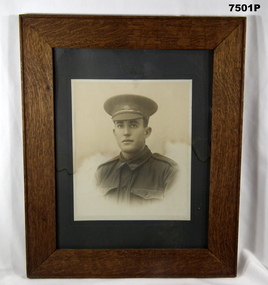 Bendigo Military Museum
Photograph - FRAMED PHOTOGRAPH, WW1
... Embark for England 20.6.1916, embark for France 22.11.1916, appointed L/Cpl 3.3.1917, WIA 1st occasion 8.6.1917 GSW to Cheek, rejoin unit 5.8.1917, WIA 2nd occasion 17.10.1917 GSW to Abdomen severe, rejoin unit 28.3.1918, the Award of Mention in Despatches in December 1917, awarded The Military Medal 31.8.1918 during the attack on Inferno Trench leading his Lewis Gun Team, appointed Sgt 3.9.1918, embark for Australia 12.6.1919, discharged from the AIF 27.7.1919. ...Embark for England 20.6.1916, embark for France 22.11.1916, appointed L/Cpl 3.3.1917, WIA 1st occasion 8.6.1917 GSW to Cheek, rejoin unit 5.8.1917, WIA 2nd occasion 17.10.1917 GSW to Abdomen severe, rejoin unit 28.3.1918, the Award of Mention in Despatches in December 1917, awarded The Military Medal 31.8.1918 during the attack on Inferno Trench leading his Lewis Gun Team, appointed Sgt 3.9.1918, embark for Australia 12.6.1919, discharged from the AIF 27.7.1919. ...Photograph Augustus Elliott Pegler. He had 4 years pre WW1 service in local unit Mildura. Enlisted No 967 in C Coy 38th BN on 29.1.1916 age 20 years 7 months. Embark for England 20.6.1916, embark for France 22.11.1916, appointed L/Cpl 3.3.1917, WIA 1st occasion 8.6.1917 GSW to Cheek, rejoin unit 5.8.1917, WIA 2nd occasion 17.10.1917 GSW to Abdomen severe, rejoin unit 28.3.1918, the Award of Mention in Despatches in December 1917, awarded The Military Medal 31.8.1918 during the attack on Inferno Trench leading his Lewis Gun Team, appointed Sgt 3.9.1918, embark for Australia 12.6.1919, discharged from the AIF 27.7.1919. (For reference - 38th Battalion in dog trench near Guillemont Farm during attack on Hindenburg Line, near Bony, Ref - Vol IV - CEW Bean - The AIF in France 1917 (Ref) Page 605 (58). Refer also Cat No 7502 Photograph - black and white portrait photograph of soldier in uniform, on paper. Mount - dark green cardboard. Frame - timber, mid brown stain colour, with glass front and cardboard backing.photograph, portrait, ww1, framed accessories -
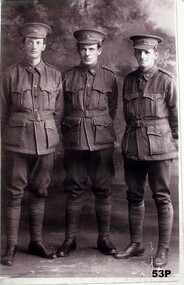 Bendigo Military Museum
Photograph - SOLDIERS PHOTOGRAPH, c.1916
... WIA 1.5.1918 GSW to thigh then debilitated 28.6.1918. Attended Lewis Gun Course 20.8.1918. Discharged from the AIF 4.9.1919. ...WIA 1.5.1918 GSW to thigh then debilitated 28.6.1918. Attended Lewis Gun Course 20.8.1918. Discharged from the AIF 4.9.1919. ...James Henry SCOBERG No 664 (born Heathcote, enlisted Bendigo) in B Coy 38th Batt on 19.12.1916. Embarked 20.6.1916. Promoted L/ Cpl 6.6.1917. Hospitalised with influenza 14.9.1917. Sergeant 13.11.1917. Hospitalised with scabies 2.1.1918. WIA 1.5.1918 GSW to thigh then debilitated 28.6.1918. Attended Lewis Gun Course 20.8.1918. Discharged from the AIF 4.9.1919. George Brown FULLERTON No 548 (born Elmore, enlisted Bendigo) in B Coy 38th Batt on 17.2.1916. Embarked 20.6.1916, hospitalised at sea with influenza 24.7.1916 then measles. Promoted L/Cpl 23.11.1916 then Cpl 3.3.1917. Awarded the "DCM" at Messines 7.6.1917 and DOW's 12.6.1917 with GSW to the abdomen. John HOLMBERG No 568 (born Elmore, enlisted Bendigo) in B Coy 38th Batt on 17.2.1916. Embarked 20.6.1916, hospitalised at sea with influenza, hospitalised 4.12.1916 with diarrhea then mumps. Promoted Sergeant 6.1.1917, 2nd Lieut 31.1.1918, Lieut 14.5.1918. WIA 31.7.1918 GSW left shoulder severe. Discharged from the AIF 2.10.1919. Collection re Mrs May BurnsPhoto, sepia tone, 3 soldiers in uniform all standing re J H SCOBERG, G B FULLERTON DCM, J HOLMBERG.photography, group portraits, military history, souvenirs -
 Bendigo Military Museum
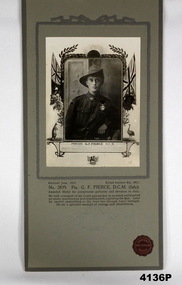
Photograph - REMEMBRANCE PHOTO, Vincent Kelly, Post 1919
... He took Command of his Lewis Gun Section in an attack and bombed an enemy Machine Gun post single handed and captured the Gun. ...He took Command of his Lewis Gun Section in an attack and bombed an enemy Machine Gun post single handed and captured the Gun. ...George Frederick PIERCE No 2839 AIF. The photo shows him wearing the award of the “DCM” which has been superimposed on the photo. George enlisted on 29.6.1915 age 20 years in the 9th Reinforcements 6th Bn AIF, embarked for Eygpt 9.10.1915, embarked for France 2.4.1916, Awarded the Distinguished Conduct Medal in 1917, KIA Belgium 4.10.1917, no known grave. DCM award. For Conspicious Gallantry and Devotion to Duty. He took Command of his Lewis Gun Section in an attack and bombed an enemy Machine Gun post single handed and captured the Gun. He later carried ammunition to the front line through heavy barrages. He set a splendid example of devotion and courage. This photo has been cropped out of the original which had 3 soldiers in it. Refer Cat No 5459P This is the first item in a large collection that belonged to William (Bill) Thomason. Bill served in the RAN from 1947 - 1949. He was the Author of 3 books: "Marching On", Cat No 4821, "March to Ranau", Cat No 862 and "March to Waikato", Cat No 5289. Bill was a collector and ran a small Military Museum in View Street Bendigo for a time.Photo B & W, portrait of a soldier with studio background pasted onto a larger grey background with flowers, flags, kangaroo, emu and details under. On the cardboard, writing relates to the award of the “DCM”. The grey background has a darker surround and red stamp in the right hand corner.“No 2839 Pte G.F.PIERCE DCM (Infy)”photography, military, remembrance -
 Melton City Libraries
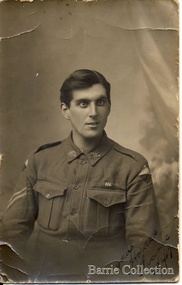
Photograph, Horace Lang, 1917
... On 3rd May he was last seen alive carrying a Lewis Gun, and wounded making his way to the casualty station according to witnesses reporting to the court of enquiry. ...On 3rd May he was last seen alive carrying a Lewis Gun, and wounded making his way to the casualty station according to witnesses reporting to the court of enquiry. ...Date of birth 27th April 1893 Born at Spring Hill – Kyneton Parents – Thomas and Mary Elizabeth nee Coates Lang. The family lived in High Street Melton 1896. He started his schooling at Melton State School in Nov 1897. Mr Lang was the Head Teacher from 1896 – 1917. Horace enlisted on the 29th March 1915 24th Battalion D Company and sailed on the Euripides on the 8th May to Egypt. They landed on Gallipoli in early September returning to Egypt at the end of the year. In April on 1916 Horace and his brother Thomas had an opportunity to meet for a few hours before he moved onto France. He received the military medal in 1916 “For conspicuous gallantry in constructing and holding an advanced bombing post near Flers on 18/19 November within close range of the enemy. The garrison had to remain motionless throughout the day but Corpl. Lang refused to be relieved until his company left the trenches, setting a most encouraging example of endurance.” In May 1917 the Battalion was near Arras – Bullecourt. On 3rd May he was last seen alive carrying a Lewis Gun, and wounded making his way to the casualty station according to witnesses reporting to the court of enquiry. The family, in Melton had a first heard that he had been wounded, or was a prisoner. My grandmother Jessie Barrie and the Lang family went to Port Melbourne as the troop ships arrived hoping they would find someone who might know of his fate. AWM records and Red Cross files reveal the extent of the efforts that family and friends made enquiring about his fate. In December 1917 he was declared Killed in Action on May 3rd at Bullecourt where he is commemorated. Horace Lang postcardRear: Dear Jessie & All, I am in the pink not doing to bad. Haven't had any letters from you for some time. Hope you haven't forgotte me. Don't be so long nest time. Letter later from your loving bro Horace. (PS) Photo is very crook. (Front: Yours Horace, France 28/2/17)local identities -
 Dandenong/Cranbourne RSL Sub Branch
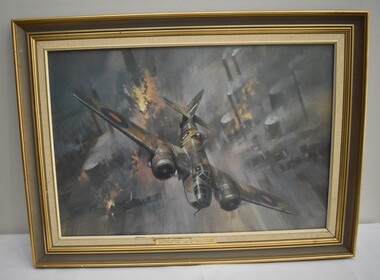
Painting - Large wooden framed painting
... It was powered by a pair of Bristol Mercury V111 air cooled radial engines capable of developing 860 bhp. armament was a combination of Vickers, Browning and Lewis machine guns in .303 ( 7.7mm ). A 1000lb (450kg ) could be carried in the internal bomb bay in the centre section of the fuselage. ...It was powered by a pair of Bristol Mercury V111 air cooled radial engines capable of developing 860 bhp. armament was a combination of Vickers, Browning and Lewis machine guns in .303 ( 7.7mm ). A 1000lb (450kg ) could be carried in the internal bomb bay in the centre section of the fuselage. ...Michael Turner born in 1934 is a British painter and illustrator specialising in motoring and aviation paintings. After leaving school he attended Art College followed by National Service with the Royal Electrical and Mechanical Engineers for 2 years. On leaving National Service he worked with a London advertising studio before turning freelance in1957. The Bristol Blenheim depicted in the painting was a British light bomber used extensively for 2 years of the Second World War. It was powered by a pair of Bristol Mercury V111 air cooled radial engines capable of developing 860 bhp. armament was a combination of Vickers, Browning and Lewis machine guns in .303 ( 7.7mm ). A 1000lb (450kg ) could be carried in the internal bomb bay in the centre section of the fuselage. The 114 Squadron was a Squadron of the British Royal Air Force formed in India during the First World War. The Squadron was disbanded in 1971.Large wooden framed painting of an RAF WW2 bomber in flight.Below the painting is the wording " A 114 Squadron Blenheim 1V on a low level bombing run over the power station at Knapsack Cologne, in August 1941 - donated by Laurie Pillar". -
 Bendigo Military Museum
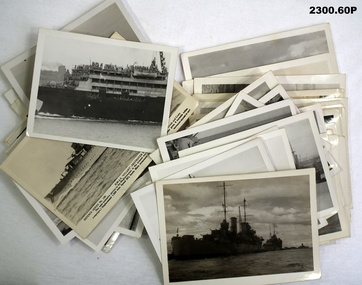
Photograph - PHOTOGRAPHS, NAVY WW2, c.WWII
... RAMB II .5) HMS Exeter .6) The landing party returning .7) Part fleet at Colombo .8) British ammunition ship sunk by sabotage in Alex Harbour .9) HMS Exeter .10) On the approach of the island. Note twin Lewis guns .11) HMS Ajax bombarding Bardia .12) A native boat used along coasts and Indian Ocean .13) RMS Georgie refoated at Pt? ...RAMB II .5) HMS Exeter .6) The landing party returning .7) Part fleet at Colombo .8) British ammunition ship sunk by sabotage in Alex Harbour .9) HMS Exeter .10) On the approach of the island. Note twin Lewis guns .11) HMS Ajax bombarding Bardia .12) A native boat used along coasts and Indian Ocean .13) RMS Georgie refoated at Pt? ...Photographs collected by Earnest Albert Simmons W/2129 Royal Australian Navy. Enlisted 30 June 1941 and discharged 14 October 1946 with the rank of Leading Stoker. Posting at discharge was HMAS Lonsdale..1) Ship .2) Submarine conning tower .3) Ship .4) Hospital ship .5) Ship at anchor .6) Launch at ships side .7) Ships at anchor .8) Sunken ship .9) Ship .10) Group on launch .11) Ship firing a broadside .12) Wooden sailing vessel .13) Ship .14) Ship .15) Pilot station .16) Ship .17) Ship .18) Ship.s deck and biplane .19) Partially sunken ship .20) Two ships .21) Ship .22) Ship - damaged .23) Ship .24) Statue and colonade .25) Searchlights .26) Ships deck at sea .27) Aircraft .28) Ship .29) Ship .30) Troop ship .31) Swimmers at ships side .32) Ship .33) Ship .34) Ship deck at sea .35) Ship .36) Submarine .37) Ship .38) Ship .39) Ship .40) Two ships at sea .41) Ship .42) Aircraft carrier .43) Ships symbol .44) Sketch of Berbera .45) Sketch of biplanes .46) Boat at pier .47) Tug boat .48) Ship .49) Ship at wharf .50) Ships at wharf .51) Aircraft carrier .52) Ship .53) Ship at wharf .54) Ships at wharf .55) Ship .56) Two ships .57) Tug boat .58) Diagram comparing the size of two ships .59) Ship sailing past lighthouse .60) Postcard HMAS "Stuart". .1) Hobart and Glascow at Colombo .2) British submarine returning to Alexandria after claiming a victory - note Skull and X Bones .3) HMS Glascow at Colombo .4) Ex Italian hospital ship taken over by British. RAMB II .5) HMS Exeter .6) The landing party returning .7) Part fleet at Colombo .8) British ammunition ship sunk by sabotage in Alex Harbour .9) HMS Exeter .10) On the approach of the island. Note twin Lewis guns .11) HMS Ajax bombarding Bardia .12) A native boat used along coasts and Indian Ocean .13) RMS Georgie refoated at Pt? 1941 .14) HMS Carthage .15) Pilot station at Colombo .16) Aquitania .17) Ajax on patrol with Hobart and battle fleet .18) Hobart rolling in the Bight .19) HMS Gnat (river gun boat) hit by torpedo at Tobruk .20) - .21) Mauritania .22) Italian cruiser sunk by HMAS Sydney .23) Greek destroyer .24) Memorial of Mohomed Pasha Alexandria. Presented by Musso .25) Searchlight at Alexandria .26) Hobart pile driving in heavy weather .27) Lockheed Hudson dive bombing .28) - .29) HMS Galatea? x 1 turret at stern .30) Troops on Aquitania .31) Boys swimming in the middle lakes at Ismalia in the centre of Sues Canal .32) A water NG ? .33) - .34) Hobart striking heavy weather .35) HMS Jupiter .36) British submarine entering Alex .37) Queen Mary .38) Queen Elizabeth .39) Nieuw Amsterdam .40) - .41) Achilles .42) HMS Aircraft carrier - Illustrious .43) Symbol of Hobart's Pom-Pom .44) - .45) - .46) - .47) - .48) Mohoja and Oronties .49) Mohoja .50) - .51) - .52) HMAS Murchison 1954 .53) Strathmore .54) - .55) - .56 - .57 - .58) HMAS Vendetta .59) HMAS Cowra .60) - photographs, ran, hmas
