
Showing 43 items matching "light horse wodonga"
-
 Wodonga & District Historical Society Inc
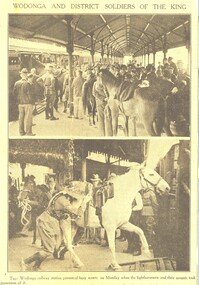
Article - Wodonga and District - Soldiers of the King
... Light Horse...Peter Frawley...Light Horse Wodonga...Light Horse was initially raised from companies of the colonial Victorian Mounted Rifles located in North-east Victoria following Federation. In 1912 a major reorganisation of the Australian military forces resulted in the regiment being renumbered 16th Light Horse. The Regiment was disbanded in 1919 but soon after was re-raised as the 8th (Indi) Light Horse in the Citizen Military Forces, with the territorial title Indi Light Horse. The Indi Light Horse consisted of 3 squadrons. A squadron consisted of troops in Corryong, Walwa, Tallangatta, Eskdale and Wodonga...One image shows horses being loaded on to trains in Wodonga to be sent to the base at Broadmeadows, Victoria. The second image depicts two leaders of the 8th Light Horse Regiment....Wodonga railway station presented busy scenes on Monday when the lighthorsemen and their mounts took possession of it. Bottom- Although the men were jubilant at boarding the train for Broadmeadows the horses did not like the idea. This horse was no exception. Photo 2 TWO LIGHTHORSE LEADERS Lieutenant L. W. Welesmith, Tallangatta (left), discussing the entraining of horses for Broadmeadows at Wodonga, with Lieutenant J. A. Mc-Geoch (Wodonga), before the departure of the 8th Light...One image shows horses being loaded on to trains in Wodonga to be sent to the base at Broadmeadows, Victoria. The second image depicts two leaders of the 8th Light Horse Regiment. ...The 8th Light Horse was initially raised from companies of the colonial Victorian Mounted Rifles located in North-east Victoria following Federation. In 1912 a major reorganisation of the Australian military forces resulted in the regiment being renumbered 16th Light Horse. The Regiment was disbanded in 1919 but soon after was re-raised as the 8th (Indi) Light Horse in the Citizen Military Forces, with the territorial title Indi Light Horse. The Indi Light Horse consisted of 3 squadrons. A squadron consisted of troops in Corryong, Walwa, Tallangatta, Eskdale and Wodonga. After an extensive recruiting campaign in January 1939 a new troop was raised in Bethanga, Victoria. In December 1941, the regiment converted from horse to mechanised, initially as 8th Reconnaissance Battalion then in July 1942 it became 8th Cavalry Regiment and served in Northern Territory. As Japanese threat to the mainland declined the regiment was disbanded.This article is significant because it depicts horses being loaded at the Wodonga Railway Station to despatch to the training camp at Broadmeadows. Two black and white images from the Border Morning Mail Friday March 10, 1939. One image shows horses being loaded on to trains in Wodonga to be sent to the base at Broadmeadows, Victoria. The second image depicts two leaders of the 8th Light Horse Regiment.Caption with Photo 1 WODONGA AND DISTRICT SOLDIERS OF THE KING Top: Wodonga railway station presented busy scenes on Monday when the lighthorsemen and their mounts took possession of it. Bottom- Although the men were jubilant at boarding the train for Broadmeadows the horses did not like the idea. This horse was no exception. Photo 2 TWO LIGHTHORSE LEADERS Lieutenant L. W. Welesmith, Tallangatta (left), discussing the entraining of horses for Broadmeadows at Wodonga, with Lieutenant J. A. Mc-Geoch (Wodonga), before the departure of the 8th Light Horse troop.australian light horse, peter frawley, light horse wodonga -
 8th/13th Victorian Mounted Rifles Regimental Collection
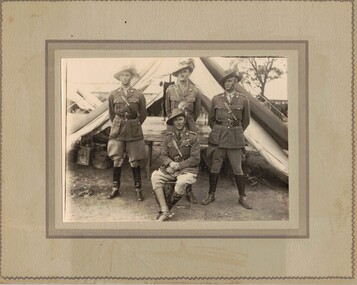
Photograph - McGeoch, Wilesmith, Attree, Grossman
... light horse...McGeoch...wodonga...Black and white photograph mounted on card of four light horse officers: Lieutenant AH McGeoch 4 Troop A squadron (Wodonga), Lieutenant F. ...Light Horse (Indi) was raised following World War One the Citizen Military Forces, superseding 16th (Indi) Light Horse. It had its headquarters at Benalla with sub-units throughout the Upper Murray and Northeast Victoria. In December 1941, the regiment converted from horse to mechanised, initially as 8th Reconnaissance Battalion then in July 1942 it became 8th Cavalry Regiment and served in Northern Territory. As Japanese threat to the mainland declined the regiment was disbanded. wilesmith attree grossman light horse McGeoch wodonga ...The 8th Light Horse (Indi) was raised following World War One the Citizen Military Forces, superseding 16th (Indi) Light Horse. It had its headquarters at Benalla with sub-units throughout the Upper Murray and Northeast Victoria. In December 1941, the regiment converted from horse to mechanised, initially as 8th Reconnaissance Battalion then in July 1942 it became 8th Cavalry Regiment and served in Northern Territory. As Japanese threat to the mainland declined the regiment was disbanded.Black and white photograph mounted on card of four light horse officers: Lieutenant AH McGeoch 4 Troop A squadron (Wodonga), Lieutenant F. Attree, A Squadron, Lieutenant Wilesmith, 3 Troop A Squadron (Corryong) and seated Captain Grossman 2i/c C Squadron 8th Light Horse, c. 1938.wilesmith, attree, grossman, light horse, mcgeoch, wodonga, corryong, 8th -
 8th/13th Victorian Mounted Rifles Regimental Collection
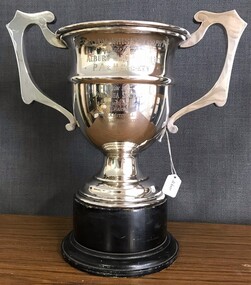
Artwork, other - McCallum trophy
... light horse...show...albury...wodonga...Large silver cup presented to Wodonga Section 8th Light Horse winners of competition at Albury and Border P.A.& H Society Show 1937...Light Horse AIF was disbanded in 1919, but soon after re-raised as the 8th (Indi) Light Horse in the Citizen Military Forces, superseding 16th (Indi) Light Horse. It had its headquarters at Benalla with sub-units throughout the Upper Murray and Northeast Victoria. In December 1941, the regiment converted from horse to mechanised, initially as 8th Reconnaissance Battalion then in July 1942 it became 8th Cavalry Regiment and served in Northern Territory. As Japanese threat to the mainland declined the regiment was disbanded military light horse show albury wodonga ...The 8th Light Horse Regiment AIF was raised at Broadmeadows Victoria in September 1914 under the command of Lieutenant Colonel Alexander White and formed part of the 3rd Light Horse Brigade. The regiment served at Gallipoli where in a courageous but ill-fated charge at the Nek on 7 August 1915 it suffered horrendous casualties including Lieutenant Colonel White. Rebuilt in Egypt under the command of Lieutenant Colonel Leslie Maygar VC the regiment went on the serve throughout the Middle East Campaign. Colonel Maygar died of wounds at Beersheba when the regiment was attacked by enemy aircraft while waiting to follow up the successful charge of the 4th LH Brigade on 30 October 1917. The 8th Light Horse AIF was disbanded in 1919, but soon after re-raised as the 8th (Indi) Light Horse in the Citizen Military Forces, superseding 16th (Indi) Light Horse. It had its headquarters at Benalla with sub-units throughout the Upper Murray and Northeast Victoria. In December 1941, the regiment converted from horse to mechanised, initially as 8th Reconnaissance Battalion then in July 1942 it became 8th Cavalry Regiment and served in Northern Territory. As Japanese threat to the mainland declined the regiment was disbandedLarge silver cup presented to Wodonga Section 8th Light Horse winners of competition at Albury and Border P.A.& H Society Show 1937McCallum Whisky Trophy / Presented to Albury and Border P A & H Society / Won by Wodonga section / Cpl J A H McGeoch (Sec Ldr) / L/Cpl D Martin / Tpr F A Mitchell / Tpr E G Baumgarten / 1937military, light horse, show, albury, wodonga, mccallum -
 Kiewa Valley Historical Society
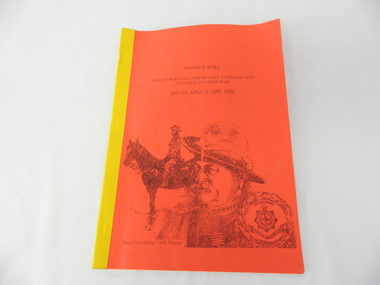
Book - Non Fiction History, Honour Roll - South Africa 1899 - 1902 Albury-Wodonga and District Residents Who Served In The Boer War, reprinted 03/2008
... In 1996 the then curator for the 8/13 VMR Museum, the Hon Colonel John Neale, commissioned the author to research a group of returned servicemen and women from the Boer War and had lived within 100 km radius of the Albury/Wodonga townships.The Boer War was the second war in South Africa and was the result of heavy taxes and non voting rights of the local white Boer population. Colonial forces including the Australian Light Horse...In 1996 the then curator for the 8/13 VMR Museum, the Hon Colonel John Neale, commissioned the author to research a group of returned servicemen and women from the Boer War and had lived within 100 km radius of the Albury/Wodonga townships.The Boer War was the second war in South Africa and was the result of heavy taxes and non voting rights of the local white Boer population. Colonial forces including the Australian Light Horse ...Historical information of soldiers from the Albury-Wodonga district who fought in the Boer War in South Africa 1899 - 1902. In 1996 the then curator for the 8/13 VMR Museum, the Hon Colonel John Neale, commissioned the author to research a group of returned servicemen and women from the Boer War and had lived within 100 km radius of the Albury/Wodonga townships.The Boer War was the second war in South Africa and was the result of heavy taxes and non voting rights of the local white Boer population. Colonial forces including the Australian Light Horse contingent where called upon by England to overthrow the rebellion. This War was the first engagement of Australian troops fighting on foreign soil.This Honour Roll details the pay rates, the battle highlights, weapons used and maps covering the first Australian contingent of soldiers who fought in the Transvaal (Boer War).. Listed are the names of those soldiers who lived within 100klms of Albury and Wodonga.The soldiers are listed by Location, Rank, Initial,Name and Unit. The significance of both the War and those who served in it is two fold. Firstly it demonstrates that the tie between the Colonial outreaches of England's Empire to "the Motherland" were extremely strong at this point in time. This union remained strong up until the middle of World War II when England could not help Australia to defend itself against possible invasion by Japan. The alliance between Australia and the United States of America replaced the British/Australian pact. Secondly the attitude of, and the high degree of horsemanship of those from the Albury and Wodonga area. The degree of adaptability, by these servicemen, to suit the environment in which they fought provided the first real insight into the Australian psyche "of those living and surviving on the harsh Australian outback"This book has a bright red soft cover and is bound with bright yellow tape. There is a drawing of two Australian soldiers on the front, one on horsebackAuthor's complimentary inscription "To Mount Beauty Museum with compliments" signed Ian R Docking history, boer war, ex-servicemen and women, albury and wodonga -
 Uniting Church Archives - Synod of Victoria
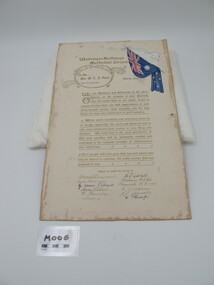
Illuminated Testimonial, Rev W. C. T. Peart
... He was minister of the Wodonga-Bethanga circuit in 1914 from where he enlisted in the Light Horse. He afterwards became a gunner in the Field Artillery and was severely gassed, from which he never really recovered. ...He was minister of the Wodonga-Bethanga circuit in 1914 from where he enlisted in the Light Horse. He afterwards became a gunner in the Field Artillery and was severely gassed, from which he never really recovered. ...This is a token of appreciation to Rev William Charles J. Peart who was leaving the Wodonga-Bethanga Methodist Circuit to serve King and country. He was minister of the Wodonga-Bethanga circuit in 1914 from where he enlisted in the Light Horse. He afterwards became a gunner in the Field Artillery and was severely gassed, from which he never really recovered. He spent time in hospital and on his return to Australia his circuits were Drouin, Footscray and Merbein. He then had to request leave of absence for six months owing to war disabilities. He was able to return to the ministry. Before enlisting he married Doris Quick who came out of the Daylesford Circuit. The war left a legacy of suffering and limitation with Mr Peart, but he showed a brave face and a steady heart. Paper testimonial mounted on card. The text is gold and there is an image of a draped Australian flag in the top right corner. The testimonial is signed on behalf of the Wodonga-Bethanga Methodist Circuit by 12 people.wodonga-bethanga methodist circuit, rev william charles j. peart 1881-1949, world war 1914 - 1918 -
 Wodonga & District Historical Society Inc
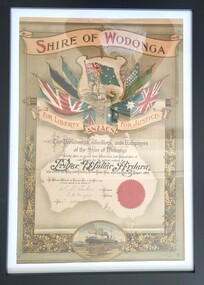
Certificate - Driver Walter Ardern - Recognition of Service, 1919
... Wodonga Estate. He enlisted on 5th October 1914 and left Australia during December of 1914 as a member of the 7th regiment of the Australian Light Horse. ...Wodonga community. Australia Military History Military Service WW1 7th Australian Light Horse Walter Ardern Coloured certificate presented to the Walter Ardern by Wodonga Shire Council in recognition of his military service in World War I. ...Corporal Walter Ardern was the third son of Mr and Mrs James Ardern of Wodonga Estate. He enlisted on 5th October 1914 and left Australia during December of 1914 as a member of the 7th regiment of the Australian Light Horse. The regiment landed in Egypt on 1st February 1915 where they stayed for about three months. He then left Egypt with a machine gun section for Gallipoli, and took part in activities there within a week of the first Anzac landing. During the following four months Corporal Ardern was engaged in the hottest fighting on the Peninsula. He escaped sickness and wounds until the attack at Lone Pine in August 1915, at which he was wounded in the thigh, neck and leg. He was removed to Cottnera Hospital, in Malta, where he was invalided for a few weeks. He was then moved to King George's Hospital in London, where he remained for the follow eight months. On recovery Walter was transferred to the Second Machine Gun Squadron, and immediately embarked for the Sinai Peninsula, where he was kept actively engaged combating the Turks. He participated in the battle of Romani, in which terrific losses were inflicted, on the Turkish army. Shortly before Christmas of 1916 his squadron received instructions to proceed to Palestine, where he remained until embarking for Australia on 31 December 1918. Walter was discharged on 28th March 1919. The certificate signified that the officials and ratepayers of the Wodonga community recognised and appreciated his service. It was signed by S. T. Parker, Shire President and R. H. Murphy, Council Secretary on 4th August 1919.This certificate is significant because it recognises the military service of a member of the Wodonga community.Coloured certificate presented to the Walter Ardern by Wodonga Shire Council in recognition of his military service in World War I. The certificate is mounted in a timber frame.australia military history, military service ww1, 7th australian light horse, walter ardern -
 8th/13th Victorian Mounted Rifles Regimental Collection
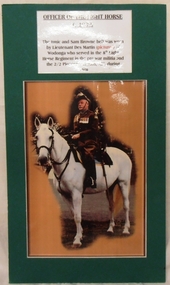
Photograph, Officer of the Light Horse c.1939
... Coloured photograph with green fibreboard mount of Lieutenant Des Martin of Wodonga in Light Horse uniform on horseback....Light Horse c. 1939. The tunic and Sam Browne belt was worn by Lieutenant Des Martin ( pictured ) of Wodonga who served in the 8th Light Horse Regiment in the pre-war militia and the 2/2 Pioneer BattalionAIF during WW11...Light Horse. Has added significance because the uniform is held in the 8th/13th VMR Collection. martin des lieutenant 8th light horse regiment Officer of the Light Horse c. 1939. The tunic and Sam Browne belt was worn by Lieutenant Des Martin ( pictured ) of Wodonga ...Lieutenant Des Martin took part in many Anzac Day Marches in Melbourne riding with a small group leading the march.Uncommon post-WWII photograph of a mounted officer of the Light Horse. Has added significance because the uniform is held in the 8th/13th VMR Collection.Coloured photograph with green fibreboard mount of Lieutenant Des Martin of Wodonga in Light Horse uniform on horseback.Officer of the Light Horse c. 1939. The tunic and Sam Browne belt was worn by Lieutenant Des Martin ( pictured ) of Wodonga who served in the 8th Light Horse Regiment in the pre-war militia and the 2/2 Pioneer BattalionAIF during WW11martin des lieutenant, 8th light horse regiment -
 8th/13th Victorian Mounted Rifles Regimental Collection
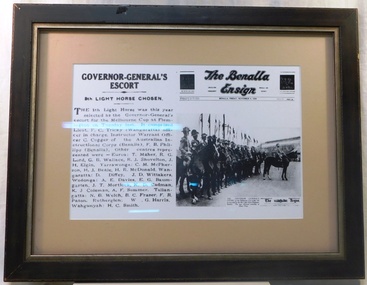
Newspaper - Benalla Ensign
... Their escort on that occasion was drawn from 8th (Indi) Light Horse Regiment and commanded by Lieutenant FC Trickey with soldiers drawn from Benalla, Euroa, Wangaratta, Tallangatta, Wahgunyah, Wodonga and Rutherglen Troops. ...Their escort on that occasion was drawn from 8th (Indi) Light Horse Regiment and commanded by Lieutenant FC Trickey with soldiers drawn from Benalla, Euroa, Wangaratta, Tallangatta, Wahgunyah, Wodonga and Rutherglen Troops. ...Lord and Lady Gowrie attended the Melbourne Cup 1 November 1938. Their escort on that occasion was drawn from 8th (Indi) Light Horse Regiment and commanded by Lieutenant FC Trickey with soldiers drawn from Benalla, Euroa, Wangaratta, Tallangatta, Wahgunyah, Wodonga and Rutherglen Troops. The 8th Light Horse (Indi) Regiment superseded the 16th Light Horse in 1919. It had its headquarters at Benalla with sub-units throughout the Upper Murray and Northeast Victoria. In December 1941, the regiment converted from horse to mechanised, initially as 8th Reconnaissance Battalion then in July 1942 it became 8th Cavalry Regiment and served in Northern Territory. As Japanese threat to the mainland declined the regiment was disbanded. Well prepared memento of vice-regal visit to regional centre and escort duty by the local regiment.Framed photograph of an extract from "The Benalla Ensign" of Friday November 4 1938 reporting on the Governor General's escort to the Melbourne Cup drawn from the 8th Light Horse Regiment. The frame is black painted wood with gold trim.8th light horse regiment, benalla ensign, governor general, gowrie, flemington, cup -
 8th/13th Victorian Mounted Rifles Regimental Collection
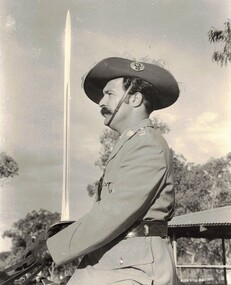
Photograph
... Morrison R Major Heritage Troop Lt Robert Morrison 1 Troop A Sqn 8/13 VMR leading Grand Parade Wodonga Horse Show Jul 1979 Black and white photograph of Light Horse officer on horseback with drawn sabre. ...Lieutenant, later Major Robert Morrison was instrumental in raising the 8/13 Victorian Mounted Rifles Heritage Troop. The Troop consisted of serving soldiers of the regiment as an extracurricular duty and carried out numerous community and official activities including regal and vice-regal escorts.Good study of citizen soldier officer engaged in community activity.Black and white photograph of Light Horse officer on horseback with drawn sabre. He is Lieutenant Robert Morrison 8/13 Victorian Mounted Rifles.Lt Robert Morrison 1 Troop A Sqn 8/13 VMR leading Grand Parade Wodonga Horse Show Jul 1979morrison r major, heritage troop -
 8th/13th Victorian Mounted Rifles Regimental Collection
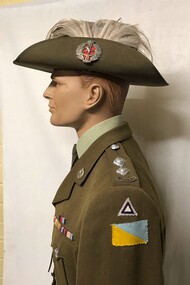
Uniform - Martin uniform
... Lieutenant Des Martin was a member of the Wodonga Troop of the pre-WWII 8th Light Horse (Indi) regiment. ...Lieutenant Des Martin was a member of the Wodonga Troop of the pre-WWII 8th Light Horse (Indi) regiment. ...Lieutenant Des Martin was a member of the Wodonga Troop of the pre-WWII 8th Light Horse (Indi) regiment. He volunteered for the AIF, 12/6/1940 (VX31564) and served with the 2/2nd Pioneer Battalion in Syria and New Guinea. He was discharged 11/2/1944 with the rank of lieutenant. He was a horseman of considerable repute and was the author of the book “Australia Astride”. He provided valuable assistance to the 8/13 VMR Heritage Troop when it was raised. Wearing this uniform, he rode with a group of former light horsemen leading ANZAC Day marches in Melbourne for many years.Half mannequin dress in service dress tunic with 8th Light Horse lapel badges, silver buttons, badges of rank and colour patches. Complemented with slouch hat with 8th Light Horse hat badge and emu plumes, and Sam Browne belt.military, anzac day, melbourne, martin, pioneer, vmr, light horse, world war two, wwii -
 8th/13th Victorian Mounted Rifles Regimental Collection
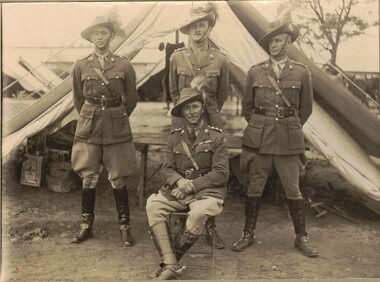
Photograph, Officers 8LH
... The seated officer is probably Lieutenant Colonel Chisholm, Commanding officer of the 8th Light Horse (Indi) Regiment. Lieutenant McGeoch was Troop Leader the Wodonga Troop, and Lieutenant Wildsmith was Troop Leader Tallangatta Troop. ...The seated officer is probably Lieutenant Colonel Chisholm, Commanding officer of the 8th Light Horse (Indi) Regiment. Lieutenant McGeoch was Troop Leader the Wodonga Troop, and Lieutenant Wildsmith was Troop Leader Tallangatta Troop. ...The seated officer is probably Lieutenant Colonel Chisholm, Commanding officer of the 8th Light Horse (Indi) Regiment. Lieutenant McGeoch was Troop Leader the Wodonga Troop, and Lieutenant Wildsmith was Troop Leader Tallangatta Troop. The 8th Light Horse AIF was disbanded in 1919, but soon after re-raised as the 8th (Indi) Light Horse in the Citizen Military Forces, superseding 16th (Indi) Light Horse. It had its headquarters at Benalla with sub-units throughout the Upper Murray and Northeast Victoria. In December 1941, the regiment converted from horse to mechanised, initially as 8th Reconnaissance Battalion then in July 1942 it became 8th Cavalry Regiment and served in Northern Territory. As Japanese threat to the mainland declined the regiment was disbanded. Black and white photograph of three light horse officers standing behind a fourth officer seated. Photo is mounted on a backing card. Inscription under photo.Standing : Lt McGeoch, Lt Attree, Lt Welesmith (sic)military, light horse, 8 lh, indi, officer, mcgeoch, wildsmith, attree, militia -
 8th/13th Victorian Mounted Rifles Regimental Collection
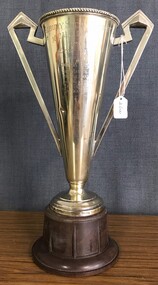
Artwork, other - 8LH trophy
... Won by Wodonga Troop 8th Light Horse at Albury Agricultural Show, 1939....Won by Wodonga Troop 8th Light Horse at Albury Agricultural Show, 1939. ...The 8th Light Horse Regiment AIF was raised at Broadmeadows Victoria in September 1914 under the command of Lieutenant Colonel Alexander White and formed part of the 3rd Light Horse Brigade. The regiment served at Gallipoli where in a courageous but ill-fated charge at the Nek on 7 August 1915 it suffered horrendous casualties including Lieutenant Colonel White. Rebuilt in Egypt under the command of Lieutenant Colonel Leslie Maygar VC the regiment went on the serve throughout the Middle East Campaign. Colonel Maygar died of wounds at Beersheba when the regiment was attacked by enemy aircraft while waiting to follow up the successful charge of the 4th LH Brigade on 30 October 1917. The 8th Light Horse AIF was disbanded in 1919, but soon after re-raised as the 8th (Indi) Light Horse in the Citizen Military Forces, superseding 16th (Indi) Light Horse. It had its headquarters at Benalla with sub-units throughout the Upper Murray and Northeast Victoria. In December 1941, the regiment converted from horse to mechanised, initially as 8th Reconnaissance Battalion then in July 1942 it became 8th Cavalry Regiment and served in Northern Territory. As Japanese threat to the mainland declined the regiment was disbanded.Slim, tapered cup with handles engraved on side. Won by Wodonga Troop 8th Light Horse at Albury Agricultural Show, 1939.Albury Show Society / McCallum Cup / 1939 / Military events / Won by Wodonga Team / Sgt Martin / Cpl Coleman / L/Cpl Mitchell / Tpr Treadrea / Tpr Watsonmilitary, sports, light horse, albury -
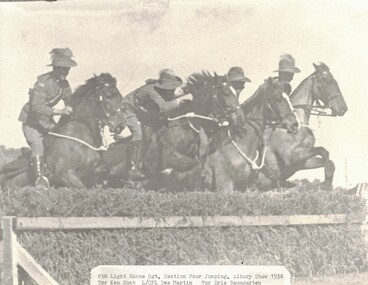 8th/13th Victorian Mounted Rifles Regimental Collection
Photograph - Wodonga section jumping
... Black and white photograph of section of four light horse jumping at Albury Show, 1938.Wodonga troop 8th Light Horse... martin albury Black and white photograph of section of four light horse jumping at Albury Show, 1938.Wodonga troop 8th Light Horse Photograph Wodonga section jumping ...A feature of Agricultural Shows was military sports. Following World War One, the 8th (Indi) Light Horse was raised in the Citizen Military Forces, superseding 16th (Indi) Light Horse. It had its headquarters at Benalla with sub-units throughout the Upper Murray and Northeast Victoria. In December 1941, the regiment converted from horse to mechanised, initially as 8th Reconnaissance Battalion then in July 1942 it became 8th Cavalry Regiment and served in Northern Territory. As Japanese threat to the mainland declined the regiment was disbanded.Black and white photograph of section of four light horse jumping at Albury Show, 1938.Wodonga troop 8th Light Horseshow, military, sports, wodonga, martin, albury -
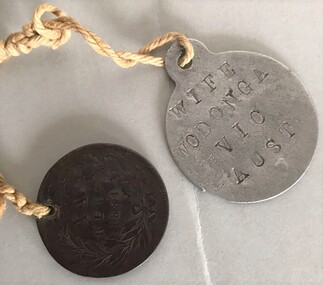 8th/13th Victorian Mounted Rifles Regimental Collection
Badge - Identity disc Schleibs
... light horse...8th...World War One...WWI...AIF...Pioneer...Wodonga...Wodonga enlisted in AIF 30 March 1916 and was allocated to 2nd Pioneer Battalion with regimental number 2972. En route to England he was hospitalised at Cape Town with injured knee. He was returned to Australia and discharged 27 October 1916. He reenlisted 21 February 1917 and sailed with 28th Reinforcements 8th Light Horse...Schleibs light horse 8th World War One WWI AIF Pioneer Wodonga On aluminium disc "A F Schleibs / 3383 / 8LH / CE", and on reverse "Wife / Wadonga / Vic / Aust". ...Frederick August Schleibs a 44 year old farmer of Wodonga enlisted in AIF 30 March 1916 and was allocated to 2nd Pioneer Battalion with regimental number 2972. En route to England he was hospitalised at Cape Town with injured knee. He was returned to Australia and discharged 27 October 1916. He reenlisted 21 February 1917 and sailed with 28th Reinforcements 8th Light Horse to Egypt. He returned to Australia following the war. Unusual to see a foreign coin used as an identity disc.Soldiers identify disc set connected by string; one aluminium and one a Portuguese 20 Reis coin. Both are stamped with information relating to 3383 Frederick Augustus Schleibs who served with 8th Australian Light Horse in World War One.On aluminium disc "A F Schleibs / 3383 / 8LH / CE", and on reverse "Wife / Wadonga / Vic / Aust". On coin "FAS / 3383 / CE"schleibs, light horse, 8th, world war one, wwi, aif, pioneer, wodonga -
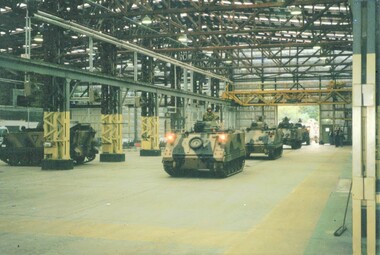 8th/13th Victorian Mounted Rifles Regimental Collection
Photograph - March in 105
... On Saturday 13 May 2000, Victorian Mounted Rifles Squadron, 4th/19th Prince of Wales's Light Horse Regiment departed Buna Barracks Albury and relocated to its new depot at Building 105 North Bandiana. The occasion was marked by a parade through the main streets of Albury and Wodonga. ...On Saturday 13 May 2000, Victorian Mounted Rifles Squadron, 4th/19th Prince of Wales's Light Horse Regiment departed Buna Barracks Albury and relocated to its new depot at Building 105 North Bandiana. The occasion was marked by a parade through the main streets of Albury and Wodonga. ...On Saturday 13 May 2000, Victorian Mounted Rifles Squadron, 4th/19th Prince of Wales's Light Horse Regiment departed Buna Barracks Albury and relocated to its new depot at Building 105 North Bandiana. The occasion was marked by a parade through the main streets of Albury and Wodonga. The mayor of Albury, Councillor Les Langford, farewelled the regiment and the mayor of Wodonga, Councillor Graham Crapp, welcomed the regiment to Wodonga. At Building 105, the Area Commander, Colonel Chris Anstey, welcomed the regiment and handed over the building to Lieutenant Colonel Michael Annett, Commanding Officer 4th/19th Prince of Wales's Light Horse. Colour photograph of three M113 Light Reconnaissance Vehicles (LRVs) driving into a large timber framed building.annett, anstey, bandiana, crapp, langford, buna barracks, 4th/19th, vmr -
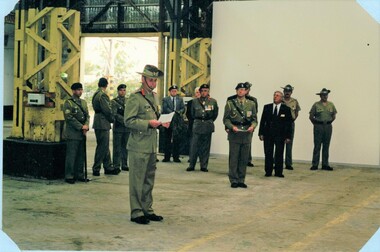 8th/13th Victorian Mounted Rifles Regimental Collection
Photograph - March in 105
... On Saturday 13 May 2000, Victorian Mounted Rifles Squadron, 4th/19th Prince of Wales's Light Horse Regiment departed Buna Barracks Albury and relocated to its new depot at Building 105 North Bandiana. The occasion was marked by a parade through the main streets of Albury and Wodonga. ...On Saturday 13 May 2000, Victorian Mounted Rifles Squadron, 4th/19th Prince of Wales's Light Horse Regiment departed Buna Barracks Albury and relocated to its new depot at Building 105 North Bandiana. The occasion was marked by a parade through the main streets of Albury and Wodonga. ...On Saturday 13 May 2000, Victorian Mounted Rifles Squadron, 4th/19th Prince of Wales's Light Horse Regiment departed Buna Barracks Albury and relocated to its new depot at Building 105 North Bandiana. The occasion was marked by a parade through the main streets of Albury and Wodonga. The mayor of Albury, Councillor Les Langford, farewelled the regiment and the mayor of Wodonga, Councillor Graham Crapp, welcomed the regiment to Wodonga. At Building 105, the Area Commander, Colonel Chris Anstey, welcomed the regiment and handed over the building to Lieutenant Colonel Michael Annett, Commanding Officer 4th/19th Prince of Wales's Light Horse. Colour photograph of Colonel Chris Anstey addressing a group from 4th/19th Prince of Wales's Light Horse regiment at Building 105 North Bandiana.annett, anstey, bandiana, crapp, langford, buna barracks, 4th/19th, vmr -
 8th/13th Victorian Mounted Rifles Regimental Collection
Photograph - March in 105
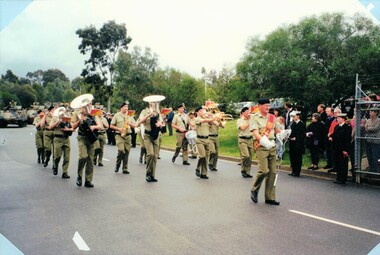
... On Saturday 13 May 2000, Victorian Mounted Rifles Squadron, 4th/19th Prince of Wales's Light Horse Regiment departed Buna Barracks Albury and relocated to its new depot at Building 105 North Bandiana. The occasion was marked by a parade through the main streets of Albury and Wodonga. ...On Saturday 13 May 2000, Victorian Mounted Rifles Squadron, 4th/19th Prince of Wales's Light Horse Regiment departed Buna Barracks Albury and relocated to its new depot at Building 105 North Bandiana. The occasion was marked by a parade through the main streets of Albury and Wodonga. ...On Saturday 13 May 2000, Victorian Mounted Rifles Squadron, 4th/19th Prince of Wales's Light Horse Regiment departed Buna Barracks Albury and relocated to its new depot at Building 105 North Bandiana. The occasion was marked by a parade through the main streets of Albury and Wodonga. The mayor of Albury, Councillor Les Langford, farewelled the regiment and the mayor of Wodonga, Councillor Graham Crapp, welcomed the regiment to Wodonga. At Building 105, the Area Commander, Colonel Chris Anstey, welcomed the regiment and handed over the building to Lieutenant Colonel Michael Annett, Commanding Officer 4th/19th Prince of Wales's Light Horse. Colour photograph of 4th/19th Prince of Wales's Light Horse regimental band entering the gate to Building 105 North Bandiana.annett, anstey, bandiana, langford, 4th/19th, vmr, band -
 8th/13th Victorian Mounted Rifles Regimental Collection
Photograph - March in 105
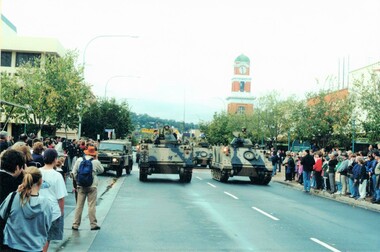
... On Saturday 13 May 2000, Victorian Mounted Rifles Squadron, 4th/19th Prince of Wales's Light Horse Regiment departed Buna Barracks Albury and relocated to its new depot at Building 105 North Bandiana. The occasion was marked by a parade through the main streets of Albury and Wodonga. ...On Saturday 13 May 2000, Victorian Mounted Rifles Squadron, 4th/19th Prince of Wales's Light Horse Regiment departed Buna Barracks Albury and relocated to its new depot at Building 105 North Bandiana. The occasion was marked by a parade through the main streets of Albury and Wodonga. ...On Saturday 13 May 2000, Victorian Mounted Rifles Squadron, 4th/19th Prince of Wales's Light Horse Regiment departed Buna Barracks Albury and relocated to its new depot at Building 105 North Bandiana. The occasion was marked by a parade through the main streets of Albury and Wodonga. The mayor of Albury, Councillor Les Langford, farewelled the regiment and the mayor of Wodonga, Councillor Graham Crapp, welcomed the regiment to Wodonga. At Building 105, the Area Commander, Colonel Chris Anstey, welcomed the regiment and handed over the building to Lieutenant Colonel Michael Annett, Commanding Officer 4th/19th Prince of Wales's Light Horse. Colour photograph of M113 Light Reconnaissance Vehicles (LRV) of Victorian Mounted Rifles Squadron, 4th/19th Prince of Wales's Light Horse regiment parading through Dean Street Albury.annett, anstey, bandiana, langford, 4th/19th, vmr, band, albury -
 8th/13th Victorian Mounted Rifles Regimental Collection
Photograph - March in 105
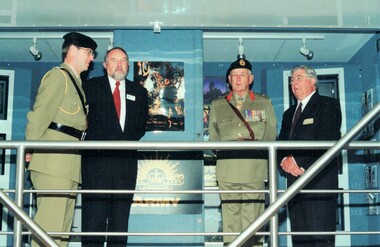
... On Saturday 13 May 2000, Victorian Mounted Rifles Squadron, 4th/19th Prince of Wales's Light Horse Regiment departed Buna Barracks Albury and relocated to its new depot at Building 105 North Bandiana. The occasion was marked by a parade through the main streets of Albury and Wodonga. ...On Saturday 13 May 2000, Victorian Mounted Rifles Squadron, 4th/19th Prince of Wales's Light Horse Regiment departed Buna Barracks Albury and relocated to its new depot at Building 105 North Bandiana. The occasion was marked by a parade through the main streets of Albury and Wodonga. ...On Saturday 13 May 2000, Victorian Mounted Rifles Squadron, 4th/19th Prince of Wales's Light Horse Regiment departed Buna Barracks Albury and relocated to its new depot at Building 105 North Bandiana. The occasion was marked by a parade through the main streets of Albury and Wodonga. The mayor of Albury, Councillor Les Langford, farewelled the regiment and the mayor of Wodonga, Councillor Graham Crapp, welcomed the regiment to Wodonga. At Building 105, the Area Commander, Colonel Chris Anstey, welcomed the regiment and handed over the building to Lieutenant Colonel Michael Annett, Commanding Officer 4th/19th Prince of Wales's Light Horse. Major General David McLachlan was Honorary Colonel of 4/19 Prince of Wales's Light Horse.Colour photograph of Lieutenant Colonel M Annett, Councillor G Crapp, Major General McLachlan and Councillor L Langford on dais just prior to the march past of Victorian Mounted Rifles Squadron, 4th/19th Prince of Wales's Light Horse regiment parading through Dean Street Albury 13 May 2000.annett, anstey, bandiana, langford, 4th/19th, vmr, band, albury -
 8th/13th Victorian Mounted Rifles Regimental Collection
Photograph
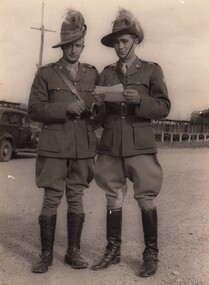
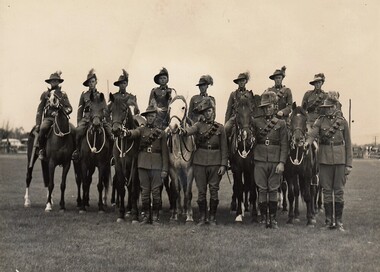
... Black and white photograph of two officers of the 8th Light Horse, Lieutenants L. Wildsmith of Tallangatta and A. McGeogh of Wodonga. ...Light Horse (Indi) Regiment superseded the 16th Light Horse in 1919. It had its headquarters at Benalla with sub-units throughout the Upper Murray and Northeast Victoria. In December 1941, the regiment converted from horse to mechanised, initially as 8th Reconnaissance Battalion then in July 1942 it became 8th Cavalry Regiment and served in Northern Territory. As Japanese threat to the mainland declined the regiment was disbanded. Citizen soldiers immediately prior to World War Two. Black and white photograph of two officers of the 8th Light Horse, Lieutenants L. Wildsmith of Tallangatta and A. McGeogh of Wodonga ...The 8th Light Horse (Indi) Regiment superseded the 16th Light Horse in 1919. It had its headquarters at Benalla with sub-units throughout the Upper Murray and Northeast Victoria. In December 1941, the regiment converted from horse to mechanised, initially as 8th Reconnaissance Battalion then in July 1942 it became 8th Cavalry Regiment and served in Northern Territory. As Japanese threat to the mainland declined the regiment was disbanded.Citizen soldiers immediately prior to World War Two.Black and white photograph of two officers of the 8th Light Horse, Lieutenants L. Wildsmith of Tallangatta and A. McGeogh of Wodonga. Photo appeared in Border Morning Mail 10 March 1939. -
 8th/13th Victorian Mounted Rifles Regimental Collection
Photograph
... Black and white photograph of Tallangatta - Wodonga Troop 8th Light Horse competing at Albury Show circa 1939...Light Horse (Indi) Regiment superseded the 16th Light Horse in 1919. It had its headquarters at Benalla with sub-units throughout the Upper Murray and Northeast Victoria. In December 1941, the regiment converted from horse to mechanised, initially as 8th Reconnaissance Battalion then in July 1942 it became 8th Cavalry Regiment and served in Northern Territory. As Japanese threat to the mainland declined the regiment was disbanded. Citizen soldiers of North East Victoria competing a community event. Black and white photograph of Tallangatta - Wodonga ...The 8th Light Horse (Indi) Regiment superseded the 16th Light Horse in 1919. It had its headquarters at Benalla with sub-units throughout the Upper Murray and Northeast Victoria. In December 1941, the regiment converted from horse to mechanised, initially as 8th Reconnaissance Battalion then in July 1942 it became 8th Cavalry Regiment and served in Northern Territory. As Japanese threat to the mainland declined the regiment was disbanded.Citizen soldiers of North East Victoria competing a community event.Black and white photograph of Tallangatta - Wodonga Troop 8th Light Horse competing at Albury Show circa 1939 -
 8th/13th Victorian Mounted Rifles Regimental Collection
Photograph
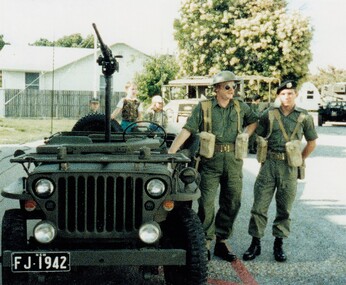
... A’ Squadron 8th/13th Victorian Mounted Rifles took part in Bicentennial Parade at Wodonga 2 January 1988. Parade included Light Horse Heritage Troop, Historical Vehicle Club and current armoured vehicles....A’ Squadron 8th/13th Victorian Mounted Rifles took part in Bicentennial Parade at Wodonga 2 January 1988. Parade included Light Horse Heritage Troop, Historical Vehicle Club and current armoured vehicles. ...A’ Squadron 8th/13th Victorian Mounted Rifles took part in Bicentennial Parade at Wodonga 2 January 1988. Parade included Light Horse Heritage Troop, Historical Vehicle Club and current armoured vehicles.Colour photograph of 2 men in uniform standing beside WW11 Jeep with machine gun mounted on pedestal. Photo is taken at Buna Barracks, Albury. Both soldiers are wearing WW11 webbing; one has steel helmet, the other is wearing 8/13 VMR beret. -
 8th/13th Victorian Mounted Rifles Regimental Collection
Photograph
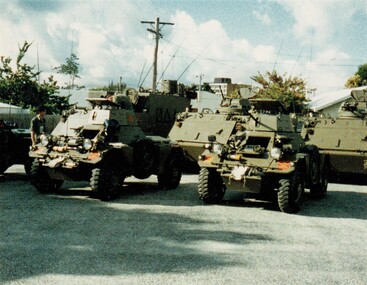
... ‘A’ Squadron 8th/13th Victorian Mounted Rifles took part in Bicentennial Parade at Wodonga 2 January 1988. Parade included Light Horse Heritage Troop, Historical Vehicle Club and current armoured vehicles....‘A’ Squadron 8th/13th Victorian Mounted Rifles took part in Bicentennial Parade at Wodonga 2 January 1988. Parade included Light Horse Heritage Troop, Historical Vehicle Club and current armoured vehicles. ...‘A’ Squadron 8th/13th Victorian Mounted Rifles took part in Bicentennial Parade at Wodonga 2 January 1988. Parade included Light Horse Heritage Troop, Historical Vehicle Club and current armoured vehicles.Colour photograph of 2 Ferret Mk 2 Scout Cars in front of 3 M113 Armoured Personnel Carriers. Photographed at Buna Barracks, Albury. -
 8th/13th Victorian Mounted Rifles Regimental Collection
Photograph
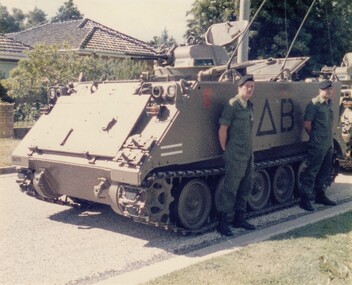
... ‘A’ Squadron 8th/13th Victorian Mounted Rifles took part in Bicentennial Parade at Wodonga 2 January 1988. Parade included Light Horse Heritage Troop, Historical Vehicle Club and current armoured vehicles....‘A’ Squadron 8th/13th Victorian Mounted Rifles took part in Bicentennial Parade at Wodonga 2 January 1988. Parade included Light Horse Heritage Troop, Historical Vehicle Club and current armoured vehicles. ...‘A’ Squadron 8th/13th Victorian Mounted Rifles took part in Bicentennial Parade at Wodonga 2 January 1988. Parade included Light Horse Heritage Troop, Historical Vehicle Club and current armoured vehicles.Colour photograph of 2 soldiers standing beside M113 Armoured Personnel Carrier. Soldiers are Trooper Harding and Trooper Gratt, 8/13 Victorian Mounted Rifles. -
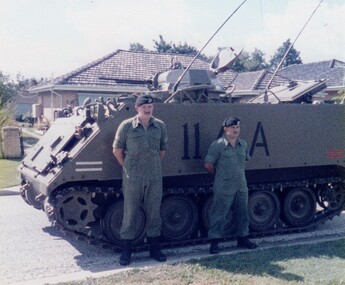 8th/13th Victorian Mounted Rifles Regimental Collection
Photograph
... A’ Squadron 8th/13th Victorian Mounted Rifles took part in Bicentennial Parade at Wodonga 2 January 1988. Parade included Light Horse Heritage Troop, Historical Vehicle Club and current armoured vehicles....A’ Squadron 8th/13th Victorian Mounted Rifles took part in Bicentennial Parade at Wodonga 2 January 1988. Parade included Light Horse Heritage Troop, Historical Vehicle Club and current armoured vehicles. ...A’ Squadron 8th/13th Victorian Mounted Rifles took part in Bicentennial Parade at Wodonga 2 January 1988. Parade included Light Horse Heritage Troop, Historical Vehicle Club and current armoured vehicles.Colour photograph of 2 soldiers standing beside M 113 Armoured Personnel Carrier. Soldiers are Sergeant R. Hodge and Trooper Melton of 8/13 Victorian Mounted Rifles. -
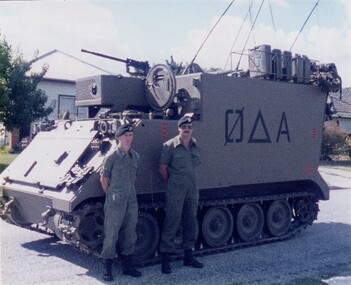 8th/13th Victorian Mounted Rifles Regimental Collection
Photograph
... ‘A’ Squadron 8th/13th Victorian Mounted Rifles took part in Bicentennial Parade at Wodonga 2 January 1988. Parade included Light Horse Heritage Troop, Historical Vehicle Club and current armoured vehicles....‘A’ Squadron 8th/13th Victorian Mounted Rifles took part in Bicentennial Parade at Wodonga 2 January 1988. Parade included Light Horse Heritage Troop, Historical Vehicle Club and current armoured vehicles. ...‘A’ Squadron 8th/13th Victorian Mounted Rifles took part in Bicentennial Parade at Wodonga 2 January 1988. Parade included Light Horse Heritage Troop, Historical Vehicle Club and current armoured vehicles.Colour photograph of two soldiers standing beside M 113 Armoured Command Vehicle. Soldiers are Lance Corporal Vander Velde and Corporal Onken 8/13 Victorian Mounted Rifles. -
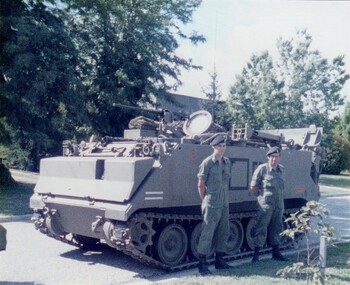 8th/13th Victorian Mounted Rifles Regimental Collection
Photograph
... ‘A’ Squadron 8th/13th Victorian Mounted Rifles took part in Bicentennial Parade at Wodonga 2 January 1988. Parade included Light Horse Heritage Troop, Historical Vehicle Club and current armoured vehicles....‘A’ Squadron 8th/13th Victorian Mounted Rifles took part in Bicentennial Parade at Wodonga 2 January 1988. Parade included Light Horse Heritage Troop, Historical Vehicle Club and current armoured vehicles. ...‘A’ Squadron 8th/13th Victorian Mounted Rifles took part in Bicentennial Parade at Wodonga 2 January 1988. Parade included Light Horse Heritage Troop, Historical Vehicle Club and current armoured vehicles.Colour photograph of 2 soldiers standing behind M 113 Armoured Fitters Vehicle. Soldiers are trooper J. French and Corporal P. Ziebarth, 8/13 Victorian Mounted Rifles. -
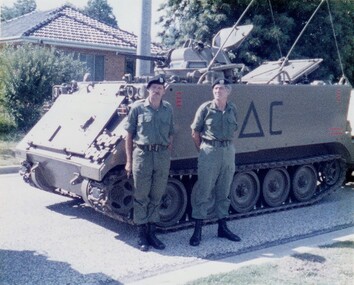 8th/13th Victorian Mounted Rifles Regimental Collection
Photograph
... ‘A’ Squadron 8th/13th Victorian Mounted Rifles took part in Bicentennial Parade at Wodonga 2 January 1988. Parade included Light Horse Heritage Troop, Historical Vehicle Club and current armoured vehicles....‘A’ Squadron 8th/13th Victorian Mounted Rifles took part in Bicentennial Parade at Wodonga 2 January 1988. Parade included Light Horse Heritage Troop, Historical Vehicle Club and current armoured vehicles. ...‘A’ Squadron 8th/13th Victorian Mounted Rifles took part in Bicentennial Parade at Wodonga 2 January 1988. Parade included Light Horse Heritage Troop, Historical Vehicle Club and current armoured vehicles.Colour photograph of 2 soldiers standing beside M113 Armoured personnel carrier. Soldiers are Corporal I. Marshal and Corporal Anton Florent of 8/13 Victorian Mounted Rifles. -
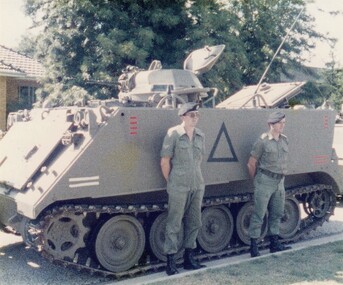 8th/13th Victorian Mounted Rifles Regimental Collection
Photograph
... ‘A’ Squadron 8th/13th Victorian Mounted Rifles took part in Bicentennial Parade at Wodonga 2 January 1988. Parade included Light Horse Heritage Troop, Historical Vehicle Club and current armoured vehicles....‘A’ Squadron 8th/13th Victorian Mounted Rifles took part in Bicentennial Parade at Wodonga 2 January 1988. Parade included Light Horse Heritage Troop, Historical Vehicle Club and current armoured vehicles. ...‘A’ Squadron 8th/13th Victorian Mounted Rifles took part in Bicentennial Parade at Wodonga 2 January 1988. Parade included Light Horse Heritage Troop, Historical Vehicle Club and current armoured vehicles.Colour photograph of 2 soldiers standing beside M 113 Armoured Personnel Carrier. Soldiers are Corporal H. Burvill and Lieutenant R. J. Marshall of 8/13 Victorian Mounted Rifles. -
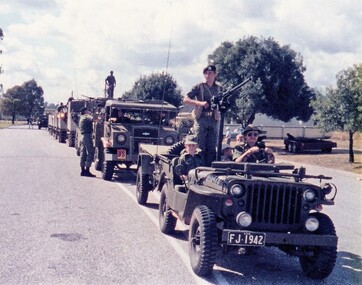 8th/13th Victorian Mounted Rifles Regimental Collection
Photograph
... A’ Squadron 8th/13th Victorian Mounted Rifles took part in Bicentennial Parade at Wodonga 2 January 1988. Parade included Light Horse Heritage Troop, Historical Vehicle Club and current armoured vehicles....A’ Squadron 8th/13th Victorian Mounted Rifles took part in Bicentennial Parade at Wodonga 2 January 1988. Parade included Light Horse Heritage Troop, Historical Vehicle Club and current armoured vehicles. ...A’ Squadron 8th/13th Victorian Mounted Rifles took part in Bicentennial Parade at Wodonga 2 January 1988. Parade included Light Horse Heritage Troop, Historical Vehicle Club and current armoured vehicles.Colour photograph of line of vehicles with WW11 Jeep leading, preparing to move to Wodonga for the Bicentenial Parade 2 January 1988.
