
Showing 803 items matching "london - history"
-
 Moorabbin Air Museum
Souvenir (Item) - Brochures GAC Aerospace history, London Airport, Antique Fly-in 1986 & 1993 AND Nomad, Brochures GAC Aerospace history, London Airport, Antique Fly-in 1986 & 1993 AND Nomad
... Brochures GAC Aerospace history, London Airport, Antique Fly-in 1986 & 1993 AND Nomad ...Brochures GAC Aerospace history, London Airport, Antique Fly-in 1986 & 1993 AND Nomad ...Brochures GAC Aerospace history, London Airport, Antique Fly-in 1986 & 1993 AND Nomad Souvenir Brochures GAC Aerospace history, London Airport, Antique Fly-in 1986 & 1993 AND Nomad ... -
 Monbulk RSL Sub Branch
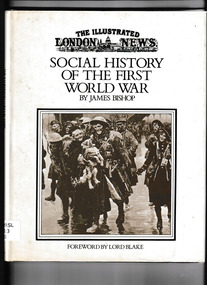
Book, Angus and Robertson, The Illustrated London News social history of the First World War, 1982
... The Illustrated London News social history of the First World War ...The Illustrated London News social history of the First World War Book Angus and Robertson James Bishop ...War songs - War games - Armistice - Conscription - War propaganda.Index, bib, ill, p.144.non-fictionWar songs - War games - Armistice - Conscription - War propaganda.great britain - social conditions - 1914-1918, world war 1914-1918 - social conditions -
Friends of St Brigids Association
Book - An Atlas of Irish History, Edwards, Ruth Dudley. 1989. An Atlas of Irish History. London ; New York : Methuen, 1981 1 atlas (286 p.) : maps ; 24 cm
... An Atlas of Irish History. London ; New York : Methuen, 1981 1 atlas (286 p.) : maps ; 24 cm. ...An Atlas of Irish History. London ; New York : Methuen, 1981 1 atlas (286 p.) : maps ; 24 cm. ... -
 Mrs Aeneas Gunn Memorial Library
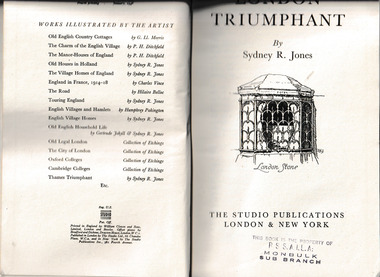
Book, Studio Publications, London triumphant, 1942
... London - History...London - History London - Description A history and description of London in the context of the bombing of London Index, ill, p.272. ...A history and description of London in the context of the bombing of LondonIndex, ill, p.272.non-fictionA history and description of London in the context of the bombing of Londonlondon - history, london - description -
 Warrnambool and District Historical Society Inc.
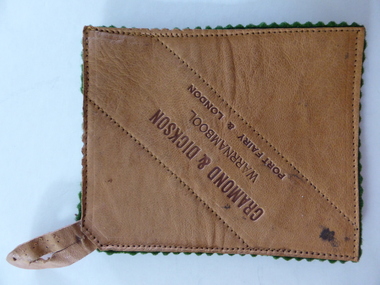
Souvenir, Oven Mitt, Early 20th century
... london...history of warrnambool...This store was of great importance in Warrnambool as a dominant business in the town/city for over 100 years. cramond & dickson stores, warrnambool, port fairy, london history of warrnambool john glass cramond james dickson ‘Cramond & Dickson. ...This is a product that was sold in the general store of Cramond and Dickson in Warrnambool early in the 20th century and produced for this store at the time. It may also have been given to customers as an advertising feature. John Glass Cramond and James Dickson established a drapery store in Warrnambool in 1855, firstly in Timor Street and then in Liebig Street. It specialized in men’s and women’s clothing and drapery and had a tailoring and millinery business. The store opened branches in several towns in the vicinity of Warrnambool, including Port Fairy. It also opened a branch store in London, enabling it to import materials and other items direct from London. The Cramond and Dickson store in Warrnambool closed in 1973. This mitt is of considerable interest as it is a sample of the wares and advertising articles coming from the general store of Cramond and Dickson of Warrnambool. This store was of great importance in Warrnambool as a dominant business in the town/city for over 100 years. This is a rectangular-shaped oven mitt with light brown leather on one side and a green-coloured felt-like material with a fluted edge on the other side. The mitt has machine stitching diagonally across both sides and machine stitching around the edges. A leather looped tag is attached at one corner so that the mitt can be hung up. The reddish-brown printing on the leather side of the mitt is stamped into the leather. The leather side is a little stained. ‘Cramond & Dickson. Warrnambool, Port Fairy & London’ cramond & dickson stores, warrnambool, port fairy, london, history of warrnambool, john glass cramond, james dickson -
 Robin Boyd Foundation
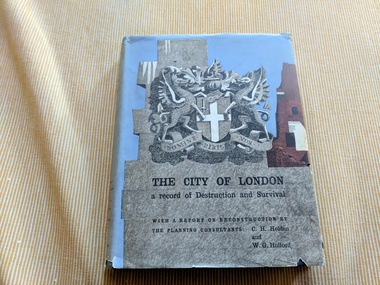
Book, C.H. Holden and W.G. Holford, The City of London - a record of Destruction and Survival, 1951
... london... history of london...London city of london history of london Walsh St library Hardcover w/dust jacket The City of London - a record of Destruction and Survival Book C.H. ...Hardcover w/dust jacketlondon, city of london, history of london, walsh st library -
 Mrs Aeneas Gunn Memorial Library
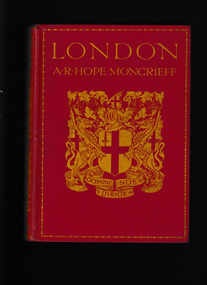
Book, A. & C. Black, London, 1916
... ...London - History...London - Description and travel London - History A description opf London landmarks and history Ill, p.312. ...A description opf London landmarks and historyIll, p.312.non-fictionA description opf London landmarks and historylondon - description and travel, london - history -
 Mrs Aeneas Gunn Memorial Library
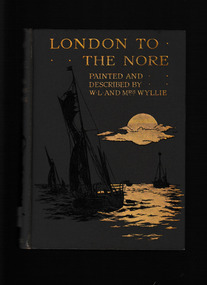
Book, A. & C. Black, London to the Nore, 1905
... ...London - History...London - Description and travel London - History A travellers guide to London Index, ill, p.595. ...A travellers guide to LondonIndex, ill, p.595.non-fictionA travellers guide to Londonlondon - description and travel, london - history -
 Victorian Railway History Library
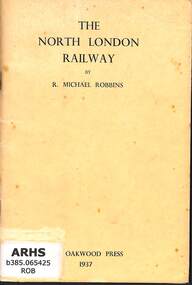
Book, Robbins, Michael, The North London Railway, 1937
... Railroads - The North London Railway - history...Railroads - The North London Railway - history Railroads - Great Britain - history A brief history of the North London Railway from Broad Street station. ill, maps, p.24. ...A brief history of the North London Railway from Broad Street station.ill, maps, p.24.non-fictionA brief history of the North London Railway from Broad Street station.railroads - the north london railway - history, railroads - great britain - history -
 Returned Nurses RSL Sub-branch
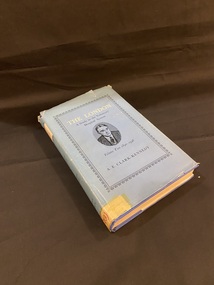
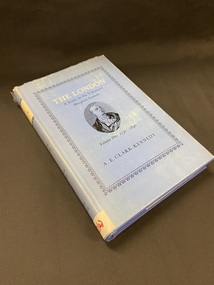
Book - Hardcover book, Pitman Medical Publishing Company, The London: a study in the voluntary hospital system: volume two, the second hundred years, 1840-1948, 1963
... ...London Hospital...history...Hospitals London Hospital history of hospitals This is the second volume of the history of the Voluntary Hospital System. ...This is the second volume of the history of the Voluntary Hospital System. 'In this volume the story flows on against the background of the social changes of the nineteenth and the tragic events of the twentieth centuries.' [From inside cover]Hardcover book with a blue dust jacket. The dust jacket has an ornate black border surrounding the title and author information and in the centre is a black pen drawing of a man in an oval template. The spine has a cream coloured box at the top with 'The London' printed in black.non-fictionThis is the second volume of the history of the Voluntary Hospital System. 'In this volume the story flows on against the background of the social changes of the nineteenth and the tragic events of the twentieth centuries.' [From inside cover]hospitals, london hospital, history of hospitals -
 Returned Nurses RSL Sub-branch
Book - Hardcover book, Pitman Medical Publishing Company, The London: a study in the voluntary hospital system: volume one, the first hundred years, 1740-1840, 1963
... ...London Hospital...history...Hospitals London Hospital history of hospitals This is the first volume of the history of the Voluntary Hospital System. ...This is the first volume of the history of the Voluntary Hospital System. 'This book is not just another history of a hospital. Rather it is the exciting early life of one, told in the entertaining style of the day against the medical, social and political history of that period.' [From dust jacket]Hardcover book with a blue dust jacket. The dust jacket has an ornate black border surrounding the title and author information and in the centre is a black pen drawing of a man in an oval template. The spine has a cream coloured box at the top with 'The London' printed in black.non-fictionThis is the first volume of the history of the Voluntary Hospital System. 'This book is not just another history of a hospital. Rather it is the exciting early life of one, told in the entertaining style of the day against the medical, social and political history of that period.' [From dust jacket]hospitals, london hospital, history of hospitals -
 Alfred Hospital Nurses League - Nursing History Collection
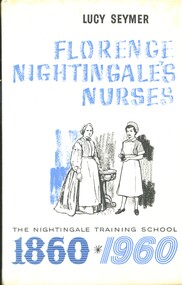
Book - Illustrated Book, Lucy Seymer 1893-1971, Florence Nightingale's Nurses: The Nightingale Training School 1860-1960, 1960
... London...Nursing-education-history...Florence Nightingale St Thomas's Hospital London Nursing-education-history This book details the history and impact of the Nightingale Training School, established by Florence Nightingale at St Thoms' Hospital, London in 1860. ...This book details the history and impact of the Nightingale Training School, established by Florence Nightingale at St Thoms' Hospital, London in 1860. The book covers the school's development from its founding to its centenary in 1960. It highlights Nightingale's philosophy of nursing and its practical implementation, particularly emphasizing the importance of environmental conditions for patient health. The book also explores the school's global impact and its role in shaping modern nursing.Illustrated book with white cover with blue and white print featuring on the front a drawing of two nurses. The nurse on the left is depicted in a long 19th century style dress, while the nurse on the right is in a 20th century style uniform. The drawing is repeated on the back Title and author's name are printed on the front cover and spine.non-fictionThis book details the history and impact of the Nightingale Training School, established by Florence Nightingale at St Thoms' Hospital, London in 1860. The book covers the school's development from its founding to its centenary in 1960. It highlights Nightingale's philosophy of nursing and its practical implementation, particularly emphasizing the importance of environmental conditions for patient health. The book also explores the school's global impact and its role in shaping modern nursing.florence nightingale, st thomas's hospital london, nursing-education-history -
 Robin Boyd Foundation
Book, Christopher Hibbert, London: The Biography of a City, 1969
... history... london...history london Walsh St library Hardcover w/ Dust Jacket London: The Biography of a City Book Christopher Hibbert Longmans, Green and Co Ltd ...Hardcover w/ Dust Jackethistory, london, walsh st library -
 Victorian Railway History Library
Book, Thompson, Matt, Mile by Mile London to Paris, 2012
... history...Railroads - London to Paris - history...Railroads - Great Britain - history Railroads - London to Paris - history The entire railway journey by historic Golden Arrow and modern Eurostar mapped for the interested traveller. ill, maps, p.106. ...The entire railway journey by historic Golden Arrow and modern Eurostar mapped for the interested traveller.ill, maps, p.106.non-fictionThe entire railway journey by historic Golden Arrow and modern Eurostar mapped for the interested traveller.railroads - great britain - history, railroads - london to paris - history -
Port Melbourne Historical & Preservation Society
Document - Menu, SS Strathnaver, Feb 1953
... Menu from SS Strathnaver for 24.2.1953. History of London Law Courts on back....transport - shipping p&o lines Menu from SS Strathnaver for 24.2.1953. History of London Law Courts on back. Document Menu, SS Strathnaver ...Menu from SS Strathnaver for 24.2.1953. History of London Law Courts on back.transport - shipping, p&o lines -
Dandenong & District Historical Society
Document - London Stores, Articles Concerning London Stores
... London Stores, Newspaper Article, History...London Stores, Newspaper Article, History Articles concerning London Stores Articles Concerning London Stores Document London Stores ...London Stores, Newspaper Article, History -
 Eltham District Historical Society Inc
Folder, The Eltham Society, 1998
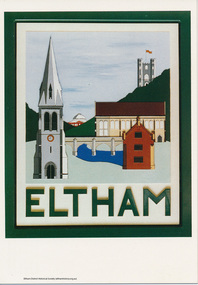
... Postcard: Eltham Town Sign, Passey Place, London Brief history of the origins of Eltham, England. ...Postcard: Eltham Town Sign, Passey Place, London Brief history of the origins of Eltham, England. ...Information about and from Eltham England. Postcard: Eltham Town Sign, Passey Place, London Brief history of the origins of Eltham, England. Description of "the gavel and stand", object which the Society donated to EDHS Newsletter No 132, May 19982 Pages. I booklet newsletter. 26 pages. I postcard HG Booklet 31eltham society (london), harry gilham collection, gavel -
 Bendigo Historical Society Inc.
Book - LYDIA CHANCELLOR COLLECTION: RIZZIO AND DARNLEY: THE STORY OF A DARK REVENGE
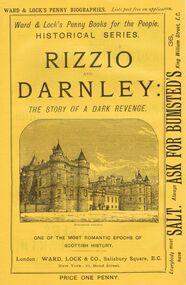
... One of the most r omantic epochs of Scottish History.' London : Ward, Lock & Co., Salisbury., E.C. ...One of the most r omantic epochs of Scottish History.' London : Ward, Lock & Co., Salisbury., E.C. ...A book titled ' Rizzio and Darnlely: the story of a Dark Revenge. One of the most r omantic epochs of Scottish History.' London : Ward, Lock & Co., Salisbury., E.C. New York : 10 Bond Street. 721 - 736 pgs. (ill.) This booklet is one of a series of 37 ' Ward & Lock's Penny Books for the People.' ' Historical Series.' Price one penny. There are also advertisements of note.books, biography, scotland, lydia chancellor, collection, ward & lock's penny biographies, ward & lock's penny books for the people, historical series, history, scotland, scottish history, book, books, advertisements, penny books -
 Bendigo Historical Society Inc.
Book - LYDIA CHANCELLOR COLLECTION: FROM TORBAY TO ST. JAMES'S: THE STORY OF THE REVOLUTION OF 1688
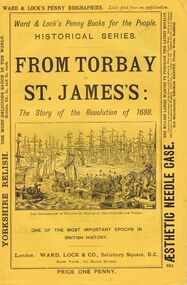
... One of the most important epochs in British History.' London : Ward, Lock & Co., Sallisbury Square, E.C. ...One of the most important epochs in British History.' London : Ward, Lock & Co., Sallisbury Square, E.C. ...A book titled ' From Torbay to St. James's: the story of the Revolution of 1688. One of the most important epochs in British History.' London : Ward, Lock & Co., Sallisbury Square, E.C. New York : 10 Bond Street. 449 - 464 pgs. (ill.) This booklet is one of a series of 37 ' Ward & Lock's Penny Books for the People.' ' Historical Series.' Price one penny, There are also advertisements of note.books, biography, british history, lydia chancellor, collection, ward & lock's penny biographies, biographies, ward & lock's penny books for the people, historical series, history, british history, revolutions, book, books, advertisements, penny books -
 Bendigo Historical Society Inc.
Book - LYDIA CHANCELLOR COLLECTION: THE SICILIAN VESPERS, THE STORY OF A NATION'S VENGEANCE
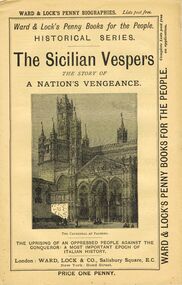
... The uprising of an oppressed people against the conqueror : a most important epoch of Italian history.' London : Ward, Loc k & Co., Salisbury Square, E.C. ...The uprising of an oppressed people against the conqueror : a most important epoch of Italian history.' London : Ward, Loc k & Co., Salisbury Square, E.C. ...A book titled ' The Sicilian Vespers. The story of a Nation's Vengeance. The uprising of an oppressed people against the conqueror : a most important epoch of Italian history.' London : Ward, Loc k & Co., Salisbury Square, E.C. New York : Bond Street. 433 - 448 pgs. (ill.) This booklet is one of a series of 37 ' Ward & Lock's Penny Books for the People.' 'Historical Series.' Price one penny. There are also advertisements of note.books, biography, italy, lydia chancellor, collection, ward & lock's penny biographies, biographies, ward & lock's penny books for the people, historical series, history, italy, italian history, advertisements, book, books, penny books -
 Bendigo Historical Society Inc.
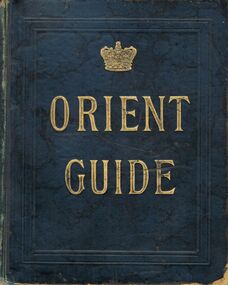
Book - BOOK: ORIENT GUIDE ORIENT LINE OF ROYAL MAIL STEAMSHIPS
... Author of 'A History of london ' / Sampson Low ...Edited for the Managers of the Line by W.J.Loftie, B.A., F.S.A., Author of 'A History of London ‘, 'Windsor ' 'Authorised guide to the Tower 'Etc. ...Author of 'A History of london ' / Sampson Low Marston Searle & Rivington Limited St. ...Green coloured hardbound Book / gold lettering -Orient Guide /-front and back inside covers show - Orient line of Royal Mail Steamships Henry Jones & co Agents for Orient Line , View Point , Sandhurst , Orient Line of Royal Mail Steamships' / Title page shows 'Orient Line Guide -Chapters for Travellers by sea and land , Illustrated . The third Edition, Re- written, with maps and plans. Edited for the Managers of the Line by W.J.Loftie, B.A., F.S.A., Author of 'A History of London ‘, 'Windsor ' 'Authorised guide to the Tower 'Etc. Etc. . . . Price 2/6 London : Sampson Low , Marston , Searle , & Rivington , Limited , St. Dunstan's House , Fetter lane , Edward Stanford , 26 , & 27 Cockspur St . S.W. 1888 Entered at Stationers Hall / this page also has a rubber stamp ' Eaglehawk Public Library / first page of chapter 1 shows 'With compliments of Henry Jones & Co , View point Sandhurst / contents include a list of Orient Line Steam ships , illustrations and ships 'plans ,maps , advertsorganization, business, -orient guide / orient line of royal mail steamships henry jones & co agents for orient line , view point , sandhurst , orient line of royal mail steamships' / w.j.loftie , b.a., f.s.a. , author of 'a history of london ' / sampson low , marston , searle , & rivington , limited , st. dunstan's house , fetter lane , edward stanford , 26 , & 27 cockspur st . s.w. 1888 entered at stationers hall /henry jones & co , view point sandhurst -
 Ballarat and District Irish Association
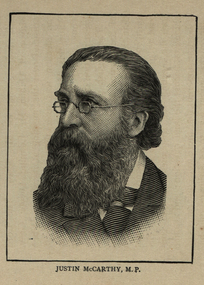
Image, Justin McCarthy M.P., 1864
... Of these works the most important are: "History of our own Times" (7 vols., London, 1879-1905), dealing with the events from the year 1830 to the death of Queen Victoria and supplemented by "Reminiscences of an Irishman" (1899); "A short History of our own Times" (1888); "The Epoch of Reform, 1830-1850" (London, 1874); "History of the Four Georges" (4 vols., 1884-1901), of which vols. 3 and 4 were written in collaboration with his son, Justin Huntly McCarthy well-known as a novelist and play-writer; "Ireland and her Story" (1903); "Modern England" (1899); "Rome in Ireland" (1904). ...Of these works the most important are: "History of our own Times" (7 vols., London, 1879-1905), dealing with the events from the year 1830 to the death of Queen Victoria and supplemented by "Reminiscences of an Irishman" (1899); "A short History of our own Times" (1888); "The Epoch of Reform, 1830-1850" (London, 1874); "History of the Four Georges" (4 vols., 1884-1901), of which vols. 3 and 4 were written in collaboration with his son, Justin Huntly McCarthy well-known as a novelist and play-writer; "Ireland and her Story" (1903); "Modern England" (1899); "Rome in Ireland" (1904). ...McCarthy, JUSTIN, Irish politician, journalist, novelist, and historian, b. at Cork, November 22, 1830; d. at Folkestone, England, June 24, 1912. He was the son of Michael McCarthy, and was educated at a private school in his native city. At the age of eighteen he obtained a position on the literary staff of the "Cork Examiner". In 1853 he went to Liverpool as a journalist; in 1860 became Parliamentary reporter of the London "Morning Star", which he edited later (1864-68). From 1868 till 1871 he lectured with great success throughout the United States of America and was one of the assistant editors of the New York "Independent". On his return to England he contributed frequently to the "Nineteenth Century", the "Fortnightly Review", and the "Contemporary Review", and for many years was leader writer for the London "Daily News". From 1879 till 1896 he was a member of the British Parliament, representing the Irish constituencies of County Longford, Derry City, and North Longford. In November, 1880, he joined the Irish Land League, which won so many victories for the Catholic peasantry; two years later he became chairman of the National Land and Labor League of Great Britain. In 1886 he revisited the United States. From 1890 till 1896 he was chairman of the Irish Parliamentary party in succession to Parnell, having previously been vice-chairman for many years. His courtesy and moderation won him the respect of all parties in Parliament. Though participating so actively in the political life of Ireland, McCarthy took more interest in letters than in politics. His first novel, "The Waterdale Neighbors", appeared in 1867, and was followed by about twenty others, many of which are still popular. Of these the chief are: "Dear Lady Disdain" (1875); "A Fair Saxon" (1873); "Miss Misanthrope" (1877) and "The Dictator" (1893). Other publications were: "Con Amore", a volume of essays (1868), and biographies of Sir Robert Peel (1891), Leo XIII (1896), and Gladstone (1897). McCarthy's popularity as a writer depends rather on his historical writings, which are always lucid, forceful, and wonderfully free from party spirit. Of these works the most important are: "History of our own Times" (7 vols., London, 1879-1905), dealing with the events from the year 1830 to the death of Queen Victoria and supplemented by "Reminiscences of an Irishman" (1899); "A short History of our own Times" (1888); "The Epoch of Reform, 1830-1850" (London, 1874); "History of the Four Georges" (4 vols., 1884-1901), of which vols. 3 and 4 were written in collaboration with his son, Justin Huntly McCarthy well-known as a novelist and play-writer; "Ireland and her Story" (1903); "Modern England" (1899); "Rome in Ireland" (1904). Failing health and old age could not induce McCarthy to lay down his pen, and even as late as November, 1911, he published his "Irish Recollections", describing with his wonted charm the events of his earlier life. He was an ardent advocate of Catholic rights, and, though he had been indifferent for many years, in his old age he returned to the practices of his religion. A.A. MACERLEAN [http://oce.catholic.com/index.php?title=Justin_McCarthy, accessed 3/12/2013]Image of a bearded man wearing glasses. He is Justin McCarthy, M.P.ballarat irish, justin mccarthy, cork -
 Flagstaff Hill Maritime Museum and Village
Ceramic - Lid, circa 1878
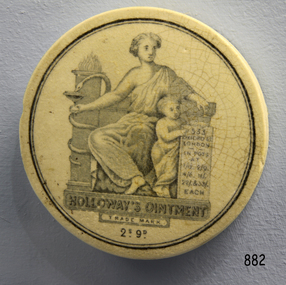
... London address was an important part of his promotional appeal and was displayed prominently on the packaging of his products. Holloway’s attention to marketing is also observed in the pseudo-Classical emblems that decorated his containers. The sign of a snake curled around a staff is a longstanding and commonly recognised symbol of the physician’s power to heal. Similar reference on this lid is also being made to an ancient goddess of healing and her healthy young offspring. History...London address was an important part of his promotional appeal and was displayed prominently on the packaging of his products. Holloway’s attention to marketing is also observed in the pseudo-Classical emblems that decorated his containers. The sign of a snake curled around a staff is a longstanding and commonly recognised symbol of the physician’s power to heal. Similar reference on this lid is also being made to an ancient goddess of healing and her healthy young offspring. History ...This ceramic lid is from a Holloway’s Ointment pot. It was retrieved from the wreckage of the LOCH ARD. The vessel was laden with an up-to-date, high-value cargo, including luxury items intended for the Melbourne International Exhibition in 1880. Britain exported her manufactures to the Australasian colonies and the Americas. Holloway’s Ointment was one nineteenth-century pharmaceutical product that was advertised in both these markets. The price of this particular jar and its contents was printed on the label as “2S 9D” (2 shillings and nine pence). This value calculated to the approximate price in 2014, would be £51.31 (UK pounds and decimal pence) or $85 AU ― quite an expensive ointment. The label also shows a picture of a stone tablet with the inscription "IN POTS AT 1/½, 2/9, 4/6,11/-, 22/- & 33/- EACH”, which is most likely the alternative prices that the ointment was available for in differently sized containers. Holloway’s claims for his “great remedy” included the cure of sores, wounds, ulcers and boils, gout, rheumatism, diphtheria, bronchitis, influenza, sore throats, coughs and colds, “all varieties of skin diseases”, scrofula, ringworm, scurvy, “dropsical swellings” and liver disease, piles, fistulas, and internal inflammation. The salve cream was said to penetrate the skin when rubbed on; purifying internal tissues and organs, cleansing all bodily fluids particularly the blood, and eradicating all disease from the body. Purchasers were assured that if Holloway’s Ointment alone did not affect immediate cure, then the combination of it and Holloway’s Pills (sold separately) most certainly would. Thomas Holloway began manufacturing and marketing his miraculous ointment from premises at 244 Strand in the 1840s, moving to the more prestigious address of 533 Oxford in the late 1860s. The London address was an important part of his promotional appeal and was displayed prominently on the packaging of his products. Holloway’s attention to marketing is also observed in the pseudo-Classical emblems that decorated his containers. The sign of a snake curled around a staff is a longstanding and commonly recognised symbol of the physician’s power to heal. Similar reference on this lid is also being made to an ancient goddess of healing and her healthy young offspring. History of the Loch Ard: The Loch Ard got its name from ”Loch Ard” a loch which lies to the west of Aberfoyle, and the east of Loch Lomond. It means "high lake" in Scottish Gaelic. The vessel belonged to the famous Loch Line which sailed many vessels from England to Australia. The Loch Ard was built in Glasgow by Barclay, Curdle and Co. in 1873, the vessel was a three-masted square-rigged iron sailing ship that measured 79.87 meters in length, 11.58 m in width, and 7 m in depth with a gross tonnage of 1693 tons with a mainmast that measured a massive 45.7 m in height. Loch Ard made three trips to Australia and one trip to Calcutta before its fateful voyage. Loch Ard left England on March 2, 1878, under the command of 29-year-old Captain Gibbs, who was newly married. The ship was bound for Melbourne with a crew of 37, plus 17 passengers. The general cargo reflected the affluence of Melbourne at the time. Onboard were straw hats, umbrella, perfumes, clay pipes, pianos, clocks, confectionery, linen and candles, as well as a heavier load of railway irons, cement, lead and copper. There were other items included that were intended for display in the Melbourne International Exhibition of 1880. The voyage to Port Phillip was long but uneventful. Then at 3 am on June 1, 1878, Captain Gibbs was expecting to see land. But the Loch Ard was running into a fog which greatly reduced visibility. Captain Gibbs was becoming anxious as there was no sign of land or the Cape Otway lighthouse. At 4 am the fog lifted and a lookout aloft announced that he could see breakers. The sheer cliffs of Victoria's west coast came into view, and Captain Gibbs realised that the ship was much closer to them than expected. He ordered as much sail to be set as time would permit and then attempted to steer the vessel out to sea. On coming head-on into the wind, the ship lost momentum, the sails fell limp and Loch Ard's bow swung back towards land. Gibbs then ordered the anchors to be released in an attempt to hold its position. The anchors sank some 50 fathoms - but did not hold. By this time the ship was among the breakers and the tall cliffs of Mutton Bird Island rose behind. Just half a mile from the coast, the ship's bow was suddenly pulled around by the anchor. The captain tried to tack out to sea, but the ship struck a reef at the base of Mutton Bird Island, near Port Campbell. Waves subsequently broke over the ship and the top deck became loosened from the hull. The masts and rigging came crashing down knocking passengers and crew overboard. When a lifeboat was finally launched, it crashed into the side of Loch Ard and capsized. Tom Pearce, who had launched the boat, managed to cling to its overturned hull and shelter beneath it. He drifted out to sea and then on the flood tide came into what is now known as Lochard Gorge. He swam to shore, bruised and dazed, and found a cave in which to shelter. Some of the crew stayed below deck to shelter from the falling rigging but drowned when the ship slipped off the reef into deeper water. Eva Carmichael a passenger had raced onto the deck to find out what was happening only to be confronted by towering cliffs looming above the stricken ship. In all the chaos, Captain Gibbs grabbed Eva and said, "If you are saved Eva, let my dear wife know that I died like a sailor". That was the last Eva Carmichael saw of the captain. She was swept off the ship by a huge wave. Eva saw Tom Pearce on a small rocky beach and yelled to attract his attention. He dived in and swam to the exhausted woman and dragged her to shore. He took her to the cave and broke the open case of brandy which had washed up on the beach. He opened a bottle to revive the unconscious woman. A few hours later Tom scaled a cliff in search of help. He followed hoof prints and came by chance upon two men from nearby Glenample Station three and a half miles away. In a complete state of exhaustion, he told the men of the tragedy. Tom then returned to the gorge while the two men rode back to the station to get help. By the time they reached Loch Ard Gorge, it was cold and dark. The two shipwreck survivors were taken to Glenample Station to recover. Eva stayed at the station for six weeks before returning to Ireland by steamship. In Melbourne, Tom Pearce received a hero's welcome. He was presented with the first gold medal of the Royal Humane Society of Victoria and a £1000 cheque from the Victorian Government. Concerts were performed to honour the young man's bravery and to raise money for those who lost family in the disaster. Of the 54 crew members and passengers on board, only two survived: the apprentice, Tom Pearce and the young woman passenger, Eva Carmichael, who lost her family in the tragedy. Ten days after the Lochard tragedy, salvage rights to the wreck were sold at auction for £2,120. Cargo valued at £3,000 was salvaged and placed on the beach, but most washed back into the sea when another storm developed. The wreck of Lochard still lies at the base of Mutton Bird Island. Much of the cargo has now been salvaged and some items were washed up into Lochard Gorge. Cargo and artefacts have also been illegally salvaged over many years before protective legislation was introduced in March 1982. One of the most unlikely pieces of cargo to have survived the shipwreck was a Minton majolica peacock- one of only nine in the world. The peacock was destined for the Melbourne 1880 International Exhibition in. It had been well packed, which gave it adequate protection during the violent storm. Today the Minton peacock can be seen at the Flagstaff Hill Maritime Museum in Warrnambool. From Australia's most dramatic shipwreck it has now become Australia's most valuable shipwreck artifact and is one of very few 'objects' on the Victorian State Heritage Register.The shipwreck of the Loch Ard is of significance for Victoria and is registered on the Victorian Heritage Register ( S 417). Flagstaff Hill has a varied collection of artefacts from Loch Ard and its collection is significant for being one of the largest accumulation of artefacts from this notable Victorian shipwreck of which the subject items are a small part. The collections objects give us a snapshot of how we can interpret the story of this tragic event. The collection is also archaeologically significant as it represents aspects of Victoria's shipping history that allows us to interpret Victoria's social and historical themes of the time. Through is associated with the worst and best-known shipwreck in Victoria's history. The ceramic lid off a Holloway’s Ointment container, retrieved from the wreckage of the LOCH ARD. The artefact is white with the pale blue image of a woman (seated) and a child (standing). The woman is draped in a soft white robe and her throne is beside a pillar that is entwined by a serpent. The child points to an inscribed stone tablet he is holding on the other side of seated woman. The front face of the lid, at the base of the woman on the throne, bears the label “HOLLOWAY’S OINTMENT”. Below this, in smaller letters, is written “TRADE MARK” and “2S.9D.” On the stone tablet pointed to by the child is inscribed “533 OXFORD ST. LONDON”, and beneath this, “IN POTS AT 1/½, 2/9, 4/6,11/-, 22/- & 33/- EACH”.flagstaff hill, warrnambool, flagstaff hill maritime museum, shipwreck coast, flagstaff hill maritime village, great ocean road, loch line, loch ard, captain gibbs, eva carmichael, tom pearce, glenample station, mutton bird island, loch ard gorge, holloway’s ointment, ceramic lid, pot lid, nineteenth-century medicines, pharmaceutical marketing -
 Flagstaff Hill Maritime Museum and Village
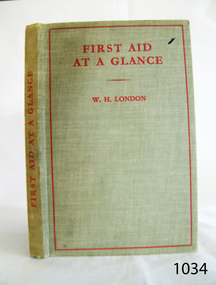
Book - Reference Medical/First Aid, William H. London, First Aid At A Glance, 1939
... history that bridged surf lifesaving and industrial workplace safety into wartime first aid. (For more information on the Pattison Collection see item 3678 Flagstaff Hill collections) https://victoriancollections.net.au/items/5580c7e72162f114d8b758db flagstaff hill warrnambool shipwrecked-coast flagstaff-hill flagstaff-hill-maritime-museum maritime-museum shipwreck-coast flagstaff-hill-maritime-village first aid at a glance book william london w.r. angus Published on the eve of World War II in 1939, First Aid at a Glance is a compact, highly practical emergency manual. ...Published on the eve of World War II in 1939, First Aid at a Glance is a compact, highly practical emergency manual. Designed as a concise summary for quick reference during crisis situations, it covers core civil defence and emergency medical topics such as the treatment of wounds, severe bleeding, and shock. Other subjects covered in this publication are fracture immobilisation and bandaging techniques, resuscitation and drowning intervention, and the management of casualties in public, industrial, or home settings.Hard cover book, First Aid at a Glance Author: William H. London Publisher: Angus & Robertson, Sydney, Australia Date: 1939 Further Information: Green cloth covered hardback volume with title in rednon-fictionPublished on the eve of World War II in 1939, First Aid at a Glance is a compact, highly practical emergency manual. Designed as a concise summary for quick reference during crisis situations, it covers core civil defence and emergency medical topics such as the treatment of wounds, severe bleeding, and shock. Other subjects covered in this publication are fracture immobilisation and bandaging techniques, resuscitation and drowning intervention, and the management of casualties in public, industrial, or home settings.flagstaff hill, warrnambool, shipwrecked-coast, flagstaff-hill, flagstaff-hill-maritime-museum, maritime-museum, shipwreck-coast, flagstaff-hill-maritime-village, first aid at a glance, book, william london, w.r. angus -
 Flagstaff Hill Maritime Museum and Village
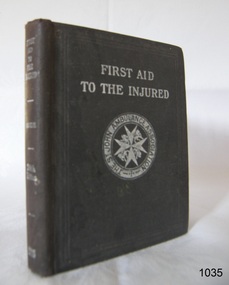
Book - Reference Medical/First Aid, James Cantlie, First Aid to the Injured, 1915
... In 1896, when Sun was kidnapped and held at the Chinese Legation in London, facing likely execution, Cantlie organised a watch on the legation and mounted the successful campaign that got him released a genuinely dramatic episode in late 19th-century history. ...In 1896, when Sun was kidnapped and held at the Chinese Legation in London, facing likely execution, Cantlie organised a watch on the legation and mounted the successful campaign that got him released a genuinely dramatic episode in late 19th-century history. ...First Aid to the Injured was the official training manual of the St John Ambulance Association, arranged to follow the syllabus of their First Aid course. It was written by James Cantlie for the St John Ambulance Association. The volume is a practical instructional text covering anatomy basics, how to treat fractures, dislocations, sprains and strains, circulation and blood loss, the nervous system, poisoning cases, and the organisation of first aid response essentially a comprehensive guide to the principles and practice of First Aid, reflecting the state of medical knowledge at the time.Hard cover book, First Aid to The Injured Author: James Cantlie Publisher: St John Ambulance Association Date: 1915 Further Information: Black colour with white titles and a St Johns icon or logo to front cover.non-fictionFirst Aid to the Injured was the official training manual of the St John Ambulance Association, arranged to follow the syllabus of their First Aid course. It was written by James Cantlie for the St John Ambulance Association. The volume is a practical instructional text covering anatomy basics, how to treat fractures, dislocations, sprains and strains, circulation and blood loss, the nervous system, poisoning cases, and the organisation of first aid response essentially a comprehensive guide to the principles and practice of First Aid, reflecting the state of medical knowledge at the time.flagstaff hill, warrnambool, shipwrecked-coast, flagstaff-hill, flagstaff-hill-maritime-museum, maritime-museum, shipwreck-coast, flagstaff-hill-maritime-village, first aid to the injured, book -
 Flagstaff Hill Maritime Museum and Village
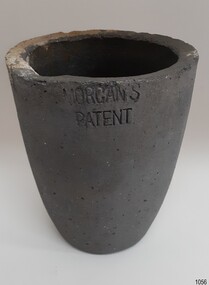
Functional object - Crucible, The Patent Plumbago Crucible Company, circa 1878
... The collection is also historically significant for its association with the LOCH ARD, which was one of the worst and best-known shipwrecks in Victoria’s history. flagstaff hill warrnambool maritime museum shipwreck coast great ocean road loch line loch ard captain gibbs eva carmichael tom pearce glenample station mutton bird island loch ard gorge graphite crucible plumbago crucible morgans crucible company Flagstaff Hill Maritime Museum and Village Fluxing pots crucible Morgan’s Patent Morgan brothers Patent Plumbago Crucible Co Battersea Works London Port Campbell Number “8”. ...This crucible was raised from the wreck of the LOCH ARD. It is one of six similar relics, in a range of sizes, now in the Flagstaff Hill collection. All bear markings to indicate their manufacture by the Morgan brothers of Battersea, trading as the Patent Plumbago Crucible Co. A crucible is a container used for purifying and melting metals so that they can be cast in a mould to a predetermined shape and use. They must withstand extremely high temperatures, and abrupt cooling, and shed their contents with minimal adherence. The addition of graphite to the traditional firing clays greatly enhanced the durability of industrial crucibles in mid-Victorian Britain, a significant technological advance at a time of great activity in foundries and expansion of demand for refined metals. The Morgans first noticed the advantages of graphite crucibles at the Great Exhibition held in London in 1851. Initially, they contracted to be sole selling agents for the American-made products of Joseph Dixon and Co. from New Jersey, but in 1856 they obtained that firm’s manufacturing rights and began producing their own graphite crucibles from the South London site. The Morgans imported crystalline graphite in 4-5 cwt casks from the British colony of Ceylon (now Sri Lanka) and mixed it with conventional English (Stourbridge) clays to be fired in kilns. Their products were purchased by the Royal Mints in London and India, and exported to official mints in France and Germany. They were successful exhibitors of their crucibles and furnaces at the London Exhibition held in 1861 (Class 1, Mining, quarrying, metallurgy and mineral products, Exhibit 265, Patent Plumbago Crucible Co). The range of sizes represented by the six crucibles retrieved from the LOCH ARD, suggests they may have been part of a sample shipment intended for similar promotion in the Australian colonies ― at Melbourne’s International Exhibition to be held in 1880. The summary of the LOCH ARD cargo manifest, by Don Charlwood in ‘Wrecks and Reputations’, does not mention any crucibles, implying that they were not a large consignment of uniform items. A newspaper account of an 1864 tour of the Morgan brothers’ ‘Black Potteries’ at Battersea indicates: “All the pots were numbered according to their contents, each number standing for one kilogram, or a little over two pounds; a No. 2 crucible contains two kilogrammes; a No. 3, three kilogrammes, and so on.” These numbers are obscured by marine sediment on three of the crucibles in the Flagstaff Hill collection, but those legible on the remaining three are 5, 6, and 8. None of the six is of the same size from a visual appraisal. A brief history of the Loch Ard (1873-1878): - The sailing ship Loch Ard was one of the famous Loch Line of ships that sailed the long voyage from England to Australia. Barclay, Curdle and Co. built the three-masted iron vessel in Glasgow in 1873. It had sailed three trips to Australia and one trip to Calcutta before its fateful voyage. Loch Ard left England on March 2, 1878, under the command of recently married, 29-year-old Captain Gibbs. It was bound for Melbourne with a crew of 37, plus 17 passengers. The general cargo reflected the affluence of Melbourne at the time. Onboard were straw hats, umbrellas, perfumes, clay pipes, pianos, clocks, confectionery, linen and candles, and a heavier load of railway irons, cement, lead and copper. Other cargo included items intended for display in the Melbourne International Exhibition of 1880. The Loch Ard had been sailing for three months and was close to its destination on June 1, 1878. Captain Gibbs had expected to see land at about 3 am but the Loch Ard ran into a fog that greatly reduced visibility and there was no sign of land or the Cape Otway lighthouse. The fog lifted at 4 am and the sheer cliffs of Victoria's west coast were much closer to them than Captain Gibbs expected. He tried to manage the vessel but failed and the ship struck a reef at the base of Mutton Bird Island, near Port Campbell. The top deck loosened from the hull, and the masts and rigging crashed down, knocking passengers and crew overboard. The lifeboat was launched by Tom Pearce but crashed into the side of Loch Ard and capsized. He clung onto its overturned hull and sheltered under it. He drifted out to sea and the tide brought him back to what is now called Loch Ard Gorge. He swam to shore and found a cave for shelter. A passenger, Eva Carmichael, had raced onto the deck to find out what was happening and was confronted by towering cliffs above the ship. She was soon swept off the ship by a huge wave. Eva saw Tom Pearce on a small rocky beach and yelled to attract his attention. He swam out and dragged her to the shelter of the cave. He revived her with a bottle of brandy from a case that had washed up on the beach. Tom scaled a cliff in search of help and followed some horse hoof prints. He came from two men from Glenample Station, three and a half miles away. He told the men of the tragedy and then returned to the gorge while the two men rode back to the station to get help. They reached Loch Ard Gorge and took the two shipwreck survivors to Glenample Station to recover. Eva stayed at the station for six weeks before returning to Ireland by steamship. In Melbourne, Tom Pearce received a hero's welcome and was presented with a medal and some money. Of the 54 crew members and passengers on board, only two survived: the apprentice, Tom Pearce and the young woman passenger, Eva Carmichael, who lost her family in the tragedy. The shipwreck of the LOCH ARD is of State significance ― Victorian Heritage Register S417. Flagstaff Hill’s collection of artefacts from LOCH ARD is significant for being one of the largest collections of artefacts from this shipwreck in Victoria. It is significant for its association with the shipwreck, which is on the Victorian Heritage Register (VHR S417). The collection is significant because of the relationship between the objects, as together they have a high potential to interpret the story of the LOCH ARD. The LOCH ARD collection is archaeologically significant as the remains of a large international passenger and cargo ship. The LOCH ARD collection is historically significant for representing aspects of Victoria’s shipping history and its potential to interpret sub-theme 1.5 of Victoria’s Framework of Historical Themes (living with natural processes). The collection is also historically significant for its association with the LOCH ARD, which was one of the worst and best-known shipwrecks in Victoria’s history.A Morgan’s Patent graphite crucible No.8 (i.e. 8kgs capacity), one of a set. It was recovered from the wreck of the LOCH ARD. It is in its original grey colouring with minimal sediment accretion on the top rim. It rises in a slight curve from a flat circular base to a wider rim with a pouring lip. Maker’s marks on the side of the container clearly identify the manufacturer. The maker's details are stamped into the base around and within a circle. A white sticker is attached. Made by the Patent Plumbago Crucible Company at the Battersea Works in London. Number “8”. Letters “MORGAN’S PATENT”. Details on the base "MORGAN'S PATENT" "THE PATENT PLUMBAGO CRUCIBLE COMPANY" Symbol [8] above "BATTERSEA WORKS LONDON" Handwritten on a white sticker in black pen "LA/89"flagstaff hill, warrnambool, maritime museum, shipwreck coast, great ocean road, loch line, loch ard, captain gibbs, eva carmichael, tom pearce, glenample station, mutton bird island, loch ard gorge, graphite crucible, plumbago crucible, morgans crucible company, flagstaff hill maritime museum and village, fluxing pots, crucible, morgan’s patent, morgan brothers, patent plumbago crucible co, battersea works, london, port campbell -
 Flagstaff Hill Maritime Museum and Village
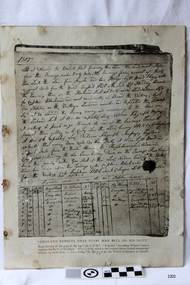
Document - Log Book page, 21/10/1805
... london...lloyd’s patriotic fund...napoleonic battles...british naval history...London is a large insurance company in the United Kingdom. In 1803 Lloyd’s founded the Lloyd’s Patriotic Fund to honour the brave and provide for the wounded and dependents of those killed in major Napoleonic battles. Over the years Lloyd’s has accumulated an assorted collection of artefacts and memorabilia associated with Nelson, including this log book from HMS Euryalus. In 2003 Lloyds created a temporary exhibition to mark the bicentennial of Nelson’s Battle of Trafalgar. The display included key items from the Nelson Collection celebrating Nelson’s role in British Naval History...London is a large insurance company in the United Kingdom. In 1803 Lloyd’s founded the Lloyd’s Patriotic Fund to honour the brave and provide for the wounded and dependents of those killed in major Napoleonic battles. Over the years Lloyd’s has accumulated an assorted collection of artefacts and memorabilia associated with Nelson, including this log book from HMS Euryalus. In 2003 Lloyds created a temporary exhibition to mark the bicentennial of Nelson’s Battle of Trafalgar. The display included key items from the Nelson Collection celebrating Nelson’s role in British Naval History ...This document is a reproduction of the page of the log book from the vessel HMS Euryalus, recording Nelson's famous signal at the Battle of Trafalgar. On October 21, 1805, Admiral Lord Nelson led the British Navy to victory against the French and Spanish navies in the Atlantic Ocean. The event became known as the Battle of Trafalgar. To commence the battle Nelson commanded his now-famous flag signal “England expects that every man will do his duty”. Nelson’s signal was transmitted from his ship HMS Victory in 12 separate flag-hoists, according to Sir Home Popham’s Telegraphic Code that had been supplied to the fleet as an experiment, with the numerical flags of the Admiralty official Day Signal book (1799 issue). The signal flags comprised eight that represented whole words and four that represented single letters - [ENGLAND] [EXPECTS] [THAT] [EVERY] [MAN] [WILL] [DO] [HIS] [D] [U] [T] [Y]. Nelson’s signal was received by the ‘reporting frigates’ who would then send them on to the other vessels. The signal was recorded by Captain Henry Blackwood who was in command of the HMS Euryalus. Captain Blackwood led a squadron of frigates, reporting back to Nelson on the movement of the French and Spanish fleets. Nelson’s famous signal was recorded in the log book of Euryalus and repeated to other vessels. The original log book is a canvas-backed manuscript written up from hour to hour during the battle. It is in the Nelson Collection at Lloyd's. Lloyd’s of London is a large insurance company in the United Kingdom. In 1803 Lloyd’s founded the Lloyd’s Patriotic Fund to honour the brave and provide for the wounded and dependents of those killed in major Napoleonic battles. Over the years Lloyd’s has accumulated an assorted collection of artefacts and memorabilia associated with Nelson, including this log book from HMS Euryalus. In 2003 Lloyds created a temporary exhibition to mark the bicentennial of Nelson’s Battle of Trafalgar. The display included key items from the Nelson Collection celebrating Nelson’s role in British Naval History. Lloyd’s now has a department called The Nelson Collection and Heritage Floor where historical artifacts are displayed and the story of Lloyd’s 300 years of history is told. This document, being a reproduction, is not significant in itself. However it's content is of historical significance for its connection to Admiral Nelson and The Battle of Trafalgar. Through the leadership and victory of Nelson, the British obtained the mastery of the seas over the French and Spanish and opened up the way for Britain to colonise many countries including Australia. The document is also associated with a wood sample from Napoleon's ship Victory that is in our Collection.Reproduction of a page of the log book of HMS Euryalus recording Nelson's famous signal at the Battle of Trafalgar. The original log book entry was handwritten, dated 21 Oct 1805.flagstaff hill, warrnambool, shipwrecked-coast, flagstaff-hill, flagstaff-hill-maritime-museum, maritime-museum, shipwreck-coast, flagstaff-hill-maritime-village, log book, flag signal, hms euryalus, nelson's famous signal, battle of trafalgar, october 21, 1805, admiral lord nelson, french and spanish navies, england expects that every man will do his duty, hms victory, sir home popham’s telegraphic code, admiralty official day signal book (1799 issue), reporting frigates, captain henry blackwood, canvas-backed manuscript, nelson collection at lloyd's, lloyd’s of london, lloyd’s patriotic fund, napoleonic battles, british naval history -
 Flagstaff Hill Maritime Museum and Village
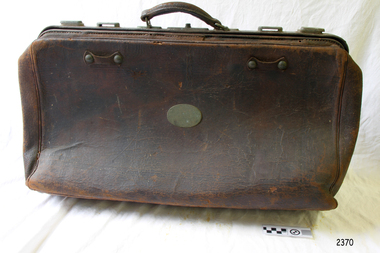
Functional object - Portmanteau, 1930-1950
... History: English merchant Thomas Witherings established mail routes throughout Europe in the 1620s. He drew up a proposal in 1635 for an English mail system based in London in which portmanteaux (containing 2 leather bags lined with cotton) could travel to European towns with sealed bags of mail for protection against spies. ...History: English merchant Thomas Witherings established mail routes throughout Europe in the 1620s. He drew up a proposal in 1635 for an English mail system based in London in which portmanteaux (containing 2 leather bags lined with cotton) could travel to European towns with sealed bags of mail for protection against spies. ...The etymology of the word portmanteau: A portmanteau was a travelling bag used as a mailbag. During the eighteenth and nineteenth centuries, both newspapers and letters were transported in these leather mailbags that opened into two sections. A portmanteau is a word created by the blending of two other words in terms of the sounds and meaning. Portmanteau itself is a portmanteau; made up of the French ‘porter’ meaning ‘to carry’ and ‘manteau’ meaning ‘cloak’. The other meaning of this word is ‘a travelling case or bag' but was coined by Lewis Carroll with its new meaning in 1882. History: English merchant Thomas Witherings established mail routes throughout Europe in the 1620s. He drew up a proposal in 1635 for an English mail system based in London in which portmanteaux (containing 2 leather bags lined with cotton) could travel to European towns with sealed bags of mail for protection against spies. The system was put into motion and some 26,000 letters were mailed safely and unopened between London and European towns each week. In the nineteenth century, the official portmanteau was used to carry the mail, letters and newspapers on Americas New England stagecoaches that travelled the postal routes. Before 1789 newspapers were mostly excluded from the mail and the official portmanteau. After the first United States Congress (1789–1791) the postmaster general allowed printers free postage to communicate reports and articles of Congressional informational newspapers with other publishers in other towns and cities for distribution. Example of a mid-20th-century leather bag not connected to a person of significance from history or a historic event. The significance lies in the historic social aspect of this type of bag and how it got its name. This type of bag was popular from the mid 19th century for personal use and fell out of favour in until the 1950s and the origin and meaning of the word used to describe this type of leather bag "portmanteau". Portmanteau leather bag, with brass oval badge, tan interior with compartment separator. Inscribed "Allchin Bros Makers Ballarat". flagstaff hill, warrnambool, shipwrecked-coast, flagstaff-hill, flagstaff-hill-maritime-museum, maritime-museum, shipwreck-coast, flagstaff-hill-maritime-village, portmanteau, allchin bros -
 Flagstaff Hill Maritime Museum and Village
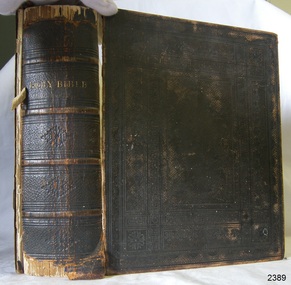
Book - Religious Book/Bilble, Oxford University Press, The Holy Bible, 1866
... history through the births and deaths noted on its end papers. Spine: "Holy Bible" “The holy Bible containing the old and new Testaments” Additional title information: Translated out of The Original Tongues, and with the Former translations Diligently Compared and Revised by His Majesty’s Special Command “Appointed to be Read in Churches” Publisher: Oxford University Press for the British and Foreign Bible Society Instituted in London in The Year 1804. ...To understand the nature of your 1866 Oxford University Press (OUP) Bible, it helps to look at how Bibles were produced in the 19th century and the massive historical scale of the publisher. The context of the King James Version Bible is indicated by the standard phrase on the flyleaf: "Translated out of the Original Tongues... By His Majesty's Special Command." This work is a historical 1866 reprint of the original version published in 1611. This particular volume served as the family Bible for Joseph and Elizabeth Bell, documenting their family history through the births and deaths noted on its end papers.Book, black hard cover with embossed pattern and gold test, metal locking clasp. King James Version of the Holy Bible, containing the Old and New Testaments. It was published by Oxford University Press in 1866. Inscriptions on the loose endpaper list the marriage of Joseph and Elizabeth Bell in 1854 at St Paul's, Bristol, England, and their ten children born from 1856 to 1878.non-fictionTo understand the nature of your 1866 Oxford University Press (OUP) Bible, it helps to look at how Bibles were produced in the 19th century and the massive historical scale of the publisher. The context of the King James Version Bible is indicated by the standard phrase on the flyleaf: "Translated out of the Original Tongues... By His Majesty's Special Command." This work is a historical 1866 reprint of the original version published in 1611. This particular volume served as the family Bible for Joseph and Elizabeth Bell, documenting their family history through the births and deaths noted on its end papers.flagstaff hill, flagstaff hill maritime museum and village, warrnambool, maritime museum, maritime village, great ocean road, shipwreck coast, holy bible, book, religious book, bell family, bell family bible, elizabeth bell, joseph bell, 1826, 1833, 1854, st paul's bristol -
 Flagstaff Hill Maritime Museum and Village
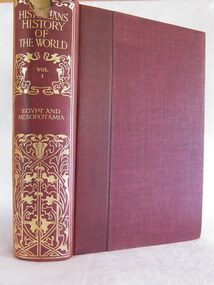
Book - Reference Book/History, Henry Smith Williams, The Historians History of the World Vol 01 set 1 - Edited by Henry Smith Williams L.L.D. Published by “The Times” 1908, 1908
... London). In the early 20th century, The Times entered the book trade to boost its prestige and revenue, notably marketing this set and the “Encyclopedia Britannica”. In the grand architectural plan of Henry Smith Williams’ series of world history...history" where the goal was to synthesise all human knowledge into a single narrative. Volume 1 is titled "Egypt and Mesopotamia," it is divided into two distinct parts Part I concentrates on ancient Egypt, covering the Nile Valley from its legendary beginnings through the various dynasties. Flyleaf has the title with edited by Henry Smith Williams L.L.D. In twenty five volumes-Vol. 1 and London ...The 1908 edition of The Historians' History of the World is a monumental work of Edwardian scholarship, representing a specific era of "universal history" where the goal was to synthesise all human knowledge into a single narrative. Volume 1 is titled "Egypt and Mesopotamia," it is divided into two distinct parts Part I concentrates on ancient Egypt, covering the Nile Valley from its legendary beginnings through the various dynasties.Book is part of a 25 volume set with red cloth bindings and gold filigree design to rib.non-fictionThe 1908 edition of The Historians' History of the World is a monumental work of Edwardian scholarship, representing a specific era of "universal history" where the goal was to synthesise all human knowledge into a single narrative. Volume 1 is titled "Egypt and Mesopotamia," it is divided into two distinct parts Part I concentrates on ancient Egypt, covering the Nile Valley from its legendary beginnings through the various dynasties. flagstaff hill, warrnambool, shipwrecked-coast, flagstaff-hill, flagstaff-hill-maritime-museum, maritime-museum, shipwreck-coast, flagstaff-hill-maritime-village, book, the historians history of the world vol 1 set 1
