
Showing 33 items matching "lucknow street"
-
 Whitehorse Historical Society Inc.
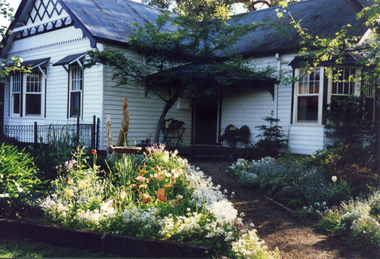
Photograph, 58 Lucknow Street, Mitcham, Taken 1998
... 58 Lucknow Street, Mitcham...lucknow street...Coloured photograph of a house in Lucknow Street, Mitcham. Flowers in the sunshine with grey roof. ...They came to Australia to be near Anna, who was their daughter. lucknow street mitcham no 58 streets houses Coloured photograph of a house in Lucknow Street, Mitcham. ...Owen Loftus and his mother lived in this house in the 1930's. Owen was a postman and also ran a taxi service.He died in the second World War and is remembered in the memorial window at Christ Church, Mitcham. Present owners (1998) are Anna and Gorden Seward. The previous owners were the Rev and Mrs Barnsley, a retired Church of England vicar. They came to Australia to be near Anna, who was their daughter.Coloured photograph of a house in Lucknow Street, Mitcham. Flowers in the sunshine with grey roof. Wooden eaves over windowslucknow street, mitcham no 58, streets, houses -
 Whitehorse Historical Society Inc.
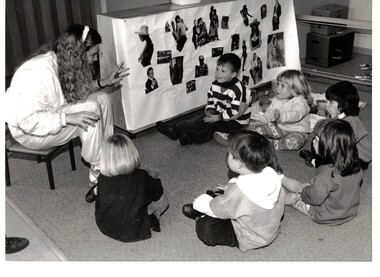
Photograph, Lucknow Street Childcare Centre, 1994
... Lucknow Street Childcare Centre......Lucknow Street Child care Centre...Lucknow Street Childcare Centre Photograph Photograph ...Black and white photograph of a kindergarten teacher (left) playing a game with six small children sitting on the carpet.kindergartens, lucknow street child care centre, mitcham -
 Whitehorse Historical Society Inc.
Document, House Plans & Specifications, 1949
... ...Lucknow Street...Rolins,Lot 51 Lucknow Street, Mitcham. 20 Apr 1949....Rolins,Lot 51 Lucknow Street, Mitcham. 20 Apr 1949....Rolins,Lot 51 Lucknow Street, Mitcham. 20 Apr 1949. Plans Lucknow Street Mitcham Modern Home Building Advisory Bureau Rolins G.M. ...House specification and plansHouse specification and plans for Mr. & Mrs. G.M. Rolins,Lot 51 Lucknow Street, Mitcham. 20 Apr 1949.House specification and plans plans, lucknow street, mitcham, modern home building advisory bureau, rolins, g.m. (mr), rolins, a.m. (mrs) -
 Whitehorse Historical Society Inc.
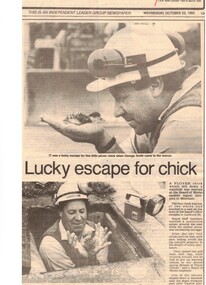
Article, Lucky escape for chick, 23/10/1985 12:00:00 AM
... ...lucknow street...Plover chick rescued after falling down manhole at Lucknow Street complex of M.M.B.W....plovers birds melbourne and metropolitan board of works smith george lucknow street mitcham Plover chick rescued after falling down manhole at Lucknow Street complex of M.M.B.W. ...Plover chick rescued after falling down manhole at Lucknow Street complex of M.M.B.W.plovers, birds, melbourne and metropolitan board of works, smith, george, lucknow street, mitcham -
Whitehorse Historical Society Inc.
Article, $1.57 million Board Centre for Mitcham
... ...lucknow street...A district depot will be constructed in Lucknow Street by the Melbourne and Metropolitan Board of Works - adjacent to the Mitcham reservoir....water supply mitcham reservoir melbourne and metropolitan board of works lucknow street mitcham A district depot will be constructed in Lucknow Street by the Melbourne and Metropolitan Board of Works A district depot will be constructed in Lucknow Street by the Melbourne and Metropolitan Board of Works - adjacent to the Mitcham reservoir. $1.57 million Board Centre for Mitcham Article Article ...A district depot will be constructed in Lucknow Street by the Melbourne and Metropolitan Board of WorksA district depot will be constructed in Lucknow Street by the Melbourne and Metropolitan Board of Works - adjacent to the Mitcham reservoir.A district depot will be constructed in Lucknow Street by the Melbourne and Metropolitan Board of Workswater supply, mitcham reservoir, melbourne and metropolitan board of works, lucknow street, mitcham -
Whitehorse Historical Society Inc.
Article, Joint Child Care Centre Opens Its Doors, 1993
... ...lucknow street child care centre...Lucknow Street Child Care Centre - a joint project between Nunawading City Council and Melbourne Water - welcomes its first children. ...child care lucknow street child care centre city of nunawading melbourne water kean kristin dure margaret Lucknow Street Child Care Centre - a joint project between Nunawading City Council and Melbourne Water - welcomes its first children. ...Lucknow Street Child Care Centre - a joint project between Nunawading City Council and Melbourne Water - welcomes its first children.Lucknow Street Child Care Centre - a joint project between Nunawading City Council and Melbourne Water - welcomes its first children. With photo.Lucknow Street Child Care Centre - a joint project between Nunawading City Council and Melbourne Water - welcomes its first children.child care, lucknow street child care centre, city of nunawading, melbourne water, kean, kristin, dure, margaret -
Whitehorse Historical Society Inc.
Newspaper, New Care Centre, 25/08/1992 12:00:00 AM
... ...lucknow street...Minister for Community Services, Ms Setches turned the first sod on construction of Day Care Centre in Lucknow Street, Nunawading. Joint venture between Nunawading Council and Melbourne Water....day care melbourne water city of nunawading community services setches ms dilley warwick harrowfield john lucknow street mitcham Minister for Community Services, Ms Setches turned the first sod on construction of Day Care Centre in Lucknow Street, Nunawading. ...Minister for Community Services, Ms Setches turned the first sod on construction of Day Care Centre in Lucknow Street, Nunawading.Minister for Community Services, Ms Setches turned the first sod on construction of Day Care Centre in Lucknow Street, Nunawading. Joint venture between Nunawading Council and Melbourne Water.Minister for Community Services, Ms Setches turned the first sod on construction of Day Care Centre in Lucknow Street, Nunawading. day care, melbourne water, city of nunawading, community services, setches, ms, dilley, warwick, harrowfield, john, lucknow street, mitcham -
 Whitehorse Historical Society Inc.
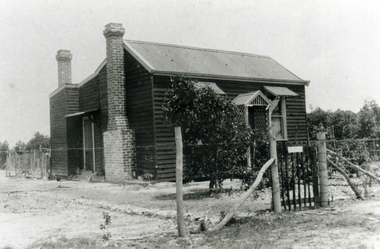
Photograph, Marie Arrowsmith's Home
... ...lucknow street...Black and white photo of Home of Marie Arrowsmith, Grandmother of Ted, in Lucknow Street (formerly Scott Street), Mitcham. ...arrowsmith marie ted scott mrs lucknow street mitcham Black and white photo of Home of Marie Arrowsmith, Grandmother of Ted, in Lucknow Street (formerly Scott Street), Mitcham. ...Black and white photo of Home of Marie Arrowsmith, Grandmother of Ted, in Lucknow Street (formerly Scott Street), Mitcham. Marie lived there from 1915 to early 1920s. Originally 2 roomed Bungalow, 2 more rooms were added. Virgin bush at rear. House purchased from Mrs Scott of Scott's Estate. House since demolished.arrowsmith, marie, ted, scott, mrs, lucknow street, mitcham -
 Whitehorse Historical Society Inc.
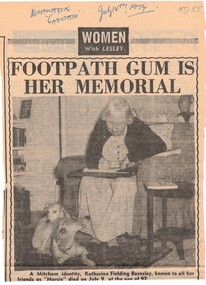
Newspaper - Article, Footpath gum is her memorial, 4/07/1974
... ...lucknow street mitcham...Many people in Mitcham will remember her as the lady who succeeded in a lone fight against the Council over the footpath in Lucknow Street, also as a breeder of champion whippets, one of Britains leading authorities of the breed. ...Outside her home still stands the gum tree for which she fought and around which the footpath loops.. memorial gum tree lucknow street mitcham Barnsley Katherine Fielding Katherine Fielding Barnsley fought the council to have a gum tree outside her house in Lucknow Street, Mitcham preserved instead of being removed to make a straight footpath. ...Katherine Fielding Barnsley fought the council to have a gum tree outside her house in Lucknow Street, Mitcham preserved instead of being removed to make a straight footpath.An article from the Nunawading Gazette and 2 x A4 pagesnon-fictionKatherine Fielding Barnsley fought the council to have a gum tree outside her house in Lucknow Street, Mitcham preserved instead of being removed to make a straight footpath.memorial gum tree, lucknow street mitcham, barnsley katherine fielding -
 Whitehorse Historical Society Inc.
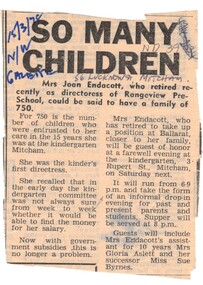
Newspaper - Article, So Many Children, 1/03/1978
... 56 Lucknow Street Mitcham...She was there for 15 years. endacott joan rangeview pre-school Article on retirement of Mrs Joan Endacott 56 Lucknow Street Mitcham Article on retirement of Mrs Joan Endacott, the first directoress of Rangeview Preschool. ...Article on retirement of Mrs Joan EndacottArticle on retirement of Mrs Joan Endacott, the first directoress of Rangeview Preschool. She was there for 15 years.Article on retirement of Mrs Joan Endacottendacott joan, rangeview pre-school -
 Ringwood and District Historical Society
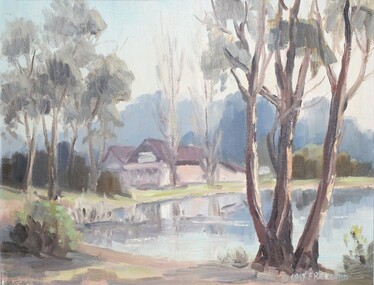
Painting, May Freeland, "Reflections - Ringwood Lake" - Acrylic on canvas by May Freeland, (undated)
... Reflections (Ringwood Lake) by May Freeland, 59 Lucknow Street Mitcham....Reflections (Ringwood Lake) by May Freeland, 59 Lucknow Street Mitcham. Painting in glass-fronted frame. ...Painting in glass-fronted frame.Reflections (Ringwood Lake) by May Freeland, 59 Lucknow Street Mitcham. -
 Whitehorse Historical Society Inc.
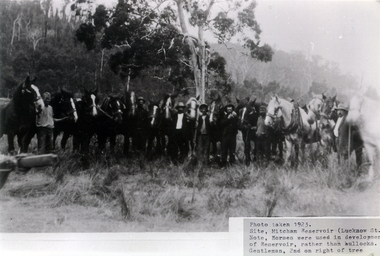
Photograph, Workers at Mitcham Reservoir, 1924
... Framed Black and White photo of Workers at Mitcham Reservoir, Lucknow Street. See also NP2468 in album...wathen edward william mitcham reservoir Framed Black and White photo of Workers at Mitcham Reservoir, Lucknow Street. See also NP2468 in album Workers at Mitcham Reservoir Photograph Photograph ...Framed Black and White photo of Workers at Mitcham Reservoir, Lucknow Street. See also NP2468 in albumwathen, edward william, mitcham reservoir -
 Whitehorse Historical Society Inc.
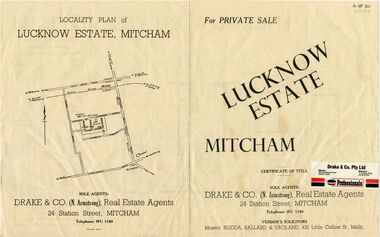
Pamphlet - Advertising brochure, Lucknow Estate, unknown
... ...lucknow street...Agent: Drake & Co land sales lucknow estate lucknow street owen street brian street ross street ronald street lucknow court Brochure advertising sale of Lucknow Estate Mitcham. 90 lots. ...Brochure advertising sale of Lucknow Estate Mitcham. 90 lots. Agent: Drake & CoBrochure advertising sale of Lucknow Estate Mitcham. 90 lots. Agent: Drake & CoBrochure advertising sale of Lucknow Estate Mitcham. 90 lots. Agent: Drake & Coland sales, lucknow estate, lucknow street, owen street, brian street, ross street, ronald street, lucknow court -
 Anglesea and District Historical Society
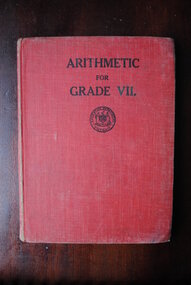
Education Department, W.M. Houston, Government Printer Melbourne, Arithmetic for Grade VII, 1941
... Faye Harris, 61 Lucknow Street, Mitcham. WU 2906. Box Hill Girls Technical School. ...education department arithmetic book Faye Harris, 61 Lucknow Street, Mitcham. WU 2906. Box Hill Girls Technical School. ...Education Department (First Edition) 1941. Fabric covered cardboardFaye Harris, 61 Lucknow Street, Mitcham. WU 2906. Box Hill Girls Technical School. Form 1F.education department, arithmetic, book -
Whitehorse Historical Society Inc.
Document, Notes on Box Hill and Nunawading, c1972
... ...Lucknow Street...Box Hill East Burwood Methodist Church Lowan Walter Edward Street Mitcham No 9 Middleborough Road Blackburn No 372 Mount Pleasant Road Nunawading No 129 Lucknow Street Mitcham No 58 Wolseley Crescent Blackburn No 7 Covers various interviews and extracts from sources Covers various interviews and extracts from sources Notes on Box Hill and Nunawading Document Document ...Covers various interviews and extracts from sourcesCovers various interviews and extracts from sourcesCovers various interviews and extracts from sourceslocal history, leach, nancy, walker, g. e., box hill, east burwood methodist church, lowan, walter, edward street, mitcham, no 9, middleborough road, blackburn, no 372, mount pleasant road, nunawading, no 129, lucknow street, mitcham, no 58, wolseley crescent, blackburn, no 7 -
 Whitehorse Historical Society Inc.
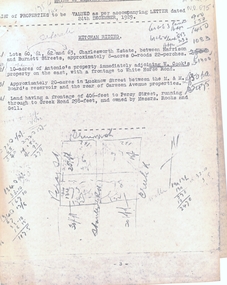
Legal record - Correspondence, Valuation of properties, 24/12/1929
... ...lucknow street...mitcham riding mitcham road shire of blackburn and mitcham land values charlesworth estate mitcham harrison street burnett street antonio cook w whitehorse road lucknow street creek road rooks gell percy street List of property valuations for Mitcham Riding of the Shire of Blackburn and Mitcham dated 24 / 12 / 1929. ...List of property valuations for Mitcham Riding of the Shire of Blackburn and Mitcham dated 24 / 12 / 1929.List of property valuations for Mitcham Riding of the Shire of Blackburn and Mitcham dated 24 / 12 / 1929. Valued by C. Morton of land that was being considered for parks in 1930.List of property valuations for Mitcham Riding of the Shire of Blackburn and Mitcham dated 24 / 12 / 1929. mitcham riding, mitcham road, shire of blackburn and mitcham, land values, charlesworth estate, mitcham, harrison street, burnett street, antonio, cook, w, whitehorse road, lucknow street, creek road, rooks, gell, percy street -
Whitehorse Historical Society Inc.
Document, Whitehorse Planning Scheme, 1/05/2001 12:00:00 AM
... ...lucknow street...whitehorse planning scheme historic buildings city of whitehorse mount pleasant road nunawading no 129 longland road mitcham no 5 strathdon orchard australian road research board burwood heights uniting church boronia road vermont no 142 junction road blackburn north no 17-21 lucknow street mitcham no 55 haines street no 38 gordon crescent blackburn no 18 blackburn primary school no. 2923 Amendment C3 Part 2 : Panel report with extract from minutes of Whitehorse City Council recording Council's resolutions to adopt the Panel's recommendations on Heritage overlay inclusions. ...Amendment C3 Part 2 : Panel report with extract from minutes of Whitehorse City Council recording Council's resolutions to adopt the Panel's recommendations on Heritage overlay inclusions.Amendment C3 Part 2 : Panel report with extract from minutes of Whitehorse City Council recording Council's resolutions to adopt the Panel's recommendations on Heritage overlay inclusions.Amendment C3 Part 2 : Panel report with extract from minutes of Whitehorse City Council recording Council's resolutions to adopt the Panel's recommendations on Heritage overlay inclusions.whitehorse planning scheme, historic buildings, city of whitehorse, mount pleasant road, nunawading, no 129, longland road, mitcham, no 5, strathdon orchard, australian road research board, burwood heights uniting church, boronia road, vermont, no 142, junction road, blackburn north, no 17-21, lucknow street, mitcham no 55, haines street, no 38, gordon crescent, blackburn, no 18, blackburn primary school, no. 2923 -
Whitehorse Historical Society Inc.
Newspaper - Article, Housing boost, 15/09/1992
... ...Lucknow Street...Harrowfield John Houses Rooks Road Nunawading McCulloch Street Nunawading Menin Road Nunawading Lucknow Street Mitcham Ethnic Tenancy Project Lao Women's Association Blackburn Public housing in Nunawading will get $3.21 million for upgrade of 40 homes. ...Public housing in Nunawading will get $3.21 million for upgrade of 40 homes.harrowfield, john, houses, rooks road, nunawading, mcculloch street, nunawading, menin road, nunawading, lucknow street, mitcham, ethnic tenancy project, lao women's association, blackburn -
Whitehorse Historical Society Inc.
Map, Austral Park, Mitcham, 1907
... ...Lucknow Street...Land Subdivision Mitcham Mitcham Road Mitcham Calcutta Street Mitcham Delhi Street Mitcham Meerut Street Mitcham Simla Street Mitcham Agra Street Mitcham Lucknow Street Mitcham Mitcham Reservoir Austral Park Mitcham Advertisement for subdivision of area south of Mitcham Railway Station. ...Advertisement for subdivision of area south of Mitcham Railway Station.Advertisement for subdivision of area south of Mitcham Railway Station. Includes area now site of Mitcham reservoir. Some details of main buildings in Mitcham and Vermont.Advertisement for subdivision of area south of Mitcham Railway Station. land subdivision, mitcham, mitcham road, mitcham, calcutta street, mitcham, delhi street, mitcham, meerut street, mitcham, simla street, mitcham, agra street, mitcham, lucknow street, mitcham, mitcham reservoir, austral park mitcham -
Whitehorse Historical Society Inc.
Article, Meeting The Challenges, 1993
... ...lucknow street child care centre...child care lucknow street child care centre melbourne water city of nunawading rose andrew Joint child care centre meets the challenges of a changing workforce. ...Joint child care centre meets the challenges of a changing workforce. With photo.Joint child care centre meets the challenges of a changing workforce. With photo.Joint child care centre meets the challenges of a changing workforce. With photo.child care, lucknow street child care centre, melbourne water, city of nunawading, rose, andrew -
Whitehorse Historical Society Inc.
Document, Notice of motion, 1932
... ...Lucknow Street...Lawson Street Blackburn Musk Street Blackburn Hartigan Street Blackburn Milton Street Nunawading Brunswick Road Mitcham Peel Street Mitcham Tennyson Street Mitcham Lucknow Street Mitcham Somers Street Mitcham Victory Street Mitcham Notice of motion from councillor R.A. ...Notice of motion from councillor R.A. Plant to Shire of Blackburn and Mitcham re alterations of street names, 15 Mar 1932.Notice of motion from councillor R.A. Plant to Shire of Blackburn and Mitcham re alterations of street names, 15 Mar 1932.Notice of motion from councillor R.A. Plant to Shire of Blackburn and Mitcham re alterations of street names, 15 Mar 1932.street names, shire of blackburn and mitcham, plant, r.a., lawson street, blackburn, musk street, blackburn, hartigan street, blackburn, milton street, nunawading, brunswick road, mitcham, peel street, mitcham, tennyson street, mitcham, lucknow street, mitcham, somers street, mitcham, victory street, mitcham -
 Whitehorse Historical Society Inc.
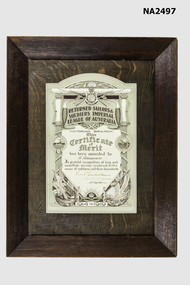
Certificate - Certificate of Merit, 21/07/1999 12:00:00 AM
... He lived in Scotts Street, Mitcham ( now Lucknow Street ) and later at 35 Cambridge Street Box Hill. ...He lived in Scotts Street, Mitcham ( now Lucknow Street ) and later at 35 Cambridge Street Box Hill. ...H (Herbert) Arrowsmith, grandfather of Ted the Donor, was foundation Secretary of the Soldiers Sailors Fathers' Association in Mitcham and Secretary until he died in 1931. He lived in Scotts Street, Mitcham ( now Lucknow Street ) and later at 35 Cambridge Street Box Hill. He worked at the Builders Trading and Roofing Co.framed certificate of merit presented to H Arrowsmith by the Victorian Branch of the Returned Sailors + Soldiers Imperial League of Australia ( R.S.L.)civic mementoes, presentations -
 Flagstaff Hill Maritime Museum and Village
Postcard - Coastal Scene, Joseph Jordan Photographic Studio, Breakwater, Warrnambool, circa 1907
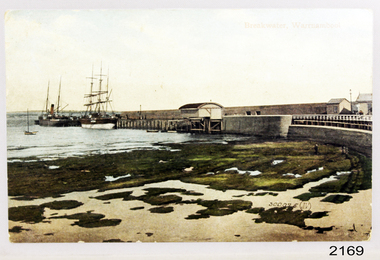
... Lucknow and remained in India for eleven years. It was during this time, he became interested in photography. He was posted to New Zealand and later came to Victoria, becoming a sergeant major of the Mounted Rifles. In the mid 1880s he came to the Western district where he was responsible for establishing units of the Mounted Rifles in various country towns such as Dunkeld, Mortlake, Panmure, Bushfield, Koroit etc. He resigned from the army in 1889 and set up a professional photography studio in Liebig Street...Lucknow and remained in India for eleven years. It was during this time, he became interested in photography. He was posted to New Zealand and later came to Victoria, becoming a sergeant major of the Mounted Rifles. In the mid 1880s he came to the Western district where he was responsible for establishing units of the Mounted Rifles in various country towns such as Dunkeld, Mortlake, Panmure, Bushfield, Koroit etc. He resigned from the army in 1889 and set up a professional photography studio in Liebig Street ...The Port of Warrnambool - In the early years the Port of Warrnambool was a busy port. Steamships and sailing ships were frequent visitors to the port. Steam navigation companies were plentiful, carrying passengers and freighting cargo such as coal, timber, food, livestock, furniture, hardware and haberdashery between Melbourne and the ports along the southwest coast of Victoria, including Warrnambool. The carts would take their loads into the township for distribution. The Breakwater was built (using 32 ton blocks of concrete) between 1874 and 1890 to provide ships with greater protection from the Southern Ocean. The Lifeboat and Rocket House - The coastline of South West Victoria has had over 600 shipwrecks and many lost lives; even in Warrnambool’s Lady Bay there were around 16 known shipwrecks between 1850 and 1905, with eight lives lost. In 1859 the first Government-built lifeboat arrived at Warrnambool Harbour and a shed was soon built to house it, followed in 1864 by a rocket house to safely store the Rocket Rescue equipment. In 1878 the buildings were moved to the Breakwater area, and in 1910 the new Lifeboat Warrnambool arrived with its ‘self-righting’ design. For almost one hundred years the lifeboat and rocket crews, mostly local volunteers, trained regularly to maintain and improve their skills, summoned when needed by alarms, gunshots, ringing bells and foghorns. Some became local heroes but all served an important role. By the end of the 1950s the lifeboat and rescue equipment had become obsolete. Joseph Jordan - Joseph Jordan was born in 1841 in Leicester England. When he was 16 he joined the 7th Queen's Own Hussars and was sent to India at the outbreak of the mutiny. He took part in the relief of Lucknow and remained in India for eleven years. It was during this time, he became interested in photography. He was posted to New Zealand and later came to Victoria, becoming a sergeant major of the Mounted Rifles. In the mid 1880s he came to the Western district where he was responsible for establishing units of the Mounted Rifles in various country towns such as Dunkeld, Mortlake, Panmure, Bushfield, Koroit etc. He resigned from the army in 1889 and set up a professional photography studio in Liebig Street, Warrnambool. He became very well known in the Western District for family photographs, official photographs of local councillors and groups as well as views of local scenery. In 1891 he photographed the wrecked barque "Fiji" at "Wrecks Beach" near Princetown. His business was taken over by his son Arthur around 1917. Joseph was a keen rifle shot and in 1924 he donated the "Jordan Shield" as a prize to the Victorian Rifle Association. He was made a "Life Honorary Member" of the Warrnambool Returned Soldiers League and in 1933 he was recognised as being the oldest living soldier in Victoria. Joseph died in 1935 aged 95. Valentine Publishing Company Pty. Ltd. Valentine and Sons was a printing and photography business based in Dundee, Scotland and Canada. In the early 1900's, at the height of the postcard craze, they published large numbers of postcards in the U.K., Canada, U.S., Australia and South Africa. Valentine postcards have a 6 digit serial number on the view side with the initials "J. V." in a circle adjacent to the number. The 300,000's related to views of Australia. From around 1900 (or earlier) the firm bought many images for their postcards from local and national photographers who sold publishing rights to Valentines.This postcard is significant for its association with the Port of Warrnambool and the Warrnambool Breakwater as it shows a point in time when shipping activities were an important part of Warrnambool's commerce and social development. It is also a record of the Warrnambool Lifeboat and Rocket house which was important in aiding ordinary citizens, harbour employees and the volunteer boat and rescue crew in saving the lives of sailors and passengers due to the high number of shipwrecks that occurred along the coastline. Joseph Jordan is a significant figure in Warrnambool history as he helped to establish early units of the Mounted Rifles (G Company) in local towns during the late 1880's and later, photographed local scenes, groups and citizens of early Warrnambool. It is also a culturally significant example of the type of postcards that were very popular in the early part of the 20th century.Photograph of breakwater from beachFront of card - Breakwater, Warrnambool / 300,025 J.V [in a circle] Back of card - POSTCARD / VALENTINE'S SERIES / - This space may be used for communication / The address only to be written here - Miss Alice Griffen / Howard St / Warrnambool - How are you enjoying your holiday we are grand. / from / Dodo, Dodo, Dodo with love - Leura? / Marjory Craig? / BL006 / R99A / REG NO 2169flagstaff hill, warrnambool, shipwrecked-coast, flagstaff-hill, flagstaff-hill-maritime-museum, maritime-museum, photograph, warrnambool breakwater, breakwater, shipwreck-coast, flagstaff-hill-maritime-village, warrnambool harbour, postcard, joseph jordan, valentine and sons, valentine publishing company, lady bay, life boat house, rocket house, steam ship, barque, jordan photography -
 Flagstaff Hill Maritime Museum and Village
Postcard - Historical, Warrnambool, Proudfoot’s Boat House, Hopkins River, Warrnambool, Early 20th century
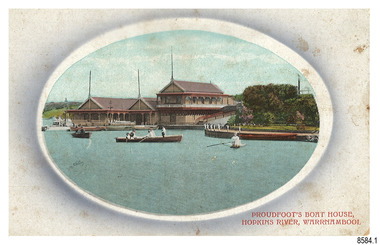
... Lucknow and remained in India for eleven years. It was during this time, he became interested in photography. He was posted to New Zealand and later came to Victoria, becoming a sergeant major of the Mounted Rifles. In the mid-1880s he came to the Western district where he was responsible for establishing units of the Mounted Rifles in various country towns such as Dunkeld, Mortlake, Panmure, Bushfield, Koroit etc. He resigned from the army in 1889 and set up a professional photography studio in Liebig Street...Lucknow and remained in India for eleven years. It was during this time, he became interested in photography. He was posted to New Zealand and later came to Victoria, becoming a sergeant major of the Mounted Rifles. In the mid-1880s he came to the Western district where he was responsible for establishing units of the Mounted Rifles in various country towns such as Dunkeld, Mortlake, Panmure, Bushfield, Koroit etc. He resigned from the army in 1889 and set up a professional photography studio in Liebig Street ...The nine postcards in this set were donated together and date to the early 1900s. All but one postcard in this set shows images of Warrnambool, in the Western District of Victoria; the other has a London image. The postcards were all printed in Great Britain according to that country’s postal regulations. All cards have titles on the front printed in red. The majority of the images on the cards are attributed to photographer Joseph Jordan and belong to the Jordan Series. The back of these cards has an outline for a postage stamp, a vertical dividing line and a heading on each side of the line to separate the Correspondence from the Address. Postcards or ‘correspondence cards’ appeared in Britain in 1894. They were plain cards with a space for the message on one side and an address on the other; regulations didn’t allow anything but the address to be written on the ‘address’ side. In 1902 the British regulations then allowed a picture to be printed on the front and the address on the back, so messages had to be written on the picture side. Soon, the regulations changed and the back was divided for a message and the address. Proudfoots Boat House – Proudfoot’s Boathouse is at 2 Simpson Street Warrnambool, on the banks of the Hopkins River. In the 1880s it was a venue for hiring boats for rowing, fishing, sailing and picnics. It was a popular destination for tourists coming from Melbourne for a day or weekend outing. The beautiful historic Victorian period building was designed, built and established by Thomas Proudfoot. He applied to build a boat jetty in 1885. He died in 1900 and his wife Catherine took over, running it for many years. Later her son Bruce and after that her granddaughter Ena Hunt and her husband took over; it remained in the family until 1979. The buildings, including the ‘U’ shaped jetty and tearooms, were restored and modified in the 1990s by the Warrnambool Sports Club, under the control of the Warrnambool City Council. Joseph Jordan - Joseph Jordan was born in 1841 in Leicester England. When he was 16 he joined the 7th Queen's Own Hussars and was sent to India at the outbreak of the mutiny. He took part in the relief of Lucknow and remained in India for eleven years. It was during this time, he became interested in photography. He was posted to New Zealand and later came to Victoria, becoming a sergeant major of the Mounted Rifles. In the mid-1880s he came to the Western district where he was responsible for establishing units of the Mounted Rifles in various country towns such as Dunkeld, Mortlake, Panmure, Bushfield, Koroit etc. He resigned from the army in 1889 and set up a professional photography studio in Liebig Street, Warrnambool. He became very well known in the Western District for family photographs, official photographs of local councillors and groups as well as views of local scenery. In 1891 he photographed the wrecked barque ‘Fiji’ at ‘Wrecks Beach’ near Princetown. His business was taken over by his son Arthur around 1917. Joseph was a keen rifle shot and in 1924 he donated the "Jordan Shield" as a prize to the Victorian Rifle Association. He was made a "Life Honorary Member" of the Warrnambool Returned Soldiers League and in 1933 he was recognised as being the oldest living soldier in Victoria. Joseph died in 1935 aged 95.This card is the only one of the nine cards with the location of Warrnambool added to the name 'Joseph Series'. It is also the only one that has text within the outline for the postage stamp. The font used for the test of the headings is slightly different to the other cards. Joseph Jordan is a significant figure in Warrnambool history as he helped to establish early units of the Mounted Rifles (G Company) in local towns during the late 1880's and later, photographed local scenes, groups and citizens of early Warrnambool. This postcard of Proudfoot's Boathouse is of historical significance for is connection with Proudfood’s Boathouse. Proudfoot’s Boathouse is an example of late-Victorian recreational and tourist facilities. Boathouses were popular 19th-century tourist and recreational attractions, providing refined and healthy activity. This boathouse shows the early realisation of the tourism and leisure potential of seaside towns such as Warrnambool, a potential that has become increasingly important as port uses have ceased and other industries have been subjected to financial pressure. Proudfoot's Boathouse is of social significance because it illustrates the continuity of the attraction of this kind of leisure facility. Although the glory days of boathouses were in the 19th century, those that survive continue to be well patronised. Proudfoot's Boathouse has been an important recreational facility and attraction for tourists flocking to the Hopkins River, one of the State's most popular boating and fishing resorts, since 1885.” (Statement of Significance is from the Victorian Heritage Register)Postcard, one of nine, landscape orientation. Coloured photograph print within an oval border and mauve-toned shading. Cameo Image of figures in three rowing boats on still water beside a building with three gable roofs and decorative verandas. Other boats are moored at the landing in front of the building. The roofs each have a tall pole at the front. There is a park right of the building that also has a landing. In the background is a grassed slope and the sea. Reverse has printed inscriptions and an outline for a postage stamp. There is no correspondence written on the card. The card is one of the Jordan Series by Joseph Jordan, printed in Great Britain in the early 1900s. Front, in red: “PROUDFOOT’S BOAT HOUSE / HOPKINS RIVER, WARRNAMBOOL” Reverse in black: “Jordan Series Warrnambool” “POST CARD” “Printed in Great Britain” “This space may be used for Communication” “The Address to be written here” Within the stamp outline: “3 / BRITISH / MANUFACTURE"flagstaff hill maritime museum, flagstaff hill maritime village, flagstaff hill maritime museum and village, maritime museum, warrnambool, great ocean road, warrnambool and district, warrnambool scenes, local scenes, views of warrnambool, joseph jordan, jordan series, jordan photography, postcard, souvenir, correspondence, cameo postcard, landscape, proudfoots boat house, boat house, proudfoots, hopkins river, boats for hire, row boats, recreation -
 Flagstaff Hill Maritime Museum and Village
Postcard - Historical, Warrnambool, Christ Church, Warrnambool, Early 20th century
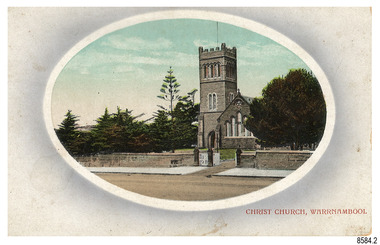
... Street, Warrnambool. The church, outer buildings and grounds are heritage-listed. Its bell tower harbours German bells. Joseph Jordan - Joseph Jordan was born in 1841 in Leicester England. When he was 16 he joined the 7th Queen's Own Hussars and was sent to India at the outbreak of the mutiny. He took part in the relief of Lucknow...Street, Warrnambool. The church, outer buildings and grounds are heritage-listed. Its bell tower harbours German bells. Joseph Jordan - Joseph Jordan was born in 1841 in Leicester England. When he was 16 he joined the 7th Queen's Own Hussars and was sent to India at the outbreak of the mutiny. He took part in the relief of Lucknow ...The nine postcards in this set were donated together and date to the early 1900s. All but one postcard in this set shows images of Warrnambool, in the Western District of Victoria; the other has a London image. The postcards were all printed in Great Britain according to that country’s postal regulations. The fronts of all cards have titles printed in red. Most of the images on the cards are attributed to photographer Joseph Jordan and belong to the Jordan Series. The back of these cards has an outline for a postage stamp, a vertical dividing line and a heading on each side of the line to separate the Correspondence from the Address. Postcards or ‘correspondence cards’ appeared in Britain in 1894. They were plain cards with a space for the message on one side and an address on the other; regulations didn’t allow anything but the address to be written on the ‘address’ side. In 1902 the British regulations then allowed a picture to be printed on the front and the address on the back, so messages had to be written on the picture side. Soon, the regulations changed and the back was divided for a message and the address. Christ Church Warrnambool – The image on this card shows Christ Church, a stone building built in 1856. The Anglican church is in Henna Street, Warrnambool. The church, outer buildings and grounds are heritage-listed. Its bell tower harbours German bells. Joseph Jordan - Joseph Jordan was born in 1841 in Leicester England. When he was 16 he joined the 7th Queen's Own Hussars and was sent to India at the outbreak of the mutiny. He took part in the relief of Lucknow and remained in India for eleven years. It was during this time, he became interested in photography. He was posted to New Zealand and later came to Victoria, becoming a sergeant major of the Mounted Rifles. In the mid-1880s he came to the Western district where he was responsible for establishing units of the Mounted Rifles in various country towns such as Dunkeld, Mortlake, Panmure, Bushfield, Koroit etc. He resigned from the army in 1889 and set up a professional photography studio in Liebig Street, Warrnambool. He became very well known in the Western District for family photographs, official photographs of local councillors and groups as well as views of local scenery. In 1891 he photographed the wrecked barque ‘Fiji’ at ‘Wrecks Beach’ near Princetown. His business was taken over by his son Arthur around 1917. Joseph was a keen rifle shot and in 1924 he donated the "Jordan Shield" as a prize to the Victorian Rifle Association. He was made a "Life Honorary Member" of the Warrnambool Returned Soldiers League and in 1933 he was recognised as being the oldest living soldier in Victoria. Joseph died in 1935 aged 95.This card is the only one of the nine cards with the location of Warrnambool added to the name 'Joseph Series'. It is also the only one that has text within the outline for the postage stamp. The font used for the test of the headings is slightly different to the other cards. Joseph Jordan is a significant figure in Warrnambool history as he helped to establish early units of the Mounted Rifles (G Company) in local towns during the late 1880's and later, photographed local scenes, groups and citizens of early Warrnambool. This postcard of Christ Church Warrnambool is significant for its connection to the church. The early building of the church in 1856, within the first decade of Warrnambool being proclaimed a town, shows the strong religious desire of the community. The church is part of Warrnambool's life events and the historical significance of the building,Postcard, one of nine, landscape orientation, coloured print within an oval border and mauve-toned shading. The cameo image is a stone castle-top bell tower beside a church building flanked by trees. A stone fence is across the front, with pedestrian and vehicle white picket gates. The title is in red print on the front of the card. There is no correspondence written on the card. The reverse has inscriptions and outlines for a postage stamp. Jordan Series, printed in Great Britain.Front, in red: “CHRIST CHURCH, WARRNAMBOOL” Back in black: “Jordan Series” “POST CARD” “PRINTED IN GREAT BRITAIN” “For correspondence” “The Address only to be written here”flagstaff hill maritime museum, flagstaff hill maritime village, flagstaff hill maritime museum and village, maritime museum, warrnambool, great ocean road, warrnambool and district, warrnambool scenes, local scenes, views of warrnambool, joseph jordan, jordan series, jordan photography, postcard, souvenir, correspondence, cameo postcard, landscape, christ church, bell tower, german bells, warrnambool church, religious building, stone building, anglican church, parish of warrnambool -
 Flagstaff Hill Maritime Museum and Village
Postcard - Historical, Flagstaff Hill, Christ Church, Warrnambool, Early 20th century
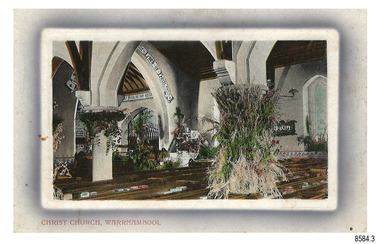
... Street, Warrnambool. The church, outer buildings and grounds are heritage-listed. Its bell tower harbours German bells. Joseph Jordan - Joseph Jordan was born in 1841 in Leicester England. When he was 16 he joined the 7th Queen's Own Hussars and was sent to India at the outbreak of the mutiny. He took part in the relief of Lucknow...Street, Warrnambool. The church, outer buildings and grounds are heritage-listed. Its bell tower harbours German bells. Joseph Jordan - Joseph Jordan was born in 1841 in Leicester England. When he was 16 he joined the 7th Queen's Own Hussars and was sent to India at the outbreak of the mutiny. He took part in the relief of Lucknow ...The nine postcards in this set were donated together and date to the early 1900s. All but one postcard in this set shows images of Warrnambool, in the Western District of Victoria; the other has a London image. The postcards were all printed in Great Britain according to that country’s postal regulations. The fronts of all cards have titles printed in red. Most of the images on the cards are attributed to photographer Joseph Jordan and belong to the Jordan Series. The back of these cards has an outline for a postage stamp, a vertical dividing line and a heading on each side of the line to separate the Correspondence from the Address. Postcards or ‘correspondence cards’ appeared in Britain in 1894. They were plain cards with a space for the message on one side and an address on the other; regulations didn’t allow anything but the address to be written on the ‘address’ side. In 1902 the British regulations then allowed a picture to be printed on the front and the address on the back, so messages had to be written on the picture side. Soon, the regulations changed and the back was divided for a message and the address. Christ Church Warrnambool – The image on this card shows Christ Church, a stone building built in 1856. The Anglican church is in Henna Street, Warrnambool. The church, outer buildings and grounds are heritage-listed. Its bell tower harbours German bells. Joseph Jordan - Joseph Jordan was born in 1841 in Leicester England. When he was 16 he joined the 7th Queen's Own Hussars and was sent to India at the outbreak of the mutiny. He took part in the relief of Lucknow and remained in India for eleven years. It was during this time, he became interested in photography. He was posted to New Zealand and later came to Victoria, becoming a sergeant major of the Mounted Rifles. In the mid-1880s he came to the Western district where he was responsible for establishing units of the Mounted Rifles in various country towns such as Dunkeld, Mortlake, Panmure, Bushfield, Koroit etc. He resigned from the army in 1889 and set up a professional photography studio in Liebig Street, Warrnambool. He became very well known in the Western District for family photographs, official photographs of local councillors and groups as well as views of local scenery. In 1891 he photographed the wrecked barque ‘Fiji’ at ‘Wrecks Beach’ near Princetown. His business was taken over by his son Arthur around 1917. Joseph was a keen rifle shot and in 1924 he donated the "Jordan Shield" as a prize to the Victorian Rifle Association. He was made a "Life Honorary Member" of the Warrnambool Returned Soldiers League and in 1933 he was recognised as being the oldest living soldier in Victoria. Joseph died in 1935 aged 95.This card is the only one of the nine cards with the location of Warrnambool added to the name 'Joseph Series'. It is also the only one that has text within the outline for the postage stamp. The font used for the test of the headings is slightly different to the other cards. Joseph Jordan is a significant figure in Warrnambool history as he helped to establish early units of the Mounted Rifles (G Company) in local towns during the late 1880's and later, photographed local scenes, groups and citizens of early Warrnambool. This postcard of Christ Church Warrnambool is significant for its connection to the church. The early building of the church in 1856, within the first decade of Warrnambool being proclaimed a town, shows the strong religious desire of the community. The church is part of Warrnambool's life events and the historical significance of the building,Postcard, one of nine, landscape orientation, coloured print within an oval border and mauve-toned shading. The cameo image is of the Interior of the church chapel, with exposed timber beams, white arches decorated with flowers, pews with books on shelves, and organ pipes. There is text on the image. The title is in red print on the front of the card. The back has inscriptions and outlines for a postage stamp. There is no correspondence written on the card. Jordan Series, printed in Great Britain.Front, in red: “CHRIST CHURCH, WARRNAMBOOL” Back in black: “Jordan Series” “POST CARD” “PRINTED IN GREAT BRITAIN” “For correspondence” “The Address only to be written here” Text on the arch: "THE LORD OF HOSTS"flagstaff hill maritime museum, flagstaff hill maritime village, flagstaff hill maritime museum and village, maritime museum, warrnambool, great ocean road, warrnambool and district, warrnambool scenes, local scenes, views of warrnambool, joseph jordan, jordan series, jordan photography, postcard, souvenir, correspondence, cameo postcard, landscape, christ church, bell tower, german bells, warrnambool church, religious building, stone building, anglican church, parish of warrnambool, arch pillars -
 Flagstaff Hill Maritime Museum and Village
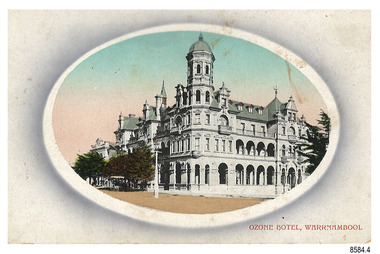
Postcard - Historical, Warrnambool, Ozone hotel, Warrnambool, 1902-1929
... streets began in 1890. The luxury venue included ballrooms, dining rooms, a theatre and a tower. In 1929 it burnt to the ground in a spectacular fire. Joseph Jordan - Joseph Jordan was born in 1841 in Leicester England. When he was 16 he joined the 7th Queen's Own Hussars and was sent to India at the outbreak of the mutiny. He took part in the relief of Lucknow...streets began in 1890. The luxury venue included ballrooms, dining rooms, a theatre and a tower. In 1929 it burnt to the ground in a spectacular fire. Joseph Jordan - Joseph Jordan was born in 1841 in Leicester England. When he was 16 he joined the 7th Queen's Own Hussars and was sent to India at the outbreak of the mutiny. He took part in the relief of Lucknow ...The nine postcards in this set were donated together and date to the early 1900s. All but one postcard in this set shows images of Warrnambool, in the Western District of Victoria; the other has a London image. The postcards were all printed in Great Britain according to that country’s postal regulations. The fronts of all cards have titles printed in red. Most of the images on the cards are attributed to photographer Joseph Jordan and belong to the Jordan Series. The back of these cards has an outline for a postage stamp, a vertical dividing line and a heading on each side of the line to separate the Correspondence from the Address. Postcards or ‘correspondence cards’ appeared in Britain in 1894. They were plain cards with a space for the message on one side and an address on the other; regulations didn’t allow anything but the address to be written on the ‘address’ side. In 1902 the British regulations then allowed a picture to be printed on the front and the address on the back, so messages had to be written on the picture side. Soon, the regulations changed and the back was divided for a message and the address. Ozone Hotel, Warrnambool – Construction of Warrnambool’s Ozone Hotel and Coffee Palace on the corner of Koroit and Kepler streets began in 1890. The luxury venue included ballrooms, dining rooms, a theatre and a tower. In 1929 it burnt to the ground in a spectacular fire. Joseph Jordan - Joseph Jordan was born in 1841 in Leicester England. When he was 16 he joined the 7th Queen's Own Hussars and was sent to India at the outbreak of the mutiny. He took part in the relief of Lucknow and remained in India for eleven years. It was during this time that he became interested in photography. He was posted to New Zealand and later came to Victoria, becoming a sergeant major of the Mounted Rifles. In the mid-1880s he came to the Western district where he was responsible for establishing units of the Mounted Rifles in various country towns such as Dunkeld, Mortlake, Panmure, Bushfield, Koroit etc. He resigned from the army in 1889 and set up a professional photography studio in Liebig Street, Warrnambool. He became very well known in the Western District for family photographs, official photographs of local councillors and groups as well as views of local scenery. In 1891 he photographed the wrecked barque ‘Fiji’ at ‘Wrecks Beach’ near Princetown. His business was taken over by his son Arthur around 1917. Joseph was a keen rifle shot and in 1924 he donated the "Jordan Shield" as a prize to the Victorian Rifle Association. He was made a "Life Honorary Member" of the Warrnambool Returned Soldiers League and in 1933 he was recognised as being the oldest living soldier in Victoria. Joseph died in 1935 aged 95.This postcard of the Ozone Hotel and Coffee Palace is significant for its connection to the Victorian-era hotel. The hotel was a luxury facility that attracted visitors to the town by sea, rail and road. The postcard also represents the short period in which the hotel operated and the notable, unforgettable event of its burning to the ground. Out of the set of nine postcards in this donation, this card is the only one that includes the location of Warrnambool on the back. It is also the only one with text within the outline for the postage stamp and with headings in this font. Joseph Jordan is a significant figure in Warrnambool history as he helped to establish early units of the Mounted Rifles (G Company) in local towns during the late 1880's and later, photographed local scenes, groups and citizens of early Warrnambool.Postcard, one of nine, landscape orientation, coloured print within an oval border and mauve-toned shading. The cameo image is of a grand three-storey building on a street corner with a tall turret, shorter turrets, and arches on the verandas. The back has inscriptions and outlines for a postage stamp. There is no correspondence written on the card. Jordan Series, printed in Great Britain.Front, in red: “Ozone hotel, Warrnambool” Back in black: “Jordan Series” “POST CARD” “PRINTED IN GREAT BRITAIN” “For correspondence” “The Address only to be written here”flagstaff hill maritime museum, flagstaff hill maritime village, flagstaff hill maritime museum and village, maritime museum, warrnambool, great ocean road, warrnambool and district, warrnambool scenes, local scenes, views of warrnambool, joseph jordan, jordan series, jordan photography, postcard, souvenir, correspondence, cameo postcard, landscape, ozone hotel and coffee palace, ozone hotel, warrnambool hotel, destroyed by fire, coffee palace -
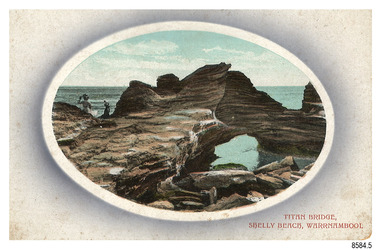 Flagstaff Hill Maritime Museum and Village
Postcard - Scenic, Warrnambool, Titan Bridge, Shelly Beach, Warrnambool, 1902-1929
... Lucknow and remained in India for eleven years. It was during this time that he became interested in photography. He was posted to New Zealand and later came to Victoria, becoming a sergeant major of the Mounted Rifles. In the mid-1880s he came to the Western district where he was responsible for establishing units of the Mounted Rifles in various country towns such as Dunkeld, Mortlake, Panmure, Bushfield, Koroit etc. He resigned from the army in 1889 and set up a professional photography studio in Liebig Street...Lucknow and remained in India for eleven years. It was during this time that he became interested in photography. He was posted to New Zealand and later came to Victoria, becoming a sergeant major of the Mounted Rifles. In the mid-1880s he came to the Western district where he was responsible for establishing units of the Mounted Rifles in various country towns such as Dunkeld, Mortlake, Panmure, Bushfield, Koroit etc. He resigned from the army in 1889 and set up a professional photography studio in Liebig Street ...The nine postcards in this set were donated together and date to the early 1900s. All but one postcard in this set shows images of Warrnambool, in the Western District of Victoria; the other has a London image. The postcards were all printed in Great Britain according to that country’s postal regulations. The fronts of all cards have titles printed in red. Most of the images on the cards are attributed to photographer Joseph Jordan and belong to the Jordan Series. The back of these cards has an outline for a postage stamp, a vertical dividing line and a heading on each side of the line to separate the Correspondence from the Address. Postcards or ‘correspondence cards’ appeared in Britain in 1894. They were plain cards with a space for the message on one side and an address on the other; regulations didn’t allow anything but the address to be written on the ‘address’ side. In 1902 the British regulations then allowed a picture to be printed on the front and the address on the back, so messages had to be written on the picture side. Soon, the regulations changed and the back was divided for a message and the address. Titan Bridge, Warrnambool – The name Titan Bridge is likely to be a reference to the huge Titan crane that was used in the construction of the Breakwater in the late 19th century. Shelly Beach is a popular swimming area with the added attraction of rock pools to investigate and rock formations to climb. Joseph Jordan - Joseph Jordan was born in 1841 in Leicester England. When he was 16 he joined the 7th Queen's Own Hussars and was sent to India at the outbreak of the mutiny. He took part in the relief of Lucknow and remained in India for eleven years. It was during this time that he became interested in photography. He was posted to New Zealand and later came to Victoria, becoming a sergeant major of the Mounted Rifles. In the mid-1880s he came to the Western district where he was responsible for establishing units of the Mounted Rifles in various country towns such as Dunkeld, Mortlake, Panmure, Bushfield, Koroit etc. He resigned from the army in 1889 and set up a professional photography studio in Liebig Street, Warrnambool. He became very well known in the Western District for family photographs, official photographs of local councillors and groups as well as views of local scenery. In 1891 he photographed the wrecked barque ‘Fiji’ at ‘Wrecks Beach’ near Princetown. His business was taken over by his son Arthur around 1917. Joseph was a keen rifle shot and in 1924 he donated the "Jordan Shield" as a prize to the Victorian Rifle Association. He was made a "Life Honorary Member" of the Warrnambool Returned Soldiers League and in 1933 he was recognised as being the oldest living soldier in Victoria. Joseph died in 1935 aged 95.The image of the Titan Bridge rock formation with figures on it suggests that the location was a popular place to visit. It captures a time when the rock formation was publically accessible. The choice of subject for this postcard indicates the popularity of Warrnambool's natural environment as a tourist attraction at a time when ships called coastal traders brought passengers and cargo to the Port of Warrnambool from ports along Victoria's southwest coast. Joseph Jordan is a significant figure in Warrnambool history as he helped to establish early units of the Mounted Rifles (G Company) in local towns during the late 1880's and later, photographed local scenes, groups and citizens of early Warrnambool.Postcard, one of nine, landscape orientation, coloured print within an oval border and mauve-toned shading. The cameo image shows two figures, one seated and one standing, beside the sea on a rough rock beside a rock formation resembling a bridge. There is no correspondence written on the card. The back has inscriptions and outlines for a postage stamp. Jordan Series, printed in Great Britain.Front, in red: “TITAN BRIDGE / SHELLY BEACH, NEAR WARRNAMBOOL” Back in black: “Jordan Series” “POST CARD” “PRINTED IN GREAT BRITAIN” “For correspondence” “The Address only to be written here”flagstaff hill maritime museum, flagstaff hill maritime village, flagstaff hill maritime museum and village, maritime museum, warrnambool, great ocean road, warrnambool and district, warrnambool scenes, local scenes, views of warrnambool, joseph jordan, jordan series, jordan photography, postcard, souvenir, correspondence, cameo postcard, landscape, shelly beach, titan bridge, titan, rock formation -
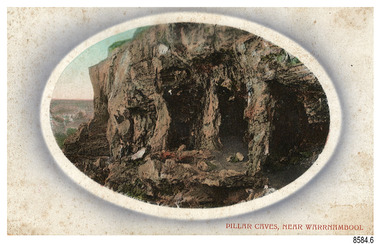 Flagstaff Hill Maritime Museum and Village
Postcard - Scenic, Warrnambool, Pillar Caves, near Warrnambool, 1902-1929
... Lucknow and remained in India for eleven years. It was during this time that he became interested in photography. He was posted to New Zealand and later came to Victoria, becoming a sergeant major of the Mounted Rifles. In the mid-1880s he came to the Western district where he was responsible for establishing units of the Mounted Rifles in various country towns such as Dunkeld, Mortlake, Panmure, Bushfield, Koroit etc. He resigned from the army in 1889 and set up a professional photography studio in Liebig Street...Lucknow and remained in India for eleven years. It was during this time that he became interested in photography. He was posted to New Zealand and later came to Victoria, becoming a sergeant major of the Mounted Rifles. In the mid-1880s he came to the Western district where he was responsible for establishing units of the Mounted Rifles in various country towns such as Dunkeld, Mortlake, Panmure, Bushfield, Koroit etc. He resigned from the army in 1889 and set up a professional photography studio in Liebig Street ...The nine postcards in this set were donated together and date to the early 1900s. All but one postcard in this set shows images of Warrnambool, in the Western District of Victoria; the other has a London image. The postcards were all printed in Great Britain according to that country’s postal regulations. The fronts of all cards have titles printed in red. Most of the images on the cards are attributed to photographer Joseph Jordan and belong to the Jordan Series. The back of these cards has an outline for a postage stamp, a vertical dividing line and a heading on each side of the line to separate the Correspondence from the Address. Postcards or ‘correspondence cards’ appeared in Britain in 1894. They were plain cards with a space for the message on one side and an address on the other; regulations didn’t allow anything but the address to be written on the ‘address’ side. In 1902 the British regulations then allowed a picture to be printed on the front and the address on the back, so messages had to be written on the picture side. Soon, the regulations changed and the back was divided for a message and the address. Pliiar Caves, near Warrnambool – The formation at the front of the cave resembles the pillars of a porch, giving the cave its name. Local social media discussion locates the caves near Lake Gillear, east of Warrnambool. The area was popular with young lads as a place to explore and to go rabbiting. The caves in this area are home to colonies of bats and have been a source of bat feces or bat guano, which is an enriching additive to soil. The 19th century sailing ships in the Nitrogen or Guano trade collected large quantities of guano from caves and popular bird nesting locations to sell as a rich fertiliser, due to its high nitrogen and phosphorus properties. Joseph Jordan - Joseph Jordan was born in 1841 in Leicester England. When he was 16 he joined the 7th Queen's Own Hussars and was sent to India at the outbreak of the mutiny. He took part in the relief of Lucknow and remained in India for eleven years. It was during this time that he became interested in photography. He was posted to New Zealand and later came to Victoria, becoming a sergeant major of the Mounted Rifles. In the mid-1880s he came to the Western district where he was responsible for establishing units of the Mounted Rifles in various country towns such as Dunkeld, Mortlake, Panmure, Bushfield, Koroit etc. He resigned from the army in 1889 and set up a professional photography studio in Liebig Street, Warrnambool. He became very well known in the Western District for family photographs, official photographs of local councillors and groups as well as views of local scenery. In 1891 he photographed the wrecked barque ‘Fiji’ at ‘Wrecks Beach’ near Princetown. His business was taken over by his son Arthur around 1917. Joseph was a keen rifle shot and in 1924 he donated the "Jordan Shield" as a prize to the Victorian Rifle Association. He was made a "Life Honorary Member" of the Warrnambool Returned Soldiers League and in 1933 he was recognised as being the oldest living soldier in Victoria. Joseph died in 1935 aged 95.The image of the Pillar Caves rock formation with figures on it suggests that the location was a popular place to visit. The choice of subject for this postcard indicates the popularity of Warrnambool's natural environment as a tourist attraction at a time when ships called coastal traders brought passengers and cargo to the Port of Warrnambool from ports along Victoria's southwest coast. The presence of bats in local caves also connects the postcard to the 19th century Nitro Trade and Guano Trade, when bat guano was collected and sold for plant fertiliser around the world. Joseph Jordan is a significant figure in Warrnambool history as he helped to establish early units of the Mounted Rifles (G Company) in local towns during the late 1880's and later, photographed local scenes, groups and citizens of early Warrnambool.Postcard, one of nine, landscape orientation, coloured print within an oval border and mauve-toned shading. The cameo image shows figures on the high, grass-topped cliff, one between the likeness of pillars in the cave entry, and others walking on the rocks nearby. The background below is rough ground. There is no correspondence written on the card. The back has inscriptions and outlines for a postage stamp. Jordan Series, printed in Great Britain.Front, in red: “PILLAR CAVES, NEAR WARRNAMBOOL” Back in black: “Jordan Series” “POST CARD” “PRINTED IN GREAT BRITAIN” “For correspondence” “The Address only to be written here”flagstaff hill maritime museum, flagstaff hill maritime village, flagstaff hill maritime museum and village, maritime museum, warrnambool, great ocean road, warrnambool and district, warrnambool scenes, local scenes, views of warrnambool, joseph jordan, jordan series, jordan photography, postcard, souvenir, correspondence, cameo postcard, landscape, rock formation, pillar caves, pillars cave, lake gillear, rebbiting, bats, guano, nitro trade, fertilizers -
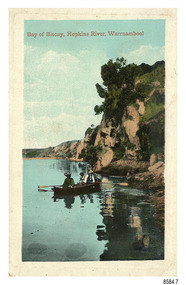 Flagstaff Hill Maritime Museum and Village
Postcard - Scenic - Warrnambool, Bay of Biscay, Hopkins River, Warrnambool, 1902-1910
... Lucknow and remained in India for eleven years. It was during this time that he became interested in photography. He was posted to New Zealand and later came to Victoria, becoming a sergeant major of the Mounted Rifles. In the mid-1880s he came to the Western district where he was responsible for establishing units of the Mounted Rifles in various country towns such as Dunkeld, Mortlake, Panmure, Bushfield, Koroit etc. He resigned from the army in 1889 and set up a professional photography studio in Liebig Street...Lucknow and remained in India for eleven years. It was during this time that he became interested in photography. He was posted to New Zealand and later came to Victoria, becoming a sergeant major of the Mounted Rifles. In the mid-1880s he came to the Western district where he was responsible for establishing units of the Mounted Rifles in various country towns such as Dunkeld, Mortlake, Panmure, Bushfield, Koroit etc. He resigned from the army in 1889 and set up a professional photography studio in Liebig Street ...The nine postcards in this set were donated together and date to the early 1900s. All but one postcard in this set shows images of Warrnambool, in the Western District of Victoria; the other has a London image. The postcards were all printed in Great Britain according to that country’s postal regulations. The fronts of all cards have titles printed in red. Most of the images on the cards are attributed to photographer Joseph Jordan and belong to the Jordan Series. The back of these cards has an outline for a postage stamp, a vertical dividing line and a heading on each side of the line to separate the Correspondence from the Address. Postcards or ‘correspondence cards’ appeared in Britain in 1894. They were plain cards with a space for the message on one side and an address on the other; regulations didn’t allow anything but the address to be written on the ‘address’ side. In 1902 the British regulations then allowed a picture to be printed on the front and the address on the back, so messages had to be written on the picture side. Soon, the regulations changed and the back was divided for a message and the address. Bay of Biscay, Hopkins River, Warrnambool – This same image was published in Table Talk on January 6th, 1910 and in The Age, on December 18, 1929, referred to a revival of fishing at the Bay of Biscay on the Hopkins River. These and similar articles showcased the Bay of Biscay as a popular boating and fishing location and well worth promoting to places outside of Warrnambool. Joseph Jordan - Joseph Jordan was born in 1841 in Leicester England. When he was 16 he joined the 7th Queen's Own Hussars and was sent to India at the outbreak of the mutiny. He took part in the relief of Lucknow and remained in India for eleven years. It was during this time that he became interested in photography. He was posted to New Zealand and later came to Victoria, becoming a sergeant major of the Mounted Rifles. In the mid-1880s he came to the Western district where he was responsible for establishing units of the Mounted Rifles in various country towns such as Dunkeld, Mortlake, Panmure, Bushfield, Koroit etc. He resigned from the army in 1889 and set up a professional photography studio in Liebig Street, Warrnambool. He became very well known in the Western District for family photographs, official photographs of local councillors and groups as well as views of local scenery. In 1891 he photographed the wrecked barque ‘Fiji’ at ‘Wrecks Beach’ near Princetown. His business was taken over by his son Arthur around 1917. Joseph was a keen rifle shot and in 1924 he donated the "Jordan Shield" as a prize to the Victorian Rifle Association. He was made a "Life Honorary Member" of the Warrnambool Returned Soldiers League and in 1933 he was recognised as being the oldest living soldier in Victoria. Joseph died in 1935 aged 95.The image of the figures in a row boat on the river suggests that the location was a popular place to visit. The choice of subject for this postcard indicates the popularity of Warrnambool's natural environment as a tourist attraction at a time when ships called coastal traders brought passengers and cargo to the Port of Warrnambool from ports along Victoria's southwest coast. Joseph Jordan is a significant figure in Warrnambool history as he helped to establish early units of the Mounted Rifles (G Company) in local towns during the late 1880's and later, photographed local scenes, groups and citizens of early Warrnambool.Postcard, one of nine, portrait orientation, coloured print within a rectangle border with an impressed line around the image and a title in red. The picture shows three figures wearing hats in a rowboat on the bank of a river beside cliffs. There is no correspondence written on the card. The back has inscriptions and outlines for a postage stamp. Jordan Series, printed in Great Britain.Front, in red: “Bay of Biscay, Hopkins River, Warrnambool” Back in green: “Jordan Series” “POST CARD” “PRINTED IN GREAT BRITAIN” “For correspondence” “The Address only to be written here”flagstaff hill maritime museum, flagstaff hill maritime village, flagstaff hill maritime museum and village, maritime museum, warrnambool, great ocean road, warrnambool and district, warrnambool scenes, local scenes, views of warrnambool, joseph jordan, jordan series, jordan photography, postcard, souvenir, correspondence, cameo postcard, bay of biscay, fishing, boating
