
Showing 149 items matching "makes and models"
-
 Federation University Historical Collection
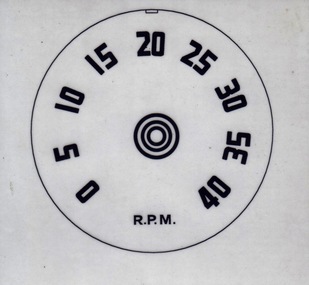
Artwork, other - Artwork - Decals, ZILLES COLLECTION: Decal stencils for Car Dashboard Dials
... Model makes and implement names...Images of dacals for instrument dials for dashboards - petrol, water, air, speedometer, oil, amperes, zilles printers decals instrument dials ballarat Model makes and implement names Transparencies and printed copies of decals ZILLES COLLECTION: Decal stencils for Car Dashboard Dials. ...Zilles Printers was begun by Lewis Zilles in the early 1930s. It was in McKenzie Street Ballarat. His son Jeffrey also became a printer - letterpress, offset and screen printer. The business became Zilles Printers/Graphics and was in Armstrong Street and later Bell Street Ballarat. Images of dacals for instrument dials for dashboards - petrol, water, air, speedometer, oil, amperes,Transparencies and printed copies of decalsModel makes and implement nameszilles printers, decals, instrument dials, ballarat -
 Running Rabbits Military Museum operated by the Upwey Belgrave RSL Sub Branch
Trench Art, F/Sgt Alfred Ernst Warrick
... Model of airplane Make N/K...Model 1942 RAAF Model of airplane Make N/K Trench Art F/Sgt Alfred Ernst Warrick ...Model of airplane Make N/Kmodel, 1942, raaf -
 Friends of Kurth Kiln
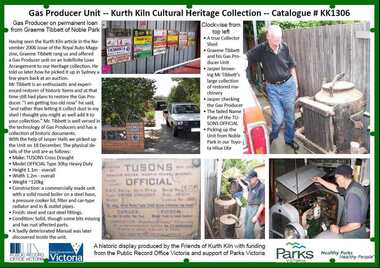
Tusons Gas Producer Unit, Tusons
... Make: Tysons Cross Draught Model: Official 30hp Heavy Duty Serial: 1368...This unit is again of a different manufacturer and construction, highlighting the versatile nature of charcoal producer gas and its applications. Make: Tysons Cross Draught Model: Official 30hp Heavy Duty Serial: 1368 A commercially made cast iron unit with a solid round hopper/boiler on a steelframe base. ...In conversation with Mr Tibbett we found out that he obtained this particular unit at an auction in Sydney and brought it home with the intention of one day getting it going again. 'One day' never seemed to come, so he decided to let us have it for our display, rather than jjust collecting dust in his shed.This unit is again of a different manufacturer and construction, highlighting the versatile nature of charcoal producer gas and its applications. A commercially made cast iron unit with a solid round hopper/boiler on a steelframe base. It has a pressure-cooker lid and a car type radiator. Solid built, but rust affected in partsMake: Tysons Cross Draught Model: Official 30hp Heavy Duty Serial: 1368 -
 Whitehorse Historical Society Inc.
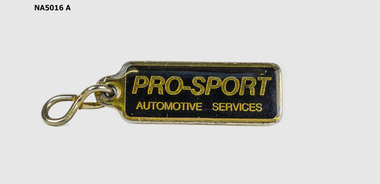
Accessory - key ring
... Mechanical repairs to all makes & models....Mechanical repairs to all makes & models. Small oblong badge with key ring attached. ...Key ring advertising Pro-Sport Automotive Services.Small oblong badge with key ring attached. Black background is with "Pro-Sport Automotive Services" presented in gold with gold edging.Finder please return to 4 George St Blackburn 3130, 8774108. Mechanical repairs to all makes & models.pro-sport automotive services -
 NMIT (Northern Melbourne Institute of TAFE)
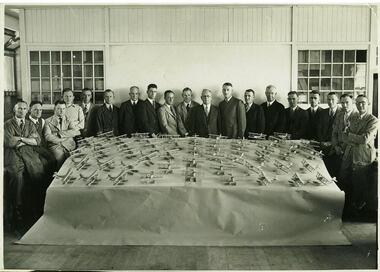
Photograph: CTS 1941 Model Aircraft made by teachers for training armed forces
... Black and white photograph of a table of model aircraft and Collingwood Technical School teachers who donated one week in December 1941 to make aircraft models to be used to train ared services personnel in aircraft identification. ...Collingwood Technical School Armed Forces training NMIT Black and white photograph of a table of model aircraft and Collingwood Technical School teachers who donated one week in December 1941 to make aircraft models to be used to train ared services personnel in aircraft identification. ...Black and white photograph of a table of model aircraft and Collingwood Technical School teachers who donated one week in December 1941 to make aircraft models to be used to train ared services personnel in aircraft identification. (Scott p.46)collingwood technical school, armed forces training, nmit -
Whitehorse Historical Society Inc.
Article, Battle of the transport policies, 16/09/1992 12:00:00 AM
... The model for the new Nunawading Station was unveiled (using ultra-modern Travel Safe Station). ...The Liberal Party said it had been part of their policy since 1988 to upgrade stations to be more convenient. Also to make P.T.S. affordable, reliable and safe. ...The model for the new Nunawading Station was unveiled (using ultra-modern Travel Safe Station). ...Both A.L.P. and Liberal politicians spreading the word about their newly launched transport policies.Both A.L.P. and Liberal politicians spreading the word about their newly launched transport policies. The model for the new Nunawading Station was unveiled (using ultra-modern Travel Safe Station). Both stations will be monitored by closed circuit T.V., open booking counter which will mean improved supervision by staff. The Liberal Party said it had been part of their policy since 1988 to upgrade stations to be more convenient. Also to make P.T.S. affordable, reliable and safe. To encourage people back on to the system initiatives - free tram travel in C.B.D. and introduction of all-night bus services.Both A.L.P. and Liberal politicians spreading the word about their newly launched transport policies. railways, mitcham railway station, kirner, joan, spyker, peter, harrowfield, john, pescott, roger, nunawading railway station, travel safe stations -
 Whitehorse Historical Society Inc.
Domestic object - Vogue Pattern, Vogue, The Corde Nast Public, 1959 C
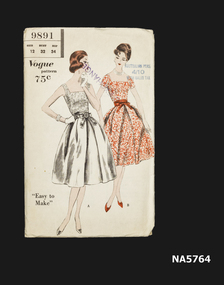
... Dress pattern in off white paper sleeve with picture of model with red patterned dress and model with silver coloured dress. ...'No exchange", 'Easy to make' On back is the amount of materials required to make the dress. ...Dress patterns for making dressesDress pattern in off white paper sleeve with picture of model with red patterned dress and model with silver coloured dress. Vogue Pattern No. 9891 Size 12, Bust 32, Hip 34. Priced 75 cents Australia Price 4/10 with Sales Tax. 'No exchange", 'Easy to make' On back is the amount of materials required to make the dress. Inside is pattern pieces. on back No. 912 860dressmaking, vogur, dress patterns -
 Whitehorse Historical Society Inc.
Domestic object - Vogue Paper Pattern, Vogue Pattern Service
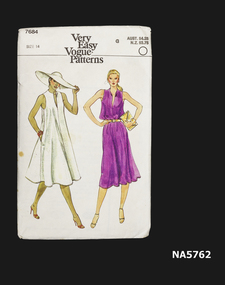
... Dress pattern in white paper sleeve with picture of model in white dress with hat and model with pink dress. ...Dressmaking Vogue Dress patterns Dress pattern in white paper sleeve with picture of model in white dress with hat and model with pink dress. ...Dress patterns for making dresses.Dress pattern in white paper sleeve with picture of model in white dress with hat and model with pink dress. 'Very Easy Vogue Patterns" No. 7684 Size 14. Aust $4.25 N.Z. $3.75. On back is the amount of materials required to make the dress. Inside is pattern pieces.dressmaking, vogue, dress patterns -
 Phillip Island and District Historical Society Inc.
Newspaper clippings, 04/01/1965
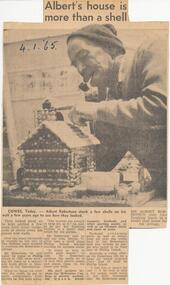
... Newspaper article with photo of Albert Robertson and model shell house. Text explains his building up of a tourist attraction by cementing shells onto 18" fibro plaster sheets to make pictures of people and objects....Taken probably from Sentinel Times of Wonthaggi. local history newspapers shell house on summerland peninsula phillip island Jean Jamieson "Albert's House is more than a shell" Newspaper article with photo of Albert Robertson and model shell house. Text explains his building up of a tourist attraction by cementing shells onto 18" fibro plaster sheets to make pictures of people and objects. ...Collection of newspaper clippings in scrap book dated 1960 - 1973. Taken probably from Sentinel Times of Wonthaggi.Newspaper article with photo of Albert Robertson and model shell house. Text explains his building up of a tourist attraction by cementing shells onto 18" fibro plaster sheets to make pictures of people and objects."Albert's House is more than a shell"local history, newspapers, shell house on summerland peninsula, phillip island, jean jamieson -
Glenelg Shire Council Cultural Collection
Postcard, n.d
... Fake short legs attached to man, to make it look like he is a jockey. He is holding a jockey's whip....Fake short legs attached to man, to make it look like he is a jockey. He is holding a jockey's whip. ...Black and white photo postcard. Large model 'rooster', hollow; man wearing it, visible outside rooster from waist up and knees down. Fake short legs attached to man, to make it look like he is a jockey. He is holding a jockey's whip.Front: 'THE "ROOSTER" AT THE DIGGERS SPORTS CARNIVAL, PORTLAND, TOYE PHOTO' -white script, bottom edge of postcard -
 Bendigo Military Museum
Equipment - POUCH, ENTRENCHING TOOL
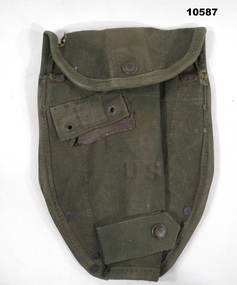
... Entrenching tool (small spade) pouch cover, heavy webbing materials, has a fold over press stud to hold spade in, on the rear are two metal sliding pins for attachment to a webbing belt. Text on rear re make/model are not readable, other text on rear and front....Entrenching tool (small spade) pouch cover, heavy webbing materials, has a fold over press stud to hold spade in, on the rear are two metal sliding pins for attachment to a webbing belt. Text on rear re make/model are not readable, other text on rear and front. ...Collection re G.A. Jones 3790932, refer Cat No 10053.2P for his service details.Entrenching tool (small spade) pouch cover, heavy webbing materials, has a fold over press stud to hold spade in, on the rear are two metal sliding pins for attachment to a webbing belt. Text on rear re make/model are not readable, other text on rear and front.On front in large black, “US”. On rear in black, A square with the figure “8” in.equipment, entrenching, tool, gajones -
 Mont De Lancey
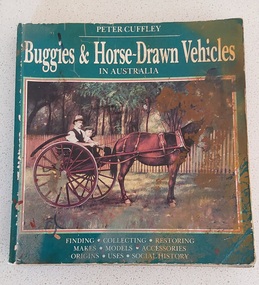
Book, Peter Cuffley, Buggies & Horse-Drawn Vehicles in Australia, 1994
... Chas Davis the owner of this book used it to painstakingly make beautiful detailed small models of many of the horse-drawn vehicles used in Australia in the 1800 and 1900's. ...Chas Davis the owner of this book used it to painstakingly make beautiful detailed small models of many of the horse-drawn vehicles used in Australia in the 1800 and 1900's. ...This book evokes the fascinating golden era of horse-drawn vehicles in Australia in the 1800 and 1900's. The author's practical expertise and first-hand research and a wealth of contemporary illustrations, make it an indispensable guide for both the collector and restorer. It traces the development of horse-drawn road transport from the boom period of coach building to its decline in the early decades of the 20th century.A large square green paperback book about Buggies & Horse-Drawn Vehicles used for transport in Australia. The cover has a green border with a picture of a man and boy sitting in an open one horse-drawn buggy outside a house. There are many diagrams, photos and illustrations throughout. It discusses in-depth, the history, types and various aspects of these vehicles used On the front ight end paperin the early days from the 1800's-1900's. Pp.208.non-fictionThis book evokes the fascinating golden era of horse-drawn vehicles in Australia in the 1800 and 1900's. The author's practical expertise and first-hand research and a wealth of contemporary illustrations, make it an indispensable guide for both the collector and restorer. It traces the development of horse-drawn road transport from the boom period of coach building to its decline in the early decades of the 20th century.australian history, social history, horse-drawn vehicles, early road transport, coaches, buggies -
 Bendigo Military Museum
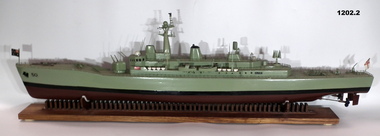
Craft - MODEL & BASE, HMAS SWAN
... Wooden stand, tailor made to hold the model of the 'Swan'. Brown in colour with long flat board and separate pieces of wood embedded in the base to make the cradle. ...Wooden stand, tailor made to hold the model of the 'Swan'. Brown in colour with long flat board and separate pieces of wood embedded in the base to make the cradle. ...Model of HMAS Swan built by Shipwright Charles Axiak. Original ship construction in Melbourne and entered service 1970. Was a River Class Destroyer. Model maker worked in British Dockyards during WW2 and emigrated to Australia in 1955. He worked in Williamstown dockyards involved with construction of the Swan,1. Model of River Class Destroyer. green in colour from water line. Black line and brown at bottom. Small Australian flag at front and naval flag at back. 2. Wooden stand, tailor made to hold the model of the 'Swan'. Brown in colour with long flat board and separate pieces of wood embedded in the base to make the cradle. High points of cradle covered by some white felt to protect boat. Bottom of stand has felt studs."50" painted at front of boat.ships model, hmas swan -
 Maldon Vintage Machinery Museum Inc
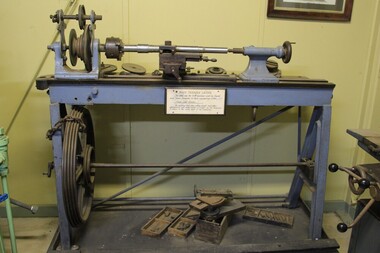
Treadle Lathe, Post 1875
... Brought by ship by David Thompson who used it on the journey to make working models....Brought by ship by David Thompson who used it on the journey to make working models. The first machine used by David & James Thompson in their engineering section. machinery; tools; metalwork None Treadle lath for metal turning. ...The first metal working machine used by David & James Thompson in 1878. Brought by ship by David Thompson who used it on the journey to make working models.The first machine used by David & James Thompson in their engineering section.Treadle lath for metal turning. Some brass accessories for metal working are laid out on a timber bench attached to the back of the lathe. Painted gunmetal grey and mounted on a black wooden platform for display purposes.Nonemachinery; tools; metalwork -
 Bendigo Historical Society Inc.
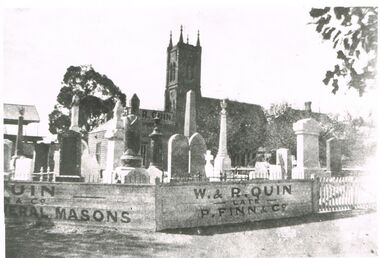
Photograph - PHOTO OF A MASONRY BUSINESS IN MITCHELL STR WITH ST PAULS CHURCH IN THE BACKGROUND
... A partial name on the left makes reference to Funeral Masons. Inside the yard are models of the types of Headstones that may be purchased....A partial name on the left makes reference to Funeral Masons. Inside the yard are models of the types of Headstones that may be purchased. ...Black and White photograph of a stone mason's business located at the corner of Myers Street, Lyttleton Terrace and Mitchell Street Bendigo. Names and other on the fence are; W. & R. Quin - late- P. Finn & Co. A partial name on the left makes reference to Funeral Masons. Inside the yard are models of the types of Headstones that may be purchased.business, retail, funeral masonry, stone mason and st pauls cathedral. -
 Flagstaff Hill Maritime Museum and Village
Tool - Set of Tools, 1930-1955's
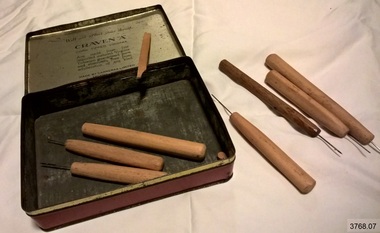
... This set of handmade tools was made by Jim Williams for his own purposes to make designs and components for the ship model Sovereign of the Seas. ...This set of handmade tools was made by Jim Williams for his own purposes to make designs and components for the ship model Sovereign of the Seas. ...This set of handmade tools was made by Jim Williams for his own purposes to make designs and components for the ship model Sovereign of the Seas. It is part of a collection of objects used by Jim Williams, maker of fine ship models from about 1930-1955. Most of the components for the models, as well as many of the tools, were handmade by Jim Williams. Jim’s family has donated the ship model “Sovereign of the Seas” and many tools, accessories and documents used in the making of this and other ship models have been donated to Flagstaff Hill Maritime Village. Ship model of HMS Sovereign of the Seas, scale model of 17th Century English war ship, was handmade and carved from plans, enclosed in airtight glass case. All components of that model, including even the smallest pulleys, were hand crafted using tools designed and made by Jim. Outstanding details include functional rigging and moving cannons. Please see our record 3732 of the mode Sovereign of the Seas for further details of the ship and the maker. This set of handmade tools is connected with the hobby and skill of ship model making that has been crafted as a leisure activity for many generations. The hobby is often chosen by serving and retired mariners who appreciate the connection with maritime history. This set of tools was used by local Warrnambool man, Jim Williams, who was employed at Cramond and Dickson clothing store, and then at Fletcher Jones menswear for 27 years. It was used in making components for the model of the historic ship, the Sovereign of the Seas. The Sovereign of the Seas was a historic 17th century English war ship with important maritime heritage. A set of 6 small, fine wood working and carving tools stored in a ‘Craven A’ cigarette tin. The tools have been handmade by Jim Williams for the purpose of making ship models. This set of tools is part of a collection of tools and accessories once used by Jim Williams, maker of a series of ship models 1930-1955 including “HMS Sovereign of the Seas”. (Also included is a spare handle.)On the tin; “CORK TIPPED / TRADE MARK / CRAVEN “A” / VIRGINIA / CIGARETTES”flagstaff hill, warrnambool, flagstaff hill maritime museum, maritime museum, shipwreck coast, flagstaff hill maritime village, great ocean road, jim williams, james bernard williams, ship model hobby, ship model tools, ship model making equipment, ship model making accessories, wood working tool, model making tool, carving tools, handmade wood carving tools, craven a cigarette tin, sovereign of the sea, ship model, hobby, ship model tool -
 Bendigo Historical Society Inc.
Uniform - GERMAN MILITARY ARMY HELMET
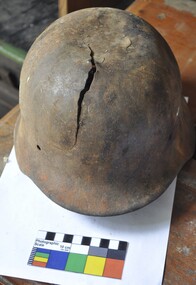
... The last model, the M42 was simplified to make it faster and easier to manufacture larger numbers of helmets to compensate the huge losses of helmets during the last years of the war. ...The last model, the M42 was simplified to make it faster and easier to manufacture larger numbers of helmets to compensate the huge losses of helmets during the last years of the war. ...The World War II German steel combat helmet was manufactured in 3 different variations. The first model which appeared in 1935 (M35) was a sophisticated craftwork and the M40 was an improved version. The last model, the M42 was simplified to make it faster and easier to manufacture larger numbers of helmets to compensate the huge losses of helmets during the last years of the war. The number refers to the year e.g. M40 = 1940German Military Army Helmet. Damaged. Cracked and holed in the crown. No webbing or straps.world war ii, germany -
 Whitehorse Historical Society Inc.
Machine - Sewing machine, 1962-63
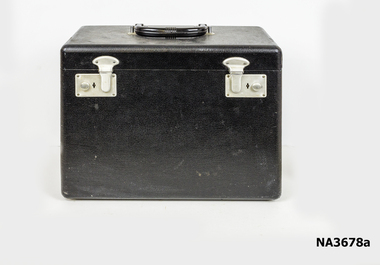
... A total of 21 items make up the set...A total of 21 items make up the set Machine Sewing machine ...Singer electrical sewing machine in case. 'Featherweight' convertible Model 222K. Serial No. EL184522. Foot control contained in lid of case and attached by electrical cord. Small black sewing machine. Attachments contained in green cardboard box with 'Singer' in red on top. Black metal box with 17 attachments including owners' manual. A total of 21 items make up the setdomestic items, sewing, textile machinery -
 Flagstaff Hill Maritime Museum and Village
Machine - Rope machine, Continental Trading Corporation Ltd, ca. 1911
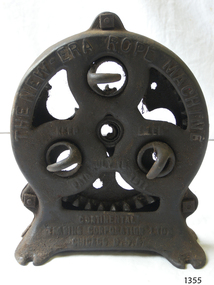
... The two pieces that make up the machine's case are bolted together. ...The two pieces that make up the machine's case are bolted together. ...This rope-making machine, called The New Era Rope Machine, was patented in the USA on July 18th 1911. It was made by the Continental Trading Corporation Ltd. in Chicago, USA. The ends of the rope would be threaded through the matching and hooked onto the machine's claws on the other side. The machine's handle would be rotated manually, which would twist the rope ends together, entwining them to make one thick rope.This manually operated rope-making machine is a labour saving devise used particularly by sailmakers in their rigging and ropework tasks. Rope-making machine, metal. The model is "The New Era Rope Machine". The manually operated machine has three claws through which roping material is threaded. Internal wheels have cogs around their perimeter. The two pieces that make up the machine's case are bolted together. Made by Continental Trading corporation Ltd Chicago USA. The machine was patented on 18th July 1911."The New Era Rope Machine" " Continental Trading Corporation Ltd Chicago USA" "Patd july 18 1911" "Made in USA" "Keep oiled"flagstaff hill, warrnambool, maritime museum, maritime village, great ocean road, shipwreck coast, ropework, the new era rope machine, patented, 1911, textile machine, continental trading corporation ltd., chicago, rope-making machine, textile industry -
 Sir Reginald Ansett Transport Museum
Booklet - Lookbook, Teamstyle
... It shows the different options and combinations of accessories, tops and bottoms presented on mannequin and also photographed on models. It also explains the presentation standards expected from the in flight staff in regards to grooming, jewellery, make-up, hairdo....It shows the different options and combinations of accessories, tops and bottoms presented on mannequin and also photographed on models. It also explains the presentation standards expected from the in flight staff in regards to grooming, jewellery, make-up, hairdo. ...This booklet is a lookbook of male and female flight attendants uniforms designed by David Weiss for the period 1984-1986. It shows the different options and combinations of accessories, tops and bottoms presented on mannequin and also photographed on models. It also explains the presentation standards expected from the in flight staff in regards to grooming, jewellery, make-up, hairdo.This lookbook contains the vision of designer Peter Weiss for this collection. Landscape format catalogue with light blue background and colour pictures of uniforms for male and female flight attendants. It contains david weiss, 1984-1986, uniform, flight attendant, stewardess, steward, hostess, clothing, accessory, hat, ansett, lookbook, ansett australia -
 Bendigo Historical Society Inc.
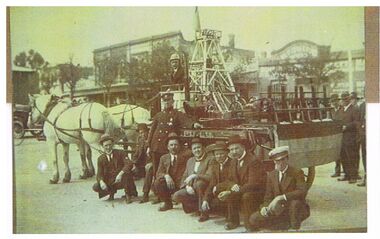
Photograph - KELLY MINE MODEL IN EASTER PROCESSION
... Fred Kelly ( in uniform ) with his complete working model of a mine which took part in the Easter Procession for many years. ...Photograph KELLY MINE MODEL IN EASTER PROCESSION ...Copies (2) of original photo: Print attached to back of photo : Mr. Fred Kelly ( in uniform ) with his complete working model of a mine which took part in the Easter Procession for many years. Mr. Kelly built the mine himself, and included a small steam engine to drive the stampers and make the cage go up and down. The mine was formerly on show upstairs in the Town Hall, and is now at the Deborah mine museum. Written on bottom of photo in black biro : Valda Pinder 54435593 Photo shows 6 seated men, one standing and one driving horse driven cart with mine model on cart. Two white horses drawing cart. Streetscape in background.bendigo, mining, kelly mine model -
 Melbourne Tram Museum
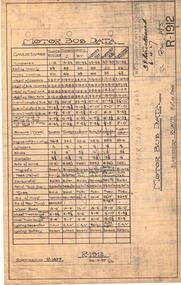
Document - List, Melbourne & Metropolitan Tramways Board (MMTB), " Motor Bus Data", 24/02/1927 12:00:00 AM
... Covers the Tilling Stevens Petrol electric, Thornycroft and Garford models. .2 - R4211 - dated 5/8/1935 - as above, including the Daimler, Tourist Bus, Albion and Leyland buses....Covers the Tilling Stevens Petrol electric, Thornycroft and Garford models. .2 - R4211 - dated 5/8/1935 - as above, including the Daimler, Tourist Bus, Albion and Leyland buses. " Motor Bus Data" Document List Melbourne & Metropolitan Tramways Board (MMTB) ...Set of two drawings titled " Motor Bus Data", .1 - R1912 - dated 24/2/1927 - Gives bus numbers 1-56 - make and type number of vehicles in service, capacity, turning circle, wheel bases, Tare weight, overall length, width and height and engine details. Covers the Tilling Stevens Petrol electric, Thornycroft and Garford models. .2 - R4211 - dated 5/8/1935 - as above, including the Daimler, Tourist Bus, Albion and Leyland buses.trams, tramways, buses, mmtb, lists, thornycroft, tilling stevens, garford, tourist bus, leyland, daimler, albion -
 Flagstaff Hill Maritime Museum and Village
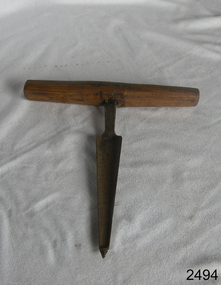
Tool - Bung borer, Prior to 1950
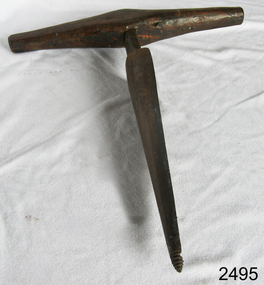
... There have been many models of bung borer used, the age old pattern is of a simple tapered spoon, later more sophisticated models would appear to do the same job and over the years numerous types of design have been patented....There have been many models of bung borer used, the age old pattern is of a simple tapered spoon, later more sophisticated models would appear to do the same job and over the years numerous types of design have been patented. ...Bung borer are a class of tools that bore a tapered hole in a wooden barrel, cask or flask, the tool makes a graduated tapered hole called a bung hole. The bung that goes into the hole can be made from wood, rubber or cork to make a tight seal or a tap is used to dispense the liquid inside the barrel. Often two holes would be made the first in the middle of the barrel and its highest location when laying on its side, this is use to fill the barrel. The second one, with the barrel now standing up, would be bored on one side of the head, near the rim, opposite the filling bung. That would be the one that would receive a tapered wooden or metal tap for dispensing liquid. There have been many models of bung borer used, the age old pattern is of a simple tapered spoon, later more sophisticated models would appear to do the same job and over the years numerous types of design have been patented.The subject item at this time cannot be associated with an historical event, person or place, provenance is unknown, item assessed as a collection asset as it is believed to have been produced before 1950.Bung borer threaded with wooden handle. Nonewarrnambool, flagstaff-hill, flagstaff-hill-maritime-museum, maritime-museum, shipwreck-coast, flagstaff-hill-maritime-village, barrel bung hole borer, barrels, coopers tools -
 Flagstaff Hill Maritime Museum and Village
Tool - Bung borer, Prior to 1950
... There have been many models of bung borer used, the age old pattern is of a simple tapered spoon, later more sophisticated models would appear to do the same job and over the years numerous types of design have been patented....There have been many models of bung borer used, the age old pattern is of a simple tapered spoon, later more sophisticated models would appear to do the same job and over the years numerous types of design have been patented. ...Bung borer are a class of tools that bore a tapered hole in a wooden barrel, cask or flask, the tool makes a graduated tapered hole called a bung hole. The bung that goes into the hole can be made from wood, rubber or cork to make a tight seal or a tap is used to dispense the liquid inside the barrel. Often two holes would be made the first in the middle of the barrel and its highest location when laying on its side, this is use to fill the barrel. The second one, with the barrel now standing up, would be bored on one side of the head, near the rim, opposite the filling bung. That would be the one that would receive a tapered wooden or metal tap for dispensing liquid. There have been many models of bung borer used, the age old pattern is of a simple tapered spoon, later more sophisticated models would appear to do the same job and over the years numerous types of design have been patented.The subject item at this time cannot be associated with an historical event, person or place, provenance is unknown, item assessed as a collection asset as it is believed to have been produced before 1950.Bung borer threaded with wooden handle. Nonewarrnambool, flagstaff-hill, flagstaff-hill-maritime-museum, maritime-museum, shipwreck-coast, flagstaff-hill-maritime-village, barrel bung hole borer, barrels, coopers tools -
 Bendigo Historical Society Inc.
Document - Y.M.C.A., Y'S WORKBOX, DISPLAY & DEMONSTRATION OF HAND CRAFTS, 27 October 1985
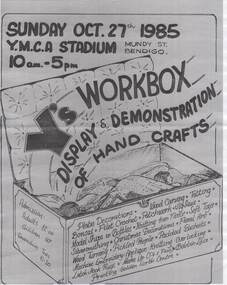
... Crafts include: Plate Decorations, Wood Carving, Tatting, Bonsai, Filet Crochet, Patchwork, Jigsaws, Model Ships in Bottles, Knitting from Fleece, Soft Toys, Silversmithing, Christmas Decorations, Floral Art, Wood Turning, Pickled People, Padded Baskets, Machine Embroidery, Applique, Knitting, Overlocking, Latchhook Rugs, Make-Up (TV & Films), Bobbin Lace, Printing, Golden North Centre....Crafts include: Plate Decorations, Wood Carving, Tatting, Bonsai, Filet Crochet, Patchwork, Jigsaws, Model Ships in Bottles, Knitting from Fleece, Soft Toys, Silversmithing, Christmas Decorations, Floral Art, Wood Turning, Pickled People, Padded Baskets, Machine Embroidery, Applique, Knitting, Overlocking, Latchhook Rugs, Make-Up (TV & Films), Bobbin Lace, Printing, Golden North Centre. ...Event, Bendigo Y.M.C.A., Y's Workbox, Display & Demonstration of Hand Crafts, at The Y.M.C.A. Stadium, Mundy Street, Bendigo, Sunday October 27, 1985, 10am - 5pm. Admission: Adults $2.00 , Children 50c, Devonshire Teas $1.20. Crafts include: Plate Decorations, Wood Carving, Tatting, Bonsai, Filet Crochet, Patchwork, Jigsaws, Model Ships in Bottles, Knitting from Fleece, Soft Toys, Silversmithing, Christmas Decorations, Floral Art, Wood Turning, Pickled People, Padded Baskets, Machine Embroidery, Applique, Knitting, Overlocking, Latchhook Rugs, Make-Up (TV & Films), Bobbin Lace, Printing, Golden North Centre.event, exhibition, bendigo y.m.c.a. -
 Greensborough Historical Society
Functional object - Ruler, Engineering Instruments, Inc, 10 inch slide rule model 10B and instruction booklet, 1947-1967
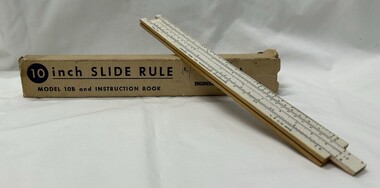
... George Lee Lawrence (1901–1976) established a firm in Chicago to make slide rules for photography. In 1935 he moved to Wabash, Ind., renamed the company Lawrence Engineering Service, and began to manufacture general purpose slide rules. ...Housed in cardboard box with instruction booklet. 10 inch slide rule model 10B and instruction booklet Functional object Ruler Engineering Instruments, Inc. ...George Lee Lawrence (1901–1976) established a firm in Chicago to make slide rules for photography. In 1935 he moved to Wabash, Ind., renamed the company Lawrence Engineering Service, and began to manufacture general purpose slide rules. In 1938 he relocated once more to Peru, Ind., and in 1947 it was changed to Engineering Instruments, Inc., and the company remained in business until its building burned down in 1967. The model 10-B sold for 25 cents during this period. There is no record that Lawrence ever received a patent for any aspect of his design or manufacturing process.Used up to the 1960s prior to the invention of the electronic calculator.10 inch one-sided wooden slide rule painted white on the front face, which consists of two divided scales, one fixed and on movable, and a sliding window called a cursor. A, D, and K scales are on the base, and B, CI, and C scales the inside of the slide. The underside of the rule is marked with: tables for equivalents and conversions. Housed in cardboard box with instruction booklet.The top of the base is marked: MADE IN U.S.A. It is also marked ENGINEERING INSTRUMENTS, INC., PERU, INDIANA and PAT. PEND. Underside: This Famous Slide Rule... at a popular price. Solves Problems in Multiplication, Division, Proportion, Squares Roots, Cubes and Cube Roots, Reciprocals, etc., Instantly. Accurately Calibrated White Face on Well Seasoned Hardwood. Both ends of box: MODEL 10B-BK Price of 15 shillings handwritten on box.slide rule, mathematics -
 Flagstaff Hill Maritime Museum and Village
Domestic object - Butter Churn, Cherry and Sons, 1890-1920
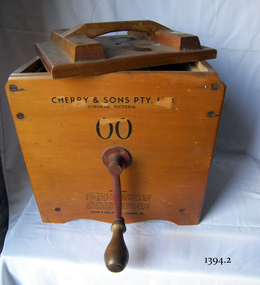
... Milk was "separated" to retrieve the cream which was then beaten to make butter. E Cherry began making various models of Cherry butter churns in 1858, Edward Cherry migrated from Herefordshire England to Australia in 1855 with his wife Ann Appleby, nee Davis, and established a joinery workshop at Gisborne, Victoria. ...Milk was "separated" to retrieve the cream which was then beaten to make butter. E Cherry began making various models of Cherry butter churns in 1858, Edward Cherry migrated from Herefordshire England to Australia in 1855 with his wife Ann Appleby, nee Davis, and established a joinery workshop at Gisborne, Victoria. ...The subject item is a good example of a large, hand-operated Bentwood box butter churn used to make up to 14 pounds of butter. It was made in Gisborne, Victoria, by the famous manufacturer, E. Cherry, and is known as an Improved Patent No.2 model probably dating from the late 1800s. The Cherry works specialised in making all types of butter churns and equipment for both domestic use on farms and small butter factories during the late nineteenth and early to mid. twentieth centuries. Milk was "separated" to retrieve the cream which was then beaten to make butter. E Cherry began making various models of Cherry butter churns in 1858, Edward Cherry migrated from Herefordshire England to Australia in 1855 with his wife Ann Appleby, nee Davis, and established a joinery workshop at Gisborne, Victoria. He began by making butter churns in his spare time and his product soon became popular allowing him to establish a viable business. A factory was established in 1875 and he started to make churns of all sizes including up to industrial scale. He exported his products to many countries around the world, Edward Cherry died in 1909 and the business was then run by his son George until he died in 1917. E Cherry's other son Thomas (1861-1945) was also involved in the firm maintaining an interest for several years. He had been born in Gisborne and became a senior house medical surgeon at the Melbourne Hospital in 1890. He continued his studies at Kings College London, eventually becoming a renowned bacteriologist and agricultural scientist. A significant giving an snapshot into how early industrial manufacturing became established in Australia.Rectangular manual butter churn, footed wooden box containing an X-shaped wooden interior rack, which is joined to an exterior metal hand crank with turned wood handle, through a hole in the box. Beneath the hand crank is a hole from the interior lined with metal. The lid has a carry handle affixed to the lid on two cross pieces attached to the lid by brass screws.Label in block transfer Manufactured by Cherry & Sons Pty Ltd Gisborne, Victoria Size "00"flagstaff hill, warrnambool, shipwrecked-coast, flagstaff-hill, flagstaff-hill-maritime-museum, maritime-museum, shipwreck-coast, flagstaff-hill-maritime-village, butter churn, cherry and sons, wooden butter churn -
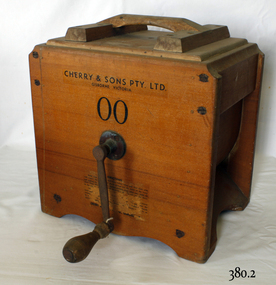 Flagstaff Hill Maritime Museum and Village
Domestic object - Butter Churn, Cherry and Sons, Circa 1890-1920
... Milk was "separated" to retrieve the cream which was then beaten to make butter. E Cherry began making various models of Cherry butter churns in 1858, Edward Cherry migrated from Herefordshire England to Australia in 1855 with his wife Ann Appleby, nee Davis, and established a joinery workshop at Gisborne, Victoria. ...Milk was "separated" to retrieve the cream which was then beaten to make butter. E Cherry began making various models of Cherry butter churns in 1858, Edward Cherry migrated from Herefordshire England to Australia in 1855 with his wife Ann Appleby, nee Davis, and established a joinery workshop at Gisborne, Victoria. ...The subject item is a good example of a large, hand-operated Bentwood box butter churn used to make up to 14 pounds of butter. It was made in Gisborne, Victoria, by the famous manufacturer, E. Cherry, and is known as an Improved Patent No.2 model probably dating from the late 1800s. The Cherry works specialised in making all types of butter churns and equipment for both domestic use on farms and small butter factories during the late nineteenth and early to mid. twentieth centuries. Milk was "separated" to retrieve the cream which was then beaten to make butter. E Cherry began making various models of Cherry butter churns in 1858, Edward Cherry migrated from Herefordshire England to Australia in 1855 with his wife Ann Appleby, nee Davis, and established a joinery workshop at Gisborne, Victoria. He began by making butter churns in his spare time and his product soon became popular allowing him to establish a viable business. A factory was established in 1875 and he started to make churns of all sizes including up to industrial scale. He exported his products to many countries around the world, Edward Cherry died in 1909 and the business was then run by his son George until he died in 1917. E Cherry's other son Thomas (1861-1945) was also involved in the firm maintaining an interest for several years. He had been born in Gisborne and became a senior house medical surgeon at the Melbourne Hospital in 1890. He continued his studies at Kings College London, eventually becoming a renowned bacteriologist and agricultural scientist. A significant giving an snapshot into how early rural and industrial manufacturing became established in Australia.Rectangular butter churn, a footed wooden box containing an X-shaped wooden interior rack, which is joined to an exterior metal hand crank with turned wood handle, through a hole in the box. Beneath the hand crank is a hole from the interior lined with metal. The lid has a carry handle affixed to the lid on two cross pieces attached to the lid by brass screws.Lettering in black on a transfer "CHERRY & SONS PTY LTD. GISBORNE VICTORIA". Model 00warrnambool, shipwrecked-coast, flagstaff-hill, flagstaff-hill-maritime-museum, flagstaff-hill-maritime-village, butter churn, gisborne, edward cherry, george cherry, thomas cherry, ann appleby, dairy equipment -
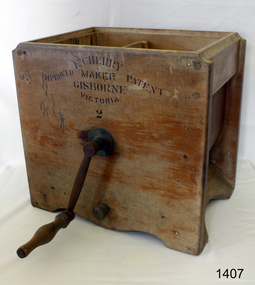 Flagstaff Hill Maritime Museum and Village
Domestic object - Butter Churn, Cherry and Sons, 1890-1920
... Milk was "separated" to retrieve the cream which was then beaten to make butter. E Cherry began making various models of Cherry butter churns in 1858, Edward Cherry migrated from Herefordshire England to Australia in 1855 with his wife Ann Appleby, nee Davis, and established a joinery workshop at Gisborne, Victoria. ...Milk was "separated" to retrieve the cream which was then beaten to make butter. E Cherry began making various models of Cherry butter churns in 1858, Edward Cherry migrated from Herefordshire England to Australia in 1855 with his wife Ann Appleby, nee Davis, and established a joinery workshop at Gisborne, Victoria. ...The subject item is a good example of a large, hand-operated Bentwood box butter churn used to make up to 14 pounds of butter. It was made in Gisborne, Victoria, by the famous manufacturer, E. Cherry, and is known as an Improved Patent No.2 model probably dating from the late 1800s. The Cherry works specialised in making all types of butter churns and equipment for both domestic use on farms and small butter factories during the late nineteenth and early to mid. twentieth centuries. Milk was "separated" to retrieve the cream which was then beaten to make butter. E Cherry began making various models of Cherry butter churns in 1858, Edward Cherry migrated from Herefordshire England to Australia in 1855 with his wife Ann Appleby, nee Davis, and established a joinery workshop at Gisborne, Victoria. He began by making butter churns in his spare time and his product soon became popular allowing him to establish a viable business. A factory was established in 1875 and he started to make churns of all sizes including up to industrial scale. He exported his products to many countries around the world, Edward Cherry died in 1909 and the business was then run by his son George until he died in 1917. E Cherry's other son Thomas (1861-1945) was also involved in the firm maintaining an interest for several years. He had been born in Gisborne and became a senior house medical surgeon at the Melbourne Hospital in 1890. He continued his studies at Kings College London, eventually becoming a renowned bacteriologist and agricultural scientist. A significant item giving an snapshot into how early industrial manufacturing became established in Australia in the production of domestic and industrial dairy equipment.Butter churn wooden manually operated made by Cherry and Sons with rotating lever curved plywood basin and parallel cross beamed horizontally spoken churning apparatus inside with wooden plug at lower side of churn. Label in block transfer "E CHERRY / MAKER / GISBORN / VICTORIA / 2" "IMPROVED PATENT"warrnambool, shipwrecked-coast, flagstaff-hill, flagstaff-hill-maritime-museum, maritime-museum, shipwreck-coast, flagstaff-hill-maritime-village, butter churn, wooden butter churn, e cherry & sons, dairy equipment, gisborne, food preparation -
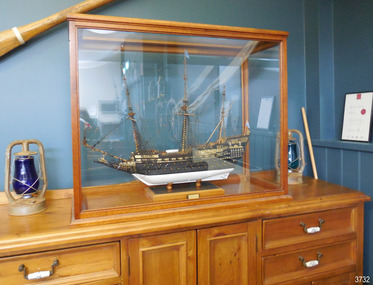 Flagstaff Hill Maritime Museum and Village
Craft - Ship Model, Sovereign of the Seas, Made between 1930-1955
... Some of the details are: "In making the model the time taken to make certain items might be of interest. ...Some of the details are: "In making the model the time taken to make certain items might be of interest. ...This meticulously hand crafted ship model is one of the most intricate and challenging projects for a ship modeller to create. Jim Williams took up the challenge, choosing to make all of the components by hand, following a plan of the ship rather than purchasing a pre-made kit. He even made his own tools specifically for working with this model. The “Sovereign of the Seas” 1637-1697 - The magnificent ship “Sovereign of the Seas” was ordered by Charles I of England, who desired a giant Great Ship to be built. It was built by Peter Pett under the guidance of his father Phineas, the King's master shipwright, and launched with 102-guns at Woolwich Dockyard on 13th October 1637, as the Navy’s second three-decker first-rate ship. It was the most extravagantly decorated warship in the Royal Navy, bought with the help of a special 'Ship Money' tax imposed by the King. Soon afterwards the ship was remodelled and cut down to a safer and faster ship. Over the ship’s lifetime it was renamed “Commonwealth”, then in 1650 it became simply “Sovereign” then again after a rebuild in 1660 it was named “Royal Sovereign”. By 1642 the ship’s armament had been reduced to 90 guns. In 1651 Sovereign was made more manoeuvrable by reducing the upper works. It served throughout the wars of the Commonwealth and became the flagship of General Robert Blake. It was involved in all of the great English naval conflicts fought against the United Provinces and France and was referred to as 'The Golden Devil' by the Dutch. By 1660 the armament was changed attain to 100 guns. After the English Restoration, it was rebuilt as a first-rate ship of the line, with flatter gun decks and 100 guns, and most of the carvings were removed. During the First Anglo-Dutch War, in a secret session on 21 October 1652, the States-General of the Netherlands announced reward money for the crews of fire ships that succeeded in destroying enemy vessels; the Sovereign was singled out with an extra prize of 3000 guilders to sink or ruin it. Although repeatedly occupied by the Dutch, the Sovereign was retaken every time by the British and remained in service for nearly sixty years as the best ship in the English fleet. The Sovereign was in regular service during the three Anglo-Dutch Wars, surviving the Raid on the Medway in 1667. After a second rebuild in 1685 the Sovereign was relaunched as a first-rate ship of 100 guns, before taking part in the outset of the War of the Grand Alliance against Louis XIV of France, venturing into the Irish Sea, and later participating in the Battle of Beachy Head in 1690 and the Battle of La Hougue. At this time she was more than fifty years old. It was the first ship in history to fly ‘royals’ above the topgallant sails and a top gallant sail on the jigger-mast. The Sovereign eventually became leaky and defective with age and was laid up at Chatham when, on 27th January 1697, the famous ship caught fire, burning to the waterline. Jim Williams, the model’s maker - Jim (James Bernard) Williams was born in 1888 at The Forth in Scotland. He lived in Tasmania for some time and enlisted to fight in France in WW1. After the war he moved to Warrnambool, Victoria, where he worked at the Cramond & Dickson clothing store until the Great Depression in the 1930’s. He was later employed at Fletcher Jones Menswear, where he worked for 27 years until just before his death in 1959. Jim was a passionate ship model builder. He worked on his model ships between 1930 and 1955, including The Endeavour and The Sovereign of the Seas, which was one of the most intricate historic ship models to build. He had a table set up in a bay window and worked on them on and off using a jeweller's eye glass on the finer pieces. Jim’s long-time employer, Fletcher Jones, knew of Jim’s hobby and skill as a ship model builder and requested Jim to describe the model, Sovereign of the Seas, with the view of putting it on display. When the model was finished there was a full article and photo in The Standard newspaper. Jim described his work on the ship mode “Sovereign of the Seas” in correspondence to his then employer, Fletcher Jones. The document gives us an insight into his skill, patience, and regard for replicating the details of the original ship. Some of the details are: "In making the model the time taken to make certain items might be of interest. For instance "The Great Lantern" on the stern, four weeks, a similar time for the figurehead of St George & the Dragon. "The lower shrouds three to each side about six weeks & the rigging as whole several months. There are nearly 300 blocks and pulleys ranging from nearly 1 / 16 inch in diameter. Dead eyes were bored with 3 to 5 holes. To do this needles of different sizes, set in handles & ground to wedge ends were used. Glass cut and ground to shape were used windows. All gun-port covers (74) hinged. "All guns and anchors made of wood. Nothing for the model was purchased ready-made; everything hand made." Jim’s family donated the ship model along with many associated tools, accessories and papers. The model represents the Sovereign of the Seas. The Royal Navy ship of the line launched in 1637 has a significant British maritime heritage. These days the Sovereign of the Seas still remains one of the most intricate historic ship models to build, representing to the model enthusiast a true challenge to the art of model shipbuilding. The model of Sovereign of the Seas in Flagstaff Hill's collection is an exemplary example of a ship model built and hand crafted from a plan with the making of every item on the model, not a model kit with prefabricated parts. It was made by a local Warrnambool man Jim Williams as a leisure activity in the mid 20th century. The hobby and craft of ship model making has resulted in visual representations of the changes in maritime technology and advances in world-wide navigation. Ship model of HMS Sovereign of the Seas, a 17th century British warship. The handmade model is in wooden framed, airtight glass case. All components were hand crafted. Many of the tools used were made by the model maker, Jim Williams. An inscribed plaque is within the case. Inscribed on plaque "SOVEREIGN OF THE SEAS / 102 GUNS - 1634"flagstaff hill, warrnambool, shipwrecked coast, flagstaff hill maritime museum, maritime museum, shipwreck coast, flagstaff hill maritime village, great ocean road, model ship, vessel sovereign of the seas, jim williams, james bernard williams, the forth tasmania, freda williams, heather williams, phyllis bowditch, fletcher jones staff 1936, 17th century sailing ship, cramond and dickson, sovereign of the seas, royal sovereign, sovereign, charles 1, ship model
