
Showing 14 items matching "maria louise ramé"
-
 Flagstaff Hill Maritime Museum and Village
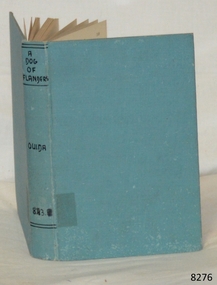
Book - A Fictional Story, Ouida (Maria Louise Ramé), A Dog of Flanders, 1873
... ...Maria Louise Ramé...Maria Louise Ramé (1839–1908), better known by her pen name Ouida derived from her childhood mispronunciation of "Louise" was a fiercely independent and colourful English novelist. ...Hard cover book, A Dog of Flanders Author: Ouida (Maria Louise Ramé) Publisher: George Robertson Date: 1873 Further Information: Blue cloth hardcover and spine with spine lettering in black texter. ...Ouida (Maria Louise Ramé)...A Dog of Flanders Book A Fictional Story Ouida (Maria Louise Ramé) George Robertson & Co. ...A Dog of Flanders (originally published in 1872) is a deeply moving, bittersweet story set in Belgium. It follows Nello, an impoverished orphan boy with a passion for art, and Patrasche a loyal, cart-pulling, abandoned, and abused draft dog whom Nello and his gentle grandfather, Jehan Daas, rescue and nurse back to health. The story focuses on the bond between Nello and Patrasche as they become inseparable, helping the aging Jehan pull a milk cart into Antwerp each day to earn a meagre living. Nello longs to become a great painter like the Baroque master Peter Paul Rubens. His only hope is to win a prestigious local drawing contest with a portrait he has laboured over. After a series of devastating setbacks his grandfather passes away, they are evicted, and Nello loses the drawing competition he and Patrasche his cart pulling dog seek shelter from a freezing Christmas Eve blizzard inside the Cathedral of Our Lady in Antwerp. There, Nello finally gazes upon Rubens’s shielded masterpieces, The Descent from the Cross and The Elevation of the Cross. The story ends sadly as, the next morning, the loyal dog and the young boy are found frozen to death, locked in a final embrace in front of the altar.Hard cover book, A Dog of Flanders Author: Ouida (Maria Louise Ramé) Publisher: George Robertson Date: 1873 Further Information: Blue cloth hardcover and spine with spine lettering in black texter. The spine has a Library label with inscription. fictionA Dog of Flanders (originally published in 1872) is a deeply moving, bittersweet story set in Belgium. It follows Nello, an impoverished orphan boy with a passion for art, and Patrasche a loyal, cart-pulling, abandoned, and abused draft dog whom Nello and his gentle grandfather, Jehan Daas, rescue and nurse back to health. The story focuses on the bond between Nello and Patrasche as they become inseparable, helping the aging Jehan pull a milk cart into Antwerp each day to earn a meagre living. Nello longs to become a great painter like the Baroque master Peter Paul Rubens. His only hope is to win a prestigious local drawing contest with a portrait he has laboured over. After a series of devastating setbacks his grandfather passes away, they are evicted, and Nello loses the drawing competition he and Patrasche his cart pulling dog seek shelter from a freezing Christmas Eve blizzard inside the Cathedral of Our Lady in Antwerp. There, Nello finally gazes upon Rubens’s shielded masterpieces, The Descent from the Cross and The Elevation of the Cross. The story ends sadly as, the next morning, the loyal dog and the young boy are found frozen to death, locked in a final embrace in front of the altar.flagstaff hill, warrnambool, shipwrecked coast, flagstaff hill maritime museum, maritime museum, shipwreck coast, flagstaff hill maritime village, great ocean road, book, pattison collection, warrnambool library, warrnambool mechanics’ institute, ralph eric pattison, corangamite regional library service, warrnambool city librarian, mechanics’ institute library, victorian library board, warrnambool books and records, warrnambool children’s library, a dog of flanders, ouida, maria louise ramé, marie louise de la ramée -
 Flagstaff Hill Maritime Museum and Village
Book, A Village Commune
... ...maria louise ramé...A Village Commune Author: Ouida Publisher: George Robertson Ouida was the pseudonym of the English novelist Maria Louise Ramé (although she preferred to be known as Marie Louise de la Ramée). ...A Village Commune Author: Ouida Publisher: George Robertson Ouida was the pseudonym of the English novelist Maria Louise Ramé (although she preferred to be known as Marie Louise de la Ramée). ...This item is from the ‘Pattison Collection’, a collection of books and records that was originally owned by the Warrnambool Mechanics’ Institute, which was founded in Warrnambool in 1853. By 1886 the Warrnambool Mechanics’ Institute (WMI) had grown to have a Library, Museum and Fine Arts Gallery, with a collection of “… choice productions of art and valuable specimens in almost every branch and many wonderful national curiosities are now to be seen there, including historic relics of the town and district.” It later included a School of Design. Although it was very well patronised, the lack of financial support led the WMI in 1911 to ask the City Council to take it over. In 1935 Ralph Pattison was appointed as City Librarian to establish and organise the Warrnambool Library as it was then called. When the WMI building was pulled down in 1963 a new civic building was erected on the site and the new Warrnambool Library, on behalf of the City Council, took over all the holdings of the WMI. At this time some of the items were separated and identified as the ‘Pattison Collection’, named after Ralph Pattison. Eventually, the components of the WMI were distributed from the Warrnambool Library to various places, including the Art Gallery, Historical Society and Flagstaff Hill. Later some were even distributed to other regional branches of Corangamite Regional Library and passed to and fro. It is difficult now to trace just where all of the items have ended up. The books at Flagstaff Hill Maritime Village generally display stamps and markings from Pattison as well as a variety of other institutions including the Mechanics’ Institute itself. RALPH ERIC PATTISON Ralph Eric Pattison was born in Rockhampton, Queensland, in 1891. He married Maude Swan from Warrnambool in 1920 and they set up home in Warrnambool. In 1935 Pattison accepted a position as City Librarian for the Warrnambool City Council. His huge challenge was to make a functional library within two rooms of the Mechanics’ Institute. He tirelessly cleaned, cleared and sorted a disarrayed collection of old books, jars of preserved specimens and other items reserved for exhibition in the city’s museum. He developed and updated the library with a wide variety of books for all tastes, including reference books for students; a difficult task to fulfil during the years following the Depression. He converted all of the lower areas of the building into a library, reference room and reading room for members and the public. The books were sorted and stored using a cataloguing and card index system that he had developed himself. He also prepared the upper floor of the building and established the Art Gallery and later the Museum, a place to exhibit the many old relics that had been stored for years for this purpose. One of the treasures he found was a beautiful ancient clock, which he repaired, restored and enjoyed using in his office during the years of his service there. Ralph Pattison was described as “a meticulous gentleman whose punctuality, floorless courtesy and distinctive neat dress were hallmarks of his character, and ‘his’ clock controlled his daily routine and his opening and closing of the library’s large heavy doors to the minute.” Pattison took leave from 1942 to 1945 to serve in the Royal Australian Navy, Volunteer Reserve as Lieutenant. A few years later he converted one of the Museum’s rooms into a Children’s Library, stocking it with suitable books for the younger generation. This was an instant success. In the 1950’s he had the honour of being appointed to the Victorian Library Board and received more inspiration from the monthly conferences in Melbourne. He was sadly retired in 1959 after over 23 years of service, due to the fact that he had gone over the working age of council officers. However, he continued to take a very keen interest in the continual development of the Library until his death in 1969. WARRNAMBOOL PUBLIC LIBRARY The Warrnambool Mechanics’ Institute (WMI) was formed by a voluntary community group in 1863, within six years of Warrnambool’s beginnings, and it's Reading Room opened in 1854. The WMI operated until 1963, at which time it was one of the oldest Mechanics’ Institutes in Victoria. Mechanics’ Institutes offered important services to the public including libraries, reading rooms and places to display and store collections of all sorts such as curiosities and local historical relics. In 1886 a Museum and Fine Arts Gallery were added to the WMI and by the beginning of the 20th century, there was also a billiards room and a School of Art. By this time all Mechanics’ Institutes in country Victoria had museums attached. Over the years the Warrnambool Mechanics’ Institute Library was also known as the Warrnambool Public Library the Warrnambool Library and the Free Library. Early funding from the government was for the “Free Library”. The inscription in a book “Science of Man” was for the “Warrnambool Public Library”, donated by Joseph Archibald in 1899. Another inscription in the book “Catalogue of Plants Under Cultivation in the Melbourne Botanic Gardens 1 & 2, 1883” was presented to the “Warrnambool Library” and signed by the author W.R. Guilfoyle. In 1903 the Warrnambool Public Library decided to add a Juvenile Department to library and stock it with hundreds of books suitable for youth. In 1905 the Public Library committee decided to update the collection of books and added 100 new novels plus arrangements for the latest novels to be included as soon as they were available in Victoria. In July 1911 the Warrnambool Council took over the management of the Public Library, Art Gallery, Museum and Mechanics’ Institute and planned to double the size of the then-current building. In 1953, when Mr R. Pattison was Public Librarian, the Warrnambool Public Library’s senior section 10,000 of the 13,000 books were fiction. The children’s section offered an additional 3,400 books. The library had the equivalent of one book per head of population and served around 33 per cent of the reading population. The collection of books was made up of around 60 per cent reference and 40 per cent fiction. The library was lending 400 books per day. In 1963 the Warrnambool City Council allocated the site of the Mechanics’ Institute building, which included the Public Library, Museum and Art Gallery, for the new Municipal Offices and the Collections were dispersed until 1971. The Warrnambool Library took over the Mechanics’ Institute Library’s holdings on behalf of the Warrnambool City Council. Since the closure of the Warrnambool Mechanics’ Institute, the exact location and composition of the original WMI books and items has become unclear. Other materials have been added to the collection, including items from Terang MI, Warrnambool Court House and Customs House. Many of the books have been identified as the Pattison Collection, named after the Librarian who catalogued and numbered the books during his time as Warrnambool Public Librarian in the time before the Mechanics’ Institute closed. It seems that when Warrnambool became part of the Corangamite Regional Library some of the books and materials went to its head office in Colac and then back to Warrnambool where they were stored at the Art Gallery for quite some time. Some then went to the Warrnambool Historical Society, some stayed at the Art Gallery and some were moved to Flagstaff Hill Maritime Village. The various stamps and labels on the books held at Flagstaff Hill show the variety of the collection’s distribution and origin. The books in the collection at Flagstaff Hill Maritime Village date from the 1850s to the late 1950s and include rare and valuable volumes. Many of the books are part of the “Pattison Collection” after the Warrnambool’s Public Librarian, Mr R. Pattison. The Pattison Collection, along with other items at Flagstaff Hill Maritime Village, was originally part of the Warrnambool Mechanics' Institute’s collection. The Warrnambool Mechanics’ Institute Collection is primarily significant in its totality, rather than for the individual objects it contains. Its contents are highly representative of the development of Mechanics' Institute libraries across Australia, particularly Victoria. A diversity of publications and themes has been amassed, and these provide clues to our understanding of the nature of and changes in the reading habits of Victorians from the 1850s to the middle of the 20th century. The collection also highlights the Warrnambool community’s commitment to the Mechanics’ Institute, reading, literacy and learning in the regions, and proves that access to knowledge was not impeded by distance. These items help to provide a more complete picture of our community’s ideals and aspirations. The Warrnambool Mechanics Institute book collection has historical and social significance for its strong association with the Mechanics Institute movement and the important role it played in the intellectual, cultural and social development of people throughout the latter part of the nineteenth century and the early twentieth century. The collection of books is a rare example of an early lending library and its significance is enhanced by the survival of an original collection of many volumes. The Warrnambool Mechanics' Institute’s publication collection is of both local and state significance. A Village Commune Author: Ouida Publisher: George Robertson Ouida was the pseudonym of the English novelist Maria Louise Ramé (although she preferred to be known as Marie Louise de la Ramée). Paste down front end paper has a sticker from Warrnambool Public Library covered by a sticker from Corangamite Regional Library Service Front loose end paper has a stamp from Corangamite Regional Library Service The Flyleaf has the name "Louise De La Ranie" written in blue ink. book, a village commune, ouida, maria louise ramé, marie louise de la ramée, shipwrecked-coast, flagstaff-hill, flagstaff-hill-maritime-museum, warrnambool, maritime-museum, shipwreck-coast, flagstaff-hill-maritime-village, shipwrecked-artefact, pattison collection, warrnambool library, warrnambool mechanics’ institute, ralph eric pattison, corangamite regional library service, warrnambool city librarian, mechanics’ institute library, victorian library board, warrnambool books and records, warrnambool children’s library, great ocean road -
Linton Mechanics Institute and Free Library Collection
Book, Ouida [Maria Louise Rame], Under two flags, [n.d.] [1901?]
... Ouida [Maria Louise Rame]...Under two flags Book Ouida [Maria Louise Rame] Chatto & Windus The Ballantyne Press ...608 p.fictionfiction, ouida, marie louise rame -
![Book - Novel, Ouida [Maria Louise Rame], Helianthus : a novel, 1908](/media/collectors/641920217f0478323d8a47a8/items/69d71eb47219387d7073ef03/item-media/69dc9039a54904fa4009ec5e/item-fit-380x285.jpg?cb=6) Linton Mechanics Institute and Free Library Collection
Linton Mechanics Institute and Free Library CollectionBook - Novel, Ouida [Maria Louise Rame], Helianthus : a novel, 1908
... Ouida [Maria Louise Rame]...Helianthus : a novel Book Novel Ouida [Maria Louise Rame] Macmillan and Co. R. & R. Clark ...445 p. : dark blue cover, small embossed design on front, with title in gold within it. Title and author's name embossed in gold on spine. Cover on back-to front and upside-down, result of repairs?fictionfiction, ouida -
 Flagstaff Hill Maritime Museum and Village
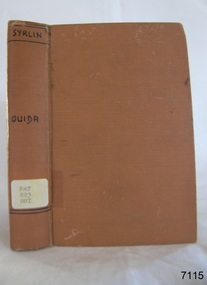
Book - Fictional Novel, Ouida/Marie Louise de la Ramée, Syrlin, 1890
... ...Maria Louise Ramé...Ouida was the pseudonym of the English novelist Maria Louise Ramé, born 1 January 1839 in Bury St Edmunds, England, though she preferred to be known as Marie Louise de la Ramée. ...Ouida was the pseudonym of the English novelist Maria Louise Ramé, born 1 January 1839 in Bury St Edmunds, England, though she preferred to be known as Marie Louise de la Ramée. ...Syrlin was first published in 1890 as a three-volume novel by Chatto & Windus. It is also catalogued as Syrlin, or Position. The story follows Freda, Lady Avillion, who is married to a man who has never loved her and routinely cheats on her. She is perfectly pure and utterly cold, then a famous artist, Syrlin, falls in love with her and changes her life forever. One reader describes the novel as bleak, with no happy ending. It is one of the few Ouida novels that discusses English politics at length, and it is very much about social class and the role of the artist in society. Another reviewer says the hero's passion is given an unworthy object, so his suicide fails to move the reader.Hard cover book. Syrlin Author: Ouida/Marie Louise de la Ramée Publisher: Chatto & Windus Date: 1890 Further Information: Brown Cloth hardcover with lettering and patterning to spine in black. The spine has a Library label with an inscription.fictionSyrlin was first published in 1890 as a three-volume novel by Chatto & Windus. It is also catalogued as Syrlin, or Position. The story follows Freda, Lady Avillion, who is married to a man who has never loved her and routinely cheats on her. She is perfectly pure and utterly cold, then a famous artist, Syrlin, falls in love with her and changes her life forever. One reader describes the novel as bleak, with no happy ending. It is one of the few Ouida novels that discusses English politics at length, and it is very much about social class and the role of the artist in society. Another reviewer says the hero's passion is given an unworthy object, so his suicide fails to move the reader. book, santa barbara, ouida, maria louise ramé, marie louise de la ramée, shipwrecked-coast, flagstaff-hill, flagstaff-hill-maritime-museum, warrnambool, maritime-museum, shipwreck-coast, flagstaff-hill-maritime-village, shipwrecked-artefact, pattison collection, warrnambool library, warrnambool mechanics’ institute, ralph eric pattison, corangamite regional library service, warrnambool city librarian, mechanics’ institute library, victorian library board, warrnambool books and records, warrnambool children’s library, great ocean road -
 Flagstaff Hill Maritime Museum and Village
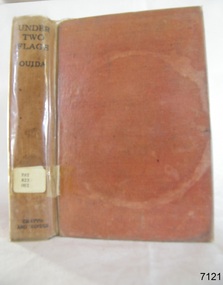
Book - Historical Novel, Ouida/Marie Louise de la Ramée, Under Two Flags, 1934
... ...Maria Louise Ramé...Ouida was the pseudonym of the English novelist Maria Louise Ramé, born 1 January 1839 in Bury St Edmunds, England, though she preferred to be known as Marie Louise de la Ramée. ...Ouida was the pseudonym of the English novelist Maria Louise Ramé, born 1 January 1839 in Bury St Edmunds, England, though she preferred to be known as Marie Louise de la Ramée. ...This novel is about Bertie Cecil, a dashing but cash-strapped officer in the First Life Guards. Threatened with a forgery charge, he flees to the French Foreign Legion under the alias Louis Victor. He fakes his death to protect his brother and a lady's honour, then serves in Algeria's desert campaigns. He is saved from execution by Cigarette, a camp follower who loves him despite her dislike of the English. He is also loved by the widowed Princess Corona. The novel is a melodramatic romance of honour, exile and sacrifice, set between the English aristocracy and French Algeria.Hard cover book. Under Two Flags Author: Ouida/Marie Louise de la Ramée Publisher:Chatto and Windus Date: 1934 Further Information: Red Cloth hardcover with lettering and patterning to spine in black. The spine has a Library label with an inscription.fictionThis novel is about Bertie Cecil, a dashing but cash-strapped officer in the First Life Guards. Threatened with a forgery charge, he flees to the French Foreign Legion under the alias Louis Victor. He fakes his death to protect his brother and a lady's honour, then serves in Algeria's desert campaigns. He is saved from execution by Cigarette, a camp follower who loves him despite her dislike of the English. He is also loved by the widowed Princess Corona. The novel is a melodramatic romance of honour, exile and sacrifice, set between the English aristocracy and French Algeria.book, under two flags, ouida, maria louise ramé, shipwrecked-coast, flagstaff-hill, flagstaff-hill-maritime-museum, warrnambool, maritime-museum, shipwreck-coast, flagstaff-hill-maritime-village, shipwrecked-artefact, pattison collection, warrnambool library, warrnambool mechanics’ institute, ralph eric pattison, corangamite regional library service, warrnambool city librarian, mechanics’ institute library, victorian library board, warrnambool books and records, warrnambool children’s library, great ocean road -
 Flagstaff Hill Maritime Museum and Village
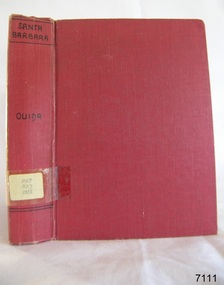
Book - Six Short Stories, Ouida/Marie Louise de la Ramée, Santa Barbara, 1891
... ...Maria Louise Ramé...Ouida was the pseudonym of the English novelist Maria Louise Ramé, born 1 January 1839 in Bury St Edmunds, England, though she preferred to be known as Marie Louise de la Ramée. ...Ouida was the pseudonym of the English novelist Maria Louise Ramé, born 1 January 1839 in Bury St Edmunds, England, though she preferred to be known as Marie Louise de la Ramée. ...Santa Barbara, published in full as Santa Barbara, etc., is an 1891 collection of six short stories by the English Victorian author Ouida (the pen name of Maria Louise Ramé). It contains "Santa Barbara", "Poussette", "Rinaldo", "The Halt", "The Stable Boy" and "La Rossiccia". Set against Italian backdrops, the title story follows a tragedy involving social injustice, passion, animal welfare and human suffering in rural Italy. The broader collection examines typical late-Victorian issues such as class divides, emotional betrayal, the clash between traditional Italian peasant life and industrial modernisation, and cruelty toward animals.Hard cover book. Santa Barbara Author: Ouida/Marie Louise de la Ramée Publisher:Chatto and Windus Date: 1891 Further Information: Red Cloth hardcover with lettering and patterning to spine in black. The spine has a Library label with an inscription.fictionSanta Barbara, published in full as Santa Barbara, etc., is an 1891 collection of six short stories by the English Victorian author Ouida (the pen name of Maria Louise Ramé). It contains "Santa Barbara", "Poussette", "Rinaldo", "The Halt", "The Stable Boy" and "La Rossiccia". Set against Italian backdrops, the title story follows a tragedy involving social injustice, passion, animal welfare and human suffering in rural Italy. The broader collection examines typical late-Victorian issues such as class divides, emotional betrayal, the clash between traditional Italian peasant life and industrial modernisation, and cruelty toward animals.book, santa barbara, ouida, maria louise ramé, marie louise de la ramée, shipwrecked-coast, flagstaff-hill, flagstaff-hill-maritime-museum, warrnambool, maritime-museum, shipwreck-coast, flagstaff-hill-maritime-village, shipwrecked-artefact, pattison collection, warrnambool library, warrnambool mechanics’ institute, ralph eric pattison, corangamite regional library service, warrnambool city librarian, mechanics’ institute library, victorian library board, warrnambool books and records, warrnambool children’s library, great ocean road -
 Flagstaff Hill Maritime Museum and Village
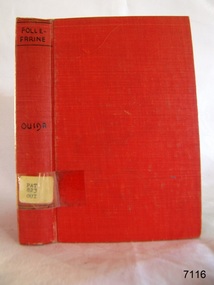
Book - Fictional Novel, Ouida/Marie Louise de la Ramée, Folle-Farine, 1873
... ...Maria Louise Ramé...Ouida was the pseudonym of the English novelist Maria Louise Ramé, born 1 January 1839 in Bury St Edmunds, England, though she preferred to be known as Marie Louise de la Ramée. ...Ouida was the pseudonym of the English novelist Maria Louise Ramé, born 1 January 1839 in Bury St Edmunds, England, though she preferred to be known as Marie Louise de la Ramée. ...Folle-Farine is the child of Reine, who fled her father, Claudis, to live among Gypsies and died giving birth. Claudis, a miller, resents the child and makes her a slave at his mill. The townspeople treat her with the same contempt, but she resists. She then meets a starving painter living in a tower, helps him and falls in love with him, but he cares only about his art. In the novel, she sells her body so that her beloved can become famous. He is so egotistical that he barely notices what it costs her, and the story ends tragically.Hard cover book. Folle-Farine Author: Ouida/Marie Louise de la Ramée Publisher: George Robertson Date: 1873 Further Information: Red Cloth hardcover with lettering and patterning to spine in black. The spine has a Library label with an inscription.fictionFolle-Farine is the child of Reine, who fled her father, Claudis, to live among Gypsies and died giving birth. Claudis, a miller, resents the child and makes her a slave at his mill. The townspeople treat her with the same contempt, but she resists. She then meets a starving painter living in a tower, helps him and falls in love with him, but he cares only about his art. In the novel, she sells her body so that her beloved can become famous. He is so egotistical that he barely notices what it costs her, and the story ends tragically.book, folle-farine, ouida, maria louise ramé, marie louise de la ramée, shipwrecked-coast, flagstaff-hill, flagstaff-hill-maritime-museum, warrnambool, maritime-museum, shipwreck-coast, flagstaff-hill-maritime-village, shipwrecked-artefact, pattison collection, warrnambool library, warrnambool mechanics’ institute, ralph eric pattison, corangamite regional library service, warrnambool city librarian, mechanics’ institute library, victorian library board, warrnambool books and records, warrnambool children’s library, great ocean road -
 Flagstaff Hill Maritime Museum and Village
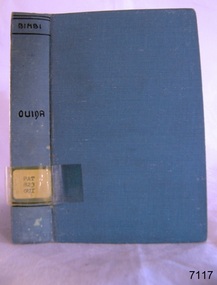
Book - Childrens Short Stories Collection, Ouida/Marie Louise de la Ramée, Bimbi, 1882
... ...Maria Louise Ramé...Ouida was the pseudonym of the English novelist Maria Louise Ramé, born 1 January 1839 in Bury St Edmunds, England, though she preferred to be known as Marie Louise de la Ramée. ...Ouida was the pseudonym of the English novelist Maria Louise Ramé, born 1 January 1839 in Bury St Edmunds, England, though she preferred to be known as Marie Louise de la Ramée. ...Bimbi is a collection of children's stories and a lesser-known side of Ouida's output. The opening story, 'The Nurnberg Stove', is set in a snowy Tyrolean town, where a poor family of children huddles around a big, warm stove. It follows a boy, August, who is devoted to a magnificent heirloom stove made by the potter Hirschvogel. When his father is forced to sell it, August hides inside it for the journey. The story explores poverty, family bonds and childhood courage. Other stories in the collection include 'The Ambitious Rose-Tree', 'Lampblack', 'The Child of Urbino' and 'Findelkind'.Hard cover book. Bimbi Author: Ouida/Marie Louise de la Ramée Publisher: George Robertson Date: 1882 Further Information: Light Blue Cloth hardcover with lettering and patterning to spine in black. The spine has a Library label with an inscription.fictionBimbi is a collection of children's stories and a lesser-known side of Ouida's output. The opening story, 'The Nurnberg Stove', is set in a snowy Tyrolean town, where a poor family of children huddles around a big, warm stove. It follows a boy, August, who is devoted to a magnificent heirloom stove made by the potter Hirschvogel. When his father is forced to sell it, August hides inside it for the journey. The story explores poverty, family bonds and childhood courage. Other stories in the collection include 'The Ambitious Rose-Tree', 'Lampblack', 'The Child of Urbino' and 'Findelkind'.book, bimbi, ouida, maria louise ramé, marie louise de la ramée, shipwrecked-coast, flagstaff-hill, flagstaff-hill-maritime-museum, warrnambool, maritime-museum, shipwreck-coast, flagstaff-hill-maritime-village, shipwrecked-artefact, pattison collection, warrnambool library, warrnambool mechanics’ institute, ralph eric pattison, corangamite regional library service, warrnambool city librarian, mechanics’ institute library, victorian library board, warrnambool books and records, warrnambool children’s library, great ocean road -
 Flagstaff Hill Maritime Museum and Village
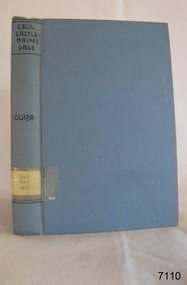
Book - Novelettes, Ouida/Marie Louise de la Ramée, Cecil Castlemaines Gage, 1873
... ...Maria Louise Ramé...Ouida was the pseudonym of the English novelist Maria Louise Ramé, born 1 January 1839 in Bury St Edmunds, England, though she preferred to be known as Marie Louise de la Ramée. ...Ouida was the pseudonym of the English novelist Maria Louise Ramé, born 1 January 1839 in Bury St Edmunds, England, though she preferred to be known as Marie Louise de la Ramée. ...Cecil Castlemaine's Gage, and Other Novelettes is a collection of short fiction by the English novelist 'Ouida'. The title story follows Cecil Castlemaine, a proud, politically minded society beauty of a noble English family, and her romantic entanglements set against a background of Tory party politics. The collection centres on Cecil Castlemaine, a striking beauty from a noble family who navigates societal expectations, romance and loyalty to her cause amid political intrigue and personal pride. The other novelettes bundled with it in most editions are 'Little Grand and the Marchioness', 'Lady Marabout's Troubles', 'A Study à la Louis Quinze' and 'Deadly Dash' light, witty tales of fashionable London and Continental high society, Ouida's signature territory. The stories first appeared in periodicals in the 1860s and were first collected in book form by Chapman and Hall (London) in 1867.Hard cover book. Cecil Castlemaines Gage Author: Ouida/Marie Louise de la Ramée Publisher: George Robertson Date: 1873 Further Information: Light blue Cloth hardcover with lettering and patterning to spine in black. The spine has a Library label with an inscription.fictionCecil Castlemaine's Gage, and Other Novelettes is a collection of short fiction by the English novelist 'Ouida'. The title story follows Cecil Castlemaine, a proud, politically minded society beauty of a noble English family, and her romantic entanglements set against a background of Tory party politics. The collection centres on Cecil Castlemaine, a striking beauty from a noble family who navigates societal expectations, romance and loyalty to her cause amid political intrigue and personal pride. The other novelettes bundled with it in most editions are 'Little Grand and the Marchioness', 'Lady Marabout's Troubles', 'A Study à la Louis Quinze' and 'Deadly Dash' light, witty tales of fashionable London and Continental high society, Ouida's signature territory. The stories first appeared in periodicals in the 1860s and were first collected in book form by Chapman and Hall (London) in 1867.book, cecil castlemaines gage, ouida, maria louise ramé, marie louise de la ramée), shipwrecked-coast, flagstaff-hill, flagstaff-hill-maritime-museum, warrnambool, maritime-museum, shipwreck-coast, flagstaff-hill-maritime-village, shipwrecked-artefact, pattison collection, warrnambool library, warrnambool mechanics’ institute, ralph eric pattison, corangamite regional library service, warrnambool city librarian, mechanics’ institute library, victorian library board, warrnambool books and records, warrnambool children’s library, great ocean road -
 Flagstaff Hill Maritime Museum and Village
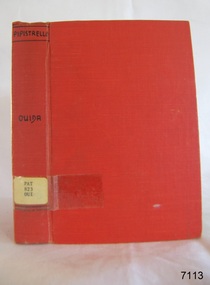
Book - Short Stories Collection, Ouida/Marie Louise de la Ramée, Pipistrello, 1880
... ...Maria Louise Ramé...Ouida was the pseudonym of the English novelist Maria Louise Ramé, born 1 January 1839 in Bury St Edmunds, England, though she preferred to be known as Marie Louise de la Ramée. ...Ouida was the pseudonym of the English novelist Maria Louise Ramé, born 1 January 1839 in Bury St Edmunds, England, though she preferred to be known as Marie Louise de la Ramée. ...Pipistrello is the Italian word for 'bat'. The title story is set in Italy, a frequent setting for Ouida's work, as she lived there for much of her adult life. Like much of Ouida's fiction, the story serves as social commentary on class division, human cruelty and the tragic nature of innocence. Set in a rural Italian community, the story centres on a poor, marginalised individual nicknamed Pipistrello ('the Bat') because of their nocturnal, outcast existence, poverty or physical appearance. Its core explores themes of alienation, social prejudice, unrequited devotion, and the exploitation of the poor by wealthier or more cynical figures. The collection of six short stories contains several narrative pieces typical of Ouida's later style, which shifted from her earlier, highly romantic high-society melodramas (such as Under Two Flags) toward melodramatic realism, animal welfare and sympathy for peasant life. The stories are a critique of industrialisation and greed, and the opposition to modern greed and the harshness of societal structures on vulnerable people and animals. The work is dramatic, emotional, and often tragic where pure intentions are tested by a unforgiving world.Hard cover book. Pipistrello Author: Ouida/Marie Louise de la Ramée Publisher: George Robertson Date: 1880 Further Information: Red Cloth hardcover with lettering and patterning to spine in black. The spine has a Library label with an inscription.fictionPipistrello is the Italian word for 'bat'. The title story is set in Italy, a frequent setting for Ouida's work, as she lived there for much of her adult life. Like much of Ouida's fiction, the story serves as social commentary on class division, human cruelty and the tragic nature of innocence. Set in a rural Italian community, the story centres on a poor, marginalised individual nicknamed Pipistrello ('the Bat') because of their nocturnal, outcast existence, poverty or physical appearance. Its core explores themes of alienation, social prejudice, unrequited devotion, and the exploitation of the poor by wealthier or more cynical figures. The collection of six short stories contains several narrative pieces typical of Ouida's later style, which shifted from her earlier, highly romantic high-society melodramas (such as Under Two Flags) toward melodramatic realism, animal welfare and sympathy for peasant life. The stories are a critique of industrialisation and greed, and the opposition to modern greed and the harshness of societal structures on vulnerable people and animals. The work is dramatic, emotional, and often tragic where pure intentions are tested by a unforgiving world.book, cecil castlemaines gage, ouida, maria louise ramé, marie louise de la ramée), shipwrecked-coast, flagstaff-hill, flagstaff-hill-maritime-museum, warrnambool, maritime-museum, shipwreck-coast, flagstaff-hill-maritime-village, shipwrecked-artefact, pattison collection, warrnambool library, warrnambool mechanics’ institute, ralph eric pattison, corangamite regional library service, warrnambool city librarian, mechanics’ institute library, victorian library board, warrnambool books and records, warrnambool children’s library, great ocean road -
 Flagstaff Hill Maritime Museum and Village
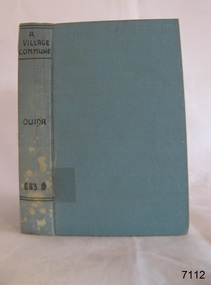
Book - Fictional Novel, Ouida/Marie Louise de la Ramée, A Village Commune, 1881–1882
... ...Maria Louise Ramé...Ouida was the pseudonym of the English novelist Maria Louise Ramé, born 1 January 1839 in Bury St Edmunds, England, though she preferred to be known as Marie Louise de la Ramée. ...Ouida was the pseudonym of the English novelist Maria Louise Ramé, born 1 January 1839 in Bury St Edmunds, England, though she preferred to be known as Marie Louise de la Ramée. ...The story is set in the fictional Italian commune of Vezzaja and Ghiralda, centred on the village of Santa Rosalia. Like all Italian communes, it is supposed to enjoy independence guaranteed by legislative autonomy. In practice, a chain of councils and a syndicate controlled by the local mayor hands power down to a secretary and two assistants, who use bureaucratic zeal to harass the villagers. The human story follows poor villagers, including old Pippo and his granddaughter Viola, and the miller and his family. In the novel, petty municipal rules turn ugly. Dogs are poisoned, and Carmelo is put on trial before carabinieri while his family looks on in fear. Ouida's target is the petty corruption and cruelty of local officialdom in the new, unified Italy. One reader's summary describes the corruption and cronyism of government officials and the cruelty they meted out to hapless villagers.Hard cover book. A Village Commune Author: Ouida/Marie Louise de la Ramée Publisher: George Robertson Date: 1881-1882 Further Information: Light blue Cloth hardcover with lettering and patterning to spine in black. The spine has a Library inscription written in black texter.fictionThe story is set in the fictional Italian commune of Vezzaja and Ghiralda, centred on the village of Santa Rosalia. Like all Italian communes, it is supposed to enjoy independence guaranteed by legislative autonomy. In practice, a chain of councils and a syndicate controlled by the local mayor hands power down to a secretary and two assistants, who use bureaucratic zeal to harass the villagers. The human story follows poor villagers, including old Pippo and his granddaughter Viola, and the miller and his family. In the novel, petty municipal rules turn ugly. Dogs are poisoned, and Carmelo is put on trial before carabinieri while his family looks on in fear. Ouida's target is the petty corruption and cruelty of local officialdom in the new, unified Italy. One reader's summary describes the corruption and cronyism of government officials and the cruelty they meted out to hapless villagers.book, cecil castlemaines gage, ouida, maria louise ramé, marie louise de la ramée), shipwrecked-coast, flagstaff-hill, flagstaff-hill-maritime-museum, warrnambool, maritime-museum, shipwreck-coast, flagstaff-hill-maritime-village, shipwrecked-artefact, pattison collection, warrnambool library, warrnambool mechanics’ institute, ralph eric pattison, corangamite regional library service, warrnambool city librarian, mechanics’ institute library, victorian library board, warrnambool books and records, warrnambool children’s library, great ocean road -
 Flagstaff Hill Maritime Museum and Village
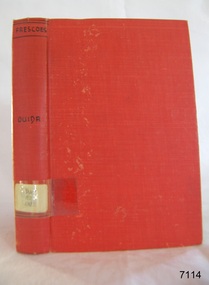
Book - Short Stories Collection, Ouida/Marie Louise de la Ramée, Frescoes, 1883
... ...Maria Louise Ramé...Ouida was the pseudonym of the English novelist Maria Louise Ramé, born 1 January 1839 in Bury St Edmunds, England, though she preferred to be known as Marie Louise de la Ramée. ...Ouida was the pseudonym of the English novelist Maria Louise Ramé, born 1 January 1839 in Bury St Edmunds, England, though she preferred to be known as Marie Louise de la Ramée. ...Frescoes is a collection of dramatic sketches of short fiction by Ouida (Maria Louise Ramé, who preferred "Marie Louise de la Ramée"). The title story first appeared in serial form. The January magazine Belgravia carried the first portion of a three-part story by Ouida called "Frescoes." Ouida's usual territory is Italian settings, romance, and social drama. Her style and lack of moral preaching throughout her volumes made her books popular to Victorian readers.Hard cover book. Frescoes Author: Ouida/Marie Louise de la Ramée Publisher: George Robertson Date: 1883 Further Information: Red Cloth hardcover with lettering and patterning to spine in black. The spine has a Library label with an inscription.fictionFrescoes is a collection of dramatic sketches of short fiction by Ouida (Maria Louise Ramé, who preferred "Marie Louise de la Ramée"). The title story first appeared in serial form. The January magazine Belgravia carried the first portion of a three-part story by Ouida called "Frescoes." Ouida's usual territory is Italian settings, romance, and social drama. Her style and lack of moral preaching throughout her volumes made her books popular to Victorian readers. book, cecil castlemaines gage, ouida, maria louise ramé, marie louise de la ramée), shipwrecked-coast, flagstaff-hill, flagstaff-hill-maritime-museum, warrnambool, maritime-museum, shipwreck-coast, flagstaff-hill-maritime-village, shipwrecked-artefact, pattison collection, warrnambool library, warrnambool mechanics’ institute, ralph eric pattison, corangamite regional library service, warrnambool city librarian, mechanics’ institute library, victorian library board, warrnambool books and records, warrnambool children’s library, great ocean road -
 Flagstaff Hill Maritime Museum and Village
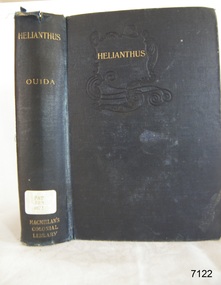
Book - Political Satire, Ouida/Marie Louise de la Ramée, Helianthus, 1908
... ...Maria Louise Ramé...Ouida was the pseudonym of the English novelist Maria Louise Ramé, born 1 January 1839 in Bury St Edmunds, England, though she preferred to be known as Marie Louise de la Ramée. ...Ouida was the pseudonym of the English novelist Maria Louise Ramé, born 1 January 1839 in Bury St Edmunds, England, though she preferred to be known as Marie Louise de la Ramée. ...This novel Helianthus is a political satire set in an invented Mediterranean kingdom of the same name, whose capital is Helios. King John of Gunderode rules as an autocrat behind constitutional forms, with a muzzled press and police spies everywhere. His second son, Prince Elim, Duke of Othyris, is a humane, philosophical man who hates soldiering. At a military review he halts his cavalry rather than trample peasants who have strayed onto the field, and the crowd adores him for it. The King and Elim's stiff elder brother, the Crown Prince, are furious. The visiting Emperor Julius of the neighbouring 'Guthones' is a pious, vain militarist who is eyeing the kingdom's sea. He gets Elim off the hook, partly to humiliate him. A review from the time calls it a novel with a purpose, whose author's zeal sometimes tips into vituperation, and which lacks the romantic charm of Under Two Flags. In the US it was published as A Prince of Europe (Helianthus).Hard cover book. Helianthus Author: Ouida/Marie Louise de la Ramée Publisher: Macmillan and Co., Limited Date: 1908 Further Information: Black Cloth hardcover with lettering and patterning to spine in gilt. The spine has a Library label with an inscription.fictionThis novel Helianthus is a political satire set in an invented Mediterranean kingdom of the same name, whose capital is Helios. King John of Gunderode rules as an autocrat behind constitutional forms, with a muzzled press and police spies everywhere. His second son, Prince Elim, Duke of Othyris, is a humane, philosophical man who hates soldiering. At a military review he halts his cavalry rather than trample peasants who have strayed onto the field, and the crowd adores him for it. The King and Elim's stiff elder brother, the Crown Prince, are furious. The visiting Emperor Julius of the neighbouring 'Guthones' is a pious, vain militarist who is eyeing the kingdom's sea. He gets Elim off the hook, partly to humiliate him. A review from the time calls it a novel with a purpose, whose author's zeal sometimes tips into vituperation, and which lacks the romantic charm of Under Two Flags. In the US it was published as A Prince of Europe (Helianthus).book, under two flags, ouida, maria louise ramé, shipwrecked-coast, flagstaff-hill, flagstaff-hill-maritime-museum, warrnambool, maritime-museum, shipwreck-coast, flagstaff-hill-maritime-village, shipwrecked-artefact, pattison collection, warrnambool library, warrnambool mechanics’ institute, ralph eric pattison, corangamite regional library service, warrnambool city librarian, mechanics’ institute library, victorian library board, warrnambool books and records, warrnambool children’s library, great ocean road
