
Showing 122 items matching "marshall sons "
-
 Puffing Billy Railway
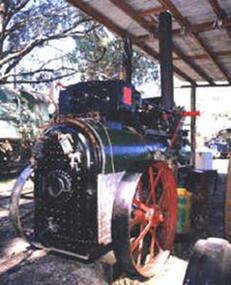
Portable Compound Steam Engine, Marshall & Son's - Builders Number 48317, circa 1908 / 1909
... ...marshall sons & co., ltd....Portable Compound Engine - Marshall & Son's. Builders Number 48317 Built by Marshall Sons & Co., Ltd., Gainsborough, England (Builder’s Number 48317 of approximately 1908/1909), to the order of Robison Brothers, Engineers, South Melbourne. ...Marshall & Son's Portable Compound Engine - Builders Number 48317 made of steel ...Marshall & Son's. Builders Number 48317...Marshall Sons & Co., Ltd., ...Builders Number 48317 Marshall & Son's Portable Compound Engine - Builders Number 48317 made of steel Marshall & Son's - Builders Number 48317 Portable Compound Steam Engine Marshall Sons & Co., Ltd., ...Portable Compound Engine - Marshall & Son's. Builders Number 48317 Built by Marshall Sons & Co., Ltd., Gainsborough, England (Builder’s Number 48317 of approximately 1908/1909), to the order of Robison Brothers, Engineers, South Melbourne. It was used for operating a pump to supply irrigation water at Robinvale in Northern Victoria. Robison Bros & Co. P/L was founded by James McFarlane Robison and his brothers in 1854, initially as plumbers and coppersmiths, the firm expanded into general engineering, boiler-making and brass, iron and steel founders and became one of Melbourne's most important engineering firms. They constructed railway bridges, gold mining equipment, railway locomotives, pumping stations, brewing vessels, abattoir machinery, amongst much else and including the first turnstiles at the Melbourne Cricket Ground. A portable engine is either a steam engine or an internal combustion engine, that remains in one place while operating (providing power to machinery), and can be easily moved from one work site to another. Mounted on wheels or sometimes skids, it is required to be towed between work sites.Historic - Industrial Portable Compound Engine - steam engine - Marshall & Son's. Marshall & Son's Portable Compound Engine - Builders Number 48317 made of steel Marshall & Son's. Builders Number 48317puffing billy, state rivers and water supply commission of victoria, portable compound engine - marshall & son's., portable compound engine, marshall sons & co., ltd., robison bros & co. p/l -
 Ringwood and District Historical Society
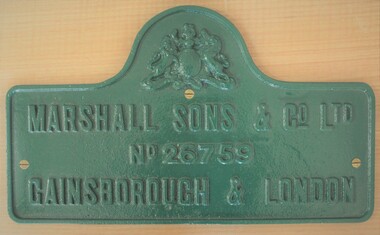
Plaque - Cast iron machine badge, Engine maker's plate from former Ringwood Coolstore (1911 - demolished 1963)
... Marshall Sons & Co Ltd No 26759 Gainsborough & London...Marshall Sons & Co Ltd No 26759 Gainsborough & London Green cast iron engine plaque featuring maker's name mounted on varnished timber backing, retrieved by Ron Pullin for preservation by Ringwood Historical Society following demolition of Ringwood Coolstore in 1963. ...Green cast iron engine plaque featuring maker's name mounted on varnished timber backing, retrieved by Ron Pullin for preservation by Ringwood Historical Society following demolition of Ringwood Coolstore in 1963.Marshall Sons & Co Ltd No 26759 Gainsborough & London -
 Marysville & District Historical Society
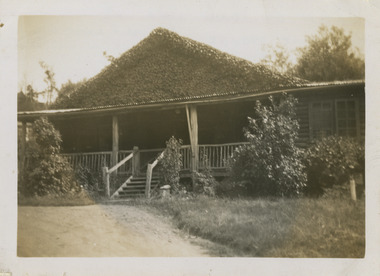
Photograph (item) - Black and white photograph, Unknown
... A black and white photograph of the log cabin at Mount Kitchener House that housed Marshall and Lorna Hull. Marshall Hull was the son of the owners and operators of Mount Kitchener House in Marysville....A black and white photograph of the log cabin at Mount Kitchener House that housed Marshall and Lorna Hull. Marshall Hull was the son of the owners and operators of Mount Kitchener House in Marysville....Marshall Hull was the son of the owners and operators of Mount Kitchener House in Marysville. ...A black and white photograph of the log cabin at Mount Kitchener House that housed Marshall and Lorna Hull. Marshall Hull was the son of the owners and operators of Mount Kitchener House in Marysville.A black and white photograph of the log cabin at Mount Kitchener House that housed Marshall and Lorna Hull. Marshall Hull was the son of the owners and operators of Mount Kitchener House in Marysville.marysville, victoria, australia, mount kitchener house, mt. kitchener house, kitchener house, accommodation, photograph, marshall hull, lorna hull -
 Eltham District Historical Society Inc
Document - Folder, Marshall, Robert
... Newspaper article: "Drug mix-up led to death: court told", unknown newspaper, 28 May 1997, Report of Coroners Court hearing into death of Stewart Anthony Marshall, Robert Marshall's son. Newspaper article: "Coroner slams delay", unknown newspaper, no date (May 1997). ...Newspaper article: "Drug mix-up led to death: court told", unknown newspaper, 28 May 1997, Report of Coroners Court hearing into death of Stewart Anthony Marshall, Robert Marshall's son. Newspaper article: "Coroner slams delay", unknown newspaper, no date (May 1997). ...Robert Marshall grew up on a small farm in Panton Hills in the 1950s and became an architect, designing in an Australian style, sometimes working with Alistair Knox. Marshall first stood for local council in 1974, having to overcome a childhood stutter by relaxation techniques. He was active in the formation of Nillumbik shire; after 20 years as councillor, he was elected president for 1978 and 1979. In February 1997, his adopted son Stewart Anthony Marshall died as the result of a drug mix-up. He lived in St Andrews and his business was in Hurstbridge. Contents Newspaper article: "Rob Marshall: fist of steel in a glove of green", The Valley Voice, 24 January 1979, describing Robert Marshall's childhood and his thoughts about house design and conservation. Newspaper article: "Councillor marshals energy for next round", Diamond Valley News, no date, Robert Marshall plans to stand again for council after the amalgamation of council, describing. his vision for the district citing Alistair Knox and Don Maling as pioneers. Newspaper article: "...and your new shire president", Diamond Valley News, March 1997, Former Eltham councillor Robert Marshall elected Nillumbik Shire president. Newspaper article: "Drug mix-up led to death: court told", unknown newspaper, 28 May 1997, Report of Coroners Court hearing into death of Stewart Anthony Marshall, Robert Marshall's son. Newspaper article: "Coroner slams delay", unknown newspaper, no date (May 1997). Report of Coroners Court hearing into death of Stewart Anthony Marshall, Robert Marshall's son. Newspaper article: "Shire chief set to pay outstanding rate bill", Diamond Valley News, 30 July 1997, Robert Marshall had not paid rates in protest during government-appointed commissioners were in power but was paying off the debt. Newspaper article: "An architect for a better way of life", Diamond Valley News, 11 August 1981, Describing Robert Marshall's travels after qualifying as an architect, his early life and his philosophy on conservation. Newspaper article: "He presides over the city's last green belt. But was does Robert Marshall make the State Government see red?" The Age, 10 January 1998, Describing dispute between Nillumbik Shire president Robert Marshall and CEO Barry Rochford, and Rochford's termination package and Marshall's environmental campaigns including the old Eltham Shire Office site. Newspaper letter: "For good governance", letter from Robert Marshall, following his defeat at recent council election after 25 years in local government, comments on his actions as president and wishes new councillors well. Newspaper clippings, A4 photocopies, etcrobert marshall, panton hills victoria, alistair knox, stewart anthony marshall, ross ray qc, vauclause hospital, benny monheit, adam bernhaut, geoff pittaway, metropolitan ambulance service, ambulance service victoria, eltham gateway action group, barry rochford, eltham shire offices site, frank lynch, eltham chamber of commerce, barry miller, rob maclellan planning minister, green wedge, don maling, ian west -
 Port of Echuca
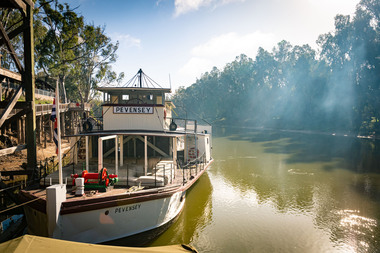
Functional object - Paddlesteamer, Permewan,Wright Co Ltd, P.S. Pevensey, 1910
... It is powered by a 20hp Marshall and Sons steam engine and was first used on the Murrumbidgee River where it collected wool bales and brought them back to Echuca where they were loaded onto trains and taken to Melbourne for shipping overseas. ...It is powered by a 20hp Marshall and Sons steam engine and was first used on the Murrumbidgee River where it collected wool bales and brought them back to Echuca where they were loaded onto trains and taken to Melbourne for shipping overseas. ...PS Pevensey was the last vessel to be built on the Moama slipway in 1910. it was originally built as the barge Mascotte a year earlier. It is powered by a 20hp Marshall and Sons steam engine and was first used on the Murrumbidgee River where it collected wool bales and brought them back to Echuca where they were loaded onto trains and taken to Melbourne for shipping overseas. The PS Pevensey was named after the Pevensey Station on the Murrumbidgee River. In the 1950's it travelled to South Australia where it survived being burnt and sunk but continued to keep working in the agricultural industry. It was sold to the Port of Echuca in 1973 where it was restored over 3 years and is still the largest vessel operating from the Echuca Wharf. In 1982, it was temporarily renamed The Philadelphia, and starred in the TV mini series " All The River's Run" based on the books by Nancy Cato. In 1985 Prince Charles and Lady Diana visited Echuca and cruised on the PS Pevensey, although it was labelled PS Philadelphia for the occasion. It is the largest vessel operating from the Echuca wharf as it can carry 90 passengers or 120 tons of cargo. PS Pevensey is a Murray River paddle steamer from 1910 and was built at Moama in NSW opposite the Port of Echuca. It was one of the largest towing and cargo paddle steamers on the river and was known as "the great Clydesdale" of the river. PS Pevensey remained operating on the river until 1958 after a number of years lying dormant it was purchased in 1973 and restored at Echuca. It began operating again in 1976 and it is still taking trips. it is one of a small number that still operates in its cargo carrying layout and with its original reconditioned engine. Coming back to Echuca PS Pevensey brought Kevin Hutchinson OAM to work at the Port of Echuca for the rest of his life.A side wheeled paddle steamer. Originally built as a barge the barge Mascot in 1910. Rebuilt as the PS Pevensey a year later in 1911.Pevensey sign on the wheelhouse.wool bales, murrumbidgee river, all the rivers run, pevensey station, port of echuca wharf, prince charles and lady diana, the barge mascotte, kevin hutchinson. -
 Federation University Historical Collection
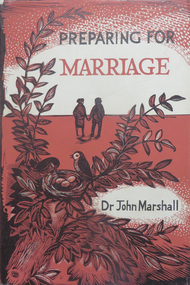
Book, Dr John Marshall, Preparing for Marriage, 1962
... The book is 117 pages long Preparing for Marriage Book Dr John Marshall Darton, Longman & Todd Charles Birchall & Sons Ltd ...This book is part of a collection of books, photos and memorabilia donated from the Chatham-Holmes family collection. This book is about Catholic marriage.This grey hard covered book has the title, author and initials of the publisher printed on the spine in black. The dust cover is cream with red and black colour. On the front cover is the title and author (Dr John Marshall) and a picture of the back of a man and a woman holding hands and in the foreground is a nest in the branches of a tree with two birds looking at their eggs. The spine has the title, author and initial of the publisher and the back has a list of other books on marriage. The book is 117 pages longWritten in pencil on fly page - 18/9chatham-holmes family collection, dr john marshall, preparing for marriage -
 Federation University Historical Collection
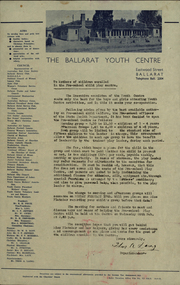
Newsletter, J.A. Hoskin & Son, The Ballarat Youth Centre, 1947, 1947
... Marshall (Chairwoman Youth Centre Canteen Committee) .2) A letter on The Ballarat Youth Centre letterhead to mothers of children enrolled in the Pre-school child play centre signed by Thomas A. Laing. The Ballarat Youth Centre, 1947 Newsletter J.A. Hoskin & Son ...The Ballarat Youth Centre was in Eastwood Street, Ballarat. It was registered by the Charities Board. Newsletters of the Ballarat Youth Centre .1) 'What's Doing? Monthly News of the Ballarat Youth Centre' Jan-Fed 1947. A four page newsletter featuring two photographs and a number of articles. Authors include T.A Laing (Superintendent) , C.F. Jeffrey (Vice-President), K.H. Price (President), R. McLeod (Chairman), L. Ling (Vice President), H.S. Trevenen (Hon. Secretary), E. Tresize (President Youth Centre Mothers' Association, E.M. Marshall (Chairwoman Youth Centre Canteen Committee) .2) A letter on The Ballarat Youth Centre letterhead to mothers of children enrolled in the Pre-school child play centre signed by Thomas A. Laing. ballarat youth centre, ballarat youth league, thomas a. laing, eastwood street, k.h. price, l. ling, c.f. jeffrey, w. owen, h.h. trevenen, rosenthal, w.e. roff, f.f. moreell, r. mcleod, a. graham, a. pfeiffer, p. bryant, mrs marshall, mrs lacy, pre-school play centre, eastwood street ballarat east -
 Federation University Historical Collection
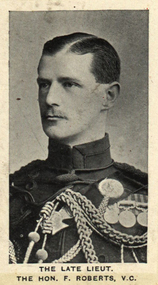
Photograph (black & White), Lieutenant, The Honourable Frederick Hugh Sherston Roberts - South Africa
... Frederick Roberts was the son of Field Marshall Frederick Roberts, 1st Earl Roberts. ...Frederick Roberts was the son of Field Marshall Frederick Roberts, 1st Earl Roberts. ...Frederick Roberts was the son of Field Marshall Frederick Roberts, 1st Earl Roberts. At the age of 27 he went with the King's Rifles to the Second Boer War. During battle he, with two officers tried to assist and save guns when the detachments serving the guns had all become casualties or been driven away. While doing this Roberts fell badly wounded and 2 days later died. Commander-in-Chief Redvers Buller recommended Roberts for the Victoria Cross. Confirmation of the award made after his death. Roberts and his father were one of only three father son pairs to win the Victoria Cross. His father's was in 1858.Individual image from photographed poster of tobacco and cigarette cards.frederick roberts, field marshall roberts, king's rifles, second boer war, redvers buller, south africa -
Federation University Historical Collection
Booklet, J.A. Hoskin & Son, Ballarat School of Mines Students' Magazine, 1954, 1954
... Members of Staff, Roll Call Diploma Students, Junior Technical School Boys' and Girls' Students Listing ballarat school of mines magazine j. collier john skuja janice wilton murray gillan neil andrews ellen freemantle alan johnson graeme willey diana mainwaring b. v. mcdougall margaret little lance matthews philip davis john barnes cliff restarick philip kempe barry jones harold everett j. jenkin r. howard d. lavery j. williams j. barnes j. murray j. wolfe j. clelland t. gallagher w. maxwell n. andrews b. bellingham f. shearer n. spears i. schunke d. schmidt g. willey r. furlong g. rasdell b. tozer l. matthews w. saggers b. taylor j. watts a. johnson b. matthews r. dunlop b. mclennan g. ditchfield m. gillin j. cleelland b. singleton d. overall g. crawford chris sanos nancy rimmington janice tonkin herbert "andy" andrews leonard (a.p.c) doull harold m. everett murray "gilligan" gillin alan "johno" johnson khoo teng seong douglas "myxo" lockhead lancelot "willey" matthews bruce "frugal" mcdougall "aal" pitzen john "cheesy" skuja brian francis "tailspin" taylor john "tucks" watts lola andrich j. spencer r. cutter p. collier g. paddle n. richards i. pike b. cushion b. knight g. van berkel d. stevens n. stevens b. stevens l. major l. copeman k. norman n. hodder l. johns l. curtis h. hay l. furlong g. new j. hamilton r. day a. clarke b. parker p. agrums l. dean w. swan r. carlson t. white m. walsh r. gilbert w. edmends b. vurlow d. wakeling a. haywood d. sarah k. rogers l. cook j. mcleod p. hatton p. fisher r. lambert j. vincent t. lugg g. matthews w. etty n. twaits m. o'brien w. davidson i. lightfoot p. cahill n. slocum d. martin j. leckie marjorie garner r. hall i. beaumont barbara o'connell b. duthie l. boyd i. kinnane d. baldock p. nunn j. strickland d. robertson n. everett b. whittle w. widdop j. richards b. tresize k. buchanan m wunhym j. caddy g. kerr j. collins r. sansom i. gitsham k. weightman g. gilmer e. waller r. mcbride j. jardine lynette reynolds marion ritchie p. mchenry h. cromb c. veal j. van buerghel g. templeton k. page e. tozer b. wilson g. minehan g. smith j. bennett n. pike l. reynolds m. ritchie m. wunhym l. willis m. nolan j. rogers e. kinnane g. cody j. mills j. cunningham m. eggleton n. rimmington m. marshall n. gay e. hosking v. jolly j. mchenry rosalie hall brian duthie m. lesins l. hotchin g. hill e. richards l. jardine m. roberts i. siver d. mclennon k. warhurst r. rowse e. snowball g. jill n. bromley Gray soft covered magazine with red and brown titles Ballarat School of Mines Students' Magazine, 1954. Booklet Booklet J.A. Hoskin & Son ...Editorial, Principal's Page, Prominent Personalities, Eureka Stockade, Two ex-students tell of their work and conditions in East Africa and Canada, The Art School, Literary Society, Boys Sport, Football, Cricket, Baseball, Athletics, Tennis, Chris Sanos - another ex-student describes his recent trip to Greece, Junior School, Ballarat wins Final - Football Premiers 1954, Some Impressions of London, House Notes, School Council. Members of Staff, Roll Call Diploma Students, Junior Technical School Boys' and Girls' Students ListingGray soft covered magazine with red and brown titlesballarat school of mines, magazine, j. collier, john skuja, janice wilton, murray gillan, neil andrews, ellen freemantle, alan johnson, graeme willey, diana mainwaring, b. v. mcdougall, margaret little, lance matthews, philip davis, john barnes, cliff restarick, philip kempe, barry jones, harold everett, j. jenkin, r. howard, d. lavery, j. williams, j. barnes, j. murray, j. wolfe, j. clelland, t. gallagher, w. maxwell, n. andrews, b. bellingham, f. shearer, n. spears, i. schunke, d. schmidt, g. willey, r. furlong, g. rasdell, b. tozer, l. matthews, w. saggers, b. taylor, j. watts, a. johnson, b. matthews, r. dunlop, b. mclennan, g. ditchfield, m. gillin, j. cleelland, b. singleton, d. overall, g. crawford, chris sanos, nancy rimmington, janice tonkin, herbert "andy" andrews, leonard (a.p.c) doull, harold m. everett, murray "gilligan" gillin, alan "johno" johnson, khoo teng seong, douglas "myxo" lockhead, lancelot "willey" matthews, bruce "frugal" mcdougall, "aal" pitzen, john "cheesy" skuja, brian francis "tailspin" taylor, john "tucks" watts, lola andrich, j. spencer, r. cutter, p. collier, g. paddle, n. richards, i. pike, b. cushion, b. knight, g. van berkel, d. stevens, n. stevens, b. stevens, l. major, l. copeman, k. norman, n. hodder, l. johns, l. curtis, h. hay, l. furlong, g. new, j. hamilton, r. day, a. clarke, b. parker, p. agrums, l. dean, w. swan, r. carlson, t. white, m. walsh, r. gilbert, w. edmends, b. vurlow, d. wakeling, a. haywood, d. sarah, k. rogers, l. cook, j. mcleod, p. hatton, p. fisher, r. lambert, j. vincent, t. lugg, g. matthews, w. etty, n. twaits, m. o'brien, w. davidson, i. lightfoot, p. cahill, n. slocum, d. martin, j. leckie, marjorie garner, r. hall, i. beaumont, barbara o'connell, b. duthie, l. boyd, i. kinnane, d. baldock, p. nunn, j. strickland, d. robertson, n. everett, b. whittle, w. widdop, j. richards, b. tresize, k. buchanan, m wunhym, j. caddy, g. kerr, j. collins, r. sansom, i. gitsham, k. weightman, g. gilmer, e. waller, r. mcbride, j. jardine, lynette reynolds, marion ritchie, p. mchenry, h. cromb, c. veal, j. van buerghel, g. templeton, k. page, e. tozer, b. wilson, g. minehan, g. smith, j. bennett, n. pike, l. reynolds, m. ritchie, m. wunhym, l. willis, m. nolan, j. rogers, e. kinnane, g. cody, j. mills, j. cunningham, m. eggleton, n. rimmington, m. marshall, n. gay, e. hosking, v. jolly, j. mchenry, rosalie hall, brian duthie, m. lesins, l. hotchin, g. hill, e. richards, l. jardine, m. roberts, i. siver, d. mclennon, k. warhurst, r. rowse, e. snowball, g. jill, n. bromley -
Flagstaff Hill Maritime Museum and Village
Book - General Medical Reference Annuals, Various Medical Contributors, The Medical Annual and Practitioners Index 1890, 1890
... Sons Ltd) had built a reputation as one of the British Commonwealth’s finest medical publishing houses. Beyond The Medical Annual, the house went on to publish many classic medical textbooks, including the world-famous Synopsis series and the British Journal of Surgery (launched in 1913). The title page mentions Simpkin, Marshall...Sons Ltd) had built a reputation as one of the British Commonwealth’s finest medical publishing houses. Beyond The Medical Annual, the house went on to publish many classic medical textbooks, including the world-famous Synopsis series and the British Journal of Surgery (launched in 1913). The title page mentions Simpkin, Marshall ...The 1890 volume is the 8th annual edition (8th year of issue) in the continuous annual series. The Medical Annual and Practitioners’ Index was one of the premier late-Victorian medical reference works. Starting in 1883/1884, the publication served as an essential year-end review digest for medical practitioners across Great Britain and the British colonies. The volume contains reviews of therapeutic progress achieved and new remedies for medical conditions, including detailed summaries of new drugs, synthetic chemicals, serums, and pharmacological advances introduced during 1889–1890. There is also a dictionary of new treatments, as well as summaries of clinical practices and breakthroughs in antiseptic surgery, gynaecology, neurology, and infectious diseases. These were written by leading specialists and practitioners, and include useful reference tables listing new medical publications, official health reports, asylum statistics, instruments, and pharmaceutical suppliers.Hard cover book. The Medical Annual and Practitioners Index for 1890 Author: Various Contributors Editor: Dr. Percy Roberts Wilde Publisher: John Wright & Co. Bristol. (Simpkin Marshall, Hamilton, Kent & Co Ltd. For London) Date: 1890 Further Information: Further Information: Blue cloth hard cover brown spine. Spine bands and panel edges somewhat rubbed and dust-toned as with age. Embossed patterning with lettering to Spine in Gilt, Publishers logo to front cover with Volume title.non-fictionThe 1890 volume is the 8th annual edition (8th year of issue) in the continuous annual series. The Medical Annual and Practitioners’ Index was one of the premier late-Victorian medical reference works. Starting in 1883/1884, the publication served as an essential year-end review digest for medical practitioners across Great Britain and the British colonies. The volume contains reviews of therapeutic progress achieved and new remedies for medical conditions, including detailed summaries of new drugs, synthetic chemicals, serums, and pharmacological advances introduced during 1889–1890. There is also a dictionary of new treatments, as well as summaries of clinical practices and breakthroughs in antiseptic surgery, gynaecology, neurology, and infectious diseases. These were written by leading specialists and practitioners, and include useful reference tables listing new medical publications, official health reports, asylum statistics, instruments, and pharmaceutical suppliers.flagstaff hill, warrnambool, shipwrecked-coast, flagstaff-hill, flagstaff-hill-maritime-museum, maritime-museum, shipwreck-coast, flagstaff-hill-maritime-village, the medical annual and practitioners index 1890, book, medical reference books, medical annual -
 Ringwood and District Historical Society
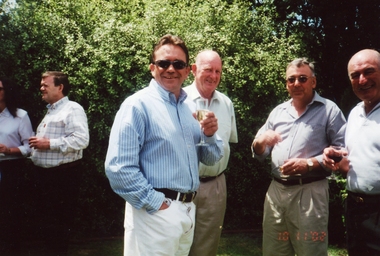
Photograph, Ringwood Bowls Club- Ladies Section. Rosemary Jolley's 70th Birthday, 2002
... Guests at the Birthday party included Peter Jolley(son), Ron Marshall, Ray Pitts and John Goldsmith....Guests at the Birthday party included Peter Jolley(son), Ron Marshall, Ray Pitts and John Goldsmith. ...Colour photograph."Note attached to photograph" Ringwood Bowls Club- Ladies Section. Guests at the Birthday party included Peter Jolley(son), Ron Marshall, Ray Pitts and John Goldsmith. -
 Orbost & District Historical Society
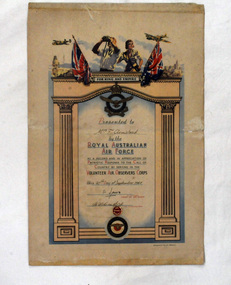
certificate, 1945
... son, Sydney, who served as a gunner in Malaysia during WW11. certificate ww11 air-observers-corps For King and Empire Presented to Mrs F. Armistead by the ROYAL AUSTRALIAN AIR FORCE As a record and in appreciation of patriotic response to the call of country by serving in the VOLUNTEER AIR OBSERVERS CORPS This 20th day of September 1945 signed G. Jones Air Vice Marshall ...The Volunteer Air Observers Corps was an Australian air defence organisation of World War II.It was formed on 31 December 1941 to support the Royal Australian Air Force by sighting and observing aircraft over Australia.It swiftly established observation posts across Australia and provided information to the RAAF's regional air control posts. As the threat to Australia declined its role was expanded to include coast watching, assisting air traffic control and weather reporting. The corps was staffed by civilian volunteers and reached a peak strength of 24,000 personnel and 2,656 observation posts in 1944. After the end of the war the VAOC was reduced to a cadre in December 1945 and was disbanded on 10 April 1946. The Volunteer Air Observers Corps was an Australian air defence organisation of World War II. This certificate is a record of the participation of members of the Orbost district. Anita Armistead, wife of Francis Armistead had a son, Sydney, who served as a gunner in Malaysia during WW11.A certificate of service awarded to Mrs F. Armistead for being a volunteer in the Air Observers Corps. It was awarded on 20 Sept, 1945 for one year's service.For King and Empire Presented to Mrs F. Armistead by the ROYAL AUSTRALIAN AIR FORCE As a record and in appreciation of patriotic response to the call of country by serving in the VOLUNTEER AIR OBSERVERS CORPS This 20th day of September 1945 signed G. Jones Air Vice Marshall Chief of Air Staff signed ? Unit Commanding Officercertificate ww11 air-observers-corps -
 Orbost & District Historical Society
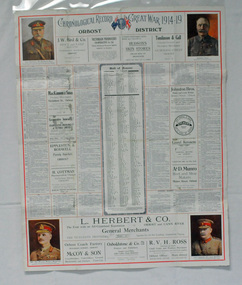
poster, Chronological Record Great War 1914 -19, 1920s?
... Marshall Ferdinand Foch and General Sir William Birdwood. The roll of honour is surrounded by collector’s cards depicting battle scenes. It also contains the dates and details of war events from 1914 to 1919 and advertisements for several local businesses such as J.W.Bird & cO.; Victorian Producers Co-Operative; Tomlis & Gall; McKinnon & Sons; Co-Operative Insurance Co of Victoria; Epplestun & Rodwell...Marshall Ferdinand Foch and General Sir William Birdwood. The roll of honour is surrounded by collector’s cards depicting battle scenes. It also contains the dates and details of war events from 1914 to 1919 and advertisements for several local businesses such as J.W.Bird & cO.; Victorian Producers Co-Operative; Tomlis & Gall; McKinnon & Sons; Co-Operative Insurance Co of Victoria; Epplestun & Rodwell This item is a useful research tool. ww! ...This poster was one of a set produced for towns in Australia. It was adapted to suit the requirements of the location. It contains not only the names of soldiers, but also photographs of war leaders, such as Lieutenant-General Sir John Monash, Field Marshall Sir Douglas Hay, Marshall Ferdinand Foch and General Sir William Birdwood. The roll of honour is surrounded by collector’s cards depicting battle scenes. It also contains the dates and details of war events from 1914 to 1919 and advertisements for several local businesses such as J.W.Bird & cO.; Victorian Producers Co-Operative; Tomlis & Gall; McKinnon & Sons; Co-Operative Insurance Co of Victoria; Epplestun & RodwellThis item is a useful research tool.A poster, titled, "Chronological Record Great War 1914 - 19". It has a sub - heading - "Orbost District" beneath two crossed flags, an Australian and a British. The roll of honour is surrounded by collector’s cards depicting battle scenes. It also contains the dates and details of war events from 1914 to 1919 and advertisements for several local businesses. In each corner is a coloured photograph of a man in a military uniform.ww!-roll-of-honour-orbost -
Ringwood and District Historical Society
Document - Property Rental Records, Midway Arcade Tenancy, Ringwood, Victoria - 1971
... Carter & Son MIDWAY ARCADE — 1971 TENANCY LIST SHOPS Shop 1 – Alexanders Shop 2 – Maller Shop 3 – Maller Shop 4 – Hill Shop 5 – Bartling Shop 6 – Bartling Shop 7 – McDonald Shop 8 – Oliver / Oliver Holdings / W.J. Oliver Shop 9 – Isbel Shop 10 – Hanlon Shop 11 – Bennett Shop 12 – Wilson Shop 13 – Alexanders Kiosk – Brennan OFFICES Office 1 – Dixon Office 2 – Moran / E.L. Moran & Co. Office 3 – Maller Office 4 – Morris Office 5 – Marshall...Carter & Son MIDWAY ARCADE — 1971 TENANCY LIST SHOPS Shop 1 – Alexanders Shop 2 – Maller Shop 3 – Maller Shop 4 – Hill Shop 5 – Bartling Shop 6 – Bartling Shop 7 – McDonald Shop 8 – Oliver / Oliver Holdings / W.J. Oliver Shop 9 – Isbel Shop 10 – Hanlon Shop 11 – Bennett Shop 12 – Wilson Shop 13 – Alexanders Kiosk – Brennan OFFICES Office 1 – Dixon Office 2 – Moran / E.L. Moran & Co. Office 3 – Maller Office 4 – Morris Office 5 – Marshall ...Typed carbon copies and handwritten notations (15 pages) - 1971 bookkeeping records associated with Midway Arcade/Ringwood Investments Pty. Ltd., 517 Flinders Lane, Melbourne, including monthly rental amounts and routine property management expenses for each shop and office tenant.Agents: C.E. Carter & Son MIDWAY ARCADE — 1971 TENANCY LIST SHOPS Shop 1 – Alexanders Shop 2 – Maller Shop 3 – Maller Shop 4 – Hill Shop 5 – Bartling Shop 6 – Bartling Shop 7 – McDonald Shop 8 – Oliver / Oliver Holdings / W.J. Oliver Shop 9 – Isbel Shop 10 – Hanlon Shop 11 – Bennett Shop 12 – Wilson Shop 13 – Alexanders Kiosk – Brennan OFFICES Office 1 – Dixon Office 2 – Moran / E.L. Moran & Co. Office 3 – Maller Office 4 – Morris Office 5 – Marshall Ross & Assoc. / Marshall Bros. Office 6 – Marshall Ross & Assoc. / Marshall Bros. Office 7 – Peters & Lush Office 8 – Kohlman Office 9 – James Office 10 – Hughes Office 11 – Dept. of Interior Office 12 – Dept. of Interior Office 13 – Dept. of Interior Office 14 – Dept. of Interior Office 15 – Dixon -
Ringwood and District Historical Society
Document - Property Rental Records, Midway Arcade Tenancy, Ringwood, Victoria - 1972
... Carter & Son MIDWAY ARCADE — 1972 TENANCY LIST SHOPS 1 & 14/15 — Alexanders 2 & 3 — Maller 4 — Hill 5 & 6 — Bartling 7 — McDonald 8 — Oliver 9 — Isbel 10 — Hanlon 11 — Bennett 12 — Wilson 13 — Alexanders Kiosk — Brennan OFFICES 1 & 15 — Dixon 2 — Moran 3 — Maller 4 — Morris 5 & 6 — Marshall Ross & Assoc. 7 — Peters & Lush 8 — Kohlman 9 — James 10 — Hughes 11, 12, 13 & 14 — Dept. of Interior...Carter & Son MIDWAY ARCADE — 1972 TENANCY LIST SHOPS 1 & 14/15 — Alexanders 2 & 3 — Maller 4 — Hill 5 & 6 — Bartling 7 — McDonald 8 — Oliver 9 — Isbel 10 — Hanlon 11 — Bennett 12 — Wilson 13 — Alexanders Kiosk — Brennan OFFICES 1 & 15 — Dixon 2 — Moran 3 — Maller 4 — Morris 5 & 6 — Marshall Ross & Assoc. 7 — Peters & Lush 8 — Kohlman 9 — James 10 — Hughes 11, 12, 13 & 14 — Dept. of Interior Typed carbon copies and handwritten notations (13 pages) - 1972 bookkeeping records associated with Midway Arcade/Ringwood Investments Pty. ...Typed carbon copies and handwritten notations (13 pages) - 1972 bookkeeping records associated with Midway Arcade/Ringwood Investments Pty. Ltd., 517 Flinders Lane, Melbourne, including monthly rental amounts and routine property management expenses for each shop and office tenant.Agents: C.E. Carter & Son MIDWAY ARCADE — 1972 TENANCY LIST SHOPS 1 & 14/15 — Alexanders 2 & 3 — Maller 4 — Hill 5 & 6 — Bartling 7 — McDonald 8 — Oliver 9 — Isbel 10 — Hanlon 11 — Bennett 12 — Wilson 13 — Alexanders Kiosk — Brennan OFFICES 1 & 15 — Dixon 2 — Moran 3 — Maller 4 — Morris 5 & 6 — Marshall Ross & Assoc. 7 — Peters & Lush 8 — Kohlman 9 — James 10 — Hughes 11, 12, 13 & 14 — Dept. of Interior -
Ringwood and District Historical Society
Document - Property Rental Records, Midway Arcade Tenancy, Ringwood, Victoria - 1973
... Carter & Son MIDWAY ARCADE — 1973 TENANCY LIST SHOPS Shop 1 – Alexanders Shop 2 – Maller Shop 3 – Maller Shop 4 – Hill Shop 5 – Bartling Shop 6 – Bartling Shop 7 – McDonald Shop 8 – Oliver Shop 9 – Isbel Shop 10 – Hanlon Shop 11 – Bennett Shop 12 – Wilson / Associated Foods Shop 13 – Alexanders Shop 14 – Alexanders Shop 15 – Alexanders Kiosk – Brennan OFFICES Office 1 – Dixon Office 2 – Moran Office 3 – Maller Office 4 – Morris Office 5 – Marshall Ross Office 6 – Marshall Ross Office 7 – Peters & Lush Office 8 – Kohlman Office 9 – James Office 10 – Hughes Office 11 – James Office 12 – Dept. of Interior Office 13 – Dept. of Interior Office 14 – Dept. of Interior Office 15 – Dixon...Carter & Son MIDWAY ARCADE — 1973 TENANCY LIST SHOPS Shop 1 – Alexanders Shop 2 – Maller Shop 3 – Maller Shop 4 – Hill Shop 5 – Bartling Shop 6 – Bartling Shop 7 – McDonald Shop 8 – Oliver Shop 9 – Isbel Shop 10 – Hanlon Shop 11 – Bennett Shop 12 – Wilson / Associated Foods Shop 13 – Alexanders Shop 14 – Alexanders Shop 15 – Alexanders Kiosk – Brennan OFFICES Office 1 – Dixon Office 2 – Moran Office 3 – Maller Office 4 – Morris Office 5 – Marshall Ross Office 6 – Marshall Ross Office 7 – Peters & Lush Office 8 – Kohlman Office 9 – James Office 10 – Hughes Office 11 – James Office 12 – Dept. of Interior Office 13 – Dept. of Interior Office 14 – Dept. of Interior Office 15 – Dixon Typed carbon copies and handwritten notations (6 pages) - 1973 bookkeeping records associated with Midway Arcade/Ringwood Investments Pty. ...Typed carbon copies and handwritten notations (6 pages) - 1973 bookkeeping records associated with Midway Arcade/Ringwood Investments Pty. Ltd., 517 Flinders Lane, Melbourne, including monthly rental amounts and routine property management expenses for each shop and office tenant. "The final adjustment with the Commonwealth for Offices 11, 12, 13 & 14 from 1st November to the 1st December 1972 is still to come. Several other tenants also on holidays. Agents: C.E. Carter & Son MIDWAY ARCADE — 1973 TENANCY LIST SHOPS Shop 1 – Alexanders Shop 2 – Maller Shop 3 – Maller Shop 4 – Hill Shop 5 – Bartling Shop 6 – Bartling Shop 7 – McDonald Shop 8 – Oliver Shop 9 – Isbel Shop 10 – Hanlon Shop 11 – Bennett Shop 12 – Wilson / Associated Foods Shop 13 – Alexanders Shop 14 – Alexanders Shop 15 – Alexanders Kiosk – Brennan OFFICES Office 1 – Dixon Office 2 – Moran Office 3 – Maller Office 4 – Morris Office 5 – Marshall Ross Office 6 – Marshall Ross Office 7 – Peters & Lush Office 8 – Kohlman Office 9 – James Office 10 – Hughes Office 11 – James Office 12 – Dept. of Interior Office 13 – Dept. of Interior Office 14 – Dept. of Interior Office 15 – Dixon -
Eltham District Historical Society Inc
Document - Folder, Skipper, Marcus
... Marcus Skipper, son of Matcham and Myra Skipper, painted a portrait of Alan Marshall. Contents Newspaper article: "Death of painter Lena Skipper", unnamed publication, n.d. ...Marcus Skipper, son of Matcham and Myra Skipper, painted a portrait of Alan Marshall. Contents Newspaper article: "Death of painter Lena Skipper", unnamed publication, n.d. ...Marcus Skipper, son of Matcham and Myra Skipper, painted a portrait of Alan Marshall. Contents Newspaper article: "Death of painter Lena Skipper", unnamed publication, n.d. Report of the death of Lena Skipper.Newspaper clippings, A4 photocopies, etcmarcus skipper, alan marshall, matcham skipper, myra skipper -
 Bendigo Military Museum
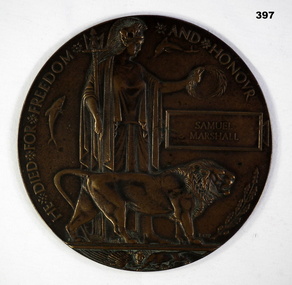
Memorabilia - MEMORIAL PLAQUE, Post WW1
... Samuel Marshall No 11/1925, 2nd Battalion Otago Regt New Zealand Expeditionary Force, KIA 15.9.1916. Buried Bulls Road Cemetery Flyers.111.F.20. Son...Samuel Marshall No 11/1925, 2nd Battalion Otago Regt New Zealand Expeditionary Force, KIA 15.9.1916. Buried Bulls Road Cemetery Flyers.111.F.20. Son ...Samuel Marshall No 11/1925, 2nd Battalion Otago Regt New Zealand Expeditionary Force, KIA 15.9.1916. Buried Bulls Road Cemetery Flyers.111.F.20. Son of Mr & Mrs A.G.Marshall of 168 Bridge Street Bendigo Vic.Commemorative Bronze plaque for Samuel Marshall (Killed In Action) WW1 Centre of Plaque is Brittania with Lion & Seals Rectangular section for Individuals Name.He died for Freedom and Honour " Samuel Marshall"commemorative military, plaques -
 Eltham District Historical Society Inc
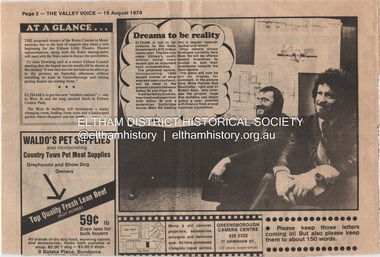
Document - Property Binder, Eltham Town Square, Commercial Place, Eltham
... Marshall 2. Square plan on display, Diamond Valley News, Tuesday, June 23, 1981, p1 - Council's prefered proposal on display to the public. On same page a story about the son...Marshall 2. Square plan on display, Diamond Valley News, Tuesday, June 23, 1981, p1 - Council's prefered proposal on display to the public. On same page a story about the son ...1. Dreams to be reality, The Valley Voice, 15 August 1979, p2 - announcement of proposed town square of 1800 square metres of shop area and open courtyard to be sited in the carpark between Arthur Street and Pryor street. The plans also included tree-lined walkways from both Arthur Street and a pededstrian footbridge across Main Road leading to aregular open-air market and tavern. Shop owners facing Main Road were to be encouraged to turn their businesses towards the square. On reverse side - 'General' Marshall and his troops; Valley votes in five new faces, The Valley Voice, 15 August 1979, p1 - picture showing newly elected Cr Robert Marshall 2. Square plan on display, Diamond Valley News, Tuesday, June 23, 1981, p1 - Council's prefered proposal on display to the public. On same page a story about the son of Cr Bob Manuell being attacked on the train from the city. On reverse side - Helping people - here and abroad by Marguerite Marshall, Diamond Valley News, Tuesday, June 23, 1981, p2 - about Keith Ryall of Zig Zag Road, the Apex international councillor for Australia 3. Plan: Eltham Town Centre property Acquisition, Shire of Eltham March 1994businesses, arthur street, bible street, commercial place, dudley street, eltham, franklins supermarket, luck street, main road, map, mcewans, pryor street, safeway supermarket, apex club, bronwyn ryall, keith ryall, zig zag road, cr bob manuell, cr robert allen, det sgt noel murphy, eltham chamber of commerce, eltham police, eltham shire council, eltham town square, lorraine manuell, pauline toner mp, robert manuell, rodney roscholler, shire planner, vicrail, elections, h&j white general store, hurstbridge, leslie bowker, main street, mrs marshall, pam lawson, robert marshall, rosemary tovey, central park, comfort station, eltham little theatre, montmorency, public toilets, rotex cinema, were street -
 Eltham District Historical Society Inc
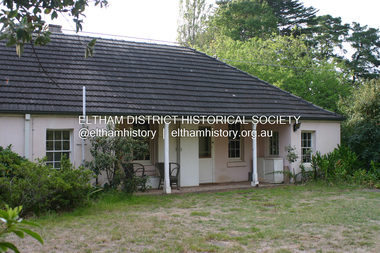
Photograph - Digital Photograph, Alan King, Sweeney's Cottage, Sweeneys Lane, Eltham, 30 January 2008
... Marshall.; p19 Thomas Sweeney, a former convict who became a respected citizen, once lived on a property at what is now the corner of Sweeneys Lane and Culla Hill, Eltham. As Sweeney was one of the district’s first settlers, the property is registered by the National Trust. Thomas Sweeney was born in 1802, son...Marshall.; p19 Thomas Sweeney, a former convict who became a respected citizen, once lived on a property at what is now the corner of Sweeneys Lane and Culla Hill, Eltham. As Sweeney was one of the district’s first settlers, the property is registered by the National Trust. Thomas Sweeney was born in 1802, son ...Part of the original cottage named Culla Hill built by Thomas Sweeney (a former convict) remains as a small section of today’s house. Covered under Heritage Overlay, Nillumbik Planning Scheme National Estate National Trust of Australia (Victoria) Local Sifgnificance Published: Nillumbik Now and Then / Marguerite Marshall 2008; photographs Alan King with Marguerite Marshall.; p19 Thomas Sweeney, a former convict who became a respected citizen, once lived on a property at what is now the corner of Sweeneys Lane and Culla Hill, Eltham. As Sweeney was one of the district’s first settlers, the property is registered by the National Trust. Thomas Sweeney was born in 1802, son of impoverished tenant farmers in Tipperary County, Ireland. He became a ploughman, then at 21 he was sentenced to hang for setting on fire the house of Patrick Guyder at Gullshill. It is said the arson was due to a dispute over undelivered guns to a social justice guerilla group, the White Boys, of which Sweeney was a member. But the sentence was commuted to life transportation to Australia in 1823.1 Apparently in Sydney he became a servant to James Chandler at Botany. Soon James Chandler leased his farm and became a catechist on the Hawkesbury River, so Sweeney was reassigned to a former convict, John Brown, at Liverpool. Later Sweeney was assigned to George Brown of Lake Illawarra. In 1831, Sweeney was granted a ticket-of-leave and bought a boat to carry goods between Illawarra district and Sydney Town. He married his first wife who had come to Australia as a free woman. However she drowned after bearing him a daughter. In 1838, one month after he had received a conditional pardon, Sweeney married a blacksmith’s daughter, Margaret Meehan, newly arrived from Ireland. They then moved to Port Phillip and squatted on the south side of the Yarra River, about seven miles (11km) from Melbourne. Around 1842, Sweeney bought 110 acres (44.5ha) in the parish of Nillumbik for £110. He built a slab hut 12 x 10 feet (3.6m x 3m) and then his homestead, Culla Hill, a typical Tipperary style cottage, now known as Sweeney’s Cottage. It was here that many generations of Sweeneys lived for almost 100 years. Culla Hill became a social centre for the district and the Catholic community used it as a church. Sweeney was apparently on good terms with a tribe of Aborigines living on the river nearby, who helped him build his house.2 Sweeney proved himself a civic-minded leader. In 1844, he led a call for a bridge over the Plenty River. He was on the first school board and supplied the first grain for Eltham’s mill. Sweeney profited during the gold rush, not by gold digging, but by providing supplies for nearby fields and others as far away as Beechworth.3 Thomas Sweeney died in 1867 and was buried at the Eltham Cemetery, leaving two sons, five daughters, and 300 acres (121.4ha), as well as Culla Hill. Culla Hill – by then reduced to 75 acres (30ha) – was sold out of the family in 1939, then renamed Sweeneys. The present Sweeneys Lane, running diagonally through the original holding, was the track to the house. Part of the original cottage remains as a small section of today’s house. The dining-family room fronted by a veranda is original, and although there have been some changes, the cedar door and most of the small 12-paned wooden-framed windows are original. The walls are made of the original hand-made brick. After buying the property in 1952 Mr and Mrs Burston demolished a dilapidated slab hut, a three-roomed detached kitchen and cellar, as materials needed to restore them were very difficult to obtain so soon after the war.4 However the barn remains almost in its original condition. It is believed to have been built from stone quarried on the property. Now roofed with iron sheets it was probably originally thatched. The sandstone barn has a peaked roof supported by the original saplings and a doorway large enough to accommodate a fully loaded wagon.This collection of almost 130 photos about places and people within the Shire of Nillumbik, an urban and rural municipality in Melbourne's north, contributes to an understanding of the history of the Shire. Published in 2008 immediately prior to the Black Saturday bushfires of February 7, 2009, it documents sites that were impacted, and in some cases destroyed by the fires. It includes photographs taken especially for the publication, creating a unique time capsule representing the Shire in the early 21st century. It remains the most recent comprehenesive publication devoted to the Shire's history connecting local residents to the past. nillumbik now and then (marshall-king) collection, culla hill, eltham, sweeney's cottage, sweeneys lane, thomas sweeney -
 Eltham District Historical Society Inc
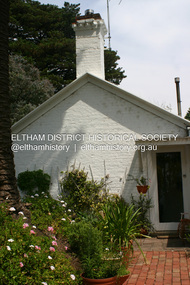
Photograph - Digital Photograph, Alan King, Garden Hill, Eltham-Yarra Glen Road, Kangaroo Ground, 3 February 2008
... Son, Robert White was a Councillor of the Shire of Eltham at the time the Shire acquired two acres of land on the adjacent property from the Mess brothers for the creation of the Shire of Eltham Memorial Park (1921) in which the Shire of Eltham War Memoirial tower was erected (1926). Fanny White donated a small section of land from the Garden Hill property to facilitate entry access to the park. The White family sold the property to Sir Herbert Gepp in 1925. Covered under Heritage Overlay, Nillumbik Planning Scheme. Published: Nillumbik Now and Then / Marguerite Marshall...Son, Robert White was a Councillor of the Shire of Eltham at the time the Shire acquired two acres of land on the adjacent property from the Mess brothers for the creation of the Shire of Eltham Memorial Park (1921) in which the Shire of Eltham War Memoirial tower was erected (1926). Fanny White donated a small section of land from the Garden Hill property to facilitate entry access to the park. The White family sold the property to Sir Herbert Gepp in 1925. Covered under Heritage Overlay, Nillumbik Planning Scheme. Published: Nillumbik Now and Then / Marguerite Marshall ...The original house was built around 1850 was one of Kangaroo Ground's earliest homes, part of which remains today. Built by Scottish farmer Andrew Harkness who acquired the property in 1849 at the top of the hill with magnificent panoramic views as far as Kinglake, the same year he married Sarah Oswin. The property was known as Garden Hill from at least 1865. Andrew and Sarah had four sons and five daughters. Harkness was a founder of the Kangaroo Ground School and one of the first to suggest establishing the Eltham District Road Board (1858-71) of which he was a member, the pre-cursor to the Shire of Eltham (1871-1994). He was also a Trustee of the Kangaroo Ground Cemetery. His daughter Fanny married farmer Alexander White who purchased the property in 1893. Alexander White died in 1906 and ownership transferred to Fanny White. Son, Robert White was a Councillor of the Shire of Eltham at the time the Shire acquired two acres of land on the adjacent property from the Mess brothers for the creation of the Shire of Eltham Memorial Park (1921) in which the Shire of Eltham War Memoirial tower was erected (1926). Fanny White donated a small section of land from the Garden Hill property to facilitate entry access to the park. The White family sold the property to Sir Herbert Gepp in 1925. Covered under Heritage Overlay, Nillumbik Planning Scheme. Published: Nillumbik Now and Then / Marguerite Marshall 2008; photographs Alan King with Marguerite Marshall.; p29This collection of almost 130 photos about places and people within the Shire of Nillumbik, an urban and rural municipality in Melbourne's north, contributes to an understanding of the history of the Shire. Published in 2008 immediately prior to the Black Saturday bushfires of February 7, 2009, it documents sites that were impacted, and in some cases destroyed by the fires. It includes photographs taken especially for the publication, creating a unique time capsule representing the Shire in the early 21st century. It remains the most recent comprehenesive publication devoted to the Shire's history connecting local residents to the past. nillumbik now and then (marshall-king) collection, kangaroo ground -
 Eltham District Historical Society Inc
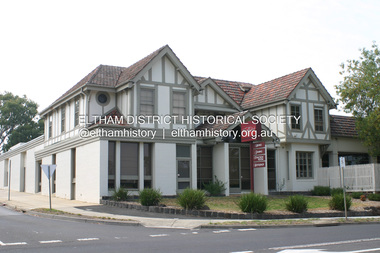
Photograph - Digital Photograph, Alan King, Eltham Hotel, cnr Main Road and Pitt Street, 28 December 2007
... son, Herbert James (Jim) Watson in 1915. In July 1925, Jim Watson demolished the original building and, in its place, erected a modern hotel which remains the foundation of the present-day Eltham Hotel. Covered under Heritage Overlay, Nillumbik Planning Scheme. Published: Nillumbik Now and Then / Marguerite Marshall...son, Herbert James (Jim) Watson in 1915. In July 1925, Jim Watson demolished the original building and, in its place, erected a modern hotel which remains the foundation of the present-day Eltham Hotel. Covered under Heritage Overlay, Nillumbik Planning Scheme. Published: Nillumbik Now and Then / Marguerite Marshall ...The Eltham Hotel is the oldest continually operating hotel in the Eltham district. Initially referred to as the Little Eltham Hotel, it has been known as the Eltham Hotel since the mid-1850s through to the present except for a brief period as the Eltham Tavern in the late 1980s. The original hotel opened in 1854 by Richard Warren was built by Benjamin Oliver Wallis. The Fountain of Friendship Hotel on the opposite side of Maria Street (Main Road) opened shortly after. The hotel was a well-known resting place for gold diggers during the gold rush at Woods’ Point and Warren would buy the gold from the diggers. Warren ran into financial difficulties and determined to return to England. Wallis bought the hotel in 1861 and ran it till 1886 when he sold it to Christopher Watson Snr. When Christopher Watson Snr died a year after purchase, his son Christopher took over until his death in 1909 when it passed to wife Emily and then their youngest son, Herbert James (Jim) Watson in 1915. In July 1925, Jim Watson demolished the original building and, in its place, erected a modern hotel which remains the foundation of the present-day Eltham Hotel. Covered under Heritage Overlay, Nillumbik Planning Scheme. Published: Nillumbik Now and Then / Marguerite Marshall 2008; photographs Alan King with Marguerite Marshall.; p41This collection of almost 130 photos about places and people within the Shire of Nillumbik, an urban and rural municipality in Melbourne's north, contributes to an understanding of the history of the Shire. Published in 2008 immediately prior to the Black Saturday bushfires of February 7, 2009, it documents sites that were impacted, and in some cases destroyed by the fires. It includes photographs taken especially for the publication, creating a unique time capsule representing the Shire in the early 21st century. It remains the most recent comprehenesive publication devoted to the Shire's history connecting local residents to the past. nillumbik now and then (marshall-king) collection, eltham, eltham hotel, main road, pitt street -
 Eltham District Historical Society Inc
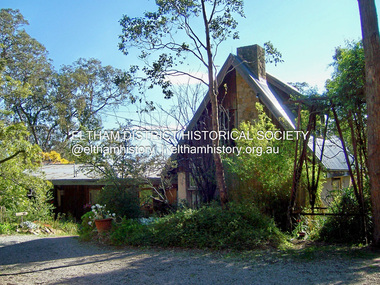
Photograph - Digital Photograph, Marguerite Marshall, Former home of Professor William MacMahon Ball, York Street, Eltham, 24 May 2007
... Marshall.; p141 At the eastern tip of York Street, Eltham, stands Shinrone, the former home of one of Australia’s intellectual leaders. Professor William Macmahon Ball, was one of the first to bring Asia as a foreign policy issue to the Australian public.1 He was a political scientist, writer, broadcaster and diplomat. The house was one of the first in Eltham Shire to incorporate mud-brick,2 because of the acute shortage of building materials after World War Two. Its novice builders later become leaders in Eltham’s built and garden design. Mac (as he was usually called), who was the son...Marshall.; p141 At the eastern tip of York Street, Eltham, stands Shinrone, the former home of one of Australia’s intellectual leaders. Professor William Macmahon Ball, was one of the first to bring Asia as a foreign policy issue to the Australian public.1 He was a political scientist, writer, broadcaster and diplomat. The house was one of the first in Eltham Shire to incorporate mud-brick,2 because of the acute shortage of building materials after World War Two. Its novice builders later become leaders in Eltham’s built and garden design. Mac (as he was usually called), who was the son ...Situated at the eastern end of York Street, Eltham, 'Shinrone', the former home of Professor William (Mac) MacMahon Ball was one of the first in the Shire of Eltham to incorporate mud-brick. Professor MacMahon Ball, a political scientist, writer, broadcaster and diplomat and family moved to York Street, Eltham in 1945 into a timber cottage built around the 1890s and in poor repair. Mac asked Alistair Knox to renovate the home and he expanded the living area and added verandahs. In 1948 Montsalvat artist and sculptor Sonia Skipper supervised the building of most of the mud-brick studio. Neighbour Gordon Ford made the mud-bricks. Mac also asked John Harcourt, who had worked with him as a journalist in shortwave broadcasting, to build a pise (rammed earth) and stone addition to the largely timber house. Harcourt built two bedrooms - including an attic bedroom - a balcony with a shower and toilet, a nd a fireplace and chimney of local stone. Published: Nillumbik Now and Then / Marguerite Marshall 2008; photographs Alan King with Marguerite Marshall.; p141 At the eastern tip of York Street, Eltham, stands Shinrone, the former home of one of Australia’s intellectual leaders. Professor William Macmahon Ball, was one of the first to bring Asia as a foreign policy issue to the Australian public.1 He was a political scientist, writer, broadcaster and diplomat. The house was one of the first in Eltham Shire to incorporate mud-brick,2 because of the acute shortage of building materials after World War Two. Its novice builders later become leaders in Eltham’s built and garden design. Mac (as he was usually called), who was the son of a Church of England minister, was born in Casterton, Victoria in 1901 and died in 1986. In 1945 he helped establish the United Nations, as political consultant to the Australian Delegation at the San Francisco Conference.3 Then in 1946 Mac was appointed British Commonwealth Representative on the Allied Council for Japan, which is recorded in detail in his diary.4 In 1948 Mac led an Australian Government Goodwill Mission to South East Asia. However, Mac was perhaps most successful as an academic and public speaker.5 He was a commentator on the Australian Broadcasting Commission, from the early 1930s to the early 1960s. He was also Controller of the Short-Wave Broadcasting Unit during World War Two, which later became Radio Australia. From 1923 he taught at The University of Melbourne, then became foundation Professor of Political Science in 1949 and was Chair until his retirement in 1968.6 In 1942, as the government expected a Japanese invasion, Mac’s wife Katrine and their only child Jenny, moved from Kew to Eltham as temporary evacuees. However Mac and Katrine lived in Eltham for almost the rest of their lives. After staying with friends, they rented a house in Reynolds Road, where, as it was wartime, they needed to keep horses for transport and a cow and poultry for milk and eggs. In 1945 the family moved to the house at York Street, which was then a timber cottage, built around the 1890s and in poor repair. The underground well, cellar and part of the garden are all that remain of what stood on the original 18 acre (7.3ha) allotment. Thanks largely to Katrine’s hard work, the house was gradually renovated and extended. The long rambling house was partially built by several young neighbours, who were inspired by the cheap mud-brick and stone building style of Montsalvat, the Eltham artists’ colony. Mac asked Alistair Knox to renovate Shinrone, named after an Irish village near Katrine’s family home. Knox later popularised the mud-brick style of house construction, for which Eltham became known. He expanded the living area and added verandas. In 1948 Montsalvat artist and sculptor Sonia Skipper supervised the building of most of the mud-brick studio. Another neighbour, Gordon Ford, who was to have a major influence on the Australian garden style, made the mud-bricks. Mac also asked John Harcourt, who had worked with him as a journalist in short-wave broadcasting, to build a pisé (rammed earth) and stone addition to the largely timber house. Harcourt built two bedrooms – including an attic bedroom – a balcony with a shower and toilet, and a fireplace and chimney of local sandstone. With pioneering work naturally came mistakes, including one particularly dramatic incident when Harcourt was building walls with unsupported sections. Jenny Ellis, Mac’s daughter, remembers being awakened from sleep by a thundering shudder. The wall of her room had fallen down – fortunately away from her! In 1950 artist Peter Glass – another neighbour and later landscape designer – built Katrine a mud-brick pottery. As a result, the house features at one end Harcourt’s characteristic steep gable roof, while at the other the flatter construction characteristic of Knox. Mac referred to the home as the Eltham ‘experimental building site’.7 Surprisingly, the combination works, perhaps partly because it has the warm inviting feel of timber, mud-brick and stone.This collection of almost 130 photos about places and people within the Shire of Nillumbik, an urban and rural municipality in Melbourne's north, contributes to an understanding of the history of the Shire. Published in 2008 immediately prior to the Black Saturday bushfires of February 7, 2009, it documents sites that were impacted, and in some cases destroyed by the fires. It includes photographs taken especially for the publication, creating a unique time capsule representing the Shire in the early 21st century. It remains the most recent comprehenesive publication devoted to the Shire's history connecting local residents to the past. nillumbik now and then (marshall-king) collection, eltham, alistair knox, gordon ford, john harcourt, mudbrick construction, pise construction, professor macmahon ball, shinrone, sonia skipper, york street -
 Eltham District Historical Society Inc
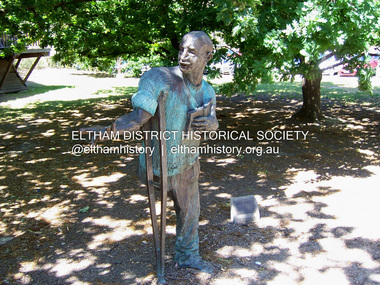
Photograph - Digital Photograph, Marguerite Marshall, Alan Marshall by Marcus Skipper (1995) outside Eltham Library, Panther Place, Eltham, 11 October 2006
... Alan Marshall was born in 1902 at Noorat in Western Victoria, as the only son of Billy a drover, horse breaker, hawker and then general store owner. ...Alan Marshall was born in 1902 at Noorat in Western Victoria, as the only son of Billy a drover, horse breaker, hawker and then general store owner. ...Sculture in bronze of Alan Marshall by Marcus Skipper, 1995 Alan Marshall, AM., O.B.E., Hon.LL,D. (1902-1984) was born at Noorat, Victoria and became one of Australia's most famous authors. His association with the Eltham area began in 1920 when he started his first job as a junior clerk at the Eltham Shire Offices, Kangaroo Ground. In the 1940's he spent some time living at Research. From 1955 he lived in Eltham for nearly 20 years. Disabilities resulting from polio as a young child did not prevent a wide range of experiences. Alan's occupations have been listed as clerk, night watchman, fortune teller, freelance journalist and author. He has been patron of many disadvantaged Children's Societies. Alan's books are numerous and include novels, short stories, children's books, history and travel. Among the best known are his autobiographies "I Can Jump Puddles" and "This is the Grass". Others include "These are My People", "Ourselves Writ Strange", "People of the Dreamtime"; "The Gay Provider" and "Wild Red Horses". In 1971 he wrote the Centenary History of the Shire of Eltham, "Pioneers and Painters". Covered under National Trust of Australia (Victoria), State significance. Published: Nillumbik Now and Then / Marguerite Marshall 2008; photographs Alan King with Marguerite Marshall.; p159 Outside the Eltham Library a bronze figure of a short one-legged man with a crutch invites people to the world of literature. The bronze statue, by Marcus Skipper, is of author Alan Marshall, who is famed for his autobiography I Can Jump Puddles, about growing up and overcoming the effects of polio. That plucky little boy later lived in the Nillumbik district for more than 50 years, and on his death in 1984, was buried in the Nillumbik Cemetery at Diamond Creek. Although a hugely successful author, his grave is modest with only a tiny boulder and simple bronze plaque on a grassed plot. From 1955 to 1972 Marshall lived in a tiny fibro-cement bungalow at the rear of a house at Park West Road, Eltham, owned by his older sister, Elsie McConnell. It was there that he wrote most of his autobiographical trilogy and his history of the former Eltham Shire, Pioneers and Painters. His long association with Eltham Shire began in 1918 when his family moved to Diamond Creek. Then in 1920 he began work as a junior clerk at the Eltham Shire Offices on Main Road, Kangaroo Ground near the Yarra Glen Road, while boarding at the hotel next door. Marshall later bought a block of land in Research, which had three bark huts. In one of these he wrote his first book These Are My People. He later sold the land but lived in a caravan there and in 1955 wrote I Can Jump Puddles.1 Proud of its citizen, the Eltham Shire named a park after Marshall at the corner of Main Road and Leanne Drive, Eltham. In 1985 the Shire initiated the Alan Marshall Short Story Award. It was Marshall’s early life in the country that taught him to live courageously in spite of his crippling polio, and he inspired many. This informed his writing – full of courage, championing the battler and love of the bush. Alan Marshall was born in 1902 at Noorat in Western Victoria, as the only son of Billy a drover, horse breaker, hawker and then general store owner. At the age of six, Marshall contracted infantile paralysis and was later hospitalised in Colac for 18 months. With his father’s encouragement, Marshall learnt to swim, wrestle and box, ride a bicycle (downhill), ride a horse and drive a car. Marshall won a scholarship to Stott’s Correspondence College to study accountancy. To help him continue his studies and find employment, his family bought 12 acres (4.8ha), in Ryans Road, Diamond Creek, opposite Windmill Court. There they ran cows, some poultry and an orchard. But life with a disability and during the Depression was hard for Marshall, who for 20 years, endured long periods of unemployment and loneliness and was often exploited at work.2 However, life improved in the 1930s, when he published short stories and articles in newspapers and magazines, including a column of advice to the lovelorn, which he wrote for nearly 20 years. At age 42 Marshall published his first book and in the next 30 years he published more than 20. His most successful book was I Can Jump Puddles, which sold more than three million copies internationally. It was made into a film, released in 1971, by Czechoslovakian director Karel Kachyna. Marshall was one of the first Australians to write about Aborigines who called him Gurrawilla - teller of tales - when he lived with them in Arnhem Land for eight months.3 In 1941 Marshall married Olive Dixon, with whom he had two daughters, Catherine and Jennifer. Marshall and Olive divorced in 1957. In 1972 Marshall was awarded an OBE for his work with the handicapped. He was also awarded an Honorary Doctor of Laws by Melbourne University, an Order of Australia for services to literature and the Soviet Order of Friendship of Peoples.This collection of almost 130 photos about places and people within the Shire of Nillumbik, an urban and rural municipality in Melbourne's north, contributes to an understanding of the history of the Shire. Published in 2008 immediately prior to the Black Saturday bushfires of February 7, 2009, it documents sites that were impacted, and in some cases destroyed by the fires. It includes photographs taken especially for the publication, creating a unique time capsule representing the Shire in the early 21st century. It remains the most recent comprehenesive publication devoted to the Shire's history connecting local residents to the past. nillumbik now and then (marshall-king) collection, alan marshall, art in public places, eltham, eltham library, marcus skipper, panther place, public art, sculpture -
 Eltham District Historical Society Inc
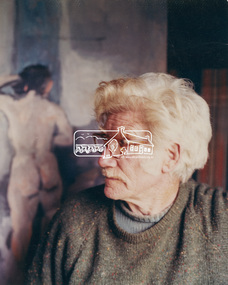
Photograph, Mark Strizic, William (Jock) Frater, Artist, c.1971
... sons and a daughter. Reproduced Page 113 of "Pioneers and Painters: 100 years of the Shire of Eltham by Alan Marshall, 1971. ...sons and a daughter. Reproduced Page 113 of "Pioneers and Painters: 100 years of the Shire of Eltham by Alan Marshall, 1971. ...William (Jock) Frater (1890-1974) was an an artist and stained-glass designer who had some associations with Eltham. Frater was born in 1890 in Linlithglow Scotland. In 1910 he arrived in Melbourne. With a passion for painting, he hadn’t been in Melbourne very long before he met Percy Leason and Richard McGann, who were both working as lithographers with Sands and McDougall who produced Melbourne Directories. Jock Frater asked them where, near Melbourne, he should go to paint, and they both replied ‘Eltham’. Frater and Percy Leason became firm friends; and with others they spent their weekends painting, at Eltham and other places. Many times, during those weekends Frater and Leason would camp the night near Bible and Pitt streets. Another favourite spot for their weekend sketching was along the Diamond Creek where Judge Book Memorial Village was later built. In 1916 Jock Frater married his wife Winifred Dow, a tailoress. They bought a house and small property on the corner of Arthur and Bible streets. They lived in Eltham for about a year, then moved to Alphington. Jock also became a stained-glass designer. The west window of Wesley Church, Lonsdale Street, Melbourne, he regarded as his most significant design. His contribution to art in Australia was, however, as a painter who introduced Post-Impressionist principles and challenged the notion that art was an imitation of nature. He visited Central Australia in 1950 and Port Douglas, North Queensland, in 1952. His later major exhibitions were at the Australian Galleries, Melbourne, in 1958, the Victorian Artists’ Society in 1963, and a retrospective at the National Gallery of Victoria in 1966. Frater was a revered president of the Victorian Artists’ Society from 1963 until 1972, exhibiting annually with the society during the last decade of his career and filling three galleries at his final exhibition in July 1973. In 1974 Frater was appointed O.B.E. for his services to art. His work is represented in galleries and private collections throughout Australia as well as the Glasgow Art Gallery. He died at his home at Alphington on 28 November 1974 and was buried in Arthurs Creek cemetery. He was survived by four sons and a daughter. Reproduced Page 113 of "Pioneers and Painters: 100 years of the Shire of Eltham by Alan Marshall, 1971. This photo forms part of a collection of photographs gathered by the Shire of Eltham for their centenary project book,"Pioneers and Painters: 100 years of the Shire of Eltham" by Alan Marshall (1971). The collection of over 500 images is held in partnership between Eltham District Historical Society and Yarra Plenty Regional Library (Eltham Library) and is now formally known as the 'The Shire of Eltham Pioneers Photograph Collection.' It is significant in being the first community sourced collection representing the places and people of the Shire's first one hundred years.Digital image of colour print 12 x 9.5 cm. Also black and white printeltham local characters, sepp, shire of eltham pioneers photograph collection, "pioneers and painters", william frater, jock frater, artist, stained glass designer, immigrant, o.b.e. -
 Eltham District Historical Society Inc
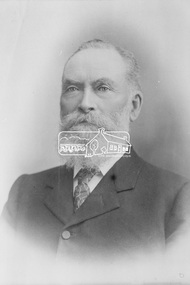
Photograph, The Hon. Ewen Hugh Cameron, Member for Evelyn in Legislative Assembly, Victorian Parliament, for 40 years from 1874-1914
... sons and three daughters. This photo forms part of a collection of photographs gathered by the Shire of Eltham for their centenary project book, "Pioneers and Painters: 100 years of the Shire of Eltham" by Alan Marshall (1971). ...Ewen Hugh Cameron (1831- 27 September 1915) was born at Kilmonivaig, Inverness Scotland. He migrated to Melbourne in “The Hurricane” in 1853 and in 1855 tried his luck at the newly-opened Andersons Creek Goldfield. Two years later he was appointed first postmaster at Warrandyte and ran the store there. In 1863 he took up the 100 acre farm “Pigeon Bank” at Kangaroo Ground where he lived until his death. In 1874 Cameron was elected as the Member for Evelyn in the Victorian Legislative Assembly and held the seat until he retired in 1914 as “Father of the House”. He held a number of ministerial and other important Parlimentary positions. The most notable was Chairman of the Railways Standing Committee, which was responsible for much of the Railway development in Victoria. Concurrently with his Parliamentary career, he was a member of the Eltham Roads Board and later Council for more than 50 years. In 1867 he married Agnes Bell, a daughter of Kangaroo Ground pioneers. They had eight sons and three daughters.This photo forms part of a collection of photographs gathered by the Shire of Eltham for their centenary project book, "Pioneers and Painters: 100 years of the Shire of Eltham" by Alan Marshall (1971). The collection of over 500 images is held in partnership between Eltham District Historical Society and Yarra Plenty Regional Library (Eltham Library) and is now formally known as the 'The Shire of Eltham Pioneers Photograph Collection.' It is significant in being the first community sourced collection representing the places and people of the Shire's first one hundred years.Digital imagesepp, shire of eltham pioneers photograph collection, kangaroo ground, e.h. cameron, member for evelyn, victorian parliament, legislative assembly, ewen cameron, ewen hugh cameron -
 Eltham District Historical Society Inc
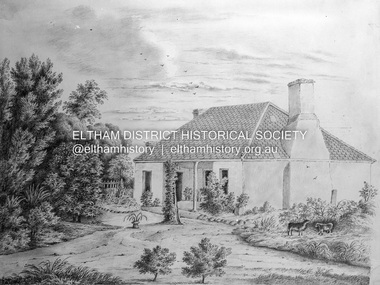
Negative - Photograph, Charles Bertie, Sketch; Sweeney's Cottage, Culla Hill, Eltham (n.d.), c.1905
... son, Mr John Carrucan, still lives at Eltham. 'Culla Hill' passed out of the Sweeneys possession in 1939 and was renamed by its new owners, 'Sweeneys', in memory of its pioneers. - Pioneers & Painters: One Hundred Years of Eltham and its Shire, Alan Marshall 1971, pp10-12 ...son, Mr John Carrucan, still lives at Eltham. 'Culla Hill' passed out of the Sweeneys possession in 1939 and was renamed by its new owners, 'Sweeneys', in memory of its pioneers. - Pioneers & Painters: One Hundred Years of Eltham and its Shire, Alan Marshall 1971, pp10-12 culla hill Art Charles Bertie drawing Mary Carrucan (nee Sweeney) Sketches Sweeney's Cottage Original colour sketch artwork 4 x 5 inch black and white negative of original colour sketch Sketch; Sweeney's Cottage, Culla Hill, Eltham (n.d.) ...In the early 1900s, Mary Sweeney commissioned artist Charles Bertie to paint the main house at Culla Hill. He charged her 5 shillings for the picture and 18 pence for the frame She took this painting with her when she married Michael Carrucan in 1910 and it hung in the Dalton Street farmhouse for many years. At a later time (1960s), the Burstons (the then owners of Culla Hill) had a card printed from the painting. The original sketch was photographed in 1970 for reproduction in the Shire history publication Pioneers & Painters (1971). The very fragile original was kept in the Council strongroom and suffered significant damage to its edges over the years, no doubt it has also yellowed. A comparison of the original as digitised (2022) with the negative taken 50 years earlier also reveals that the left 20% of the sketch has been cut off, probably due to damage. In June 1842 Thomas Sweeney applied to the Superintendent, C.J. La Trobe, asking permission to purchase a portion of the recently surveyed ‘Parish of Nillumbik'. His request was allowed and handed to the sub-treasurer and Land Board. He paid £110 for 110 acres and called the land 'Culla Hill'. He first built a temporary house, a slab hut 12 feet by 10 feet, in which he lived with his wife, an Irish girl whom he had married in 1838. (His first wife had been drowned at Port Jackson.) Some time later he built a permanent residence on the model of a Tipperary farmhouse. It was a rectangular building of hand-made bricks and stone quarried from the Western Hill with a recessed verandah in front, and bore a slate roof. The out-buildings consisted of a detached kitchen, stable and a barn. It was in this house that succeeding generations of Sweeneys were reared. The original slab hut became a washhouse and survived till recent years. 'Culla Hill' became a social centre for the district, church services being held there on various occasions. The first wheat crop in the district was planted by Sweeney who also supplied the first grain for a mill that later was built at Eltham. He took an active interest in the development of the district. At this time travelling people--many of them runaway sailors or convicts--often passed the settlement, and some of them stayed and worked with Sweeney. A tribe of aborigines living on the river below 'Culla Hill' were apparently on good terms with Sweeney, for it is said that they helped him with the building of his house. Very little is known about the aborigines who originally lived in the Eltham district. There must have been many of them; their stone axes, grinding stones, and anvil stones have been found in the gullies around Research and canoe trees and artifacts were found on the Kangaroo Ground hills. Early settlers remembered a tribe that camped on the site of the present railway bridge at Eltham. They held corroborees there and visited settlers for hand-outs of 'flour and bacca’. There was an aboriginal reserve on the Yarra, upstream from Eltham, but most of those who had collected there later went to live on the Pound Reserve at Warrandyte, where the last aborigines in the area finally ended their days. The Pound Reserve, of 1,103 acres, was established at Pound Bend in 1841. The chief protector, George Robinson, and his four assistants, were given instructions to care for the aged and sick, to provide blankets and rations for all who lived there, to train the able-bodied men in agriculture and other trades and to find them jobs. The Yarra blacks, who later came under the protection of William Thomas, have been described as a 'fine race, well made and above the average height'. Thomas Sweeney died on 6 September 1867 and was buried in the Eltham Cemetery. To his wife Margaret and his son John, he left the entire property of 'Culla Hill'. To his other son Patrick, he left 150 acres, including a small two-roomed wooden cottage. He had five daughters: Kate and Margaret (twins) who were born in 1842, Ellen 1846, Annie 1848 and Johanna 1851. John Sweeney farmed 'Culla Hill' until his death in 1909. He had ten children; one of them, Mary, became Mrs M. Carrucan whose son, Mr John Carrucan, still lives at Eltham. 'Culla Hill' passed out of the Sweeneys possession in 1939 and was renamed by its new owners, 'Sweeneys', in memory of its pioneers. - Pioneers & Painters: One Hundred Years of Eltham and its Shire, Alan Marshall 1971, pp10-12 Original colour sketch artwork 4 x 5 inch black and white negative of original colour sketchculla hill, art, charles bertie, drawing, mary carrucan (nee sweeney), sketches, sweeney's cottage -
 Eltham District Historical Society Inc
Photograph, A walk through the cemetery at Kangaroo Ground, Diana Bassett-Smith, 1 October 2001, 2001
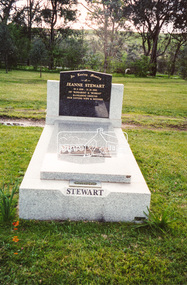
... son Zac played with our G'son Richard last weekend. A brief collection of reminiscences by Diana Bassett-Smith of locals who are buried at Kangaroo Ground Cemetery along with 17 photographs following a visit on 1 October 2001. 1983 bushfire, air vice marshall wackett, ambrose erswell, barry roach-pierson, bill pelling, billy roach-pierson, birrarung, bourchiers road, ca 13, crichton, david grant, diamond street, diana bassett-smith, donald grant, donaldson road, dorrie bourchier, duff, early settlers, elizabeth cottee, ewan cameron mp, grey house, helen kohn, isabella grant (nee stevenson), jack bourchier, james balfour, james wilson, jean stewart, jessie bull (nee haughton), jimmy cook, jocelyn, joseph stevenson, judge book village, judith furphy, kangaroo ground cemetery, kay roach-pierson, keith jocelyn, kraft foods, lacey, lloyd stuart, louise grant (nee gordon), mardi crocker, marion erswell, ned haughton, nursery, pam chevallier, passiona, peter bassett-smith, pigeon bank, rath, ricketson, robinson, ruth boyd, steven crawford baes, tintagell, tosch, vera jackson, wackett trainer, watershed jackson, willandra poultry farm, zac crocker Colour photograph print A walk through the cemetery at Kangaroo Ground, Diana Bassett-Smith, 1 October 2001 Photograph Photograph Diana Bassett-Smith Peter Bassett-Smith ...Another of a good friend and neighbour, Jean Stewart. Lloyd's wife and the mother of Mardi Crocker whose son Zac played with our G'son Richard last weekend. A brief collection of reminiscences by Diana Bassett-Smith of locals who are buried at Kangaroo Ground Cemetery along with 17 photographs following a visit on 1 October 2001.Colour photograph print1983 bushfire, air vice marshall wackett, ambrose erswell, barry roach-pierson, bill pelling, billy roach-pierson, birrarung, bourchiers road, ca 13, crichton, david grant, diamond street, diana bassett-smith, donald grant, donaldson road, dorrie bourchier, duff, early settlers, elizabeth cottee, ewan cameron mp, grey house, helen kohn, isabella grant (nee stevenson), jack bourchier, james balfour, james wilson, jean stewart, jessie bull (nee haughton), jimmy cook, jocelyn, joseph stevenson, judge book village, judith furphy, kangaroo ground cemetery, kay roach-pierson, keith jocelyn, kraft foods, lacey, lloyd stuart, louise grant (nee gordon), mardi crocker, marion erswell, ned haughton, nursery, pam chevallier, passiona, peter bassett-smith, pigeon bank, rath, ricketson, robinson, ruth boyd, steven crawford baes, tintagell, tosch, vera jackson, wackett trainer, watershed jackson, willandra poultry farm, zac crocker -
 Eltham District Historical Society Inc
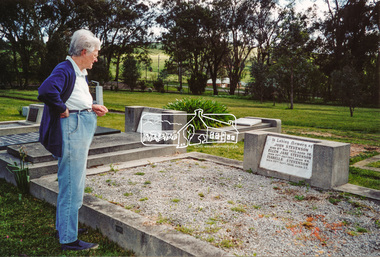
Photograph, Diana Bassett-Smith and Stevenson graves; A walk through the cemetery at Kangaroo Ground, Diana Bassett-Smith, 1 October 2001, 2001
... son David being my paternal grandfather who married Louise Gordon my grandmother. The Stevensons being original settlers and Donald Grant an original settler of Diamond Creek. A brief collection of reminiscences by Diana Bassett-Smith of locals who are buried at Kangaroo Ground Cemetery along with 17 photographs following a visit on 1 October 2001. 1983 bushfire, air vice marshall wackett, ambrose erswell, barry roach-pierson, bill pelling, billy roach-pierson, birrarung, bourchiers road, ca 13, crichton, david grant, diamond street, diana bassett-smith, donald grant, donaldson road, dorrie bourchier, duff, early settlers, elizabeth cottee, ewan cameron mp, grey house, helen kohn, isabella grant (nee stevenson), jack bourchier, james balfour, james wilson, jean stewart, jessie bull (nee haughton), jimmy cook, jocelyn, joseph stevenson, judge book village, judith furphy, kangaroo ground cemetery, kay roach-pierson, keith jocelyn, kraft foods, lacey, lloyd stuart, louise grant (nee gordon), mardi crocker, marion erswell, ned haughton, nursery, pam chevallier, passiona, peter bassett-smith, pigeon bank, rath, ricketson, robinson, ruth boyd, steven crawford baes, tintagell, tosch, vera jackson, wackett trainer, watershed jackson, willandra poultry farm, zac crocker Colour photograph print Diana Bassett-Smith and Stevenson graves; A walk through the cemetery at Kangaroo Ground, Diana Bassett-Smith, 1 October 2001 Photograph Photograph Diana Bassett-Smith Peter Bassett-Smith ...A little further on are the well worn headstones of Stevenson graves. Joseph Stevenson, my Gt, Gt, Grandfather he married Ruth Boyd. Their daughter Isabella married Donald Grant, and their son David being my paternal grandfather who married Louise Gordon my grandmother. The Stevensons being original settlers and Donald Grant an original settler of Diamond Creek. A brief collection of reminiscences by Diana Bassett-Smith of locals who are buried at Kangaroo Ground Cemetery along with 17 photographs following a visit on 1 October 2001.Colour photograph print1983 bushfire, air vice marshall wackett, ambrose erswell, barry roach-pierson, bill pelling, billy roach-pierson, birrarung, bourchiers road, ca 13, crichton, david grant, diamond street, diana bassett-smith, donald grant, donaldson road, dorrie bourchier, duff, early settlers, elizabeth cottee, ewan cameron mp, grey house, helen kohn, isabella grant (nee stevenson), jack bourchier, james balfour, james wilson, jean stewart, jessie bull (nee haughton), jimmy cook, jocelyn, joseph stevenson, judge book village, judith furphy, kangaroo ground cemetery, kay roach-pierson, keith jocelyn, kraft foods, lacey, lloyd stuart, louise grant (nee gordon), mardi crocker, marion erswell, ned haughton, nursery, pam chevallier, passiona, peter bassett-smith, pigeon bank, rath, ricketson, robinson, ruth boyd, steven crawford baes, tintagell, tosch, vera jackson, wackett trainer, watershed jackson, willandra poultry farm, zac crocker -
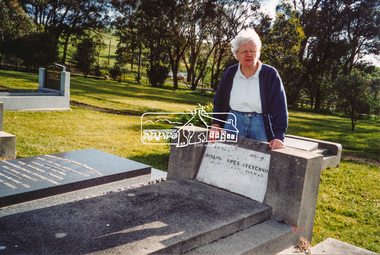 Eltham District Historical Society Inc
Photograph, Diana Bassett-Smith and Stevenson graves; A walk through the cemetery at Kangaroo Ground, Diana Bassett-Smith, 1 October 2001, 2001
... son David being my paternal grandfather who married Louise Gordon my grandmother. The Stevensons being original settlers and Donald Grant an original settler of Diamond Creek. A brief collection of reminiscences by Diana Bassett-Smith of locals who are buried at Kangaroo Ground Cemetery along with 17 photographs following a visit on 1 October 2001. 1983 bushfire, air vice marshall wackett, ambrose erswell, barry roach-pierson, bill pelling, billy roach-pierson, birrarung, bourchiers road, ca 13, crichton, david grant, diamond street, diana bassett-smith, donald grant, donaldson road, dorrie bourchier, duff, early settlers, elizabeth cottee, ewan cameron mp, grey house, helen kohn, isabella grant (nee stevenson), jack bourchier, james balfour, james wilson, jean stewart, jessie bull (nee haughton), jimmy cook, jocelyn, joseph stevenson, judge book village, judith furphy, kangaroo ground cemetery, kay roach-pierson, keith jocelyn, kraft foods, lacey, lloyd stuart, louise grant (nee gordon), mardi crocker, marion erswell, ned haughton, nursery, pam chevallier, passiona, peter bassett-smith, pigeon bank, rath, ricketson, robinson, ruth boyd, steven crawford baes, tintagell, tosch, vera jackson, wackett trainer, watershed jackson, willandra poultry farm, zac crocker Colour photograph print Diana Bassett-Smith and Stevenson graves; A walk through the cemetery at Kangaroo Ground, Diana Bassett-Smith, 1 October 2001 Photograph Photograph Diana Bassett-Smith Peter Bassett-Smith ...A little further on are the well worn headstones of Stevenson graves. Joseph Stevenson, my Gt, Gt, Grandfather he married Ruth Boyd. Their daughter Isabella married Donald Grant, and their son David being my paternal grandfather who married Louise Gordon my grandmother. The Stevensons being original settlers and Donald Grant an original settler of Diamond Creek. A brief collection of reminiscences by Diana Bassett-Smith of locals who are buried at Kangaroo Ground Cemetery along with 17 photographs following a visit on 1 October 2001.Colour photograph print1983 bushfire, air vice marshall wackett, ambrose erswell, barry roach-pierson, bill pelling, billy roach-pierson, birrarung, bourchiers road, ca 13, crichton, david grant, diamond street, diana bassett-smith, donald grant, donaldson road, dorrie bourchier, duff, early settlers, elizabeth cottee, ewan cameron mp, grey house, helen kohn, isabella grant (nee stevenson), jack bourchier, james balfour, james wilson, jean stewart, jessie bull (nee haughton), jimmy cook, jocelyn, joseph stevenson, judge book village, judith furphy, kangaroo ground cemetery, kay roach-pierson, keith jocelyn, kraft foods, lacey, lloyd stuart, louise grant (nee gordon), mardi crocker, marion erswell, ned haughton, nursery, pam chevallier, passiona, peter bassett-smith, pigeon bank, rath, ricketson, robinson, ruth boyd, steven crawford baes, tintagell, tosch, vera jackson, wackett trainer, watershed jackson, willandra poultry farm, zac crocker
