
Showing 88 items matching "mental health -- victoria"
-
 Kew Historical Society Inc
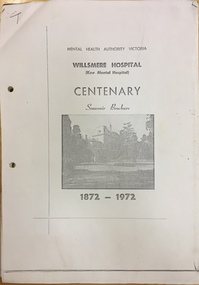
Document - Souvenir brochure [photocopy], Mental Health Authority (Victoria), Willsmere Hospital (Kew Mental Hospital), Centenary Souvenir Brochure, 1872-1972, 1972
... Mental Health Authority (Victoria)...Willsmere Hospital (Kew Mental Hospital), Centenary Souvenir Brochure, 1872-1972 Document Souvenir brochure [photocopy] Mental Health Authority (Victoria) ...The new Kew Lunatic Asylum was completed in 1871 and opened in 1872. The year 1972 marked it's centenary. Over the years, members of staff at the asylum collected records, photographs, publications and plans of the asylum, later hospital. The Society has a number of important collections relating to the asylum and the Children's Cottages. These include the Dr Cliff Judge, the Irena Higgins and the Dr Fred Stamp Collections. This photocopied brochure is one of a number of items donated by the family of the late Dr. Fred Stamp who was the last medical superintendent of the Hospital. Dr Frederick Stamp graduated from Bristol Medical School (UK) in 1968. He and his family emigrated to Australia in 1977 to Goulburn (NSW), moving to Melbourne in 1980. He became Superintendent at Willsmere in 1981 until its closure in 1988.Following their closure, the medical records of the Kew Mental Hospital and the Children's Cottages Kew were relocated to the archives of Victorian Government departments and ultimately to the Public Records Office of Victoria. Other collections, such as the Fred Stamp Collection, were assembled by staff who worked at the hospital. The years leading up to the closure of Kew must have been fraught, and many of the items in the hospital were probably destined for hard waste disposal. Dr. Fred Stamp, the last medical superintendent, kept aside or rescued a number of these items, of which this is one. Following his death, his family donated these to the Kew Historical Society. The Society recognises these items to be of lasting historical significance, essentially due to their provenance and to their rarity. Together they (and the Judge and Higgins Collections) are an invaluable aid for researchers of the institutions' histories.A photocopy of the Willsmere Hospital (Kew Mental Hospital) Centenary Souvenir Brochure, 1872-1972. The Society also has an original copy in its collection.kew lunatic asylum, kew mental hospital, willsmere, kew hospital for the insane, dr fred stamp, the fred stamp collection -
 Department of Health and Human Services
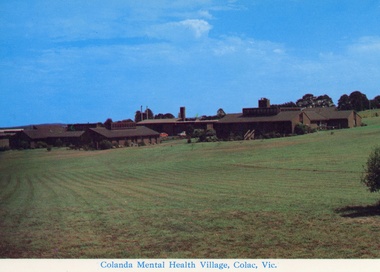
Post Card, Post card Colanda Mental Health Village - Colac Victoria
... Post card Colanda Mental Health Village - Colac Victoria...The Colac, Victoria-based Colanda Centre was one of the last Victorian institutions and offered disability accommodation from 1976, when it was established, until 2019, with its closure. colanda, colac, disability services, residential services, disability, digitised photograph Digitised colour post card of the Colanda Centre in Colac, Victoria. Post card Colanda Mental Health Village - Colac Victoria Post Card ...The Colac, Victoria-based Colanda Centre was one of the last Victorian institutions and offered disability accommodation from 1976, when it was established, until 2019, with its closure.Digitised colour post card of the Colanda Centre in Colac, Victoria. colanda, colac, disability services, residential services, disability, digitised photograph -
 RMIT GSBL Justice Smith Collection
Report, The concept of mental illness in the Mental Health Act 1986 : Report No. 31, 1990
... mental health -- law and legislation...mental health -- victoria...mental health -- law and legislation mental health -- victoria mental health laws -- victoria law reform -- victoria ISBN: 0730605604 Report No. 31 April 1990 The concept of mental illness in the Mental Health Act 1986 : Report No. 31 Report Law Reform Commission of Victoria ...Report No. 31 April 1990ISBN: 0730605604mental health -- law and legislation, mental health -- victoria, mental health laws -- victoria, law reform -- victoria -
 Kew Historical Society Inc
Document, Irena Higgins, Kew Children's Cottages, 1952-1964
... mental health - victoria - history...An important manuscript comprising original and reproduced materials from the period 1952-1964 assembled by and for senior staff at the Children's Cottages, Kew. mental health - victoria - history chidren's cottages - kew irana higgins dr cliff judge dr. a.w. brady Sorted folio of original manuscripts and printed material from the 1950s and 1960s relating to the Kew Cottages created by Irena Higgins, senior social worker at the Kew Mental Hospital and Kew Cottages. ...---, ---, Cottages Liaison Committee members, pp. 4&5 ---, (---), (Untitled), p.4. ---, (---), [Memo re feedback from Official Visitors Conference at Royal Park], p.1. ---, (---), [Patient profile proforma], pp.1-2. ---, (---), Admission to Children’s Cottages Kew, p.1. ---, (---), Admissions Procedure, pp.1-2. ---, (---), Chaplaincy, p.1. ---, (---), Children’s Cottages and Special School Kew - Open for Education Week, p.1. ---, (---), Children’s Cottages Kew, p. 1-2. ---, (---), Children’s Cottages Kew, p.1. ---, (---), Children’s Cottages, Kew - Pathology Request and Report Form, p. 1. ---, (---), Children’s Cottages? Kew, pp.1-4 ---, (---), Extracts From the Report of Dr. J. V. McCreery, first Superintendent, p.1. ---, (---), Kew Cottages Training Centre Brochure, pp.1. ---, (---), Kew Special School, pp.1-2. ---, (---), Notes for General Guidance of Officers in Charge of Idiot Children, p.1. ---, (---), Notes for General Guidance of Officers in Charge of Idiot Children, p.1. ---, (---), Notes for Student Groups, pp.1-6. ---, (---), Physiotherapy at the Children’s Cottages Kew, p.1. ---, (---), Preface to Brochure on Cottages, pp.1-2. ---, (---), The administrative staff comprises …, pp.1-2. ---, (---), Untitled, p.2. ---, (1958, 29 August), Notes from a meeting of Superintendents with Dr Dax and other superintendents, p.1. ---, (1958, October - December), Proposed Survey of Children’s Cottages, Kew, pp.1-6., and Case Sheet pp. 1-5. ---, (1961, 2 November), Untitled letter regarding finances and upgrades, p.1. ---, (1962, 25 October), Memorandum, p.1. ---, (1962), Children’s Cottages Kew [overview of activities], p.1. ---, (1962), Report for the Year 1962 [statistics], p.1. ---, (1963), The Children’s Cottages Kew, pp.1-3. ---, (1964, 10 September), Merchandise Project Children’s Welfare Fund, Kew Cottages Parents Association, p.1. ---, (1964, 26 May), [Draft] Preface to Brochure on Cottages, pp.1-2. ---, (1964, October), Report to the Twelfth Annual (Perth) Conference: Australian Council for the Mentally Retarded, Kew Cottages Parents Association, pp.1-2. ---, (1964), Children’s Welfare Fund: Disbursements July 1963 - September 1964. [Brady, Dr W.A.] , (---), Transfer of Patients from One Institution to Another, pp.1-3. [Higgins, Irena], (---), The Formation and Development of Kew Children’s Cottages Parent’s Association, pp.1-6. Ashburner, J.B., (---, ---), Notes and Instructions, Kew Mental Hospital, p.1. Ashburner, J.B., (1954, 1 April), Notices and Instructions, Kew Mental Hospital, pp.1-2. Ashburner, J.B., (1954, 10 February), Notices and Instructions, Kew Mental Hospital, pp.1-3. Ashburner, J.B., (1954, 10 March), Notices and Instructions, Kew Mental Hospital, p.1. Ashburner, J.B., (1954, 11 March), Notices and Instructions, Kew Mental Hospital, pp.1-4. Ashburner, J.B., (1954, 11 May), Notes and Instructions, Kew Mental Hospital, p.1. Ashburner, J.B., (1954, 12 March), Notices and Instructions, Kew Mental Hospital, pp.1-4. Ashburner, J.B., (1954, 12 May), Notes and Instructions, Kew Mental Hospital, p.1. Ashburner, J.B., (1954, 13 August), Notes and Instructions, Kew Mental Hospital, p.1. Ashburner, J.B., (1954, 13 May), Notes and Instructions, Kew Mental Hospital, pp.1-3. Ashburner, J.B., (1954, 14 April), Notes and Instructions, Kew Mental Hospital, pp.1-2. Ashburner, J.B., (1954, 15 April), Notes and Instructions, Kew Mental Hospital, p.1. Ashburner, J.B., (1954, 15 June), Notes and Instructions, Kew Mental Hospital, p.1-2. Ashburner, J.B., (1954, 16 July), Notes and Instructions, Kew Mental Hospital, p.1. Ashburner, J.B., (1954, 19 February), Notes and Instructions, Kew Mental Hospital, pp.1-2. Ashburner, J.B., (1954, 19 October), Notes and Instructions, Kew Mental Hospital, p.1. Ashburner, J.B., (1954, 2 April), Notices and Instructions, Kew Mental Hospital, pp.1-2. Ashburner, J.B., (1954, 2 July), Notes and Instructions, Kew Mental Hospital, p.1. Ashburner, J.B., (1954, 2 March), Annual Report for 1952, Kew Mental Hospital, pp.1-4. Ashburner, J.B., (1954, 20 August), Notes and Instructions, Kew Mental Hospital, pp.1-2. Ashburner, J.B., (1954, 21 October), Notes and Instructions, Kew Mental Hospital, p.1. Ashburner, J.B., (1954, 23 February), Notices and Instruction - Succinic Acid Treatment, Kew Mental Hospital, pp.1-2 Ashburner, J.B., (1954, 23 June), Notes and Instructions, Kew Mental Hospital, pp.1-2. Ashburner, J.B., (1954, 23 March), Notices and Instructions, Kew Mental Hospital, pp.1-2. Ashburner, J.B., (1954, 25 May), Notes and Instructions, Kew Mental Hospital, p.1. Ashburner, J.B., (1954, 27 April), Notes and Instructions, Kew Mental Hospital, pp.1-3. Ashburner, J.B., (1954, 27 May), Notes and Instructions, Kew Mental Hospital, p.1. Ashburner, J.B., (1954, 28 July), Notes and Instructions, Kew Mental Hospital, pp.1-2. Ashburner, J.B., (1954, 29 July), Notes and Instructions, Kew Mental Hospital, p.1. Ashburner, J.B., (1954, 3 September), Notes and Instructions, Kew Mental Hospital, p.1. Ashburner, J.B., (1954, 31 March), Notices and Instructions - Rations, Kew Mental Hospital, pp.1-4. Ashburner, J.B., (1954, 4 June), Notes and Instructions, Kew Mental Hospital, p.1. Ashburner, J.B., (1954, 4 May), Notes and Instructions, Kew Mental Hospital, p.1. Ashburner, J.B., (1954, 4 October), Notes and Instructions, Kew Mental Hospital, p.1. Ashburner, J.B., (1954, 6 April), Notes and Instructions, Kew Mental Hospital, p.1. Ashburner, J.B., (1954, 6 October), Notes and Instructions, Kew Mental Hospital, pp.1-2. Ashburner, J.B., (1954, 7 July), Notes and Instructions, Kew Mental Hospital, p.1. Ashburner, J.B., (1954, 5 February), Notices and Instructions, Kew Mental Hospital, p.1. Brady Dr. W.A. (1960, December), Newsletter to parents, pp.1-5 Brady, Dr W.A. (1965, 28 May), Letter to The Secretary, Mental Health Authority regarding waiting lists, p.1. Brady, Dr. W.A. (1963, 28 February) Annual Report [to the Secretary of the Mental Health Authority], pp.1-15 Brady, W.A., (1954, 9 April), Notes and Instructions, Kew Mental Hospital, pp.1-2. Brady, W.A., (1954, 15 December), Notes and Instructions, Kew Mental Hospital, p.1. Brady, W.A., (1954, 7 December), Notes and Instructions, Kew Mental Hospital, p.1. Brady, W.A., (1954, 9 November), Notes and Instructions, Kew Mental Hospital, p.1. Brady, W.A., (1955, 13 December), Notes and Instructions, Kew Mental Hospital, p.1. Brady, W.A., (1955, 14 December), Notes and Instructions, Kew Mental Hospital, p.1. Brady, W.A., (1955, 15 July), Notes and Instructions, Kew Mental Hospital, p.1. Brady, W.A., (1955, 20 June), Notes and Instructions, Kew Mental Hospital, p.1. Brady, W.A., (1955, 24 June), Notes and Instructions, Kew Mental Hospital, p.1. Brady, W.A., (1955, 24 October), Notes and Instructions, Kew Mental Hospital, p.1. Brady, W.A., (1955, 25 August), Notes and Instructions, Kew Mental Hospital, p.1. Brady, W.A., (1955, 29 March), Notes and Instructions, Kew Mental Hospital, p.1. Brady, W.A., (1955, 5 December), Notes and Instructions, Kew Mental Hospital, p.1. Brady, W.A., (1955, 8 November), Notes and Instructions, Kew Mental Hospital, p.1. Brady, W.A., (1955, 9 May), Notes and Instructions, Kew Mental Hospital, p.1. Brady, W.A., (1956, 6 January), Notes and Instructions, Kew Mental Hospital, p.1. Brady, W.A., (1961, 8 December), Invitation to a screening of Dr. Pitt’s “Brookland Experiment”, p.1. Brazier, ‘Mac’ (1964, February), Newsletter, Kew Cottages Parents Association, pp.1-2. Brazier, ‘Mac’, (1964, June), Newsletter, Kew Cottages Parents Association, pp.1-4. Brazier, ‘Mac’, (1964, April), Newsletter, Kew Cottages Parents Association, pp.1-4. Brazier, ‘Mac’, (1964, August), Newsletter, Kew Cottages Parents Association, pp.1-4. Brazier, ‘Mac’, (1964, December), Newsletter, Kew Cottages Parents Association, pp.1-4. [3 copies]. Brazier, ‘Mac’, (1964, July), Newsletter, Kew Cottages Parents Association, pp.1-4. Brazier, ‘Mac’, (1964, May), Newsletter, Kew Cottages Parents Association, pp.1-4. Brazier, ‘Mac’, (1964, November), Newsletter, Kew Cottages Parents Association, pp.1-5. Brazier, ‘Mac’, (1964, October), Newsletter, Kew Cottages Parents Association, pp.1-6. Brazier, ‘Mac’, (1964, September), Newsletter, Kew Cottages Parents Association, pp.1-4. Brazier, Betty (1964, 26 April), Letter to I Higgins re Distribution of newsletters to staff, Kew Cottages Parents Association. (p.1) Dale, (1964), A Few Facts About the Children’s Cottages Kew Fordyce, J., (1956, 13 January), Notes and Instructions, Kew Mental Hospital, p.1. Higgins, Irena (---), A Short History of the Children’s Cottages, Kew, pp.1-2. Higgins, Irena (1966, 28 November), Letter to Dr Brady regarding waiting lists, pp.1-3. Higgins, Irena, (---), ‘Children’s Cottages’, Kew, p. 1-2. Loveless, L.W., (1963, 18 July), [Commonwealth Department of Social Services] ‘Approval of Children’s Cottages as an endowed Institution’, p.1. M.H. 11, Schedule 17 Section 41 (2) (b), ‘Request of Medical Practitioner for Admission of Voluntary patient to a Training Centre or Private Training Centre’, Mental Health Regulations 1962, p.1. M.H. 12, Section 41 (10) (a) (b) (c), ‘Order for the Discharge of a Voluntary Patient’, Mental Health Regulations 1962, p.1. M.H. 13, Section 41 (10) (d), ‘Application for Discharge by Voluntary Patient and Order for Discharge’, Mental Health Regulations 1962, p.1. M.H. 14, Section 41 (1), Application for Leave of Absence for Voluntary Patient, Mental Health Regulations 1962, p.1. M.H. 2, Schedule 9 Section 41 (a) 41 (b) 42 (1) 43 (1) 44 (1) 48, 59 (1) (2) ‘Statement of Personal Details of Patient’, Mental Health Regulations 1962, p.1-2. M.H. 21, Schedule 9 Section 44 (1) 48 and 52, Medical Approval for Admission to Training Centre, Mental Health Regulations 1962, pp.1-2. M.H. 22, Schedule 25 Section 44, Request to Receive a Patient into a Training Centre, Mental Health Regulations 1962, p.1. M.H. 33, Schedule 40, Section 62, Notice of Death, Mental Health Regulations 1962, p.1. M.H. 37, Section 87 (1), Application and Approval for Trial Leave, Recommended and Approved Patients, Mental Health Regulations 1962, p.1. M.H. 39, Section 93 (1), Order of Superintendent for Discharge of Patient on Leave Upon Production of Medical Certificate, Mental Health Regulations 1962, p.1. M.H. 40, Section 94 (1), Order of Superintendent for Discharge of Patient, Mental Health Regulations 1962, p.1. M.H. 43, Section 102, Consent of the Chief medical Officer or Superintendent for Anaethesia or Surgical Operation Upon a Patient, Mental Health Regulations 1962, p. 1. M.H. 7, Schedule 14 Section 41 (2) (a) (i) and (ii), ‘Application for Admission of Voluntary Patient to a Training Centre or Private Training Centre by Parent or Guardian’, Mental Health Regulations 1962, p.1. M.H. 9, Schedule 16 Section 41 (2) (a) (ii), ‘Application for Admission to a Training Centre as a Voluntary Patient’, Mental Health Regulations 1962, p.1. Medical Officers (1958, 11 October), Percentage of deaths and statistics for the years 1955 to 1957, Report to Dr. E.C. Dax, Chairman, Mental Health Authority, pp. 1-2. Plumridge, Len, (1964), Statement of Receipts & Expenditure 1963-1964: Children’s Welfare Fund, Kew Cottages Parents Association, p.1. Temby, E., (---), The Kew Cottages Parents’ Association, p. 1-2. Temby, Ethel, (1964, October), Proceedings of the Twelfth Annual Conference, Australian Council for the Mentally Retarded, pp.1-2. Temby, Ethel, (1964, September), [Information Committee] Sixth Annual Report pp.1-2 Temby, Ethel, (1964, September), Information Committee: Sixth Annual Report, pp.1-2 Wann, E.M., (1956, 16 March), Memo [regarding the overcrowding crisis], p. 1. WM.7663 (---), Children’s Cottages Kew E.4 [overview and personnel], pp. 1-2.An important manuscript comprising original and reproduced materials from the period 1952-1964 assembled by and for senior staff at the Children's Cottages, Kew.Sorted folio of original manuscripts and printed material from the 1950s and 1960s relating to the Kew Cottages created by Irena Higgins, senior social worker at the Kew Mental Hospital and Kew Cottages. The material later formed part of the collection of Dr Cliff Judge, resident psychiatrist at the Cottages. Material within the folio includes original typescripts created by Irena Higgins, copies of newsletters by various Superintendent and Deputy Superintendent Psychiatrists including Dr A.W. Brady, and published and unpublished reports to relevant mental health departments.mental health - victoria - history, chidren's cottages - kew, irana higgins, dr cliff judge, dr. a.w. brady -
 Kew Historical Society Inc
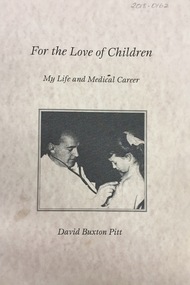
Book, For the Love of Children: my life and medical career / by David Buxton Pitt, 1999, 1999
... mental health - victoria - history...This book by David Pitt once formed part of the collection of Dr Cliff Judge, resident psychiatrist at the Cottages, and was donated by a daughter in 2018. mental health - victoria - history chidren's cottages - kew dr cliff judge dr david pitt xiv, 208 p. : ill., ports. ; 30 cm. ...Dr David Pitt was Australian paediatrician. In 1959, he joined the Kew Cottages workforce, where he practised for 17 years and improved the conditions for the children. He was a pioneer in the identification of rare syndromes using computers. The Cottages anabled him to contribute to the day to day care of disadvantaged people in the Australian community, while continuing his research. Pitt left Kew in 1976. (Source: Wikipedia). This book by David Pitt once formed part of the collection of Dr Cliff Judge, resident psychiatrist at the Cottages, and was donated by a daughter in 2018.xiv, 208 p. : ill., ports. ; 30 cm.mental health - victoria - history, chidren's cottages - kew, dr cliff judge, dr david pitt -
 Kew Historical Society Inc
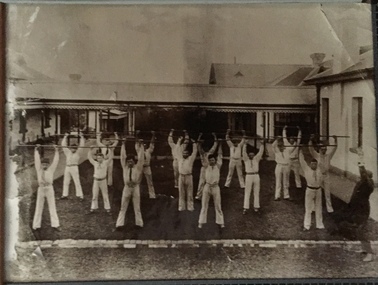
Photograph, Boys and Men Exercising, Children's Cottages (Kew), circa 1900, c.1900
... mental health - victoria - history...mental health - victoria - history chidren's cottages - kew dr cliff judge Large unframed photograph in poor condition of boys and men exercising at the Kew Cottages. ...Large unframed photograph in poor condition of boys and men exercising at the Kew Cottages. The photograph once formed part of the collection of Dr Cliff Judge, resident psychiatrist at the Cottages, and was donated by one of his daughters in 2018. mental health - victoria - history, chidren's cottages - kew, dr cliff judge -
![Civilization and Mental Retardation: A history of the care and treatment of intellectually disabled people / [by] Cliff Judge](/media/collectors/550653872162f11fb04854aa/items/5d03449221ea7b09504e067b/item-media/5ebbc1e521ea670348e1b49b/item-fit-380x285.jpg?cb=6) Kew Historical Society Inc
Kew Historical Society IncBook, Civilization and Mental Retardation: A history of the care and treatment of intellectually disabled people / [by] Cliff Judge, 1987
... ...mental health - victoria - history...childrens cottages - kew (vic) mental health - victoria - history 86 p. : ill., ports Civilization and Mental Retardation: A history of the care and treatment of intellectually disabled people / [by] Cliff Judge Book Book C J Publishing ...86 p. : ill., portschildrens cottages - kew (vic), mental health - victoria - history -
![Book, For the Love of Children: My life and medical career / [by] David Buxton Pitt, 1999](/media/collectors/550653872162f11fb04854aa/items/5d03450c21ea7b09504f0d94/item-media/5d03b0ba21ea670b18dcae9b/item-fit-380x285.jpg?cb=6) Kew Historical Society Inc
Kew Historical Society IncBook, For the Love of Children: My life and medical career / [by] David Buxton Pitt, 1999
... mental health - victoria - history...mental health - victoria - history pediatricians - australia - biography xiv, 208 p. : ill., ports. ...xiv, 208 p. : ill., ports.mental health - victoria - history, pediatricians - australia - biography -
 Alfred Hospital Nurses League - Nursing History Collection
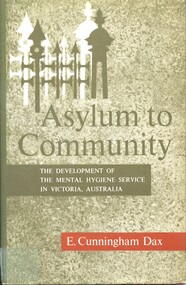
Book - Illustrated book, Eric Cunningham Dax 1908-2008, Asylum to community - the development of the mental hygiene service in Victoria, 1961
... Mental health services-Victoria-history...Mental health, during the period of World Mental Health Year. Of significance to the AHNL as it includes reference to the role of nurses in psychiatric care Mental health services-Victoria-history mental health services-history-Australia This book describes the rapid expansion of community psychiatric centres in Australia, particularly Victoria, as a shift from traditional asylum-based care. ...This book describes the rapid expansion of community psychiatric centres in Australia, particularly Victoria, as a shift from traditional asylum-based care. Dax (author) a key figure in this transformation, advocated for a more humane and community-focused approach to mental health treatment.Illustrated book with dustjacket. Book is bound in light brown with white print. There is a stylized image of fencing on the front cover. Abbreviated title, author's name and publisher's mark are printed on the spine. Dust-jacket is a dappled olive green on the front, and plain olive green on spine and back. Title is printed in olive-green, and white on olive green background, along with author's name (white print on brown background) and stylize image of fencing (white and olive-green print) on the front of the dustjacket. Abbreviated title (cream ink) author's name (brown in on cream background) and publisher's mark are printed on the spine.non-fictionThis book describes the rapid expansion of community psychiatric centres in Australia, particularly Victoria, as a shift from traditional asylum-based care. Dax (author) a key figure in this transformation, advocated for a more humane and community-focused approach to mental health treatment.mental health services-victoria-history, mental health services-history-australia -
 South West Healthcare
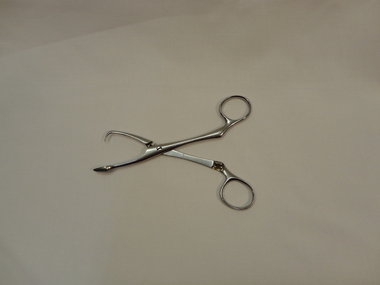
Carmalt's tongue holding forceps, Medical Equipment, ca 1920
... Used for surgery in a mental health hospital in Victoria circa 1920. Positions the tongue of an unconscious patient forward; possibly used during tonsillectomies. ...Used for surgery in a mental health hospital in Victoria circa 1920. Positions the tongue of an unconscious patient forward; possibly used during tonsillectomies. ...Used for surgery in a mental health hospital in Victoria circa 1920. Positions the tongue of an unconscious patient forward; possibly used during tonsillectomies. May also have been used for patients with epilepsy. http://museumvictoria.com.au/collections/items/259059/carmalt-s-tongue-holding-forceps-medicon-metal-circa-1920Stainless steel forcep with punch arm and base with matching hole"STAINLESS STEEL", "F.G & D" "C.TURTIN & SONS. SHEFIELD"oral & tonsil instrument, mental health, epilepsy -
 The Beechworth Burke Museum
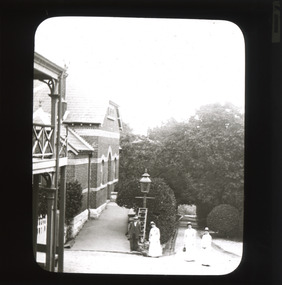
Photograph - Lantern Slide, c1900
... victoria...nineteenth century...1900s...twentieth century...emulsion slides...nursing...nurses...mental hospitals...lunatic asylums...asylums...social services...social welfare...insane asylums...mental health...Burke Museum Beechworth Lantern Slide Slide Glass Slide Plate Burke Museum Collection Photograph Monochrome magic lantern indigo shire north-east victoria nineteenth century 1900s twentieth century emulsion slides nursing nurses mental hospitals lunatic asylums asylums social services social welfare insane asylums mental health infrastructure Obverse: i / Thin translucent sheet of glass with a rectangular image printed on the front and framed in a black backing. ...This image appears to show nurses at what is now the Mayday Hills Mental Asylum arriving for work in approximately 1900. These individuals are part of a long history of nursing in Beechworth. Three medical or social welfare facilities opened in the mid-1800s as part of a push by the township to become a regional centre for Government services. These were the Ovens District Hospital (opened in 1857), the Ovens Benevolent Asylum (opened in 1863), and the Beechworth Mental Hospital (opened in 1867 and renamed Mayday Hills Hospital at Centenary celebrations in 1967). It was recognised that the unsettled living conditions, poverty and relative isolation of the Goldfields environment could produce 'mental disturbances' which required local treatment facilities as services in Melbourne were too far away. Carole Woods' publication 'A Titan's Field' describes activities undertaken by patients at Beechworth Mental Hospital as including monthly balls and occasional concerts as well as work to make the facility self-supporting such as farm work and making clothes. She mentions a report in 1870 that the approximately 300 patients were clean and neat with 'no-one in restraint or seclusion' but that by 1905 the organisation had 623 patients which placed strain on building infrastructure such as heating and water supplies, leading to high turnover of nurses and other issues. A program of building works to extend and improve facilities followed over subsequent decades. Lantern slides, sometimes called 'magic lantern' slides, are glass plates on which an image has been secured for the purpose of projection. Glass slides were etched or hand-painted for this purpose from the Eighteenth Century but the process became more popular and accessible to the public with the development of photographic-emulsion slides used with a 'Magic Lantern' device in the mid-Nineteenth Century. Photographic lantern slides comprise a double-negative emulsion layer (forming a positive image) between thin glass plates that are bound together. A number of processes existed to form and bind the emulsion layer to the base plate, including the albumen, wet plate collodion, gelatine dry plate and Woodburytype techniques. Lantern slides and magic lantern technologies are seen as foundational precursors to the development of modern photography and film-making techniques This glass slide is significant because it provides insight into Beechworth's social and medical amenities in the early Twentieth Century, around the time of Australia's Federation into one nation. It is also an example of an early photographic and film-making technology in use in regional Victoria in the time period.Thin translucent sheet of glass with a rectangular image printed on the front and framed in a black backing. It is held together by metals strips to secure the edges of the slide.Obverse: i /burke museum, beechworth, lantern slide, slide, glass slide, plate, burke museum collection, photograph, monochrome, magic lantern, indigo shire, north-east victoria, nineteenth century, 1900s, twentieth century, emulsion slides, nursing, nurses, mental hospitals, lunatic asylums, asylums, social services, social welfare, insane asylums, mental health, infrastructure -
 The Beechworth Burke Museum
Photograph - Lantern Slide, c1900
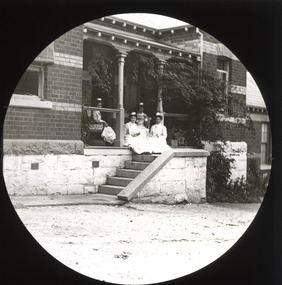
... victoria...nineteenth century...1900s...twentieth century...emulsion slides...nursing...nurses...mental hospitals...lunatic asylums...asylums...social services...social welfare...insane asylums...mental health...Burke Museum Beechworth Lantern Slide Slide Glass Slide Plate Burke Museum Collection Photograph Monochrome magic lantern indigo shire north-east victoria nineteenth century 1900s twentieth century emulsion slides nursing nurses mental hospitals lunatic asylums asylums social services social welfare insane asylums mental health infrastructure Thin translucent sheet of glass with a circular image printed on the front and framed in a black backing. ...This image appears to show nurses at what is now the Mayday Hills Mental Asylum in approximately 1900. These individuals are part of a long history of nursing in Beechworth. Three medical or social welfare facilities opened in the mid-1800s as part of a push by the township to become a regional centre for Government services. These were the Ovens District Hospital (opened in 1857), the Ovens Benevolent Asylum (opened in 1863), and the Beechworth Mental Hospital (opened in 1867 and renamed Mayday Hills Hospital at Centenary celebrations in 1967). It was recognised that the unsettled living conditions, poverty and relative isolation of the Goldfields environment could produce 'mental disturbances' which required local treatment facilities as services in Melbourne were too far away. Carole Woods' publication 'A Titan's Field' describes activities undertaken by patients at Beechworth Mental Hospital as including monthly balls and occasional concerts as well as work to make the facility self-supporting such as farm work and making clothes. She mentions a report in 1870 that the approximately 300 patients were clean and neat with 'no-one in restraint or seclusion' but that by 1905 the organisation had 623 patients which placed strain on building infrastructure such as heating and water supplies, leading to high turnover of nurses and other issues. A program of building works to extend and improve facilities followed over subsequent decades. Lantern slides, sometimes called 'magic lantern' slides, are glass plates on which an image has been secured for the purpose of projection. Glass slides were etched or hand-painted for this purpose from the Eighteenth Century but the process became more popular and accessible to the public with the development of photographic-emulsion slides used with a 'Magic Lantern' device in the mid-Nineteenth Century. Photographic lantern slides comprise a double-negative emulsion layer (forming a positive image) between thin glass plates that are bound together. A number of processes existed to form and bind the emulsion layer to the base plate, including the albumen, wet plate collodion, gelatine dry plate and Woodburytype techniques. Lantern slides and magic lantern technologies are seen as foundational precursors to the development of modern photography and film-making techniques.This glass slide is significant because it provides insight into Beechworth's social and medical amenities in the early Twentieth Century, around the time of Australia's Federation into one nation. It is also an example of an early photographic and film-making technology in use in regional Victoria in the time period.Thin translucent sheet of glass with a circular image printed on the front and framed in a black backing. It is held together by metals strips to secure the edges of the slide.burke museum, beechworth, lantern slide, slide, glass slide, plate, burke museum collection, photograph, monochrome, magic lantern, indigo shire, north-east victoria, nineteenth century, 1900s, twentieth century, emulsion slides, nursing, nurses, mental hospitals, lunatic asylums, asylums, social services, social welfare, insane asylums, mental health, infrastructure -
 The Beechworth Burke Museum
Sculpture - Carving, c1977
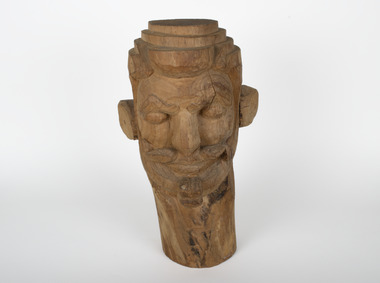
... Mayday Hills Asylum was one of the three largest psychiatric hospitals in Victoria, and played an important role in the treatment of mental health illnesses from its establishment in 1867 to its closure in 1995. ...Carving of a large male head made by a patient of Mayday Hills Asylum. The sculpture has been roughly hewn from a single piece of wood.Mayday Hills Asylum was one of the three largest psychiatric hospitals in Victoria, and played an important role in the treatment of mental health illnesses from its establishment in 1867 to its closure in 1995. As part of prescribed treatment, many patients participated in craft activities were they were able to create an array of objects. A limb of a tree roughly carved into the shape of the man's face featuring heavy eyebrows, moustache and beard.beechworth, burke museum, mayday hills asylum, carving, wooden sculpture -
 The Beechworth Burke Museum
Sculpture - Carving, c1977
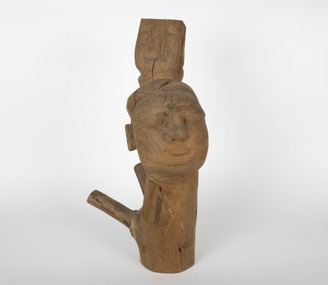
... Mayday Hills Asylum was one of the three largest psychiatric hospitals in Victoria, and played an important role in the treatment of mental health illnesses from its establishment in 1867 to its closure in 1995. ...Carving of a small female head made by a patient of Mayday Hills Asylum. The sculpture as been roughly hewn from a tree limb with multiple branches.Mayday Hills Asylum was one of the three largest psychiatric hospitals in Victoria, and played an important role in the treatment of mental health illnesses from its establishment in 1867 to its closure in 1995. As part of prescribed treatment, many patients participated in craft activities were they were able to create an array of objects. A limb of a tree roughly carved into the shape of a face, featuring a wide nose, protruding eyes, and flat mouth. On a limb section that extends above the head is a carving of a small totem-like face. Two small limb sections protruding from the back. Pen lines and figures on nose and ears.beechworth, burke museum, mayday hills asylum, sculpture, wood carving -
 The Beechworth Burke Museum
Sculpture - Carving, c1977
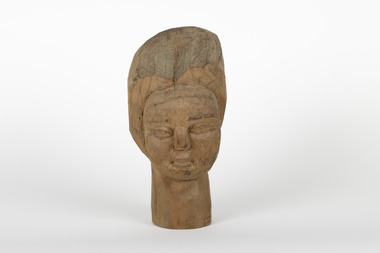
... Mayday Hills Asylum was one of the three largest psychiatric hospitals in Victoria, and played an important role in the treatment of mental health illnesses from its establishment in 1867 to its closure in 1995. ...Carving of a small female head made by a patient of Mayday Hills Asylum. A grid has been drawn across the top with Romanian letters written within the cells.Mayday Hills Asylum was one of the three largest psychiatric hospitals in Victoria, and played an important role in the treatment of mental health illnesses from its establishment in 1867 to its closure in 1995. As part of prescribed treatment, many patients participated in craft activities were they were able to create an array of objects. A limb of a tree roughly carved into the shape of a woman's face, featuring a thick hair style, slanted eyes, delicate mouth, and long neck. Pen notations on top of sculpture.beechworth, burke museum, mayday hills asylum, sculpture, wood carving -
 The Beechworth Burke Museum
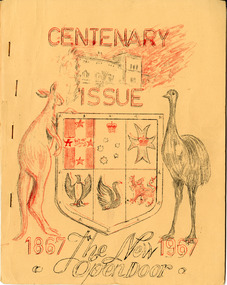
Document - Magazine, CENTENARY ISSUE / 1867 / The New Open Door / 1967, 1967
... Mayday Hills Asylum was one of the three largest psychiatric hospitals in Victoria, and played an important role in the treatment of mental health illnesses from its establishment in 1867 to its closure in 1995. ...Centenary issue of the Open Door Magazine that was produced by both staff and patients. The title reflects Mayday Hills "open door" approach to patient care.Mayday Hills Asylum was one of the three largest psychiatric hospitals in Victoria, and played an important role in the treatment of mental health illnesses from its establishment in 1867 to its closure in 1995. As part of prescribed treatment, many patients participated in craft activities were they were able to create an array of objects. 13-page A4 paper magazine with 4 copper staples.CENTENARY ISSUE / 1867 / The New Open Door / 1967 [The Australian National Coat of Arms]beechworth, burke museum, mayday hills, magazine, centenary -
 The Beechworth Burke Museum
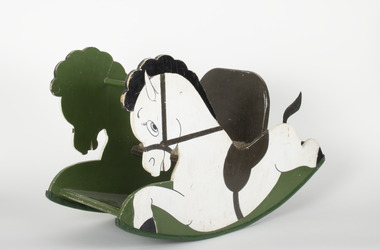
Domestic object - Rocking Horse, c1977
... Mayday Hills Asylum was one of the three largest psychiatric hospitals in Victoria, and played an important role in the treatment of mental health illnesses from its establishment in 1867 to its closure in 1995. ...Child-size rocking horse made and sold by a patient of Mayday Hills Asylum. Purchased in 1978 and used by a family for generations.Mayday Hills Asylum was one of the three largest psychiatric hospitals in Victoria, and played an important role in the treatment of mental health illnesses from its establishment in 1867 to its closure in 1995. As part of prescribed treatment, many patients participated in craft activities were they were able to create an array of objects. A small wooden rocking horse painted in green, white and brown, with carpet lining on seat.beechworth, burke museum, mayday hills asylum, rocking horse, children's toys -
 The Beechworth Burke Museum
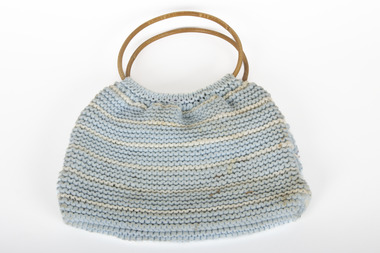
Textile - Handbag, c1970
... Mayday Hills Asylum was one of the three largest psychiatric hospitals in Victoria, and played an important role in the treatment of mental health illnesses from its establishment in 1867 to its closure in 1995. ...A knitted handbag made by patients of Mayday Hills Asylum.Mayday Hills Asylum was one of the three largest psychiatric hospitals in Victoria, and played an important role in the treatment of mental health illnesses from its establishment in 1867 to its closure in 1995. As part of prescribed treatment, many patients participated in craft activities were they were able to create an array of objects. A blue and white knitted handbag with cane handles, made by a patient of Mayday Hills.beechworth, burke museum, mayday hills asylum, knitting, handbag, bag, craft, fibre art -
 The Beechworth Burke Museum
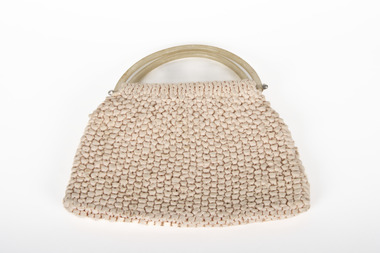
Textile - Handbag, c1970
... Mayday Hills Asylum was one of the three largest psychiatric hospitals in Victoria, and played an important role in the treatment of mental health illnesses from its establishment in 1867 to its closure in 1995. ...Knitted handbag made by patient of Mayday Hills Asylum.Mayday Hills Asylum was one of the three largest psychiatric hospitals in Victoria, and played an important role in the treatment of mental health illnesses from its establishment in 1867 to its closure in 1995. As part of prescribed treatment, many patients participated in craft activities were they were able to create an array of objects. A pink knitted fabric handbag in moss stitch with plastic handles.beechworth, burke museum, mayday hills asylum, knitting, handbag, bag, fibre art, craft -
Federation University Historical Collection
Letter - Correspondence, Mental Hygiene Branch - Ballarat Mental Hospital to Ballarat School of Mines, 1965, 17/02/1965
... Typed letter on Mental Hygiene Branch (Department of Health, Victoria) letterhead, with the Ballarat Mental Hospital given on the address. ...Mental Hygiene Branch Ballarat MEntal Hospital lakeside mental asylum turner metalwork rehabilitation Typed letter on Mental Hygiene Branch (Department of Health, Victoria) letterhead, with the Ballarat Mental Hospital given on the address. ...Typed letter on Mental Hygiene Branch (Department of Health, Victoria) letterhead, with the Ballarat Mental Hospital given on the address. The letter asks the Principal of the Ballarat School of Mines if he could advise on an instructor for a metal working unit for rehabilitation patients. mental hygiene branch, ballarat mental hospital, lakeside, mental asylum, turner, metalwork, rehabilitation -
 Ringwood and District Historical Society
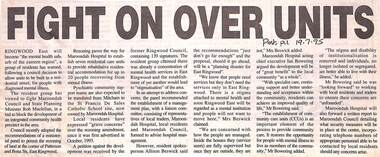
Newspaper, Scrapbook Clipping, Library Collection, Ringwood, Victoria
... Ringwood East will become "the mental health suburb of the eastern region" a group of residents has warned, following a council decision to allow units to be built in a residential street, for people with diagnosed mental illness Newspaper Clipping from "The Post", 19-7-1995. P1. Fight on over units Scrapbook Clipping, Library Collection, Ringwood, Victoria ...Newspaper Clipping from "The Post", 19-7-1995. P1. Fight on over unitsRingwood East will become "the mental health suburb of the eastern region" a group of residents has warned, following a council decision to allow units to be built in a residential street, for people with diagnosed mental illness -
 Eltham District Historical Society Inc
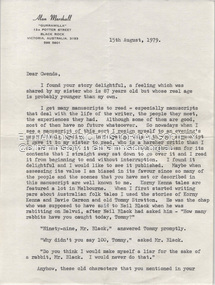
Document - Folder, Alan Marshall (1902-1984), Correspondence from Alan Marshall to Gwenda Sanderson, 1979-1983
... Victoria...Merrilyn Sanderson...Mortlake...The Land (poem)...Collected Verse (book)...Austin family...Hammers over the Anvil (book)...Eeyeuk...Dennis family...Peg Dennis...Noorat Church...Jim Smith...Miss Dennis...Mrs Polly...Mrs Angus Gillies...Mental health...Korny Kenna Folk tales Australian Folk Tales Davie Carson Tommy Stratton Neil Black Black Emily Noorat Purnim encampment Pompey Austin Aboriginal characters John Manifold John Hooker Collins Publishers Eltham history Alan Marshall (Pioneers and Painters) James Bonwick Mount Shadwell Mount Noorat John Smith Blacksmith Mary Turner-Shaw On Mount Emu Creek (book) Wooiwyrite Western District Victoria Merrilyn Sanderson Mortlake The Land (poem) Collected Verse (book) Austin family Hammers over the Anvil (book) Eeyeuk Dennis family Peg Dennis Noorat Church Jim Smith Miss Dennis Mrs Polly Mrs Angus Gillies Mental health Frank Smith Country Life (English paper) Field (English paper) Peter McLeod Bill Beechey Angus Gillies Mag Dennis East Driscoll Camperdown Bill White Alec Irvine Jack Irvine Staughton's stable Cumming family Jallalabad Miss Baird Private Catholic School Jack Peoples Shaw's Weatherley Miss Ann Gordon Ballangeich Writer Author Sun (newspaper) William Collins (Aust.) ...Alan Marshall AM, (2 May 1902 – 21 January 1984) was an Australian writer, story teller, humanist and social documenter. Personal correspondence between Gwenda Sanderson and Alan Marshall, dated between 1979 and 1983. There are 21 letters in all, the last 3 of which were dictated from the Hurlingham Nursing Home in Brighton. Background information for the letters (daugher Merrilyn Sanderson 10 October 2025): My mother, Gwenda Sanderson ( nee White ) grew up in the western district and knew Alan Marshall's sister. Gwenda was an aspiring author, and reached out to Alan for support and advice regarding her writing. Alan proved to be a generous and inspiring mentor and as you will see, they established a rapport. In 1966 Gwenda moved from Mortlake to Montmorency (quite a culture shock!) and around 1983 she and her husband, Stan moved to Diamond Creek. Letters: 1. Alan Marshall to Gwenda Sanderson, 15 August 1979 2. Alan Marshall to Gwenda Sanderson, 22 August 1979 3. Alan Marshall to Gwenda Sanderson, 28 August 1979 4. Alan Marshall to Gwenda Sanderson, 7 September 1979 5. Alan Marshall to Gwenda Sanderson, 19 September 1979 6. Alan Marshall to Gwenda Sanderson, 11 October 1979 7. Alan Marshall to Gwenda Sanderson, 18 October 1979 8. Alan Marshall to Gwenda Sanderson, 1 November 1979 9. Alan Marshall to Gwenda Sanderson, 10 January 1980 10. Alan Marshall to Gwenda Sanderson, 24 January 1980 11. Alan Marshall to Gwenda Sanderson, 15 February 1980 12. Gwen Hardisty on behalf of Alan Marshall to Gwenda Sanderson, 27 May 1980 13. Alan Marshall to Gwenda Sanderson, 17 June 1980 14. Alan Marshall to Gwenda Sanderson, 29 July 1980 15. Alan Marshall to Gwenda Sanderson, 4 August 1980 16. Alan Marshall to Gwenda Sanderson, 22 August 1980 17. Alan Marshall to Gwenda Sanderson, 5 February 1981 18. Alan Marshall to Gwenda Sanderson, 5 August 1981 19. Gwen Hardisty on behalf of Alan Marshall to Gwenda Sanderson, 11 May 1982 20. Alan Marshall to Gwenda Sanderson, 27 Octopber 1982 21. Alan Marshall to Gwenda Sanderson, 21 February 1983 alan marshall, gwenda sanderson, gurrawilla, elsie louise mcconnell, black rock (vic.), korny kenna, folk tales, australian folk tales, davie carson, tommy stratton, neil black, black emily, noorat, purnim encampment, pompey austin, aboriginal characters, john manifold, john hooker, collins publishers, eltham history, alan marshall (pioneers and painters), james bonwick, mount shadwell, mount noorat, john smith, blacksmith, mary turner-shaw, on mount emu creek (book), wooiwyrite, western district victoria, merrilyn sanderson, mortlake, the land (poem), collected verse (book), austin family, hammers over the anvil (book), eeyeuk, dennis family, peg dennis, noorat church, jim smith, miss dennis, mrs polly, mrs angus gillies, mental health, frank smith, country life (english paper), field (english paper), peter mcleod, bill beechey, angus gillies, mag dennis, east driscoll, camperdown, bill white, alec irvine, jack irvine, staughton's stable, cumming family, jallalabad, miss baird, private catholic school, jack peoples, shaw's, weatherley, miss ann gordon, ballangeich, writer, author, sun (newspaper), william collins (aust.) ltd, chatsworth homestead, russia, i can jump puddles (book), nat gould, race horses, ethell dell, gertrude page, geoffrey farnell, east driscoll (story), shamrock smith, the catholic ball (story), lance skuthorpe, the blood of johnny meagher (story), winter-irving, sarah midgeley, richard skilbeck, miss edith (story), sun competition, mandeville hall, hampden council, alan marshall commemorative plaque noorat, russian theatrical troupe, noorat show, eliza sturgess, sam johnson the baker, elsie johnson, crupper, martingale, a.j. black, shaw women, miss laura, squatter, duke of edinburgh, royal family, 'texas' green, member for kalgoorlie, duke of gloucestor, the girl in pink, prince of wales, may creedie (story), mrs scott of mortlake, smouldering fires (book), lindsay russell, mary murray of our valley (book), the fellowship of australian writers, jim hamilton, journey to aboriginal victoria (book), mary gilmore, peter mcallum institute, may creedie (book), gwen hardisty, heart attack, bulletin (magazine), stephenson, gloria swanson, jennifer marshall, daniel (grandson), cathy (daughter), sandringham hospithal, east brighton nursing home, alan marshall writes alone (review) -
 J. Ward Museum Complex
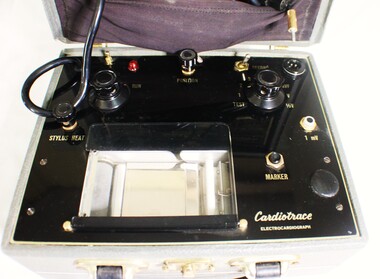
Instrument - Electrocardiograph Machine - Cardiotrace Heat Mark II, circa 1920
... Victoria's medical institutions. The equipment is significant because it is a fully intact example of diagnostic equipment used in a mental health hospital in Victoria Australia. electrocardiograph machine medical instrument medicine health mental health ararat mental hospital j ward Manufacturer: Medical Instrument Co. ...With the advent of electricity, so to came the invention of the Electrocardiograph Machine. This piece of medical equipment gave nursing staff and doctors a more precise indication of a patients heart beat and was used extensively across Victoria's medical institutions. The equipment is significant because it is a fully intact example of diagnostic equipment used in a mental health hospital in Victoria Australia.Cardiotrace Electrocardiograph Machine in blue plastic case with black handle. Contains: Electric cord Cords to link electrodes Graph paper to measure heart beats Instruments on panel marked 'stylus heat', 'off', 'run', 'position', 'test', 'record', '1', '2', '3', 'aVR', 'aVL', 'aVP', 'V', '1/2V', 'lmV', marker.Manufacturer: Medical Instrument Co. Pty. Ltd. Distributor: Watson Victor Limited Serial No: 3362 Cardiotrace Heat Mark III Electrocardiograph/Voltage 220-240 A/C /Frequency 50 cycles per second/Watts 45 serial 3362/Caution: Refer to Manual for full detail.electrocardiograph machine, medical instrument, medicine, health, mental health, ararat mental hospital, j ward -
 Bendigo Historical Society Inc.
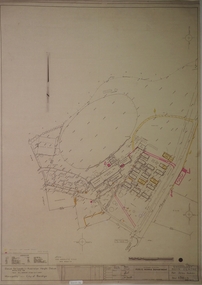
Plan - SANDHURST BOYS CENTRE COLLECTION: PART DETAIL SURVEY
... Prepared by the Public Works Department for the Government of Victoria. Client is the Mental Health Department, Municipality is City of Bendigo. ...BENDIGO Institutions sandhurst boys centre Sandhurst Boys Centre site plan; Prepared by the Public Works Department for the Government of Victoria. Client is the Mental Health Department, Municipality is City of Bendigo. ...Prepared by the Public Works Department for the Government of Victoria. Client is the Mental Health Department, Municipality is City of Bendigo. Site plan of area bounded by O'Dwyer St and Finn St, North Bendigo. Handwritten note on back - Update of whole centre 10/4/91. Details include: oval, tennis court, grandstand, area is bounded by an un-named watercourse. Also indicated are 14 nissen huts, 2 toilet blocks, 3 weatherboard buildings, 1 galvanised iron building,2 galvanised iron sheds (one new), residence, garage, fowl shed, and a carpark. bendigo, institutions, sandhurst boys centre, sandhurst boys centre site plan; -
 Christ Church Anglican Parish of Warrnambool
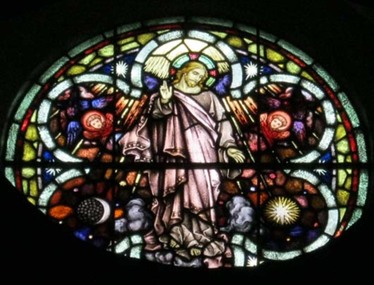
Memorial Window: Elizabeth Edith MACK, "Christ Ascending in Glory"
... Victoria. He was knighted in 1967 (the first Warrnambool -Born person to be so honoured) while Minister for Health and regarded the care of the Mentally Ill of prime importance but also the care of the aged. ...Victoria. He was knighted in 1967 (the first Warrnambool -Born person to be so honoured) while Minister for Health and regarded the care of the Mentally Ill of prime importance but also the care of the aged. ...Elizabeth Edith Mack was born to parents William & Elizabeth (nee Wilmont) Hatton, in approx. 1873 in Moyston, Victoria. She married Frederick David Mack (a wool and skin buyer) in approx. 1903. Frederick Mack was born in 1968 in Warrnambool to parents Joseph and Louisa Mary (nee Despard) Mack. Joseph served as Shire Secretary. The Mack family (including Elizabeth and Frederick) occupied the same sandstone house in the town for more than a century. They had at least 5 children. Elizabeth Edith Mack died in Warrnambool in 1931 aged 58 years. The Circular Memorial Window was erected in her memory by her children. Elizabeth and Frederick's son, Ronald, became The Honorable Sir Ronald (William) Mack, M.L.C. President of the Legislative Council of Victoria. He was knighted in 1967 (the first Warrnambool -Born person to be so honoured) while Minister for Health and regarded the care of the Mentally Ill of prime importance but also the care of the aged. He was given a state funeral after his death in 1968, the service being conducted at Christ Church.The Mack family was a prominent pioneer family in Warrnambool. Her son Ronald William Mack was the first Warrnambool-born person to be knighted.Circular stained glass window above five lancet windows in the west wall of the second nave, depicts 'Christ Ascending in Glory'. The inscription is on a mosaic plaque below the central window.The mosaic tablet below the centrral light refers to this memorial to Elizabeth Mack. "The Above Circular Window/ is erected/ To the Glory of God, in Memory of/ our beloved Mother/ Elizabeth Edith Mack/who departed this life on 23rd December 1931."mack elizabeth edith mack - elizabeth hatton - elizabeth wilmont - moyston victoria - frederick david mack - wool and skin buyer - shire secretary - sir ronald william mack - state funeral - circular window - memorial window - stained glass - christ churc warrnambool -
 Warrnambool and District Historical Society Inc.
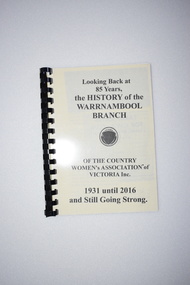
Booklet, Country Women’s Association, Warrnambool Branch, History of Warrnambool Branch CWA, 2016
... Victoria was founded in 1928 and the Warrnambool Branch was founded in 1931. The branch has given assistance through the years to the Red Cross, Baby Health Centres, the Warrnambool Hospital, bush fire relief, mental health and aged care and it has regular displays of country arts and crafts. ...Victoria was founded in 1928 and the Warrnambool Branch was founded in 1931. The branch has given assistance through the years to the Red Cross, Baby Health Centres, the Warrnambool Hospital, bush fire relief, mental health and aged care and it has regular displays of country arts and crafts. ...The Country Women’s Association of Australia advances the rights and equity of women, families and communities in Australia through advocacy and empowerment, especially for those living in regional, rural and remote Australia. The Country Women’s Association of Victoria was founded in 1928 and the Warrnambool Branch was founded in 1931. The branch has given assistance through the years to the Red Cross, Baby Health Centres, the Warrnambool Hospital, bush fire relief, mental health and aged care and it has regular displays of country arts and crafts. In 1961 the C.W.A. Centre and Rest Rooms were opened in Kepler Street, Warrnambool. In 2016 the group celebrated the 85th anniversary of its founding.This booklet is of interest to researchers and others wanting a brief outline of the history of the Warrnambool Branch of the Country Women’s Association. This is a small booklet of 12 pages. The front cover is white with black printing and it has a yellow back cover. The booklet has black plastic spiral binding. The pages contain printed information, photocopies of newspaper articles, a knitting pattern and other photocopied material. The booklet has been produced in-house by the Warrnambool Country Women’s Association.‘Looking Back at 85 Years, the History of the Warrnambool Branch of the Country Women’s Association of Victoria Inc. 1931 until 2016 and Still Going Strong.’country women’s association, history of warrnambool -
 Uniting Church Archives - Synod of Victoria
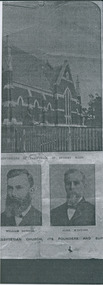
Photograph, Parkville Presbyterian Church, Undated
... health, and that his illness had gradually become more serious, but few among the intimate friends of the family thought the end was so near. Although Mr. Yule suffered much physical weakness, his mental faculties were unimpaired, and he was able to carry on his ministerial work almost to the last. He even conducted the services at the College Church, Parkville, on Sunday, March 31. Testimony is borne that his ministry was appreciated most highly by the important congregations, both in Scotland and Victoria...health, and that his illness had gradually become more serious, but few among the intimate friends of the family thought the end was so near. Although Mr. Yule suffered much physical weakness, his mental faculties were unimpaired, and he was able to carry on his ministerial work almost to the last. He even conducted the services at the College Church, Parkville, on Sunday, March 31. Testimony is borne that his ministry was appreciated most highly by the important congregations, both in Scotland and Victoria ...The College Church congregation initially worshipped in Ormond College in 1891. In 1895 they purchased the site of the present building. A committee set out certain specifications (including the crown tower), and a competition for the best design was won by architect RA Lawson. The building, constructed by Lang Brothers of Parkville at a cost of 2,170 pounds, was opened in 1898. College Church remained the only parish church in Parkville until 1934. The outstanding element is the crown tower, a choice of the first minister, the Reverend Alexander Yule. It is a copy, albeit on a reduced scale, of King's College Chapel, Aberdeen University, of which Reverend Yule was a former student. This crown tower is the only example in Victoria and is possibly unique in Australia. The church is constructed of red brick and Oamaru sandstone with a steeply pitched slate roof and parapeted gables. Windows are in the Gothic pointed arch style. The interior of the Church has a fine timber ceiling with arch braces. There are a number of quality stained glass windows, the two largest being dedicated to Mungo Scott and his wife, Scott having been a benefactor of the Church. The late nineteenth century pipe organ was built by George Fincham and Son (Richmond), with Professor Franklin Peterson as consultant, and was completed in November 1903. In the 1940s College Church was internally re-ordered and this work was designed by prominent church architect, Louis Williams. The church became part of the Uniting Church in Australia in 1977, and ownership subsequently passed to Mar Thoma Syrian Church in 2008. From The Argus, Friday 19 April 1907: Rev. Alexander Yule washeld in highest esteem in his ministerialbrethren and a large circle of friends was abundanrly evident by the expressions ofsorrowful regret at his death and of sympathy with his widow and her three sonsby those who attended the funeral servicesyesterday morning. To most of those present the announcement of Mr. Yule's death, made in "The Argus" on Wednesday, came as a painful surprise. It was known that at the time of his ministerial jubilee last January he shown symptoms of failing health, and that his illness had gradually become more serious, but few among the intimate friends of the family thought the end was so near. Although Mr. Yule suffered much physical weakness, his mental faculties were unimpaired, and he was able to carry on his ministerial work almost to the last. He even conducted the services at the College Church, Parkville, on Sunday, March 31. Testimony is borne that his ministry was appreciated most highly by the important congregations, both in Scotland and Victoria, under his charge; that in the church courts he was a safe and wise counsellor; and that he did excellent service on various committees, and as the convenor of the Theological-hall committee, on which he was appointed by the General Assembly. The esteem in which he was regarded by the Presbyterian Church as a whole was expressed in his election in 1891 to the Moderator's chair of the Victorian Church, and to that of the Federal Assembly in 1901. The funeral service was held at College Church, the scene of Mr. Yule's ministry since 1891. The building was filled to overflowing by a congregation that included most of the members of the metropolitan presbyteries, representatives from several of the provincial presbyterues, the students of the Theological-hall, members of the Parkville congregation, and the children of Miss Sutherland's Home. The pulpit and furniture were draped in black, and the plain oak coffin rested on the communion-table. The simple yet impressive service usual with the Presbyterian Church was conducted by Professor Rentoul, president of the Theological-hall Senatus, who was assisted by Professor Skene, Rev. W. Fraser (moderator of the Melbourne North Presbytery), Rev. D. S. McEacharn, and the Rev. John Thomson, a life-long friend of the departed minister. The Dead March in "Saul" was played on the organ as the coffin was borne to the hearse. The procession along Parkville-crescent to the cemetery gates was a notable one, and in the following order:—Theological-hall students; the hearse; the chief mourners—Dr. Yule, Rev. A. Yule, Mr. James Yule, and Mr. Groom, M.H.R., a relative of the family; the Theological-hall professors and committee; members of the presbyteries; and other friends, making a large and repre-sentative gathering. At the grave Professor Rentoul, Rev. Dr. Meiklejohn, Rev. D. Ross, and the Rev. Dr. Marshall officiated. The pall-bearers were Revs. D. S. McEachran, J. Thomson, A. McDonald, R. J. Smith,Mr. P. McLennan and Mr. L. E. Groom, M.H.R. The funeral arrangement were in the hands of Mr. Josiah Holdsworth.Portion of photocopy of the church and two of the portraits.college church, presbyterian church, yule, rev. alexander -
 Uniting Church Archives - Synod of Victoria
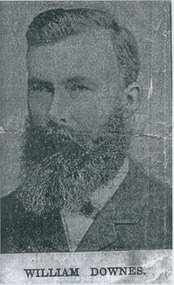
Photograph, Parkville Presbyterian Church, Undated
... health, and that his illness had gradually become more serious, but few among the intimate friends of the family thought the end was so near. Although Mr. Yule suffered much physical weakness, his mental faculties were unimpaired, and he was able to carry on his ministerial work almost to the last. He even conducted the services at the College Church, Parkville, on Sunday, March 31. Testimony is borne that his ministry was appreciated most highly by the important congregations, both in Scotland and Victoria...health, and that his illness had gradually become more serious, but few among the intimate friends of the family thought the end was so near. Although Mr. Yule suffered much physical weakness, his mental faculties were unimpaired, and he was able to carry on his ministerial work almost to the last. He even conducted the services at the College Church, Parkville, on Sunday, March 31. Testimony is borne that his ministry was appreciated most highly by the important congregations, both in Scotland and Victoria ...The College Church congregation initially worshipped in Ormond College in 1891. In 1895 they purchased the site of the present building. A committee set out certain specifications (including the crown tower), and a competition for the best design was won by architect RA Lawson. The building, constructed by Lang Brothers of Parkville at a cost of 2,170 pounds, was opened in 1898. College Church remained the only parish church in Parkville until 1934. The outstanding element is the crown tower, a choice of the first minister, the Reverend Alexander Yule. It is a copy, albeit on a reduced scale, of King's College Chapel, Aberdeen University, of which Reverend Yule was a former student. This crown tower is the only example in Victoria and is possibly unique in Australia. The church is constructed of red brick and Oamaru sandstone with a steeply pitched slate roof and parapeted gables. Windows are in the Gothic pointed arch style. The interior of the Church has a fine timber ceiling with arch braces. There are a number of quality stained glass windows, the two largest being dedicated to Mungo Scott and his wife, Scott having been a benefactor of the Church. The late nineteenth century pipe organ was built by George Fincham and Son (Richmond), with Professor Franklin Peterson as consultant, and was completed in November 1903. In the 1940s College Church was internally re-ordered and this work was designed by prominent church architect, Louis Williams. The church became part of the Uniting Church in Australia in 1977, and ownership subsequently passed to Mar Thoma Syrian Church in 2008. From The Argus, Friday 19 April 1907: Rev. Alexander Yule washeld in highest esteem in his ministerialbrethren and a large circle of friends was abundanrly evident by the expressions ofsorrowful regret at his death and of sympathy with his widow and her three sonsby those who attended the funeral servicesyesterday morning. To most of those present the announcement of Mr. Yule's death, made in "The Argus" on Wednesday, came as a painful surprise. It was known that at the time of his ministerial jubilee last January he shown symptoms of failing health, and that his illness had gradually become more serious, but few among the intimate friends of the family thought the end was so near. Although Mr. Yule suffered much physical weakness, his mental faculties were unimpaired, and he was able to carry on his ministerial work almost to the last. He even conducted the services at the College Church, Parkville, on Sunday, March 31. Testimony is borne that his ministry was appreciated most highly by the important congregations, both in Scotland and Victoria, under his charge; that in the church courts he was a safe and wise counsellor; and that he did excellent service on various committees, and as the convenor of the Theological-hall committee, on which he was appointed by the General Assembly. The esteem in which he was regarded by the Presbyterian Church as a whole was expressed in his election in 1891 to the Moderator's chair of the Victorian Church, and to that of the Federal Assembly in 1901. The funeral service was held at College Church, the scene of Mr. Yule's ministry since 1891. The building was filled to overflowing by a congregation that included most of the members of the metropolitan presbyteries, representatives from several of the provincial presbyterues, the students of the Theological-hall, members of the Parkville congregation, and the children of Miss Sutherland's Home. The pulpit and furniture were draped in black, and the plain oak coffin rested on the communion-table. The simple yet impressive service usual with the Presbyterian Church was conducted by Professor Rentoul, president of the Theological-hall Senatus, who was assisted by Professor Skene, Rev. W. Fraser (moderator of the Melbourne North Presbytery), Rev. D. S. McEacharn, and the Rev. John Thomson, a life-long friend of the departed minister. The Dead March in "Saul" was played on the organ as the coffin was borne to the hearse. The procession along Parkville-crescent to the cemetery gates was a notable one, and in the following order:—Theological-hall students; the hearse; the chief mourners—Dr. Yule, Rev. A. Yule, Mr. James Yule, and Mr. Groom, M.H.R., a relative of the family; the Theological-hall professors and committee; members of the presbyteries; and other friends, making a large and repre-sentative gathering. At the grave Professor Rentoul, Rev. Dr. Meiklejohn, Rev. D. Ross, and the Rev. Dr. Marshall officiated. The pall-bearers were Revs. D. S. McEachran, J. Thomson, A. McDonald, R. J. Smith,Mr. P. McLennan and Mr. L. E. Groom, M.H.R. The funeral arrangement were in the hands of Mr. Josiah Holdsworth.William Downes - one of the founders.college church, presbyterian church, yule, rev. alexander -
 Uniting Church Archives - Synod of Victoria
Photograph, Parkville Presbyterian Church, Undated
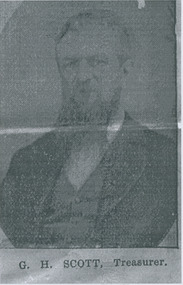
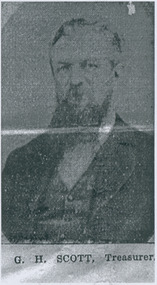
... health, and that his illness had gradually become more serious, but few among the intimate friends of the family thought the end was so near. Although Mr. Yule suffered much physical weakness, his mental faculties were unimpaired, and he was able to carry on his ministerial work almost to the last. He even conducted the services at the College Church, Parkville, on Sunday, March 31. Testimony is borne that his ministry was appreciated most highly by the important congregations, both in Scotland and Victoria...health, and that his illness had gradually become more serious, but few among the intimate friends of the family thought the end was so near. Although Mr. Yule suffered much physical weakness, his mental faculties were unimpaired, and he was able to carry on his ministerial work almost to the last. He even conducted the services at the College Church, Parkville, on Sunday, March 31. Testimony is borne that his ministry was appreciated most highly by the important congregations, both in Scotland and Victoria ...The College Church congregation initially worshipped in Ormond College in 1891. In 1895 they purchased the site of the present building. A committee set out certain specifications (including the crown tower), and a competition for the best design was won by architect RA Lawson. The building, constructed by Lang Brothers of Parkville at a cost of 2,170 pounds, was opened in 1898. College Church remained the only parish church in Parkville until 1934. The outstanding element is the crown tower, a choice of the first minister, the Reverend Alexander Yule. It is a copy, albeit on a reduced scale, of King's College Chapel, Aberdeen University, of which Reverend Yule was a former student. This crown tower is the only example in Victoria and is possibly unique in Australia. The church is constructed of red brick and Oamaru sandstone with a steeply pitched slate roof and parapeted gables. Windows are in the Gothic pointed arch style. The interior of the Church has a fine timber ceiling with arch braces. There are a number of quality stained glass windows, the two largest being dedicated to Mungo Scott and his wife, Scott having been a benefactor of the Church. The late nineteenth century pipe organ was built by George Fincham and Son (Richmond), with Professor Franklin Peterson as consultant, and was completed in November 1903. In the 1940s College Church was internally re-ordered and this work was designed by prominent church architect, Louis Williams. The church became part of the Uniting Church in Australia in 1977, and ownership subsequently passed to Mar Thoma Syrian Church in 2008. From The Argus, Friday 19 April 1907: Rev. Alexander Yule washeld in highest esteem in his ministerialbrethren and a large circle of friends was abundanrly evident by the expressions ofsorrowful regret at his death and of sympathy with his widow and her three sonsby those who attended the funeral servicesyesterday morning. To most of those present the announcement of Mr. Yule's death, made in "The Argus" on Wednesday, came as a painful surprise. It was known that at the time of his ministerial jubilee last January he shown symptoms of failing health, and that his illness had gradually become more serious, but few among the intimate friends of the family thought the end was so near. Although Mr. Yule suffered much physical weakness, his mental faculties were unimpaired, and he was able to carry on his ministerial work almost to the last. He even conducted the services at the College Church, Parkville, on Sunday, March 31. Testimony is borne that his ministry was appreciated most highly by the important congregations, both in Scotland and Victoria, under his charge; that in the church courts he was a safe and wise counsellor; and that he did excellent service on various committees, and as the convenor of the Theological-hall committee, on which he was appointed by the General Assembly. The esteem in which he was regarded by the Presbyterian Church as a whole was expressed in his election in 1891 to the Moderator's chair of the Victorian Church, and to that of the Federal Assembly in 1901. The funeral service was held at College Church, the scene of Mr. Yule's ministry since 1891. The building was filled to overflowing by a congregation that included most of the members of the metropolitan presbyteries, representatives from several of the provincial presbyterues, the students of the Theological-hall, members of the Parkville congregation, and the children of Miss Sutherland's Home. The pulpit and furniture were draped in black, and the plain oak coffin rested on the communion-table. The simple yet impressive service usual with the Presbyterian Church was conducted by Professor Rentoul, president of the Theological-hall Senatus, who was assisted by Professor Skene, Rev. W. Fraser (moderator of the Melbourne North Presbytery), Rev. D. S. McEacharn, and the Rev. John Thomson, a life-long friend of the departed minister. The Dead March in "Saul" was played on the organ as the coffin was borne to the hearse. The procession along Parkville-crescent to the cemetery gates was a notable one, and in the following order:—Theological-hall students; the hearse; the chief mourners—Dr. Yule, Rev. A. Yule, Mr. James Yule, and Mr. Groom, M.H.R., a relative of the family; the Theological-hall professors and committee; members of the presbyteries; and other friends, making a large and repre-sentative gathering. At the grave Professor Rentoul, Rev. Dr. Meiklejohn, Rev. D. Ross, and the Rev. Dr. Marshall officiated. The pall-bearers were Revs. D. S. McEachran, J. Thomson, A. McDonald, R. J. Smith,Mr. P. McLennan and Mr. L. E. Groom, M.H.R. The funeral arrangement were in the hands of Mr. Josiah Holdsworth.G. H. Scott - Treasurer.college church, presbyterian church, yule, rev. alexander -
 Uniting Church Archives - Synod of Victoria
Photograph, Parkville Presbyterian Church, Undated
... health, and that his illness had gradually become more serious, but few among the intimate friends of the family thought the end was so near. Although Mr. Yule suffered much physical weakness, his mental faculties were unimpaired, and he was able to carry on his ministerial work almost to the last. He even conducted the services at the College Church, Parkville, on Sunday, March 31. Testimony is borne that his ministry was appreciated most highly by the important congregations, both in Scotland and Victoria...health, and that his illness had gradually become more serious, but few among the intimate friends of the family thought the end was so near. Although Mr. Yule suffered much physical weakness, his mental faculties were unimpaired, and he was able to carry on his ministerial work almost to the last. He even conducted the services at the College Church, Parkville, on Sunday, March 31. Testimony is borne that his ministry was appreciated most highly by the important congregations, both in Scotland and Victoria ...The College Church congregation initially worshipped in Ormond College in 1891. In 1895 they purchased the site of the present building. A committee set out certain specifications (including the crown tower), and a competition for the best design was won by architect RA Lawson. The building, constructed by Lang Brothers of Parkville at a cost of 2,170 pounds, was opened in 1898. College Church remained the only parish church in Parkville until 1934. The outstanding element is the crown tower, a choice of the first minister, the Reverend Alexander Yule. It is a copy, albeit on a reduced scale, of King's College Chapel, Aberdeen University, of which Reverend Yule was a former student. This crown tower is the only example in Victoria and is possibly unique in Australia. The church is constructed of red brick and Oamaru sandstone with a steeply pitched slate roof and parapeted gables. Windows are in the Gothic pointed arch style. The interior of the Church has a fine timber ceiling with arch braces. There are a number of quality stained glass windows, the two largest being dedicated to Mungo Scott and his wife, Scott having been a benefactor of the Church. The late nineteenth century pipe organ was built by George Fincham and Son (Richmond), with Professor Franklin Peterson as consultant, and was completed in November 1903. In the 1940s College Church was internally re-ordered and this work was designed by prominent church architect, Louis Williams. The church became part of the Uniting Church in Australia in 1977, and ownership subsequently passed to Mar Thoma Syrian Church in 2008. From The Argus, Friday 19 April 1907: Rev. Alexander Yule washeld in highest esteem in his ministerialbrethren and a large circle of friends was abundanrly evident by the expressions ofsorrowful regret at his death and of sympathy with his widow and her three sonsby those who attended the funeral servicesyesterday morning. To most of those present the announcement of Mr. Yule's death, made in "The Argus" on Wednesday, came as a painful surprise. It was known that at the time of his ministerial jubilee last January he shown symptoms of failing health, and that his illness had gradually become more serious, but few among the intimate friends of the family thought the end was so near. Although Mr. Yule suffered much physical weakness, his mental faculties were unimpaired, and he was able to carry on his ministerial work almost to the last. He even conducted the services at the College Church, Parkville, on Sunday, March 31. Testimony is borne that his ministry was appreciated most highly by the important congregations, both in Scotland and Victoria, under his charge; that in the church courts he was a safe and wise counsellor; and that he did excellent service on various committees, and as the convenor of the Theological-hall committee, on which he was appointed by the General Assembly. The esteem in which he was regarded by the Presbyterian Church as a whole was expressed in his election in 1891 to the Moderator's chair of the Victorian Church, and to that of the Federal Assembly in 1901. The funeral service was held at College Church, the scene of Mr. Yule's ministry since 1891. The building was filled to overflowing by a congregation that included most of the members of the metropolitan presbyteries, representatives from several of the provincial presbyterues, the students of the Theological-hall, members of the Parkville congregation, and the children of Miss Sutherland's Home. The pulpit and furniture were draped in black, and the plain oak coffin rested on the communion-table. The simple yet impressive service usual with the Presbyterian Church was conducted by Professor Rentoul, president of the Theological-hall Senatus, who was assisted by Professor Skene, Rev. W. Fraser (moderator of the Melbourne North Presbytery), Rev. D. S. McEacharn, and the Rev. John Thomson, a life-long friend of the departed minister. The Dead March in "Saul" was played on the organ as the coffin was borne to the hearse. The procession along Parkville-crescent to the cemetery gates was a notable one, and in the following order:—Theological-hall students; the hearse; the chief mourners—Dr. Yule, Rev. A. Yule, Mr. James Yule, and Mr. Groom, M.H.R., a relative of the family; the Theological-hall professors and committee; members of the presbyteries; and other friends, making a large and repre-sentative gathering. At the grave Professor Rentoul, Rev. Dr. Meiklejohn, Rev. D. Ross, and the Rev. Dr. Marshall officiated. The pall-bearers were Revs. D. S. McEachran, J. Thomson, A. McDonald, R. J. Smith,Mr. P. McLennan and Mr. L. E. Groom, M.H.R. The funeral arrangement were in the hands of Mr. Josiah Holdsworth.G. H. Scott - Treasurer.college church, presbyterian church, yule, rev. alexander
