
Showing 32 items matching "metaphor"
-
 Victorian Aboriginal Corporation for Languages
Conference proceedings, R McKenna Brown, Endangered languages and their literatures : proceedings of the Sixth FEL Conference, Antigua, Guatemala, 8-10 August 2002, 2002
... Main headings: Strategies and resources; Orthographies; Proverbs, metaphor and poetics; Literatures and education; Case studies; Oral literatures: Collection and Diffusion; Mayan literature...endangered languages language revival Kimberly education Maps, tables, word lists Main headings: Strategies and resources; Orthographies; Proverbs, metaphor and poetics; Literatures and education; Case studies; Oral literatures: Collection and Diffusion; Mayan literature Endangered languages and their literatures : proceedings of the Sixth FEL Conference, Antigua, Guatemala, 8-10 August 2002 Conference proceedings R McKenna Brown ...Main headings: Strategies and resources; Orthographies; Proverbs, metaphor and poetics; Literatures and education; Case studies; Oral literatures: Collection and Diffusion; Mayan literatureMaps, tables, word listsendangered languages, language revival, kimberly, education -
Women's Art Register
Archive (Collection) - Shirley Clancy Artist Archive
... Metaphor...1950- Metaphor Painting Circus Archive Shirley Clancy Artist Archive ...metaphor, painting, circusmetaphor, painting, circus -
Women's Art Register
Archive (Series) - Clancy, Shirley. Artist File 1
... Metaphor...Metaphor Painting Circus Foolscap white archival 4 flap folder or document wallet Archive Clancy, Shirley. ...List of Images, CV, Promotional Material, Articlesmetaphor, painting, circusmetaphor, painting, circus -
Women's Art Register
Archive (Series) - Shirley Clancy. Duplicate File 1
... ... Metaphor...Painting Circus Metaphor Foolscap manilla file Archive Shirley Clancy. ...List of Images, CV, Promotional Material, Articlespainting, circus, metaphorpainting, circus, metaphor -
Women's Art Register
Archive (Series) - Shirley Clancy. Slide Kit
... ... Metaphor...Painting Circus Metaphor Set of slides in Polypropylene sleeves, within a Polypropyline binder and slipcase. ...painting, circus, metaphorpainting, circus, metaphor -
Women's Art Register
Archive (Series) - Shirley Clancy, Digitised Slide Kit
... ... Metaphor...Painting Circus Metaphor Archive Shirley Clancy, Digitised Slide Kit ...painting, circus, metaphorpainting, circus, metaphor -
 Federation University Art Collection
Painting - Artwork, Rodney Forbes et al, [Printery], c1982
... Rodney FORBES (1951- ) Born Melbourne Rodney Forbes' work is figurative narrative painting and uses autobiographical and incident-as-metaphor methods to explore wider issues of knowing and belonging in oral traditions such as working class, children’s and artisan subcultures. ...Rodney FORBES (1951- ) Born Melbourne Rodney Forbes' work is figurative narrative painting and uses autobiographical and incident-as-metaphor methods to explore wider issues of knowing and belonging in oral traditions such as working class, children’s and artisan subcultures. ...Rodney FORBES (1951- ) Born Melbourne Rodney Forbes' work is figurative narrative painting and uses autobiographical and incident-as-metaphor methods to explore wider issues of knowing and belonging in oral traditions such as working class, children’s and artisan subcultures. His practice draws on pop, cartooning and joke narrative structures within contemporary culture. (http://www.australiangalleries.com.au/artists/rodney-forbes/, accessed 07 April 2017)A large painting showing aspects of a printery. Rodney Forbes and fellow student Linda Karklins worked on this painting as an undergraduate student at the Gippsland School of Art (Gippsland Institute of Advanced Education, now the Gippsland Centre for Art and Design, Federation University Gippsland Campus). The painting hung for many years in the campus printery. The Gippsland Gippsland Centre for Art and Design is now part of Federation University Gippsland Campus.rodney forbes, printery, gippsland campus, churchill, linda karklins, gippsland school of art, gippsland institute of advanced education, printing -
 Federation University Art Collection
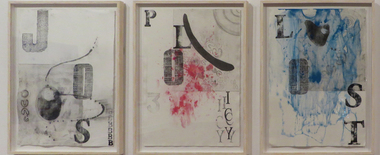
Work on paper, Patrice Mahoney, 'Jobs, Policy and LOST' (tryptich) by Patrice Mahoney, 2014
... It was awarded the 2014 Victorian Indigenous Art Awards Federation University Acquisitive Award for for work by a Victorian regional artist. Text, colour, metaphor and Aboriginal symbolism are important components of her work. ...It was awarded the 2014 Victorian Indigenous Art Awards Federation University Acquisitive Award for for work by a Victorian regional artist. Text, colour, metaphor and Aboriginal symbolism are important components of her work. ...These works are a display of my frustration of hour our family were lucky we were not beheaded, scalped, taken away and impaled as a warning to others not to enter farming lands, which had been traditional lands of the Nganyaywana country. The word 'Policy' represents the White Australia Policy, the word "Lost' stands for those lost including hundreds of family members, 'Jobs' asks why Aboriginal people can only find employment if through Aboriginal positions and policies. The number 3 symbolises myself and my siblings, red is for bloodshed, blue is for secrets and black the family history. Patrice MUTHAYMILES MAHONEY OAM Anewan/Nganyaywan/Dunghutti country. Patrice Mahoney is a printmaker, sculptor, weaver, drawer and painter. Her work challenges mainstream and Aboriginal Australians and is profoundly influenced by space, place and country, taking inspiration from nature, environment and looking forward to a time when she can return to her family's traditional country to make work. In 2012 the artist completed a Bachelor of Visual and Media Arts at Monash University’s Churchill campus (from 2014 Federation University's Churchill Campus). The Victorian Indigenous Art Awards 2014 were exhibited and judged at the Art Gallery of Ballarat.This unique edition triptych involves the techniques of intaglio copper plate, pigment, soft ground, open bite, aquatint, spit-bite, stamping, relief, drawing and burnishing on paper. It was awarded the 2014 Victorian Indigenous Art Awards Federation University Acquisitive Award for for work by a Victorian regional artist. Text, colour, metaphor and Aboriginal symbolism are important components of her work. This work expresses the artist's frustration with unjust situations experienced by traditional owners of Nganyaywana country. The word 'Policy' refers to White Australia Policy, 'Lost' the hundreds of lost family members, and 'Jobs' highlights the difficulty of Aboriginal peple obtaining work, especially outside Aboriginal positions and policy. The number 3 symbolises Patrice Mahoney's siblings, with black used to denote family history. The violently splattered red represents bloodshed, with the blue washing across the work obscuring details and representing secrets. The Selection Panel of the 2014 Victorian Indigenous Art Awards made the following comments on the work: 'The selection panel for the Federation University Acquisitive Award for 2014 were highly impressed by this work and applauded the vigorous use of symbolism and metaphor in a well scripted visual composition. The poignancy of connectedness to the past, memory, place and country is palpable and enhanced by the suggestive employment of text and minimal colour. A provocative and evocative work of art!artist, artwork, patrice mahoney, aboriginal, victorian indigenous awards, jobs, culture, printmaking, drawing, policies, lost, victorian indigenous art awards, available, alumni -
 Merri-bek City Council
Digital photo print on paper, Sha Sawari, A Moth to a Flame, 2019
... This piece comes from a series of works, also titled A Moth to a Flame, where this metaphor is used to show how the hopefulness of a new life can result in a dangerous, sometimes fatal illusion. ...This piece comes from a series of works, also titled A Moth to a Flame, where this metaphor is used to show how the hopefulness of a new life can result in a dangerous, sometimes fatal illusion. ...Sha Sarwari is a multidisciplinary artist who works in sculpture, installation, photography, and performance. A Moth to a Flame is a commentary on the often-tragic dilemma that refugees encounter when escaping their country of origin to seek asylum. This piece comes from a series of works, also titled A Moth to a Flame, where this metaphor is used to show how the hopefulness of a new life can result in a dangerous, sometimes fatal illusion. In this work, Sawari aims to give a voice to the refugee experience, to reconcile cultural identity, new belonging and resilience in the face of trauma. -
 Merri-bek City Council
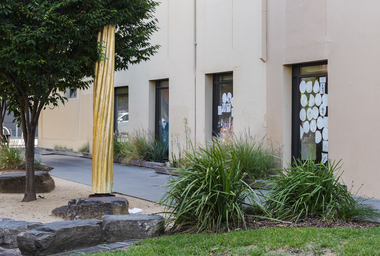
Bronze tubular bell, Anton Hasell, Where we have come to, 2019
... Created from bronze, this sculpture represents a counter-twisted rope, where the diversity of strands is what gives the rope its strength. As a metaphor for multiculturalism, this sculpture shows how communities are stronger through diversity. ...Created from bronze, this sculpture represents a counter-twisted rope, where the diversity of strands is what gives the rope its strength. As a metaphor for multiculturalism, this sculpture shows how communities are stronger through diversity. ...'Where We Have Come To', 2019 represents the multiculturalism that is at the heart of Merri-bek. Created from bronze, this sculpture represents a counter-twisted rope, where the diversity of strands is what gives the rope its strength. As a metaphor for multiculturalism, this sculpture shows how communities are stronger through diversity. The sculpture is located in Saxon Lane. The sculpture is also an instrument that can be struck to generate a kind of community ripple of sound that “binds all within its sonic perimeter”. This artwork unites all members of the community together in respectful acknowledgment that we do so on Wurundjeri Country in the spirit of wandha-djerri-nganyin-atj (bringing us together).merri-bek public art collection -
Federation University Art Collection
Work on paper - Artwork - Printmaking, 'Built for Comfort' Rodney Forbes, 2008
... Rodney FORBES (1951- ) Born Melbourne Rodney Forbes' work is figurative narrative painting and uses autobiographical and incident-as-metaphor methods to explore wider issues of knowing and belonging in oral traditions such as working class, children’s and artisan subcultures. ...Rodney FORBES (1951- ) Born Melbourne Rodney Forbes' work is figurative narrative painting and uses autobiographical and incident-as-metaphor methods to explore wider issues of knowing and belonging in oral traditions such as working class, children’s and artisan subcultures. ...The Gippsland Art School collects examples of limited edition prints to use as a teaching collection. The collection is largely unframed and comprises works from the Print Council of Australia, staff members and former students. Rodney FORBES (1951- ) Born Melbourne Rodney Forbes' work is figurative narrative painting and uses autobiographical and incident-as-metaphor methods to explore wider issues of knowing and belonging in oral traditions such as working class, children’s and artisan subcultures. His practice draws on pop, cartooning and joke narrative structures within contemporary culture. (http://www.australiangalleries.com.au/artists/rodney-forbes/, accessed 07 April 2017) Influential in gippsland visual arts circles, Rodney Forbes was Director of the Gippsland Centre for At and Design and Switchback Gallery.Unframed lithograph5/11churchill, gippsland campus, gippsland printmaking teaching collection, rodney forbes, printmaking, gippsland centre for art and design, staffmember -
 Eltham District Historical Society Inc
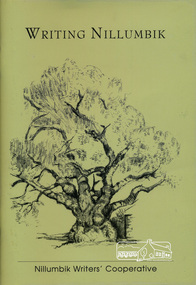
Book, Nillumbik Writers' Cooperative, Writing Nillumbik by the Nillumbik Writers' Cooperative, 2005
... They contain a writer's view of Nillumbik through their awareness of and importance of setting, character and dialogue; syntax, metaphor and literary allusion. The writers have lovingly evoked the past and present, the ordinary and the extraordinary. ...They contain a writer's view of Nillumbik through their awareness of and importance of setting, character and dialogue; syntax, metaphor and literary allusion. The writers have lovingly evoked the past and present, the ordinary and the extraordinary. ...Contents: People we know --Places we love--Nature around us--The Ways things were--New Dimensions "The snapshots in this publication are clothed in the techniques of fiction. They contain a writer's view of Nillumbik through their awareness of and importance of setting, character and dialogue; syntax, metaphor and literary allusion. The writers have lovingly evoked the past and present, the ordinary and the extraordinary. They have sung their songs loudly and clearly and with their words have addressed Nillumbik's unique history and identity" - Foreword "A collection of short stories and verse about people and places in the Shire of Nillumbik" Members who have contributed stories, poems and illustrations to this volume are: Prue Clark, Kath Every, Theresa Fitzmaurice, Fay E Gravenall, Kevin Henry, Susanne Haywood, Gwayne Naug and Tina Seaton. Additional illustrations by John Every.Small softcover book with stories and some black and white illustrations. 52 pages.Signed on introductory page Fay Gravenall one of the contributors ISBN 0646451707 short stories, reminiscences, living and learning centre -
 Merri-bek City Council
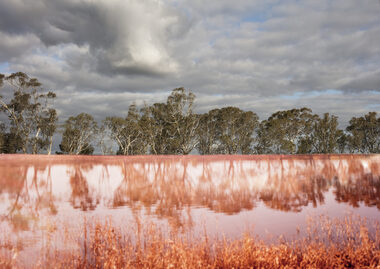
Photograph, Peta Clancy, Undercurrent, 2018-19
... Clancy says of the exhibition and this work: ‘I explored this site as a metaphor for the hidden history of many massacres throughout Australia and the denial of this aspect of our history and the trauma these sites evoke’....Clancy says of the exhibition and this work: ‘I explored this site as a metaphor for the hidden history of many massacres throughout Australia and the denial of this aspect of our history and the trauma these sites evoke’. ...Peta Clancy is a descendent of the Bangerang people from South-Eastern Australia. She explores hidden histories of colonisation in Australia. Through manipulating photographic prints, she reconstructs these hidden histories in a contemporary setting. In 2018, Clancy was awarded the inaugural Fostering Koorie Art and Culture grant from the Koorie Heritage Trust. The grant enabled her to collaborate with the Dja Dja Wurrung community to create a body of work investigating massacre sites on Dja Dja Wurrung country. The exhibition Undercurrent at the Koorie Heritage Trust focussed on a massacre site submerged under water. Clancy says of the exhibition and this work: ‘I explored this site as a metaphor for the hidden history of many massacres throughout Australia and the denial of this aspect of our history and the trauma these sites evoke’. -
 Jewish Museum of Australia
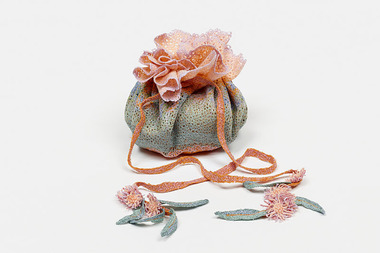
Kathryn Tilley, Afikoman pouches, by Kathryn Tilley, 2007
... I have used the Australian desert as a metaphor for the great wilderness crossed by the People of Israel. ...I have used the Australian desert as a metaphor for the great wilderness crossed by the People of Israel. ...Artist's statement: I chose to make these afikoman pouches even though they may not be familiar to or used by all Jewish families. In these little pouches, a small piece of matzah would be placed in the pouch and then hidden in the house for the children to find during the Passover meal. On finding it, a gift is given. The story of Passover and Judaism in general have been kept alive over the centuries. I wanted to honour the passing down of the Torah through the generations, and, in particular, the role of children in its transmission. I have used the Australian desert as a metaphor for the great wilderness crossed by the People of Israel. A recent trip to Broken Hill and beyond inspired me to work with the subtle colours and textures of that landscape and I have incorporated into the work found objects, stones and beads collected there. (2007, New Under the Sun: Australian Contemporary Design in Jewish Ceremony III)machine embroidered -
 Ararat Gallery TAMA
Julie Montgarrett, From where you are you can hear her dreaming, 1987
... Ephemeral materials and time-intensive processes become metaphors for endurance, vulnerability, and care, allowing her to weave together past and present in poetic, visually striking forms. ...Ephemeral materials and time-intensive processes become metaphors for endurance, vulnerability, and care, allowing her to weave together past and present in poetic, visually striking forms. ...Julie Montgarrett is an Australian artist, curator, and educator whose practice spans textiles, drawing, and installation. Over four decades she has developed a distinctive approach that combines narrative, memory, and materiality, using cloth and paper as carriers of stories that are both personal and collective. Her main interests are in the areas of drawing and textile to extend the conceptual and spatial possibilities of textile as narrative questioning dominant Australian histories. Montgarrett is known for employing textile traditions, such as stitching, dyeing, and assemblage, alongside drawing and installation to create works that are intimate yet expansive in meaning. Ephemeral materials and time-intensive processes become metaphors for endurance, vulnerability, and care, allowing her to weave together past and present in poetic, visually striking forms. In addition to her studio practice, Montgarrett has contributed significantly to the Australian arts community through teaching, mentoring, and curating. -
 Ararat Gallery TAMA
Julie Montgarrett, Fleeter, 1985
... Ephemeral materials and time-intensive processes become metaphors for endurance, vulnerability, and care, allowing her to weave together past and present in poetic, visually striking forms. ...Ephemeral materials and time-intensive processes become metaphors for endurance, vulnerability, and care, allowing her to weave together past and present in poetic, visually striking forms. ...Julie Montgarrett is an Australian artist, curator, and educator whose practice spans textiles, drawing, and installation. Over four decades she has developed a distinctive approach that combines narrative, memory, and materiality, using cloth and paper as carriers of stories that are both personal and collective. Her main interests are in the areas of drawing and textile to extend the conceptual and spatial possibilities of textile as narrative questioning dominant Australian histories. Montgarrett is known for employing textile traditions, such as stitching, dyeing, and assemblage, alongside drawing and installation to create works that are intimate yet expansive in meaning. Ephemeral materials and time-intensive processes become metaphors for endurance, vulnerability, and care, allowing her to weave together past and present in poetic, visually striking forms. In addition to her studio practice, Montgarrett has contributed significantly to the Australian arts community through teaching, mentoring, and curating. -
 Ararat Gallery TAMA
Julie Montgarrett, Ar.G. 1983-7(23)
... Ephemeral materials and time-intensive processes become metaphors for endurance, vulnerability, and care, allowing her to weave together past and present in poetic, visually striking forms. ...Ephemeral materials and time-intensive processes become metaphors for endurance, vulnerability, and care, allowing her to weave together past and present in poetic, visually striking forms. ...Julie Montgarrett is an Australian artist, curator, and educator whose practice spans textiles, drawing, and installation. Over four decades she has developed a distinctive approach that combines narrative, memory, and materiality, using cloth and paper as carriers of stories that are both personal and collective. Her main interests are in the areas of drawing and textile to extend the conceptual and spatial possibilities of textile as narrative questioning dominant Australian histories. Montgarrett is known for employing textile traditions, such as stitching, dyeing, and assemblage, alongside drawing and installation to create works that are intimate yet expansive in meaning. Ephemeral materials and time-intensive processes become metaphors for endurance, vulnerability, and care, allowing her to weave together past and present in poetic, visually striking forms. In addition to her studio practice, Montgarrett has contributed significantly to the Australian arts community through teaching, mentoring, and curating. -
 Ararat Gallery TAMA
Julie Montgarrett, Woomelang, 1977
... Ephemeral materials and time-intensive processes become metaphors for endurance, vulnerability, and care, allowing her to weave together past and present in poetic, visually striking forms. ...Ephemeral materials and time-intensive processes become metaphors for endurance, vulnerability, and care, allowing her to weave together past and present in poetic, visually striking forms. ...Julie Montgarrett is an Australian artist, curator, and educator whose practice spans textiles, drawing, and installation. Over four decades she has developed a distinctive approach that combines narrative, memory, and materiality, using cloth and paper as carriers of stories that are both personal and collective. Her main interests are in the areas of drawing and textile to extend the conceptual and spatial possibilities of textile as narrative questioning dominant Australian histories. Montgarrett is known for employing textile traditions, such as stitching, dyeing, and assemblage, alongside drawing and installation to create works that are intimate yet expansive in meaning. Ephemeral materials and time-intensive processes become metaphors for endurance, vulnerability, and care, allowing her to weave together past and present in poetic, visually striking forms. In addition to her studio practice, Montgarrett has contributed significantly to the Australian arts community through teaching, mentoring, and curating. -
 Ararat Gallery TAMA
Julie Montgarrett, Thought Rise, 1980
... Ephemeral materials and time-intensive processes become metaphors for endurance, vulnerability, and care, allowing her to weave together past and present in poetic, visually striking forms. ...Ephemeral materials and time-intensive processes become metaphors for endurance, vulnerability, and care, allowing her to weave together past and present in poetic, visually striking forms. ...Julie Montgarrett is an Australian artist, curator, and educator whose practice spans textiles, drawing, and installation. Over four decades she has developed a distinctive approach that combines narrative, memory, and materiality, using cloth and paper as carriers of stories that are both personal and collective. Her main interests are in the areas of drawing and textile to extend the conceptual and spatial possibilities of textile as narrative questioning dominant Australian histories. Montgarrett is known for employing textile traditions, such as stitching, dyeing, and assemblage, alongside drawing and installation to create works that are intimate yet expansive in meaning. Ephemeral materials and time-intensive processes become metaphors for endurance, vulnerability, and care, allowing her to weave together past and present in poetic, visually striking forms. In addition to her studio practice, Montgarrett has contributed significantly to the Australian arts community through teaching, mentoring, and curating. -
 Ararat Gallery TAMA
Julie Montgarrett, Into the Arms of Winter, 1986
... Ephemeral materials and time-intensive processes become metaphors for endurance, vulnerability, and care, allowing her to weave together past and present in poetic, visually striking forms. ...Ephemeral materials and time-intensive processes become metaphors for endurance, vulnerability, and care, allowing her to weave together past and present in poetic, visually striking forms. ...Julie Montgarrett is an Australian artist, curator, and educator whose practice spans textiles, drawing, and installation. Over four decades she has developed a distinctive approach that combines narrative, memory, and materiality, using cloth and paper as carriers of stories that are both personal and collective. Her main interests are in the areas of drawing and textile to extend the conceptual and spatial possibilities of textile as narrative questioning dominant Australian histories. Montgarrett is known for employing textile traditions, such as stitching, dyeing, and assemblage, alongside drawing and installation to create works that are intimate yet expansive in meaning. Ephemeral materials and time-intensive processes become metaphors for endurance, vulnerability, and care, allowing her to weave together past and present in poetic, visually striking forms. In addition to her studio practice, Montgarrett has contributed significantly to the Australian arts community through teaching, mentoring, and curating. -
 Ararat Gallery TAMA
Julie Montgarrett, Nonplussed Orange
... Ephemeral materials and time-intensive processes become metaphors for endurance, vulnerability, and care, allowing her to weave together past and present in poetic, visually striking forms. ...Ephemeral materials and time-intensive processes become metaphors for endurance, vulnerability, and care, allowing her to weave together past and present in poetic, visually striking forms. ...Julie Montgarrett is an Australian artist, curator, and educator whose practice spans textiles, drawing, and installation. Over four decades she has developed a distinctive approach that combines narrative, memory, and materiality, using cloth and paper as carriers of stories that are both personal and collective. Her main interests are in the areas of drawing and textile to extend the conceptual and spatial possibilities of textile as narrative questioning dominant Australian histories. Montgarrett is known for employing textile traditions, such as stitching, dyeing, and assemblage, alongside drawing and installation to create works that are intimate yet expansive in meaning. Ephemeral materials and time-intensive processes become metaphors for endurance, vulnerability, and care, allowing her to weave together past and present in poetic, visually striking forms. In addition to her studio practice, Montgarrett has contributed significantly to the Australian arts community through teaching, mentoring, and curating. -
 Ararat Gallery TAMA
Julie Montgarrett, Exhibition poster
... Ephemeral materials and time-intensive processes become metaphors for endurance, vulnerability, and care, allowing her to weave together past and present in poetic, visually striking forms. ...Ephemeral materials and time-intensive processes become metaphors for endurance, vulnerability, and care, allowing her to weave together past and present in poetic, visually striking forms. ...Julie Montgarrett is an Australian artist, curator, and educator whose practice spans textiles, drawing, and installation. Over four decades she has developed a distinctive approach that combines narrative, memory, and materiality, using cloth and paper as carriers of stories that are both personal and collective. Her main interests are in the areas of drawing and textile to extend the conceptual and spatial possibilities of textile as narrative questioning dominant Australian histories. Montgarrett is known for employing textile traditions, such as stitching, dyeing, and assemblage, alongside drawing and installation to create works that are intimate yet expansive in meaning. Ephemeral materials and time-intensive processes become metaphors for endurance, vulnerability, and care, allowing her to weave together past and present in poetic, visually striking forms. In addition to her studio practice, Montgarrett has contributed significantly to the Australian arts community through teaching, mentoring, and curating. -
 Federation University Art Collection
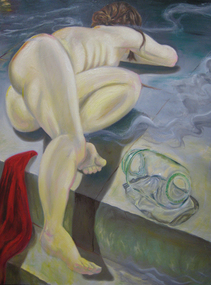
Artwork, 'Cassandra After the Fact' by Andrew Potter, 2009
... Cassandra’s body, as mother earth, is a metaphor for the peaceful landscape that is desecrated by acts of war. ...Cassandra’s body, as mother earth, is a metaphor for the peaceful landscape that is desecrated by acts of war. ...This work pays homage to Solomon J. Solomon’s Ajax and Cassandra. Andrew Potter’s painting tells of the subsequent event. Cassandra is undoubtedly a Trojan War casualty, symbolizing the personal pain of widows and rape victims. The flow of the fabric is the allegory of bloodshed, while the empty jar suggests displacement of refugees. Cassandra’s body, as mother earth, is a metaphor for the peaceful landscape that is desecrated by acts of war. The artist uses these iconic figures to exemplify and demonstrate why peace is always better than war. This work was awarded second prize in the 2009 Lucato Peace Prize. During that year Andrew Potter was undertaking the first year of a Bachelor of Visual Arts (Fine Arts) at the University of Ballarat’s Arts Academy. This item was runner up in the Lucato Peace Prize, and is part of the Federation University Art Collection. The Art Collection features over 1000 works and was listed as a 'Ballarat Treasure' in 2007.Painted canvas depicting a naked woman lying on the round beside a glass jar.art, artwork, andrew potter, potter, lucato peace prize, mythology, available -
Victorian Aboriginal Corporation for Languages
Conference proceedings, Jon Reyhner, Nurturing native languages, 2003
... Whaia Te Reo: Pursuing the Language': How Metaphors Describe - Our Relationships with Indigenous Languages /? ...Whaia Te Reo: Pursuing the Language': How Metaphors Describe - Our Relationships with Indigenous Languages /? ...Section I: Language and Culture Immersion 1. Native Language Immersion /? Jon Reyhner 2. Assessing the Impact of Total Immersion on Cherokee Language Revitalization: A Culturally Responsive, Participatory Approach /? Lizette Peter with Ella Christie, Marilyn Cochran, Dora Dunn, Lula Elk, Ed Fields, JoAnn Fields, Tracy Hirata-Edds, Anna Huckaby, Margaret Raymond, Deputy Chief Hastings Shade, Gloria Sly, George Wickliffe, Akira Yamamoto 3. Situational Navajo: A School-Based, Verb-Centered Way of Teaching Navajo /? Wayne Holm, Irene Silentman, Laura Wallace Section II: Technology Sustaining Indigenous Languages in Cyberspace /? Courtney B. Cazden 5. Saving a Language with Computers, Tape Recorders, and Radio /? Ruth Bennett Section III: Other Issues 6. How To Teach When the Teacher Isn't Fluent /? Leanne Hinton 7. Preparing Indigenous Language Advocates, Teachers, and Researchers in Western Canada /? Heather A. Blair, Donna Paskemin, Barbara Laderoute 8. Whaia Te Reo: Pursuing the Language': How Metaphors Describe - Our Relationships with Indigenous Languages /? Jeanette King 9. Honoring the Elders /? Evangeline Parsons-Yazzie, Robert N. St. Clair 10.Spanish: A Language of Indigenous Peoples of the Americas /? Florencia Riegelhaupt, Roberto Carrasco, Elizabeth Brandt 11. Keresan Pueblo Indian Sign Language /? Walter P. Kelley, Tony L. McGregor 12. Oral History Shares the Wealth of a Navajo Community /? Sara L. Begay, Mary Jimmie, Louise Lockard 13. Mothertongue: Incorporating Theatre of the Oppressed into Language Restoration Movements /? Qwo-Li Driskill 14. Missionaries and American Indian Languages /? Evangeline Parsons Yazzie Biographical Information on the Authors.tables, b&w illustrationsnavajo, cherokee, indian sign language, bilingual education, indigenous language teaching, native language immersion, language and technology -
 National Wool Museum
Film - Sustain Our Stains, Corin Cocoran, Streamline Media and Communications Group Pty Ltd, 2025
... The rusted stains serve as a metaphor for the often-invisible impact of human consumption. ...The rusted stains serve as a metaphor for the often-invisible impact of human consumption. ...One of three We The Makers videos commissioned by the Programs and Education department at the National Wool Museum to assist in learning and engagement alongside the We The Makers Sustainable Fashion Prize 2025 exhibition at the National Wool Museum. The films feature artist interviews from three finalists from We the Makers, providing insights into their personal influences, the motivations behind their material choices and the impact of culture on artistic practice. This film features designer Corin Corcoran and their work 'Sustain Our Stains'. Artist Statement: This work explores the tension between what we discard and what remains. The dress is a meditation on waste, memory, and the marks we leave behind — often without realising. Constructed from reclaimed textiles, the surface has been stained using collected metal waste. Rust, born from decay, becomes the medium through which this piece tells its story. These marks aren’t artificial embellishments — they are scars left by objects that were once useful, now forgotten. The process of rusting becomes a slow, quiet collaboration between time, weather, and the materials we throw away. At the heart of this work is the idea that nothing truly disappears. Even in decay, objects carry history — and they imprint that history onto the world around them. The rusted stains serve as a metaphor for the often-invisible impact of human consumption. We discard things — metal scraps, clothing, time, people — without thinking about the residue they leave behind. This dress captures those traces, preserving them in a way that’s both intimate and unsettling. The piece asks the viewer to consider the long life of what we call waste. It challenges us to look more closely at what we overlook, and to understand that the things we abandon continue to speak, to stain, to shape. In a world striving for sustainability, perhaps we must also learn to sustain our stain — to acknowledge and carry the weight of our impact, rather than pretending it disappears. This is a dress made not only from waste, but with waste — a collaboration with rust, with the discarded, with the forgotten — inviting reflection on permanence, responsibility, and the quiet weight of residue.Three minute fifty one second digital video file with audio.fashion, sustainability, design, we the makers, film, documentary, artist, corin corcoran, education -
 Federation University Art Collection
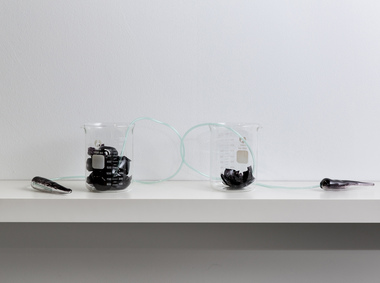
Sculpture - Artwork, 'The More Bones the Better' by Yhonnie Scarce, 2016
... Here, the many brittle bodies act as a metaphor for the collection, experimentation and examinations undertaken by government authorities on Aboriginal communities researched by Scarce. ...Here, the many brittle bodies act as a metaphor for the collection, experimentation and examinations undertaken by government authorities on Aboriginal communities researched by Scarce. ...Yhonnie SCARCE (1973- ) Born Woomera, South Australia Language group: Kokatha, Southern desert region and Nukunu, Spencer region Yhonnie Scarce works predominantly in glass. She majored in glass withing a Bachelor of Visual Arts (Honours) course at the South Australian School of Art, Adelaide, and holds a Master of Fine Arts from Monash University. One of the first contemporary Australian artists to explore the political and aesthetic power of glass, Scarce describes her work as ‘politically motivated and emotionally driven’. Scarce’s work often references the on-going effects of colonisation on Aboriginal people, In particular her research focus has explored the impact of the removal and relocation of Aboriginal people from their homelands and the forcible removal of Aboriginal children from their families. (https://thisisnofantasy.com/artist/yhonnie-scarce/, accessed 10 September 2018)Artist's Statement 'The More Bones the Better', 2016 Yhonnie Scarce was born in Woomera, SA and belongs to the Kokatha and Nukunu peoples. Scarce embraces a non traditional approach to glass blowing using glass as more than a mere material, acting as a lens and a mirror, Scarce reflects and exposes the tragedies of Australia’s colonisation. She applies the technical rigours of traditional glass blowing techniques in an innovative and unconventional manner. In particular Scarce uses glass to explore the lives and histories of Aboriginal Australians. Hand blown glass is shaped, engraved, painted and smashed to create indigenous fruits and vegetables such as bush bananas, bush plums and long yams symbolic of her peoples culture and traditions. With their elongated, torso-like shapes, they even evoke human bodies. Akin to a gatherer of bush food Scarce creates glass-gatherings of the persecuted. The repetition of brittle ambiguous bodies collected for experimentation and examination conjures the relentless impact of colonisation and the litany of abuses suffered by Aboriginal people. Within her research Scarce encountered a variety of ethnographic studies examining the use of scientific interventions amongst Indigenous cultures. These include Government sanctioned illegal drug testing of children in orphanages and other dubious medical practices amongst indigenous prison inmates. This work metaphorically looks at these situations and poses questions of what might have gone on in such a laboratory. The judge of the 2017 Guirguis New Art Prize (GNAP), Simon Maidment, Senior Curator, Contemporary Art, National Gallery of Victoria said; “The winning work by Yhonnie Scarce captures the sensitivity to materials she displays throughout her artistic practice. The blown and shattered glass elements are a delicate contrast to the shocking and little discussed histories of Aboriginal exploitation and abuse in the name of science in Australia. Engaging this topic, this work is haunting, in the same way those lived and documented experiences continue to haunt the collective unconscious of this country. Yhonnie Scarce’s work, The More Bones the Better 2016, I believe makes an important contribution to the Collection of Federation University Australia and will engage and move diverse audiences with its technical accomplishment, beauty and message. Yhonnie Scarce was born in Woomera SA and belongs to the Kokatha and Nukunu peoples. Scarce embraces a non-traditional approach to glass blowing using her medium as more than a mere material. Applying the technical rigours of traditional glass blowing in an innovative and unconventional manner, Scarce’s glass objects act as a lens and a mirror to reflect and expose the tragedies of Australia’s colonisation and, in particular, explore the lives and histories of Aboriginal Australians. Hand-blown glass is shaped, engraved, painted and smashed to represent indigenous fruits and vegetables such as bush bananas, bush plums and long yams, symbolic of Scarce’s people’s culture and traditions. While these elongated shapes on the one hand represent fruit and vegetables, gathered and grouped as in the gathering of bush food, Scarce’s torso-like bodies and forms are glass ‘gatherings’ representative of the gathering of people. Here, the many brittle bodies act as a metaphor for the collection, experimentation and examinations undertaken by government authorities on Aboriginal communities researched by Scarce. Exposing a variety of ethnographic studies, examining the use of scientific interventions on Indigenous cultures, Scarce also revealed Government sanctioned illegal drug testing of children in orphanages and other dubious medical practices undertaken on indigenous prison inmates. Scarce’s gatherings also reflect the impact of colonisation and the relentless conjuring and litany of abuses suffered by Aboriginal people. The More Bones the Better metaphorically looks at these situations and poses questions of what was undertaken and investigated in these laboratories. guirguis new art prize, yhonnie scarce, glass, aboriginal -
Mission to Seafarers Victoria
Article, New Light on the Light of the World
... This paper explores William Holman Hunt's co-option of illumination as metaphor and reality, the factors behind the longevity of the Light of the World as a stained glass phenomenon in Australia, and its universal appeal to Protestant church-goers. ...Abstract William Holman Hunt's Light of the World (1851-53) was a remarkable painting that depicted an idealised vision of his conversion to Evangelical Protestantism. The derogatory critics and fierce debates that greeted the Pre-Raphaelite paintings at Royal Academy exhibitions from 1850 in no way abated when the Light of the World and other PRB works were hung in 1854. Acceptance of the Light of the World was gradual, significantly aided by a long explanatory letter from John Ruskin published in The Times (5 May 1854 p. 9) that explained the symbolism in great detail, championing the work as the principal Pre-Raphaelite picture in the Exhbition and one of the noblest works of sacred art ever painted. Curious Londoners flocked to see it, but there was no inkling then of its influence on religious art, poetry and illustration that would continue well into the twentieth century; no less influential was its impact on stained glass. Almost immediately it was embraced as a new subject for church windows of all denominations. The global tour of Hunt's larger copy of the Light of the World reached Australia in 1906 where, preceded by clever pre-publicity, it generated huge interest in cities and country centres here and in New Zealand. The effect of the 'blockbuster' tour was far-reaching, with hundreds of stained glass windows appearing in churches across the country for the next fifty years. This paper explores William Holman Hunt's co-option of illumination as metaphor and reality, the factors behind the longevity of the Light of the World as a stained glass phenomenon in Australia, and its universal appeal to Protestant church-goers.non-fictionAbstract William Holman Hunt's Light of the World (1851-53) was a remarkable painting that depicted an idealised vision of his conversion to Evangelical Protestantism. The derogatory critics and fierce debates that greeted the Pre-Raphaelite paintings at Royal Academy exhibitions from 1850 in no way abated when the Light of the World and other PRB works were hung in 1854. Acceptance of the Light of the World was gradual, significantly aided by a long explanatory letter from John Ruskin published in The Times (5 May 1854 p. 9) that explained the symbolism in great detail, championing the work as the principal Pre-Raphaelite picture in the Exhbition and one of the noblest works of sacred art ever painted. Curious Londoners flocked to see it, but there was no inkling then of its influence on religious art, poetry and illustration that would continue well into the twentieth century; no less influential was its impact on stained glass. Almost immediately it was embraced as a new subject for church windows of all denominations. The global tour of Hunt's larger copy of the Light of the World reached Australia in 1906 where, preceded by clever pre-publicity, it generated huge interest in cities and country centres here and in New Zealand. The effect of the 'blockbuster' tour was far-reaching, with hundreds of stained glass windows appearing in churches across the country for the next fifty years. This paper explores William Holman Hunt's co-option of illumination as metaphor and reality, the factors behind the longevity of the Light of the World as a stained glass phenomenon in Australia, and its universal appeal to Protestant church-goers.jesus, stained glass windows, bronwyn hughes, pre-raphaelite, william holman hunt (1827-1910) -
 Alfred Hospital Nurses League - Nursing History Collection
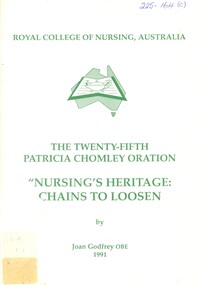
Journal - Oration, College of Nursing, Australia, The twenty-fifth Patricia Chomley oration: 'Nursing's heritage: the chains to loosen', 1991
... Patricia Chomley graduted from the Alfred Hospital in 1934 Of significance to the AHNL as it discusses the changes in nursing as a profession College of Nursing Australia nursing Patricia Chomley Oration This oration "nursing's heritage: chains to loosen" is a metaphor for how the nursing profession is evolving beyond its traditional, restrictive past to embrace more autonomy and control over its practice and future. ...This oration "nursing's heritage: chains to loosen" is a metaphor for how the nursing profession is evolving beyond its traditional, restrictive past to embrace more autonomy and control over its practice and future. It refers to moving away from old constraints like rigid, top-down hierarchies and outdated medical models, and toward a future of independent professional practice, specialized roles, and increased responsibility for patient outcomes and policy-making. The booklet also include a list of past speakers and titles of orationsStapled booklet, white cover with green print. Above the title and author's name are the words 'Royal College of Nursing Australia' and the logo of the college.Below the author's name '1991 is printednon-fictionThis oration "nursing's heritage: chains to loosen" is a metaphor for how the nursing profession is evolving beyond its traditional, restrictive past to embrace more autonomy and control over its practice and future. It refers to moving away from old constraints like rigid, top-down hierarchies and outdated medical models, and toward a future of independent professional practice, specialized roles, and increased responsibility for patient outcomes and policy-making. The booklet also include a list of past speakers and titles of orationscollege of nursing australia, nursing, patricia chomley oration -
 Wangaratta RSL Sub Branch
Badge - Cloth badge, c1965
... Because a mother kangaroo carries and protects her young inside a safe pouch, it served as a perfect metaphor for an air ambulance helicopter carrying the wounded to safety. ...This "Kangaroo and Joey" patch is a variation of the U.S. Army 82nd Medical Detachment patch. It was specifically adopted by the unit during the Vietnam War to pay homage to their close operational ties and frequent medivac missions supporting the Australian Army. These patches were custom-made by local tailors in South Vietnam rather than mass-produced by the U.S. militaryTo directly honour this alliance, the US unit integrated Australia’s national animal into a specialized version of their insignia. Because a mother kangaroo carries and protects her young inside a safe pouch, it served as a perfect metaphor for an air ambulance helicopter carrying the wounded to safety.Embroided cotton patch consisting of a circle design featuring a kangaroo and joey superimposed over a large red cross and white cotton background. A thin black edging around the circle completes the design.DUST OFF 82 MED DET(HA)unit badge, patch, 82 med det (ha), us army, vietnam war -
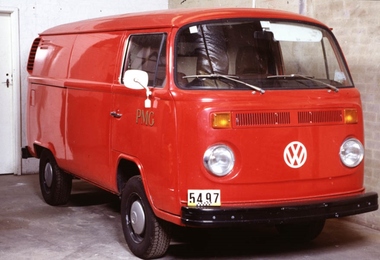 National Communication Museum
Vehicle - Van, Volkswagen, 1972
... Though in the late 1960s Volkswagen vehicles accounted for just over 500 of these vehicles, with the remainder represented by Ford, General Motors, Chrysler, and others, the multi-purpose nature of the van is significant as a metaphor for the multi-directional services of the Postmaster General’s Department. ...This van was used in Western Australia by linesmen and for mail pickup between 1972 and 1991. When transferred to the collection, it was the very last surviving vehicle of its type owned by the company. Despite its age, the van is in excellent condition having been reconditioned in 1987.This Volkswagen Transporter, 2nd generation, is commonly known as a kombi van; named as such after the German word Kombinationskraftwagen, meaning multi-purpose vehicle. This van is believed to have been used by linesmen and for mail collection from 1972 to 1991 in Western Australia, before being donated to the, then, Telstra Collection. Conflicting accounts from John Moynihan, PMG Engineer and author, suggest the van was used by cable jointers from the 1960s. Owing to this unclear use, the van’s historical significance is low though provenance from the Postmaster General’s Department to Telecom, then Telstra, is established. In 1987, the vehicle was extensively reconditioned and some original parts were presumably replaced. It is not, however, in working order or in good condition; the body carries several areas of rust, rubber seals have suffered plasticiser migration, a mirror is missing and there are marks from use. The hand lettered “P.M.G.” inscription is indicative of a Postmaster General fleet vehicle, as is the red colour of the vehicle paint. Though it is in poor condition, the van’s aesthetic style is of some significance. The van is representative of the type of Volkswagen vehicle used by the Postmaster General’s Department and other private businesses and government branches of the era. The vehicle may, therefore, carry social significance for those that lived in this era, where their communication service provider travelled in a Volkswagen van. Indeed, Volkswagen vans were used into the Telecom era, as evidenced by an image (6681153) in the National Archives of Australia collection. While many of these vehicles may exist today, there are few to no examples which survive in museum collections. In 1966, the Post Office (Postmaster General’s Department) had the largest fleet in Australia, totalling nearly 11,000 vehicles (The Canberra Times, 29 September 1966, p. 34). Though in the late 1960s Volkswagen vehicles accounted for just over 500 of these vehicles, with the remainder represented by Ford, General Motors, Chrysler, and others, the multi-purpose nature of the van is significant as a metaphor for the multi-directional services of the Postmaster General’s Department. Archival images show a variety of models and adaptations including roof racks, bull bar and door configurations. Its conflicted history of use may in fact attest to the vehicles variety of application in the duties of the Postmaster General‘s Department.Red Volkswagen Kombi van with stencilled gold lettering on doors. Scratches on bumpers indicate duck-egg blue undercoat. Single sliding door on left side of vehicle body with secondary opening at rear with horizontally divided doors. Mirror missing on right front. Western Australia registration sticker in front windscreen..1: "PMG" .2: "ROYAL" .3-.4 "PMG" .5-.6: "MAIL" .7,.8: "ER" .9: "C OF A / ZEH 622"transport, kombi van, linesman van, postal van, postmaster general’s department
