
Showing 27 items matching "methodist parsonage"
-
 City of Ballarat Libraries
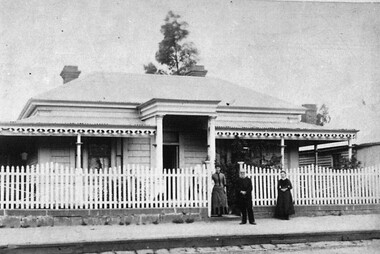
Photograph - Card Box Photographs, Methodist Parsonage, Talbot circa 1880
... Methodist Parsonage, Talbot circa 1880....Methodist Parsonage...North & family pictured. Methodist Parsonage Talbot Reverend W.S. North Building Persons Private Dwelling Methodist Parsonage, Talbot circa 1880. ...Reverend W.S. North & family pictured.methodist parsonage, talbot, reverend w.s. north, building, persons, private dwelling -
 Ringwood and District Historical Society
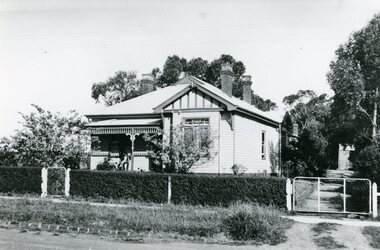
Photograph, Ringwood Methodist Church Parsonage -Bedford Road. 1940
... Ringwood Methodist Church Parsonage -Bedford Road. 1940..."Written on back of photograph" 1940 -Methodist Parsonage, Bedford Road Ringwood..."Written on back of photograph" 1940 -Methodist Parsonage, Bedford Road Ringwood Black and white photograph Ringwood Methodist Church Parsonage -Bedford Road. 1940 Photograph ...Black and white photograph"Written on back of photograph" 1940 -Methodist Parsonage, Bedford Road Ringwood -
 Whitehorse Historical Society Inc.
Document, Wedding of Bruce Roy Mullens to Thelma Lowen, 1936
... Methodist Parsonage, Bedford Road Ringwood. Methodist minister Fred Flentje....Certificate of Marriage of Bruce Roy Mullens to Thelma Mary Lowen, 20 June 1936 at Methodist Parsonage, Bedford Road Ringwood. Methodist minister Fred Flentje....Methodist Parsonage, Bedford Road Ringwood. Methodist minister Fred Flentje. ...Certificate of Marriage of Bruce Roy Mullens to Thelma Mary Lowen, 20 June 193.Certificate of Marriage of Bruce Roy Mullens to Thelma Mary Lowen, 20 June 1936 at Methodist Parsonage, Bedford Road Ringwood. Methodist minister Fred Flentje.Certificate of Marriage of Bruce Roy Mullens to Thelma Mary Lowen, 20 June 193. mullens, bruce roy, lowen, thelma mary, orchardists, marriage certificates -
 Clunes Museum
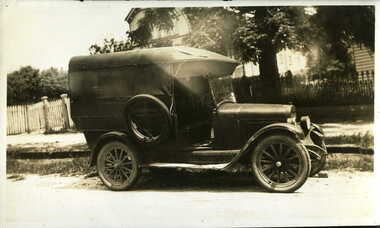
Photograph, VINTAGE CHEVROLET CAR, 1946
... BLACK AND WHITE PHOTOGRAPH OF CHEVROLET - VINTAGE DELIVERY VAN PARKED IN FRONT OF METHODIST PARSONAGE CLUNES....CIRCA 1946-47 BLACK AND WHITE PHOTOGRAPH OF CHEVROLET - VINTAGE DELIVERY VAN PARKED IN FRONT OF METHODIST PARSONAGE CLUNES. VINTAGE CHEVROLET CAR Photograph PHOTOGRAPH ...VINTAGE CHEVROLET DELIVERY VAN OWNED BY MR. LOU ROBERTS. THIS VAN SERVED AS LOCAL TAXI AND DELIVERY VAN.BLACK AND WHITE PHOTOGRAPH OF CHEVROLET - VINTAGE DELIVERY VAN PARKED IN FRONT OF METHODIST PARSONAGE CLUNES.ARTHUR LELEAN. CLUNES PRIOR TO DRIVING TENNIS TEAM OUT TO TOURELLO TO REG KINNERSLY'S HOUSE IN CHEVROLET. CIRCA 1946-47motor vehicle., chevrolet vitage -
Bendigo Historical Society Inc.
Document - The Reynolds Family Records Collection (Folder 3 of 4) William and Eliza Gibbons Marriage Certificate, 1950s
... This item contains the following documents: William and Eliza Gibbons Marriage Certificate, at Richmond Central Methodist Parsonage - Contact the Society for details...This item contains the following documents: William and Eliza Gibbons Marriage Certificate, at Richmond Central Methodist Parsonage - Contact the Society for details Document The Reynolds Family Records Collection (Folder 3 of 4) William and Eliza Gibbons Marriage Certificate ...Eleanor Hinde (1842-1902) was born in Lancashire England. In 1858, Eleanor married Richard Reynold in the Forest St Wesleyn Methodist Church in Sandhurst. They both gave their address as Sailors Gully Goldfields. They had seven children together. Richard was a skilled tradesman and after he died in 1872 from lung disease, Eleanor married Arculus Opie. Eleanor owned a property on the corner of Gladstone and Stanley Streets which later became an electrical substation. She sold poultry and eggs and preserves. One of Eleanor's sons, William John, married Anna (Annie) Jorgensen, and one of her daughters. Amelia, married Anna's brother Thomas Joynes Jorgensen. The Jorgensens founded and managed Jorgensen and Sons foundry and engineering works. Peter Jorgensen (1849-1914), was a mining contractor, he lived at, "Bro," Russell street, Quarry Hill. His firm was Jorgensen and Sons, mining contractors. He was a native of the Island of Alsen, Denmark. He left Denmark in the year 1861, embarking at Hamburg in a small sailing Ship. The four folders contain family history documents and photos of the descendants of Eleanor Hinde. This item contains the following documents: William and Eliza Gibbons Marriage Certificate, at Richmond Central Methodist Parsonage - Contact the Society for detailsbendigo, sandhurst, peter jorgensen, eleanor hinde, eleanor reynolds, eleanor opie, reynolds collection, william and eliza gibbons -
 Clunes Museum
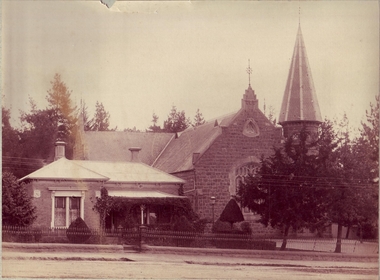
Photograph, METHODIST CHURCH
... PHOTOGRAPH OF METHODIST CHURCH AND PARSONAGE, CLUNES. .1 SEPIA PHOTOGRAPH - ON REVERSE SIDE REG NO 180 (LADY ON A HORSE IN FRONT OF A 2 STOREY BUILDING) .2 COPY OF PHOTOGRAPH...local history photography photographs churches wesley PHOTOGRAPH OF METHODIST CHURCH AND PARSONAGE, CLUNES. .1 SEPIA PHOTOGRAPH - ON REVERSE SIDE REG NO 180 (LADY ON A HORSE IN FRONT OF A 2 STOREY BUILDING) .2 COPY OF PHOTOGRAPH METHODIST CHURCH Photograph PHOTOGRAPH ...PHOTOGRAPH OF METHODIST CHURCH AND PARSONAGE, CLUNES. .1 SEPIA PHOTOGRAPH - ON REVERSE SIDE REG NO 180 (LADY ON A HORSE IN FRONT OF A 2 STOREY BUILDING) .2 COPY OF PHOTOGRAPHlocal history, photography, photographs, churches wesley -
Poowong Historical Group
Poowong North-last church service 1970
... The minister for the day was the Methodist minister Rev. Norman Higgitt? who lived in 'The Parsonage' 38 Nyora Road Poowong with his wife Lettie. ...The minister for the day was the Methodist minister Rev. Norman Higgitt? who lived in 'The Parsonage' 38 Nyora Road Poowong with his wife Lettie. ...This rather poor copy was scanned from what appears to be the minister's original typed copy. Mrs Ailsa Attenborough had kept it and was at this final service as organist, 12th July 1970. The minister for the day was the Methodist minister Rev. Norman Higgitt? who lived in 'The Parsonage' 38 Nyora Road Poowong with his wife Lettie. This document along with all the Loch Poowong Uniting church parish achives are about to be sorted and sent to the Uniting Church archives in Melbourne where they will be housed appropriately and can be accessed by the public. -
Ringwood and District Historical Society
Memorabilia - Envelope, Packet: Ringwood Methodist Church - Anniversary Pamphlets, Cuttings, Pictures, Hand written notes
... Minutes of meeting of the Ringwood Parsonage Trust 1909 and 1910 3. The Record of the Box Hill and Ringwood Methodist Circuits. ...Minutes of meeting of the Ringwood Parsonage Trust 1909 and 1910 3. The Record of the Box Hill and Ringwood Methodist Circuits. ...Churches - Ringwood Methodist Church3785.1 A hand written notes of the early history of the church. Several to the Town Clerk from the Ringwood Church trust and thr Public health department. 2. Minutes of meeting of the Ringwood Parsonage Trust 1909 and 1910 3. The Record of the Box Hill and Ringwood Methodist Circuits. Hand writen list of members of Ringwood Circuit. 4. Flyer for Back to Ringwood Methodist Church Jubilee, March 9th to 17th. 1929. Letter to Richard Carter from Aub (sic) who was eight years old at the time and can remember the Jubilee 4 Booklets about the Church Also a name tag for Miss V. Watson Assist. Secretary. Several cuttings, one full page spread from the newspaper about the Jubilee. 5. Ringwood Methodist Sunday School Tea and Meeting. Cutting from the Ringwood & Croydon Mail. The Wigley family were greatly represented. 6. Diamond Jubilee 17-28th. March ,1939 Program of Events 7. Six pages of hand written letters from the Methodist Circuit, letter to the Ringwood Councillors inviting them to the Centennary Celebrations of the Church,letter to the Town Clerk from Methodist Sunday School Surrey Hills regarding a picnic in Ringwood. 8. Ringwood United Churchmen's Association syllabus 1937 9. Pamphlet about Sunday Sport and the Christian Duty to Vote. 10.Ringwood Methodist Church news July 1963 11. Two Ringwood Methodist Church pamphlets for the 75th. Anniversary March 17th.-28th. 1954. 12.Copy of lease from the Methodist Church Trust for 30 years to use land in Ringwood 13. Carols by Candlelight (no year) and the Ringwood Methodist Church News March 1958, With memories of Christmas. 14.Pamphlet of the Laying of the Foundation Stone Saturday 18th. May 1963 and two pamphlets of the Opening and Dedication of the Ringwood Methodist church 9th. november 1963. 15.'The Messenger' Journal of the Ringwood Methodist Church December 1963. 16'. Forward in Faith' Review Stewardship Canvass August 1961. 11 pages outlining the plans for the proposed new Church. 17. Foolscap sheet typed with the Evening Service Sunday 6th. December 1970 with the Combined Circuit Choirs .Excerpts from 'The Messiah' 18. 'Recollections of Ringwood Methodism' issued at the celebration of the 98th. Anniversary of the Church 29th. may 1977. Compiled by Alf. Clark 19.Syllabus for the Uniting Church Fellowship Ringwood 1984 20.' Methodist Pioneers in the Croydon Area'. Work in Progress by Rev. Barry Brown 21.two page history of the ' Pipe Organ in the Ringwood Uniting Church' which was built by the Melbourne firm of Geo. Fincham & Sons. Plus a pge with' A Few Facts about the Organ' 22. Two Church Christmas cards (no year). one in envelope -
Glen Eira Historical Society
Document - Carnegie Methodist Church, Neerim Rd, 252- 254, Carnegie
... Carnegie Carnegie Methodist Church Schools Parsonages Rosstown State School Churches Sunday Schools Methodist Church Religious Groups Oakleigh Circuit Uniting Church Methodist Circuit Neerim Road Williams H. ...Four items about this church: 1/ Booklet Carnegie Methodist Church 70th Anniversary "Back to Carnegie" produced as the Carnegie Methodist Monthly Vol. 3 No. 1 - May 1956. Includes history information and Office Bearers of the Church with sketch 130mm x 65mm.18 pages plus covers. 2/ Booklet Carnegie Methodist Church, 80th anniversary "Back to Carnegie" covering 1886 to 1966. It includes a brief history of the Church. Includes sketch 130mm x 65mm. 8 pages plus covers. 3/ Booklet (on foolscap-sized card folded in half) titled Neerim Road (Carnegie) - Uniting Church of Australia - Formerly Carnegie Methodist Church - Centenary 1886 – 1986. Includes order of Morning Service. Includes exterior photograph 150mm x 80mm. Information printed on all 4 sides. Also an insert for the 04/05/1986 morning service celebrating the Neerim Road Centenary Anniversary - details of service and humns included 4/ 12 page music booklet for Harvest Anthem - I will feed My Flock composed by Caleb Simper, stamped Carnegie Methodist Choir on the front cover.carnegie, carnegie methodist church, schools, parsonages, rosstown state school, churches, sunday schools, methodist church, religious groups, oakleigh circuit, uniting church, methodist circuit, neerim road, williams h. j. rev, wells w. p. rev, jamison mr., wade mr, webb mr, baker mr., wilton mr., pearson mr., barrett mr., evans mr, stables, edgar w. h., secomb w. e. rev, tratham j. rev, rowse j. w. rev., alday t. rev, turner e. rev, leslie j. rev., adamson t. rev., palamountain wid. rev, holtham w. h. rev, wellard w. e. rev, rankin f. j. rev, bridgborn w. c. rev, tregear g. rev., newbegin f. w., harris h. r rev., phillips c. r. rev., wise mr., barnett mr., woods mr., phillp. mr., retallick mr., amos mr., long mr., ellis mr., ralph mr, walker mr., butler mr., snell mr., chisholm mr., bruce mr., sparlio mr., beecham mr., spencer mr., pascoe mr, archer mr., watson mr., arneil r., harwood charles, dunn j. t., gordon r., bracher l. a., johnson a. mrs., welch don, rose frank, hussack francis, marshall noreen, newitam ron, watson lawry, mathias rex rev, churchward a. rev, wallace g. e., smith jack mrs., byron mrs., daniels mrs, williams h. j. mrs, green anne, huffer n. mrs., cawthorn h. a., hunt a. w., kemp w. r. rev, addinsall c. roy, harrison w. r. rev, addisall c. r. mrs, addisall joan, bone bob, johns mrs., gordon e., rodgers keith, govers mrs, watters graham, wesleyan chilf, wesley hall carne, mcconachy r. s. rev, williams les. mrs., festivals and celebrations, mac rae chris, moorhead k. h. rev, shepparson avenue, james street, glenhuntly, toolambool road, edgar w. h., secomb w. e., hillis geoff, barners peter, moyle bruce, barry warrick, kilgour alex, green kevin rev, mcmullin bruce, gaylard heather, byard trevor rev, wells w. p. rev, trathen j, rouse j. w, alday t, turner e, leslie j., adamson t, palamountain w. j., secomb w. e., holtham w. h, hooper r. e., lloyd g., tregear g., shackelly e, rankin f, tonkin e, churchward s, harris g. c, beckett r., hamlett j. b., camilatos p., macrae jenny -
 Eltham District Historical Society Inc
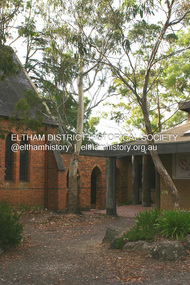
Photograph - Digital Photograph, Alan King, St Margaret's Anglican Church, Pitt Street, Eltham, 30 January 2008
... Methodist, later Uniting, Church at John Street and the Shillinglaw Cottage near Eltham’s Central Park. It is believed the first Anglican Bishop of Melbourne, Bishop Perry, dedicated the church. After the ceremony he joined in the festivities at the nearby pub and a bill was sent to the parish for teas taken there by the bishop with other participants. The first vicar was the Reverend Robert Mackie from 1864 to1866. St Margaret’s Church was originally called Christ Church until its consecration in 1871, when it was completely free of debt (£1700 pounds for the church and parsonage...Methodist, later Uniting, Church at John Street and the Shillinglaw Cottage near Eltham’s Central Park. It is believed the first Anglican Bishop of Melbourne, Bishop Perry, dedicated the church. After the ceremony he joined in the festivities at the nearby pub and a bill was sent to the parish for teas taken there by the bishop with other participants. The first vicar was the Reverend Robert Mackie from 1864 to1866. St Margaret’s Church was originally called Christ Church until its consecration in 1871, when it was completely free of debt (£1700 pounds for the church and parsonage ...St Margaret’s Church of England was officially opened on December 12, 1861. It is the oldest intact church building in Eltham. At the time it was known as Christ Church until its consecration in 1871, when it was completely free of debt (£1,700 for the church and parsonage) despite the district’s poverty. This was largely due to the free labour and materials, including locally made bricks donated by local artisans and others. The church is historically significant because it is the oldest church in the former Shire of Eltham and has associations with the philanthropist and founder of Brighton, Henry Dendy (who donated the land on which the church is built), the architect Nathaniel Billing and the prominent local builder, George Stebbing. The church is architecturally and aesthetically significant because it is constructed in the Gothic Revival style with several stained-glass windows of various dates and is also a very early use of polychromatic brickwork in Victoria. Billing was one of the first Melbourne architects to employ polychromatic brickwork and an important early architect. The rear wall was intended to be temporary. A major feature of the design is the large buttresses with long, steeply graded upper faces. The overall design is well proportioned with the surface brick patterns relieving an otherwise austere design. The church is spiritually and socially significant because it has been an important place of worship for the people of Eltham for almost 150 years. The land on which the buildings stand was donated by Henry Dendy. Dendy arrived in Melbourne in 1841 after purchasing in England eight square miles at Brighton under the system of "special surveys". After this land passed out of his hands, Dendy moved about Victoria, visited England, then returned to settle in Eltham where he purchased a flour mill. Dendy chaired the meeting held in 1860 “for the purpose of devising such means as may be expedient for the establishment of a Church of England in the township of Eltham”. He became chairman and treasurer of the church committee. Unlike the establishment of many early churches in Victoria where a vicar was appointed to a parish and later a permanent church was constructed, the population at Eltham initiated action to build a church. The nearest church at that time was at Heidelberg and the Eltham settlement was part of the parish of St Johns Heidelberg. Isolation and the tedious, time consuming journey between Heidelberg and Eltham resulted in the Eltham community taking its own action. The original vicarage (Dendy House) at the rear of the church is also an important part of the cultural significance of this place because it is connected to the church and the development of the Eltham area. Together, the church and the vicarage are aesthetically significant because they form a significant streetscape feature. The mud-brick community hall designed by Robert Marshall was added in 1978. In 2014 the original temporary rear wall was removed as part of a modern extension designed by Architects Atelier Wagner and constructed by Conrad Construction and Management. Covered under Heritage Overlay, Nillumbik Planning Scheme. National Trust of Australia (Victoria) State significance Victorian Heritage Published: Nillumbik Now and Then / Marguerite Marshall 2008; photographs Alan King with Marguerite Marshall.; p67 St Margaret’s Anglican Church in Pitt Street, Eltham, which officially opened on December 12, 1861, is the oldest intact church building in Eltham.1 With the nearby courthouse and police station, it was one of the first permanent community buildings in the district. The church and vicarage are on the Register of the Heritage Council of Victoria and the National Trust of Australia – Victoria. The church is important as an early example of polychrome brickwork by the notable architect Nathaniel Billings. It is also notable for its historic associations with the early settlement of the Shire of Eltham and its connection with Henry Dendy, Brighton’s founder.2 Henry Dendy, who lived in Eltham much longer than at Brighton, chaired the original meeting which planned the church, and he donated the half-acre (0.2ha) site. Dendy had arrived in Melbourne in 1841 after buying eight square miles (20.7sq km) at Brighton while in England. After this land passed out of his hands, he eventually settled in Eltham where he bought a flour mill, west from the corner of Main Road and Pitt Street (then called Brewery Lane). The vicarage was named Dendy House after him. The Eltham settlers were unusual in initiating the establishment of a church. Usually in Victoria a vicar was appointed to a parish and then a permanent church was constructed. But then, the nearest church was at Heidelberg, which was a tedious and time-consuming journey. St Margaret’s builder was a local, George Stebbing, who also constructed the former Methodist, later Uniting, Church at John Street and the Shillinglaw Cottage near Eltham’s Central Park. It is believed the first Anglican Bishop of Melbourne, Bishop Perry, dedicated the church. After the ceremony he joined in the festivities at the nearby pub and a bill was sent to the parish for teas taken there by the bishop with other participants. The first vicar was the Reverend Robert Mackie from 1864 to1866. St Margaret’s Church was originally called Christ Church until its consecration in 1871, when it was completely free of debt (£1700 pounds for the church and parsonage) despite the district’s poverty. This was largely due to the free labour and materials, including local bricks, donated by local artisans and others. St Margaret’s Church is in the Gothic Revival tradition with a buttressed nave, paired lancet windows, porch and bell-cote. It was the first polychromatic brick church in Australia, using softly contrasting coloured brickwork.3 Billing was one of the first architects to introduce polychrome brickwork into Melbourne. His original drawings for St Margaret’s survive in a folio of his architectural work. However the church’s brickwork is more subdued than in his drawings. About half the windows – those in clear glass with gold borders – are original. The stained glass windows were made much later, but the one behind the altar is thought to be the oldest in the Diamond Valley. It was to be temporary until the congregation could afford to extend the church. In the early 1960s the original cedar pews were replaced by blonde timber pews and the originals were sold to restaurants and to private individuals. Eminent local sculptor Matcham Skipper created a crucifix for the church. A major addition was made in 1978, when the weatherboard hall was replaced by a mud-brick hall. Made of local material, it was designed by local architect and a former shire president Robert Marshall. The mud-brick hall reflects the style of building in Eltham of the late 1970s and for which Eltham is well-known. Perhaps because its earthy tones blend with the surrounding environment, the hall sits well with the church building. St Margaret’s membership has included economist and ABC chairman, Richard Downing; political commentator, diplomat and academic, William Macmahon Ball; Eltham civic leader, Charles Wingrove; artist, Peter Glass; and Eltham’s first postmaster, Frederick Falkiner.This collection of almost 130 photos about places and people within the Shire of Nillumbik, an urban and rural municipality in Melbourne's north, contributes to an understanding of the history of the Shire. Published in 2008 immediately prior to the Black Saturday bushfires of February 7, 2009, it documents sites that were impacted, and in some cases destroyed by the fires. It includes photographs taken especially for the publication, creating a unique time capsule representing the Shire in the early 21st century. It remains the most recent comprehenesive publication devoted to the Shire's history connecting local residents to the past. nillumbik now and then (marshall-king) collection, eltham, st margaret's anglican church, st margaret's church, st margarets church hall, christ church -
 Eltham District Historical Society Inc
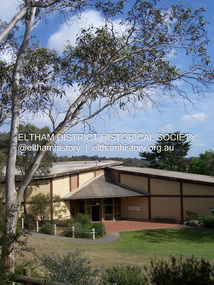
Photograph - Digital Photograph, Marguerite Marshall, Eltham Community and Reception Centre, 2 October 2006
... Recognised as Australia’s first public mud-brick building, the centre was built partly on the site of the parsonage of the former Methodist Church (now the Uniting Church).1 Commissioned by the Eltham Council headed by President Robert Marshall, architects Whitford and Peck were asked to design a multipurpose facility in mud-brick and timber. ...Recognised as Australia’s first public mud-brick building, the centre was built partly on the site of the parsonage of the former Methodist Church (now the Uniting Church).1 Commissioned by the Eltham Council headed by President Robert Marshall, architects Whitford and Peck were asked to design a multipurpose facility in mud-brick and timber. ...The Eltham Community and Reception Centre was Australia's first public mud-brick building. Commissioned in 1977 by Eltham Shire Council, led by Shire president (and architect) Robert Marshall, architects Whitford and Peck were asked to design a multipurpose facility in mud-brick and timber. The official opening was performed by the Hon. R.J. Hamer; E.D., M.P., Premier of Victorai on Saturday, April 22, 1978. Architects: Whitford & Peck Pty Ltd Quantity Surveyor: D.J. Cant & Associates Structural Civil Engineers: Charlett & Moore Pty Ltd Landscape: Peter Glass, Dennis Edwards Mech Elec: Lobley Treidel & Partners Pty Ltd Acoustics: Riley Barden & Kirkhope Builder: L.U. Simon Pty Ltd Covered under Heritage Overlay, Nillumbik Planning Scheme. Published: Nillumbik Now and Then / Marguerite Marshall 2008; photographs Alan King with Marguerite Marshall.; p177 The Wiggles performed there, so has the ABC’s Play School. New citizens have made their vows, volunteers have been honoured, school children have performed, weddings celebrated and people mourned at funerals. Since 1978 the Eltham Community and Reception Centre at the corner of Pitt Street and Main Road, has provided a beautiful and quintessential Eltham environment for people from all over Melbourne. Recognised as Australia’s first public mud-brick building, the centre was built partly on the site of the parsonage of the former Methodist Church (now the Uniting Church).1 Commissioned by the Eltham Council headed by President Robert Marshall, architects Whitford and Peck were asked to design a multipurpose facility in mud-brick and timber. Following public consultation, it was agreed to build a centre for dances, exhibitions, films, plays or concerts. The results – at a cost of around $620,000 – captured the Eltham rustic style. The building – in soft tones of mud-brick and timber and immense floor-to-ceiling windows – overlooks the Diamond Creek and sporting fields. Eltham’s strong artistic heritage is reflected in the centre. Although the lighting is not ideal for a gallery and labels cannot be placed on walls, the centre hosts the Nillumbik Art Awards and displays around ten to 20% of the Nillumbik Shire Art Collection, usually for around a year at a time.2 On permanent display, close to the entrance, is local artist Clifton Pugh’s White Choughs in the Landscape. Further to the right is the Walter Withers Gallery, named after a local member of the Heidelberg School of artists. As part of the Eltham Gateway opposite the Eltham Hotel, the centre stands on what was once part of the Eltham Town Centre along this section of Main Road, then known as Maria Street. On the same site once stood the house and flour mill owned by Henry Dendy, best known as the founder of Brighton, although he lived longer in Eltham. Beside the drive is a wheel-rim tool with accompanying plaque, illustrating a technology important during the horse-powered age and now almost completely gone, as has the blacksmith’s shop that had housed it nearby. The implement is a platform for fitting iron tyres to the wooden rims of cartwheels. Beneath it is a capsule placed in 1985 to commemorate Victoria’s 150 years, which is to be opened in 2035. Although the plants, forming part of the landscaping by Peter Glass and Denis Edwards, are largely indigenous and other native species, some exotic plants are protected as an important link with the site’s past. Planted at the front around 1920, is a large Peppercorn tree with two joined trunks growing from the base, and close by is a Bhutan Cypress (Cupressus torulosa). Three other Peppercorn trees fringe the drive. The building includes two halls – the larger seating 250 people – and a large foyer overlooking trees and ovals. Both halls have retractable rear walls providing varying spaces as required, and guests can use several external decks. A site for outdoor theatre has been carved out of the natural slope outside the entrance. The Bricklayers Union refused to use the traditional mud-bricks, which weigh more than 22kg. As a result the mud-bricks were redesigned to reduce their weight and were laid back-to-back to produce a wall of normal thickness.3 The centre’s massive timber frame is reminiscent of timber bridge construction, with infill panels of mud-brick.4 In accord with the rustic style are colossal rough-sawn posts, bolts and steel brackets. The combination of mud-brick, exposed feature timber framing and creative design in this centre, characterises Eltham’s innovative buildings and the social movement behind them from the 1940s to the 1970s.This collection of almost 130 photos about places and people within the Shire of Nillumbik, an urban and rural municipality in Melbourne's north, contributes to an understanding of the history of the Shire. Published in 2008 immediately prior to the Black Saturday bushfires of February 7, 2009, it documents sites that were impacted, and in some cases destroyed by the fires. It includes photographs taken especially for the publication, creating a unique time capsule representing the Shire in the early 21st century. It remains the most recent comprehenesive publication devoted to the Shire's history connecting local residents to the past. nillumbik now and then (marshall-king) collection, eltham community and reception centre, mudbrick construction -
 Bendigo Historical Society Inc.
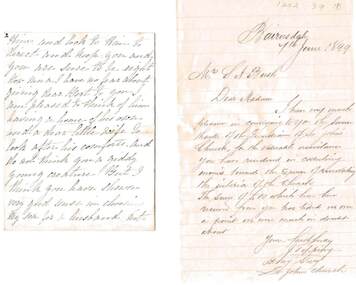
Document - BUSH COLLECTION: COLLECTION OF LETTERS TO MRS S. A. (NINA) BUSH), 1888 - 1891
... Andrews, Nicholson St; Ist Oct. 1891 b: to 'my dear Nina' from Nellie Bath, Methodist Ladies' College; Feb 22nd, 1889 c; to 'My very dear Nina' from ?? Nellie Bush (by handwriting?), Wesleyan Parsonage...Andrews, Nicholson St; Ist Oct. 1891 b: to 'my dear Nina' from Nellie Bath, Methodist Ladies' College; Feb 22nd, 1889 c; to 'My very dear Nina' from ?? Nellie Bush (by handwriting?), Wesleyan Parsonage ...a: to Mr & Mrs Bush from R? Andrews, Nicholson St; Ist Oct. 1891 b: to 'my dear Nina' from Nellie Bath, Methodist Ladies' College; Feb 22nd, 1889 c; to 'My very dear Nina' from ?? Nellie Bush (by handwriting?), Wesleyan Parsonage; July 14th, 1888 d: to 'My dear Nina' from Jane? Bush, 'Lansdowne'; Jan 14th, 1891 e: to Mrs S. A. Bush from J. Tipping, St. John's Church, Bairnsdale. 7th June, 1899.person, individual, bush collection - personal -
 Bendigo Historical Society Inc.
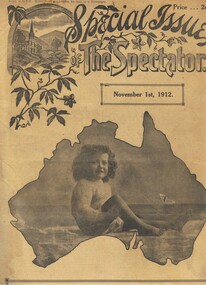
Magazine - 'THE SPECTATOR' (METHODIST WEEKLY MAGAZINE), 19103/1912
... Methodist Weekly Magazine), a. Special Issue of 6/2/1903. 48 pages Vol; XXX, No. 6: p.204 Bendigo Laymen; p-. 212 Photo of Bendigo Parsonage. ...Methodist Weekly Magazine), a. Special Issue of 6/2/1903. 48 pages Vol; XXX, No. 6: p.204 Bendigo Laymen; p-. 212 Photo of Bendigo Parsonage. ...'The Spectator' (Methodist Weekly Magazine), a. Special Issue of 6/2/1903. 48 pages Vol; XXX, No. 6: p.204 Bendigo Laymen; p-. 212 Photo of Bendigo Parsonage. Missing pp. 227-228 and front page; b. As for a bu has pp 227-228 and front cover; c. Special Issue, 1/11/1912 p 1750-1751 article and photos re Quarry Hill Sunday School; p. 1796 (back cover) : Bendigo Advertisement Section - Robt. George, Merchant Tailor; Geo. Forster, Saddler and Harness Maker; Bartlett Bros ( R W Bugg) Art Photographers and Portrait Painters; Ewings & Kronk, Butchers; Mason & Hart, Cash Storemagazine, methodist -
 Uniting Church Archives - Synod of Victoria
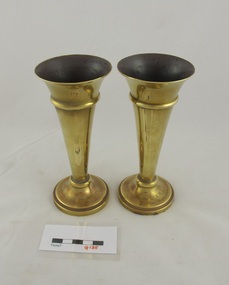
Functional object - Vase
... Marion Rosalie Mapperson, 1920-1946, was the daughter of the Mr and Mrs C Mapperson and was born in a home mission parsonage where she grew up to realise the presence and power of Jesus Christ. She became a fully-accredited local preacher then joined the staff of the Methodist Homes for Children at Cheltenham from there she began her training to be a Methodist Deaconess. ...Marion Rosalie Mapperson, 1920-1946, was the daughter of the Mr and Mrs C Mapperson and was born in a home mission parsonage where she grew up to realise the presence and power of Jesus Christ. She became a fully-accredited local preacher then joined the staff of the Methodist Homes for Children at Cheltenham from there she began her training to be a Methodist Deaconess. ...Marion Rosalie Mapperson, 1920-1946, was the daughter of the Mr and Mrs C Mapperson and was born in a home mission parsonage where she grew up to realise the presence and power of Jesus Christ. She became a fully-accredited local preacher then joined the staff of the Methodist Homes for Children at Cheltenham from there she began her training to be a Methodist Deaconess. Her funeral service was held at the Palmerston Street Church, Carton; it was conducted by the Warden of the Deaconess Institute, the Rev A W Pederick and Rev D W Risstrom. Marion Mapperson was buried at Fawkner Memorial Park. G135.1 and G135.2 brass conical shaped vases with a dedication engraved at the base.G137.1: "Presented by the W.H.M.L. I Memory of Marion Mapperson" G137.2: "Presented by the Deaconesses In Memory of Marion Mapperson"women's home missionary league, marion rosalie mapperson, methodist deaconess, methodist home mission -
 Uniting Church Archives - Synod of Victoria
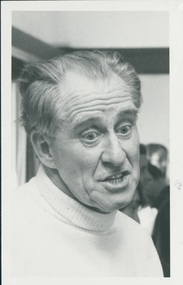
Bw photo, Undated
... Methodist minister and Harvey and Jean's childhood was spent in parishes in urban and rural areas of Tasmania and Victoria. The family saw the grinding poverty and desperate human need wrought by the Depression as a ceaseless tide of people came knocking at the door of the local parsonage for help. ...Methodist minister and Harvey and Jean's childhood was spent in parishes in urban and rural areas of Tasmania and Victoria. The family saw the grinding poverty and desperate human need wrought by the Depression as a ceaseless tide of people came knocking at the door of the local parsonage for help. ...Harvey Perkins was a Methodist minister and a peacemaker throughout his life of service and social activism. He knew the certainty that without justice there can be no peace, within, or between, communities and nations. He was greatly influenced by ''liberation theology'' and framed his life of thought, analysis and action on the teachings of the Bible. He was also a visionary in working closely with Asian churches on ecumenical and social justice issues in a way that anticipated by decades the closer relationships Australia now enjoys with Asia. He understood that any form of intervention altered the power relationship within a community and often challenged the dominant social interests in the post-colonial Asian countries. He knew any form of aid had to empower its recipients and be based on a partnership of equality. In the early 1960s, Perkins was an opponent of the war in Indochina and conscription in Australia and played an important role in activating congregations to protest against the war. His keen intelligence, knowledge of history and analytical skills demolished the false foundation on which the US and its allies entered the war and he organised medical and social work teams in South Vietnam and Laos to help refugees and displaced persons. In the 1970s Perkins played an important role in ''decolonising'' and devolving power in the Methodist Church missions in Aboriginal Australia and the Pacific Islands by analysing power structures and relationships through what he had learnt in Asia. Harvey Perkins and his twin sister, Jean, were born in Tasmania on January 29, 1919, children of Leslie Perkins and his wife, Doris (nee Cook). Leslie was a Methodist minister and Harvey and Jean's childhood was spent in parishes in urban and rural areas of Tasmania and Victoria. The family saw the grinding poverty and desperate human need wrought by the Depression as a ceaseless tide of people came knocking at the door of the local parsonage for help. In 1941, Perkins enlisted as an officer in the Australian Navy and served in the Pacific theatre until 1946. To his children, he explained his justification as being the real threat of invasion but it was a war that altered the direction of his life. On discharge he abandoned his completed studies at Melbourne University in law and commerce and studied for a degree in divinity. He was active in the World Student Christian Federation and in 1949, was ordained into the Methodist Church. A few years later, Perkins travelled to a World Student Christian Federation conference in Canada, on his way to study in Cambridge, and met an expatriate, Jill McCrory. They married in 1953. After Cambridge, Perkins returned to Australia and served as a minister in the Mitcham area of the growing Melbourne outer suburbs until 1956, when he was appointed General Secretary of the Australian Council of Churches and director of the Inter-Church Aid and Refugee World Service. From 1968 to 1971, Perkins worked with the East Asian Christian Conference and then took a position with the World Council of Churches in Geneva with its Commission on Churches Participation in Development. He returned to Australia in 1973 to a position with the Methodist Board of Missions and then returned to the Christian Conference of Asia in 1976 and relocated to Singapore for several years. Before retiring in 1984 he worked with the Uniting Church Board of Social Responsibility. In retirement Perkins continued to work in the Dee Why parish, enjoying preaching, leading study groups and working as a pastor in a local community. Along with his work, Perkins had a lifelong passion for AFL and his beloved team North Melbourne. Wherever he was in the world he could be found fiddling with a short-wave radio to listen to a game. In later years, Perkins developed Alzheimer's and his home became his haven until two weeks before his death. Harvey Perkins is survived by Jill, children Mary, Ro, David, Marguerite, Anna, Harvey and Kate and their partners, 13 grandchildren and two great-grandchildren. Jean died in 1981. (Obituary in the SMH by David Perkins) Head and shoulders portrait of Rev. Harvey PerkinsRev. Harvey Perkinsrev. harvey perkins; methodist minister; christian conference of asia; australian council of churches -
 Uniting Church Archives - Synod of Victoria
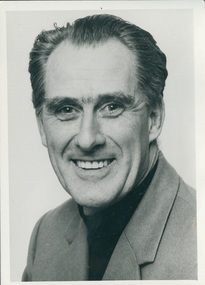
BW photo, Undated
... Methodist minister and Harvey and Jean's childhood was spent in parishes in urban and rural areas of Tasmania and Victoria. The family saw the grinding poverty and desperate human need wrought by the Depression as a ceaseless tide of people came knocking at the door of the local parsonage for help. ...Methodist minister and Harvey and Jean's childhood was spent in parishes in urban and rural areas of Tasmania and Victoria. The family saw the grinding poverty and desperate human need wrought by the Depression as a ceaseless tide of people came knocking at the door of the local parsonage for help. ...Harvey Perkins was a Methodist minister and a peacemaker throughout his life of service and social activism. He knew the certainty that without justice there can be no peace, within, or between, communities and nations. He was greatly influenced by ''liberation theology'' and framed his life of thought, analysis and action on the teachings of the Bible. He was also a visionary in working closely with Asian churches on ecumenical and social justice issues in a way that anticipated by decades the closer relationships Australia now enjoys with Asia. He understood that any form of intervention altered the power relationship within a community and often challenged the dominant social interests in the post-colonial Asian countries. He knew any form of aid had to empower its recipients and be based on a partnership of equality. In the early 1960s, Perkins was an opponent of the war in Indochina and conscription in Australia and played an important role in activating congregations to protest against the war. His keen intelligence, knowledge of history and analytical skills demolished the false foundation on which the US and its allies entered the war and he organised medical and social work teams in South Vietnam and Laos to help refugees and displaced persons. In the 1970s Perkins played an important role in ''decolonising'' and devolving power in the Methodist Church missions in Aboriginal Australia and the Pacific Islands by analysing power structures and relationships through what he had learnt in Asia. Harvey Perkins and his twin sister, Jean, were born in Tasmania on January 29, 1919, children of Leslie Perkins and his wife, Doris (nee Cook). Leslie was a Methodist minister and Harvey and Jean's childhood was spent in parishes in urban and rural areas of Tasmania and Victoria. The family saw the grinding poverty and desperate human need wrought by the Depression as a ceaseless tide of people came knocking at the door of the local parsonage for help. In 1941, Perkins enlisted as an officer in the Australian Navy and served in the Pacific theatre until 1946. To his children, he explained his justification as being the real threat of invasion but it was a war that altered the direction of his life. On discharge he abandoned his completed studies at Melbourne University in law and commerce and studied for a degree in divinity. He was active in the World Student Christian Federation and in 1949, was ordained into the Methodist Church. A few years later, Perkins travelled to a World Student Christian Federation conference in Canada, on his way to study in Cambridge, and met an expatriate, Jill McCrory. They married in 1953. After Cambridge, Perkins returned to Australia and served as a minister in the Mitcham area of the growing Melbourne outer suburbs until 1956, when he was appointed General Secretary of the Australian Council of Churches and director of the Inter-Church Aid and Refugee World Service. From 1968 to 1971, Perkins worked with the East Asian Christian Conference and then took a position with the World Council of Churches in Geneva with its Commission on Churches Participation in Development. He returned to Australia in 1973 to a position with the Methodist Board of Missions and then returned to the Christian Conference of Asia in 1976 and relocated to Singapore for several years. Before retiring in 1984 he worked with the Uniting Church Board of Social Responsibility. In retirement Perkins continued to work in the Dee Why parish, enjoying preaching, leading study groups and working as a pastor in a local community. Along with his work, Perkins had a lifelong passion for AFL and his beloved team North Melbourne. Wherever he was in the world he could be found fiddling with a short-wave radio to listen to a game. In later years, Perkins developed Alzheimer's and his home became his haven until two weeks before his death. Harvey Perkins is survived by Jill, children Mary, Ro, David, Marguerite, Anna, Harvey and Kate and their partners, 13 grandchildren and two great-grandchildren. Jean died in 1981. (Obituary in the SMH by David Perkins) Head and shoulders portrait of the Rev. Harvey Perkins. Photo taken some years before the photo of him in F524 -9Rev. Harvey Perkinsrev. harvey perkins; methodist minister; christian conference of asia; australian council of churches -
 Uniting Church Archives - Synod of Victoria
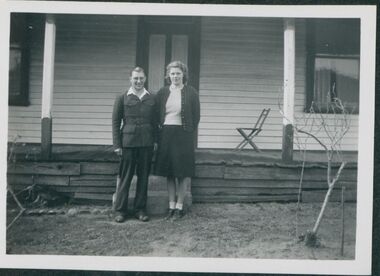
Photograph, undated c.1945 - 1949
... Methodist Church, Cudgewa, Rev. A.K. Wilhelms B & W photograph of Rev. and Mrs. A.K. Wilhelms standing in front of the Cudgewa parsonage. ...B & W photograph of Rev. and Mrs. A.K. Wilhelms standing in front of the Cudgewa parsonage.methodist church, cudgewa, rev. a.k. wilhelms -
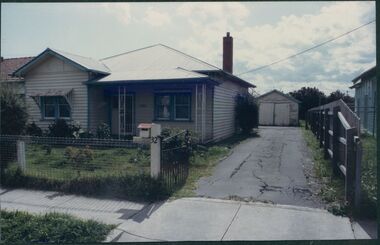 Uniting Church Archives - Synod of Victoria
Photograph, undated
... methodist church, uniting church, derrimut st. albion...parsonage...Possibly the parsonage for the Methodist minister....Possibly the parsonage for the Methodist minister. Photograph Photograph ...The Methodist (later Uniting) Church in Derrimut St. opened on 15 December 1928.Colour photograph of a weatherboard house and garage located at 32 Derrimut St. Albion. Possibly the parsonage for the Methodist minister.methodist church, uniting church, derrimut st. albion, parsonage -
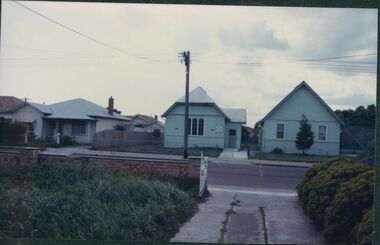 Uniting Church Archives - Synod of Victoria
Photograph, undated
... methodist church, uniting church, derrimut st. albion...parsonage...The Church is now known as The Good Shepherd Christian Church (Assemblies of God). methodist church, uniting church, derrimut st. albion parsonage Good Shepherd Christian Church Colour photograph of a dwelling, church and hall located at 32 Derrimut St. ...The Methodist (later Uniting) Church in Derrimut St. opened on 15 December 1928. The Church is now known as The Good Shepherd Christian Church (Assemblies of God).Colour photograph of a dwelling, church and hall located at 32 Derrimut St. Albion. methodist church, uniting church, derrimut st. albion, parsonage, good shepherd christian church -
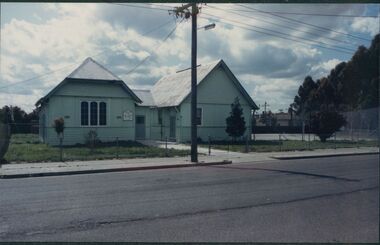 Uniting Church Archives - Synod of Victoria
Photograph, undated
... methodist church, uniting church, derrimut st. albion...parsonage...The Church is now known as The Good Shepherd Christian Church (Assemblies of God). methodist church, uniting church, derrimut st. albion parsonage good shepherd christian church Colour photograph of the Albion Church and hall located at 32 Derrimut St. ...The Methodist (later Uniting) Church in Derrimut St. opened on 15 December 1928. The Church is now known as The Good Shepherd Christian Church (Assemblies of God).Colour photograph of the Albion Church and hall located at 32 Derrimut St. Albion. methodist church, uniting church, derrimut st. albion, parsonage, good shepherd christian church -
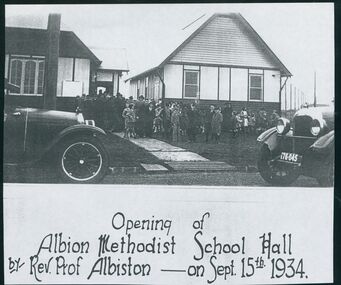 Uniting Church Archives - Synod of Victoria
Photograph - Photocopy of original photograph, 1934
... methodist church, uniting church, derrimut st. albion...parsonage...Albiston on 15 September 1934. methodist church, uniting church, derrimut st. albion parsonage good shepherd christian church School Hall, Rev. ...The Methodist (later Uniting) Church in Derrimut St. opened on 15 December 1928. The Church is now known as The Good Shepherd Christian Church (Assemblies of God). The School Hall was opened by Rev. Prof. Albiston on 15 September 1934.B & W copy of photograph of the Albion Methodist School Hall located next to the Albion Church. The photo shows a group of adults and children standing outside the Hall on the day of its opening in 1934.Opening of Albion Methodist School Hall by Rev. Prof. Albiston on Sept. 15th 1934.methodist church, uniting church, derrimut st. albion, parsonage, good shepherd christian church, school hall, rev. prof. albiston -
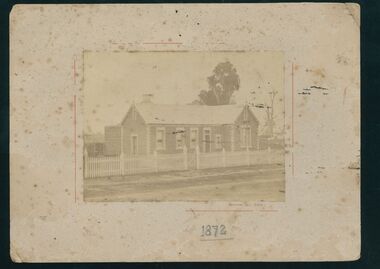 Uniting Church Archives - Synod of Victoria
Photograph - B&W Photograph mounted on card, Sale Methodist Church, undated
... methodist, sale, rev. james bickford, rev henry baker, gippsland circuit...parsonage...The first Methodist services in Sale were held in the Mechanics Institute, but by July 1865 a Methodist church had been opened for worship. The parsonage was built in 1872 and the Sunday School in 1886. ...The new Sale Methodist Church was opened on 25 September 1965. The parsonage was later used by Kilmany Family Care. methodist, sale, rev. james bickford, rev henry baker, gippsland circuit parsonage B & W exterior view of the Sale Wesleyan parsonage, built next to the church in 1872. ...In October 1863 the Rev. James Bickford visited Sale to explore the possibilities of establishing a Methodist cause there. In March 1864 a group of 8 local men petitioned Conference to appoint a minister. The men were: Nehemiah Guthridge, G. Ross, J.H. Walters, J.E. Derrick, G.E. Hawkins, R. Gibbs, J.J. Drew, J. James. The Rev. Henry Baker arrived in the Gippsland Circuit later in 1864. The first Methodist services in Sale were held in the Mechanics Institute, but by July 1865 a Methodist church had been opened for worship. The parsonage was built in 1872 and the Sunday School in 1886. The Sale Methodist Church was renovated at a cost of 2500 pounds in 1951. The new Sale Methodist Church was opened on 25 September 1965. The parsonage was later used by Kilmany Family Care.B & W exterior view of the Sale Wesleyan parsonage, built next to the church in 1872.methodist, sale, rev. james bickford, rev henry baker, gippsland circuit, parsonage -
 Uniting Church Archives - Synod of Victoria
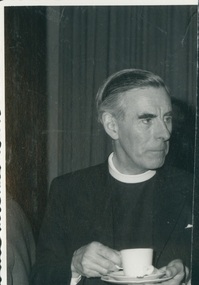
BW photo, May 1975
... "Lay people, too, were the President's guests: For the second last time that honoured Methodist tradition—the President's Reception—drew many people of the parsonage to Burke Rd Balwyn, at the invitation of the President and Mrs Turner. ..."Lay people, too, were the President's guests: For the second last time that honoured Methodist tradition—the President's Reception—drew many people of the parsonage to Burke Rd Balwyn, at the invitation of the President and Mrs Turner. ..."Lay people, too, were the President's guests: For the second last time that honoured Methodist tradition—the President's Reception—drew many people of the parsonage to Burke Rd Balwyn, at the invitation of the President and Mrs Turner. There was a break with tradition, too. For the first time lay people were on the invitation list. 'We felt it important in these days of total ministry that lay people should be involved,' said the President. And since not every Methodist in Melbourne and beyond could be gathered at one time and place, the invitation went to representatives from the standing committee and all the church's organisations. Speaker, the Cato lecturer Dr Kenneth Greet, entertained and stimulated those present with his personal story of one man's journey as a Methodist preacher. Next week Dr Greet will deliver the lecture for which he is primarily in Australia, during the final General Conference before union. Titled 'When the Spirit Moves' the lecture will speak to the question, 'has the Christian any clue to the future and can he look to it with hope?' Dr Greet will answer yes to that. 'The answer lies in the doctrine of the Holy Spirit, the guide of God's people and the interpreter of events,' he will say."Rev. Dr Kenneth Greet is holding a cup of tea and looking to his left. Dressed in clerical collar and stock.Cato Lecturer, Dr Kenneth Greet. New Spectator 7 May 1975 -
 Clunes Museum
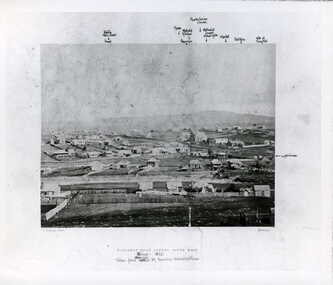
Photograph, BALLARAT ROAD, CLUNES, SOUTH WEST, 1865
... PHOTOGRAPH SHOWS MANSE PREBYTERIAN [ST ANDREWS[ CHURCH METHODIST [WESLEY[ WITHOUT SPIRE, SUNDAY SCHOOL AND PARSONAGE MARKET, POST OFFICE SITE TOWN HALL...PHOTOGRAPH SHOWS MANSE PREBYTERIAN [ST ANDREWS[ CHURCH METHODIST [WESLEY[ WITHOUT SPIRE, SUNDAY SCHOOL AND PARSONAGE MARKET, POST OFFICE SITE TOWN HALL photography photographs township churches BALLARAT ROAD, CLUNES, SOUTH WEST PHOTOGRAPH OF BALLARAT ROAD [SERVICE STREET] CLUNES. ...PHOTOGRAPH SHOWS MANSE PREBYTERIAN [ST ANDREWS[ CHURCH METHODIST [WESLEY[ WITHOUT SPIRE, SUNDAY SCHOOL AND PARSONAGE MARKET, POST OFFICE SITE TOWN HALL PHOTOGRAPH OF BALLARAT ROAD [SERVICE STREET] CLUNES. PHOTOGRAPH TAKEN FROM GEORGE STREET TOWARDS SMEATON ROAD. .1 SEPIA PHOTOGRAPH MOUNTED, WITH POINTS OF INTEREST NOTED AROUND EDGE. PERIOD 1865 .2 BLACK AND WHITE PHOTO PRINT .3 SMALL BLACK AND WHITE PHOTO PRINTBALLARAT ROAD, CLUNES, SOUTH WESTphotography, photographs, township, churches -
Clunes Museum
Book, COBURG OFFSET & LETTERPRESS PRINTING, A FEW WORDS FROM MAVIS, 1990
... local history book poetry MAVIS JOHSON WAS BORN IN THE METHODIST PARSONAGE, NEWTOWN, GEELONG. SHE HAS LIVED MAINLY IN MELBOURNE BU HER EARLY EXPERIENCES IN THE VICTORIAN WIMMERA HAVE COLOURED MANY OF HER POEMS THIS COLLECTION PROVIDES A MIXTURE OF HUMOUR, NOSTALGIA AND OBERSEVATIONS ABOUT EVERYDAY LIFE. ...MAVIS JOHSON WAS BORN IN THE METHODIST PARSONAGE, NEWTOWN, GEELONG. SHE HAS LIVED MAINLY IN MELBOURNE BU HER EARLY EXPERIENCES IN THE VICTORIAN WIMMERA HAVE COLOURED MANY OF HER POEMS THIS COLLECTION PROVIDES A MIXTURE OF HUMOUR, NOSTALGIA AND OBERSEVATIONS ABOUT EVERYDAY LIFE.A SMALL BOOK OF POETRY non-fictionMAVIS JOHSON WAS BORN IN THE METHODIST PARSONAGE, NEWTOWN, GEELONG. SHE HAS LIVED MAINLY IN MELBOURNE BU HER EARLY EXPERIENCES IN THE VICTORIAN WIMMERA HAVE COLOURED MANY OF HER POEMS THIS COLLECTION PROVIDES A MIXTURE OF HUMOUR, NOSTALGIA AND OBERSEVATIONS ABOUT EVERYDAY LIFE.local history, book, poetry -
 Clunes Museum
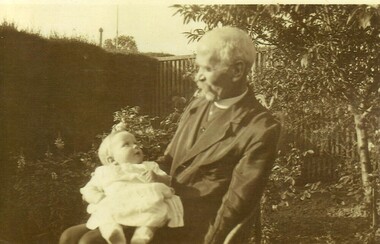
Photograph, ROBERT JACKSON, 1926
... METHODIST MINISTER IN CLUNES, EARLY 1900 - HAD CONVERSATION WITH NED KELLY. ROBERT JACKSON GEOFFERY JACKSON YEAR 1926. GRANDFATHER ROBERT JACKSON AGE 72 GRANDSON GEOFFERY JACKSON AGE 6 MONTHS PARSONAGE, PRIMARY CRES. ...SEE OVER. REV. JACKSON, METHODIST MINISTER IN CLUNES, EARLY 1900 - HAD CONVERSATION WITH NED KELLY.SEPIA PHOTOGRAPH OF WHITE HAIRED GENTLEMAN NURSING A YOUNG BOY IN A GARDEN. PHOTO TAKEN 1926YEAR 1926. GRANDFATHER ROBERT JACKSON AGE 72 GRANDSON GEOFFERY JACKSON AGE 6 MONTHS PARSONAGE, PRIMARY CRES. SURREY HILLS, MELBOURNE. VICrobert jackson, geoffery jackson -
 Lakes Entrance Historical Society
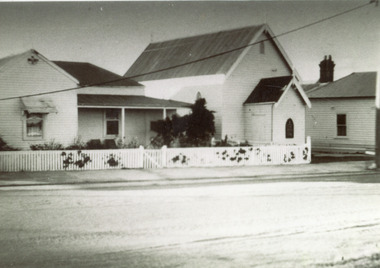
Photograph - Methodist Church Lakes Entrance, 1950
... House beside church was purchased as the Parsonage when an ordained minister was appointed. Churches Buildings Black and white photograph of the Methodist Church and house on Esplanade. ...House beside church was purchased as the Parsonage when an ordained minister was appointed.Black and white photograph of the Methodist Church and house on Esplanade. Building is traditional style, small timber building painted white with dark painted gable roof. Lakes Entrance Victoriachurches, buildings
