
Showing 79 items matching "military honours"
-
 National Vietnam Veterans Museum (NVVM)
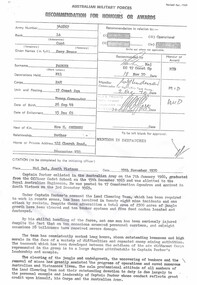
Document, Australian Military Forces: Recommendation For honours and Awards: Capt. Gary Bruce Parker (Copy)
... Australian Military Forces: Recommendation For honours and Awards: Capt. ...A photocopy of the Australian Military Forces: Recommendation For honours and Awards: Capt. ...Gary Bruce Parker at Nui Dat on the 19th November 1970 Australian Military Forces: Recommendation For honours and Awards: Capt. ...This was donated by Capt (Temporary) Gary Bruce Parker (342867) who served with the Royal Australian Engineers. He did a tour of Vietnam with the 17th Construction Squadron from Dec 1969 to Dec 1970. Capt Parker was awarded the Mention In Dispatches (MID)A photocopy of the Australian Military Forces: Recommendation For honours and Awards: Capt. Gary Bruce Parker at Nui Dat on the 19th November 1970gary parker, capt gary bruce parker, 342867, royal australian engineers, 17th construction squadron, mention in dispatches, mid, recommendation for decoration, honours and awards -
 Bendigo Military Museum
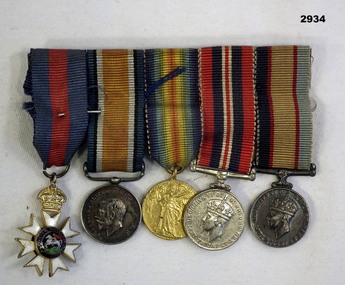
Award - MEDAL SET WW1, WW2, Post 1919, 1945
... ...military...honours...medals military honours Medals, set of 5, miniatures, mounted on metal plate. 1. ...Medals, set of 5, miniatures, mounted on metal plate. 1. Distinguished order of St Michael & St George. 2. War Medal 1914-18 3. Victory Medal 1914 - 1919 4. War Medal 1939-45. 5. Australian Service Medal 1939 - 45medals, military, honours -
 Monbulk RSL Sub Branch
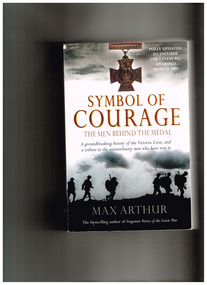
Book, Pan Books, Symbol of courage : the men behind the medal, 2005
... ...Military honours...Victoria Cross - History Military honours A groundbreaking history of the Victoria Cross and a tribute to the extraordinary men who have won it Index, ill, bib, maps, p.690. ...A groundbreaking history of the Victoria Cross and a tribute to the extraordinary men who have won itIndex, ill, bib, maps, p.690.non-fictionA groundbreaking history of the Victoria Cross and a tribute to the extraordinary men who have won itvictoria cross - history, military honours -
 Charlton RSL Sub Branch
Ceremonial object - Honour Board, Charlton School Roll of Honour, Post 1919
... Also detailed are deaths on active service and any military honours recieved...Also detailed are deaths on active service and any military honours recieved "A tribute to the teachers and pupils of this school who served the Empire in the Great War". # made the supreme Sacrafice. ...The Roll Of Honour list the names of teachers and students who served during The Great War. Also detailed are deaths on active service and any military honours recievedLarge wall mounted Honour Roll of teachers and pupils from Charlton School who served in The Great War. "A tribute to the teachers and pupils of this school who served the Empire in the Great War". # made the supreme Sacrafice. -
 Moorabbin Air Museum
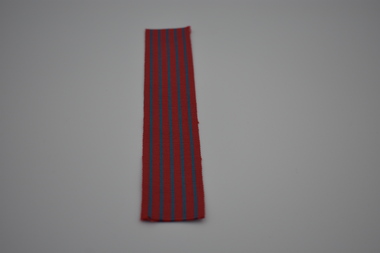
Badge (item) - Military Medal Ribbon, George Medal (GM)
... The George Medal was instituted in 1940 by King George VI for acts of great bravery by civilians and military personnel where military honours would not typically be awarded. ...The George Medal was instituted in 1940 by King George VI for acts of great bravery by civilians and military personnel where military honours would not typically be awarded. ... -
 Magnet Galleries Melbourne Inc
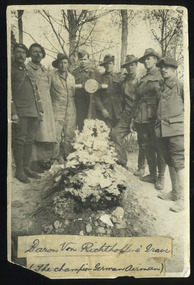
Barron Von Richthofen's grave, dargo-078.tif
... He crashed near the front line and was buried by Australian troops with full Military Honours. The cross is made from a propeller....He crashed near the front line and was buried by Australian troops with full Military Honours. The cross is made from a propeller. red baron grave Barron Von Richthofen aif france 1918 ww1 world war 1 picardie A.I.F Their is an inscription at the bottom that states "Barron Von Richthofen's grave (the champion German airman) dargo-078.tif Barron Von Richthofen's grave ...French and Australian troops at the graveside of 'The Red Baron' Manfred Von Richthofen, Picardie, France, April, 1918. There was dispute over troops of which nation shot down the German fighter ace, though Australian ground troops had the strongest claim. He crashed near the front line and was buried by Australian troops with full Military Honours. The cross is made from a propeller.Their is an inscription at the bottom that states "Barron Von Richthofen's grave (the champion German airman)red baron, grave, barron von richthofen, aif, france, 1918, ww1, world war 1, picardie, a.i.f -
 Returned Nurses RSL Sub-branch
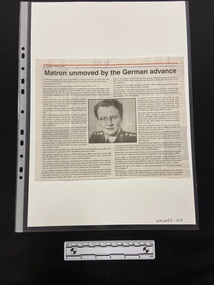
Newspaper - Newspaper clipping, Vetaffairs, Matron unmoved by the German advance, March 1996
... Kathleen was buried with full military honours in 1957 at the age of 47. Memorial gates built in her honour at the WRAAC School in Sydney now stand at Duntroon, adjacent to the ANZAC Block....Kathleen was buried with full military honours in 1957 at the age of 47. Memorial gates built in her honour at the WRAAC School in Sydney now stand at Duntroon, adjacent to the ANZAC Block. ...The story of Kathleen Best (1910-1957). A member of The Australian Army Nursing Service Reserve at the start of WWII, she went on to become the youngest matron in the Australian Army. The article details her experiences in WWII in Greece. Kathleen was buried with full military honours in 1957 at the age of 47. Memorial gates built in her honour at the WRAAC School in Sydney now stand at Duntroon, adjacent to the ANZAC Block.Black and white newspaper clipping with a red line across the top, the publication details and then a blue line. A bold heading is below the line across the width of the page, followed by two columns of text. In the centre of the page is a black and white portrait of a matron.'Nc9' [Handwritten in blue ink at the top of the page]australian army nurses, wwii, ww2, world war 1939-1945, matron kathleen best, women's royal australian army corps -
 Running Rabbits Military Museum operated by the Upwey Belgrave RSL Sub Branch
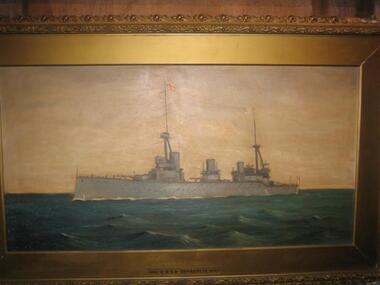
Oil Painting HMAS Australia (1), HMAS Australia (1), 26/06/1910
... On the 12 of April 1924 HMAS Australia (1) was with "Full Military Honours" Scuttled 50 km east of Sydney. ...On the 12 of April 1924 HMAS Australia (1) was with "Full Military Honours" Scuttled 50 km east of Sydney. ...HMAS Australia (1) The largest war ship in the Australian fleet was the first flagship of the Australian fleet in WW1. She was Commissiond and paid for by the Australian Goverment to ensure sdequate protection for the Australasion Pacific Region. She had a crew of 900 "Officers and Crew" and was equipted with four sets of 12 inch breech loading guns,side firing torpedos and fourteen 4 inch guns for surface and air contacts. On the 12 of April 1924 HMAS Australia (1) was with "Full Military Honours" Scuttled 50 km east of Sydney. Only 14 Years old.Framed Oil Paintinghmas australia oil painting pictures -
 Hymettus Cottage & Garden Ballarat
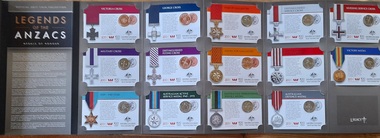
Souvenir - Medals, Legends of the Anzacs
... The 2017 Official Coin Collection The Legends of the Anzacs: Medals of Honour – commemorate 14 significant military honours (both Imperial and Australian honours) awarded to Australians throughout the 100 years of Anzac. ...The 2017 Official Coin Collection The Legends of the Anzacs: Medals of Honour – commemorate 14 significant military honours (both Imperial and Australian honours) awarded to Australians throughout the 100 years of Anzac. ...The 2017 Official Coin Collection The Legends of the Anzacs: Medals of Honour – commemorate 14 significant military honours (both Imperial and Australian honours) awarded to Australians throughout the 100 years of Anzac. The folder contains all 14 coins including the 4 unique issue 25 cent coins produced as part of the News Corp program . Each coin design explores a different medal and the stories behind them, inspired by images supplied by the Australian War Memorial, Gary Ramage and the Australian Government Department of Defence. Coins presented in a card, housed in the display folder. Released by the Australian Mint as the official collection of ANZAC medals of honour commemorating the centenary of the Great War, World War 1.anzac, medals, world war i, military, australian mint -
 Federation University Historical Collection
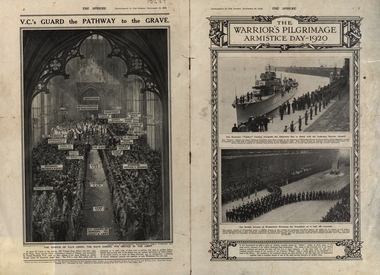
Newspaper - Newspaper supplement, Eyre & Spottiswoode Ltd, His Majesty's Printers, The Warrior's Pilgrimage Armistice Day - 1920, 11/1920
... The remains were interred with full military honours in Westminster Abbey in London. ...The remains were interred with full military honours in Westminster Abbey in London. ...This newspaper supplement has a series of pictures specially drawn by 'Sphere" artists to show a pictorial record of the journey of the Unknown Warrior from a lonely grave on the battlefield to a tomb in Westminster Abbey on 11th November 1920. 11 November 1920 On 11 November 1920, the second anniversary of the Armistice, the commemoration became a funeral when the remains of an unknown soldier were returned from the battlefields of the Western Front. The remains were interred with full military honours in Westminster Abbey in London. In attendance were King George V, Queen Mary, The Queen Mother, The Queen of Spain and Princess Mary. The service was conducted by the Dean of Westminster.Eight page newspaper supplement of "The Sphere" which gives a series of pictures specially drawn by "Sphere" artists of Armistice Day celebrations 1920. A pictorial record of the journey of the Unknown Warrior from a lonely grave on the battlefield to a tomb in Wesminster Abbey.armistice day 1920, the warrior's pilgrimage 11/1/1920, the unknown warrior, "verdun", bluejackets, king george v, westminster abbey, the cenotaph london -
 Melbourne Legacy
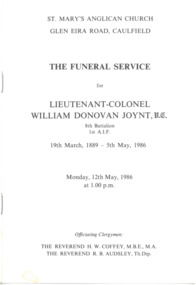
Pamphlet - Document, The Funeral Service for Lieutenant-Colonel William Donovan Joynt, V.C, 1986
... Joynt was buried in Brighton General Cemetery with full military honours. ...Joynt was buried in Brighton General Cemetery with full military honours. Part of the collection of material held by Melbourne Legacy on Legatee Donovan Joynt, a prominent Australian. donovan joynt funeral Printed pamphlet, black on white, sheets folded and stapled. ...The printed funeral service for Lt Colonel Donovan Joynt held on 12 May 1986 at St Mary's Anglican Church, Glen Eira Road, Caulfield. (Part of a photo album page(Cat.No. 01588) about the life of L/ Donovan Joynt). The Legacy Service was delivered by the President of Melbourne Legacy, Legatee R.N. Wheeler, and Legatee K.D. Green, Chairman of the Legacy Co-ordinating Council delivered an address. Brigadier B. Wade, Commander, 3rd Military District read Psalm 90 (Lord, you have been our dwelling place throughout all generations. Before the mountains were born or you brought forth the whole world, from everlasting to everlasting you are God.). Joynt was buried in Brighton General Cemetery with full military honours. Part of the collection of material held by Melbourne Legacy on Legatee Donovan Joynt, a prominent Australian.Printed pamphlet, black on white, sheets folded and stapled.donovan joynt, funeral -
 Bendigo Historical Society Inc.
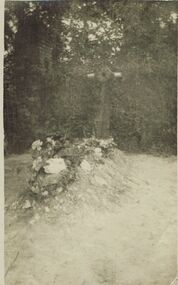
Postcard - ACC LOCK COLLECTION: GRAVE OF GERMAN AIRMAN BARON VON RICHTHOFEN AT BERTANGLES
... He was buried with full military honours at Bertangles by members of the Australian Flying Corps. ...He was buried with full military honours at Bertangles by members of the Australian Flying Corps. ...Baron von Richthofen (the Red Baron) was shot down on 21 April 1918 near the Somme River. He was buried with full military honours at Bertangles by members of the Australian Flying Corps. That night the flowers and cross were removed by local residents. The grave was reconstructed the next day by local soldiers. This postcard shows the grave on the day after the burial without the original cross. The original cross was was fashioned from an RE8 propeller by 3SQN mechanics with an engraved aluminium plaque. The plaque was engraved by Harold Edwards, a watchmaker from Bendigo. https://www.3sqnraafasn.net/subpages/edwardsstory.htm Richthofen's body was moved several times before he reached his final resting place in Germany. In 1925 his body was exhumed and buried in Berlin, Germany. Later, it was exhumed again and buried in the Richthofen family's private tomb.Postcard, WW1, black and white image of the grave of the German airman, Baron von Richthofen. The grave is mounded with earth with flowers on top. At the head of the grave is a propeller shaped in the form of a cross.postcard, ww1, baron von richthofen, grave, somme, bertangles, red baron -
 St Kilda Historical Society
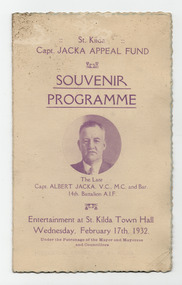
Ephemera - Special event program, Capt. Jacka Appeal Fund Souvenir Programme, 1932
... He received a hero's welcome on his return to Melbourne in January 1920 and an estimated 50,000 people turned up to watch his funeral procession to St Kilda Cemetery, where he was buried with full military honours. The Albert Jacka Fund had two objectives: the erection of a simple, suitable and inexpensive memorial stone over the grave of the dead hero; the placing of the residue of the fund in the hands of trustees for the benefit of his widow and child....He received a hero's welcome on his return to Melbourne in January 1920 and an estimated 50,000 people turned up to watch his funeral procession to St Kilda Cemetery, where he was buried with full military honours. The Albert Jacka Fund had two objectives: the erection of a simple, suitable and inexpensive memorial stone over the grave of the dead hero; the placing of the residue of the fund in the hands of trustees for the benefit of his widow and child. ...Concert program of entertainment as aprt of fundraising for the Jacka Appeal, held on 17 February 1932 at St Kilda Town Hall. The headline performer was Gladys Moncreiff, 'Australia's Queen of Song'. Albert Jacka, a St Kilda Councillor, collapsed on 14 December 1931 after a council meeting and was admitted to Caulfield Military Hospital. He died on 17 January 1932 at the age of 39. He is most well-known for his military service in WWI, having received the Victoria Cross medal for his actions during the Gallipoli campaign and two more decorations for his bravery on the Western Front. He received a hero's welcome on his return to Melbourne in January 1920 and an estimated 50,000 people turned up to watch his funeral procession to St Kilda Cemetery, where he was buried with full military honours. The Albert Jacka Fund had two objectives: the erection of a simple, suitable and inexpensive memorial stone over the grave of the dead hero; the placing of the residue of the fund in the hands of trustees for the benefit of his widow and child.Folded cream card with scalloped edges and printed in purplealbert jacka, jacka appeal, gladys moncreiff -
 Bendigo Historical Society Inc.
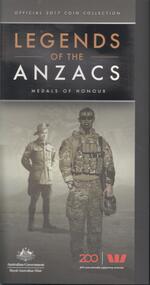
Coin - RAY SMITH COLLECTION: LEGENDS OF THE ANZAC COIN COLLECTION
... The 2017 Official Coin Collection – Legends of the Anzacs: Medals of Honour – commemorates 14 significant military honours (both Imperial and Australian honours) awarded to Australians throughout the 100 years of Anzac. ...MILITARY World war 2 legends of the anzac The 2017 Official Coin Collection – Legends of the Anzacs: Medals of Honour – commemorates 14 significant military honours (both Imperial and Australian honours) awarded to Australians throughout the 100 years of Anzac. ...The 2017 Official Coin Collection – Legends of the Anzacs: Medals of Honour – commemorates 14 significant military honours (both Imperial and Australian honours) awarded to Australians throughout the 100 years of Anzac. This folder contains all 14 coins released as part of the News Corp program including the 4 unique issue 25 cent coins. Each coin design explores a different medal and the stories behind them, inspired by images supplied by the Australian War Memorial, Gary Ramage and the Australian Government Department of Defence. Coins presented in a card, which can be housed in the display folder. The themes featured in this collection include: Twenty Five Cent Coins: Victoria Cross, Distinguished Flying Cross, Medal for Gallantry, George Cross. Twenty Cent Coins: Star of Gallantry, Distinguished Service Cross, Nursing Service Cross, Military Cross, Distinguished Service Medal, Victory Medal, 1939 - 1945 Star, Australian Active Service Medal 1945 - 1975, Australian Operational Service Medal, Australian Defence Medal.military, world war 2, legends of the anzac -
 St Kilda Historical Society
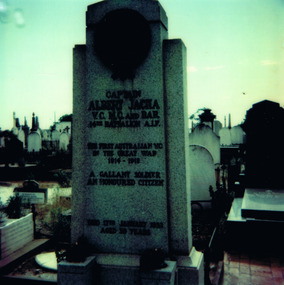
Photograph
... He was buried with full military honours in the Presbyterian section. Eight Victoria Cross winners were his pallbearers. ...He was buried with full military honours in the Presbyterian section. Eight Victoria Cross winners were his pallbearers. ...Albert Jacka VC was born in Layard, near Winchelsea Victoria, on 10 January 1893. He was the first person in the AIF to be awarded the Victoria Cross, which he received for the first of many acts of heroism in WW I. After the war, on 17 January 1921, he married Frances Veronica Carey at St Mary's Catholic Church, St Kilda. They settled at St Kilda and later adopted a daughter. In September 1929. He was elected to the St Kilda Council and became mayor in 1930. He died on 17 January 1932 of chronic nephritis. Nearly 6000 people filed past his coffin when it lay in state in Anzac House. The funeral procession to St Kilda cemetery was led by over 1000 returned soldiers and was flanked by thousands of onlookers. He was buried with full military honours in the Presbyterian section. Eight Victoria Cross winners were his pallbearers. A memorial plaque and sculpture for his grave was paid for by public subscription and £1195 was raised towards buying his widow a house. The photograph was taken during a St Kilda Historical Society tour of St Kilda cemetery on 26 November 1978Colour Polaroid photographBus Trip 26/11/78. Jacka's Grave. SKHS 00761.st kilda, st kilda cemetery, graves, albert jacka, wwi, world war i, war heroes -
 St Kilda Historical Society
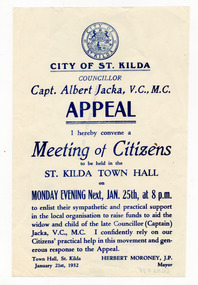
Ephemera - Flyer, Capt Albert Jacka VC MC Appeal, 1932
... He received a hero's welcome on his return to Melbourne in January 1920 and an estimated 50,000 people turned up to watch his funeral procession to St Kilda Cemetery, where he was buried with full military honours. On 29 January, the appeal committee, chaired by Brigadier-General Brand, decided to call for donations to the Albert Jacka Fund by 29 February. ...He received a hero's welcome on his return to Melbourne in January 1920 and an estimated 50,000 people turned up to watch his funeral procession to St Kilda Cemetery, where he was buried with full military honours. On 29 January, the appeal committee, chaired by Brigadier-General Brand, decided to call for donations to the Albert Jacka Fund by 29 February. ...Notice of a meeting of citizens, convened by the Mayor of St Kilda, to raise funds for the widow and child of the late Albert Jacka, former St Kilda Councillor (from 1929) and Mayor (1930). The meeting was held in the St Kilda Town Hall on 25 January 1932. Albert Jacka had collapsed on 14 December 1931 after a council meeting and was admitted to Caulfield Military Hospital. He died on 17 January 1932 at the age of 39. Albert Jacka is most well-known for his military service in WWI, having received the Victoria Cross medal for his actions during the Gallipoli campaign and two more decorations for his bravery on the Western Front. He received a hero's welcome on his return to Melbourne in January 1920 and an estimated 50,000 people turned up to watch his funeral procession to St Kilda Cemetery, where he was buried with full military honours. On 29 January, the appeal committee, chaired by Brigadier-General Brand, decided to call for donations to the Albert Jacka Fund by 29 February. The Fund had two objectives: 'In the first instance, the erection of a simple, suitable and inexpensive memorial stone over the grave of the dead hero, and secondly the placing of the residue of the fund in the hands of trustees for the benefit of his widow and child.'White paper, discoloured with age, printed in blue on one side.albert jacka, city of st kilda, jacka appeal -
4th/19th Prince of Wales's Light Horse Regiment Unit History Room
Letter, c 1920
... Battle Honours shown in CAPITALS are emblazed on the 4th Light Horse Guidon. Military Regulations limit the number of Battle Honours that can be emblazed on guidons ...Photocopy of undated letter from COL Murray Bourchier, President 4th L H Regiment Unit Committee to 3rd Military District Cavalry Battle Honours Committee requesting the following Battle honours be embodied for the Regiment: GALLIPOLI, MESSINES, BEERSHEBA, YPRES, NEBI SAMWIL, JERUSALEM, Mt KEMMEL, ES SALT, MARNE, MEGIDDO. ...Battle Honours shown in CAPITALS are emblazed on the 4th Light Horse Guidon. Military Regulations limit the number of Battle Honours that can be emblazed on guidons Photocopy of undated letter from COL Murray Bourchier, President 4th L H Regiment Unit Committee to 3rd Military District Cavalry Battle Honours Committee requesting the following Battle honours be embodied for the Regiment: GALLIPOLI, MESSINES, BEERSHEBA, YPRES, NEBI SAMWIL, JERUSALEM, Mt KEMMEL, ES SALT, MARNE, MEGIDDO. ...Battle Honours awarded to the 4th Light Horse (AIF) comprise: MESSINES 1917, YPRES 1917, Broodseinde, Passchendale, Lys, Kemmel, MARNE 1918, Tardenois, France and Flanders 1916-1918, Anzac, DEFENCE OF ANZAC, Suvla, SARI BAIR, Gallipoli 1915, Egypt 1915-1917, GAZA-BEERSHEBA, El Mughar, Nebi Samwil, JERUSALEM, JORDAN (ES SALT), MEGIDDO, Sharon, DAMASCUS, Palestine 1917-1918. Battle Honours shown in CAPITALS are emblazed on the 4th Light Horse Guidon. Military Regulations limit the number of Battle Honours that can be emblazed on guidons Photocopy of undated letter from COL Murray Bourchier, President 4th L H Regiment Unit Committee to 3rd Military District Cavalry Battle Honours Committee requesting the following Battle honours be embodied for the Regiment: GALLIPOLI, MESSINES, BEERSHEBA, YPRES, NEBI SAMWIL, JERUSALEM, Mt KEMMEL, ES SALT, MARNE, MEGIDDO. In wooden frame. -
 Victorian Interpretive Projects Inc.
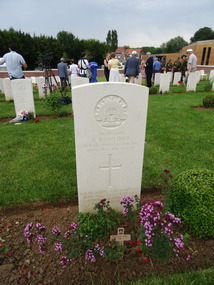
Photograph - Colour, Ann Gervasoni, Gravestone for F. Rawlings, Pheasant Wood Cemetery, Fromelles, 2014, 19/07/2015
... All but one of the 75 soldiers have now been re-buried, with full military honours, at a specially constructed cemetery near the battle site. ...All but one of the 75 soldiers have now been re-buried, with full military honours, at a specially constructed cemetery near the battle site. ...The photographer, Ann Gervasoni, was in Frommelles for the reburial ceremony for 5 previously unidentified Australian soldiers. "AFTER almost 94 years, Ballarat soldier Private Frederick Rawlings, and a long-standing family mystery, can finally be laid to rest. Private Rawlings was one of 5533 Australian soldiers killed in the bloodiest conflict in Australian history, the World War I Battle of Fromelles, France. He was one of 250 men buried in a mass grave at Pheasant Wood after the battle of July 19 and 20 in 1916. In the past two years, a joint Australian and British project has aimed to positively identify the remains of those soldiers buried at the site. This week, the Federal Government announced Private Rawlings was one of 75 men who had been identified by name. Also on the list were Corporal Leslie Hart, born in Clunes, and Lance Corporal Allan Bennett, born in Ballarat, both of whom joined the army in Western Australia. All but one of the 75 soldiers have now been re-buried, with full military honours, at a specially constructed cemetery near the battle site. Private Rawlings' grand-niece, Maureen Holding, of Mannibadar, got a call to confirm the news on Tuesday night. 'It's just quite incredible after all these years and huge loss of life, they've actually identified him,' Mrs Holding said yesterday. Last year, Mrs Holding and her brother, Leo Rawlings, gave DNA samples to the Australian Army to help with the identification process. But until seeing a newspaper article more than 20 years ago, they did not know Private Rawlings or his younger brother, Corporal Sydney Rawlings, had even been in the war. On Anzac Day 1988, The Courier published a photo of Cpl Sydney Rawlings and excerpts from a letter from an army chaplain that informed Ballarat family members of Cpl Rawlings' death in Northern France in 1918. 'About two years later, my husband, Malcolm, found in a tin of rusty nails and shoe buckles belonging to my late dad, a set of war medals,' Mrs Holding said. They were inscribed with Sydney's Rawlings' name, and checks of family records and The Courier story confirmed the connection. In 1991, this newspaper published a list of soldiers who had memorial trees in Ballarat's Avenue of Honour. Next to Sydney's name was that of Frederick Rawlings.(http://www.thecourier.com.au/story/543125/remains-of-ballarat-soldier-killed-in-france-during-wwi-identified/, accessed 16/04/2014.)A number of colour digital images showing the grave of Frederick Rawlings of Ballarat in the Pheasant Wood Cemetery, Frommelles, France.world war one, fromelles, pheasant wood, frederick rawlings, allan bennett, leslie hart -
 Melbourne Legacy
Document, Gallipoli's 'Lone Pine' Lives On
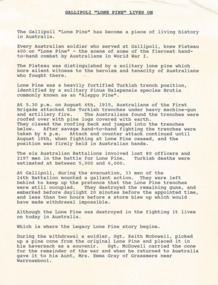
... On the 11th June 1933, the second tree was planted with full military honours by S G Savige of the 24th Battalion, at the Shrine of Remembrance in Melbourne, where it now shades the well-loved statue of Simpson and his donkey. ...On the 11th June 1933, the second tree was planted with full military honours by S G Savige of the 24th Battalion, at the Shrine of Remembrance in Melbourne, where it now shades the well-loved statue of Simpson and his donkey. ...A detailed account of the story of Lone Pine in Gallipoli and how seedlings were grown from a pine cone brought back by Sgt. Keith McDowell. The author and date of this account is not known but was post 1989. The text says: " Gallipoli Lone Pine Lives On The Gallipoli Lone Pine has become a piece of living history in Australia. Every Australian solider who served at Gallipoli, knew Plateau 400 or ‘Lone Pine’ – the scene of some of the fiercest hand-to-hand combat by Australian in World War 1. The Plateau was distinguished by a solitary lone pine which bore silent witness to the heroism and tenacity of Australians who fought there. Lone Pine was a heavily fortified Turkish trench position, identified by a solitary Pinus Halepensis species commonly known as an ‘Aleppo Pine’. (** NB this has since been corrected and the species is not an 'Aleppo pine' but Pinus Brutia, commonly called Turkish pine) At 5.30 pm on August 6th, 1915, Australians of the First Brigade attacked the Turkish trenches under heavy machine-gun and artillery fire. The Australians found the trenches were roofed over with pine logs covered with earth. They clawed the roofing back and jumped into the trenches below. After savage hand-to-hand fighting the trenches were taken by 6 pm. Attack and counter attack continued until August 10, when fighting at Lone Pine ceased, and the position as firmly held in Australian hands. The six Australian Battalions involved lost 80 officers and 2197 men in the battle for Lone Pine. Turkish deaths were estimated at between 5,000 and 6,000. At Gallipoli during the evacuation, 33 men of the 24th Battalion mounted a gallant action. They were left behind to keep up the pretence that the Lone Pine trenches were still occupied. They destroyed the remaining guns, and embarked before daylight 20 minutes before the appointed time, and less than two hours before a storm blew up which would have made withdrawal impossible. Although the Lone Pine was destroyed in the fighting it lives on today in Australia. Which is where the Legacy Lone Pine story begins. During the withdrawal a soldier, Sgt. Keith McDowell, picked up a pine cone from the original Lone Pine and placed it in his haversack as a souvenir. Sgt. McDowell carried the cone for the remainder of the war and when he returned to Australia gave it to his Aunt, Mrs Emma Gray of Grassmere near Warrnambool. “Here Aunty, you’ve got a green thumb, see if you can grow something out of this”, the late Mrs Gray’s son, Alexander, recalled. But it wasn’t until some 12 years later that Mrs Gray planted the few seeds from the cone, five of which sprouted and grew into little trees. One of the pines eventually died but the remaining four survived. In May, 1933, one was planted in Wattle Park on the occasion of the Trooping of the Colour by the 24th Battalion. On the 11th June 1933, the second tree was planted with full military honours by S G Savige of the 24th Battalion, at the Shrine of Remembrance in Melbourne, where it now shades the well-loved statue of Simpson and his donkey. The late Lieutenant-General Sir Stanley Savige KBE, CB, DSO, MC, ED, was the founder of Melbourne Legacy. Formed in 1923, the Melbourne Legacy Club was the first such Club to be established. On the 18 June 1933 the third tree was planted at the Sisters, near Terang, just north east of Warrnambool. This is the area Mrs Gray’s family lived and the home of several Gallipoli veterans. The fourth tree was planted in the Warrnambool Gardens on 23 January 1934. In 1964 Legatee Tom Griffiths, then President of Warrnambool Legacy, put forward the idea that more seedlings should be raised in the Jubilee Year of Gallipoli from the established trees with the object of planting memorial trees throughout Australia in memory of those who fell in action at Lone Pine in 1915. The project was outlined in a paper presented to the Perth Conference in 1965 and was strongly supported. Two batches of cones were sent to Melbourne, one from the tree at ‘The Sisters’ and another from the tree at the Warrnambool Gardens, and the full cooperation of the (then) Forests Commission of Victoria, was guaranteed by the Chief Commissioner, Mr Benallack. Unfortunately, these cones had been gathered too late as the seeds had already been cast, and the few seeds that survived failed to germinate. However, Melbourne Legacy then undertook the propagation and distribution of seedlings. With the assistance of the Shrine of Remembrance Trustees, permission was granted by the Melbourne City Parks and gardens Curator to harvest a limited number of cones from the 24th Battalion tree at the Shrine and these were gathered by the Forest Commission and after the necessary preparatory treatment were planted in the Commission’s nursery at Macedon. Approximately 150 seedlings were raised from these cones by Dr Grose, Director and Silviculture. Melbourne Legacy’s Commemoration Committee was responsible for the collection, propagation, presentation and dedication of Lone Pines from the 24th Battalion tree at the Shrine of Remembrance. One the 14 September 1989 further cones were collected with the hope to raise 1000 trees from the seeds. This could not have been done without the invaluable assistance of the Department of Natural Resources and Dr Peter May at the Victorian College of Agriculture and Horticulture in Richmond, Victoria. Thus, Legacy is helping to keep the memory of the Gallipoli ‘Lone Pine’ alive – its spirit living on today. Presentations are made to schools, ex-service organisations and interested bodies by Legacy Clubs in the hope that they will be cherished as a symbol of Australian nationhood and of its just pride, devotion, courage, selflessness and sense of service to others. "The Legacy Lone Pine program helped promote the Anzac story throughout Australia.White A4 paper with black type x 3 pages recounting the story of Legacy's propagation of Lone Pine seedlings. lone pine, gallipoli -
 Kew Historical Society Inc
Plan, Melbourne & Metropolitan Board of Works : Borough of Kew : Detail Plan No.1564, 1905
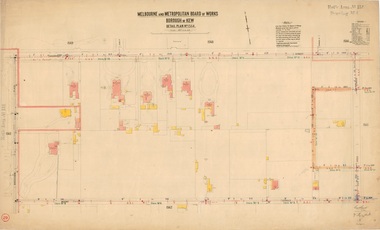
... ‘The Hawthorns’ on the corner of Brougham Place and Mount Street was the home of the medical practitioner Frank William Fay, who won the military cross and other honours for conspicuous gallantry and devotion to duty in World War 1....‘The Hawthorns’ on the corner of Brougham Place and Mount Street was the home of the medical practitioner Frank William Fay, who won the military cross and other honours for conspicuous gallantry and devotion to duty in World War 1. ...The Melbourne and Metropolitan Board of Works (MMBW) plans were produced from the 1890s to the 1950s. They were crucial to the design and development of Melbourne's sewerage and drainage system. The plans, at a scale of 40 feet to 1 inch (1:480), provide a detailed historical record of Melbourne streetscapes and environmental features. Each plan covers one or two street blocks (roughly six streets), showing details of buildings, including garden layouts and ownership boundaries, and features such as laneways, drains, bridges, parks, municipal boundaries and other prominent landmarks as they existed at the time each plan was produced. (Source: State Library of Victoria)This plan forms part of a large group of MMBW plans and maps that was donated to the Society by the Mr Poulter, City Engineer of the City of Kew in 1989. Within this collection, thirty-five hand-coloured plans, backed with linen, are of statewide significance as they include annotations that provide details of construction materials used in buildings in the first decade of the 20th century as well as additional information about land ownership and usage. The copies in the Public Record Office Victoria and the State Library of Victoria are monochrome versions which do not denote building materials so that the maps in this collection are invaluable and unique tools for researchers and heritage consultants. A number of the plans are not held in the collection of the State Library of Victoria so they have the additional attribute of rarity.Original survey plan, issued by the MMBW to a contractor with responsibility for constructing sewers in the area identified on the plan within the Borough of Kew. The plan was at some stage hand-coloured, possibly by the contractor, but more likely by officers working in the Engineering Department of the Borough and later Town, then City of Kew. The hand-coloured sections of buildings on the plan were used to denote masonry or brick constructions (pink), weatherboard constructions (yellow), and public buildings (grey). In 1905, when Plan No.1564 was printed, that part of Kew bordered by Brougham Place (now Daniell Place), Mount Street, Sackville Street and Ross Street was already the location of a number of large mansions. Here, subdivisions, at least at this stage, produced larger blocks than in Central Kew. Many of the houses on this plan are named: ‘Faybrook’, ‘Northumbria’, ‘Parkholm[e]’, ‘Dunboe’, ‘Katoomba’ and ‘Eschol’ fronting Sackville Street. Eschol was once the home of the manufacturer Robert Harrison, whose cordial factory in Spring and Argyle Streets Fitzroy are noted on the Victorian Heritage Register. ‘The Hawthorns’ on the corner of Brougham Place and Mount Street was the home of the medical practitioner Frank William Fay, who won the military cross and other honours for conspicuous gallantry and devotion to duty in World War 1.melbourne and metropolitan board of works, detail plans, mmbw 1564, cartography -
 Federation University Historical Collection
Letter - Correspondence, Prime Minister to Frank Wright, 1967, 31/7/1967
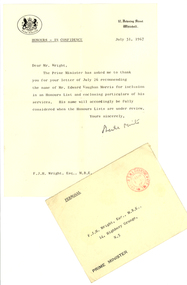
... Military Band Scoring and conducted at the Guildhall of Music and Drama. Frank was often invited to adjudicate Brass Band Championships around Europe, in Australia, including South Street and in New Zealand. The Frank Wright Medal at the Royal South Street competition is awarded to an individual recognized as making an outstanding contribution to brass music in Australia frank wright harold wilson prime minister letter .1) Letter - Printed - Prime Minister's Crest of Office, 10, Downing Street Whitehall., Typed - Honours - In Confidence, July 31, 1967, Dear Mr. ...In 1967 the British Prime Minister was Harold Wilson. Frank Wright was a renown resident of Smeaton, where he was born. He lived at Laura Villa, and attended Smeaton State School. His father William was a gold miner and his mother's name was Sarah. Their family won many singing and instrumental awards. Frank was tutored by Percy Code and was awarded a gold medal for the highest marks in the ALCM examinations in the British Colonies at the age of seventeen years. He became the Australian Open Cornet Champion by the age of eighteen. A year later, Frank conducted the City of Ballarat Band, and later the Ballarat Soldiers’ Memorial Band. He formed the Frank Wright Frisco Band and Frank Wright and his Coliseum Orchestra. These bands won many South Street awards, and Frank as conductor won many awards in the Australian Band Championship contest. In 1933 Frank Wright sailed to England to conduct the famous St Hilda’s Band and was later appointed Musical Director of the London County Council, where he organized many amazing concerts in parks, in and around the London district. He was made Professor of Brass and Military Band Scoring and conducted at the Guildhall of Music and Drama. Frank was often invited to adjudicate Brass Band Championships around Europe, in Australia, including South Street and in New Zealand. The Frank Wright Medal at the Royal South Street competition is awarded to an individual recognized as making an outstanding contribution to brass music in Australia.1) Typed letter on a printed letterhead .2) Typed and post marked envelope with printed address on reverse..1) Letter - Printed - Prime Minister's Crest of Office, 10, Downing Street Whitehall., Typed - Honours - In Confidence, July 31, 1967, Dear Mr. Wright, The Prime Minister has asked me to thank you for your letter of July 26 recommending the name of Mr. Edward Vaughan Morris for inclusion in an Honours List and enclosing particulars of his services. His name will accordingly be fully considered when the Honours Lists are under review.Yours sincerely, (handwritten signature), F.J.H. Wright, Esq., M.B.E. .2) Envelope - Typed on front - Personal, F.J.H. Wright, Esq., M.B.E., 14, Highbury Grange, N.5, Prime Minister, Printed on back - 10 Downing Street, Whitehallfrank wright, harold wilson, prime minister, letter -
 Ballarat Clarendon College
Albert Telfer White (1918) collection
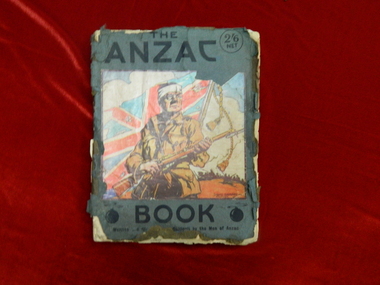
... Collections of items including: Bayonet, Carl Eickhorn, Solingen, (29.A.159 engraved on handle) Trench shovel The ANZAC book 1916 (flyleaf inscribed: No 2012 / Pte A T White / H Quarters / 22nd Battalion / 6th Inf Brigade / France) Gallipoli medal with documentation First World War Mothers’ and Widows’ Badge Next of Kin Memorial Plaque (Death Penny) and accompanying letter from King George V Imperial War Graves Commission documentation and photograph Australia Graves Services In Memory card and photograph Documentation relating to Australian War Memorial Roll of Honour, Learmonth Memorial Wall, Ballarat and Learmonth Avenues of Honours Documentation from the Australian Army Records office Documentation relating to Military Medal, 1914/15 Star, British War Medal and Victory Medal (whereabouts unknown, November 2016) Portraiture of Albert Telfer White as a child, as a young adult (civilian dress), in full kit (A I E F formal), and at camp 1915 Portraiture of sisters Cis, Addie, Bessie, Evelyn (with personal inscriptions) Four postcards (one with letter from Albert ‘at sea’ to his mother - undated) Death notice (unreferenced newspaper clipping) Biographical and family relationship details Photocopy of The White Family 1906 showing (standing) Adeline, Leslie, Harold (father), Muriel (mother), William; (seated) Albert, John (Grandfather), Elizabeth, Allan, Elizabeth (Grandmother), Evelyn (baby) and Benjamin ...Collections of items including: Bayonet, Carl Eickhorn, Solingen, (29.A.159 engraved on handle) Trench shovel The ANZAC book 1916 (flyleaf inscribed: No 2012 / Pte A T White / H Quarters / 22nd Battalion / 6th Inf Brigade / France) Gallipoli medal with documentation First World War Mothers’ and Widows’ Badge Next of Kin Memorial Plaque (Death Penny) and accompanying letter from King George V Imperial War Graves Commission documentation and photograph Australia Graves Services In Memory card and photograph Documentation relating to Australian War Memorial Roll of Honour, Learmonth Memorial Wall, Ballarat and Learmonth Avenues of Honours Documentation from the Australian Army Records office Documentation relating to Military Medal, 1914/15 Star, British War Medal and Victory Medal (whereabouts unknown, November 2016) Portraiture of Albert Telfer White as a child, as a young adult (civilian dress), in full kit (A I E F formal), and at camp 1915 Portraiture of sisters Cis, Addie, Bessie, Evelyn (with personal inscriptions) Four postcards (one with letter from Albert ‘at sea’ to his mother - undated) Death notice (unreferenced newspaper clipping) Biographical and family relationship details Photocopy of The White Family 1906 showing (standing) Adeline, Leslie, Harold (father), Muriel (mother), William; (seated) Albert, John (Grandfather), Elizabeth, Allan, Elizabeth (Grandmother), Evelyn (baby) and Benjamin Albert Telfer White (1918) collection ...Significant items relating to Albert Telfer White who entered Ballarat College April 1912 and left December 1918. Albert was born 29 June 1897 at his home 'Ashford Vale" farm, Cuthbert's Road, Cardigan. Albert, a second generation Australian, was the fourth son and sixth of eleven children born to dairy farmer John White and his wife Elizabeth, nee Douglas. Albert attended Bunker's Hill State School prior to enrolling at Ballarat College. After College he obtained employment with the engineering firm Ronaldson and Tippett in Ballarat. Following his eighteenth birthday Albert enlisted in the AIF in Ballarat with the rank of Private, No 2012. He embarked for the Middle East with 23rd Battalion on 26 August 1915 and was 'taken on strength at the Gallipoli Peninsular 25 October 1915". On 10 January 1916 Albert was posted to Alexandria, Egypt and during this time he was able to meet with his aunt Rose Douglas, an Australian Army Nursing Sister. This was a great comfort to his family. Albert was sent to France 19 March 1916 and transferred to the 22nd Battalion. He was mentioned in dispatches for 'good and gallant conduct' 5 August (1917?). Albert was hospitalised 30 March 1918, rejoined 22nd Battalion 3 June 1918, wounded in action 3 October 1918 but died of wounds at Rouen 10 October 1918. news of his death was received by his family n Australia just prior to the armistice. Albert Telfer White's sacrifice is commemorated at Ballarat College, Avenue of Honour Ballarat (Tree 1214), Ballarat Shire Honour Avenue Learmonth (Tree 163) and the Australian War Memorial Canberra. (These notes provided by family November 2016)Collections of items including: Bayonet, Carl Eickhorn, Solingen, (29.A.159 engraved on handle) Trench shovel The ANZAC book 1916 (flyleaf inscribed: No 2012 / Pte A T White / H Quarters / 22nd Battalion / 6th Inf Brigade / France) Gallipoli medal with documentation First World War Mothers’ and Widows’ Badge Next of Kin Memorial Plaque (Death Penny) and accompanying letter from King George V Imperial War Graves Commission documentation and photograph Australia Graves Services In Memory card and photograph Documentation relating to Australian War Memorial Roll of Honour, Learmonth Memorial Wall, Ballarat and Learmonth Avenues of Honours Documentation from the Australian Army Records office Documentation relating to Military Medal, 1914/15 Star, British War Medal and Victory Medal (whereabouts unknown, November 2016) Portraiture of Albert Telfer White as a child, as a young adult (civilian dress), in full kit (A I E F formal), and at camp 1915 Portraiture of sisters Cis, Addie, Bessie, Evelyn (with personal inscriptions) Four postcards (one with letter from Albert ‘at sea’ to his mother - undated) Death notice (unreferenced newspaper clipping) Biographical and family relationship details Photocopy of The White Family 1906 showing (standing) Adeline, Leslie, Harold (father), Muriel (mother), William; (seated) Albert, John (Grandfather), Elizabeth, Allan, Elizabeth (Grandmother), Evelyn (baby) and Benjamin The ANZAC book 1916 (flyleaf inscribed: No 2012 / Pte A T White / H Quarters / 22nd Battalion / 6th Inf Brigade / France) Gallipoli medal: engraved on reverse: A T WHITE Embossed lettering on death penny: ALBERT TELFER WHITE Handwritten on reverse of portraits: Lovingly yours / Cis / 21/11/17; your / loving sister / Addie; your loving / sister / Evelyn; Yours lovingly / Bessie Handwritten on back of postcard of ship H M A T 'Anchisis' 14.3.16: Dear Mother, I am sending you a card / of the boat we are on. Our deck is right / on the back. I have marked it with an X. / We are not allowed to put the date on or / where we are. I am sitting on the deck now / holding the card in my hand so it is hard / to write. We are together yet haven't been / separated Bill, Matt and myself. Haven't / had anything to do. I will write a couple / of letters now. Albert Handwritten on back of postcard photograph of Albert at camp: 30th September 1915 / Dear Mother / There is a studio at the / camp so Matt and I got our Photos / taken yesterday morning, & got them/ this morning. I am sending / Ciss one of Matt.albert-telfer-white, ballarat college, world-war-one, avenue-of-honour -
 Lara RSL Sub Branch
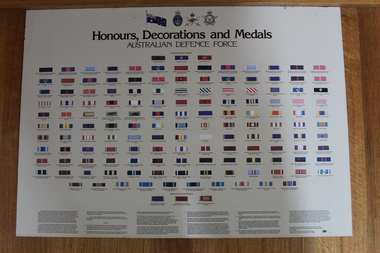
Chart of Honours, Decorations and Medals -- Australian Defence Force, Honours Decorations and Medals of the Australian Defence Force, 1986
... Chart - Honours Decorations and Medals of the Australian Defence Force. Display of ribbons representing medals that can be awarded to Australian Military Forces personnel....Sheet of Masonite with a printing of Honours Decorations and Medals of the Australian Defence Force - depicting ribbons for medals awarded to Australian Military Forces....Chart - Honours Decorations and Medals of the Australian Defence Force. Display of ribbons representing medals that can be awarded to Australian Military Forces personnel. ...Australian Defence Force ribbons representing medals that can be awarded.Collection of ribbons to be displayed in lieu of wearing full medals etc by soldiers of Australian Military Forces when entitled to be so warn.Chart - Honours Decorations and Medals of the Australian Defence Force. Display of ribbons representing medals that can be awarded to Australian Military Forces personnel.Sheet of Masonite with a printing of Honours Decorations and Medals of the Australian Defence Force - depicting ribbons for medals awarded to Australian Military Forces.australian defence force, honours,decorations and medals -
 Federation University Historical Collection
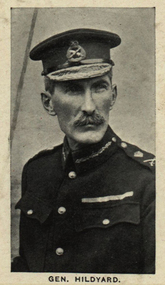
Photograph (black & White), General Sir Henry John Thoroton Hildyard - South Africa
... He was appointed as Director-General of Military Education from 1903 to 1904 and lieutenant general on the Imperial General Staff commanding the troops in South Africa from 1904 to 1905. He was General Officer Commanding-in-Chief, South Africa from 1905 to 1908. He retired in 1911. Awarded Companion of the Order of the Bath 1897, (Diamond Jubilee Honours...He was appointed as Director-General of Military Education from 1903 to 1904 and lieutenant general on the Imperial General Staff commanding the troops in South Africa from 1904 to 1905. He was General Officer Commanding-in-Chief, South Africa from 1905 to 1908. He retired in 1911. Awarded Companion of the Order of the Bath 1897, (Diamond Jubilee Honours ...During the Second Boer War Hildyard was posted to South Africa and commanded 2nd Brigade from 1899 to 1900. He saw active service at the Battle of Colenso. Hidyard remained in South Africa to command the 5th Division from 1900 to 1901 and took part in the Battle of the Tugela Heights. He was appointed as Director-General of Military Education from 1903 to 1904 and lieutenant general on the Imperial General Staff commanding the troops in South Africa from 1904 to 1905. He was General Officer Commanding-in-Chief, South Africa from 1905 to 1908. He retired in 1911. Awarded Companion of the Order of the Bath 1897, (Diamond Jubilee Honours); Knight Commander of the Order of the Bath 1900; Knight Grand Cross of the Order of the Bath 1911, (Coronation Honours)Individual image from photographed poster of tobacco and cigarette cards.sir henry hildyard, south africa, second boer war, battle of tugela heights, battle of colenso, military education, knight commander of the order of the bath, knight grand cross of the order of the bath -
 Federation University Historical Collection
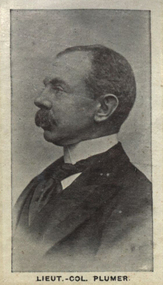
Photograph (black & White), Lieutenant-Colonel Herbert Charles Onslow Plumer - South Africa
... Lord Kitchener, Commander-in-Chief in South Africa stated "invariable displayed military qualifications of a very high order.Few officers have rendered better service." Plumer received many honours - British and foreign. ...Lord Kitchener, Commander-in-Chief in South Africa stated "invariable displayed military qualifications of a very high order.Few officers have rendered better service." Plumer received many honours - British and foreign. ...His military career led him to become appointed as assistant military secretary to the General Officer Commanding Cape Colony in 1895. He went to Southern Rhodesia in 1896 to disarm the local police force following the Jameson Raid and then later to command the Matabele Relief Force during the Second Matabele War. In 1899 he returned to Southern Rhodesia as Lieutenant-Colonel where he led the Siege of Mafeking during the Second Boer War. Plumer returned to the United kingdom in 1904 and received an audience with King Edward VI. Lord Kitchener, Commander-in-Chief in South Africa stated "invariable displayed military qualifications of a very high order.Few officers have rendered better service." Plumer received many honours - British and foreign. Knight Grand Cross of the Order of the Bath (1918; Knight Grand Cross of the Order of St Michael and St George (1916); Knight Grand Cross of the Royal Victorian Order (1917); Knight Grand Cross of the Order of the British Empire (1924); Knight of Grace of the Venerable Order Of St John (1925); Legion of Honour (France-!917); Croix de Guerre (Belgium-1918); Croix de Guerre with Palm ( France-1919); Distinguished Service Medal (United States-1919); Grand Cordon, Order of the Rising Sun (1921) Individual image from photographed poster of tobacco and cigarette cards.cape colony, southern rhodesia, jameson raid, matabele rrelief force, second matabele war, siege of mafeking, second boer war, lord kitchener, knight grand cross of the order of st michael and st george, knight grand cross of the order of the bath, knight grand crossof the royal victorian order, knight grand cross of the order of the british empire, knight of grace of the venerable order of st john, legion of honour, croix de guerra, croix de guerra with palm, distinguished service medal, grand cordon, order of the rising sun -
 The Beechworth Burke Museum
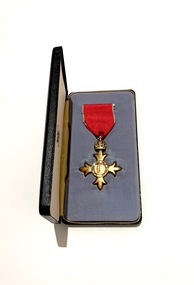
Medal - Order of the British Empire Medal, 01/01/1976
... Together, they were a formidable asset to the Beechworth community over many years The British honours system has various orders, usually relating to the monarchy, military and colonial officials. ...Together, they were a formidable asset to the Beechworth community over many years The British honours system has various orders, usually relating to the monarchy, military and colonial officials. ...David Aloysius Patrick McKenzie-McHarg, L.I.B, O.B.E was born on 20th June 1918 in Albury, NSW to Hugh Patrick McKenzie-McHarg and Laura May (Dunne) McKenzie-McHarg. McKenzie-McHarg served on the Council of the United Shire of Beechworth for more than a decade during the 1960s-70s, including seven years as president. He was renowned as a public speaker and played a significant role in the community. In recognition for his outstanding achievements and services rendered to the Beechworth community he was awarded an Order of the British Empire (OBE) in 1976. David McKenzie-McHarg died on 6th June 1992 and is buried in Beechworth Cemetery. David McKenzie-McHarg’s wife, Marjorie Jean McKenzie McHarg, was well known to the Beechworth community as a brilliant pianist and played at all the balls and house parties. Apparently, she could play without sheet-music and would only have to hear a tune once to play it to near perfection. Together, they were a formidable asset to the Beechworth community over many years The British honours system has various orders, usually relating to the monarchy, military and colonial officials. An OBE (or order of the British Empire) is given for an outstanding achievement or service to the community. This will have had a long-term, significant impact and stand out as an example to others. This Order was established by George V in 1917 in response to recognising the thousands of men and women who served in a variety of non-combatant roles during the First world war who didn’t otherwise receive any formal recognition but were certainly worthy of acknowledgement. Recommendations for appointments to this Order were originally made on the nomination of the United Kingdom, however this soon became available to Commonwealth countries as well. However, Australia officially ceased to recommend the Order of the British Empire in 1989 with the establishment of the Order of Australia. Silver badge suspended from red ribbon with pearl-grey edges. The badge is in the form of a cross patonce (having the arms growing broader and floriated toward the end), the obverse of which bears the same field as the star pictures George V and Queen Mary. The reverse bears George V's Royal and Imperial Cypher. Both are within a ring bearing the motto of the Order: FOR GOD AND THE EMPIRE. The presentation case in which the medal is housed is of a black outer boarder edge leatherette finishing, block letters in gold OBE. The inside has a cream velvet base with a silk padded liner to the roof with the full set of Royal Mint Crest Mark. Obverse: FOR GOD AND THE EMPIRE / burke museum, obe, obe medal, beechworth, david mckenzie-mcharg, british honours system, george v, beechworth community, order of australia., order of the british empire, marjorie jean mckenzie mcharg -
 Ringwood and District Historical Society
Newspaper, Scrapbook Clipping, Library Collection, Ringwood, Victoria
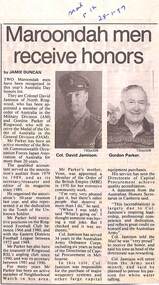
... honours' list. They are Colonel David Jamison of North Ringwood, who has been appointed a member of the Order of Australia in the Military Division (AM), and Gordon Parker of Ringwood, who will receive the Order of Australia in the General Division. ...honours' list. They are Colonel David Jamison of North Ringwood, who has been appointed a member of the Order of Australia in the Military Division (AM), and Gordon Parker of Ringwood, who will receive the Order of Australia in the General Division. ...Newspaper Clipping from "The Mail", 28-1-97. P12 "Maroondah men receive honours"'. Two Maroondah men have been recognised in this year's Australia Day honours' list. They are Colonel David Jamison of North Ringwood, who has been appointed a member of the Order of Australia in the Military Division (AM), and Gordon Parker of Ringwood, who will receive the Order of Australia in the General Division. Mr Parker has been an active member of the British Commonwealth Occupation Forces Japan Association of Australia for more than 20 years. Col. Jamison has served 34 years in the Australian Army Ordnance Corps including six years as head of Capital Procurement in Melbourne. Both men are very proud to receive their awards. -
 Orbost & District Historical Society
book, East Gippsland's ANZACS a tribute to those who served in World War 1, 2016
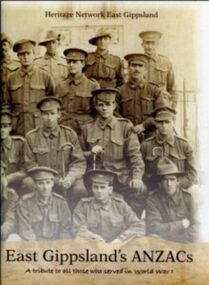
... This book records that time and especially honours those from East Gippsland. ANZAC WW1 military-history--East-Gippsland A paper back book, titled "East Gippsland's ANZACS a tribute to those who served in World War 1". ...This book was produced as a project for the 1915 ANZAC centenary. The book became too unwieldy and was then divided into written information and a CD with the details of each man - name; rank; service number and unit. Almost 2500 names have been traced. For current Australians, the Anzac Centenary is one of the most significant commemorations to take place during their lifetime. It was a time to contemplate the legacy of those who served in World war 1 and those who never returned to their families or friends. This book records that time and especially honours those from East Gippsland.A paper back book, titled "East Gippsland's ANZACS a tribute to those who served in World War 1". On the front cover is a sepia photograph of "Thirty East Gippsland Boys" taken in early 1916 during training at Heliopolis (Greece) before embarkation for France. The book contains a selection of stories from those who served, along with a CD of the names and service records of all of those known to have enlisted from East Gippsland.anzac ww1 military-history--east-gippsland -
 Bendigo Military Museum
Badge - BADGES, ARMY, Pre War and 1914-1918
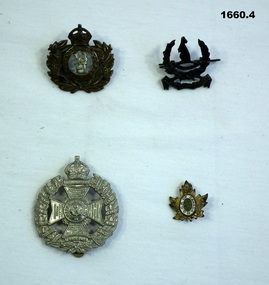
... military metalcraft-copper/gold/enamel .1 On ribbons "Peninisula" "Waterloo", in centre "Pro Patria Conamur" .1) "Peninsula Waterloo" copper badge. Oak leaves with a centre circle with silver letters "18H" surmounted with a crown. .2) "4th Light Horse badge. Oak leaves with kangaroo in centre looking to its rear. Ribbon underneath has "Fourth Light Horse" embossed. .3) Silver metal Maltese Cross badge surrounded by oak leaves bound with battle honour ribbons. Cross has battle honours ...The items were part of a collection relating to Frederick Campbell Moller No 2233 AIF. Refer Cat No’s 1661.3, 1680.3, 1682.5, 1663P..1) "Peninsula Waterloo" copper badge. Oak leaves with a centre circle with silver letters "18H" surmounted with a crown. .2) "4th Light Horse badge. Oak leaves with kangaroo in centre looking to its rear. Ribbon underneath has "Fourth Light Horse" embossed. .3) Silver metal Maltese Cross badge surrounded by oak leaves bound with battle honour ribbons. Cross has battle honours within. In centre of cross is text "Rifle Brigade" and crossed powder horn design surmounted by a crown. .4) "83 QOR of Canada Overseas Battalion" badge. Gold oak leaf with crown at top, in centre is enamelled oval shape with text "QOR of Canada 83"..1 On ribbons "Peninisula" "Waterloo", in centre "Pro Patria Conamur" numismatics- medals - military, metalcraft-copper/gold/enamel -
 Bendigo Military Museum
Photograph - MILITARY PHOTOGRAPHS 1 RAR, 1960’s - 1990’s
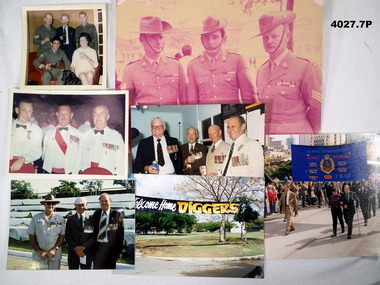
... On the rear in black pen “The terrific trio”. (.4) The man on the left is possibly Max (Dad) Kelly, centre is Frank Dean, the man on the right also appears to be wearing a BEM. (.5) Frank Dean is 2nd from the right, the man on the left also appears to be wearing a BEM. (.7) On the rear in black pen “1999” Photography military reunions Francis William DEAN All photos are in colour. (.1) Group of 5 people, 3 standing, 2 sitting, 3 are in uniform, 1 man and 1 female and a dog. (.2) Group of 3 soldiers, 2 Sgt’s and 1 Staff Sgt. (.3) Group of 3 soldiers in Mess Dress. (.4) Three men in civilian clothes wearing medals, 2 wearing hats. (.5) Four men in civilian clothes wearing medals. (.6) Barracks scene across gardens with large banner “Welcome home Diggers”. (.7) Parade showing a large banner with details of 1 RAR’s service and Battle Honours. ...All photos relate to the collection of "Francis William (Dinky) DEAN" BEM VX93960 2nd AIF, 3742 1 RAR 1943 - 1975. Refer Cat No 124.2 for his service history. (.1) The soldier on the left standing is Frank Dean. The soldier sitting is wearing a “DCM” being Bruno Flematti No 54679 1 RAR, awarded the DCM over 4 actions in Vietnam 1968/69. On the rear stamped in purple “Nov.69.H” (.2) The soldier centre is Bruno Flematti, soldier on the right is Frank Dean. (.3) Soldier centres is Frank Dean. On the rear in black pen “The terrific trio”. (.4) The man on the left is possibly Max (Dad) Kelly, centre is Frank Dean, the man on the right also appears to be wearing a BEM. (.5) Frank Dean is 2nd from the right, the man on the left also appears to be wearing a BEM. (.7) On the rear in black pen “1999” All photos are in colour. (.1) Group of 5 people, 3 standing, 2 sitting, 3 are in uniform, 1 man and 1 female and a dog. (.2) Group of 3 soldiers, 2 Sgt’s and 1 Staff Sgt. (.3) Group of 3 soldiers in Mess Dress. (.4) Three men in civilian clothes wearing medals, 2 wearing hats. (.5) Four men in civilian clothes wearing medals. (.6) Barracks scene across gardens with large banner “Welcome home Diggers”. (.7) Parade showing a large banner with details of 1 RAR’s service and Battle Honours. photography, military, reunions, francis william dean
