
Showing 45 items matching "millionaires"
-
 Bendigo Historical Society Inc.
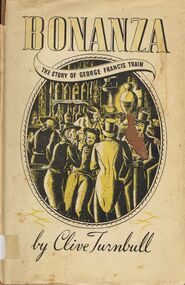
Book - ALEC H CHISHOLM COLLECTION: BOOK ''BONANZA'' BY CLIVE TURNBULL
... ALEC H CHISHOLM COLLECTION. 47 page hardback book telling the story of George Francis Train (an eccentric American millionaire). Australian Heritage Books, edition limited to 500 copies. ...ALEC H CHISHOLM COLLECTION. 47 page hardback book telling the story of George Francis Train (an eccentric American millionaire). Australian Heritage Books, edition limited to 500 copies. ...Book. ALEC H CHISHOLM COLLECTION. 47 page hardback book telling the story of George Francis Train (an eccentric American millionaire). Australian Heritage Books, edition limited to 500 copies. Published in 1946 by the Hawthorn Press, Melbourne. Designed and printed by John Gartner at the Hawthorn Press. Catalogue sticker '2160 TUR' on spine.Clive Turnbulllbooks, collections, biography, alec h chisholm collection, clive turnbull, george francis train, biography -
 Unions Ballarat
Hancock: Man of iron (Don Woodward Collection), Phillipson, Neill, 1974
... Biography of Lang Hancock and about the rise of the iron mining industry. Hancock was a millionaire iron ore magnate who died in 1992....Biography of Lang Hancock and about the rise of the iron mining industry. Hancock was a millionaire iron ore magnate who died in 1992. ...Biography of Lang Hancock and about the rise of the iron mining industry. Hancock was a millionaire iron ore magnate who died in 1992.Biographical interest. Pertinent to Australian mining and industry.Book; 206 pages. Cover: black; gold lettering on spine; author's name and title. Dustjacket: brown background; colour illustration of Lang Hancock; white lettering; author's name and title.btlc, ballarat trades hall, ballarat trades and labour council, hancock, langley, hancock, lang, mining - iron, mineral indsutried - pilbara -
 Ringwood and District Historical Society
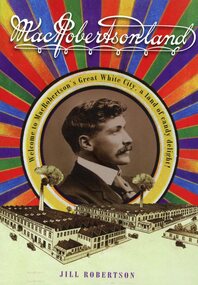
Book, Jill Robertson, MacRobertsonland, 2010
... "Meet the man behind some of Australia's favourite confectionery - including Freddo Frog, Cherry Ripe and Old Gold chocolate - a charming self-made millionaire and generous philanthropist whose spirit reflected the hopes and dreams of a young nation. ..."Meet the man behind some of Australia's favourite confectionery - including Freddo Frog, Cherry Ripe and Old Gold chocolate - a charming self-made millionaire and generous philanthropist whose spirit reflected the hopes and dreams of a young nation. ...MacRobertson's chocolate factory in Fitzroy, Victoria, expanded to Ringwood at 323 Canterbury Road before takeover in 1968 by Cadbury-Schweppes P/L.Small paperback biography of Macpherson Robertson (1859-1945)"Meet the man behind some of Australia's favourite confectionery - including Freddo Frog, Cherry Ripe and Old Gold chocolate - a charming self-made millionaire and generous philanthropist whose spirit reflected the hopes and dreams of a young nation. MACROBERTSONLAND tells the amazing rags-to-riches tale of Macpherson Robertson, Austrlia's very own Willy Wonka." -
 Bendigo Historical Society Inc.
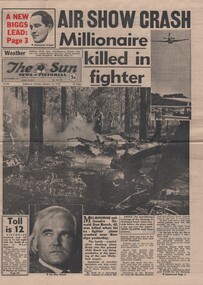
Document - BASIL WATSON COLLECTION: NEWSPAPER CUTTINGS RELATING TO OPENING OF BENDIGO AIRPORT 1970, 1970
... Bendigo Advertiser, 16th Feb 1970 - description of fatal crash and death of millionaire Don Busch; c. as for b.; d. The Sun, 16th Feb 1970 front page description of fatal crash....Bendigo Advertiser, 16th Feb 1970 - description of fatal crash and death of millionaire Don Busch; c. as for b.; d. The Sun, 16th Feb 1970 front page description of fatal crash. ...Newspaper cuttings relating to opening of Bendigo Airport, 15th Feb 1970, cuttings enclosed in an envelope. On front ; re opening Bendigo Aerodrome, Welsford, Sunday February 15/2/1970, nice summer day 80 degrees temp., details of Donald Busch crash same day' Cuttings: a. Bendigo Advertiser, 12th Feb 1970 announcing Official Opening and activities on the day; b. Bendigo Advertiser, 16th Feb 1970 - description of fatal crash and death of millionaire Don Busch; c. as for b.; d. The Sun, 16th Feb 1970 front page description of fatal crash.aviation, civilian, bendigo airport -
 Bendigo Historical Society Inc.
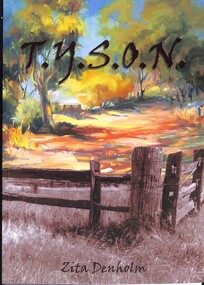
Book - "T.Y.S.O.N. - The life and times of James Tyson, Pastoral Pioneer. 1819-1898.", 2002
... When James died almost 80 years later he was an established pastoral multi-millionaire. This text focuses on his life. ...When James died almost 80 years later he was an established pastoral multi-millionaire. This text focuses on his life. Emigration James Tyson Narellan District Farming Soft Cover. ...James Tyson (1819-1898) was the son of a convict mother and her free migrant husband. Benefiting from Lachlan Macquarie's policy to 'dungaree settlers', they eked out a precarious living for themselves and their family on a small grant in the Narellan District and did seasonal work for neighbouring landholders. When James died almost 80 years later he was an established pastoral multi-millionaire. This text focuses on his life. Soft Cover. Title of 'T.Y.S.O.N' written in black letters on front cover. Authoresses name also written in black text on front cover. Front cover is an abstract painting of a wooden fence with trees and landscape in the background. Back cover has a partial parish map in color. Title written on white on spine. 228 pp. Black and white images throughout. Has index. ISBN 09578681-2-X. Published by Triple D Books, Wagga Wagga. emigration, james tyson, narellan district, farming -
Unions Ballarat
The rise and fall of Alan Bond, Barry, Paul, 1990
... ...millionaires...Biographical interest. btlc ballarat trades hall ballarat trades and labour council bond, alan america's cup - 1983 australian businessmen australian of the year bond university criminals bankruptcy millionaires biography Front cover: black background; two black and white photographs of Alan Bond; red and grey lettering. ...Alan Bond was a high-profile businessman and former Australian of the Year, known for his role in the successful America's Cup (1983) yacht race and the formation of Bond University. Bond served four years in prison following a criminal conviction; he was also declared bankrupt in 1992.Biographical interest.Paper; book.Front cover: black background; two black and white photographs of Alan Bond; red and grey lettering.btlc, ballarat trades hall, ballarat trades and labour council, bond, alan, america's cup - 1983, australian businessmen, australian of the year, bond university, criminals, bankruptcy, millionaires, biography -
 Bendigo Historical Society Inc.
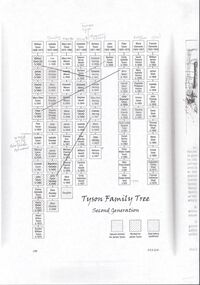
Document - James Tyson
... Along the way he had become a millionaire....Along the way he had become a millionaire. James Tyson Tyson Family History Nineteen pages of research on James Tyson and family. ...James Tyson was born in Sydney in 1823. Along with his brother the operated a wholesale and retail butchery in 1852, slaughtering cattle from their property near Balranald. He had worked his way up from farm labouring to droving cattle and initially had a property at the junction of the Lachlan and Murrumbidgee Rivers in 1846. With the discovery of gold he began droving cattle to Bendigo in 1851. He extended his holdings throughout NSW, Gippsland and then into Queensland where he died in 1898. Along the way he had become a millionaire.Nineteen pages of research on James Tyson and family.james tyson, tyson family history -
!['Studley House', Nolan Avenue [Kew]](/media/collectors/550653872162f11fb04854aa/items/658d18490f23e8f1e738ec0d/item-media/658d18710f23e8f1e738ecc2/item-fit-380x285.jpg?cb=6) Kew Historical Society Inc
Kew Historical Society IncPhotograph - 'Studley House', Nolan Avenue [Kew], c. 1965
... The house was again altered in 1919 during the ownership of John Wren, former bookmaker, ALP lobbyist, influential Irish-Catholic and millionaire. After 1969 the house was used by the school. ...The house was again altered in 1919 during the ownership of John Wren, former bookmaker, ALP lobbyist, influential Irish-Catholic and millionaire. After 1969 the house was used by the school. ...The first section of Studley House, now part of the preparatory school for Xavier College conducted by the Society of Jesus in Kew, was built in about 1857 for Parliamentarian John Hodgson, an early settler in the district, as a two-storey residence in the Classical Revival style. The name Studley House was first recorded in the Kew ratebooks in 1862, after the house was purchased in 1860 by James McEvoy, squatter. Alterations and an extension, designed by William J Ellis were undertaken in 1875. The house was again altered in 1919 during the ownership of John Wren, former bookmaker, ALP lobbyist, influential Irish-Catholic and millionaire. After 1969 the house was used by the school. (Victorian Heritage Database, 2023)This work forms part of the collection assembled by the historian Dorothy Rogers (1905-1973), donated to the Kew Historical Society by her son in 2015. The manuscripts, photographs, maps, and documents were sourced by her from both family and local collections or produced as references for her print publications. Many were directly used by Rogers in writing ‘Lovely Old Homes of Kew’ (1961) and 'A History of Kew' (1973), or the numerous articles on local history that she produced for suburban newspapers. Most of the photographs in the collection include detailed annotations in her hand. The Rogers Collection provides a comprehensive insight into the working habits of a historian from the 1960s to the 1970s. Original monochrome photograph of Studley House in Nolan Avenue, Kew. The photo shows the entrance flanked by urns and a section of the Nolan Avenue facing rendered and painted colonnade.Annotation verso: "Studley House. Visited by Prince of Wales, Edward VIII. Another view. Front Entrance to Studley house. National Trust".dorothy rogers, studley house -- nolan avenue (kew) -
!['Studley House', Nolan Avenue [Kew]](/media/collectors/550653872162f11fb04854aa/items/658d1a9d0f23e8f1e738f8fa/item-media/658d1ac70f23e8f1e738f9c2/item-fit-380x285.jpg?cb=6) Kew Historical Society Inc
Kew Historical Society IncPhotograph - 'Studley House', Nolan Avenue [Kew], c. 1965
... The house was again altered in 1919 during the ownership of John Wren, former bookmaker, ALP lobbyist, influential Irish-Catholic and millionaire. After 1969 the house was used by the school. ...The house was again altered in 1919 during the ownership of John Wren, former bookmaker, ALP lobbyist, influential Irish-Catholic and millionaire. After 1969 the house was used by the school. ...The first section of Studley House, now part of the preparatory school for Xavier College conducted by the Society of Jesus in Kew, was built in about 1857 for Parliamentarian John Hodgson, an early settler in the district, as a two-storey residence in the Classical Revival style. The name Studley House was first recorded in the Kew ratebooks in 1862, after the house was purchased in 1860 by James McEvoy, squatter. Alterations and an extension, designed by William J Ellis were undertaken in 1875. The house was again altered in 1919 during the ownership of John Wren, former bookmaker, ALP lobbyist, influential Irish-Catholic and millionaire. After 1969 the house was used by the school. (Victorian Heritage Database, 2023)This work forms part of the collection assembled by the historian Dorothy Rogers (1905-1973), donated to the Kew Historical Society by her son in 2015. The manuscripts, photographs, maps, and documents were sourced by her from both family and local collections or produced as references for her print publications. Many were directly used by Rogers in writing ‘Lovely Old Homes of Kew’ (1961) and 'A History of Kew' (1973), or the numerous articles on local history that she produced for suburban newspapers. Most of the photographs in the collection include detailed annotations in her hand. The Rogers Collection provides a comprehensive insight into the working habits of a historian from the 1960s to the 1970s. Original monochrome photograph of the view from the first floor verandah of Studley House in Nolan Avenue, Kew. The photo shows the detail of the cast iron lace work used on this section of the verandah.Annotation verso: "Lovely lacework of the balcony Studley House"dorothy rogers, studley house -- nolan avenue (kew) -
!['Studley House', Nolan Avenue [Kew]](/media/collectors/550653872162f11fb04854aa/items/658f804b9239cf6fd436dc0a/item-media/658f80609239cf6fd436dcc6/item-fit-380x285.jpg?cb=6) Kew Historical Society Inc
Kew Historical Society IncPhotograph - 'Studley House', Nolan Avenue [Kew], c. 1965
... The house was again altered in 1919 during the ownership of John Wren, former bookmaker, ALP lobbyist, influential Irish-Catholic and millionaire. After 1969 the house was used by the school. ...The house was again altered in 1919 during the ownership of John Wren, former bookmaker, ALP lobbyist, influential Irish-Catholic and millionaire. After 1969 the house was used by the school. ...The first section of Studley House, now part of the preparatory school for Xavier College conducted by the Society of Jesus in Kew, was built in about 1857 for Parliamentarian John Hodgson, an early settler in the district, as a two-storey residence in the Classical Revival style. The name Studley House was first recorded in the Kew ratebooks in 1862, after the house was purchased in 1860 by James McEvoy, squatter. Alterations and an extension, designed by William J Ellis were undertaken in 1875. The house was again altered in 1919 during the ownership of John Wren, former bookmaker, ALP lobbyist, influential Irish-Catholic and millionaire. After 1969 the house was used by the school. (Victorian Heritage Database, 2023)This work forms part of the collection assembled by the historian Dorothy Rogers (1905-1973), donated to the Kew Historical Society by her son in 2015. The manuscripts, photographs, maps, and documents were sourced by her from both family and local collections or produced as references for her print publications. Many were directly used by Rogers in writing ‘Lovely Old Homes of Kew’ (1961) and 'A History of Kew' (1973), or the numerous articles on local history that she produced for suburban newspapers. Most of the photographs in the collection include detailed annotations in her hand. The Rogers Collection provides a comprehensive insight into the working habits of a historian from the 1960s to the 1970s. Original monochrome photograph of the first floor verandah of Studley House in Nolan Avenue, Kew. The photo shows the detail of the cast iron lace work used on this section of the verandah.dorothy rogers, studley house -- nolan avenue (kew) -
!['Studley House', Nolan Avenue [Kew]](/media/collectors/550653872162f11fb04854aa/items/658f8dc39239cf6fd43737f6/item-media/658f8dda9239cf6fd437386a/item-fit-380x285.jpg?cb=6) Kew Historical Society Inc
Kew Historical Society IncPhotograph - 'Studley House', Nolan Avenue [Kew], c. 1965
... The house was again altered in 1919 during the ownership of John Wren, former bookmaker, ALP lobbyist, influential Irish-Catholic and millionaire. After 1969 the house was used by the school. ...The house was again altered in 1919 during the ownership of John Wren, former bookmaker, ALP lobbyist, influential Irish-Catholic and millionaire. After 1969 the house was used by the school. ...The first section of Studley House, now part of the preparatory school for Xavier College conducted by the Society of Jesus in Kew, was built in about 1857 for Parliamentarian John Hodgson, an early settler in the district, as a two-storey residence in the Classical Revival style. The name Studley House was first recorded in the Kew ratebooks in 1862, after the house was purchased in 1860 by James McEvoy, squatter. Alterations and an extension, designed by William J Ellis were undertaken in 1875. The house was again altered in 1919 during the ownership of John Wren, former bookmaker, ALP lobbyist, influential Irish-Catholic and millionaire. After 1969 the house was used by the school. (Victorian Heritage Database, 2023)This work forms part of the collection assembled by the historian Dorothy Rogers (1905-1973), donated to the Kew Historical Society by her son in 2015. The manuscripts, photographs, maps, and documents were sourced by her from both family and local collections or produced as references for her print publications. Many were directly used by Rogers in writing ‘Lovely Old Homes of Kew’ (1961) and 'A History of Kew' (1973), or the numerous articles on local history that she produced for suburban newspapers. Most of the photographs in the collection include detailed annotations in her hand. The Rogers Collection provides a comprehensive insight into the working habits of a historian from the 1960s to the 1970s. Original monochrome photograph of the first floor verandah of Studley House in Nolan Avenue, Kew. The photo shows the detail of the cast iron lace work used on this section of the verandah.dorothy rogers, studley house -- nolan avenue (kew) -
!['Studley House', Nolan Avenue [Kew]](/media/collectors/550653872162f11fb04854aa/items/658f8e409239cf6fd4373b78/item-media/658f8e589239cf6fd4373bc1/item-fit-380x285.jpg?cb=6) Kew Historical Society Inc
Kew Historical Society IncPhotograph - 'Studley House', Nolan Avenue [Kew], c. 1965
... The house was again altered in 1919 during the ownership of John Wren, former bookmaker, ALP lobbyist, influential Irish-Catholic and millionaire. After 1969 the house was used by the school. ...The house was again altered in 1919 during the ownership of John Wren, former bookmaker, ALP lobbyist, influential Irish-Catholic and millionaire. After 1969 the house was used by the school. ...The first section of Studley House, now part of the preparatory school for Xavier College conducted by the Society of Jesus in Kew, was built in about 1857 for Parliamentarian John Hodgson, an early settler in the district, as a two-storey residence in the Classical Revival style. The name Studley House was first recorded in the Kew ratebooks in 1862, after the house was purchased in 1860 by James McEvoy, squatter. Alterations and an extension, designed by William J Ellis were undertaken in 1875. The house was again altered in 1919 during the ownership of John Wren, former bookmaker, ALP lobbyist, influential Irish-Catholic and millionaire. After 1969 the house was used by the school. (Victorian Heritage Database, 2023)This work forms part of the collection assembled by the historian Dorothy Rogers (1905-1973), donated to the Kew Historical Society by her son in 2015. The manuscripts, photographs, maps, and documents were sourced by her from both family and local collections or produced as references for her print publications. Many were directly used by Rogers in writing ‘Lovely Old Homes of Kew’ (1961) and 'A History of Kew' (1973), or the numerous articles on local history that she produced for suburban newspapers. Most of the photographs in the collection include detailed annotations in her hand. The Rogers Collection provides a comprehensive insight into the working habits of a historian from the 1960s to the 1970s. Original monochrome photograph of the interior of the first floor of Studley House in Nolan Avenue, Kew. The photo shows the detail of the landing and staircase. Note the later fretwork above the hall,Inscribed verso: "Studley House"dorothy rogers, studley house -- nolan avenue (kew) -
!['Studley House', Nolan Avenue [Kew]](/media/collectors/550653872162f11fb04854aa/items/658f93669239cf6fd4375d11/item-media/658f93b69239cf6fd4375f91/item-fit-380x285.jpg?cb=6) Kew Historical Society Inc
Kew Historical Society IncPhotograph - 'Studley House', Nolan Avenue [Kew]
... The house was again altered in 1919 during the ownership of John Wren, former bookmaker, ALP lobbyist, influential Irish-Catholic and millionaire. After 1969 the house was used by the school. ...The house was again altered in 1919 during the ownership of John Wren, former bookmaker, ALP lobbyist, influential Irish-Catholic and millionaire. After 1969 the house was used by the school. ...The first section of Studley House, now part of the preparatory school for Xavier College conducted by the Society of Jesus in Kew, was built in about 1857 for Parliamentarian John Hodgson, an early settler in the district, as a two-storey residence in the Classical Revival style. The name Studley House was first recorded in the Kew ratebooks in 1862, after the house was purchased in 1860 by James McEvoy, squatter. Alterations and an extension, designed by William J Ellis were undertaken in 1875. The house was again altered in 1919 during the ownership of John Wren, former bookmaker, ALP lobbyist, influential Irish-Catholic and millionaire. After 1969 the house was used by the school. (Victorian Heritage Database, 2023)This work forms part of the collection assembled by the historian Dorothy Rogers (1905-1973), donated to the Kew Historical Society by her son in 2015. The manuscripts, photographs, maps, and documents were sourced by her from both family and local collections or produced as references for her print publications. Many were directly used by Rogers in writing ‘Lovely Old Homes of Kew’ (1961) and 'A History of Kew' (1973), or the numerous articles on local history that she produced for suburban newspapers. Most of the photographs in the collection include detailed annotations in her hand. The Rogers Collection provides a comprehensive insight into the working habits of a historian from the 1960s to the 1970s. Original monochrome photograph of a bedroom on the first floor of Studley House in Nolan Avenue, Kew. The headlight windows were added during an early twentieth century renovation of the house.dorothy rogers, studley house -- nolan avenue (kew), xavier preparatory school -
!['Studley House', Nolan Avenue [Kew]](/media/collectors/550653872162f11fb04854aa/items/658f946b9239cf6fd43763fb/item-media/658f94799239cf6fd4376437/item-fit-380x285.jpg?cb=6) Kew Historical Society Inc
Kew Historical Society IncPhotograph - 'Studley House', Nolan Avenue [Kew]
... The house was again altered in 1919 during the ownership of John Wren, former bookmaker, ALP lobbyist, influential Irish-Catholic and millionaire. After 1969 the house was used by the school. ...The house was again altered in 1919 during the ownership of John Wren, former bookmaker, ALP lobbyist, influential Irish-Catholic and millionaire. After 1969 the house was used by the school. ...The first section of Studley House, now part of the preparatory school for Xavier College conducted by the Society of Jesus in Kew, was built in about 1857 for Parliamentarian John Hodgson, an early settler in the district, as a two-storey residence in the Classical Revival style. The name Studley House was first recorded in the Kew ratebooks in 1862, after the house was purchased in 1860 by James McEvoy, squatter. Alterations and an extension, designed by William J Ellis were undertaken in 1875. The house was again altered in 1919 during the ownership of John Wren, former bookmaker, ALP lobbyist, influential Irish-Catholic and millionaire. After 1969 the house was used by the school. (Victorian Heritage Database, 2023)This work forms part of the collection assembled by the historian Dorothy Rogers (1905-1973), donated to the Kew Historical Society by her son in 2015. The manuscripts, photographs, maps, and documents were sourced by her from both family and local collections or produced as references for her print publications. Many were directly used by Rogers in writing ‘Lovely Old Homes of Kew’ (1961) and 'A History of Kew' (1973), or the numerous articles on local history that she produced for suburban newspapers. Most of the photographs in the collection include detailed annotations in her hand. The Rogers Collection provides a comprehensive insight into the working habits of a historian from the 1960s to the 1970s. Original monochrome photograph of double storey colonnade of Studley House in Nolan Avenue, Kew. dorothy rogers, studley house -- nolan avenue (kew), xavier preparatory school -
!['Studley House', Nolan Avenue [Kew]](/media/collectors/550653872162f11fb04854aa/items/658f94e29239cf6fd43765df/item-media/658f94f19239cf6fd437664b/item-fit-380x285.jpg?cb=6) Kew Historical Society Inc
Kew Historical Society IncPhotograph - 'Studley House', Nolan Avenue [Kew]
... The house was again altered in 1919 during the ownership of John Wren, former bookmaker, ALP lobbyist, influential Irish-Catholic and millionaire. After 1969 the house was used by the school. ...The house was again altered in 1919 during the ownership of John Wren, former bookmaker, ALP lobbyist, influential Irish-Catholic and millionaire. After 1969 the house was used by the school. ...The first section of Studley House, now part of the preparatory school for Xavier College conducted by the Society of Jesus in Kew, was built in about 1857 for Parliamentarian John Hodgson, an early settler in the district, as a two-storey residence in the Classical Revival style. The name Studley House was first recorded in the Kew ratebooks in 1862, after the house was purchased in 1860 by James McEvoy, squatter. Alterations and an extension, designed by William J Ellis were undertaken in 1875. The house was again altered in 1919 during the ownership of John Wren, former bookmaker, ALP lobbyist, influential Irish-Catholic and millionaire. After 1969 the house was used by the school. (Victorian Heritage Database, 2023)This work forms part of the collection assembled by the historian Dorothy Rogers (1905-1973), donated to the Kew Historical Society by her son in 2015. The manuscripts, photographs, maps, and documents were sourced by her from both family and local collections or produced as references for her print publications. Many were directly used by Rogers in writing ‘Lovely Old Homes of Kew’ (1961) and 'A History of Kew' (1973), or the numerous articles on local history that she produced for suburban newspapers. Most of the photographs in the collection include detailed annotations in her hand. The Rogers Collection provides a comprehensive insight into the working habits of a historian from the 1960s to the 1970s. Original monochrome photograph of double storey colonnade of Studley House in Nolan Avenue, Kew. dorothy rogers, studley house -- nolan avenue (kew), xavier preparatory school -
!['Studley House', Nolan Avenue [Kew]](/media/collectors/550653872162f11fb04854aa/items/658f95399239cf6fd4376768/item-media/658f95599239cf6fd43767f0/item-fit-380x285.jpg?cb=6) Kew Historical Society Inc
Kew Historical Society IncPhotograph - 'Studley House', Nolan Avenue [Kew]
... The house was again altered in 1919 during the ownership of John Wren, former bookmaker, ALP lobbyist, influential Irish-Catholic and millionaire. After 1969 the house was used by the school. ...The house was again altered in 1919 during the ownership of John Wren, former bookmaker, ALP lobbyist, influential Irish-Catholic and millionaire. After 1969 the house was used by the school. ...The first section of Studley House, now part of the preparatory school for Xavier College conducted by the Society of Jesus in Kew, was built in about 1857 for Parliamentarian John Hodgson, an early settler in the district, as a two-storey residence in the Classical Revival style. The name Studley House was first recorded in the Kew ratebooks in 1862, after the house was purchased in 1860 by James McEvoy, squatter. Alterations and an extension, designed by William J Ellis were undertaken in 1875. The house was again altered in 1919 during the ownership of John Wren, former bookmaker, ALP lobbyist, influential Irish-Catholic and millionaire. After 1969 the house was used by the school. (Victorian Heritage Database, 2023)This work forms part of the collection assembled by the historian Dorothy Rogers (1905-1973), donated to the Kew Historical Society by her son in 2015. The manuscripts, photographs, maps, and documents were sourced by her from both family and local collections or produced as references for her print publications. Many were directly used by Rogers in writing ‘Lovely Old Homes of Kew’ (1961) and 'A History of Kew' (1973), or the numerous articles on local history that she produced for suburban newspapers. Most of the photographs in the collection include detailed annotations in her hand. The Rogers Collection provides a comprehensive insight into the working habits of a historian from the 1960s to the 1970s. Original monochrome photograph of double storey colonnade of Studley House in Nolan Avenue, Kew. dorothy rogers, studley house -- nolan avenue (kew), xavier preparatory school -
![Studley House, Nolan Avenue [Kew]](/media/collectors/550653872162f11fb04854aa/items/658f95e19239cf6fd43769e5/item-media/658f95f59239cf6fd4376a47/item-fit-380x285.jpg?cb=6) Kew Historical Society Inc
Kew Historical Society IncPhotograph - Studley House, Nolan Avenue [Kew]
... The house was again altered in 1919 during the ownership of John Wren, former bookmaker, ALP lobbyist, influential Irish-Catholic and millionaire. After 1969 the house was used by the school. ...The house was again altered in 1919 during the ownership of John Wren, former bookmaker, ALP lobbyist, influential Irish-Catholic and millionaire. After 1969 the house was used by the school. ...The first section of Studley House, now part of the preparatory school for Xavier College conducted by the Society of Jesus in Kew, was built in about 1857 for Parliamentarian John Hodgson, an early settler in the district, as a two-storey residence in the Classical Revival style. The name Studley House was first recorded in the Kew ratebooks in 1862, after the house was purchased in 1860 by James McEvoy, squatter. Alterations and an extension, designed by William J Ellis were undertaken in 1875. The house was again altered in 1919 during the ownership of John Wren, former bookmaker, ALP lobbyist, influential Irish-Catholic and millionaire. After 1969 the house was used by the school. (Victorian Heritage Database, 2023)This work forms part of the collection assembled by the historian Dorothy Rogers (1905-1973), donated to the Kew Historical Society by her son in 2015. The manuscripts, photographs, maps, and documents were sourced by her from both family and local collections or produced as references for her print publications. Many were directly used by Rogers in writing ‘Lovely Old Homes of Kew’ (1961) and 'A History of Kew' (1973), or the numerous articles on local history that she produced for suburban newspapers. Most of the photographs in the collection include detailed annotations in her hand. The Rogers Collection provides a comprehensive insight into the working habits of a historian from the 1960s to the 1970s. Original monochrome photograph of architectural elements used in the decorative scheme on the exterior of Studley House in Nolan Avenue, Kew. dorothy rogers, studley house -- nolan avenue (kew), xavier preparatory school -
![Studley House, Nolan Avenue [Kew]](/media/collectors/550653872162f11fb04854aa/items/658f96939239cf6fd4376d56/item-media/658f96e99239cf6fd4376ed9/item-fit-380x285.jpg?cb=6) Kew Historical Society Inc
Kew Historical Society IncPhotograph - Studley House, Nolan Avenue [Kew]
... The house was again altered in 1919 during the ownership of John Wren, former bookmaker, ALP lobbyist, influential Irish-Catholic and millionaire. After 1969 the house was used by the school. ...The house was again altered in 1919 during the ownership of John Wren, former bookmaker, ALP lobbyist, influential Irish-Catholic and millionaire. After 1969 the house was used by the school. ...The first section of Studley House, now part of the preparatory school for Xavier College conducted by the Society of Jesus in Kew, was built in about 1857 for Parliamentarian John Hodgson, an early settler in the district, as a two-storey residence in the Classical Revival style. The name Studley House was first recorded in the Kew ratebooks in 1862, after the house was purchased in 1860 by James McEvoy, squatter. Alterations and an extension, designed by William J Ellis were undertaken in 1875. The house was again altered in 1919 during the ownership of John Wren, former bookmaker, ALP lobbyist, influential Irish-Catholic and millionaire. After 1969 the house was used by the school. (Victorian Heritage Database, 2023)This work forms part of the collection assembled by the historian Dorothy Rogers (1905-1973), donated to the Kew Historical Society by her son in 2015. The manuscripts, photographs, maps, and documents were sourced by her from both family and local collections or produced as references for her print publications. Many were directly used by Rogers in writing ‘Lovely Old Homes of Kew’ (1961) and 'A History of Kew' (1973), or the numerous articles on local history that she produced for suburban newspapers. Most of the photographs in the collection include detailed annotations in her hand. The Rogers Collection provides a comprehensive insight into the working habits of a historian from the 1960s to the 1970s. Original monochrome photograph of architectural elements used in the decorative scheme on the exterior of Studley House in Nolan Avenue, Kew. The POV is of the rendered and painted Doric columns supporting the first floor colonnade.dorothy rogers, studley house -- nolan avenue (kew), xavier preparatory school -
![Studley House, Nolan Avenue [Kew]](/media/collectors/550653872162f11fb04854aa/items/658f977b9239cf6fd4377127/item-media/658f978a9239cf6fd4377163/item-fit-380x285.jpg?cb=6) Kew Historical Society Inc
Kew Historical Society IncPhotograph - Studley House, Nolan Avenue [Kew]
... The house was again altered in 1919 during the ownership of John Wren, former bookmaker, ALP lobbyist, influential Irish-Catholic and millionaire. After 1969 the house was used by the school. ...The house was again altered in 1919 during the ownership of John Wren, former bookmaker, ALP lobbyist, influential Irish-Catholic and millionaire. After 1969 the house was used by the school. ...The first section of Studley House, now part of the preparatory school for Xavier College conducted by the Society of Jesus in Kew, was built in about 1857 for Parliamentarian John Hodgson, an early settler in the district, as a two-storey residence in the Classical Revival style. The name Studley House was first recorded in the Kew ratebooks in 1862, after the house was purchased in 1860 by James McEvoy, squatter. Alterations and an extension, designed by William J Ellis were undertaken in 1875. The house was again altered in 1919 during the ownership of John Wren, former bookmaker, ALP lobbyist, influential Irish-Catholic and millionaire. After 1969 the house was used by the school. (Victorian Heritage Database, 2023)This work forms part of the collection assembled by the historian Dorothy Rogers (1905-1973), donated to the Kew Historical Society by her son in 2015. The manuscripts, photographs, maps, and documents were sourced by her from both family and local collections or produced as references for her print publications. Many were directly used by Rogers in writing ‘Lovely Old Homes of Kew’ (1961) and 'A History of Kew' (1973), or the numerous articles on local history that she produced for suburban newspapers. Most of the photographs in the collection include detailed annotations in her hand. The Rogers Collection provides a comprehensive insight into the working habits of a historian from the 1960s to the 1970s. Original monochrome photograph of architectural elements used in the decorative scheme on the exterior of Studley House in Nolan Avenue, Kew. The POV is of the rendered and painted Ionic columns forming the first floor colonnade.dorothy rogers, studley house -- nolan avenue (kew), xavier preparatory school -
![Studley House, Nolan Avenue [Kew]](/media/collectors/550653872162f11fb04854aa/items/658f97ed9239cf6fd437726e/item-media/658f97f89239cf6fd43772b6/item-fit-380x285.jpg?cb=6) Kew Historical Society Inc
Kew Historical Society IncPhotograph - Studley House, Nolan Avenue [Kew]
... The house was again altered in 1919 during the ownership of John Wren, former bookmaker, ALP lobbyist, influential Irish-Catholic and millionaire. After 1969 the house was used by the school. ...The house was again altered in 1919 during the ownership of John Wren, former bookmaker, ALP lobbyist, influential Irish-Catholic and millionaire. After 1969 the house was used by the school. ...The first section of Studley House, now part of the preparatory school for Xavier College conducted by the Society of Jesus in Kew, was built in about 1857 for Parliamentarian John Hodgson, an early settler in the district, as a two-storey residence in the Classical Revival style. The name Studley House was first recorded in the Kew ratebooks in 1862, after the house was purchased in 1860 by James McEvoy, squatter. Alterations and an extension, designed by William J Ellis were undertaken in 1875. The house was again altered in 1919 during the ownership of John Wren, former bookmaker, ALP lobbyist, influential Irish-Catholic and millionaire. After 1969 the house was used by the school. (Victorian Heritage Database, 2023)This work forms part of the collection assembled by the historian Dorothy Rogers (1905-1973), donated to the Kew Historical Society by her son in 2015. The manuscripts, photographs, maps, and documents were sourced by her from both family and local collections or produced as references for her print publications. Many were directly used by Rogers in writing ‘Lovely Old Homes of Kew’ (1961) and 'A History of Kew' (1973), or the numerous articles on local history that she produced for suburban newspapers. Most of the photographs in the collection include detailed annotations in her hand. The Rogers Collection provides a comprehensive insight into the working habits of a historian from the 1960s to the 1970s. Original monochrome photograph of architectural elements used in the decorative scheme on the exterior of Studley House in Nolan Avenue, Kew. The POV is of the rendered and painted Doric columns forming the ground floor colonnade. Note the Victorian tessellated tiles used on the floor of the verandah.dorothy rogers, studley house -- nolan avenue (kew), xavier preparatory school -
![Studley House, Nolan Avenue [Kew]](/media/collectors/550653872162f11fb04854aa/items/658f985b9239cf6fd43773ba/item-media/658f987a9239cf6fd4377424/item-fit-380x285.jpg?cb=6) Kew Historical Society Inc
Kew Historical Society IncPhotograph - Studley House, Nolan Avenue [Kew]
... The house was again altered in 1919 during the ownership of John Wren, former bookmaker, ALP lobbyist, influential Irish-Catholic and millionaire. After 1969 the house was used by the school. ...The house was again altered in 1919 during the ownership of John Wren, former bookmaker, ALP lobbyist, influential Irish-Catholic and millionaire. After 1969 the house was used by the school. ...The first section of Studley House, now part of the preparatory school for Xavier College conducted by the Society of Jesus in Kew, was built in about 1857 for Parliamentarian John Hodgson, an early settler in the district, as a two-storey residence in the Classical Revival style. The name Studley House was first recorded in the Kew ratebooks in 1862, after the house was purchased in 1860 by James McEvoy, squatter. Alterations and an extension, designed by William J Ellis were undertaken in 1875. The house was again altered in 1919 during the ownership of John Wren, former bookmaker, ALP lobbyist, influential Irish-Catholic and millionaire. After 1969 the house was used by the school. (Victorian Heritage Database, 2023)This work forms part of the collection assembled by the historian Dorothy Rogers (1905-1973), donated to the Kew Historical Society by her son in 2015. The manuscripts, photographs, maps, and documents were sourced by her from both family and local collections or produced as references for her print publications. Many were directly used by Rogers in writing ‘Lovely Old Homes of Kew’ (1961) and 'A History of Kew' (1973), or the numerous articles on local history that she produced for suburban newspapers. Most of the photographs in the collection include detailed annotations in her hand. The Rogers Collection provides a comprehensive insight into the working habits of a historian from the 1960s to the 1970s. Original monochrome photograph of architectural elements used in the decorative scheme on the exterior of Studley House in Nolan Avenue, Kew. The POV is of the two storey rendered and painted colonnade featuring Doric columns o the ground floor and Ionic columns on the first floor.dorothy rogers, studley house -- nolan avenue (kew), xavier preparatory school -
 Kew Historical Society Inc
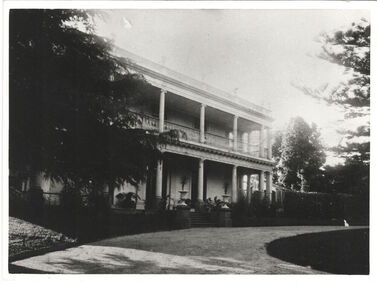
Photograph, Studley House, circa 1900, c. 1900
... The house was again altered in 1919 during the ownership of John Wren, former bookmaker, ALP lobbyist, influential Irish-Catholic and millionaire. After 1969 the house was used by theschool. ...The house was again altered in 1919 during the ownership of John Wren, former bookmaker, ALP lobbyist, influential Irish-Catholic and millionaire. After 1969 the house was used by theschool. ...The first section of Studley House, now part of the preparatory school for Xavier College conducted by the Society of Jesus in Kew, Burke Hall, was built in about 1857 for Parliamentarian John Hodgson, an early settler in the district, as a two-storey residence in the Classical Revival style. The name Studley House was first recorded in the Kew ratebooks in 1862, after the housewas purchased in 1860 by James McEvoy, squattter. Alterations and an extension, designed by William J Ellis were undertaken in 1875. The house was again altered in 1919 during the ownership of John Wren, former bookmaker, ALP lobbyist, influential Irish-Catholic and millionaire. After 1969 the house was used by theschool. Studley House retains evidence of the original 1850s section, plaster and woodwork, and stained glass from its earlier period. - Source: Victorian Heritage RegisterThis work forms part of the collection assembled by the historian Dorothy Rogers, that was donated to the Kew Historical Society by her son John Rogers in 2015. The manuscripts, photographs, maps, and documents were sourced by her from both family and local collections or produced as references for her print publications. Many were directly used by Rogers in writing ‘Lovely Old Homes of Kew’ (1961) and 'A History of Kew' (1973), or the numerous articles on local history that she produced for suburban newspapers. Most of the photographs in the collection include detailed annotations in her hand. The Rogers Collection provides a comprehensive insight into the working habits of a historian in the 1960s and 1970s. Together it forms the largest privately-donated collection within the archives of the Kew Historical SocietyA photograph of the north facing facade of Studley House in Nolan Avenue before the additions made by John Wren..Studley House, Nolan Avenue. Before addition of new wing in 1915 (confirms your observations) M.K.studley house, nolan avenue, xavier preparatory school, dorothy rogers -
 Queenscliffe Maritime Museum
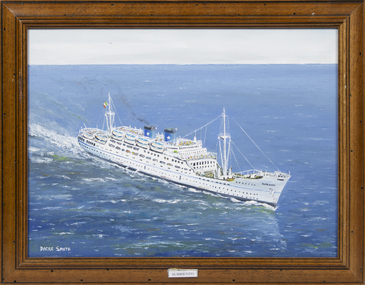
Painting - MV Surriento, Dacre Smyth, Surriento
... Like so many ships that were used during WWII, she was laid up and remained idle for several years, until finally in 1948 the US Government sold her at auction and the highly decorated USS Barnett, ex MS Santa Maria was officially purchased by the well known Italian Multi Millionaire ship owner Mr. Achille Lauro on April 13, 1948. ...Like so many ships that were used during WWII, she was laid up and remained idle for several years, until finally in 1948 the US Government sold her at auction and the highly decorated USS Barnett, ex MS Santa Maria was officially purchased by the well known Italian Multi Millionaire ship owner Mr. Achille Lauro on April 13, 1948. ...Like so many ships that were used during WWII, she was laid up and remained idle for several years, until finally in 1948 the US Government sold her at auction and the highly decorated USS Barnett, ex MS Santa Maria was officially purchased by the well known Italian Multi Millionaire ship owner Mr. Achille Lauro on April 13, 1948. Soon she headed for a Baltimore shipyard where she received some work to ensure that her engines that had been shut down for a considerable time, were back in full working condition. When the work had been completed she was certified for her delivery voyage to Italy! The delightful all white MS Surriento was ready to depart Genoa on her very first voyage to Australia in her brand new passenger/migrant liner role. A framed oil painting of the migrant ship MV SurrientoSurrientoms surriento, migrant ships, emmigration -
 Sunshine and District Historical Society Incorporated
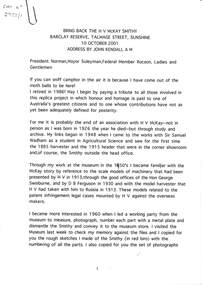
Archive - H.V. McKay Replica Smithy Opening 2001 Documents
... .|2/ From Log Smithy to Millionaire. Notes on Hugh Victor McKay and the stripper-harvester|3/ The Sunshine Harvester Works in 1884. ....|2/ From Log Smithy to Millionaire. Notes on Hugh Victor McKay and the stripper-harvester|3/ The Sunshine Harvester Works in 1884. ...A collection of documents from John Kemndall A.M. (Former Director Museum Victoria)1/ Bring back the H.V. Smithy Barclay Reserve Talmage Street Sunshine 10 October 2001 Address by John Kendall A.M.|2/ From Log Smithy to Millionaire. Notes on Hugh Victor McKay and the stripper-harvester|3/ The Sunshine Harvester Works in 1884. Black & white of the Smithy on the Devonshire Rd Offices site|4/ Plans of the Smithy construction|5/ Trade Mark "Sunshine" Certificate of Registration of a trade mark with the Patent, Trade Marks and Designs Offices Canberra 1907|6/ Request for transfer of original building from Museum Victoria to Sunshine was refused on 23/12/1998 & McKay's Massey Ferguson Site hearing on the demolishment of the substation site with developer to contribute $100,000 for interpretive centre on the site|7/ References for information on H.V. McKaysmithy, blacksmith, barclay reserve, albion -
 Federation University Historical Collection
Magazine, The Radio Press, Popular Radio Weekly, 1925, 1925
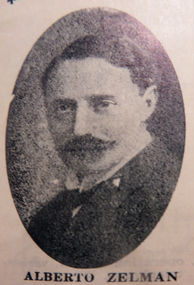
... (The Ham and Radiophone, A Good Circuit, How the Microphone Transmitter Works, A Reflex Circuit, A Millionaire's Radio Installation, Teh Deresnadyne, Crystal Detectors, Hints an Accumulators, 3LO, Selection Radio Parts) .5) Vol 1, No. 6, 01 April 1925. ...(The Ham and Radiophone, A Good Circuit, How the Microphone Transmitter Works, A Reflex Circuit, A Millionaire's Radio Installation, Teh Deresnadyne, Crystal Detectors, Hints an Accumulators, 3LO, Selection Radio Parts) .5) Vol 1, No. 6, 01 April 1925. ...Five 'Popular Radio Weekly Magazines. .1) Vol. 1, No. 1, 25 February 1925. (Purchasing a receiver, eliminating static, Morse Code, An Efficient one-valver, A Simple Crystal Circuit, Combining Valve and Crystle, the Alfred Hospital, Frank Tate on Radio. Images of Josie Melville, Alberto Zelmanm circuits) .2) Vo. 1, No. 14, 27 May 1925. (Purity amplifier, Popular Wireless, Oscillations, Marconi's Wireless Beam Transmitter, Resistance coupled Amplifiers, Condenser Losses) .3) Vol. 1, No. 2, 04 March 1925. (A Crystal Receiver, Medium Wave Four-Valver, The Harkness Circuit, A One-Valve Super, The Aerial Mast, The Police Patrol, C Batteries, A Two Crysal set, La Bela Lingvo, Plain Aerial. Images - Transmitting Aeroplace, A. Nicholson - Chief Commissioner of Police) .4) Vol. 1, No 15, 03 June 1925. (The Ham and Radiophone, A Good Circuit, How the Microphone Transmitter Works, A Reflex Circuit, A Millionaire's Radio Installation, Teh Deresnadyne, Crystal Detectors, Hints an Accumulators, 3LO, Selection Radio Parts) .5) Vol 1, No. 6, 01 April 1925. (The Renartz Tuner, A 600 foot aerial, Measuring your Receiver, Doctoring Your Set, Understanding What You Read, The Vernier Condenser, Radio and Railways, Who Can Build the Smallest Set.)radio, valve, electrical engineering, frank tate, alberto zelman -
 Federation University Historical Collection
Correspondence, Letters to and from Nina Steane - 1973, 1973
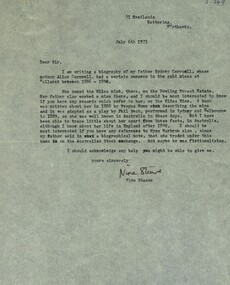
... ...millionaire...It is said she became a millionaire at 30. Sydney Carroll was born George Frederick Carl Whiteman (1877-1958). ...It is said she became a millionaire at 30. Sydney Carroll was born George Frederick Carl Whiteman (1877-1958). ...Nina Steane was the daughter of Sydney Carroll. He was the son of John Whiteman and Alice Cornwall, born in Melbourne in 1877. After a short marriage his parents separated and he chose to live with his father. Alice resumed her maiden name and became successful in the Mining Industry in Ballarat. She owned the Midas Mine on the Dowling Forest Estate, Victoria. She was known as Madame Midas. Returning to London her business thrived and her company the 'British Australasian Mining Investment Company' was floated in London in July 1889. It is said she became a millionaire at 30. Sydney Carroll was born George Frederick Carl Whiteman (1877-1958). Sydney was heavily involved with the theatre and was manager of a number of London theatres. He founded the Open Air Theatre in 1933. A new complex was been built on the site in 1975. He was part-author of several plays, published a book on dramatic criticism as well as being a drama critic. Nina Steane (Carroll) was born in 1932 and studied Art at the Cheltenham School of Art. She then went to Oxford University where she studied Literature. After Oxford she married John M Steane and they had three children. They lived in Southport, Kettering where she exhibited her art until the mid 1970s. In 1976 John became Oxfordshire's County Archaeologist and so moved to live in the area. Here Nina showed her art as well as in London and other parts of the country as well as abroad Nina died in 1990, aged 57. .1 Type written letter on white paper. Addressed "Dear Sir" and signed "Nina Steane" (copy) .2 Type written letter on white paper. Addressed "Mrs Steane" and signed by "E J Barker" Principal of Ballarat School of Mines and later Director of Ballarat College of Advanced Education. (copy) .3 Type written letter on white paper. Addressed "Dear Mr Barker" and signed "Nina Steane" (copy) .4a Copy of hand written information on The Midas Mine .4b continuation of information.1 Signature of Nina Steane. Dated July 6th 1973 .2 Signature "EJB". Dated 20th July 1973 .3 Signature of Nina Steane. Dated July 26th 1973midas mine, nina steane, sydney carroll, alice cornwall, john whiteman, melbourne, madame midas, british australasian mining investment company, millionaire, london, drama, open air theatre, cheltenham school of art, oxford university, literature, john m steane, oxfordshire county, archaeologist, exhibition -
 Bendigo Historical Society Inc.
Document - Minutes of Army Survey Regiment Unit Historical Fund, Fortuna Villa
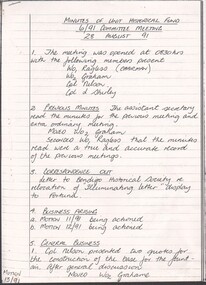
... Lansell was soon known as the 'Quartz King', Australia's first gold mining millionaire and credited as the driving force behind much of Bendigo's prosperity. ...Lansell was soon known as the 'Quartz King', Australia's first gold mining millionaire and credited as the driving force behind much of Bendigo's prosperity. ...Fortuna Villa was initially commenced as a modest single storey home in 1861 next to the 180 Mine by Theodore Ballerstedt, who sold the mine and house to George Lansell in 1869. Lansell already owned the adjacent Fortuna Mine, and through deeper mining techniques greatly expanded the mine's operation, his personal wealth, and the house and grounds. Lansell was soon known as the 'Quartz King', Australia's first gold mining millionaire and credited as the driving force behind much of Bendigo's prosperity. He continuously added to and expanded the villa, decorating it extravagantly with the finest of artworks and materials, into a sprawling mansion with extensive landscaped grounds, to create a house and grounds of a size and grandeur with few rivals in Australia. After his death in 1907, his second wife Edith carried on with improvements, creating a house and grounds developed over 50 years. The attached mine also contributes to its significance, being one of the richest mines in Bendigo, and at one stage probably the deepest gold mine in the world at 3176 feet. The 1875 crushing works are attached directly to the mansion, and the mine's tailings and settling ponds (turned into ornamental lakes) represent a direct link between George Lansell's wealth and its source. Fortuna was compulsorily acquired by the Commonwealth in 1942 as the Cartographic Headquarters of the Australian Survey Corps during World War II, and many ancillary structures were added while preserving the main house and ornamental grounds. Victorian Heritage Database Report https://vhd.heritagecouncil.vic.gov.au/places/68334/download-reportMinutes of Army Survey Regiment Unit Historical Fund, Fortuna Villa (28 Aug 1991 - 25 Nov 1992) 28 August 1991 - cost of construction of base of the fountain, and letter to Bendigo Art Gallery to follow-up loan of the "Venus" statue for display in the RM's office and resurfacing of marble baths in the CO and adjutant's offices. Single undated page from Unit Historical Fund Committee in 1991. 11 Nov 1992 - discussion of Christmas tours and a plaque for hallway. 25 Nov 1992 - lights for the Company's office, and a discussion of five tasks for next year. Lansell's Fortuna flyer for tour.fortuna villa, minutes -
 Bendigo Historical Society Inc.
Administrative record - Minute records Army Survey Regiment Fortuna Historical Society
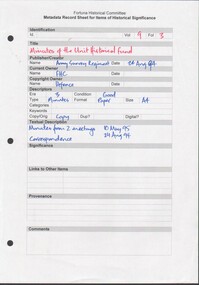
... Lansell was soon known as the 'Quartz King', Australia's first gold mining millionaire and credited as the driving force behind much of Bendigo's prosperity. ...Lansell was soon known as the 'Quartz King', Australia's first gold mining millionaire and credited as the driving force behind much of Bendigo's prosperity. ...Fortuna Villa was initially commenced as a modest single storey home in 1861 next to the 180 Mine by Theodore Ballerstedt, who sold the mine and house to George Lansell in 1869. Lansell already owned the adjacent Fortuna Mine, and through deeper mining techniques greatly expanded the mine's operation, his personal wealth, and the house and grounds. Lansell was soon known as the 'Quartz King', Australia's first gold mining millionaire and credited as the driving force behind much of Bendigo's prosperity. He continuously added to and expanded the villa, decorating it extravagantly with the finest of artworks and materials, into a sprawling mansion with extensive landscaped grounds, to create a house and grounds of a size and grandeur with few rivals in Australia. After his death in 1907, his second wife Edith carried on with improvements, creating a house and grounds developed over 50 years. The attached mine also contributes to its significance, being one of the richest mines in Bendigo, and at one stage probably the deepest gold mine in the world at 3176 feet. The 1875 crushing works are attached directly to the mansion, and the mine's tailings and settling ponds (turned into ornamental lakes) represent a direct link between George Lansell's wealth and its source. Fortuna was compulsorily acquired by the Commonwealth in 1942 as the Cartographic Headquarters of the Australian Survey Corps during World War II, and many ancillary structures were added while preserving the main house and ornamental grounds. Victorian Heritage Database Report https://vhd.heritagecouncil.vic.gov.au/places/68334/download-reportMinutes of the Fortuna Historical Committee held 24 August 1994 (hand written minutes over four sheets, referenced Vol 9 Fol 3) including four pages of stakeholder feedback tabled at the meetingfortuna, historical unit -
 Bendigo Historical Society Inc.
Document - Pompeii Fountain & Adjacent Structures at "Fortuna"
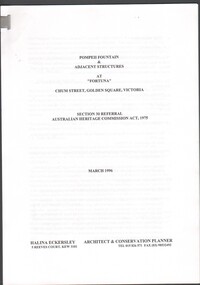
... Lansell was soon known as the 'Quartz King', Australia's first gold mining millionaire and credited as the driving force behind much of Bendigo's prosperity. ...Lansell was soon known as the 'Quartz King', Australia's first gold mining millionaire and credited as the driving force behind much of Bendigo's prosperity. ...Fortuna Villa was initially commenced as a modest single storey home in 1861 next to the 180 Mine by Theodore Ballerstedt, who sold the mine and house to George Lansell in 1869. Lansell already owned the adjacent Fortuna Mine, and through deeper mining techniques greatly expanded the mine's operation, his personal wealth, and the house and grounds. Lansell was soon known as the 'Quartz King', Australia's first gold mining millionaire and credited as the driving force behind much of Bendigo's prosperity. He continuously added to and expanded the villa, decorating it extravagantly with the finest of artworks and materials, into a sprawling mansion with extensive landscaped grounds, to create a house and grounds of a size and grandeur with few rivals in Australia. After his death in 1907, his second wife Edith carried on with improvements, creating a house and grounds developed over 50 years. The attached mine also contributes to its significance, being one of the richest mines in Bendigo, and at one stage probably the deepest gold mine in the world at 3176 feet. The 1875 crushing works are attached directly to the mansion, and the mine's tailings and settling ponds (turned into ornamental lakes) represent a direct link between George Lansell's wealth and its source. Fortuna was compulsorily acquired by the Commonwealth in 1942 as the Cartographic Headquarters of the Australian Survey Corps during World War II, and many ancillary structures were added while preserving the main house and ornamental grounds. Victorian Heritage Database Report https://vhd.heritagecouncil.vic.gov.au/places/68334/download-reportConservation report for the Pompeii Fountain & Adjacent Structures at "Fortuna" Chum Street, Golden Square, Victoria. Prepared for Fortuna Historical Committee. March 1996.Halina Eckersley, Architect & Conservation Planner, Kewpompeii fountain, greenhouse, fortuna lake, gardens -
 Bendigo Historical Society Inc.
Document - Preliminary report of Structural assessment Fortuna
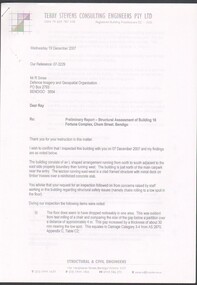
... Lansell was soon known as the 'Quartz King', Australia's first gold mining millionaire and credited as the driving force behind much of Bendigo's prosperity. ...Lansell was soon known as the 'Quartz King', Australia's first gold mining millionaire and credited as the driving force behind much of Bendigo's prosperity. ...Fortuna Villa was initially commenced as a modest single storey home in 1861 next to the 180 Mine by Theodore Ballerstedt, who sold the mine and house to George Lansell in 1869. Lansell already owned the adjacent Fortuna Mine, and through deeper mining techniques greatly expanded the mine's operation, his personal wealth, and the house and grounds. Lansell was soon known as the 'Quartz King', Australia's first gold mining millionaire and credited as the driving force behind much of Bendigo's prosperity. He continuously added to and expanded the villa, decorating it extravagantly with the finest of artworks and materials, into a sprawling mansion with extensive landscaped grounds, to create a house and grounds of a size and grandeur with few rivals in Australia. After his death in 1907, his second wife Edith carried on with improvements, creating a house and grounds developed over 50 years. The attached mine also contributes to its significance, being one of the richest mines in Bendigo, and at one stage probably the deepest gold mine in the world at 3176 feet. The 1875 crushing works are attached directly to the mansion, and the mine's tailings and settling ponds (turned into ornamental lakes) represent a direct link between George Lansell's wealth and its source. Fortuna was compulsorily acquired by the Commonwealth in 1942 as the Cartographic Headquarters of the Australian Survey Corps during World War II, and many ancillary structures were added while preserving the main house and ornamental grounds. Victorian Heritage Database Report https://vhd.heritagecouncil.vic.gov.au/places/68334/download-reportPreliminary report of Structural assessment of Building 16 Fortuna Complex, Chum Street, Bendigo. Four page preliminary report finding the building is structurally safe as at Wed 19 December 2007 with three recommendations. Prepared for DIGO by Structural Engineers - Terry Stevens Consulting Engineers Pty Ltd.fortuna, structural assessment
