
Showing 31 items matching "miniature models"
-
 Mission to Seafarers Victoria
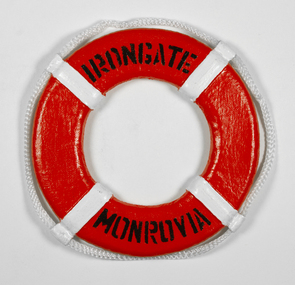
Decorative object - Miniature, lifebuoy, c. 2018
... ...miniature models... making was often a hobby to kill time on long journeys. lifebelt life preserver miniature models life buoy bosun tomovs irongate ship gift buoy hobbie seamen sailors seafarers side a) In Upper Case stencil: " IRONGATE / MONROVIA " Side b) handwritten in black ink: "04.09.2018 / BSN TOMOVS / BULGARIA" small red painted and white corded life buoy with inscription in black paint. ...Presented to MTSV by seafarer Bosun Tomovs from the vessel Irongate, registered in Monrovia, Liberia who created this memento miniature and presented it to Chief Manager Sue Dight, on the occasion of his visit to the MTSV, Melbourne.The seafarer who created this object has presented similar objects to Missions to Seamen wherever he has come ashore and used the services. The object forms a connection through the creator with the Mission network across the globe. It is also a representative sample of creativity aboard ship: model making was often a hobby to kill time on long journeys.small red painted and white corded life buoy with inscription in black paint.side a) In Upper Case stencil: " IRONGATE / MONROVIA " Side b) handwritten in black ink: "04.09.2018 / BSN TOMOVS / BULGARIA"lifebelt, life preserver, miniature models, life buoy, bosun tomovs, irongate ship, gift, buoy, hobbie, seamen, sailors, seafarers -
 Ballarat Tramway Museum
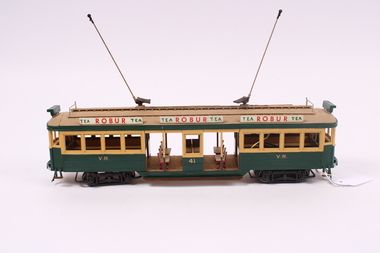
Model - V.R. Tram No 41, A.G. Culpeffer -Cooke, 1978
... Handcrafted Green and cream painted miniature model, plastic ,wood and metal...A.G.Culpeffer-Cooke Handcrafted Green and cream painted miniature model, plastic ,wood and metal Model V.R. ...Accurate interpretation of Victorian Railway Tram No 41 that ran from St Kilda to Brighton during the early years of the 20thC.Handcrafted Green and cream painted miniature model, plastic ,wood and metalBuilt by W.E.L.T. Workshops. March 1978. V.R.Bogie 89/41. A.G.Culpeffer-Cookevictorian railway tram, melbourne trams, models -
 Northern District School of Nursing. Managed by Bendigo Historical Society Inc.
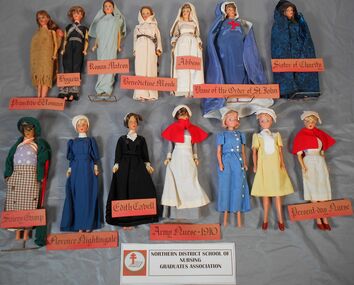
Education kit - Miniature Doll Collection, Nursing Through the Ages
... Fourteen Miniature Models of Nurses from Primitive Era to 1980's. ...Fourteen Miniature Models of Nurses from Primitive Era to 1980's. ...Fourteen Miniature Models of Nurses from Primitive Era to 1980's. They were Dean Nancy Long's idea and she had them made. They were used for "Careers" information when visiting High Schools. In 1972 when the uniforms changed from traditional to more modern trend they created interest for prospective trainee nurses. Each has a frame and a name tag in Roman script Collection of fourteen miniature Dolls. These dolls were used as a teaching aid at the Northern District School of Nursing.Titles of Dollsnursing uniforms, educational equipment, careers -
 City of Moorabbin Historical Society (Operating the Box Cottage Museum)
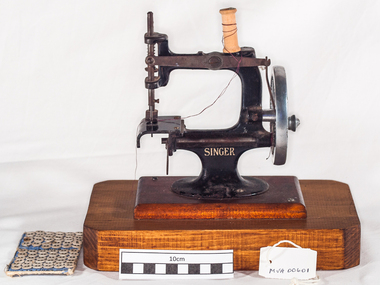
Sewing Machine 'Singer' Model 20, c1920
... A miniature 'Singer' Sewing machine ,Model 20, with hand crank...By the mid 1900s, many companies had cloned the machine, with most showing the same uncertainties as to the intended market. early settlers craftwork toys sewing machines pioneers moorabbin bentleigh ormond cheltenham market gardeners dressmaking Singer Pty Ltd A miniature 'Singer' Sewing machine ,Model 20, with hand crank Sewing Machine 'Singer' Model 20 'Singer' Sewing machine Pty Ltd ...First marketed in 1910, this early version Singer No 20 was sold as both a toy and adult miniature. The design underwent several improvements and cosmetic changes in the years that followed. By the mid 1900s, many companies had cloned the machine, with most showing the same uncertainties as to the intended market.A miniature 'Singer' Sewing machine ,Model 20, with hand crankSinger Pty Ltd early settlers, craftwork, toys, sewing machines, pioneers, moorabbin, bentleigh, ormond, cheltenham, market gardeners, dressmaking -
 Frankston RSL Sub Branch
Trench Art, 1940s
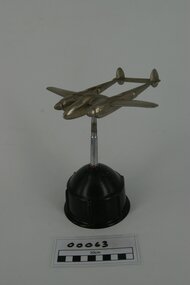
... Miniature model of a WW2 era Lockheed P-38 Lightning twin engine aircraft mounted on a bakelite base. ...plane trench art p-38 lightning lockheed lockheed lightning souvenir Nil Miniature model of a WW2 era Lockheed P-38 Lightning twin engine aircraft mounted on a bakelite base. ...Miniature model of a WW2 era Lockheed P-38 Lightning twin engine aircraft mounted on a bakelite base. The aircraft is supported by a central, chromed bullet vertically mounted on the bakelite base to form a stand. The plane and central support have been made from chromed metal materials. The RAAF was equipped with a small number of these aircraft, commencing in 1942, which were used for front line photographic reconnaissance duty. The first version of the Lockheed P-38 was introduced in 1941 by the USA Lockheed aircraft company as a heavy fighter.Nilplane, trench art, p-38, lightning, lockheed, lockheed lightning, souvenir -
 Frankston RSL Sub Branch
Souvenir Ashtray
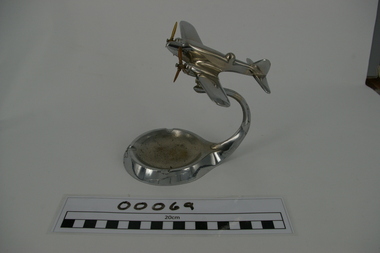
... Miniature model of a WW2 era Avro Anson twin engine aircraft mounted on an ashtray. ...plane trench art ashtray aircraft souvenir avro anson Chromed metal RAAF 'winged eagle' insignia on the front edge of the base. Miniature model of a WW2 era Avro Anson twin engine aircraft mounted on an ashtray. ...Miniature model of a WW2 era Avro Anson twin engine aircraft mounted on an ashtray. The aircraft is supported by a curved arm attached to the circular ashtray base. The base has a small metal RAAF 'winged eagle' insignia attached to the front edge. The items have been made from chromed metal materials. The RAAF was equipped with Avro Anson aircraft in the late 1930 period prior to WW2. These aircraft were used by the RAAF for general and maritime reconnaissance and training throughout WW2 and into the early 1950s. The first version of the Avro Anson was developed in 1935 by the British Avro aircraft company.Chromed metal RAAF 'winged eagle' insignia on the front edge of the base.plane, trench art, ashtray, aircraft, souvenir, avro anson -
 Lakes Entrance Historical Society
Photograph - Johnsonville Village, 2001
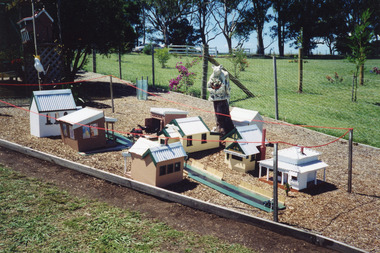
... Colour photograph of the building of a miniature Johnsonville Village, the models are recognisable as local icons, located in the garden of Ian and Lorraine Oatley, Pages Road, Johnsonville Victoria...Date made December 2001 models Houses Colour photograph of the building of a miniature Johnsonville Village, the models are recognisable as local icons, located in the garden of Ian and Lorraine Oatley, Pages Road, Johnsonville Victoria Photograph Johnsonville Village, 2001 ...Date made December 2001Colour photograph of the building of a miniature Johnsonville Village, the models are recognisable as local icons, located in the garden of Ian and Lorraine Oatley, Pages Road, Johnsonville Victoriamodels, houses -
 Frankston RSL Sub Branch
Trench Art
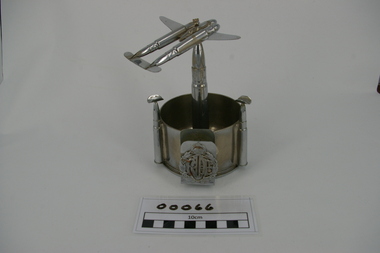
... Miniature model of a WW2 era Lockheed P-38 Lightning twin engine aircraft mounted on a trench art ashtray made from various used munitions. ...Charlie Dawes 116777 R.A.A.F from parts got while serving at Goodenough and Thursday Isalnds WW2 plane trench art ashtray RAAF chrome cap badge (WW2 era with the kings crown) Miniature model of a WW2 era Lockheed P-38 Lightning twin engine aircraft mounted on a trench art ashtray made from various used munitions. ...Made by Cpl. Charlie Dawes 116777 R.A.A.F from parts got while serving at Goodenough and Thursday Isalnds WW2Miniature model of a WW2 era Lockheed P-38 Lightning twin engine aircraft mounted on a trench art ashtray made from various used munitions. This model was made during WW2 by Corporal Cyril 'Charlie' Dawes, RAAF service number 116777, from parts found whilst serving at Goodenough and Thursday Islands in the Torres Strait. The aircraft is supported by a 0.50 inch calibre bullet fixed to the inside of a section of an artillery case which forms the base. The base has three 0.303 inch calibre bullets attached vertically around the circumference and a metal matchbox holder with a RAAF hat badge insignia attached to the front. The items have been made from chromed metal materials. The RAAF was equipped with a small number of these aircraft, commencing in 1942, which were used for front line photographic reconnaissance duty. The first version of the Lockheed P-38 was introduced in 1941 by the USA Lockheed aircraft company as a heavy fighter.RAAF chrome cap badge (WW2 era with the kings crown)plane, trench art, ashtray -
 Eltham District Historical Society Inc
Document, Russell Yeoman, Tour of Historic Buildings and Locations, 1978
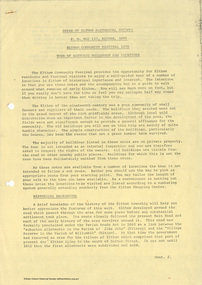
... This miniature railway features scale models of modern and old locomotives and rolling stock and has operated on this site since 1961 . ...This miniature railway features scale models of modern and old locomotives and rolling stock and has operated on this site since 1961 . ...Self guided heritage tour information produced by the Shire of Eltham Historical Society for 1978 Eltham Community Festival of 36 locations each numbered on accompanying map. Locations and detail provided current to 1978: 1. ELTHAM SHOPPING CENTRE Whilst very little remains in the centre of historical importance, this area has interest as the "village" which developed over many years following the opening of the railway from Melbourne in 1902. Previously the shopping centre had been spread out over a long length of Main Road to the south. Shops have been continuously demolished or remodelled and the majority of buildings date from the 1950's or later. The recently erected Post Office replaced the "old" Post Office opened on the same site only in 1958. 2. WOOLWORTHS ELTHAM VILLAGE Part of the site of this modern shopping development was occupied by the former Eltham Shire Offices and Hall. The hall was paid for by public subscription whilst the Council raised a loan for the offices. The combined building was opened in 1941. It served as office and Council meeting place until 1965 and as the hall until its demolition in 1970. 3. ELTHAM WAR MEMORIAL The complex of buildings adjoining the present Shire Offices were financed by public subscription as a Memorial following World War II. Their construction and for many years their operation was organised by the now disbanded Eltham War Memorial Committee. The original buildings were the; Infant Welfare Centre, Children’s Library (now War Memorial Hall and Dental Clinic) and Kindergarten. In later years the Elderly Citizens Club was built at the rear. 4. ELTHAM SHIRE OFFICES These offices were opened in 1965 and extended in 1971 to provide additional office accommodation and the Eltham Library. They represent the last of a long line of offices and meeting places of the Eltham Shire Council and its predecessor the Eltham District Road Board. The building occupies the former site of Shillinglaw Cottage. The three tall cypress trees which stood in front of the Cottage have been retained as a feature of the office surrounds. 5. OUR LADY'S CHURCH AND SCHOOL The Catholic Church and School complex opposite the Shires Offices shows a number of stages in the development of Eltham township. The recently constructed church adjoins its predecessor (now the parish centre). Many years ago the Catholic Church was located opposite Wingrove Park and the present central site follows the northerly drift of the township. 6. SHILLINGLAW COTTAGE The Cottage was built in 1859 by George Stebbing, a local builder who was responsible for a number of other prominent buildings in the area. Its removal from the site of the Shire Offices and re-erection on the present site was financed by public subscription. It is built of handmade bricks laid in Flemish Bond with an unusual design featuring burnt "leader" bricks over the whole facade. The Cottage is occupied by Eltham Fleececrafts and will be open during the Festival and at other times during weekends. It is classified by the National Trust. 7. RAILWAY BRIDGE The timber trestle bridge over the Diamond Creek was built in 1901. Whilst all of its timbers have been replaced at various times over the years the only change to its character has been the addition of pylons and wiring for electric trains in 1923. It is one of very few similar bridges remaining in the metropolitan area. In 1976 a proposal to replace the bridge with an earth embankment and large culvert pipes was abandoned following community protests. The bridge, however, remains under threat because of the necessity for future deuplication of the railway line. 8. ELTHAM CENTPAL PARK The area between the railway and the creek has for many years been used as a park which included Eltham' s main football oval. The access road, Panther Place is named after Eltham's team playing in the Diamond Valley League. In recent years a large area extending to Bridge Street and locally known as the Town Park has been landscaped and added to the area. The excellent blending of the park with the natural landscape of the creek valley has earned a National Trust Landscape Classification. 9. OLD BAKERY On the southern corner of York Street and Main Road is an old house with a shop front which was for many years the local baker's shop. The brick bakery at the rear is of somewhat later vintage than the house. 10. BRIDGE STREET CUTTING Before reconstruction of Main Road this intersection had deep cutting embankments on all four corners, forming a distinctive feature of the entrance to Eltham. Roadworks and private development have levelled the land on the low side of the road. A memorial to the Eltham soldiers of World War I which was located at the north-western corner is now situated at the Eltham R.S.L. 11. HILLTOP MILK BAR For many years this was the site of the Eltham Post Office under the control of the Hunniford family and later their descendants the Burgoynes. It was transferred to this site in 1855, although at that time the building apparently fronted Bridge Str e et. The site contained Eltham's first telephone exchange. The post office was relocated in 1954 but the shop was operated until recently by the Burgoyne family who still own the surrounding land. 12. UNITING CHURCH and former C.B.A. BANK The former Methodist Church was built in 1880 by George Stebbing. The Sunday School extension was built in 1929 and there have been more recent extensions. The adjoining opportunity shop was built as a bank in 1874 and purchased by the Methodist Church in 1954. 13. R.S.L. HALL, TELEPHONE EXCHANGE These relatively recent buildings occupy the site of a row of shops forming part of the early ribbon of business development along Main Road. In front of the R.S.L. building is the World War I Memorial relocated from the corner of Bridge Street and Main Road. 14. ELTHAM COMMUNITY CENTRE Australia's first mudbrick "community building" was opened in April this year. Part of the site of the building was purchased in 1856 by Henry Dendy (of Brighton fame). At the rear of the land near the creek was a steam flour mill whilst Dendy's house was at the Main Road frontage of the land. His purchase totalled about 2 Ha (5 acres) and included land on the opposite side of Maria Street (Main Road). Dendy became a prominent member of the Eltham community and served one term as President of the Eltham District Road Board. In 1867 Dendy sold his land and business to William Ford of Malmsbury and shifted to Walhalla. The avenue of trees leading past the Community Centre to the creek may well have bordered the track to the mill. 15. ELTHAM HOTEL The original part of this hotel was built in 1927 following the burning of the former Watson's Eltham Hotel on the same site. The car park on the opposite side of Main Road was also the site of a hotel variously known over the years as; the Fountain of Friendship, the Fountain and the Evelyn Arms. As the Fountain of Friendship it was the first meeting place of the Eltham District Road Board in 1856. 16. ST. MARGARET'S CHURCH, PITT STREET In 1860 Henry Dendy was appointed Chairman of a committee to establish a church of England in Eltham. He donated part of his land in Pitt Street and in 1861 the church was opened. It was built by George Stebbing and remains in a well preserved state today. Th adjoining old vicarage is now named Dendy Hou se. A new mudbrick church hall is under construction on the site. The church and Dendy House are now listed on the Register of Historic Buildings. 17. NO. 86 PITT STREET Cottage built by George Stebbing and believed to be his home for some years in the 1850s. 18. LIVING AND LEARNING CENTRE The house was built in the 1850s with the kitchen at the front being added about 40 years later. By the creek below the house a number of early Eltham industries were located. These included a tannery and a brewery. 19. ELTHAM COURT HOUSE A Court of Petty Sessions was established in Eltham in 1858 and the present building dates from 1860. It is the oldest public building remaining in Eltham. In its early days the building was used as the meeting place and office of the Eltham District Road Board and as an overflow classroom for the local school. The Court House has been classified by the National Trust. The citation states that it is an example of the simple form of early brick Court House with gabled roof and porch. 20. LANDS DEPARTMENT OFFICE This building is the former police station and is probably of about the same age as the Court House. The lockup at the rear has been demolished but the old stables remain as garages. A licence was first granted for a police station at Eltham in 1856. 21. JARROLD COTTAGE The old Cottage opposite Dalton Street was formerly owned by the Jarrold family. Early records indicate that this was the building leased from the Jarrolds as a temporary police station prior to construction of the building on the corner of Brougham Street. The small building on the corner of the property was used as a boot repairer's shop. The elevated studio at the rear is a more recent construction by the present owners. 22. STATE SCHOOL RESIDENCE Erected in 1891 23. WINGROVE COTTAGE This building fills an important place in the history of Eltham and is now used as a medical clinic. It was built in 1858 for Charles S. Wingrove who was Secretary to the Eltham District Road Board and Shire Council from 1858 to 1904. During part of this period he was also Shire Engineer and was Secretary to the Heidelberg Road Board. The house was used as the office of the Board and Council for many years. Wingrove is buried in the cemetery at St. Helena. 24. WINGROVE PARK The parkland opposite Wingrove Cottage has been named after Charles Wingrove. The old Manna Gums are an outstanding feature of the park. 25. ELTHAM FRI.MARY SCHOOL NO. 209 The school first opened in the slab building in 1855 and operated from the present site since 1857. The oldest part of the present school is the stone building erected in 1876. The first school teacher, David Clark remained at the school until 1888. This school is the government township and has always been known as the Eltham School. An earlier school (no.371) known as Little Eltham School operated in Swan Street from 1853 to 1872. 26. "SHOESTRING" This house was built for school teacher David Clark. It has been extensively extended in recent years but the extensions do not detract from the character of the older part of the building. 27. ELTHAM CEMETERY The cemetery contains the graves of many of the district's pioneers . 28. MONTSALVAT This unique complex of buildings was commenced in 1935 by the late Justus Jorgensen and its development has extended over many years. Montsalvat has exerted a significant impact on Eltham The earth and stone construction of many of the buildings has influenced local architecture to a great extent and it has served as a "nerve centre" of the local artistic community. Montsalvat is open to the public for a small charge. 29. MAIN ROAD BRIDGE This location has been the main crossing of Diamond Creek since the earliest days of settlement. The present concrete bridge was erected in 1925 .and was preceded by a number of timber bridges. 30. ELTHAM LOWER PARK This park, being an unusually large flat area for Eltham, was originally the local racecourse. Horse races were held here from 1855 and the area was gazetted as a reserve for a racecourse and recreation reserve in 1857. The park is well known as a venue for school "bird days" and more recently as the site of the Diamond Valley Railway. This miniature railway features scale models of modern and old locomotives and rolling stock and has operated on this site since 1961 . Before that the railway operated at Chelsworth Park, Ivanhoe. 31. FALKINER HOUSE Frederick Falkiner was one of the earliest settlers in the Eltham township area and occupied a substantial leasehold prior to the first land sales. Early records show that Falkiner was the subject of a number of complaints from his neighbours but he has nevertheless been considered a prominent enough citizen to have a street named for him. This house was the home of Evelyn (Ely) Falkiner a member of Frederick's family. 32. WEST HOUSE Behind the large house on the hill is an early house built by the West family. This was relocated from a site near the front of the land by the present owner Mr. Fabbro. 33. FALKINER HOUSE This very old house is believed to have been the home of Frederick and may have been Eltham's first post office. Falkiner was the first post master for a short period. in 1854/55. 34. WITHERS HOUSE This house was the home of famous artist Walter Withers who shifted here from Heidelberg in 1903. 35. ELTHAM HIGH SCHOOL This school celebrated its jubilee this year, having commenced as the Eltham Higher Elementary School 50 years ago. 36. DIAMOND CREEK FOOTWAY If returning from the High School to the town centre the footpath by the bank of the Diamond Creek provides a pleasant route to finish your walk. The creek is a major tributary of the Yarra River. Together with its own major tributaries Arthurs Creek and Running Creek it commences on the southern slopes of the Dividing Range at Kinglake. It gives the name Diamond Valley to an area extending well beyond its actual drainage catchment.Recognition of the significance of various landmarks to the history of the Eltham community as of 1978‘shoestring’, 1978, bridge street cutting, burgoyne store, c.b.a. bank, diamond creek trail, eltham cemetery, eltham central park, eltham community centre, eltham community festival, eltham court house, eltham festival, eltham high school, eltham hotel, eltham lower park, eltham primary school, eltham railway trestle bridge, eltham shire offices, eltham shopping centre, eltham state school no. 209, eltham village, eltham war memorial, falkiner house, heritage trail, hilltop milk bar, jarrold cottage, lands department office, living, living and learning centre, main road bridge, montsalvat, old bakery, our eltham artistic recollections, our lady help of christian’s church, our lady help of christian’s primary school, pitt street, post office, r.s.l. hall, shillinglaw cottage, st margaret’s church, state school residence, stebbing cottage, telephone exchange, uniting church, west house, wingrove cottage, wingrove park, withers house, woolworths -
 Marysville & District Historical Society
Ephemera (Item) - Tourist Guide, Michael Nash et al, Mystic Mountains Tourist Guide Vol. 1 1994, 1994
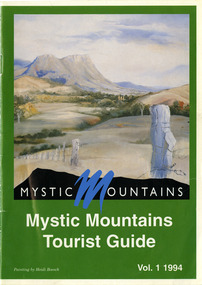
... miniature golf...top shop pancake parlour...marylands guest house...dalrymples guest cottages...crossways country inn...esa camping & conference centre...scenic motel...the cumberland...maryton park holiday cottages...lomatia lodge holiday house...willowbank gallery and art centre...igloo roadhouse...a model...A tourist guide outlining services, accommodation, activities and places of interest to visit in and around Marysville and the local district. marysville victoria australia tourist guide mystic mountains michael nash dudley jones marysville and district tourist and progress association department of conservation & natural resources shire of alexandra paperwork professionals pp art services harrier printing darrowby deer farm heidi boesch hidden talent craft gallery olde yarra track shoppe lady talbot forest drive mathilde's of marysville country guest house wishing well taggerty river picnic area taggery river phantom falls keppel falls the beeches walking track mount sugarloaf beauty spot walk tree fern gully walk michaeldene track keppel track woods lookout track marysville caravan park baree mud brick cottages cumberland scenic reserve nanda binya lodge cambarville the big tree barton's lookout cumberland falls our lady of the snows catholic church anglican church christ marysville christian fellowship sovereign view the big culvert st fillan steavenson's restaurant the birches resort cathedral range state park tower motel marysville post shop lake mountain wirreanda festival cross country ski hire marysville hotel motel kerami house marysville holiday cottages missing links miniature golf top shop pancake parlour marylands guest house dalrymples guest cottages crossways country inn esa camping & conference centre scenic motel the cumberland maryton park holiday cottages lomatia lodge holiday house willowbank gallery and art centre igloo roadhouse a model tours geoffrey pope & associates ACKNOWLEDGEMENTS:/ Marysville and District Tourist and Progress Association, Marysville/ Office of the Department of Conservation & Natural Resources, Shire/ of Alexandra Visitors Guide and all our advertisers whom without/ their support this publication would not have been possible. ...A tourist guide outlining services, accommodation, activities and places of interest to visit in and around Marysville and the local district.A tourist guide outlining services, accommodation, activities and places of interest to visit in and around Marysville and the local district.ACKNOWLEDGEMENTS:/ Marysville and District Tourist and Progress Association, Marysville/ Office of the Department of Conservation & Natural Resources, Shire/ of Alexandra Visitors Guide and all our advertisers whom without/ their support this publication would not have been possible.marysville, victoria, australia, tourist guide, mystic mountains, michael nash, dudley jones, marysville and district tourist and progress association, department of conservation & natural resources, shire of alexandra, paperwork professionals, pp art services, harrier printing, darrowby deer farm, heidi boesch, hidden talent craft gallery, olde yarra track shoppe, lady talbot forest drive, mathilde's of marysville country guest house, wishing well, taggerty river picnic area, taggery river, phantom falls, keppel falls, the beeches walking track, mount sugarloaf, beauty spot walk, tree fern gully walk, michaeldene track, keppel track, woods lookout track, marysville caravan park, baree mud brick cottages, cumberland scenic reserve, nanda binya lodge, cambarville, the big tree, barton's lookout, cumberland falls, our lady of the snows catholic church, anglican church christ, marysville christian fellowship, sovereign view, the big culvert, st fillan, steavenson's restaurant, the birches resort, cathedral range state park, tower motel, marysville post shop, lake mountain, wirreanda festival, cross country ski hire, marysville hotel motel, kerami house, marysville holiday cottages, missing links miniature golf, top shop pancake parlour, marylands guest house, dalrymples guest cottages, crossways country inn, esa camping & conference centre, scenic motel, the cumberland, maryton park holiday cottages, lomatia lodge holiday house, willowbank gallery and art centre, igloo roadhouse, a model tours, geoffrey pope & associates -
 Flagstaff Hill Maritime Museum and Village
Book - "Sovereign of the Seas" book or manual for the ship model hobby enthusiast, Harold T. Bodkin, 1933, "Sovereign of the Seas", Popular Mechanics Press
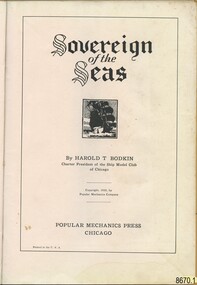
... model”. The following page “Blueprints and Craftmats on the ‘Sovereign of the Seas’” discusses the availability of a set of blueprints to purchase separately. Followed by a description of the moulding process for the “miniature...model”. The following page “Blueprints and Craftmats on the ‘Sovereign of the Seas’” discusses the availability of a set of blueprints to purchase separately. Followed by a description of the moulding process for the “miniature ...Jim (James Bernard) Williams, who was the owner of this manual, was a long-time resident of Warrnambool having the opportunity to work at two notable historical businesses of the town. The first, Cramond & Dickson a drapier store established around 1852-1855 and which remained a store that traded under the same name for the longest in Victoria, before it closed its doors in 1974. The second business was Fletcher Jones a highly successful textile and clothing Australian business. Some of Jim’s spare time was devoted to the model ship making which would conjure up many fascinating stories of maritime history. In addition to Jim witnessing the tail end of ships at port in Warrnambool, his "father was as sea captain and operated his vessel in Bass Strait coastal trade between Tasmania and Victoria". The intricately detailed model made by Jim is full of precise detail. The manual and the blueprints held by Flagstaff Hill Maritime Village also reflect the intricate process and devotion to the task completed by Jim. The history of the shipwreck and maritime stories of the Victorian Southwest coast surrounding Warrnambool would have continued to inspire his passion. Three photos of the model and Jim, like the photo of Harold T. Bodkin in the manual, attest to the enthusiasm and enjoyment that was gained by him through this hobby. The manual opens to a photo of “Mr. Harold T. Bodkin adding finishing touches to model of the “Sovereign of the Seas”. The “Forward to Reader” which is on the next page is written by “E. R. HAAN, Technical Editor, Popular Mechanics Magazine. The forward explains the methodology used to achieve the fine detail that is part of the body of the model, by “applying imitation carvings”, and is cited as “a museum type of model”. The following page “Blueprints and Craftmats on the ‘Sovereign of the Seas’” discusses the availability of a set of blueprints to purchase separately. Followed by a description of the moulding process for the “miniature carvings”. “Historical Notes of Interest on the “Sovereign of the Seas (1637)” follow on the next page. The manual is divided into the following parts from pages 8 to 71: “Part I – Shaping the Hull/Part II – The Rudder, Quarter Galleries and Gunports/Part III Wales, Gunport Covers and Initial Ornamentation/Part V – Beakhead Decoration, Bulkhead and Rails, Etc./Part VI Carvings, Lanterns, Knights, Bitts and Painting/Part VII – Details of Mast Construction/Part VIII – Standing Rigging/Part IX – Running Rigging and Final Details. All of these instructions include photographs and detailed graphs. Then instructions on “How to Read and Use Ship-Model Drawings”, “The Shop-Model Maker’s Tools”, and “Simplified Ship-in-a-Bottle”. This is finished off with “Helpful Hints….” And numerous pages of advertising. Some adverts include aids for completing the “Sovereign of the Seas” model. Part I uses blue and black ink to illustrate a dramatic picture of the “Sovereign”, otherwise all print is in black ink on buff paper. This book in significant to the collection as it was donated along with other tools and blueprints which have been used by the donor of the "Sovereign of the Seas" model ship. It also connects with the wider community in that it is related to historical maritime interest and the donor, Jim Williams is also connected to other significant retail and manufacturing businesses of the past in Warrnambool. This manual has been covered with brown paper, including an extra strip for the spine. The front has a watermark at the top middle, some pencilled compass circles segmented into eight parts across the area and a small amount of script writing. The back also has the same type of compass circles and some other small shapes. There are also grease marks. The cover has a patina adding to variations of colour to the paper indicative of the book being handled often. The title page reads “Sovereign of the Seas” in an Old English font. This is followed by a lithograph print around 1 inch square of a ship at full sale. By HAROLD T. BODKIN/Charter President of the Ship Model Club of Chicago/Copyright, 1933, By Popular Mechanics Company/POPULAR MECHANICS PRESS/CHICAGO/Printed in the U.S.A. By HAROLD T. BODKIN/Charter President of the Ship Model Club of Chicago/Copyright, 1933, By Popular Mechanics Company/POPULAR MECHANICS PRESS/CHICAGO/Printed in the U.S.A.flagstaff hill, warrnambool, shipwrecked coast, flagstaff hill maritime museum, maritime museum, shipwreck coast, flagstaff hill maritime village, great ocean road, model ship, vessel sovereign of the seas, jim williams, james bernard williams, the forth tasmania, freda williams, heather williams, phyllis bowditch, fletcher jones staff 1936, 17th century sailing ship, cramond and dickson, sovereign of the seas, royal sovereign, sovereign, charles 1, fletcher jones, warrnambool breakwater -
 Flagstaff Hill Maritime Museum and Village
Decorative object - Minton Majolica model of a White Stork, 2001
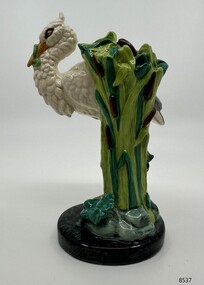
... ...miniature model...Royal Doulton as part of the Minton Miniature series produced this stork model in 2001. A limited edition of 1,793 pieces were made, and this stork is number 118. ...Minton & Co. Majolica miniature model Flagstaff Hill Maritime Museum Stoke Upon Trent John Henk Staffordshire Inscribed at the base Minton founded 1793, artist mark: 6, made in England A miniature white stork standing on one leg atop a rocky mound, an eel clasped in its beak, a frog beneath its foot, the stand formed by tall bullrushes & water-lily pads. ...Royal Doulton as part of the Minton Miniature series produced this stork model in 2001. A limited edition of 1,793 pieces were made, and this stork is number 118. The stork is a scaled down model of the original life-size piece first produced by John Henk, c. 1870, as a walking stick and umbrella stand. A rare miniature stork demonstrates the artistry and skill required to produce Majolica ware during the 19th century and the present.A miniature white stork standing on one leg atop a rocky mound, an eel clasped in its beak, a frog beneath its foot, the stand formed by tall bullrushes & water-lily pads.Inscribed at the base Minton founded 1793, artist mark: 6, made in Englandminton & co., majolica, miniature model, flagstaff hill maritime museum, stoke upon trent, john henk, staffordshire -
 Flagstaff Hill Maritime Museum and Village
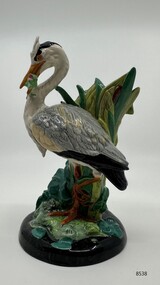
Decorative object - Minton Majolica model of a Grey Heron, 2001
... ...miniature model...Royal Doulton as part of the Minton Miniature series produced this heron model in 2001. A limited edition of 1,793 pieces were made, and this heron is number 89. ...Minton & Co. Majolica miniature model Flagstaff Hill Maritime Museum Stoke Upon Trent Paul Comolera Staffordshire Inscribed at the base Minton founded 1793, made in England A miniature grey heron standing by bulrushes and holding a struggling fish in its beak, its plumage naturalistically coloured, on a circular base glazed in tones of grey and green and applied with further leaves and water lilies. ...Royal Doulton as part of the Minton Miniature series produced this heron model in 2001. A limited edition of 1,793 pieces were made, and this heron is number 89. The heron is a scaled down model of the original life-size piece first produced by Paul Comolera, c. 1892, as a walking stick and umbrella stand. Comolera was a French artist and sculptor, renowned for dramatic naturalistic forms, and life-size renditions of birds and animals that won him admiration in public and artistic circles. The Warrnambool Art Gallery (WAG) has a life-sized Heron in its collection. A rare miniature heron demonstrates the artistry and skill required to produce Majolica ware during the 19th century and the present.A miniature grey heron standing by bulrushes and holding a struggling fish in its beak, its plumage naturalistically coloured, on a circular base glazed in tones of grey and green and applied with further leaves and water lilies.Inscribed at the base Minton founded 1793, made in Englandminton & co., majolica, miniature model, flagstaff hill maritime museum, stoke upon trent, paul comolera, staffordshire -
 Phillip Island and District Historical Society Inc.
Chicory Kiln, 1970
... miniature Chicory Kiln. After it was closed donated to Historical Society. local history rural industry horticulture chicory industry model chicory kiln mr titcher Chicory Kiln early 1900's - scale model by Robert Titcher, Dandenong. 1/4" to 1 Foot. ...Made by Mr Titcher for his personal collection. Displayed in Mrs Audrey McFee's miniature Chicory Kiln. After it was closed donated to Historical Society.Model Chicory Kiln made of painted match wood in Glass Case.Chicory Kiln early 1900's - scale model by Robert Titcher, Dandenong. 1/4" to 1 Foot.local history, rural industry, horticulture, chicory industry, model chicory kiln, mr titcher -
 Seaworks Maritime Museum
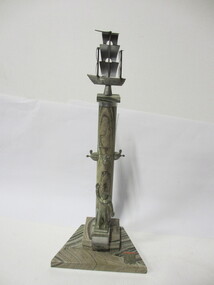
Model monument
... gift "владивосток (Vladivostok)" Russian inscription on brass plaque under sailor "PMA 0174" tag associated: "PMA 0174/ Marble Russian Souvenir/ Port of Melbourne Authority/ 60" Miniature of a monument with three masted ship at top of long column and sailor saluting on lower pedestal with brass plaque featuring Russian inscription. Model ...giftMiniature of a monument with three masted ship at top of long column and sailor saluting on lower pedestal with brass plaque featuring Russian inscription."владивосток (Vladivostok)" Russian inscription on brass plaque under sailor "PMA 0174" tag associated: "PMA 0174/ Marble Russian Souvenir/ Port of Melbourne Authority/ 60" -
 4th/19th Prince of Wales's Light Horse Regiment Unit History Room
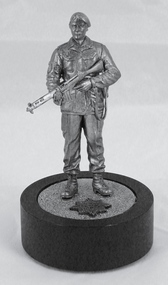
Decorative object - Figurine Miniature Soldier with Rifle
... figurine model Made in England by Barton Miniatures Ltd. Unit 6A Vinces Road Industrial Estate DISS, Norfolk IP22 3HO. 4/9/ PWLH Sgts Mess Cast metal figurine of British Army soldier holding 7.62 mm Self Loading Rifle. ...Cast metal figurine of British Army soldier holding 7.62 mm Self Loading Rifle. On round black plastic stand on which is affixed British Army unit badgeMade in England by Barton Miniatures Ltd. Unit 6A Vinces Road Industrial Estate DISS, Norfolk IP22 3HO. 4/9/ PWLH Sgts Messfigurine, model -
 Deaf Children Australia
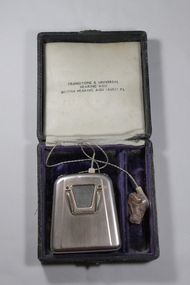
Hearing Aid, British Hearing Aids (Aust) P/L, Transitone & Universal Hearing Aid, Estimated: 1954
... miniature, carbon microphones. These microphones could be mounted on various items. There were body hearing aids where the earpiece was connected to the hearing aid and battery pack worn on the body. Ear level hearing aids consisted of eyeglass, behind the ear (BTE), in the ear (ITE), and in the canal (ITC, CIC) hearing aids. "TRANSITONE & UNIVERSAL/HEARING AIDS/BRITISH HEARING AIDS (AUST) P/L" printed on fabric inside lid of box. Inside battery compartment, label "MODEL ...The first all transistor hearing aids appeared in 1953. They were created to replace vacuum tubes; they were small, required less battery power and had less distortion and heat than their predecessor. The vacuum tubes were typically hot and fragile, so the transistor was the ideal replacement. The size of these transistors led to developments in miniature, carbon microphones. These microphones could be mounted on various items. There were body hearing aids where the earpiece was connected to the hearing aid and battery pack worn on the body. Ear level hearing aids consisted of eyeglass, behind the ear (BTE), in the ear (ITE), and in the canal (ITC, CIC) hearing aids. Hearing aid with Pink and silver metal pack with attached wire to ear piece. Uses (A) battery. Ear piece moulded for wearer with dials for adjustments. In original box. Transitone and Universal Hearing Aids were manufactured by British Hearing Aids (Aust) P/L. Model 61T. NoV848 "TRANSITONE & UNIVERSAL/HEARING AIDS/BRITISH HEARING AIDS (AUST) P/L" printed on fabric inside lid of box. Inside battery compartment, label "MODEL 61T" ('T' handwritten) "V848" inscribed on hinge. -
 Bendigo Historical Society Inc.
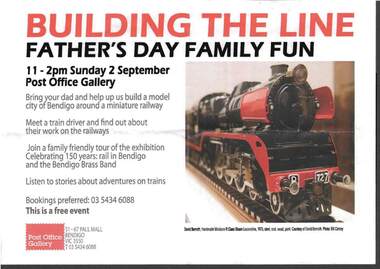
Document - RAILWAYS COLLECTION: POST OFFICE GALLERY ADVERT FOR THE BUILDING OF A MODEL RAILWAY
... The advert was for the building of a model city of Bendigo around a miniature railway. The photo shows a colour photo of a model of Loco R 727 1973 by David Bemoth....The advert was for the building of a model city of Bendigo around a miniature railway. The photo shows a colour photo of a model of Loco R 727 1973 by David Bemoth. ...Railways Collection -Post Office Gallery Advert for the building of a model railway ''Building the line -Father's Day Family fun'' 2.9.2012 at the Post Office Gallery. The advert was for the building of a model city of Bendigo around a miniature railway. The photo shows a colour photo of a model of Loco R 727 1973 by David Bemoth.photograph, post office gallery -
 Bendigo Historical Society Inc.
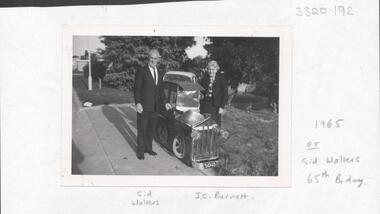
Photograph - LA TROBE UNIVERSITY BENDIGO COLLECTION: BENDIGO TEACHERS' COLLEGE STAFF
... ... model cars... miniature...Geoff Pryor history model cars miniature cars Bendigo Teachers' College staff A black and white photograph of Mr. ...A black and white photograph of Mr. Sid Walters and Miss J.C. Burnett standing beside a miniature car in 1965 or at Mr. Sid Walters 65th birthday party. See 3320.100bendigo, education, bendigo teachers' college staff, la trobe university bendigo collection, collection, bendigo, education, tertiary education, teacher training, photo, photos, photograph, photographs, mr. sid walters, miss j.c. burnett, mr. geoff pryor, history, model cars, miniature cars, bendigo teachers' college, staff -
 Port Melbourne Historical & Preservation Society
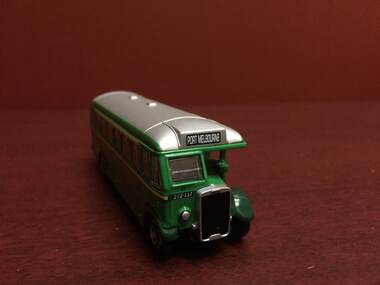
Vehicle - Model Port Melbourne Bus, 1939 Leyland Tiger T58, Trux (Top Gear) Holdings Ltd
... Miniature replica TRMX 1939 Leyland Tiger T58 model single decker. ...transport - motor vehicles sydney bus & truck museum melbourne & metropolitan tramways board mmtb Miniature replica TRMX 1939 Leyland Tiger T58 model single decker. ...Miniature replica TRMX 1939 Leyland Tiger T58 model single decker. M&MTB Port Melbourne bus, green and yellow No 17. Packaging (black) intact (new)transport - motor vehicles, sydney bus & truck museum, melbourne & metropolitan tramways board, mmtb -
 Coal Creek Community Park & Museum
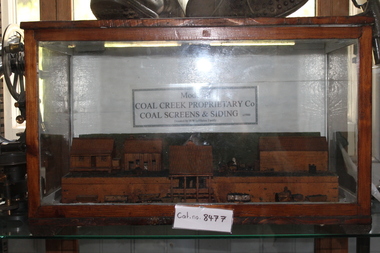
Model of Coal Creek
... - Modelled - Coal Creek Proprietary Co - Coal screens & siding - 1900 - Donated by H. W. LeMalus Family 8477.1 - Wood framed glass case with miniature scene of Coal Creek inside. ...8477.1 - Wood framed glass case with miniature scene of Coal Creek inside.- Modelled - Coal Creek Proprietary Co - Coal screens & siding - 1900 - Donated by H. W. LeMalus Family -
 Eltham District Historical Society Inc
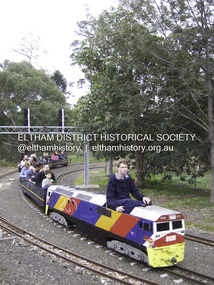
Photograph - Digital Photograph, Marguerite Marshall, Diamond Valley Railway, Eltham Lower Park, 7 September 2008
... The miniature railway originally operated from the 1940s at Chelsworth Park, Ivanhoe, until flooding caused it to be moved to the Eltham Lower Park in 1959. The railway is modelled...The miniature railway originally operated from the 1940s at Chelsworth Park, Ivanhoe, until flooding caused it to be moved to the Eltham Lower Park in 1959. The railway is modelled ...Kids of all ages enjoy the Miniature Railway. Published: Nillumbik Now and Then / Marguerite Marshall 2008; photographs Alan King with Marguerite Marshall.; p163 On Sundays in Eltham thousands of children, mums, dads and grandparents can be seen travelling around Lower Eltham Park in tiny trains. They are among the two and half million passengers who have travelled on the Diamond Valley Railway since it officially began in 1961. The miniature railway originally operated from the 1940s at Chelsworth Park, Ivanhoe, until flooding caused it to be moved to the Eltham Lower Park in 1959. The railway is modelled on the 1920s era – the heyday of passenger rail travel – and the trains are built on a scale of two inches to the foot (1/6). Although not exact replicas, trains include models of the Spirit of Progress, Puffing Billy, The Overland, Dog Boxes, Vic Rail S class, G class and a NSW 81 Class. The three and a half kilometres of track is set amongst native plants and picnic areas. A friendly hoot or the clang of a bell occasionally punctuates the tranquillity as a train emerges from a treed bend with passengers excitedly waving to onlookers. For $3 the train takes you on a 13-minute two-kilometre ride. Passengers sit in single file in the narrow train, which clatters along tracks built to the scale of the Australian narrow gauge of three feet six inches (1.1m). These are used in Queensland, South Australia, Tasmania and Western Australia. Safety standards are stringently kept. Even before you buy a ticket notices tell you that you must wear closed shoes. You can even borrow these, and you are given a pair of socks for the ride! Blue-overalled volunteers check tickets, see you aboard, and drive the train. They are mainly retired men who can at last devote their time to what little boys dream of – playing with trains. Passengers are instructed in safe behaviour, then the station master waves a white flag and off we go. The guard sits at the back with his whistle and green flag at the ready. The winding track, fringed by native trees and bushes planted by volunteers, stands on crown land managed by Nillumbik Council. The train clatters along the track and crosses a bridge over a drain elevated by name to The Blow Fly Creek. We pass by Meadmore Junction at a speed of three kilometres an hour. Then on through a tunnel, accompanied by squeals of delight, and after a few moments of blackness, light glimmers at the end. On we go, past the original platform, along another route past busy Main Road through Pine Creek Station, over a bridge and through another tunnel with more screams of delight.Then a signal stops us before the ‘all clear’ to return to our original point of departure. The railway services its passengers – the largest number of any miniature railway in Australia – with a fleet including: six diesel locomotives, three steam locomotives, eight sets of passenger cars and one battery electric Dog Box set. Members also privately own 20 locomotives and powered carriage sets as well as four carriage sets.1 All the trains are stored on-site in workshops, sheds and a tunnel. The railway is entirely run by volunteers, so that all ticket money is used for maintenance and extensions, and some goes to local charities. Since 1991, the entire railway has been rebuilt, including an upgraded signalling system. About half of the 120 volunteer members are active with about 35 working each Sunday, and a dozen or so working every Wednesday. Members are trained to positions of station assistant, booking officer, train guard, train driver or signalman. Members construct new carriages and locomotives as well as maintaining track, signalling and rolling stock.This collection of almost 130 photos about places and people within the Shire of Nillumbik, an urban and rural municipality in Melbourne's north, contributes to an understanding of the history of the Shire. Published in 2008 immediately prior to the Black Saturday bushfires of February 7, 2009, it documents sites that were impacted, and in some cases destroyed by the fires. It includes photographs taken especially for the publication, creating a unique time capsule representing the Shire in the early 21st century. It remains the most recent comprehenesive publication devoted to the Shire's history connecting local residents to the past. nillumbik now and then (marshall-king) collection, diamond valley railway, eltham lower park -
 Chiltern Athenaeum Trust
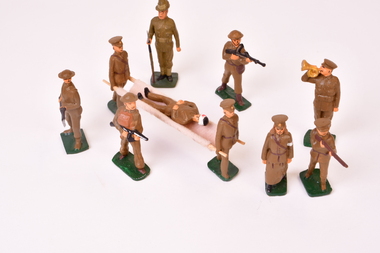
Miniature soldier set WW1, Circa 1914-1915
... Lead set of khaki miniature soldiers circa WW1 consisting of ten (10) model soldiers and one miniature stretcher made of dusky pink wool and two wooden carrier rails either side. ...WW1 The Great War 1914-1918 ww1 lead model soldier set the great war - set of model lead soldiers Lead set of khaki miniature soldiers circa WW1 consisting of ten (10) model soldiers and one miniature stretcher made of dusky pink wool and two wooden carrier rails either side. ...Model of soldiers WW1 in varying stances and roles. WW1 The Great War 1914-1918Lead set of khaki miniature soldiers circa WW1 consisting of ten (10) model soldiers and one miniature stretcher made of dusky pink wool and two wooden carrier rails either side. ww1 lead model soldier set, the great war - set of model lead soldiers -
 Sunshine and District Historical Society Incorporated
Archive - John Jack Henry Horace Jackson Display
... Typewritten notes J H H Jackson Born 7 March 1887 Dies 26 June 1972 Details in date order|Type Genealogical Chart for J H H Jackson|Newspaper article Footscray Mail 12 May 1960 He is Shooting Citys History|Photocopy of photograph Jack Jackson cast as Policeman|Newspaper article The Advocate Alice Springs 20 September 1959 Movie Maker makes Second Visit|Newspaper article An Example for Todays Teenagers Talent is where you find it With some people it taks a long time to develop with others it manifests itself at and early age|Photograph 18 Clarke Street Sunshine|Photograph J H H Jackson cutting 80th birthday cake|Photograph of invitation to the Gladina Theatrette 9 Withers Street Sunshine to view a Private Screening of Special Films|Newspaper article Sunshine Advocate 15 February 1935 Movie Society on the Move|Newspaper article 25000 pound club opened for Sunshine Elderly Folk|Newspaper article Miniature Hollywood for Sunshine|Newspaper article Young Sunshine Industry Mr J H Jacksons many pursuits|Photograph Islington Street Sunshine|Newspaper article Sunshine Carnival Novelties 15 September 1928 Mr Jacksons Devices|Photograph Radio and Cabinet built by Jack Jackson|Photograph Samples of Model Steam Engines made by Jack Jackson|Newspaper article Daylesfords first Petrol Engine constructed by Mr JH Jackson|Newspaper article The Sunshine Advocate 9 November 1934 Miniature Hollywood for Sunshine|Newspaper article The Advocate of 60 years ago Saturday 27 September 1924 This week in history|Photograph Young Jack|Photograph View from top of Mast towards Moons Paddock|Photograph plaque J Jackson Engineer Maker Daylesford|Photograph Honor for Film Society Founder|Photograph Jackson Lookout|Photograph Birth Place Kidds Gully Daylesford|Newspaper article The Advocate 60 years ago 14 November 1925|Newspaper article 9 April 1936 Entertainment by Local Enterprise...John "Jack" Horace Jackson Typewritten notes J H H Jackson Born 7 March 1887 Dies 26 June 1972 Details in date order|Type Genealogical Chart for J H H Jackson|Newspaper article Footscray Mail 12 May 1960 He is Shooting Citys History|Photocopy of photograph Jack Jackson cast as Policeman|Newspaper article The Advocate Alice Springs 20 September 1959 Movie Maker makes Second Visit|Newspaper article An Example for Todays Teenagers Talent is where you find it With some people it taks a long time to develop with others it manifests itself at and early age|Photograph 18 Clarke Street Sunshine|Photograph J H H Jackson cutting 80th birthday cake|Photograph of invitation to the Gladina Theatrette 9 Withers Street Sunshine to view a Private Screening of Special Films|Newspaper article Sunshine Advocate 15 February 1935 Movie Society on the Move|Newspaper article 25000 pound club opened for Sunshine Elderly Folk|Newspaper article Miniature Hollywood for Sunshine|Newspaper article Young Sunshine Industry Mr J H Jacksons many pursuits|Photograph Islington Street Sunshine|Newspaper article Sunshine Carnival Novelties 15 September 1928 Mr Jacksons Devices|Photograph Radio and Cabinet built by Jack Jackson|Photograph Samples of Model Steam Engines made by Jack Jackson|Newspaper article Daylesfords first Petrol Engine constructed by Mr JH Jackson|Newspaper article The Sunshine Advocate 9 November 1934 Miniature Hollywood for Sunshine|Newspaper article The Advocate of 60 years ago Saturday 27 September 1924 This week in history|Photograph Young Jack|Photograph View from top of Mast towards Moons Paddock|Photograph plaque J Jackson Engineer Maker Daylesford|Photograph Honor for Film Society Founder|Photograph Jackson Lookout|Photograph Birth Place Kidds Gully Daylesford|Newspaper article The Advocate 60 years ago 14 November 1925|Newspaper article 9 April 1936 Entertainment by Local Enterprise Collection of documents relating to J H Jacksons life These documents were used for an exhibition on J H Jackson Archive John Jack Henry Horace Jackson Display ...Typewritten notes J H H Jackson Born 7 March 1887 Dies 26 June 1972 Details in date order|Type Genealogical Chart for J H H Jackson|Newspaper article Footscray Mail 12 May 1960 He is Shooting Citys History|Photocopy of photograph Jack Jackson cast as Policeman|Newspaper article The Advocate Alice Springs 20 September 1959 Movie Maker makes Second Visit|Newspaper article An Example for Todays Teenagers Talent is where you find it With some people it taks a long time to develop with others it manifests itself at and early age|Photograph 18 Clarke Street Sunshine|Photograph J H H Jackson cutting 80th birthday cake|Photograph of invitation to the Gladina Theatrette 9 Withers Street Sunshine to view a Private Screening of Special Films|Newspaper article Sunshine Advocate 15 February 1935 Movie Society on the Move|Newspaper article 25000 pound club opened for Sunshine Elderly Folk|Newspaper article Miniature Hollywood for Sunshine|Newspaper article Young Sunshine Industry Mr J H Jacksons many pursuits|Photograph Islington Street Sunshine|Newspaper article Sunshine Carnival Novelties 15 September 1928 Mr Jacksons Devices|Photograph Radio and Cabinet built by Jack Jackson|Photograph Samples of Model Steam Engines made by Jack Jackson|Newspaper article Daylesfords first Petrol Engine constructed by Mr JH Jackson|Newspaper article The Sunshine Advocate 9 November 1934 Miniature Hollywood for Sunshine|Newspaper article The Advocate of 60 years ago Saturday 27 September 1924 This week in history|Photograph Young Jack|Photograph View from top of Mast towards Moons Paddock|Photograph plaque J Jackson Engineer Maker Daylesford|Photograph Honor for Film Society Founder|Photograph Jackson Lookout|Photograph Birth Place Kidds Gully Daylesford|Newspaper article The Advocate 60 years ago 14 November 1925|Newspaper article 9 April 1936 Entertainment by Local Enterprisejohn "jack" horace jackson -
 Sunshine and District Historical Society Incorporated
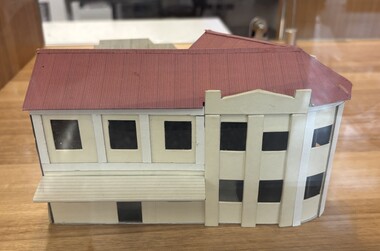
Photograph - Sunshine In Miniature Exhibition, March 2026
... These photographs are of some of the collection of the model railway buildings that were displayed in the Sunshine in Miniature Exhibition at the Sunshine Library, 301 Hampshire Road, Sunshine. ...These photographs are of some of the collection of the model railway buildings that were displayed in the Sunshine in Miniature Exhibition at the Sunshine Library, 301 Hampshire Road, Sunshine. ...These photographs are of some of the collection of the model railway buildings that were displayed in the Sunshine in Miniature Exhibition at the Sunshine Library, 301 Hampshire Road, Sunshine. Mr. M. Wakeling, a model railway enthusiast, scratched built these paper and cardboard model buildings for this model train layout. These models records some of Sunshine's past and current buildings in miniature.5348.01 - Sunshine In Miniature Exhibition - Information Sign.jpeg 5348.02 - Sunshine In Miniature Exhibition - Massey Ferguson Head Office 2 Devonshire Road Sunshine.jpeg 5348.03 - Sunshine In Miniature Exhibition - Sunshine Technical School Boys Trade Building.jpeg 5348.04 - Sunshine In Miniature Exhibition - Sunshine Arcade Hampshire Road.jpeg 5348.05 - Sunshine In Miniature Exhibition - Coles Hampshire Road.jpeg 5348.06 - Sunshine In Miniature Exhibition - Classic Fish And Chips Shop.jpeg sunshine -
Tatura Irrigation & Wartime Camps Museum
Model - Miniature Aeroplane
... Model - Miniature Aeroplane...The letters RAAF form the centre. Model - Miniature Aeroplane ...Formerly possession of local ex RAAF serviceman, Flight Lieutenant Ren SmithOval shaped decorative filigree badge with wreath like (leaves and berries) sides and crown at top. The letters RAAF form the centre.ren smith, raaf badges, raaf memorabilia -
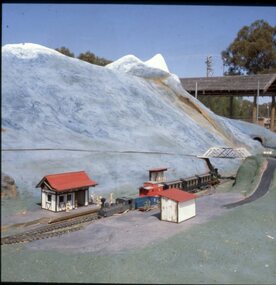 Stawell Historical Society Inc
Slide, Set of Large Format colour positive slides of Stawell c1970 - World In Miniature Train model
... Set of Large Format colour positive slides of Stawell c1970 - World In Miniature Train model...Believed taken by Ian McCann Stawell's first Tourism Officer Positive Colour Slides Set of Large Format colour positive slides of Stawell c1970 - World In Miniature Train model Slide ...Believed taken by Ian McCann Stawell's first Tourism OfficerPositive Colour Slides -
Canterbury History Group
Article, Trzcinski, Joanne, He's over 80 and not out of puff, 23/11/1998 12:00:00 AM
... Model Railways Association... Puffing Billy Preservation Society... Box Hill Miniature...Canterbury Maling Road Dentists Royal Victorian Aero Club Model and Experimental Engineers Society Australian Model Railways Association Puffing Billy Preservation Society Box Hill Miniature Steam Railway Society Williams> Allan (Dr) Interview with Dr Williams for Inside and Out, 23 November 1998 in which he desribes his life in Boroondara, his involvement with Puffing Billy and many other groups .Includes four coloured photographs. ...Interview with Dr Williams for Inside and Out, 23 November 1998 in which he desribes his life in Boroondara, his involvement with Puffing Billy and many other groups .Includes four coloured photographs.canterbury, maling road, dentists, royal victorian aero club, model and experimental engineers society, australian model railways association, puffing billy preservation society, box hill miniature steam railway society, williams> allan (dr) -
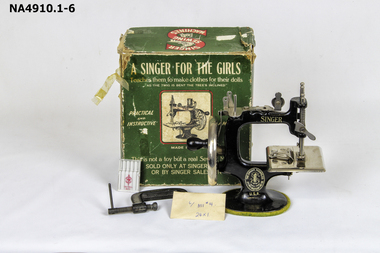 Whitehorse Historical Society Inc.
Leisure object - Singer Sewing Machine - Miniature working model, C1928
... Singer Sewing Machine - Miniature working model...Leisure object Singer Sewing Machine - Miniature working model ...The Singer sewing machine was purchased [in New Plymouth, NZ] by the donor, Yvonne's, parents as a birthday/Christmas present when she was about six or maybe a little older – therefore about 1935. Much, much later, in the 1960s, it was given to her daughter, Susan, who like Yvonne seldom used it because if the seam was not correctly tied off the whole seam unravelled.Singer sewing machine and original box. Intended as girls sewing machine to teach them to make dolls clothes. Metal with Singer logo and clamp to secure to table top, with appropriate needles.Singerdomestic items, sewing -
Melbourne Tram Museum
Newspaper, Diamond Valley News, “100 miles by tram”, “Party rode through the night”, 13/01/1970 12:00:00 AM
... Model Railways... Diamond Valley Miniature Railway Club...Trams tramways Brunswick Depot Social Club Mont Albert Model Railways Diamond Valley Miniature Railway Club Swanston St Latrobe St tram 469 Newspaper clipping titled: “100 miles by tram” – “Party rode through the night” Diamond Valley News – Tues January 13, 1970 Photo and text of tram # 469, hired by Diamond Valley Miniature railway club, Brunswick depot, Mont Albert terminus, Special tram #469 pulled out of Brunswick depot at 11:00PM on Friday 9 January 1970 on a 100-mile trip. ...Newspaper clipping titled: “100 miles by tram” – “Party rode through the night” Diamond Valley News – Tues January 13, 1970 Photo and text of tram # 469, hired by Diamond Valley Miniature railway club, Brunswick depot, Mont Albert terminus, Special tram #469 pulled out of Brunswick depot at 11:00PM on Friday 9 January 1970 on a 100-mile trip. Returned at 10:00AM on Saturday Hired by Diamond Valley Miniature railway club for a social trip, club organiser John Murdoch is a tram driver, drove tram through suburbs. Tram 469 is an American-style body in which driver isn't partitioned from the passengers. Used to carry tourists in 19430's. Tram has been used by confectionary company for its "little box of chocolates" ad on TV. Tram stopped at Mont Albert terminus where group held a birthday party for a member.trams, tramways, brunswick depot, social club, mont albert, model railways, diamond valley miniature railway club, swanston st, latrobe st, tram 469
