
Showing 190 items matching "mrs officer"
-
 Tatura Irrigation & Wartime Camps Museum
Book, Deep Down
... ...mrs officer...Tatura Presbyterian Sunday School 3rd prize awarded to Edgar Mitchell, December 1917. Teacher Mrs Officer....Tatura Presbyterian Sunday School 3rd prize awarded to Edgar Mitchell, December 1917. Teacher Mrs Officer. presbyterian sunday school prize tatura presbyterian church edgar mitchell mrs officer Green hard cover book, decorative scrolling in blue around edge of front cover and spine. ...Tatura Presbyterian Sunday School 3rd prize awarded to Edgar Mitchell, December 1917. Teacher Mrs Officer.Green hard cover book, decorative scrolling in blue around edge of front cover and spine. Title in gold letters. Sketch of mining scene. 416 pagespresbyterian sunday school prize, tatura presbyterian church, edgar mitchell, mrs officer -
 Eltham District Historical Society Inc
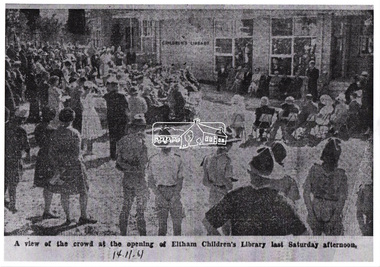
Document - Newspaper article, Third unit of Eltham's memorial opened; Diamond Valley News, 14 Nov 1961 (Ref: SEA_74_001-055), 1961
... ...Mrs. Cairns Officer...Harmer Eltham War Memorial eltham war memorial trust Mrs. Ada Lyon Mrs. Cairns Officer Mrs. J.J. Morrison Opening Ceremony Remembrance Day Shire President W.R. ...Initially the Eltham War Memorial Trust had invited the Lieutenant Governor of Victoria, Lieut-General Sir Edmund Herring to perform the opening ceremony however he was not available. In his place, the third and final stage of the building of Eltham's war memorial, the children's library, was opened on Remembrance Day 1961 by Mr. W.R. Garrett, M.H.R.Contents: Letter (Carbon copy): Invitation from Eltham War Memorial Trust to the Governor, Lieut-General Sir Edmund Herring to open the Children's Library on Remembrance Day, 23 Aug 1961 Newspaper article (photocopy): Third unit of Eltham's memorial opened, Diamond Valley Local (poss),14 November 1961c. seear, children's library, cr. d.c. o'beirne, cr. docksey, cr. e.p. harmer, eltham war memorial, eltham war memorial trust, mrs. ada lyon, mrs. cairns officer, mrs. j.j. morrison, opening ceremony, remembrance day, shire president, w.r. garrett (mhr), cr e.p. harmer, governor of victoria, lieut-general sir edmund herring, w. neal -
 Bendigo Historical Society Inc.
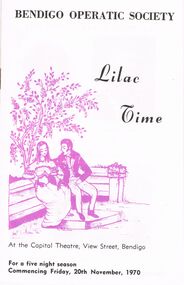
Document - LILAC TIME, CAPITAL THEATRE, 20 November, 1970
... Mrs. Ann Ball. Musical Director: Gwen Grose. Stage Manager: Malcolm Cannon. Members of the Chorus: Wilma Baldwin... Christine Cavanaugh... Dorothy Field... Lynette Gillies... Anne Lewitska... Dawn Mackay... Cheryl Marshall... Dawn Moncrieff... Trudy Montfroy... Wilma Pearce... Henry Johnson... Max Knott... Michael Filippini... Shane Brennan. Ballet: Diane Austin... Annette Basset... Janice Jane... Kathy Jinks... Ruth Lyon... Coral... Rivett... Lyn Rowe... Ann Rundell. Children: Karl Steinberg... Debra Lockett... Wendy Kent... Karin Sutton... Cathy Johnson... Michael Sutton... Graham Orr... Bronwen Smith... Debbie Moyle... Vicki Lockett... Hayden Cornwall. Publicity Officer...Mrs. Ann Ball. Musical Director: Gwen Grose. Stage Manager: Malcolm Cannon. Members of the Chorus: Wilma Baldwin, Christine Cavanaugh, Dorothy Field, Lynette Gillies, Anne Lewitska, Dawn Mackay, Cheryl Marshall, Dawn Moncrieff, Trudy Montfroy, Wilma Pearce, Henry Johnson, Max Knott, Michael Filippini, Shane Brennan. Ballet: Diane Austin, Annette Basset, Janice Jane, Kathy Jinks, Ruth Lyon, Coral, Rivett, Lyn Rowe, Ann Rundell. Children: Karl Steinberg, Debra Lockett, Wendy Kent, Karin Sutton, Cathy Johnson, Michael Sutton, Graham Orr, Bronwen Smith, Debbie Moyle, Vicki Lockett, Hayden Cornwall. Publicity Officer...Mrs. Ann Ball. Musical Director: Gwen Grose. Stage Manager: Malcolm Cannon. Members of the Chorus: Wilma Baldwin Christine Cavanaugh Dorothy Field Lynette Gillies Anne Lewitska Dawn Mackay Cheryl Marshall Dawn Moncrieff Trudy Montfroy Wilma Pearce Henry Johnson Max Knott Michael Filippini Shane Brennan. Ballet: Diane Austin Annette Basset Janice Jane Kathy Jinks Ruth Lyon Coral Rivett Lyn Rowe Ann Rundell. Children: Karl Steinberg Debra Lockett Wendy Kent Karin Sutton Cathy Johnson Michael Sutton Graham Orr Bronwen Smith Debbie Moyle Vicki Lockett Hayden Cornwall. Publicity Officer ...Lilac Time, Capital Theatre, View Street, Bendigo, Bendigo Operatic Society. For a five night season. Commencing Friday, 20th November, 1970. Bendigo Operatic Society President: Mr J McK. Cannon. Vice-President: Mr P Houston. Hon. Secretary: Miss Ann Ball. Hon. Treasurer: Mr L Spencely. Hon. Subscription Secretary: Mrs P Lyon. Committee: Mesdames I Brown, J Cannon, Miss M Welch, Messrs. R Holyoake, G Lambert & N Roxburgh. Photographs: Cyril Holden, Patricia McCracken, John Boquest, Neil Roxburgh, Bartina Daws, Ruth Iredale, John Tonkin, Harry Brewer, Peggy Green Fred Trewarne, Patricia Lyon, Ann Ball, Graeme Daws, Brian Thomas, Douglas Sayle, John McCormack, Fred Lorenz, Madge Welch, Ruth Gorman. Synopsis of Story. Synopsis of Scenes. Cast in order of their appearance: Ann Ball, Dorothy Field, Cheryl Marshall, Graeme Daws, John Tonkin, Harry Brewer, Shane Brennan, Ruth Iredale, Peggy Green, Patrick McCracken, Brian Thomas, Douglass Sayle, John McCormack, John Boquest, Neil Roxburgh, Fred Trewarne, Fred Lorenz, Michael Filippini, Patricia Lyon, Christine Cavanaugh, Bartina Daws. Choreography: Madge Welch. Adaption & Lyrics by Adrian Ross. Music from Franz Schubert Arranged by Heinrich Bene & G H Clutsam. Wardrobe: Madge Welch & Mrs. Ann Ball. Musical Director: Gwen Grose. Stage Manager: Malcolm Cannon. Members of the Chorus: Wilma Baldwin, Christine Cavanaugh, Dorothy Field, Lynette Gillies, Anne Lewitska, Dawn Mackay, Cheryl Marshall, Dawn Moncrieff, Trudy Montfroy, Wilma Pearce, Henry Johnson, Max Knott, Michael Filippini, Shane Brennan. Ballet: Diane Austin, Annette Basset, Janice Jane, Kathy Jinks, Ruth Lyon, Coral, Rivett, Lyn Rowe, Ann Rundell. Children: Karl Steinberg, Debra Lockett, Wendy Kent, Karin Sutton, Cathy Johnson, Michael Sutton, Graham Orr, Bronwen Smith, Debbie Moyle, Vicki Lockett, Hayden Cornwall. Publicity Officer: Mrs J Cannon. Scenery and Properties: Messrs M Cannon, J Cannon & J Moncrieff. Art Work: Malcom Cannon, Mesdames L Neilsen, C Pla & Miss J Hall. Prompts: Mrs J Cannon & Miss A Ball. Lighting: Messrs, L Reed, H Bridges & T Vincent. Make-up: Mrs J Cannon. Hairdressing: Ross Coiffure. House Manager: Garry McDonald. Songs from ''Lilac Time'' Bendigo Concert Orchestra: Violins: R Weldon, A Boulton, M Robbins, C Messer, C Gill, J Jordan, P Phillip. Viola: E Jarrett. Cellos: C Bubb, D Nankivell. Bass: T French. Flute: C Bubb, D Bubb. Clarinets: R Holyoake. Bassoon: S Anderson. Trombone: N Neuman. Trumpet: D Gray. Percussion: G Aitken. Pianoforte: R Gorman. Acknowledgements: Bendigo 'Advertiser', BCV 8, 3BO, 3CV, Allans Music Store, St. Mary's College. Advertisments: Don Semmens Photographic Studio, Allan's World of Music, Ross Coiffure Beauty Salon.Cambridge Pressprogram, theatre, bendigo operatic society, lilac time, capital theatre, view street, bendigo, . five night season. 20th november, 1970. bendigo operatic society president: mr j mck. cannon. vice-president: mr p houston. hon. secretary: miss ann ball. hon. treasurer: mr l spencely. hon. subscription secretary: mrs p lyon. committee: mesdames i brown, j cannon, miss m welch, messrs. r holyoake, g lambert & n roxburgh. photographs: cyril holden, patricia mccracken, john boquest, neil roxburgh, bartina daws, ruth iredale, john tonkin, harry brewer, peggy green fred trewarne, patricia lyon, ann ball, graeme daws, brian thomas, douglas sayle, john mccormack, fred lorenz, madge welch, ruth gorman. synopsis of story. synopsis of scenes. cast: ann ball, dorothy field, cheryl marshall, graeme daws, john tonkin, harry brewer, shane brennan, ruth iredale, peggy green, patrick mccracken, brian thomas, douglass sayle, john mccormack, john boquest, neil roxburgh, fred trewarne, fred lorenz, michael filippini, patricia lyon, christine cavanaugh, bartina daws. choreography: madge welch. adaption & lyrics by adrian ross. music from franz schubert arranged by heinrich bene & g h clutsam. wardrobe: madge welch & mrs. ann ball. musical director: gwen grose. stage manager: malcolm cannon. members of the chorus: wilma baldwin, christine cavanaugh, dorothy field, lynette gillies, anne lewitska, dawn mackay, cheryl marshall, dawn moncrieff, trudy montfroy, wilma pearce, henry johnson, max knott, michael filippini, shane brennan. ballet: diane austin, annette basset, janice jane, kathy jinks, ruth lyon, coral, rivett, lyn rowe, ann rundell. children: karl steinberg, debra lockett, wendy kent, karin sutton, cathy johnson, michael sutton, graham orr, bronwen smith, debbie moyle, vicki lockett, hayden cornwall. publicity officer: mrs j cannon. scenery and properties: messrs m cannon, j cannon & j moncrieff. art work: malcom cannon, mesdames l neilsen, c pla & miss j hall. prompts: mrs j cannon & miss a ball. lighting: messrs, l reed, h bridges & t vincent. make-up: mrs j cannon. hairdressing: ross coiffure. house manager: garry mcdonald. bendigo concert orchestra: violins: r weldon, a boulton, m robbins, c messer, c gill, j jordan, p phillip. viola: e jarrett. cellos: c bubb, d nankivell. bass: t french. flute: c bubb, d bubb. clarinets: r holyoake. bassoon: s anderson. trombone: n neuman. trumpet: d gray. percussion: g aitken. pianoforte: r gorman. acknowledgements: bendigo 'advertiser', bcv 8, 3bo, 3cv, allans music store, st. mary's college. advertisments: don semmens photographic studio, allan's world of music, ross coiffure beauty salon. -
 Bendigo Historical Society Inc.
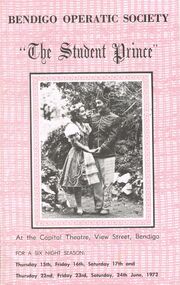
Document - THE STUDENT PRINCE, CAPITAL THEATRE, 15 June, 1972
... Pauline Waugh. Publicity Officer: Mrs J Cannon. Scenery & Properties: M & J Cannon...Ballet: Dianne Austin, Annette Basset, Wendy Kent, Jocelyn Lyon, Lyn Rowe, Ann Rendell, Helen Southby, Pauline Waugh. Publicity Officer: Mrs J Cannon. Scenery & Properties: M & J Cannon, J Moncrieff, R Spicer. ...Ballet: Dianne Austin Annette Basset Wendy Kent Jocelyn Lyon Lyn Rowe Ann Rendell Helen Southby Pauline Waugh. Publicity Officer: Mrs J Cannon. Scenery & Properties: M & J Cannon J Moncrieff R Spicer. ...The Student Prince, Capital Theatre, View Street, Bendigo. For a six night season: Thursday 15th, Friday 16th, Saturday 17th and Thursday 22nd, Friday 23, Saturday 24th June, 1972. Bendigo Operatic Society: Mr J McK. Cannon, Mr F Trewarne, Miss Ann Ball, Mr L Spencely, Mrs P Lyon. Committee: Mesdames J Cannon, M Reed, Misses P McCraken & M Welch, Messrs. J Beaumont, J Boquest, G Daws. Photos: Producer-Max Collis, Assistant Producer, Ballet & Wardrobe Mistress-Madge Welch, Assistant Pianist-Edith John, Musical Director-Gwen Grose, Society Pianist- Ruth Gorman. Photos of cast: Margaret McQueenie, John Boquest, John McCormack, Graham Bumford, Graeme Daws, Annette Beckwith, Jill James, Ferd Lorenz, Shane Brennan, Patricia Lyon, Max Rule, Ian Beckwith, John Tonkin, Michael Filippini, Valerie Griffiths, Jim Feteris. Synopsis if Story. Synopsis of Scenes. Bendigo Operatic Society Presents by arrangement with Allan's Music (Australia) Pty. Ltd. ''The Student Prince'' A Max Collis Production. Music by Sigmond Romburg. Book & Lyrics by Dorothy Donnelly. Stage Manager Malcolm Cannon. Musical Director Gwen Grose. Choreography Madge Welch. Wardrobe Miss M Welch, Mrs A Ball. Cast: Kerry Hogan Brian Fitzpatrick, Garry Burns, Alan Petrie, Graham Bumford, John McCormick, John Boquest, Graeme Daws, Annette Beckwith Margaret McQueenie, Michael Filippini, Nicholas Kasterovic, Max Rule, Graham Bumford, Ian Beckwith, Ferd Lorenz, Shane Brennan, Jill James, Patricia Lyon, Valerie Griffiths, Jim Feteris, John Tonkin. Time _ Spring 1860. Female Chorus: Marion Alcock, Ann Ball, Wilma Baldwin, Dorothy Field, Ann Garrat, Dawn Moncrieff, Coral Rivett, Lois Semmens, Marilyn Storey, Marion Wright. Male Chorus: Garry Burns, Edmund, Burke, Peter Edgley, Brian Fitzpatrick, Jim Feteris, Kerry Hogan, Ross Jones, Nicholas Kasterovic, Bernie Keogh, John Keogh, Alan Petrie, Fred Trewarne, Philip Wilkin. Ballet: Dianne Austin, Annette Basset, Wendy Kent, Jocelyn Lyon, Lyn Rowe, Ann Rendell, Helen Southby, Pauline Waugh. Publicity Officer: Mrs J Cannon. Scenery & Properties: M & J Cannon, J Moncrieff, R Spicer. Art Work: M Cannon, S James, B Agnew, Tony Lorenz, J Hall, Karl Steinberg. Prompt: Mrs J Cannon. Lighting: L Reed, H Bridges & T Vincent. Make-up: Mrs H Cannon & Mrs D Coia. Hairdressing: Ross Coiffure. House Manager: Garry McDonald. Bendigo Concert Orchestra Violins: Mrs R Weldon, Mrs A Boulton, Mrs M Robbins, Mrs C Messer, Mr C Gill, Mr J Jordan, Mr P Phillips, Mr T French. Violas: Mr E Jarrett, Mr H Werry. Cellos: Mrs C Bubb. Bass: Mr S Anderson. Flute: Mr C Bubb. Clarinets: Mr R Holyoake. Trombones: Mr W Neuman. Trumpets: Mr D Gray, Mr David Gray, Mr Ian De Araugc. Percussion: Mr Brian Beale. Pianoforte: Mrs P Gorman. Songs From ''The Student Prince'' (wording). Acknowledgement; Bendigo Advertiser, BCV8, 3BO, 3CV, St Mary's. Advertisements through last half of program: Don Semmens Photographic Studio, The Copper Pot Licensed Restaurant, Ross Coiffure Beatty Salon. A and b are both the same copy a in the better of the copies as b is lightly faded. Otherwise excellent condition.program, music, bedigo operatic society, the student prince, capital theatre, view street, bendigo. 15th, 16th, 17th 22nd, 23, 24th june, 1972. bendigo operatic society: mr j mck. cannon, mr f trewarne, miss ann ball, mr l spencely, mrs p lyon. committee: mesdames j cannon, m reed, misses p mccraken & m welch, messrs. j beaumont, j boquest, g daws. photos: producer-max collis, assistant producer, ballet & wardrobe mistress-madge welch, assistant pianist-edith john, musical director-gwen grose, society pianist- ruth gorman. photos of cast: margaret mcqueenie, john boquest, john mccormack, graham bumford, graeme daws, annette beckwith, jill james, ferd lorenz, shane brennan, patricia lyon, max rule, ian beckwith, john tonkin, michael filippini, valerie griffiths, jim feteris. synopsis if story. synopsis of scenes. bendigo operatic society presents by arrangement with allan's music (australia) pty. ltd. ''the student prince'' a max collis production. music by sigmond romburg. book & lyrics by dorothy donnelly. stage manager malcolm cannon. musical director gwen grose. choreography madge welch. wardrobe miss m welch, mrs a ball. cast: kerry hogan brian fitzpatrick, garry burns, alan petrie, graham bumford, john mccormick, john boquest, graeme daws, annette beckwith margaret mcqueenie, michael filippini, nicholas kasterovic, max rule, graham bumford, ian beckwith, ferd lorenz, shane brennan, jill james, patricia lyon, valerie griffiths, jim feteris, john tonkin. time _ spring 1860. female chorus: marion alcock, ann ball, wilma baldwin, dorothy field, ann garrat, dawn moncrieff, coral rivett, lois semmens, marilyn storey, marion wright. male chorus: garry burns, edmund, burke, peter edgley, brian fitzpatrick, jim feteris, kerry hogan, ross jones, nicholas kasterovic, bernie keogh, john keogh, alan petrie, fred trewarne, philip wilkin. ballet: dianne austin, annette basset, wendy kent, jocelyn lyon, lyn rowe, ann rendell, helen southby, pauline waugh. publicity officer: mrs j cannon. scenery & properties: m & j cannon, j moncrieff, r spicer. art work: m cannon, s james, b agnew, tony lorenz, j hall, karl steinberg. prompt: mrs j cannon. lighting: l reed, h bridges & t vincent. make-up: mrs h cannon & mrs d coia. hairdressing: ross coiffure. house manager: garry mcdonald. bendigo concert orchestra violins: mrs r weldon, mrs a boulton, mrs m robbins, mrs c messer, mr c gill, mr j jordan, mr p phillips, mr t french. violas: mr e jarrett, mr h werry. cellos: mrs c bubb. bass: mr s anderson. flute: mr c bubb. clarinets: mr r holyoake. trombones: mr w neuman. trumpets: mr d gray, mr david gray, mr ian de araugc. percussion: mr brian beale. pianoforte: mrs p gorman. songs from ''the student prince'' (wording). acknowledgement; bendigo advertiser, bcv8, 3bo, 3cv, st mary's. advertisements: don semmens photographic studio, the copper pot licensed restaurant, ross coiffure beatty salon. -
 Bendigo Historical Society Inc.
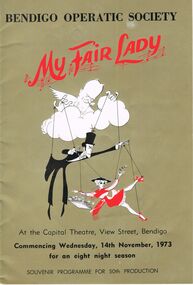
Document - MY FAIR LADY, CAPITAL THEATRE, BENDIGO, 14 November, 1973
... 3CV. Publicity Officer: Mrs J Cannon. Scenery Design: Mr Malcom Cannon. ...Acknowledgements: Bendigo Advertiser, BVC 8, 3BO, 3CV. Publicity Officer: Mrs J Cannon. Scenery Design: Mr Malcom Cannon. ...Acknowledgements: Bendigo Advertiser BVC 8 3BO 3CV. Publicity Officer: Mrs J Cannon. Scenery Design: Mr Malcom Cannon. ...My Fair Lady, Capital Theatre, View Street, Bendigo. Commencing Wednesday, 14th November, 1973 for an eight night season. Souvenir Program for 50th Production. Bendigo Operatic Society, President: Mr J M Cannon, Vice President: Mr F Trewarne, Honn. Secretary: Miss A Ball, Hon. Treasurer: Mr L Spencely, Hon. Subscription Secretary: Mrs P Lyon. Committee: Mesdames I Brown, J Cannon, Misses P Speedy, M Welch, Messrs. J Beamont, J Boquest, G Daws. Photographs of Mr J Cannon, Max Collins, Carol McKenzie, John Beamont, Kathie Farn, Ralph Watkins, Patricia Lyon, Peter Pritchard, John Boquest, Russell Baxter, Max Rule, David Daenke, Gwen Grose, Diana Chon. Article on: Max Collins, Carol Mckenzie, John Beaumont. Synopsis of Scenes. Bendigo Operatic Society presents by arrangement with J C Williamson Theatre, Ltd., and Tams-Witmark Music Library of New York ' My Fair Lady.' Adapted from George Bernard Shaw's Play and Gabrial Pascal's Motion Picture 'Pygmalion'. Music by Frederick Loewe. Book and Lyrics by Alan J Lerner. Musical Director: Gwen Rose, Stage Manager Malcom Cannon, Wardrobe Miss M Welch, Choeography Miss M Welch & Mrs A Ball. Cast: Carol McKenzie, Max Rule, Kathie Farn, Ralph Watkins, John Beamont, Gary Burns, John Boquest, Russell Barter, Peter Pritchard, Patricia Lyon, Pauline Speedy, Jull James, David Daenke. Synopsis of Story. Bendigo Concert Orchestra from the following:- Violins: Mrs R Wheldon, Mrs A Boulton, Mrs M Robbins, Mrs C Messer, Mr C Gill, Mr P Phillips, Mr J Jordan. Violas: Mr E Jarratt, Mr J Werry. Cellos: Mrs C Bubb, Miss D Nankivell. Bass: Mr Chester White, Mr Tom French. Flute: Mr C Bubb. Clarinets: Mr R Holyoake, Mr G Ellul. Trombones: Mr W Neuman. Bassoon & French Horn: Mr Stuart Anderson. Trumpets: Mr D Aitken. Pianoforte: Miss Diana Cohn. Female Chorus: Marion Alcock, Wilma Baldwin, Mary Barbour, Valerie Barter, Gwen Cox, Shirley Dawson, Jo-anne Edgar, Dorothy Field, Valerie Griffith, Lorraine Hatch, Julie Howbert, Faye Hughes, Ruth Iredale, Sue Kemp, Dawn Mackay, Cheryl Marshall, Jull Matthews, Adrenne Nankivell, Fay Olive, Barbara Potter, Lois Semmens, Coral Rivett, Anne Truscott, Kathie Watson, Pamela Wiltshire, Marion Wright. Male Choras: Albert Charlton, David Aaenke, Graeme Dawes, Ken Deutchman, Jim Feteris, Philip Johnston, Hugh Sayle, Bryan Slattery, Len Symons, Fred Trewarne, Ian Unmack,Philip Wilkins. Ballet: Dianne Austin, Annette Bassett, Annette Galvin, Coral Rivett, Pam Sutton, Den Deutschman, Ian Unmack, Brian Slettery, Len Symons, Philip Johnston. Acknowledgements: Bendigo Advertiser, BVC 8, 3BO, 3CV. Publicity Officer: Mrs J Cannon. Scenery Design: Mr Malcom Cannon. Prperties: John Cannon, Jim Moncrieff, Gerard Fullarton, Peter Edgley. Art Work: M Cannon, Geoff Proctor, J Hall, Kerry Noakes, Michael Frayne, Mark Edebone & Pamela Caswell. Prompts: Mrs J Cannon, Mrs H Lindhe. Make-Up: Mrs J Cannon, B Downing, H Coia, Lighting: L Reed, H Bridges & T Vincent. Hairdressing: Ross Coiffure. House Managers: Basil Bennett, Ron Thomas, Bruce Ralph. Advertisments: Powneys Toyland, Golden Hills Motel 'The Inn', Marong Road, Bendigo. Ross Coifure Beauty Salon, Allans Walk, Bendigo. Don Semmens Photographic Studio, Hargreaves Street, Bendigo.program, theatre, bendigo operatic society, my fair lady, capital theatre, view street, bendigo. commencing wednesday, 14th november, 1973 for an eight night season. souvenir program for 50th production. bendigo operatic society, president: mr j m cannon, vice president: mr f trewarne, hon. secretary: miss a ball, hon. treasurer: mr l spencely, hon. subscription secretary: mrs p lyon. committee: mesdames i brown, j cannon, misses p speedy, m welch, messrs. j beamont, j boquest, g daws. photographs of mr j cannon, max collins, carol mckenzie, john beamont, kathie farn, ralph watkins, patricia lyon, peter pritchard, john boquest, russell baxter, max rule, david daenke, gwen grose, diana chon. article on: max collins, carol mckenzie, john beaumont. bendigo operatic society presents by arrangement with j c williamson theatre, ltd., and tams-witmark music library of new york ' my fair lady.' adapted from george bernard shaw's play and gabrial pascal's motion picture 'pygmalion'. music by frederick loewe. book and lyrics by alan j lerner. musical director: gwen rose, stage manager malcom cannon, wardrobe miss m welch, choeography miss m welch & mrs a ball. cast: carol mckenzie, max rule, kathie farn, ralph watkins, john beamont, gary burns, john boquest, russell barter, peter pritchard, patricia lyon, pauline speedy, jull james, david daenke. synopsis of story. bendigo concert orchestra from the following:- violins: mrs r wheldon, mrs a boulton, mrs m robbins, mrs c messer, mr c gill, mr p phillips, mr j jordan. violas: mr e jarratt, mr j werry. cellos: mrs c bubb, miss d nankivell. bass: mr chester white, mr tom french. flute: mr c bubb. clarinets: mr r holyoake, mr g ellul. trombones: mr w neuman. bassoon & french horn: mr stuart anderson. trumpets: mr d aitken. pianoforte: miss diana cohn. female chorus: marion alcock, wilma baldwin, mary barbour, valerie barter, gwen cox, shirley dawson, jo-anne edgar, dorothy field, valerie griffith, lorraine hatch, julie howbert, faye hughes, ruth iredale, sue kemp, dawn mackay, cheryl marshall, jull matthews, adrenne nankivell, fay olive, barbara potter, lois semmens, coral rivett, anne truscott, kathie watson, pamela wiltshire, marion wright. male choras: albert charlton, david aaenke, graeme dawes, ken deutchman, jim feteris, philip johnston, hugh sayle, bryan slattery, len symons, fred trewarne, ian unmack, philip wilkins. ballet: dianne austin, annette bassett, annette galvin, coral rivett, pam sutton, den deutschman, ian unmack, brian slettery, len symons, philip johnston. acknowledgements: bendigo advertiser, bvc 8, 3bo, 3cv. publicity officer: mrs j cannon. scenery design: mr malcom cannon. prperties: john cannon, jim moncrieff, gerard fullarton, peter edgley. art work: m cannon, geoff proctor, j hall, kerry noakes, michael frayne, mark edebone & pamela caswell. prompts: mrs j cannon, mrs h lindhe. make-up: mrs j cannon, b downing, h coia, lighting: l reed, h bridges & t vincent. hairdressing: ross coiffure. house managers: basil bennett, ron thomas, bruce ralph. powneys toyland, golden hills motel 'the inn'. ross coifure beauty salon. don semmens photographic studio. -
 National Vietnam Veterans Museum (NVVM)
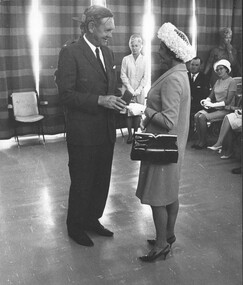
Photograph, Gibbons, Denis, Long Tan Next of Kin 4
... ...Mrs Beverley Buick...Officer...Maj I Stewart, Officer Commanding, D Company 6 RAR looks on. Standing on the extreme right is Mrs Beverley Buick....Photograph Townsville John Gorton United States Presidential Distinguished Unit Maj I T Stewart Battle of Long Tan D Company 6 RAR Gibbons Collection Catalogue Prime Minsiter of Australia Diggers Killed in Action Mrs Beverley Buick Officer Commanding Citation Denis Gibbons A black and white photograph of Townsville, Qld 18/08/1968. ...Denis Gibbons (1937 – 2011) Trained with the Australian Army, before travelling to Vietnam in January 1966, Denis stayed with the 1st Australian Task Force in Nui Dat working as a photographer. For almost five years Gibbons toured with nine Australian infantry battalions, posting compelling war images from within many combat zones before being flown out in late November 1970 after sustaining injuries. The images held within the National Vietnam Veterans Museum make up the Gibbons Collection. A black and white photograph of Townsville, Qld 18/08/1968. The Prime Minister of Australia, The Right Honouralbe John Gorton presents an emblem of the United States Presidential Unit Citation to a mother of one of the Diggers who paid the supreme sacrifice in the Battle At Long Tan 18/08/1966. Maj I Stewart, Officer Commanding, D Company 6 RAR looks on. Standing on the extreme right is Mrs Beverley Buick.photograph, townsville, john gorton, united states presidential distinguished unit, maj i t stewart, battle of long tan, d company, 6 rar, gibbons collection catalogue, prime minsiter of australia, diggers, killed in action, mrs beverley buick, officer commanding, citation, denis gibbons -
Glen Eira Historical Society
Document - GLEN HUNTLY (HISTORY OF)
... Hannan Lyn Mrs. (Urban Planning Officer)...Glen Huntly Infant Welfare and Family Planning Clinic Vermador Private Hospital Watson Grove Rowlands (Drapers) Bones Plant Nursery Caulfield Railway Station Bridges Trams Horse Tramways Glen Eira Road Elsternwick Railway Station Kooyong Road Aboriginal Peoples Truganini Road Hannan Lyn Mrs. (Urban Planning Officer) Glen Huntly Shopping Centre Sculptures Street Beautification Scheme “Flying the Yellow Flag” Moore Olive “Return to Rosstown” Jowett D. ...This file contains one item: 1/A loose-leaf, 23-page document titled ‘The History of Glen Huntly’, by Alfred R. Jones, dated 20/06/1991, describing the history of the suburb. The author has drawn heavily from the 4 sources noted in the bibliography. Subjects covered include the ship the suburb is named after, the suburb’s State School, the suburb’s churches, the Rosstown Railway and Sugar Mill, the origin of the name of Carnegie, the suburb’s aerodrome, and the beautification of the Glen Huntly Shopping Centre. The final 12 pages consist of 9 appendices relating to the aforementioned subjects. Appendix A is a typewritten letter from Ron McLeod, secretary of the Place Names Committee, to Mr. D. R. Aylen, CEO of the City of Caulfield, notifying the latter of the alteration of the name ‘Glenhuntly’ to ‘Glen Huntly’. Appendix B is a list of the ministers of St. David’s Uniting Church from its formation in 1916 to the present. Appendix C identifies the persons portrayed in St. David’s stained glass windows. Appendix D is a poster announcing the auction of 41 blocks of land between Hawthorn and Bambra Road formerly owned by William Ross, plus a map identifying said land blocks and another for locality. Appendix E is an A4 plan of the Rosstown Railway. Appendix F is a drawing of the Rosstown Sugar Mill. Appendix G is a poem titled ‘The Swagman’s Retreat’, by Herb Arnott, about the failure of the Mill. Appendix H is a map of Caulfield’s horse tramways plus a list of opening and closing dates. Appendix J is a list of streets explaining the meanings of their names.glen huntly, glenhuntly, local history, ‘glen huntly’ (ship), ‘glen huntlely’ (ship), quarantine stations, glen huntly road, lake street, mernda avenue, glen huntly state school no. 3703, ormond francis, ormond, garden avenue, grange road, churches, congregational church, glen huntly presbyterian church, st. david’s, st. david’s uniting church, anglican church, jenkin william ‘boss’, methodist church, wattle avenue, smith a. w. mr., glen huntly post office, glen huntly road, king f. l. mr., uniting church, child care centre, presbyterian church of eastern australia, glen huntly methodist church, sun aria, miller mary, stained glass, phrenologists, trinity congregational church, primitive methodists, ‘the victorian independent’, mercy mr., greek orthodox original old calendar church, wanalta road, salvation army, halls, myrtle street, catholic church, st. anthony’s roman catholic church, foundation stones, neerim road, mannix archbishop, st. agnes’ anglican church, booran road, sunday schools, clergy residences, ‘see’ anglican news magazine, lees archbishop, booth archbishop, glen huntly presbyterian church, el nido grove, tennis courts, bollard v. w. right rev., waratah avenue, royal avenue, munster avenue, james street, rothschild street, peace memorial organ, singers, bremner marie, scotland betty, carden joan, rosstown railway, south caulfield, plants, marata road, curraweena road, bambra road, ross william murray, ross leila, ross constance, vautin constance, ‘the grange’, north road, leila road, wild cherry road, caulfield roads board, elsternwick, land sales, sugar mills, koornang road, woornack road, elsternwick railway station, riddell parade, clarence street, dover street, oakleigh road, murrumbeena crescent, carlisle crescent, railways, trains, parks and reserves, caulfield council, sussex street, caulfield city council, swamps, rosstown sugar mill, rosstown estate, ‘the swagman’s retreat’, arnott herb, rosstown, carnegie, ‘ross’s folly’, carnegie andrew, rosstown hotel, dandenong road, rosstown road, rosstown plate horse race, caulfield racecourses, ames avenue, rosstown court, hostels, murrumbeena, cinemas, innovations (cabinetry film), films, music, pianos, manchester grove, safeway store, squash courts, airports, lord reserve, aeroplanes, air navigation act 1921, neville street, larkin sopwith aviation company of australasia, lyons street, morgan street, bookmakers, nightsoil, poultry, weatherboard buildings, glen huntly railway station, rosedale avenue, rifle clubs, scout groups, 1st glen huntly troop, ana, dowding jack mr., glen huntly infant welfare and family planning clinic, vermador private hospital, watson grove, rowlands (drapers), bones plant nursery, caulfield railway station, bridges, trams, horse tramways, glen eira road, elsternwick railway station, kooyong road, aboriginal peoples, truganini road, hannan lyn mrs. (urban planning officer), glen huntly shopping centre, sculptures, street beautification scheme, “flying the yellow flag”, moore olive, “return to rosstown”, jowett d. f., weickhardt i. s., “from sand swamp and health”, murray peter r., wells john c., caulfield historical society, newsletters, place names committee, mcleod ron, aylen d. r. mr., jones hugh rev., king joseph, scarfe james, vertigan sidney, vertigan earle, rance victor, flavell cameron, denholm robin, moorhead ken, taliai siupeli, eccles james leslie, little agnes, hutchins william r., dickie may a., gordon ivey agnes, theobald a. a. mrs., brownbill lloyd norman, ash georgette, land sales, auctions, messrs. crews & arkle, street names -
 Stawell Historical Society Inc
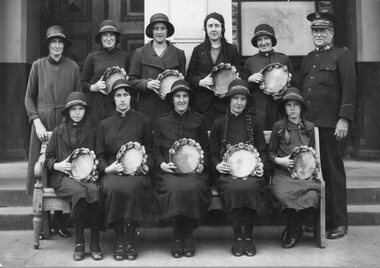
Photograph, Salvation Army Group with Tamborines Stawell 1934
... Back Row: Mrs. Sherwell, Officers Daughter, Jean Vince, Enie Reeve, Lucy Brightwell Officer? ...Back Row: Mrs. Sherwell, Officers Daughter, Jean Vince, Enie Reeve, Lucy Brightwell Officer? ...Back Row: Mrs. Sherwell, Officers Daughter, Jean Vince, Enie Reeve, Lucy Brightwell Officer? Front Row: Freda Collins, Florence Vince, Avis Reeve, Jessie Clark, Lilly Carr10 Ladies most holding Tamborines, Plus 1 man front row Seated. All in uniformJ Richards Stawell Eileen W.J. Chapman Photo Artist Stawell -
 Vision Australia
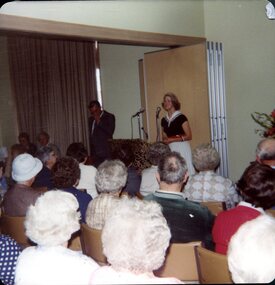
Photograph - Image, Farewell to Lilian Dethridge, 7/2/1985
... Presentations were made by Mr John Conaughton (Chairman of the Committee of Management), Mr Foley (administrative officer when Mrs Dethridge began), Mrs Tweedie (a painting) and cook Mrs Venville (flowers). ...Presentations were made by Mr John Conaughton (Chairman of the Committee of Management), Mr Foley (administrative officer when Mrs Dethridge began), Mrs Tweedie (a painting) and cook Mrs Venville (flowers). ...Welfare worker Lilian Dethridge was farewelled and her contribution recognised on February 7, 1985. Presentations were made by Mr John Conaughton (Chairman of the Committee of Management), Mr Foley (administrative officer when Mrs Dethridge began), Mrs Tweedie (a painting) and cook Mrs Venville (flowers). Don Dunstan was the MC.5 x colour photographs of farewellFebruary 7 1985 Lilian's farewellassociation for the blind, kelaston home (ballarat), lilian dethridge, john conaughton, don dunstan -
 Kew Historical Society Inc
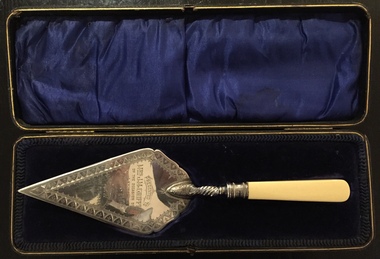
Ceremonial object - Presentation Trowel, Kew Baptist Church School Hall, Phillip Ashberry & Sons, 1905
... It is largely through the generosity of Nr. and Mrs. Griffiths that the officers were enabled to have a new brick school hall built. ...It is largely through the generosity of Nr. and Mrs. Griffiths that the officers were enabled to have a new brick school hall built. ..."Infant Department The interest in this branch of the school work (under the able guidance of Misses F. Chapman and A.E. Ratten) is well maintained. It is largely through the generosity of Nr. and Mrs. Griffiths that the officers were enabled to have a new brick school hall built. The foundation stone was laid on 21st October, 1905, by Mrs. John M. Griffiths, the new building being erected on the site of the old church. It is both attractive and comfortable and is well lighted. It is also used for the week-night services. The old building which for so long had served as a schoolroom for the little ones was not considered suitable and was in 1905 disposed of for removal. When removed it was renovated, and is now used as a mission church in a neighbouring district." Source: Kew Baptist Church History 1856-1906The trowel is historically significant for its association with the Kew Baptist Church and its ownership by and association with the Griffiths family of Kew who were important tea merchants in Australia.Silver-plated commemorative trowel with bone handle, in black leather case lined with blue velvet. The trowel is engraved with information about the occasion.It was presented to Mrs J.M. Griffiths, who lived at Goldthorns, Normanby Road, Kew. [The trowel in its case was presented to the Kew Historical Society on 24 April 2018 by the Manager of Bupa Aged Care, Edithvale.]Engraved front: "Presented to Mrs. J.M. Griffiths on the occasion of her laying the foundation stone of the Baptist School Hall, Kew, Oct 21st 1905". Maker mark on reverse: "PA & S E P"griffiths family - kew (vic), mrs. j.m. griffiths, commemorative objects, baptist church (kew), presentation trowels -
 Melbourne Legacy
Magazine - Newsletter, Melbourne Legacy, Legacy Newsletter August 1956, 1956
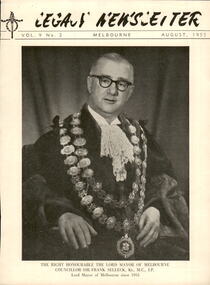
... Also photos of the Legacy staff, including Miss Dorrie Vines -Matron of Stanhope, Mrs B Cobby -Legacy's Welfare Officer, Mrs V Duncan -office supervisor and Mr Jim Tierney -boys instructor. ...Also photos of the Legacy staff, including Miss Dorrie Vines -Matron of Stanhope, Mrs B Cobby -Legacy's Welfare Officer, Mrs V Duncan -office supervisor and Mr Jim Tierney -boys instructor. ...The newsletter from August 1956. It featured Lord Mayor of Melbourne Sir Frank Selleck on the cover. The president's introduction talked about Frank Selleck suggesting the name Legacy. There was an article about the Victoria Cross and one about the new Legacy house in Swanston Street. Also a careers page focusing on nursing as a profession. Pages showed news from the different Boys and Girls Classes. Also photos of the Legacy staff, including Miss Dorrie Vines -Matron of Stanhope, Mrs B Cobby -Legacy's Welfare Officer, Mrs V Duncan -office supervisor and Mr Jim Tierney -boys instructor. A small photo shows the wedding of Lynn Rennie a former junior legatee, with her Legatee Ralph Small. And mentions Lyn's twin sister Jean is speech training instructor on Tuesday nights. A newsletter published by Legacy in this format for many years from 1942. It mentions "Issued from time to time for Private Circulation among the Sons and Daughters of Deceased Service men and Merchant Seamen who served their Country during the War of 1914-18, or the present War". Many articles on the work of Legacy, including features on boys classes, girls classes, camps, the residences and where their past residents ended up. There are some suggestion for careers and some general interest articles. Some very interesting photos.Newsletter outlining news of Junior Legatee activities.Black and white printed newsletter x 16 pages from August 1956. Volume 9 Number 2Date on cover incorrect - real date August 1956boys classes, activities, girls classes, staff -
Bendigo Historical Society Inc.
Document - Apologies and other correspondence for the public meeting called by the Mayor of Bendigo on a fitting recognition for the life of Amy Huxtable, 1980
... Craig and husband representing the Bendigo Business and Professional Women's Club, * Bendigo Trust letter correcting who represented them at the meeting from Mrs Myra Potter, Executive Officer, * Report from the first and second meetings of the Amy Huxtable Memorial Interim Committee, * Apology from Norma Young for the next committee meeting suggesting an appeal be launched if funds are not found for the memorial, * City of Bendigo Parks and Gardens letter 29 May 1980 giving permission for a memorial seat to be erected, * Interim committee report Thursday 5th June 1980, * July 1980 letter of thanks to the Mayor Cr R.L. ...Craig and husband representing the Bendigo Business and Professional Women's Club, * Bendigo Trust letter correcting who represented them at the meeting from Mrs Myra Potter, Executive Officer, * Report from the first and second meetings of the Amy Huxtable Memorial Interim Committee, * Apology from Norma Young for the next committee meeting suggesting an appeal be launched if funds are not found for the memorial, * City of Bendigo Parks and Gardens letter 29 May 1980 giving permission for a memorial seat to be erected, * Interim committee report Thursday 5th June 1980, * July 1980 letter of thanks to the Mayor Cr R.L. ...Amy Huxtable was born at Cheltenham in 1918, to Robert Henry Huxtable and Violet a Dagg. Her father was an installer for an oil company and travelled the State. taking his family with him. She completed her education at the Bendigo High School and later attended the Bendigo Business College, becoming an expert shorthand writer. Her first position was as a copy writer with Radio 3BO, in the mid 1930s. She worked with an advertising agency in Melbourne and then with the Age,newspaper. In 1953, Miss Huxtable was appointed temporarily to succeed Miss E B Millane as social editress of the Bendigo Advertiser, during the latter's absence abroad. In 1956, Amy travelled abroad and on her return in 1957 was appointed permanently as Women's editor, a position she held for twenty-three ears. During her early years with The Advertiser she wrote under the name Toora, but in later years her own name became widely known. Miss Huxtable was well known both in her professional capacity and through a interest and involvement in community activites. She was life governor of the Bendigo Hospital, the Bendigo Home for the Aged, and Mirridong Home for the Blind, she was a member of Soroptimist International and the Business and Professional Women's Club. Amy was also a tireless worker for the spastic society and a strong supporter of the YWCA. When Amy Huxtable died at Mt AJvernia Hospital on 16 January 1980 Mayor Campbell ordered the city flag to be flown at half-mast. "Lowering the flag is the least we can do for such a lady" Cr Campbell said. Douglas Lockwood, editor of the Bendigo Advertiser said, "She was a devot d colleague who gave her craft and her newspaper the kind of service which identified a rare and generous spirit." She was a true professional who decided to make Bendigo her home. More than 300 people packed St Paul's Church for her funeral ervice the bell tolled as the casket was carried from the church. At a ceremony in the Conservatory Gardens on No ember 22 1981 The Amy Huxtable Memorial Committee presented to the City of Bendigo, a garden seat in memory of the late Miss Huxtable. This Bendigo manufactured seat was a fitting tribute to one ofBendigo's most loved and esteemed citizens. All Miss Huxtable's Advertiser articles were microfilmed and presented to the Library by the above committee. Apologies and other correspondence for the public meeting called by the Mayor of Bendigo on a fitting recognition for the life of Amy Huxtable. There are eight pages of documents: * Apologies from Grace A. Craig and husband representing the Bendigo Business and Professional Women's Club, * Bendigo Trust letter correcting who represented them at the meeting from Mrs Myra Potter, Executive Officer, * Report from the first and second meetings of the Amy Huxtable Memorial Interim Committee, * Apology from Norma Young for the next committee meeting suggesting an appeal be launched if funds are not found for the memorial, * City of Bendigo Parks and Gardens letter 29 May 1980 giving permission for a memorial seat to be erected, * Interim committee report Thursday 5th June 1980, * July 1980 letter of thanks to the Mayor Cr R.L. Campbell from the Bendigo Advertiser Editor Douglas Lockwood, * Advertising brochure for a Cast Iron Lacework seat, * Report of the Memorial Committee heldon 24th July 1980 at the Bendigo Advertiser offices. * Letter from Miss Norma Young - a suggested seat design * July 1980 letter apology to the Mayor Cr R.L. Campbell from the Bendigo Advertiser Editor Douglas Lockwood, history, amy huxtable, bendigo, amy huxtable memorial committee -
Glen Eira Historical Society
Letter - Caulfield, John
... Willmott, to assess them and their information, dated 14/12/1983, by Mrs. Joan Wills, research officer. 13/Two aerogram letters dated, 16/03/77 and 14/01/11 sent by V. ...Willmott, to assess them and their information, dated 14/12/1983, by Mrs. Joan Wills, research officer. 13/Two aerogram letters dated, 16/03/77 and 14/01/11 sent by V. ...This file contains twelve photocopied letters dated from 11/08/1969, through to 14/12/1983. The letters are correspondence from MRs. V. Willmott to Mrs. Joan Wills in a response/request looking for lost relatives of John Caulfield. Joan Wills informs Mrs. V. Willmott that no relatives could be found. 1/S. N. Penrose wrote on 11/08/1959, on behalf of V. Willmott regarding her uncle. 2/Correspondence dated 12/09/83 from V. Willmott asking for information about her uncle, John Caulfield. 3/Typed correspondence date 14/09/1983 to Mrs. Willmott from Mrs. Joan Wills, mentioning that she was enclosing a biographical outline of John Phillip, Caulfield with her correspondence. 4/Typed letter to Mr. Caulfield from Joan Wills, regarding his sisters request to their descendants in Caulfield, dated 14/09/1983. 5/Typed letter to Joan Wills from W. W. Caulfield, dated 28/09/1983, informing her that he has no information regarding their ancestors in Caulfield. 6/Correspondence from Mrs. V. Willmott to Joan Wills, dated 03/10/1983, confirming that she is the niece of John Caulfield. 7/Correspondence from Mrs. V. Willmott, dated 10/10/1983 where she confirms details, she was sent from the biographical outline about her uncle. 8/Typed letter dated 19/10/1983 to Mrs. V. Willmott from Joan Wills, informing her of her brothers contacting them, but still have no positive information about her family. 9/Typed letter to Mrs. V. Willmott from Joan Wills, dated 19/10/1983, still unable to make any connections for her. 10/Typed letter dated 12/11/1983 to Mrs. V. Willmott from Joan Wills, just giving her a general suggestion of where she may get some ideas from her health + wellbeing. 11/Handwritten letter dated 26/11/1983 to Mrs. Wills from V. Willmott, talking about the biography she was writing, and still entreating her, if she could contact the ‘Age’ with an article about trying to find her ‘Caulfield’ family. 12/Typed letter from the Geneological Society of Victoria to Felicity Campbell, regarding all the mail from Mrs. V. Willmott, to assess them and their information, dated 14/12/1983, by Mrs. Joan Wills, research officer. 13/Two aerogram letters dated, 16/03/77 and 14/01/11 sent by V. Willmott to Peter R. Murray and Associates in requiring a request/response looking for lost relatives of John Caulfield. 14/One carbon copied letter to Mrs. Willmott from Peter R. Murray, about her enquiry about her Australian relatives pre-1978.willmott v., wills joan, caulfield historical society, geneological society of victoria, south caulfield, campbell f., penrose s. n., wells j. mrs., caulfield william, caulfield eva, murray mr., wells mr., riley david, bells agnes, caulfield brian, elsternwick, cambden town, mcdonald ian -
 Bendigo Military Museum
Photograph - Army Survey Regiment – Corps Day Parade and Defence Force Service Medal Presentation, Fortuna Villa, Bendigo, 1986
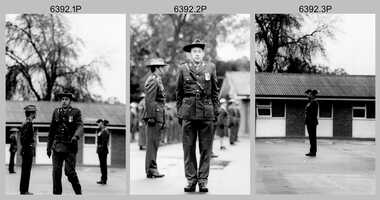
... L to R: Reviewing Officer’s wife, Mrs Ruth Ridge, CO LTCOL Don Swiney MBE. .7) - Photo, black & white, July 1986. ...L to R: Reviewing Officer’s wife, Mrs Ruth Ridge, CO LTCOL Don Swiney MBE. .7) - Photo, black & white, July 1986. ...This set of 39 photographs were taken at a Corps Day Parade held at the Army Survey Regiment, Bendigo in July 1986. The Parade Commander was CO LTCOL Don Swiney MBE, and the Reviewing Officer was the former CO of the Army Survey Regiment – LTCOL Don Ridge (Retd). The Corps Day Parade was held to commemorate the 71st anniversary of the formation of the Royal Australian Survey Corps. These photos comprise inspections of the Regiment’s four squadrons and the presentation of the Defence Force Service Medal in recognition of 15 years of efficient remunerated service to an unidentified Corporal.This is a set of 39 photographs of a Corps Day Parade held at the Army Survey Regiment, Fortuna, Bendigo in July 1986. The black & white photographs are on 35mm negative film and are part of the Army Survey Regiment’s Collection. The photographs were scanned at 96 dpi. .1) - Photo, black & white, July 1986. L to R: MAJ Rene van den Tol, CO LTCOL Don Swiney MBE, 2IC MAJ Kym Weston. .2) - Photo, black & white, July 1986. L to R: Unidentified Officer, 2IC MAJ Kym Weston. .3) - Photo, black & white, July 1986. L to R: Unidentified Officers, CO LTCOL Don Swiney MBE. .4) - Photo, black & white, July 1986. L to R: Unidentified Officers, CO LTCOL Don Swiney MBE. .6) - Photo, black & white, July 1986. L to R: Reviewing Officer’s wife, Mrs Ruth Ridge, CO LTCOL Don Swiney MBE. .7) - Photo, black & white, July 1986. L to R: Reviewing Officer’s wife, Mrs Ruth Ridge, unidentified, Reviewing Officer - LTCOL Don Ridge (Retd), CO LTCOL Don Swiney MBE, CPL John Gilbert. .8) & .9) - Photo, black & white, July 1986. L to R: Reviewing Officer - LTCOL Don Ridge (Retd) and CO LTCOL Don Swiney MBE exchange salutes. .10) - Photo, black & white, July 1986. Army Survey Regiment personnel formed up on parade ground. .11) - Photo, black & white, July 1986. Air Survey Squadron formed up on parade ground. OC MAJ Daryl Hockings at far left, unidentified officer, front rank left marker SSGT Graham Ragless, centre rank left marker SSGT Adrian ‘Charlie’ Creedy, rear rank L to R: CPL Nick Van Dalen, CPL Andy Lucas, SSGT Doug Gay, left marker SSGT Denis McCarthy, WO2 Brian Partridge on far right. .12) - Photo, black & white, July 1986. Lithographic Squadron formed up on parade ground. L to R: OC MAJ Mick Byrne, WO2 Ralph Chant. Front rank L to R: Unidentified (x10), CPL Roy Hicks, CPL Brian Fauth. Front rank L to R: Unidentified personnel, CPL Brian Paul, unidentified. Rear rank L to R: Unidentified personnel, CPL Lance Strudwick, SGT Graham Johnston. WO2 Kevin McQuire at far right. .13) - Photo, black & white, July 1986. Air Survey Squadron formed up on parade ground. unidentified officer, rear rank right marker CPL Brian Johnson, centre rank right marker SPR Brett Parkin, front rank right marker unidentified, remaining personnel unidentified, CAPT Peter Cates, OC MAJ Daryl Hockings at far right. .14) to .16) - Photo, black & white, July 1986. Reviewing Officer - LTCOL Don Ridge (Retd) delivers his Corps Day Address. 2IC MAJ Kym Weston facing the dais, CO LTCOL Don Swiney MBE at far right. .17) & .18) - Photo, black & white, July 1986. Army Survey Regiment headed by 2IC MAJ Kym Weston salutes whilst passing the dais, with RSM WO1 Jeff Lynch on his right. Air Survey Squadron led by MAJ Daryl Hockings. CO LTCOL Don Swiney MBE and Reviewing Officer - LTCOL Don Ridge (Retd) at far right. .19) & .20) - Photo, black & white, July 1986. Lithographic Squadron led by OC MAJ Mick Byrne and LT Ross Jenkins. First rank L to R: Brian Fauth, unidentified, SGT Graham Johnston. Remainder not identified. CO LTCOL Don Swiney MBE and Reviewing Officer - LTCOL Don Ridge (Retd) at far right. .21) & .22) - Photo, black & white, July 1986. Headquarters Squadron Squadron led by unidentified OC. CAPT Don Maskew on his right. CAPT John South on his left. Left file L to R: unidentified, SGt Kevin Boehm, unidentified, CPL John ‘JJ’ Smith, remainder unidentified. CO LTCOL Don Swiney MBE and Reviewing Officer - LTCOL Don Ridge (Retd) at far right. .23) & .24) - Photo, black & white, July 1986. Cartographic Squadron led by OC MAJ Bob McHenry. Officers rank L to R: LT Vicky Thompson, CAPT Roger Rix, CAPT Peter ‘Blue’ Blaskett. SPR Ben Lucas in background behind CAPT Rix. Left file L to R: CPL Ian Bowes, SGT Stuart Hibbert, SGT Mal Paterson, remainder unidentified. CO LTCOL Don Swiney MBE and Reviewing Officer - LTCOL Don Ridge (Retd) at far right. .25) - Photo, black & white, July 1986. Air Survey Squadron awaiting inspection. L to R: unidentified officer, front rank left marker SSGT Graham Ragless, centre rank left marker SSGT Adrian ‘Charlie’ Creedy, rear rank L to R: CPL Nick Van Dalen, CPL Andy Lucas, SSGT Doug Gay, left marker SSGT Denis McCarthy, WO2 Brian Partridge on far right. .26) - Photo, black & white, July 1986. Air Survey Squadron inspection by Reviewing Officer - LTCOL Don Ridge (Retd) and CO LTCOL Don Swiney MBE. L to R: unidentified officer, front rank left marker SSGT Graham Ragless, centre rank left marker SSGT Adrian ‘Charlie’ Creedy, rear rank L to R: CPL Nick Van Dalen, CPL Andy Lucas, SSGT Doug Gay, left marker SSGT Denis McCarthy, WO2 Brian Partridge on far right. .27) - Photo, black & white, July 1986. Cartographic Squadron awaiting inspection. Officers rank L to R: CAPT Roger Rix, CAPT Peter ‘Blue’ Blaskett, LT Brenton McDonald. Remainder unidentified. .28) - Photo, black & white, July 1986. Lithographic Squadron inspection by Reviewing Officer - LTCOL Don Ridge (Retd) and CO LTCOL Don Swiney MBE. Warrant Officers rank L to R: WO2 Ralph Chant, WO1 George Austen, remainder unidentified. .29) - Photo, black & white, July 1986. Lithographic Squadron inspection by Reviewing Officer - LTCOL Don Ridge (Retd) and CO LTCOL Don Swiney MBE. Unidentified personnel. .30) - Photo, black & white, July 1986. Cartographic Squadron inspection by Reviewing Officer - LTCOL Don Ridge (Retd) and CO LTCOL Don Swiney MBE. Unidentified personnel. .31) - Photo, black & white, July 1986. Cartographic Squadron inspection by Reviewing Officer - LTCOL Don Ridge (Retd) and CO LTCOL Don Swiney MBE. LT Brenton McDonald on far left, remainder unidentified. .32) - Photo, black & white, July 1986. Air Survey Squadron inspection. Left marker SSGT Denis McCarthy, supernumerary rank: WO1 Dick Manley, unidentified and WO2 Brian Partridge on far right. .33) - Photo, black & white, July 1986. CO LTCOL Don Swiney MBE announcing a recipient of the Defence Force Service Medal, in recognition of 15 years of efficient remunerated service. .34) to .38) - Photo, black & white, July 1986. Former CO of the Army Survey Regiment – LTCOL Don Ridge (Retd) presents the Defence Force Service Medal to an unidentified recipient in recognition of 15 years of efficient remunerated service. CO LTCOL Don Swiney MBE in background. .39) - Photo, black & white, July 1986. The Reviewing Officer - LTCOL Don Ridge (Retd) departs the Corps Day Parade accompanied by CO LTCOL Don Swiney MBE..1P to .39P – There are no personnel identified.royal australian survey corps, rasvy, army survey regiment, army svy regt, fortuna, asr -
 City of Melbourne Libraries
Photograph, Bull, Hugh Jones, 1897-1993, Lord Mayor's Dinner, Melbourne Town Hall
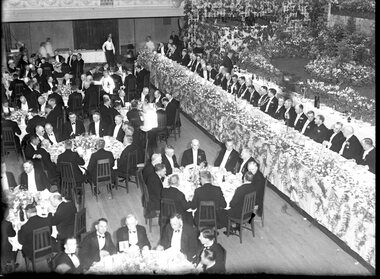
... His Excellency the Governor (Lord Huntingfield) and Lady Huntingfield were present, while Rear-Admiral and Mrs. Lane Poole and officers from the visiting squadron were among the special guests. ...His Excellency the Governor (Lord Huntingfield) and Lady Huntingfield were present, while Rear-Admiral and Mrs. Lane Poole and officers from the visiting squadron were among the special guests. ...Photographer notations on slide: "General View Of Lord Mayor's Dinner At Town Hall Nov 1936 B112" Published: The Age, Tuesday 10 November 1936, page 13 Published title: LORD MAYOR'S BANQUET Published caption: The brilliant scene inside the Melbourne Town Hall last night during the Lord Mayor’s banquet. Trove article identifier: http://nla.gov.au/nla.news-article205939431 Description: 700 guests (all men) are seated around numerous tables in the Melbourne Town Hall for the Lord Mayor's dinner in November 1936. Before the stage is a top table of 35 men, all dressed smartly in black dinner suits, with either a black or white bow tie. Many are wearing their medals. The Lord Mayor has on his Mayoral chains, and to his right is the Governor of Victoria, Lord Huntingfield. The stage is heavily decorated with fresh flowers. Research by project volunteer, Louise McKenzie: This image takes up one quarter of the photographic space on page 13 of The Age on 10 November 1936, reflecting the importance of the event and also the sheer dramatics of the image: 700 guests (all men), a top table of 35, and all dressed smartly in black dinner suits, with either a black or white bow tie. Many are wearing their medals. The Lord Mayor has on his Mayoral chains, and to his right is the Governor of Victoria, Lord Huntingfield. Further to his right is a man with an impressive sash across his chest. It is a very animated, and rather informal, moment. Banks of fresh flowers smother the stage, which is decorated in the manner of a terrace at an English stately home. Tables are laden with food, drink and decorations, and the wait staff (men and women) are also formally dressed, in the manner of Downton Abbey. It is spectacular, dramatic, and luxurious, and perpetuates the proud descriptor of “Marvellous Melbourne” as conferred by London Journalist George Augustus Sala when he visited the city in 1885. During its 1880s boom, Melbourne was the second-largest city in the British Empire, after London, and reputedly the richest city in the world. At times the expression was used with some irony, but "...in Victoria’s centenary year, 1934, with the city mired in another depression, a publisher bravely entitled a book of souvenir photographs Marvellous Melbourne, claiming that the subject ‘still finds apt expression in the happy one-time sobriquet’.” This photo seems to reflect an ongoing pride in Melbourne and a desire for it to live up to its descriptor and celebrate its post-centenary era in style. So it is no surprise to find that on page 11 of The Age on the same day, a second photo is to be found – a cropped view of one table – along with a very detailed description of the night, its purpose, and a surprise announcement. But, who was the Lord Mayor in whose honour the dinner was held? In 1934, the Lord Mayor of Melbourne was Cr. Alexander George Wales, (born Richmond, 11 October 1885, died Elsterwick, 31 May 1962). His father was a contractor and quarry-owner, but was blinded in an industrial accident in 1899. Consequently Alexander, then aged 14, left Brunswick State School to become a railway labourer working at a quarry, and in 1903 joined the Commonwealth public service as a clerk and began studying at night school, determined to improve himself. In 1907 he was appointed secretary of the Albion Quarrying Co. (in which the family had an interest), then its managing director and chairman. As the Australian Dictionary of Biography notes, he was instrumental in expanding the company’s interests, "...becoming director of the Hardware Co. of Australia Pty Ltd, the Twentieth Century Building and Investment Society, the Albion Sand Co. and the Geelong Brick Co.”. His public career began in 1914 when he was elected to the Brunswick council. He was mayor 1917-18, and in 1925 progressed to the Melbourne City Council where he remained for 29 years, being a member of most council committees. He served three successive terms as lord mayor (1934-37), was Chairman of the council’s decorations committee for Melbourne’s centenary, president of the Metropolitan Fire Brigades Board (1936), and Chairman of the Public Works Committee (1937-39). In 1936 he was elected to the Legislative Council with United Australia Party support, but later resigned over possible State government contract tender irregularities. Wales received "the customary reward” of a knighthood and was invested at Buckingham Palace by King George VI whose coronation he attended in 1937. He was an early director of what is now Ampol, and helped the development of the petroleum industry in Australia after visiting the USA in 1943 and 1946. He was impressed by that country’s wartime shipbuilding efforts and supported closer ties with the USA. “While president (1947-48) of the Melbourne Chamber of Commerce, Wales was a vocal critic of the Federal Labor Government, ...a staunch anti-socialist ... and a focus for conservative opposition to the Curtin and Chifley governments...” He is described as “a natural leader in business and civic politics,... a powerful force in the Melbourne City Council... opposing democratic reforms such as the creation of a Greater Melbourne Council and the abolition of plural voting, but advocat[ing] the redevelopment of city-owned property like the Eastern and Western markets...” So, this Lord Mayor’s dinner marks the third successive term in office for Governor Cr. A G Wales. The room is filled with powerful and influential men, and provided a platform for the Premier of Victoria, Albert Dunstan (1882-1950, United Country party) to announce that if the City Council would bear half the cost the State Government would build a bridge at Punt Road “at once”. He announced that the Government proposed to have the bridge built by the Country Roads Board, and allow the City Council to pay its share on convenient terms, and further, it would investigate the shared provision of more Yarra bridges. The proposal for the Punt Road Bridge was met with applause as the Yarra River constituted a serious traffic barrier. On 12 November 1936, two days after the Lord Mayor’s dinner, The Age published an article, “Building without a Plan”. It questions the appropriateness of the next Yarra bridge being the one at Punt Road, and encourages a “proper procedure” to look at the provision of additional Yarra bridges as a whole. But in fact this topic had been canvassed back in August when Melbourne City Council’s public works committee had recommended the replacement of the footbridge at Punt Road with a bridge, and if the Country Roads Board would declare this portion of Punt Road, including the river crossing, a State Highway, this could give the Board authority to construct the bridge and allocate the cost. Hence the reference at the dinner to a shared expense. Still an integral part of traffic management today, the Hoddle Bridge carries Punt Road over the Yarra River between Richmond and South Yarra in Melbourne. It is a five-lane road bridge with narrow footpaths on either side. It is of continuous reinforced concrete T-beam construction with five segmental arched spans, supported on transverse piers, and linked by concrete cross-beams. “The piers terminate in a series of tapered concrete pillars with Art Deco-styled steamlined decoration. Each pillar supports a Victorian-style lamp. The infill railings are geometric-patterned painted metal. Construction began in late 1937, and it was opened by Premier Albert Dunstan on 22 December 1938. It replaced an earlier footbridge, which in turn had replaced a punt service. The bridge (originally referred to as Punt Road Bridge) was named after Robert Hoddle, who planned central Melbourne’s Hoddle Grid, the grid of streets which form Melbourne’s central business district. Hoddle arrived in Australia from the UK in 1823 and went on to carry out surveys in NSW and Queensland before arriving in Melbourne in 1837. He designed layouts for both Melbourne and Williamstown, and later Geelong and other Victorian country areas. He was keen that major streets be at least 30 metres wide. ”With remarkable foresight he provided for wide boulevards from the city to the suburbs, but the subdivisions of early speculators in inner suburbs created the bottle-necks of today. After the separation of the colony in 1851, he became Victoria’s first surveyor-general... and advocated the provision of three-chain (60 m) roads and the widening of all existing main roads from one (20 m) to three chains." However, he was met with constant opposition and in 1853, was eased out of office. As a small and interesting aside: Hoddle was appointed auctioneer for the first sale of crown land in Melbourne on 1 June 1837. His commission was 57 pounds 12s 7d. and he bought two allotments for himself at a cost of 54 pounds. After he died his second wife married Richard Buckhurst Buxton, a member of the family which in 1860s Melbourne established the Australian property dynasty of Buxton Real Estate, Becton, MAB Corporation etc. Returning to the dinner and The Age article of 10 November 1836: Another topic of the after-dinner speeches was a reference to the upcoming Armistice Day. “The Minister of Customs (Mr White) said the proximity of Armistice day reminded us that eighteen years ago we had high hopes of prolonged peace.” The term “Armistice Day” was coined after WWI: “At 11 am on 11 November 1918, the guns on the Western Front fell silent after more than four years of continuous warfare. The Germans called for an armistice (suspension of fighting) in order to secure a peace settlement. They accepted the allied terms on unconditional surrender. Therefore on the 11th hour of the 11th day of the 11th month, a minute’s silence is observed and dedicated to those soldiers who died fighting to protect the nation. Originally known as Armistice Day, it was renamed Remembrance Day after World War Two to commemorate those who were killed in both World Wars. Today it refers to the loss of Australian lives from all wars and conflicts, accompanied by the words, "We will remember them, Lest we forget"." There was comment at the dinner about the need to remain firm in supporting the “democratic government in the British Empire to avoid a “plunge into savagery”. There was a grave responsibility on the British people to keep democracy alive, and that could not be done without adequate defence forces... Many weak governments in non-British countries had been swept aside by strong-fisted dictators, who now were the real threat to peace”. With the benefit of hindsight these were very pertinent comments and tragically prophetic. The Melbourne Shrine of Remembrance had only been dedicated two years earlier, at a ceremony attended by the Duke of Gloucester, son of King George V. Over 300,000 citizens attended: one third of the population of Melbourne. It became the location for the Anzac Day Dawn Service. Originally the march travelled from the Shrine into the city, however, in 1936, this was reversed, and the Shrine became the termination point for Anzac Day Marches. Also significant in 1936, was the installation of a statue in the west forecourt of the Shrine: “The Man with the Donkey” (aka 'Private John Simpson and his Little Donkey'). The work is said to represent the “valour and compassion of the Australian soldier”. Its full citation, according to the City of Melbourne City Collection is: West Side of Base: "The / Man with his Donkey / Gallipoli, April 25 to May 19 / in Commemoration / of the valour and compassion / of the Australian Soldier" AFTER LANDING AT GALLIPOLI, SIMPSON, WITH HIS LITTLE DONKEY, WORKED ALONE, DAY AND NIGHT TAKING WATER TO THE FRONT LINE AND CARRYING THE WOUNDED BACK TO THE DRESSING STATIONS. HE AND HIS DONKEY WERE KILLED BY A SHRAPNEL SHELL ON THE 19TH MAY, 1915. SIMPSON WAS MENTIONED IN DISPATCHES BY SIR IAN HAMILTON, COMMANDER-IN-CHIEF OF THE MEDITERRANEAN EXPEDITIONARY FORCE. / Erected by Public Subscription under auspices of the / Red Cross Society. East Side of Base: Private John Simpson." Their summary in background states: "A bronze figure of Simpson and his donkey with a wounded man on the donkey's back on a granite pedestal. Private John Simpson Kirkpatrick’s intrepid and short-lived exploits during the Gallipoli campaign have made him a popular figure of World War One. He has been mythologised to represent the lauded values of the digger, and he symbolises all those who went into battle unarmed. Born in England in 1892, he came to Australia in 1910. He enlisted to make his way back to England, but as a member of the 3rd Field Ambulance AIA was sent to Gallipoli. After just three weeks of bearing wounded soldiers across Shrapnel Gully on the back of his donkey, Simpson was killed by shrapnel fire. Simpson’s story became a powerful propaganda tool for enlistment in Australia, but following the war he was quickly forgotten. With the Shrine of Remembrance nearing completion in 1933, the memory of Simpson was rekindled to commemorate all who gave their lives to help others during the war. One plaque reads: ‘The / Man with his donkey / Gallipoli … / In commemoration / of the valour and compassion / of the Australian soldier’. In 1935, Wallace Anderson’s design for the memorial was selected though a competition organised by the Australian Red Cross. Anderson had served during the war and worked at the Australian War Memorial after his return. His Man with the Donkey was cast in Italy, and after some debate was sited near the shrine. Unveiled 20th June, 1936." The sculptor, Victorian-born William Wallace Anderson (1888-1975), served in France during WWI and afterwards produced a number of bronze war memorials and memorial portraits, predominantly in Victoria. “His most famous work is that of Simpson and his Donkey (1935), which he completed after winning a competition conducted by the Victorian Division of the Australian Red Cross. Anderson’s fee was 350 pounds; the cast, made by the Chiurazzi Foundry, Naples, Italy, cost 40 pounds. The work... has become well known as a symbol of the Anzac tradition.” A debate as to the siting of the statue arose from a strong view expressed by General Sir John Monash that no representation of individual members of the Australian Defence Force be located on the Shrine itself. Hence its location off to the northwest of the forecourt, in a garden of rosemary. And finally we return to the photo of the grand Lord Mayor’s dinner! An article in The Argus of 4 November 1936 refers to “Brilliant Scene at Lord Mayor’s Ball – Hall Becomes a Garden”. So now it becomes clear why the Town Hall, location of the Lord Mayor’s Dinner on 10 November 1934, only 6 days later, is so lavishly decorated. The floral decorations from the Ball are still in place - an early example of “recycling”, which is gratifying to note at a time of Depression. The reporter has captured the scene with enthusiasm: “Hundreds of tiny rose lights, hidden among pink roses, transformed the Melbourne Town Hall into a magical garden last night, when the Lord Mayor and Lady Mayoress (Councillor A. C. Wales, M.L.C., and Mrs. Wales) entertained about 3,500 guests at a ball. His Excellency the Governor (Lord Huntingfield) and Lady Huntingfield were present, while Rear-Admiral and Mrs. Lane Poole and officers from the visiting squadron were among the special guests. The balconies all round the hall were hidden by a white trellis, covered with pink blossoms and greenery. Rosy flowers were issued up every pillar, and great golden lamps, hanging from the door, were seated in greenery and trails of sweet peas. The organ gallery was converted into a terrace garden with stone steps leading to banks of pink azaleas, pink pelargoniums, masses of calceolarias, and the lovely deep mauve and blue of cinerarias. Slender Japanese maples and poplar trees grew from the higher slopes amid thickets of hostas, while a fascinating illusion was created by the lofty conservatory windows, which formed the background, and which were tinted cerulean blue to simulate the sky seen through glass. Large fern baskets hung from the conservatory roof, and the whole scene was enclosed in trellises of blossom. In the entrance palm green shrubs stood like sentinels round the passed floor, and flowers bloomed in misty golds. The long corridor upstairs leading to the council chamber was lined with an avenue of poplar trees in tubs. In the Lower Town Hall great banks of calceolarias and azaleas decked the upper dais, and each supper table was adorned with a different coloured flower with sprays of roses and Japanese maple laid on the snowy cloths. The adjoining supper-rooms were fragrant with the scent of huge bowls of stock in mauve, purple, and pink, while the white walls were covered with palm leaves and flowers. The roof garden below the clock tower was enclosed as a buffet with rose wreathed walls, and flowers were arranged attractively in the Lady Mayoress's rooms." References: LORD MAYOR'S BANQUET. CENTURY MAKERS AT THE M.C.G. BEFORE THE CHANGE. (1936, November 10). The Age (Melbourne, Vic. : 1854 - 1954), p. 13. Retrieved September 4, 2024, from http://nla.gov.au/nla.news-article205939431 'Portrait of Sir George Wales (Lord Mayor 1934-1937)', City Collection, City of Melbourne, https://citycollection.melbourne.vic.gov.au/portrait-of-sir-george-wales-lord-mayor-1934-37/ Graeme Davison, 'Marvellous Melbourne', eMelbourne, https://www.emelbourne.net.au/biogs/EM00906b.htm THE LORD MAYOR'S BANQUET. (1936, November 10). The Age (Melbourne, Vic. : 1854 - 1954), p. 11. Retrieved September 26, 2024, from http://nla.gov.au/nla.news-article205939643 BRILLIANT SCENE AT LORD MAYOR'S BALL Hall Becomes a Garden (1936, November 4). The Argus (Melbourne, Vic. : 1848 - 1957), p. 14. Retrieved September 26, 2024, from http://nla.gov.au/nla.news-article11932746 'Hoddle Bridge', Wikipedia, https://en.wikipedia.org/wiki/Hoddle_Bridge 'Hoddle Bridge', Victorian Heritage Database Report, Victorian Heritage Council, https://vhd.heritagecouncil.vic.gov.au/places/195689/download-report David Dunstan, 'Wales, Sir Alexander George (1885–1962)', Australian Dictionary of Biography, National Centre of Biography, Australian National University, https://adb.anu.edu.au/biography/wales-sir-alexander-george-8951/text15737, published first in hardcopy 1990, accessed online 26 September 2024. Marjorie J. Tipping, 'Hoddle, Robert (1794–1881)', Australian Dictionary of Biography, National Centre of Biography, Australian National University, https://adb.anu.edu.au/biography/hoddle-robert-2190/text2823, published first in hardcopy 1966, accessed online 26 September 2024. BUILDING WITHOUT A PLAN. (1936, November 12). The Age (Melbourne, Vic. : 1854 - 1954), p. 8. Retrieved September 26, 2024, from http://nla.gov.au/nla.news-article205949762 NEW BRIDGE AT PUNT ROAD (1936, August 12). The Argus (Melbourne, Vic. : 1848 - 1957), p. 10. Retrieved September 26, 2024, from http://nla.gov.au/nla.news-article11902131 'The Shrine of Remembrance', Beaconsfield’s Soldiers: https://beaconsfield.org.au/digitalmemorial/shrine-introduction/ 'Shrine of Remembrance', Wikipedia, https://en.wikipedia.org/wiki/Shrine_of_Remembrance Ken Scarlett, 'Anderson, William Wallace (1888–1975)', Australian Dictionary of Biography, National Centre of Biography, Australian National University, https://adb.anu.edu.au/biography/anderson-william-wallace-9362/text16441, published first in hardcopy 1993, accessed online 26 September 2024. 'Man with the Donkey', City Collection, City of Melbourne, https://citycollection.melbourne.vic.gov.au/man-with-the-donkey-aka-private-john-simpson-and-his-little-donkey/ 'Remembrance Day', Australian Army, https://www.army.gov.au/about-us/history-and-research/traditions/remembrance-day Photographer notations on slide: "General View Of Lord Mayor's Dinner At Town Hall Nov 1936 B112".melbourne town hall, mayors, lord mayors, centenaries, bridges, dinners, clothing and dress, festive decorations, dances and balls, eating and drinking, shrine of remembrance, governors, monuments and memorials, 1930-1939, plants -
 Federation University Historical Collection
Letter - Correspondence, Mrs J. Cope, Correspondence from the Aborigines Advancement League (Victoria), 1969, 30/03/1969
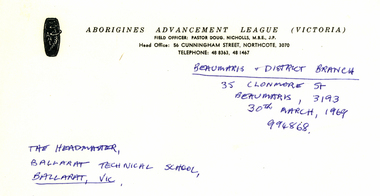
... officer for the Aborigines Advancement League (Victoria). Aborigines Aboriginal Aborigines Advancement League (Victoria) Doug Nicholls Cope Muir Quarto hand written letter on letterhead of the Correspondence from the Aborigines Advancement League (Victoria) to the headmaster of the Ballarat Technical School. The letter relates to a bursary for a student. Correspondence from the Aborigines Advancement League (Victoria), 1969 Letter Correspondence Mrs ...Pastor Doug Nicholls, M.B.E., J.P. was field officer for the Aborigines Advancement League (Victoria).Quarto hand written letter on letterhead of the Correspondence from the Aborigines Advancement League (Victoria) to the headmaster of the Ballarat Technical School. The letter relates to a bursary for a student. aborigines, aboriginal, aborigines advancement league (victoria), doug nicholls, cope, muir -
 Federation University Historical Collection
Newspaper, Lal Lal Iron and Coal as reported in the Ballarat Courier, 10/07/1923
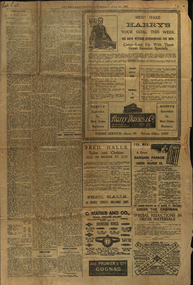
... Page 9 includes articles on Ripon's roads, Mount Cole Springs; Soldier Settlement Rates Beaufort; Creswick brass band Officers; Daylesford Road Deviation to Hepburn Springs; Dereel Public Telephone; State Electricity Supply for Beaufort; Newlyn Valedictory to Mr and Mrs W. ...Page 9 includes articles on Ripon's roads, Mount Cole Springs; Soldier Settlement Rates Beaufort; Creswick brass band Officers; Daylesford Road Deviation to Hepburn Springs; Dereel Public Telephone; State Electricity Supply for Beaufort; Newlyn Valedictory to Mr and Mrs W. ....1) Pages 7 to 10 of the Ballarat Courier, 10 July 1923. Page 7 includes the article 'Cheap electricity' and poses questions such as 'should Ballarat look to Morwell for cheap power?', and should an independent power plant be installed at Crockers, Arnolds, Harry Hall, Ewins, Harry Davies, Fred Halls, The London Drapery there. Page 9 includes articles on Ripon's roads, Mount Cole Springs; Soldier Settlement Rates Beaufort; Creswick brass band Officers; Daylesford Road Deviation to Hepburn Springs; Dereel Public Telephone; State Electricity Supply for Beaufort; Newlyn Valedictory to Mr and Mrs W. E. Bennett Page 9 - Racing at Ascot; Avoca Golf Tournament, Chinese Herbalists Page 10 - Auctions and house sales Advertisements include Harry Davies; Fred Halls; C. Marks and Co., London Drapery, Creer the Cashman; Chamberlain's Cough Remedy; Cornell's Little Liver Pills; Paynes; W. Fley Chemist; Bickart and Dawson; Rivers; Allchin Bros; J. Bartam & Son .2) Ballarat Courier, 30 July 1937, page 1 and 2 Page 1 reports Lal Lal's Iron Ore Company being formed. Page 2 reports the Prospectus of the lal lal Iron and Steel Blast Furnaces Mining Company, No Liability; Mining News - Wattle Gully; Commercial News Advertisements include Crockers, Arnolds, Harry Hall, Ewins, Harry Davies, Fred Halls, The London Drapery electricity, lal lal, lal lal iron, lal lal coalfield, morwell, gippsland, crockers, arnolds, harry hall, ewins, harry davies, fred halls, the london drapery, lal lal brown coal, ripon's roads, mount cole springs, soldier settlement rates beaufort, creswick brass band officers, daylesford road deviation to hepburn springs, dereel public telephone, state electricity supply for beaufort, newlyn, w.e. bennett, ascot, avoca golf tournament, chinese herbalists, c. marks and co., london drapery, creer the cashman, chamberlain's cough remedy, cornell's little liver pills, paynes, w. fley chemist, bickart and dawson, rivers, allchin bros, j. bartam & son, lal lal iron and steel blast furnaces mining company, wattle gully -
 Flagstaff Hill Maritime Museum and Village
Ceramic - Hot water bottle, late 19th - early 20th century
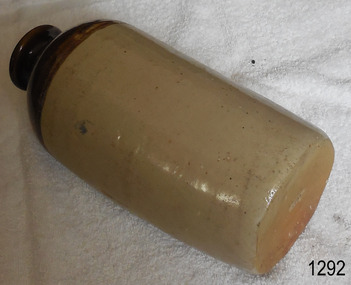
... Rob _ / Browns Rd / Offic / 3 _ _ 9" Inscription on paper label " "Mrs K Robinson Browns Rd Officer 3809 - Hot water bottle P.M.O." ...Rob _ / Browns Rd / Offic / 3 _ _ 9" Inscription on paper label " "Mrs K Robinson Browns Rd Officer 3809 - Hot water bottle P.M.O." ...This hot water bottle was designed to lay flat in a bed between the sheets. Its purpose was to warm the bed before use. The bottle was filled with hot water then a stopper was placed in the top to seal it, preventing the water from running out. The inscription on the attached label of this hot water bottle gives both the donor's details and the location of the bottle when it was first displayed at Flagstaff Hill Maritime Village. the "P.M.O." are the initials for the Port Medical Office. The donor's details are also written in pencil on the base of the bottle. In the 16th-century people warmed their beds with the 'bed warmer', which was a long-handled, metal pan filled with hot coals and embers and covered with a lid. The pan was placed between the bedsheets to warm the bed before the person retired to sleep for the night. In the early 19th-century earthenware bed warmers came began to be used for the same purpose. They would be filled with hot water and sealed then often wrapped in fabric. The ceramic material would hold the heat for quite some time, without being too hot for the person in bed to also warm their feet as they went off to sleep. Hot water bottles were later made from glass, copper, brass or tin. Some manufacturers made them into decorative pieces that still had practical use. In 1903 a patent was taken out for the first rubber hot water bottle, invented by Slavoljub Eduard Penkala, a Croatian engineer. This bottle is of historic significance, as an example of personal heating equipment used in the late 19th and early 20th centuries.Hot water bottle, earthenware, pale colour with brown glaze on top over the shoulder and mouth section and clear glaze on the remainder of the sides. The cylindrical bottle tapers to a slightly narrower base. One side of the bottle, about a sixth of the circumference, is flat. The base of the bottle has a handwritten inscription. An inscription was on the paper label originally attached to the bottle. Inscription hand written on base of bottle "Mrs K. Rob _ / Browns Rd / Offic / 3 _ _ 9" Inscription on paper label " "Mrs K Robinson Browns Rd Officer 3809 - Hot water bottle P.M.O." flagstaff hill, warrnambool, shipwrecked-coast, maritime-museum, shipwreck-coast, flagstaff-hill-maritime-village, domestic item, hot water bottle, heating equipment, ceramic bottle, stoneware bottle, potter, earthenware, personal item, bed warmer, foot warmer, flat-sided hot water bottle, household item, stoneware, clay, ceramic -
 Ringwood and District Historical Society
Book, Jubilee of the Box Hill Methodist Church 1883-1933
... Brown soft covered book with diagrams maps and photographs compiling information supplied or made available to the editors of the "Spectator", "Reporter" and "Woman's World" by Ministers and Officers of the churches at Richmond, Hawthorn and Auburn, Mr. R.A. Sutton, Mrs. ...The Beginning - Trustees and Church Debts and Buildings The Depression and Church Union - The Curch Leads the Way Temperance The Sunday School The Ministers Local Preachers Organ and Choir Cheer-Up Brigade Progress and Change Foreign Missions Hospital Sunday Pew Rents Making Records Class Meeting and Endeavour Sport The Ladies Conclusion Tables Index Maps Brown soft covered book with diagrams maps and photographs compiling information supplied or made available to the editors of the "Spectator", "Reporter" and "Woman's World" by Ministers and Officers of the churches at Richmond, Hawthorn and Auburn, Mr. R.A. Sutton, Mrs. ...Brown soft covered book with diagrams maps and photographs compiling information supplied or made available to the editors of the "Spectator", "Reporter" and "Woman's World" by Ministers and Officers of the churches at Richmond, Hawthorn and Auburn, Mr. R.A. Sutton, Mrs. A. Edgoose and Mr. J.R. Ellingworth and others who have helped with their memories of the past.Wholly set up and printeed in Australia by Reporter Print, Box Hill, 1937. CONTENTS. The Beginning - Trustees and Church Debts and Buildings The Depression and Church Union - The Curch Leads the Way Temperance The Sunday School The Ministers Local Preachers Organ and Choir Cheer-Up Brigade Progress and Change Foreign Missions Hospital Sunday Pew Rents Making Records Class Meeting and Endeavour Sport The Ladies Conclusion Tables Index Maps -
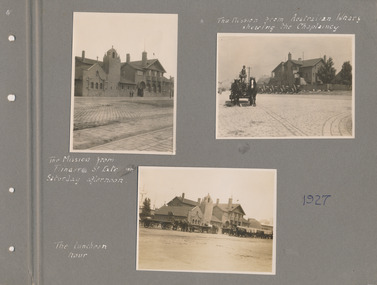 Mission to Seafarers Victoria
Album (Item) - Photographic album, Reverend John Reginald Weller, 1925-1927
... Mrs Gurney Goldsmith and stayed until January 1929. The photographs bear the stamp "Herschell's Prints - Pathe Agents". Charles Richard Herschell founded a film Production studio of the same name operating at 31 Agnes Street, Jolimont from 1925. A similar album by Freda Oxley with similar handwriting in white ink was donated to The National Library of Australia by her niece. Some of the images are exact copies. weller album 1925-1927 tennis court s.s. osterley skaregrøm mitchell archbishop lees new year's day christmas sherbrooke chaplaincy garden cadets officers ...This album was likely compiled by Freda Oxley, a friend of the Wellers who stayed with them at the Mission for a few years. The couple arrived in January 1925, replacing Mr and Mrs Gurney Goldsmith and stayed until January 1929. The photographs bear the stamp "Herschell's Prints - Pathe Agents". Charles Richard Herschell founded a film Production studio of the same name operating at 31 Agnes Street, Jolimont from 1925. A similar album by Freda Oxley with similar handwriting in white ink was donated to The National Library of Australia by her niece. Some of the images are exact copies. weller album, 1925-1927, tennis court, s.s. osterley, skaregrøm, mitchell, archbishop lees, new year's day, christmas, sherbrooke, chaplaincy, garden, cadets, officers, freda kathleen oxley 1882-1969 -
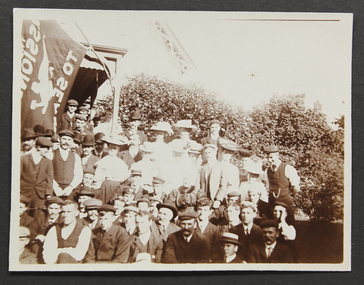 Mission to Seafarers Victoria
Photograph - Photograph, Sepia, Anne Treverton Goldsmith (nee Lobb), Picnic at Glenfern, King's Birthday 1906, 9 November 1906
... Mrs. Danne and her friends. The Misses Danne, Miss Godfrey and other ladies were untiring in their attentions. Mr. Axell, first officer...Mrs. Danne and her friends. The Misses Danne, Miss Godfrey and other ladies were untiring in their attentions. Mr. Axell, first officer ...Gathering of seafarers and MTS clergy and LHLG members, at Glenfern 1906. Mrs Mary Danne daughter of Reverend Kerr Johnston was a widow at the time and was renting Glenfern, the property once owned by the Boyd family, and started a private primary school she called Newington College. A member of the Mission's committee from 1905 to 1926 when she passed away, a bras plaque was made in her memory and placed in the chapel of the Flinders Street Mission. (see item 0690) In the Standard published on Saturday 17 November 1906, page 4 we could read: "In connection with the Victoria Missions to Seamen a successful and pleasant outing, was given to the sailors in port on King's Birth day. Mrs. Danne, of "Glenfern," St. Kilda, threw her house and grounds open tor sports and tea. Cricket, football and sports were enthusiastically pursued, and ample justice was done to the substantial tea provided by Mrs. Danne and her friends. The Misses Danne, Miss Godfrey and other ladies were untiring in their attentions. Mr. Axell, first officer of brig Fairy Rock, in a few appropriate words thanked Mrs. Danne and the ladies, on behalf of the sailors, for their kind hospitality. Snapshots of the party were taken by Mrs. Goldsmith. Mr. C A. Holmes and Mr. Cedric Campbell acted as stewards and starters for the races. On the invitation of the chaplain (Rev. A G. Goldsmith*) ringing cheers were given for Mrs. Danne and the ladies. Before the party broke up Mrs Danne addressed a few kind words to the men and gave them all a shake of the band at the gate. The rest of the evening was spent at the Institute, Beach street, where games and competitions were carried on to the accompaniment of vocal and instrumental music. The prizes won at the sports etc., were distributed, and after singing the National Anthem the party broke up."Thanks to the article in the Standard, Saturday 17 November 1906, page 4, we learn that some of the early sepia photographs were taken by Mrs Gurney Goldsmith herself.Small monochrome photograph depicting a group of seamen and ladies with the Mission's Flagstaff.1906, glenfern, st kilda east, picnic, lhlg, king's birthday, edward vii, mary alice isabelle danne nee johnston, 1851-1926, reverend kerr johnston, 1812-1887, boyd family, sailors, seamen, seafarers, bowler hat, cap, boater hat, snapshots, camera, photographer, sports, cricket, football, ethel augusta godfrey 1861-1935, mr axell, fairy rock, charles arthur holmes (-1947), mrs gurney goldsmith, anne treverton goldsmith (nee lobb), cedric campbell -
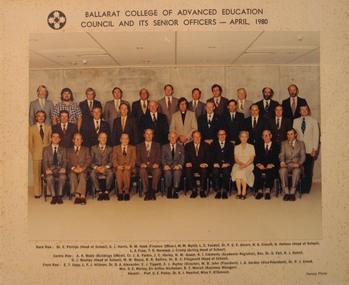 Federation University Historical Collection
Photograph - Photograph - Colour, N.L. Harvey Photographers, Ballarat College of Advanced Education, Council and its Senior Officers; 1980, 1980
... Other notable people from Ballarat and SMB are shown to be on the Council. ballarat college of advanced education council director of college e j barker dr e phillips s j harris r m hook m m walsh l c yandell dr p alcorn n a crouch g holmes l a fryar t d norwood j crump a k webb crj a parkin j c harley n m gower k l clements rev g pell r j dobell d j woolley m w boyce b r rollins dr b c fitzgerald e t oppy l f hillman dr d a alexander e j tippett m b john i a gordon dr p j creed mrs d e molloy sir arthur nicholson r t morrell university women Ken Clements tom norwood john crump Alan webb robert hook jack barker Robert Morrell David Alexander George Pell Coloured photograph of people posed for group photo. Arranged in three row, front row seated. Names of people are printed on mounting below photo Ballarat College of Advanced Education, Council and its Senior Officers ...Photograph shows the members of the Ballarat College of Advanced Education Council and its Senior Officers for 1980. The Director of the College was E J Barker who is seated 5th from the left in the front row. Other notable people from Ballarat and SMB are shown to be on the Council.Coloured photograph of people posed for group photo. Arranged in three row, front row seated. Names of people are printed on mounting below photoballarat college of advanced education, council, director of college, e j barker, dr e phillips, s j harris, r m hook, m m walsh, l c yandell, dr p alcorn, n a crouch, g holmes, l a fryar, t d norwood, j crump, a k webb, crj a parkin, j c harley, n m gower, k l clements, rev g pell, r j dobell, d j woolley, m w boyce, b r rollins, dr b c fitzgerald, e t oppy, l f hillman, dr d a alexander, e j tippett, m b john, i a gordon, dr p j creed, mrs d e molloy, sir arthur nicholson, r t morrell, university women, ken clements, tom norwood, john crump, alan webb, robert hook, jack barker, robert morrell, david alexander, george pell -
 Lara RSL Sub Branch
Wallet, Y.M.C.A. Wallet Mr Sid Ellis carried by hm during WW1
... Mrs. Thompson. .23 Paper note a pencil written recipe for an ointment measured amounts of the ingredients. .24 Two copies of Australian Imperial Force, Message to the "Officers, Non-Commissioned Officers, and Men of the Australian Imperial Force." ...Mrs. Thompson. .23 Thin Brown Paper with a note in pencil containing a written recipe for an ointment measured amounts of the ingredients. .24 Two copies of paper pamphlets. To the Officers...Mrs. Thompson. .23 Thin Brown Paper with a note in pencil containing a written recipe for an ointment measured amounts of the ingredients. .24 Two copies of paper pamphlets. To the Officers ...WW1. Y.M.C.A. London, French scenesWW1 Wallet . YMCA LondonYMCA Wallet containing personal papers and letters - Sid Ellis- -472.01 Black leather Wallet - Y.M.C.A. Australian Logo on front. On the rear of the wallet is a Motto "Talk Clean, Live Clean, Fight Clean. Play the Game." .02 Paper slip containing details of acquaintances service numbers name and regiment details. .03 Paper Sovenior of France - written in French. .04 Paper folded to contain 10 photographic shots of French scenes countryside, sailing cutters. .05 Receipt from Returned Sailors & Soldiers Imperial League of Australia(Victoria). Issued to S. W. Ellis Brunswick Sub-branch dated 31/12/1936 Badge Number 48697. .06 Envelope Service of Campaign - printed on the front the envelope is written in Portuguese. "Servicio De Campanha" .07 Small brown paper representation of a boomerang with Cooee in gold lettering embossed on the front. .08 Small white business card for "Cafe - Debit" written in French "Albert Succr" Le Havre. .09 Cut-out from a magazine "View of the Seven Bridges" .10 Cut-out From a magazine "The New Louvre. .11 Cut-out from a magazine "Vendome Place" .12 Cut-out from a magazine "The Madeleine" .13 Cut-out from a magazine "The Arch De Triomphe - it is 150 feet high and cost 362,000 Pounds" .14 Cut-out from a magazine "The Grand Opera House - its cost was about 1,190,500 pounds and it seats over 2,000 people" .15 Cut-out from a magazine "The Cathedral of Notre Dame - A splendid example of the gothic architecture of the 13th century. .16 Cut-out from a magazine "The Trocadero Place erected from the Universal Exhibition of 1878 . with a Hall Capable of holding 5,000 people. .17 Envelope sent to Private S.W. Ellis from Lara took a well-traveled route to reach him. .18 Postcard of Park & Bandstand, Melton, Mowbray to Pte S.W Ellis. .19 Y.M.C.A. Newspaper "The Rising Sun" Vol 1, No. 14 Dated 28/1/1919 London, England. .20 Small note from Y.M.C.A. with pencil note on the rear "423 Pte. Schofield E.J." .21 Small Calander for 1918 from Y.M.C.A. London. .22 Cut out from a newspaper of a Funeral notice of Mrs. Thompson. .23 Paper note a pencil written recipe for an ointment measured amounts of the ingredients. .24 Two copies of Australian Imperial Force, Message to the "Officers, Non-Commissioned Officers, and Men of the Australian Imperial Force." From Commander in the field. .25 Memo "the Diggers" by Capt. William Denny - an order form for copies of the book.472.01 Black leather with Y.M.C.A. Australian Armed Forces Logo embossed on the front and on the Back a motto "Talk Clean, Live Clean, Fight Clean, Play The Game." .02 White pocket notebook paper. .03 Small thin cardboard white with Blue and Red chevrons on each corner. On the reverse side is a word "Souscrivez!" .04 Thin paper folder in a cascade that contains 10 small photos of French scenery. .05 Tissue paper receipt No. 31996 dated 15/01/1916 from Returned Sailors & Soldiers Imperial League of Australia (Victoria). .06 Brown Envelope with Green printing of the front. Army Form Number W 3078 (P) .07 Small Brown paper, shaped as a boomerang with a saying printed on the front "Cooee" .08 Cardboard white Business card for Cafe-Debit, Le Havre, .09 Paper cut out from a magazine with a view of the Seven Bridges. The reverse is printed with magazine writings. .10 Paper cut out from a magazine with a view of the New Louvre. The reverse is printed with magazine writings. .11 Paper cut out from a magazine with a view of Vendome Place. The reverse is printed with magazine writings. .12 Paper cut out from a magazine with a view of The Madeleine. The reverse is printed with magazine writings. .13 Paper cut out from a magazine with a view of The Arc De Triomphe. The reverse is printed with magazine writings. .14 Paper cut out from a magazine with a view of The Grand Opera House. The reverse is printed with magazine writings. .15 Paper cut out from a magazine with a view of The Cathedral Of Notre Dame. The reverse is printed with magazine writings. .16 Paper cut out from a magazine with a view of The Trocadero Palace. The reverse is printed with magazine writings. .17 Paper envelope Addressed to Pte. S. W. Ellis No. 640 sent from Lara and redirected to the recipient by Army Base Post Office. .18 Cardboard Postcard with a photographic picture of The Park & Bandstand, Melton Mowbray. Addressed to Pte. S. W. Ellis No. 640. .19 Y.M.C.A. Newspaper "The Rising Sun" Vol. 1 No. 14. .20 Thin paper from Y.M.C.A. addressed to 423 Pte. Schofield E.J. .21 Cardboard folded in two, a calendar for 1918, and small Map of Aldwych, reverse side is Y.M.C.A. in London details. Printed in red and black. .22 Cut out from a newspaper of a Funeral notice of Mrs. Thompson. .23 Thin Brown Paper with a note in pencil containing a written recipe for an ointment measured amounts of the ingredients. .24 Two copies of paper pamphlets. To the Officers & men of Australian Imperial Force dated 14th November 1918, .25 A paper pamphlet "The Diggers" by Capt. William Denny -
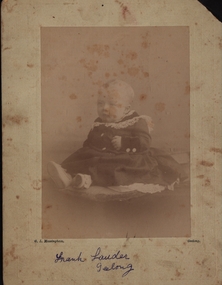 Federation University Historical Collection
Photograph - Photograph - Sepia, G.L.Massingham, Photographs - Watson Family, 1 1905; .7 c1844
... Frank Lauder (Hand written in biro) Verso: Gran Emma Eliza Jane Watson b Phillips in Geelong (Barrabool) .8 Two army officers seated on rocks between large cactus plants, possibly overseas in WW1. .9 Black and white photograph of three sisters .10 Black and white photograph of Reverend Stubbings, Mrs Stubbings and their daughter Jackie Stubbings....Frank Lauder (Hand written in biro) Verso: Gran Emma Eliza Jane Watson b Phillips in Geelong (Barrabool) .8 Two army officers seated on rocks between large cactus plants, possibly overseas in WW1. .9 Black and white photograph of three sisters .10 Black and white photograph of Reverend Stubbings, Mrs Stubbings and their daughter Jackie Stubbings. ...This collection of items belonged to Emma Eliza Jane Watson's (bPhillips) son and daughter-in-law, John Richard and Edith Emma Watson (b Yung). Emma married Thomas William Watson at St Paul's Anglican Church , 11/11/1865.They lived in Sebastapol, Ballarat North and lastly at "Gracedale" Yendon - a small farm. They had 10 children and also brought up three grandhildren. .7 Emma Eliza Jane Phillips was born on 25th April 1844 in Barrabool (Geelong), the daughter of Richard and Elizabeth Anne Phillips (b Goodenough). Sometime in the 1850"s after the death of Richard and the breakup of her marriage to Anthony Beck, Elizabeth moves to Ballarat with her children. The eldest boy Richard William Phillips would have been in his late teens. Elizabeth died on 4th August 1858 (aged 42?) before any of her children married. Emma married Thomas Watson in Ballarat. .1 Black memorial card with gold ink for Henrietta Tierney who was the wife of Daniel Tierney of the Victorian Police. Henrietta died April 28, 1905, aged 25 years. .2 Black and white photographic post card of two girls (Florence and Esma) addressed to Mrs Watson from Maurice H. It was sent from Mascoffs, High Street, Rushworth. c 1910-1915. .3 Black and white photograph of two children (Alma and Ida Watson) sent as a 1920 Christmas Greeting to Auntie Edie and Uncle Jack (Watson) from Ted and Jean Watson. Sent from "Kia Ora", Olinda Court, Bendigo. .4 Embossed presentation folder containing a black and white photo of two women and a man who is in an air force uniform. Inscription - "With love to mother from Bill 6th May '42" (possibly Beatty family NSW - connection through Richard Henry Watson's wife Margaret Alison Pike. Richard (Harry) was the son of this collection's owner Edith Emma Watson) .5 Post Card addressed to Jack and Edith .6 Sepia photograph of Ethel, 1890 .7 Sepia photograph of a small child sitting on a cushion . G.L. Massingham. Geelong. Frank Lauder (Hand written in biro) Verso: Gran Emma Eliza Jane Watson b Phillips in Geelong (Barrabool) .8 Two army officers seated on rocks between large cactus plants, possibly overseas in WW1. .9 Black and white photograph of three sisters .10 Black and white photograph of Reverend Stubbings, Mrs Stubbings and their daughter Jackie Stubbings.watson, emma eliza jane phillips, elizabeth anne goodenough, richard phillips, g.l.massingham, geelong, barrabool, reg. g evans, post card -
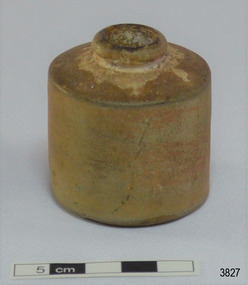 Flagstaff Hill Maritime Museum and Village
Container - Ink Bottle, 1890s to 1902
... There were 21 officers and crew and the captain’s wife Mrs Kendrick, on board, bound for Australia with cargo that included tools, chemicals, liquor (beer, whisky, stout, rum, and brandy), steel, iron, wire netting, hoop iron, tinplate and pig iron), and steel wire for the Melbourne Tramway Company, tiles, soap, soft goods and earthenware. ...There were 21 officers and crew and the captain’s wife Mrs Kendrick, on board, bound for Australia with cargo that included tools, chemicals, liquor (beer, whisky, stout, rum, and brandy), steel, iron, wire netting, hoop iron, tinplate and pig iron), and steel wire for the Melbourne Tramway Company, tiles, soap, soft goods and earthenware. ...This design of ink bottle or ink well was commonly referred to as a ‘penny ink well’ because it was very inexpensive to produce. It is also known as a dwarf ink bottle. It was recovered from the wreck of the 1895-1902 ship Inverlochy and is part of the John Chance Collection. Pen and ink has been in use for hand writing from about the seventh century up until the mid-20th century. Up until around the mid-19th century a quill pen made from a bird’s feather was used. In the 1850s the steel point pen was invented and could be manufactured on machines in large quantities. In the 1880s a successful portable fountain pen was designed, giving a smooth flowing ink and ease of use. Ink wells, used with steel nib dip pens, were commonly used up until the mid-20th century. The pens only held a small amount of ink so users had to frequently dip the nib of the pen into an ink well for more ink. Hand writing with pen and ink left wet writing on the paper, so blotting paper was carefully used to absorb the excess ink and prevent smudging. Ink could be purchased, ready to use, or in the powdered form, which needed to be mixed with water. After the invention of fountain pens, which had a reservoir of ink, and then ballpoint pens, which also had ink that flowed freely, the dip pen was slowly replaced. However, artisans continue to use nib pens to create beautiful calligraphy. INVERLOCHY 1895-1902 - The Inverlochy was a steel sailing barque built in Scotland in 1895 for international trade. In 1902 the Inverlochy left Liverpool under the command of Captain E.R. Kendrick. There were 21 officers and crew and the captain’s wife Mrs Kendrick, on board, bound for Australia with cargo that included tools, chemicals, liquor (beer, whisky, stout, rum, and brandy), steel, iron, wire netting, hoop iron, tinplate and pig iron), and steel wire for the Melbourne Tramway Company, tiles, soap, soft goods and earthenware. On December 18 almost at their destination, the Inverlochy ran aground on Ingoldsby Reef at Point Addis, near Anglesea. The crew and passengers left the ship via lifeboat and landed at Thompson’s Creek, then walked about 20 kilometres to Barwon Heads. Salvagers were interested in the 10 miles of cable in the hold. Mrs Kendrick’s ‘high grade’ bicycle was amongst the items salvaged but she lost her jewellery and two pianos. By February 1903 the ship had broken up and objects such as bottles and casks of liquor were washed ashore. Bad weather shook the wreck in June 1903, causing the ship’s spars and figurehead to be washed ashore. This ink bottle is historically significant as it represents methods of hand written communication that were still common up until the mid-20th century, when fountain pens and ballpoint pens took over in popularity and convenience. The Ink bottle also has significant as it was recovered by John Chance, a diver from the wreck of the Inverlochy in the late 1960s to early 1970s. Items that come from several wrecks along Victoria's coast have since been donated to the Flagstaff Hill Maritime Village’s museum collection by his family, illustrating this item’s level of historical value. This Ink bottle is significant because of its historical connection to the barque Inverlochy, which is an example of a commercial international steel sailing barque and is listed on the Victorian Heritage Database VHR S338. The Inverlochy is significant for its cargo, which is a snapshot of the kind of goods imported into Australia at the turn of the 19th century, including cable for the Melbourne Tramway Company. The wreck of the Inverlochy is important as an accessible dive site that shows the remains of a large international trading vessel and its contents. It is valuable for an insight into Victorian era of shipping and maritime history.Ink bottle or ink well; cylindrical shaped, salt-glazed, mid-brown ceramic bottle. It has a small round mouth, rounded lip that extend past the short neck, wide shoulders, straight sides, flat bottom. Handmade. Also called a Penny Ink Well.flagstaff hill, warrnambool, flagstaff hill maritime museum, maritime museum, shipwreck coast, flagstaff hill maritime village, great ocean road, john chance, inverlochy, scotland, captain e.r. kendrick, melbourne tramway company, tramway cable, ingoldsby reef, point addis, anglesea, thompson’s creek, barwon heads, ink bottle, writing equipment, writing accessory, office equipment, stationery, domestic, stoneware, clay, ceramic, pottery, ink well, inkwell, penny ink well, nib pen, dip pen, ink, hand writing, record keeping, household, business, vintage, blotting paper, dwarf ink -
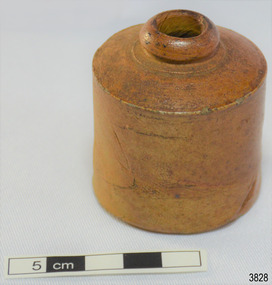 Flagstaff Hill Maritime Museum and Village
Container - Ink Bottle, 1890s to 1902
... There were 21 officers and crew and the captain’s wife Mrs Kendrick, on board, bound for Australia with cargo that included tools, chemicals, liquor (beer, whisky, stout, rum, and brandy), steel, iron, wire netting, hoop iron, tinplate and pig iron), and steel wire for the Melbourne Tramway Company, tiles, soap, soft goods and earthenware. ...There were 21 officers and crew and the captain’s wife Mrs Kendrick, on board, bound for Australia with cargo that included tools, chemicals, liquor (beer, whisky, stout, rum, and brandy), steel, iron, wire netting, hoop iron, tinplate and pig iron), and steel wire for the Melbourne Tramway Company, tiles, soap, soft goods and earthenware. ...This design of ink bottle or ink well was commonly referred to as a ‘penny ink well’ because it was very inexpensive to produce. It is also known as a dwarf bottle. It was recovered from the wreck of the 1895-1902 ship Inverlochy and is part of the John Chance Collection. Pen and ink has been in use for hand writing from about the seventh century up until the mid-20th century. Up until around the mid-19th century a quill pen made from a bird’s feather was used. In the 1850s the steel point pen was invented and could be manufactured on machines in large quantities. In the 1880s a successful portable fountain pen was designed, giving a smooth flowing ink and ease of use. Ink wells, used with steel nib dip pens, were commonly used up until the mid-20th century. The pens only held a small amount of ink so users had to frequently dip the nib of the pen into an ink well for more ink. Hand writing with pen and ink left wet writing on the paper, so blotting paper was carefully used to absorb the excess ink and prevent smudging. Ink could be purchased, ready to use, or in the powdered form, which needed to be mixed with water. After the invention of fountain pens, which had a reservoir of ink, and then ballpoint pens, which also had ink that flowed freely, the dip pen was slowly replaced. However, artisans continue to use nib pens to create beautiful calligraphy. INVERLOCHY 1895-1902 - The Inverlochy was a steel sailing barque built in Scotland in 1895 for international trade. In 1902 the Inverlochy left Liverpool under the command of Captain E.R. Kendrick. There were 21 officers and crew and the captain’s wife Mrs Kendrick, on board, bound for Australia with cargo that included tools, chemicals, liquor (beer, whisky, stout, rum, and brandy), steel, iron, wire netting, hoop iron, tinplate and pig iron), and steel wire for the Melbourne Tramway Company, tiles, soap, soft goods and earthenware. On December 18 almost at their destination, the Inverlochy ran aground on Ingoldsby Reef at Point Addis, near Anglesea. The crew and passengers left the ship via lifeboat and landed at Thompson’s Creek, then walked about 20 kilometres to Barwon Heads. Salvagers were interested in the 10 miles of cable in the hold. Mrs Kendrick’s ‘high grade’ bicycle was amongst the items salvaged but she lost her jewellery and two pianos. By February 1903 the ship had broken up and objects such as bottles and casks of liquor were washed ashore. Bad weather shook the wreck in June 1903, causing the ship’s spars and figurehead to be washed ashore. This ink bottle is historically significant as it represents methods of hand written communication that were still common up until the mid-20th century, when fountain pens and ballpoint pens took over in popularity and convenience. The Ink bottle also has significant as it was recovered by John Chance, a diver from the wreck of the Inverlochy in the late 1960s to early 1970s. Items that come from several wrecks along Victoria's coast have since been donated to the Flagstaff Hill Maritime Village’s museum collection by his family, illustrating this item’s level of historical value. This Ink bottle is significant because of its historical connection to the barque Inverlochy, which is an example of a commercial international steel sailing barque and is listed on the Victorian Heritage Database VHR S338. The Inverlochy is significant for its cargo, which is a snapshot of the kind of goods imported into Australia at the turn of the 19th century, including cable for the Melbourne Tramway Company. The wreck of the Inverlochy is important as an accessible dive site that shows the remains of a large international trading vessel and its contents. It is valuable for an insight into Victorian era of shipping and maritime history. Ink bottle, glazed, prange-brown ceramic cylinder, ring of clay on top for lip, narrow mouth, very short neck on wide shoulder that reaches out to edge of of straight-sided body, flat base. On the shoulder, close to the neck, are concentric lines in the clay. There are dark areas around the lip and mouth opening. The clay appears to have a fold line on its body. The material has flecks of darker material in it. Sediment around shoulder. Handmade. Also called a Penny Ink Well.flagstaff hill, warrnambool, flagstaff hill maritime museum, maritime museum, shipwreck coast, flagstaff hill maritime village, great ocean road, john chance, inverlochy, scotland, captain e.r. kendrick, melbourne tramway company, tramway cable, ingoldsby reef, point addis, anglesea, thompson’s creek, barwon heads, ink bottle, writing equipment, writing accessory, office equipment, stationery, domestic, stoneware, clay, ceramic, pottery, ink well, inkwell, penny ink well, nib pen, dip pen, ink, hand writing, record keeping, household, business, vintage, blotting paper, dwarf ink -
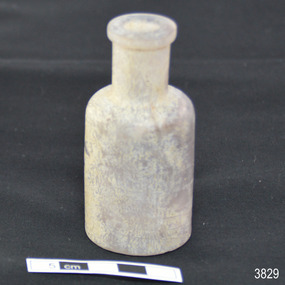 Flagstaff Hill Maritime Museum and Village
Container - Glass Bottle, mid-19th century to 1902
... There were 21 officers and crew and the captain’s wife Mrs Kendrick, on board, bound for Australia with cargo that included tools, chemicals, liquor (beer, whisky, stout, rum, and brandy), steel, iron, wire netting, hoop iron, tinplate and pig iron), and steel wire for the Melbourne Tramway Company, tiles, soap, soft goods and earthenware. ...There were 21 officers and crew and the captain’s wife Mrs Kendrick, on board, bound for Australia with cargo that included tools, chemicals, liquor (beer, whisky, stout, rum, and brandy), steel, iron, wire netting, hoop iron, tinplate and pig iron), and steel wire for the Melbourne Tramway Company, tiles, soap, soft goods and earthenware. ...This handmade glass bottle was recovered from the wreck of the 1895-1902 ship Inverlochy and is part of the John Chance Collection. The bottle has side seams that extend from base to mouth, indicating that it would have been made in a mould. The parallel, diagonal lines are likely to have been made by the molten glass being mouth-blown into the mould. The mould would have also had the pattern for the embossed numbers in the base. The seamless applied mouth would have been added after the bottle was removed from the two-piece mould. The even neck of the bottle would have probably been sealed with a cork or glass stopper. Bottles similar to this one were used for medical (apothecary) and cosmetic purposes. Bottles with these features date from around the late 19th to early 20th century. Bottles began to have embossed numbers on the bases from the late 19th century and the practice continues into modern times. The numbers may represent the date of manufacture i.e. “4188” may be 4th January 1888. It may instead be the date of the patent or design pattern number. This bottle may have been made around 1888 and the latest it could have been made was 1902, the year of the wreck of the Inverlochy. THE INVERLOCHY (1895-1902) - The Inverlochy was a steel sailing barque built in Scotland in 1895 for international trade. In 1902 the Inverlochy left Liverpool under the command of Captain E.R. Kendrick. There were 21 officers and crew and the captain’s wife Mrs Kendrick, on board, bound for Australia with cargo that included tools, chemicals, liquor (beer, whisky, stout, rum, and brandy), steel, iron, wire netting, hoop iron, tinplate and pig iron), and steel wire for the Melbourne Tramway Company, tiles, soap, soft goods and earthenware. On December 18 almost at their destination, the Inverlochy ran aground on Ingoldsby Reef at Point Addis, near Anglesea. The crew and passengers left the ship via lifeboat and landed at Thompson’s Creek, then walked about 20 kilometres to Barwon Heads. Salvagers were interested in the 10 miles of cable in the hold. Mrs Kendrick’s ‘high grade’ bicycle was amongst the items salvaged but she lost her jewellery and two pianos. By February 1903 the ship had broken up and objects such as bottles and casks of liquor were washed ashore. Bad weather shook the wreck in June 1903, causing the ship’s spars and figurehead to be washed ashore. This glass bottle is historically significant as it represents methods of storage and manufacture that were used from the 19th century and into the early-20th century, before machine made bottles were becoming common. The shape and size of the bottle are similar to bottles used for medical and cosmetic purposes in that period. The glass bottle also has significant as it was recovered by John Chance, a diver from the wreck of the Inverlochy in the late 1960s to early 1970s. Items that come from several wrecks along Victoria's coast have since been donated to the Flagstaff Hill Maritime Village’s museum collection by his family, illustrating this item’s level of historical value. This glass bottle is significant because of its historical connection to the barque Inverlochy, which is an example of a commercial international steel sailing barque and is listed on the Victorian Heritage Database VHR S338. The Inverlochy is significant for its cargo, which is a snapshot of the kind of goods imported into Australia at the turn of the 19th century, including cable for the Melbourne Tramway Company. The wreck of the Inverlochy is important as an accessible dive site that shows the remains of a large international trading vessel and its contents. It is valuable for an insight into Victorian era of shipping and maritime history. Bottle; clear glass, round, handmade. Narrow lip is flat across top and on side edge, neck is straight, about a third of the bottle’s height. The shoulder is rounded, and the body has straight sides with two side seams from below the lip to the base, which is shallow. Outer glass surface is rough, inner surface has areas of dried, light coloured substance. The body has several diagonal parallel lines and areas with opalescent shine. Base has embossed inscription. Embossed inscription on base "4188".flagstaff hill, warrnambool, flagstaff hill maritime museum, maritime museum, shipwreck coast, flagstaff hill maritime village, great ocean road, john chance, inverlochy, scotland, captain e.r. kendrick, melbourne tramway company, ingoldsby reef, handmade, glass bottle, apothecary, cosmetic, mould blown, vintage, two-piece bould, point addis, medicine -
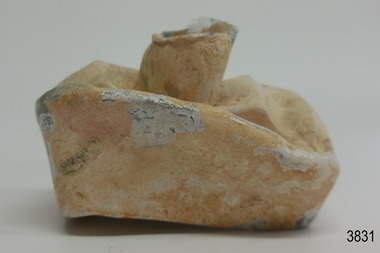 Flagstaff Hill Maritime Museum and Village
Container - Ink Bottle, from mid-19th century to 1902
... There were 21 officers and crew and the captain’s wife Mrs Kendrick, on board, bound for Australia with cargo that included tools, chemicals, liquor (beer, whisky, stout, rum, and brandy), steel, iron, wire netting, hoop iron, tinplate and pig iron), and steel wire for the Melbourne Tramway Company, tiles, soap, soft goods and earthenware. ...There were 21 officers and crew and the captain’s wife Mrs Kendrick, on board, bound for Australia with cargo that included tools, chemicals, liquor (beer, whisky, stout, rum, and brandy), steel, iron, wire netting, hoop iron, tinplate and pig iron), and steel wire for the Melbourne Tramway Company, tiles, soap, soft goods and earthenware. ...This ink bottle is ‘boat’ shaped, which was a common design from the mid-1840s. It was crudely made; maybe it was rejected as a practice bottle or perhaps heat or pressure has distorted it. The bottle was recovered from the wreck of the Inverlochy and is part of the John Chance collection. Ink in the 1700s ink could be purchased in powdered or block form from apothecary shops, to be mixed with water as needed. Then in the mid-1800s chemists began selling ink in liquid form, in small, inexpensive and often attractive bottles. The small glass ink bottles were handmade, blown into a cup shaped mould, and sharply broken off from the blow-pipe at the neck, referred to as the English-made ‘burst-off’ finish. The neck was then filed, filled with liquid ink and sealed with a cork or wax. It was a quick, affordable container and made pen and ink writing available to the public. The name ‘penny ink’ bottles was a common title due to their low cost. INVERLOCHY 1895-1902 - The Inverlochy was a steel sailing barque built in Scotland in 1895 for international trade. In 1902 the Inverlochy left Liverpool under the command of Captain E.R. Kendrick. There were 21 officers and crew and the captain’s wife Mrs Kendrick, on board, bound for Australia with cargo that included tools, chemicals, liquor (beer, whisky, stout, rum, and brandy), steel, iron, wire netting, hoop iron, tinplate and pig iron), and steel wire for the Melbourne Tramway Company, tiles, soap, soft goods and earthenware. On December 18 almost at their destination, the Inverlochy ran aground on Ingoldsby Reef at Point Addis, near Anglesea. The crew and passengers left the ship via lifeboat and landed at Thompson’s Creek, then walked about 20 kilometres to Barwon Heads. Salvagers were interested in the 10 miles of cable in the hold. Mrs Kendrick’s ‘high grade’ bicycle was amongst the items salvaged but she lost her jewellery and two pianos. By February 1903 the ship had broken up and objects such as bottles and casks of liquor were washed ashore. Bad weather shook the wreck in June 1903, causing the ship’s spars and figurehead to be washed ashore. This boat shaped handmade ink bottle is historically significant for its association with communications and record keeping in the mid-to-late 19th century. The bottle is socially significant as an example of making a useful product affordable to every day people. This handmade glass ink bottle is significant for its connection with the John Chance Collection, which is historically significant as an example of artefacts from wrecks that had been lost in the coastal waters of Victoria from thirty to over one hundred years before John Chance and others discovered them. These artefacts are a sample of goods carried as cargo or personal possessions, and of ship hardware of that era. The ink bottle is significant through its connection with the barque, Inverlochy, The Inverlochy is significant for its cargo, which is a snapshot of the array of goods imported into Australia at the turn of the 19th century, including cable for the Melbourne Tramway Company. The Inverlochy is historically significant and is registered on the Victorian Heritage Database, VHR S338. The wreck of the Inverlochy is important as an accessible dive site that shows the remains of a large international trading vessel and its contents. It is valuable for an insight into Victorian era of shipping and maritime history.Ink bottle, thick clear glass, rectangular base with small round mouth, long sides have have a U shaped groove along the shoulders (used for resting pen handles). The outside surface has a white clay-type reside over it. Bottle is very bent and distorted. flagstaff hill, warrnambool, flagstaff hill maritime museum, maritime museum, shipwreck coast, flagstaff hill maritime village, great ocean road, john chance, inverlochy, scotland, captain e.r. kendrick, melbourne tramway company, tramway cable, ingoldsby reef, point addis, anglesea, thompson’s creek, barwon heads, boat ink bottle, cottage ink, penny ink, glass ink bottle, pen rest, writing accessory, victorian, antique, ink well, sheer lip, distorted body, handmade, mould blown, statoionery -
 Flagstaff Hill Maritime Museum and Village
Container - Glass Bottle, mid-19th century to 1902
... There were 21 officers and crew and the captain’s wife Mrs Kendrick, on board, bound for Australia with cargo that included tools, chemicals, liquor (beer, whisky, stout, rum, and brandy), steel, iron, wire netting, hoop iron, tinplate and pig iron), and steel wire for the Melbourne Tramway Company, tiles, soap, soft goods and earthenware. ...There were 21 officers and crew and the captain’s wife Mrs Kendrick, on board, bound for Australia with cargo that included tools, chemicals, liquor (beer, whisky, stout, rum, and brandy), steel, iron, wire netting, hoop iron, tinplate and pig iron), and steel wire for the Melbourne Tramway Company, tiles, soap, soft goods and earthenware. ...This handmade glass bottle was recovered from the wreck of the 1895-1902 ship Inverlochy and is part of the John Chance Collection. The bottle has side seams that extend from base to mouth, indicating that it would have been made in a mould. The parallel, diagonal lines are likely to have been made by the molten glass being mouth-blown into the mould. The mould would have also had the pattern for the embossed numbers in the base. The seamless applied mouth would have been added after the bottle was removed from the two-piece mould. The even neck of the bottle would have probably been sealed with a cork or glass stopper. Bottles similar to this one were used for medical (apothecary) and cosmetic purposes. Bottles with these features date from around the late 19th to early 20th century. Bottles began to have embossed numbers on the bases from the late 19th century and the practice continues into modern times. The numbers may represent the date of manufacture i.e. “463” may be April 1863. It may instead be the date of the patent or design pattern number. This bottle may have been made around 1863 and the latest it could have been made was 1902, the year of the wreck of the Inverlochy. THE INVERLOCHY (1895-1902) - The Inverlochy was a steel sailing barque built in Scotland in 1895 for international trade. In 1902 the Inverlochy left Liverpool under the command of Captain E.R. Kendrick. There were 21 officers and crew and the captain’s wife Mrs Kendrick, on board, bound for Australia with cargo that included tools, chemicals, liquor (beer, whisky, stout, rum, and brandy), steel, iron, wire netting, hoop iron, tinplate and pig iron), and steel wire for the Melbourne Tramway Company, tiles, soap, soft goods and earthenware. On December 18 almost at their destination, the Inverlochy ran aground on Ingoldsby Reef at Point Addis, near Anglesea. The crew and passengers left the ship via lifeboat and landed at Thompson’s Creek, then walked about 20 kilometres to Barwon Heads. Salvagers were interested in the 10 miles of cable in the hold. Mrs Kendrick’s ‘high grade’ bicycle was amongst the items salvaged but she lost her jewellery and two pianos. By February 1903 the ship had broken up and objects such as bottles and casks of liquor were washed ashore. Bad weather shook the wreck in June 1903, causing the ship’s spars and figurehead to be washed ashore. This glass bottle is historically significant as it represents methods of storage and manufacture that were used from the 19th century and into the early-20th century, before machine made bottles were becoming common. The shape and size of the bottle are similar to bottles used for medical and cosmetic purposes in that period. The glass bottle also has significant as it was recovered by John Chance, a diver from the wreck of the Inverlochy in the late 1960s to early 1970s. Items that come from several wrecks along Victoria's coast have since been donated to the Flagstaff Hill Maritime Village’s museum collection by his family, illustrating this item’s level of historical value. This glass bottle is significant because of its historical connection to the barque Inverlochy, which is an example of a commercial international steel sailing barque and is listed on the Victorian Heritage Database VHR S338. The Inverlochy is significant for its cargo, which is a snapshot of the kind of goods imported into Australia at the turn of the 19th century, including cable for the Melbourne Tramway Company. The wreck of the Inverlochy is important as an accessible dive site that shows the remains of a large international trading vessel and its contents. It is valuable for an insight into Victorian era of shipping and maritime history. Bottle; clear glass with opalescent shine in places, round, handmade. Narrow lip is flat across top and on side edge, neck is straight, about a third of the bottle’s height. The shoulder is rounded, and the body has straight sides with two pronounced side seams from below the lip to the base, which is shallow. Outer glass surface is smooth, inner surface has areas of dried, light coloured substance. Base has embossed inscription. Embossed "463" and logo symbol [trident]flagstaff hill, warrnambool, flagstaff hill maritime museum, maritime museum, shipwreck coast, flagstaff hill maritime village, great ocean road, john chance, inverlochy, scotland, captain e.r. kendrick, melbourne tramway company, ingoldsby reef, handmade, glass bottle, apothecary, cosmetic, mould blown, vintage, two-piece bould, point addis, medicine -
 Flagstaff Hill Maritime Museum and Village
Container - Pill bottle, from mid-19th century to 1902
... There were 21 officers and crew and the captain’s wife Mrs Kendrick, on board, bound for Australia with cargo that included tools, chemicals, liquor (beer, whisky, stout, rum, and brandy), steel, iron, wire netting, hoop iron, tinplate and pig iron), and steel wire for the Melbourne Tramway Company, tiles, soap, soft goods and earthenware. ...There were 21 officers and crew and the captain’s wife Mrs Kendrick, on board, bound for Australia with cargo that included tools, chemicals, liquor (beer, whisky, stout, rum, and brandy), steel, iron, wire netting, hoop iron, tinplate and pig iron), and steel wire for the Melbourne Tramway Company, tiles, soap, soft goods and earthenware. ...This small handmade bottle possibly dates from the mid-1840s. It may have been used as a traveller's ink bottle, due to its wide mouth. It was recovered from the wreck of the Inverlochy and is part of the John Chance collection. Small glass ink bottles similar to this one were handmade, blown into a cup shaped mould, and sharply broken off from the blow-pipe at the neck and sealed with a cork or wax. The mouth of this bottle appears to have been added after it was blown. INVERLOCHY 1895-1902 - The Inverlochy was a steel sailing barque built in Scotland in 1895 for international trade. In 1902 the Inverlochy left Liverpool under the command of Captain E.R. Kendrick. There were 21 officers and crew and the captain’s wife Mrs Kendrick, on board, bound for Australia with cargo that included tools, chemicals, liquor (beer, whisky, stout, rum, and brandy), steel, iron, wire netting, hoop iron, tinplate and pig iron), and steel wire for the Melbourne Tramway Company, tiles, soap, soft goods and earthenware. On December 18 almost at their destination, the Inverlochy ran aground on Ingoldsby Reef at Point Addis, near Anglesea. The crew and passengers left the ship via lifeboat and landed at Thompson’s Creek, then walked about 20 kilometres to Barwon Heads. Salvagers were interested in the 10 miles of cable in the hold. Mrs Kendrick’s ‘high grade’ bicycle was amongst the items salvaged but she lost her jewellery and two pianos. By February 1903 the ship had broken up and objects such as bottles and casks of liquor were washed ashore. Bad weather shook the wreck in June 1903, causing the ship’s spars and figurehead to be washed ashore. This handmade bottle is historically significant for its association with being made and used during the mid-to-late 19th century. This handmade glass bottle is significant for its connection with the John Chance Collection, which is historically significant as an example of artefacts from wrecks that had been lost in the coastal waters of Victoria from thirty to over one hundred years before John Chance and others discovered them. These artefacts are a sample of goods carried as cargo or personal possessions, and of ship hardware of that era. The bottle is significant through its connection with the barque, Inverlochy, The Inverlochy is significant for its cargo, which is a snapshot of the array of goods imported into Australia at the turn of the 19th century, including cable for the Melbourne Tramway Company. The Inverlochy is historically significant and is registered on the Victorian Heritage Database, VHR S338. The wreck of the Inverlochy is important as an accessible dive site that shows the remains of a large international trading vessel and its contents. It is valuable for an insight into Victorian era of shipping and maritime history.Bottle, clear glass, handmade, mould-blown. Small pill bottle has round mouth and neck, straight sides, rectangular base, no seams, shiny surface. Thickness of glass varies. Mouth is lop-sided and lip varies in width. Inscription of logo on both wide sides. Inscription embossed on sides [tear drop] logo. flagstaff hill, warrnambool, flagstaff hill maritime museum, maritime museum, shipwreck coast, flagstaff hill maritime village, great ocean road, john chance, inverlochy, scotland, captain e.r. kendrick, melbourne tramway company, tramway cable, ingoldsby reef, point addis, anglesea, thompson’s creek, barwon heads, victorian, antique, handmade, mould blown, small glass bottle, rectangular glass bottle, pill bottle
