
Showing 57 items matching "national estate register"
-
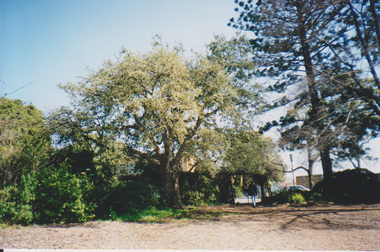 University of Melbourne, Burnley Campus Archives
Album, Sandra Pullman, National Estate/Heritage Register Photographs, 2001
... National Estate/Heritage Register Photographs...national estate...heritage register...Photograph Album sent in with the National Estate/Heritage Register by Sandi Pullman. (1) Old car park (Bull Paddock) with Cork Oak. (2) Main Building front steps. (3) Main Building with Magnolia grandiflora. (4)View of Luffmann Ponds and old willow. (5) View of Ginkgo and Emily Gibson bed. (6) Looking between Emily Gibson beds to English Oak. (7) Summer House. (8) Luffmann Ponds. (9) Bergenia Walk with conifers. (10) View of Pencil Pines around entrance to Sunken garden. (11) Luffmann Ponds and Pinus canariensis. (12) View of entrance to Sunken garden. (13-14) Sunken garden. (15) Original terracing at entrance to Shady Walk. (16) Pears in blossom in Field Station. (17) Agathis robusta from the Herb Garden. (18) Ellis Stones Rock garden newly replanted. (19) james Hitchmough Grasslands. (20) Elm tree with Dairy in the background. (21) Original Red Gum in james Hitchmough Grasslands. (22) Kath Deery Native garden. (23-24) Rose Garden. (25) Sequoiadendron giganteum....National Estate/Heritage Register Photographs Album Sandra Pullman ...Photograph Album sent in with the National Estate/Heritage Register by Sandi Pullman. (1) Old car park (Bull Paddock) with Cork Oak. (2) Main Building front steps. (3) Main Building with Magnolia grandiflora. (4)View of Luffmann Ponds and old willow. (5) View of Ginkgo and Emily Gibson bed. (6) Looking between Emily Gibson beds to English Oak. (7) Summer House. (8) Luffmann Ponds. (9) Bergenia Walk with conifers. (10) View of Pencil Pines around entrance to Sunken garden. (11) Luffmann Ponds and Pinus canariensis. (12) View of entrance to Sunken garden. (13-14) Sunken garden. (15) Original terracing at entrance to Shady Walk. (16) Pears in blossom in Field Station. (17) Agathis robusta from the Herb Garden. (18) Ellis Stones Rock garden newly replanted. (19) james Hitchmough Grasslands. (20) Elm tree with Dairy in the background. (21) Original Red Gum in james Hitchmough Grasslands. (22) Kath Deery Native garden. (23-24) Rose Garden. (25) Sequoiadendron giganteum.national estate, heritage register, sandi pullman, sandra pullman, bull paddock, cork oak, magnolia, luffmann ponds, willow, ginkgo, emily gibson bed, english oak, summer house, bergenia walk, conifers, pencil pines, sunken garden, pinus canariensis, shady walk, pears, blossoms, field station, agathis robusta, herb garden, ellis stones rock garden, james hitchmough grasslands, elm tree, dairy, red gum, kath deery native garden, rose garden, sequoiadendron giganteum. -
 Glen Eira Historical Society
Document - Roseneath, Nepean Highway, 31, Elsternwick
... National Trust Register... National Estate...Kilda Riding Historic Buildings Register National Trust Register National Estate Register Italianate Style Architectural Styles Architectural Features Mansions Brick Houses Verandahs Cast Iron Work Bluestone Bay Windows Land Subdivisions Merchants Judges Leases Councillors Document Roseneath, Nepean Highway, 31, Elsternwick ...A photocopy of a Caulfield Conservation Study conducted in January 1995 by historian Andrew Ward of the house Roseneath named thus by 1904. The document includes a photocopied photograph of the front façade, although the features are unclear. The document, which includes a bibliography, details the history of Roseneath, including owners and occupiers, as well as the architectural features of significance and historical value.ward andrew, millar william, boyle andrew, worthington george, tulloch annie, cross anastasia, meek alex, caulfield, roseneath, elsternwick, nepean highway, mcmillan street, point nepean road, rusden street, cumbernauld, hawthorn road, glenmoore, st. georges road, caulfield south, shire of caulfield, east st. kilda riding, historic buildings register, national trust register, national estate register, italianate style, architectural styles, architectural features, mansions, brick houses, verandahs, cast iron work, bluestone, bay windows, land subdivisions, merchants, judges, leases, councillors -
Glen Eira Historical Society
Document - Grace Darling, Bond Street, 1, Caulfield North
... ... National Estate Register...Grace Darling Bond Street Caulfield Conservation Study Ward Andrew Architectural features Architectural styles Victorian style Williams John Balaclava Road Reid J G Duffet J Caulfield Cup Caulfield North Victorian Amateur Turf Club Booran Road Reddan Road Melbourne Cup Historical Buildings Register National Estate Register National Trust Register Horse racing Race horses Race horse trainers Jockeys Stables Loose boxes Timber houses Roofs Cast iron work Lofts Bricks Document Grace Darling, Bond Street, 1, Caulfield North ...A photocopy of a four page extract of a Caulfield Conservation Study by Andrew Ward, dated 08/1994, on the house Grace Darling, located at 1 Bond Street, Caulfield North. The study describes the house and its stables, including architectural features, and provides a history of the property owners and a statement of the house’s historical significance to Caulfield and horse racing. The study includes a photograph of the house exterior (100mm x 150mm), a photograph (100mm x 150mm) of the stables exterior and a photograph (130mm x 100mm) of the interior of the stables.grace darling, bond street, caulfield conservation study, ward andrew, architectural features, architectural styles, victorian style, williams john, balaclava road, reid j g, duffet j, caulfield cup, caulfield north, victorian amateur turf club, booran road, reddan road, melbourne cup, historical buildings register, national estate register, national trust register, horse racing, race horses, race horse trainers, jockeys, stables, loose boxes, timber houses, roofs, cast iron work, lofts, bricks -
Glen Eira Historical Society
Document - Lord Lodge, Booran Rd 30 – Andover (1899) Moidart (1910)
... ... National Estate Register...Leek John Merrill Alfred Macdonald Leslie Arthur John Robertson John Ward Andrew Ingliston Sobar Havelock Proud Future Lord Andover Moidart Lord Lodge Grace Darling Caulfield East Booran Rd Glen Eura Rd Neerim Rd Caulfield Racecourse Reserve Victorian Amateur Turf Club Historic Buildings Register National Estate Register Caulfield Cup Horses Stables Horse Racing Racehorses Outbuildings Racehorse Trainers Depression 1890s Brick houses Mansions Towers Verandahs Stained Glass Italianate Style Victorian Style Architectural Features Architectural Styles Document Lord Lodge, Booran Rd 30 – Andover (1899) Moidart (1910) ...A photocopy of a 4 page extract from the Caulfield Conservation Study of the house and stables at 30 Booran Rd, conducted January 1995 by Andrew Ward. This document details the history of the property, including its 3 names Andover (1899), Moidart (1910) and Lord Lodge and lists previous owners. It also describes in detail the architectural features of Lord Lodge. Three photocopies of photographs are included. The front view of the house, the external view of the stables and an internal view of the stables.leek john, merrill alfred, macdonald leslie, arthur john, robertson john, ward andrew, ingliston, sobar, havelock, proud, future, lord, andover, moidart, lord lodge, grace darling, caulfield east, booran rd, glen eura rd, neerim rd, caulfield racecourse reserve, victorian amateur turf club, historic buildings register, national estate register, caulfield cup, horses, stables, horse racing, racehorses, outbuildings, racehorse trainers, depression 1890s, brick houses, mansions, towers, verandahs, stained glass, italianate style, victorian style, architectural features, architectural styles -
Glen Eira Historical Society
Document - Nettalie
... ... National Estate Register...Ward Andrew Forsyth William Forsyte William Noall William Grimwade Frederick Shepherd Desailly Alfred Bryant Bessie Bryant Herbert Ware Martha Cameron William Nettalie Balaclava Road Orrong Road Caulfield North Fosbery Ave Netley Harleston Caulfield North Historic Building Register National Estate Register National Trust Register Melbourne Grammar School Cast iron work Verandahs Victorian style Stained glass Architectural features Architectural styles Brick houses Stables Mansions Pharmacists Lawyers Doctors Flats Schools Bay windows Land values Document Nettalie ...Two photocopies of the October 1994 Caulfield Conservation Study by Andrew Ward of the house at 73 Balaclava Rd Caulfield named Nettalie by 1899. In the documents(s) Ward details the history of ownership and land values the architectural features and historical significance. A bibliography is included as well as a photograph of the front facade of Nettalie which like the study includes two copies but of varying sizes.ward andrew, forsyth william, forsyte william, noall william, grimwade frederick shepherd, desailly alfred, bryant bessie, bryant herbert, ware martha, cameron william, nettalie, balaclava road, orrong road, caulfield north, fosbery ave, netley, harleston, caulfield north, historic building register, national estate register, national trust register, melbourne grammar school, cast iron work, verandahs, victorian style, stained glass, architectural features, architectural styles, brick houses, stables, mansions, pharmacists, lawyers, doctors, flats, schools, bay windows, land values -
 Glen Eira Historical Society
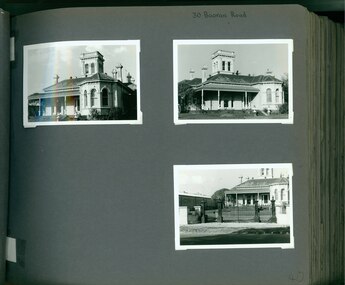
Album - Album page, Booran Road, 30, Circa 1972
... ...national estate register...Along with 'Lord' a number of well known racehorses including Sobar, Havelock, Proud and Future were trained at Lord Lodge ..... trevor hart jenny o'donnell booran road mansion caulfield east ingliston sobar havelock proud future lord andover moidart lord lodge grace darling caulfield racecourse reserve victorian amateur turf club historic buildings register national estate register caulfield cup horses stables horse racing racehorses outbuildings racehorse trainers depression 1890s brick houses mansions towers verandahs stained glass italianate style victorian style architectural features architectural styles john leek leslie macdonald john arthur john robertson alfred merrill jenny odonnell Handwritten: 30 Booran Road [top right hand corner] / 40 [bottom right] Page 40 of Photograph Album with three landscape photographs of the exterior of this house. ...This photograph is part of the Caulfield Historical Album 1972. This album was created in approximately 1972 as part of a project by the Caulfield Historical Society to assist in identifying buildings worthy of preservation. The album is related to a Survey the Caulfield Historical Society developed in collaboration with the National Trust of Australia (Victoria) and Caulfield City Council to identify historic buildings within the City of Caulfield that warranted the protection of a National Trust Classification. Principal photographer thought to be Trevor Hart, member of Caulfield Historical Society. Most photographs were taken between 1966-1972 with a small number of photographs being older and from unknown sources. All photographs are black and white except where stated, with 386 photographs over 198 pages. From Glen Eira Heritage Management Plan 1996 by Andrew Ward: In 1888, John Leek, a trainer, owned Lot 15, measuring one and three quarter acres, in Booran Road, north side between Glen Eira and Neerim Roads. The land backed onto the Caulfield Racecourse Reserve. NAV was £45. In 1890 Leek built for his residence, a ten roomed brick house on the site. NAV was £200. Leek was the owner/trainer of "Ingliston" who won the Caulfield Cup in 1900. Upon the horse's death in 1901, Leek is understood to have defied tradition by spending £20 on boots for the "ragged urchins in Bourke Street" instead of "shouting" at the bar. By 1899, the property was owned and occupied by Alfred Merrill, a dentist and was known as "Andover". NA V had decreased to £ll0. By 1910, Leslie Macdonald, a gentleman had purchased the property and renamed it "Moidart". In 1910-11 Macdonald sold it to John Robertson. The property had extensive wood stables on its north-east boundary and several other outbuildings. The house continued to be described as "Brick, ten rooms" as it was in 1926 when it was owned and occupied by John Arthur, a managing director. The land measured la.2r.31p. and had a NAV of £235. Nine people lived there. In 1926, Arthur also owned the adjoining Lot 16. Other racehorses of note, known to have been stabled here include Sobar, Havelock, Proud, Future and Lord.Victorian Heritage Register https://vhd.heritagecouncil.vic.gov.au/places/13532 What is significant? Lord Lodge is a thoroughbred racehorse training complex adjacent to Caulfield Racecourse, established in 1890. The area immediately around the racecourse has been associated with horse racing activities and businesses servicing the industry since the development of the racecourse in late the 19th century. Lord Lodge was named by the present occupants after the champion racehorse Lord who was stabled there in the 1950s. In the early 20th century the property was known as 'Andover' and subsequently 'Moidart'. The site consists of a single storey brick Italianate villa, jockeys' quarters, stables and open day yards with direct access to Caulfield racecourse from the rear of the property. The villa of 10 rooms on bluestone foundations was constructed in 1890 by John Leek, a horse trainer who purchased the newly subdivided land in 1888. The house has many Victorian Italianate or Boom Style features although it is more modest than many villas of its style. It has an asymmetrical facade with a faceted bay window and a prominent central tower with low pitch pyramidal roof that provides a clear view of the racecourse. Other characteristic features include stilted segmented arches, bracketed eaves, stucco wall finish and cast cement ornamentation. A room has been added on the north-facing verandah in sympathetic style and finish. Internally the rooms are substantially intact with original marble fireplaces and intricate ceiling roses and cornices. An entrance toward the rear of the southern side of the house is said to be where the stable hands, jockeys and other staff lined up for their meals. In the southeast corner of the property, backing directly on to Caulfield racecourse, is a substantial late Victorian timber stable, probably constructed in the 1890s but first appearing on the property title in 1910. The stable has 12 stalls, a loft and brick pavement and jerkin head roof form with varnished pine-lined ceiling carried on a chamfered timber frame. It has an original roof lantern. The doors of the stalls are not the original sliding doors but swing doors obtained from a barn at Epsom Racecourse in Mordialloc prior to demolition. Outside the gambrel roof has fretted barges but the building is otherwise utilitarian. Timber throughout the stalls has been worn by chewing and rubbing of horses over the century of its use. In the southern half of the property are open day yards where the racehorses are kept during the day. The red brick, single storey jockeys' quarters to the rear of the villa were probably built around 1950. A small brick, possibly late Victorian structure on the eastern boundary thought to have originally been a gardening shed, has been converted to a stable of two stalls. Modern concrete brick stables fill the northeast portion of the property. At the front of the property two Moreton Bay Figs (Ficus macrophylla), probably planted in the late 19th century, provide shade for horses in the day yards. In the 1890s John Leek sold the property, relocating his training facility to one of the newly established racecourses at Mentone or Mordialloc (Epsom). By 1899, the property was owned and occupied by Alfred Merrill, a dentist, who named the property 'Andover'. In 1910 it was purchased by Leslie McDonald, a gentleman, and renamed 'Moidart'; sold in 1910-1911 to John Robertson; and again in 1926 to John Arthur, a racehorse owner. The Victorian Amateur Turf Club purchased the property in the late 1930s and since this time has been leased to racehorse trainers. It is unclear whether the property operated as a training facility between 1899 - 1926. Several notable trainers and jockeys are associated with Lord Lodge. The best known is Arthur 'Scobie' Breasley, Australia's most successful jockey who was apprenticed to trainer Pat Quinlan at Lord Lodge (then 'Moidart') from 1928 - 1935. Breasley rode winners of the Caulfield Cup in four successive years 1942-45 and again in 1952. John Leek, the original owner of Lord Lodge trained Ingliston, the 1900 Caulfield Cup winner. Along with 'Lord' a number of well known racehorses including Sobar, Havelock, Proud and Future were trained at Lord Lodge .....Page 40 of Photograph Album with three landscape photographs of the exterior of this house.Handwritten: 30 Booran Road [top right hand corner] / 40 [bottom right]trevor hart, jenny o'donnell, booran road, mansion, caulfield east, ingliston, sobar, havelock, proud, future, lord, andover, moidart, lord lodge, grace darling, caulfield racecourse reserve, victorian amateur turf club, historic buildings register, national estate register, caulfield cup, horses, stables, horse racing, racehorses, outbuildings, racehorse trainers, depression, 1890s, brick houses, mansions, towers, verandahs, stained glass, italianate style, victorian style, architectural features, architectural styles, john leek, leslie macdonald, john arthur, john robertson, alfred merrill, jenny odonnell -
 Glen Eira Historical Society
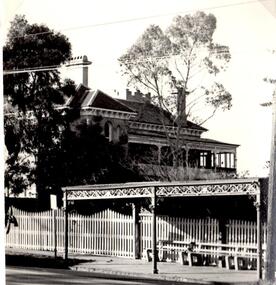
Document - PRAHRAN AND MALVERN TRAMWAYS TRUST
... ... National Estate register...Prahran and Malvern Tramways Trust P+MTT Tram companies Land transport Public transport Substation Tram shelter Powerhouse Parapet Brick Stuccoed Roof lanterns Historic Buildings register National Estate register National Trust Register Rusden Street Balaclava Road Orrong Road Hawthorn Road Dandenong Road Glen Huntly Road Grange Road Elsternwick Elsternwick Railway Station Caulfield Caulfield North Caulfield Railway Station Point Ormond Grimwade House Breydon Graeme Tramcar Edwardian Transport Trams Tram Depot Document PRAHRAN AND MALVERN TRAMWAYS TRUST ...This file has 3 items. 1/Photocopy of Caulfield Conservation Study Report by Andrew Ward dated January 1995 of 6-8 Rusden Street, Elsternwick being former Prahran and Malvern Tramways Trust substation. Report includes image, existing registrations, description of substation building and condition. 2/Original photograph (black and white) of tram shelter at corner of Balaclava Road and Orrong Road, Caulfield North, outside Grimwade House (school), description written on back of photo. 3/Original copy of magazine of the Tramway Museum Society of Victoria Ltd. ‘Running Journal’ Vol 7 No. 3 dated June 1970. Article (pages 3-7) entitled ‘Feeding & Filling, The Story of the Prahran & Malvern Tramways Trust’ written by Graeme Breydon. Article written for the 60th anniversary of the trust which opened for business on 30/05/1910 and describes the establishment and development of Tramways between suburbs of Malvern & Prahran including Elsternwick, Caulfield & Glen Huntly. Article includes 4 images plus map and diagram. Included: Photograph 3: Opening ceremony of tramway extension from Balaclava junction to Elsternwick railway station on Glen Huntly Road dated 13/11/1913. Diagram of various tramway routes including Prahran & Malvern Tramways Trust routes.prahran and malvern tramways trust, p+mtt, tram companies, land transport, public transport, substation, tram shelter, powerhouse, parapet, brick, stuccoed, roof lanterns, historic buildings register, national estate register, national trust register, rusden street, balaclava road, orrong road, hawthorn road, dandenong road, glen huntly road, grange road, elsternwick, elsternwick railway station, caulfield, caulfield north, caulfield railway station, point ormond, grimwade house, breydon graeme, tramcar, edwardian, transport, trams, tram depot -
Victorian Aboriginal Corporation for Languages
Book, Sue Ferrier, Wathaurong medicines
... ...National Estate Register...Wathaurong Bellarine Peninsula ethnobotany oral history archaeology bush medicine National Estate Register botany William Buckley Maps, b&w photographs, word lists Report to gather oral history and review ethnobotanical resources of Bellarine Peninsula. ...Report to gather oral history and review ethnobotanical resources of Bellarine Peninsula. Investigates traditional medicines in the Victorian area of the Wathaurong people.Maps, b&w photographs, word listswathaurong, bellarine peninsula, ethnobotany, oral history, archaeology, bush medicine, national estate register, botany, william buckley -
Victorian Aboriginal Corporation for Languages
Book, Sue Ferrier-Wesson, Yiruk plant use, 1991
... ...National Estate Register...Gunai Gippsland plants ethnobotany Wilsons Promontory National Estate Register storytelling Maps, b&w illustrations, word lists Large spiral bound photocopy of the text. ...Large spiral bound photocopy of the text. Covers many aspects of the Gunai language, particularly through plants and shells.Maps, b&w illustrations, word listsgunai, gippsland, plants, ethnobotany, wilsons promontory, national estate register, storytelling -
Glen Eira Historical Society
Document - Hopetoun, Hopetoun Street, 2, Elsternwick
... It outlines a description of the Italianate villa architectural aspects of Hopetoun Private Hospital, the history of the owners of the property and the recommendations for inclusion on the National Estate Register and for the planning Scheme control. ...It outlines a description of the Italianate villa architectural aspects of Hopetoun Private Hospital, the history of the owners of the property and the recommendations for inclusion on the National Estate Register and for the planning Scheme control. ...Photocopy of Caulfield Conservation Study for this address, conducted in September 1994. It outlines a description of the Italianate villa architectural aspects of Hopetoun Private Hospital, the history of the owners of the property and the recommendations for inclusion on the National Estate Register and for the planning Scheme control. By Andrew Ward. Includes two photocopied photographs of the exterior of the exterior.italianate style, hopetoun, melrose, hospitals, verandahs, mansions, towers, architectural features, architectural styles, webb charles, architects, glenhuntly road, elsternwick, cutts joseph, korong street, king street, hopetoun street, geoghegan hanbury, webb alfred, kopat pty ltd, webb florence mabel, o’brien annie, reeve charles, haines edith, thomas albert, ward andrew, hopetoun private hospital -
Glen Eira Historical Society
Document - CAULFIELD RSL
... The assessment describes the architectural features of the property, offers a brief history of it, specifies why it should be considered significant, and recommends that it be added to the National Estate Register. Included is a black-and-white photograph of the exterior of the building. 2/An assessment (17 long pages plus appendix) of the car parking issues procured as a result of the decision to refurbish the Caulfield RSL. ...The assessment describes the architectural features of the property, offers a brief history of it, specifies why it should be considered significant, and recommends that it be added to the National Estate Register. Included is a black-and-white photograph of the exterior of the building. 2/An assessment (17 long pages plus appendix) of the car parking issues procured as a result of the decision to refurbish the Caulfield RSL. ...This file contains two items pertaining to the property housing the Caulfield RSL: 1/A photocopy (2 pages) of an assessment of the property, dated 01/1997, by Andrew Ward, for purposes of ascertaining its historical significance. The assessment describes the architectural features of the property, offers a brief history of it, specifies why it should be considered significant, and recommends that it be added to the National Estate Register. Included is a black-and-white photograph of the exterior of the building. 2/An assessment (17 long pages plus appendix) of the car parking issues procured as a result of the decision to refurbish the Caulfield RSL. Prepared by Grogan Richards Pty Ltd, dated 13/11/2002, reviewed by Joanna Gauetty, and authorised by Rody Jude. Included is a description of the Club’s location and surrounding motorways as they existed at the time, a description of the Club itself (eg its opening hours and rate of patronage as per each opening hour), occupancy surveys, descriptions of other recent car parking construction within the same area, a description of the extensions the RSL is aiming to construct, and descriptions of the considerations any new construction must take into account. Included is a black-and-white map of Caulfield noting the RSL’s location, and two black-and-white photographs showing the view to the north and south of St. George’s Road, respectively.caulfield, caulfield returned servicemen league (rsl), exservice organisations, clubs and associations, ward andrew, glen eira heritage management plan, historic buildings, architectural, styles, national trust company, st. leonard’s, elsternwick club, grogan richards pty ltd, returned servicepeople, armed forces, soldiers, aged people, senior citizens centres, st. george’s road, elsternwick, english domestic revival style, moderne style, brick houses, bay windows, architectural features, prendergast ellen mrs., ford grylis, dl design group, gauetty joanna, jude rody, parking, glen eira planning scheme -
 Surrey Hills Historical Society Collection
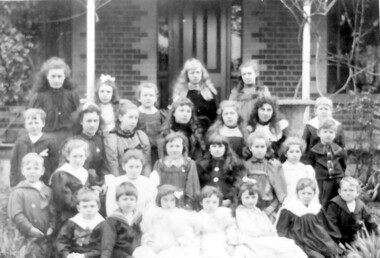
Photograph, Ken Hall (deceased), Campden Ladies College students, Windsor Crescent, Surrey Hills, Copy - c1983
... Grantown House is extant and has a National Estate Register Listing. The citation for it states that Mrs Philippa James leased it from owner William Ross and operated a ladies school from here from 1872 until 1878. ...Grantown House is extant and has a National Estate Register Listing. The citation for it states that Mrs Philippa James leased it from owner William Ross and operated a ladies school from here from 1872 until 1878. ...Campden Ladies College was located at 16 Windsor Crescent from 1887-1898 and then at 44 Windsor Crescent from 1899-1901 under the direction of Mrs Philippa James and one of her daughters, also Philippa. Philippa Bridges was born in Pentonville, Middlesex in 1820. She was engaged to John Frederic James before she left England and they were married soon after he arrived in Melbourne in 1853. He was the second registrar at the University of Melbourne (1856-1864) and died suddenly in 1864. The couple had 4 daughters (3 surviving - Mary, Philippa and Elizabeth) and one son, John Frederic Chase James, who lived at 'St Helena', Norfolk Road, Surrey Hills. Their 2nd daughter, Philippa Sophia assisted in the school; she pre-deceased her mother and died at 'Campden' on 18 March 1900. Mrs James' obituary in the Box Hill Reporter on 5 May 1911 states that she opened an earlier school called Grantown House in Nicholson Street, Fitzroy opposite the Exhibition Building after her husband's death. Grantown House is extant and has a National Estate Register Listing. The citation for it states that Mrs Philippa James leased it from owner William Ross and operated a ladies school from here from 1872 until 1878. She had other schools, both before her marriage and one in Balaclava named 'Westbourne'. One of the students (unidentified) in the photo is Edith Dorothy Dunn, who became an early talented photographer.schools, surrey hills, independent schools, education, primary education, dorothy dunn, campden ladies college, (miss) philippa bridges, (mrs) philippa james, edith dorothy dunn, (miss) philippa james -
 Eltham District Historical Society Inc
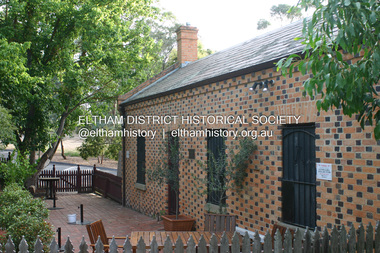
Photograph - Digital Photograph, Alan King, Shillinglaw Cottage, 6 January 2008
... It is on the National Estate and National Trust Registers. The cottage was constructed with handmade bricks in the Flemish Bond style, typical of cottages and farmhouses in Flanders, Europe. ...It is on the National Estate and National Trust Registers. The cottage was constructed with handmade bricks in the Flemish Bond style, typical of cottages and farmhouses in Flanders, Europe. ...Covered under National Estate, National Trust of Australia (Victoria) Local Significance and Heritage Overlay, Nillumbik Planning Scheme. Published: Nillumbik Now and Then / Marguerite Marshall 2008; photographs Alan King with Marguerite Marshall.; p95 Thanks to an Australia first effort by local residents, the historic Shillinglaw Cottage still survives. The cottage at Panther Place, Eltham, once stood about 100 metres away on Main Road. But in 1963 it faced demolition to make room for the Eltham Shire Offices (since demolished). However residents rallied to save Shillinglaw Cottage and became the first in Australia to remove and reconstruct an early settler’s brick building. A fundraiser was the residents’ compilation of loved recipes into the cookery book, Flavour of Eltham. The cottage, built in the late 1870s by noted pioneer builder George Stebbing, is one of Eltham’s earliest buildings and associated with significant early settlers. It is on the National Estate and National Trust Registers. The cottage was constructed with handmade bricks in the Flemish Bond style, typical of cottages and farmhouses in Flanders, Europe. It features burnt ‘header’ bricks over the façade, which gives a chequered effect. The roof is made of slate, while the windows are 12-paned sash with relieving arches. It is not clear who were the first owners of the cottage. The National Trust claims that Stebbing built it for farmer Thomas Cochrane.1 Others say Cochrane first owned the land but Stebbing was Shillinglaw’s first owner and remained so until 1887. The Shillinglaw family then bought it and lived there for around 80 years until 1963 when they sold it to the Eltham Council.2 Farmer Thomas Cochrane bought the Shillinglaw Cottage site from land developer Josiah Holloway. The site was the largest in what Holloway called Little Eltham, of some 30 acres (12 ha), extending along the creek from Henry Street to Luck Street. In 1874 Cochrane sold the land to George Stebbing. Meanwhile in 1861, Stebbing was the owner and occupier of a house at Pitt Street, Eltham, which he had built. Evelyn Observer journalist James Rossiter rented the Pitt Street house, then in 1881 Phillip Shillinglaw occupied it. Stebbing constructed several buildings of note in the area, including the Uniting Church at John Street, the building beside it – a former bank – and St Margaret’s Church of England in Pitt Street. Stebbing was also an Eltham Shire Councillor from 1871 to 1873 and a trustee and treasurer of the Eltham Wesleyan Church.3 In the 1870s he is recorded as the owner of up to five houses. Earlier he had been described as a bricklayer and later became a farmer. In 1882 Stebbing returned to the Pitt Street house and Shillinglaw occupied the new house in Main Road, which he owned from 1887. Shillinglaw was a prolific poet and preached at the Eltham Primitive Methodist Church, where he also served as Sunday School superintendent and led the Young People’s Society Christian Endeavour. The Shillinglaws saw many changes in their property’s boundaries – the major one occurring at the turn of the century when land for the railway and Eltham station was acquired from their holding. The northern part of the remaining land was then used for some of the first commercial developments in what was to become the Eltham Shopping Centre. Later still, the land immediately north of the cottage was bought by the Eltham War Memorial Trust for the War Memorial Buildings and the fire station. The Trust’s land eventually passed to the council. The council bought the remaining two acres (0.8 ha) with the house, and with the exception of the commercial development between the fire station and the post office, all of the former Shillinglaw land is owned by the council or government instrumentalities.4 Since the late 20th century, the cottage has had varied uses, such as a handcrafts store and as a restaurant.This collection of almost 130 photos about places and people within the Shire of Nillumbik, an urban and rural municipality in Melbourne's north, contributes to an understanding of the history of the Shire. Published in 2008 immediately prior to the Black Saturday bushfires of February 7, 2009, it documents sites that were impacted, and in some cases destroyed by the fires. It includes photographs taken especially for the publication, creating a unique time capsule representing the Shire in the early 21st century. It remains the most recent comprehenesive publication devoted to the Shire's history connecting local residents to the past. nillumbik now and then (marshall-king) collection, shillinglaw cottage -
 Bendigo Historical Society Inc.
Administrative record - Commercial Egg Producers' Association of Victoria (CEPA) Central Council Correspondence, 1988
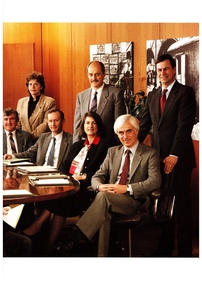
... Private property can be added to the National Estate register without owners being notified or aware. ...Private property can be added to the National Estate register without owners being notified or aware. ...The Commercial Egg Producers' Association of Victoria was active by the 1930s, engaging in industry management and lobbying.The Commercial Egg Producer's Association (CEPA) had branches in Bendigo, South Bendigo, Eaglehawk, Wedderburn, Murrabit and Euroa.CEPA Commercial Egg Producer's Association (Bendigo Region) correspondence, for the year 1988. This item includes the following documents: 8504.44a Egg Farmers of Victoria Newsletter Volume 6 No 7 July 1988 - four pages 8504.44b Egg Farmers of Victoria Newsletter Volume 6 No 6 June 1988 - four pages 8504.44c Egg Farmers of Victoria Newsletter Volume 6 No 8 Aug 1988 - four pages 8504.44d Egg Farmers of Victoria Newsletter Volume 6 No 9 Sept 1988 - five pages 8504.44e Farmers of Victoria Newsletter Volume 6 No 11 Nov 1988 - four pages 8504.44f Farmers of Victoria Newsletter Volume 6 No 12 Dec 1988 - six pages 8504.44g Australian Quarantine - Looking to the Future, a Government policy statement, circulated by the Hon. Peter Cook Minister for Resources, December 1988 - 55 page booklet 8504.44h Egg Farmers of Victoria Annual Report 1987 to 1988 - 40 pages 8504.44i 29th Victorian random sample laying test 1986-88 by Loris Mason, Ivan Smith, Keath Pattern, Poultry Industry Services.Final Report. 18 pages. 8504.44j This document is a formal acknowledgment from the Department of Agriculture and Rural Affairs to the Commercial Egg Producers' Association of Victoria. The Department received a letter from the Association, dated 22 July, containing comments on the Minister's statement about egg marketing.The Minister expresses gratitude for the feedback provided by the Association. The comments from the Association have been noted and will be considered in relation to egg marketing policies or decisions. 8504.44k This document is a formal notification regarding appointments to the Egg Board for a term ending June 30, 1989. 8504.44l From Ron Best MLC. Key Points of the NSW Egg Industry Reform Document. The NSW egg industry must shift from heavy regulation to a more market-oriented approach to improve efficiency and competitiveness. Current arrangements are complex, controversial, and unsustainable; managed change is preferred over abrupt deregulation or maintaining the status quo. 8504.44m David Kennedy, MLA, expresses his support for the request to have a representative from Northern Victoria on the Victorian Egg Marketing Board, aligning with the Commercial Egg Producers' Association of Victoria's advocacy. 8504.44n This document is a formal response from the Minister for Agriculture and Rural Affairs to a letter from the Commercial Egg Producers' Association of Victoria regarding changes to the Egg Marketing Act. 8504.44o This document is a formal letter from the Victorian Department of Premier and Cabinet addressed to the Commercial Egg Producers' Association of Victoria. The Department confirms receipt of a letter from the Association regarding egg marketing arrangements. 8504.44p The Poultry Farmer Licensing Committee's key activities during the 1987-1988 financial year included overseeing licensing operations for poultry farmers, ensuring compliance with the Egg Industry Stabilization Act 1983, and reporting to Parliament. 8504.44q National Social Science Survey Volume 1, No 1 Report Aug 1988 8504.44r This document is a professional letter from Policy Consultants to the Commercial Egg Producers Association, highlighting the following key points: Policy Consultants specialize in policy analysis, development, representation, and implementation. The firm has been operating for over 18 months and has built a credible record of achievements for its clients.They have established an excellent reputation for the quality of their work 8504.44s Newsletter "Eggbeat" Spring 1988. Includes: Deregulation in the New Zealand egg industry, as discussed at the 8th Annual Egg Industry Conference, involved significant changes from a previously controlled market. 8504.44t Agrimark News, the Australian Agribusiness Newsletter Issue 3. This document emphasizes the importance of marketing research and strong customer relationships in Australian agribusiness. 8504.44u Jaques Martin Hewitt International May Economic Statement July 1988 - 4 pages. The document provides detailed analysis of changes to superannuation from the May Economic Statement, focusing on impacts for funds, employers, and trustees. 8504.44v Producer Meeting Summary at Crystal Egg July 1988. Record attendance at the meeting reflected widespread concern among producers about low returns in the egg industry. 8504.44w This document is a formal letter from Ron Best, a Victorian legislator, addressed to Kevin Fitzgibbon, Secretary of the Commercial Egg Producers Association of Victoria. Ron Best is monitoring developments regarding a report on the New South Wales (NSW) egg industry and related issues faced by the NSW Government, particularly concerning Mr. Paul Galea. 8504.44x Invitation to Victorian Egg ProducersThe Poultry Research Council is inviting Victorian egg producers to an informal meeting on the evening of March 8th, 1987, at the VEMB auditorium in Keysborough. 8504.44y From the Poultry Research Council. The Poultry Research Council manages levy funds from egg producers and taxpayers to benefit the egg industry and consumers.Levy collection changed as of July 1: 3.25 cents per hen quota, deducted monthly by State Egg Corporations and Boards. 8504.44z From the Poultry Research Council. The Council is reviewing fifty applications for funding new and ongoing projects, as well as travel grants for the 1988/89 financial year. 8504.44aa This document is a formal letter from the Department of Agriculture and Rural Affairs to the Commercial Egg Producers' Association of Victoria, requesting nominations for the Victorian Egg Marketing Board. 8504.44ab The document is a formal letter from the Department of Agriculture and Rural Affairs in Victoria, addressed to the Commercial Egg Producers Association of Victoria. The Department thanks the Association for submitting comments on the Public Bodies Review Committee's report concerning the Victorian Egg Marketing Board. 8504.44ac Key Points of the 1988 Australian Primary Industries and Resources Reforms 8504.44ad This document is a transcript from a 1988 egg industry meeting, highlighting key challenges and concerns regarding egg pricing and industry regulation:There is significant frustration among producers due to poor communication between the government, the Prices Commissioner, the Egg Board, and producers themselves. 8504.44ae This document is a formal letter from the Commercial Egg Producers Association (CEPA) dated December 5, 1988, addressed to Mrs. Jean Vipadi of the Egg Farmers of Victoria. CEPA requests the names of all egg producers supplying the Crystal Egg Company in Bendigo. 8504.44af To the Department of Agriculture and Rural affairs. The Commercial Egg Producers' Association of Victoria formally requests: Copies of all papers presented at a poultry seminar held in Melbourne on June 21, 1988. Organization of a poultry industry seminar in Bendigo or Northern Victoria to facilitate attendance by local producers who find it difficult to travel to Melbourne. 8504.44ag To the Department of Agriculture and Rural affairs. The document is a letter from the Commercial Egg Producers' Association of Victoria addressing concerns about proposed changes to the Egg Marketing Act. 8504.44ah Annual Supplement in the Bendigo Advertiser. The document outlines the challenges and developments in the egg industry in the Bendigo region, focusing on the period up to 1988. 8504.44ai The document is a formal letter from the Central Council of the Commercial Egg Producers' Association of Victoria to the Minister of Agriculture & Rural Affairs. The Association urges the appointment of a representative from northern Victoria poultry producers to the Egg Board, highlighting that country producers have lacked representation for the past 10 years. 8504.44aj To International Public Relations, Melbourne. These points highlight ongoing dissatisfaction with current egg pricing governance and the need for internal resolution before further action. 8504.44ak This document is a formal letter from K. Fitzgibbon, Secretary of an association, addressed to Mr. Kevin Brinkkotter, President of the Poultry Section of the Victorian Farmers Union (V.F.U.).Key Points:The association is requesting clarification on the V.F.U.'s policy regarding Professor Alan Fels and egg pricing. 8504.44al The document is a formal letter from the Commercial Egg Producers Association to the Victorian Egg Marketing Board, dated May 10, 1988. The Association is requesting an increase in the price of all grades of eggs due to rising costs, including upcoming increases in S.E.C. charges.The letter emphasizes the need for a reasonable return to ensure the viability of egg producers. 8504.44am To the Egg Marketing Working Party. Submission from CEPA. 8504.44an This document is a nomination letter proposing candidates for the position of Producer Member on the Victorian Egg Marketing Board. The letter submits a panel of names for consideration for the Producer Member position on the Victorian Egg Marketing Board.Primary Nominee:Ron Robins (born 20th July, 1924) is the first choice. He has 37 years of experience in the egg industry.He operates a farm with his son, managing 10,500 birds, which allows him the flexibility to serve on the Board. 8504.44ao This document is a formal letter from the Commercial Egg Producers Association of Victoria, addressed to Mr. David Kennedy, M.L.A. The Association is requesting a meeting (deputation) with the Labour Party Rural Committee. 8504.44ap To the Labour Party working Committee. CEPA requests a meeting with them. 8504.44aq To the Minister of Agricultura and Rural affairs. Disagreement with the results of a meeting with the Crystal Egg Company. 8504.44ar To the Labour Party Rural Committee requesting a deputation meeting. 8504.44as To the Egg farmers of Victoria. CEPA requests a rise in egg prices. 8504.44at The submission is from Bendigo egg producers to the Victorian Egg Marketing Board, following discussions about establishing an egg washing facility at Crystal Egg Co. in Bendigo.A Board sub-committee (Messrs. Foster and Peacock) was formed to investigate options. 8504.44au Industry Super Update Newletter No 11. Discusses Confusion Over Superannuation Tax Changes. 8504.44av The document presents a review of Victorian egg prices conducted by the Prices Commissioner in March 1988. The review was led by Professor Allan Fels, serving as the Prices Commissioner for Victoria.The focus was on evaluating the pricing structure and market conditions for eggs in Victoria at that time.The review aimed to ensure fair pricing practices and assess any regulatory or economic factors influencing egg prices. 8504.44aw Promotional letter regarding re Industrial Relations. Recipients receive a special update with important changes in the industrial relations system. The Index is a comprehensive guide (over 400 pages) to major and minor players in industrial relations.It contains practical, up-to-date information. 8504.44ax This document is a formal letter from the Victorian Egg Marketing Board to the Commercial Egg Producers Association. The Board previously agreed in 1984 to provide financial assistance to the Victorian College of Agriculture and Horticulture for facility development, but the College did not proceed at that time. The College has now submitted a similar request for financial assistance. 8504.44ay News circulars issued by the Victorian Egg Marketing Board (Egg Farmers of Victoria) during 1988 8504.44az From the Egg Farmers of Victoria disussion of various points which reflect operational changes, pricing adjustments, quality improvements, and future marketing plans for the Victorian egg industry. 8504.44aaa From the Egg Farmers of Victoria. Key Points of the Victorian Egg Marketing Board Regulatory Changes 8504.44aab News circulars issued by the Victorian Egg Marketing Board (Egg Farmers of Victoria) during 1988 8504.44aac The document is a letter from Bernie Dunn, Leader of the National Party (Council), addressing concerns about deregulation in the egg industry. 8504.44aad The letter is from David Kennedy, a member of the Legislative Assembly, addressed to Kevin Fitzgibbons, Secretary of the Commercial Egg Producer's Association.Kennedy encloses a reply from the Minister for Agriculture and Rural Affairs, Mr. Evan Walker, regarding representations made on behalf of the Association about a submission to the Public Bodies Review Committee Report. 8504.44aae From David Kennedy MP - Ministerial Statement on Egg Marketing. 8504.44aaf This document is a formal response from the Legislative Council's Agriculture & Rural Affairs Caucus Committee to a request from the Commercial Egg Producers' Association of Victoria for a meeting. The Committee acknowledges receipt of the Association's request for a meeting regarding concerns in the poultry industry. 8504.44aag This document is a formal letter from Michael John, M.P., Member for Bendigo East, addressed to Mr. Kevin Fitzgibbon, Secretary of C.E.P.A. Acknowledgement of Correspondence:Michael John thanks Mr. Fitzgibbon for his letter dated December 28, 1988, which included a copy of a letter sent to the Minister for Agriculture & Rural Affairs.The correspondence concerns the Public Bodies Review Committee Report on the Victorian Egg Marketing Board. 8504.44aah This document is a letter from Senator Shirley Walters advocating for legislative reform regarding the Australian Heritage Commission Act 1975. Private property can be added to the National Estate register without owners being notified or aware. This process can impose severe restrictions on property use, affecting all types of property (residential, commercial, industrial, rural).Proposed Solution 8504.44aai This document outlines the agenda and contact details for an upcoming meeting of the Coliban Water Investigation Committee. 8504.44aaj Submission for Protest Meeting 1988. Victorian egg producers in 1988 faced significant financial and regulatory challenges 8504.44aak CEPA Minutes of Annual Conference June 1988 8504.44aal Envelope with Crystal Indistries Logo and Address, 37cent Stamp with Queen Elizabeth Australia 8504.44aam Envelope addressed to All Members of CEPA, Card of thanks 8504.44aan Minutes of CEPA Annual Conference June 1988 8504.44aao Newsletter "The Rural Scene" from the Primary Industry and Energy Minister John Kerin. This document outlines the Australian Federal Government's approach to supporting rural industries and communities, emphasizing the interconnectedness of industry and community life in country areas. 8504.44aap From the Department of Agriculture and Rural Affairs. The Department of Agriculture and Rural Affairs is coordinating with the Commercial Egg Producers' Association regarding HPSA seminars at the Egg Board in Keysborough.Greg Parkinson, the main speaker, will reach out to arrange a suitable meeting date. 8504.44aaq Handwritten letter from Murray Oakes re meeting at Roberstsons' 8504.44aar This document is a formal letter from the Victorian Egg Marketing Board (trading as Egg Farmers of Victoria) to the Victorian College of Agriculture & Horticulture. The key points are:Interest-Free Loan OfferThe Board is providing a five-year, interest-free loan of $50,000 to the College. 8504.44aas This document is a formal response from the Crystal Egg Company to Mrs. Joan Heard of CEPA, addressing concerns about the effectiveness of a recent meeting and clarifying issues related to egg industry costs and pricing. 8504.44aat This document is a formal letter from the Department of Agriculture and Rural Affairs regarding the organization of educational poultry seminars in Bendigo. The letter thanks Mrs. Joan Heard for her interest in poultry seminars previously conducted in Melbourne by the World Poultry Science Association (WPSA). 8504.44aau This document is a formal letter from the Minister for Agriculture and Rural Affairs, dated July 27, 1988, addressed to G J Hilson, Secretary of the Commercial Egg Producers Association. 8504.44aav This document is a formal letter from the South Bendigo Branch of egg producers in Victoria, expressing concerns to the Egg Farmers of Victoria about the delayed operation of an egg washer at Crystal. The egg washer, expected to be operational by August, is still not usable, causing concern among small producers.egg producer's information, correspondence, cepa, commercial egg producers' association -
 Federation University Historical Collection
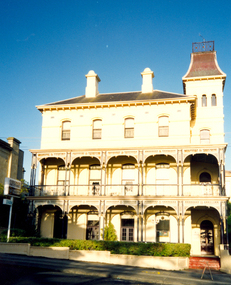
Photograph - Photograph - Colour, Ozone Hotel, Queenscliff, c1992, c 1992
... It was built in 1881 to the designs of William Ellis, and is now on both the Victorian Heritage Register and the Register of the National Estate....It was built in 1881 to the designs of William Ellis, and is now on both the Victorian Heritage Register and the Register of the National Estate. ozone hotel queenscliff william ellis baillieu ozone baillieu house paddle steamer heritage holidays melbourne Photograph of a three storey building with tower. ...The Ozone at Queenscliff was the former house of the Baillieu family and originally called Baillieu House. It became one of the hotels in Queenscliff, operated by the family. It then became known as the Ozone Hotel after the Ozone Paddle steamer that brought many people to the area from Melbourne for their holidays. It was built in 1881 to the designs of William Ellis, and is now on both the Victorian Heritage Register and the Register of the National Estate.Photograph of a three storey building with tower. ozone hotel, queenscliff, william ellis, baillieu, ozone, baillieu house, paddle steamer, heritage, holidays, melbourne -
 The Beechworth Burke Museum
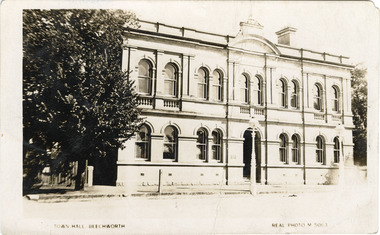
Photograph - Postcard, Town Hall Beechworth, c1910
... The buildings are also registered by the National Estate, the National Trust and protected by Indigo Shire Council’s Planning Scheme. ...Beechworth Town Hall was designed by architects J.J. Coe and Thomas Dalziel and is dated to 1859. The building was made of granite and constructed to local builders Donald and William Fiddes. The original front to the building was replaced by a two story facade in 1889 designed by George Jobbins and built by Thomas Sandham according to a plaque on the front. The Town Hall is remarkable for its vaulted ceilings and columns. Originally the building was used as the Shire Offices but also doubled as a fire station and a courthouse, with still surviving cells underneath. Among the inmates was notorious bushranger Harry Power who was originally transported to Van Dieman’s Land for stealing a pair of shoes. He gained his freedom six years later but spent time in and out of gaol for the rest of his life for a variety of offences including a number of armed robberies. The Town Hall is now home to the Visitor Information Centre which helps visitors with amongst other things, accommodation, tours, event enquiries, and is the commencement point for Precinct walking tours. The Beechworth Town Hall is one of five distinctive granite buildings on Ford Street that comprise the Justice Precinct. It is of considerable historical significance as activity on the site dates from Australia’s gold rush period and was the administrative centre for north-eastern Victoria. The building has seen continual use from 1858 as an important public building and displays many aspects of the history of law enforcement in Victoria. The building is also of substantial architectural significance for its construction from local honey coloured granite, which also showcases early stone masonry techniques and craftsmanship. The Precinct is listed on the Victorian Heritage register and is protected by Heritage Victoria under the Victorian Heritage Act 2017. The buildings are also registered by the National Estate, the National Trust and protected by Indigo Shire Council’s Planning Scheme. Black and White rectangular postcard printed on cardReverse: 1906-1910?beechworth, beechworth town hall, town hall, jj coe, thomas dalziel, granite, beechworth historic building, courthouse, cells, geoge jobbins, thomas sandham, 1859, 1889, walking tours, beechworth historic precinct, historic precinct, harry power, bushranger, australian bushrangers, van dieman's land, transportation, armed robberies -
 Mortlake and District Historical Society
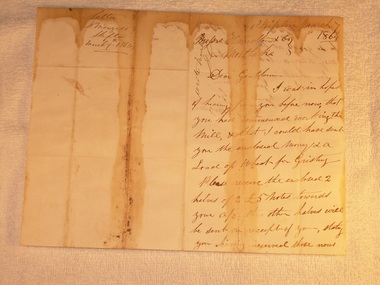
Letter for payment of account Mortlake Mill, March 7 1864
... In 1857 the Mill was sold to Aikman, Hamilton and Geddes who converted it to steampower and later built the prominent chimney, which is on the Heritage Register as part of the National Estate. D. Menzies at Skipton lived at least 85 km away - his wheat which urgently needed milling, faced a slow and arduous journey by bullock dray. ...This letter was sent by a customer D. Menzies at Skipton to the Mortlake Mill, detailing an unusual payment method for the processing of his wheat into flour. David Menzies was a Scots farmer who lived in Skipton c. 1860's on a bend in the Mount Emu Creek. He helped establish the local school and a lane in the township bears his name. The letter illustrates the nature of commerce and the difficulties of communication and life generally in the country at the time. The bluestone Mortlake Mill built in 1856, has been a prominent landmark in Mortlake for over 150 years. It played a significant role in the commercial life of the town and was initially a wind-mill to process district grain for sale. The goldrush at Ararat 100 km. away led to a temporarily increased population and demand for foodstuffs. In 1857 the Mill was sold to Aikman, Hamilton and Geddes who converted it to steampower and later built the prominent chimney, which is on the Heritage Register as part of the National Estate. D. Menzies at Skipton lived at least 85 km away - his wheat which urgently needed milling, faced a slow and arduous journey by bullock dray. After the demise of the Ararat goldfields and the decline in population (as well as the district soils proving unsuitable for sustained wheat cultivation), the operation of the Mill declined too and the proprietors increased their involvement in other activities - supply of building materials, timber felling and sawmills. Despite the apparent difficulties of conducting business in the 1850's, it is notable that commerce thrived at that time in country districts, as an examination of Mill accounts and records show.Handwritten letter dated 1864 (water-stained)Skipton March 7 1864 [to] Messrs. Hamilton & Co. Mortlake. Dear Gentlemen, I was in hope of hearing from you before now that you had commenced working the Mill, & that I could have sent you the enclosed money [for a] load of wheat for Gristing. Please receive the enclosed 2 halves of 2 [two] 5 [pound sign] notes forwarded to your account. the other halves will be sent on receipt of your stating you having received those notes sent. As I am out of flour be so good as say how soon I may send a load of wheat. In haste I am Gentlemen Yours truly D. Menziesmortlake mill grain wheat hamilton geddes aikman laang dixie menzies skipton -
Eltham District Historical Society Inc
Document - Folder, Sweeney
... Estate, 21 June 1997. Photograph and details of "Sweeneys" Newspaper article: "Legacy of convict's success", Diamond Valley News, 2 July 1997. Notes on Thomas Sweeney and his house (for sale), photograph of John Sweeney and family. Printout, National Trust register...Estate, 21 June 1997. Photograph and details of "Sweeneys" Newspaper article: "Legacy of convict's success", Diamond Valley News, 2 July 1997. Notes on Thomas Sweeney and his house (for sale), photograph of John Sweeney and family. Printout, National Trust register ...Thomas Sweeney (1802-1867) was transported in 1823 and granted a conditional pardon in 1838. He married and moved to the Port Phillip District, buying land at Eltham. His house, "Culla Hill" (renamed "Sweeneys") still stands. Contents Typed notes, no author, no date, biography of Thomas Sweeney with copy of parish plan showing Sweeney's original and later land purchases. Typed timeline Thomas Sweeney and typed transcriptions of letters to and from La Trobe archives to Thomas Sweeney. Handwritten notes: Biography of Thomas Sweeney and his descendants, also transcription of letter 10 April 1849 wanting a bridge over the Plenty River, and transcription of C J La Trobe's reply. Photocopy magazine article: "Sweeneys: A home with a hisitory", Australian Home Beautiful, 1 February 1940. Story of Thomas Sweeney and his house, with photographs. Newspaper article: "Capt. Sweeney, Eltham's first Irish settler", Associated Newspapers Eltham Cenenary Supplement, 30 March 1971. Notes on Thomas Sweeney and his house. Photocopy of p.30, "Diamond Valley Sketchbook", Brian McKinlay, 1973. "Sweeney's Cottage, Eltham. Notes and drawing of Sweeneys. Newspaper article: "A convict's cottage", Diamond Valley News, 6 October 1981. Notes on Thomas Sweeney and his house. Newspaper article: "Talented cartoonist depicts story of an Eltham pioneer", Diamond Valley News, 18 February 1986. Judith Russell had drawn cartoons of Thomas Sweeney's life called "Sweeney". Prospectus "Historic Sweeneys Culla Hill, Auction 27 Noveber 1993, 3.00 pm": Photographs and history of property, with map of lots and vegetation.. Newspaper article: "A pioneer's cottage, new-age apartments and a leafy city retreat", The Age Real Estate, 21 June 1997. Photograph and details of "Sweeneys" Newspaper article: "Legacy of convict's success", Diamond Valley News, 2 July 1997. Notes on Thomas Sweeney and his house (for sale), photograph of John Sweeney and family. Printout, National Trust register: Sweeney's. History and description of Sweeneys. Letter Mary Nelson to Eltham District Historical Society, 14 October 2004, enclosing photocopies of material on "Culla Hill" and Mary Sweeney and Michael Carrucan.Newspaper clippings, A4 photocopies, etcthomas sweeney, mary sweeney, patrick sweeney, ship isabella, mary sweeney nee meehan, "culla hill" eltham, "sweeneys" eltham, sweeneys lane eltham, michael connors, patrick guyder, george brown of illawarra district, margaret sweeney nee meehan, paddy sweeney, john sweeney, kate sweene, margaret sweeney, ellen sweeney, annie sweeney], johanna sweeney, annie sweeney, caroline sweeney, mary carrucan nee sweeney, agatha sweeney, agnes sweeney, arthur sweeney, cassie sweeney, frank sweeney, victor burston, peter cuffley, jim murray, bridget sweeney nee coleman, graham caulfield, mccorlick real estate eltham, mary nelson, betty erickson nee carrucan, michael carrucan -
 Eltham District Historical Society Inc
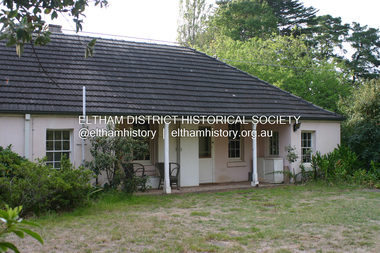
Photograph - Digital Photograph, Alan King, Sweeney's Cottage, Sweeneys Lane, Eltham, 30 January 2008
... National Estate National Trust of Australia (Victoria) Local Sifgnificance Published: Nillumbik Now and Then / Marguerite Marshall 2008; photographs Alan King with Marguerite Marshall.; p19 Thomas Sweeney, a former convict who became a respected citizen, once lived on a property at what is now the corner of Sweeneys Lane and Culla Hill, Eltham. As Sweeney was one of the district’s first settlers, the property is registered...National Estate National Trust of Australia (Victoria) Local Sifgnificance Published: Nillumbik Now and Then / Marguerite Marshall 2008; photographs Alan King with Marguerite Marshall.; p19 Thomas Sweeney, a former convict who became a respected citizen, once lived on a property at what is now the corner of Sweeneys Lane and Culla Hill, Eltham. As Sweeney was one of the district’s first settlers, the property is registered ...Part of the original cottage named Culla Hill built by Thomas Sweeney (a former convict) remains as a small section of today’s house. Covered under Heritage Overlay, Nillumbik Planning Scheme National Estate National Trust of Australia (Victoria) Local Sifgnificance Published: Nillumbik Now and Then / Marguerite Marshall 2008; photographs Alan King with Marguerite Marshall.; p19 Thomas Sweeney, a former convict who became a respected citizen, once lived on a property at what is now the corner of Sweeneys Lane and Culla Hill, Eltham. As Sweeney was one of the district’s first settlers, the property is registered by the National Trust. Thomas Sweeney was born in 1802, son of impoverished tenant farmers in Tipperary County, Ireland. He became a ploughman, then at 21 he was sentenced to hang for setting on fire the house of Patrick Guyder at Gullshill. It is said the arson was due to a dispute over undelivered guns to a social justice guerilla group, the White Boys, of which Sweeney was a member. But the sentence was commuted to life transportation to Australia in 1823.1 Apparently in Sydney he became a servant to James Chandler at Botany. Soon James Chandler leased his farm and became a catechist on the Hawkesbury River, so Sweeney was reassigned to a former convict, John Brown, at Liverpool. Later Sweeney was assigned to George Brown of Lake Illawarra. In 1831, Sweeney was granted a ticket-of-leave and bought a boat to carry goods between Illawarra district and Sydney Town. He married his first wife who had come to Australia as a free woman. However she drowned after bearing him a daughter. In 1838, one month after he had received a conditional pardon, Sweeney married a blacksmith’s daughter, Margaret Meehan, newly arrived from Ireland. They then moved to Port Phillip and squatted on the south side of the Yarra River, about seven miles (11km) from Melbourne. Around 1842, Sweeney bought 110 acres (44.5ha) in the parish of Nillumbik for £110. He built a slab hut 12 x 10 feet (3.6m x 3m) and then his homestead, Culla Hill, a typical Tipperary style cottage, now known as Sweeney’s Cottage. It was here that many generations of Sweeneys lived for almost 100 years. Culla Hill became a social centre for the district and the Catholic community used it as a church. Sweeney was apparently on good terms with a tribe of Aborigines living on the river nearby, who helped him build his house.2 Sweeney proved himself a civic-minded leader. In 1844, he led a call for a bridge over the Plenty River. He was on the first school board and supplied the first grain for Eltham’s mill. Sweeney profited during the gold rush, not by gold digging, but by providing supplies for nearby fields and others as far away as Beechworth.3 Thomas Sweeney died in 1867 and was buried at the Eltham Cemetery, leaving two sons, five daughters, and 300 acres (121.4ha), as well as Culla Hill. Culla Hill – by then reduced to 75 acres (30ha) – was sold out of the family in 1939, then renamed Sweeneys. The present Sweeneys Lane, running diagonally through the original holding, was the track to the house. Part of the original cottage remains as a small section of today’s house. The dining-family room fronted by a veranda is original, and although there have been some changes, the cedar door and most of the small 12-paned wooden-framed windows are original. The walls are made of the original hand-made brick. After buying the property in 1952 Mr and Mrs Burston demolished a dilapidated slab hut, a three-roomed detached kitchen and cellar, as materials needed to restore them were very difficult to obtain so soon after the war.4 However the barn remains almost in its original condition. It is believed to have been built from stone quarried on the property. Now roofed with iron sheets it was probably originally thatched. The sandstone barn has a peaked roof supported by the original saplings and a doorway large enough to accommodate a fully loaded wagon.This collection of almost 130 photos about places and people within the Shire of Nillumbik, an urban and rural municipality in Melbourne's north, contributes to an understanding of the history of the Shire. Published in 2008 immediately prior to the Black Saturday bushfires of February 7, 2009, it documents sites that were impacted, and in some cases destroyed by the fires. It includes photographs taken especially for the publication, creating a unique time capsule representing the Shire in the early 21st century. It remains the most recent comprehenesive publication devoted to the Shire's history connecting local residents to the past. nillumbik now and then (marshall-king) collection, culla hill, eltham, sweeney's cottage, sweeneys lane, thomas sweeney -
 Eltham District Historical Society Inc
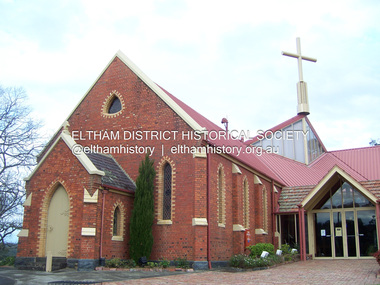
Photograph - Digital Photograph, Marguerite Marshall, St John's Anglican Church, Diamond Creek, 7 September 2008
... National Estate Ntionl Trust of Australia (Victoria) Local significance Published: Nillumbik Now and Then / Marguerite Marshall 2008; photographs Alan King with Marguerite Marshall.; p85 St John’s Anglican Church stands like a beacon on the hill on Main Street, Diamond Creek. Today the church has a large congregation, but its early years were marked by a small congregation struggling to find enough money to survive. It was gold in Diamond Creek that resulted in the building of this National Trust registered...National Estate Ntionl Trust of Australia (Victoria) Local significance Published: Nillumbik Now and Then / Marguerite Marshall 2008; photographs Alan King with Marguerite Marshall.; p85 St John’s Anglican Church stands like a beacon on the hill on Main Street, Diamond Creek. Today the church has a large congregation, but its early years were marked by a small congregation struggling to find enough money to survive. It was gold in Diamond Creek that resulted in the building of this National Trust registered ...The building was designed by Charles Maplestone of Heidelberg, son-in-law to Anthony Beale of St Helena. Maplestone was a prominent architect who came out to Australia with his family in 1852. The foundation stone was laid by Mrs Isabella Maplestone on 11th November 1867. The bricklayers for the church were George Stebbing, H Limmer, H Spicer and a Mr Timm while Thomas Day was the stonemason. Another three years were to pass before sufficient money could be raised for its completion. It was opened by Bishop Perry on 1st November, 1870. The church bell which hung under a tree for 50 years until it was incorporated in the parish hall was brought out from England and presented by Charles Orme. In 1916, the estate of George Martin Pizzey left sufficient money to build the red brick hall, which still stands today (2023) though in January 1969 the hall and bell tower were badly damaged by bushfire. Coincidentally the former home of benefactor, George Pizzey was destroyed in the same fire. Of particular significance are the interior and exterior of the church, the Sunday school and hall with emphasis on pre-World War I fabric (excluding the 1990s additions) and the three coloured glass windows currently suspended in the 1990s entry foyer. In 2011 further alterations were made to the front of the Church. The church is historically significant because it was the oldest public building in the former Diamond Valley Shire, is amongst the oldest buildings in the Shire of Nillumbik and is associated with the early settlement of the Diamond Creek district. The church is historically, socially and spiritually significant because it has been a place of worship for over 150 years and continues to be, an important meeting place in the Shire. The church is aesthetically significant for the three stained glass windows executed by the noted stained glass manufacturers, Ferguson & Urie, as well as the supporting coloured glass windows in the church. The Sunday school & parish hall is architecturally significant because the hall is a well executed and preserved example of the work of noted church architects, North & Williams. It is historically significant because it is connected with local parishioner and Melbourne industrialist, George Pizzey, who bequeathed funds for its construction. Covered under Heritage Overlay, Nillumbik Planning Scheme. National Estate Ntionl Trust of Australia (Victoria) Local significance Published: Nillumbik Now and Then / Marguerite Marshall 2008; photographs Alan King with Marguerite Marshall.; p85 St John’s Anglican Church stands like a beacon on the hill on Main Street, Diamond Creek. Today the church has a large congregation, but its early years were marked by a small congregation struggling to find enough money to survive. It was gold in Diamond Creek that resulted in the building of this National Trust registered property.1 This church is far removed from William Wilson’s humble barn (later the Bowling Green) where the first Anglican church services were conducted – probably the first in the district.2 In the mid 19th century services were infrequent as the Rev Francis Hales, travelling on horseback, also conducted services elsewhere, including at Heidelberg, Coburg, Kinglake, Arthurs Creek, St Andrews and Kangaroo Ground. In 1860 Diamond Creek came under the jurisdiction of the Eltham Parish. Until the mid 1860s the Diamond Creek settlement included only about 20 families who were struggling farmers. But this changed when gold was found in 1862. Then the township grew to 200 families, including miners, civil administration workers and shopkeepers. The resulting growth of Church of England adherents prompted them to petition the Government in 1866 for land to build a church. The area chosen, on which the original building still stands, was at the centre of the proposed township. Today church leaders believe that this conspicuous location is one of the reasons for its exceptional growth. Prominent architect Charles Maplestone designed the building as he did the Presbyterian Church at Kangaroo Ground. St John’s, which is still intact, was built in the Gothic Revival style with the traditional rectangular plan of a central nave and sanctuary at the end. It is typical of small churches built in Victoria at that time, with polychromatic hand-made bricks, a porch, diagonal buttresses and a slate roof.3 The church was officially opened by Lord Bishop Perry on November 1, 1870. But during the next 40 years, due to the varying fortunes of gold mining, the church struggled to remain viable. In 1909 it separated from the Eltham Parish to form a parish with Greensborough. Life became more difficult with the privations of World War One. Then disaster struck in 1915 when fire destroyed the Diamond Creek Gold Mine, wiping out the major livelihood of most parishioners. However the church’s morale was lifted in 1916, when it received a bequest to build the red brick hall, from late parishioner and prominent leather manufacturer, George Pizzey. As prosperity grew, in 1924 the congregation separated from Greensborough, but they rejoined in the 1930s Depression. In the 1950s the wider population soared, impacting on St John’s, and it became a separate parish, becoming responsible for six churches at St Andrews, Hazel Glen, Hurstbridge, St Helena and Yarrambat. As parishioner numbers outgrew the building, extensions were added in 1989 and then in 1993, blending in well with the original building. Church members have made a huge contribution to the local community. John Ryan was a Heidelberg Shire Councillor for 25 years from 1931, Mayor in 1939 and headed several local sporting and other organisations. His son Jock became a clergyman and a local historian heading the Nillumbik Historical Society. Another parishioner, Dr Ted Cordner, came to Diamond Creek in 1920. One of his sons Donald, who was a local doctor, won the Brownlow Medal, was President of the Melbourne Cricket Club and President of the Melbourne Grammar School Council. Roy ‘Monty’ Vale was a state Liberal MP and was related to May Vale, a member of the Heidelberg School of Artists.4 In the early 21st century St John’s Anglican Church is one of the fastest growing congregations in Melbourne. References: St Johns Anglican Church complex, Sunday School and Parish Hall 61 Main Street DIAMOND CREEK, NILLUMBIK SHIRE. (2023, June 7). Retrieved from https://vhd.heritagecouncil.vic.gov.au/places/64023 Diamond Creek, VIC. – St John’s Anglican (2023, June 7). Retrieved from https://www.churchhistories.net.au/church-catalog/diamond-creek-vic-st-johns-anglican This collection of almost 130 photos about places and people within the Shire of Nillumbik, an urban and rural municipality in Melbourne's north, contributes to an understanding of the history of the Shire. Published in 2008 immediately prior to the Black Saturday bushfires of February 7, 2009, it documents sites that were impacted, and in some cases destroyed by the fires. It includes photographs taken especially for the publication, creating a unique time capsule representing the Shire in the early 21st century. It remains the most recent comprehenesive publication devoted to the Shire's history connecting local residents to the past. nillumbik now and then (marshall-king) collection, st john's anglican church, diamond creek -
 Eltham District Historical Society Inc
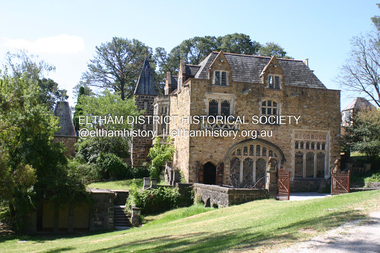
Photograph - Digital Photograph, Alan King, Great Hall, Montsalvat, 8 January 2008
... Montsalvat – unique in Victoria and probably in Australia – is registered by the National Trust and National Estate.1 Montsalvat, named after the castle of the Knights of the Holy Grail, has attracted artists and intellectuals since it was founded in 1934. ...Montsalvat – unique in Victoria and probably in Australia – is registered by the National Trust and National Estate.1 Montsalvat, named after the castle of the Knights of the Holy Grail, has attracted artists and intellectuals since it was founded in 1934. ...Great Hall at Montsalvat built 1938-52, designed by Justus Jorgensen Covered under National Estate, National Trust of Australia (Victoria) State Significance, Victorian Heritage and Heritage Overlay, Nillumbik Planning Scheme. Published: Nillumbik Now and Then / Marguerite Marshall 2008; photographs Alan King with Marguerite Marshall.; p129 At first glance, Montsalvat, the artists’ community at Hillcrest Avenue, Eltham, could belong to another time and place. The French provincial Gothic-style buildings blend picturesquely with the introduced and native trees and farm animals on the five hectare property. But Montsalvat belongs very much to today’s Eltham, having inspired much of its creative activity and style. The use of mud-brick and recycled building materials, for which Eltham is so well-known, was largely popularised by Montsalvat. Montsalvat – unique in Victoria and probably in Australia – is registered by the National Trust and National Estate.1 Montsalvat, named after the castle of the Knights of the Holy Grail, has attracted artists and intellectuals since it was founded in 1934. For years at weekends, artists, lawyers, philosophers, politicians and others, who shared a love for what Montsalvat stood for, gathered for a meal and stimulating discussion. The focus for this gathering of talent was Justus Jörgensen, an eccentric man with vision and charisma. It was Jörgensen’s foresight that saw the creation of Montsalvat, which in 1975 was formed into a trust to benefit the Victorian people. The property was then valued at about three million dollars. It is now visited by thousands of people annually. Born in 1894 and brought up a Catholic, Jörgensen had trained as an architect. He later studied painting at the National Gallery School under artist, Frederick McCubbin, then joined the studio of artist Max Meldrum. In 1924, Jörgensen married medical student Lillian Smith, and with artist friends they travelled to Europe to study the great masters. In London Jörgensen exhibited in several major galleries. One of his still life paintings was included in the book The Art of Still Life by Herbert Furst, which featured 100 of the greatest ever still life paintings.2 In 1929, Jörgensen returned to Melbourne where Lil, now qualified, worked as an anaesthetist at St Vincent’s Hospital. They bought a small house in Brighton and Jörgensen rented a large building in Queen Street for his studio until the Royal Automobile Club of Victoria bought it in 1955. While designing and overseeing the building of a studio for his friend the famous cartoonist Percy Leason, in Lavender Park Road, Jörgensen decided to buy land for a country retreat in Eltham. So the building of Montsalvat began. Jörgensen gathered around a dozen of his friends and students from his Queen Street studio. They set to work, first at weekends then some decided to live permanently on the site. Jörgensen had seen mud-brick buildings in Spain and recognised that Eltham’s clay soil was ideal for mud-bricks and although labour intensive, it was a very cheap way of building. Jörgensen’s students and friends worked under his direction with the help of local tradesmen, including carpenter, Len Jarrold and later stone mason, Horrie Judd. In return Jörgensen would give the students a painting lesson or two. It was the Great Depression when many were out of work. Jörgensen also inspired people to give generously of money and materials. With their help Jörgensen found second-hand materials for building. Friends donated slate for roofing, discarded firebricks were used for flooring and windows and doors and a cast-iron circular staircase came from a wrecker. The students’ day started at 7am with building and domestic chores, shared equally between the sexes. The first building was used by his friends at weekends and then became a home for his wife Lil. It consisted of three rooms and an attic under a high-pitched roof. Jörgensen then built a similar structure with the same high-pitched roof as a more permanent home for his students. The two buildings were joined together with a tower and a studio for Jörgensen. While excavating for the studio a reef of yellow mud-stone was found and then used in construction. The next building was the Great Hall, to be used for dining, exhibitions and meetings and completed in 1958, after a halt during the war. Whelan the Wrecker donated the stone-framed windows from the building that housed the Victorian Insurance Co. in Collins Street, which had been demolished in the 1930s. The swimming pool was donated and cubicles were built for the students with their initials marked in tiles on each doorstep.1 One of Jörgensen’s great abilities was to recognise how to use material which harmonised. He would comb through wreckers’ yards for what he needed. Regarding his buildings as sculptural pieces, his first consideration was for the aesthetic quality of a building and only then for its functionality.2 At Montsalvat, Jörgensen found he was able to put his ideas into practice without compromise and those who worked with him had to conform to his ideas. With the Jörgensens, the colony’s original nucleus consisted of the Skipper family – Mervyn and wife Lena, daughters Helen and Sonia and son Matcham,who was to become an eminent jeweller and sculptor represented in National Gallery collections throughout Australia and in European museums.3 Other members were Arthur Munday, Lesley Sinclair, Helen Lempriere, Ian Robertson, John Smith, George Chalmers, John Busst and Sue Van der Kellan; also Jörgensen’s three sons – Max, Sebastian and Sigmund – and Saskia, Sonia Skipper and Arthur Munday’s daughter. Montsalvat went through some hard times when local gossips spread rumours of sexual shenanigans at Montsalvat. However Montsalvat also had many local supporters – especially amongst the local tradespeople. The colony was certainly unconventional – with Jörgensen’s wife Lil (and son Max) and life-time partner Helen Skipper, (mother of Sebastian and Sigmund) living at Montsalvat. Sonia Skipper says in her biography that the group were ‘very conscious of their responsibilities to each other and a desire to make their relationships work’.4 By World War Two many buildings around the Great Hall were completed. Jörgensen was a pacifist, as were most of his students. Some of the Montsalvat community enlisted while others engaged in essential services like dairy farming and market gardening for the war effort. It was then that Jörgensen constructed farm buildings. After the war many well-known personalities such as Clifton Pugh, landscape gardener Gordon Ford, and builder Alistair Knox, were drawn to Montsalvat. They learnt that building was not a ‘sacred cow’ only for professionals, but that anyone who was willing to get their hands dirty could do it. The post-war shortage of materials also encouraged builders to follow Montsalvat’s lead in reusing materials. When Jörgensen died in 1975, his influence did not – thanks largely to the vigilance of his son, Sigmund, who became its administrator. The weekend dinners have gone, but in 2008 about 14 artists still work at Montsalvat – some living there – including a couple who have been there since its early days. Under Sigmund’s direction Montsalvat further expanded its activities which included festivals, art exhibitions, concerts and weddings. Sigmund completed the Chapel, then the Long Gallery next to the pool, After the barn burnt down, he replaced it in 1999 (the builder was Hamish Knox, Alistair’s son) with a new gallery and entrance and added a restaurant. Sigmund has been careful that any new building blends in with the character of Montsalvat. In 2006 Montsalvat was restructured for its continued financial viability and with the help of Arts Victoria a new executive officer was appointed. A representative board from the wider community was established, which includes members from the former Montsalvat Trust including Sigmund Jörgensen – who is now the heritage and arts adviser to the new company Montsalvat Ltd.5 Today, visiting Montsalvat one still sees artists, students and visitors enjoying the unique and beautiful surroundings.This collection of almost 130 photos about places and people within the Shire of Nillumbik, an urban and rural municipality in Melbourne's north, contributes to an understanding of the history of the Shire. Published in 2008 immediately prior to the Black Saturday bushfires of February 7, 2009, it documents sites that were impacted, and in some cases destroyed by the fires. It includes photographs taken especially for the publication, creating a unique time capsule representing the Shire in the early 21st century. It remains the most recent comprehenesive publication devoted to the Shire's history connecting local residents to the past. nillumbik now and then (marshall-king) collection, eltham, great hall, montsalvat -
 Eltham District Historical Society Inc
Folder, Unpublished collection of Eltham State School No. 209 items, 1856-1995 by Harry Gilham (EDHS)
... This manuscript was a major source reference for the book "We Did Open A School In Little Eltham; Eltham Primary School 209, 1856-2006, A History" Source references from Inspector's Register of State Schools; photocopies held by EDHS in A3 binders 2. Renovation of Eltham Primary School Residence; Application of a Grant from National Estate Grants program, 17 April 1989 10 pages A4 photocopy 3. ...This manuscript was a major source reference for the book "We Did Open A School In Little Eltham; Eltham Primary School 209, 1856-2006, A History" Source references from Inspector's Register of State Schools; photocopies held by EDHS in A3 binders 2. Renovation of Eltham Primary School Residence; Application of a Grant from National Estate Grants program, 17 April 1989 10 pages A4 photocopy 3. ...Contents 1. Draft chronology - Eltham Primary School Chronology 1856-1995; Harry Gilham (EDHS) 1995 127 pages, A4 photocopies This collection of memorabilia has a focus on the Eltham State School No. 209. It was prepared to help celebrate the 140th year of the school's existence on its original land grant of 1856, which appeared on the first surveyed land for the formation of the Town of Eltham, in the Parish of Nillumbik, County of Evelyn, granted by the then Government of New South Wales. It is inscribed in Harry Gilham's writing on page 1 - "For Eltham P.S Chronology 209 - 150th Anniv. book; Harry Gilham Collection; Unpublished" and stamped "Eltham District Historical Society" Pages 3 and 4 missing. This manuscript was a major source reference for the book "We Did Open A School In Little Eltham; Eltham Primary School 209, 1856-2006, A History" Source references from Inspector's Register of State Schools; photocopies held by EDHS in A3 binders 2. Renovation of Eltham Primary School Residence; Application of a Grant from National Estate Grants program, 17 April 1989 10 pages A4 photocopy 3. Wayfinding In The Environment; The role of aesthetics research in participatory planning design by Victoria Sharp for the School of Environmental Planning, The University of Melbourne, February 1987 4 pages, A4 photocopy extracts copied include: Synopsis Spefic Design Concerns p37 (relative to Eltham Gateway) Summary p38 4. File Record, State School No 209 - Eltham; National Trust of Australia File No B3260; 29 March 2000 1 page A4 5. Notes by Harry Gilham concerning Eltham State School No 209 1 page handwritten lined pad sheet 6. Notes by Harry Gilham concerning Eltham State School No 209 and feedback on 150th Anniversary book 1 page, A4 green 144 A4 pages As noted150th anniversary, chronology, eltham gateway, eltham primary school, eltham state school, harry gilham, national trust of australia, planning, renovation, school residence, state school no. 209, victoria sharp -
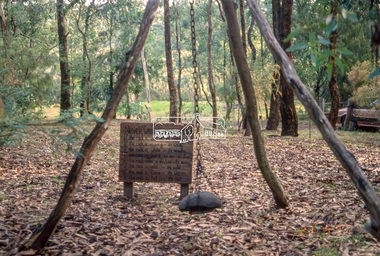 Eltham District Historical Society Inc
Slide - Photograph, Never Wrong Weather Station, Eltham, 23 May 1993
... Between 10.00 am and 4.30 pm, except for a brief lunch stop at the Eltham Living and Learning Centre, members passed about thirty places of local interest and others recommended for the Historic Buildings Register and the Register of the National Estate. A number of significant trees and buildings were also highlighted along with the opportunity to explored some of the properties....Between 10.00 am and 4.30 pm, except for a brief lunch stop at the Eltham Living and Learning Centre, members passed about thirty places of local interest and others recommended for the Historic Buildings Register and the Register of the National Estate. A number of significant trees and buildings were also highlighted along with the opportunity to explored some of the properties. activities shire of eltham historical society heritage excursion eltham houses 35mm colour positive transparency (1 of 24) Mount - Kodak Kodachrome Never Wrong Weather Station, Eltham Slide Photograph ...The 1993 Eltham Heritage Tour was enjoyed by a busload of members of the Historical Society on a fine, calm day, Sunday May 23rd. Between 10.00 am and 4.30 pm, except for a brief lunch stop at the Eltham Living and Learning Centre, members passed about thirty places of local interest and others recommended for the Historic Buildings Register and the Register of the National Estate. A number of significant trees and buildings were also highlighted along with the opportunity to explored some of the properties.35mm colour positive transparency (1 of 24) Mount - Kodak Kodachromeactivities, shire of eltham historical society, heritage excursion, eltham, houses -
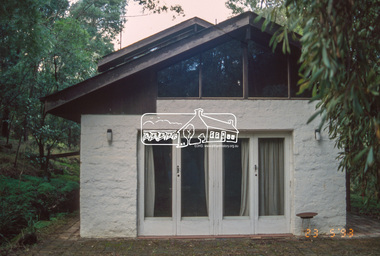 Eltham District Historical Society Inc
Slide - Photograph, Le Gallienne House, Yarra Braes Road, Eltham, 23 May 1993
... Between 10.00 am and 4.30 pm, except for a brief lunch stop at the Eltham Living and Learning Centre, members passed about thirty places of local interest and others recommended for the Historic Buildings Register and the Register of the National Estate. A number of significant trees and buildings were also highlighted along with the opportunity to explored some of the properties....Between 10.00 am and 4.30 pm, except for a brief lunch stop at the Eltham Living and Learning Centre, members passed about thirty places of local interest and others recommended for the Historic Buildings Register and the Register of the National Estate. A number of significant trees and buildings were also highlighted along with the opportunity to explored some of the properties. activities shire of eltham historical society heritage excursion Eltham houses Le Gallienne House Yarra Braes Road 35mm colour positive transparency (1 of 24) Mount - Kodak Kodachrome Le Gallienne House, Yarra Braes Road, Eltham Slide Photograph ...Jean Downing's house, owned by Downing/Le Gallienne, an Alistair Knox house built in four stages between 1948 and 1964. The 1993 Eltham Heritage Tour was enjoyed by a busload of members of the Historical Society on a fine, calm day, Sunday May 23rd. Between 10.00 am and 4.30 pm, except for a brief lunch stop at the Eltham Living and Learning Centre, members passed about thirty places of local interest and others recommended for the Historic Buildings Register and the Register of the National Estate. A number of significant trees and buildings were also highlighted along with the opportunity to explored some of the properties.35mm colour positive transparency (1 of 24) Mount - Kodak Kodachromeactivities, shire of eltham historical society, heritage excursion, eltham, houses, le gallienne house, yarra braes road -
 Eltham District Historical Society Inc
Slide - Photograph, Le Gallienne House, Yarra Braes Road, Eltham, 23 May 1993
... Between 10.00 am and 4.30 pm, except for a brief lunch stop at the Eltham Living and Learning Centre, members passed about thirty places of local interest and others recommended for the Historic Buildings Register and the Register of the National Estate. A number of significant trees and buildings were also highlighted along with the opportunity to explored some of the properties....Between 10.00 am and 4.30 pm, except for a brief lunch stop at the Eltham Living and Learning Centre, members passed about thirty places of local interest and others recommended for the Historic Buildings Register and the Register of the National Estate. A number of significant trees and buildings were also highlighted along with the opportunity to explored some of the properties. activities shire of eltham historical society heritage excursion eltham houses le gallienne house yarra braes road 35mm colour positive transparency (1 of 24) Mount - Kodak Kodachrome Le Gallienne House, Yarra Braes Road, Eltham Slide Photograph ...Jean Downing's house, owned by Downing/Le Gallienne, an Alistair Knox house built in four stages between 1948 and 1964. The 1993 Eltham Heritage Tour was enjoyed by a busload of members of the Historical Society on a fine, calm day, Sunday May 23rd. Between 10.00 am and 4.30 pm, except for a brief lunch stop at the Eltham Living and Learning Centre, members passed about thirty places of local interest and others recommended for the Historic Buildings Register and the Register of the National Estate. A number of significant trees and buildings were also highlighted along with the opportunity to explored some of the properties.35mm colour positive transparency (1 of 24) Mount - Kodak Kodachromeactivities, shire of eltham historical society, heritage excursion, eltham, houses, le gallienne house, yarra braes road -
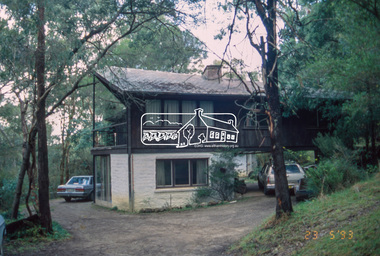 Eltham District Historical Society Inc
Slide - Photograph, Le Gallienne House, Yarra Braes Road, Eltham, 23 May 1993
... Between 10.00 am and 4.30 pm, except for a brief lunch stop at the Eltham Living and Learning Centre, members passed about thirty places of local interest and others recommended for the Historic Buildings Register and the Register of the National Estate. A number of significant trees and buildings were also highlighted along with the opportunity to explored some of the properties....Between 10.00 am and 4.30 pm, except for a brief lunch stop at the Eltham Living and Learning Centre, members passed about thirty places of local interest and others recommended for the Historic Buildings Register and the Register of the National Estate. A number of significant trees and buildings were also highlighted along with the opportunity to explored some of the properties. activities shire of eltham historical society heritage excursion eltham houses le gallienne house yarra braes road 35mm colour positive transparency (1 of 24) Mount - Kodak Kodachrome Le Gallienne House, Yarra Braes Road, Eltham Slide Photograph ...Jean Downing's house, owned by Downing/Le Gallienne, an Alistair Knox house built in four stages between 1948 and 1964. The 1993 Eltham Heritage Tour was enjoyed by a busload of members of the Historical Society on a fine, calm day, Sunday May 23rd. Between 10.00 am and 4.30 pm, except for a brief lunch stop at the Eltham Living and Learning Centre, members passed about thirty places of local interest and others recommended for the Historic Buildings Register and the Register of the National Estate. A number of significant trees and buildings were also highlighted along with the opportunity to explored some of the properties.35mm colour positive transparency (1 of 24) Mount - Kodak Kodachromeactivities, shire of eltham historical society, heritage excursion, eltham, houses, le gallienne house, yarra braes road -
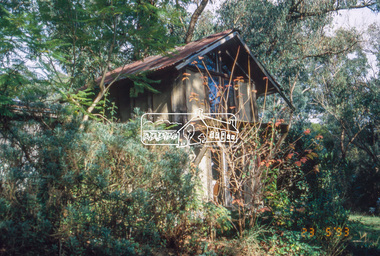 Eltham District Historical Society Inc
Slide - Photograph, Macgregor Knox House, John Street, Eltham, 23 May 1993
... Between 10.00 am and 4.30 pm, except for a brief lunch stop at the Eltham Living and Learning Centre, members passed about thirty places of local interest and others recommended for the Historic Buildings Register and the Register of the National Estate. A number of significant trees and buildings were also highlighted along with the opportunity to explored some of the properties....Between 10.00 am and 4.30 pm, except for a brief lunch stop at the Eltham Living and Learning Centre, members passed about thirty places of local interest and others recommended for the Historic Buildings Register and the Register of the National Estate. A number of significant trees and buildings were also highlighted along with the opportunity to explored some of the properties. activities shire of eltham historical society heritage excursion eltham houses Macgregor Knox house Mudbrick 35mm colour positive transparency (1 of 24) Mount - Kodak Kodachrome Macgregor Knox House, John Street, Eltham Slide Photograph ...Macgregor Knox house (1976) - a small building of note on the Knox property. It is an attic bedroom that Alistair's son, Macgregor, built for himself when he was fifteen. The 1993 Eltham Heritage Tour was enjoyed by a busload of members of the Historical Society on a fine, calm day, Sunday May 23rd. Between 10.00 am and 4.30 pm, except for a brief lunch stop at the Eltham Living and Learning Centre, members passed about thirty places of local interest and others recommended for the Historic Buildings Register and the Register of the National Estate. A number of significant trees and buildings were also highlighted along with the opportunity to explored some of the properties.35mm colour positive transparency (1 of 24) Mount - Kodak Kodachromeactivities, shire of eltham historical society, heritage excursion, eltham, houses, macgregor knox house, mudbrick -
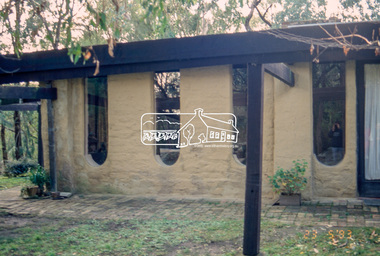 Eltham District Historical Society Inc
Slide - Photograph, Busst house, cnr of Kerrie Crescent and Silver Street, Eltham, 23 May 1993
... Between 10.00 am and 4.30 pm, except for a brief lunch stop at the Eltham Living and Learning Centre, members passed about thirty places of local interest and others recommended for the Historic Buildings Register and the Register of the National Estate. A number of significant trees and buildings were also highlighted along with the opportunity to explored some of the properties....Between 10.00 am and 4.30 pm, except for a brief lunch stop at the Eltham Living and Learning Centre, members passed about thirty places of local interest and others recommended for the Historic Buildings Register and the Register of the National Estate. A number of significant trees and buildings were also highlighted along with the opportunity to explored some of the properties. activities shire of eltham historical society heritage excursion eltham houses mudbrick Busst House Kerrie crescent silver street 35mm colour positive transparency (1 of 24) Mount - Kodak Kodachrome Busst house, cnr of Kerrie Crescent and Silver Street, Eltham Slide Photograph ...Opposite No. 11 Kerrie Crescent, (actually 71 Silver street), a 1948 Knox designed mudbrick, with a delightful inglenook fireplace. Additional bedrooms have been added on the top verandah; up the narrow stairs a concrete bath The 1993 Eltham Heritage Tour was enjoyed by a busload of members of the Historical Society on a fine, calm day, Sunday May 23rd. Between 10.00 am and 4.30 pm, except for a brief lunch stop at the Eltham Living and Learning Centre, members passed about thirty places of local interest and others recommended for the Historic Buildings Register and the Register of the National Estate. A number of significant trees and buildings were also highlighted along with the opportunity to explored some of the properties.35mm colour positive transparency (1 of 24) Mount - Kodak Kodachromeactivities, shire of eltham historical society, heritage excursion, eltham, houses, mudbrick, busst house, kerrie crescent, silver street -
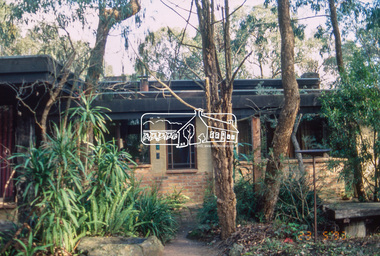 Eltham District Historical Society Inc
Slide - Photograph, Busst house, cnr of Kerrie Crescent and Silver Street, Eltham, 23 May 1993
... Between 10.00 am and 4.30 pm, except for a brief lunch stop at the Eltham Living and Learning Centre, members passed about thirty places of local interest and others recommended for the Historic Buildings Register and the Register of the National Estate. A number of significant trees and buildings were also highlighted along with the opportunity to explored some of the properties....Between 10.00 am and 4.30 pm, except for a brief lunch stop at the Eltham Living and Learning Centre, members passed about thirty places of local interest and others recommended for the Historic Buildings Register and the Register of the National Estate. A number of significant trees and buildings were also highlighted along with the opportunity to explored some of the properties. activities shire of eltham historical society heritage excursion eltham houses mudbrick busst house kerrie crescent silver street 35mm colour positive transparency (1 of 24) Mount - Kodak Kodachrome Busst house, cnr of Kerrie Crescent and Silver Street, Eltham Slide Photograph ...Opposite No. 11 Kerrie Crescent, (actually 71 Silver street), a 1948 Knox designed mudbrick, with a delightful inglenook fireplace. Additional bedrooms have been added on the top verandah; up the narrow stairs a concrete bath The 1993 Eltham Heritage Tour was enjoyed by a busload of members of the Historical Society on a fine, calm day, Sunday May 23rd. Between 10.00 am and 4.30 pm, except for a brief lunch stop at the Eltham Living and Learning Centre, members passed about thirty places of local interest and others recommended for the Historic Buildings Register and the Register of the National Estate. A number of significant trees and buildings were also highlighted along with the opportunity to explored some of the properties.35mm colour positive transparency (1 of 24) Mount - Kodak Kodachromeactivities, shire of eltham historical society, heritage excursion, eltham, houses, mudbrick, busst house, kerrie crescent, silver street -
 Eltham District Historical Society Inc
Slide - Photograph, Busst house, cnr of Kerrie Crescent and Silver Street, Eltham, 23 May 1993
... Between 10.00 am and 4.30 pm, except for a brief lunch stop at the Eltham Living and Learning Centre, members passed about thirty places of local interest and others recommended for the Historic Buildings Register and the Register of the National Estate. A number of significant trees and buildings were also highlighted along with the opportunity to explored some of the properties....Between 10.00 am and 4.30 pm, except for a brief lunch stop at the Eltham Living and Learning Centre, members passed about thirty places of local interest and others recommended for the Historic Buildings Register and the Register of the National Estate. A number of significant trees and buildings were also highlighted along with the opportunity to explored some of the properties. activities shire of eltham historical society heritage excursion eltham houses mudbrick busst house kerrie crescent silver street 35mm colour positive transparency (1 of 24) Mount - Kodak Kodachrome Busst house, cnr of Kerrie Crescent and Silver Street, Eltham Slide Photograph ...Opposite No. 11 Kerrie Crescent, (actually 71 Silver street), a 1948 Knox designed mudbrick, with a delightful inglenook fireplace. Additional bedrooms have been added on the top verandah; up the narrow stairs a concrete bath The 1993 Eltham Heritage Tour was enjoyed by a busload of members of the Historical Society on a fine, calm day, Sunday May 23rd. Between 10.00 am and 4.30 pm, except for a brief lunch stop at the Eltham Living and Learning Centre, members passed about thirty places of local interest and others recommended for the Historic Buildings Register and the Register of the National Estate. A number of significant trees and buildings were also highlighted along with the opportunity to explored some of the properties.35mm colour positive transparency (1 of 24) Mount - Kodak Kodachromeactivities, shire of eltham historical society, heritage excursion, eltham, houses, mudbrick, busst house, kerrie crescent, silver street
