
Showing 283 items matching "new guinea in ww2"
-
 Tatura Irrigation & Wartime Camps Museum
Book, Seedtime and Harvest in New Guinea by Pastor E.A. Jeriicho
... New Guinea...Missionary prisons of war...New Guinea in WW2...New Guinea. Lutheran Missionaries Missionaries in New Guinea Missionary prisons of war New Guinea in WW2 Soft cover book, tan coloured paper with brown writing and map of New Guinea on front cover. 160 pages. ...Tells the story of Mission Personnel who were killed on a Japanese transport which was taking prisoners from Finschhafen to Hollandia in New Guinea.Soft cover book, tan coloured paper with brown writing and map of New Guinea on front cover. 160 pages.lutheran missionaries, missionaries in new guinea, missionary prisons of war, new guinea in ww2 -
 Running Rabbits Military Museum operated by the Upwey Belgrave RSL Sub Branch
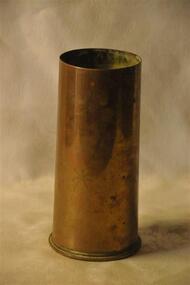
Shell Casing
... Trench Art engraved AANS apprently used in New Guinea in WW2. ( Manufactured 1918)...Trench Art engraved AANS apprently used in New Guinea in WW2. ( Manufactured 1918) Shell Casing ...Shell casing. Trench Art engraved AANS apprently used in New Guinea in WW2. ( Manufactured 1918)ammunition, ww2 -
 Ringwood RSL Sub-Branch
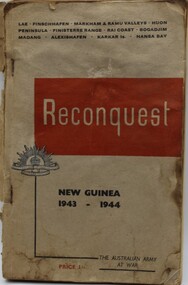
Book - WW2, Reconquest New Guinea 1943 - 1944, c 1945
... Australian Forces in New Guinea in WW2....Australian Forces in New Guinea in WW2. Reconquest New Guinea 1943 - 1944 Book - WW2 ...Soft cover book with black and white prints. 161 pages. Australian Forces in New Guinea in WW2. -
 Running Rabbits Military Museum operated by the Upwey Belgrave RSL Sub Branch
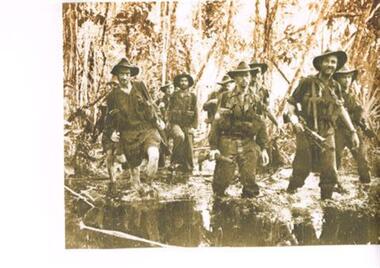
Photograph
... Photograph Calender Print Possibly New Guinea WW2 Soldiers walking through mud...Photo Photograph Calender Print Possibly New Guinea WW2 Soldiers walking through mud Photograph ...Photograph Calender Print Possibly New Guinea WW2 Soldiers walking through mudphoto -
 Tatura Irrigation & Wartime Camps Museum
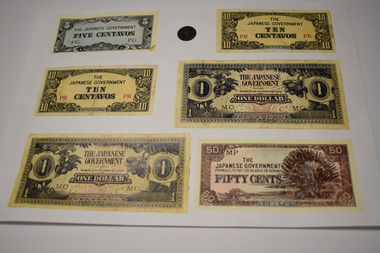
Currency - Bank notes, Japanese Currency
... Photocopies of Japanese currency issued in New Guinea in WW2...Photocopies of Japanese currency issued in New Guinea in WW2 currency notes coin numismatics Norm Whitford Charles Norton-Smith Bill Dickinson Japanese currency A4 sheet of photocopies of Japanese Government notes. ...Photocopies of Japanese currency issued in New Guinea in WW2A4 sheet of photocopies of Japanese Government notes. Five Centavos, Ten Centavos, Ten Centavos, One Dollar, One Dollar, Fifty cents. Coloured pale blue, black print, yellow, black print (4), yellow, brown print. Copy of a small coincurrency notes, coin, numismatics, norm whitford, charles norton-smith, bill dickinson, japanese currency -
 Lorne Historical Society
Equipment - Water bottle in pouch, S. and U. Ltd, 1943
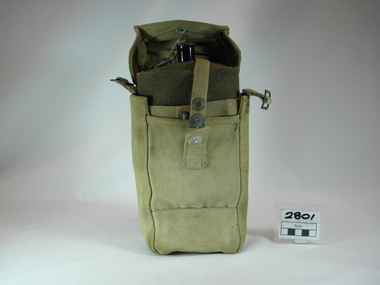
... ww2...papua new guinea...This water bottle and pouch used in New Guinea in WW2 by Mr W.Norton of Lorne Victoria ...This water bottle and pouch used in New Guinea in WW2 by Mr W.Norton of Lorne Victoria An item of national significance, used in WW2 battlefields, and carried and used by an Australian soldier. ww2 papua new guinea soldier water bottle pouch khaki w. norton lorne Stamped, inside upper rear, "S and U Ltd, 1943" WW2 canvas pouch for water bottle, including water bottle with cork, and belt loops. ...This water bottle and pouch used in New Guinea in WW2 by Mr W.Norton of Lorne Victoria An item of national significance, used in WW2 battlefields, and carried and used by an Australian soldier.WW2 canvas pouch for water bottle, including water bottle with cork, and belt loops.Stamped, inside upper rear, "S and U Ltd, 1943"ww2, papua new guinea, soldier, water bottle, pouch, khaki, w. norton, lorne -
Tatura Irrigation & Wartime Camps Museum
Boots - Army, 1942-45
... Issued by Australian Army for use in New Guinea during WW2 by snipers. Worn by a local Tatura man....WW2 Australian Army snipers boots used in New Guinea. Tan leather with metal stops....Issued by Australian Army for use in New Guinea during WW2 by snipers. Worn by a local Tatura man. ...Issued by Australian Army for use in New Guinea during WW2 by snipers. Worn by a local Tatura man.WW2 Australian Army snipers boots used in New Guinea. Tan leather with metal stops.6/4 on soleaustralian army footwear, ww2 footwear, snipers footwear -
 Running Rabbits Military Museum operated by the Upwey Belgrave RSL Sub Branch
Postcards Display, Letters to home from Harold Coutts
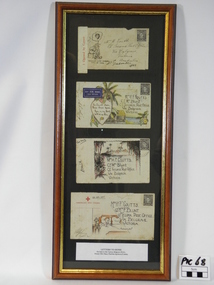
... 4 Postcards sent home by Harold Coutts, an early member of the sub-branch, to his wife from New Guinea during WW2. ...4 Postcards sent home by Harold Coutts, an early member of the sub-branch, to his wife from New Guinea during WW2. This item is significant because it has 4 Original postcard/letters sent home which are hand illustrated with hand drawn sketches relevant to Harold Coutts' circumstances or whereabouts at the time of sending. military letters world war 2 postcards harold coutts new guinea All 4 postcards sent to Mrs H F Coutts c/o Tecoma Post Office via Belgrave, Victoria. 4 postcards to home from Harold Coutts during WW 2 illustrated with sketches. ...4 Postcards sent home by Harold Coutts, an early member of the sub-branch, to his wife from New Guinea during WW2. This item is significant because it has 4 Original postcard/letters sent home which are hand illustrated with hand drawn sketches relevant to Harold Coutts' circumstances or whereabouts at the time of sending. 4 postcards to home from Harold Coutts during WW 2 illustrated with sketches. All 4 postcards sent to Mrs H F Coutts c/o Tecoma Post Office via Belgrave, Victoria. military, letters, world war 2, postcards, harold coutts, new guinea -
 8th/13th Victorian Mounted Rifles Regimental Collection
Photograph - Whitehead
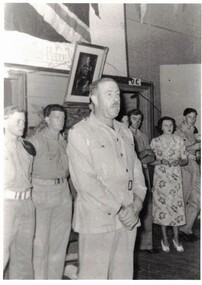
... He served with 2/6th Armoured Regiment in New Guinea in WW2 and was awarded the Military Cross at Buna. ...He served with 2/6th Armoured Regiment in New Guinea in WW2 and was awarded the Military Cross at Buna. ...Norman Whitehead served with 7/21st Light Horse prior to WW2. He served with 2/6th Armoured Regiment in New Guinea in WW2 and was awarded the Military Cross at Buna. Following the war he served with 8/13 Victorian Mounted Rifles.Black and white photograph of retired Major Norman Whitehead at Buna Barracks Mess.whitehead, buna, albury, barracks, mc -
 Wangaratta RSL Sub Branch
Book - Pocket Book, A.R. Sharrock, 1944
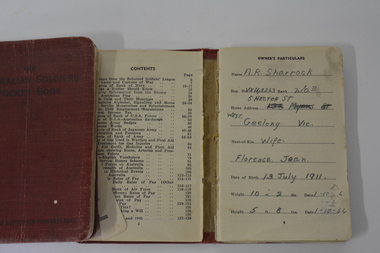
... Served in New Guinea during WW2...Served in New Guinea during WW2 An example of a small pocket book gifted by the Australian Comforts Fund (ACF) to soldiers and other servicemen during WW2. ...Australian Soldier's Pocket book gifted by the Australian Comfort Fund to WO2 Almora Reedie SHARROCK VX142263 Born 13/7/1911 at Dandenong. Enlisted 26/2/1940. Occupation Armourer. Unit 127 Australian Brigade Workshop. Served in New Guinea during WW2An example of a small pocket book gifted by the Australian Comforts Fund (ACF) to soldiers and other servicemen during WW2. This pocket book has a bright red cover and was given as a morale boosting gift. The book contains details of relevant information considered useful to serving service personnel.Red canvas covered pocket book The Australian Soldiers Pocket Book Gift from The Australian Comforts Fund 1944ww2, almora reedie sharrock, 127 aust bde workshop -
 Wangaratta RSL Sub Branch
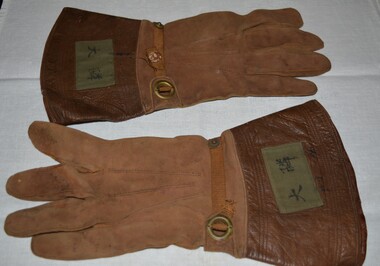
Souvenir - Japanese Leather Gloves, c1940
... This pair of gauntlets are believed to be souvenired by an Australian soldier in New Guinea during WW2. ...This pair of gauntlets are believed to be souvenired by an Australian soldier in New Guinea during WW2. This material choice was common among military aviation uniforms, reflecting the need for durable and functional gear in extreme conditions. gloves WW2 Japan Inside glove - japanese makers patch Brown suede gloves with brown ribbon strap threaded through an eyelet and secured with a press stud. ...During World War II, Japanese pilot gauntlets were made from a combination of suede and leather. Specifically, the gloves featured high-quality deer hide suede for the finger section, while the upper portion was made of heavy cowhide leather, providing both warmth and protection. This pair of gauntlets are believed to be souvenired by an Australian soldier in New Guinea during WW2. This material choice was common among military aviation uniforms, reflecting the need for durable and functional gear in extreme conditions. Brown suede gloves with brown ribbon strap threaded through an eyelet and secured with a press stud. A green patch of material with two black japanese symbols is sewn onto brown leather trim attached to suede.Inside glove - japanese makers patchgloves, ww2, japan -
 Wangaratta RSL Sub Branch
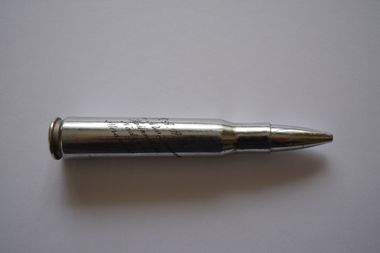
Souvenir - Cartridges, St Louis Ordnance Plant, 1942
... ww2...cartridge sl42...new guinea...They were souvenired and engraved by Australian servicemen in New Guinea during WW2. All five cartridges are engraved with RAAF and Dutch New Guinea with one having additional engraving of Hollandia, Nadzab and Merauke. ...They were souvenired and engraved by Australian servicemen in New Guinea during WW2. All five cartridges are engraved with RAAF and Dutch New Guinea with one having additional engraving of Hollandia, Nadzab and Merauke. ...The headstamp on these cartridges indicates they were manufactured in 1942 at the St Louis Ordnance Plant in Missouri USA. They were souvenired and engraved by Australian servicemen in New Guinea during WW2. All five cartridges are engraved with RAAF and Dutch New Guinea with one having additional engraving of Hollandia, Nadzab and Merauke. They belonged to 285492 Maurice Gerard HENDERSON born 21/9/1899 who enlisted at the age of 40 and served with the RAAF during WW2. He was deployed on 26/5/1944 with 113 FCU to Merauke in New Guinea.No. 13 Fighter Sector Headquarters was formed at Garbutt airfield on 16 Apr 1943. They embarked from Cairns, Queensland on 27 Jun 1943 and disembarked at Merauke on 2 Jul 1943. The Unit was renamed as No.113 Fighter Control Unit (113 FCU) on 7 Mar 1944. They moved to Townsville on 25 Feb 1945. The Unit was finally disbanded on 22 Apr 1945.Five white metal cartridges with round base tampered to a pointed top.Headstamp - SL 42 Engraved - RAAF Dutch New Guinea raaf, ww2, cartridge sl42, new guinea -
 Geelong RSL Sub Branch
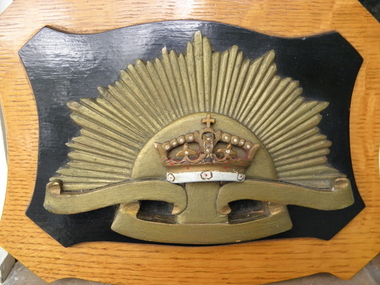
History - VX5104 L/Col Victor J Schofield MBE, early 20 Century
... WW2...VX5104 JC Schofield MBE...Papua-New Guinea...The Battalion went to the Northern Territory during WW2 before being disbanded, however VX5104 VJ Schofield became redeployed and served in New Guinea during WW2. He was awarded an MBE for his service. ...The Battalion went to the Northern Territory during WW2 before being disbanded, however VX5104 VJ Schofield became redeployed and served in New Guinea during WW2. He was awarded an MBE for his service. ...These are original items of VX5104 L/Col VJ Schofield MBE who served with 23rd Battalion (The City of Geelong Regiment). In 1929 this Battalion was amalgamated with the 21st Battalion to become 23rd/21st Battalion and adopted the territorial designation of 'The City of Geelong Regiment/The Victorian Rangers'. The Battalion went to the Northern Territory during WW2 before being disbanded, however VX5104 VJ Schofield became redeployed and served in New Guinea during WW2. He was awarded an MBE for his service. (Reference The Argus (Melbourne, Vic.) Friday 20 July 1945. (Awards for Service in Papua-New Guinea). The original plaques were located at the Geelong Returned Soldiers, Sailors and Airman Woollen Mill (commonly referred to as the RS&S Mill). Schofields Father was responsible for the raising of the Mill, with Federal Funding, he was the CEO. It is not known if Victor John Schofield worked at this Mill but the plaques were found there and donated to the Geelong RSL Sub Branch by Roger Burt CEO of Godfrey Hirst Group during the Hirst takerover of the RS&S Mill.Two Plaques - one the Rising Sun, one the Maxwell Family Crest which is related to L/Col Schofield MBE. Timber materials used in the manufacture of both items.None on the Rising Sun. One The Maxwell Family Crest 'Rebiresco' Maxwell.ww2, vx5104 jc schofield mbe, papua-new guinea, city of geelong regiment, 23rd/21st battalion -
 Wangaratta RSL Sub Branch
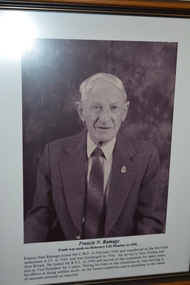
Photograph - Framed Photograph, Frank Ramage
... new guinea...new britain...6th field ambulance...vx150056...WW2...He served in New Guinea and New Britain during WW2 He joined the R.S.L. in 1956 and was made a Life Member in 1996...He served in New Guinea and New Britain during WW2 He joined the R.S.L. in 1956 and was made a Life Member in 1996 francis n. ramage new guinea new britain 6th field ambulance vx150056 WW2 FRANCIS N. ...Frank joined the C.M.F in 1943 and transferred to the 6th Field Ambulance A.I.F. in 1944 and discharged in 1946. He served in New Guinea and New Britain during WW2 He joined the R.S.L. in 1956 and was made a Life Member in 1996Dark timber framed containing photograph of Life Member - Frank RAMAGEFRANCIS N. RAMAGE Frank was made an Honorary Life Member in 1996francis n. ramage, new guinea, new britain, 6th field ambulance, vx150056, ww2 -
 Wangaratta RSL Sub Branch
Photograph, c1945
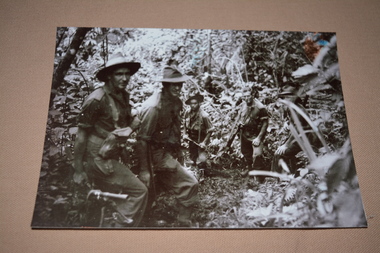
... ...new guinea...ww2...AUSTRALIAN INFANTRY BATTALION ON PATROL IN THE SATTELBERG AREA, NEW GUINEA IN 1943 DURING WW2...New Guinea in 1943–1944 and Borneo in 1945, before being disbanded in 1946. The 2/24th suffered the highest number of casualties of any 2nd AIF infantry battalion. The Unit was granted the Freedom of the City by the Rural City of Wangaratta in 1990 and one of the first, if not the first, to receive this type of honour 2/24th battalion new guinea ww2 Reproduced black and white photograph of five soldiers patrolling in dense jungle terraiin Photograph Photograph ...TROOPS OF THE 2/24TH. AUSTRALIAN INFANTRY BATTALION ON PATROL IN THE SATTELBERG AREA, NEW GUINEA IN 1943 DURING WW2The 2/24th Battalion was an infantry battalion of the Australian Army, which served during World War II .A unit of all-volunteers, it was formed in July 1940 from primarily Victorian volunteers and was known as "Wangaratta's Own" because of the time the battalion spent in the town during its formative period prior to deployment overseas. It served in North Africa in 1941–1942 as part of the 26th Brigade, which was assigned to the 7th Division, before being reassigned to the 9th Division. In early 1943, the battalion returned to Australia and later took part in campaigns against the Japanese in New Guinea in 1943–1944 and Borneo in 1945, before being disbanded in 1946. The 2/24th suffered the highest number of casualties of any 2nd AIF infantry battalion. The Unit was granted the Freedom of the City by the Rural City of Wangaratta in 1990 and one of the first, if not the first, to receive this type of honourReproduced black and white photograph of five soldiers patrolling in dense jungle terraiin2/24th battalion, new guinea, ww2 -
 Wangaratta RSL Sub Branch
Book, AIF 24th Australian Infantry Battalion - Pictorial Battle History, 1946
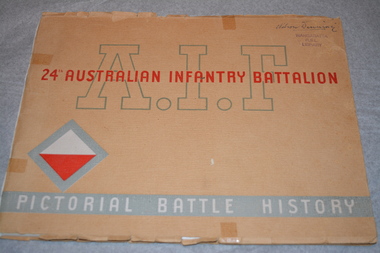
... ww2...new guinea...This pictorial battle history book contains two maps, sketches of characters "Bluey and Curley" and Nominal Roll of personnel who served overseas with the 24th Battalion in New Guinea and Bougainville during WW2. ...This pictorial battle history book contains two maps, sketches of characters "Bluey and Curley" and Nominal Roll of personnel who served overseas with the 24th Battalion in New Guinea and Bougainville during WW2. 24th battalion ww2 new guinea bougainville Nelson Dinning - handwritten top right corner of cover Inside Dedication - This book is dedicated to our fallen comrades Lest we forget Inside Foreword by Lieutenant General S G Saviage, CB, CBE, DSO, MC.ED Beige cardboard dust cover with title in grey and red writing and red and white diamond with grey surround lower left corner. ...This pictorial battle history book contains two maps, sketches of characters "Bluey and Curley" and Nominal Roll of personnel who served overseas with the 24th Battalion in New Guinea and Bougainville during WW2. Beige cardboard dust cover with title in grey and red writing and red and white diamond with grey surround lower left corner. Inside cover contains two maps which have three photocopies Nelson Dinning - handwritten top right corner of cover Inside Dedication - This book is dedicated to our fallen comrades Lest we forget Inside Foreword by Lieutenant General S G Saviage, CB, CBE, DSO, MC.ED24th battalion, ww2, new guinea, bougainville -
 Bendigo Military Museum
Book - UNIT HISTORY, 1916-1994, Lieutenant-Colonel Robert Likeman CSM, "MEN OF THE NINTH", 2003
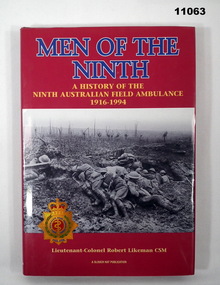
... Back - Jeep ambulance leaving a dressing station, New Guinea, WW2. 224 pages, cut, plain, white paper. ...New Guinea 1938-1939. Australia, Malaya & Singapore 1940-45 (2/9th Field Ambulance), Australia 1952-1994. Publications Books Military History 9th Field Ambulance 1916-1994 Hardcover book with dust cover. Hardcover - cardboard with red coloured buckram. White coloured print on spine. Dustcover - paper, red coloured background, blue and yellow print on front, spine and back. Illustrated - black and white photographs. Front - Eight ambulance bearers resting on an embankment, France, WW1. Back - Jeep ambulance leaving a dressing station, New Guinea, WW2 ...From dust cover; "MEN OF THE NINTH" The 9th Field Ambulance at War and Peace, France & Belgium 1916-1919, Australia 1921-1938, Australia and New Guinea 1938-1939. Australia, Malaya & Singapore 1940-45 (2/9th Field Ambulance), Australia 1952-1994.Hardcover book with dust cover. Hardcover - cardboard with red coloured buckram. White coloured print on spine. Dustcover - paper, red coloured background, blue and yellow print on front, spine and back. Illustrated - black and white photographs. Front - Eight ambulance bearers resting on an embankment, France, WW1. Back - Jeep ambulance leaving a dressing station, New Guinea, WW2. 224 pages, cut, plain, white paper. Illustrated, black and white photograph and maps. End papers - illustrated, sepia coloured group portrait photograph, WW1 era.publications, books, military history, 9th field ambulance, 1916-1994 -
Mission to Seafarers Victoria
Painting, WW2 AMS (Corvette): HMAS Rockhampton, early 21st Century
... According to wikipedia 2017 : Rockhampton began her career as a convoy escort along the east coast of Australia.[1] Following a series of Japanese submarine attacks along the east coast of Australia, a convoy system was established.[1] Rockhampton and USS Selfridge escorted the first Sydney to Brisbane convoy.[1] The corvette remained in this role until January 1944, when she began escorting convoys to and from New Guinea.[1] She underwent refit in Sydney over April and May 1944, before returning to escort duties in New Guinea waters.[1] Rockhampton operated in both Australian and New Guinea waters up until the end of World War II.[1] Following the end of the war, Rockhampton was involved in the rescue of Dutch and Indonesian prisoners-of-war and the occupation of Ambon.[1] On 8 October 1945, the corvette carried the Sultan of Ternate on his return home.[1] Rockhampton returned to Sydney in November 1945, where she was assigned to minesweeping duties off the east coast of Australia.[1] She later participated in survey duties off the coast of South Australia, before returning to Sydney on 29 April 1946.[1] The corvette received two battle honours for her wartime service: "Pacific 1942–45" and "New Guinea 1944"HMAS Rockhampton launched 1941 and de-commissioned 1946. Operated in the Pacific and New Guinea theatres of WW2 see supplementary files for details ...According to wikipedia 2017 : Rockhampton began her career as a convoy escort along the east coast of Australia.[1] Following a series of Japanese submarine attacks along the east coast of Australia, a convoy system was established.[1] Rockhampton and USS Selfridge escorted the first Sydney to Brisbane convoy.[1] The corvette remained in this role until January 1944, when she began escorting convoys to and from New Guinea.[1] She underwent refit in Sydney over April and May 1944, before returning to escort duties in New Guinea waters.[1] Rockhampton operated in both Australian and New Guinea waters up until the end of World War II.[1] Following the end of the war, Rockhampton was involved in the rescue of Dutch and Indonesian prisoners-of-war and the occupation of Ambon.[1] On 8 October 1945, the corvette carried the Sultan of Ternate on his return home.[1] Rockhampton returned to Sydney in November 1945, where she was assigned to minesweeping duties off the east coast of Australia.[1] She later participated in survey duties off the coast of South Australia, before returning to Sydney on 29 April 1946.[1] The corvette received two battle honours for her wartime service: "Pacific 1942–45" and "New Guinea 1944"HMAS Rockhampton launched 1941 and de-commissioned 1946. Operated in the Pacific and New Guinea theatres of WW2 see supplementary files for details This painting was supplied to the MTSV and is of significance as the artist was a former crew member of HMAS Rockhampton. hmas rockhampton corvette ww2 merchant navy world war 2 david cockburn crew sailors seamen seafarers optometrist artwork-paintings hobbies Front: lwr right corner: "D Cockburn" in pale blue paint ; Verso "WW2 AMS (Corvette): HMAS Rockhampton / PAINTED BY DAVID M COCKBURN FORMER CREW MEMBER / PH DAVE ..." ...From his obituary published in Optometry Australia: Born in 1925 in Swan Hill, his parents were soldier settlers in the Mallee before moving to Melbourne. After obtaining his leaving certificate from Melbourne Grammar, he worked as a laboratory assistant in an explosives factory but later completed a chemistry diploma. He enlisted in the Navy in 1943 aged 17 years and due to a colour vision deficiency, served in the supply branch on HMAS Rockhampton, being discharged aged 21. His deuteranomaly steered him to learn adaptive behaviours while studying optometry, ensuring his clinical practice remained unaffected.According to wikipedia 2017 : Rockhampton began her career as a convoy escort along the east coast of Australia.[1] Following a series of Japanese submarine attacks along the east coast of Australia, a convoy system was established.[1] Rockhampton and USS Selfridge escorted the first Sydney to Brisbane convoy.[1] The corvette remained in this role until January 1944, when she began escorting convoys to and from New Guinea.[1] She underwent refit in Sydney over April and May 1944, before returning to escort duties in New Guinea waters.[1] Rockhampton operated in both Australian and New Guinea waters up until the end of World War II.[1] Following the end of the war, Rockhampton was involved in the rescue of Dutch and Indonesian prisoners-of-war and the occupation of Ambon.[1] On 8 October 1945, the corvette carried the Sultan of Ternate on his return home.[1] Rockhampton returned to Sydney in November 1945, where she was assigned to minesweeping duties off the east coast of Australia.[1] She later participated in survey duties off the coast of South Australia, before returning to Sydney on 29 April 1946.[1] The corvette received two battle honours for her wartime service: "Pacific 1942–45" and "New Guinea 1944"HMAS Rockhampton launched 1941 and de-commissioned 1946. Operated in the Pacific and New Guinea theatres of WW2 see supplementary files for details Maritime ArtJames CockburnAcrylic painting on composition board of a military or armed corvette at sea. Framed with a speckled pale blue painted moulded pine ? frame. The painting is signed on lower right corner and inscribed with both blue and black fibre tipped pen.Front: lwr right corner: "D Cockburn" in pale blue paint ; Verso "WW2 AMS (Corvette): HMAS Rockhampton / PAINTED BY DAVID M COCKBURN FORMER CREW MEMBER / PH DAVE ..."hmas rockhampton, corvette, ww2, merchant navy, world war 2, david cockburn, crew, sailors, seamen, seafarers, optometrist, artwork-paintings, hobbies -
Tatura Irrigation & Wartime Camps Museum
Document - Memoir, Hermine Wedel, Memories of Tatura, July 2014
... The author's parents (author Hermine Wedel, nee Strauss) were of German nationality & practicing as missionaries in New Guinea. Upon the outbreak of WW2, those German nationals were ordered to the coast by the Australian authorities and the men were transported to internment camps in Australia. ...The author's parents (author Hermine Wedel, nee Strauss) were of German nationality & practicing as missionaries in New Guinea. Upon the outbreak of WW2, those German nationals were ordered to the coast by the Australian authorities and the men were transported to internment camps in Australia. ...An account of the author's family background & early life, more particularly those events leading to their internment in Tatura, Victoria, Australia during World War 2. The author's parents (author Hermine Wedel, nee Strauss) were of German nationality & practicing as missionaries in New Guinea. Upon the outbreak of WW2, those German nationals were ordered to the coast by the Australian authorities and the men were transported to internment camps in Australia. The women remained behind, reporting regularly to the authorities, until they too were brought to camps in Australia at the end of 1941. They were eventually reunited in a family camp for internees, Camp 3 at Tatura, in 1943. They were released from the camp to work in Australia in 1947 and the family returned to New Guinea in 1949, and eventually went back to Germany. The author also briefly recounts her marriage & married life in Brazil & Germany. 13 page document, A4 paper. 7 pages of English translation, 6 pages German original. world war ii, internee camps, civilian internees, german internees, camp 3, tatura, new guinea, strauss, stuerzenhofecker -
 Wangaratta RSL Sub Branch
Container - Sterilizing Outfit, Tromax Limited, C1942-45
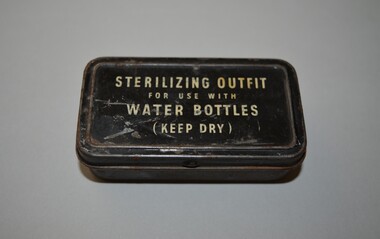
... WW2...Bob ISKOV...AMF...Sterilizing Outfit...New Guinea...Water Sterilization Outfit manufactured in Australia to sterilize water for use in the field by soldiers particularly deployed to Borneo and New Guinea/Kokoda Track Campaigns during WW2, where clean jungle drinking water was a matter of survival. ...Water Sterilization Outfit manufactured in Australia to sterilize water for use in the field by soldiers particularly deployed to Borneo and New Guinea/Kokoda Track Campaigns during WW2, where clean jungle drinking water was a matter of survival. ...Water Sterilization Outfit manufactured in Australia to sterilize water for use in the field by soldiers particularly deployed to Borneo and New Guinea/Kokoda Track Campaigns during WW2, where clean jungle drinking water was a matter of survival. Item belonged to Robert Francis ISKOV VX15237 served with the 59th Battalion/Hume Regiment CMF before joining the 2/14th Battalion at Caulfield in September 1940. He disembarked for the Middle East in November, 1940 and fought in the Syrian campaign in 1941. In 1942 the 2/14th Battalion returned to Australia and sent to Papua where he fought at the Battle of Isurava before the battalion was sent to Gona. On 1943 Bob returned to Australia to undertake officer training and in 1945 with the 2/23rd Battalion sailed to Morotai and served with the battalion on Tarakan. He returned to Australia in November, 1945 and discharged a month laterRectangular tin with hinged lid containing two clear glass vials of water sterilization tablets. The tin is plain metal apart from the black lid with white lettering. The two vials are stoppered with cork. The thinner vial contains small round blue tablets, while the thicker vial contains a white substance and has a paper label titled '50 Sterilizing Tablets'.LID - 'STERILIZING OUTFIT / FOR USE WITH / WATER BOTTLES / (KEEP DRY) ww2, bob iskov, amf, sterilizing outfit, new guinea -
 Lara RSL Sub Branch
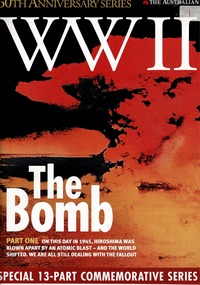
Magazine, WWII, 2005
... Magazines depicting WWII Part 1 The Bomb Part 2 Battle of Britain Part 3 Pearl Harbour Part 4 Stalingrad Part 5 D-Day Part 6 Fall of Berlin Part 7 Australia's War Part 8 Home Front Part 9 Singapore and the POW's Part 10 El Alamein Part 11 Battle of Coral Sea Part 12 Kokoda and New Guinea Part 13 Peace WWII WW2 World War 2 Atomic Bomb Battle of Britain Pearl Harbour Stalingrad D-Day Fall of Berlin Australia's War Home Front Singapore El Alamein Battle of Coral Sea Kokoda Peace WWII The Magazine is made from paper and came in various colours and front pages. ...Magazines depicting WWII Part 1 The Bomb Part 2 Battle of Britain Part 3 Pearl Harbour Part 4 Stalingrad Part 5 D-Day Part 6 Fall of Berlin Part 7 Australia's War Part 8 Home Front Part 9 Singapore and the POW's Part 10 El Alamein Part 11 Battle of Coral Sea Part 12 Kokoda and New Guinea Part 13 PeaceThe Magazine is made from paper and came in various colours and front pages.WWIIwwii, ww2, world war 2, atomic bomb, battle of britain, pearl harbour, stalingrad, d-day, fall of berlin, australia's war, home front, singapore, el alamein, battle of coral sea, kokoda, peace -
 Lara RSL Sub Branch
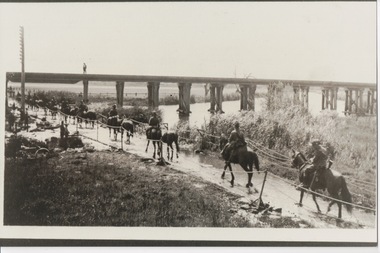
Photograph, Set 4 photographs. and others for Torquay Light Horse camp, 1940
... WW2. Those who served in the Militia provided valuable Officers and NCOs and men for the armed services during the war. Each infantry division of the 2nd AIF had a Light Horse regiment attached to it. But the day of the Australian mounted soldier hadn’t quite passed. During World War II, Australia’s 6th Cavalry Regiment formed a mounted unit they called “The Kelly Gang” which did valuable scouting work. In New Guinea...WW2. Those who served in the Militia provided valuable Officers and NCOs and men for the armed services during the war. Each infantry division of the 2nd AIF had a Light Horse regiment attached to it. But the day of the Australian mounted soldier hadn’t quite passed. During World War II, Australia’s 6th Cavalry Regiment formed a mounted unit they called “The Kelly Gang” which did valuable scouting work. In New Guinea ...These images capture for all time Light Horsemen travelling through Geelong on their way to camp at Torquay for the last Group meeting in Australia . information following - details obtained from .........https://torquayhistory.com/light-horse-brigade/ On Australia Day, 1997, Sir John Young unveiled this plaque on Point Danger, Torquay. Torquay history, Light Horse Training Camp, WW2 Plaque at Pt. Danger Note----- (See images to view plaque) The plaque identifies a significant event in Torquay’s history and the sentiments of ‘change’ for the Light Horse Brigade – from horses to machines. In 1940 the four Light Horse Regiments (4th, 8th, 13th and 20th), some 5000 Light Horse and 2000 horses camped and trained at Torquay. Three other regiments, formerly mounted on horses, were also at Torquay ‘mounted’ on privately owned trucks and cars. Division troops included Artillery, Engineers, Signals, Field Ambulance and other branches of the Army necessary to enable a Division to function. It wasn’t just the sheer numbers of men coming to this little town that made the event significant, it was also the fact that the men of the Light Horse were dramatic, almost glamorous figures and it is easy to see their exploits as some splendid adventure. Horses have played a special role in the story of Australia. They were the only means of transport across this huge country, so it was necessary for everyone to have the ability to ride a horse. When war broke out in 1899 between Britain and the Boers of South Africa (“Boer” was Dutch for “farmer”) Australia sent troops to fight. At first Britain was wary of using untried, unprofessional colonial cavalrymen but soon saw that the slouch-hatted Australian “bushmen” were a match for the fast-moving and unconventional mounted commandos of the Boers. The Australians proved themselves to be expert rough-riding horsemen and good shots. Bush life had hardened them to go for long periods with little food and water. They also showed remarkable ability to find their way in a strange country and use its features for cover, in both attack and defence. By 1914, when Australia joined the war against Germany, there were 23 Light Horse regiments of militia volunteers. Many men from these units joined the Light Horse regiments of the Australian Imperial Force (AIF). Men were given remounts (if not using their own horses) – army horses bought by Commonwealth purchasing officers from graziers and breeders. These were called “walers” because they were a New South Wales stockhorse type – strong, great-hearted animals with the strains of the thoroughbred and semi-draught to give them speed, strength and stamina. On 1st November, 1914, Australia’s First Infantry Division and the first four Light Horse regiments sailed for England in a fleet of transport ships. The first of the Light Horse arrived at Gallipoli in May without their horses. Back with their horses after Gallipoli, they were formidable combatants across the Sinai and Palestine. Some British commanders observed that the light horseman moved with a “lazy, slouching gait, like that of a sleepy tiger” but described how the promise of battle “changes that careless gait, into a live athletic swing that takes him over the ground much quicker than other troops”. They had Light Horse, Torquay, training campdeveloped a reputation as formidable infantrymen. The Turks called them “the White Ghurkas” – a reference to their deadly skill with the bayonet. The Arabs called them “The Kings of the Feathers”. The plume had originally been a battle honour of the Queensland Mounted Infantry for their work in the shearer’s strike of 1891. During WW1 it was adopted by almost all the Light Horse Regiments. It was the proud badge of the light horseman. The most famous of their battles was the attack on Beersheba- the charge of the 4th Light Horse Brigade. Mounted infantrymen and their superb walers had carried out one of the most successful cavalry charges in history – against what seemed impossible odds. They surprised the Turks by charging cavalry-style, when they would normally have ridden close to an objective then dismounted to fight. The fall of Beersheba swung the battle tide against the Turks in Palestine; and changed the history of the Middle East. While 19 men from the Surf Coast Shire served with the 4th Light Horse over the course of WW1, only four were involved in the charge of Beersheba- John GAYLARD, Philip QUINN.(Winchelsea); Wallace FINDLAY (Anglesea); Harry TRIGG (Bambra). After the war, Light Horse units played a key role in the Australian Government’s compulsory military training programme. The Citizen Military Forces (C.M.F.) thrived on the glamour of the wartime Light Horse tradition, ignoring the possibility that motor vehicles would soon replace the horses. When training was no longer compulsory, the C.M.F. regiments declined and horses became more of a luxury during the 1930s depression years of poverty and unemployment. Some regiments were motorised. Then, in 1939, Australia joined Britain in another world war. Training was increased for the militia at both home bases and regional training camps. The camp at Torquay in 1940, commanded by Major General Rankin, was at Divisional strength. By the end of the camp some felt that the Division was ready for active service. Gradually, over the next four years, the Australian Light Horse units were mounted on wheels and tracks and the horses were retired. Six men enlisted at the Torquay camp and another 57 men and women enlisted at Torquay for service in WW2. Those who served in the Militia provided valuable Officers and NCOs and men for the armed services during the war. Each infantry division of the 2nd AIF had a Light Horse regiment attached to it. But the day of the Australian mounted soldier hadn’t quite passed. During World War II, Australia’s 6th Cavalry Regiment formed a mounted unit they called “The Kelly Gang” which did valuable scouting work. In New Guinea, a mounted Light Horse Troop did patrol duty and helped carry supplies. Some fully equipped walers were flown into Borneo for reconnaissance in rugged mountain country. But by the end of the war, in 1945, the horse had disappeared from the Australian Army. References: Australian Light Horse Association www.lighthorse.org.au National Australia Archives Australian War Memorial Surf Coast Shire WW1 memorials www.togethertheyserved.com The Light horse- a Cavalry under Canvas Light Horse, Training Camp, Torquay, WW2 Late in 1939 it was decided to set up a Lighthorse training camp in Torquay to train both men and horses for the battles of the Second World War. Horses, men and equipment came on special trains from all over Victoria and NSW, and as you would expect horseman came from areas such as Omeo and Sale, the Wimmera and the Western District. They arrived at the Geelong racecourse for watering in the Barwon River and then were ridden across the ford at the breakwater and began their 11 mile trek to Torquay. Light Horse, Training Camp, Torquay, WW2 Tent city By the end of January 1940 the camp at Torquay accommodated some 5000 men and 2500 horses of the Second Cavalry Division. The rows of horses, tents and huts near Blackgate Road were quite a sight. While the cavalrymen engaged in exercises on the land and on the beaches, many of the troops took over the Torquay School for special training of men and officers. Mr Bob Pettit local farmer and Councillor for the Barrabool Shire, wrote about the Light horse in the Surf Coast Community News in 1985 saying “They used to travel about the district riding four abreast in one long convoy. To my annoyance they went through my property and shut all the gates behind them. I had certain gates open to let stock in to the water holes and it would take me three -quarters of an hour to follow the horsemen up and put all the gates right again” he continued “the men from the Light Horse were here when the fire went through in March 1940. He recalled an incident when early one morning, as some one blew the bugle, a soldier putting a white sheet on the line frightened the horses. They panicked and ran off in all directions. Six went over the cliff near Bird Rock, five were never found, and the rest were gathered up after nearly a fortnight in the bush around Addiscott and Anglesea" Light Horse, Training Camp, Torquay, WW2, Geelong Parade Geelong parade The training camp culminated in a parade through the streets of Geelong on March 12th 1940. The salute was given at the Town Hall and the troops continued on a route to the You Yang’s for a training exercise. Note-----(see media section for photograph) The Camp was abandoned in mid 1940 as it was deemed unsuitable for training during winter and the cost of a permanent camp could not be justified if it could not be used all year. Historic.......Rare,,,Interpretive.Sepia photographs.set of four ....post card size ....Horses &LighthorsemenNo 1, Lighthorsemen Regiment Geelong 1940......No 2 Light Horse at Breakwater Geelong 1938 to 1940....No 3 Light Horse at Breakwater Geelong 1938 to 1940.....No 4 Light Horse crossing Breakwater camped at Geelong Showgrounds. These markings are on reverse of photographs.light horsemengeelong 1940., world war 2 -
 Lara RSL Sub Branch
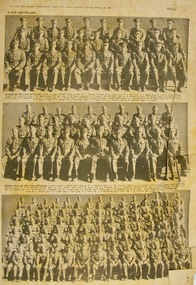
Newspaper, 17th Australian Infantry Brigade, February 22nd 1940
... New Guinea. The photographs are of national significance as they may reflect the only known photographs of individuals from WW2. aif army 17th brigade second aif 2/5th battalion australian army australian infantry brigade 2/2nd field aumbulance 2/2nd australian general hospital 6th divisional australian army medical corps 6th divisional engineers The Argus 17th Australian Infantry Brigade, Second AIF, Souvenir Supplement, Thursday, February 22, 1940 Page 1 2/5th Battalion - Picture 1 Officers of the 2/5th Battalion; Picture 2 Senior NCO's of the 2/5th Battalion; Picture 3 A Company 2/5th Battalion Page 2 B Company 2/5th Battalion; C Company 2/5th Battalion; D Company 2/5th Battalion Page 3 Headquarters 2/2nd Field Regiment 6th Divisional Artillery; 3rd Battery 2/2nd Field Regiment 6th Divisional Artillery Page 4 Officers, NCO's and men of 2/2nd Field Company, 6th Divisional Engineers; Officers NCO's and men 2/2nd Field Ambulance and 2/2nd Australian General Hospital 6th Divisional Australian Army Medical Corps 4 page newspaper pictures of 17th Brigade, Second AIF 17th Australian Infantry Brigade Newspaper ...The 17th Australian Infantry Brigade was an infantry brigade in the Australian Army. First formed in 1917 during World War I, it did not see any action. Reformed during World War II, before being disbanded in 1946. Today, its name is perpetuated by the 17th Combat Service Support Brigade, which was raised as a logistics formation in May 2006. The 17th Brigade was reformed on 13 October 1939, again as part of the 6th Division, recruited from Victoria. The 17th Brigade fought in the Western Desert Campaign in Libya, the Battle of Greece, the Battle of Wau, the Salamaua-Lae campaign in Papua, and in the Aitape-Wewak campaign in New Guinea. The photographs are of national significance as they may reflect the only known photographs of individuals from WW2.4 page newspaper pictures of 17th Brigade, Second AIFThe Argus 17th Australian Infantry Brigade, Second AIF, Souvenir Supplement, Thursday, February 22, 1940 Page 1 2/5th Battalion - Picture 1 Officers of the 2/5th Battalion; Picture 2 Senior NCO's of the 2/5th Battalion; Picture 3 A Company 2/5th Battalion Page 2 B Company 2/5th Battalion; C Company 2/5th Battalion; D Company 2/5th Battalion Page 3 Headquarters 2/2nd Field Regiment 6th Divisional Artillery; 3rd Battery 2/2nd Field Regiment 6th Divisional Artillery Page 4 Officers, NCO's and men of 2/2nd Field Company, 6th Divisional Engineers; Officers NCO's and men 2/2nd Field Ambulance and 2/2nd Australian General Hospital 6th Divisional Australian Army Medical Corpsaif, army, 17th brigade, second aif, 2/5th battalion, australian army, australian infantry brigade, 2/2nd field aumbulance, 2/2nd australian general hospital, 6th divisional australian army medical corps, 6th divisional engineers -
 Lara RSL Sub Branch
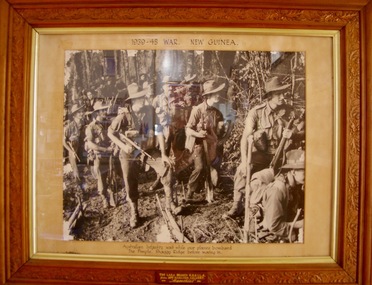
Photograph, Australian infantry in New Guinea 1939/45 war
... ww2...papua new guinea...In late December 1943, the Australian offensive to take Shaggy Ridge began, focused on an attack on The Pimple.[13] The Pimple was one of three rocky outcrops, held by the Japanese on the ridge line. ww2 papua new guinea world war 2 lara r.s.l. photographs australian infantry shaggy ridge Australian infantry waiting while our planes" bombard the Pimple,"Shaggy Ridge before moving in. ...The Battle of the Shaggy Ridge was part of the Markham and Ramu Valley – Finisterre Range campaign, consisting of a number of actions fought by Australian and Japanese troops in Papua New Guinea in World War II. Following the Allied capture of Lae and Nadzab, the Australian 9th Division had been committed to a quick follow up action on the Huon Peninsula in an effort to cut off the withdrawing Japanese. Once the situation on the Huon Peninsula stabilised in late 1943, the 7th Division had pushed into the Markham and Ramu Valleys towards the Finisterre Range with a view to pushing north towards the coast around Bogadjim, where they would meet up with Allied forces advancing around the coast from the Huon Peninsula, before advancing towards Madang.In late December 1943, the Australian offensive to take Shaggy Ridge began, focused on an attack on The Pimple.[13] The Pimple was one of three rocky outcrops, held by the Japanese on the ridge line.Framed Photograph of Australian infantry waiting while our planes" bombard the Pimple,"Shaggy Ridge before moving in. Australian infantry waiting while our planes" bombard the Pimple,"Shaggy Ridge before moving in. THE LARA BRANCH R.S.S.I.L.A. FROM MRS HAMILTON CALVERT =MEMORIES=ww2, papua new guinea, world war 2, lara r.s.l., photographs, australian infantry, shaggy ridge -
 Lara RSL Sub Branch
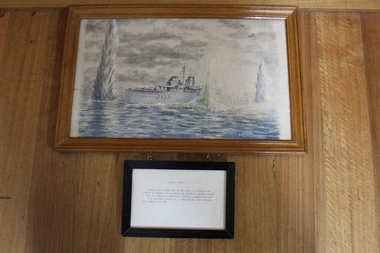
Painting of H.M.A.S. Whyalla off New guinea, 1944
... Whyalla painting ww2 lindsay d. dunsmuir, 1944 H.M.A.S. Whyalla In 1944, while on survey duty off New Guinea, in preparation for a landing by infantry, H.M.A.S. ...WW2, H.M.A.S. WhyallaWW2, H.M.A.S. Whyalla painting1. Painting of H.M.A.S. Whyalla on survey duty off New Guinea in 1944 , framed in glass and wooden frame. 2. Separate small framed statement of the painting with details of the action being under-taken by H.M.A.S. Whyalla. hanging from the paniting frame middle/centre.H.M.A.S. Whyalla In 1944, while on survey duty off New Guinea, in preparation for a landing by infantry, H.M.A.S. Whyalla was attacked by by Japanese aircraft. This is a portrayal of the attack, painted by a member of the crew it was presented to Lara R.S.L. in March 1981 by Lindsay Dunsmuir, also a member of the crew. Artist name B. Andeasenww2, lindsay d. dunsmuir,, 1944 -
 Shepparton RSL Sub Branch
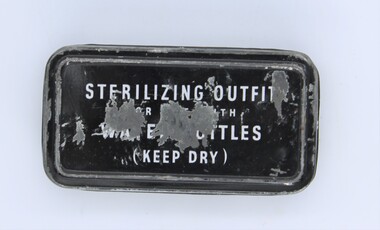
Tin, Period. WW2
... ww2...new guinea...Not rare but everybody both male and female (Nurses etc.) would be issued with this tin of tablets. sterilizing outfit. ww2 new guinea korian war borneo boganville etc., etc As Above 7 by 3.5 by 2.5 mm tin. ...Normal WW2 and Korian War period, normal for this period and contains the bottles of sterilization tabletsThe Diggers Water Bottle had to be completly emptied then refilled with the water available, then the tablets added according to the instructions inside the lid. This enabled the Digger to drink his water in the surity that he would not pick up a problem from contaminated water that may have been his only liquid available. These tablets have been produced by science to keep the diggers in top fighting condition. Not rare but everybody both male and female (Nurses etc.) would be issued with this tin of tablets.7 by 3.5 by 2.5 mm tin. The lid is 2.5 mm deep painted black with white writing which says, STERILIZING OUTFIT FOR USE WITH WATER BOTTLES (Keep Dry)As Abovesterilizing outfit., ww2, new guinea, korian war, borneo, boganville etc., etc -
 Shepparton RSL Sub Branch
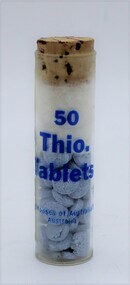
Bottle-Tablet. 50 Thio. Tablets, Bottle, Period. WW2
... ww2...new guinea...Not rare but everybody both male and female (Nurses etc.) would be issued with this tin of tablets. bottle from sterilizing outfit outfit. contains blue tablets ww2 new guinea korian war borneo boganville etc., etc Marked on bottle in blue paint, 50. ...Normal WW2 and Korian War period, normal for this period bottle contains Thio. Tablets.The Diggers Water Bottle had to be completly emptied then refilled with the water available, then the tablets added after crushing according to the instructions inside the lid. This enabled the Digger to drink his water in the surity that he would not pick up a problem from the contaminated water that may have been his only liquid available. These tablets have been produced by science to keep the diggers in top fighting condition. Not rare but everybody both male and female (Nurses etc.) would be issued with this tin of tablets.60 X 18 mm glass bottle with cork 11 X 17 mm and cotton wool, contains 50 blue Thio tabletsMarked on bottle in blue paint, 50. Thio. Tablets. Drug Houses of Australia Ltd. Australia. bottle from sterilizing outfit outfit. contains blue tablets, ww2, new guinea, korian war, borneo, boganville etc., etc -
 Shepparton RSL Sub Branch
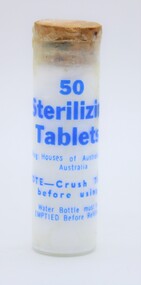
Bottle-Tablet. 50 Thio. Tablets, Bottle, Period. WW2
... ww2...new guinea...Not rare but everybody both male and female (Nurses etc.) would be issued with this tin of tablets. ww2 new guinea korian war borneo boganville etc., etc bottle contains 50 white sterilization tablets Marked on bottle in blue paint, 50. ...Normal WW2 and Korian War period, normal for this period bottle contains Sterilization Tablets.The Diggers Water Bottle had to be completly emptied then refilled with the water available, then the tablets added after crushing according to the instructions inside the lid. This enabled the Digger to drink his water in the surity that he would not pick up a problem from the contaminated water that may have been his only liquid available. These tablets have been produced by science to keep the diggers in top fighting condition. Not rare but everybody both male and female (Nurses etc.) would be issued with this tin of tablets.60 X 18 mm glass bottle with cork 11 X 17 mm and cotton wool, contains 50 White Sterilization tabletsMarked on bottle in blue paint, 50. Sterilization. Tablets. Drug Houses of Australia Ltd. Australia. ww2, new guinea, korian war, borneo, boganville etc., etc, bottle contains 50 white sterilization tablets -
 Lara RSL Sub Branch
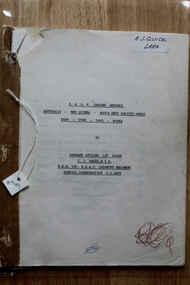
Manual - Raaf Ground Defence - Australia, New Guinea, South West Pacific Areas 1939 - 1940 - 1945 - Korea
... WW2 and Korea Wars r.a.a.f. manual Owned by A, J. Quick A instruction Manual Compiled by Warrant Officer , M.I.D. Raaf Ground Defence - Australia, New Guinea, South West Pacific Areas 1939 - 1940 - 1945 - Korea Manual Raaf Ground Defence - Australia, New Guinea, South West Pacific Areas 1939 - 1940 - 1945 - Korea ...R.A.A. F. Instructional ManualCovers WW2 and Korea WarsA instruction Manual Compiled by Warrant Officer , M.I.D. Owned by A, J. Quickr.a.a.f. manual -
 City of Moorabbin Historical Society (Operating the Box Cottage Museum)
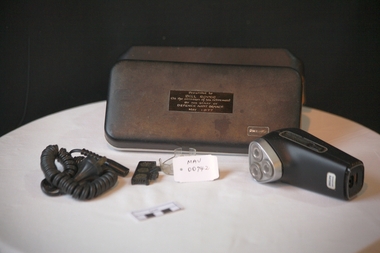
Personal Effects. 'Philips" electric Shaver, c1977
... New Zealand in 1956, but would not be introduced globally until 1966. The brand name Philishave was phased out in 2006 so shavers now bear only the Philips name. Mr Alfred William ( Bill ) Roper, 1913 - 1996 grew up in Ripponlea, ( East St Kilda ) Victoria. As a child he went with his father Arthur Leopold Roper to purchase vegetables from the Moorabbin Chinese market gardeners at the Hotham St. / Nepean Highway corner. c1920 . Bill served in WW2 in New Guinea ...Established in 1891 in Eindhoven, the Netherlands, Philips & Co. was founded to meet the growing demand for light bulbs following the commercialization of electricity. Science and technology underwent tremendous development in the 1940s and 1950s, with Philips Research inventing the rotary heads that led to the development of the Philishave electric shaver, and laying down the basis for later ground-breaking work in transistors and integrated circuits.Philishave was the brand name for the electric shavers manufactured by the Philips Domestic Appliances and Personal Care unit of Philips They used the Philishave brand name for their shavers from 1939 to 2006. The Philishave shaver was invented by Philips engineer Alexandre Horowitz, who used rotating cutters instead of the reciprocating cutters that had been used in previous electric shavers. The shaver was introduced in 1939, though initial production was limited due to the outbreak of World War II. A more ergonomic egg-shaped single-head model was introduced in 1948 and was designed by US industrial designer Raymond Loewy. Global sales increased markedly after a double-head model was introduced in 1951. As a spin off from the light bulb and research is the dynamo-powered bicycle lamp. Its rotating power system inspires the Philishave triple head electric razor. A triple-head model was test marketed in Australia and New Zealand in 1956, but would not be introduced globally until 1966. The brand name Philishave was phased out in 2006 so shavers now bear only the Philips name. Mr Alfred William ( Bill ) Roper, 1913 - 1996 grew up in Ripponlea, ( East St Kilda ) Victoria. As a child he went with his father Arthur Leopold Roper to purchase vegetables from the Moorabbin Chinese market gardeners at the Hotham St. / Nepean Highway corner. c1920 . Bill served in WW2 in New Guinea and post war was Army Auditor, Victoria Barracks, St Kilda Road Melbourne. His staff presented this 'Philishave upon his retirement and he used it until his death1996. He lived in Carlton, Belgrave, Ascot Vale, South Yarra, East St Kilda and moved to Bentleigh in 1987.A ‘Philishave’ triple head electric razor , with cord, head protector and cleaning brush in a hinged plastic case The case has compartments, for Razor and cord, that are lined with a mustard coloured, soft, synthetic material .Case top PHILIPS ; inside EXCLUSIVE PHILISHAVE Razor Handle front PHILIPS / PHILISHAVE; back Type HP 1121/ 110-130V/ 220-240 V / PHILIPS Shield / ? Shield / BS 3456 / V 75255 / MADE IN HOLLAND Nameplate Presented to / BILL ROPER / On the occasion of his retirement / BY THE STAFF OF / DEFENCE AUDIT BRANCH / May 1977 philishave, royal philips electric company, razors, electric razors, bentleigh, moorabbin, market gardeners, st kilda markets, world war 2 1939-1945, department of defence melbourne, melbourne, roper alfred william, roper arthur leopold, ripponlea, chinese market gardeners
