
Showing 66 items matching "new zealand - travel"
-
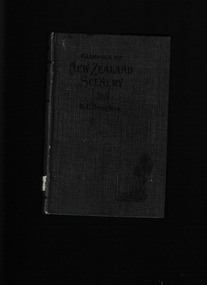 Mrs Aeneas Gunn Memorial Library
Book, Whitcombe & Tombs, Glimpses of New Zealand scenery, 1922
... New Zealand - Travel...New Zealand - Travel New Zealand - Description Descriptions of travel in New Zealand Ill, maps, p.323. ...Descriptions of travel in New ZealandIll, maps, p.323.non-fictionDescriptions of travel in New Zealandnew zealand - travel, new zealand - description -
![An account of the English colony in New South Wales : with remarks on the dispositions, customs, manners, &c. of the native inhabitants of that country, to which are added, some particulars of New Zealand / compiled, by permission, from the Mss. of Lieutenant-Governor King by David Collins [Volume 1]](/media/collectors/550653872162f11fb04854aa/items/575ba01ad0cdd1229c1f675d/item-media/57600f26d0cdd11990766530/item-fit-380x285.jpg?cb=6) Kew Historical Society Inc
Kew Historical Society IncBook, State Libraries of South Australia, An account of the English colony in New South Wales : with remarks on the dispositions, customs, manners, &c. of the native inhabitants of that country, to which are added, some particulars of New Zealand (Vol.1), 1971
... new south wales - descriptions and travel...new zealand...The volume formed part of the professional library of the historian Dorothy Rogers. new south wales - descriptions and travel new zealand - descriptions and travel Inscribed: June 1971 to Mum. ...[Adelaide : Libraries Board of South Australia, 1971] 2 v. : maps (part col.), plates (part col.) ; 28 cm. Facsimile of: London : T. Cadell jun. and W. Davies, 1798. Includes an account of a voyage performed by Captain Flinders and Mr. Bass abstracted from the journal of Mr. Bass. Volume 1non-fictionnew south wales - descriptions and travel, new zealand - descriptions and travel -
![An account of the English colony in New South Wales : with remarks on the dispositions, customs, manners, &c. of the native inhabitants of that country, to which are added, some particulars of New Zealand / compiled, by permission, from the Mss. of Lieutenant-Governor King by David Collins [Volume 2]](/media/collectors/550653872162f11fb04854aa/items/575ba131d0cdd1229c1ff2b1/item-media/57600fbed0cdd1199076abab/item-fit-380x285.jpg?cb=6) Kew Historical Society Inc
Kew Historical Society IncBook, Libraries Board of South Australia, An account of the English colony in New South Wales : with remarks on the dispositions, customs, manners, &c. of the native inhabitants of that country, to which are added, some particulars of New Zealand (Vol. 2)], 1971
... new south wales - descriptions and travel...new zealand...The volume formed part of the professional library of the historian Dorothy Rogers. new south wales - descriptions and travel new zealand - descriptions and travel Inscribed: June 1971 to Mum. ...[Adelaide : Libraries Board of South Australia, 1971] 2 v. : maps (part col.), plates (part col.) ; 28 cm. Australian Facsimile Editions No.76. Volume 2non-fictionnew south wales - descriptions and travel, new zealand - descriptions and travel -
 Bendigo Historical Society Inc.
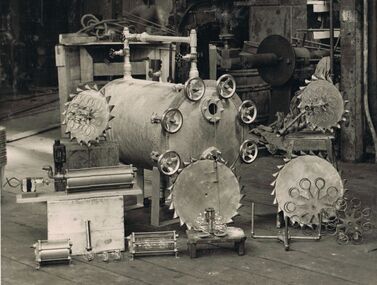
Photograph - BILL ASHMAN COLLECTION: LARGE SCALEBUOY UNIT
... Brooks Close, Auckland Registrations of New Private Companies including Electronic Company of New Zealand, Ltd, Scalebuoys (New Zealand) Ltd and some travel arrangements of Richard H. ...New Zealand Ltd Scalebuoys (New Zealand) Limited Black and white photograph of a large Scalebuoy Unit and other various parts and units arranged on the floor in front of the large unit. Photo pasted onto an album page and some newspaper cuttings from The East Anglian Daily Times dated Wednesday, April 7, 1937 on the back. Cuttings mention the Funeral of Capt. J. Brooks Close, Auckland Registrations of New Private Companies including Electronic Company of New Zealand, Ltd, Scalebuoys (New Zealand) Ltd and some travel ...Black and white photograph of a large Scalebuoy Unit and other various parts and units arranged on the floor in front of the large unit. Photo pasted onto an album page and some newspaper cuttings from The East Anglian Daily Times dated Wednesday, April 7, 1937 on the back. Cuttings mention the Funeral of Capt. J. Brooks Close, Auckland Registrations of New Private Companies including Electronic Company of New Zealand, Ltd, Scalebuoys (New Zealand) Ltd and some travel arrangements of Richard H. S. Abbott.sciences, instruments - general, scalebuoy, bill ashman collection - correspondence, scalebuoy, east anglian daily times 7/4/1937, r h s abbott, capt james brooks close, electronic company of new zealand ltd, scalebuoys (new zealand) limited -
 Federation University Art Collection
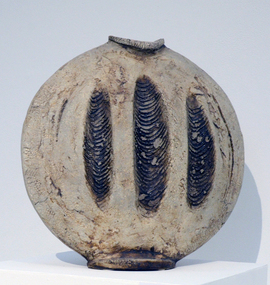
Ceramic, Press Moulded Pot by Les Castle, 1979, c1979
... New Zealand
'My best work is when intuition and conscious choice come together successfully.'
Len Castle trained as a secondary schoolteacher and started making pottery in 1947. Initially self-taught, he was the first potter to be awarded a fellowship from the Association of New Zealand Art Societies, travelling to St Ives to work with Bernard Leach in 1956-57. ...New Zealand
'My best work is when intuition and conscious choice come together successfully.'
Len Castle trained as a secondary schoolteacher and started making pottery in 1947. Initially self-taught, he was the first potter to be awarded a fellowship from the Association of New Zealand Art Societies, travelling to St Ives to work with Bernard Leach in 1956-57. ...Len CASTLE (23 December 1924 – 29 September 2011 ) Born New Zealand 'My best work is when intuition and conscious choice come together successfully.' Len Castle trained as a secondary schoolteacher and started making pottery in 1947. Initially self-taught, he was the first potter to be awarded a fellowship from the Association of New Zealand Art Societies, travelling to St Ives to work with Bernard Leach in 1956-57. He lectured at the Auckland Teachers' College until the early 1960s, before concentrating on making stoneware at Titirangi, New Zealand. Len Castle was an artist in residence at the Gippsland Centre for Art and Design (GCAD).Two piece press moulded ceramic form with glaze wash surface.ceramics, len castle, gippsland campus, jan feder memorial ceramics collection -
 Federation University Art Collection
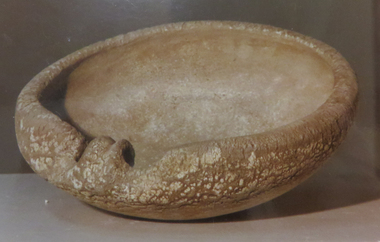
Ceramic - Artwork - Ceramics, Len Castle, Press Moulded Bowl by Len Castle, c1979
... New Zealand
'My best work is when intuition and conscious choice come together successfully.'
Len Castle trained as a secondary schoolteacher and started making pottery in 1947. Initially self-taught, he was the first potter to be awarded a fellowship from the Association of New Zealand Art Societies, travelling to St Ives to work with Bernard Leach in 1956-57. ...New Zealand
'My best work is when intuition and conscious choice come together successfully.'
Len Castle trained as a secondary schoolteacher and started making pottery in 1947. Initially self-taught, he was the first potter to be awarded a fellowship from the Association of New Zealand Art Societies, travelling to St Ives to work with Bernard Leach in 1956-57. ...Len CASTLE (23 December 1924 – 29 September 2011 ) Born Auckland, New Zealand 'My best work is when intuition and conscious choice come together successfully.' Len Castle trained as a secondary schoolteacher and started making pottery in 1947. Initially self-taught, he was the first potter to be awarded a fellowship from the Association of New Zealand Art Societies, travelling to St Ives to work with Bernard Leach in 1956-57. He lectured at the Auckland Teachers' College until the early 1960s, before concentrating on making stoneware at Titirangi, New Zealand. Len Castle was an artist in residence at the Gippsland Centre of Art and Design c1979.Press moulded bowl. Gift of the artist.ceramics, jan feder, jan feder memorial ceramics collection, len castle, gippsland campus -
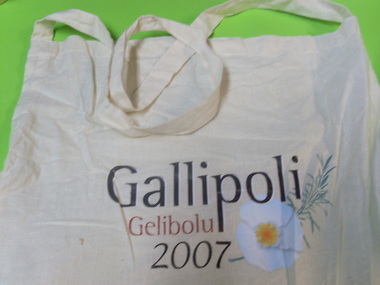 Conservation Volunteers
Gallipoli Visitor Welcome Pack 2011, Manufactured and collated for the Australian and New Zealand Governments
... Annually since 2006 the Australian Department of Veterans Affairs has invited CVA to arrange a group of volunteers from Australia and New Zealand to travel to Gallipoli as part of the management of the Anzac Day Remembrance event. ...Annually since 2006 the Australian Department of Veterans Affairs has invited CVA to arrange a group of volunteers from Australia and New Zealand to travel to Gallipoli as part of the management of the Anzac Day Remembrance event. ...Annually since 2006 the Australian Department of Veterans Affairs has invited CVA to arrange a group of volunteers from Australia and New Zealand to travel to Gallipoli as part of the management of the Anzac Day Remembrance event. Announcing the 2011 visit the Commonwealth Minister, Warren Snowdon, said the contribution of volunteers on the ground at Gallipoli is highly valued. “Volunteers are very dedicated. They fund their way there and assist with a range of activities, including site preparation, crowd liaison and the distribution of visitor information packs,” he said. Volunteers appreciate this opportunity to both attend a place significant to many Australians and also to make a contribution to the safe and harmonious running of it. “I would like to thank CVA for the privileged of being involved in the Gallipoli program and would highly recommend it.” Volunteer Jennie, Newcastle NSW Since 2006 CVA group assisted at the ANZAC Day dawn service and at other remembrance The original idea was Garry Snowden's. Garry has a personal interest in WW1. On his second private trip to Gallipoli he noted there was too much litter around the commemorative sites and he had the idea of involving volunteers to play a role in providing a clean environment for visitors. The idea was raised with the Federal Govt (how was this done?). In 2005 there was bad publicity regarding behaviour of visitors and the amount of litter left and the Commonwealth Department of Veterans’ Affairs (DVA) reviewed its management strategy for the event. As an integral part of the strategy CVA was engaged to recruit a group of volunteers who would attend at their own cost, assist the clean up the environs of the main sites prior to Anzac Day while doing orientation and personal sightseeing, and welcome visitors and give them an information pack including a litter bag (see photographs attached. The volunteers do NOT clean up afterwards: that is rightly the work of Turkish contractors. Gallipoli is an iconic site for many Australians and New Zealanders and CVA provides this magnificent opportunity for volunteers to contribute effectively.This is a visitor welcome pack distributed by CVA volunteers to visitors prior to the Anzac Dawn service and other commemorations. It contains three publications, a poncho in the evcent of rain, a rubbish bag and a pin.Gallipoli, Gelibolu 2007anzac, gallipoli, garry, snowden -
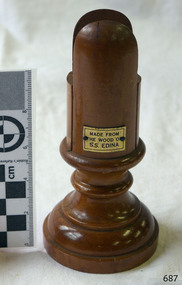 Flagstaff Hill Maritime Museum and Village
Domestic object - Card Holder, c. 1854 - 1957
... travel late 19th and early 20th century...trade melbourne to geelong...screw steamer Edina...coastal trader Edina...lighter Dinah...cargo carrying for cremean war...cargo carrying for American civil war...passenger and trade in western district of victoria...export gold and currency and gold diggers to New Zealand...The SS Edina’s original ‘fair maid of Judea’ figurehead was broken to pieces in a collision with another vessel (the SS Dandenong) in a gale off Warrnambool, Victoria, in 1870. warrnambool shipwrecked coast flagstaff hill flagstaff hill maritime museum maritime museum shipwreck coast flagstaff hill maritime village shipwrecked artefact Barclay & Curle figurehead 'fair maid of Judea' centenary maritime exhibition 1934 a brief review of steam navigation in victoria pleasure steamer edina trade and travel late 19th and early 20th century trade melbourne to geelong screw steamer Edina coastal trader Edina lighter Dinah cargo carrying for cremean war cargo carrying for American civil war passenger and trade in western district of victoria export gold and currency and gold diggers to New Zealand export vessel to h r h the duke of edinburgh melbourne - warrnambool - port fairy - portland cargo run warrnambool steam packet company stephen henty captain john thompson chief engineer john davies lady bay warrnambool lighter Edina shipping Victoria port phillip bay steamers steamship great Britain Edina, VHR S199 Victorian Heritage Database card holder menu holder table number holder souvenir of the ss edina Printed on plaque "MADE FROM / THE WOOD OF / S.S. ...This wooden cardholder was made from the wood of the screw steamer S.S. Edina, most probably after she was broken up in 1957, but could have been made after one of several renovations during her lifetime. The slotted design of the cardholder allows a card to stand vertically, and the base is made wider to stabilise the holder. It could be used for holding items such as place cards, menus, and table numbers. ABOUT THE SS EDINA: - The three-masted, iron-hulled screw steamer SS Edina was built in Glasgow, Scotland, in 1854 by Barclay and Curle and launched on the Clyde on May 4th, 1854. The 322-ton, three-masted ship was 171 feet long, 23 feet 6 inches broad, and 12 feet 7 inches deep (52.12 L x 7.16 B x 3.84 D metres). The traditional figurehead of Edina, the ‘fair maid of Judea’, adorned its bow. The Edina later became famous worldwide for being the longest-serving screw steamer. (The term screw steamer comes from being driven by a single propeller, sometimes called a screw, driven by a steam engine.) During its long working life, SS Edina had its accommodation enlarged for war service, was completely overhauled and serviced several times; boilers were replaced, masts were reduced to one, and later added then reduced, a Poop Deck, Forecastle and additional accommodation were added, the hull was gutted completely, new decks and bulwarks, saloon was redecorated and upgraded, and several changes of commander. The busy vessel also survived several mishaps at sea. SS Edina’s interesting history includes English Channel runs, carrying stores and horses to the Black Sea in the Crimean War as HMS Edina 1864-55. The vessel then sailed to Europe and the UK before being sold and used for further service in 1861 as a blockade runner in the American Civil War. The vessel later served as a coastal trader in the western district of Victoria and Queensland, then carried gold, currency, and gold prospectors from Australia to New Zealand. SS Edina was an escort vessel to H.R.H. the Duke of Edinburgh during his visit to Australia in 1867. SOME EVENTS in the life of SS EDINA: - The SS Edina had voyaged to Australia under sail. Owners Leith, Hull & Hamburg Steam Packet Co. sold the SS Edina in March 1863 at Port Phillip Bay, Melbourne, to Stephen Henty of Portland, Victoria; Edina was perfect for working the West Coast cargo and passenger run between Melbourne and Portland, via the Port of Warrnambool, and Port Fairy. It first visited Warrnambool on April 4, 1863. SS Edina briefly worked the run from Australia to New Zealand, then returned to the West Coast run; the cargo included bales of wool produced in the western district of Victoria. In 1867-68, Stephen Henty sold SS Edina to the Warrnambool Steam Packet Company to continue trading along the coast of western Victoria. Captain John Thompson was the commander, and John Davies was the Chief Engineer. In 1870, SS Edina was in Lady Bay, Warrnambool, when a gale sprang up and caused a collision with the iron screw steamer SS Dandenong. SS Edina’s figurehead was broken into pieces and was never replaced. The Edina was refitted that year for use as a coastal trader in Queensland for a period, named R.M.S. Edina. It then went to Melbourne and carried cargo and passengers between there and Geelong from 1880 to 1938, with modifications in 1917; the ship was extensively overhauled, radically changing its appearance. It returned to having two masts, and the funnel, bridge, engines, and promenade deck were upgraded, and the saloon reupholstered. By 1924, Edina had made over 12,000 journeys, carrying over one million travellers between Melbourne and Geelong. In 1937, Australian Steamships Pty Ltd advertised in The Argus its Bay Excursions on the SS Edina from Portarlington and Geelong; it promoted, “Splendid Beaches, Excellent Bathing Facilities, and Light Refreshments available on board”. After several collisions, the SS Edina was taken out of service in 1938 and sold by its owner, Howard Smith Ltd., to a Williamstown shipbreaker, Mr George Burton. The Melbourne Harbour Trust permitted Burton to strip the hull and sell all parts at auction. The fittings were sold by auctioneers J.W. Styles & Son, c. 1938, on site at the Port of Melbourne and became widely dispersed. Victorian Lighterage Pty Ltd. purchased the hull, removed the engine and superstructure, and repurposed it as a ‘lighter’ named Dinah. It was loaded with wool and general cargo, then towed behind small tugs around the bay between Melbourne and Geelong. In 1957, after 104 years of activity, the SS Edina was broken up on the banks of the Maribyrnong River, Footscray, Melbourne, and used as landfill. A piece of the hull with Victorian Heritage significance is buried in the river. This card holder is made from wood from the SS Edina and is significant for its association with that vessel. The SS Edina is heritage listed on the Victorian Heritage Database VHR S199. She had endeared herself to the people of Port Phillip Bay as a passenger ferry, part of their history and culture. She played a significant role in the Crimean War, the American Civil War and the gold rush in New Zealand. She also served Western Victoria for many years in her cargo and passenger runs. The SS Edina is famous for being the longest-serving screw steamer in the world. After spending her first nine years overseas, she arrived in Melbourne, and her work included running the essential service of transporting cargo and passengers between Melbourne and the western Victoria ports of Warrnambool, Port Fairy and Portland. The SS Edina was purchased in the late 1860s by local Warrnambool business, the Warrnambool Steam Packet Co. and continued trading from there as part of the local business community. The SS Edina’s original ‘fair maid of Judea’ figurehead was broken to pieces in a collision with another vessel (the SS Dandenong) in a gale off Warrnambool, Victoria, in 1870. Card holder, made from the wood from the SS Edina (screw steamer ship). Holder is cylindrical shape, wider turned wood base. Top is divided with a space in the centre tor inserting a card. Rectangular metal plaque, gold-coloured, has a printed inscription within black border. Made c. 1854 - 1957.Printed on plaque "MADE FROM / THE WOOD OF / S.S. EDINA"warrnambool, shipwrecked coast, flagstaff hill, flagstaff hill maritime museum, maritime museum, shipwreck coast, flagstaff hill maritime village, shipwrecked artefact, barclay & curle, figurehead 'fair maid of judea', centenary maritime exhibition 1934, a brief review of steam navigation in victoria, pleasure steamer edina, trade and travel late 19th and early 20th century, trade melbourne to geelong, screw steamer edina, coastal trader edina, lighter dinah, cargo carrying for cremean war, cargo carrying for american civil war, passenger and trade in western district of victoria, export gold and currency and gold diggers to new zealand, export vessel to h r h the duke of edinburgh, melbourne - warrnambool - port fairy - portland cargo run, warrnambool steam packet company, stephen henty, captain john thompson, chief engineer john davies, lady bay warrnambool, lighter edina, shipping victoria, port phillip bay steamers, steamship great britain, edina, vhr s199 victorian heritage database, card holder, menu holder, table number holder, souvenir of the ss edina -
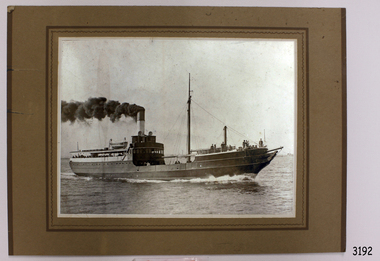 Flagstaff Hill Maritime Museum and Village
Photograph - Vessel, Steam Ship, after 1890
... travel late 19th and early 20th century...trade melbourne to geelong...screw steamer edina...coastal trader edina...lighter dinah...cargo carrying for cremean war...cargo carrying for american civil war...passenger and trade in western district of victoria...export gold and currency and gold diggers to new zealand...The SS Edina’s original ‘fair maid of Judea’ figurehead was broken to pieces in a collision with another vessel (the SS Dandenong) in a gale off Warrnambool, Victoria, in 1870. warrnambool shipwrecked coast flagstaff hill flagstaff hill maritime museum maritime museum shipwreck coast flagstaff hill maritime village shipwrecked artefact barclay & curle figurehead 'fair maid of judea' centenary maritime exhibition 1934 a brief review of steam navigation in victoria pleasure steamer edina trade and travel late 19th and early 20th century trade melbourne to geelong screw steamer edina coastal trader edina lighter dinah cargo carrying for cremean war cargo carrying for american civil war passenger and trade in western district of victoria export gold and currency and gold diggers to new zealand export vessel to h r h the duke of edinburgh melbourne - warrnambool - port fairy - portland cargo run warrnambool steam packet company stephen henty captain john thompson chief engineer john davies lady bay warrnambool lighter edina shipping victoria port phillip bay steamers steamship great britain edina, vhr s199 victorian heritage database photograph of ss edina post 1890 photograph australian screw steamer pleasure vessel victoria post 1890 Inscription on the reverse: "Donated by Mrs. ...This photograph was donated by Mrs Nancy Mason, daughter-in-law of the last owner, Arnold Mason. Andrew Mason had been given the photograph by Mr. Mac Fordham, who was the Chief Engineer of the SS Edina. Both men had been Engineers in WW I. The configuration of the SS Edina in the photograph is post 1890. ABOUT THE S S EDINA The three-masted iron screw steamer SS Edina was built in Glasgow, Scotland, in 1854 by Barclay and Curle. She was adorned with the figurehead of ‘fair maid of Judea’. The many years of service made SS Edina famous worldwide as the longest-serving screw steamer. (The term screw steamer comes from being driven by a single propeller, sometimes called a screw, driven by a steam engine.) SS Edina’s interesting history includes English Channel runs, serving in the Crimean War carrying ammunition, horses and stores to the Black Sea, and further service in the American Civil War and later, serving in the western district of Victoria as well as in Queensland and carried gold, currency and gold prospectors Australia to New Zealand. SS Edina had the privilege of being an escort vessel to H.R.H. the Duke of Edinburgh during his visit to Australia in 1867. In March 1863, SS Edina arrived in Port Phillip Bay, Melbourne and was bought by Stephen Henty, of Portland fame, to work the cargo and passenger run from Melbourne – Warrnambool – Port Fairy - Portland. After a short time of working the run from Australia to New Zealand, with passengers and cargo that included gold and currency, she returned to her Melbourne - Warrnambool – Port Fairy run, with cargo including bales of wool produced in the western district of Victoria. The Warrnambool Steam Packet Company purchased SS Edina in 1867; she was now commanded by Captain John Thompson and Chief Engineer John Davies. She survived several mishaps at sea, had a complete service and overhaul and several changes of commanders. In 1870 SS Edina was in Lady Bay, Warrnambool, when a gale sprung up and caused a collision with the iron screw steamer SS Dandenong. SS Edina’s figurehead was broken into pieces and it was not ever replaced. SS Edina was refitted in 1870 then was used as a coastal trader in Queensland for a period. She was then brought to Melbourne to carry cargo and passengers between Melbourne and Geelong and performed this service 1880-1938. During this time (1917) she was again refitted with a new mast, funnel, bridge and promenade deck, altering her appearance. In 1938, after more collisions, SS Edina was taken out of service. However, she was later renamed Dinah and used as a ‘lighter’ (a vessel without engine or superstructure) to be towed and carry wool and general cargo between Melbourne and Geelong. In 1957, after 104 years, the SS Edina was broken up at Footscray, Melbourne. Remains of SS Edina’s hull can be found in the Maribyrnong River, Port Phillip Bay. This photograph of the SS Edina is significant for its association with the screw steamer SS Edina. The SS Edina is heritage listed on the Victorian Heritage Database VHR S199. She had endeared herself to the people of Port Phillip Bay as a passenger ferry, part of their history and culture. She played a significant role in the Crimean War, the American Civil War and the gold rush in New Zealand. She also served western Victoria for many years in her cargo and passenger runs. The SS Edina is famous for being the longest serving screw steamer in the world. After spending her first nine years overseas she arrived in Melbourne and her work included running the essential service of transporting cargo and passengers between Melbourne and the western Victoria ports of Warrnambool, Port Fairy and Portland. The SS Edina was purchased in the late 1860’s by local Warrnambool business, the Warrnambool Steam Packet Co. and continued trading from there as part of the local business community. The SS Edina’s original ‘fair maid of Judea’ figurehead was broken to pieces in a collision with another vessel (the SS Dandenong) in a gale off Warrnambool, Victoria, in 1870.Black and White photograph mounted on brown card of SS Edina. Inscription on the reverse side. The photograph shows the SS Edina moving under steam power, with many people on both the bow and stern and a few people in the centre of the vessel. There are buildings on the shore in the background. The ship's configuration is dated post 1890.Inscription on the reverse: "Donated by Mrs. Nancy Mason, Bayview. Receipt 409a. Owned by Mac Fordham, Chief Engineer, 'Edina', then given to Mrs. Mason's father-in-law Arnold Mason. (both Engineers W.W 1)."warrnambool, shipwrecked coast, flagstaff hill, flagstaff hill maritime museum, maritime museum, shipwreck coast, flagstaff hill maritime village, shipwrecked artefact, barclay & curle, figurehead 'fair maid of judea', centenary maritime exhibition 1934, a brief review of steam navigation in victoria, pleasure steamer edina, trade and travel late 19th and early 20th century, trade melbourne to geelong, screw steamer edina, coastal trader edina, lighter dinah, cargo carrying for cremean war, cargo carrying for american civil war, passenger and trade in western district of victoria, export gold and currency and gold diggers to new zealand, export vessel to h r h the duke of edinburgh, melbourne - warrnambool - port fairy - portland cargo run, warrnambool steam packet company, stephen henty, captain john thompson, chief engineer john davies, lady bay warrnambool, lighter edina, shipping victoria, port phillip bay steamers, steamship great britain, edina, vhr s199 victorian heritage database, photograph of ss edina post 1890, photograph australian screw steamer, pleasure vessel victoria post 1890 -
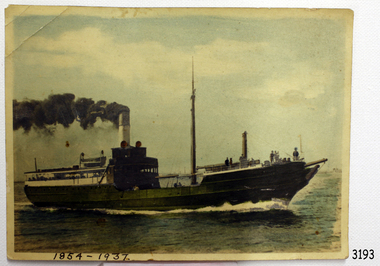 Flagstaff Hill Maritime Museum and Village
Photograph - Vessel, Steam Ship, Between 1890 - 19-12-1937
... travel late 19th and early 20th century...trade melbourne to geelong...screw steamer edina...coastal trader edina...lighter dinah...cargo carrying for cremean war...cargo carrying for american civil war...passenger and trade in western district of victoria...export gold and currency and gold diggers to new zealand...The SS Edina’s original ‘fair maid of Judea’ figurehead was broken to pieces in a collision with another vessel (the SS Dandenong) in a gale off Warrnambool, Victoria, in 1870. warrnambool shipwrecked coast flagstaff hill flagstaff hill maritime museum maritime museum shipwreck coast flagstaff hill maritime village shipwrecked artefact barclay & curle figurehead 'fair maid of judea' centenary maritime exhibition 1934 a brief review of steam navigation in victoria pleasure steamer edina trade and travel late 19th and early 20th century trade melbourne to geelong screw steamer edina coastal trader edina lighter dinah cargo carrying for cremean war cargo carrying for american civil war passenger and trade in western district of victoria export gold and currency and gold diggers to new zealand export vessel to h r h the duke of edinburgh melbourne - warrnambool - port fairy - portland cargo run warrnambool steam packet company stephen henty captain john thompson chief engineer john davies lady bay warrnambool lighter edina shipping victoria port phillip bay steamers steamship great britain edina, vhr s199 victorian heritage database photographic postcard of ss edina 1854-1957 letter by mac fordham chief engineer ss edina letter to arnold mason, engineer Hand written in pen on base of front “1854-1957” Hand written on back in blue pen and crossed out “REC 409” Hand written on back in pen ‘EDINA,’ “3173,” “086.2” Hand written letter dated 19-12-37, from Mac to Arnie. ...This photographic postcard of the SS Edina was taken after the 1890’s due to the style and configuration of the vessel. There is a black and white photograph of the same image also in our Collection (RN 3192). It is most likely that both of the photographs were donated by the same person because the people mentioned in the inscription on the black and white photograph’s reverse side connect with two of the people mentioned in the letter on the reverse of the coloured photograph. * RN 3192; Black & White photograph - inscription: - "Donated by Mrs. Nancy Mason, Bay View. Owned by Mac Fordham, Chief Engineer, 'Edina', then given to Mrs. Mason's father-in-law Arnold Mason (both Engineers W.W. I)" The “Arnie” to whom the letter was addressed is likely to be Arnold Mason, Engineer. The author of the letter, “Mac”, is likely to be Mac Fordham, Chief Engineer of SS Edina. The transcribed letter tells of two men who know each other well and have an interest in the Edina. “Mac” mentions that he may be “too old” to be at sea again; this would also support the idea that the older writer would give his photographs to the perhaps younger “Arnie”. * RN 3193 (this photograph) - Transcription of pen and ink script handwriting = = = = = = = = = = = = 19-12-37 No. 1 Flat, “Goodwood Lodge” 196 Lennox Street, Richmond [Victoria] Dear Arnie , Been meaning to write for long time but you know, it’s just the usual routine of the seamen within Bay trades. Had a good trip back from Sydney. Took our time, spent almost a week coming back, rather monotonous in parts in the hill country, too many darn curves, still was a good trip. How are you all keeping? Suppose you’ve moved back to Drummoyne [erettris?], expect you can let the house in Manly easily enough. Noticed they had a strike at Cockatoo [Cockatoo Island NSW]. don’t suppose they pulled the boys out. How is Jack doing? Has [Willie?] commenced training yet, or no! too young, isn’t she? Been a lot of “paper” talk about the “Edina” finishing but nothing official that I’m aware of, but it’s always on the cards I suppose, then I suppose it will be to sea again if I’m not too old. Easy Winter only 3 trips per week, running every day from today until further notice. Trust [Mary?] Is well & all’s well with you too. Best wishes from us both for Xmas & New Year. Cheerio Mac = = = = = = = = = = = = ABOUT THE SS EDINA The three masted iron screw steamer SS Edina was built in Glasgow, Scotland, in 1854 by Barclay and Curle. She was adorned with the figurehead of ‘fair maid of Judea’. The many years of service made SS Edina famous world-wide as the longest serving screw steamer. (The term screw steamer comes from being driven by a single propeller, sometimes called a screw, driven by a steam engine.) SS Edina’s interesting history includes English Chanel runs, serving in the Crimean Ware carrying ammunition, horses and stores to the Black Sea, and further service in the American Civil War and later, serving in the western district of Victoria as well as in Queensland and carried gold, currency and gold prospectors Australia to New Zealand. SS Edina had the privilege of being an escort vessel to H.R.H. the Duke of Edinburgh during his visit to Australia in 1867. In March 1863 SS Edina arrived in Port Phillip Bay, Melbourne and was bought by Stephen Henty, of Portland fame, to work the cargo and passenger run from Melbourne – Warrnambool – Port Fairy - Portland. After a short time of working the run from Australia to New Zealand, with passengers and cargo that included gold and currency, she returned to her Melbourne - Warrnambool – Port Fairy run, with cargo including bales of wool produced in the western district of Victoria. The Warrnambool Steam Packet Company purchased SS Edina in 1867; she was now commanded by Captain John Thompson and Chief Engineer John Davies. She survived several mishaps at sea, had a complete service and overhaul and several changes of commanders. In 1870 SS Edina was in Lady Bay, Warrnambool, when a gale sprung up and caused a collision with the iron screw steamer SS Dandenong. SS Edina’s figurehead was broken into pieces and it was not ever replaced. SS Edina was re-fitted in 1870 then was used as a coastal trader in Queensland for a period. She was then brought to Melbourne to carry cargo and passengers between Melbourne and Geelong and performed this service 1880-1938. During this time (1917) she was again refitted with a new mast, funnel, bridge and promenade deck, altering her appearance. In 1938, after more collisions, SS Edina was taken out of service. However she was later renamed Dinah and used as a ‘lighter’ (a vessel without engine or superstructure) to be towed and carry wool and general cargo between Melbourne and Geelong. In 1957, after 104 years, the SS Edina was broken up at Footscray, Melbourne. Remains of SS Edina’s hull can be found in the Maribyrnong River, Port Phillip Bay. This photographic postcard with the letter on the revers tell about the SS Edina and are significant for its association with the screw steamer SS Edina. The SS Edina is heritage listed on the Victorian Heritage Database VHR S199. She had endeared herself to the people of Port Phillip Bay as a passenger ferry, part of their history and culture. She played a significant role in the Crimean War, the American Civil War and the gold rush in New Zealand. She also served western Victoria for many years in her cargo and passenger runs. The SS Edina is famous for being the longest serving screw steamer in the world. After spending her first nine years overseas she arrived in Melbourne and her work included running the essential service of transporting cargo and passengers between Melbourne and the western Victoria ports of Warrnambool, Port Fairy and Portland. The SS Edina was purchased in the late 1860’s by local Warrnambool business, the Warrnambool Steam Packet Co. and continued trading from there as part of the local business community. The SS Edina’s original ‘fair maid of Judea’ figurehead was broken to pieces in a collision with another vessel (the SS Dandenong) in a gale off Warrnambool, Victoria, in 1870.Coloured (hand coloured) photographic postcard of SS Edina. Letter on reverse, hand written in pen and ink, from Mac to Arnie, dated 19-12-37 [1937]. The photograph shows the SS Edina moving under steam power, many people on both the bow and stern and a few people in the centre of the vessel. There are buildings on the shore in the background. The ship's configuration is dated post 1890.Hand written in pen on base of front “1854-1957” Hand written on back in blue pen and crossed out “REC 409” Hand written on back in pen ‘EDINA,’ “3173,” “086.2” Hand written letter dated 19-12-37, from Mac to Arnie. Script writing in pen and ink letter on reverse of photograph – see “Context” section for transcription. warrnambool, shipwrecked coast, flagstaff hill, flagstaff hill maritime museum, maritime museum, shipwreck coast, flagstaff hill maritime village, shipwrecked artefact, barclay & curle, figurehead 'fair maid of judea', centenary maritime exhibition 1934, a brief review of steam navigation in victoria, pleasure steamer edina, trade and travel late 19th and early 20th century, trade melbourne to geelong, screw steamer edina, coastal trader edina, lighter dinah, cargo carrying for cremean war, cargo carrying for american civil war, passenger and trade in western district of victoria, export gold and currency and gold diggers to new zealand, export vessel to h r h the duke of edinburgh, melbourne - warrnambool - port fairy - portland cargo run, warrnambool steam packet company, stephen henty, captain john thompson, chief engineer john davies, lady bay warrnambool, lighter edina, shipping victoria, port phillip bay steamers, steamship great britain, edina, vhr s199 victorian heritage database, photographic postcard of ss edina 1854-1957, letter by mac fordham chief engineer ss edina, letter to arnold mason, engineer -
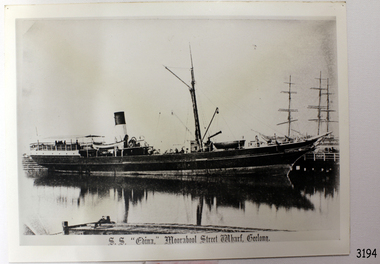 Flagstaff Hill Maritime Museum and Village
Photograph - Vessel, Steam Ship, S.S. "EDINA," Moorabool Street Wharf, Geelong, c. 1870's - 1930's
... travel late 19th and early 20th century...trade melbourne to geelong...screw steamer edina...coastal trader edina...lighter dinah...cargo carrying for cremean war...cargo carrying for american civil war...passenger and trade in western district of victoria...export gold and currency and gold diggers to new zealand...The SS Edina’s original ‘fair maid of Judea’ figurehead was broken to pieces in a collision with another vessel (the SS Dandenong) in a gale off Warrnambool, Victoria, in 1870. warrnambool shipwrecked coast flagstaff hill flagstaff hill maritime museum maritime museum shipwreck coast flagstaff hill maritime village shipwrecked artefact barclay & curle figurehead 'fair maid of judea' centenary maritime exhibition 1934 a brief review of steam navigation in victoria pleasure steamer edina trade and travel late 19th and early 20th century trade melbourne to geelong screw steamer edina coastal trader edina lighter dinah cargo carrying for cremean war cargo carrying for american civil war passenger and trade in western district of victoria export gold and currency and gold diggers to new zealand export vessel to h r h the duke of edinburgh melbourne - warrnambool - port fairy - portland cargo run warrnambool steam packet company stephen henty captain john thompson chief engineer john davies lady bay warrnambool lighter edina shipping victoria port phillip bay steamers steamship great britain edina, vhr s199 victorian heritage database postcard of ss edina 1870's - 1930's Printed at base of photograph "S.S. ...This black and white photograph was taken when the SS Edina was as port at the Geelong Wharf in Moorabool Street. The Port of Geelong had many wool sheds alongside the wharf - wool was a major export product. ABOUT THE SS EDINA The three masted iron screw steamer SS Edina was built in Glasgow, Scotland, in 1854 by Barclay and Curle. She was adorned with the figurehead of ‘fair maid of Judea’. The many years of service made SS Edina famous world-wide as the longest serving screw steamer. (The term screw steamer comes from being driven by a single propeller, sometimes called a screw, driven by a steam engine.) SS Edina’s interesting history includes English Chanel runs, serving in the Crimean Ware carrying ammunition, horses and stores to the Black Sea, and further service in the American Civil War and later, serving in the western district of Victoria as well as in Queensland and carried gold, currency and gold prospectors Australia to New Zealand. SS Edina had the privilege of being an escort vessel to H.R.H. the Duke of Edinburgh during his visit to Australia in 1867. In March 1863 SS Edina arrived in Port Phillip Bay, Melbourne and was bought by Stephen Henty, of Portland fame, to work the cargo and passenger run from Melbourne – Warrnambool – Port Fairy - Portland. After a short time of working the run from Australia to New Zealand, with passengers and cargo that included gold and currency, she returned to her Melbourne - Warrnambool – Port Fairy run, with cargo including bales of wool produced in the western district of Victoria. The Warrnambool Steam Packet Company purchased SS Edina in 1867; she was now commanded by Captain John Thompson and Chief Engineer John Davies. She survived several mishaps at sea, had a complete service and overhaul and several changes of commanders. In 1870 SS Edina was in Lady Bay, Warrnambool, when a gale sprung up and caused a collision with the iron screw steamer SS Dandenong. SS Edina’s figurehead was broken into pieces and it was not ever replaced. SS Edina was re-fitted in 1870 then was used as a coastal trader in Queensland for a period. She was then brought to Melbourne to carry cargo and passengers between Melbourne and Geelong and performed this service 1880-1938. During this time (1917) she was again refitted with a new mast, funnel, bridge and promenade deck, altering her appearance. In 1938, after more collisions, SS Edina was taken out of service. However she was later renamed Dinah and used as a ‘lighter’ (a vessel without engine or superstructure) to be towed and carry wool and general cargo between Melbourne and Geelong. In 1957, after 104 years, the SS Edina was broken up at Footscray, Melbourne. Remains of SS Edina’s hull can be found in the Maribyrnong River, Port Phillip Bay. This postcard of the SS Edina is significant for its association with the screw steamer SS Edina and shows her at one of her trading ports on the Melbourne - Warrnambool - Port Fairy - Portland run. The SS Edina is heritage listed on the Victorian Heritage Database VHR S199. She had endeared herself to the people of Port Phillip Bay as a passenger ferry, part of their history and culture. She played a significant role in the Crimean War, the American Civil War and the gold rush in New Zealand. She also served western Victoria for many years in her cargo and passenger runs. The SS Edina is famous for being the longest serving screw steamer in the world. After spending her first nine years overseas she arrived in Melbourne and her work included running the essential service of transporting cargo and passengers between Melbourne and the western Victoria ports of Warrnambool, Port Fairy and Portland. The SS Edina was purchased in the late 1860’s by local Warrnambool business, the Warrnambool Steam Packet Co. and continued trading from there as part of the local business community. The SS Edina’s original ‘fair maid of Judea’ figurehead was broken to pieces in a collision with another vessel (the SS Dandenong) in a gale off Warrnambool, Victoria, in 1870.Black and White photograph of S.S Edina at the Moorabool Street Wharf, Geelong in calm water that shows the reflection of the steamer. Ship has no sails raised. The funnel has a light coloured base with a dark coloured top. There are people on board the steamer. Other ship masts and people are in the background. In the foreground is a jetty with a small boat beside it and a person inside the boat. There is a title printed along the base of the photograph. c. 1870's to 1930'sPrinted at base of photograph "S.S. "EDINA," Moorabool Street Wharf, Geelong"warrnambool, shipwrecked coast, flagstaff hill, flagstaff hill maritime museum, maritime museum, shipwreck coast, flagstaff hill maritime village, shipwrecked artefact, barclay & curle, figurehead 'fair maid of judea', centenary maritime exhibition 1934, a brief review of steam navigation in victoria, pleasure steamer edina, trade and travel late 19th and early 20th century, trade melbourne to geelong, screw steamer edina, coastal trader edina, lighter dinah, cargo carrying for cremean war, cargo carrying for american civil war, passenger and trade in western district of victoria, export gold and currency and gold diggers to new zealand, export vessel to h r h the duke of edinburgh, melbourne - warrnambool - port fairy - portland cargo run, warrnambool steam packet company, stephen henty, captain john thompson, chief engineer john davies, lady bay warrnambool, lighter edina, shipping victoria, port phillip bay steamers, steamship great britain, edina, vhr s199 victorian heritage database, postcard of ss edina 1870's - 1930's -
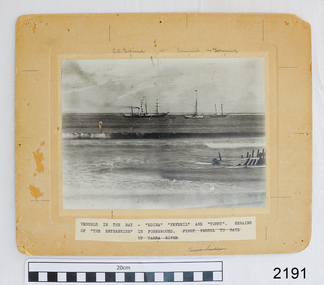 Flagstaff Hill Maritime Museum and Village
Photograph - Vessels, Steam and Sail, Vessels in the bay, 1890's
... New Zealand-built but Australian-owned coastal trader. The wreck was also significant for its association with the local indigenous hero, Buckawall, who saved the lives of the five crew on board. flagstaff hill warrnambool shipwrecked-coast flagstaff-hill flagstaff-hill-maritime-museum maritime-museum shipwreck-coast flagstaff-hill-maritime-village enterprize port of warrnambool warrnambool harbour peveril tommy ss edina lighter dinah warrnambool steam packet company lady bay pleasure steamer edina trade travel screw ship coastal trader cargo victoria buckawall indigenous rescue indigenous hero Typed label under the photograph “VESSELS IN THE BAY – “EDINA” “PEREVIL” AND “TOMMY”. / REMAINS OF “THE ENTERPRISE” IN FOREGROUND. ...The photograph, taken in the 1890s, shows sailing ships and a wreck in Lady Bay, Warrnambool. Lady Bay was once a very busy port of trade in Warrnambool and was also called the Port of Warrnambool or Warrnambool Harbour. ENTERPRISE (1847-1850) NOTE: The “Enterprise” wrecked in 1850 in Warrnambool should not be confused with John Pascoe Faulkner’s ‘Enterprise’, which was wrecked in NSW in 1847. The 58-ton schooner Enterprise was built by David Hay in Waiheke, New Zealand in 1847 and registered by owners John Watson and Edward Byam in Melbourne, Australia. She was a single-deck sailing ship with two masts, used for carrying cargo such as local agricultural produce and general commodities between Melbourne and other colonial ports. On September 14th, 1850 the Enterprise had sailed from Melbourne under the control of the ship’s Master, James Gardiner Caught, and was moored in at the Tramway Jetty in Lady Bay, laden with wheat and potatoes. The vessel rode out a south-easterly gale but eventually dragged anchor and was beached, bow first and then broadside. Buckwall, a local indigenous man, braved the heavy surf and reached the stricken vessel with a rescue line, saving all five crew on board. There were no passengers on board. The Enterprise wreck was in an area called Tramway Jetty in Lady Bay. Since then the area has become the location of Lady Bay Hotel and now, in 2019, it is in the grounds of the Deep Blue Apartments. In fact, with the constantly changing coastline through built-up sand, the wreck site is now apparently under the No 2 Caravan Park on Pertobe Road, perhaps 150 metres from the high tide. Its location was found by Ian McKiggan (leader of the various searches in the 1980s for the legendary Mahogany Ship). The Warrnambool Wreck Enterprise is listed on the Victorian Heritage Database VHR S238. DIFFERENTIATING the New Zealand Schooner “Enterprise” from John Fawkner’s “Enterprize“ Dr Murray Johns, Melbourne, says in his article The Mahogany Ship Story, “…the Enterprise, wrecked in Lady Bay, Warrnambool in 1850 ... was soon covered by sand but was exposed again after several storms in 1887. “Samples of timber were then cut from the wreck, which would then have been buried for 37 years. In November 1887 the Warrnambool Standard reported that “the timber looks sound and hard, a penknife scarcely making any impression.” “For many years there was confusion about the identity of that ship in Lady Bay. Most people believed it was the wreck of John Pascoe Fawkner’s Enterprize, which had sailed from Tasmania to Victoria bringing the pioneer settlers to Melbourne in 1835. “In fact, as I documented in 1985, the Warrnambool wreck was of an entirely different ship, also called Enterprize [Enterprise], but built in New Zealand in 1847. Fawkner’s ship had already been sold to Captain Sullivan in 1845 and was wrecked on the Richmond Pier in northern New South Wales early in 1847. “In 1985 a piece of timber from the local Enterprise, which had been kept at the Warrnambool Museum since 1892, was identified histologically as a New Zealand timber, not Tasmanian timber such as blue gum, from which Fawkner’s Enterprize would have been built in 1830. This confirmed the identity of the Warrnambool Enterprize.”[Dr. M.W. Johns later wrote an article called “The Schooner Enterprise: A Final Word on a Historic Wreck.”] ABOUT THE S S EDINA The three-masted iron screw steamer SS Edina was built in Glasgow, Scotland, in 1854 by Barclay and Curle. She was adorned with the figurehead of the ‘fair maid of Judea’. The many years of service made SS Edina famous worldwide as the longest-serving screw steamer. (The term screw steamer comes from being driven by a single propeller, sometimes called a screw, driven by a steam engine.) SS Edina’s interesting history includes English Chanel runs, serving in the Crimean Ware carrying ammunition, horses and stores to the Black Sea, and further service in the American Civil War and later, serving in the western district of Victoria as well as in Queensland and carried gold, currency and gold prospectors Australia to New Zealand. SS Edina had the privilege of being an escort vessel to H.R.H. the Duke of Edinburgh during his visit to Australia in 1867. In March 1863 SS Edina arrived in Port Phillip Bay, Melbourne and was bought by Stephen Henty, of Portland fame, to work the cargo and passenger run from Melbourne – Warrnambool – Port Fairy - Portland. After a short time of working the run from Australia to New Zealand, with passengers and cargo that included gold and currency, she returned to her Melbourne - Warrnambool – Port Fairy run, with cargo including bales of wool produced in the western district of Victoria. The Warrnambool Steam Packet Company purchased SS Edina in 1867; she was now commanded by Captain John Thompson and Chief Engineer John Davies. She survived several mishaps at sea, had a complete service and overhaul and several changes of commanders. In 1870 SS Edina was in Lady Bay, Warrnambool, when a gale sprung up and caused a collision with the iron screw steamer SS Dandenong. SS Edina’s figurehead was broken into pieces and it was not ever replaced. SS Edina was re-fitted in 1870 and was then used as a coastal trader in Queensland for a period. She was then brought to Melbourne to carry cargo and passengers between Melbourne and Geelong and performed this service from 1880-1938. During this time (1917) she was again refitted with a new mast, funnel, bridge and promenade deck, altering her appearance. In 1938, after more collisions, SS Edina was taken out of service. However, she was later renamed Dinah and used as a ‘lighter’ (a vessel without an engine or superstructure) to be towed and carry wool and general cargo between Melbourne and Geelong. In 1957, after 104 years, the SS Edina was broken up at Footscray, Melbourne. Remains of SS Edina’s hull can be found in the Maribyrnong River, Port Phillip Bay. This photograph is significant for its association with the screw steamer SS Edina, heritage listed on the Victorian Heritage Database VHR S199. She had endeared herself to the people of Port Phillip Bay as a passenger ferry, part of their history and culture. She played a significant role in the Crimean War, the American Civil War and the gold rush in New Zealand. She also served western Victoria for many years in her cargo and passenger runs. The SS Edina is famous for being the longest-serving screw steamer in the world. After spending her first nine years overseas she arrived in Melbourne and her work included running the essential service of transporting cargo and passengers between Melbourne and the western Victoria ports of Warrnambool, Port Fairy and Portland. The SS Edina was purchased in the late 1860s by the local Warrnambool business, the Warrnambool Steam Packet Co. and continued trading from there as part of the local business community. Her original ‘fair maid of Judea’ figurehead was broken to pieces in a collision with another vessel (the SS Dandenong) in a gale off Warrnambool, Victoria, in 1870. The photograph is significant for its association wreck of the Victorian Heritage Listed schooner Enterprise, VHR S238, being a New Zealand-built but Australian-owned coastal trader. The wreck was also significant for its association with the local indigenous hero, Buckawall, who saved the lives of the five crew on board. Photograph "Vessels in the Bay". Black and white photograph of several vessels in Lady Bay, Warrnambool, including some small vessels and "S.S. Edina", the "Peveril" and "Tommy", plus the remains of the wrecked vessel "Enterprise" in the foreground. Photograph is mounted on beige card with label describing the vessels, plus pencilled vessel names. There are several pin holes in each corner of the photograph. Typed label under the photograph “VESSELS IN THE BAY – “EDINA” “PEREVIL” AND “TOMMY”. / REMAINS OF “THE ENTERPRISE” IN FOREGROUND. (Also crossed out on the label “FIRST VESSEL TO SAIL UP YARRA RIVER). In pencil script above the vessels on the photograph “S.S. Edina”, “Peveril” “Tommy”. On the reverse is a printed sticker with “F-Ph 59/2 74”, red felt-tip pen “88”, green pen script repeating the text that is under the photograph on the front.flagstaff hill, warrnambool, shipwrecked-coast, flagstaff-hill, flagstaff-hill-maritime-museum, maritime-museum, shipwreck-coast, flagstaff-hill-maritime-village, enterprize, port of warrnambool, warrnambool harbour, peveril, tommy, ss edina, lighter dinah, warrnambool steam packet company, lady bay, pleasure steamer, edina, trade, travel, screw ship, coastal trader, cargo, victoria, buckawall, indigenous rescue, indigenous hero -
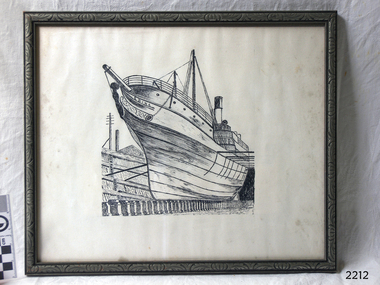 Flagstaff Hill Maritime Museum and Village
Drawing - Vessel, Sail and Steam Ship, c 1890's
... travel late 19th and early 20th century...trade melbourne to geelong...screw steamer edina...coastal trader edina...lighter dinah...cargo carrying for cremean war...cargo carrying for american civil war...passenger and trade in western district of victoria...export gold and currency and gold diggers to new zealand...The SS Edina’s original ‘fair maid of Judea’ figurehead was broken to pieces in a collision with another vessel (the SS Dandenong) in a gale off Warrnambool, Victoria, in 1870. warrnambool shipwrecked coast flagstaff hill flagstaff hill maritime museum maritime museum shipwreck coast flagstaff hill maritime village shipwrecked artefact barclay & curle figurehead 'fair maid of judea' centenary maritime exhibition 1934 a brief review of steam navigation in victoria pleasure steamer edina trade and travel late 19th and early 20th century trade melbourne to geelong screw steamer edina coastal trader edina lighter dinah cargo carrying for cremean war cargo carrying for american civil war passenger and trade in western district of victoria export gold and currency and gold diggers to new zealand export vessel to h r h the duke of edinburgh melbourne - warrnambool - port fairy - portland cargo run warrnambool steam packet company stephen henty captain john thompson chief engineer john davies lady bay warrnambool lighter edina shipping victoria port phillip bay steamers steamship great britain edina, vhr s199 victorian heritage database drawing of ss edina pen and ink drawing of ss edina pen and ink drawing 1870's - 1938 maritime drawing of screw steamer Drawn on bow "EDINA" Drawing in pen and ink, of screw steamer vessel SS Edina, framed in decorative timber and glass. ...This drawing of the screw steamer SS Edina depicts the vessel in the period of service in Australia from the 1870's onward until the time when she was cut down to use as a 'lighter' to carry cargo in 1938. The artist is unknown. ABOUT THE S S EDINA The three masted iron screw steamer SS Edina was built in Glasgow, Scotland, in 1854 by Barclay and Curle. She was adorned with the figurehead of ‘fair maid of Judea’. The many years of service made SS Edina famous world-wide as the longest serving screw steamer. (The term screw steamer comes from being driven by a single propeller, sometimes called a screw, driven by a steam engine.) SS Edina’s interesting history includes English Chanel runs, serving in the Crimean Ware carrying ammunition, horses and stores to the Black Sea, and further service in the American Civil War and later, serving in the western district of Victoria as well as in Queensland and carried gold, currency and gold prospectors Australia to New Zealand. SS Edina had the privilege of being an escort vessel to H.R.H. the Duke of Edinburgh during his visit to Australia in 1867. In March 1863 SS Edina arrived in Port Phillip Bay, Melbourne and was bought by Stephen Henty, of Portland fame, to work the cargo and passenger run from Melbourne – Warrnambool – Port Fairy - Portland. After a short time of working the run from Australia to New Zealand, with passengers and cargo that included gold and currency, she returned to her Melbourne - Warrnambool – Port Fairy run, with cargo including bales of wool produced in the western district of Victoria. The Warrnambool Steam Packet Company purchased SS Edina in 1867; she was now commanded by Captain John Thompson and Chief Engineer John Davies. She survived several mishaps at sea, had a complete service and overhaul and several changes of commanders. In 1870 SS Edina was in Lady Bay, Warrnambool, when a gale sprung up and caused a collision with the iron screw steamer SS Dandenong. SS Edina’s figurehead was broken into pieces and it was not ever replaced. SS Edina was re-fitted in 1870 then was used as a coastal trader in Queensland for a period. She was then brought to Melbourne to carry cargo and passengers between Melbourne and Geelong and performed this service 1880-1938. During this time (1917) she was again refitted with a new mast, funnel, bridge and promenade deck, altering her appearance. In 1938, after more collisions, SS Edina was taken out of service. However she was later renamed Dinah and used as a ‘lighter’ (a vessel without engine or superstructure) to be towed and carry wool and general cargo between Melbourne and Geelong. In 1957, after 104 years, the SS Edina was broken up at Footscray, Melbourne. Remains of SS Edina’s hull can be found in the Maribyrnong River, Port Phillip Bay. This drawing of the SS Edina is significant for its association with the screw steamer SS Edina. The SS Edina is heritage listed on the Victorian Heritage Database VHR S199. She had endeared herself to the people of Port Phillip Bay as a passenger ferry, part of their history and culture. She played a significant role in the Crimean War, the American Civil War and the gold rush in New Zealand. She also served western Victoria for many years in her cargo and passenger runs. The SS Edina is famous for being the longest serving screw steamer in the world. After spending her first nine years overseas she arrived in Melbourne and her work included running the essential service of transporting cargo and passengers between Melbourne and the western Victoria ports of Warrnambool, Port Fairy and Portland. The SS Edina was purchased in the late 1860’s by local Warrnambool business, the Warrnambool Steam Packet Co. and continued trading from there as part of the local business community. The SS Edina’s original ‘fair maid of Judea’ figurehead was broken to pieces in a collision with another vessel (the SS Dandenong) in a gale off Warrnambool, Victoria, in 1870.Drawing in pen and ink, of screw steamer vessel SS Edina, framed in decorative timber and glass. View of bow of SS Edina with vessel's name on bow. SS Edina is in dry dock, background shows a power pole and roof. Ship configuration in the drawing was 1870's - 1938. Drawing dated c. 1890's.Drawn on bow "EDINA"warrnambool, shipwrecked coast, flagstaff hill, flagstaff hill maritime museum, maritime museum, shipwreck coast, flagstaff hill maritime village, shipwrecked artefact, barclay & curle, figurehead 'fair maid of judea', centenary maritime exhibition 1934, a brief review of steam navigation in victoria, pleasure steamer edina, trade and travel late 19th and early 20th century, trade melbourne to geelong, screw steamer edina, coastal trader edina, lighter dinah, cargo carrying for cremean war, cargo carrying for american civil war, passenger and trade in western district of victoria, export gold and currency and gold diggers to new zealand, export vessel to h r h the duke of edinburgh, melbourne - warrnambool - port fairy - portland cargo run, warrnambool steam packet company, stephen henty, captain john thompson, chief engineer john davies, lady bay warrnambool, lighter edina, shipping victoria, port phillip bay steamers, steamship great britain, edina, vhr s199 victorian heritage database, drawing of ss edina, pen and ink drawing of ss edina, pen and ink drawing 1870's - 1938, maritime drawing of screw steamer -
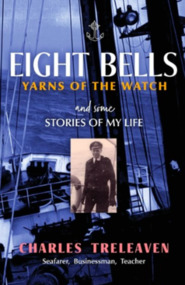 Mission to Seafarers Victoria
Book - Biography, Silverbird Publishing, Eight Bells, Yarns of the Watch and some Stories of my Life, 2021
... From the age of sixteen Charles spent the next 24 years travelling the world aboard British, New Zealand, Fijian, and Australian ships, then settled ashore in Melbourne to start his own packaging business. ...There's no doubt that Charles has had an interesting life. Born in England during the Depression, he experienced the Blitz on London, the Flying Bombs, and then the V2 rockets. From the age of sixteen Charles spent the next 24 years travelling the world aboard British, New Zealand, Fijian, and Australian ships, then settled ashore in Melbourne to start his own packaging business. He was later asked to work with the U.N. in Jordan, based in Amman for some time. On his return to Melbourne, he was appointed CEO for the continued restoration of the award winning sailing ship Polly Woodside, now the pride of our City. Whilst there, Charles initiated the construction of the ship "Enterprize" replica. Finally, he used his knowledge as a navigator to excite over 800,000 Victorian school children with the basics of Science and Astronomy. Charles decided to retire after teaching for 23 years, at the tender age of 82. It is quite a Lifetime. It is quite a story !Photograph of Charles Treleaven ob the cover, 372 pagesnon-fictionThere's no doubt that Charles has had an interesting life. Born in England during the Depression, he experienced the Blitz on London, the Flying Bombs, and then the V2 rockets. From the age of sixteen Charles spent the next 24 years travelling the world aboard British, New Zealand, Fijian, and Australian ships, then settled ashore in Melbourne to start his own packaging business. He was later asked to work with the U.N. in Jordan, based in Amman for some time. On his return to Melbourne, he was appointed CEO for the continued restoration of the award winning sailing ship Polly Woodside, now the pride of our City. Whilst there, Charles initiated the construction of the ship "Enterprize" replica. Finally, he used his knowledge as a navigator to excite over 800,000 Victorian school children with the basics of Science and Astronomy. Charles decided to retire after teaching for 23 years, at the tender age of 82. It is quite a Lifetime. It is quite a story !charles treleaven, polly woodside, seamen, ww2, entreprize, melbourne, britain, merchant navy, cosmodome, maritime heritage association of victoria, mhav, starlab, blitz, saint gregory, interest group -
 Mission to Seafarers Victoria
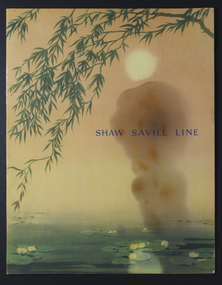
Souvenir - Menu, Shaw Savill Line, Shaw Savill Line SS Athenic, Maiden Voyage, 30/8/1947
... Athenic travelling between London and New Zealand via Curacao and Panama. ...Athenic travelling between London and New Zealand via Curacao and Panama. ...This menu appears to have been produced for the 1947 Maiden Voyage of the S.S. Athenic travelling between London and New Zealand via Curacao and Panama. This was possibly the first voyage on this vessel early in his career for engineer G. W. Duncan and therefore a souvenir. The commander of the vessel was D. Aitchinson. Also of interest given that the UK was still very much governed by post WW2 rationing, is the range of food available for the farewell dinner listed.Mariner Duncan had a particular regard for the Mission to Seafarers. This plate for display on a commissioned new table at the MTSV chapel acknowledges his bequest and the material donated. Collectively the G W Duncan material includes: photographs, professional data memorabilia and written and commercially printed resources. The memorabilia relates to his career at sea and in particular the role of an engineer, including a handwritten manual of notes and references relating to the mechanical and engineering aspects and areas of responsibility for maintenance. Single fold card menu cover with typed paper menu listing adhered to inside cover. The cover features an imaginary asian design featuring water lilies , willow leaves and a misty sun, colours are gold green pink.see images 1 and 2 attachedmenu, ss athenic, shaw savill line, george winfield duncan (1922-2017), sailors, seafarers, passenger ships, ship engineer -
 Mission to Seafarers Victoria
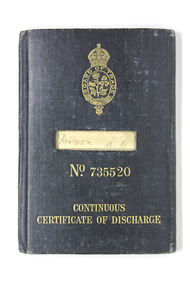
Booklet - Continuous Certificate of Discharge, Continuous Certificate of Discharge: Arthur Oswald Dixon, 1913
... New Zealand Shipping Co between 1916-1920. He subsequently was employed with Adelaide Steamship Co between 1920 and 1921. All documentation shows him to be regarded as an officer of good character and reliable. On leaving seafaring Mr Dixon eventually took up a smallholding in regional Victoria. Unusually for the early 20th C. era of Mr Dixon's service at sea two images of Mr Dixon survive on ID papers and were included in the gift of papers. Personal objects included an unusual small travel ...This important booklet and record of service is first stamped and dated in 1913. It is unlikely to be the first booklet issued as the seafarer Arthur O. Dixon b. 1879 commenced maritime service in 1904 working for the Harrison Line between 1904 and 1914. He enlisted as an RNR officer during WW1. He is recorded as returning to Merchant vessel service with the New Zealand Shipping Co between 1916-1920. He subsequently was employed with Adelaide Steamship Co between 1920 and 1921. All documentation shows him to be regarded as an officer of good character and reliable. On leaving seafaring Mr Dixon eventually took up a smallholding in regional Victoria.Unusually for the early 20th C. era of Mr Dixon's service at sea two images of Mr Dixon survive on ID papers and were included in the gift of papers. Personal objects included an unusual small travel size New Testament (see VC record ) heavily annotated provide further insights into the experience of early 20th C. seafarers.Fabric reinforced and backed heavy card covers and service book with multiple pages pre printed for completion by either handwritten entries or ink stamps. Records service record, dates, status, vessel names, ports, master names, character assessment. A thin pink ribbon is affixed by a staple to Page 26.Various - see images licensing, registration, certificate of discharge, mariner papers, seafarer certification, identity cards, identification, arthur oswald dixon, seamanship, seamen, sailors, officers, seafarers, wwi, merchant navy, ran, rnr -
 Marysville & District Historical Society
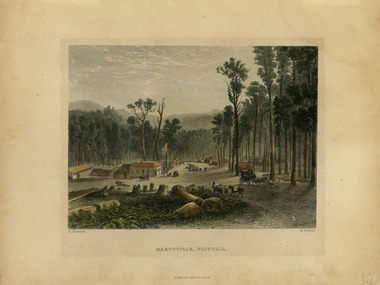
Print (Item) - Steel Engraving, Nicholas Chevalier, Marysville, Victoria, 1874
... In 1865 Chevalier visited New Zealand, travelling widely and doing much work there which was exhibited at Melbourne on his return. ...An early steel engraving print of Marysville in Victoria.An early steel engraving print of Marysville in Victoria by Nicholas Chevalier. Nicholas Chevalier, born in 1828, was a Russian-born artist who worked in Australia and New Zealand. In 1851 Chevalier moved to London and worked as an illustrator in lithography and watercolour. After further studies in painting in Rome he arrived in Australia in December 1854. In August 1855 he obtained work as a cartoonist on the newly established Melbourne Punch. Later he did illustrative work for the Illustrated Australian News and also worked in chromolithography. He accompanied explorer/meteorologist Georg von Neumayer on trips to remote areas of Victoria, and the material gathered on such journeys resulted in some of his most recognised pieces of this period, including his painting of Mount Arapiles in Western Victoria. In 1864, when the National Gallery of Victoria was founded, an exhibition of works by Victorian artists was held. The government agreed to buy the best picture exhibited for £200. Chevalier's oil painting The Buffalo Ranges was selected, and was the first picture painted in Australia to be included in the Melbourne collection. In 1865 Chevalier visited New Zealand, travelling widely and doing much work there which was exhibited at Melbourne on his return. In 1869 he joined HMS Galatea as an artist with the Duke of Edinburgh, on the voyage to the East and back to London with stops in Tahiti, Hawaii, Japan, China, Ceylon (Sri Lanka) and India. The pictures painted during the voyage were exhibited at South Kensington. In January 1874 Chevalier was commissioned by Queen Victoria to travel to St Petersburg and paint a picture of the marriage of the Duke of Edinburgh. Chevalier made London his base and was a continual exhibitor at the Academy from 1871 to 1887. He had one picture in the 1895 Academy but had practically given up painting by then. Chevalier died in London on 15 March 1902. N. Chevalier 1870 N. Chevalier/ W. Forrest MARYSVILLE, VICTORIA. LONDON, VIRTUE & CO.marysville, victoria, n. chevalier, w. forrest, steel engraving, print, mount arapiles, georg von neumayer, the buffalo ranges, national gallery of victoria, hms galatea -
 Marysville & District Historical Society
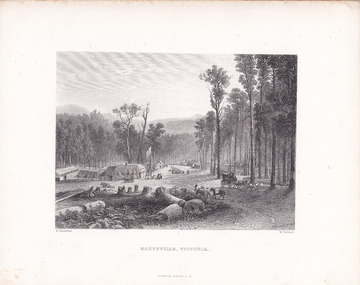
Print (Item) - Steel Engraving, Nicholas Chevalier, Marysville, Victoria, 1874
... In 1865 Chevalier visited New Zealand, travelling widely and doing much work there which was exhibited at Melbourne on his return. ...An early steel engraving print of Marysville in Victoria.An early steel engraving print of Marysville in Victoria by Nicholas Chevalier. Nicholas Chevalier, born in 1828, was a Russian-born artist who worked in Australia and New Zealand. In 1851 Chevalier moved to London and worked as an illustrator in lithography and watercolour. After further studies in painting in Rome he arrived in Australia in December 1854. In August 1855 he obtained work as a cartoonist on the newly established Melbourne Punch. Later he did illustrative work for the Illustrated Australian News and also worked in chromolithography. He accompanied explorer/meteorologist Georg von Neumayer on trips to remote areas of Victoria, and the material gathered on such journeys resulted in some of his most recognised pieces of this period, including his painting of Mount Arapiles in Western Victoria. In 1864, when the National Gallery of Victoria was founded, an exhibition of works by Victorian artists was held. The government agreed to buy the best picture exhibited for £200. Chevalier's oil painting The Buffalo Ranges was selected, and was the first picture painted in Australia to be included in the Melbourne collection. In 1865 Chevalier visited New Zealand, travelling widely and doing much work there which was exhibited at Melbourne on his return. In 1869 he joined HMS Galatea as an artist with the Duke of Edinburgh, on the voyage to the East and back to London with stops in Tahiti, Hawaii, Japan, China, Ceylon (Sri Lanka) and India. The pictures painted during the voyage were exhibited at South Kensington. In January 1874 Chevalier was commissioned by Queen Victoria to travel to St Petersburg and paint a picture of the marriage of the Duke of Edinburgh. Chevalier made London his base and was a continual exhibitor at the Academy from 1871 to 1887. He had one picture in the 1895 Academy but had practically given up painting by then. Chevalier died in London on 15 March 1902. N. Chevalier 1870 N. Chevalier/ W. Forrest MARYSVILLE, VICTORIA. LONDON, VIRTUE & CO.marysville, victoria, n. chevalier, w. forrest, steel engraving, print, mount arapiles, georg von neumayer, the buffalo ranges, national gallery of victoria, hms galatea -
 Flagstaff Hill Maritime Museum and Village
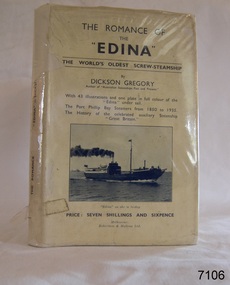
Book - Historical, maritime, The Romance of The Edina, 1935
... travel late 19th and early 20th century...trade melbourne to geelong...screw steamer edina...coastal trader edina...lighter dinah...cargo carrying for cremean war...cargo carrying for american civil war...passenger and trade in western district of victoria...export gold and currency and gold diggers to new zealand...The SS Edina’s original ‘fair maid of Judea’ figurehead was broken to pieces in a collision with another vessel (the SS Dandenong) in a gale off Warrnambool, Victoria, in 1870. warrnambool shipwrecked coast flagstaff hill flagstaff hill maritime museum maritime museum shipwreck coast flagstaff hill maritime village shipwrecked artefact barclay & curle figurehead 'fair maid of judea' centenary maritime exhibition 1934 a brief review of steam navigation in victoria pleasure steamer edina trade and travel late 19th and early 20th century trade melbourne to geelong screw steamer edina coastal trader edina lighter dinah cargo carrying for cremean war cargo carrying for american civil war passenger and trade in western district of victoria export gold and currency and gold diggers to new zealand export vessel to h r h the duke of edinburgh melbourne - warrnambool - port fairy - portland cargo run warrnambool steam packet company stephen henty captain john thompson chief engineer john davies lady bay warrnambool lighter edina shipping victoria port phillip bay steamers steamship great britain edina, vhr s199 victorian heritage database book the romance of the edina c dickson gregory robertson & mullens melbourne The Romance of The "Edina"; the World's oldest screw-steamship, by C Dickson Gregory (Charles Dickson Gregory). ...This book is titled "The Romance of the "Edina" and was written by author C. Dickson Gregory (Charles Dickson Gregory) in 1935. The author has also written, "Australian Steamships Past and Present". This book also contains (1) The Port Phillip Bay Steamers from 1850 to 1935 (2) The history of the celebrated auxiliary steamship "Great Britain." ABOUT THE S S EDINA The three-masted iron screw steamer SS Edina was built in Glasgow, Scotland, in 1854 by Barclay and Curle. She was adorned with the figurehead of ‘fair maid of Judea’. The many years of service made SS Edina famous world-wide as the longest-serving screw steamer. (The term screw steamer comes from being driven by a single propeller, sometimes called a screw, driven by a steam engine.) SS Edina’s interesting history includes English Chanel runs, serving in the Crimean Ware carrying ammunition, horses and stores to the Black Sea, and further service in the American Civil War and later, serving in the western district of Victoria as well as in Queensland and carried gold, currency and gold prospectors Australia to New Zealand. SS Edina had the privilege of being an escort vessel to H.R.H. the Duke of Edinburgh during his visit to Australia in 1867. In March 1863 SS Edina arrived in Port Phillip Bay, Melbourne and was bought by Stephen Henty, of Portland fame, to work the cargo and passenger run from Melbourne – Warrnambool – Port Fairy - Portland. After a short time of working the run from Australia to New Zealand, with passengers and cargo that included gold and currency, she returned to her Melbourne - Warrnambool – Port Fairy run, with cargo including bales of wool produced in the western district of Victoria. The Warrnambool Steam Packet Company purchased SS Edina in 1867; she was now commanded by Captain John Thompson and Chief Engineer John Davies. She survived several mishaps at sea, had a complete service and overhaul and several changes of commanders. In 1870 SS Edina was in Lady Bay, Warrnambool, when a gale sprung up and caused a collision with the iron screw steamer SS Dandenong. SS Edina’s figurehead was broken into pieces and it was not ever replaced. SS Edina was re-fitted in 1870 than was used as a coastal trader in Queensland for a period. She was then brought to Melbourne to carry cargo and passengers between Melbourne and Geelong and performed this service 1880-1938. During this time (1917) she was again refitted with a new mast, funnel, bridge and promenade deck, altering her appearance. In 1938, after more collisions, SS Edina was taken out of service. However, she was later renamed Dinah and used as a ‘lighter’ (a vessel without engine or superstructure) to be towed and carry wool and general cargo between Melbourne and Geelong. In 1957, after 104 years, the SS Edina was broken up at Footscray, Melbourne. Remains of SS Edina’s hull can be found in the Maribyrnong River, Port Phillip Bay. [Reference: A Brief Review of Steam Navigation in Victoria; C Dickson Gregory; Centenary Maritime Exhibition catalogue, 1934; published by Shiplovers' Society of Victoria Dandenong, Passengers in History, http://passengersinhistory.sa.gov.au/node/924034 Edina, Victorian Heritage Database VHR S199 http://vhd.heritage.vic.gov.au/shipwrecks/heritage/199 SS Edina, Coastal Trader and Passenger Ship 1853-1938, Museum Victoria Collections, https://collections.museumvictoria.com.au/articles/6227 SS ‘Edina’ – the Longest Serving Screw Steamer in the World, POI Australia, https://poi-australia.com.au/ss-edina-the-longest-serving-steamer-in-the-world/ ]This book about the SS Edina is significant for its association with the screw steamer SS Edina. The SS Edina is heritage listed on the Victorian Heritage Database VHR S199. She had endeared herself to the people of Port Phillip Bay as a passenger ferry, part of their history and culture. She played a significant role in the Crimean War, the American Civil War and the gold rush in New Zealand. She also served western Victoria for many years in her cargo and passenger runs. The SS Edina is famous for being the longest serving screw steamer in the world. After spending her first nine years overseas she arrived in Melbourne and her work included running the essential service of transporting cargo and passengers between Melbourne and the western Victoria ports of Warrnambool, Port Fairy and Portland. The SS Edina was purchased in the late 1860’s by local Warrnambool business, the Warrnambool Steam Packet Co. and continued trading from there as part of the local business community. The SS Edina’s original ‘fair maid of Judea’ figurehead was broken to pieces in a collision with another vessel (the SS Dandenong) in a gale off Warrnambool, Victoria, in 1870.The Romance of The "Edina"; the World's oldest screw-steamship, by C Dickson Gregory (Charles Dickson Gregory). Hard cover book with black print on cream coloured jacket, covered in clear plastic. Front cover has a black and white photograph of the steamship and is titled " "Edina" as she is today." With chapters on the Auxiliary Steamship "Great Britain" and the Port Phillip Bay Steamers Past and Present. Published in Melbourne by Robertson & Mullens Ltd. Opposite fly page is a picture from a painting by C. Dickson Gregory titled "Edina in the "roaring forties" in Feburary 1863" The book contains 43 illustrations and one plate in full colour showing the Edina in full sail. The price is printed on the jacket "PRICE: SEVEN SHILLINGS AND SIXPENCE"warrnambool, shipwrecked coast, flagstaff hill, flagstaff hill maritime museum, maritime museum, shipwreck coast, flagstaff hill maritime village, shipwrecked artefact, barclay & curle, figurehead 'fair maid of judea', centenary maritime exhibition 1934, a brief review of steam navigation in victoria, pleasure steamer edina, trade and travel late 19th and early 20th century, trade melbourne to geelong, screw steamer edina, coastal trader edina, lighter dinah, cargo carrying for cremean war, cargo carrying for american civil war, passenger and trade in western district of victoria, export gold and currency and gold diggers to new zealand, export vessel to h r h the duke of edinburgh, melbourne - warrnambool - port fairy - portland cargo run, warrnambool steam packet company, stephen henty, captain john thompson, chief engineer john davies, lady bay warrnambool, lighter edina, shipping victoria, port phillip bay steamers, steamship great britain, edina, vhr s199 victorian heritage database, book, the romance of the edina, c dickson gregory, robertson & mullens melbourne -
 Glenelg Shire Council Cultural Collection
Souvenir - Souvenir Teaspoon - Princess Margaret Rose Caves, n.d
... souvenir Princess Margaret Rose Caves travel tourism Front: Princess Margaret Rose Caves, Victoria Back: Made in New Zealand Collectors World Silver plate teaspoon showing image of Princess Margaret Rose Cave. ...Silver plate teaspoon showing image of Princess Margaret Rose Cave.Front: Princess Margaret Rose Caves, Victoria Back: Made in New Zealand Collectors Worldsouvenir, princess margaret rose caves, travel, tourism -
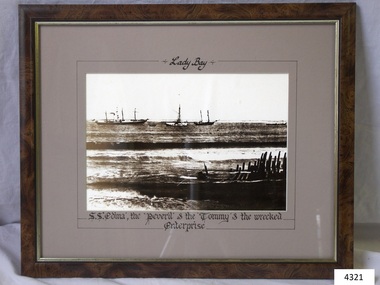 Flagstaff Hill Maritime Museum and Village
Photograph - Picture, Lady Bay Ships at anchor, after November 1850
... New Zealand built but Australian owned coastal trader. The wreck was also significant for its association with indigenous hero Buckawall who saved the lives of the five crew on board. flagstaff hill warrnambool shipwrecked-coast flagstaff-hill flagstaff-hill-maritime-museum maritime-museum shipwreck-coast flagstaff-hill-maritime-village enterprize enterprise port of warrnambool warrnambool harbour peveril tommy ss edina pleasure steamer edina warrnambool steam packet company david hay james gardiner caught tramway jetty buckawall lady bay steam ship travel trade coastal trader edina dinah cargo run shipping victoria port phillip bay john watson edward byam indigenous hero indigenous rescue Titled, in hand written script, “”Lady Bay”, “S.S. ...The photograph shows sailing ships and a wreck in Lady Bay, Warrnambool. Lady Bay was once a very busy port of trade in Warrnambool and was also called the Port of Warrnambool or Warrnambool Harbour. THE “ENTERPRISE” 1847-1850 The wooden, two-masted schooner Enterprise was built in New Zealand in 1847 and registered in Melbourne, Australia. The Enterprise carried cargos of agricultural produce and other commodities for trade between the ports of the Colony. On September 14, 1850, the Enterprise was at anchor in Lady Bay under its Master, James Gardiner Caughtt, loaded with a cargo of wheat and potatoes. A strong south-easterly wind caused the vessel to drag on its only anchor and the rudder was lost. The gale-force wind blew it sideways and it became grounded. A local indigenous man, Buckawall, braved the rough sea to take a line from the shore to the Enterprise. All five members of the crew were able to make it safely to land. The Enterprise was wrecked. The Enterprise wreck was in an area called Tramway Jetty in Lady Bay. Since then the area became the location of the Lady Bay Hotel and now, in 2019, it is in the grounds of the Deep Blue Apartments. In fact, with the constantly changing coastline through built-up sand, the wreck site is now apparently under the No 2 Caravan Park on Pertobe Road, perhaps 150 metres from the high tide. Its location was found by Ian McKiggan (leader of the various searches in the 1980s for the legendary Mahogany Ship). DIFFERENTIATING the New Zealand Schooner “Enterprise” from John Fawkner’s “Enterprize“ Dr Murray Johns, Melbourne, says in his article The Mahogany Ship Story “… As I documented in 1985, the Warrnambool wreck was of an entirely different ship, also called Enterprize [with the spelling ‘Enterprise’], but built in New Zealand in 1847. Fawkner’s ship had already been sold to Captain Sullivan in 1845 and was wrecked on the Richmond Pier in northern New South Wales early in 1847. “ - (further details are in NOTES: and FHMV documents) This photograph is significant for its association with the screw steamer SS Edina, heritage listed on the Victorian Heritage Database VHR S199. She had endeared herself to the people of Port Phillip Bay as a passenger ferry, part of their own history and culture. She played a significant role in the Crimean War, the American Civil War and the gold rush in New Zealand. She also served western Victoria for many years in her cargo and passenger runs. The SS Edina is famous for being the longest serving screw steamer in the world. After spending her first nine years overseas she arrived in Melbourne and her work included running the essential service of transporting cargo and passengers between Melbourne and the western Victoria ports of Warrnambool, Port Fairy and Portland. The photograph is also significant for its association wreck of the schooner Enterprise, also listed on the Victorian Heritage Listed VHR S238, being a New Zealand built but Australian owned coastal trader. The wreck was also significant for its association with indigenous hero Buckawall who saved the lives of the five crew on board. Photograph titled "Lady Bay" depicts Lady Bay, Warrnambool, with vessels including SS Edina, the Peveril and the Tommy, with remains of the 1850 wreck of the schooner Enterprise in foreground. Titled, in hand written script, “”Lady Bay”, “S.S. ‘Edina’, the ‘Perevil’ & the ‘Tommy’ & the wrecked "Enterprise” Written in pencil on back “Council”flagstaff hill, warrnambool, shipwrecked-coast, flagstaff-hill, flagstaff-hill-maritime-museum, maritime-museum, shipwreck-coast, flagstaff-hill-maritime-village, enterprize, enterprise, port of warrnambool, warrnambool harbour, peveril, tommy, ss edina, pleasure steamer edina, warrnambool steam packet company, david hay, james gardiner caught, tramway jetty, buckawall, lady bay, steam ship, travel, trade, coastal trader, edina, dinah, cargo run, shipping, victoria, port phillip bay, john watson, edward byam, indigenous hero, indigenous rescue -
 Flagstaff Hill Maritime Museum and Village
Book - Fictional Story, Isabel Maude Peacocke et al, Quicksilver, 1922-1925
... New Zealand at the time. The publisher Ward, Lock & Co. was one of the premier popular publishing houses in 19th- and 20th-century Britain. It was founded in London in 1854 by Ebenezer Ward and George Lock. The house was famous for publishing standard works such as Mrs. Beeton's Book of Household Management (1861), Arthur Conan Doyle's first Sherlock Holmes story (A Study in Scarlet, 1887), and an extensive list of popular fiction, children's annuals, and travel guides known as 'Red Guides' throughout the British Empire. ...New Zealand at the time. The publisher Ward, Lock & Co. was one of the premier popular publishing houses in 19th- and 20th-century Britain. It was founded in London in 1854 by Ebenezer Ward and George Lock. The house was famous for publishing standard works such as Mrs. Beeton's Book of Household Management (1861), Arthur Conan Doyle's first Sherlock Holmes story (A Study in Scarlet, 1887), and an extensive list of popular fiction, children's annuals, and travel guides known as 'Red Guides' throughout the British Empire. ...Quicksilver (1922) is a children's novel written by New Zealand author Isabel Maude Peacocke and illustrated by the noted English artist Harold Copping. The story revolves around a young boy named Ronnie, who is being pampered and coddled by the women in his family. His uncle, Uncle Jimmy, decides that Ronnie needs to be toughened up and arranges for him to have a companion, a spirited, lively young girl nicknamed 'Quicksilver' (or Quixy). Typical of Peacocke's post-World War I writing, the novel blends juvenile adventure with subtle social commentary on class differences, gender expectations, and child rearing in the early 20th century.Hard cover book. Quicksilver Author: Isabel Maude Peacocke Illustrator. Harold Copping Publisher: Ward, Lock & Co Date: 1922-1925 Further Information: Light blue Cloth hardcover with lettering and patterning to spine in black. The spine has a Library label with an inscription.fictionQuicksilver (1922) is a children's novel written by New Zealand author Isabel Maude Peacocke and illustrated by the noted English artist Harold Copping. The story revolves around a young boy named Ronnie, who is being pampered and coddled by the women in his family. His uncle, Uncle Jimmy, decides that Ronnie needs to be toughened up and arranges for him to have a companion, a spirited, lively young girl nicknamed 'Quicksilver' (or Quixy). Typical of Peacocke's post-World War I writing, the novel blends juvenile adventure with subtle social commentary on class differences, gender expectations, and child rearing in the early 20th century.warrnambool, shipwrecked-coast, flagstaff-hill, flagstaff-hill-maritime-museum, maritime-museum, shipwreck-coast, flagstaff-hill-maritime-village, shipwrecked-artefact, book, quicksilver, isabel maude peacocke, warrnambool mechanics’ institute, pattison collection, warrnambool library, ralph eric pattison, corangamite regional library service, warrnambool city librarian, mechanics’ institute library, victorian library board, warrnambool books and records, warrnambool children’s library -
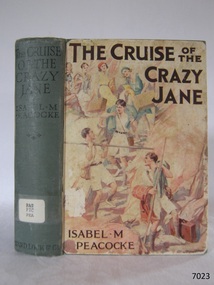 Flagstaff Hill Maritime Museum and Village
Book - Fictional Story, Isabel Maude Peacocke et al, The Cruise of The Crazy Jane, 1932
... New Zealand at the time. The publisher Ward, Lock & Co. was one of the premier popular publishing houses in 19th- and 20th-century Britain. It was founded in London in 1854 by Ebenezer Ward and George Lock. The house was famous for publishing standard works such as Mrs. Beeton's Book of Household Management (1861), Arthur Conan Doyle's first Sherlock Holmes story (A Study in Scarlet, 1887), and an extensive list of popular fiction, children's annuals, and travel guides known as 'Red Guides' throughout the British Empire. ...New Zealand at the time. The publisher Ward, Lock & Co. was one of the premier popular publishing houses in 19th- and 20th-century Britain. It was founded in London in 1854 by Ebenezer Ward and George Lock. The house was famous for publishing standard works such as Mrs. Beeton's Book of Household Management (1861), Arthur Conan Doyle's first Sherlock Holmes story (A Study in Scarlet, 1887), and an extensive list of popular fiction, children's annuals, and travel guides known as 'Red Guides' throughout the British Empire. ...The Cruise of The Crazy Jane (published in 1932 by Ward, Lock & Co.) follows young protagonist Vicky and a group of Auckland children on a summer boating and camping holiday aboard a vessel named the Crazy Jane. Set against the local geography of New Zealand including Auckland Harbour and nearby coastal areas the story follows their outdoor excursions, cliff-climbing adventures (such as descending "Jacob's ladder," as depicted in the frontispiece), and holiday mishaps. Unlike many of Isabel Maude Peacocke's other works, which feature adult third-person perspectives, The Cruise of The Crazy Jane is notable for using a child’s direct narrative voice to frame the story.Hard cover book. The Cruise of The Crazy Jane Author: Isabel Maude Peacocke Illustrator. Alan Gilderdale Publisher: Ward, Lock & Co Date: 1932 Further Information: Green Cloth hardcover boards with lettering and patterning to spine in black. Front cover has illustration. The spine has a Library label with an inscription.fictionThe Cruise of The Crazy Jane (published in 1932 by Ward, Lock & Co.) follows young protagonist Vicky and a group of Auckland children on a summer boating and camping holiday aboard a vessel named the Crazy Jane. Set against the local geography of New Zealand including Auckland Harbour and nearby coastal areas the story follows their outdoor excursions, cliff-climbing adventures (such as descending "Jacob's ladder," as depicted in the frontispiece), and holiday mishaps. Unlike many of Isabel Maude Peacocke's other works, which feature adult third-person perspectives, The Cruise of The Crazy Jane is notable for using a child’s direct narrative voice to frame the story.warrnambool, shipwrecked-coast, flagstaff-hill, flagstaff-hill-maritime-museum, maritime-museum, shipwreck-coast, flagstaff-hill-maritime-village, shipwrecked-artefact, book, the cruise of the crazy jane, isabel maude peacocke, warrnambool mechanics’ institute, pattison collection, warrnambool library, ralph eric pattison, corangamite regional library service, warrnambool city librarian, mechanics’ institute library, victorian library board, warrnambool books and records, warrnambool children’s library, i. m. cluett. -
 Flagstaff Hill Maritime Museum and Village
Book - Fictional Story, Isabel Maude Peacocke et al, The Dwarf Of Dark Mountain, 1932-1939
... New Zealand at the time. The publisher Ward, Lock & Co. was one of the premier popular publishing houses in 19th- and 20th-century Britain. It was founded in London in 1854 by Ebenezer Ward and George Lock. The house was famous for publishing standard works such as Mrs. Beeton's Book of Household Management (1861), Arthur Conan Doyle's first Sherlock Holmes story (A Study in Scarlet, 1887), and an extensive list of popular fiction, children's annuals, and travel guides known as 'Red Guides' throughout the British Empire. ...New Zealand at the time. The publisher Ward, Lock & Co. was one of the premier popular publishing houses in 19th- and 20th-century Britain. It was founded in London in 1854 by Ebenezer Ward and George Lock. The house was famous for publishing standard works such as Mrs. Beeton's Book of Household Management (1861), Arthur Conan Doyle's first Sherlock Holmes story (A Study in Scarlet, 1887), and an extensive list of popular fiction, children's annuals, and travel guides known as 'Red Guides' throughout the British Empire. ...The Dwarf of Dark Mountain is a children's adventure novel illustrated by Norman Sutcliffe. Set against the backdrop of the New Zealand bush and rural landscapes, the story follows a group of young protagonists on a mystery-filled adventure centred around a local geological landmark known as "Dark Mountain". Typical of Isabel Maud Peacocke's popular juvenile fiction of the 1930s (such as The Cruise of the Crazy Jane and Cathleen with a C), the book weaves together themes of bush navigation and exploration. The children venture through dense ti-tree scrub and native fern gullies, with the narrative centring around the titular "dwarf" of the mountain blending rural Australian and New Zealand family life with wholesome mystery, moral growth, and outdoor adventure.The Dwarf Of Dark Mountain Author: Isabel Maude Peacocke Illustrator: Norman Sutcliffe Publisher: Ward Lock & Co Date: Further Information: Plain brown/tan cloth binding with the title and author hand-lettered directly onto the spine with no decorative illustration, gilt stamping, or pictorial design. The spine has a Library label with an inscription.fictionThe Dwarf of Dark Mountain is a children's adventure novel illustrated by Norman Sutcliffe. Set against the backdrop of the New Zealand bush and rural landscapes, the story follows a group of young protagonists on a mystery-filled adventure centred around a local geological landmark known as "Dark Mountain". Typical of Isabel Maud Peacocke's popular juvenile fiction of the 1930s (such as The Cruise of the Crazy Jane and Cathleen with a C), the book weaves together themes of bush navigation and exploration. The children venture through dense ti-tree scrub and native fern gullies, with the narrative centring around the titular "dwarf" of the mountain blending rural Australian and New Zealand family life with wholesome mystery, moral growth, and outdoor adventure.warrnambool, shipwrecked-coast, flagstaff-hill, flagstaff-hill-maritime-museum, maritime-museum, shipwreck-coast, flagstaff-hill-maritime-village, shipwrecked-artefact, book, the dwarf of dark mountain, isabel maude peacocke, warrnambool mechanics’ institute, pattison collection, warrnambool library, ralph eric pattison, corangamite regional library service, warrnambool city librarian, mechanics’ institute library, victorian library board, warrnambool books and records, warrnambool children’s library, i. m. cluett., illustrator norman sutcliffe -
 Flagstaff Hill Maritime Museum and Village
Book - Reference Book/History/Social History, George William Rusden, History of Australia Vol 1, 1883
... travelling over 10,000 miles by horse to promote state directed education despite his Anglican faith. By 1851, he joined Victoria's colonial secretary's office as clerk, advancing to clerk of the Executive Council in 1852 and clerk of the parliaments in 1856, advising on legislative clashes. In his later life he wrote histories, poems, and polemics under his name and the pseudonym "Yittadairn." Early works included the poem “Moyarra” (1851) and “Curiosities of Colonisation” (1874); his major three volume History of Australia (1883) and “History of New Zealand...travelling over 10,000 miles by horse to promote state directed education despite his Anglican faith. By 1851, he joined Victoria's colonial secretary's office as clerk, advancing to clerk of the Executive Council in 1852 and clerk of the parliaments in 1856, advising on legislative clashes. In his later life he wrote histories, poems, and polemics under his name and the pseudonym "Yittadairn." Early works included the poem “Moyarra” (1851) and “Curiosities of Colonisation” (1874); his major three volume History of Australia (1883) and “History of New Zealand ...Volume 1 covers Australia's history from prehistoric times through early European exploration to the founding of New South Wales in 1788. It details early rumours of a great southern land. Also voyages by explorers like Dirk Hartog, Tasman, Dampier, and Cook, along with the establishment of the first colony under Governor Arthur Phillip, including challenges like famine and initial settlements.History of Australia Vol 1 Author: George William Rusden Publisher: Chapman & Hall Ltd Date: 1883non-fictionVolume 1 covers Australia's history from prehistoric times through early European exploration to the founding of New South Wales in 1788. It details early rumours of a great southern land. Also voyages by explorers like Dirk Hartog, Tasman, Dampier, and Cook, along with the establishment of the first colony under Governor Arthur Phillip, including challenges like famine and initial settlements. warrnambool, shipwrecked-coast, flagstaff-hill, flagstaff-hill-maritime-museum, maritime-museum, shipwreck-coast, flagstaff-hill-maritime-village, shipwrecked-artefact, great ocean road, book, warrnambool library, warrnambool mechanics’ institute, mechanics’ institute library, victorian library board, warrnambool books and records, warrnambool children’s library, warrnambool public library, history of australia vol 1, g w rusden -
 Flagstaff Hill Maritime Museum and Village
Book - Reference Book/History/Social History, George William Rusden, History of Australia Vol 2, 1883
... travelling over 10,000 miles by horse to promote state directed education despite his Anglican faith. By 1851, he joined Victoria's colonial secretary's office as clerk, advancing to clerk of the Executive Council in 1852 and clerk of the parliaments in 1856, advising on legislative clashes. In his later life he wrote histories, poems, and polemics under his name and the pseudonym "Yittadairn." Early works included the poem “Moyarra” (1851) and “Curiosities of Colonisation” (1874); his major three volume History of Australia (1883) and “History of New Zealand...travelling over 10,000 miles by horse to promote state directed education despite his Anglican faith. By 1851, he joined Victoria's colonial secretary's office as clerk, advancing to clerk of the Executive Council in 1852 and clerk of the parliaments in 1856, advising on legislative clashes. In his later life he wrote histories, poems, and polemics under his name and the pseudonym "Yittadairn." Early works included the poem “Moyarra” (1851) and “Curiosities of Colonisation” (1874); his major three volume History of Australia (1883) and “History of New Zealand ...Volume 2 of G.W. Rusden's History of Australia continues the narrative from early colonial governance, examining governors after Arthur Phillip up through the mid 19th century. It covers expansions in New South Wales, the establishment of Van Diemen's Land (Tasmania), and Moreton Bay (Queensland), including key events like the Macarthur wool industry rise, convict management under governors like Lachlan Macquarie, and inter colonial tensions.Hard cover book History of Australia in three Volumes Author: George William Rusden Publisher: Chapman & Hall Ltd London, Melbourne and Sydney Date: 1883 Dark blue hardcover with a blue matching spine, the spine has a label with an inscription. (These volumes are first editions)non-fictionVolume 2 of G.W. Rusden's History of Australia continues the narrative from early colonial governance, examining governors after Arthur Phillip up through the mid 19th century. It covers expansions in New South Wales, the establishment of Van Diemen's Land (Tasmania), and Moreton Bay (Queensland), including key events like the Macarthur wool industry rise, convict management under governors like Lachlan Macquarie, and inter colonial tensions.warrnambool, shipwrecked-coast, flagstaff-hill, flagstaff-hill-maritime-museum, maritime-museum, shipwreck-coast, flagstaff-hill-maritime-village, shipwrecked-artefact, great ocean road, book, warrnambool library, warrnambool mechanics’ institute, mechanics’ institute library, victorian library board, warrnambool books and records, warrnambool children’s library, warrnambool public library, history of australia vol 2, g w rusden -
 Flagstaff Hill Maritime Museum and Village
Book - Reference Book/History/Social History, George William Rusden, History of Australia Vol 3, 1883
... travelling over 10,000 miles by horse to promote state directed education despite his Anglican faith. By 1851, he joined Victoria's colonial secretary's office as clerk, advancing to clerk of the Executive Council in 1852 and clerk of the parliaments in 1856, advising on legislative clashes. In his later life he wrote histories, poems, and polemics under his name and the pseudonym "Yittadairn." Early works included the poem “Moyarra” (1851) and “Curiosities of Colonisation” (1874); his major three volume History of Australia (1883) and “History of New Zealand...travelling over 10,000 miles by horse to promote state directed education despite his Anglican faith. By 1851, he joined Victoria's colonial secretary's office as clerk, advancing to clerk of the Executive Council in 1852 and clerk of the parliaments in 1856, advising on legislative clashes. In his later life he wrote histories, poems, and polemics under his name and the pseudonym "Yittadairn." Early works included the poem “Moyarra” (1851) and “Curiosities of Colonisation” (1874); his major three volume History of Australia (1883) and “History of New Zealand ...Volume 3 shifts to political developments, focusing on the 1856 Constitution Act and Victoria's road to self-government. It details federation debates, relationships with Britain, sketches later governors, and addresses gold rush impacts, land reforms, and emerging parliamentary systems across colonies. Together, the volumes form Rusden's comprehensive, if biased, chronicle to the 1850s.Hard cover book History of Australia in three Volumes Author: George William Rusden Publisher: Chapman & Hall Ltd London, Melbourne and Sydney Date: 1883 Dark blue hardcover with a blue matching spine, the spine has a label with an inscription. (These volumes are first editions)non-fictionVolume 3 shifts to political developments, focusing on the 1856 Constitution Act and Victoria's road to self-government. It details federation debates, relationships with Britain, sketches later governors, and addresses gold rush impacts, land reforms, and emerging parliamentary systems across colonies. Together, the volumes form Rusden's comprehensive, if biased, chronicle to the 1850s.warrnambool, shipwrecked-coast, flagstaff-hill, flagstaff-hill-maritime-museum, maritime-museum, shipwreck-coast, flagstaff-hill-maritime-village, book, warrnambool library, warrnambool mechanics’ institute, mechanics’ institute library, victorian library board, warrnambool books and records, warrnambool children’s library, warrnambool public library, history of australia vol 3, g w rusden -
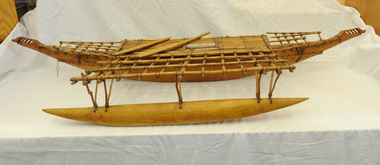 Orbost & District Historical Society
model -outrigger canoe, mid -late 19th century
... Outrigger canoes were originally developed by the peoples of the islands of Southeast Asia for sea travel, and were used to transport these peoples eastward through to Polynesia and New Zealand more than 2000 Years ago. ...Outrigger canoes were originally developed by the peoples of the islands of Southeast Asia for sea travel, and were used to transport these peoples eastward through to Polynesia and New Zealand more than 2000 Years ago. ...The outrigger gives greater stability and seaworthiness to the canoe. Outrigger canoes were originally developed by the peoples of the islands of Southeast Asia for sea travel, and were used to transport these peoples eastward through to Polynesia and New Zealand more than 2000 Years ago. Today they are still in use. This item possibly came to Orbost with Reverend Alexander Morton . Morton was the minister at the Presbyterian church about 1890. He had spent time in new Hebrides and went on to New Zealand.This item is an example of a handcrafted artefact from the New Hebrides.Detailed model of an outrigger canoe from the Polynesian islands. It isa handmade wooden (possibly breadfruit wood) model of an outrigger canoe - one outrigger attached to the main hull. Bound with string. It has two wooden paddles.handcraft morton-alexander model-outrigger-canoe -
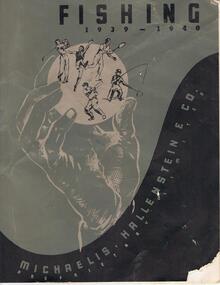 Bendigo Historical Society Inc.
Document - ABBOTT COLLECTION: FISHING CATALOGUE, 1939
... travelling salesmen in the Goldfields. Eventually they bought Cleghorn's tannery in Melbourne but Buttner sold his part to Moritz, Isaac's uncle. The expanded the leather business until they had branches in most states and New Zealand and London. ...travelling salesmen in the Goldfields. Eventually they bought Cleghorn's tannery in Melbourne but Buttner sold his part to Moritz, Isaac's uncle. The expanded the leather business until they had branches in most states and New Zealand and London. ...Founded by Moritz Michaelis and Isaac Hallerstein in 1866. Isaac Hallenstein had previously been partnered with Hermann Buttner and they were travelling salesmen in the Goldfields. Eventually they bought Cleghorn's tannery in Melbourne but Buttner sold his part to Moritz, Isaac's uncle. The expanded the leather business until they had branches in most states and New Zealand and London. After WW1 and the deaths of the founders, the company moved into a variety of leather goods, including shoes, footballs and golf bags. They eventually began to sell all types of sporting goods.Michaelis, Hallenstein & Co PTY LTD Fishing 1939 -1940 Catalogue. Grey and Black cover in light cardboard, with 32 paper pages. Small tear on bottom right corner and top of cover and first page. Photographs and illustrations in B&W. Rear cover lists address as 441 Lonsdale Street Melbourneabbott, fishing -
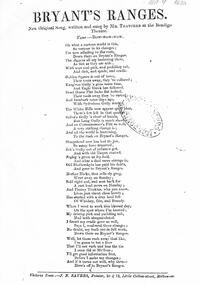 Bendigo Historical Society Inc.
Document - AUSTIN COLLECTION: 'BRYANT'S RANGES' WORDS OF SONG
... New Zealand. Charles Robert Thatcher (1831-1878) trained in England as a flautist before travelling to the Bendigo goldfields in 1853. ...New Zealand. Charles Robert Thatcher (1831-1878) trained in England as a flautist before travelling to the Bendigo goldfields in 1853. ...Bryant's Ranges: Bryant's Ranges is a location near Tarrangower, Victoria. See: https://nla.gov.au/nla.obj-133763991/view - pen, pencil and watercolour, 'Allen and Jesper's store, Bryant's Ranges, Tarrengower, Bendigo, Victoria, 1853 / R.W. Jesper' It is also a location in the South Island, New Zealand. Charles Robert Thatcher (1831-1878) trained in England as a flautist before travelling to the Bendigo goldfields in 1853. He was unsuited and unsuccessful as a miner so decided to rely on his music to make his fortune. He was considered a 'comic vocalist' who wrote many songs about the observations he made on the goldfields. These songs were often satirical and were published in newspapers as poems. He travelled extensively around the Victorian goldfields and also toured New Zealand. In 1861 he married widowed singer Anna Vitellie who performed with him, singing sentimental ballads. In 1870 the family returned to England where Charles became an importer of curios, following in his father's footsteps. He travelled to China, Japan and India sourcing stock for his business and on one such trip he contracted cholera and died in Shanghai. Copy of song written by Charles Thatcher, 'Bryant's Ranges'. Written under title of song: 'New original song, written and sung by Mr Thatcher at the Bendigo Theatre, tune Bow-wow-wow. Song mentions Bendigo reefs and the gold seekers success or otherwise, then they were off to 'Bryant's Ranges'.bendigo, mining, song by charles thatcher
