
Showing 14 items matching "new zealand red cross"
-
 National Vietnam Veterans Museum (NVVM)
Book, Smith, P.H.E, Letters from a Viet-Nam Hospital, 1969
... New Zealand...Tan Son Nhut...Saigon...New Zealand Surgical Team...Vietnamese Provincial Hospital...Qui Nhon...New Zealand Red Cross...Hospitals - Vietnam 1961-1975 - Health Aspects Vietnam War 1961-1975 - Medical care New Zealand Tan Son Nhut Saigon New Zealand Surgical Team Vietnamese Provincial Hospital Qui Nhon New Zealand Red Cross From the air, as you approach Saigon you can see the fields pock-marked from bombing and shelling, some of it quite close to the city. ...From the air, as you approach Saigon you can see the fields pock-marked from bombing and shelling, some of it quite close to the city.From the air, as you approach Saigon you can see the fields pock-marked from bombing and shelling, some of it quite close to the city.hospitals - vietnam, 1961-1975 - health aspects, vietnam war, 1961-1975 - medical care, new zealand, tan son nhut, saigon, new zealand surgical team, vietnamese provincial hospital, qui nhon, new zealand red cross -
 Lara RSL Sub Branch
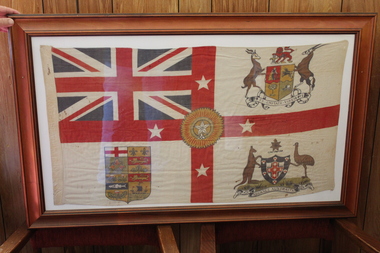
British Commonwealth of Nations flag circ world war 1, British Commonwealth of Nations flag world war 1
... Flag White Ensign is made up from Commonwealth Countries and displayed as a flag- Top left-hand corner British flag, right-hand top corner Coat of arms of South Africa, bottom-left Coat of Arms for Canada, Bottom right corner Advance Australia Coat of Arms, flag center is for India is a yellow and red rosette and New Zealand is represented by four white 5 pointed stars centralized as representation of the Southern Cross....British Imperial Forces involved in World War 1 Rear representation, british expeditionary forces flag union jack white ensign coat of arms of south africa coat of arms canada coat of arms advance australia rosette of india The flag on the left border is marked with "Groves" Flag White Ensign is made up from Commonwealth Countries and displayed as a flag- Top left-hand corner British flag, right-hand top corner Coat of arms of South Africa, bottom-left Coat of Arms for Canada, Bottom right corner Advance Australia Coat of Arms, flag center is for India is a yellow and red rosette and New Zealand is represented by four white 5 pointed stars centralized as representation of the Southern Cross. ...British Imperial Forces involved in World War 1Rear representation, Flag White Ensign is made up from Commonwealth Countries and displayed as a flag- Top left-hand corner British flag, right-hand top corner Coat of arms of South Africa, bottom-left Coat of Arms for Canada, Bottom right corner Advance Australia Coat of Arms, flag center is for India is a yellow and red rosette and New Zealand is represented by four white 5 pointed stars centralized as representation of the Southern Cross.The flag on the left border is marked with "Groves"british expeditionary forces flag, union jack, white ensign, coat of arms of south africa, coat of arms canada, coat of arms advance australia, rosette of india -
 Orbost & District Historical Society
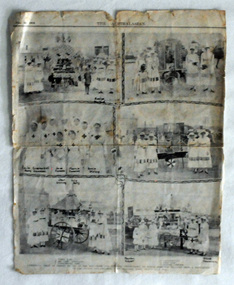
newspaper cutting, June 22 1918
... Red Cross and kindred institutions by which £2000 was realised from a population of 22000 adults and children. The expenses were practically nil." The Australasian was published every Saturday in a tabloid newspaper format. It contained extensive pictorial coverage of the week's events. The Australasian gave an insight into the life and times of Australians from week to week. News from Australia, New Zealand...Red Cross and kindred institutions by which £2000 was realised from a population of 22000 adults and children. The expenses were practically nil." The Australasian was published every Saturday in a tabloid newspaper format. It contained extensive pictorial coverage of the week's events. The Australasian gave an insight into the life and times of Australians from week to week. News from Australia, New Zealand ...This article reports on a "gymkhana held at Orbost in aid of the Red Cross and kindred institutions by which £2000 was realised from a population of 22000 adults and children. The expenses were practically nil." The Australasian was published every Saturday in a tabloid newspaper format. It contained extensive pictorial coverage of the week's events. The Australasian gave an insight into the life and times of Australians from week to week. News from Australia, New Zealand and abroad was presented. The Australian Red Cross Society (ARCS) was formed just after the outbreak of the First World War in August 1914, originally as a branch of the the British Red Cross. This is a contemporary record of a significant event in Orbost. It reflects the involvement of Orbost, a small town, in the efforts of the Australian Red Cross Society to provide comforts to soldiers during World war 1.A single page cutting from the Australasian. It has black / white photographs of local red cross workers at an Orbost Gymkhana. There are photos of a jumble stall, flower sellers. a fruit cart and a display of soldiers' comforts. 738.2 is a photocopy of the original.In black - names - Evelyn Blacklock, Leila Perry, Grace & Nell Cameron, Jane Cameron, Florrie Cameron, Annie Stirling, Jean Stirling, Lily Perry, Marion Gilbert, Grace Cameronww1 australasian-newspaper red-cross-orbost -
 Montmorency–Eltham RSL Sub Branch
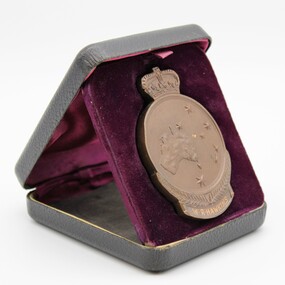
Medal - Commemorative Medallion, Issues began 1967
... New Zealand superimposed by the Southern Cross. The lower half is bordered by fern leaves. The name and initials of the recipient is engraved on the reverse. The presentation box in black leatherette is lined with deep red...New Zealand superimposed by the Southern Cross. The lower half is bordered by fern leaves. The name and initials of the recipient is engraved on the reverse. The presentation box in black leatherette is lined with deep red ...Medallion awarded to surviving members of Australian forces who served on the Gallipoli Peninsula during 25 April 1915 to January 1916. Recipient enlisted 07 June 1915 and was taken on strength of the 4th Australian Light Horse Regiment at ANZAC on 14 October 1915. He arrived at Alxandria on 27 December 1915. Subsequently served in France, and was discharged, in London, 24 January 1920. Returned to Australia, departing United Kingdom 06 May 1921. Cast bronze, approximately 75 mm high and 50mm wide. The obverse depicts Simpson and his donkey carrying a wounded soldier, with '1915' . It is bordered on the lower half by a laurel wreath above the word ANZAC. The reverse shows a map in relief of Australia and New Zealand superimposed by the Southern Cross. The lower half is bordered by fern leaves. The name and initials of the recipient is engraved on the reverse. The presentation box in black leatherette is lined with deep red velvet and deep red silk (lid)."W. R' Hawkins" -
 Bendigo Military Museum
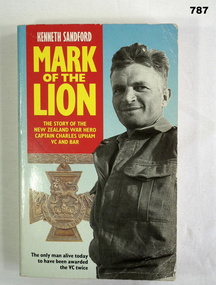
Book - BOOK, NZ VC, Kenneth Sandford, Mark of the Lion-The Story of the New Zealand War Hero Captain Charles Upham VC and Bar, 1990
... Cross. Title is yellow on a red background in upper left corner. Mark of the Lion-The Story of the New Zealand War Hero Captain Charles Upham VC and Bar Book BOOK, NZ VC. ...ISBN 0-0996-4430-4. Item in the Frank Dean collection.399 page, cut edged, paperback book with B&W photos. Cover has a photo of Capt Upham in uniform and one of a Victoria Cross. Title is yellow on a red background in upper left corner."Frank Dean"books, military history -
 National Vietnam Veterans Museum (NVVM)
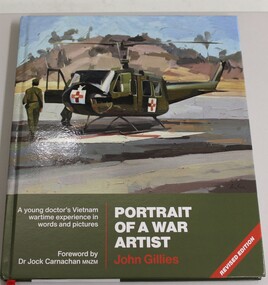
Book, Portrait Of A War Artist
... New Zealand by John Gilles MD. He was an avid sketch artist. Included in the book are photographs and short accounts of his experiences in Vietnam. Medical Doctor Gillies Dr Jock Carnachan MNZM Vietnam. artist war art vietnam art war artist Carnachan A young doctor's Vietnam/wartime experience in/words and pictures/PORTRAIT/OF A WAR/ARTIST/John Gillies A book with the title "Portrait of A War Artist. A revised edition. On the front cover is an image of a helicopter with two soldiers walking toward the helicopter. On the helicopter is the medical red cross ...This book was published in New Zealand by John Gilles MD. He was an avid sketch artist. Included in the book are photographs and short accounts of his experiences in Vietnam.A book with the title "Portrait of A War Artist. A revised edition. On the front cover is an image of a helicopter with two soldiers walking toward the helicopter. On the helicopter is the medical red cross symbols. A young doctor's Vietnam/wartime experience in/words and pictures/PORTRAIT/OF A WAR/ARTIST/John Gilliesmedical doctor, gillies, dr jock carnachan mnzm, vietnam., artist, war art, vietnam art, war artist, carnachan -
 National Vietnam Veterans Museum (NVVM)
Photograph, Gibbons, Denis, Taking A Letter
... Red Cross...Maori Soldier...New Zealand...A black and white photograph at the 1st Australian Field Hospital, Vung Tau, South Vietnam, Mary Gaynor from the hospital Red Cross writes a letter for a wounded Maori soldier from th New Zealand contingent attached to the 1st Australian Task Force at Nui Dat, Phuoc Tuy Province...Photograph 1st Australian Field Hospital Vung Tau Mary Gaynor Red Cross Maori Soldier New Zealand 1st Australian Task Force Phuoc Tuy Province Gibbons Collection Catalogue Denis Gibbons A black and white photograph at the 1st Australian Field Hospital, Vung Tau, South Vietnam, Mary Gaynor from the hospital Red Cross writes a letter for a wounded Maori soldier from th New Zealand contingent attached to the 1st Australian Task Force at Nui Dat, Phuoc Tuy Province Taking A Letter Photograph Gibbons, Denis ...Denis Gibbons (1937 – 2011) Trained with the Australian Army, before travelling to Vietnam in January 1966, Denis stayed with the 1st Australian Task Force in Nui Dat working as a photographer. For almost five years Gibbons toured with nine Australian infantry battalions, posting compelling war images from within many combat zones before being flown out in late November 1970 after sustaining injuries. The images held within the National Vietnam Veterans Museum make up the Gibbons Collection.A black and white photograph at the 1st Australian Field Hospital, Vung Tau, South Vietnam, Mary Gaynor from the hospital Red Cross writes a letter for a wounded Maori soldier from th New Zealand contingent attached to the 1st Australian Task Force at Nui Dat, Phuoc Tuy Provincephotograph, 1st australian field hospital, vung tau, mary gaynor, red cross, maori soldier, new zealand, 1st australian task force, phuoc tuy province, gibbons collection catalogue, denis gibbons -
 Alfred Hospital Nurses League - Nursing History Collection
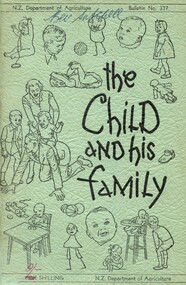
Booklet - Illustrated Booklet, Dorothy Johnson, The child and his family, 1954
... Publication based on a series of articles published in 'The New Zealand Journal Of Agricutlure' Insight into attiudes towards child care and developmpent in the 1950's Child development Speech development role of play children's toys parenting skills children's games Vintage text book proving information to parents on child care and child develoment On front cover at top 'Bev Satchell'[handwritten blue ink] at base 'ONE'crossed out and 2/- [handwritten red ink] Inside front cover at top previous catalogue number [handwritten black ink] at base is a printed black and white donation sticker: black Maltese cross in circle, 'This book was donated to Alfred Archival Association Nursing Division by'. ...Vintage text book proving information to parents on child care and child develomentIllustrated stapled booklet, light green cover with black print detailing title, publishing details and line drawings of children and family scenesnon-fictionVintage text book proving information to parents on child care and child develomentchild development, speech development, role of play, children's toys, parenting skills, children's games -
 Bendigo Military Museum
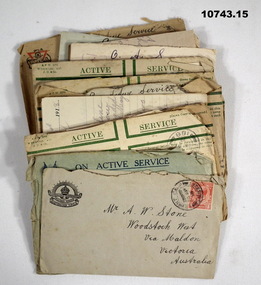
Letter - CORRESPONDENCE, WW1, YMCA et al, WW1
... The envelopes are a mixture of YMCA, The Salvation Army Institute, New Zealand; Active Service and Standard with a variety of postage stamps and postmark ink stamps. The letters are a mixture of plain paper, ruled paper; some with letterheads e.g. YMCA, Australian Red Cross...The envelopes are a mixture of YMCA, The Salvation Army Institute, New Zealand; Active Service and Standard with a variety of postage stamps and postmark ink stamps. The letters are a mixture of plain paper, ruled paper; some with letterheads e.g. YMCA, Australian Red Cross ...This is the 2nd set of 15 letters from Kenneth Reginald Stone No 6903A Refer Cat No. 10742.15 for more details relating to this collection.1. to 15. Series of 15 envelopes with letters from "Your affect Son/ Ken" to "Dear Dad". All addressed to Mr. A.W. Stone/ Woodstock West/ Via Maldon, Victoria/ Australia. The envelopes are a mixture of YMCA, The Salvation Army Institute, New Zealand; Active Service and Standard with a variety of postage stamps and postmark ink stamps. The letters are a mixture of plain paper, ruled paper; some with letterheads e.g. YMCA, Australian Red Cross. Dates range from 20 April 1918 to 2 Nov 1918. Handwritten envelopes - black and blue ink pen. Letters - black and blue ink pen and grey lead pencil. Letters from; 1. Fovant, England. 2. France. 3. France. 4. France. 5. France (hospital). 6. France. 7. France. 8. France. 9. France. 10. France. 11. France. 12. Birmingham. 13. Birmingham. 14. Weymouth. 15. England.correspondence, kenneth reginald stone, stonecollectionww1 -
 Ballarat Base Hospital Trained Nurses League
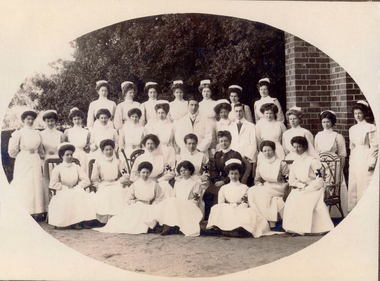
Priscilla Wardle - Trainee Ballarat District Hospital, 27/02/1905 to 01/03/1908 and WW1 Nurse. Also Edith Popplewell & Lily MacKenzie
... Edith Catheina Popplewell RRC (1884-1972) in her New Zealand Army Nursing Service (NZANS) Uniform. Poppy is at age 29 years in this photograph. Poppy was awarded the Royal Red Cross (RRC) medal for her heroism during the sinking of the Marquette transport ship. ...Edith Catheina Popplewell RRC (1884-1972) in her New Zealand Army Nursing Service (NZANS) Uniform. Poppy is at age 29 years in this photograph. Poppy was awarded the Royal Red Cross (RRC) medal for her heroism during the sinking of the Marquette transport ship. ...No 1: Matron Eagleton with Nursing Staff, Ballarat & District Hospital. Priscilla Wardle, far right - trainee nurse 1905-1908. No 2: This could be a group of trainee nurses at Ballarat Hospital. Circa 1906/1907. The nurses with the grey looking sleeves in this black and white photograph may be wearing the lilac uniform of Trainee nurses. The sitting nurse on the far right may already be qualified because she appears to be wearing the white of a trained nurse. Sitting in the middle with the cheeky grin could be Priscilla and the standing nurse on the far left could be Edith Popplewell. No 3: This photograph is labelled 1907 and Priscilla would have just commenced her training. She appears to be “fanning” a female patient presumably to cool her down. This could be upstairs in the Queen Victoria’s Women’s Ward. Priscilla graduated as a nurse in 1908. In this photograph Priscilla was at age 23 years. No 5: Sheila Kelly (left) and Priscilla Wardle. This photograph is labelled 1909 and shows Priscilla in an all white uniform indicating she has qualified as a nurse. Sheila Kelly appears to have darker sleeves/blouse (lilac) and may still be a trainee. No 6: There is a very good chance that this photograph is Edith Popplewell, standing left, Lily MacKenzie , standing on the right and Priscilla seated. Writing in her album is very hard to read but it appears to be “Pop McK & I”. The arm bands with the St John Cross denote they are “charge nurses” maybe in charge of a ward. Taking all this into account the photograph could be circa 1909/1910. No 8 & 9: Priscilla painting what appears to be a gate while wearing her nurse uniform. She has a big grin on her face. Together with Lily MacKenzie they were the principals in the Mount Stuart Private Hospital at 18 Duke Street. Daylesford. This property is now known as Mount Stuart House. Priscilla appears to be on Central Spring Road with the Daylesford Post Office in the background. Photograph 9 is labelled 1914 which would make it near the end of their tenancy between 1911 and 1914. No 10: This photograph raises some questions. Priscilla appears to have darker sleeves /blouse (lilac) which may indicate she is still a trainee however Priscilla is also wearing a “charge nurse” arm band. While my research shows trainee nurses can be a “charge nurse” this is not common practise. The scene appears to be at the door of a house/home. I am not sure if the children’s ward/orphanage at the Ballarat Hospital at this time was in such a building. It could be that it is at the Mount Stuart Hospital but this would mean Priscilla and Lily have duplicated the wearing of the “charge nurse” arm band. The St John’s logo looks different too. Priscilla Isabel “Pearl” Wardle (1884-1967). The armband indicates Priscilla is a Charge Nurse at the Ballarat Hospital. Nothing else known. No 11: Mary & I at Mount Stuart – House Daylesford – This is probably the nursery at the Mount Stuart House Private Hospital being run by Priscilla Isabel “Pearl” Wardle (1884 – 1967) and Selina Lily (Lil) MacKenzie or McKenzie (1882 – 1975) between 1910 and 1914. Mary is certainly Mary Young MacKenzie or McKenzie (1865- 1942) Lily’s stepsister who trained at Ballarat Hospital as “Mary Young “at the same time as Priscilla and Lily. Mount Stuart House still stands at 18 Duke Street Daylesford. Photo date 1912. No 12: Priscilla wearing her distinctive Queen Alexandra’s Imperial Military Nursing Service Reserve cape and badge. Possibly while nursing in London for a month in 1919 after the war. No 12A: Priscilla Wardle - WW1 Diary, OCR enabled. No 13: Priscilla and friends at No. 7 General Hospital, Malassises, Saint Omer, France in July 1915 The old monastery being used as a hospital can be seen in the background. The tents are the nurses quarters. This photograph may have been taken at the same time as the group photograph on page 250 of the diary transcription. Priscilla is thought to be the nurse at the centre in the QAIMNSR uniform. The nurses quarters at the No 7 General Hospital in Saint Omer in France where Priscilla worked for most of the first year of her Diary. Their Monastery (Hospital) at Malassises can be seen in the background. No 15: Priscilla is an Acting Sister working at the 2nd General Hospital for Officers in Havre, France, between March and July 1918. The nurses were enjoying their “tea party”. (see also page 253 of the Diary transcription) No 17: Priscilla at Havre - at 2nd General Hospital (Officers Hospital) in Havre., France Friday 29 March 1918 to Monday 29 July 1918 note the two dark bands on her right sleeve denoting that she is an “Acting Sister”. Priscilla is 34 years of age in this picture and in the three weeks prior to this posting she met Cyril Terence Charles Kirby (1892-1968) her future husband at the 42nd Stationary Hospital in Flixecourt while he was serving with the British Army during the battle and evacuation of Amiens. No 18: Priscilla Wardle at No 8 Stationary Hospital Wimereux, France - from Saturday 24 June 1916 to Tuesday 18 September 1917, Priscilla worked at this hospital for 15 months her longest time in one hospital. during the war. While at Wimereux on Sunday 1 July 1917 she was appointed an Acting Sister. Priscilla once said she disliked nursing in her cape and badges and here she is in her favourite “uniform” for work “the robe” as she called it. She may be leaving the “operating theatre” at Wimereux in this photograph. No 19: Priscilla worked in various operating theatres throughout France. This could be after she became an anaesthetist in 1918 and worked with this team. She is wearing her favourite uniform which is more comfortable. She did not like the collars and capes that were required to be worn. No 20: Priscilla and Sister Michael Meeke? (details not found) are having a quiet drink at the 2nd General Hospital for Officers in Havre, France. Note the dark bands on their sleeves denote their rank as nursing “Sisters”. While it looks like they are smoking look more closely they are in fact holding a “flute” style probably “cocktail” glass. Tea parties and cocktails, Havre could almost have been fun. No 22: 1913 – Ballarat nurse Priscilla Isabell “Pearl” Wardle (1884-1967) in Cannes on the French Riviera during leave from between Friday 20 February 1918 and Friday 6 March 1918.Priscilla is second from the left wearing her distinctive QAIMNSR cape of grey with dark “wine” coloured border. The other nurses are wearing their “travelling” army uniform. They were rudely called “Salvation Army Lassies” by American nurses for the way they were dressed. (see page 232 of Priscilla’s War Diary) The description of 1913 on this photograph is confusing. No 23: Priscilla with her best friend Edith Victoria Donaldson somewhere in the “mysterious far east” on their trip on the Orontes. Priscilla is second from left - this may have been taken at Durban during Priscilla's return to Australia in 1919. No 25: Priscilla Wardle, Ballarat nurse in her Queen Alexandra’s Imperial Military Nursing Service Reserve (QAIMNSR) uniform. Notice the distinctive grey cape with “wine coloured” border Priscilla is also wearing her QAIMNSR qualification badge (medal) on the right side. Because she has no dark (wine coloured) bands on her sleeves so this photograph may be before 1 July 1918. No 26: Priscilla met her husband to be English army Lieutenant Cyril Terrence Charles Kirby during the battle and subsequent evacuation of Amiens in France. As an army nursing “Sister” Priscilla also held the rank of Lieutenant. Priscilla was stationed at the 42nd Stationary Hospital between 7/3/18 and 23/3/18. She had just completed a fortnight break at Cannes on the French Riviera. They were married at Priscilla’s home “Waverley" at 215 Dawson Street Ballarat on Saturday 15 November 1919. Nov 15, 1919 – Mr and Mrs Kirby. The bride Priscilla Isabell “Pearl” Kirby (nee Wardle) (1884-1967) and the groom Cyril Terence Charles Kirby (1892– 1968) on their wedding day. Priscilla was 34 years of age and Cyril 27 years of age however their marriage certificate states that they were both 34 years of age. Their marriage certificate states they were married at Waverley, Dawson St, South, Ballarat in a Presbyterian service conducted by the Rev. John Walker, a Minister of the Presbyterian Church of Australia and the Moderator General of the Church we think for Victoria. Was it in an outdoor setting as the surrounds in this photograph seem to indicate. Their witnesses were Robert and Olive, Priscilla’s brother and sister. Cyril signed as C. Terence. C. Kirby and Priscila signed as Priscilla I. Wardle. The certificate lists Cyril (Terence) as a Bachelor, Born at sea on a British ship and his occupation as Sailor. His father interestingly is listed as Charles John Kirby, of independent means and his mother as Emily Newman. Priscilla is listed as a Spinster, born in Ballarat with occupation as a Nurse. Her father is listed as Henry Thomas Wardle, Timber Merchant and her mother as Isabella Allan. They are both resident at 215 Dawson St. Ballarat which was Waverley the Wardle family home. No 28: Reverse in Poppy’s handwriting: “Lovingly yours Poppy, Dec 1908” Taken the year after Poppy qualified at BBH. No 29: Reverse in Poppy’s handwriting: “With much love to you Cilla, Poppy 1915” This picture was taken in the same year as the Marquette sinking incident. Edith Catheina Popplewell RRC (1884-1972) in her New Zealand Army Nursing Service (NZANS) Uniform. Poppy is at age 29 years in this photograph. Poppy was awarded the Royal Red Cross (RRC) medal for her heroism during the sinking of the Marquette transport ship. She lost her best friend NZ nurse Lorna Ratray. No 30: Taken in Cairo. Poppy is in the centre and wearing her New Zealand army badge and cape. The two nurses on either side are Australian nurses probably wearing their unique silver Australian Army sunrise badge and cape. No 31: Reverse in Poppy’s handwriting: “Ward 7 on Xmas day 1917, with my love, Poppy, A Happy New Year to you – had the sweetest letter from Bobbie”. (Bobbie is Priscilla’s brother Robert). It is thought the nurse in the centre of the three on the left is Poppy. It is 1917 two years after the Marquette sinking. Poppy appears to be a “sister” note the two dark bands on her sleeve. The uniform also matches that of Poppy 2. This photograph is in Post Card form very common during WWI. Edith Popplewell RRC is the “Sister” in the middle of the group of three nurses on the left. She is a sister not a general nurse because of the two bands on her left wrist denoting her rank. She was in fact the Charge Nurse ( in charge) of Ward 7 at this time. Note the Christmas decorations. Poppy is at age 33 years of age in this photograph.Bobbie is Priscilla’s brother Robert Norman “Bobbie” Wardle (1895-1979). No 32: Lilly MacKenzie & Poppy – Otaki - Australian nurse Selina Lily (Lil) MacKenzie sometimes McKenzie (1882– 975) grew up and trained as a nurse in Ballarat Victoria. After completing her training Lily and Priscilla Isabell “Pearl” Wardle (1884 – 1967) conducted the Mount Stuart House Private Hospital in Daylesford Victoria. In late 1913 Lily travelled to Otaki, 32 kms north of Wellington in New Zealand and worked at the Otaki Cottage Hospital with close friend Edith Catheina Popplewell “Poppy” (1884-1976) who also grew up and trained as a nurse at the Ballarat Hospital. In 1914 Lily was matron of a private hospital in Taihape 150kms north of Wellington. Both Lily and Poppy volunteered for New Zealand but as New Zealand were not accepting Australian trained nurses she returned to Australia and enlisted in the Australian Army Nursing Service (AANS) in October 1915. Lily went on to serve in Egypt, England, France and Italy where she was awarded the Royal Red Cross (RRC) medal for her service. This photograph is while Lily and Poppy were working at Otaki Cottage Hospital in New Zealand. Circa 1914. trainee, charge sister, ballarat, hospital, 1905, 1908, ww1, mount stuart house, sleeman, wardle, popplewell, mackenzie, military, queen alexandra's imperial military nursing service reserve, daylesford, nurses, private hospital, edith popplewell, france, cairo, diary, ww1 diary, havre, lily mackenzie, eagleton, matron, otaki, new zealand, donaldson, malassises, kelly, young, kirby, priscilla -
 Dandenong/Cranbourne RSL Sub Branch
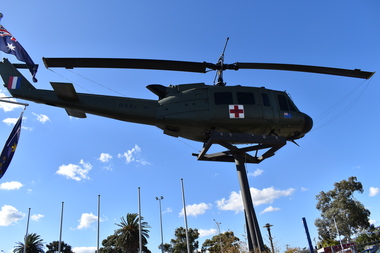
Vehicle - Helicopter (Dustoff)!!
... Red Cross on front. Left hand side - UNITED STATES ARMY 73 - 21763 USAR. Red Cross with 763 enclosed and small Vietnamese Flag. Right hand side - Red Cross with 763 enclosed small Australian Flag RAAF with Kangaroo. Tailfin RHS A2-767 over red, white and blue flag representing New Zealand...Red Cross on front. Left hand side - UNITED STATES ARMY 73 - 21763 USAR. Red Cross with 763 enclosed and small Vietnamese Flag. Right hand side - Red Cross with 763 enclosed small Australian Flag RAAF with Kangaroo. Tailfin RHS A2-767 over red, white and blue flag representing New Zealand ...Significant historical importance during the Vietman War-era. These HUEY'S were responsible for saving thousands of injured and distressed military personnel. Dustoff was donated to the Dandenong RSL by the United States in September 2003. Dustoff is a Iroquois UH - 11v ( a modified UH - 1D ) she was fully restored when donated. They were a highly manoeuvrable aircraft.Very important. Huey saved lives. Dustoff is a local attraction bringing many people to view it. Ex U.S Military helicopter. Dustoff or CASEVAC - fitted out to evacuate wounded soldiers during the Vietnam War. These helicopters were commonly called "Hueys".Large Red Cross on front. Left hand side - UNITED STATES ARMY 73 - 21763 USAR. Red Cross with 763 enclosed and small Vietnamese Flag. Right hand side - Red Cross with 763 enclosed small Australian Flag RAAF with Kangaroo. Tailfin RHS A2-767 over red, white and blue flag representing New Zealand.vietman war. rescue of wounded servicemen., mechanical -
 Royal Brighton Yacht Club
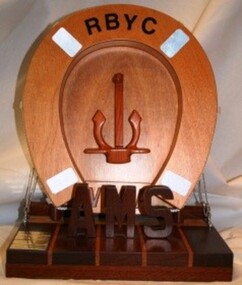
Life Ring, Vega Trophy (Mounted Wooden Life Ring)
... Many requests by the Jersey authorities for Red Cross assistance were rejected, but finally in December 1944 they agreed and on 30th December the Red Cross vessel “Vega” (Swedish Registry) arrived and delivered parcels to the civilian population. These parcels contained a variety of foodstuffs supplied mainly by Canadian authorities, desperately needed medical supplies, flour, oils and soaps, as well as tobacco from New Zealand. ...Many requests by the Jersey authorities for Red Cross assistance were rejected, but finally in December 1944 they agreed and on 30th December the Red Cross vessel “Vega” (Swedish Registry) arrived and delivered parcels to the civilian population. These parcels contained a variety of foodstuffs supplied mainly by Canadian authorities, desperately needed medical supplies, flour, oils and soaps, as well as tobacco from New Zealand. ...Vega Trophy (Mounted Wooden Life Ring) Donor: Graham Noel During World War II when the Germans occupied the Channel Islands the local people went through very severe food rationing and were on the verge of starvation. Near the end of the war, the Swedish ship Vega was allowed by the Germans to deliver several shipments of food to the civilian population, easing the critical shortages of food on the islands. Further background detail can be found below. Graham Noel was born on the Islands and lived there during this harsh period. The trophy is awarded to the winner of the Combined Division AMS Aggregate Series. First Winner: Under Capricorn, P. Bedlington 2005/06 Vega – Further historical background Early in the Second World War Jersey was declared “unarmed” and the German military took over, taking quite a few lives in the process, through strafing the main harbour and a few other places which they needlessly considered threatening. A considerable number of locals evacuated to England before the Germans arrived, but more than 60% of the population remained and endured 5 years of very strict and difficult conditions. Not only was the population unable to contact relatives in the UK or elsewhere, but very quickly they found themselves subject to harsh curfews, strictly rationed foodstuffs, no fuel for vehicles, radios confiscated, and homes and hotels commandeered by the military. The military demanded first pick of all foodstuffs and kept meticulous records of all livestock forcing farmers even to show newborn calves and piglets to them, then claiming the new arrivals for their dinner tables. However there are many stories of farmers outwitting their masters when twin calves or suchlike arrived! Lawbreakers were quickly dealt with, mostly with lengthy prison terms in Jersey, but the more serious crimes were punished by being sent to some horrible French prisons, or even some of the notorious German concentration camps. All local Jews were dispatched to concentration camps, and even English born families were similarly shipped through France and on to Germany. Sadly, a considerable number of those deported did not make it back safely to Jersey. In June 1944 the locals were delighted to hear that the Allies had invaded Normandy and very soon they could hear the battles as the Allies worked their way along the French coast. Little did they know they would still have to wait another 11 months for freedom, having to put up with a very demanding German occupation force which was still determined to obey Hitler’s order to “Defend the Channel Islands to the death”. Now that France was in Allied Hands the local military commanders were unable to supplement their food supplies from France and even harsher demands were made on the local population to ensure that all branches of their still very substantial military force were reasonably well fed. As well as the military, Jersey farmers had to provide food for the Allied POWs and the many “forced labourers”, mainly of Russian, Polish and Italian backgrounds who had been directed to the island to build all the concrete bunkers. This included an underground hospital, all this complying with Hitler’s orders to ensure that the Channel Islands would never again be part of Britain. Many requests by the Jersey authorities for Red Cross assistance were rejected, but finally in December 1944 they agreed and on 30th December the Red Cross vessel “Vega” (Swedish Registry) arrived and delivered parcels to the civilian population. These parcels contained a variety of foodstuffs supplied mainly by Canadian authorities, desperately needed medical supplies, flour, oils and soaps, as well as tobacco from New Zealand. Vega made a further 3 or 4 trips and most certainly eased the desperate situation being faced by the locals. In fact, it resulted in the locals having slightly better food supplies than the military and many local farmers tell stories of having to protect their stock from marauding soldiers. Understandably Churchill was reluctant to send in an invading force to retake the Channel Islands, but by May 1945 it was clear that the Third Reich was finished and on May 9th the German Military surrendered, without a fight, to a large British landing force. On a slightly lighter note … in January 1945 Jersey stonemasons were seen in the main town square repairing flagstones … the Germans had never noticed that the name “Vega” had been formed in those flagstones! As a side note Vega is the name of the brightest star in the universe. Furthermore, throughout the occupation, despite German law that demanded confiscation of all radio sets, punishable by long prison terms or deportation to Germany, there were still many sets being listened to. The locals had a well refined news system for the dissemination of news of what was happening in the outside world. vega, graham noel, ams, combined division, aggregate -
![Medal - Court-mounted set of miniature medals: Royal Red Cross, Australian Service Medal 1945-75 with PNG clasp, Elizabeth II Silver Jubilee Medal 1977, Defence Force Service Medal, National Medal and Australian Defence Medal, [unknown]](/media/collectors/64a5077bc83bd7b7b94f4211/items/6a697004154863c24685a486/item-media/6a6971d6154863c246863334/item-fit-380x285.jpg?cb=6) Returned Nurses RSL Sub-branch
Returned Nurses RSL Sub-branchMedal - Court-mounted set of miniature medals: Royal Red Cross, Australian Service Medal 1945-75 with PNG clasp, Elizabeth II Silver Jubilee Medal 1977, Defence Force Service Medal, National Medal and Australian Defence Medal, [unknown]
... In 1959, in search of something different, Vines applied for a civilian nursing role at HMAS Cerberus, Flinders Naval Depot where she was employed until leaving to travel to New Zealand, Canada and the United States in 1962." "Commander Vines was presented with a Royal Red Cross in early 1972. ...In 1959, in search of something different, Vines applied for a civilian nursing role at HMAS Cerberus, Flinders Naval Depot where she was employed until leaving to travel to New Zealand, Canada and the United States in 1962." "Commander Vines was presented with a Royal Red Cross in early 1972. ...These medals were awarded to Patricia Catherine Vines of the Australian Navy and Royal Australian Navy Nursing Service (RANNS). Extracts from Sea Power Centre website (listed in references): "Patricia Catherine Vines was born in Fairfield, Melbourne on 5 September 1925. Educated at the Catholic Ladies College, East Melbourne, on completion of her Intermediate Certificate, Vines undertook secretarial training before working at the Department of Aircraft Productions and then the Gun Turret Factory at Fairfield where she was still working when World War II ended in 1945. It was while she was working in the X-Ray Department at St Vincent’s Hospital that she decided to become a nurse, beginning her training in December 1948 and becoming a Registered Nurse in 1952, and a qualified midwife two years later. In 1959, in search of something different, Vines applied for a civilian nursing role at HMAS Cerberus, Flinders Naval Depot where she was employed until leaving to travel to New Zealand, Canada and the United States in 1962." "Commander Vines was presented with a Royal Red Cross in early 1972. The medal, presented by the Governor of Victoria, Sir Rohan Delacombe, was awarded for ‘exceptional competence and devotion to duty’. Also awarded were Sergeant Leslie Bending of the Naval Police (left) who received the British Empire Medal for dedicated service, and Lieutenant Commander Winston James (right) who received the Distinguished Service Cross in recognition of outstanding leadership and bravery while serving as commander of the RAN Helicopter Flight in Vietnam. During that time (1971-1980) she was also appointed an Honorary Nursing Sister to Queen Elizabeth II. In 1972 Patricia was awarded a Royal Red Cross (RRC) 2nd Class in the New Year Honours List and in January 1981 this was upgraded to a Royal Red Cross 1st class. The awards officially recognised her exceptional devotion and competency in performance of nursing duties in the RAN." "Following a 16-year career in the Navy and having reached retirement age, Patricia Vines retired from the RAN in 1980 and ran her own nursing business in Melbourne until 1995. Patricia Catherine Vines passed away in Melbourne on 15 February 2010, aged 85 years." Vines was a consistent paid member of the Returned Nurses Club (Returned Nurses Sub Branch RSL Victoria) from 1989 to her passing.A mounted set of six miniature medals (approximately a quarter of the size of the medals they represent) of various coloured metals with ribbons of many colours. The Royal Red Cross miniature medal is in the "shape of a golden cross... the obverse enamelled red, with a circular medallion, bearing an effigy of the reigning monarch [Queen Elizabeth II] at its centre. The words "Faith", "Hope" and "Charity" are inscribed on the upper limbs of the cross, with the year "1883" in the lower limb. The reverse is plain except a circular medallion bearing the royal cypher of the reigning monarch" [Wikipedia - see References], on this miniature medal the initials are ER. The ribbon is a dark blue stripe between crimson edge stripes and forms a landscape oriented bow that the medal hangs from the middle. The Australian Service Medal 1945-75 is "nickel-silver with the Australian Coat of Arms surrounded by the words The Australian Service Medal 1945-1975 on the obverse. The reverse has a Federation Star... The ribbon has central stripes of yellow and green, flanked by navy blue, khaki and light blue stripes from the Australia Service Medal 1939-45. A nickel-silver clasp with the name of the theatre or action for which the award is made is presented with the medal." [Australian Government Defence website - see References] This miniature has the PNG clasp and the navy blue stripe has faded to look more purple in colour. The Elizabeth II Silver Jubilee Medal 1977 comprises a "silver disc with, on the obverse, the words ELIZABETH II DEI GRA. REGINA FID. DEF. (Latin abbreviation for "Elizabeth II, by the Grace of God, Queen, Defender of the Faith") surrounding an effigy of Queen Elizabeth II, symbolising her role as fount of honour.[6] On the reverse is a crown atop a wreath that contains the words THE 25th YEAR OF THE REIGN OF QUEEN ELIZABETH II 6 February 1977 in six lines... The ribbon is white with cardinal red bands along the edges...and a... garter blue stripe down the centre, bisected by another... line of cardinal red" [Wikipedia - see References] The Defence Force Service Medal is a "cupro-nickel circular chamfered medal. The obverse has the Joint Service emblem. The reverse is inscribed For Efficient Service In The Permanent Forces around the circumference. The ribbon has 3 equal stripes of gold and azure-blue edged with azure-blue. The colours were the national colours of Australia at the time of introduction." [Australian Government Defence website - see References] the blue stripes have faded to look more purple in colour. The National Medal is "bronze. The obverse shows the Arms of the Commonwealth of Australia within a rim carrying the inscription The National Medal For Service. The reverse is plain. The ribbon has 15 alternating gold and blue stripes. The colours were the national colours of Australia at the time of introduction." [Australian Government Defence website - see References] Again, blue has faded to purple on the ribbon. The Australian Defence Medal is "cupronickel. The obverse has a stylised version of the Commonwealth Coat of Arms as used on the Australia Service Medal 1939-45. This is surrounded by the inscription The Australian Defence Medal above a sprig of wattle. The reverse has the inscription For Service below the Crown of St Edward surrounded by 2 sprays of wattle leaves and blossom. The ribbon is red with black edges, the colours of the Flanders poppy that represent the Anzac spirit of the Australian armed forces. The white stripes divide the ribbon into 3 to denote the three Services and represent service contributing to the peace of Australia." [Australian Government Defence website - see References] The miniature medals are court-mounted on a rigid backing with a long pin and the backing covered with a full size strip of ribbon in the Royal Red Cross medal colours.royal red cross, royal australian naval nursing service, royal australian navy, ranns, ran, papua new guinea, medals -
 Flagstaff Hill Maritime Museum and Village
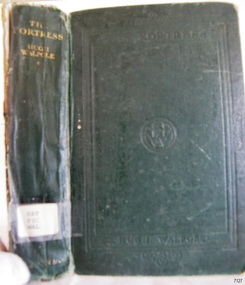
Book - Fictional Story, Hugh Walpole, The Fortress, 1934
... New Zealand, in March 1884, the son of an Anglican clergyman. He was educated at King’s School, Canterbury, then Durham, then Emmanuel College, Cambridge. After failing at teaching and lay reading in the church, he turned to writing and reviewing, and was knighted in 1937. He served in Russia as a Red Cross...New Zealand, in March 1884, the son of an Anglican clergyman. He was educated at King’s School, Canterbury, then Durham, then Emmanuel College, Cambridge. After failing at teaching and lay reading in the church, he turned to writing and reviewing, and was knighted in 1937. He served in Russia as a Red Cross ...The Fortress is the third novel in Walpole’s Herries Chronicles, which follow the branches of the Herries family in the 19th-century Lake District. The story centres on a bitter feud between the branch led by Judith Paris and the one led by Walter Herries. Walter wants to drive Judith and Jennifer Herries out, so he builds a great mansion, the Fortress, on a hill overlooking their house. Elizabeth, Walter’s kind daughter, is caught between family hostility and her love for Jennifer’s son John. John is then persecuted by his wife’s brother, which leads to a tragic confrontation. The saga covers about fifty years, from a summer fair at Keswick to Queen Victoria’s coronation.Hard cover book. The Fortress Author: Hugh Walpole Publisher: Macmillan and Co., Limited Date: 1934 Further Information: Dark green cloth, blind-stamped border and “W” monogram to binding. The spine has a Library label with an inscription.fictionThe Fortress is the third novel in Walpole’s Herries Chronicles, which follow the branches of the Herries family in the 19th-century Lake District. The story centres on a bitter feud between the branch led by Judith Paris and the one led by Walter Herries. Walter wants to drive Judith and Jennifer Herries out, so he builds a great mansion, the Fortress, on a hill overlooking their house. Elizabeth, Walter’s kind daughter, is caught between family hostility and her love for Jennifer’s son John. John is then persecuted by his wife’s brother, which leads to a tragic confrontation. The saga covers about fifty years, from a summer fair at Keswick to Queen Victoria’s coronation.book, the fortress, hugh walpole, shipwrecked-coast, flagstaff-hill, flagstaff-hill-maritime-museum, warrnambool, maritime-museum, shipwreck-coast, flagstaff-hill-maritime-village, shipwrecked-artefact, pattison collection, warrnambool library, warrnambool mechanics’ institute, ralph eric pattison, corangamite regional library service, warrnambool city librarian, mechanics’ institute library, victorian library board, warrnambool books and records, warrnambool children’s library, great ocean road
