
Showing 171 items matching "one community church"
-
 Whitehorse Historical Society Inc.
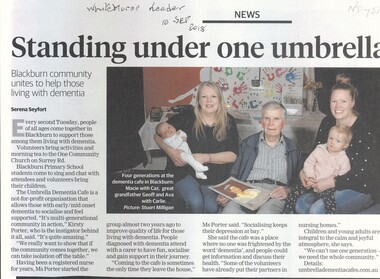
Article, Dementia Group, 2018
... ...one community church...Every second Tuesday a group meets at the One Community Church on Surrey Road....blackburn one community church Blackburn Community unites to help those living with dementia in Blackburn. ...Blackburn Community unites to help those living with dementia in Blackburn.Blackburn Community unites to help those living with dementia in Blackburn. Every second Tuesday a group meets at the One Community Church on Surrey Road.Blackburn Community unites to help those living with dementia in Blackburn.blackburn, one community church -
 Whitehorse Historical Society Inc.
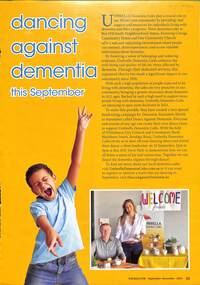
Article - Umbrella Dementia Cafes, Sep - Nov 2023
... ...One Community Church...UmbrellaDementiaCafes.com.au Box Hill South Neighbourhood House Koonung Cottage Community House One Community Church Umbrella Dementia Cafes provide vital support and resources for dementia sufferers Umbrella Dementia Cafes Article Umbrella Dementia Cafes The Bulletin ...Umbrella Dementia Cafes provide vital support and resources for dementia sufferersnon-fictionUmbrella Dementia Cafes provide vital support and resources for dementia sufferersbox hill south neighbourhood house, koonung cottage community house, one community church -
 Flagstaff Hill Maritime Museum and Village
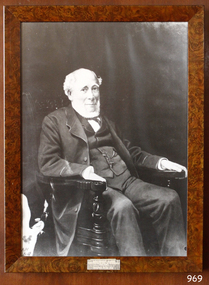
Photograph - Portrait, David Charles McArthur, Superintendent, Bank of Australasia 1867-1876
... McArthur was active in the community, being a member of the Mechanics’ Institute, on the committee that advised Governor Hotham on the Colony’s finances, chairman of the Heidelberg Road Board, one of the original trustees of the Library of Victoria in 1853 and president of the trustees of the Public Library, Museums and National Gallery of Victoria in 1880-83. He was also on many other community organisations. He died in his home “Charterisville” in East Ivanhoe in 1887. He and Caroline had no children. The Melbourne branch of Australia and New Zealand Bank has a portrait of McArthur in its boardroom. St John's Church...McArthur was active in the community, being a member of the Mechanics’ Institute, on the committee that advised Governor Hotham on the Colony’s finances, chairman of the Heidelberg Road Board, one of the original trustees of the Library of Victoria in 1853 and president of the trustees of the Public Library, Museums and National Gallery of Victoria in 1880-83. He was also on many other community organisations. He died in his home “Charterisville” in East Ivanhoe in 1887. He and Caroline had no children. The Melbourne branch of Australia and New Zealand Bank has a portrait of McArthur in its boardroom. St John's Church ...The subject of this photograph, David Charteris McArthur, was the founding manager of the Bank of Australasia in Port Phillip (Melbourne). McArthur was born in 1808 in Gloucester, England, and educated in Scotland. He worked for an insurance firm in Edinburgh, where in 1835 he married Caroline, nee Wright. McArthur and his family party sailed from the U.K. to arrive in Sydney in October 1835, where he joined the Bank of Australasia when it opened in Sydney in December. McArthur sailed to Melbourne in August 1838 with 3000 pounds in coins, protected by armed guards and two bulldogs, to open the Melbourne branch of the Bank of Australasia. The branch grew quickly, servicing both private and government customers. He opened many branches in the goldfields during the 1850s. In 1862, he was appointed as general inspector of branches. He spent time with the bank in New Zealand. On his return to Melbourne, at age 57, he was put in charge of the entire bank. McArthur lived in the hills of Heidelberg, Melbourne. He was the first chairman of Associated Banks and was an advisor to politicians and merchants. He was retired in October 1876 by the London directors and given a free trip to London, an annuity and a seat on the bank’s Advisory Board. McArthur was active in the community, being a member of the Mechanics’ Institute, on the committee that advised Governor Hotham on the Colony’s finances, chairman of the Heidelberg Road Board, one of the original trustees of the Library of Victoria in 1853 and president of the trustees of the Public Library, Museums and National Gallery of Victoria in 1880-83. He was also on many other community organisations. He died in his home “Charterisville” in East Ivanhoe in 1887. He and Caroline had no children. The Melbourne branch of Australia and New Zealand Bank has a portrait of McArthur in its boardroom. St John's Church, Heidelberg, commemorates him with a stained-glass window entitled 'King David'. The McArthur Gallery in the National Gallery of Victoria is also named after him. (David's brother, Donald, moved from Sydney to Melbourne in 1836 with the first government survey team.) ABOUT THE BANK OF AUSTRALASIA In 1836 the Bank of Australasia was established in London by Royal Charter. In 1951 the bank merged with the Union Bank of Australia, to form ANZ Bank Limited. In 1970 it merged with the English, Scottish and Australian Bank to become Australia and New Zealand Banking Group Limited. Since that time the ANZ has acquired other banks and introduced Internet banking and mobile banking. BANK OF AUSTRALASIA IN WARRNAMBOOL The Bank of Australasia first opened in Warrnambool in July 1854 in a building on Merri Street. The manager was Mr Samuel Hannaford. The bank then purchased and moved to a stone building on the corner of Timor and Gibson Streets, previously owned by Cramond and Dickson and almost opposite the Examiner’s office. In January 1957 Mr W.H. Palmer became the new manager and was there until November 1869. The bank then built its own building on the corner of Timor and Kepler Streets in 1859. Mr Basil Spence, the teller, was appointed acting manager in 1869 and Mr H.B. Chomley was the next appointed manager, in April 1873 and was still manager in 1886. The municipality of Warrnambool first banked with the Bank of Australasia from 1856 to April 1857. David Charteris McArthur served as the founding manager of the Bank of Australasia. His leadership marked a significant chapter in Warrnambool's early commercial development. The municipality of Warrnambool relied on the Bank of Australasia as its official bank from 1856 until April 1857. This period is symbolised by a photograph of McArthur, which represents the origins of Warrnambool's commercial history and its early financial infrastructure.Photograph; portrait of David Charteris McArthur. Heavily retouched black and white print in plain brown varnished frame, behind glass, with plaque on lower edge and inscription lower left corner.Lower left corner "A-H 1-9". Engraved on plaque "DAVID CHARTERS MCARTHUR \ SUPERINTENDENT \ BANK OF AUSTRALASIA \ 1867-1876"flagstaff hill, warrnambool, shipwrecked-coast, flagstaff-hill, flagstaff-hill-maritime-museum, maritime-museum, shipwreck-coast, flagstaff-hill-maritime-village, bank of australasia, david charteris mcarthur, superintendent bank of australasia, colonial commerce, manager bank of australasia melbourne, colonial bank, warrnambool bank of australasia, shipwrecked coast, flagstaff hill maritime museum, maritime museum, shipwreck coast, flagstaff hill maritime village, great ocean road, boa, union bank, australia & new zealand bank, anz bank, david charters mcarthur, d c mcarthur -
 Flagstaff Hill Maritime Museum and Village
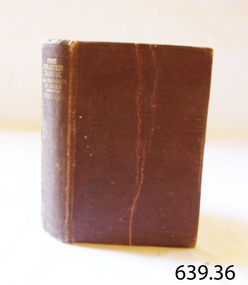
Book - Religious Book, The Book of Common Prayer, Circa 1944
... community awareness of the life of people at sea, their dangers and hardships, and their need for physical, financial, spiritual and moral support. Flagstaff Hill Maritime Museum and Village Flagstaff Hill Warrnambool Maritime Museum Maritime Village Shipwreck Coast Great Ocean Road Religion Religious service St Nicholas Seamen’s Church Williamstown Missions to Seamen Victoria the book of common prayer prayer book On the front cover Symbol [CROSS] This Book of Common Prayer was part of the original furnishings of St Nicholas Seamen's Church, Williamstown, Victoria. The church was operated by the Missions to Seamen organisation. It is one ...The book was previously part of the service at St Nicholas Seamen's Church in Williamstown, Melbourne. THE MISSIONS TO SEAMEN (Brief History: for more, see our Reg. No. 611, Set of Pews) The Missions to Seamen was an Anglican charity that served seafarers of the world since 1856 in Great Britain. It symbol is a Flying Angel, inspired by a Bible verse. Today there are centres in over 200 ports worldwide where seamen of all backgrounds are offered a warm welcome and provided with a wide range of facilities. In Victoria, the organisation began in Williamstown in 1857 as a Sailors’ Church, also known as ‘Bethel’ or the ‘Floating Church’ in an old hulk floating in Hobson’s Bay, Port of Melbourne. It soon became part of the Missions to Seamen, Victoria. In the year 2000 the organisation, now named Mission to Seafarers, still operated locally in Melbourne, Portland, Geelong and Hastings. The Ladies’ Harbour Lights Guild was formed in 1906 to support the Missions to Seamen in Melbourne and other centres such as Williamstown. Two of the most significant ladies of the Guild were founder Ethel Augusta Godfrey and foundation member Alice Sibthorpe Tracy (who established a branch of the Guild in Warrnambool in 1920). The Guild continued its work until the 1960s. In 1943 a former Williamstown bank was purchased for the Missions to Seaman Club. The chapel was named St Nicholas’ Seamen’s Church and was supported by the Ladies’ Harbour Lights Guild, the Williamstown Lightkeepers’ Auxiliary and the League of Soldiers’ and Sailors’ Friends. It ceased operation in 1966. A Missions to Seamen Chapel and Recreation Room was a significant feature of ports during the late 1800s and into the 1900s. It seemed appropriate for Flagstaff Hill to include such a representation within the new Maritime Village, so the Melbourne Board of Management of Missions to Seamen Victoria gave its permission on 21st May 1979 for the entire furnishings of the Williamstown chapel to be transferred to Flagstaff Hill. The St Nicholas Seamen’s Church was officially opened on October 11, 1981, and closely resembles the Williamstown chapel.This book is significant historically for its origin in the St Nicholas Mission to Seamen's Church in Williamstown, established in 1857 to cater for the physical, social, and spiritual needs of seafarers. It originated in Bristol, England when a Seamen's Mission was formed in 1837. The book is historically significant for its connection to the Ladies Lightkeepers’ Auxiliary, an organisation of women, formed to support seafarers. The connection of this book to the Mission to Seamen and to the Ladies Lightkeepers’ Auxiliary highlights the strong community awareness of the life of people at sea, their dangers and hardships, and their need for physical, financial, spiritual and moral support. This Book of Common Prayer was part of the original furnishings of St Nicholas Seamen's Church, Williamstown, Victoria. The church was operated by the Missions to Seamen organisation. It is one of a set of similar books. The hardcover is of red fabric over cardboard, with gold embossed letters on the spine. This book is part of the St Nicholas Seamen's Church Collection. On the front cover Symbol [CROSS]flagstaff hill maritime museum and village, flagstaff hill, warrnambool, maritime museum, maritime village, shipwreck coast, great ocean road, religion, religious service, st nicholas seamen’s church, williamstown, missions to seamen victoria, the book of common prayer, prayer book -
 Federation University Historical Collection
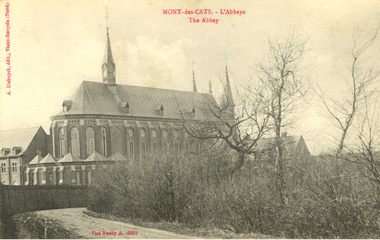
Postcard - black and white, Mont-des-Cats Abbey, c1914
... In 1826, a new community of Trappists (Reformed Cistercians) was funded, and this congregation has run the abbey ever since. (wikipedia). This card was most probably purchased during an Australian soldier during World War One. chatham-holmes family collection france church abbey mont des cats world war 1 world war World War One A black and white postcard showing a french abbey which is sitting behind a garden in winter. ...At Mont-des-Cats Abbey a first community of the Hospital Brothers of St. Anthony was settled in 1650 and lasted until the French Revolution which closed the monastery in 1792. In 1826, a new community of Trappists (Reformed Cistercians) was funded, and this congregation has run the abbey ever since. (wikipedia). This card was most probably purchased during an Australian soldier during World War One. A black and white postcard showing a french abbey which is sitting behind a garden in winter.chatham-holmes family collection, france, church, abbey, mont des cats, world war 1, world war, world war one -
 The Beechworth Burke Museum
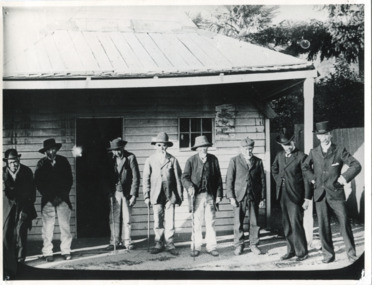
Photograph, c1900
... community. The two men standing on the far right are believed to be local Beechworth men. The man second-from-right is believed to be George Young, a Chinese Presbyterian catechist whose task was to fulfil the Church's remit to evangelise the Chinese population. Beechworth became home to one...community. The two men standing on the far right are believed to be local Beechworth men. The man second-from-right is believed to be George Young, a Chinese Presbyterian catechist whose task was to fulfil the Church's remit to evangelise the Chinese population. Beechworth became home to one ...This black and white photograph taken c1900 at a camp in Beechworth, depicts the last six survivors of the Beechworth Chinese mining community. The two men standing on the far right are believed to be local Beechworth men. The man second-from-right is believed to be George Young, a Chinese Presbyterian catechist whose task was to fulfil the Church's remit to evangelise the Chinese population. Beechworth became home to one of the largest Chinese communities in Australia after the 1857 Buckland Riots pushed Chinese miners from their claims and they were forced to relocate their camps. Under the Protectorate system, the Chinese were required to live in camps on the outskirts of town and were subject to many additional controls and regulations. Chinese miners continued to form a large part of the Beechworth population, and surrounds, until gold ran out at the turn of the century.This photograph is historically significant for its association with the development of Victoria through the discovery of gold and the first wave of free Chinese immigration to Australia as part of the 1850s gold rush. This photograph is also of social significance for its association with the history of the Chinese community in Beechworth, and the adversity faced by Chinese immigrants during the gold rush as part of a system of Chinese protectorates and segregated camps enforced by the Victorian Government in response to the hostility and violence directed at the Chinese during this period. Black and white rectangular photograph (copy) on matte photographic paper unmountedReverse: Chinese / BMM2676 / 84-79-1 / 1998.00059 / 'UNITED SHIRE OF BEECHWORTH / SHIRE SECRETARY'beechworth, chinese camp, beechworth chinese camps, 1900s beechworth, ovens goldfield, chinese mining community, beechworth presbyterian church -
 Greensborough Historical Society
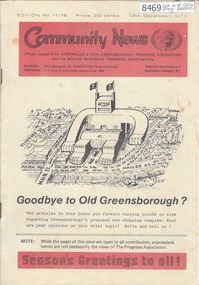
Newsletter, Greenhills and North Greensborough Progress Association, Community News: official journal of the Greenhills and Nth. Greensborough Progress Association and the Apollo Parkways Progress Association.13th December, 1976. Edition No. 11/76, 13/12/1976
... one - Greensborough, Is bigger best?, Church of Christ, This and That, A breeding success story, Cameo of Eric and Prisca Rosario, Land of the brave & the free, Grief, Nursing Mothers Association, Parent Australia, From the Council Chamber, School news, Scout news, Plenty Valley Squash Club, Bird survey of Yandell Reserve. A digital copy of this Newsletter is available from Greensborough Historical Society. Greenhills and North Greensborough Progress Association greenhills Apollo Parkways Progress Association apollo parkways Newsletter, 24 p., illus., map. Community ...This edition includes a report on the The Apollo Parkways Progress Association's November 1976 meeting, Goodbye to old Greensborough?, Lament for the loss of my loved one - Greensborough, Is bigger best?, Church of Christ, This and That, A breeding success story, Cameo of Eric and Prisca Rosario, Land of the brave & the free, Grief, Nursing Mothers Association, Parent Australia, From the Council Chamber, School news, Scout news, Plenty Valley Squash Club, Bird survey of Yandell Reserve. A digital copy of this Newsletter is available from Greensborough Historical Society. Newsletter, 24 p., illus., map.greenhills and north greensborough progress association, greenhills, apollo parkways progress association, apollo parkways -
 Marysville & District Historical Society
THE TRIANGLE NEWS-VOL 39 NO 45-NOVEMBER 23 2012
... community christmas dinner...church notices...taggerty xmas party...carols by candlelight...lions park...request for tender...marysville district football & netball club...marysville & triangle tourism interpretive product...public notice and change of agm date...hole in one...marysville victoria australia marysville marathon soldiers on what's on when in november marysville & district kindergarten assocn preschool centre creative triangle marysville community market lions christmas cakes black spur roadhouse buxton community christmas party triangle community christmas dinner church notices taggerty xmas party carols by candlelight lions park request for tender marysville district football & netball club marysville & triangle tourism interpretive product public notice and change of agm date hole in one for marysville golfer rob richards tennis at buxton marysville cricket club training councillor comment advertisements mayor's chair murrindindi shire council audit advisory committee expressions of interest swimming pool entry & season tickets triangle community dancers taggerty hall movember at marysville golf club prepare for australia day 2013 real estate royal botanic gardens cranbourne tour intrepid triangle bushwalkers tourism volunteers get a taste of our attractions lolly shop opens cfa sunday murrindindi shire pools kinglake ranges business network marysville & district chamber of commerce east meets west business network THE TRIANGLE NEWS-VOL 39 NO 45-NOVEMBER 23 2012 ...marysville, victoria, australia, marysville marathon soldiers on, what's on when in november, marysville & district kindergarten assocn preschool centre, creative triangle, marysville community market, lions christmas cakes, black spur roadhouse, buxton community christmas party, triangle community christmas dinner, church notices, taggerty xmas party, carols by candlelight, lions park, request for tender, marysville district football & netball club, marysville & triangle tourism interpretive product, public notice and change of agm date, hole in one for marysville golfer rob richards, tennis at buxton, marysville cricket club training, councillor comment, advertisements, mayor's chair, murrindindi shire council, audit advisory committee expressions of interest, swimming pool entry & season tickets, triangle community dancers, taggerty hall, movember at marysville golf club, prepare for australia day 2013, real estate, royal botanic gardens cranbourne tour, intrepid triangle bushwalkers, tourism volunteers get a taste of our attractions, lolly shop opens, cfa sunday, murrindindi shire pools, kinglake ranges business network, marysville & district chamber of commerce, east meets west business network -
Marysville & District Historical Society
THE TRIANGLE NEWS-VOL 40 NO 24-JUNE 28 2013
... community dinner...church notices...my hope for australia-new beginnings...special guests the armytage family...historians will shed light on one...marysville victoria australia marysville & district lions club another successful night for lions what's on when in july intrepid triangle bushwalkers the committee of management of the gallipoli park precinct marysville community market creative triangle marysville golf report triangle community dinner church notices my hope for australia-new beginnings special guests the armytage family historians will shed light on one of our darkest days honour the anzacs vale david wilkinson councillor comment mayor's chair two days class quiltors only buxton hall dena crain of kenya marysville primary school parents club movie night advertisements yea shire hall refurbishment gathers momentum coming to lake mountain school holiday white christmas regional approach to library service delivery geelong students get their hands dirty at cathedral range real estate pool lifeguard positions black spur inn front of house & housekeeping positions adventurous cooks cross country ski hire sun moth future looking bright dept of environment & primary industries depi marysville cultural community 'the audience' a play national theatre london breakaway bridge refurbishment starts australian centre for grief and bereavement turning of the sod marks the start of the y water centre new wildlife regulation announcement marysville primary school sponsors needed lake mountain alpine resort sprint x 2013 maryville branch liberal party christmas in july THE TRIANGLE NEWS-VOL 40 NO 24-JUNE 28 2013 ...marysville, victoria, australia, marysville & district lions club, another successful night for lions, what's on when in july, intrepid triangle bushwalkers, the committee of management of the gallipoli park precinct, marysville community market, creative triangle, marysville golf report, triangle community dinner, church notices, my hope for australia-new beginnings, special guests the armytage family, historians will shed light on one of our darkest days, honour the anzacs, vale david wilkinson, councillor comment, mayor's chair, two days class quiltors only, buxton hall, dena crain of kenya, marysville primary school, parents club, movie night, advertisements, yea shire hall refurbishment gathers momentum, coming to lake mountain school holiday white christmas, regional approach to library service delivery, geelong students get their hands dirty at cathedral range, real estate, pool lifeguard positions, black spur inn front of house & housekeeping positions, adventurous cooks, cross country ski hire, sun moth future looking bright, dept of environment & primary industries, depi, marysville cultural community, 'the audience' a play, national theatre london, breakaway bridge refurbishment starts, australian centre for grief and bereavement, turning of the sod marks the start of the y water centre, new wildlife regulation announcement, marysville primary school sponsors needed, lake mountain alpine resort sprint x 2013, maryville branch liberal party christmas in july -
Marysville & District Historical Society
THE TRIANGLE NEWS-VOL 40 NO 26-JULY 12 2013
... community market...creative triangle...one poor quarter costs villains the game...marysville football club...church...marysville victoria australia tumbling waters recreation reserve vicroads murrindindi shire council library services joe dolce singer and poet barry dickins playwright what's on when in july marysville cricket club agm the committee of management of the gallipoli park precinct marysville community market creative triangle one poor quarter costs villains the game marysville football club church notices marysville & district lions club lakeside fellowship eildon intrepid triangle buswalkers councillor comment marysville primary school parents club mayor's chair marysville community centre an invitation australian centre for grief and bereavement 2009 bushfire survivors ugfm presents a taste of tamworth fundraiser concert at alexandra town hall advertisements coming to lake mountain school holiday white christmas marysville & district historical society sharing community stories for historical archives lake mountain alpine resort christmas in july gala dinner real estate triangle arts group 1000 hands project a meaningful art installation for marysville police news cross country ski hire tender right workshop lions triangle tool library department of environment & primary industries fox control marysville branch liberal party christmas in july dinner marysville and surrounds events program funding available eildon and marysville turn for free mulch loading municipal public health and wellbeing plan 2013-2017 buxton recreation reserve notice of agm alexandra tennis club committee of management notice of agm murrindindi shire council community leadership programs clp wood stolen marysville lions club THE TRIANGLE NEWS-VOL 40 NO 26-JULY 12 2013 ...marysville, victoria, australia, tumbling waters recreation reserve, vicroads, murrindindi shire council library services, joe dolce singer and poet, barry dickins playwright, what's on when in july, marysville cricket club agm, the committee of management of the gallipoli park precinct, marysville community market, creative triangle, one poor quarter costs villains the game, marysville football club, church notices, marysville & district lions club, lakeside fellowship eildon, intrepid triangle buswalkers, councillor comment, marysville primary school, parents club, mayor's chair, marysville community centre, an invitation australian centre for grief and bereavement, 2009 bushfire survivors, ugfm presents a taste of tamworth, fundraiser concert at alexandra town hall, advertisements, coming to lake mountain school holiday white christmas, marysville & district historical society, sharing community stories for historical archives, lake mountain alpine resort christmas in july gala dinner, real estate, triangle arts group, 1000 hands project, a meaningful art installation for marysville, police news, cross country ski hire, tender right workshop, lions triangle tool library, department of environment & primary industries, fox control, marysville branch liberal party christmas in july dinner, marysville and surrounds events program funding available, eildon and marysville turn for free mulch loading, municipal public health and wellbeing plan 2013-2017, buxton recreation reserve notice of agm, alexandra tennis club committee of management notice of agm, murrindindi shire council, community leadership programs, clp, wood stolen, marysville lions club -
Marysville & District Historical Society
THE TRIANGLE NEWS-VOL 40 NO 34-SEPTEMBER 16 2013
... one...what's on when in september...buxton progress assocn meeting...the committee of management of the gallipoli park precinct...marysville community market...creative triangle...marysville golf report...murrindindi shire council...advertise your regional tourism event for free...alexandra library literary evening...church...marysville victoria australia eildon big fish challenge visitors enticed to catch the big one what's on when in september buxton progress assocn meeting the committee of management of the gallipoli park precinct marysville community market creative triangle marysville golf report murrindindi shire council advertise your regional tourism event for free alexandra library literary evening church notices marysville & district kindergarten assocn preschool taking enrolments councillor comment murrindindi business and tourism opportunity mayor's chair customer service officer advertisements st john's parish hall dance alexandra buxton hotel curry night local bus tours real estate lit & beyond relocation australian centre for grief & bereavement triangle community dance group bushdance buxton hall narbethong hall movie night irwell street string band marysville cultural community THE TRIANGLE NEWS-VOL 40 NO 34-SEPTEMBER 16 2013 ...marysville, victoria, australia, eildon big fish challenge, visitors enticed to catch the big one, what's on when in september, buxton progress assocn meeting, the committee of management of the gallipoli park precinct, marysville community market, creative triangle, marysville golf report, murrindindi shire council, advertise your regional tourism event for free, alexandra library literary evening, church notices, marysville & district kindergarten assocn, preschool taking enrolments, councillor comment, murrindindi business and tourism opportunity, mayor's chair, customer service officer, advertisements, st john's parish hall dance alexandra, buxton hotel curry night, local bus tours, real estate, lit & beyond relocation, australian centre for grief & bereavement, triangle community dance group, bushdance buxton hall, narbethong hall movie night, irwell street string band, marysville cultural community -
Marysville & District Historical Society
THE TRIANGLE NEWS-VOL 24 NO 6-14 FEBRUARY 1997
... one concert...the keppel name landmarks...community news...reflections on history...marysville & district historical society...community health services...mystic mountain tourism cocktail party...mops...church...marysville victoria australia humans vs country taggerty herb farm code one concert the keppel name landmarks community news reflections on history marysville & district historical society community health services mystic mountain tourism cocktail party mops church news marsysville bowls club golf club news mid goulburn water marysville cricket club for sale commissioner's column public notices marysville village gilberts restaurant fruit salad farm st john ambulance emergency first aid level 2 phelps bakery marysville tattslotto lions club buxton primary school trades directory triangle real estate THE TRIANGLE NEWS-VOL 24 NO 6-14 FEBRUARY 1997 ...marysville, victoria, australia, humans vs country, taggerty herb farm, code one concert, the keppel name landmarks, community news, reflections on history, marysville & district historical society, community health services, mystic mountain tourism cocktail party, mops, church news, marsysville bowls club, golf club news, mid goulburn water, marysville cricket club, for sale, commissioner's column, public notices, marysville village, gilberts restaurant, fruit salad farm, st john ambulance, emergency first aid level 2, phelps bakery, marysville tattslotto, lions club, buxton primary school, trades directory, triangle real estate -
 Lara RSL Sub Branch
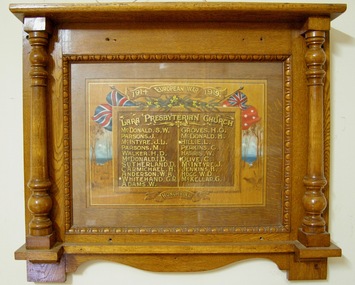
Honor Board, 1914-1919 European War Lara Presbyterian Church, Circ 1920
... Lara Presbyterian Church members Honor Roll Lara Presbyterian Church amalgamated with the Uniting Church and in 1977 the buildings and land where then sold to Corio Shire and became Lara Community Centre in 1980. lara presbyterian church honor roll world war one 1914 European War 1919 Lara Presbyterian Church. ...Lara Presbyterian Church members Honor RollLara Presbyterian Church amalgamated with the Uniting Church and in 1977 the buildings and land where then sold to Corio Shire and became Lara Community Centre in 1980.Honor Roll 1914-1919 European War Lara Presbyterian Church. List of names of members of the congregation that where involved in the World War One. 1914 European War 1919 Lara Presbyterian Church. Honor Roll. Flanked by Union Jack Flag on the left ans Australian Red Flag to the right. List of names of members of the congregation that where involved in the World War One.lara presbyterian church, honor roll, world war one -
 Federation University Historical Collection
Photograph - Photograph - Colour, Mount Pleasant Wesleyan Chapel,1989, 27/02/1989
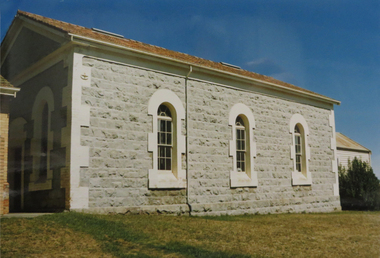
... community, a larger and more subsyantial edifice was required. This plain box like building reflected its Cornish origins in its unpretentious appearance. This building still stands in the shadow of a more recent stucture." (Ballarat's Irish Folk by Ann Colman) Samson Keast and Elizabeth Jane Forror Pascoe married at this church on Christmas day 1865. mount pleasant mount pleasant wesleyan church pleasant mont samson keast elizabeth pascoe cornish Mt Pleasant Colour photograph of a bluestone church with three arched windows down one side. ..."Cornish immigration in Ballarat tended to group together as they did in Cornish communities around Victoria. The area known as Cornishtown in Ballarat in the 1850s was settled by quiet, religions Cornish Diggers who named the rise on which they pitched their tents, Pleasant Mont. This soon became known as Mount Pleasant, and the locality continued to attract cornish immigrants who built their homes around the Wesleyan Church. This had begun as a small tent chapel where the cornish diggers could worship in the peaceful quiet offered by the mont. As compatriots continued to expand their community, a larger and more subsyantial edifice was required. This plain box like building reflected its Cornish origins in its unpretentious appearance. This building still stands in the shadow of a more recent stucture." (Ballarat's Irish Folk by Ann Colman) Samson Keast and Elizabeth Jane Forror Pascoe married at this church on Christmas day 1865. Colour photograph of a bluestone church with three arched windows down one side.mount pleasant, mount pleasant wesleyan church, pleasant mont, samson keast, elizabeth pascoe, cornish, mt pleasant -
 Flagstaff Hill Maritime Museum and Village
Badge - World Council of Churches, OIKUMENE, 1940s
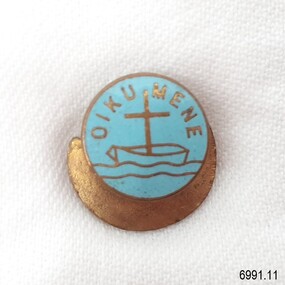
... Both Dr Angus and his wife were very involved in the local community, including the planning stages of the new Flagstaff Hill and the layout of the gardens there. Dr Angus passed away in March 1970. This religious lapel badge of the World Council of Churches represents one of the organisations in which Dr Angus had an interest. ...This small label badge carries the symbol of the World Council of Churches (WCC), which was established in 1948. The WCC states on its website "The World Council of Churches (WCC) is the broadest and most inclusive among the many organized expressions of the modern ecumenical movement, a movement whose goal is Christian unity. " The 'V' on the back of the badge possibly stands for Victoria. The word on the logo of this badge has the spelling "OIKUMENE" but in many other WCC logos, the Greek word "Oikoumene" is used. The term is translated as "inhabited earth" and is used fifteen times in the original Greek New Testament, including in Matthew 24:14, which says "And the gospel of the kingdom shall be preached in all the world for a witness unto all nations and then shall the end come." The WCC explains that the logo uses early Christian symbols to portray its message, with the church portrayed as a boat afloat on the sea of the world with the mast in the form of a cross. This badge is part of a set of eleven badges collected from the 1920s to the 1940s by Dr W. R. Angus. The set represents various organisations that he had interests in. It was donated to Flagstaff Hill Maritime Village by the family of Doctor Angus, Surgeon and Oculist. The set of badges is part of the “W.R. Angus Collection” which includes historical medical equipment, surgical instruments and material once belonging to Dr Edward Ryan and Dr Thomas Francis Ryan, (both of Nhill, Victoria) as well as Dr Angus’ own belongings. The Collection’s history spans the medical practices of the two Doctors Ryan, from 1885-1926 plus that of Dr Angus, up until 1969. ABOUT THE “W.R.ANGUS COLLECTION” Doctor William Roy Angus M.B., B.S., Adel., 1923, F.R.C.S. Edin.,1928 (also known as Dr Roy Angus) was born in Murrumbeena, Victoria in 1901 and lived until 1970. He qualified as a doctor in 1923 at the University of Adelaide, was Resident Medical Officer at the Royal Adelaide Hospital in 1924 and for a period was a house surgeon to Sir (then Mr.) Henry Simpson Newland. Dr Angus was briefly an Assistant to Dr Riddell of Kapunda, then commenced private practice at Curramulka, Yorke Peninsula, SA, where he was a physician, surgeon and chemist. In 1926, he was appointed as the new Medical Assistant to Dr Thomas Francis Ryan (T.F. Ryan, or Tom), in Nhill, Victoria, where his experiences included radiology and pharmacy. In 1927 he was Acting House Surgeon in Dr Tom Ryan’s absence. Dr Angus married Gladys in 1927 at Ballarat, the nearest big city to Nhill where he began as a Medical Assistant. He was also Acting House surgeon at the Nhill hospital where their two daughters were born. During World War II He served as a Military Doctor in the Australian Defence Forces. Dr Angus and his family moved to Warrnambool in 1939, where Dr Angus operated his own medical practice. He later added the part-time Port Medical Officer responsibility and was the last person appointed to that position. Both Dr Angus and his wife were very involved in the local community, including the planning stages of the new Flagstaff Hill and the layout of the gardens there. Dr Angus passed away in March 1970.This religious lapel badge of the World Council of Churches represents one of the organisations in which Dr Angus had an interest. The set of badges is significant for connecting Doctor Angus with Australian organisations of the early-to-mid 20th century, including those relating to military service support. The W.R. Angus Collection is significant for still being located at the site it is connected with, Doctor Angus being the last Port Medical Officer in Warrnambool. The Collection includes historical medical objects that date back to the late 1800s.Lapel badge; a small round blue enamel badge with gold image and text. The image contains the symbol of a cross above a small boat on waves. The image is the logo of the World Council of Churches.This badge is part of a set of badges collected by Dr W R Angus. the set represents organisations that he was involved in, and is part of the W.R. Angus Collection.Test above Logo: “OIKUMENE” Logo; [cross] above [small boat] above [waves] Text under clip; “V” flagstaff hill, warrnambool, maritime museum, maritime village, great ocean road, shipwreck coast, oikumene, w.r. angus, metal badge, enamel badge, organisation badges, religious badge, lapel badge, oikoumene, world council of churches, wcc, christian unity -
 City of Moorabbin Historical Society (Operating the Box Cottage Museum)
Photograph - Photograph: Horse-drawn Plough at Work, 1969 Geoff Marriott ploughing in his Market Garden, 1969
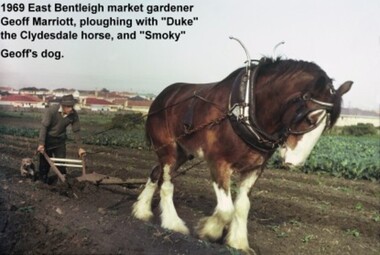
... one of the many families steeped in the tradition of vegetable growing which significantly contributed to the prosperity of the Shire, and its subsequent development into the City of Moorabbin. The photograph of Geoff Marriott of the Marriott family represents a typical example of the MANY early market gardening families, some names less prominent, but who with their labours contributed to the prosperity and the development of the community of the Shire of Moorabbin. This group of early pioneers, over many years, were a singularly important group responsible for the growth of schools, churches ...Members of the Marriott family arrived in Port Phillip in 1857. However it was John and Jane Marriott who in 1876, (after toiling hard since their arrival in1871, for very little gain), first leased, then purchased in 1882, 30 acres with a four-roomed house in East Boundary Road, in the area then called East Brighton. (Now known as East Bentleigh). The land they purchased had previously been a part of the 1841 Dendy Survey. Over the following years, John and his four sons with hard work and determination became prosperous vegetable growers and purchased further land in the area. Following John's retirement and subsequent death in 1903, the land was passed to his sons, and then onto the Marriott grandchildren. The family continued to remain very prosperous and successful vegetable growers. This lovely photo of Geoff Marriott bears testament to just one of the many families steeped in the tradition of vegetable growing which significantly contributed to the prosperity of the Shire, and its subsequent development into the City of Moorabbin. The photograph of Geoff Marriott of the Marriott family represents a typical example of the MANY early market gardening families, some names less prominent, but who with their labours contributed to the prosperity and the development of the community of the Shire of Moorabbin. This group of early pioneers, over many years, were a singularly important group responsible for the growth of schools, churches, the Mechanic's Hall, and were active in local government. Large coloured photograph, taken in 1969, showing Mr Geoff Marriott with his horse-drawn plough pulled by "Duke" the Clydesdale horse, and accompanied by "Smoky", his dog, working in his market garden, Brady Road, East Bentleighhorse, brighton, moorabbin, pioneers, settlers, fruit, markets, vegetables, plough, mayors, moorabbin shire, moorabbin roads board, marriott geoff, marriott john, marriott jane, market gardens, horse drawn plough, city of moorabbin -
 City of Moorabbin Historical Society (Operating the Box Cottage Museum)
Photograph, 14th Dec. 1927 Funeral of Cr. F.T. Le Page JP Cheltenham, 14th Dec. 1927 Funeral of Cr. F.T. Le Page JP Cheltenham, 14th December 1927
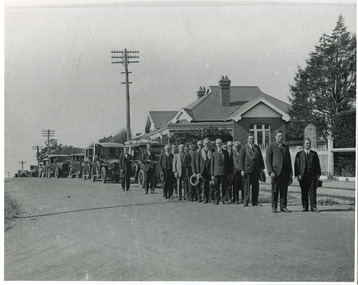
... Church Manse grounds. Frank T Le Page arrived in Cheltenham, ( Two Acre Village) aged 3 with his father Nicholas Le Page , a tailor from Guernsey in the Channel Islands. Nicholas purchased one of Holloway's two-acre lots and established a market garden. Frank T Le Page worked on his father's market garden from age 14, then worked as a coachman and met Tommy Bent whilst employed at Brighton Grammar School. He bought land adjacent to his father's , built Daphne Cottage in 1876 and later established the Cheltenham Cream and Butter Factory. Frank T. Le Page was member of many community ...14th December 1927. The funeral of Cr. F.T. Le Page, leaving Cheltenham Church of Christ, Chesterville Road, for the old Cheltenham Cemetary. The undertakers were W.D. Rose & Son. Standing alongside the hearse is Mr Wally Rose. In front him is Mr Clarrie Judd, father of Mrs Clarice Whitehead. At the front of the procession are two Church of Christ Ministers. On the right is Mr Daniel Wakefield, who was minister at the time. On the left is Mr Mudge who was the previous minister. The man wearing collars are members of the Star of Moorabbin Order, of the Sons of Temperance Friendly Society. Others are elders from the church. Some of the names are: Mr George Brough, Mr Horace Brough, George Roberts, Tom Tilley, and Frank Martin. The house in the photograph was the home of Mr and Mrs Fred. Judd. The picket fence was at the front of the Church and the Cypress hedge on the right, was the home of Mr Chas. Fairbank, now the Church Manse grounds.Frank T Le Page arrived in Cheltenham, ( Two Acre Village) aged 3 with his father Nicholas Le Page , a tailor from Guernsey in the Channel Islands. Nicholas purchased one of Holloway's two-acre lots and established a market garden. Frank T Le Page worked on his father's market garden from age 14, then worked as a coachman and met Tommy Bent whilst employed at Brighton Grammar School. He bought land adjacent to his father's , built Daphne Cottage in 1876 and later established the Cheltenham Cream and Butter Factory. Frank T. Le Page was member of many community groups and was a Moorabbin Shire Councillor for 25 years serving a term as President. 'The Le Pages became one of the best known Moorabbin market gardening families, with a tradition of service to communal and civic affairs that is unmatched.' John Cribbin ' Moorabbin A Pictorial History 1862-1994 ' p3714th December 1927. The funeral of Cr. F.T. Le Page, leaving Cheltenham Church of Christ, Chesterville Road, for the old Cheltenham Cemetary. The undertakers were W.D. Rose & Son. Standing alongside the hearse is Mr Wally Rose. In front him is Mr Clarrie Judd, father of Mrs Clarice Whitehead. At the front of the procession are two Church of Christ Ministers. On the right is Mr Daniel Wakefield, who was minister at the time. On the left is Mr Mudge who was the previous minister. The man wearing collars are memebers of the Star of Moorabbin Order, of the Sons of Temperance Friendly Society. Others are elders from the church. Some of the names are: Mr George Brough, Mr Horace Brough, George Roberts, Tom Tilley, and Frank Martin. The house in the photograph was the home of Mr and Mrs Fred. Judd. The picket fence was at the front of the Church and the Cypress hedge on the right, was the home of Mr Chas. Fairbank, now the Church Manse grounds.Written as above signed D. Maynard 2/4/86funeral, 14th december 1927, cr. f.t. le page, cheltenham cemetery, mr george brough, mr horace brough, george roberts, tom tilley, frank martin., cheltenham church of christ, early settlers, market gardeners, rellgious rites, justice of the peace, star of moorabbin order of the sons of temperance friendly society, daphne cottage cheltenham victoria, cheltenham cream and butter factory ltd, tommy bent, moorabbin shire, le page everest , le page frank w. , le page frank t,, two acre village, dendy's special survay 1841, holloway josiah morris, -
City of Moorabbin Historical Society (Operating the Box Cottage Museum)
Newsletter, City of Moorabbin Historical Society No. 2 Vol. 12 June 1972, City of Moorabbin Historical Society Newsletter No. 2 Vol. 12 June 1972, 1972
... This is Newsletter No. 2 Vol. 12 of the CMHS June 1972 CMHS obtained a Kingston City Council Community Grant 2016 for the digitization and preservation of these Original CMHS Newsletters commenced in 1961 City of Moorabbin Historical Society 1961, sheehy t.a., newsletters, church of christ, maldon CITY OF MOORABBIN HISTORICAL / SOCIETY / President / Mrs C Whitehead Secretary Mrs P. Brodie / NEWSLETTER / Vol 12 No 2 June 1972 3 pages x L 26cm x W 21cm printed on one ...Topics ; Cheltenham Church of Christ; Maldon The Aims of the CMHS are ‘to record the history of the City, and register something of the Australian Atmosphere, which the necessary speed-up in post-world-war two (WW11) immigration has caused to be lost; to produce a magazine at regular intervals, featuring the work of pioneers and the changing Australian scene; to work constantly with a long range view towards building a hall where records and exhibits can be housed’ (1961) The Original Newsletters reflect the history and heritage of the former City of Moorabbin — derived from Mooroobin, ‘a resting place’ in the Bunurrung spoken language. In 1994, the City of Moorabbin was integrated into the Cities of Bayside, Glen Eira, Kingston and Monash. This is Newsletter No. 2 Vol. 12 of the CMHS June 1972 CMHS obtained a Kingston City Council Community Grant 2016 for the digitization and preservation of these Original CMHS Newsletters commenced in 1961 3 pages x L 26cm x W 21cm printed on one sideCITY OF MOORABBIN HISTORICAL / SOCIETY / President / Mrs C Whitehead Secretary Mrs P. Brodie / NEWSLETTER / Vol 12 No 2 June 1972 city of moorabbin historical society 1961, sheehy t.a., newsletters, church of christ, maldon -
City of Moorabbin Historical Society (Operating the Box Cottage Museum)
Newsletter, City of Moorabbin Historical Society No. 4 Vol. 12 March 1973, City of Moorabbin Historical Society Newsletter No. 4 Vol. 12 March 1973, 1973
... This is Newsletter No. 4 Vol. 12 of the CMHS March 1973 CMHS obtained a Kingston City Council Community Grant 2016 for the digitization and preservation of these Original CMHS Newsletters commenced in 1961 City of Moorabbin Historical Society 1961, sheehy t.a., newsletters, Cheltenham early settlers, pioneers, roman catholic church in victoria, latrobe university CITY OF MOORABBIN HISTORICAL / SOCIETY / President / Mrs C Whitehead Secretary Mrs P. Brodie .../ NEWSLETTER / Vol 12 No 4 March 1973 3 pages x L 26cm x W 21cm printed on one ...Topics; Cheltenham Reunion Committee; Fund raising; Victorian Catholic History at LaTrobe Library; The Aims of the CMHS are ‘to record the history of the City, and register something of the Australian Atmosphere, which the necessary speed-up in post-world-war two (WW11) immigration has caused to be lost; to produce a magazine at regular intervals, featuring the work of pioneers and the changing Australian scene; to work constantly with a long range view towards building a hall where records and exhibits can be housed’ (1961) The Original Newsletters reflect the history and heritage of the former City of Moorabbin — derived from Mooroobin, ‘a resting place’ in the Bunurrung spoken language. In 1994, the City of Moorabbin was integrated into the Cities of Bayside, Glen Eira, Kingston and Monash. This is Newsletter No. 4 Vol. 12 of the CMHS March 1973 CMHS obtained a Kingston City Council Community Grant 2016 for the digitization and preservation of these Original CMHS Newsletters commenced in 1961 3 pages x L 26cm x W 21cm printed on one sideCITY OF MOORABBIN HISTORICAL / SOCIETY / President / Mrs C Whitehead Secretary Mrs P. Brodie .../ NEWSLETTER / Vol 12 No 4 March 1973 city of moorabbin historical society 1961, sheehy t.a., newsletters, cheltenham early settlers, pioneers, roman catholic church in victoria, latrobe university -
 City of Moorabbin Historical Society (Operating the Box Cottage Museum)
Document - Photocopy Letter Stephen Charman to Michael Charman UK 1853, 1853
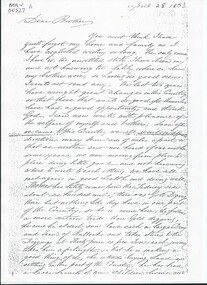
... one of Henry Dendy's emigrants. He established purchased land in 1852 and established a market garden at Spring Grove Cheltenham with his 2nd wife Mary nee Gettens. Stephen died 1906 in Gippsland. He wrote letters to his brother Michael who had remained in England Stephen and Mary Charman were pioneer market gardeners in Moorabbin Shire 1842 and were involved in the development of Church, school and community in the area now called Cheltenham. ...Stephen Charman, aged 21 years arrived in Melbourne in 1842 as one of Henry Dendy's emigrants. He established purchased land in 1852 and established a market garden at Spring Grove Cheltenham with his 2nd wife Mary nee Gettens. Stephen died 1906 in Gippsland. He wrote letters to his brother Michael who had remained in England Stephen and Mary Charman were pioneer market gardeners in Moorabbin Shire 1842 and were involved in the development of Church, school and community in the area now called Cheltenham. Charman Road Cheltenham was a boundary of their land. Letter, handwritten from Stephen Charman to his brother Michael in UK 1853 x 3 pages Handwritten signed Stephen early settlers, pioneers, spring grove, city of moorabbin, county of bourke, moorabbin roads board, parish of moorabbin, shire of moorabbin, henry dendy's special survey 1841, were j.b.; bent thomas, o'shannassy john, king richard, charman stephen, charman mary, gettens mary, marigold flowers, pharmacy, methodist church, state schools, education, highett william, ormond francis, maynard dennis, market gardens, -
 City of Moorabbin Historical Society (Operating the Box Cottage Museum)
Photograph - Black & White Postcard, Cheltenham Church of Christ 40th Anniversary Invitation, c1900
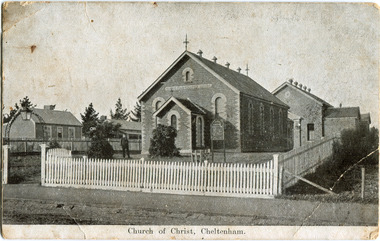
... This chapel, of course, continues to be an integral part of the life of the Southern Community Church and was one of the three worship venues for the 150th Anniversary celebration in 2007. ...This chapel, of course, continues to be an integral part of the life of the Southern Community Church and was one of the three worship venues for the 150th Anniversary celebration in 2007. ...On his arrival from Scotland c 1857, James Keir commenced a communion service in his home on the Nepean Road. By 1859 the group-which included such other names as Allen, Brough, Cameron, Fairlam, Holdsworth, Le Page, Meeres, Monk, Organ, Penny, Perry, Potts, Sears and King-had built a small chapel near the corner of Wickham and Chesterville Roads. During 1858, a group had also begun meeting in the Charman family home on the corner of Charman and Balcombe Roads. Names associated with this group included Bodley, Charman, Fisher, Hayes, Hilliar, Judd, Moysey and Ruse. In 1860 they built a chapel on the corner of Charman Road and Patty Street. It was enlarged in 1866 and it became the meeting place of the two groups when they came together around 1870. They were able to buy land near the corner of Chesterville and Nepean Roads, and erected a new brick chapel on the site in 1878. This chapel, of course, continues to be an integral part of the life of the Southern Community Church and was one of the three worship venues for the 150th Anniversary celebration in 2007. The Southern Community Church was formed by the amalgamation of the Cheltenham, East Bentleigh and Hampton Street Churches of Christ in 1993, and a comprehensive new facility was designed and built to accommodate the ever-increasing activity of the amalgamated church. It was opened on 30th November 1997. ( Southern Community Church website 2019)c1878 - continuing The Church or Christ Cheltenham was one of the first places of worship established in Cheltenham by the early settlers. The settlers came together, in private homes at first, to support each other spiritually and physically and later built brick Churches for Sunday services and established social and sporting clubsBlack & White photograph as a postcard invitation to the 40th Anniversary of the Church of Christ corner Chesterville Rd and Nepean Highway Cheltenham ( ? 1900)Front Printed ; Church of Christ Cheltenham Back Printed ; POST CARD / One Penny Postage within Commonwealth / The address only to be written here/ One penny Stamp/ Sunday School Anniversary, / OCTOBER 27TH & OCTOBER 30TH / TO WHICH YOU ARE / CORDIALLY INVITED Handwritten in ink ; H.W. got the cramps in the pants. He took some pills then ran over the hills undatedearly settlers, bentleigh, mckinnon, parish of moorabbin, city of moorabbin, county of bourke, moorabbin roads board, shire of moorabbin, were j.b., o'shannassy john, king richard, charman stephen, highett william, ormond francis, maynard dennis, market gardeners, vineyards, orchards, keir james, lepage frank, lepage everest, holloway josiah, bruton henry, keys robert, judd clarence, fairlam percy, meeres william, southern community church, cheltenham, cheltenham church of christ -
 Orbost & District Historical Society
black and white photograph, early 20th century
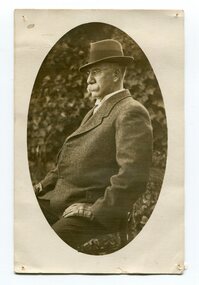
... Church of England , Orbost. ( Ref Orbost Hospital, History, Personalities and Stories by Margaret Hollands) Dr James Kerr was the first doctor to settle in Orbost. He was an integral part of the Orbost community for over 40 years. Kerr-James Orbost-Hospital medical-doctor A black / white photograph of a man with glasses wearing a suit, hat and gloves, sitting on a chair, with one hand resting on his thigh. ...This is a portrait of Dr James Kerr. Dr James Kerr practised medicine in Orbost from 1889 -1928. He was the first doctor to settle in Orbost. He served the Orbost community for 40 years travelling everywhere on horseback. He married Hilda Constance Temple in Orbost on November 30, 1893. On April 29th 1931, three glass windows were dedicated to "Dr James Kerr. Beloved Physician of Orbost" in St James Church of England , Orbost. ( Ref Orbost Hospital, History, Personalities and Stories by Margaret Hollands) Dr James Kerr was the first doctor to settle in Orbost. He was an integral part of the Orbost community for over 40 years.A black / white photograph of a man with glasses wearing a suit, hat and gloves, sitting on a chair, with one hand resting on his thigh. He has a bushy moustache. The portrait is oval shaped with a white background. kerr-james orbost-hospital medical-doctor -
 Ringwood and District Historical Society
Mixed media - Video, RDHS Guest Speaker Presentation - "My Heathmont" - Peter Le Get
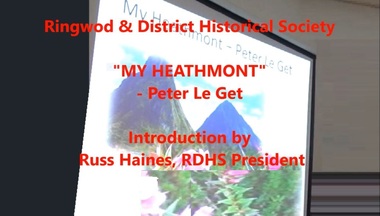
... one of the few families to purchase, and live in, four homes in the suburb of Heathmont. The Le Get’s came to Heathmont when pioneer orchardists were beginning to sell their properties, which led to the sub-division of land into housing blocks. It was the time of a new community coming together, with sporting clubs starting up, churches...one of the few families to purchase, and live in, four homes in the suburb of Heathmont. The Le Get’s came to Heathmont when pioneer orchardists were beginning to sell their properties, which led to the sub-division of land into housing blocks. It was the time of a new community coming together, with sporting clubs starting up, churches ...Digitised video (5.14GB). Duration: 61 minutes. Recorded May, 2018. (Video is available for viewing at Ringwood & District Historical Society Archives by appointment)Presenter: Peter Le Get, together with his wife, Mary, have been one of the few families to purchase, and live in, four homes in the suburb of Heathmont. The Le Get’s came to Heathmont when pioneer orchardists were beginning to sell their properties, which led to the sub-division of land into housing blocks. It was the time of a new community coming together, with sporting clubs starting up, churches and schools built, roads being defined or asphalted, and the proliferation of new shops and businesses. -
 Heathcote McIvor Historical Society
Memorial booklet, shire of mcivor, minsiters of religion, Silk Memorial Booklet Death of King Edward VII 6 May 1910, 06/05/1910-20/05/1910
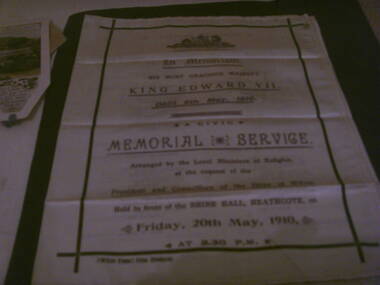
... Believed to be the only one in exsistence, after intesive research have been unable to come up with any information, from the shire, local churches or senior members of the community,only mention was in the Bendigo Advertiser newspaper.research in to archives further afield have not produced another. victoria silk memorial booklet king edward vii 1910 heathcote ministers of local churches shire president mcivor times "McIvor Times" Print, Heathcote on left hand side below main print. in black ink Piece of cream silk printed on face and inside, screen printed in purple and black ink on front and inside the order of service. details of all ministers of religion and shire dignitries as well as hyms sung. ...Created for the memorial service that was held on friday 20th may 1910, held in front of the shire hall in Heathcote to honour king edward VII who died on the 6th may 1910 at 2.30 p.m. this was arranged by the local ministers of religion at the request of the president and councillers of the shire of McIvor.Believed to be the only one in exsistence, after intesive research have been unable to come up with any information, from the shire, local churches or senior members of the community,only mention was in the Bendigo Advertiser newspaper.research in to archives further afield have not produced another.Piece of cream silk printed on face and inside, screen printed in purple and black ink on front and inside the order of service. details of all ministers of religion and shire dignitries as well as hyms sung. "McIvor Times" Print, Heathcote on left hand side below main print. in black inkvictoria, silk memorial booklet, king edward vii, 1910, heathcote, ministers, of, local, churches, shire, president, mcivor, times -
 Greensborough Historical Society
Flyer - Advertising Leaflet, St Mary's Catholic School, St Mary's Community Fair, 25/11/2023
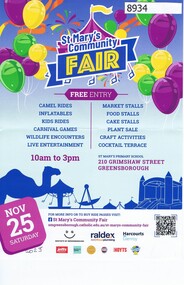
... Advertising Flyer for St Mary's Community Fair held on 25/11/2023 St Mary's Primary School st marys catholic church greensborough Advertising Leaflet, 1 page, printed in colour on one side. ...Advertising Flyer for St Mary's Community Fair held on 25/11/2023Advertising Leaflet, 1 page, printed in colour on one side.st mary's primary school, st marys catholic church greensborough -
 Orbost & District Historical Society
memorial document, 18th July, 1922
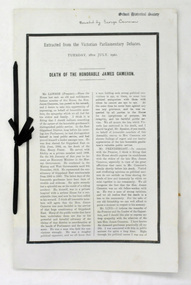
... Church, Sunday school superintendent and president of the local agricultural society. In 1902 he won a by-election for Gippsland East and took his seat in the Legislative assembly. He serve for eighteen years and his main achievements were securing one million pounds for East Gippsland development bringing the railway to Orbost and establishing the Country Roads Board. James Cameron was an early Orbost pioneer, a respected community ...This is an extract from the Victorian Parliamentary Debates on Tuesday 18th July, 1922. It is titled "Death of the Honorable James Cameron" and is a tribute from Mr Lawson, the Victorian premier. In 1882 James Cameron was the first Orbost councillor of the newly constituted Tambo Shire. In the next twenty years he served as justice of the peace, shire councillor, guardian of St James's Anglican Church, Sunday school superintendent and president of the local agricultural society. In 1902 he won a by-election for Gippsland East and took his seat in the Legislative assembly. He serve for eighteen years and his main achievements were securing one million pounds for East Gippsland development bringing the railway to Orbost and establishing the Country Roads Board.James Cameron was an early Orbost pioneer, a respected community member and a prominent politician.A memorial extract from the Victorian Parliamentary Debates. It is on white paper with black print, a black border and is tied with black ribbon.cameron-james-orbost -
 Orbost & District Historical Society
black and white photograph/ poscards, Vogt. W.S, C1890 - 1920
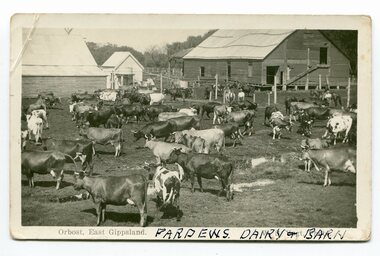
... Church of England. One of the most prominent farmers on the Snowy was John Gilbert, a large landowner. His breeding establishment was at Tullagoota, about two and a half kilometres down the river from Orbost. Dairying in the Orbost district was once a mainstay of the farming community ...Edward James Pardew died in 26/9/1927 aged 92. He came to Orbost from New Zealand in 1886 and selected 720 acres of hill land in the Brodribb area. He was a member of the first Orbost Shire Council. His daughter had a fruit & meat shop in McLeod Street. He was an inaugural vestryman of St James Church of England. One of the most prominent farmers on the Snowy was John Gilbert, a large landowner. His breeding establishment was at Tullagoota, about two and a half kilometres down the river from Orbost.Dairying in the Orbost district was once a mainstay of the farming community. Today the properties are fewer and smaller.Two black / white photographs of dairy herds. 3188.1 - on front - printed -"ORBOST EAST GIPPSLAND"; hand-written - :PARDEWS DAIRY & BARN" 3188.2 - on front - printed - " W. S. VOGT"; hand-written - "DAIRY HERD TALLAGOOTA< ORBOST"dairying-orbost agriculture-orbost pardew-dairy tallagoota-dairy -
 Ringwood and District Historical Society
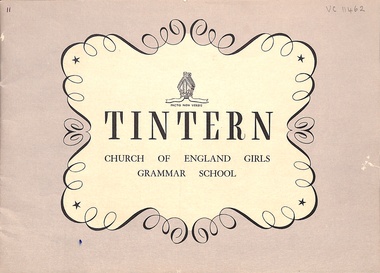
Archive - Parent Record, Tintern CEGS / Tintern CEG Primary and Seconday College, East Ringwood - Archive Collection (Parent Record)
... one of the oldest girls’ schools in Victoria, was founded in 1877 by Mrs. Emma Bartlett Cook. It was then known as Tintern Ladies College. In 1918 it was taken over by the Church of England. From its inception it has sent out into the world women who have played an important part in the life of the community — as Doctors, Scientists, Lawyers, Teachers, University Lecturers, Heads of Schools and Colleges, Musicians, Artists, Architects, Nurses, Missionaries, Social Service Workers, Journalists, Business Women and Home-Makers. ...one of the oldest girls’ schools in Victoria, was founded in 1877 by Mrs. Emma Bartlett Cook. It was then known as Tintern Ladies College. In 1918 it was taken over by the Church of England. From its inception it has sent out into the world women who have played an important part in the life of the community — as Doctors, Scientists, Lawyers, Teachers, University Lecturers, Heads of Schools and Colleges, Musicians, Artists, Architects, Nurses, Missionaries, Social Service Workers, Journalists, Business Women and Home-Makers. ...Parent Record for Archive collection of photographs and documents relating to Tintern CEGS / Tintern CEG Primary and Seconday College, East Ringwood East Ringwood School Foundation Stone laid 10th June 1950 (See VC 11465)Transcription of Foreword to VC11462 c1950 memorial Booklet: "Tintern, one of the oldest girls’ schools in Victoria, was founded in 1877 by Mrs. Emma Bartlett Cook. It was then known as Tintern Ladies College. In 1918 it was taken over by the Church of England. From its inception it has sent out into the world women who have played an important part in the life of the community — as Doctors, Scientists, Lawyers, Teachers, University Lecturers, Heads of Schools and Colleges, Musicians, Artists, Architects, Nurses, Missionaries, Social Service Workers, Journalists, Business Women and Home-Makers. Tintern girls have served their country in the Boer War and in the two World Wars. The school has maintained throughout the years a high scholastic standard. It has achieved outstanding successes in the Public Examinations in both Arts and Science subjects. In this year 1948 thirty Tintern girls are doing courses at the University. In Mrs. Cook’s day the school was noted for its music. It has now a flourishing orchestra, and Tintern choir was amongst those chosen to broadcast in Education Week 1947. Art and Craft have an important place in the curriculum. Games such as hockey, tennis and croquet were started as early as the 1880s. In 1900 the girls were daring enough to start a bicycle club. Nowadays Tintern plays baseball, basketball, hockey and tennis. As the years have passed the curriculum has been widened and buildings have been added — the senior classrooms in 1918, the laboratory block in 1930, the Junior School (the gift of Sir William Angliss) in 1937, the library (the gift of Mr. E. R. Cullen) in 1938, the craft house in 1938 and the Domestic Science kitchen in 1946. ESTABLISHED 1877" -
 Warrnambool and District Historical Society Inc.
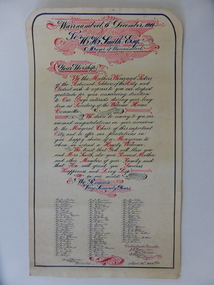
Document, Illuminated Address H. H. Smith esq
... Church as an office bearer and a Sunday School teacher. Smith was also Vice President in 1937 of the first Warrnambool & District Historical Society. This document is of particular interest as it is a good example of the type of illuminated address produced during the early years of the 20th century. It also shows clearly the respect and love that Warrnambool people had for Henry Smith, a great volunteer worker in the community. henry huntingdon smith world war one ...This illuminated address was given to H.H.Smith, the Warrnambool Mayor, for his work with soldiers returning to Warrnambool and district during and after World War One. On the same occasion Smith was also given an armchair by the mothers, sisters and wives of Warrnambool returning soldiers. Henry Huntingdon Smith (1857-1941) started his own bakery business in 1885, firstly near the corner of Fairy and Koroit Streets and later building his own shop at the corner of Lava and Fairy Streets (Monaghans Pharmacy today). Smith was one of the most admired men in Warrnambool in the first half of the 20th century. He was a Warrnambool Councillor from 1918 to 1937 (Mayor for two terms) and served continuously on the Warrnambool Hospital Committee for 39 years. He visited patients at the Hospital twice a week. He took a particular interest in the welfare of returning soldiers and it was said that there was not a returned man or woman whom Smith did not greet on his return to the district. Smith also was a tireless worker for the Methodist Church as an office bearer and a Sunday School teacher. Smith was also Vice President in 1937 of the first Warrnambool & District Historical Society. This document is of particular interest as it is a good example of the type of illuminated address produced during the early years of the 20th century. It also shows clearly the respect and love that Warrnambool people had for Henry Smith, a great volunteer worker in the community. This is a piece of cream-coloured parchment paper with a margin ruled in black ink and handwriting in blue and black ink surrounded by red ornamental scrolls and flourishes. The paper has an address to H.H.Smith and is followed by 74 names and the date (1920). The paper is inserted into a piece of red leather cloth. This has folded edges and an ornamental gold pattern around the front edges and a gold border around the back edges. There are two holes at the top of the folder and these have metal surrounds. The backing folder is rounded at the top edges. ‘Warrnambool, 6th December 1919. To H.H. Smith Esq., Mayor of Warrnambool – We, the Mothers, Wives and Sisters of the Returned Soldiers of this City and District wish to express to you our deepest gratitude for your unswerving devotion to Our Boys interests during your long term as Secretary of the Welcome Home Committee’ (etc etc)henry huntingdon smith, world war one, history of warrnambool -
 Warrnambool and District Historical Society Inc.
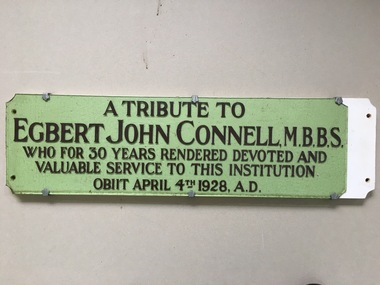
Plate name, Tribute Egbert John Connell, C 1930
... church. He was highly regarded as being kind and sympathetic towards his patients. His practice was subsequently bought by Dr A E Brauer another of Warrnambool's well known doctors. This glass plate accompanied a stain glass window which was once in the Warrnambool hospital. It was moved to the chapel at Flagstaff Hill. A link to one of Warrnambool's long serving doctors who was involved in the community ...Doctor Egbert Connell worked as an Honorary Medical Officer at the Warrnambool General Hospital and benevolent Asylum from around 1901 and continued until his death on 4th April 1928 from pneumonia. he had a private practice at his house " Ambleside" in Koroit Street Warrnambool opposite the Baptist church. He was highly regarded as being kind and sympathetic towards his patients. His practice was subsequently bought by Dr A E Brauer another of Warrnambool's well known doctors. This glass plate accompanied a stain glass window which was once in the Warrnambool hospital. It was moved to the chapel at Flagstaff Hill. A link to one of Warrnambool's long serving doctors who was involved in the community and as such has social and historical importance.Green glass plate with black text and mounted on particle board and secured with metal clips.A tribute to Egbert John Connell MBBS who for 30 years rendered devoted and valuable service to this institution Obiit April 4th 1928 A Dwarrnambool, egbert connell, doctor egbert connell
