
Showing 62 items matching "pacific cans"
-
 Sunshine and District Historical Society Incorporated
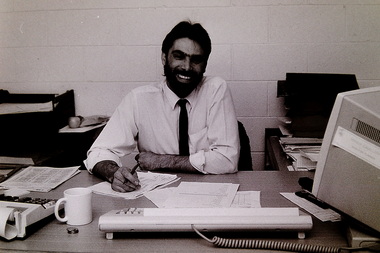
Photograph - Nestle Factory Margrave Street St. Albans 1991 Photographs, Adam Ellwood, 22nd April 1991
... ...Pacific Cans...This site was formerly occupied by the Pacific Cans Factory, a venture established by a Japanese consortium to supply beverage cans to Carlton and United Breweries. ...Nestle Margrave Street West Esplanade St. Albans Pacific Cans 7390.01 - Nestle Factory Margrave Street St. ...These photographs, taken by The Advocate in 1991, are of employees of the Nestle Factory located at Margrave Street & West Esplanade St. Albans. Feature in the photographs are Gary Tickle (Manager), Lorraine Bell (Accounts Receivable Clerk), Arthur Marney (Storeman Forklift Driver) & Joe Almenara (Storeman Forklift Driver). The Nestle's factory was the company's massive sales and distribution centre for the whole of Victoria, Tasmania & South Australia. The factory was also involved in the stocking of shipping containers for the export to the Pacific Islands. Nestle's products include Nescafe or Andronics Coffee, Carnation Milk, Maggi Soups, Milo, Quik and so on. The factory employed nearly 100 people, 24 in the warehouse, 56 as casual merchandisers and the rest in the office. This site was formerly occupied by the Pacific Cans Factory, a venture established by a Japanese consortium to supply beverage cans to Carlton and United Breweries. The factory subsequently closed following the loss of its contract with the brewing company.The Advocate’s feature on local traders was a modest yet well‑liked column that played a meaningful role in strengthening community identity. Through these regular profiles, the newspaper promoted local businesses and helped shape St. Albans' understanding of its developing commercial district.7390.01 - Nestle Factory Margrave Street St. Albans 1991 Photographs (Advocate 173.3).JPG Gary Tickle 7390.02 - Nestle Factory Margrave Street St. Albans 1991 Photographs (Advocate 173.3).JPG Lorraine Bell 7390.03 - Nestle Factory Margrave Street St. Albans 1991 Photographs (Advocate 173.3).JPG Arthur Marney & Joe Almenaranestle, margrave street, west esplanade, st. albans, pacific cans -
 Flagstaff Hill Maritime Museum and Village
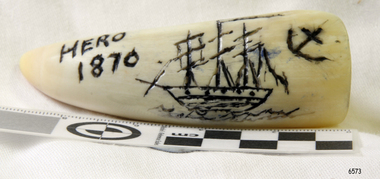
Craft - Scrimshaw, Hero 1870, Late 20th Century
... As a result, some of the best scrimshaw from Pacific whales can be found in collections in these countries. ...As a result, some of the best scrimshaw from Pacific whales can be found in collections in these countries. ...Scrimshaw is regarded as early folk art and is associated primarily with whaling that was opened up in the Pacific at the end of the eighteenth century by sailors mainly from American, English and French vessels. As a result, some of the best scrimshaw from Pacific whales can be found in collections in these countries. Even though sailors must have had plenty of spare time between periods of whaling scrimshaw on whale teeth seems a rarity before the 1830s. One reason may have been the high price paid for whale teeth ivory in this period making scrimshaw on teeth popular only after the market was saturated and the price dropped. The earliest identified engraver of whale teeth is the English whaling master Captain J. S. King who was active between 1817 and 1823. There have been six ships called the Hero in the Royal Navy and this ship was the fourth named Hero, it was a screw-propelled 91-gun and second-rate. In the rating system of the British Royal Navy, this term is used to categorise sailing warships, a second-rate was a ship of the line which by the start of the 18th century mounted 90 to 98 guns on three gun decks. Earlier 17th-century second rates had fewer guns and were originally two-deckers or had only partially armed third gun decks. The Hero was launched in 1858 and sold in 1971. On July 1860 the Prince of Wales embarked onboard HMS Hero, Albert Edward Prince of Wales, was the eldest son of Queen Victoria, and the future King Edward VII, at the time he was then nineteen years of age, and on route to Newfoundland, Canada and the United States on his first state tour. He was the first member of the British royal family to visit North America. In 1860 the Queen had intended to pay a visit to Canada however stress prevented her from travelling. The then Prime Minister Lord Palmerston suggested that “Bertie” the prince of Wales could represent the Queen and on July 10th 1860, Bertie boarded HMS Hero for a tour of Canada and the USA. On July 23rd the ship arrived at Terranova. By the second week of August, the HMS Hero had sailed up the St. Lawrence River and anchored at Quebec. The Prince was successful with Canadian society visiting Quebec and Montreal during his stay. He went on to visit the United States following an invitation by President James Buchanan. His American journey was regarded as a great success. President Buchanan wrote to Queen Victoria: "He “Bertie” has faced a very difficult task for a person his age and his behaviour in all this has been that of his age and position. He has shown himself honourable, Frank and affable and he won the respect of the sensible and wise people". The scrimshaw is believed to be a modern reproduction of a typical scrimshaw scene and engraved very crudely onto a synthetic substance. Scrimshaw art carved into non-natural material in the shape of a whale tooth. The line artwork images of a three-masted, fully rigged ship and an anchor are coloured black. Inscription is engraved into tooth.Engraved "Hero 1870"warrnambool, flagstaff-hill, flagstaff-hill-maritime-museum, maritime-museum, shipwreck-coast, flagstaff-hill-maritime-village, scrimshaw, plastic, resin, replica, prince of wales, british navy vessel, whaling, hms hero, reproduction, carving, engraving -
 Flagstaff Hill Maritime Museum and Village
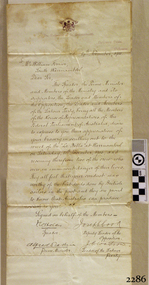
Letter - William Ferrier, 14th November 1905
... can produce such as you.” The story of that brave rescue follows on below … The ship from which the sailors were rescued was the three-masted, iron and steel barquentine the La Bella, built in Norway in 1893. She was one of two iron and steel ships by Johan Smith, The company was one of the leading shipping families in Tvedestrand, Norway. She was significant to Norwegian shipping, being one of only 27 iron and steel ships ever built in Norway. She was registered in New Zealand and engaged from 1902 in inter-colonial trading of timber in the Pacific...can produce such as you.” The story of that brave rescue follows on below … The ship from which the sailors were rescued was the three-masted, iron and steel barquentine the La Bella, built in Norway in 1893. She was one of two iron and steel ships by Johan Smith, The company was one of the leading shipping families in Tvedestrand, Norway. She was significant to Norwegian shipping, being one of only 27 iron and steel ships ever built in Norway. She was registered in New Zealand and engaged from 1902 in inter-colonial trading of timber in the Pacific ...The letter to William Ferrier of South Warrnambool from the Prime Minister and the Parliament of the Commonwealth recognised the significance of William’s brave and courageous lifesaving act to the people of Australia; “They all feel that your conduct was worthy of the best deeds done by British sailors in the past and they are proud to know that Australia can produce such as you.” The story of that brave rescue follows on below … The ship from which the sailors were rescued was the three-masted, iron and steel barquentine the La Bella, built in Norway in 1893. She was one of two iron and steel ships by Johan Smith, The company was one of the leading shipping families in Tvedestrand, Norway. She was significant to Norwegian shipping, being one of only 27 iron and steel ships ever built in Norway. She was registered in New Zealand and engaged from 1902 in inter-colonial trading of timber in the Pacific, between New Zealand and Australia and was often in Port Phillip Bay, Victoria. On 5th October 1905, the twelve-year-old La Bella left Lyttleton, New Zealand carrying a cargo of timber bound for Warrnambool, Australia. She was manned by a crew of twelve: the Master, (Captain Mylius, previously 1st Mate of La Bella, appointed Captain to La Bella on 6th February 1903) 2 Mates, Cook, six able seamen, one ordinary seaman and a boy. Bad weather en route caused her to shelter at Burnie on Tasmania's North West coast. On November 10th, the 37th day of her journey, La Bella approached Warrnambool. Captain Mylius steered her towards Lady Bay Channel in heavy south-west seas and evening mist. He ordered the helmsman to steer for the light. As the ship came round, a tremendous sea struck her on the port quarter, causing her to breach broadside in a north-westerly direction into breakers. The helm was brought round twice more, but each time heavy seas broke over her, the third time throwing the La Bella on to a submerged reef in Lady Bay now known as La Bella Reef (about 100 yards from the Warrnambool breakwater). The sea was so rough that it even wrenched a one-and-a-half ton anchor from its fastenings and into the sea. As Captain Mylius headed to the steel wheelhouse, intending to send up a rocket flare, a huge sea slammed the steel door into him (resulting in massive bruising front and back) Despite his injuries he still managed to set off a blue light, which he held up in his hands. La Bella’s lifeboats were filled with seawater and broke up on their chocks. The blue light was the first indication to people on the shore that there was a ship in distress. The Harbour Master, Captain Roe (who lived in the Harbour Master’s House opposite Flagstaff Hill), organised a group of volunteers to crew the lifeboat because the trained crew was unavailable; the crewmen were working on a steamer in Port Fairy at the time. He then poured oil onto the water to try and smooth the sea. At around 11 pm three of the crew took shelter in the steel forecastle but the sea crashed into it and broke it up. While the rest of the crew and onlookers watched helplessly in the moonlight the bodies were washed away into the sea, never to be seen again. Some of the crew lashed themselves to the weather rail to keep from being washed away. Watson, the ordinary seaman, became tangled in the rigging lines and was too weak to move, so the 2nd Mate, Robertson, put a line onto him so that he wouldn’t wash off. Around 11 pm three of the crew were unconscious from exhaustion. The situation on La Bella was becoming dangerous. The 2nd Mate moved to the ‘house’ and soon afterwards the ship slipped in the heavy sea. The lashings of the 1st Mate and the ‘boy’ Denham had kept them safe until about 2 am when they were washed overboard; no one was able to help. One by one, the exhausted crew were being washed overboard, too weak to hold on any longer. During the night the La Bella had broken into two and the deckhouse ran out towards the sea. Two more men drowned when trying to reach the lifeboat. By sunrise, the only survivors of the twelve were the Master, 2nd Mate and three seamen. Early in the morning, Captain Roe used the rocket apparatus on shore to try and shoot a line to the ship for a safer rescue but each attempt fell short of the target. Several attempts were made by the lifeboat to rescue the stricken sailors, but the rough conditions made this difficult for the boat to get close enough to the ship and the lifeboat had to return to shore. During a final attempt to reach the ship Captain Mylius ordered his men to jump into the sea. Leonard Robertson, 2nd mate, jumped and swam towards the lifeboat, taking hold of the boat hook offered to him. Oscar Rosenholme managed to reach the boat floating on a piece of timber from the ship’s load and a third survivor, Noake, also made the boat. Along with the lifeboat rescue crew, 25-year-old William Ferrier rowed his small dingy through the heavy seas and managed to rescue the Captain, whom he landed on the breakwater. Ferrier then returned to the ship to attempt a final rescue, losing his oars and rowlocks into the high sea. Using just a spare paddle he skulled towards the La Bella, reaching her stern in time to cut loose the lone surviving sailor, Payne, from the lashing that held him to the ship; the terrified sailor dropped from the ship and into the dingy. Shortly after the last man was rescued, the La Bella was lifted by a huge wave and crashed back down on the reef; she broke up and sank. The ordeal had lasted ten hours. The survivors were taken to the nearby Bay View Hotel and gratefully received warm food and clothing, medical attention and a place to sleep. In the following days, an unidentified body of a young person has washed ashore; it was either Watson or Denham. The body was buried in the Warrnambool cemetery with an appropriate gravestone and inscription. William Ferrier became a national hero as news of the daring rescue spread. In recognition of his bravery in the two daring rescues, he was awarded the Silver Medal for Bravery by the Royal Humane Society and was honoured in the letter from the Prime Minister and the Parliament of the Commonwealth, telegrams and a cheque for £20 from the Governor-General, over £150 subscribed by the public, including Warrnambool and district and readers of The Argus, and a gold medal from the Glenelg Dinghy Club of South Australia. Ferrier’s rescue efforts are one of the most heroic in Victoria’s shipwreck history. (William Ferrier’s son, Frank, received a similar award almost fifty years later when he helped rescue four members of the crew on the yacht Merlan after it ran on to a reef near the Point Lonsdale Lighthouse. ) The wreck of La Bella now lies on her port side in 13 metres of sheltered water inside the reef she struck. The bow section is relatively intact and part of the stern has drifted north-easterly towards the mouth of the Hopkins River. The reef the La Bella struck now bears its name. Those five rescued from the La Bella were Captain George Mylius, Leonard Robertson (2nd Mate, 21 years old), R. Payne, Oscar Rosenholme and Jack Noake. Those seven who lost their lives were Mr Coulson (1st mate), Charles Jackman (cook) Gustave Johnson, Pierre Johann and Robert Gent (all able seamen), Harry Watson (ordinary seaman) and Jack Denham (ship’s boy), Captain Mylius was found guilty of careless navigation; he had sailed into the bay without the services of a pilot. His Master Certificate was suspended for twelve months. Later he was also charged with the manslaughter of one of the crew who had died when the La Bella was wrecked but found not guilty. The event’s adverse publicity and damage to his career took a toll on his health and he died of a heart attack six months after the wreck; he was only thirty-seven. His body was buried in the Melbourne General Cemetery. The La Bella was “the best documented of all sailing ships owned in New Zealand”. Her record books, ship logs, correspondence and supporting papers are still available. At the time of the tragedy, she was owned by Messers David C.Turnbull and Co. of Timaru, New Zealand timber merchants and shipping agents, who had purchased her on 13th December 1901. A detailed account of the last journey of La Bella can be read in “Leonard Robertson, the Whangaroa & La Bella” written by Jack Churchouse, published in 1982 by Millwood Press Ltd, Wellington, NZ. As well as this letter, Flagstaff Hill’s La Bella Collection includes a photograph of the wrecked La Bella, a brass rail holder and a postcard of William Ferrier with four of the survivors. Some 15 – 17 ships are believed to have sunk in Lady Bay, but only two have been discovered on the seafloor; the “La Bella” and the “Edinburgh Castle”. Both wrecks are popular diving sites and are preserved as significant historical marine and marine archaeological sites. This original congratulatory letter sent to William Ferrier by the Prime Minister and Government of Australia demonstrates the importance attached to his efforts for Victoria and to Australia. The letter is part of the La Bella Collection and is significant at both a local and state level. Its connection to the La Bella shipwreck and the rescue of five survivors highlights the dangers of Victoria’s Shipwreck Coast. The letter to William Ferrier from the Australian Government acknowledges the bravery of ordinary Australians who risked their lives to save victims of shipwrecks along the coast. The letter is significant to the history of Warrnambool as it honours William Ferrier, a local fisherman whose descendants continue to live in the area. It highlights the way of life of people who lived in coastal towns in 19th century Victoria and the effects of shipwrecks upon them. The letter connects to the postcard of William Ferrier with four of the five rescued crew, the photograph of the wreck of the La Bella and the artefact from the wreck, the rail holder. This letter is significant because of its association with the sailing ship “La Bella”. The “La Bella” is of local and state and national significance. It is one of the only two shipwrecks discovered in Lady Bay, Warrnambool, out of the 15-17 shipwrecks in the bay. Letter to William Ferrier of South Warrnambool from the Prime Minister and Members of Parliament commending him on his bravery. The printed letterhead includes a coat of arms in the top centre and the official address. The letter is very neatly hand written in black pen and includes 4 signatures of Members of Parliament. The rectangular paper is cream coloured with some yellow/brown discolouring. It has the letterhead on the right hand side of it and the written letter begins below the letterhead. The paper has been folded so that the right side becomes the cover page of the letter. The writing is continued onto the inside right hand page of the folded paper and the writing ends here. There is more recent writing on the bottom right hand corner of the back page. The paper has been officially folded in half a total 3 times and there is heavy discolouration on the sections that form the front and back of the folded letter. There is a 4th fold line that is less pronounced that the other folds and would make the paper the size to fit into a pocket. At several fold creases the paper has worn through. The edges of the paper have minor tears. The printed coat of arms is that of the House of Representatives. Underneath is printed “The Parliament of the Commonwealth, / Parliament House / Melbourne”. The hand written, letter is dated “14th November, 1905” and addressed to “Mr. William Ferrier / South Warrnambool” The letter begins “The Speaker, the Prime Minister and Members of the Ministry and its supporters, the Leader and Members of the Opposition, the Leader and Members of the Labour Party, being all the Members of the House of Representatives of the Federal Parliament of Australia” … It continues “desire to express to you their appreciation of your bravery in skulling out to the wreck of the “La Bella” at Warrnambool on Saturday, 11th November, 1905, and recovering therefrom two of the crew who were in imminent danger of their lives. They all feel that your conduct was worthy of the best deeds done by British sailors in the past and they are proud to know that Australia can produce such as you.” The letter is “Signed on behalf of the Members – Speaker (Frederick Holder ), Deputy Leader of the Opposition (Joseph Cook ), Prime Minister (Alfred Deakin), Leader of the Labour Party ( J.C. Watson)” On the back of the letter is blue ink handwriting “OWNER / G. FERRIER / TO. BE. PHOTOGRAPHED / 27-4-76”la bella, william ferrier, bill ferrier, lady bay, 1905, 10th november 1905, 11th november 1905, parliament of the commonwealth, prime minister, australian government, new zealand, flagstaff hill, warrnambool, shipwrecked coast, flagstaff hill maritime museum, maritime museum, shipwreck coast, flagstaff hill maritime village -
 Flagstaff Hill Maritime Museum and Village
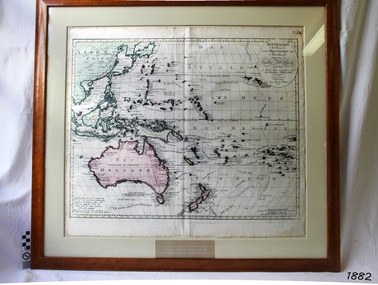
Map, Australien (Sudland) auch Polynesien oder Inselwelt, insgemein der funfte Welltheil, c.1990
... Pacific. The timber framed, glass covered, printed and coloured map was created in two sections and joined. Brass plaque at base of map states that the map was presented to Flagstaff Hill by Rotary International in April 1990. Feint lines used for aligning lettering can...Pacific. The timber framed, glass covered, printed and coloured map was created in two sections and joined. Brass plaque at base of map states that the map was presented to Flagstaff Hill by Rotary International in April 1990. Feint lines used for aligning lettering can ...This map is a reprint of Johann (Johannes) Walch’s “Australien (Sudland) auch Polynesien oder Inselwelt, insgemein der funfte Welltheil”, published in 1802. It shows Australia, New Zealand, South East Asia and the Pacific Islands shows a large number of places names, many of which have changed since the map was drawn. The map includes the routes and dates of the voyages of Tasman, Cook, Bougainville, Carteret, Byron, and others up to 1802. The shapes of the lands on this early map show that some of the areas had not yet been charted. The map was donated to Flagstaff Hill Maritime Village in April 1990 by the Group Study Exchange Team from Rotary District 233, Sweden. It was framed and presented by Rotary District 978 and presented by Barry Lange, the Governor of District 978 in 1989-90. (District 978, Geelong East, is now District 9780.) Johann (Johannes) Walch Johann Walch, painter and engraver, was born in 1757. He was well known for creating miniature portraits. He gained his training in Geneva, Venice and Rome. His publications include atlases and sheet maps, many of which were reprinted after his death in 1816. This reprint of an 1802 is significant for its historical and geographical contant, showing the voyages of many early explorers to the southern regions of the world including Australia. It also shows the early names used for countries and towns and is a valuable reference to historical interpretation. The map itself is a fine example of hand drawn and hand coloured maps of the early 19th century, the method of production, detail included, layout, symbols and so forth.Map, reprint of Johann (Johannes) Walch’s “Australien (Sudland) auch Polynesien oder Inselwelt, insgemein der funfte Welltheil “, first published by in Ausburg in 1802. The image on this Map No 5B, shows Australia and the south Pacific. The timber framed, glass covered, printed and coloured map was created in two sections and joined. Brass plaque at base of map states that the map was presented to Flagstaff Hill by Rotary International in April 1990. Feint lines used for aligning lettering can be seen on the map and there are large erased letters such as a “D” and “S” that are almost obscured.Plague “ROTARY INTERNATIONAL / THE MAP WAS DONATED BY THE GROUP STUDY EXCHANGE TEAM / FROM ROTARY DISTRICT 233 SWEDEN IN APRIL 1990 / AND WAS FRAMED AND PRESENTED BY ROTARY DISTRICT 978 / BARRY LANGE – GOVERNOR DISTRICT 978 1989/90” Stamped on back “ELLIMINOOK FRAMES / MRS. JILL FALKINER / ELLIMINOOK / BIRREGURRA, VIC. 3242 / PHONE: (052) 36 2080” flagstaff hill, warrnambool, shipwrecked coast, flagstaff hill maritime museum, maritime museum, shipwreck coast, flagstaff hill maritime village, great ocean road, australien (sudland) auch polynesien oder inselwelt, insgemein der funfte welltheil, johann (johannes) walch, cartographer johann (johannes) walch, ausburg publisher johann (johannes) walch, johann (johannes) walch map number 5b, 1802 map of australia and south pacific, rotary international group study exchange team, rotary district 233 sweden, elliminook frames, voyages of tasman, voyages of cook, voyages of bougainville, voyages of carteret, voyages of byron, barry lange, painter of miniature portraits johann (johannes) walch -
 The Beechworth Burke Museum
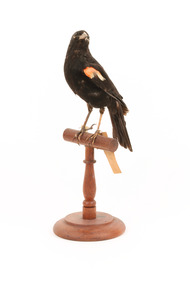
Animal specimen - Red-Winged Blackbird, Trustees of the Australian Museum, 1860-1880
... Pacific coast of California and Canada to the eastern seaboard. Populations that are most northerly migrate south after the mating season, but some of the populations in the central and western United States, Central America and the Gulf Coast are resident year-round. In the breeding season, Red-winged blackbirds are found in a range of fresh and saltwater environments, including in small trees and bushes along marshes and watercourses, in agricultural areas and dry meadows. During migration, they can...Pacific coast of California and Canada to the eastern seaboard. Populations that are most northerly migrate south after the mating season, but some of the populations in the central and western United States, Central America and the Gulf Coast are resident year-round. In the breeding season, Red-winged blackbirds are found in a range of fresh and saltwater environments, including in small trees and bushes along marshes and watercourses, in agricultural areas and dry meadows. During migration, they can ...The red-winged blackbird is native to North America. They live in a verity of places from southern Alaska at its northern most point, to the Yucatan peninsula in the south and covers the greater part of the continent reaching from the Pacific coast of California and Canada to the eastern seaboard. Populations that are most northerly migrate south after the mating season, but some of the populations in the central and western United States, Central America and the Gulf Coast are resident year-round. In the breeding season, Red-winged blackbirds are found in a range of fresh and saltwater environments, including in small trees and bushes along marshes and watercourses, in agricultural areas and dry meadows. During migration, they can be found in, pastures, prairies and cultivated fields. They are polygamous. In the north, the early arrival and tumbling song of these birds are welcome indications of spring's return. The Red-winged blackbirds are known for their scarlet and yellow shoulder patches on this specimen are rather dull and the feathers are not as glossy black as they are in other images. This specimen is part of a collection of almost 200 animal specimens that were originally acquired as skins from various institutions across Australia, including the Australian Museum in Sydney and the National Museum of Victoria (known as Museums Victoria since 1983), as well as individuals such as amateur anthropologist Reynell Eveleigh Johns between 1860-1880. These skins were then mounted by members of the Burke Museum Committee and put-on display in the formal space of the Museum’s original exhibition hall where they continue to be on display. This display of taxidermy mounts initially served to instruct visitors to the Burke Museum of the natural world around them, today it serves as an insight into the collecting habits of the 19th century.This specimen is part of a significant and rare taxidermy mount collection in the Burke Museum. This collection is scientifically and culturally important for reminding us of how science continues to shape our understanding of the modern world. They demonstrate a capacity to hold evidence of how Australia’s fauna history existed in the past and are potentially important for future environmental research. This collection continues to be on display in the Museum and has become a key part to interpreting the collecting habits of the 19th century.This is one of the most common birds in North America and is the most boldly coloured one. The males are glossy-black with shoulder patches of scarlet and yellow which they are able to puff up or hide according to their level of confidence. Females look like a big, dark sparrow, being a subdued, streaky brown. This specimen has the colouring of the male Red-Winged Blackbird which helps to identify it as such.Swing-Tag: 137a. / Red-winged Starling / Catalogue page, 58 / Tag: A. 4429taxidermy mount, taxidermy, animalia, burke museum, beechworth, australian museum, skin, reynell eveleigh johns, bird, american birds, north america, red-winged blackbird, red-winged starling, migratory, alaska, canada, saltwater -
 The Beechworth Burke Museum
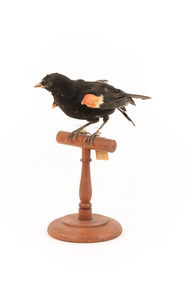
Animal specimen - Red-Winged Blackbird, Trustees of the Australian Museum, 1860-1880
... Pacific coast of California and Canada to the eastern seaboard. Populations that are most northerly migrate south after the mating season, but some of the populations in the central and western United States, Central America and the Gulf Coast are resident year-round. In the breeding season, Red-winged blackbirds are found in a range of fresh and saltwater environments, including in small trees and bushes along marshes and watercourses, in agricultural areas and dry meadows. During migration, they can...Pacific coast of California and Canada to the eastern seaboard. Populations that are most northerly migrate south after the mating season, but some of the populations in the central and western United States, Central America and the Gulf Coast are resident year-round. In the breeding season, Red-winged blackbirds are found in a range of fresh and saltwater environments, including in small trees and bushes along marshes and watercourses, in agricultural areas and dry meadows. During migration, they can ...The red-winged blackbird is native to North America. They live in a verity of places from southern Alaska at its northern most point, to the Yucatan peninsula in the south and covers the greater part of the continent reaching from the Pacific coast of California and Canada to the eastern seaboard. Populations that are most northerly migrate south after the mating season, but some of the populations in the central and western United States, Central America and the Gulf Coast are resident year-round. In the breeding season, Red-winged blackbirds are found in a range of fresh and saltwater environments, including in small trees and bushes along marshes and watercourses, in agricultural areas and dry meadows. During migration, they can be found in, pastures, prairies and cultivated fields. They are polygamous. The Red-winged blackbirds are known for their scarlet and yellow shoulder patches but on this specimen are rather dull and the feathers are not as glossy black as they are in other images. It is mounted accurately but the feathers appear to be ruffled. This specimen is part of a collection of almost 200 animal specimens that were originally acquired as skins from various institutions across Australia, including the Australian Museum in Sydney and the National Museum of Victoria (known as Museums Victoria since 1983), as well as individuals such as amateur anthropologist Reynell Eveleigh Johns between 1860-1880. These skins were then mounted by members of the Burke Museum Committee and put-on display in the formal space of the Museum’s original exhibition hall where they continue to be on display. This display of taxidermy mounts initially served to instruct visitors to the Burke Museum of the natural world around them, today it serves as an insight into the collecting habits of the 19th century.This specimen is part of a significant and rare taxidermy mount collection in the Burke Museum. This collection is scientifically and culturally important for reminding us of how science continues to shape our understanding of the modern world. They demonstrate a capacity to hold evidence of how Australia’s fauna history existed in the past and are potentially important for future environmental research. This collection continues to be on display in the Museum and has become a key part to interpreting the collecting habits of the 19th century.The Red-Winged Blackbird is one of the most common birds in North America and is the most boldly coloured one. The males are glossy-black with shoulder patches of scarlet and yellow which they are able to puff up or hide according to their level of confidence. Females look like a big, dark sparrow, being a subdued, streaky brown. The colouring of this particular specimen identifies it as male.[torn] page 58 / Tag: A. 4423taxidermy mount, taxidermy, animalia, burke museum, beechworth, australian museum, skin, reynell eveleigh johns, bird, american birds, north america, red-winged blackbird, red-winged starling, migratory, alaska, canada, saltwater -
 City of Moorabbin Historical Society (Operating the Box Cottage Museum)
Newsletter, City of Moorabbin Historical Society No. 1 Vol. 10 March 1970, City of Moorabbin Historical Society Newsletter No. 1 Vol. 10 March 1970, 1970
... Topic ; SEHA ; Jobs c 1930; Cpt Cook in Pacific; The Aims of the CMHS are ‘to record the history of the City, and register something of the Australian Atmosphere, which the necessary speed-up in post-world-war two (WW11) immigration has caused to be lost; to produce a magazine at regular intervals, featuring the work of pioneers and the changing Australian scene; to work constantly with a long range view towards building a hall where records and exhibits can be housed’ (1961) The Original Newsletters reflect the history and heritage of the former City of Moorabbin — derived from Mooroobin, ‘a resting place’ in the Bunurrung spoken language. ...Topic ; SEHA ; Jobs c 1930; Cpt Cook in Pacific; The Aims of the CMHS are ‘to record the history of the City, and register something of the Australian Atmosphere, which the necessary speed-up in post-world-war two (WW11) immigration has caused to be lost; to produce a magazine at regular intervals, featuring the work of pioneers and the changing Australian scene; to work constantly with a long range view towards building a hall where records and exhibits can be housed’ (1961) The Original Newsletters reflect the history and heritage of the former City of Moorabbin — derived from Mooroobin, ‘a resting place’ in the Bunurrung spoken language. ...Topic ; SEHA ; Jobs c 1930; Cpt Cook in Pacific; The Aims of the CMHS are ‘to record the history of the City, and register something of the Australian Atmosphere, which the necessary speed-up in post-world-war two (WW11) immigration has caused to be lost; to produce a magazine at regular intervals, featuring the work of pioneers and the changing Australian scene; to work constantly with a long range view towards building a hall where records and exhibits can be housed’ (1961) The Original Newsletters reflect the history and heritage of the former City of Moorabbin — derived from Mooroobin, ‘a resting place’ in the Bunurrung spoken language. In 1994, the City of Moorabbin was integrated into the Cities of Bayside, Glen Eira, Kingston and Monash. This is Newsletter No. 1 Vol. 10 of the CMHS March 1970 CMHS obtained a Kingston City Council Community Grant 2016 for the digitization and preservation of these Original CMHS Newsletters commenced in 1961 1 x L 26cm x W 21cm printed both sides CITY OF MOORABBIN HISTORICAL SOCIETY / President / Mrs C Whitehead Secretary Mrs P. Brodie / NEWSLETTER / Volume 10 No 1 March 1970 city of moorabbin historical society, sheehy t. a., newsletters -
Mission to Seafarers Victoria
Letter - Correspondence, 3/11/1951
... Pacific', with Mary Martin in the lead, is playing in London. They also went to Albert Hall to hear Eileen Joyce play. He is enjoying his photography course and looking forward to the food parcel his mother is sending, particularly the eggs as they can only get one a week....Pacific', with Mary Martin in the lead, is playing in London. They also went to Albert Hall to hear Eileen Joyce play. He is enjoying his photography course and looking forward to the food parcel his mother is sending, particularly the eggs as they can only get one a week. ...Allan writes of attending the last night of the show 'Carousel' and that 'South Pacific', with Mary Martin in the lead, is playing in London. They also went to Albert Hall to hear Eileen Joyce play. He is enjoying his photography course and looking forward to the food parcel his mother is sending, particularly the eggs as they can only get one a week.Quinn CollectionA pale blue self-folding letter (0888.a1) headed 37 Elsham Road, London W 14 and dated 3/11/51. Letter is typed using a very small font. It is addressed to Mrs K Hayes, 14 Fitzroy Street, St Kilda, Victoria, Australia and postmarked London W1. In the upper right hand corner is a very faint promotional stamp "Civil Defence". The return address is Allan Quinn, 37 Elsham Road, London W14. letters-from-abroad, allan quinn, alette andersen, london-uk, 'carousel', 'south pacific', eileen joyce, albert hall, london -
 Seaworks Maritime Museum
Firefighter helmet, Pacific Helmets (NZ) Ltd
... can protect the wearer from all injuries. The manufacturer accepts no liability for injuries resulting from or during the use of this helmet/ MANUFACTURED BY PACIFIC HELMETS (NZ) LTD. ...can protect the wearer from all injuries. The manufacturer accepts no liability for injuries resulting from or during the use of this helmet/ MANUFACTURED BY PACIFIC HELMETS (NZ) LTD. ...Yellow fire fighter helmet with blue logo and orange fittings and reflecting tapeBROWN/Prosperity through service/ 11530/ Brown/ Fireman's helmet/3/Model Pro Helmets/ Size Date Batch (WGT 1215/ N.F.P.A. 1972/1985 Instructions to user : shell and liner constructed of fibreglass and polyethylene lining helmet can be seriously damaged by substances such as petrol, paint, adhesives or cleaning agents. Make no modifications. Fasten helmet securely. If helmet experiences a severe blow return it to the manufacturer for inspection or destroy and replace it. WARNING: no helmet can protect the wearer from all injuries. The manufacturer accepts no liability for injuries resulting from or during the use of this helmet/ MANUFACTURED BY PACIFIC HELMETS (NZ) LTD. WANGANUI. NEW ZEALAND. -
 The Beechworth Burke Museum
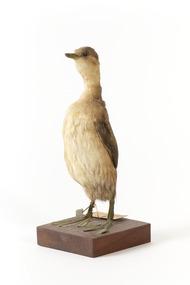
Animal specimen - Australasian Grebe, Trustees of the Australian Museum, 1860-1880
... They can be found throughout Australia and the Pacific region and New Zealand. ...They can be found throughout Australia and the Pacific region and New Zealand. ...The Australasian Grebe is a small duck-like bird with a hyperactive nature. These birds reside in small, shallow, freshwater lakes and ponds, small waterways or sheltered caves and bays. They can be found throughout Australia and the Pacific region and New Zealand. The Australasian Grebe eat mainly small freshwater fish, crayfish, shellfish and leeches which they catch by diving underwater. This specimen is part of a collection of almost 200 animal specimens that were originally acquired as skins from various institutions across Australia, including the Australian Museum and the National Museum of Victoria, as well as individuals such amateur anthropologist Reynell Eveleigh Johns between 1860-1880. These skins were then mounted by members of the Burke Museum Committee and put-on display in the formal space of the Museum’s original exhibition hall where they continue to be on display. This display of taxidermy mounts initially served to instruct visitors to the Burke Museum of the natural world around them, today it serves as an insight into the collecting habits of the 19th century. This specimen is part of a significant and rare taxidermy mount collection in the Burke Museum. This collection is scientifically and culturally important for reminding us of how science continues to shape our understanding of the modern world. They demonstrate a capacity to hold evidence of how Australia’s fauna history existed in the past and are potentially important for future environmental research. This collection continues to be on display in the Museum and has become a key part to interpreting the collecting habits of the 19th century.This Australasian Grebe is in a standing position on a wooden platform with identification tags tied to the right leg. It has dark glass eyes and pale grey bill and legs. The plumage of this specimen consists of dark greys and browns on the rear with lighter colours on the underside. These colours align with those of the non-breeding season. This species has rufous red colouring on the chest and neck and darker colouring on the head during the breeding season. Paper tag: "34a Dabchick Catalogue, page, 64" Metal Tag: "4496"taxidermy mount, taxidermy, animalia, burke museum, beechworth, australian museum, skin, reynell eveleigh johns, bird, grebe, australasian grebe, dabchick -
 The Beechworth Burke Museum
Animal specimen - Pacific Black Duck, Trustees of the Australian Museum, 1860-1880
... Pacific Black Duck is also known as the Grey Duck in New Zealand. Despite these names, the plumage of the bird is brown in colour with the occasional cream and small amount of black. This species of Duck is located in all of Australia with the exception of the most arid zones. They can...Pacific Black Duck is also known as the Grey Duck in New Zealand. Despite these names, the plumage of the bird is brown in colour with the occasional cream and small amount of black. This species of Duck is located in all of Australia with the exception of the most arid zones. They can ...The Pacific Black Duck is also known as the Grey Duck in New Zealand. Despite these names, the plumage of the bird is brown in colour with the occasional cream and small amount of black. This species of Duck is located in all of Australia with the exception of the most arid zones. They can also be found throughout the Pacific region. The Pacific Black Duck resides in a range of different habitats that have some sort of water. These birds feed on aquatic plants, crustaceans, molluscs and aquatic insects. To catch their food, these birds plunge their heads and necks under the water with their rear raising above the top of the water. This technique is termed "dabbing". This specimen is part of a collection of almost 200 animal specimens that were originally acquired as skins from various institutions across Australia, including the Australian Museum in Sydney and the National Museum of Victoria (known as Museums Victoria since 1983), as well as individuals such as amateur anthropologist Reynell Eveleigh Johns between 1860-1880. These skins were then mounted by members of the Burke Museum Committee and put-on display in the formal space of the Museum’s original exhibition hall where they continue to be on display. This display of taxidermy mounts initially served to instruct visitors to the Burke Museum of the natural world around them, today it serves as an insight into the collecting habits of the 19th century.This specimen is part of a significant and rare taxidermy mount collection in the Burke Museum. This collection is scientifically and culturally important for reminding us of how science continues to shape our understanding of the modern world. They demonstrate a capacity to hold evidence of how Australia’s fauna history existed in the past and are potentially important for future environmental research. This collection continues to be on display in the Museum and has become a key part to interpreting the collecting habits of the 19th century.Despite its name, the Black Duck is largely brown in colouring. It has a mixture of light brown and cream plumage on the neck, face and stomach. The wings and rear of the duck are a darker brown. Each brown feather is bordered with a cream colour which separates the feathers from each other. The top of the head is also dark brown and there is a darker stripe of black colour horizontally on either side of the eye. The specimen has two brown and black glass eyes and a black bill. The legs and webbed feet are a dark brown and black colour. Tied around the left leg is a paper identification tag. The number 134 is inscribed on the left side of the wooden platform on which the bird is standing. This specimen is stocky.3a. / Australian Wild Duck / See Catalogue, Page 38. /taxidermy mount, taxidermy, animalia, burke museum, beechworth, australian museum, skin, reynell eveleigh johns, bird, australian birds, duck, pacific black duck, grey duck, australian duck -
 Bendigo Military Museum
Photograph - PHOTOGRAPH, FRAMED, Post 1945
... Cairns J183 Bathurst Class Corvette British East Indies Fleet British Pacific Fleet Battle Honours Sicily 1943 / Okinawa 1945 A highly enlarged, blurry photo, of the warship HMAS Cairns in high seas. The photo has an overall green tint. The dot structure of the enlargement can ...A highly enlarged, blurry photo, of the warship HMAS Cairns in high seas. The photo has an overall green tint. The dot structure of the enlargement can be seen.Bottom L in green ink: Cairns Bottom R: H.M.A.S. Cairns J183 Bathurst Class Corvette British East Indies Fleet British Pacific Fleet Battle Honours Sicily 1943 / Okinawa 1945photography-photographs, frame accessories, military history - navy -
 Queenscliffe Maritime Museum
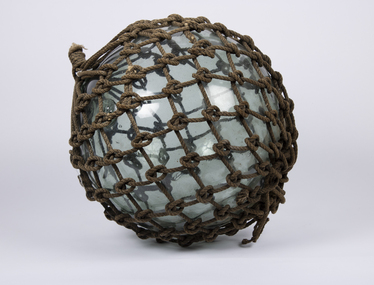
Equipment - Float
... can still be found in local boathouses. Christopher Faye, a Norwegian merchant from Bergen, is credited with their invention. The earliest floats, including most Japanese glass fishing floats, were handmade by a glassblower. Recycled glass, especially old sake bottles in Japan, was typically used and air bubbles/imperfections in the glass are a result of the rapid recycling process. Glass floats have since been replaced by aluminum, plastic, or Styrofoam. Today most of the glass floats remaining in the ocean are stuck in a circular pattern of ocean currents in the North Pacific...can still be found in local boathouses. Christopher Faye, a Norwegian merchant from Bergen, is credited with their invention. The earliest floats, including most Japanese glass fishing floats, were handmade by a glassblower. Recycled glass, especially old sake bottles in Japan, was typically used and air bubbles/imperfections in the glass are a result of the rapid recycling process. Glass floats have since been replaced by aluminum, plastic, or Styrofoam. Today most of the glass floats remaining in the ocean are stuck in a circular pattern of ocean currents in the North Pacific ...Norway, around 1840, was the first country to produce and use glass fishing floats. Many of them can still be found in local boathouses. Christopher Faye, a Norwegian merchant from Bergen, is credited with their invention. The earliest floats, including most Japanese glass fishing floats, were handmade by a glassblower. Recycled glass, especially old sake bottles in Japan, was typically used and air bubbles/imperfections in the glass are a result of the rapid recycling process. Glass floats have since been replaced by aluminum, plastic, or Styrofoam. Today most of the glass floats remaining in the ocean are stuck in a circular pattern of ocean currents in the North Pacific.By the 1940s, glass had replaced wood or cork throughout much of Europe, Russia, North America, and Japan. Japan started using the glass floats as early as 1910. Now they are still highly sought after as decoration.A glass float with intact knotted rope net attachedfishing, floats, glass floats -
 Monbulk RSL Sub Branch
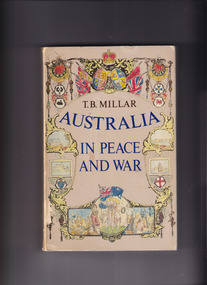
Book, Australian National University Press, Australia in peace and war, 1978
... It pleads for recognition that Australia can adapt the best of its European traditions in coming to terms with and helping to shape its Asia-Pacific environment. ...AUSTRALIA IN PEACE AND WAR is the first work to trace the development of Australia’s external relations from their colonial origins to the present. It shows how successive Australian governments have seen the world, what their attitudes have been, their actions and (much more often) their reactions. This important and controversial book details the successes and failures of Australian foreign policy over two centuries. It shows how geographical aspects of the world's largest island, anchored off the south-east corner of Asia, have increasingly impinged on perceptions and attitudes historically derived from Europe. It pleads for recognition that Australia can adapt the best of its European traditions in coming to terms with and helping to shape its Asia-Pacific environment.Index, bib, p.578.non-fictionAUSTRALIA IN PEACE AND WAR is the first work to trace the development of Australia’s external relations from their colonial origins to the present. It shows how successive Australian governments have seen the world, what their attitudes have been, their actions and (much more often) their reactions. This important and controversial book details the successes and failures of Australian foreign policy over two centuries. It shows how geographical aspects of the world's largest island, anchored off the south-east corner of Asia, have increasingly impinged on perceptions and attitudes historically derived from Europe. It pleads for recognition that Australia can adapt the best of its European traditions in coming to terms with and helping to shape its Asia-Pacific environment. australia - foreign relations, australia - history - military -
 Warrnambool and District Historical Society Inc.
Souvenir - Artefact, Wooden Pig
... can be proved then it is a significant item as an example of an indigenous carving which may be more than 60 years old. The pig is very important in Papua/New Guinea as a source of food and a barter/currency item. Otherwise, with provenance not established, the item is useful for display warrnambool old warrnambool museum papua/new guinea culture Incised with patterns as described above A brown coloured pig carved out of wood with several cracks on rear and front leg. White coloured incisions on snout, back and ears in patterns reminiscent of Pacific ...Oral tradition suggests that this pig came from Papua/New Guinea and was probably in the old Warrnambool Museum which was situated in the Mechanics Institute Building and closed in the 1960s (site of Warrnambool Library today). Illustrations have been found of similar carved pigs originating from the Sepik River area (Tambanum Village) of Papua/New Guinea and of similar items collected early in the 20th century. It is known that the old Museum had a considerable collection of South Sea Islands material but those items appear to have been mainly collected from the Fiji area. If the possible provenance of this item (Papua/New Guinea and old Museum) can be proved then it is a significant item as an example of an indigenous carving which may be more than 60 years old. The pig is very important in Papua/New Guinea as a source of food and a barter/currency item. Otherwise, with provenance not established, the item is useful for displayA brown coloured pig carved out of wood with several cracks on rear and front leg. White coloured incisions on snout, back and ears in patterns reminiscent of Pacific Island indigenous carvings. One ear broken and mended and the other with the top piece missing. Incised with patterns as described abovewarrnambool, old warrnambool museum, papua/new guinea culture -
 National Vietnam Veterans Museum (NVVM)
Poster, Laminated Poster, 1965
... Lithographed Dec 1965 406825 South East Asia - West central Pacific (shortened version) Poster with American flag and words. I am a citizen of the USA I not speak your language. Please take me to someone who can ...(shortened version) Poster with American flag and words. I am a citizen of the USA I not speak your language. Please take me to someone who can protect me. My government with reward you. Written in many languages underneath.Published by aeronautical chart and informationcentre US Airforce. Lithographed Dec 1965 406825 South East Asia - West central Pacificposter -
 Eltham District Historical Society Inc
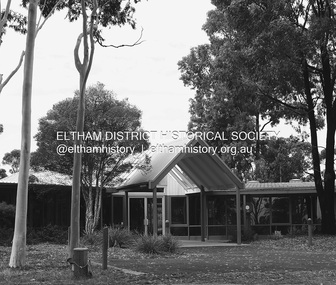
Photograph - Digital Photograph, Alan King, Wycliffe Centre, Graham Road, Kangaroo Ground, 2008
... Pacific SIL School (now EQUIP Training) followed. Wycliffe, the world’s largest linguistic organisation, and other organisations, have translated the Scriptures into more than 2000 languages. But another 2000 languages still lack any portion of the Bible. However translations are now completed more quickly, because of new computer programs and as education spreads, more speakers of the local language can...Pacific SIL School (now EQUIP Training) followed. Wycliffe, the world’s largest linguistic organisation, and other organisations, have translated the Scriptures into more than 2000 languages. But another 2000 languages still lack any portion of the Bible. However translations are now completed more quickly, because of new computer programs and as education spreads, more speakers of the local language can ...Wycliffe translates the Bible for people around the world. Published: Nillumbik Now and Then / Marguerite Marshall 2008; photographs Alan King with Marguerite Marshall.; p171 The peace and beauty of Australia’s Wycliffe Centre reflects what it aims to bring to thousands of people around the world. Kangaroos calmly feed, accompanied by bird song, near the mud-brick buildings set amongst Kangaroo Ground’s rolling hills. On 11 hectares off Graham Road, the centre aims to transform people’s lives by giving groups around the world, with no written language, help with literacy and Bible translation into their own tongue. Associate Director, Harley Beck, says reading the Bible (probably history’s most influential collection of books), in one’s own language, provides a strong moral basis, helping people withstand exploitation and escape poverty. One of Wycliffe’s field partners, SIL (formerly Summer Institute of Linguistics) Papua New Guinea, has won two UNESCO awards, and SIL branches in many other countries have won international and national awards. The translators are modern heroes. They undertake hardships, forsaking for years, sometimes decades, a salary and the soft western lifestyle, to face loneliness and primitive conditions that most of us would not even contemplate. No staff is paid a salary. An example is the first Australian Director and former International President, David Cummings, who for 50 years has depended on donations from supporters and churches. Students of all ages at the EQUIP Training School on the site come from all walks of life. They train in linguistics and learn how to communicate in a way that is sensitive to other cultures. Spiritual resilience is encouraged, enabling people to persist until the job in the field is done, which takes on average ten to 15 years. Courses range from a few weeks to a year. The Wycliffe concept was born in the 1920s when American missionary, Cameron Townsend, found a Spanish Bible was inadequate to evangelise the Cakchiquel people of Guatemala. When a Cakchiquel man challenged: ‘If your God is so great, why doesn’t he speak my language?’ Townsend decided to translate the Bible into all languages! He founded a linguistics training school in 1934, naming it after 14th century theologian John Wycliffe, the first to translate the Bible into English. The first Wycliffe Bible was completed in 1951 in the Mexican San Miguel Mixtec language. In May 2007 after 30 years of work, Wycliffe Australia, with other organisations, completed the first Bible for indigenous people in the Kriol* language, for about 30,000 people in northern Australia. Wycliffe Australia began in 1954 in the Keswick Bookshop basement, Collins Street, Melbourne. As the organisation grew, its quarters became so cramped that Director Cummings at times interviewed potential recruits in his car! The development of the Kangaroo Ground property is a story of faith and generosity. In 1967 Cummings proposed moving to a larger property despite having no funds. Within a month Wycliffe received a $20,000 donation and a gift of land towards a national centre. An earlier owner of the Kangaroo Ground property, Mrs Elsie Graham, would have been delighted, as she had wanted her land to be used for ‘God’s service’. Mud-brick architect and Christian, Alistair Knox, offered to design the centre at no charge. Despite a drought, straw was donated to make bricks. Many volunteers helped with the building, including church youth groups who made mud-bricks. Volunteers planted thousands of native plants, watered by recycled water from the site’s dam. Building began in 1968 and in 1983 the South Pacific SIL School (now EQUIP Training) followed. Wycliffe, the world’s largest linguistic organisation, and other organisations, have translated the Scriptures into more than 2000 languages. But another 2000 languages still lack any portion of the Bible. However translations are now completed more quickly, because of new computer programs and as education spreads, more speakers of the local language can assist. Despite the growth of secularisation, Beck says support for Wycliffe Australia, which has offices in all states and the ACT, is stronger than ever. * Kriol is a Pidgin language, which has become a speech community’s prime language.This collection of almost 130 photos about places and people within the Shire of Nillumbik, an urban and rural municipality in Melbourne's north, contributes to an understanding of the history of the Shire. Published in 2008 immediately prior to the Black Saturday bushfires of February 7, 2009, it documents sites that were impacted, and in some cases destroyed by the fires. It includes photographs taken especially for the publication, creating a unique time capsule representing the Shire in the early 21st century. It remains the most recent comprehenesive publication devoted to the Shire's history connecting local residents to the past. nillumbik now and then (marshall-king) collection, graham road, kangaroo ground, wycliffe centre -
 Sunshine and District Historical Society Incorporated
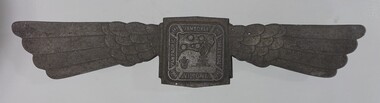
Memorabilia - Scouting Pan Pacific Jamboree 1948 Sign
... These early jamborees laid the groundwork for the establishment of the Asia-Pacific Scout Region in 1956 Scouting Scouts Jamboree Yarra Brae Pan Pacific 1948 Jamboree Yarrabrae Victoria Casted embossed metal sign that can be mounted to a circular post Memorabilia Scouting Pan Pacific Jamboree 1948 Sign ...Scouts from around the world gather for cultural exchange, outdoor activities, leadership development, and global friendship. The Pan-Pacific Scout Jamborees were pioneering international Scouting events held in the Asia-Pacific region before the formal creation of the Asia-Pacific Scout Region. The 1st Pan Pacific Jamboree was held in Frankston, Victoria from 27th December 1934 to 13th January 1935. This plaque is from the 3rd Australian Jamboree held at Yarra Brae, Wonga Park, Victoria which was held between the 29th December 1949 to 9th January 1949. These early jamborees laid the groundwork for the establishment of the Asia-Pacific Scout Region in 1956 Casted embossed metal sign that can be mounted to a circular postPan Pacific 1948 Jamboree Yarrabrae Victoriascouting, scouts, jamboree, yarra brae -
 Ararat Gallery TAMA
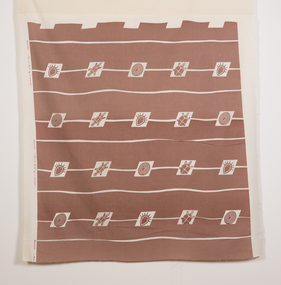
Frances Burke, Goanna, c. early 1950s
... Pacific Island tapa cloth designs in Bird and Tree (1940), Burke also looked to Japan in designs such as Plum Blossom (1948) and Zen (1965). She loved exploring the potential of native flora, seen in designs including Waratah (1955) and Flannel Flower (1955), while garden flowers were the source for many other designs including Belladonna (1940), Periwinkle (n.d.) and Rose (1947). Burke’s clever interplay of a single striking printed colour with lively gestural lines revealing the white base fabric, gave her designs a vibrancy that characterised the optimistic post-war era. This can...Pacific Island tapa cloth designs in Bird and Tree (1940), Burke also looked to Japan in designs such as Plum Blossom (1948) and Zen (1965). She loved exploring the potential of native flora, seen in designs including Waratah (1955) and Flannel Flower (1955), while garden flowers were the source for many other designs including Belladonna (1940), Periwinkle (n.d.) and Rose (1947). Burke’s clever interplay of a single striking printed colour with lively gestural lines revealing the white base fabric, gave her designs a vibrancy that characterised the optimistic post-war era. This can ...Frances Burke: Designer of Modern Textiles Australia’s most influential and celebrated textile designer of the mid-20th century, Frances Burke (1904-1994), employed Australian native flora, garden flowers, marine subjects, Indigenous culture and increasingly, abstract motifs in her stunning modern fabrics. A confident, determined designer and businesswoman; Burke made the shift from fine art to design in 1937. While she began by designing dress fabrics for Melbourne’s fashionable Georges Department store, printing them on linen using lino blocks, she was an early adopter of the screen-printing process and during the war years began printing on cotton. Burke’s furnishing fabrics took their place in influential modern buildings Australia-wide through collaborations with leading architects and interior designers. They included Robin Boyd’s 1949 House of Tomorrow, Roy Grounds’ Quamby flats, Guilford Bell’s Royal Hayman Island Resort for Ansett Airlines, and Yuncken, Freeman Brothers, Griffiths and Simpson’s Canberra Civic Centre Theatre. In the post-war period, Burke made regular trips to the United States and Europe, on her return advising homeowners and manufacturers on the latest trends in products, colours and home design in lectures and interviews. At New Design her fabric showroom and interior design consultancy Burke introduced furniture by emerging designers Clement Meadmore and Grant Featherston in the early 1950s and presented local and imported homewares, mostly from the United States. She was enthusiastic about the convenient and comfortable lifestyle experienced by ordinary American women. Her fabrics and advice were regularly featured in Australian Home Beautiful, Australian House and Garden and the newspapers of the day. Some of Burke’s designs had remarkable longevity. Tiger Stripe (1938) for example, continued to be produced in a wide range of colours until 1970 and Crete (1946) remained a popular choice for interiors into the 1960s. Drawing from a rich variety of sources including Indigenous culture in Goanna (c.1954) and Pacific Island tapa cloth designs in Bird and Tree (1940), Burke also looked to Japan in designs such as Plum Blossom (1948) and Zen (1965). She loved exploring the potential of native flora, seen in designs including Waratah (1955) and Flannel Flower (1955), while garden flowers were the source for many other designs including Belladonna (1940), Periwinkle (n.d.) and Rose (1947). Burke’s clever interplay of a single striking printed colour with lively gestural lines revealing the white base fabric, gave her designs a vibrancy that characterised the optimistic post-war era. This can be seen in Burke’s fabrics for Hayman Island including Angel Fish and Seapiece (both 1949) which expressed the freshness and excitement of the luxurious new tropical resort and led to further commissions. Burke’s three decades in business (1937-1970) were an unparalleled success in the story of Australian design. Her fabrics have been collected by the NGA, the Powerhouse Museum, NGV, RMIT Design Archives and Sydney Living Museums in addition to Ararat Gallery TAMA. Written by Nanette Carter and Robyn Oswald-Jacobs. -
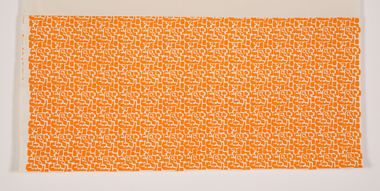 Ararat Gallery TAMA
Frances Burke, Mosaic, c. 1962
... Pacific Island tapa cloth designs in Bird and Tree (1940), Burke also looked to Japan in designs such as Plum Blossom (1948) and Zen (1965). She loved exploring the potential of native flora, seen in designs including Waratah (1955) and Flannel Flower (1955), while garden flowers were the source for many other designs including Belladonna (1940), Periwinkle (n.d.) and Rose (1947). Burke’s clever interplay of a single striking printed colour with lively gestural lines revealing the white base fabric, gave her designs a vibrancy that characterised the optimistic post-war era. This can...Pacific Island tapa cloth designs in Bird and Tree (1940), Burke also looked to Japan in designs such as Plum Blossom (1948) and Zen (1965). She loved exploring the potential of native flora, seen in designs including Waratah (1955) and Flannel Flower (1955), while garden flowers were the source for many other designs including Belladonna (1940), Periwinkle (n.d.) and Rose (1947). Burke’s clever interplay of a single striking printed colour with lively gestural lines revealing the white base fabric, gave her designs a vibrancy that characterised the optimistic post-war era. This can ...Frances Burke: Designer of Modern Textiles Australia’s most influential and celebrated textile designer of the mid-20th century, Frances Burke (1904-1994), employed Australian native flora, garden flowers, marine subjects, Indigenous culture and increasingly, abstract motifs in her stunning modern fabrics. A confident, determined designer and businesswoman; Burke made the shift from fine art to design in 1937. While she began by designing dress fabrics for Melbourne’s fashionable Georges Department store, printing them on linen using lino blocks, she was an early adopter of the screen-printing process and during the war years began printing on cotton. Burke’s furnishing fabrics took their place in influential modern buildings Australia-wide through collaborations with leading architects and interior designers. They included Robin Boyd’s 1949 House of Tomorrow, Roy Grounds’ Quamby flats, Guilford Bell’s Royal Hayman Island Resort for Ansett Airlines, and Yuncken, Freeman Brothers, Griffiths and Simpson’s Canberra Civic Centre Theatre. In the post-war period, Burke made regular trips to the United States and Europe, on her return advising homeowners and manufacturers on the latest trends in products, colours and home design in lectures and interviews. At New Design her fabric showroom and interior design consultancy Burke introduced furniture by emerging designers Clement Meadmore and Grant Featherston in the early 1950s and presented local and imported homewares, mostly from the United States. She was enthusiastic about the convenient and comfortable lifestyle experienced by ordinary American women. Her fabrics and advice were regularly featured in Australian Home Beautiful, Australian House and Garden and the newspapers of the day. Some of Burke’s designs had remarkable longevity. Tiger Stripe (1938) for example, continued to be produced in a wide range of colours until 1970 and Crete (1946) remained a popular choice for interiors into the 1960s. Drawing from a rich variety of sources including Indigenous culture in Goanna (c.1954) and Pacific Island tapa cloth designs in Bird and Tree (1940), Burke also looked to Japan in designs such as Plum Blossom (1948) and Zen (1965). She loved exploring the potential of native flora, seen in designs including Waratah (1955) and Flannel Flower (1955), while garden flowers were the source for many other designs including Belladonna (1940), Periwinkle (n.d.) and Rose (1947). Burke’s clever interplay of a single striking printed colour with lively gestural lines revealing the white base fabric, gave her designs a vibrancy that characterised the optimistic post-war era. This can be seen in Burke’s fabrics for Hayman Island including Angel Fish and Seapiece (both 1949) which expressed the freshness and excitement of the luxurious new tropical resort and led to further commissions. Burke’s three decades in business (1937-1970) were an unparalleled success in the story of Australian design. Her fabrics have been collected by the NGA, the Powerhouse Museum, NGV, RMIT Design Archives and Sydney Living Museums in addition to Ararat Gallery TAMA. Written by Nanette Carter and Robyn Oswald-Jacobs. -
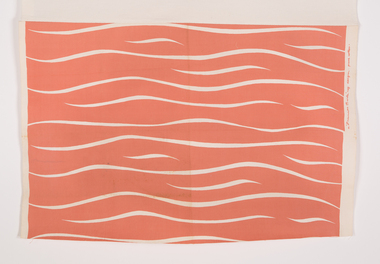 Ararat Gallery TAMA
Frances Burke, Tiger Stripe, c. 1939
... Pacific Island tapa cloth designs in Bird and Tree (1940), Burke also looked to Japan in designs such as Plum Blossom (1948) and Zen (1965). She loved exploring the potential of native flora, seen in designs including Waratah (1955) and Flannel Flower (1955), while garden flowers were the source for many other designs including Belladonna (1940), Periwinkle (n.d.) and Rose (1947). Burke’s clever interplay of a single striking printed colour with lively gestural lines revealing the white base fabric, gave her designs a vibrancy that characterised the optimistic post-war era. This can...Pacific Island tapa cloth designs in Bird and Tree (1940), Burke also looked to Japan in designs such as Plum Blossom (1948) and Zen (1965). She loved exploring the potential of native flora, seen in designs including Waratah (1955) and Flannel Flower (1955), while garden flowers were the source for many other designs including Belladonna (1940), Periwinkle (n.d.) and Rose (1947). Burke’s clever interplay of a single striking printed colour with lively gestural lines revealing the white base fabric, gave her designs a vibrancy that characterised the optimistic post-war era. This can ...Frances Burke: Designer of Modern Textiles Australia’s most influential and celebrated textile designer of the mid-20th century, Frances Burke (1904-1994), employed Australian native flora, garden flowers, marine subjects, Indigenous culture and increasingly, abstract motifs in her stunning modern fabrics. A confident, determined designer and businesswoman; Burke made the shift from fine art to design in 1937. While she began by designing dress fabrics for Melbourne’s fashionable Georges Department store, printing them on linen using lino blocks, she was an early adopter of the screen-printing process and during the war years began printing on cotton. Burke’s furnishing fabrics took their place in influential modern buildings Australia-wide through collaborations with leading architects and interior designers. They included Robin Boyd’s 1949 House of Tomorrow, Roy Grounds’ Quamby flats, Guilford Bell’s Royal Hayman Island Resort for Ansett Airlines, and Yuncken, Freeman Brothers, Griffiths and Simpson’s Canberra Civic Centre Theatre. In the post-war period, Burke made regular trips to the United States and Europe, on her return advising homeowners and manufacturers on the latest trends in products, colours and home design in lectures and interviews. At New Design her fabric showroom and interior design consultancy Burke introduced furniture by emerging designers Clement Meadmore and Grant Featherston in the early 1950s and presented local and imported homewares, mostly from the United States. She was enthusiastic about the convenient and comfortable lifestyle experienced by ordinary American women. Her fabrics and advice were regularly featured in Australian Home Beautiful, Australian House and Garden and the newspapers of the day. Some of Burke’s designs had remarkable longevity. Tiger Stripe (1938) for example, continued to be produced in a wide range of colours until 1970 and Crete (1946) remained a popular choice for interiors into the 1960s. Drawing from a rich variety of sources including Indigenous culture in Goanna (c.1954) and Pacific Island tapa cloth designs in Bird and Tree (1940), Burke also looked to Japan in designs such as Plum Blossom (1948) and Zen (1965). She loved exploring the potential of native flora, seen in designs including Waratah (1955) and Flannel Flower (1955), while garden flowers were the source for many other designs including Belladonna (1940), Periwinkle (n.d.) and Rose (1947). Burke’s clever interplay of a single striking printed colour with lively gestural lines revealing the white base fabric, gave her designs a vibrancy that characterised the optimistic post-war era. This can be seen in Burke’s fabrics for Hayman Island including Angel Fish and Seapiece (both 1949) which expressed the freshness and excitement of the luxurious new tropical resort and led to further commissions. Burke’s three decades in business (1937-1970) were an unparalleled success in the story of Australian design. Her fabrics have been collected by the NGA, the Powerhouse Museum, NGV, RMIT Design Archives and Sydney Living Museums in addition to Ararat Gallery TAMA. Written by Nanette Carter and Robyn Oswald-Jacobs. -
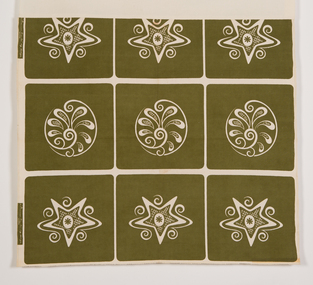 Ararat Gallery TAMA
Frances Burke, Crete, 1948
... Pacific Island tapa cloth designs in Bird and Tree (1940), Burke also looked to Japan in designs such as Plum Blossom (1948) and Zen (1965). She loved exploring the potential of native flora, seen in designs including Waratah (1955) and Flannel Flower (1955), while garden flowers were the source for many other designs including Belladonna (1940), Periwinkle (n.d.) and Rose (1947). Burke’s clever interplay of a single striking printed colour with lively gestural lines revealing the white base fabric, gave her designs a vibrancy that characterised the optimistic post-war era. This can...Pacific Island tapa cloth designs in Bird and Tree (1940), Burke also looked to Japan in designs such as Plum Blossom (1948) and Zen (1965). She loved exploring the potential of native flora, seen in designs including Waratah (1955) and Flannel Flower (1955), while garden flowers were the source for many other designs including Belladonna (1940), Periwinkle (n.d.) and Rose (1947). Burke’s clever interplay of a single striking printed colour with lively gestural lines revealing the white base fabric, gave her designs a vibrancy that characterised the optimistic post-war era. This can ...Frances Burke: Designer of Modern Textiles Australia’s most influential and celebrated textile designer of the mid-20th century, Frances Burke (1904-1994), employed Australian native flora, garden flowers, marine subjects, Indigenous culture and increasingly, abstract motifs in her stunning modern fabrics. A confident, determined designer and businesswoman; Burke made the shift from fine art to design in 1937. While she began by designing dress fabrics for Melbourne’s fashionable Georges Department store, printing them on linen using lino blocks, she was an early adopter of the screen-printing process and during the war years began printing on cotton. Burke’s furnishing fabrics took their place in influential modern buildings Australia-wide through collaborations with leading architects and interior designers. They included Robin Boyd’s 1949 House of Tomorrow, Roy Grounds’ Quamby flats, Guilford Bell’s Royal Hayman Island Resort for Ansett Airlines, and Yuncken, Freeman Brothers, Griffiths and Simpson’s Canberra Civic Centre Theatre. In the post-war period, Burke made regular trips to the United States and Europe, on her return advising homeowners and manufacturers on the latest trends in products, colours and home design in lectures and interviews. At New Design her fabric showroom and interior design consultancy Burke introduced furniture by emerging designers Clement Meadmore and Grant Featherston in the early 1950s and presented local and imported homewares, mostly from the United States. She was enthusiastic about the convenient and comfortable lifestyle experienced by ordinary American women. Her fabrics and advice were regularly featured in Australian Home Beautiful, Australian House and Garden and the newspapers of the day. Some of Burke’s designs had remarkable longevity. Tiger Stripe (1938) for example, continued to be produced in a wide range of colours until 1970 and Crete (1946) remained a popular choice for interiors into the 1960s. Drawing from a rich variety of sources including Indigenous culture in Goanna (c.1954) and Pacific Island tapa cloth designs in Bird and Tree (1940), Burke also looked to Japan in designs such as Plum Blossom (1948) and Zen (1965). She loved exploring the potential of native flora, seen in designs including Waratah (1955) and Flannel Flower (1955), while garden flowers were the source for many other designs including Belladonna (1940), Periwinkle (n.d.) and Rose (1947). Burke’s clever interplay of a single striking printed colour with lively gestural lines revealing the white base fabric, gave her designs a vibrancy that characterised the optimistic post-war era. This can be seen in Burke’s fabrics for Hayman Island including Angel Fish and Seapiece (both 1949) which expressed the freshness and excitement of the luxurious new tropical resort and led to further commissions. Burke’s three decades in business (1937-1970) were an unparalleled success in the story of Australian design. Her fabrics have been collected by the NGA, the Powerhouse Museum, NGV, RMIT Design Archives and Sydney Living Museums in addition to Ararat Gallery TAMA. Written by Nanette Carter and Robyn Oswald-Jacobs. -
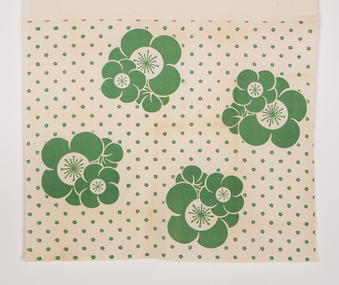 Ararat Gallery TAMA
Frances Burke, Plum Blossom, 1948
... Pacific Island tapa cloth designs in Bird and Tree (1940), Burke also looked to Japan in designs such as Plum Blossom (1948) and Zen (1965). She loved exploring the potential of native flora, seen in designs including Waratah (1955) and Flannel Flower (1955), while garden flowers were the source for many other designs including Belladonna (1940), Periwinkle (n.d.) and Rose (1947). Burke’s clever interplay of a single striking printed colour with lively gestural lines revealing the white base fabric, gave her designs a vibrancy that characterised the optimistic post-war era. This can...Pacific Island tapa cloth designs in Bird and Tree (1940), Burke also looked to Japan in designs such as Plum Blossom (1948) and Zen (1965). She loved exploring the potential of native flora, seen in designs including Waratah (1955) and Flannel Flower (1955), while garden flowers were the source for many other designs including Belladonna (1940), Periwinkle (n.d.) and Rose (1947). Burke’s clever interplay of a single striking printed colour with lively gestural lines revealing the white base fabric, gave her designs a vibrancy that characterised the optimistic post-war era. This can ...Frances Burke: Designer of Modern Textiles Australia’s most influential and celebrated textile designer of the mid-20th century, Frances Burke (1904-1994), employed Australian native flora, garden flowers, marine subjects, Indigenous culture and increasingly, abstract motifs in her stunning modern fabrics. A confident, determined designer and businesswoman; Burke made the shift from fine art to design in 1937. While she began by designing dress fabrics for Melbourne’s fashionable Georges Department store, printing them on linen using lino blocks, she was an early adopter of the screen-printing process and during the war years began printing on cotton. Burke’s furnishing fabrics took their place in influential modern buildings Australia-wide through collaborations with leading architects and interior designers. They included Robin Boyd’s 1949 House of Tomorrow, Roy Grounds’ Quamby flats, Guilford Bell’s Royal Hayman Island Resort for Ansett Airlines, and Yuncken, Freeman Brothers, Griffiths and Simpson’s Canberra Civic Centre Theatre. In the post-war period, Burke made regular trips to the United States and Europe, on her return advising homeowners and manufacturers on the latest trends in products, colours and home design in lectures and interviews. At New Design her fabric showroom and interior design consultancy Burke introduced furniture by emerging designers Clement Meadmore and Grant Featherston in the early 1950s and presented local and imported homewares, mostly from the United States. She was enthusiastic about the convenient and comfortable lifestyle experienced by ordinary American women. Her fabrics and advice were regularly featured in Australian Home Beautiful, Australian House and Garden and the newspapers of the day. Some of Burke’s designs had remarkable longevity. Tiger Stripe (1938) for example, continued to be produced in a wide range of colours until 1970 and Crete (1946) remained a popular choice for interiors into the 1960s. Drawing from a rich variety of sources including Indigenous culture in Goanna (c.1954) and Pacific Island tapa cloth designs in Bird and Tree (1940), Burke also looked to Japan in designs such as Plum Blossom (1948) and Zen (1965). She loved exploring the potential of native flora, seen in designs including Waratah (1955) and Flannel Flower (1955), while garden flowers were the source for many other designs including Belladonna (1940), Periwinkle (n.d.) and Rose (1947). Burke’s clever interplay of a single striking printed colour with lively gestural lines revealing the white base fabric, gave her designs a vibrancy that characterised the optimistic post-war era. This can be seen in Burke’s fabrics for Hayman Island including Angel Fish and Seapiece (both 1949) which expressed the freshness and excitement of the luxurious new tropical resort and led to further commissions. Burke’s three decades in business (1937-1970) were an unparalleled success in the story of Australian design. Her fabrics have been collected by the NGA, the Powerhouse Museum, NGV, RMIT Design Archives and Sydney Living Museums in addition to Ararat Gallery TAMA. Written by Nanette Carter and Robyn Oswald-Jacobs. -
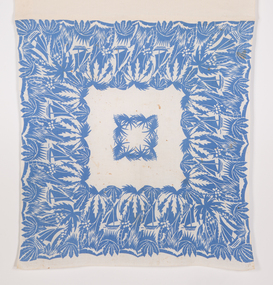 Ararat Gallery TAMA
Frances Burke, Jungle, 1945
... Pacific Island tapa cloth designs in Bird and Tree (1940), Burke also looked to Japan in designs such as Plum Blossom (1948) and Zen (1965). She loved exploring the potential of native flora, seen in designs including Waratah (1955) and Flannel Flower (1955), while garden flowers were the source for many other designs including Belladonna (1940), Periwinkle (n.d.) and Rose (1947). Burke’s clever interplay of a single striking printed colour with lively gestural lines revealing the white base fabric, gave her designs a vibrancy that characterised the optimistic post-war era. This can...Pacific Island tapa cloth designs in Bird and Tree (1940), Burke also looked to Japan in designs such as Plum Blossom (1948) and Zen (1965). She loved exploring the potential of native flora, seen in designs including Waratah (1955) and Flannel Flower (1955), while garden flowers were the source for many other designs including Belladonna (1940), Periwinkle (n.d.) and Rose (1947). Burke’s clever interplay of a single striking printed colour with lively gestural lines revealing the white base fabric, gave her designs a vibrancy that characterised the optimistic post-war era. This can ...Frances Burke: Designer of Modern Textiles Australia’s most influential and celebrated textile designer of the mid-20th century, Frances Burke (1904-1994), employed Australian native flora, garden flowers, marine subjects, Indigenous culture and increasingly, abstract motifs in her stunning modern fabrics. A confident, determined designer and businesswoman; Burke made the shift from fine art to design in 1937. While she began by designing dress fabrics for Melbourne’s fashionable Georges Department store, printing them on linen using lino blocks, she was an early adopter of the screen-printing process and during the war years began printing on cotton. Burke’s furnishing fabrics took their place in influential modern buildings Australia-wide through collaborations with leading architects and interior designers. They included Robin Boyd’s 1949 House of Tomorrow, Roy Grounds’ Quamby flats, Guilford Bell’s Royal Hayman Island Resort for Ansett Airlines, and Yuncken, Freeman Brothers, Griffiths and Simpson’s Canberra Civic Centre Theatre. In the post-war period, Burke made regular trips to the United States and Europe, on her return advising homeowners and manufacturers on the latest trends in products, colours and home design in lectures and interviews. At New Design her fabric showroom and interior design consultancy Burke introduced furniture by emerging designers Clement Meadmore and Grant Featherston in the early 1950s and presented local and imported homewares, mostly from the United States. She was enthusiastic about the convenient and comfortable lifestyle experienced by ordinary American women. Her fabrics and advice were regularly featured in Australian Home Beautiful, Australian House and Garden and the newspapers of the day. Some of Burke’s designs had remarkable longevity. Tiger Stripe (1938) for example, continued to be produced in a wide range of colours until 1970 and Crete (1946) remained a popular choice for interiors into the 1960s. Drawing from a rich variety of sources including Indigenous culture in Goanna (c.1954) and Pacific Island tapa cloth designs in Bird and Tree (1940), Burke also looked to Japan in designs such as Plum Blossom (1948) and Zen (1965). She loved exploring the potential of native flora, seen in designs including Waratah (1955) and Flannel Flower (1955), while garden flowers were the source for many other designs including Belladonna (1940), Periwinkle (n.d.) and Rose (1947). Burke’s clever interplay of a single striking printed colour with lively gestural lines revealing the white base fabric, gave her designs a vibrancy that characterised the optimistic post-war era. This can be seen in Burke’s fabrics for Hayman Island including Angel Fish and Seapiece (both 1949) which expressed the freshness and excitement of the luxurious new tropical resort and led to further commissions. Burke’s three decades in business (1937-1970) were an unparalleled success in the story of Australian design. Her fabrics have been collected by the NGA, the Powerhouse Museum, NGV, RMIT Design Archives and Sydney Living Museums in addition to Ararat Gallery TAMA. Written by Nanette Carter and Robyn Oswald-Jacobs. -
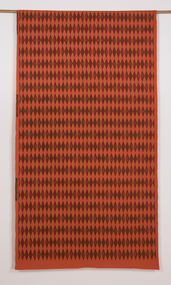 Ararat Gallery TAMA
Frances Burke, Harlequin, c. late 1950s
... Pacific Island tapa cloth designs in Bird and Tree (1940), Burke also looked to Japan in designs such as Plum Blossom (1948) and Zen (1965). She loved exploring the potential of native flora, seen in designs including Waratah (1955) and Flannel Flower (1955), while garden flowers were the source for many other designs including Belladonna (1940), Periwinkle (n.d.) and Rose (1947). Burke’s clever interplay of a single striking printed colour with lively gestural lines revealing the white base fabric, gave her designs a vibrancy that characterised the optimistic post-war era. This can...Pacific Island tapa cloth designs in Bird and Tree (1940), Burke also looked to Japan in designs such as Plum Blossom (1948) and Zen (1965). She loved exploring the potential of native flora, seen in designs including Waratah (1955) and Flannel Flower (1955), while garden flowers were the source for many other designs including Belladonna (1940), Periwinkle (n.d.) and Rose (1947). Burke’s clever interplay of a single striking printed colour with lively gestural lines revealing the white base fabric, gave her designs a vibrancy that characterised the optimistic post-war era. This can ...Frances Burke: Designer of Modern Textiles Australia’s most influential and celebrated textile designer of the mid-20th century, Frances Burke (1904-1994), employed Australian native flora, garden flowers, marine subjects, Indigenous culture and increasingly, abstract motifs in her stunning modern fabrics. A confident, determined designer and businesswoman; Burke made the shift from fine art to design in 1937. While she began by designing dress fabrics for Melbourne’s fashionable Georges Department store, printing them on linen using lino blocks, she was an early adopter of the screen-printing process and during the war years began printing on cotton. Burke’s furnishing fabrics took their place in influential modern buildings Australia-wide through collaborations with leading architects and interior designers. They included Robin Boyd’s 1949 House of Tomorrow, Roy Grounds’ Quamby flats, Guilford Bell’s Royal Hayman Island Resort for Ansett Airlines, and Yuncken, Freeman Brothers, Griffiths and Simpson’s Canberra Civic Centre Theatre. In the post-war period, Burke made regular trips to the United States and Europe, on her return advising homeowners and manufacturers on the latest trends in products, colours and home design in lectures and interviews. At New Design her fabric showroom and interior design consultancy Burke introduced furniture by emerging designers Clement Meadmore and Grant Featherston in the early 1950s and presented local and imported homewares, mostly from the United States. She was enthusiastic about the convenient and comfortable lifestyle experienced by ordinary American women. Her fabrics and advice were regularly featured in Australian Home Beautiful, Australian House and Garden and the newspapers of the day. Some of Burke’s designs had remarkable longevity. Tiger Stripe (1938) for example, continued to be produced in a wide range of colours until 1970 and Crete (1946) remained a popular choice for interiors into the 1960s. Drawing from a rich variety of sources including Indigenous culture in Goanna (c.1954) and Pacific Island tapa cloth designs in Bird and Tree (1940), Burke also looked to Japan in designs such as Plum Blossom (1948) and Zen (1965). She loved exploring the potential of native flora, seen in designs including Waratah (1955) and Flannel Flower (1955), while garden flowers were the source for many other designs including Belladonna (1940), Periwinkle (n.d.) and Rose (1947). Burke’s clever interplay of a single striking printed colour with lively gestural lines revealing the white base fabric, gave her designs a vibrancy that characterised the optimistic post-war era. This can be seen in Burke’s fabrics for Hayman Island including Angel Fish and Seapiece (both 1949) which expressed the freshness and excitement of the luxurious new tropical resort and led to further commissions. Burke’s three decades in business (1937-1970) were an unparalleled success in the story of Australian design. Her fabrics have been collected by the NGA, the Powerhouse Museum, NGV, RMIT Design Archives and Sydney Living Museums in addition to Ararat Gallery TAMA. Written by Nanette Carter and Robyn Oswald-Jacobs. -
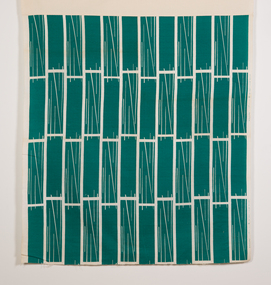 Ararat Gallery TAMA
Frances Burke, Staccato, c.1962
... Pacific Island tapa cloth designs in Bird and Tree (1940), Burke also looked to Japan in designs such as Plum Blossom (1948) and Zen (1965). She loved exploring the potential of native flora, seen in designs including Waratah (1955) and Flannel Flower (1955), while garden flowers were the source for many other designs including Belladonna (1940), Periwinkle (n.d.) and Rose (1947). Burke’s clever interplay of a single striking printed colour with lively gestural lines revealing the white base fabric, gave her designs a vibrancy that characterised the optimistic post-war era. This can...Pacific Island tapa cloth designs in Bird and Tree (1940), Burke also looked to Japan in designs such as Plum Blossom (1948) and Zen (1965). She loved exploring the potential of native flora, seen in designs including Waratah (1955) and Flannel Flower (1955), while garden flowers were the source for many other designs including Belladonna (1940), Periwinkle (n.d.) and Rose (1947). Burke’s clever interplay of a single striking printed colour with lively gestural lines revealing the white base fabric, gave her designs a vibrancy that characterised the optimistic post-war era. This can ...Frances Burke: Designer of Modern Textiles Australia’s most influential and celebrated textile designer of the mid-20th century, Frances Burke (1904-1994), employed Australian native flora, garden flowers, marine subjects, Indigenous culture and increasingly, abstract motifs in her stunning modern fabrics. A confident, determined designer and businesswoman; Burke made the shift from fine art to design in 1937. While she began by designing dress fabrics for Melbourne’s fashionable Georges Department store, printing them on linen using lino blocks, she was an early adopter of the screen-printing process and during the war years began printing on cotton. Burke’s furnishing fabrics took their place in influential modern buildings Australia-wide through collaborations with leading architects and interior designers. They included Robin Boyd’s 1949 House of Tomorrow, Roy Grounds’ Quamby flats, Guilford Bell’s Royal Hayman Island Resort for Ansett Airlines, and Yuncken, Freeman Brothers, Griffiths and Simpson’s Canberra Civic Centre Theatre. In the post-war period, Burke made regular trips to the United States and Europe, on her return advising homeowners and manufacturers on the latest trends in products, colours and home design in lectures and interviews. At New Design her fabric showroom and interior design consultancy Burke introduced furniture by emerging designers Clement Meadmore and Grant Featherston in the early 1950s and presented local and imported homewares, mostly from the United States. She was enthusiastic about the convenient and comfortable lifestyle experienced by ordinary American women. Her fabrics and advice were regularly featured in Australian Home Beautiful, Australian House and Garden and the newspapers of the day. Some of Burke’s designs had remarkable longevity. Tiger Stripe (1938) for example, continued to be produced in a wide range of colours until 1970 and Crete (1946) remained a popular choice for interiors into the 1960s. Drawing from a rich variety of sources including Indigenous culture in Goanna (c.1954) and Pacific Island tapa cloth designs in Bird and Tree (1940), Burke also looked to Japan in designs such as Plum Blossom (1948) and Zen (1965). She loved exploring the potential of native flora, seen in designs including Waratah (1955) and Flannel Flower (1955), while garden flowers were the source for many other designs including Belladonna (1940), Periwinkle (n.d.) and Rose (1947). Burke’s clever interplay of a single striking printed colour with lively gestural lines revealing the white base fabric, gave her designs a vibrancy that characterised the optimistic post-war era. This can be seen in Burke’s fabrics for Hayman Island including Angel Fish and Seapiece (both 1949) which expressed the freshness and excitement of the luxurious new tropical resort and led to further commissions. Burke’s three decades in business (1937-1970) were an unparalleled success in the story of Australian design. Her fabrics have been collected by the NGA, the Powerhouse Museum, NGV, RMIT Design Archives and Sydney Living Museums in addition to Ararat Gallery TAMA. Written by Nanette Carter and Robyn Oswald-Jacobs. -
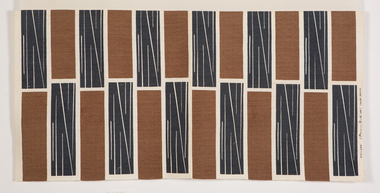 Ararat Gallery TAMA
Frances Burke, Staccato (brown-gray), c.1962
... Pacific Island tapa cloth designs in Bird and Tree (1940), Burke also looked to Japan in designs such as Plum Blossom (1948) and Zen (1965). She loved exploring the potential of native flora, seen in designs including Waratah (1955) and Flannel Flower (1955), while garden flowers were the source for many other designs including Belladonna (1940), Periwinkle (n.d.) and Rose (1947). Burke’s clever interplay of a single striking printed colour with lively gestural lines revealing the white base fabric, gave her designs a vibrancy that characterised the optimistic post-war era. This can...Pacific Island tapa cloth designs in Bird and Tree (1940), Burke also looked to Japan in designs such as Plum Blossom (1948) and Zen (1965). She loved exploring the potential of native flora, seen in designs including Waratah (1955) and Flannel Flower (1955), while garden flowers were the source for many other designs including Belladonna (1940), Periwinkle (n.d.) and Rose (1947). Burke’s clever interplay of a single striking printed colour with lively gestural lines revealing the white base fabric, gave her designs a vibrancy that characterised the optimistic post-war era. This can ...Frances Burke: Designer of Modern Textiles Australia’s most influential and celebrated textile designer of the mid-20th century, Frances Burke (1904-1994), employed Australian native flora, garden flowers, marine subjects, Indigenous culture and increasingly, abstract motifs in her stunning modern fabrics. A confident, determined designer and businesswoman; Burke made the shift from fine art to design in 1937. While she began by designing dress fabrics for Melbourne’s fashionable Georges Department store, printing them on linen using lino blocks, she was an early adopter of the screen-printing process and during the war years began printing on cotton. Burke’s furnishing fabrics took their place in influential modern buildings Australia-wide through collaborations with leading architects and interior designers. They included Robin Boyd’s 1949 House of Tomorrow, Roy Grounds’ Quamby flats, Guilford Bell’s Royal Hayman Island Resort for Ansett Airlines, and Yuncken, Freeman Brothers, Griffiths and Simpson’s Canberra Civic Centre Theatre. In the post-war period, Burke made regular trips to the United States and Europe, on her return advising homeowners and manufacturers on the latest trends in products, colours and home design in lectures and interviews. At New Design her fabric showroom and interior design consultancy Burke introduced furniture by emerging designers Clement Meadmore and Grant Featherston in the early 1950s and presented local and imported homewares, mostly from the United States. She was enthusiastic about the convenient and comfortable lifestyle experienced by ordinary American women. Her fabrics and advice were regularly featured in Australian Home Beautiful, Australian House and Garden and the newspapers of the day. Some of Burke’s designs had remarkable longevity. Tiger Stripe (1938) for example, continued to be produced in a wide range of colours until 1970 and Crete (1946) remained a popular choice for interiors into the 1960s. Drawing from a rich variety of sources including Indigenous culture in Goanna (c.1954) and Pacific Island tapa cloth designs in Bird and Tree (1940), Burke also looked to Japan in designs such as Plum Blossom (1948) and Zen (1965). She loved exploring the potential of native flora, seen in designs including Waratah (1955) and Flannel Flower (1955), while garden flowers were the source for many other designs including Belladonna (1940), Periwinkle (n.d.) and Rose (1947). Burke’s clever interplay of a single striking printed colour with lively gestural lines revealing the white base fabric, gave her designs a vibrancy that characterised the optimistic post-war era. This can be seen in Burke’s fabrics for Hayman Island including Angel Fish and Seapiece (both 1949) which expressed the freshness and excitement of the luxurious new tropical resort and led to further commissions. Burke’s three decades in business (1937-1970) were an unparalleled success in the story of Australian design. Her fabrics have been collected by the NGA, the Powerhouse Museum, NGV, RMIT Design Archives and Sydney Living Museums in addition to Ararat Gallery TAMA. Written by Nanette Carter and Robyn Oswald-Jacobs. -
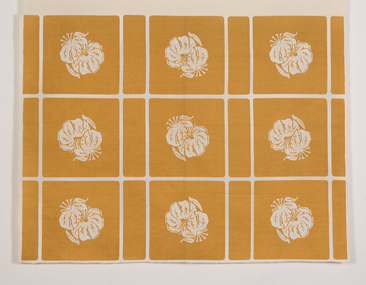 Ararat Gallery TAMA
Frances Burke, Tiger Lily, 1951
... Pacific Island tapa cloth designs in Bird and Tree (1940), Burke also looked to Japan in designs such as Plum Blossom (1948) and Zen (1965). She loved exploring the potential of native flora, seen in designs including Waratah (1955) and Flannel Flower (1955), while garden flowers were the source for many other designs including Belladonna (1940), Periwinkle (n.d.) and Rose (1947). Burke’s clever interplay of a single striking printed colour with lively gestural lines revealing the white base fabric, gave her designs a vibrancy that characterised the optimistic post-war era. This can...Pacific Island tapa cloth designs in Bird and Tree (1940), Burke also looked to Japan in designs such as Plum Blossom (1948) and Zen (1965). She loved exploring the potential of native flora, seen in designs including Waratah (1955) and Flannel Flower (1955), while garden flowers were the source for many other designs including Belladonna (1940), Periwinkle (n.d.) and Rose (1947). Burke’s clever interplay of a single striking printed colour with lively gestural lines revealing the white base fabric, gave her designs a vibrancy that characterised the optimistic post-war era. This can ...Frances Burke: Designer of Modern Textiles Australia’s most influential and celebrated textile designer of the mid-20th century, Frances Burke (1904-1994), employed Australian native flora, garden flowers, marine subjects, Indigenous culture and increasingly, abstract motifs in her stunning modern fabrics. A confident, determined designer and businesswoman; Burke made the shift from fine art to design in 1937. While she began by designing dress fabrics for Melbourne’s fashionable Georges Department store, printing them on linen using lino blocks, she was an early adopter of the screen-printing process and during the war years began printing on cotton. Burke’s furnishing fabrics took their place in influential modern buildings Australia-wide through collaborations with leading architects and interior designers. They included Robin Boyd’s 1949 House of Tomorrow, Roy Grounds’ Quamby flats, Guilford Bell’s Royal Hayman Island Resort for Ansett Airlines, and Yuncken, Freeman Brothers, Griffiths and Simpson’s Canberra Civic Centre Theatre. In the post-war period, Burke made regular trips to the United States and Europe, on her return advising homeowners and manufacturers on the latest trends in products, colours and home design in lectures and interviews. At New Design her fabric showroom and interior design consultancy Burke introduced furniture by emerging designers Clement Meadmore and Grant Featherston in the early 1950s and presented local and imported homewares, mostly from the United States. She was enthusiastic about the convenient and comfortable lifestyle experienced by ordinary American women. Her fabrics and advice were regularly featured in Australian Home Beautiful, Australian House and Garden and the newspapers of the day. Some of Burke’s designs had remarkable longevity. Tiger Stripe (1938) for example, continued to be produced in a wide range of colours until 1970 and Crete (1946) remained a popular choice for interiors into the 1960s. Drawing from a rich variety of sources including Indigenous culture in Goanna (c.1954) and Pacific Island tapa cloth designs in Bird and Tree (1940), Burke also looked to Japan in designs such as Plum Blossom (1948) and Zen (1965). She loved exploring the potential of native flora, seen in designs including Waratah (1955) and Flannel Flower (1955), while garden flowers were the source for many other designs including Belladonna (1940), Periwinkle (n.d.) and Rose (1947). Burke’s clever interplay of a single striking printed colour with lively gestural lines revealing the white base fabric, gave her designs a vibrancy that characterised the optimistic post-war era. This can be seen in Burke’s fabrics for Hayman Island including Angel Fish and Seapiece (both 1949) which expressed the freshness and excitement of the luxurious new tropical resort and led to further commissions. Burke’s three decades in business (1937-1970) were an unparalleled success in the story of Australian design. Her fabrics have been collected by the NGA, the Powerhouse Museum, NGV, RMIT Design Archives and Sydney Living Museums in addition to Ararat Gallery TAMA. Written by Nanette Carter and Robyn Oswald-Jacobs. -
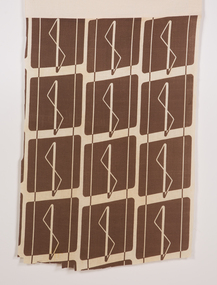 Ararat Gallery TAMA
Frances Burke, Pacifica, 1954
... Pacific Island tapa cloth designs in Bird and Tree (1940), Burke also looked to Japan in designs such as Plum Blossom (1948) and Zen (1965). She loved exploring the potential of native flora, seen in designs including Waratah (1955) and Flannel Flower (1955), while garden flowers were the source for many other designs including Belladonna (1940), Periwinkle (n.d.) and Rose (1947). Burke’s clever interplay of a single striking printed colour with lively gestural lines revealing the white base fabric, gave her designs a vibrancy that characterised the optimistic post-war era. This can...Pacific Island tapa cloth designs in Bird and Tree (1940), Burke also looked to Japan in designs such as Plum Blossom (1948) and Zen (1965). She loved exploring the potential of native flora, seen in designs including Waratah (1955) and Flannel Flower (1955), while garden flowers were the source for many other designs including Belladonna (1940), Periwinkle (n.d.) and Rose (1947). Burke’s clever interplay of a single striking printed colour with lively gestural lines revealing the white base fabric, gave her designs a vibrancy that characterised the optimistic post-war era. This can ...Frances Burke: Designer of Modern Textiles Australia’s most influential and celebrated textile designer of the mid-20th century, Frances Burke (1904-1994), employed Australian native flora, garden flowers, marine subjects, Indigenous culture and increasingly, abstract motifs in her stunning modern fabrics. A confident, determined designer and businesswoman; Burke made the shift from fine art to design in 1937. While she began by designing dress fabrics for Melbourne’s fashionable Georges Department store, printing them on linen using lino blocks, she was an early adopter of the screen-printing process and during the war years began printing on cotton. Burke’s furnishing fabrics took their place in influential modern buildings Australia-wide through collaborations with leading architects and interior designers. They included Robin Boyd’s 1949 House of Tomorrow, Roy Grounds’ Quamby flats, Guilford Bell’s Royal Hayman Island Resort for Ansett Airlines, and Yuncken, Freeman Brothers, Griffiths and Simpson’s Canberra Civic Centre Theatre. In the post-war period, Burke made regular trips to the United States and Europe, on her return advising homeowners and manufacturers on the latest trends in products, colours and home design in lectures and interviews. At New Design her fabric showroom and interior design consultancy Burke introduced furniture by emerging designers Clement Meadmore and Grant Featherston in the early 1950s and presented local and imported homewares, mostly from the United States. She was enthusiastic about the convenient and comfortable lifestyle experienced by ordinary American women. Her fabrics and advice were regularly featured in Australian Home Beautiful, Australian House and Garden and the newspapers of the day. Some of Burke’s designs had remarkable longevity. Tiger Stripe (1938) for example, continued to be produced in a wide range of colours until 1970 and Crete (1946) remained a popular choice for interiors into the 1960s. Drawing from a rich variety of sources including Indigenous culture in Goanna (c.1954) and Pacific Island tapa cloth designs in Bird and Tree (1940), Burke also looked to Japan in designs such as Plum Blossom (1948) and Zen (1965). She loved exploring the potential of native flora, seen in designs including Waratah (1955) and Flannel Flower (1955), while garden flowers were the source for many other designs including Belladonna (1940), Periwinkle (n.d.) and Rose (1947). Burke’s clever interplay of a single striking printed colour with lively gestural lines revealing the white base fabric, gave her designs a vibrancy that characterised the optimistic post-war era. This can be seen in Burke’s fabrics for Hayman Island including Angel Fish and Seapiece (both 1949) which expressed the freshness and excitement of the luxurious new tropical resort and led to further commissions. Burke’s three decades in business (1937-1970) were an unparalleled success in the story of Australian design. Her fabrics have been collected by the NGA, the Powerhouse Museum, NGV, RMIT Design Archives and Sydney Living Museums in addition to Ararat Gallery TAMA. Written by Nanette Carter and Robyn Oswald-Jacobs. -
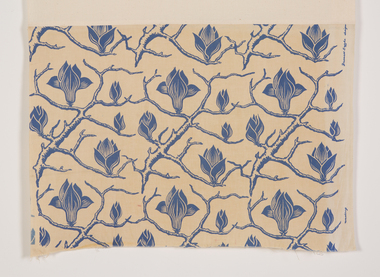 Ararat Gallery TAMA
Frances Burke, Magnolia, 1938-1942
... Pacific Island tapa cloth designs in Bird and Tree (1940), Burke also looked to Japan in designs such as Plum Blossom (1948) and Zen (1965). She loved exploring the potential of native flora, seen in designs including Waratah (1955) and Flannel Flower (1955), while garden flowers were the source for many other designs including Belladonna (1940), Periwinkle (n.d.) and Rose (1947). Burke’s clever interplay of a single striking printed colour with lively gestural lines revealing the white base fabric, gave her designs a vibrancy that characterised the optimistic post-war era. This can...Pacific Island tapa cloth designs in Bird and Tree (1940), Burke also looked to Japan in designs such as Plum Blossom (1948) and Zen (1965). She loved exploring the potential of native flora, seen in designs including Waratah (1955) and Flannel Flower (1955), while garden flowers were the source for many other designs including Belladonna (1940), Periwinkle (n.d.) and Rose (1947). Burke’s clever interplay of a single striking printed colour with lively gestural lines revealing the white base fabric, gave her designs a vibrancy that characterised the optimistic post-war era. This can ...Frances Burke: Designer of Modern Textiles Australia’s most influential and celebrated textile designer of the mid-20th century, Frances Burke (1904-1994), employed Australian native flora, garden flowers, marine subjects, Indigenous culture and increasingly, abstract motifs in her stunning modern fabrics. A confident, determined designer and businesswoman; Burke made the shift from fine art to design in 1937. While she began by designing dress fabrics for Melbourne’s fashionable Georges Department store, printing them on linen using lino blocks, she was an early adopter of the screen-printing process and during the war years began printing on cotton. Burke’s furnishing fabrics took their place in influential modern buildings Australia-wide through collaborations with leading architects and interior designers. They included Robin Boyd’s 1949 House of Tomorrow, Roy Grounds’ Quamby flats, Guilford Bell’s Royal Hayman Island Resort for Ansett Airlines, and Yuncken, Freeman Brothers, Griffiths and Simpson’s Canberra Civic Centre Theatre. In the post-war period, Burke made regular trips to the United States and Europe, on her return advising homeowners and manufacturers on the latest trends in products, colours and home design in lectures and interviews. At New Design her fabric showroom and interior design consultancy Burke introduced furniture by emerging designers Clement Meadmore and Grant Featherston in the early 1950s and presented local and imported homewares, mostly from the United States. She was enthusiastic about the convenient and comfortable lifestyle experienced by ordinary American women. Her fabrics and advice were regularly featured in Australian Home Beautiful, Australian House and Garden and the newspapers of the day. Some of Burke’s designs had remarkable longevity. Tiger Stripe (1938) for example, continued to be produced in a wide range of colours until 1970 and Crete (1946) remained a popular choice for interiors into the 1960s. Drawing from a rich variety of sources including Indigenous culture in Goanna (c.1954) and Pacific Island tapa cloth designs in Bird and Tree (1940), Burke also looked to Japan in designs such as Plum Blossom (1948) and Zen (1965). She loved exploring the potential of native flora, seen in designs including Waratah (1955) and Flannel Flower (1955), while garden flowers were the source for many other designs including Belladonna (1940), Periwinkle (n.d.) and Rose (1947). Burke’s clever interplay of a single striking printed colour with lively gestural lines revealing the white base fabric, gave her designs a vibrancy that characterised the optimistic post-war era. This can be seen in Burke’s fabrics for Hayman Island including Angel Fish and Seapiece (both 1949) which expressed the freshness and excitement of the luxurious new tropical resort and led to further commissions. Burke’s three decades in business (1937-1970) were an unparalleled success in the story of Australian design. Her fabrics have been collected by the NGA, the Powerhouse Museum, NGV, RMIT Design Archives and Sydney Living Museums in addition to Ararat Gallery TAMA. Written by Nanette Carter and Robyn Oswald-Jacobs.
