
Showing 12 items matching "peak court"
-
 Whitehorse Historical Society Inc.
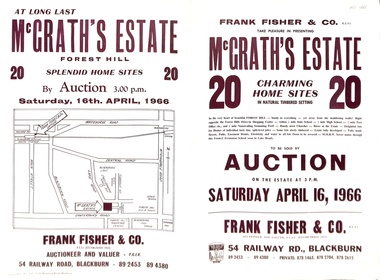
Document - Auction Flyer, McGrath's Estate Auction 1966, 16/04/1966 12:00:00 AM
... ...Peak Court...McGrath's Estate Forest Hill Forest Hill Frank Fisher Co. Peak Court Forest Hill Ottawa Avenue Forest Hill Beatrice Court Forest Hill Lake Road Forest Hill Auction of 20 home sites in McGrath's Estate, Ottawa Ave, Forest Hill by Frank Fisher & Co on 16 April 1966. ...Auction of 20 home sites in McGrath's Estate, Ottawa Ave, Forest Hill by Frank Fisher & Co on 16 April 1966.Auction of 20 home sites in McGrath's Estate, Ottawa Ave, Forest Hill by Frank Fisher & Co on 16 April 1966.non-fictionAuction of 20 home sites in McGrath's Estate, Ottawa Ave, Forest Hill by Frank Fisher & Co on 16 April 1966.mcgrath's estate, forest hill, forest hill, frank fisher co., peak court, forest hill, ottawa avenue, forest hill, beatrice court, forest hill, lake road, forest hill -
 Whitehorse Historical Society Inc.
Article, Beatrice or Valley, 1967
... ...Peak Court...Street names City of Nunawading Beatrice Court Blackburn Peak Court Blackburn Article in Nunawading Gazette re objections to the name Beatrice Court. ...Article in Nunawading Gazette re objections to the name Beatrice Court. Objectors would like the name changed to Valley Court, Forest Hill.[actually in Blackburn]Article in Nunawading Gazette re objections to the name Beatrice Court. Objectors would like the name changed to Valley Court, Forest Hill.[actually in Blackburn]Article in Nunawading Gazette re objections to the name Beatrice Court. Objectors would like the name changed to Valley Court, Forest Hill.[actually in Blackburn]street names, city of nunawading, beatrice court, blackburn, peak court, blackburn -
 Flagstaff Hill Maritime Museum and Village
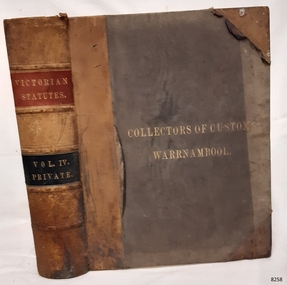
Book - Reference/Legal Statutes, John Ferres, Government Printer, The Victorian Statutes Vol 4 Various Legal Statues /Warrnambool, 1866
... court. Because this book features an official title specifically for Warrnambool, it gives the item a clear provenance linking it to the Warrnambool colonial legal statues, causing its historic value to skyrocket. It represents the physical extension of British and colonial law operating right on the Shipwreck Coast during the peak ...This volume is part of the first comprehensive consolidation of laws for the Colony of Victoria after it separated from New South Wales and established its own parliament. Specifically, Volume 4 (published in 1866) contains Local Colonial Acts. These were laws debated, passed, and enacted right here in Melbourne by the newly formed Parliament of the Colony of Victoria. They dealt with purely domestic, local matters, such as Victorian land selection, goldfields regulations, local municipal boundaries, and colonial courts. Volume 4 was the handbook for everyday domestic Victorian life, governing how a local town council operated, how gold claims were filed, or how local debts were settled in a Victorian county court.The Victorian Statutes Vol 4 Various Legal Statues /Warrnambool Publisher: John Ferres Government Printer Melbourne Date: 1866 Further Information: Three quarter leather. Junction between front board and spine slightly exposed. non-fictionThis volume is part of the first comprehensive consolidation of laws for the Colony of Victoria after it separated from New South Wales and established its own parliament. Specifically, Volume 4 (published in 1866) contains Local Colonial Acts. These were laws debated, passed, and enacted right here in Melbourne by the newly formed Parliament of the Colony of Victoria. They dealt with purely domestic, local matters, such as Victorian land selection, goldfields regulations, local municipal boundaries, and colonial courts. Volume 4 was the handbook for everyday domestic Victorian life, governing how a local town council operated, how gold claims were filed, or how local debts were settled in a Victorian county court.flagstaff hill, warrnambool, shipwrecked coast, flagstaff hill maritime museum, maritime museum, shipwreck coast, flagstaff hill maritime village, great ocean road, book, pattison collection, warrnambool library, warrnambool mechanics’ institute, ralph eric pattison, corangamite regional library service, warrnambool city librarian, mechanics’ institute library, victorian library board, warrnambool books and records, warrnambool children’s library -
 Flagstaff Hill Maritime Museum and Village
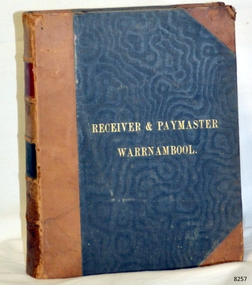
Book - Reference/Legal Statutes, John Ferres, Government Printer, The Victorian Legal Statutes Vol 3, Receiver Paymaster/Warrnambool, 1866
... court. Because this book features an official title specifically for Warrnambool, it gives the item a clear provenance linking it to the Warrnambool colonial legal statues, causing its historic value to skyrocket. It represents the physical extension of British and colonial law operating right on the Shipwreck Coast during the peak ...This volume is part of the first comprehensive consolidation of laws for the Colony of Victoria after it separated from New South Wales and established its own parliament. Specifically, Volume 3 is the final part of the core "Public and General" Victorian colonial laws. The first three volumes of the 1866 consolidation were organised alphabetically by legal topic. Volume 3 specifically contains all the major public acts running from P to W. Because it covers the tail end of the alphabet, it holds some of the most critical laws that built day-to-day society in 19th-century Victoria. These include: · Police Offences and Public Order: The legal frameworks for policing the goldfield boomtowns, managing public behaviour, and running early colonial prisons. · Public Works and Infrastructure: The acts authorising the construction of roads, bridges, and early municipal water supplies across the fast-growing colony. · Railways: The specific general legislation governing the expansion of Victoria's heavily subsidised, state-expanding railway networks. · Property and Land Transfer: Crucial laws managing land ownership, inheritance, and the foundational transfers of property as the colony shifted away from old squatter runs to permanent towns. · Wines, Beer, and Spirits: The colonial acts regulating the licensing of hotels and public houses, and managing the highly lucrative, tightly controlled alcohol trade.The Victorian Statutes Vol 3 Various Legal Statues /Warrnambool Publisher: John Ferres Government Printer Melbourne Date: 1866 Further Information: Three quarter leather. Corners worn lettering in gilt. non-fictionThis volume is part of the first comprehensive consolidation of laws for the Colony of Victoria after it separated from New South Wales and established its own parliament. Specifically, Volume 3 is the final part of the core "Public and General" Victorian colonial laws. The first three volumes of the 1866 consolidation were organised alphabetically by legal topic. Volume 3 specifically contains all the major public acts running from P to W. Because it covers the tail end of the alphabet, it holds some of the most critical laws that built day-to-day society in 19th-century Victoria. These include: · Police Offences and Public Order: The legal frameworks for policing the goldfield boomtowns, managing public behaviour, and running early colonial prisons. · Public Works and Infrastructure: The acts authorising the construction of roads, bridges, and early municipal water supplies across the fast-growing colony. · Railways: The specific general legislation governing the expansion of Victoria's heavily subsidised, state-expanding railway networks. · Property and Land Transfer: Crucial laws managing land ownership, inheritance, and the foundational transfers of property as the colony shifted away from old squatter runs to permanent towns. · Wines, Beer, and Spirits: The colonial acts regulating the licensing of hotels and public houses, and managing the highly lucrative, tightly controlled alcohol trade.flagstaff hill, warrnambool, shipwrecked coast, flagstaff hill maritime museum, maritime museum, shipwreck coast, flagstaff hill maritime village, great ocean road, book, pattison collection, warrnambool library, warrnambool mechanics’ institute, ralph eric pattison, corangamite regional library service, warrnambool city librarian, mechanics’ institute library, victorian library board, warrnambool books and records, warrnambool children’s library -
 Flagstaff Hill Maritime Museum and Village
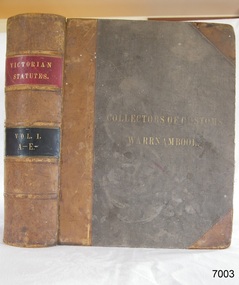
Book - Reference Colonial Legal Statutes, John Ferres, Government Printer, The Victorian Statutes Vol 1 Collectors of Customs A-E, 1866
... court. Because this book features an official title specifically for Warrnambool, it gives the item a clear provenance linking it to the Warrnambool colonial legal statues, causing its historic value to skyrocket. It represents the physical extension of British and colonial law operating right on the Shipwreck Coast during the peak ...This volume is part of the first comprehensive consolidation of laws for the Colony of Victoria after it separated from New South Wales and established its own parliament. Specifically, Volume 1 (published in 1866) contains Local Colonial Acts. These were laws debated, passed, and enacted right here in Melbourne by the newly formed Parliament of the Colony of Victoria. They dealt with purely domestic, local matters, such as Victorian land selection, goldfields regulations, local municipal boundaries, and colonial courts. Volume 1 was the handbook for everyday domestic Victorian life, governing how a local town council operated, how gold claims were filed, or how local debts were settled in a Victorian county court or how customs should operate.Hard cover book,The Victorian Statutes Vol 1. Collectors of Customs A-E Author: Corporate Author “The Colony of Victoria” Publisher: John Ferres Government Printer Melbourne. Date: 1866 The Victorian Statutes Vol 1, front cover has title Collectors of Customs Warrnambool. Brown leather binding and corners, black canvas cover, red and black bands on spine. non-fictionThis volume is part of the first comprehensive consolidation of laws for the Colony of Victoria after it separated from New South Wales and established its own parliament. Specifically, Volume 1 (published in 1866) contains Local Colonial Acts. These were laws debated, passed, and enacted right here in Melbourne by the newly formed Parliament of the Colony of Victoria. They dealt with purely domestic, local matters, such as Victorian land selection, goldfields regulations, local municipal boundaries, and colonial courts. Volume 1 was the handbook for everyday domestic Victorian life, governing how a local town council operated, how gold claims were filed, or how local debts were settled in a Victorian county court or how customs should operate.warrnambool, shipwrecked-coast, flagstaff-hill, flagstaff-hill-maritime-museum, maritime-museum, shipwreck-coast, flagstaff-hill-maritime-village, shipwrecked-artefact, book, government statutes for victoria 1866, warrnambool's copy of government statutes 1866 -
 Flagstaff Hill Maritime Museum and Village
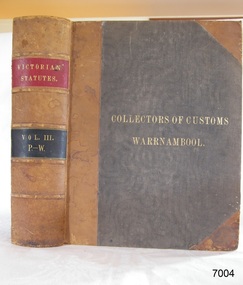
Book - Reference Colonial Legal Statutes, John Ferres, Government Printer, The Victorian Statutes Vol 3 Collectors of Customs P-W, 1866
... court. Because this book features an official title specifically for Warrnambool, it gives the item a clear provenance linking it to the Warrnambool colonial legal statues, causing its historic value to skyrocket. It represents the physical extension of British and colonial law operating right on the Shipwreck Coast during the peak ...This volume is part of the first comprehensive consolidation of laws for the Colony of Victoria after it separated from New South Wales and established its own parliament. Specifically, Volume 3 (published in 1866) contains Local Colonial Acts. These were laws debated, passed, and enacted right here in Melbourne by the newly formed Parliament of the Colony of Victoria. They dealt with purely domestic, local matters, such as Victorian land selection, goldfields regulations, local municipal boundaries, and colonial courts. Volume 3 was the handbook for everyday domestic Victorian life, governing how a local town council operated, how gold claims were filed, or how local debts were settled in a Victorian county court or how customs should operate.Hard cover book,The Victorian Statutes Vol 3. Collectors of Customs P-W Author: Corporate Author “The Colony of Victoria” Publisher: John Ferres Government Printer Melbourne. Date: 1866 The Victorian Statutes Vol 3, front cover has title Collectors of Customs Warrnambool. Brown leather binding and corners, black canvas cover, red and black bands on spine. non-fictionThis volume is part of the first comprehensive consolidation of laws for the Colony of Victoria after it separated from New South Wales and established its own parliament. Specifically, Volume 3 (published in 1866) contains Local Colonial Acts. These were laws debated, passed, and enacted right here in Melbourne by the newly formed Parliament of the Colony of Victoria. They dealt with purely domestic, local matters, such as Victorian land selection, goldfields regulations, local municipal boundaries, and colonial courts. Volume 3 was the handbook for everyday domestic Victorian life, governing how a local town council operated, how gold claims were filed, or how local debts were settled in a Victorian county court or how customs should operate.warrnambool, shipwrecked-coast, flagstaff-hill, flagstaff-hill-maritime-museum, maritime-museum, shipwreck-coast, flagstaff-hill-maritime-village, shipwrecked-artefact, book, government statutes for victoria 1866, warrnambool's copy of government statutes 1866 -
 Bendigo Military Museum
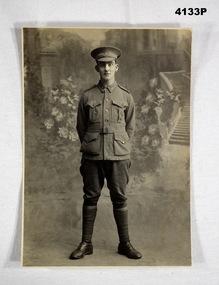
Photograph - STUDIO PHOTOGRAPH, Post 1914
... The soldier is believed to be Charles Francis Ross No 1948, enlisted 18.2.1915, embarked for Egypt 26.8 1915, then to France 1916, reported wounded and missing 27.7.1916, Confirmed KIA by Court of enquiry on 26.11.1917 as being 4.8.1916 Photograph studio photograph AIF On the rear in reddish pen, “ Charles Ross KIA France ........ “ Photo Kalma 37 - 39 Pall Mall” Photo, B & W, soldier in uniform with peak cap with studio back ground Photograph STUDIO PHOTOGRAPH ...The soldier is believed to be Charles Francis Ross No 1948, enlisted 18.2.1915, embarked for Egypt 26.8 1915, then to France 1916, reported wounded and missing 27.7.1916, Confirmed KIA by Court of enquiry on 26.11.1917 as being 4.8.1916Photo, B & W, soldier in uniform with peak cap with studio back groundOn the rear in reddish pen, “ Charles Ross KIA France ........ “ Photo Kalma 37 - 39 Pall Mall”photograph, studio photograph, aif -
4th/19th Prince of Wales's Light Horse Regiment Unit History Room
Hat Khaki Fur Felt, est 1940's
... peak strength of almost 100,000 in units across Australia. As the perceived threat to Australia declined, the VDC's role changed from static defence to operating anti-aircraft artillery, coastal artillery and searchlights. Members of inland VDC units were freed from having to attend regular training in May 1944 and the VDC was officially disbanded on 24 August 1945 Maker's label on head band -RG & RI Stebbins, 14 Willow Court, Donald , Vic 3480 Hat Khaki Fur Felt with green cloth single band puggaree which has cotton Volunteer Defence Corps badge sewn on, brass rising sun badge on brim Hat Khaki Fur Felt RG & RI Stebbins ...The Volunteer Defence Corps (VDC) was an Australian part-time volunteer military force of World War II modelled on the British Home Guard. The VDC was established in July 1940 by the Returned and Services League of Australia (RSL) and was initially composed of ex-servicemen who had served in World War 1. The government took over control of the VDC in May 1941 and gave the organisation the role of training for guerrilla warfare, collecting local intelligence and providing static defence of each unit's home area. General Harry Chauvel, who had retired in 1930, was recalled to duty in 1940 and appointed Inspector-General of the VDC. Chauvel held this position until his death in March 1945. Following the outbreak of the Pacific War, the Government expanded the VDC in February 1942. Membership was open to men aged between 18 and 60, including those working in reserved occupations. As a result, the VDC reached a peak strength of almost 100,000 in units across Australia. As the perceived threat to Australia declined, the VDC's role changed from static defence to operating anti-aircraft artillery, coastal artillery and searchlights. Members of inland VDC units were freed from having to attend regular training in May 1944 and the VDC was officially disbanded on 24 August 1945Hat Khaki Fur Felt with green cloth single band puggaree which has cotton Volunteer Defence Corps badge sewn on, brass rising sun badge on brimMaker's label on head band -RG & RI Stebbins, 14 Willow Court, Donald , Vic 3480 -
 Ithacan Historical Society
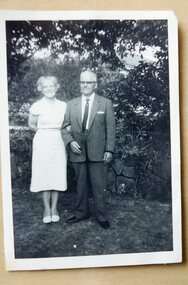
Photograph, Speros and Ivy Kostopoulos, 1950
... Peak. In partnership with his brother Othon Kostopulos he ran successful cafe businesses in the CBD and St Kilda. He later purchased a poultry farm in what is now the suburb of Chadstone. When the farm was eventually subdivided, Ithaca Court...Peak. In partnership with his brother Othon Kostopulos he ran successful cafe businesses in the CBD and St Kilda. He later purchased a poultry farm in what is now the suburb of Chadstone. When the farm was eventually subdivided, Ithaca Court ...Speros Kostopoulos first arrived in Australia in 1900, returning to Greece to serve in the 1912-1913 Balkan wars and then returning to Australia. He was a foundation member of the IPS in 1916, the same year he married Ivy Peak. In partnership with his brother Othon Kostopulos he ran successful cafe businesses in the CBD and St Kilda. He later purchased a poultry farm in what is now the suburb of Chadstone. When the farm was eventually subdivided, Ithaca Court was named after Speros' birthplace and Ivydene Court (incorrectly listed as Ipydene) after his wife Ivy. A black and white photograph of a lady and man standing in a garden.kostopulos, kostos -
 Wodonga & District Historical Society Inc
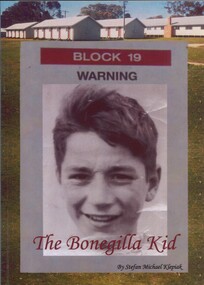
Book - The Bonegilla Kid, Stefan Michael Klepiak, 2007
... peak. In his own words, young Stefan terrorised the migrants at the Bonegilla migrant camp day and night. The book describes the antics he and other boys at Bonegilla engaged in as they adapted to their new life after fleeing war-torn Europe. Stefan was often unsupervised, played truant from school and crossed the path of the local Wodonga Police. He was a regular guest at the Wodonga jailhouse and became known by the police and magistrates after several court ...This biography documents the story of Stefan Michael Klepiak who, as a boy, between the ages of nine and 15 years lived at the Migrant Reception Centre at Bonegilla, Victoria. This was from 1957 to 1962 when Australia's post-World War II immigration program was at its peak. In his own words, young Stefan terrorised the migrants at the Bonegilla migrant camp day and night. The book describes the antics he and other boys at Bonegilla engaged in as they adapted to their new life after fleeing war-torn Europe. Stefan was often unsupervised, played truant from school and crossed the path of the local Wodonga Police. He was a regular guest at the Wodonga jailhouse and became known by the police and magistrates after several court appearances as "The Bonegilla Kid". In the Epilogue Stefan acknowledges key people in his life, including two Bonegilla policemen and the Bonegilla Camp Director, who gave "The Bonegilla Kid" the guidance he needed and put him on a positive pathway for the future.A volume of 57 pages plus an epilogue relating the author's experience at Bonegilla, Victoria.non-fictionThis biography documents the story of Stefan Michael Klepiak who, as a boy, between the ages of nine and 15 years lived at the Migrant Reception Centre at Bonegilla, Victoria. This was from 1957 to 1962 when Australia's post-World War II immigration program was at its peak. In his own words, young Stefan terrorised the migrants at the Bonegilla migrant camp day and night. The book describes the antics he and other boys at Bonegilla engaged in as they adapted to their new life after fleeing war-torn Europe. Stefan was often unsupervised, played truant from school and crossed the path of the local Wodonga Police. He was a regular guest at the Wodonga jailhouse and became known by the police and magistrates after several court appearances as "The Bonegilla Kid". In the Epilogue Stefan acknowledges key people in his life, including two Bonegilla policemen and the Bonegilla Camp Director, who gave "The Bonegilla Kid" the guidance he needed and put him on a positive pathway for the future.immigrant children biography, bonegilla migrant reception centre, migrant life australia -
 Ballarat Heritage Services
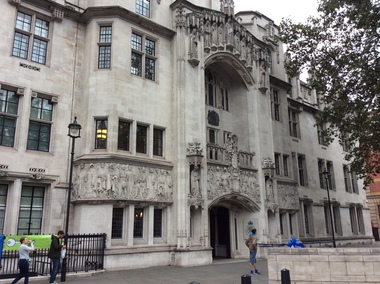
Photograph - Digital photograph, Exterior, Supreme Court, London, 2016, 19/09/2016
... As civil administration developed, it tended to be conducted by the Justices of the Peace and its offices were often co-located with the first tier of the courts. This close association reached a peak in the latter half of the nineteenth century, since when the two activities have tended to separate. ...As civil administration developed, it tended to be conducted by the Justices of the Peace and its offices were often co-located with the first tier of the courts. This close association reached a peak in the latter half of the nineteenth century, since when the two activities have tended to separate. ...01 October 2009 marks a defining moment in the constitutional history of the United Kingdom: transferring judicial authority away from the House of Lords, and creating a Supreme Court for the United Kingdom in the historic setting of the former Middlesex Guildhall on Parliament Square. In this location, The Supreme Court forms part of a pre-existing quadrangle made up of the Houses of Parliament, Westminster Abbey and Treasury. As civil administration developed, it tended to be conducted by the Justices of the Peace and its offices were often co-located with the first tier of the courts. This close association reached a peak in the latter half of the nineteenth century, since when the two activities have tended to separate. In April 2005, all Magistrates’ Court houses were transferred from the care of County Councils to the Department of Constitutional Affairs (DCA). (https://www.supremecourt.uk/about/history.html, accessed 21 September 2016)Colour photograph of the Supreme Court in London. london, supreme court, law, legal -
 Flagstaff Hill Maritime Museum and Village
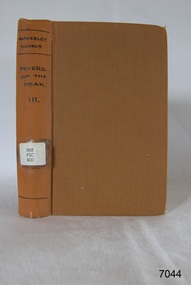
Book - Fictional stories, Sir Walter Scott, Waverley Novels Peveril of the Peak- 3 Vol 30, 1838
... Peak District, the Isle of Man, and London. The story continues on the Peveril family's royalist loyalties clashing with the Bridgenorths' Puritan resentment, fuelled by past Civil War grievances like the execution of William Christian. Julian and Alice's love is tested when Julian's parents face Popish Plot accusations with subplots involving a scheming dwarf, the Countess of Derby, and court figures like the Duke of Buckingham. ...The subject volume “Waverley Novels Vol 30” published by Fisher Son & Co (1838) is part of a collected edition of Sir Walter Scott's works, containing stories from the "Tales of My Landlord" series. "Tales of My Landlord" forms a key subset of Scott's Waverley Novels, presented as fictional tales gathered by characters like Peter Pattieson from the landlord of the Wallace “Inn at Gandercleugh”. The series spans multiple books across four sub-series, including “The Black Dwarf” (1707 setting), “Old Mortality” (1679–1689), “The Heart of Midlothian” (1736), “The Bride of Lammermoor” (1709–1711), “A Legend of Montrose” (1644–1645), “Count Robert of Paris” (1097), and “Castle Dangerous” (1307). Vol 46 in the 1838 Fisher edition reprints later entries like “Count Robert of Paris” or “Castle Dangerous” from the fourth series, as these stories originally appeared in Scott's Magnum Opus collected volume editions, the first from 1816. With the influential 48-volume “Magnum Opus” edition from 1829–1833 by Robert Cadell, serving as the basis for later collected published sets like Fisher's. Peveril of the Peak is Walter Scott's longest novel, published in 1823 and set during the late 17th century amid the Popish plot hysteria under Charles II. It follows young Cavalier Julian Peveril's forbidden romance with Alice Bridgenorth a Puritan's daughter. The story covers political intrigue, family feuds, and conspiracies drawing the characters into events spanning Derbyshire's Peak District, the Isle of Man, and London. The story continues on the Peveril family's royalist loyalties clashing with the Bridgenorths' Puritan resentment, fuelled by past Civil War grievances like the execution of William Christian. Julian and Alice's love is tested when Julian's parents face Popish Plot accusations with subplots involving a scheming dwarf, the Countess of Derby, and court figures like the Duke of Buckingham. It resolves with royal intervention, exposing intrigues and eventually uniting the lovers.Waverley Novels Peveril of the Peak- 3 Vol 30, Light brown hardcover lettering in black text. Author: Sir Walter Scott Publisher: Fisher Son & Co Date: 1838fictionThe subject volume “Waverley Novels Vol 30” published by Fisher Son & Co (1838) is part of a collected edition of Sir Walter Scott's works, containing stories from the "Tales of My Landlord" series. "Tales of My Landlord" forms a key subset of Scott's Waverley Novels, presented as fictional tales gathered by characters like Peter Pattieson from the landlord of the Wallace “Inn at Gandercleugh”. The series spans multiple books across four sub-series, including “The Black Dwarf” (1707 setting), “Old Mortality” (1679–1689), “The Heart of Midlothian” (1736), “The Bride of Lammermoor” (1709–1711), “A Legend of Montrose” (1644–1645), “Count Robert of Paris” (1097), and “Castle Dangerous” (1307). Vol 46 in the 1838 Fisher edition reprints later entries like “Count Robert of Paris” or “Castle Dangerous” from the fourth series, as these stories originally appeared in Scott's Magnum Opus collected volume editions, the first from 1816. With the influential 48-volume “Magnum Opus” edition from 1829–1833 by Robert Cadell, serving as the basis for later collected published sets like Fisher's. Peveril of the Peak is Walter Scott's longest novel, published in 1823 and set during the late 17th century amid the Popish plot hysteria under Charles II. It follows young Cavalier Julian Peveril's forbidden romance with Alice Bridgenorth a Puritan's daughter. The story covers political intrigue, family feuds, and conspiracies drawing the characters into events spanning Derbyshire's Peak District, the Isle of Man, and London. The story continues on the Peveril family's royalist loyalties clashing with the Bridgenorths' Puritan resentment, fuelled by past Civil War grievances like the execution of William Christian. Julian and Alice's love is tested when Julian's parents face Popish Plot accusations with subplots involving a scheming dwarf, the Countess of Derby, and court figures like the Duke of Buckingham. It resolves with royal intervention, exposing intrigues and eventually uniting the lovers. warrnambool, shipwrecked-coast, flagstaff-hill, flagstaff-hill-maritime-museum, maritime-museum, shipwreck-coast, flagstaff-hill-maritime-village, shipwrecked-artefact, book, waverley novels vol 46 tales of my landlord, sir walter scott, pattison collection, warrnambool library, warrnambool mechanics’ institute, ralph eric pattison, corangamite regional library service, warrnambool city librarian, mechanics’ institute library, victorian library board, warrnambool books and records, warrnambool children’s library
