
Showing 543 items matching "phillip's family"
-
 Williamstown Historical Society Inc
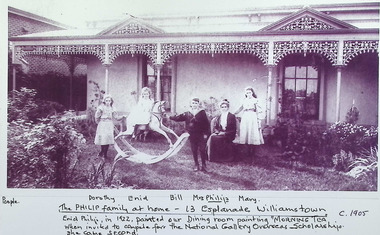
Photograph - The Phillip family in front of their house at 13 The Esplanade, Williamstown
... The Phillip family in front of their house at 13 The Esplanade, Williamstown...Phillip's Family...Phillip's Family 13 Esplanade In 1922 Enid painted "Morning Tea" and was invited to compete for the National Gallery of Victoria Overseas Scholarship, where she came second L-R, Dorothy, Enid, Bill, Mrs Phillip & Mary, c.1905 Photograph The Phillip family in front of their house at 13 The Esplanade, Williamstown ...L-R, Dorothy, Enid, Bill, Mrs Phillip & Mary, c.1905 In 1922 Enid painted "Morning Tea" and was invited to compete for the National Gallery of Victoria Overseas Scholarship, where she came second phillip's family, 13 esplanade -
 Lakes Entrance Historical Society
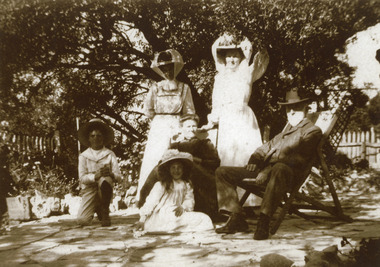
Photograph - Phillips family at Sea Shell cottage Lakes Entrance c1900
... Sepia toned photograph of the Phillips family who spent summer holidays at their cottage Sea Shell on the hummocks at the new works Lakes Entrance Victoria...Genealogy Sepia toned photograph of the Phillips family who spent summer holidays at their cottage Sea Shell on the hummocks at the new works Lakes Entrance Victoria Photograph Phillips family at Sea Shell cottage Lakes Entrance c1900 ...Sepia toned photograph of the Phillips family who spent summer holidays at their cottage Sea Shell on the hummocks at the new works Lakes Entrance Victoriagenealogy -
 Phillip Island and District Historical Society Inc.
Photograph, Early 19th Century
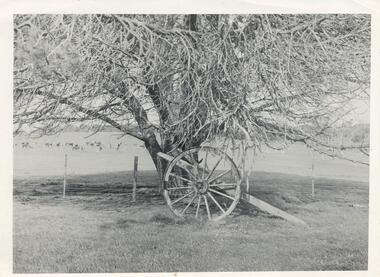
... Photograph of wheels of the buggy that brought the McIlwraith family to Phillip Island...Photograph of the wheels of buggy used to bring McIlwraith family to Phillip Island..."James McIlwraith - wheel of buggy that brought the family to Phillip Island"...Photograph of wheels of the buggy that brought the McIlwraith family to Phillip Island james mcilwraith phillip island buggy wheels "James McIlwraith - wheel of buggy that brought the family to Phillip Island" Photograph of the wheels of buggy used to bring McIlwraith family to Phillip Island Photograph Photograph ...Photograph of wheels of the buggy that brought the McIlwraith family to Phillip IslandPhotograph of the wheels of buggy used to bring McIlwraith family to Phillip Island"James McIlwraith - wheel of buggy that brought the family to Phillip Island"james mcilwraith, phillip island, buggy wheels -
 Lakes Entrance Historical Society
Book, Phillip Pepper author, T DeAraugo Editor, You Are What You Make Yourself to Be by Phillip Pepper, 1980
... The story of Phillip Peppers family relatives and forebears and struggles to come to terms with the changes to their lifestyle over many generations...Aboriginals Sports Settlement ISBN 908090 28 5 The story of Phillip Peppers family relatives and forebears and struggles to come to terms with the changes to their lifestyle over many generations You Are What You Make Yourself to Be by Phillip Pepper Book Phillip Pepper author, T DeAraugo Editor ...The story of Phillip Peppers family relatives and forebears and struggles to come to terms with the changes to their lifestyle over many generationsISBN 908090 28 5aboriginals, sports, settlement -
 Stawell Historical Society Inc
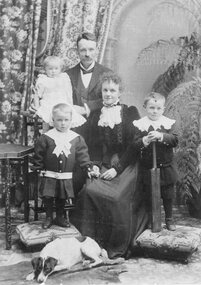
Photograph, Mr Lewis Phillips, Mrs Jane Phillips nee Mathers & their children -- Studio Portrait
... Studio Portrait of Phillips Family Lewis Jane (Mathers) and children...Studio Portrait of Phillips Family Lewis Jane (Mathers) and children Stawell Mr Lewis Phillips, Mrs Jane Phillips nee Mathers & their children -- Studio Portrait Photograph ...Studio Portrait of Phillips Family Lewis Jane (Mathers) and childrenstawell -
 Sunshine and District Historical Society Incorporated
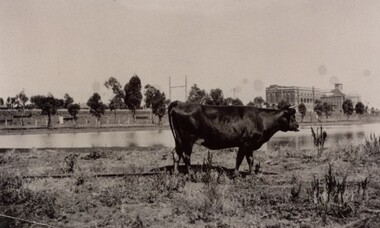
Photograph - Mr Colin Phillips cow Nellie, circa 1930s
... Photograph of Nellie a cow owned by Colin Phillips family standing on a dam bank The dam was part of McKay factory on the western side of Anderson Road In th background is the Albion electrical substation and Darling Flour Mill Colin Phillips of 37 King Edward Avenue Albion 1930s...Colin Clyde Phillips Flour Mill Photograph of Nellie a cow owned by Colin Phillips family standing on a dam bank The dam was part of McKay factory on the western side of Anderson Road In th background is the Albion electrical substation and Darling Flour Mill Colin Phillips of 37 King Edward Avenue Albion 1930s Mr Colin Phillips cow Nellie Photograph Mr Colin Phillips cow Nellie ...Photograph of Nellie a cow owned by Colin Phillips family standing on a dam bank The dam was part of McKay factory on the western side of Anderson Road In th background is the Albion electrical substation and Darling Flour Mill Colin Phillips of 37 King Edward Avenue Albion 1930scolin clyde phillips, flour mill -
University of Melbourne, Burnley Campus Archives
Document, William Phillips, 1966
... Information on William Phillips, first Curator, and family...william phillips curator Information on William Phillips, first Curator, and family William Phillips Document ...Information on William Phillips, first Curator, and familywilliam phillips, curator -
 Whitehorse Historical Society Inc.
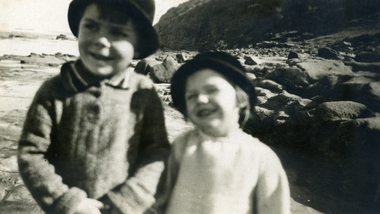
Photograph, Till family
... Background sea shore at Phillip Island. Inscription ' This is my family. Phillip Island.'...Background sea shore at Phillip Island. Inscription ' This is my family. Phillip Island.' ...Black and white photograph of two children, Alwyn and Alison Till, wearing hats. Background sea shore at Phillip Island. Inscription ' This is my family. Phillip Island.'till, alison bertha, alwyn -
 Stawell Historical Society Inc
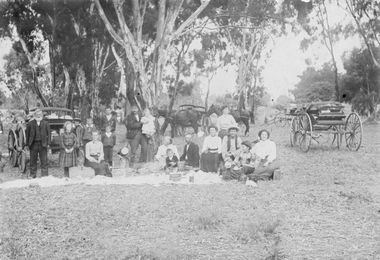
Photograph, Bush picnic scene
... Bush picnic scene with three families, Phillips (left), Borella (centre) and Rathgeber (right). ...Bush picnic scene with three families, Phillips (left), Borella (centre) and Rathgeber (right). ...Bush picnic scene with three families, Phillips (left), Borella (centre) and Rathgeber (right). In front is a picnic setting with horses and buggies in background. Photo mounted on card. 1900's -
 Bendigo Historical Society Inc.
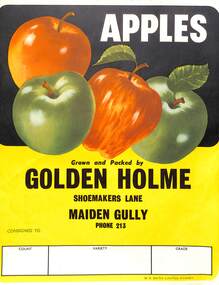
Ephemera - GOLDEN HOLME MAIDEN GULLY: CONSIGNMENT LABEL FOR APPLES, Unknown
... Fruit has been grown in Maiden Gully but eventually the growing of apples was discontinued. The Phillips family bought a 40-acre apple orchard in 1975 which was in Schumacker's Lane. ...Fruit has been grown in Maiden Gully but eventually the growing of apples was discontinued. The Phillips family bought a 40-acre apple orchard in 1975 which was in Schumacker's Lane. ...The printed page was used to record where the apples were to be sent, the count, variety and the grade. This would have allowed the delivery people and the receiver of the apples where they were from, amount, variety of apple and the grade of the fruit. Fruit has been grown in Maiden Gully but eventually the growing of apples was discontinued. The Phillips family bought a 40-acre apple orchard in 1975 which was in Schumacker's Lane. This is possibly the site from which this label originated. The street address is printed 'Shoemakers Lane'.Printed sheet by W.E Smith Limited in Sydney. Background of blue and yellow with apples and black printing. W.E. Smith was a commercial printer and stationer based in Bridge Street, Sydney.'APPLES' 'GROWN AND PACKED BY GOLDEN HOLME' 'SHOEMAKERS LANE, MAIDEN GULLY, PHONE 213' 'W.E. SMITH, SYDNEY'business, retail, apples, maiden gully -
 Ringwood and District Historical Society
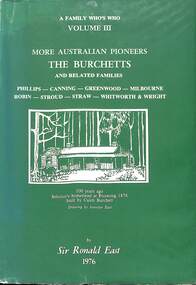
Book, Sir Ronald East, More Australian Pioneers - The Burchetts and Related Families, 1976
... Hard cover book - Full title: A Family Who's Who Volume III - More Australian Pioneers - The Burchetts and Related Families - Phillips, Canning, Greenwood, Milbourne, Robin, Stroud, Straw, Whitworth & Wright. ...Hard cover book - Full title: A Family Who's Who Volume III - More Australian Pioneers - The Burchetts and Related Families - Phillips, Canning, Greenwood, Milbourne, Robin, Stroud, Straw, Whitworth & Wright. ...Hard cover book - Full title: A Family Who's Who Volume III - More Australian Pioneers - The Burchetts and Related Families - Phillips, Canning, Greenwood, Milbourne, Robin, Stroud, Straw, Whitworth & Wright. By Sir Ronald East, 1976."200 copies printed for private distribution in Memory of Our Pioneer Ancestors to ensure that they will not be forgotten. Copy Number 157. To Ann from Dad & Mum, date 25.12.76. -
 Rutherglen Historical Society
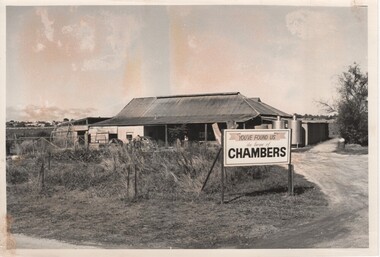
Photograph - Image, 1970s
... Established in 1858 by William Chambers and his son Phillip, the Chambers family have been making wine at Rosewood for over six generations. ...Established in 1858 by William Chambers and his son Phillip, the Chambers family have been making wine at Rosewood for over six generations. wineries north east victoria wine industry chambers winery chambers rosewood rutherglen winery rutherglen australia winemaker On sign in photo: "You've found us. ...Established in 1858 by William Chambers and his son Phillip, the Chambers family have been making wine at Rosewood for over six generations. Black and white photograph of an iron roofed building with stainless steel tanks on one side, and sign in front.On sign in photo: "You've found us. The home of Chambers." On back of photo: "Chambers Rosewood" "78% p 27"wineries, north east victoria, wine industry, chambers winery, chambers rosewood, rutherglen winery, rutherglen australia, winemaker -
 Rutherglen Historical Society
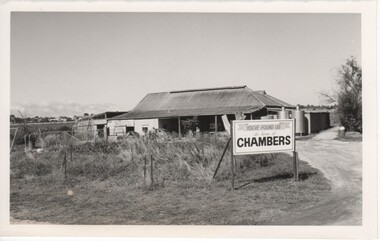
Image, 1970s
... Established in 1858 by William Chambers and his son Phillip, the Chambers family have been making wine at Rosewood for over six generations....Established in 1858 by William Chambers and his son Phillip, the Chambers family have been making wine at Rosewood for over six generations. wineries north east victoria wine industry rosewood cellars chambers winery chambers rosewood rutherglen winery rutherglen australia winemaker On sign in photo: "You've found us. ...Established in 1858 by William Chambers and his son Phillip, the Chambers family have been making wine at Rosewood for over six generations.Black and white photograph of an iron roofed building with stainless steel tanks on one side, and sign in front.On sign in photo: "You've found us. The home of Chambers." On back of photo: "140% [upper case D in small circle] Chambers 'Rosewood' "wineries, north east victoria, wine industry, rosewood cellars, chambers winery, chambers rosewood, rutherglen winery, rutherglen australia, winemaker -
 Phillip Island and District Historical Society Inc.
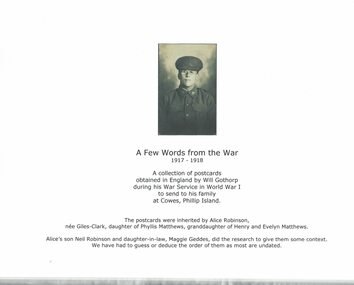
Booklet, A few words from the War 1914-1918, 22/12/2016
... A4 spiral bound booklet containing photocopied pages with black & white photos, text, records, newspaper cuttings and postcards sent from William Gothorp, fighting in WW1, back to family in Phillip Island....Historical Army WW1 WW1 Phillip Island soldiers William Gothorp Alice Robinson (nee Clark) Neil Robinson Spanish infuenza London Carisbrooke Guesthouse A4 spiral bound booklet containing photocopied pages with black & white photos, text, records, newspaper cuttings and postcards sent from William Gothorp, fighting in WW1, back to family in Phillip Island. ...The postcards were inherited by Alice Robinson, nee Giles-Clark, daughter of Phyllis Matthews, granddaughter of Henry and Evelyn Matthews. [William's adopted parents] They lived at Mona Vale, Cowes. Alice's son, Neil Robinson and daughter in law, Maggie Geddes, did the research to give them some context. They had to guess or deduce the order of them as most are undated. William Gothorp W H C C Company, 37 Battalion No. 3306.HistoricalA4 spiral bound booklet containing photocopied pages with black & white photos, text, records, newspaper cuttings and postcards sent from William Gothorp, fighting in WW1, back to family in Phillip Island.army ww1, ww1 phillip island soldiers, william gothorp, alice robinson (nee clark), neil robinson, spanish infuenza, london, carisbrooke guesthouse -
 Phillip Island and District Historical Society Inc.
Photograph, 1914 - 1918
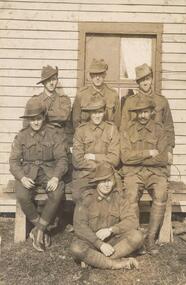
... Arthur Woodley who donated the photographs, was a friend of Jimmy Clarke, who was Captain of the Killarra Ferry and lived at Narabeen Guesthouse in Cowes, Phillip Island. The family lived at San Remo - father was George Clarke. ...Arthur Woodley who donated the photographs, was a friend of Jimmy Clarke, who was Captain of the Killarra Ferry and lived at Narabeen Guesthouse in Cowes, Phillip Island. The family lived at San Remo - father was George Clarke. wwi soldiers jimmy clarke jack clarke arthur woodley 325-01 - Letter on postcard: "Dear Dick, This is our gun team with Corporal, Lance Corporal M. ...Arthur Woodley who donated the photographs, was a friend of Jimmy Clarke, who was Captain of the Killarra Ferry and lived at Narabeen Guesthouse in Cowes, Phillip Island. The family lived at San Remo - father was George Clarke. 325-01 - Sepia photo/postcard of 7 WWI soldiers - Jimmy Clarke on right at back and Jack Clarke on left at back. 325-02 - Sepia portrait of Jimmy Clarke in Army uniform. 325-03. Sepia photo/postcard of 3 WWI soldiers in uniform. 325-04. Sepia photograph of 4 WWI soldiers. Jimmy Clarke 3rd from left and Jack on the right. 325-05. Small sepia photograph on black cardboard of 8 WWI soldiers in France. Jimmy & Jack Clarke in the front. 325-06. Sepia photograph of a large group of WWI soldiers in France. Jack & Jimmy Clarke standing at left.325-01 - Letter on postcard: "Dear Dick, This is our gun team with Corporal, Lance Corporal M. Medal, Jim on your right and your humble on your left. Kind love to all. From Jack. Rec'd your letter dated Feb 24th. France 15/5/1918." 325-03. "Either Jimmy or Jack Clarke standing" 325-04. "Taken at Tannery, St. Aubin, Floreunes. A. R. Joyce, R. R. Godden, Jim & I. French Mortar Crew. First World War 1914-18. 325-05. "Jimmy" & Jack Clarke front in France WWI. 325-06. "Balance of Battery "Apre le Geurre" France 1919. wwi soldiers, jimmy clarke, jack clarke, arthur woodley -
 Surrey Hills Historical Society Collection
Photograph, 'Monserrat' - 26A Wandsworth Road, Surrey Hills
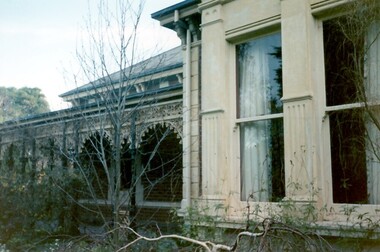
... The house was formerly known as formerly 'Guildford' and built in 1888 to the design of architect Mr George Jobbins. 1900-1902: Home of Mr William Holmes, later of 'Lugano' in Mont Albert Road. 1906-1923: Home of Mr Phillip Parer and family. Briefly the home of Mr Phillip Dicker and family. ...The house was formerly known as formerly 'Guildford' and built in 1888 to the design of architect Mr George Jobbins. 1900-1902: Home of Mr William Holmes, later of 'Lugano' in Mont Albert Road. 1906-1923: Home of Mr Phillip Parer and family. Briefly the home of Mr Phillip Dicker and family. ...The house was formerly known as formerly 'Guildford' and built in 1888 to the design of architect Mr George Jobbins. 1900-1902: Home of Mr William Holmes, later of 'Lugano' in Mont Albert Road. 1906-1923: Home of Mr Phillip Parer and family. Briefly the home of Mr Phillip Dicker and family. From 1988 to March 2019 it was the home of Mr Peter Nicholls and his wife Clare (nee Coney) and their sons Jack and Luke. Peter Douglas Nicholls (8 March 1939 – 6 March 2018) was was born in Melbourne and was an Australian literary scholar and critic. He was the creator and a co-editor of The Encyclopedia of Science Fiction with John Clute.A colour photograph of a house showing two large windows and a veranda to the left. There is decorative iron lacework along the veranda.house names, mont albert road, wandsworth road, surrey hills, 1988, 'monserrat', 'guildford', (mr) peter nicholls, (ms) clare nicholls, (ms) clare coney, (mr) george jobbins, (mr) phillip dicker, (mr) phillip parer, (mr) william holmes -
 Surrey Hills Historical Society Collection
Photograph, 'Monserrat' - 26A Wandsworth Road, Surrey Hills - side veranda
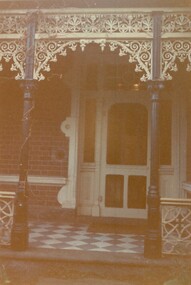
... The house was formerly known as formerly 'Guildford' and built in 1888 to the design of architect Mr George Jobbins. 1900-1902: Home of Mr William Holmes, later of 'Lugano' in Mont Albert Road. 1906-1923: Home of Mr Phillip Parer and family. Briefly the home of Mr Phillip Dicker and family. ...The house was formerly known as formerly 'Guildford' and built in 1888 to the design of architect Mr George Jobbins. 1900-1902: Home of Mr William Holmes, later of 'Lugano' in Mont Albert Road. 1906-1923: Home of Mr Phillip Parer and family. Briefly the home of Mr Phillip Dicker and family. ...The house was formerly known as formerly 'Guildford' and built in 1888 to the design of architect Mr George Jobbins. 1900-1902: Home of Mr William Holmes, later of 'Lugano' in Mont Albert Road. 1906-1923: Home of Mr Phillip Parer and family. Briefly the home of Mr Phillip Dicker and family. From 1988 to March 2019 it was the home of Mr Peter Nicholls and his wife Clare (nee Coney) and their sons Jack and Luke. Peter Douglas Nicholls (8 March 1939 – 6 March 2018) was was born in Melbourne and was an Australian literary scholar and critic. He was the creator and a co-editor of The Encyclopedia of Science Fiction with John Clute.A colour photograph of the front entrance to a brick house showing the lacework on the veranda. Grey and white tiles set in a diamond pattern are set on the veranda and remnants of a vine adorn the left post of the veranda.house names, mont albert road, wandsworth road, surrey hills, 1988, 'monserrat', 'guildford', (mr) peter nicholls, (ms) clare nicholls, (ms) clare coney, (mr) george jobbins, (mr) phillip dicker, (mr) phillip parer, (mr) william holmes -
 Greensborough Historical Society
Photograph - Digital Image, Painting by Anthony Beale, 1839c
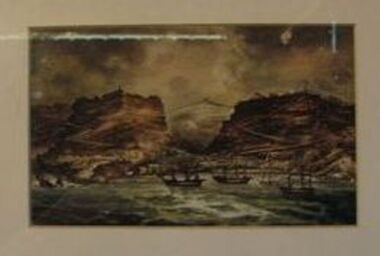
... Major Anthony Beale settled in Port Phillip District with his family in 1841. He established an estate called "St Helena" (Greensborough). ...Major Anthony Beale settled in Port Phillip District with his family in 1841. He established an estate called "St Helena" (Greensborough). ...Major Anthony Beale settled in Port Phillip District with his family in 1841. He established an estate called "St Helena" (Greensborough). This photograph is of a painting by Major Beale.Digital copy of colour photograph of painting.anthony beale, st helena -
 Phillip Island and District Historical Society Inc.
Photograph, 1978/79
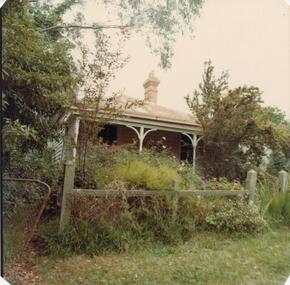
... In 1955 Carmen Figuerola published the little book "Family on Phillip Island" - a lovely story of the bland family. ...In 1955 Carmen Figuerola published the little book "Family on Phillip Island" - a lovely story of the bland family. ...The home of the Figuerola sisters. They were three artistic single ladies. In 1955 Carmen Figuerola published the little book "Family on Phillip Island" - a lovely story of the bland family. Today the house does not exist.Single storey old weatherboard house in Steele Street, Cowes. A lot of green shrubbery and trees.local history, photographs, historic, buildings - historical, coloured photograph, john cook, phillip island -
 Warrnambool and District Historical Society Inc.
Document - Invitation, Heatherlie Homes opening 1979, Circa August 1979
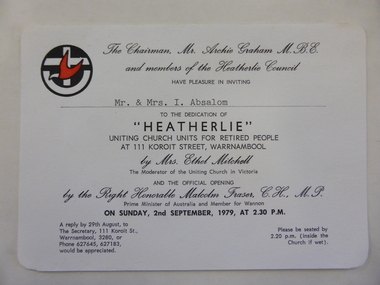
... Name taken from mrs Annie Phillips (nee Bone) family home in Stawell....Name taken from mrs Annie Phillips (nee Bone) family home in Stawell. Original document, invitation to dedication of "Heatherlie" by Mrs Ethel Mitchell, Moderator of Uniting Church in Victoria and the official opening By the R Hon Malcolm Fraser, PM of Australia and Member of Wannon. ..."Heatherlie " homes have been extended and are still operated under the auspices of the Uniting Church Australia. Invitation retained by Absalom family members for 44 years. "Heatherlie" name originated from owners of wooden house built by EB Phillips, furniture store owner. Name taken from mrs Annie Phillips (nee Bone) family home in Stawell.Original document, invitation to dedication of "Heatherlie" by Mrs Ethel Mitchell, Moderator of Uniting Church in Victoria and the official opening By the R Hon Malcolm Fraser, PM of Australia and Member of Wannon. Significant as "Heatherlie" was a community and government funded building programRectangular white card with rounded corners. Black print with black and red logo, Uniting Church. Typewritten name, Mr. & Mrs. I. Absalom. Varied size print, copperplate, capital letters and typewritten name inserted.Logo of Uniting Churchmr archie graham, mr & mrs i absalom, uniting church, warrnambool, mrs ethel mitchell-moderator, malcolm fraser pm, of australia, koroit street, heatherlie council -
 Warrnambool and District Historical Society Inc.
Tools, Chisel, Late 19th century/early 20th century
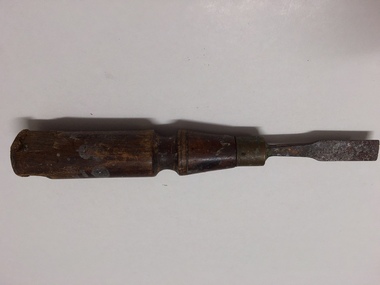
... His products were sold all over Australia. Ernest Phillips and his family lived at ‘Heatherlie’ in Koroit Street. ...His products were sold all over Australia. Ernest Phillips and his family lived at ‘Heatherlie’ in Koroit Street. ...This chisel belonged to Ernest Brighton Phillips, a Warrnambool furniture maker. Ernest Phillips (1875-1924) was born in Warrnambool and was apprenticed as a cabinet maker at the Warrnambool Box Works. In the 1890s he established a furniture store at the corner of Liebig and Koroit Streets and by the 20th century he had the largest furniture warehouse and factory in Victoria outside Melbourne. His products were sold all over Australia. Ernest Phillips and his family lived at ‘Heatherlie’ in Koroit Street. Today this property is the site of the residential complex for senior citizens known as ‘Heatherlie’. This chisel is of interest as it belonged to Ernest Phillips, a prominent businessman in Warrnambool at the end of the 19th century and the beginning of the 20th century. The item is also of interest as it is a good example of a woodworking tool that was used 100 years ago. This is a chisel with a wooden handle and a metal blade flattened at the end and attached to the handle by a brass ring. The blade is rusty and the handle has some of the wood gouged out at the top end. The handle has splotches of paint on it. The name of the owner, E. Phillips, is stamped into the wood. ‘E. Phillips’ernest phillips, history of warrnambool, warrnambool -
 Warrnambool and District Historical Society Inc.
Tools, Hand Working Tool, Late 19th century/early 20th century
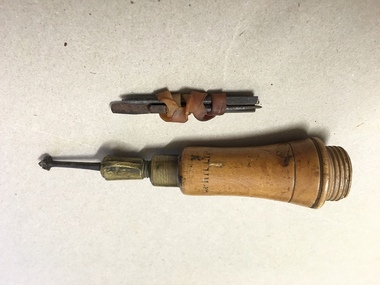
... His products were sold all over Australia. Phillips and his family lived at ‘Heatherlie’ in Koroit Street. ...His products were sold all over Australia. Phillips and his family lived at ‘Heatherlie’ in Koroit Street. ...This tool belonged to Ernest Brighton Phillips, a Warrnambool furniture maker. Ernest Phillips (1875-1924) was born in Warrnambool and learnt his carpentry trade at the Warrnambool Box Works. In the late 1890s Phillips established a furniture store at the corner of Liebig and Koroit streets and by the early 20th century he had the largest furniture warehouse and factory in Victoria outside of Melbourne. His products were sold all over Australia. Phillips and his family lived at ‘Heatherlie’ in Koroit Street. Today this property is the site of the residential complex for senior citizens known as ‘Heatherlie’. This tool is of considerable interest as it belonged to Ernest Phillips, a prominent businessman in Warrnambool at the end of the 19th century and the beginning of the 20th century. It is also of interest as a good example of a tool that was in use 100 years ago. This is a small tool with a wooden handle. The top part of the handle that screws in is missing. The tool is attached to the handle by a brass ring and a screw and the tool itself is a thin nail-like piece of metal with a small metal piece at the end in the shape of a star with six points. This end piece gouges out a hole or a pattern in wood or other hard material. The tool belonged to Ernest Phillips and his name is stamped on the handle. Three oblong-shaped metal nails were also with this tool but were not necessarily used with it. ‘E. Phillips’ernest phillips, history of warrnambool -
 Warrnambool and District Historical Society Inc.
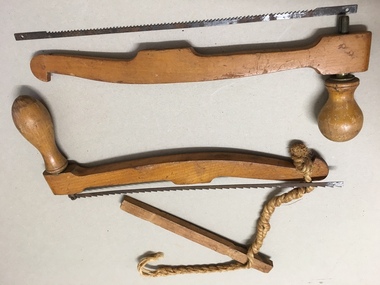
Tools, Tenan Saws, Late 19th century
... His products were sold all over Australia. Phillips and his family lived at ‘Heatherlie’ in Koroit Street. ...His products were sold all over Australia. Phillips and his family lived at ‘Heatherlie’ in Koroit Street. ...These hand saws belonged to Ernest Brighton Phillips (1875-1924). Born in Warrnambool, Ernest Phillips took up an apprenticeship in cabinet making at the Box Works in Warrnambool. By the late 1890s he had a furniture store and factory at the corner of Liebig and Koroit Streets. By the early 20th century Phillips had the largest furniture warehouse and factory in Victoria outside Melbourne. His products were sold all over Australia. Phillips and his family lived at ‘Heatherlie’ in Koroit Street. Today the site of the Phillips’ home contains flats for senior citizens in a complex known as ‘Heatherlie’. These tools are of interest as they belonged to Ernest Phillips, a prominent businessman in Warrnambool at the end of the 19th and the beginning of the 20th centuries. They are also examples of the type of tools used 100 years ago. These are two hand saws which belonged to Ernest Phillips of Warrnambool. They have a rounded wooden handle inserted via a metal plug into the end of a piece of wood which is slightly curved. Attached to the metal plug is a thin steel blade with a serrated edge. The blade is approximately the same size as the piece of wood. The blades are somewhat rusted.‘J. Marples & Sons, Sheffield’.ernest phillips, history of warrnambool -
 Surrey Hills Historical Society Collection
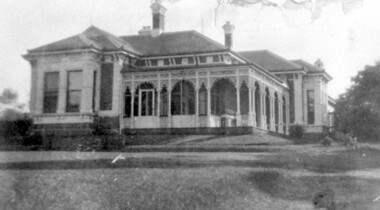
Photograph, 'Monserrat', 26A Wandsworth Road, Surrey Hills c 1888
... 'Guildford' / ‘Monserrat’ originally fronted Mont Albert Road. 1888-c1900 George Jobbins, architect 1900-04 William Holmes, designer of the electrification of Melbourne suburban railways 1906-22 Philip Parer family - Phillip Parer was one of 5 Parer sons & 3 daughters who came to Australia from Spain from the 1850s onwards. ...'Guildford' / ‘Monserrat’ originally fronted Mont Albert Road. 1888-c1900 George Jobbins, architect 1900-04 William Holmes, designer of the electrification of Melbourne suburban railways 1906-22 Philip Parer family - Phillip Parer was one of 5 Parer sons & 3 daughters who came to Australia from Spain from the 1850s onwards. ...This home was formerly known as ‘Guildford’ and was built in 1888. 'Guildford' / ‘Monserrat’ originally fronted Mont Albert Road. 1888-c1900 George Jobbins, architect 1900-04 William Holmes, designer of the electrification of Melbourne suburban railways 1906-22 Philip Parer family - Phillip Parer was one of 5 Parer sons & 3 daughters who came to Australia from Spain from the 1850s onwards. The family set up a catering business. 1922-23 George Dicker family, later of Mont Albert Road After the frontage was sold, the entrance to 'Monserrat' became Wandsworth Road. A black and white photograph of a Italian Boom style house, with a double row of iron lace, and pairs of verandah columns in place of the usual single ones. The roof structure is elaborate and with chimney pots on the substantial Victorian chimneys.wandsworth road, surrey hills, architects, catering business, chimneys, house names, italian boom style, mont albert road, (mr) george jobbins, 'guildford', 'monserrat', (mr) phillip parer, spanish families, (mr) william holmes, (mr) george dicker -
 Eltham District Historical Society Inc
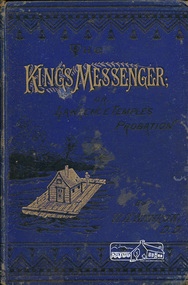
Book, The King's Messenger: or Lawrence Temple's Probation. A story of Canadian Life by W.H. Withrow, D.D, 1883
... The book was presented in 1887 to William Shillinglaw, by Phillip Shillinglaw. This family were pioneer settlers in the Eltham area. ...One of five items relating to the Shillinglaw Family collection The book was presented in 1887 to William Shillinglaw, by Phillip Shillinglaw. ...2nd Edition. Preface: "The following story is an attempt to depict, from personal observation, phases of Canadian life with which the writer is somewhat familiar - with what success others must decide. If it shall inspire in our readers a stronger love of that noble country, and a desire to live for its moral and religious progress, it will not have been written in vain. It is especially hoped that the religious lessons which it is designed to teach may lead its readers to a fuller consecration of all their powers and faculties to the glory of God and the welfare of their fellow-men". The book was presented in 1887 to William Shillinglaw, by Phillip Shillinglaw. This family were pioneer settlers in the Eltham area. William was born 4 October 1877 at Bundoora and died 3 July 1891 in Eltham from rheumatic fever aged 13 years. One of five items relating to the Shillinglaw Family collectionThe book was presented in 1887 to William Shillinglaw, by Phillip Shillinglaw. This family were pioneer settlers in the Eltham area.Hardcover[written on loose flyleaf] Eltham Primitive Methodist Sabbath School - Presented to William Shillinglaw Sept 26th / 87 Philip Shillinglaw Supt.shillinglaw family collection, religious stories -
 Eltham District Historical Society Inc
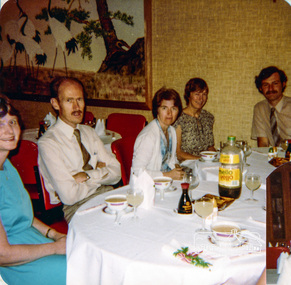
Photograph, Staff luncheon at a Chinese Restaurant, December, Eltham Christian School, 1983, 1983
... Jenny Berry, Chris and Doreen Trinham, Colleen Humphreys, Gavin Phillips The Stokes family settled in this area of Eltham in the 1940s and were associated with the Eltham Christian Church. ...Jenny Berry, Chris and Doreen Trinham, Colleen Humphreys, Gavin Phillips The Stokes family settled in this area of Eltham in the 1940s and were associated with the Eltham Christian Church. ...Jenny Berry, Chris and Doreen Trinham, Colleen Humphreys, Gavin Phillips The Stokes family settled in this area of Eltham in the 1940s and were associated with the Eltham Christian Church. In the 1970s this church had met in temporary premises in Eltham. Lots of the original 1920s subdivision remained south of Nyora Road and a number of these lots were utilized for the Eltham Christian School, which was established by the Eltham Christian Church in 1981. The school operated on this site until 2000. The premises were owned by the Nillumbik Community Church who were in operation till November 2010 when the Eltham Baptist Church commenced a lease arrangement until the site was purchased by them in April 2012. The building is constructed of brick and timber with a balcony on two sides that looks over an expanse of grass. Sources: STOKES ORCHARD – AN INCOMPLETE HISTORY February 28, 2015 http://www.elthamhistory.org.au/ Australian Christian Church Histories - Eltham Baptist Church http://www.churchhistories.net.au/church-catalog/eltham-vic-baptist/ From a magnetic spiral bound photo album featuring a series of photographs (some cropped) with captions relating to the staff, students and activities of the Eltham Christian School which operated as part of the Eltham Christian Church at Nyora Road, Eltham. See also entries for each photograph.colour photographeltham christian school, nyora road, gavin phillips, jenny berry, chris trinham, doreen trinham, colleen humphreys -
 Flagstaff Hill Maritime Museum and Village
Photograph - Portrait, David Charles McArthur, Superintendent, Bank of Australasia 1867-1876
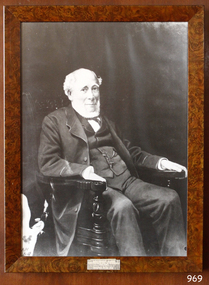
... Phillip (Melbourne). McArthur was born in 1808 in Gloucester, England, and educated in Scotland. He worked for an insurance firm in Edinburgh, where in 1835 he married Caroline, nee Wright. McArthur and his family...Phillip (Melbourne). McArthur was born in 1808 in Gloucester, England, and educated in Scotland. He worked for an insurance firm in Edinburgh, where in 1835 he married Caroline, nee Wright. McArthur and his family ...The subject of this photograph, David Charteris McArthur, was the founding manager of the Bank of Australasia in Port Phillip (Melbourne). McArthur was born in 1808 in Gloucester, England, and educated in Scotland. He worked for an insurance firm in Edinburgh, where in 1835 he married Caroline, nee Wright. McArthur and his family party sailed from the U.K. to arrive in Sydney in October 1835, where he joined the Bank of Australasia when it opened in Sydney in December. McArthur sailed to Melbourne in August 1838 with 3000 pounds in coins, protected by armed guards and two bulldogs, to open the Melbourne branch of the Bank of Australasia. The branch grew quickly, servicing both private and government customers. He opened many branches in the goldfields during the 1850s. In 1862, he was appointed as general inspector of branches. He spent time with the bank in New Zealand. On his return to Melbourne, at age 57, he was put in charge of the entire bank. McArthur lived in the hills of Heidelberg, Melbourne. He was the first chairman of Associated Banks and was an advisor to politicians and merchants. He was retired in October 1876 by the London directors and given a free trip to London, an annuity and a seat on the bank’s Advisory Board. McArthur was active in the community, being a member of the Mechanics’ Institute, on the committee that advised Governor Hotham on the Colony’s finances, chairman of the Heidelberg Road Board, one of the original trustees of the Library of Victoria in 1853 and president of the trustees of the Public Library, Museums and National Gallery of Victoria in 1880-83. He was also on many other community organisations. He died in his home “Charterisville” in East Ivanhoe in 1887. He and Caroline had no children. The Melbourne branch of Australia and New Zealand Bank has a portrait of McArthur in its boardroom. St John's Church, Heidelberg, commemorates him with a stained-glass window entitled 'King David'. The McArthur Gallery in the National Gallery of Victoria is also named after him. (David's brother, Donald, moved from Sydney to Melbourne in 1836 with the first government survey team.) ABOUT THE BANK OF AUSTRALASIA In 1836 the Bank of Australasia was established in London by Royal Charter. In 1951 the bank merged with the Union Bank of Australia, to form ANZ Bank Limited. In 1970 it merged with the English, Scottish and Australian Bank to become Australia and New Zealand Banking Group Limited. Since that time the ANZ has acquired other banks and introduced Internet banking and mobile banking. BANK OF AUSTRALASIA IN WARRNAMBOOL The Bank of Australasia first opened in Warrnambool in July 1854 in a building on Merri Street. The manager was Mr Samuel Hannaford. The bank then purchased and moved to a stone building on the corner of Timor and Gibson Streets, previously owned by Cramond and Dickson and almost opposite the Examiner’s office. In January 1957 Mr W.H. Palmer became the new manager and was there until November 1869. The bank then built its own building on the corner of Timor and Kepler Streets in 1859. Mr Basil Spence, the teller, was appointed acting manager in 1869 and Mr H.B. Chomley was the next appointed manager, in April 1873 and was still manager in 1886. The municipality of Warrnambool first banked with the Bank of Australasia from 1856 to April 1857. David Charteris McArthur served as the founding manager of the Bank of Australasia. His leadership marked a significant chapter in Warrnambool's early commercial development. The municipality of Warrnambool relied on the Bank of Australasia as its official bank from 1856 until April 1857. This period is symbolised by a photograph of McArthur, which represents the origins of Warrnambool's commercial history and its early financial infrastructure.Photograph; portrait of David Charteris McArthur. Heavily retouched black and white print in plain brown varnished frame, behind glass, with plaque on lower edge and inscription lower left corner.Lower left corner "A-H 1-9". Engraved on plaque "DAVID CHARTERS MCARTHUR \ SUPERINTENDENT \ BANK OF AUSTRALASIA \ 1867-1876"flagstaff hill, warrnambool, shipwrecked-coast, flagstaff-hill, flagstaff-hill-maritime-museum, maritime-museum, shipwreck-coast, flagstaff-hill-maritime-village, bank of australasia, david charteris mcarthur, superintendent bank of australasia, colonial commerce, manager bank of australasia melbourne, colonial bank, warrnambool bank of australasia, shipwrecked coast, flagstaff hill maritime museum, maritime museum, shipwreck coast, flagstaff hill maritime village, great ocean road, boa, union bank, australia & new zealand bank, anz bank, david charters mcarthur, d c mcarthur -
 Flagstaff Hill Maritime Museum and Village
Letter - William Ferrier, 14th November 1905
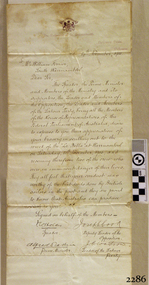
... families in Tvedestrand, Norway. She was significant to Norwegian shipping, being one of only 27 iron and steel ships ever built in Norway. She was registered in New Zealand and engaged from 1902 in inter-colonial trading of timber in the Pacific, between New Zealand and Australia and was often in Port Phillip Bay, Victoria. ...families in Tvedestrand, Norway. She was significant to Norwegian shipping, being one of only 27 iron and steel ships ever built in Norway. She was registered in New Zealand and engaged from 1902 in inter-colonial trading of timber in the Pacific, between New Zealand and Australia and was often in Port Phillip Bay, Victoria. ...The letter to William Ferrier of South Warrnambool from the Prime Minister and the Parliament of the Commonwealth recognised the significance of William’s brave and courageous lifesaving act to the people of Australia; “They all feel that your conduct was worthy of the best deeds done by British sailors in the past and they are proud to know that Australia can produce such as you.” The story of that brave rescue follows on below … The ship from which the sailors were rescued was the three-masted, iron and steel barquentine the La Bella, built in Norway in 1893. She was one of two iron and steel ships by Johan Smith, The company was one of the leading shipping families in Tvedestrand, Norway. She was significant to Norwegian shipping, being one of only 27 iron and steel ships ever built in Norway. She was registered in New Zealand and engaged from 1902 in inter-colonial trading of timber in the Pacific, between New Zealand and Australia and was often in Port Phillip Bay, Victoria. On 5th October 1905, the twelve-year-old La Bella left Lyttleton, New Zealand carrying a cargo of timber bound for Warrnambool, Australia. She was manned by a crew of twelve: the Master, (Captain Mylius, previously 1st Mate of La Bella, appointed Captain to La Bella on 6th February 1903) 2 Mates, Cook, six able seamen, one ordinary seaman and a boy. Bad weather en route caused her to shelter at Burnie on Tasmania's North West coast. On November 10th, the 37th day of her journey, La Bella approached Warrnambool. Captain Mylius steered her towards Lady Bay Channel in heavy south-west seas and evening mist. He ordered the helmsman to steer for the light. As the ship came round, a tremendous sea struck her on the port quarter, causing her to breach broadside in a north-westerly direction into breakers. The helm was brought round twice more, but each time heavy seas broke over her, the third time throwing the La Bella on to a submerged reef in Lady Bay now known as La Bella Reef (about 100 yards from the Warrnambool breakwater). The sea was so rough that it even wrenched a one-and-a-half ton anchor from its fastenings and into the sea. As Captain Mylius headed to the steel wheelhouse, intending to send up a rocket flare, a huge sea slammed the steel door into him (resulting in massive bruising front and back) Despite his injuries he still managed to set off a blue light, which he held up in his hands. La Bella’s lifeboats were filled with seawater and broke up on their chocks. The blue light was the first indication to people on the shore that there was a ship in distress. The Harbour Master, Captain Roe (who lived in the Harbour Master’s House opposite Flagstaff Hill), organised a group of volunteers to crew the lifeboat because the trained crew was unavailable; the crewmen were working on a steamer in Port Fairy at the time. He then poured oil onto the water to try and smooth the sea. At around 11 pm three of the crew took shelter in the steel forecastle but the sea crashed into it and broke it up. While the rest of the crew and onlookers watched helplessly in the moonlight the bodies were washed away into the sea, never to be seen again. Some of the crew lashed themselves to the weather rail to keep from being washed away. Watson, the ordinary seaman, became tangled in the rigging lines and was too weak to move, so the 2nd Mate, Robertson, put a line onto him so that he wouldn’t wash off. Around 11 pm three of the crew were unconscious from exhaustion. The situation on La Bella was becoming dangerous. The 2nd Mate moved to the ‘house’ and soon afterwards the ship slipped in the heavy sea. The lashings of the 1st Mate and the ‘boy’ Denham had kept them safe until about 2 am when they were washed overboard; no one was able to help. One by one, the exhausted crew were being washed overboard, too weak to hold on any longer. During the night the La Bella had broken into two and the deckhouse ran out towards the sea. Two more men drowned when trying to reach the lifeboat. By sunrise, the only survivors of the twelve were the Master, 2nd Mate and three seamen. Early in the morning, Captain Roe used the rocket apparatus on shore to try and shoot a line to the ship for a safer rescue but each attempt fell short of the target. Several attempts were made by the lifeboat to rescue the stricken sailors, but the rough conditions made this difficult for the boat to get close enough to the ship and the lifeboat had to return to shore. During a final attempt to reach the ship Captain Mylius ordered his men to jump into the sea. Leonard Robertson, 2nd mate, jumped and swam towards the lifeboat, taking hold of the boat hook offered to him. Oscar Rosenholme managed to reach the boat floating on a piece of timber from the ship’s load and a third survivor, Noake, also made the boat. Along with the lifeboat rescue crew, 25-year-old William Ferrier rowed his small dingy through the heavy seas and managed to rescue the Captain, whom he landed on the breakwater. Ferrier then returned to the ship to attempt a final rescue, losing his oars and rowlocks into the high sea. Using just a spare paddle he skulled towards the La Bella, reaching her stern in time to cut loose the lone surviving sailor, Payne, from the lashing that held him to the ship; the terrified sailor dropped from the ship and into the dingy. Shortly after the last man was rescued, the La Bella was lifted by a huge wave and crashed back down on the reef; she broke up and sank. The ordeal had lasted ten hours. The survivors were taken to the nearby Bay View Hotel and gratefully received warm food and clothing, medical attention and a place to sleep. In the following days, an unidentified body of a young person has washed ashore; it was either Watson or Denham. The body was buried in the Warrnambool cemetery with an appropriate gravestone and inscription. William Ferrier became a national hero as news of the daring rescue spread. In recognition of his bravery in the two daring rescues, he was awarded the Silver Medal for Bravery by the Royal Humane Society and was honoured in the letter from the Prime Minister and the Parliament of the Commonwealth, telegrams and a cheque for £20 from the Governor-General, over £150 subscribed by the public, including Warrnambool and district and readers of The Argus, and a gold medal from the Glenelg Dinghy Club of South Australia. Ferrier’s rescue efforts are one of the most heroic in Victoria’s shipwreck history. (William Ferrier’s son, Frank, received a similar award almost fifty years later when he helped rescue four members of the crew on the yacht Merlan after it ran on to a reef near the Point Lonsdale Lighthouse. ) The wreck of La Bella now lies on her port side in 13 metres of sheltered water inside the reef she struck. The bow section is relatively intact and part of the stern has drifted north-easterly towards the mouth of the Hopkins River. The reef the La Bella struck now bears its name. Those five rescued from the La Bella were Captain George Mylius, Leonard Robertson (2nd Mate, 21 years old), R. Payne, Oscar Rosenholme and Jack Noake. Those seven who lost their lives were Mr Coulson (1st mate), Charles Jackman (cook) Gustave Johnson, Pierre Johann and Robert Gent (all able seamen), Harry Watson (ordinary seaman) and Jack Denham (ship’s boy), Captain Mylius was found guilty of careless navigation; he had sailed into the bay without the services of a pilot. His Master Certificate was suspended for twelve months. Later he was also charged with the manslaughter of one of the crew who had died when the La Bella was wrecked but found not guilty. The event’s adverse publicity and damage to his career took a toll on his health and he died of a heart attack six months after the wreck; he was only thirty-seven. His body was buried in the Melbourne General Cemetery. The La Bella was “the best documented of all sailing ships owned in New Zealand”. Her record books, ship logs, correspondence and supporting papers are still available. At the time of the tragedy, she was owned by Messers David C.Turnbull and Co. of Timaru, New Zealand timber merchants and shipping agents, who had purchased her on 13th December 1901. A detailed account of the last journey of La Bella can be read in “Leonard Robertson, the Whangaroa & La Bella” written by Jack Churchouse, published in 1982 by Millwood Press Ltd, Wellington, NZ. As well as this letter, Flagstaff Hill’s La Bella Collection includes a photograph of the wrecked La Bella, a brass rail holder and a postcard of William Ferrier with four of the survivors. Some 15 – 17 ships are believed to have sunk in Lady Bay, but only two have been discovered on the seafloor; the “La Bella” and the “Edinburgh Castle”. Both wrecks are popular diving sites and are preserved as significant historical marine and marine archaeological sites. This original congratulatory letter sent to William Ferrier by the Prime Minister and Government of Australia demonstrates the importance attached to his efforts for Victoria and to Australia. The letter is part of the La Bella Collection and is significant at both a local and state level. Its connection to the La Bella shipwreck and the rescue of five survivors highlights the dangers of Victoria’s Shipwreck Coast. The letter to William Ferrier from the Australian Government acknowledges the bravery of ordinary Australians who risked their lives to save victims of shipwrecks along the coast. The letter is significant to the history of Warrnambool as it honours William Ferrier, a local fisherman whose descendants continue to live in the area. It highlights the way of life of people who lived in coastal towns in 19th century Victoria and the effects of shipwrecks upon them. The letter connects to the postcard of William Ferrier with four of the five rescued crew, the photograph of the wreck of the La Bella and the artefact from the wreck, the rail holder. This letter is significant because of its association with the sailing ship “La Bella”. The “La Bella” is of local and state and national significance. It is one of the only two shipwrecks discovered in Lady Bay, Warrnambool, out of the 15-17 shipwrecks in the bay. Letter to William Ferrier of South Warrnambool from the Prime Minister and Members of Parliament commending him on his bravery. The printed letterhead includes a coat of arms in the top centre and the official address. The letter is very neatly hand written in black pen and includes 4 signatures of Members of Parliament. The rectangular paper is cream coloured with some yellow/brown discolouring. It has the letterhead on the right hand side of it and the written letter begins below the letterhead. The paper has been folded so that the right side becomes the cover page of the letter. The writing is continued onto the inside right hand page of the folded paper and the writing ends here. There is more recent writing on the bottom right hand corner of the back page. The paper has been officially folded in half a total 3 times and there is heavy discolouration on the sections that form the front and back of the folded letter. There is a 4th fold line that is less pronounced that the other folds and would make the paper the size to fit into a pocket. At several fold creases the paper has worn through. The edges of the paper have minor tears. The printed coat of arms is that of the House of Representatives. Underneath is printed “The Parliament of the Commonwealth, / Parliament House / Melbourne”. The hand written, letter is dated “14th November, 1905” and addressed to “Mr. William Ferrier / South Warrnambool” The letter begins “The Speaker, the Prime Minister and Members of the Ministry and its supporters, the Leader and Members of the Opposition, the Leader and Members of the Labour Party, being all the Members of the House of Representatives of the Federal Parliament of Australia” … It continues “desire to express to you their appreciation of your bravery in skulling out to the wreck of the “La Bella” at Warrnambool on Saturday, 11th November, 1905, and recovering therefrom two of the crew who were in imminent danger of their lives. They all feel that your conduct was worthy of the best deeds done by British sailors in the past and they are proud to know that Australia can produce such as you.” The letter is “Signed on behalf of the Members – Speaker (Frederick Holder ), Deputy Leader of the Opposition (Joseph Cook ), Prime Minister (Alfred Deakin), Leader of the Labour Party ( J.C. Watson)” On the back of the letter is blue ink handwriting “OWNER / G. FERRIER / TO. BE. PHOTOGRAPHED / 27-4-76”la bella, william ferrier, bill ferrier, lady bay, 1905, 10th november 1905, 11th november 1905, parliament of the commonwealth, prime minister, australian government, new zealand, flagstaff hill, warrnambool, shipwrecked coast, flagstaff hill maritime museum, maritime museum, shipwreck coast, flagstaff hill maritime village -
 Flagstaff Hill Maritime Museum and Village
Wagon, circa 1850s
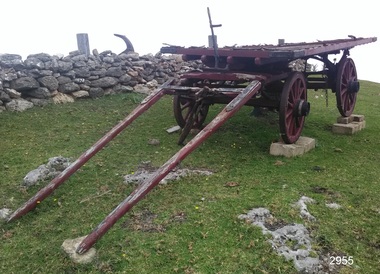
... family were prominent in Warrnambool from the 1850s to the 1880s. Patriarch Robert Bostock had in 1813 been transported to Sydney from Sierra Leone for having 'felonious traded in slaves' and sentenced to 14 years transportation. He moved to Tasmania in 1821 where he died in 1847. A number of his children came to Port Phillip...family were prominent in Warrnambool from the 1850s to the 1880s. Patriarch Robert Bostock had in 1813 been transported to Sydney from Sierra Leone for having 'felonious traded in slaves' and sentenced to 14 years transportation. He moved to Tasmania in 1821 where he died in 1847. A number of his children came to Port Phillip ...Bostock & Manifold were all from pioneering families in the Western District of Victoria almost from the time of settlement. Family history: The Bostock family were prominent in Warrnambool from the 1850s to the 1880s. Patriarch Robert Bostock had in 1813 been transported to Sydney from Sierra Leone for having 'felonious traded in slaves' and sentenced to 14 years transportation. He moved to Tasmania in 1821 where he died in 1847. A number of his children came to Port Phillip. Edward Robert Bostock held the Jellabad run from 1849 to 1853. George Bostock (1826-1858) was a Warrnambool Shire Councillor in 1856. Thomas Edward Bostock (1828-1874) was a Shire Councillor in the late 1860s. Augustus Bostock (1833-1920) lived in Warrnambool. Augustus Bostock was the 9th child of Robert and Rachael Bostock of Vaucluse Epping Forest, Van Diemen's Land. He was only 4 years old when his mother died. He was inspired by his father to seek his fortune in the Western District of Victoria. He arrived around 1850. He married Margaret Aitkin in July 1865. Augustus owned several properties in the district and leased others. He sat on the court of Warrnambool, Mortlake or Hexham as required. He resided at Marramook in Hawkesdale and later moved to Vaucluse in Hopetoun Road Warrnambool, where he died in 1920 at the age of 87. The Wagon is significant locally and state wide for its association with Augustus Bostock who was involved in many aspects of life in the Western District of Victoria, racing, cricket, and social activities to name a few. Bostock & Manifold were all from pioneering families in the Western District of Victoria almost from the time of settlement. The wagon is significant for its historical and economic association with the local Warrnambool business of Manifold & Bostock. These men had leased and owned vast tracts of land and operated businesses around the district together at various times often associated with the farming industry. One example is the Manifold & Bostock store and flour mill from which the wagon dray is believed to have been associated with for the delivery of goods. Their flour mill began operation in 1850 in 7-17 Stanley St South Warrnambool and was known as “Jetty Mills” Manifold and Bostock in 1858 purchased the Mill from John and G Elliot (brothers) with half an acre of ground and a cottage for £1600. It appears addresses of the company changed over the years as the town grew. These are listed in “Jones, Lewis & Peggy flour mills of Victoria” showing the company operating from, Fairy Street and later at the Merri River near the cutting, known as Banyan and Merri Streets. The company ceased trading in 1870. The Wagon Dray is also an example of agricultural freight and general transportation during the 1800 and 1900 century.A four-wheeled wooden horse-drawn wagon with flat top described as a Wagon Dray in historical writings. Painted brown and black. The wagon has rear brakes, wooden, operated from a metal handle at the front of the Wagon. Front wheels are attached to a turnstile to allow easy turning of the wagon. This flat-topped, horse driven, four-wheeled Wagon was used for cartage by the business of Manifold & Bostock, Warrnambool. The original sign writing of the wagon is obscured or painted over. There is a feint mark of lettering to the sides and back edges of the cart Manifold & Bostock. "Manifold and Bostock" very feintflagstaff hill, warrnambool, shipwrecked-coast, flagstaff-hill, flagstaff-hill-maritime-museum, maritime-museum, flagstaff-hill-maritime-village, cartage, manifold and bostock of warrnambool, manifold family of western victoria, bostock family of western victoria, four wheeled wagon, wagon, horse drawn wagon, farm wagon, aitkin, aitkin bostock manifold, dray, aitkin family, cart, aitken, flour mill -
 Federation University Historical Collection
Postcard - Photographic Postcard, Ascot Primary School (No. 2507)
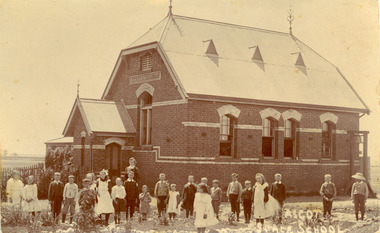
... Members of the Chatham family were educated at Ascot Primary School and are thought to be in these photographs. In the late 1950s and 60s the children of Phillip and Elizabeth Chatham nee Holmes also attended Ascot State School along with the children of Bill and Margaret Holmes....Members of the Chatham family were educated at Ascot Primary School and are thought to be in these photographs. In the late 1950s and 60s the children of Phillip and Elizabeth Chatham nee Holmes also attended Ascot State School along with the children of Bill and Margaret Holmes. ...Ascot Denominational School in Ascot opened in 1859 for the Presbyterian Free Church with 26 students, which quickly grew to 96. In 1866 the local Board of Managers offered the school to the Board of Education if it would pay the 200 pound building debt, but the offer was rejected. In 1873 Ascot Primary School (No. 16) opened. A new site was purchased in 1981 forcing the closure of School 16. Ascot State School (No. 2507) opened in February 1883..1) Twenty three children stand in from on a brick building with corrugated iron roof. They are students of Ascot Primary School. .2) Twelve males students of Ascot Primary School stand in front of a timber post and rail fence. They are the same boys as depicted in the .1) Ascot Primary School photo. Members of the Chatham family were educated at Ascot Primary School and are thought to be in these photographs. In the late 1950s and 60s the children of Phillip and Elizabeth Chatham nee Holmes also attended Ascot State School along with the children of Bill and Margaret Holmes.Verso in blue ballpoint pen "Chatham Ascot"chatham family collection, ascot, ascot primary school, ascot state school, post and rail, elizabeth holmes, bill holmes
