
Showing 35 items matching "picture palace"
-
 City of Ballarat Libraries
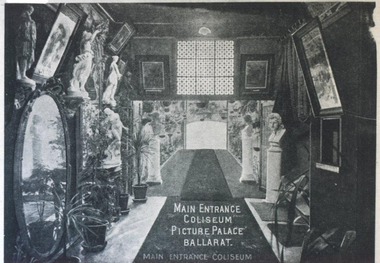
Photograph, Main entrance Coliseum Picture Palace circa 1915
... Main entrance Coliseum Picture Palace circa 1915.......Coliseum Picture Palace...The Coliseum Picture Palace was located in the Grenville - Little Bridge Street area. ...The Coliseum Picture Palace was located in the Grenville - Little Bridge Street area. building public Coliseum Picture Palace entertainment cinema ballarat interior Main entrance Coliseum Picture Palace circa 1915. ...The Coliseum Picture Palace was located in the Grenville - Little Bridge Street area. building, public, coliseum picture palace, entertainment, cinema, ballarat, interior -
 City of Ballarat Libraries
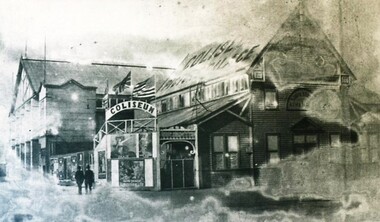
Photograph - Card Box Photographs, Coliseum Picture Palace circa 1920
... Coliseum Picture Palace circa 1920....Coliseum Picture Palace...It stood on Grenville Street. Coliseum Picture Palace Grenville Street Building Public Coliseum Picture Palace circa 1920. ...The Coliseum was burnt down 26th March 1936. It stood on Grenville Street.coliseum picture palace, grenville street, building, public -
 Federation University Historical Collection
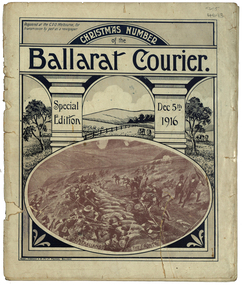
Magazine - Photograph - Black and White, Berry, Anderson & Co, Ballarat Courier Special Christmas Edition, 1916, 1916
... ...picture palace...st patrick's day ballarat townscape st patrick's day parade ballarat st patrick's day parade ballarat courier hanrahan morris labour day 8 hour day eight hours day procession st patrick's day procession mrs captain ellis picture palace grenville college berry united company ullina lewis s. smith architect bolster brothers Buninyong Butter Factory aquatic carnival George E. ...A magazine supplement of the Ballarat Courier containing articles, images and advertisement. Images include: St Patrick's Day March, Eight Hour Day procession Advertisements include: Morris undertaker, Olivers, Miller, Hanrahan's Hotelst patrick's day, ballarat townscape, st patrick's day parade, ballarat st patrick's day parade, ballarat courier, hanrahan, morris, labour day, 8 hour day, eight hours day procession, st patrick's day procession, mrs captain ellis, picture palace, grenville college, berry united company ullina, lewis s. smith architect, bolster brothers, buninyong butter factory, aquatic carnival, george e. deeble machinery, cape nelson portland, jelbarts, jelbart's telescope, lin hillman, presbyterian church snake valley, miss a.m. abrams, berry anderson and co, j.a. reynolds, maypole, w.f. coltman, ballarat boot palace, ben nevis elmhurst, jonathan reeve, victorian producers co-operative, r.u. nicholls, f.w. barnes and son, ballarat steam laundryballarat water reserves, yarra river warburton, erskine river lorne, john bray, eden studios, lake wendouree -
 Surrey Hills Historical Society Collection
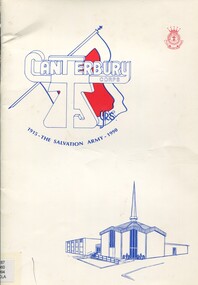
Book, Canterbury Corps: 1915 - The Salvation Army - 1990, 1990
... ...canterbury picture palace...guildford road surrey hills (col) (mr) arthur arnott (col) (mr) harry goffin (bro) (mr) bill rossitor (bro) (mr) frank deane (maj) will parkinson (capt) (mr) ian wallace churches salvation army (capt) (mr) les webb (mrs) - hay (capt) r bennett (maj) edwin handy (mrs) - hayward (lt) o kennewell (dr) (mr) bram southwell (mrs) - bensley box hill boys' home canterbury picture palace (ms) grace garlick east camberwell girls' home (capt) m gregory religious groups (mr) william booth (general) eva burrows (commissioner) bramwell h. tillsley This book summarises the first seventy-five years of the Canterbury Corps of the Salvation Army and its move to a new citadel in Guildford Road, Surrey Hills. ...This book summarises the first seventy-five years of the Canterbury Corps of the Salvation Army and its move to a new citadel in Guildford Road, Surrey Hills.guildford road, surrey hills, (col) (mr) arthur arnott, (col) (mr) harry goffin, (bro) (mr) bill rossitor, (bro) (mr) frank deane, (maj) will parkinson, (capt) (mr) ian wallace, churches, salvation army, (capt) (mr) les webb, (mrs) - hay, (capt) r bennett, (maj) edwin handy, (mrs) - hayward, (lt) o kennewell, (dr) (mr) bram southwell, (mrs) - bensley, box hill boys' home, canterbury picture palace, (ms) grace garlick, east camberwell girls' home, (capt) m gregory, religious groups, (mr) william booth, (general) eva burrows, (commissioner) bramwell h. tillsley -
 Glen Eira Historical Society
Letter - HUNT, WILLIAM HOGARTH
... ... Crystal Palace Picture Theatre...Agnes Church Hall Jenkin 'Boss' Mr Teachers Hawthorn Miss Quinn Miss Chitty Charlie Chitty's Timber Crystal Palace Picture Theatre Theatres Marsh Bill Hardware shops Watson Arthur W J.S. ...Two sets of this man's handwritten memories: 1/Five pages of handwritten personal memories, written by William Hogarth Hunt 13/07/1977. He outlines his family, their travels and settlement in 1908 at Glenhuntly: a detailed account of residents, shop owners, land sales and identities, Murray Ross, Mr Burr of Burr’s Gun Oil and Mr Zarman. Also details Glenhuntly Methodist Church, football, athletics, Glenhuntly Aerodrome and an extensive list of local residents and their stories. 2/Two pages of handwritten personal memories, written by William Hogarth Hunt 02/09/1977. A detailed account of residents, shop owners, identities, athletes, local policemen and their stories in the Glen Huntly area.personal memories, hunt william hogarth, glenhuntly, grange road, trams, plumber, stone mary ann, neerim road, wanalta road, schurme mrs, private hospital, hospitals, watson grove, hunt jessie, hunt alfred, hunt charles, smith mr, fisher mr, smith mrs, jockeys, dore george, ‘willis’, builders, house names, mernda, roseberry grove, el nido, neerim road, glenhuntly post office, mrs fielder’s sweetshop, mrs beer’s sweet shop, paddocks, confectionery, fielder fred, maroona road, murrumbeena, grocers, callister dave, carnegie state school, hay and corn store, james street, woodyard, hillards chemist, hughes body works, chemists, davidson’s, glenhuntly printing, hay and corn stores, railway gates, anz bank, fox mr, martin jack, fox mrs, clothing stores, steam rollers, radio and tv shop, beasley j, delicatessen/ham and beef shop, butchers, schurme’s private hospital, gellatley george, tailors, commonwealth banks, watson grove, banks, preston peter, e.j. & h. amos, hardware stores, estate agents, glenhuntly picture theatre, whittle mr, theatres, newsagency, cooper and cooke, station street, f.j. long and co, jennings a.v, timber yards, builders, ‘the estate’, hillcrest estate, grange road, marara road, rosedale avenue, hobart jack, mackie road, confectionery stores, ross murray, glenhuntly athletic club, godfrey evelyn, athletics clubs, railways, glenhuntly junior football club, elsternwick, princess park, carnegie oval, booran road, koornang park, ormond oval – ee. gunn reserve, glenhuntly oval, oakleigh road, victorian amateur turf club, koornang road, glenhuntly aerodrome, neville street, glenhuntly state school, rosslyn street, geary mr, lauriston tennis courts, bakers, carnegie r.s.l., east bentleigh, bowling clubs, tucker road, tennis clubs, centre road, murrumbeena road, larman mr, hollway street, nurseries, parker street, lyle marshall, burr mr, solicitors, builders, bones nursery, ‘burr’s gunoil’, glenhuntly methodist church, carnegie, smith alf, ezard family, clemens family, noy family, noy clarrie, dickie family, storey family, storey george, davis family, joss house, chinese community, wattle avenue, grange road, glenhuntly amateur football club, football clubs, glenhuntly athletic club, athletic clubs, glen huntly junior football club, carnegie oval, koornang park, glenhuntly oval, victorian amateur turf club, glenhuntly aerodome, glenhuntly state school, geary mr., bakers, east bentleigh, tucker road, centre road, larman mr, nurseries, lyle marshall, solicitors, bones nursery, carnegie, "the estate", royal avenue, mckay avenue, dumsday bertha miss, love family, gilmour family, waratah ave, sinclair mr, tuckpointers, bricks, donegan mr, plumbers, frazer mr, frazer and jenkinson printers, frazer arthur, ezard manufacturing, jewellers, private hospital, maroona road, o'carroll mr, beattie mr, horse trainer, morton tom, lord harry, estate agents, ormond, councillors, taylor mr, builders, gibson family, westley alf, o'carroll j (jack) d, glenhuntly athletics club, athletes, jack page's bakery and cake shop, nay clarrie, hunt william h., hunt alf, page jack, armstrong jack, manchester grove, morgan advertising, cusdin sid, farrier, glenhuntly cricket club, caulfield racecourse, neerim road, hoffman's plumbing, emma street, st. agnes school, st. agnes church hall, jenkin 'boss' mr, teachers, hawthorn miss, quinn miss, chitty charlie, chitty's timber, crystal palace picture theatre, theatres, marsh bill, hardware shops, watson arthur w, j.s. kidd and company, marshes hardware, kidd's hardware, bruce ivy, 'belgrave', house names, belgrave road, dandenong road, hunter 'pud', police officers, hunt jess, kangaroo road, murrumbeena, glen huntly -
 Australian National Surfing Museum
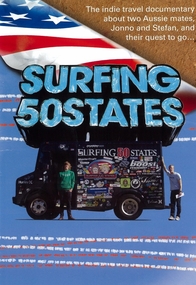
DVD Movie, Surfing 50 States, Circa 2008
... World Premier at the Hayden Orpheum Picture Palace, Cremorne, Sydney on 15th October, 2008....World Premier at the Hayden Orpheum Picture Palace, Cremorne, Sydney on 15th October, 2008. ...Cult Australian surf travel documentary made by Stefan Hunt and Jonno Durrant as they endeavour to surf 50 states of the United States of America in 50 days (32 without an ocean). Music by Spiderbait, The Wahas and many more. World Premier at the Hayden Orpheum Picture Palace, Cremorne, Sydney on 15th October, 2008.On of the most popular independent surf travel documentaries ever made. Unique insight into surfing and popular culture.Colour cover art of an American flag over a sand, movie title and colour photograph of Johnno and Stefan with the infamous Hurley Van.Movie title, one line synopsisjonno durrant, stefan hunt, surfing 50 states, spiderbait -
 Woods' Farming and Heritage Museum
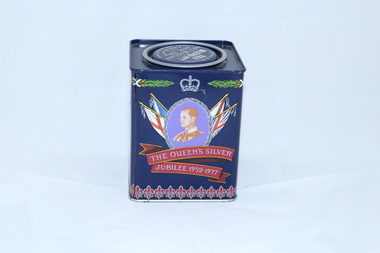
Tea Tin, The Queen's Silver Jubilee 1952-1977
... Picture of Prince Phillip on another side. Picture of Buckingham Palace on another side....Picture of Prince Phillip on another side. Picture of Buckingham Palace on another side. Blue square small tin The Queen's Silver Jubilee 1952-1977 Tea Tin ...Blue square small tinThe Queen's Silver Jubilee 1952-1977. Jacksons of Picadilly. Tea Blend 1977. Net weight 8 oz 226g. A blend of Indian and Ceylon Teas. Picture of QE11 on side. Picture of Windsor Castle on another side. Picture of Prince Phillip on another side. Picture of Buckingham Palace on another side. -
 Ballarat Tramway Museum
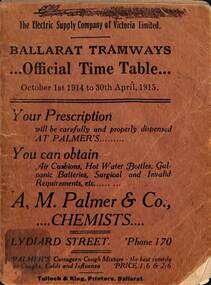
Ephemera - Ballarat, Electric Supply Co. of Vic (ESCo), "Official Time table", 1914
... Has many adverts - from the front page: A M Palmer Chemist Hodgson - optical Snows - department store Summerscales - postcards W E Thomas - Dentist L Casper - optician E Jermyn - feed merchant Standsfield & Smith - Decorators Briant's Red shop tea rooms A E White - tailor Ellingsen & Co - furniture Southern Cross Hotel H P Stevens & Co - fur coats Frank Williams - painter and decorator Longhurst's bread factory G Buchanan - metal ceilings Robert Hutchinson - electrical engineer and contractor G Ludbrook - furnishing undertaker A Cant - plumber, gasfitter and ironmonger Huddart Parker and Howard Smith coal merchants Precision Big 4 - motor cycles and bicycles H W Channing - Tram drivers' training school T H Richards - butcher C Ellis - furniture exchange Levecke's motor garage Frank Penhalluriack - electrical work Nankervis - store Taffy King Fred A Reed - tobacconist F & J W Gower - builder E E Hobson - decorator Walter Cornell - liver pills Irvines - wines G Warner - Ironmonger J A Reynolds - Wall papers W J Robson - leadlights Porter's - boots and shoes Holman & Fiscalini - stables and motor garage Butler & Co - blinds Mrs Kerby - clothing reseller Rose Cosmetic - H Binzer & Co Mrs Busfield - laundry Mrs J H Dogson - registry office for servants B G Tucker's Water Cure Electric Supply Co Rowlands drinks On the bottom of most pages - Sidar products and on the top the Coliseum Picture Palace. ...Has many adverts - from the front page: A M Palmer Chemist Hodgson - optical Snows - department store Summerscales - postcards W E Thomas - Dentist L Casper - optician E Jermyn - feed merchant Standsfield & Smith - Decorators Briant's Red shop tea rooms A E White - tailor Ellingsen & Co - furniture Southern Cross Hotel H P Stevens & Co - fur coats Frank Williams - painter and decorator Longhurst's bread factory G Buchanan - metal ceilings Robert Hutchinson - electrical engineer and contractor G Ludbrook - furnishing undertaker A Cant - plumber, gasfitter and ironmonger Huddart Parker and Howard Smith coal merchants Precision Big 4 - motor cycles and bicycles H W Channing - Tram drivers' training school T H Richards - butcher C Ellis - furniture exchange Levecke's motor garage Frank Penhalluriack - electrical work Nankervis - store Taffy King Fred A Reed - tobacconist F & J W Gower - builder E E Hobson - decorator Walter Cornell - liver pills Irvines - wines G Warner - Ironmonger J A Reynolds - Wall papers W J Robson - leadlights Porter's - boots and shoes Holman & Fiscalini - stables and motor garage Butler & Co - blinds Mrs Kerby - clothing reseller Rose Cosmetic - H Binzer & Co Mrs Busfield - laundry Mrs J H Dogson - registry office for servants B G Tucker's Water Cure Electric Supply Co Rowlands drinks On the bottom of most pages - Sidar products and on the top the Coliseum Picture Palace. Demonstrates and ESCo timetable and provides information about fare systems and local businesses. tramways Ballarat Timetables ESCo advertisements fares tickets fare boxes Time table - booklet - 40 pages + brown light card covers centre stapled with tabbed or cut pages. ...Timetable published by the Electric Supply Co of Victoria (ESCo) for Ballarat Tramways - dated 1/10/1914 to 30/4/1915. Provides times for each route, ticket prices, school tickets, fare box routes, fares, transfer tickets, and route colours both for day and night. Also has notes to passengers and places of interest for each route. Has contact phone numbers for the Company. Manager Mr Pringle. See item 9131 for a 1915 Winter timetable. Has many adverts - from the front page: A M Palmer Chemist Hodgson - optical Snows - department store Summerscales - postcards W E Thomas - Dentist L Casper - optician E Jermyn - feed merchant Standsfield & Smith - Decorators Briant's Red shop tea rooms A E White - tailor Ellingsen & Co - furniture Southern Cross Hotel H P Stevens & Co - fur coats Frank Williams - painter and decorator Longhurst's bread factory G Buchanan - metal ceilings Robert Hutchinson - electrical engineer and contractor G Ludbrook - furnishing undertaker A Cant - plumber, gasfitter and ironmonger Huddart Parker and Howard Smith coal merchants Precision Big 4 - motor cycles and bicycles H W Channing - Tram drivers' training school T H Richards - butcher C Ellis - furniture exchange Levecke's motor garage Frank Penhalluriack - electrical work Nankervis - store Taffy King Fred A Reed - tobacconist F & J W Gower - builder E E Hobson - decorator Walter Cornell - liver pills Irvines - wines G Warner - Ironmonger J A Reynolds - Wall papers W J Robson - leadlights Porter's - boots and shoes Holman & Fiscalini - stables and motor garage Butler & Co - blinds Mrs Kerby - clothing reseller Rose Cosmetic - H Binzer & Co Mrs Busfield - laundry Mrs J H Dogson - registry office for servants B G Tucker's Water Cure Electric Supply Co Rowlands drinks On the bottom of most pages - Sidar products and on the top the Coliseum Picture Palace. Demonstrates and ESCo timetable and provides information about fare systems and local businesses.Time table - booklet - 40 pages + brown light card covers centre stapled with tabbed or cut pages.tramways, ballarat, timetables, esco, advertisements, fares, tickets, fare boxes -
 Ballarat Tramway Museum
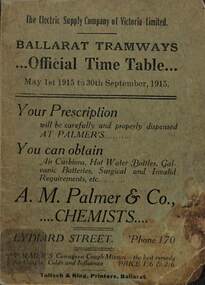
Ephemera - Ballarat, Electric Supply Co. of Vic (ESCo), "Official Time table", 1915
... Has many adverts - from the front page: A M Palmer Chemist Hodgson - optical Snows - department store ESCo - show room in Sturt St L Casper - optician E Jermyn - feed merchant Standsfield & Smith - Decorators Briant's Red shop tea rooms A E White - tailor Ellingsen & Co - furniture Southern Cross Hotel H P Stevens & Co - fur coats Frank Williams - painter and decorator Longhurst's bread factory G Buchanan - metal ceilings Robert Hutchinson - electrical engineer and contractor G Ludbrook - furnishing undertaker A Cant - plumber, gasfitter and ironmonger Huddart Parker and Howard Smith coal merchants Precision Big 4 - motor cycles and bicycles H W Channing - Tram drivers' training school T H Richards - butcher C Ellis - furniture exchange Levecke's motor garage Frank Penhalluriack - electrical work Nankervis - store Taffy King Fred A Reed - tobacconist F & J W Gower - builder E E Hobson - decorator Walter Cornell - liver pills Irvines - wines G Warner - Ironmonger J A Reynolds - Wall papers ESCo Electric lighting Holman & Fiscalini - stables and motor garage Butler & Co - blinds Mrs Kerby - clothing reseller Rose Cosmetic - H Binzer & Co Mrs Busfield - laundry Mrs J H Dogson - registry office for servants Summerscales - stationary and postcards W J Robson - glass Porter's Boots and Shoes B G Tucker's Water Cure Electric Supply Co Rowlands drinks On the bottom of most pages - Sidar products and on the top the Coliseum Picture Palace. ...Has many adverts - from the front page: A M Palmer Chemist Hodgson - optical Snows - department store ESCo - show room in Sturt St L Casper - optician E Jermyn - feed merchant Standsfield & Smith - Decorators Briant's Red shop tea rooms A E White - tailor Ellingsen & Co - furniture Southern Cross Hotel H P Stevens & Co - fur coats Frank Williams - painter and decorator Longhurst's bread factory G Buchanan - metal ceilings Robert Hutchinson - electrical engineer and contractor G Ludbrook - furnishing undertaker A Cant - plumber, gasfitter and ironmonger Huddart Parker and Howard Smith coal merchants Precision Big 4 - motor cycles and bicycles H W Channing - Tram drivers' training school T H Richards - butcher C Ellis - furniture exchange Levecke's motor garage Frank Penhalluriack - electrical work Nankervis - store Taffy King Fred A Reed - tobacconist F & J W Gower - builder E E Hobson - decorator Walter Cornell - liver pills Irvines - wines G Warner - Ironmonger J A Reynolds - Wall papers ESCo Electric lighting Holman & Fiscalini - stables and motor garage Butler & Co - blinds Mrs Kerby - clothing reseller Rose Cosmetic - H Binzer & Co Mrs Busfield - laundry Mrs J H Dogson - registry office for servants Summerscales - stationary and postcards W J Robson - glass Porter's Boots and Shoes B G Tucker's Water Cure Electric Supply Co Rowlands drinks On the bottom of most pages - Sidar products and on the top the Coliseum Picture Palace. Demonstrates and ESCo timetable and provides information about fare systems and local businesses. tramways Ballarat Timetables ESCo advertisements fares tickets tokens Time table - booklet - 40 pages + green light card covers centre stapled with tabbed or cut pages. ...Timetable published by the Electric Supply Co of Victoria (ESCo) for Ballarat Tramways - dated 1/5/1915 to 30/9/1915 - winter. Provides times for each route, ticket prices, school tickets, issue and use of tokens, fares, transfer tickets, and route colours both for day and night. Also has notes to passengers and places of interest for each route. Has contact phone numbers for the Company. Manager Mr Pringle. See item 9132 for a 1914 Summer timetable. Has many adverts - from the front page: A M Palmer Chemist Hodgson - optical Snows - department store ESCo - show room in Sturt St L Casper - optician E Jermyn - feed merchant Standsfield & Smith - Decorators Briant's Red shop tea rooms A E White - tailor Ellingsen & Co - furniture Southern Cross Hotel H P Stevens & Co - fur coats Frank Williams - painter and decorator Longhurst's bread factory G Buchanan - metal ceilings Robert Hutchinson - electrical engineer and contractor G Ludbrook - furnishing undertaker A Cant - plumber, gasfitter and ironmonger Huddart Parker and Howard Smith coal merchants Precision Big 4 - motor cycles and bicycles H W Channing - Tram drivers' training school T H Richards - butcher C Ellis - furniture exchange Levecke's motor garage Frank Penhalluriack - electrical work Nankervis - store Taffy King Fred A Reed - tobacconist F & J W Gower - builder E E Hobson - decorator Walter Cornell - liver pills Irvines - wines G Warner - Ironmonger J A Reynolds - Wall papers ESCo Electric lighting Holman & Fiscalini - stables and motor garage Butler & Co - blinds Mrs Kerby - clothing reseller Rose Cosmetic - H Binzer & Co Mrs Busfield - laundry Mrs J H Dogson - registry office for servants Summerscales - stationary and postcards W J Robson - glass Porter's Boots and Shoes B G Tucker's Water Cure Electric Supply Co Rowlands drinks On the bottom of most pages - Sidar products and on the top the Coliseum Picture Palace. Demonstrates and ESCo timetable and provides information about fare systems and local businesses.Time table - booklet - 40 pages + green light card covers centre stapled with tabbed or cut pages.tramways, ballarat, timetables, esco, advertisements, fares, tickets, tokens -
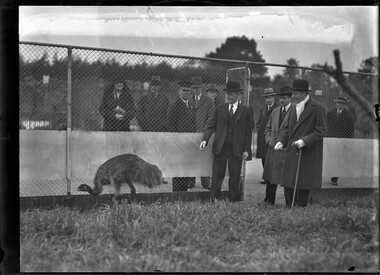 City of Melbourne Libraries
Photograph, Bull, Hugh Jones, 1897-1993, Vice-regal visit to zoo: Lord Huntingfield meets an emu
... Are we so keen on personal gain that our lovely and unique birds have to be ruthlessly slaughtered in thousands and their bodies left rotting in the sun?” In Sydney, picture palace patrons expressed “considerable concern” after viewing the Movietone News newsreel of emus fleeing from the barrage of machine-guns, and wounded emus in the fields in Campion. ...Are we so keen on personal gain that our lovely and unique birds have to be ruthlessly slaughtered in thousands and their bodies left rotting in the sun?” In Sydney, picture palace patrons expressed “considerable concern” after viewing the Movietone News newsreel of emus fleeing from the barrage of machine-guns, and wounded emus in the fields in Campion. ...Photographer notations on slide: "Vice Regal visit to Zoo B42" Not published. Description: A group of men and one woman all dressed in hats and overcoats stand by a wire fence while watching an emu. Research by project volunteer, Fiona Collyer: On 25 June 1934, new Victorian Governor, His Excellency Lord Huntingfield and his wife Lady Huntingfield made an official visit to the Melbourne Zoological Gardens in order to grant his patronage to the Royal Zoological and Acclimatisation Society. During the visit, zoo director Mr. Andrew Wilkie introduced them to some of the zoo’s inhabitants, including an emu. After the First World War, many returned soldiers took up the Government’s offer of land in the Soldier Settlement Scheme. Most of the veterans had little or no farming experience and much of the land offered was of poor quality, with blocks often too small to be viable. Many of the settlers had ongoing physical and mental injuries from the war. The Western Australian government allocated land to 5000 former soldiers but by 1929, one quarter of the men had already abandoned their land, unable to make a living. Not only was the world economy struggling with the Great Depression, but the settlers also had to contend with plummeting wheat and wool prices, crippling drought and rabbit infestation. The Scullin Government (Oct 1929-Jan 1932) had promised subsidies to the Western Australian farmers if they increased their wheat crops but were unable to pass the legislation in the Senate. The new Lyons Government (Jan 1932-April 1939) abandoned the legislation and the subsidies were never paid, bringing calls from Western Australia of secession from Australia. In October 1932, a deputation of soldier settlers from the Campion wheatbelt region in Western Australia, petitioned Commonwealth Minister for Defence, Western Australian Senator Sir George Pearce, for assistance. A mob of 20,000 emus were migrating to the coast after breeding and were gathering along the eastern side of the Number 1 Rabbit Proof Fence, attracted to the ripening crops and the dams the farmers had built. They were heading towards Campion, 303 kilometres east of Perth, eating and trampling the wheat, destroying the fences and letting the rabbits in. Having witnessed firsthand the effectiveness of machine guns in killing people in war, the former soldiers thought the guns would be ideal for killing emus. Sir George, wanting to demonstrate that his government was sympathetic to the settlers and hoping to quell Western Australian succession talk, agreed. However, he stipulated that no expense would be incurred by the Commonwealth Government and only active military personnel could use the machine guns. The farmers had to pay for the ammunition, food and accommodation for the military for the length of the operation. The cost for the ammunition was £50 for 10,000 rounds. Sir George also felt the operation would provide excellent target practice for the soldiers! The operation was headed by Major Gwynydd Purves Wynn-Aubrey Meredith, 1887-1975, of the Seventh Heavy Battery of the Royal Australian Artillery, and assisted by Sergeant S. McMurray and Gunner J. O'Halloran. They were equipped with two American-designed Lewis light machine guns and 10,000 rounds. Each magazine held 47 rounds of ammunition and the gun was capable of firing 500 to 600 rounds per minute with effective firing range of 800 metres. A cinematographer from British Movietone News accompanied the soldiers in order to record what was expected to be not only an easy victory but also useful propaganda for both the military and the Lyons Government. Emu (Dromaius novaehollandiae, meaning New Holland Racer) is a species of long-necked flightless bird endemic to Australia. The Tasmanian and the dwarf King and Kangaroo Island subspecies were hunted to extinction after the European settlement of Australia. It is the second largest bird in the world after the ostrich, standing up to 1.9 metres tall and weighing up to 50 kilograms. The Emu has long, powerful legs with three forward facing toes and is the only bird with calf muscles. It is able to jump 2.1 metres into the air and run 50 kilometres per hour. It communicates by drumming and booming through an inflatable neck sac which can be heard up to two kilometres away. Along with its tough hide and a body more feathers than flesh, the emu can be a tricky target. Emus had been a protected native species until 1922, when the government changed their status to “vermin” in response to the emus breaking down fences and destroying crops. Major Meredith told the press that Colonel Oswald V. Hoad of the 1st Cavalry Division NSW had especially requested he send 100 emu skins to replenish the plumage on his Light Horsemen’s hat tops. On the first day of the Emu War, 2 November 1932, Major Meredith spotted a mob of emus out of range of the guns, so he asked the farmers to use their vehicles to drive the emus towards the fence and the guns. The panicked birds split into small groups, kicking up the dust and scattering every which way. Only six were killed, though some were wounded. After that, the emus became very wary of humans. On 4 November, Major Meredith staged a dawn ambush at a dam. As 1000 emus approached to drink, the soldiers opened fire, killing 12 emus. After reloading, the gun jammed and the emus dispersed in all directions, and were not sighted again that day. The West Australian newspaper reported on 4 November 1932 that, “The emus have proved that they are not so stupid as they are usually considered to be. Each mob has its leader, always an enormous black-plumed bird standing fully six-feet high, who keeps watch while his fellows busy themselves with the wheat. At the first suspicious sign, he gives the signal, and dozens of heads stretch up out of the crop. A few birds will take fright, starting a headlong stampede for the scrub, the leader always remaining until his followers have reached safety.” In a later attempt, they mounted a gun onto the bed of a truck in order to chase and mow down the birds. However the truck couldn’t drive fast enough over the rough terrain and it was too bumpy to fire the gun accurately. The birds easily outran the truck except for one hapless emu who faltered while being chased and fell under the truck, its body wedging in the steering gear, causing the driver to crash the truck, and bringing down half a chain of the rabbit proof fence. RSPCA inspector Mr. Arthur Austin arrived with a rifle and knife in order to finish the work of the Lewis guns and dispatch injured emus. He said that while his society was sympathetic to the stricken settlers, he was anxious that wounded birds should not be left to suffer. Major Meredith told the inspector, “What speed can you run? You have to be better than Peter Pan if you want to catch wounded emus that make for the scrub.” (Racehorse “Peter Pan” had won the 1932 Melbourne Cup a few weeks earlier.) The commentator of the British Movietime newsreel uses a jocular tone to optimistically proclaim, “The scouts [emus] of the advancing army have keen eyesight, and in order to get close to the main body, our lads have to do some real stalking, with the enemy watching events through their periscopes raised up over the heads of corn... Instead of the birds ruining the farmers, tables are turned, there will be no more damage down here for many a day to come once the enemy is eliminated.” Emus proved tougher adversaries than expected, barely breaking stride even when badly injured from machine gun bullets, and the suspicious emus soon learnt to stay out of range of the men and their guns. Meanwhile, in the eastern states concern was being expressed about the cruelty of machine-gunning the native birds. Senator James Guthrie UAP of Victoria suggested that there must be “more humane, if less spectacular methods” of coping with the pests. People wrote letters to the newspapers to express their dismay at the inhumane methods used. R.F. Bellchambers from Humbug Scrub, 25 November 1932, lamented that, “At the present rate of extinctions, it will shortly be necessary to go to the Museum to see the remains of our fauna.” The Murchison Times published a letter on 16 November 1932 from “Clay Pan Joe”: “War on Emus. Slaughter of innocent birds would be more appropriate... The birds may be a nuisance and it may be necessary to destroy them, but why cause so much suffering amongst these innocent birds.” E.S. Playford of Norton’s Summit wrote to The Advertiser, 22 November 1932, that “...habitation on the earth would be impossible without bird life. Therefore, it is unwise to say that any bird is useless. Is sentiment dying? Are we so keen on personal gain that our lovely and unique birds have to be ruthlessly slaughtered in thousands and their bodies left rotting in the sun?” In Sydney, picture palace patrons expressed “considerable concern” after viewing the Movietone News newsreel of emus fleeing from the barrage of machine-guns, and wounded emus in the fields in Campion. The press had a field day, dubbing it the “The Emu War” and joking that the “Chicago method” was being used against the feathered foe. The Daily News newspaper published a cartoon depicting the emus outrunning and outsmarting the soldiers. In Parliament NSW Senator James Dunn called Sir George the “Minister for the Emu War”. Labor member Mr. Rosevear, midst great laughter, asked if the minister would consider declaring an armistice and withdrawing his troops from the Western Front. Prime Minister Joe Lyons was asked if medals would be struck for those taking part in the war. Labor parliamentarian Mr. A.E. Green declared any medals should go to the emus who had “won every round so far”. With the embarrassing press coverage and poor results, Sir George ordered a stop to the project on 9 November, and Major Meredith and the soldiers departed for Perth. The WA Premier Sir James Mitchell and the Campion farmers demanded they return, citing the continued destruction of crops and fences by the emus. Major Meredith and his two gunners were allowed to return on 13 November and seemingly having learnt from their previous experiences, had slightly more success this time killing emus. The operation finally finished on 10 December with Major Meredith reporting “definite kills” of 986 emus for 9860 rounds of ammunition, coincidentally and conveniently exactly 10% of the number of rounds used. A further 2500 birds were said to have died from their injuries and although this is a disputed figure, even if accurate, the ratio of rounds expended to emu casualties was thought too high to justify continuing. The operation barely caused a dint in the marauding mob of 20,000 emus. “There’s only one way to kill an emu”, one of the party bitterly remarked: “Shoot him through the back of the head when his mouth is closed or through the front of his mouth when his mouth is open. That’s how hard it is.” Australian ornithologist Dominic L. Serventy noted that “The machine-gunners’ dreams of point blank fire into serried masses of Emus were soon dissipated. The Emu command had evidently ordered guerrilla tactics, and its unwieldy army soon split up into innumerable small units that made use of the military equipment uneconomic. A crestfallen field force therefore withdrew from the combat area after about a month.” Major Meredith expressed the greatest of respect for the enemy. He said, “If we had a military division with the bullet-carrying capacity of these birds, it would face any army in the world. They could face machine guns with the invulnerability of tanks. They are like Zulus, whom even dum dum bullets would not stop." The Major’s official report stated that there were no human casualties in “The Emu War.” Emus are considered the victors of “The Great Emu War.” Western Australian farmers requested military assistance in 1934, 1943 and 1948, including using bombs, but the government refused. The bounty system instigated in 1923 continued, with farmers using rifles against their fleet-footed foe, with 57,034 bounties for dead emus claimed in six months in 1934 in Western Australia alone. 284,704 emus were killed in Western Australia between 1945 and 1960. The other most effective defence against the emus was the construction of a robust, vermin proof fence spanning over a long distance. Emus were formally protected in 1999 by the Environment Protection and Biodiversity Conservation Act. It’s estimated there are between 625,000 to 725,000 wild emus in Australia in 2024. An emu and a kangaroo feature on Australia’s coat of arms, holding up a shield illustrated with symbols of the six states. The animals symbolise the nation moving forward as neither animal can walk backwards. Campion is now a ghost town. A book about the operation, “Letters from the Emu War” by J.A. Bryden was published in 2023 by Playtime Books. In 2024, an Australian film called “The Emu War” was released, starring Damian Callinan and Luke McGregor. Andrew Arthur Wellesley Wilkie, 1853-1948, was Director of the Melbourne Zoo from 1923 to 1936 and was associated with the zoo for 70 years. He first worked as a horticultural assistant to Government botanist Baron Ferdinand von Mueller at the Botanical Gardens at the age of 13, along with his older brother David. One of Andrew’s jobs was to capture moths for the National Herbarium. In 1857, a group of prominent Melburnians assembled at St. Patrick’s Hall to form the Zoological Society of Victoria, with the aim of introducing animals and plants from overseas. It was conceived, “For the purposes of science and for that of affording the public the advantages of studying the habits of the animal creation in properly arranged zoological gardens.” The Victorian Government granted 32 acres (13 hectares) of land to the Zoological Society at the southern end of Richmond Paddock on the opposite bank to the Botanical Gardens. (This is where AAMI Stadium and Collingwood Football Club now stand.) In 1861, the Zoological Society of Victoria was renamed The Acclimatisation Society of Victoria. Unfortunately the Yarra River frontage was damp, swampy and subject to flooding, so the animals were briefly housed at the Botanical Gardens until in 1862, the City of Melbourne donated 55 acres (22 hectares) of land at Royal Park for the fledgling zoo. Baron von Mueller secured employment at Royal Park for Andrew and David and they helped to lay out the gardens, plant trees and take care of a collection of deer, pheasants, hares and partridges. Initially the zoo was used for the acclimatisation of animals recovering from the long voyage to Australia and for breeding them for sport. In 1872, the zoo bought two lions, a leopard and a cheetah that had been seized from circus showmen Keith and Phillips when they were unable to pay the bill of butcher Mr T K Bennet of Bourke Street. The first zoo director, Mr. Albert Le Souef, negotiated with captains of ships to buy animals at overseas ports they visited and soon a multitude of exotic species arrived, including a ten-year-old Indian elephant in 1878. In 1923, after being head keeper for some years, Andrew was appointed director of the zoo. By 1933, the zoo had 110 different species of animals, 200 species of birds and 72 species of reptiles under Andrew’s care. He had personally planted all but six trees and laid out the garden beds. As director he lobbied authorities for funds to build more humane enclosures for the animals. In June 1928, Table Talk magazine wrote of Andrew Wilkie: “Up at the Zoo there is a humble gentleman who is a lion among the lions, who knows the proper specific to employ when the boa constrictor has chilblains, and who is a friend and confidant of Queenie the elephant. His fount of zoological lore has never been plumbed. It is bottomless, like his good fellowship and geniality. Every day he may be seen somewhere in the grounds of that growing sanctuary for the strange and arresting fauna and creeping things of the world, and I assure you as one who is privy to his passion that that area and its inhabitants are rarely out of his thoughts.” Andrew retired from the zoo in 1936 at the age of 83 and in 1948 died at his home in Brunswick aged 94. He and his wife Josephine had six children. The Victorian Acclimatisation Society was founded in 1861 by Edward Wilson, 1813-1878, then owner and editor of The Argus newspaper. He said that Australian indigenous animals were practically useless, providing only “a little sport and an occasional meal”. The Society believed that Australia’s plants and animals were vastly inferior to those in Europe. They wanted to introduce and acclimatise to Victoria “all innoxious animals, birds, fishes, insects and vegetables, whether useful or ornamental” for sport and for the table, and to spread indigenous animals and plants from the colony around the world. Their motto was “if it lives, we want it”. The Society was primarily responsible for introducing sparrows, starlings, sambar and hog deer, ostriches, brown trout, blackberries, and carp to the Murray River. They released the European songbirds, thrush and blackbird to quell the homesickness of British settlers. The Society also sent Australian animals like platypus, echidnas, kangaroos and koalas to Europe for scientific and novelty purposes. Thomas Austin, a wealthy sheep farmer of Barwon Park, Winchelsea (property now owned by the National Trust) was a member and in 1859 he introduced hares, blackbirds, thrushes and partridges onto his property. He is probably best known for introducing 24 breeding rabbits onto his estate as game for shooting parties. Thomas quipped, “The introduction of a few rabbits could do little harm and might provide a touch of home, in addition to a spot of hunting." In 2022, genomic data confirmed that Australia’s feral rabbit population is entirely descended from these rabbits. Biological control has brought the rabbit population down from an estimated high of 10 billion rabbits in the 1920s to approximately 200 million today, inhabiting 70% of Australian landmass (5.3 million square kilometres). In 1872, the Acclimatisation Society was renamed The Zoological and Acclimatisation Society of Victoria and they focused on importing exotic animals for display purposes to the zoo. In 1937, the Royal Acclimatisation Society of Victoria was recreated as the Zoological Board of Victoria with a focus on research of native animals threatened with extinction. In an editorial for The Argus newspaper, 16 March 1856, Edward Wilson lamented: "...this country has been shamelessly stolen from the blacks. Had they been like the New Zealanders or the North American Indians, we should have bought their land, and supplied them with the means of living when we took it... In less than twenty years we have nearly swept them off the face of the earth. We have shot them down like dogs. In the guise of friendship we have issued corrosion sublimate in their damper, and consigned whole tribes to the agonies of an excruciating death. We have made them drunkards, and infected them with disease which has rotted the bones of their adults, and made such few children as are born amongst them a sorrow and a torture from the very instant of their birth. We have made them outcasts on their own land, and are rapidly consigning them to entire annihilation. There are but a few of them left, comparatively. This is what we would do for that few. We would feed and clothe every one of them.” [Note: this last sentence is italicized in the original newspaper article text]. Lord Huntingfield, (William Charles Arcedeckne Vanneck) 1883-1969, Governor of Victoria 1934-1939, was a British Conservative Party politician and the first ever Australian-born Governor of an Australian state (although he was always considered British). He was patron of the Royal Zoological and Acclimatisation Society of Victoria and was acting Governor-General for six months during the absence of Lord Gowie in 1938. Lady Huntingfield (née Margaret Eleanor Crosby) 1884-1943, his American-born wife showed great interest in social welfare and the advancement of women and children. She was president of the City Newsboys Society and Patroness of the Girls Friendly Society. In 1937, rose breeder Alister Clark named a yellow hybrid tea rose for her. In 1940, the City of Melbourne opened the Lady Huntingfield Free Kindergarten in North Melbourne, now the Lady Huntingfield Early Learning and Family Services Centre. Lady Huntingfield died in London in 1943 after her house was bombed during a German airstrike. The Lady Huntingfield Memorial Scholarship was established after the City of Melbourne raised £1000 in a public appeal conducted in her memory for students undertaking a Social Work degree at the University of Melbourne. It is awarded annually to this day. The Queen Victoria Hospital named a bed in her honour. References: VICE-ROYALTY GREETS THE KING OF BEASTS AT THE ZOO. (1934, June 26). The Age (Melbourne, Vic. : 1854 - 1954), p. 11. Retrieved August 23, 2024, from http://nla.gov.au/nla.news-article204818472 Prominent Personalities ANDREW WILKIE (1928, June 7). Table Talk (Melbourne, Vic. : 1885 - 1939), p. 15. Retrieved August 29, 2024, from http://nla.gov.au/nla.news-article146562949 'Edward Wilson (journalist)', Wikipedia, https://en.wikipedia.org/wiki/Edward_Wilson_(journalist) 'Thomas Austin (pastoralist)', Wikipedia, https://en.wikipedia.org/wiki/Thomas_Austin_(pastoralist) 'The Acclimatisation Society was driven by misguided ideals about 'fixing nature' in Australia', ABC News, https://www.abc.net.au/news/2022-11-04/acclimatisation-society-introduced-species-history-listen/101588262?utm_campaign=abc_news_web&utm_content=link&utm_medium=content_shared&utm_source=abc_news_web THE ABORIGINES. (1856, March 16). The Argus (Melbourne, Vic. : 1848 - 1957), p. 5. Retrieved September 28, 2024, from http://nla.gov.au/nla.news-article4833244 WAR ON EMUS. (1932, November 4). The West Australian (Perth, WA : 1879 - 1954), p. 12. Retrieved September 29, 2024, from http://nla.gov.au/nla.news-article32588972 'The Great Emu War: how it started and who won', ABC Australia, https://www.youtube.com/watch?v=Y1wA0PKeJqc Advertising (1932, November 25). The West Australian (Perth, WA : 1879 - 1954), p. 2. Retrieved October 26, 2024, from http://nla.gov.au/nla.news-article32584578 Emu Chasers Must Outstrip Peter Pan (1932, November 9). The Labor Daily (Sydney, NSW : 1924 - 1938), p. 5. Retrieved October 10, 2024, from http://nla.gov.au/nla.news-article237042749 WAR ON EMUS (1932, November 22). The Advertiser (Adelaide, SA : 1931 - 1954), p. 18. Retrieved October 15, 2024, from http://nla.gov.au/nla.news-article73997254 WAR ON EMUS. (1932, October 28). The Labor Daily (Sydney, NSW : 1924 - 1938), p. 6. Retrieved October 24, 2024, from http://nla.gov.au/nla.news-article237046601 EMU WAR (1932, December 3). Mirror (Perth, WA : 1921 - 1956), p. 7. Retrieved October 24, 2024, from http://nla.gov.au/nla.news-article75626301 Machine Gun Offensive Against Emus. (1932, November 10). Western Mail (Perth, WA : 1885 - 1954), p. 3 (PICTORIAL SECTION). Retrieved October 24, 2024, from http://nla.gov.au/nla.news-article37766670 A THOUSAND BIRDS IN LUCK. (1932, November 10). Western Mail (Perth, WA : 1885 - 1954), p. 28. Retrieved October 11, 2024, from http://nla.gov.au/nla.news-article37766849 New Strategy In A War On The Emu (1953, July 5). The Sunday Herald (Sydney, NSW : 1949 - 1953), p. 13. Retrieved October 11, 2024, from http://nla.gov.au/nla.news-article18516559 This is a nice emu-that was! (1932, November 5). The Daily News (Perth, WA : 1882 - 1955), p. 9 (HOME EDITION). Retrieved September 30, 2024, from http://nla.gov.au/nla.news-article82878309 LOCAL AND GENERAL (1932, November 16). The Murchison Times (Cue, WA : 1924 - 1937), p. 2. Retrieved October 14, 2024, from http://nla.gov.au/nla.news-article257500260 Taking Him for a Ride! (1932, October 13). The Daily News (Perth, WA : 1882 - 1955), p. 6 (HOME EDITION). Retrieved September 30, 2024, from http://nla.gov.au/nla.news-article83717338 'The Emu War', History Nuggets, https://historynuggets.squarespace.com/nuggets/2018/4/21/the-emu-war New Strategy In A War On The Emu (1953, July 5). The Sunday Herald (Sydney, NSW : 1949 - 1953), p. 13. Retrieved October 23, 2024, from http://nla.gov.au/nla.news-article18516559 'This is the story of how Australia went to war with emus and lost', First Dog on the Moon, https://www.theguardian.com/commentisfree/2018/jul/26/this-is-the-story-of-how-australia-went-to-war-with-emus-and-lost Photographer notations on slide: "Vice Regal visit to Zoo B42"emu wars, governors, melbourne zoo, city of melbourne, 1930-1939, hunting, lord huntingfield, lady huntingfield, royal park, animals, wildlife -
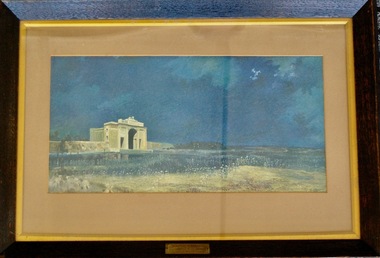 Lara RSL Sub Branch
Framed Picture Print, MENIN GATE AT MIDNIGHT
... Palace, the painting was displayed in Manchester and Glasgow. It was then taken around Australia, where record crowds paid to view the work. Longstaff oversaw the making of 2,000 prints and 400 of these were given to the nascent Australian War Memorial to sell to raise funds. paintings, prints, ww1, lara r.s.l. menin gate, world war one. MENIN GATE AT MIDNIGHT by WILL LONGSTAFF Presented to the Commonwealth Government of Australia by Lord Woolavington Rectangular shaped glass covered picture ...Menin Gate at Midnight (also known as Ghosts of Menin Gate) is a 1927 painting by Australian artist Will Longstaff. The painting depicts a host of ghostly soldiers marching across a field in front of the Menin Gate war memorial. Longstaff painted the work after attending the unveiling of the Menin Gate memorial, at Ypres in Belgium, on 24 July 1927. The memorial commemorated those men of the British Empire, including Australia, who died in the battles of the First World War around the town. The painting is part of the collection of the Australian War Memorial in Canberra. It was purchased by Lord Woolavington for 2,000 Guineas and presented to the Australian government.[1] After a royal command viewing for George V and the Royal family at Buckingham Palace, the painting was displayed in Manchester and Glasgow. It was then taken around Australia, where record crowds paid to view the work. Longstaff oversaw the making of 2,000 prints and 400 of these were given to the nascent Australian War Memorial to sell to raise funds.Rectangular shaped glass covered picture frame showing a print of the MENIN GATE AT MIDNIGHTMENIN GATE AT MIDNIGHT by WILL LONGSTAFF Presented to the Commonwealth Government of Australia by Lord Woolavington paintings, prints, ww1, lara r.s.l. menin gate, world war one. -
 Lara RSL Sub Branch
Wallet, Y.M.C.A. Wallet Mr Sid Ellis carried by hm during WW1
... Palace. The reverse is printed with magazine writings. .17 Paper envelope Addressed to Pte. S. W. Ellis No. 640 sent from Lara and redirected to the recipient by Army Base Post Office. .18 Cardboard Postcard with a photographic picture of The Park & Bandstand, Melton Mowbray. ...Palace. The reverse is printed with magazine writings. .17 Paper envelope Addressed to Pte. S. W. Ellis No. 640 sent from Lara and redirected to the recipient by Army Base Post Office. .18 Cardboard Postcard with a photographic picture of The Park & Bandstand, Melton Mowbray. ...WW1. Y.M.C.A. London, French scenesWW1 Wallet . YMCA LondonYMCA Wallet containing personal papers and letters - Sid Ellis- -472.01 Black leather Wallet - Y.M.C.A. Australian Logo on front. On the rear of the wallet is a Motto "Talk Clean, Live Clean, Fight Clean. Play the Game." .02 Paper slip containing details of acquaintances service numbers name and regiment details. .03 Paper Sovenior of France - written in French. .04 Paper folded to contain 10 photographic shots of French scenes countryside, sailing cutters. .05 Receipt from Returned Sailors & Soldiers Imperial League of Australia(Victoria). Issued to S. W. Ellis Brunswick Sub-branch dated 31/12/1936 Badge Number 48697. .06 Envelope Service of Campaign - printed on the front the envelope is written in Portuguese. "Servicio De Campanha" .07 Small brown paper representation of a boomerang with Cooee in gold lettering embossed on the front. .08 Small white business card for "Cafe - Debit" written in French "Albert Succr" Le Havre. .09 Cut-out from a magazine "View of the Seven Bridges" .10 Cut-out From a magazine "The New Louvre. .11 Cut-out from a magazine "Vendome Place" .12 Cut-out from a magazine "The Madeleine" .13 Cut-out from a magazine "The Arch De Triomphe - it is 150 feet high and cost 362,000 Pounds" .14 Cut-out from a magazine "The Grand Opera House - its cost was about 1,190,500 pounds and it seats over 2,000 people" .15 Cut-out from a magazine "The Cathedral of Notre Dame - A splendid example of the gothic architecture of the 13th century. .16 Cut-out from a magazine "The Trocadero Place erected from the Universal Exhibition of 1878 . with a Hall Capable of holding 5,000 people. .17 Envelope sent to Private S.W. Ellis from Lara took a well-traveled route to reach him. .18 Postcard of Park & Bandstand, Melton, Mowbray to Pte S.W Ellis. .19 Y.M.C.A. Newspaper "The Rising Sun" Vol 1, No. 14 Dated 28/1/1919 London, England. .20 Small note from Y.M.C.A. with pencil note on the rear "423 Pte. Schofield E.J." .21 Small Calander for 1918 from Y.M.C.A. London. .22 Cut out from a newspaper of a Funeral notice of Mrs. Thompson. .23 Paper note a pencil written recipe for an ointment measured amounts of the ingredients. .24 Two copies of Australian Imperial Force, Message to the "Officers, Non-Commissioned Officers, and Men of the Australian Imperial Force." From Commander in the field. .25 Memo "the Diggers" by Capt. William Denny - an order form for copies of the book.472.01 Black leather with Y.M.C.A. Australian Armed Forces Logo embossed on the front and on the Back a motto "Talk Clean, Live Clean, Fight Clean, Play The Game." .02 White pocket notebook paper. .03 Small thin cardboard white with Blue and Red chevrons on each corner. On the reverse side is a word "Souscrivez!" .04 Thin paper folder in a cascade that contains 10 small photos of French scenery. .05 Tissue paper receipt No. 31996 dated 15/01/1916 from Returned Sailors & Soldiers Imperial League of Australia (Victoria). .06 Brown Envelope with Green printing of the front. Army Form Number W 3078 (P) .07 Small Brown paper, shaped as a boomerang with a saying printed on the front "Cooee" .08 Cardboard white Business card for Cafe-Debit, Le Havre, .09 Paper cut out from a magazine with a view of the Seven Bridges. The reverse is printed with magazine writings. .10 Paper cut out from a magazine with a view of the New Louvre. The reverse is printed with magazine writings. .11 Paper cut out from a magazine with a view of Vendome Place. The reverse is printed with magazine writings. .12 Paper cut out from a magazine with a view of The Madeleine. The reverse is printed with magazine writings. .13 Paper cut out from a magazine with a view of The Arc De Triomphe. The reverse is printed with magazine writings. .14 Paper cut out from a magazine with a view of The Grand Opera House. The reverse is printed with magazine writings. .15 Paper cut out from a magazine with a view of The Cathedral Of Notre Dame. The reverse is printed with magazine writings. .16 Paper cut out from a magazine with a view of The Trocadero Palace. The reverse is printed with magazine writings. .17 Paper envelope Addressed to Pte. S. W. Ellis No. 640 sent from Lara and redirected to the recipient by Army Base Post Office. .18 Cardboard Postcard with a photographic picture of The Park & Bandstand, Melton Mowbray. Addressed to Pte. S. W. Ellis No. 640. .19 Y.M.C.A. Newspaper "The Rising Sun" Vol. 1 No. 14. .20 Thin paper from Y.M.C.A. addressed to 423 Pte. Schofield E.J. .21 Cardboard folded in two, a calendar for 1918, and small Map of Aldwych, reverse side is Y.M.C.A. in London details. Printed in red and black. .22 Cut out from a newspaper of a Funeral notice of Mrs. Thompson. .23 Thin Brown Paper with a note in pencil containing a written recipe for an ointment measured amounts of the ingredients. .24 Two copies of paper pamphlets. To the Officers & men of Australian Imperial Force dated 14th November 1918, .25 A paper pamphlet "The Diggers" by Capt. William Denny -
Lara RSL Sub Branch
Framed picture of AT THE HEART OF THE EMPIRE, AT THE HEART OF THE EMPIRE
... Palace for the first time in history. Our Calendar features a Member of the Australian Coronation Contingent relieving a Welsh Guardsman and the reading of duties during the ceremonial change over. AUSTRALIA MOUNTS THE ROYAL GUARD. MAY 10th 1937. Glass covered rectangular shaped gold coloured picture ...Glass covered rectangular shaped gold coloured picture frame, showing the changing of the guard.AT THE HEART OF THE EMPIRE. On May 10th, 1937, Australian Troops mounted the Royal Guard at Buckingham Palace for the first time in history. Our Calendar features a Member of the Australian Coronation Contingent relieving a Welsh Guardsman and the reading of duties during the ceremonial change over. AUSTRALIA MOUNTS THE ROYAL GUARD. MAY 10th 1937.royal guard, buckingham palace, australian coronation contingent, lara r.s.l. -
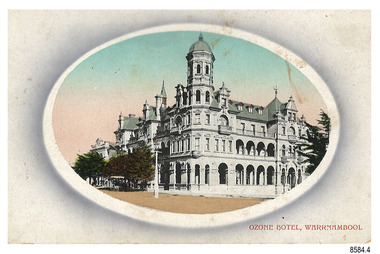 Flagstaff Hill Maritime Museum and Village
Postcard - Historical, Warrnambool, Ozone hotel, Warrnambool, 1902-1929
... picture side. Soon, the regulations changed and the back was divided for a message and the address. Ozone Hotel, Warrnambool – Construction of Warrnambool’s Ozone Hotel and Coffee Palace on the corner of Koroit and Kepler streets began in 1890. ...picture side. Soon, the regulations changed and the back was divided for a message and the address. Ozone Hotel, Warrnambool – Construction of Warrnambool’s Ozone Hotel and Coffee Palace on the corner of Koroit and Kepler streets began in 1890. ...The nine postcards in this set were donated together and date to the early 1900s. All but one postcard in this set shows images of Warrnambool, in the Western District of Victoria; the other has a London image. The postcards were all printed in Great Britain according to that country’s postal regulations. The fronts of all cards have titles printed in red. Most of the images on the cards are attributed to photographer Joseph Jordan and belong to the Jordan Series. The back of these cards has an outline for a postage stamp, a vertical dividing line and a heading on each side of the line to separate the Correspondence from the Address. Postcards or ‘correspondence cards’ appeared in Britain in 1894. They were plain cards with a space for the message on one side and an address on the other; regulations didn’t allow anything but the address to be written on the ‘address’ side. In 1902 the British regulations then allowed a picture to be printed on the front and the address on the back, so messages had to be written on the picture side. Soon, the regulations changed and the back was divided for a message and the address. Ozone Hotel, Warrnambool – Construction of Warrnambool’s Ozone Hotel and Coffee Palace on the corner of Koroit and Kepler streets began in 1890. The luxury venue included ballrooms, dining rooms, a theatre and a tower. In 1929 it burnt to the ground in a spectacular fire. Joseph Jordan - Joseph Jordan was born in 1841 in Leicester England. When he was 16 he joined the 7th Queen's Own Hussars and was sent to India at the outbreak of the mutiny. He took part in the relief of Lucknow and remained in India for eleven years. It was during this time that he became interested in photography. He was posted to New Zealand and later came to Victoria, becoming a sergeant major of the Mounted Rifles. In the mid-1880s he came to the Western district where he was responsible for establishing units of the Mounted Rifles in various country towns such as Dunkeld, Mortlake, Panmure, Bushfield, Koroit etc. He resigned from the army in 1889 and set up a professional photography studio in Liebig Street, Warrnambool. He became very well known in the Western District for family photographs, official photographs of local councillors and groups as well as views of local scenery. In 1891 he photographed the wrecked barque ‘Fiji’ at ‘Wrecks Beach’ near Princetown. His business was taken over by his son Arthur around 1917. Joseph was a keen rifle shot and in 1924 he donated the "Jordan Shield" as a prize to the Victorian Rifle Association. He was made a "Life Honorary Member" of the Warrnambool Returned Soldiers League and in 1933 he was recognised as being the oldest living soldier in Victoria. Joseph died in 1935 aged 95.This postcard of the Ozone Hotel and Coffee Palace is significant for its connection to the Victorian-era hotel. The hotel was a luxury facility that attracted visitors to the town by sea, rail and road. The postcard also represents the short period in which the hotel operated and the notable, unforgettable event of its burning to the ground. Out of the set of nine postcards in this donation, this card is the only one that includes the location of Warrnambool on the back. It is also the only one with text within the outline for the postage stamp and with headings in this font. Joseph Jordan is a significant figure in Warrnambool history as he helped to establish early units of the Mounted Rifles (G Company) in local towns during the late 1880's and later, photographed local scenes, groups and citizens of early Warrnambool.Postcard, one of nine, landscape orientation, coloured print within an oval border and mauve-toned shading. The cameo image is of a grand three-storey building on a street corner with a tall turret, shorter turrets, and arches on the verandas. The back has inscriptions and outlines for a postage stamp. There is no correspondence written on the card. Jordan Series, printed in Great Britain.Front, in red: “Ozone hotel, Warrnambool” Back in black: “Jordan Series” “POST CARD” “PRINTED IN GREAT BRITAIN” “For correspondence” “The Address only to be written here”flagstaff hill maritime museum, flagstaff hill maritime village, flagstaff hill maritime museum and village, maritime museum, warrnambool, great ocean road, warrnambool and district, warrnambool scenes, local scenes, views of warrnambool, joseph jordan, jordan series, jordan photography, postcard, souvenir, correspondence, cameo postcard, landscape, ozone hotel and coffee palace, ozone hotel, warrnambool hotel, destroyed by fire, coffee palace -
 Montmorency–Eltham RSL Sub Branch
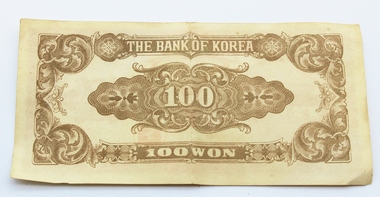
Currency - Bank note, Korean, 100 Won
... On the front side is a picture of the main gate of Gyeongbokgung Palace, 100 and other Korean writing also the number in brackets (128) in red ink On the reverse side it says The Bank of Korea and 100 and 100 won...On the front side is a picture of the main gate of Gyeongbokgung Palace, 100 and other Korean writing also the number in brackets (128) in red ink On the reverse side it says The Bank of Korea and 100 and 100 won 100 Won is a cream coloured bank note with brown and pale blue/grey printing on it. ...100 Won is a cream coloured bank note with brown and pale blue/grey printing on it. On the front side is a picture of the main gate of Gyeongbokgung Palace, 100 and other Korean writing also the number in brackets (128) in red ink On the reverse side it says The Bank of Korea and 100 and 100 won -
 Eltham District Historical Society Inc
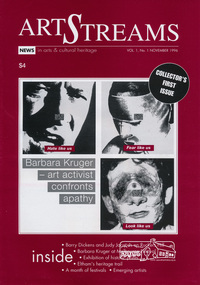
Journal, Peter Doughtery, ArtStreams: News in arts and cultural heritage; Vol. 1, No. 1, November 1996, 1996
... picture...theo scharf...thermal skunkrust...untitled scraper board...victorian artists supplies...war artist...warrandyte...westgarth writers' week...wingrove cottage...wolfgangs palace..." - Eltham District Historical Society Newsletter No. 161, March 2005 1996 adam simmons akira takizawa alison cassidy alistair knox park allwood house alvaro castagnet angels of soul anita hustas anna kelly anne curry arts ball avenue of honour barbara kruger barry dickens batacuda belli belly dance and drumming group betty rowland bike paths bits & pieces blair fraser blue tongue bridge street bulleen art & garden centre bulleen nursery bux caffe poco cal martin carla cordeiro cate bailey charles morris charlie dowley chris hooke chris kandis chute street circus in a suitcase crucial kick deirdre o'reilly diamond creek diamond valley big band edna kenny ellis cottage eltham arts council eltham cemetery eltham courthouse eltham festival eltham high school stage and jazz band eltham high school eltham library eltham people's choir eltham symphonica band eltham war memorial building eltham wiregrass gallery eucalypso fay alexander jenkins fiona furphy firefly food for all seasons friends of the earth forest action fund gavan gray gene strode geoff braithwaite geoff kluke george kirov gil askey golden cascades graeme barker and the cats greg o'leary harry gilham helen o'grady children's drama academy heritage trail hurstbridge goldworks gallery italian women's choir jackie gaudion jackie stojznova jacqueline gawler janine james jarrold cottage jay atwill jazz band ball jerry hughes jock ryan john rasmussen jon weaving joseph zbukvic joy ness judy jacques judy racz jules burns june cugola kate jones kavisha mazzella kevin spearey les gyori lisa walker lothlorian louise jade magwal margie allan margie lou dyer margo barrett mary burns masquerade ball melody james and friends mermaid in the well michael eames michael murray michele lonsdale monique di mattina montsalvat myra skipper nell frysteen nerida kirov nicole o'connor nillumbik emerging artists exhibition nillumbik festival nola spence ona henderson opportunity shop our lady of help christians church pamela conder parafinallen patrick mccauley peter burns peter dougherty pond road robbie greig roger shuttleworth ron hanson rory cole ross hannaford ross needham ruckers hill sanctuary scott griffiths shep huntly shillinglaw cottage shire of nillumbik shoestring sigmund jorgensen silvio apponyi spindrift st margarets anglican church stebbing cottage steve sedergreen susan street sweeney syd tunn tennis-courts terry cole the great gizmo the picture theo scharf thermal skunkrust untitled scraper board victorian artists supplies war artist warrandyte westgarth writers' week wingrove cottage wolfgangs palace theatre troupe women's circus yarra plenty rock gospel choir you did alright kid art streams Colour front and back cover with feature articles and literary pieces with photographs and advertisements printed in black and white. 36 pages, 30 cm. ...Vol. 1, No. 1 November 1996 CONTENTS REFORMIST?: Barbara Kruger comes to the Museum of Modern Art at Heide 3 FESTIVALS Nillumbik festival celebrates our lifestyle in food, wine, music and art 5 WRITERS WEEK Barry Dickens and Judy Jacques on Ruckers Hill present the "word" in all its possibilities 8 EMERGING ARTISTS Nillumbik presents a new wave of visual artists 11 SHORT STORY Extract from a novel in progress by Jon Weaving 12 POETRY Tribute to Myra Skipper 16 HERITAGE TRAIL Youth of Eltham research local history 1 8 SCULPTURE Akira Takizawa's search for harmony 22 WRITER'S JOURNEY A writer overcomes a nightmare 24 SCIENCE AND ART Pamela Conder analyses nature 26 ARTS BALL Jazz greats come to town 27 HISTORY IN PRINTS Australia's forgotten war artist 28 "Peter Dougherty has been involved in the local art scene for many years. As publisher and editor of the arts magazine Artstreams, his comments on the various branches of the arts are widely respected. His "The Arts" column in the Diamond Valley Leader presents a brief summary for a much wider cross section of the local community. Peter also operates his own gallery and the Artstreams Cafe at the St Andrews market. Peter has a wealth of knowledge about present day and historical aspects of local art and artists." - Eltham District Historical Society Newsletter No. 161, March 2005Colour front and back cover with feature articles and literary pieces with photographs and advertisements printed in black and white. 36 pages, 30 cm. Vol. 1, no. 1 (Nov. 1996) - Vol. 10, no. 5 (summer ed. 2005/06) 1996, adam simmons, akira takizawa, alison cassidy, alistair knox park, allwood house, alvaro castagnet, angels of soul, anita hustas, anna kelly, anne curry, arts ball, avenue of honour, barbara kruger, barry dickens, batacuda, belli, belly dance and drumming group, betty rowland, bike paths, bits & pieces, blair fraser, blue tongue, bridge street, bulleen art & garden centre, bulleen nursery, bux, caffe poco, cal martin, carla cordeiro, cate bailey, charles morris, charlie dowley, chris hooke, chris kandis, chute street, circus in a suitcase, crucial kick, deirdre o'reilly, diamond creek, diamond valley big band, edna kenny, ellis cottage, eltham arts council, eltham cemetery, eltham courthouse, eltham festival, eltham high school stage and jazz band, eltham high school, eltham library, eltham people's choir, eltham symphonica band, eltham war memorial building, eltham wiregrass gallery, eucalypso, fay alexander jenkins, fiona furphy, firefly, food for all seasons, friends of the earth forest action fund, gavan gray, gene strode, geoff braithwaite, geoff kluke, george kirov, gil askey, golden cascades, graeme barker and the cats, greg o'leary, harry gilham, helen o'grady children's drama academy, heritage trail, hurstbridge goldworks gallery, italian women's choir, jackie gaudion, jackie stojznova, jacqueline gawler, janine james, jarrold cottage, jay atwill, jazz band ball, jerry hughes, jock ryan, john rasmussen, jon weaving, joseph zbukvic, joy ness, judy jacques, judy racz, jules burns, june cugola, kate jones, kavisha mazzella, kevin spearey, les gyori, lisa walker, lothlorian, louise jade, magwal, margie allan, margie lou dyer, margo barrett, mary burns, masquerade ball, melody james and friends, mermaid in the well, michael eames, michael murray, michele lonsdale, monique di mattina, montsalvat, myra skipper, nell frysteen, nerida kirov, nicole o'connor, nillumbik emerging artists exhibition, nillumbik festival, nola spence, ona henderson, opportunity shop, our lady of help christians church, pamela conder, parafinallen, patrick mccauley, peter burns, peter dougherty, pond, road, robbie greig, roger shuttleworth, ron hanson, rory cole, ross hannaford, ross needham, ruckers hill, sanctuary, scott griffiths, shep huntly, shillinglaw cottage, shire of nillumbik, shoestring, sigmund jorgensen, silvio apponyi, spindrift, st margarets anglican church, stebbing cottage, steve sedergreen, susan street, sweeney, syd tunn, tennis-courts, terry cole, the great gizmo, the picture, theo scharf, thermal skunkrust, untitled scraper board, victorian artists supplies, war artist, warrandyte, westgarth writers' week, wingrove cottage, wolfgangs palace theatre troupe, women's circus, yarra plenty rock gospel choir, you did alright kid, art streams -
 Bendigo Historical Society Inc.
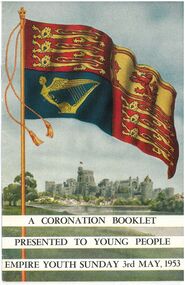
Memorabilia - A Coronation Booklet, A Coronation Booklet Presented to Young People Empire Youth Sunday 3rd May 1953
... picture), the Coronation Regalia and the meaning of each piece (photographed in colour), the coronation itinerary and the route to and from Westminster Abbey on the back cover. There is also a black and white photo of Queen Elizabeth II, Prince Philip and their children Prince Charles (now Charles III) and Princess Anne. The front cover shows a printed copy of colour drawing containing Buckingham Palace...picture), the Coronation Regalia and the meaning of each piece (photographed in colour), the coronation itinerary and the route to and from Westminster Abbey on the back cover. There is also a black and white photo of Queen Elizabeth II, Prince Philip and their children Prince Charles (now Charles III) and Princess Anne. The front cover shows a printed copy of colour drawing containing Buckingham Palace ...A booklet commemorating the coronation of Queen Elizabeth II which was held 2 June 1953. The booklet goes through the history of Coronations in England, detailing the church (Westminster Abbey; includes drawn black and white picture), the Coronation Regalia and the meaning of each piece (photographed in colour), the coronation itinerary and the route to and from Westminster Abbey on the back cover. There is also a black and white photo of Queen Elizabeth II, Prince Philip and their children Prince Charles (now Charles III) and Princess Anne. The front cover shows a printed copy of colour drawing containing Buckingham Palace in the background and the Royal Standard of the United Kingdom in the foreground."A Coronation Booklet Presented to Young People Empire Youth Sunday 3rd May 1953, 1953" 16 page booklet printed on glossy paper. Cover printed and select images printed in colour. Internal pages and back cover contain text and some images printed black and white.Inscription on the first page reading 53. and $4- Original archive number/sticker on back cover - crossed outqueen elizabeth ii, coronation of queen elizabeth ii, buckingham palace, westminster abbey -
 Bendigo Historical Society Inc.
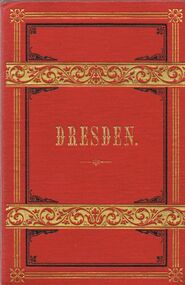
Book - GERMAN HERITAGE SOCIETY COLLECTION: DRESDEN - A PICTORIAL BOOK OF BUILDINGS
... Palace in the Great Garden... Russian Church... Woman's Church... The Germania Monument... The Royal Belvedere... Royal Zwinger and Sophia Church... The Royal Picture...Palace in the Great Garden, 3. Russian Church, 4. Woman's Church, 5. The Germania Monument, 6. The Roual Belvedere, 7. Royal Zwinger and Sophia Church, 8. The Royal Picture...Palace in the Great Garden, 3. Russian Church, 4. Woman's Church, 5. The Germania Monument, 6. The Roual Belvedere, 7. Royal Zwinger and Sophia Church, 8. The Royal Picture ...Item 4 Dresden: a pictorial book of buildings (numbered on back). Red Photo book with red cover with black and gold decoration. Dresden printed in gold on the front. Contains black and white photos of: 1. Dresden from the Palace gardens, 2. Palace in the Great Garden, 3. Russian Church, 4. Woman's Church, 5. The Germania Monument, 6. The Roual Belvedere, 7. Royal Zwinger and Sophia Church, 8. The Royal Picture Gallery, 9. Royal Theatre, 10. Roman Catholic Church and Castle, 11. Bruhes Terrace, and 12. Dresden from 'The City of Vienna Notice'.Dresdner Insichtenbooks, collections, buildings of dresden, german heritage society collection - dresden - a pictorial book of buildings, dresden from the palace gardens, palace in the great garden, russian church, woman's church, the germania monument, the royal belvedere, royal zwinger and sophia church, the royal picture gallery, royal theatre, roman catholic church and castle, bruhes terrace, dresden from 'the city of vienna notice' -
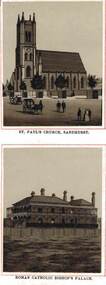 Bendigo Historical Society Inc.
Photograph - ST PAUL'S CHURCH SANDHURST / ROMAN CATHOLIC BISHOP'S PALACE
... Sepia photos taken from the 'Album of Sandhurst Views' Published by Messrs Schutz & Co, Melbourne, Pictured are the St Paul's Church Sandhurst & Roman Catholic Bishop's Palace. St Pauls photo has street scene showing a horse drawn cabs, one to the left, and one to the right. ...ORGANIZATION Church bendigo churches Bendigo Churches Sandhurst Churches Churches Sepia photos taken from the 'Album of Sandhurst Views' Published by Messrs Schutz & Co, Melbourne, Pictured are the St Paul's Church Sandhurst & Roman Catholic Bishop's Palace. St Pauls photo has street scene showing a horse drawn cabs, one to the left, and one to the right. ...Sepia photos taken from the 'Album of Sandhurst Views' Published by Messrs Schutz & Co, Melbourne, Pictured are the St Paul's Church Sandhurst & Roman Catholic Bishop's Palace. St Pauls photo has street scene showing a horse drawn cabs, one to the left, and one to the right. The Bishop's Palace has open ground in the foreground and a high picket fence in front of the building.organization, church, bendigo churches, bendigo churches, sandhurst churches, churches -
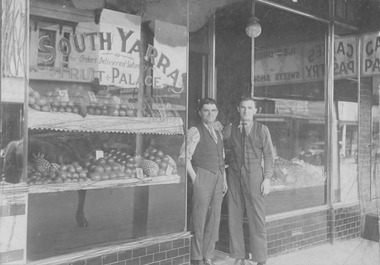 Ithacan Historical Society
Photograph, South Yarra Fruit Palace, c1940s
... One of the men pictured outside the South Yarra Fruit Palace is Nick Sikiotis. ...One of the men pictured outside the South Yarra Fruit Palace is Nick Sikiotis. ...One of the men pictured outside the South Yarra Fruit Palace is Nick Sikiotis. Located at 600 Chapel Street in South Yarra, Sikiotis established the business in 1922. He also established a shop at 345 Toorak Road, on the corner of Rockley Road which was leased to a florist. His business was one of many owned and operated by Ithacans in both the Melbourne CBD and surrounding suburbs during the first decade of the twentieth century. Nick Sikiotis arrived in Melbourne from Greece in the early 1920s. A black and white photograph of two men standing in the doorway of a fruit shop. ithacan businesses -
 Narre Warren and District Family History Group
Book, Context Pty Ltd, Cardinia Local Heritage Study Review 2007 Stage A. Vol 1 : Key Findings And Recommendations Vol 2 : Heritage Place And Precinct Citations, 2007
... Palace (Gembrook)...Tehennepe (Iona)...Koo Wee Rup Public Hall...Dustings Garage (Koo Wee Rup)...Wattle Theatre (Koo Wee Rup)...Koo Wee Rup Police Lockup...Royal Hotel (Koo Wee Rup)...Lang Lang Cemetery...Misson's Butchers Shop & Residence (Lang Lang)...ANZ Bank (Lang Lang)...Maryknoll Residential & Civic Precinct...Maryknoll Lawn Cemetery...Mount Burnett Guesthouse...Oakway (Nar Nar Goon)...Nar Nar Goon Growers & Packers Shed...Jesmond Dene (Officer South)...Kings Picture...Cardinia Shire (Vic.) heritage studies Kenilworth Coach House (Beaconsfield) Wood Street Residential Precinct (Beaconsfield) George Street Residential Precinct (Bunyip) Bunyip Post Office Railway Hotel (Bunyip) Cora Lynn Catholic Parish School Glen-Keith Farm Complex (Dalmore) Emerald Lake Park Emerald Railway Station Emerald Country Club Cambden Woolybutt Ros (Emerald) Oak Lee (Emerald) Sycamore Lodge (Emerald) Cascades Guest house Orchard Packing Shed (Garfield North) Wattle Bank (Gembrook) Coffee Palace (Gembrook) Tehennepe (Iona) Koo Wee Rup Public Hall Dustings Garage (Koo Wee Rup) Wattle Theatre (Koo Wee Rup) Koo Wee Rup Police Lockup Royal Hotel (Koo Wee Rup) Lang Lang Cemetery Misson's Butchers Shop & Residence (Lang Lang) ANZ Bank (Lang Lang) Maryknoll Residential & Civic Precinct Maryknoll Lawn Cemetery Mount Burnett Guesthouse Oakway (Nar Nar Goon) Nar Nar Goon Growers & Packers Shed Jesmond Dene (Officer South) Kings Picture Theatre (Pakenham) Pakenham Post Office I.Y.U. ...The overall objective of the Study was the identification, assessment and documentation of places of post-contact cultural significance for the Cardinia Shire.non-fictionThe overall objective of the Study was the identification, assessment and documentation of places of post-contact cultural significance for the Cardinia Shire.cardinia shire (vic.), heritage studies, kenilworth coach house (beaconsfield), wood street residential precinct (beaconsfield), george street residential precinct (bunyip), bunyip post office, railway hotel (bunyip), cora lynn catholic parish school, glen-keith farm complex (dalmore), emerald lake park, emerald railway station, emerald country club, cambden woolybutt ros (emerald), oak lee (emerald), sycamore lodge (emerald), cascades guest house, orchard packing shed (garfield north), wattle bank (gembrook), coffee palace (gembrook), tehennepe (iona), koo wee rup public hall, dustings garage (koo wee rup), wattle theatre (koo wee rup), koo wee rup police lockup, royal hotel (koo wee rup), lang lang cemetery, misson's butchers shop & residence (lang lang), anz bank (lang lang), maryknoll residential & civic precinct, maryknoll lawn cemetery, mount burnett guesthouse, oakway (nar nar goon), nar nar goon growers & packers shed, jesmond dene (officer south), kings picture theatre (pakenham), pakenham post office, i.y.u. pre-emptive right homestead site (pakenham), valley view orchards manager's house (pakenham upper), ruthdale reserve trees, rutter farm trees (tooradin), eve's house (tynong north), kia ora (upper beaconsfield), the steyne (upper beaconsfield), beaconsfield upper milk bar, staverton garden (upper beaconsfield), great southern railway -
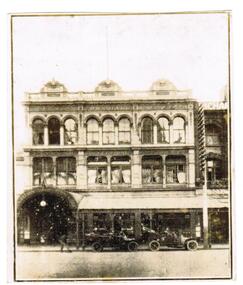 Ithacan Historical Society
Photograph, Town Hall Cafe, 1904
... The Capitol was the first extravagant ‘picture palace’ to be built in Victoria. It originally seated over 2137 people. ...The Town Hall Cafe was opened by A.J. Lucas in 1894 in Swanston Street on the Capitol Theatre site. Lucas later opened the exclusive Paris Cafe on Collins Street (1904) and the famous Cafe Australia (1916) which was designed by Walter Burleigh Griffin. He became a highly successful businessman and was the founding president of the Ithacan Philanthropic Society. A.J. Lucas who was born in the village of Exoghi migrated to Australia from Ithaca in 1886.In 1920 Lucas formed a joint venture to redevelop the site of the Town Hall Cafe into Capitol House and Capitol Theatre. Lucas once again commissioned Walter Burley Griffin and wife Marion Mahony Griffin as architects for the project. The Chicago-Gothic-style theatre is considered their greatest interior design work. The Capitol was the first extravagant ‘picture palace’ to be built in Victoria. It originally seated over 2137 people. Renowned Australian architect Robyn Boyd described The Capitol as "The best cinema that was ever built or ever likely to be built.” Information about the refurbished Capitol http://thecapitol.tv/about/A sepia photograph of the exterior of a three storey Victorian style building including veranda. It was a cafe owned by A.J. Lucas. The words 'Lucas Town Hall Cafe' are formed in raised lettering across the top storey of the building. Two cars are parked in front of the building. town hall cafe, cafes, a.j. lucas, capitol theatre -
 Ithacan Historical Society
Photograph, Photography shop, c 1990s
... Pictured are Stathi Raftopoulos right, Angelo Petalas centre, other man unknown. Stathi and Angelo were lifelong friends and shared a passion for film. Stathi brought Greek cinema to Melbourne and Angelo ran the Melbourne University Cinema. Angelo's son Kim Petalas has carried on his father's passion for film and is the National Programming Director for Palace...Pictured are Stathi Raftopoulos right, Angelo Petalas centre, other man unknown. Stathi and Angelo were lifelong friends and shared a passion for film. Stathi brought Greek cinema to Melbourne and Angelo ran the Melbourne University Cinema. Angelo's son Kim Petalas has carried on his father's passion for film and is the National Programming Director for Palace ...Pictured are Stathi Raftopoulos right, Angelo Petalas centre, other man unknown. Stathi and Angelo were lifelong friends and shared a passion for film. Stathi brought Greek cinema to Melbourne and Angelo ran the Melbourne University Cinema. Angelo's son Kim Petalas has carried on his father's passion for film and is the National Programming Director for Palace Cinemas.A coloured photograph of three men standing in a retail photography shop. Photographic accessories are displayed on racks and shelves behind the group. -
 Ithacan Historical Society
Photograph, Angelo Petalas and Stathi Raftopoulos, 1956
... pictured filming at Madden Grove Kew. Both Stathi and Angelo were passionate about cinema. Stathi brought Greek cinema to Melbourne and Angelo ran the Melbourne University Cinema. Angelo's son Kim Petalas has carried on his father's passion and is the National Programming Director for Palace Cinemas....pictured filming at Madden Grove Kew. Both Stathi and Angelo were passionate about cinema. Stathi brought Greek cinema to Melbourne and Angelo ran the Melbourne University Cinema. Angelo's son Kim Petalas has carried on his father's passion and is the National Programming Director for Palace Cinemas. ...Stathi Raftopoulos (middle) and Angelo Petalas (left) and a Mr Palaris are pictured filming at Madden Grove Kew. Both Stathi and Angelo were passionate about cinema. Stathi brought Greek cinema to Melbourne and Angelo ran the Melbourne University Cinema. Angelo's son Kim Petalas has carried on his father's passion and is the National Programming Director for Palace Cinemas.Black & white photograph with white crinkled border of 3 men with a movie camera. -
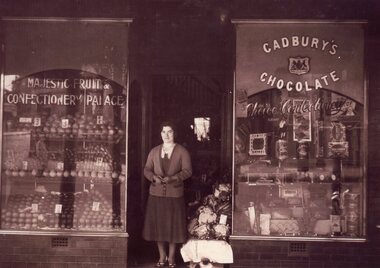 Ithacan Historical Society
Photograph, Majestic Confectionary and Fruit Palace, South Yarra, c1930s
... The Majestic Confectionery and Fruit Palace, located at 600 Chapel Street at the corner of Toorak Road and Chapel Street South Yarra was owned by Spiros D. Kallinikos. His sister Chrisoula is pictured...The Majestic Confectionery and Fruit Palace, located at 600 Chapel Street at the corner of Toorak Road and Chapel Street South Yarra was owned by Spiros D. Kallinikos. His sister Chrisoula is pictured ...The Majestic Confectionery and Fruit Palace, located at 600 Chapel Street at the corner of Toorak Road and Chapel Street South Yarra was owned by Spiros D. Kallinikos. His sister Chrisoula is pictured outside the shop. It was situated at The family lived there until 1943. Spiro was married to Evriklia (nee Kolaitou) and they had three daughters Nina (Katerini), Kali (Kaliope) and Poppy (Penelope). As well as opening cafes, fruit shops and fruit stalls in the Melbourne's central business district, Ithacans also ran businesses in the suburbs, initially just beyond the CBD in areas such as South Melbourne, South Yarra, Carlton and Richmond. During the 50s and beyond, as newer suburbs grew, many opened businesses beyond the inner suburbs to areas such as Balwyn, North Balwyn, Camberwell, Burwood, Caulfield, Ivanhoe, Kew.A sepia print of a lady standing outside a double fronted shop.south yarra -
 Warrnambool and District Historical Society Inc.
Newspaper Document, 1904
... Palace, was opened in 1890 as a temperance hotel. Thomas Randall was the proprietor of the Ozone Hotel from 1894 to 1907 and it then had a wine licence. In 1920 the building was known as Hotel Mansions and in 1923 it gained a full liquor licence. The building was destroyed by fire in 1929. These newspaper pages are of importance as some of the photographs have not been found elsewhere and give a good picture ...These four pages from the Australasian newspaper of January 1904 contain three pages of black and white photographs of Warrnambool. These include photographs of golfers, both men and women, the Hopkins River, the Ozone Hotel, Sheldrick’s Brewery and Wilmot in his mia mia. The photographs have been taken by Jordan Studios, Warrnambool. This studio, a prominent one in Warrnambool, was operated by Joseph Jordan and his son Arthur from 1890 to the 1930s.The accompanying text in the ‘Australasian’ appears to come from a booklet published about that time which was produced as an advertising tool for the Ozone Hotel and its proprietor, Thomas Randall. The Ozone Hotel, originallly called the Grand Ozone Coffee Palace, was opened in 1890 as a temperance hotel. Thomas Randall was the proprietor of the Ozone Hotel from 1894 to 1907 and it then had a wine licence. In 1920 the building was known as Hotel Mansions and in 1923 it gained a full liquor licence. The building was destroyed by fire in 1929. These newspaper pages are of importance as some of the photographs have not been found elsewhere and give a good picture of Warrnambool and district at the beginning of the 20th century. These are four pages from the Australasian newspaper of 1904. The pages contain black and white photographs and text. The pages are partly torn across and have ragged edges.ozone hotel, warrnambool, jordan studios, warrnambool, history of warrnambool -
 Sunshine and District Historical Society Incorporated
Letter - Wallace 'Wal/Wally' More Collection
... Palace. The Charge of the Light Brigade at Balaclava. The death of the Prince Consort. The poignancy of Victoria's protracted retirement from public life. The misguided honour of her husband's memory. Later in happier circumstances during her Diamond Jubilee Celebrations. The control of the Suez Canal by Disraeli. The assassination of General Gordon Kitchener's conquest of Khartoum. The death of the Queen These are the highlights of This Magnificent Motion Picture...Palace. The Charge of the Light Brigade at Balaclava. The death of the Prince Consort. The poignancy of Victoria's protracted retirement from public life. The misguided honour of her husband's memory. Later in happier circumstances during her Diamond Jubilee Celebrations. The control of the Suez Canal by Disraeli. The assassination of General Gordon Kitchener's conquest of Khartoum. The death of the Queen These are the highlights of This Magnificent Motion Picture ...Wallace 'Wal/Wally' More documents from when he served as an independant Councillor for the City of Sunshine (Elected 1956). He lived at 14 Gunnedah Street Albion. More Park Ardeer is named after him. These documents were donated to the Society by his daughter Jocelyn TruscottLetter to Frank Cassar from Jocelyn Truscott nee More May 2019|Program of Gala Performance Sixty glorious Years The Barclay Theatre Melbourne 16th April 1972 Synopsis The film opens with Queen Victoria's announcement of her betrothal to Prince Albert a pronouncement far from enthusiastically received by Parliament Thence to Englands antipathy towards the Prince Consort. The birth of the Princess Royal. The opening of the Great Exhibition at Crystal Palace. The Charge of the Light Brigade at Balaclava. The death of the Prince Consort. The poignancy of Victoria's protracted retirement from public life. The misguided honour of her husband's memory. Later in happier circumstances during her Diamond Jubilee Celebrations. The control of the Suez Canal by Disraeli. The assassination of General Gordon Kitchener's conquest of Khartoum. The death of the Queen These are the highlights of This Magnificent Motion Picture|3 Notice paper for Centenary Commemoration meeting of the Council Wednesday 18th May 1960|Religious Program for City of Sunshine who were celebrating the Centenary Civic Thanksgiving Service 1860 - 1960 at the Town Hall Sunshine 1st May 1960 in the presence of His Worship the Mayor Cr D B Dempster JP Address by The Right Reverend Doctor A C Watson Moderator General of the Presbyterian Church of Australia|Typed Report City of Sunshine Mayors Report 1962 to 1963 Cr D F Thompson JP Mayor 2 September 1963|Typed Report City of Sunshine Mayors Report 1955 to 1956 Cr Henry B Dempster JP|Newspaper Article Footscray and District Hospital Annual Report 1972|Newspaper Article Its hard times for the kind ladies of Sunshine Sunshine Ladis Benevolent Society members Flo Morley Glad Crick Sadie Parsons and Connie Parsons With remaining members Edna Hopkins and Violet More the women have given a total of 130 years service to Sunshine's needy|Newspaper Article The Sun 30 June 1981 Baby Di|Newspaper Article Sunshine Advocate 31 August 1956 Who will be Mayor?more -
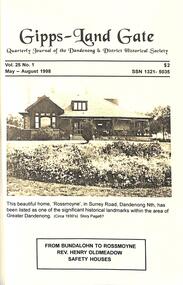 Dandenong & District Historical Society
Journal, Dandenong & District Historical Society, Gipps-Land Gate Vol.25 No.1, 1998
... picture of Dandenong on the cover. In Memory Of Vale Alan Ferguson Bundalohn to Rossmoyne A House A Home A History Chapter Five Making Memories Rev Henry Oldmeadow Centennial Celebrations Visits To Secondary Schools Safety House - Origins Of The Program And Its Organizational Structure Liz Oicket's Coffee Palace Society Notes Harking Back 75 Years Welcome Colleen! ...picture of Dandenong on the cover. In Memory Of Vale Alan Ferguson Bundalohn to Rossmoyne A House A Home A History Chapter Five Making Memories Rev Henry Oldmeadow Centennial Celebrations Visits To Secondary Schools Safety House - Origins Of The Program And Its Organizational Structure Liz Oicket's Coffee Palace Society Notes Harking Back 75 Years Welcome Colleen! ...An interesting group of Early Dandenong Personalities, Places and EventsA5 size publication of the Gipps-Land Gate, May-August 1998 featuring an old picture of Dandenong on the cover. In Memory Of Vale Alan Ferguson Bundalohn to Rossmoyne A House A Home A History Chapter Five Making Memories Rev Henry Oldmeadow Centennial Celebrations Visits To Secondary Schools Safety House - Origins Of The Program And Its Organizational Structure Liz Oicket's Coffee Palace Society Notes Harking Back 75 Years Welcome Colleen! Recent Research Requests An interesting group of Early Dandenong Personalities, Places and Eventshotel history, early education in dandenong, interesting milestones, family histories -
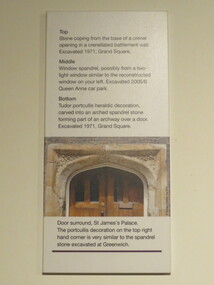 Ballarat Heritage Services
Photograph - Colour, Sign, Greenwich Chapel and Museum, England
... The picture on the sign shows the door surround, St James's Palace. the portcullis decoration on the top right hand corner is very similar to the spandrel stone excavated at Greenwich. ...The picture on the sign shows the door surround, St James's Palace. the portcullis decoration on the top right hand corner is very similar to the spandrel stone excavated at Greenwich. ...The picture on the sign shows the door surround, St James's Palace. the portcullis decoration on the top right hand corner is very similar to the spandrel stone excavated at Greenwich. Top shows the stone coping at the base of a crenel opening in a crenellated battlement wall, excavated in 1971 in the grand square; the middle shows the window spandrel, possibly from a two light window similar to the reconstructed window excavated in 2005/6 in the Queen Anne car park; and the bottom shows the tudor portcullis heraldic decoration, carved into an arched spandrel stone formng part of an archway over a door. This was excavated in 1971 in the Grand Square. greenwich, stone, museum, chapel -
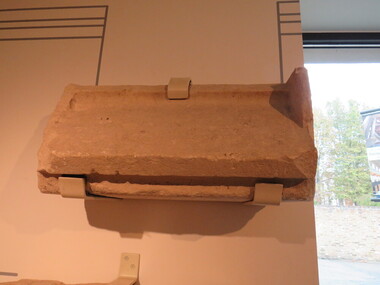 Ballarat Heritage Services
Photograph - Colour, Greenwich Chapel and Museum, England
... The picture on the sign shows the door surround, St James's Palace. the portcullis decoration on the top right hand corner is very similar to the spandrel stone excavated at Greenwich. ...The picture on the sign shows the door surround, St James's Palace. the portcullis decoration on the top right hand corner is very similar to the spandrel stone excavated at Greenwich. ...The picture on the sign shows the door surround, St James's Palace. the portcullis decoration on the top right hand corner is very similar to the spandrel stone excavated at Greenwich. Top shows the stone coping at the base of a crenel opening in a crenellated battlement wall, excavated in 1971 in the grand square; the middle shows the window spandrel, possibly from a two light window similar to the reconstructed window excavated in 2005/6 in the Queen Anne car park; and the bottom shows the tudor portcullis heraldic decoration, carved into an arched spandrel stone formng part of an archway over a door. This was excavated in 1971 in the Grand Square. greenwich, stone, museum, chapel
