
Showing 252 items matching "plant display"
-
 University of Melbourne, Burnley Campus Archives
Photograph - Black and white and colour prints, Flower Portraits, Unknown
... ...plant display...145 black and white photographs of flowering plants displayed for identification in vases or laid flat, some multiple copies. 2 colour photographs. ...flowes plants vases plant identification plant display 145 black and white photographs of flowering plants displayed for identification in vases or laid flat, some multiple copies. 2 colour photographs. ...145 black and white photographs of flowering plants displayed for identification in vases or laid flat, some multiple copies. 2 colour photographs. Not scanned.flowes, plants, vases, plant identification, plant display -
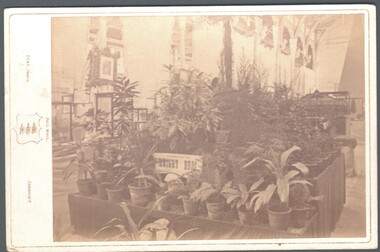 Bendigo Historical Society Inc.
Photograph - WES HARRY COLLECTION: FLORAL EXHIBITION, 1880's
... Plant display by Knight Bros. of Sandhurst, Nurserymen, at the Exhibition Building, Melbourne, circa 1880....Pall Mall , Sandhurst Plant display by Knight Bros. of Sandhurst, Nurserymen, at the Exhibition Building, Melbourne, circa 1880. ...Plant display by Knight Bros. of Sandhurst, Nurserymen, at the Exhibition Building, Melbourne, circa 1880.Bent,. Pall Mall , Sandhursttopic, floral display, knight bros. nurserymen, exhibition building, bent -
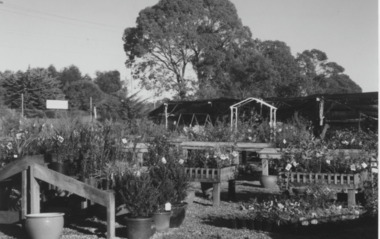 Lakes Entrance Historical Society
Photograph - Garden Supply Princes Highway Kalimna West Victoria 2000, Lakes Post Newspaper
... Colour photograph of Whelan's Garden Supply plant display area previously Cox's Garden Supply Princes Highway Kalimna West Victoria...Managers of Whelans Garden Supply Joe and Judy Rourke and Lisa and Jim Blake Businesses Plant Nursery Colour photograph of Whelan's Garden Supply plant display area previously Cox's Garden Supply Princes Highway Kalimna West Victoria Photograph Garden Supply Princes Highway Kalimna West Victoria 2000 Lakes Post Newspaper ...Managers of Whelans Garden Supply Joe and Judy Rourke and Lisa and Jim BlakeColour photograph of Whelan's Garden Supply plant display area previously Cox's Garden Supply Princes Highway Kalimna West Victoriabusinesses, plant nursery -
Whitehorse Historical Society Inc.
Article, A Festival to entertain the family, 1985
... With a photo of one of the organizers, Mrs Lillian Buzwell with her bonsai plants which will be displayed at the festival....Article about the Whitehorse Festival of Arts with a photo of one of the organizers, Mrs Lillian Buzwell with her bonsai plants which will be displayed at the festival....With a photo of one of the organizers, Mrs Lillian Buzwell with her bonsai plants which will be displayed at the festival. Whitehorse Festival of Arts Buzwell Lillian Article about the Whitehorse Festival of Arts Article about the Whitehorse Festival of Arts with a photo of one of the organizers, Mrs Lillian Buzwell with her bonsai plants which will be displayed at the festival. ...Article about the Whitehorse Festival of ArtsArticle about the Whitehorse Festival of Arts with a photo of one of the organizers, Mrs Lillian Buzwell with her bonsai plants which will be displayed at the festival.Article about the Whitehorse Festival of Arts whitehorse festival of arts, buzwell, lillian -
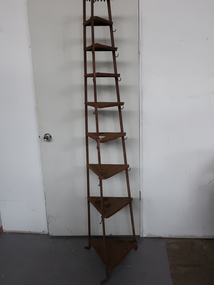 Kiewa Valley Historical Society
Stand - Pot Plants or Kitchen storage
... Home decoration involved pots / saucepans / plates etc in the kitchen to be on display / stored and/or indoor plants displayed in a corner on the verandah. It was common for the stand to be home-made and practical....Home decoration involved pots / saucepans / plates etc in the kitchen to be on display / stored and/or indoor plants displayed in a corner on the verandah. It was common for the stand to be home-made and practical. ...Home decoration involved pots / saucepans / plates etc in the kitchen to be on display / stored and/or indoor plants displayed in a corner on the verandah. It was common for the stand to be home-made and practical.Used by a resident of the Kiewa Valley as a domestic kitchen storage stand or possibly for indoor plants.Tall wooden pot stand with 9 triangular shelves spaced along it and with hooks on 2 of the 3 edges. It has 3 wooden poles holding the shelves. The stand has previously been painted blue. Nine equilateral triangle shelves decreasing in size with height towards the top. Top has decorative cap with steel fringe. Rusty. It may have been used as a kitchen pot / saucepan / plates stand or pot plant stand.pot plants, indoor plants, home decoration, pot stand, kitchen storage -
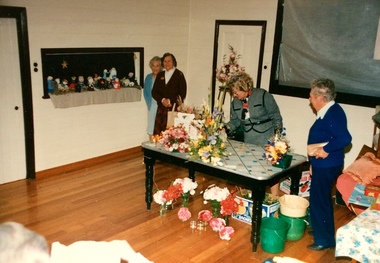 Phillip Island and District Historical Society Inc.
Photograph, Rhyll Craft and Flower Display, 1986
... 6 coloured photos of the Rhyll Craft and Flower Display showing displays of plants, flower arrangements, crochet rugs, food and local people...rhyll hall craft betty liddle rhyll - local identities Rhyll Craft and Flower Display Nov 1st 1986 6 coloured photos of the Rhyll Craft and Flower Display showing displays of plants, flower arrangements, crochet rugs, food and local people Rhyll Craft and Flower Display Photograph ...6 coloured photos of the Rhyll Craft and Flower Display showing displays of plants, flower arrangements, crochet rugs, food and local peopleRhyll Craft and Flower Display Nov 1st 1986rhyll hall, craft, betty liddle, rhyll - local identities -
 Vision Australia
Photograph - Image, Vision Victoria week at Mirridong, 1989?
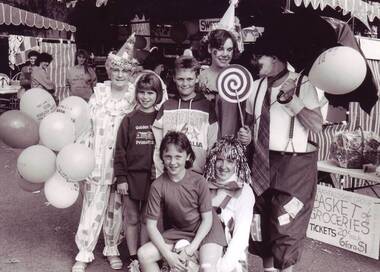
... School children receive Vision Victoria balloons from clowns at a carnival, a volunteer reads the Bendigo Advertiser to two Mirridong residents, a baby is held by a Mirridong resident whilst others look on, a game of chess is played, staff and residents enjoy a laugh in the gardens, plants are displayed and presentations are made....School children receive Vision Victoria balloons from clowns at a carnival, a volunteer reads the Bendigo Advertiser to two Mirridong residents, a baby is held by a Mirridong resident whilst others look on, a game of chess is played, staff and residents enjoy a laugh in the gardens, plants are displayed and presentations are made. Association for the Blind mirridong home (bendigo) 10 x black and white photographs Vision Victoria week at Mirridong Photograph Image ...Images of people celebrating Vision Victoria week during May 1-7, 1989 at various events, or taking part in publicity shots to promote the week. School children receive Vision Victoria balloons from clowns at a carnival, a volunteer reads the Bendigo Advertiser to two Mirridong residents, a baby is held by a Mirridong resident whilst others look on, a game of chess is played, staff and residents enjoy a laugh in the gardens, plants are displayed and presentations are made.10 x black and white photographsassociation for the blind, mirridong home (bendigo) -
 Orbost & District Historical Society
folder of documents, 1970
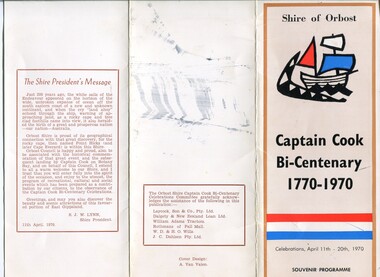
... Events held included a supper dance, an angling competition, a gymkhana, a street parade, an art show, a garden competition, a historical display, tree planting and a ceremony at Point Hicks. ...Events held included a supper dance, an angling competition, a gymkhana, a street parade, an art show, a garden competition, a historical display, tree planting and a ceremony at Point Hicks. ...Events held included a supper dance, an angling competition, a gymkhana, a street parade, an art show, a garden competition, a historical display, tree planting and a ceremony at Point Hicks. This item is associated with a significant event in Australian history.A manila folder of documents related to the 1970 Captain Cook centenary celebrations . It contains souvenir programs and details of events held from April 11 to April 20th 1970.cook-james 1970-centenary orbost-shire-council -
University of Melbourne, Burnley Campus Archives
Photograph - Framed gift for centenary, Jan James, 1991
... Colour photograph faded from display in Plant Sciences Building 906 ....Colour photograph faded from display in Plant Sciences Building 906 . Photograph Framed gift for centenary Jan James ...Large colour photograph depicting woodland at Chewton, Victoria by Jan James 1991. Framed and presented by Hawthorn Institute of Education. Additional in the frame is a hand inked paper plaque in sepia toned ink. Colour photograph faded from display in Plant Sciences Building 906 .Presented by Hawthorn Institute of Education on the Occasion of the Burnley Centenary Convocation and Oration 12 July 1991. CHEWTON, VIC Jan James '911991 centenary, hawthorn institute of education, convocation, gift of framed work -
 University of Melbourne, Burnley Campus Archives
Plan, Plan Survey Perennial Border and environs and Spring Display, 1982-1990
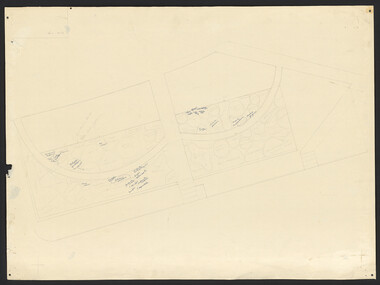
... (1) Tracing paper plan of bed. (2) Perennial Border Spring Display Planted 1982, plantings numbered but no names. (3) Pencil on paper, names of plants, some in pen. ...gardens VCAH Burnley perennial border Spring flowers (1) Tracing paper plan of bed. (2) Perennial Border Spring Display Planted 1982, plantings numbered but no names. (3) Pencil on paper, names of plants, some in pen. ...(1) Tracing paper plan of bed. (2) Perennial Border Spring Display Planted 1982, plantings numbered but no names. (3) Pencil on paper, names of plants, some in pen. Area now known as the Grey Garden. Old Storage Shed cleared in 1979. (4) Tracing paper copy, VCAH Burnley Plan Survey: Perennial Border and Environs, dated 8.11.90. Scale 1:100. This might be where the Herbaceous Border is in 2012. (Also see 11.0615).gardens, vcah burnley, perennial border, spring flowers -
 Bendigo Historical Society Inc.
Photograph - HANRO COLLECTION: PHOTO OF SHOP FRONT DISPLAY WINDOW
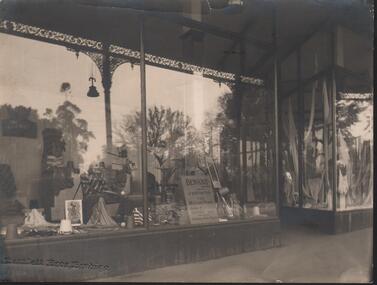
... A Chair with cardigans is also displayed. Some plants are in the window and in the front is a sign with *Benknit Sports Wear for men and women, Product of Hanro (Aust) Bendigo Knitting Mills Pty Ltd. ...A Chair with cardigans is also displayed. Some plants are in the window and in the front is a sign with *Benknit Sports Wear for men and women, Product of Hanro (Aust) Bendigo Knitting Mills Pty Ltd. ...See Item 11000.189Photo of shop Front Display Window: A black and white photo of large open windows with a central door. In the window on the left side wall is a display sign with *Hanro* A stand along display sign with a golfer swinging a club and two golf balls near by. Casual wear and shirts are displayed around with spools of thread. A Chair with cardigans is also displayed. Some plants are in the window and in the front is a sign with *Benknit Sports Wear for men and women, Product of Hanro (Aust) Bendigo Knitting Mills Pty Ltd. In the right window is a display of lingerie with yards of material draped through out the window. At the bottom of the photo is the imprint of the photographer *Bartlett Bros, Bendigo. A small tear at the top middle. The reflections in the windows is of the veranda with a lamp hanging from underneath and trees. On the back is the circular *Royal Historical Society of Victoria Bendigo Branch in blue ink. At the right top side in black ink in *MP368*. Box 116ABartlett Bros, Bendigo.photograph, streetscape, window display, hanro. -
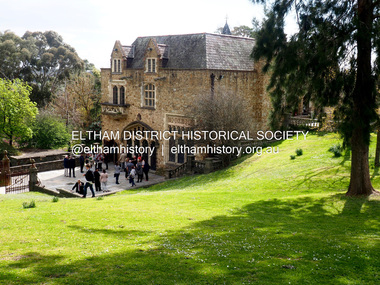 Eltham District Historical Society Inc
Photograph - Digital Photograph, Jim Connor, Eltham Cemetery Trust's launch at Montsalvat of Our Eltham - Artistic Recollections, 21 September 2017
... The project involves the artistic interpretation by Nerina Lascelles of historic and current images symbolically intermixed with locally indigenous flowers and plants. These are displayed on thirty-one ceramic panels by Linda Detoma, mounted within an iron fence by Neil Carter, upon an attractive rock wall constructed by Leigh Wykes. ...The project involves the artistic interpretation by Nerina Lascelles of historic and current images symbolically intermixed with locally indigenous flowers and plants. These are displayed on thirty-one ceramic panels by Linda Detoma, mounted within an iron fence by Neil Carter, upon an attractive rock wall constructed by Leigh Wykes. ...Our Eltham - Artistic Recollections by Jim Connor, EDHS newsletter No. 236 October 2017 The Eltham Cemetery Trust, established in 1858, selected the existing burial site at Mount Pleasant Road on high ground overlooking the village of Eltham. The first recorded burial took place in 1861 in the Church of England section. Headstones depict the names of many early and well known local families. In recent years the Trust has encouraged the use of creative artistic elements within the natural bushland environment in their landscaped grounds adjoining Montsalvat. Their ongoing vision has been to offer the local communty a fresh and unique relationship to the Cemetery. On Thursday 21st September 2017 their latest commissioned art project titled ‘Our Eltham - Artistic Recollections’ was unveiled. It is a collection of panels collaboratively created by artist Nerina Lascelles and ceramicist Linda Detoma. The project was designed and constructed by Leigh Wykes using Australian stone with ironwork by Neil Carter. All contributors to this installation, located adjacent to the car park near Metery Road, are residents of the Eltham area. Our Eltham - Artistic Recollections is described as a celebration of life in the Shire since the opening of the Eltham Cemetery more than 150 years ago. Depicting scenes of life in and around Eltham, the collection offers deeper connections to the Eltham area through a series of visual narratives of Eltham’s past, environment and community. The project involves the artistic interpretation by Nerina Lascelles of historic and current images symbolically intermixed with locally indigenous flowers and plants. These are displayed on thirty-one ceramic panels by Linda Detoma, mounted within an iron fence by Neil Carter, upon an attractive rock wall constructed by Leigh Wykes. The Eltham District Historical Society is pleased to have contributed to this project. Russell Yeoman and Jim Connor from our Society have collaborated with Liz Pidgeon, Local and Family History Librarian at Yarra Plenty Regional Library on a selection of photographs, many from the Shire of Eltham Pioneers Collection we hold in partnership, located at Eltham Library. We also provided information on the images chosen. The Eltham Cemetery Trust has produced a booklet about this artwork, which can be viewed on the Cemetery website at: http://www.elthamcemetery.com/oureltham/#1 Our Eltham - Artistic Recollections is a significant monumental installation, which will encourage visitors to come to view this outstanding combination of local creative skills, set within the attractive grounds of the Eltham Cemetery. jim connor collection, eltham cemetery trust, montsalvat, our eltham artistic recollections, 2017-09-21 -
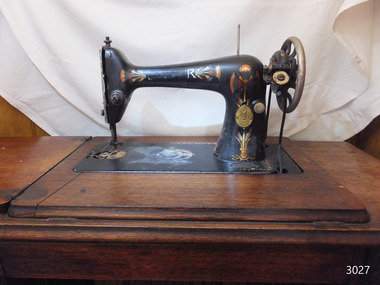 Flagstaff Hill Maritime Museum and Village
Domestic object - Sewing Machine, Singer Sewing Machine Company, 1922
... plant and by 1873 a new larger factory was completed near Bridgeton Cross. By now Singer employed over 2,000 people in Scotland but still, they could not produce enough machines. In 1882 George McKenzie, the soon to become President of the Singer Sewing Machine Company undertook the ground breaking ceremony on 46 acres of farmland at Kilbowie, Clydebank and the largest Singer factory in the world started to be built. Originally two main buildings were constructed. Built above the middle wing of the factory was a huge clock tower with the 'Singer' name displayed...plant and by 1873 a new larger factory was completed near Bridgeton Cross. By now Singer employed over 2,000 people in Scotland but still, they could not produce enough machines. In 1882 George McKenzie, the soon to become President of the Singer Sewing Machine Company undertook the ground breaking ceremony on 46 acres of farmland at Kilbowie, Clydebank and the largest Singer factory in the world started to be built. Originally two main buildings were constructed. Built above the middle wing of the factory was a huge clock tower with the 'Singer' name displayed ...In 1867 the Singer Company decided that the demand for their sewing machines in the UK was sufficiently high to open a local factory. Glasgow was selected for its iron-making industries, cheap labour, and possibly because at the time the General Manager of the US Singer Sewing Machine Company was George McKenzie, who was of Scottish descent. The company obtained a lease on land near Queen Street Station and machinery and machine parts were shipped over from the US. Demand for sewing machines outstripped production at the new plant and by 1873 a new larger factory was completed near Bridgeton Cross. By now Singer employed over 2,000 people in Scotland but still, they could not produce enough machines. In 1882 George McKenzie, the soon to become President of the Singer Sewing Machine Company undertook the ground breaking ceremony on 46 acres of farmland at Kilbowie, Clydebank and the largest Singer factory in the world started to be built. Originally two main buildings were constructed. Built above the middle wing of the factory was a huge clock tower with the 'Singer' name displayed for all to see from miles around. Many miles of railway lines were laid throughout the factory to connect the different departments and to aid in the shipping of their goods. Railway lines from the factory connected Glasgow, Dumbarton, and Helensburgh stations. The factory was regarded as the most modern facility in Europe at that time. As different departments in the factory were completed, the workers moved from the old sites to the new one at Kilbowie and the factory was finally finished in 1885. With nearly a million square feet of space and almost 7,000 employees producing on average 13,000 machines a week, making it the largest sewing machine factory in the world. The Clydebank factory was so productive that in 1905 the US Singer Company set up the Singer Manufacturing Company Ltd. as a UK registered company. The invention of the sewing machine had several very significant impacts on the lives of many people. It changed the domestic life of many women as more households began to own sewing machines, women as the ones who traditionally stayed home to do chores including making and repairing clothing, found themselves with more free time. Previously several days a week would be dedicated to sewing clothing for herself and her family, a housewife could now complete her sewing in merely several hours, allowing for more free time to pursue hobbies and attain new skills. Sewing and clothing production, in general, became more industrialized activities, taking place less in the home and more in large factories. Industrial sewing machines, in combination with the cotton gin, the spinning jenny, and the steam engine, made clothing production much easier and much cheaper. Sewing machine, treadle operated, "Branded Premier" 5-7-9-2-0-0-" Serial Number Y6243048 (denotes 1922 year of manufacture) flagstaff hill, warrnambool, shipwrecked-coast, flagstaff-hill-maritime-museum, maritime-museum, shipwreck-coast, flagstaff-hill-maritime-village, sewing machine, hand operated, dressmaking, textile machinery, portable, premier sewing machine, premier, singer treadle sewing machine -
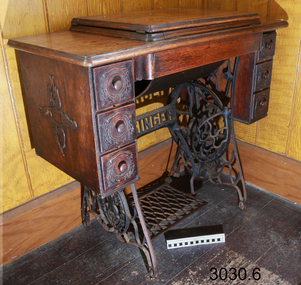 Flagstaff Hill Maritime Museum and Village
Domestic object - Sewing Machine, Singer Sewing Machine Company, 1907 -1920 (see note section this document for further information regards model identification)
... plant and by 1873 a new larger factory was completed near Bridgeton Cross. By now Singer employed over 2,000 people in Scotland but still, they could not produce enough machines. In 1882 George McKenzie, the soon to become President of the Singer Sewing Machine Company undertook the ground breaking ceremony on 46 acres of farmland at Kilbowie, Clydebank and the largest Singer factory in the world started to be built. Originally two main buildings were constructed. Built above the middle wing of the factory was a huge clock tower with the 'Singer' name displayed...plant and by 1873 a new larger factory was completed near Bridgeton Cross. By now Singer employed over 2,000 people in Scotland but still, they could not produce enough machines. In 1882 George McKenzie, the soon to become President of the Singer Sewing Machine Company undertook the ground breaking ceremony on 46 acres of farmland at Kilbowie, Clydebank and the largest Singer factory in the world started to be built. Originally two main buildings were constructed. Built above the middle wing of the factory was a huge clock tower with the 'Singer' name displayed ...In 1867 the Singer Company decided that the demand for their sewing machines in the UK was sufficiently high to open a local factory. Glasgow was selected for its iron-making industries, cheap labour, and possibly because at the time the General Manager of the US Singer Sewing Machine Company was George McKenzie, who was of Scottish descent. The company obtained a lease on land near Queen Street Station and machinery and machine parts were shipped over from the US. Demand for sewing machines outstripped production at the new plant and by 1873 a new larger factory was completed near Bridgeton Cross. By now Singer employed over 2,000 people in Scotland but still, they could not produce enough machines. In 1882 George McKenzie, the soon to become President of the Singer Sewing Machine Company undertook the ground breaking ceremony on 46 acres of farmland at Kilbowie, Clydebank and the largest Singer factory in the world started to be built. Originally two main buildings were constructed. Built above the middle wing of the factory was a huge clock tower with the 'Singer' name displayed for all to see from miles around. Many miles of railway lines were laid throughout the factory to connect the different departments and to aid in the shipping of their goods. Railway lines from the factory connected Glasgow, Dumbarton, and Helensburgh stations. The factory was regarded as the most modern facility in Europe at that time. As different departments in the factory were completed, the workers moved from the old sites to the new one at Kilbowie and the factory was finally finished in 1885. With nearly a million square feet of space and almost 7,000 employees producing on average 13,000 machines a week, making it the largest sewing machine factory in the world. The Clydebank factory was so productive that in 1905 the US Singer Company set up the Singer Manufacturing Company Ltd. as a UK registered company. The invention of the sewing machine had several very significant impacts on the lives of many people. It changed the domestic life of many women as more households began to own sewing machines, women as the ones who traditionally stayed home to do chores including making and repairing clothing, found themselves with more free time. Previously several days a week would be dedicated to sewing clothing for herself and her family, a housewife could now complete her sewing in merely several hours, allowing for more free time to pursue hobbies and attain new skills. Sewing and clothing production, in general, became more industrialized activities, taking place less in the home and more in large factories. Industrial sewing machines, in combination with the cotton gin, the spinning jenny, and the steam engine, made clothing production much easier and much cheaper. Singer sewing machine treadle type wooden stand with six drawers plus instruction manual Lotus decoration to machinewarrnambool, shipwrecked-coast, flagstaff-hill, flagstaff-hill-maritime-museum, shipwreck-coast, flagstaff-hill-maritime-village, sewing-machine, clothes repair, singer sewing machine -
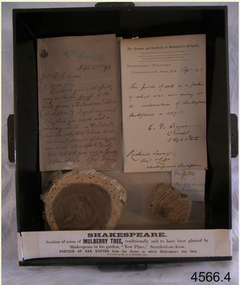 Flagstaff Hill Maritime Museum and Village
Wood Samples, 1891
... display case with metal trim around the frame. The case also contains two letters and a label printed on a card that refers to the contents, their origins and the donor. A card label with a printed number and a round adhesive label are attached on the back of the case. The left round section of wood is from a donated scion (or shoot) derived from the original mulberry tree planted...display case with metal trim around the frame. The case also contains two letters and a label printed on a card that refers to the contents, their origins and the donor. A card label with a printed number and a round adhesive label are attached on the back of the case. The left round section of wood is from a donated scion (or shoot) derived from the original mulberry tree planted ...The timber display case was presented to Mr Richard Standcombe Harris of Warrnambool (1831-1923). He was a councillor (1875-1891) and predominant businessman. Mr C F Loggin had met Mr Harris while on a trip to Stratford upon Avon in the United Kingdom. Upon his return to Warrnambool, Mr Harris donated the item to the Warrnambool Museum and Art Gallery, (established 1886) where Joseph Archibald was Curator: he catalogued the case in 1894. THE LETTERS IN THE CASE The two letters contained within the display case confirm the authenticity of the oak wood sample. The first letter in the case includes the text; "[Stamped Header on banner] High Street, Stratford on Avon [Hand written] Sept. 22nd / 91. Mr. R. S. Harris, Dear Sir, Enclosed you will find [underlined next 3 words] every authentic proof of the Oak from Shakespeare's House (Birth place). I regret very much Sir, that you made a short-day at S. on A. I should have been delighted to have had the honour, & pleasure, of showing you around our Beautiful Country. You did not give [next 3 words underlined] me or yourself a fair chance. But however I hope that we may again some day have more time to go quietly around. With kind regards, and wishing you, Sir, a pleasant voyage, I remain, Dear Sir, Yours very truly, C.F. Loggin. P.S. A paper will be always acceptable to be as how you Jolly Warrnamboolites are desporting yourselves. “ The second letter includes text; “[Printed Letterhead with stamped impression] The Trustees and Guardians of Shakespeare’s Birthplace Incorporated by Act of 54 and 55, Vict. 1891 Secretary and Librarian - Richard Savage Shakespeare’s Birthplace Stratford-upon-Avon [handwritten] 22 Sept 1891 This piece of oak is a portion of what was cut away at at the restoration of Shakespeare’s Birthplace in 1857-58. C. F. Loggins Chemist 3 High Street Richard Savage Sec. – Shakespeare’s Birthplace Mr C F Loggin was connected with the Shakespeare Trust as the person who had originally donated a scion of Shakespeare's mulberry tree to the "Shakespearean Birthday Committee" in 1842. (The scion that was given to the Shakespearean Birthday Committee, from which the Mulberry sample is derived, still grows today in "New Place" garden.) Mr Richard Savage was the Secretary and Liberian of the then renamed “Trustees and Guardians of Shakespeare’s Birthplace when the display case was given to Mr Harris in 1891 by Mr Loggin. WILLIAM SHAKESPEARE Shakespeare was born in 1564 in Stratford-upon-Avon, where he also grew up. He married at 18 years and he and his wife, Anne Hathaway, had three children: They moved to London where he became successful as an actor, writer, and part-owner of a playing company. He later returned to Stratford and purchased his last home, which he called "New Place" in 1602 where he later died in 1616. For the next 150 years, it was known that there existed a black mulberry tree in the garden. At the time there was a fashion for planting mulberry trees. It was the early 17th century after King James had come to the throne, and he imported tens of thousands of saplings in an attempt to get landowners to start a silk industry in England. Unfortunately for posterity, Shakespeare's mulberry was felled around 1756, by the then owner of “New Place" the Reverend Francis Gastrell, who was apparently tired of continual visits by pilgrims asking to see the tree, so he chopped it down. Gastrell had applied for local permission to extend the garden but the application was rejected and his tax was increased. Gastrell retaliated by demolishing the house in 1759, this greatly outraged the local inhabitants. Gastrell was eventually forced to leave town having provoked the wrath of Stratford residents for committing such an act. Today only the garden remains where “New House" used to stand with a scion from the original mulberry tree still growing there. The wood from the felled mulberry tree at “New House" was purchased by an enterprising local clock-maker Thomas Sharp and he spent the next 40 years or so years making souvenirs from the wood. These became early tourist souvenirs and subsequently developed into a profitable sideline for various other makers, including George Cooper and John Marshall. These objects range from relatively small domestic wooden objects, such as snuff boxes and weight scales to large tea caddies and even tables. C. F. Loggin donated a scion or cutting from Shakespeare's mulberry tree to the Shakespeare Birthplace Trust in 1862, he was a chemist who lived and worked in Stratford. There is a note on the frame of the donation that the mulberry sample is from this scion, research shows that from Richard Savage's diary notes that there must have been a lot of wood taken from that scion over the years which was planted in the garden of “New Place” and is still growing there today. The "Trustees and Guardians of Shakespeare’s Birthplace" (1847 -1964) was formed after the house where Shakespeare is believed to have been born fell into disrepair. Subsequently in 1846 after the death of Thomas Court's widow the last owner. Interest in the house was revived when PT Barnum, the American showman, wanted to buy it and ship the house back to America. In response to this, the Shakespeare Birthday Committee was established (by a private Act of Parliament) with the help of such luminaries as Charles Dickens, the Committee of Trustees raised the necessary £3,000 and purchased the house the following year. Once the Committee had acquired the building, restoration work began. Originally the Birthplace formed part of a terrace with later houses built either side. The first stage in its conservation was their destruction. At the time it was thought necessary to avoid the risk of fire spreading to Shakespeare's birthplace. Reconstruction was carried out by the Shakespeare Trust between 1857 and 1864 that restored the outside of the building to its original 16th-century state. It is from this restoration that the donated piece of oak is derived, originally from a beam that was in the house. Communication from The Shakespeare Birthplace Trust, dated April 11th, 2019, confirms that the pieces displayed in this case have good provenance. The wood samples are significant for their association with the history of William Shakespeare. The display case and its content is significant to Warrnambool local history for its association with the establishment in 1886 of the Warrnambool Museum and Art Gallery. However, it should be noted that the letters of authentication that accompany the wood samples are only applicable to the oak sample. None the less, all the pieces have very good provenance, with Richard Savage's certificate of authenticity for the oak, and the mulberry sample with the letter to Mr Harris from Mr CF Loggin having also been the donor of the scion of mulberry in 1862 to the Shakespeare Birthplace Trust. This scion was then established at Shakespeare's garden at "New Home" that had been demolished by Rev Francis Gastrell in 1759. Two wood samples associated with William Shakespeare, presented in a hanging, timber and glass display case with metal trim around the frame. The case also contains two letters and a label printed on a card that refers to the contents, their origins and the donor. A card label with a printed number and a round adhesive label are attached on the back of the case. The left round section of wood is from a donated scion (or shoot) derived from the original mulberry tree planted by William Shakespeare at his last home "New Place", Stratford-upon-Avon. The outer section is light brown coloured while the centre is dark grain. The right wood sample in the case is a section of oak rafter from the house where Shakespeare was born in 1564. The wood is mid brown with a distinct grain. The included letters, each dated 22/9/1891, refer to only the oak sample. - The letter on the left comprises two handwritten pages from Mr CF Loggin to Mr Richard Standcombe Harris. The paper has the printed letterhead address of High Street, Stratford on Avon. - The letter on the right is a handwritten certificate of authenticity signed by Mr CF Loggin and counter signed by Mr Richard Savage, Secretary and Liberian of the Shakespeare Trust. It is on the printed letterhead of The Trustees and Guardians of Shakespeare’s Birthplace Cardboard label inside the glass case “Shakespeare Section of Mulberry Tree, traditionally said to have been planted by Shakespeare in his garden, “New Place,” Stratford-on-Avon. PORTION OF OAK RAFTER from the house in which Shakespeare was born. (Presented by R S Harris 1891.) Printed label on the back of the case “3 2 “ The handwritten adhesive label “0566” flagstaff hill, warrnambool, shipwrecked coast, flagstaff hill maritime museum, maritime museum, shipwreck coast, flagstaff hill maritime village, great ocean road, shakespeare display case, wood samples, oak from shakespeare's birthplace, mulberry from shakespeare's home "new place", stratford-upon-avon, shakespeare's birthplace, the trustees and guardians of shakespeare's birthplace &c., shakespeare trust, shakespeare birthday committee, r.s. harris, brunswick, victoria, richard s harris, brunswick, victoria, c.f. loggins, chemist, 3 high street stratford-on-avon, richard savage, warrnambool museum and art gallery, thomas court, pt barnum, charles dickins, anne hathaway, black mulberry tree, reverend francis gastrell -
 Flagstaff Hill Maritime Museum and Village
Domestic object - Wooden Rolling Pin, First half of 20th Century
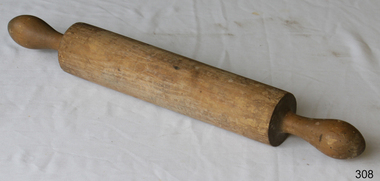
... plants and animals never before used as food and turn them into sophisticated recipes, were passed to invading Greeks, Romans, and Western Europeans. Thanks to the Etruscans, these cultures are associated with gourmet cooking. To prepare their inventive foods, the Etruscans also developed a wide range of cooking tools, including the rolling pin. Although written recipes did not exist until the fourth century B.C., the Etruscans documented their love of food and its preparation in murals, on vases, and on the walls of their tombs. Cooking wares are displayed...plants and animals never before used as food and turn them into sophisticated recipes, were passed to invading Greeks, Romans, and Western Europeans. Thanks to the Etruscans, these cultures are associated with gourmet cooking. To prepare their inventive foods, the Etruscans also developed a wide range of cooking tools, including the rolling pin. Although written recipes did not exist until the fourth century B.C., the Etruscans documented their love of food and its preparation in murals, on vases, and on the walls of their tombs. Cooking wares are displayed ...A rolling pin is a simple tool used to flatten dough. The first civilisation known to have used the rolling pin was the Etruscans. Their advanced farming ability, along with a tendency to cultivate many plants and animals never before used as food and turn them into sophisticated recipes, were passed to invading Greeks, Romans, and Western Europeans. Thanks to the Etruscans, these cultures are associated with gourmet cooking. To prepare their inventive foods, the Etruscans also developed a wide range of cooking tools, including the rolling pin. Although written recipes did not exist until the fourth century B.C., the Etruscans documented their love of food and its preparation in murals, on vases, and on the walls of their tombs. Cooking wares are displayed with pride; rolling pins appear to have been used first to thin-roll pasta that was shaped with cutting wheels. They also used rolling pins to make bread (which they called puls) from the large number of grains they grew. Natives of the Americas used more primitive bread-making tools that are favoured and unchanged in many villages. Chefs who try to use genuine methods to preserve recipes are also interested in both materials and tools. Hands are used as "rolling pins" for flattening dough against a surface, but also for tossing soft dough between the cook's two hands until it enlarges and thins by handling and gravity. Tortillas are probably the most familiar bread made this way. Over the centuries, rolling pins have been made of many different materials, including long cylinders of baked clay, smooth branches with the bark removed, and glass bottles. As the development of breads and pastries spread from Southern to Western and Northern Europe, wood from local forests was cut and finished for use as rolling pins. The French perfected the solid hardwood pin with tapered ends to roll pastry that is thick in the middle; its weight makes rolling easier. The French also use marble rolling pins for buttery dough worked on a marble slab. Glass is still popular; in Italy, full wine bottles that have been chilled make ideal rolling pins because they are heavy and cool the dough. Countries known for their ceramics make porcelain rolling pins with beautiful decorations painted on the rolling surface; their hollow centres can be filled with cold water (the same principle as the wine bottle), and cork or plastic stoppers cap the ends. Designs for most rolling pins follow long-established practices, although some unusual styles and materials are made and used. Within the family of wooden rolling pins, long and short versions are made as well as those that are solid cylinders (one-piece rolling pins) instead of the familiar style with handles. Very short pins called mini rolling pins make use of short lengths of wood and are useful for one-handed rolling and popular with children and collectors. Mini pins ranging from 5 to 7 in (12.7-17.8 cm) in length are called texturing tools and are produced to create steam holes and decorations in pastry and pie crusts; crafters also use them to imprint clay for art projects. These mini pins are made of hardwoods (usually maple) or plastic. Wood handles are supplied for both wood and plastic tools, however. Blown glass rolling pins are made with straight walls and are solid or hollow. Ceramic rolling pins are also produced in hollow form, and glass and ceramic models can be filled with water and plugged with stoppers. Tapered glass rolling pins with stoppers were made for many centuries when salt imports and exports were prohibited or heavily taxed. The rolling pin containers disguised the true contents. The straight-sided cylinder is a more recent development, although tapered glass pins are still common craft projects made by cutting two wine bottles in half and sealing the two ends together so that the necks serve as handles at each end.Tiny rolling pins are also twisted into shape using formed wire. The pins will not flatten and smooth pastry, and the handles do not turn. The metal pins are popular as kitchen decorations and also to hang pots, pans, and potholders. https://www.encyclopedia.com/sports-and-everyday-life/food-and-drink/food-and-cooking/rolling-pinThe use of the rolling pin to make thin pastry or pasta.Wooden rolling pin with some damage on cylinder section.None.flagstaff hill, warrnambool, shipwrecked-coast, flagstaff-hill, flagstaff-hill-maritime-museum, maritime-museum, shipwreck-coast, flagstaff-hill-maritime-village, rolling pin, cooking, pastry -
 Flagstaff Hill Maritime Museum and Village
Plant specimen - Wood Sample, Herbst, 1759-1765
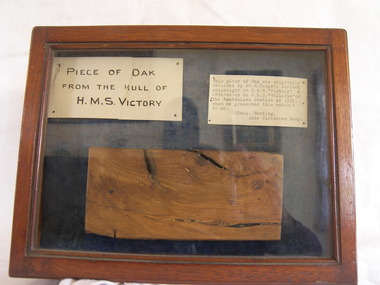
... Other items donated with the display case, and relating to the wood sample: an 1895 photograph, a 1905 newspaper clipping, a 1962 donor's letter (two pages), and a handwritten exhibit label with a border of red lines. Plant ...The piece of oak wood sample inside the case was obtained from Mr H. Cooper during the time he served as a shipwright for the British Royal Navy on Nelson’s flagship, HMS Victory, in 1891. By that time, the H.M.S. Victory was around 100 years old, having been built in 1765 and was currently in dry dock undergoing restoration. Cooper’s skills as a shipwright would have been well employed during this period. HMS Victory was, and still is, undergoing continuous restoration to preserve her for display as a museum ship, due to the vessel's significant naval history. It was during that early restoration period that Cooper obtained the piece of Oak from HMS Victory, believed to be from the ship's hull. Cooper was in Australia in September 1891 serving on the HMS Wallaroo, a British Auxiliary Squadron commissioned as part of the British Royal Navy contingent, to serve and operate in Australian waters. The photograph included with the donation of the wood sample is a portrait of Mr H Cooper taken in 1895 in Sydney. The inscription on the photograph describes him as a skilled shipwright from H.M.S. Wallaroo, depicting Cooper as a young man in Royal Navy uniform, with the emblem of a petty officer third class. While Cooper was stationed on the H.M.S. Wallaroo in Sydney, he presented the display case, containing the wood sample from H.M.S. Victory, as well as the exhibit labels, to Charles Harding ("Chas"), late of the Royal Australian Navy. Harding had been based at the H M Naval Torpedo Depot at Williamstown, Victoria. Although not mentioned, it is believed the two men met whilst serving together in Australia in their respective assignments. It could have been a retirement gift from Cooper to Harding, with the photograph of Cooper likely included with the case, and gifted to Harding in 1895, as the date on the photograph indicates. One of the exhibit's labels indicates that Harding had the item on display whilst serving at the Naval Torpedo Depot in Williamstown. The label indicates: "This piece of Oak is part of the hull of H.M.S. 'Victory', Lord Nelson’s renowned flagship, which took such a prominent part in the Battle of Trafalgar. 21st October 1805. Exhibited by Charles Harding, H.M.V. Naval Torpedo Depot, Williamstown.” After Charles Harding died in 1931, the case containing the sample of oak from H.M.S. Victory was donated by his son, Reg Harding, to Mr Murphy in 1962. The display case has since become a treasured item at Flagstaff Hill. A newspaper article dated 1905 included with the donation mentions that the city of Hamilton in Victoria was shortly expecting a mounted piece of the H.M.S. Victory to be included in the city’s commemoration of the centenary of the "Battle of Trafalgar". Battle of Trafalgar: On October 21, 1805, twenty-seven British ships of the line led by Admiral Lord Nelson aboard HMS Victory defeated thirty-three French and Spanish ships of the line under French Admiral Villeneuve. The battle took place in the Atlantic Ocean off the southwest coast of Spain, just west of Cape Trafalgar, near the town of Los Caños de Meca. The victory confirmed the naval supremacy Britain had established during the course of the eighteenth century, and it was achieved in part through Nelson's departure from the prevailing naval tactical orthodoxy of the day. Conventional practice at the time was for opposing fleets to engage each other in single parallel lines, to facilitate signalling and disengagement, and to maximise fields of fire and target areas. Nelson instead arranged his ships into two columns to sail perpendicularly into the enemy fleet's line. During the battle, Nelson was shot by a French musketeer, and he died shortly before the battle ended. Villeneuve was captured, along with his ship Bucentaure. He later attended Nelson's funeral while a captive on parole in Britain. Admiral Federico Gravina, the senior Spanish flag officer, escaped with the remnant of the fleet. He died five months later from wounds sustained during the battle. It was before this battle that Nelson had issued his now-famous final orders to his ships in 12 separate flag-hoists: “England expects that every man will do his duty”. This wood sample is historically significant for its association with Admiral Lord Nelson and the Battle of Trafalgar. Through Nelson’s leadership and unorthodox battle tactics, he secured not only a victory against the French and Spanish but also reaffirmed Britain's naval supremacy, opening the way for Britain to continue the policy of colonisation of many countries, including Australia.Wood sample adhered to the base of a hinged wood and glass display case. Wood is a sample of oak taken from the hull of Vice-Admiral Lord Nelson's flagship, the HMS Victory, built in 1765. The case also contain two exhibit labels pinned above the wood sample. Other items donated with the display case, and relating to the wood sample: an 1895 photograph, a 1905 newspaper clipping, a 1962 donor's letter (two pages), and a handwritten exhibit label with a border of red lines. Photograph Front: printed- "Herbst" "28 Oxford Street, Hyde Park, Sydney", handwritten - "Mr Cooper", "see back". Back: handwritten - "Mr H Cooper, skilled shipwright, H.M.S. Wallaroo 1895" Exhibit labels still in the case: Left: handwritten- “PIECE OF OAK FROM THE HULL OF H.M.S. VICTORY”, Right: typewritten- “This piece of Oak was originally obtained by Mr. H. Cooper, skilled shipwright on H.M.S. “Victory” & afterwards on H.M.S. “Wallaroo” on the Australian Station in 1895, when he presented this exhibit to me. Chas. Harding, Late Victorian Navy.”flagstaff hill, warrnambool, shipwrecked-coast, flagstaff-hill, flagstaff-hill-maritime-museum, maritime-museum, shipwreck-coast, flagstaff-hill-maritime-village, oak, hms victory, vice-admiral lord nelson, horatio nelson, lord nelson, oak piece, piece of oaknelson, battle of trafalgar, maritime technology, ship relics, 18th century warship, british royal navy, h cooper shipwright, hms wallaroo, herbst hyde park sydney, charles harding, hmv naval orpedo depot williamstown, sir home popham’s telegraphic code, admiralty official day signal book -
 Federation University Historical Collection
Object, Synchronome Co. Ltd, Synchronome Frequency Checking Master Clock No. 2191, c1930
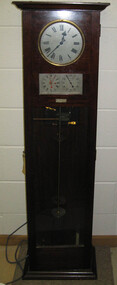
... display the time in various locations around the power station. A slave clock is a simple clock which is driven by a small electric motor, its accuracy is regulated by the master clock every 30 seconds to ensure that it and all the other slave clocks in the station are on exactly the right time; slave clocks were placed in various locations, from common rooms to workshops. A master clock could potentially run thousands of slave clocks at one plant...display the time in various locations around the power station. A slave clock is a simple clock which is driven by a small electric motor, its accuracy is regulated by the master clock every 30 seconds to ensure that it and all the other slave clocks in the station are on exactly the right time; slave clocks were placed in various locations, from common rooms to workshops. A master clock could potentially run thousands of slave clocks at one plant ...Information from Norman F. Dalton: Ballarat had a reticulated DC supply in the early part of last century and in 1905 had sufficient generating capacity to enable the trams to be changed from horse drawn to DC electricity. The use of electricity increased with the main power station located on Wendouree Parade, near Webster Street, under the ownership of The Electric Supply Company of Victoria. AC generating plant was installed in 1925 and conversion to AC proceeded. In 1934 the company was taken over by the State Electricity Commission Victoria (SECV) and more AC generation was installed and the changeover of customers was accelerated. This is around the time that the Synchronome Frequency Checking Mast Clock was installed at the Wendouree Parade Power Station. The SECV Annual Report of 1921 states: ::Section 11 of the act directed the COmmission to enquire into the question of securing the adoption of such standards of plant and equipment of a system, frequency and pressure for the generation and distribution of electricity as will admit of the efficient interconnection of undertakings throughout the State. In 1934 when the SECV took over the Ballarat operations the question of linking with the State grid had been a planned operation for some years but due to financial considerations had hindered it and in fact would continue to do so for a further 10 years. So while the need for close frequency control for interconnection was hardly an issue, the need to keep electric clocks correct was important, particularly as this item was a frequent sales point to cover the inconvenience and sometimes expense of converting from DC to AC. The clock is a very accurate pendulum clock with provision for varying effective length during operation for precise time regulation. There are two normal time dials and one is controlled by the pendulum and the other is operated by the system frequency. When the clock was in use it was installed by the MEter and Tests Laboratory and the time was checked daily by radio time signals. The two dials were repeated in the operators control panel in the Power Station. A maximum deviation between the two dials was set in the operating instructions (eg 5 seconds) and the operator would correct this when necessary by remote manual alteration of the turbine governor set point. The clock was used to drive and regulate a system of "slave" clocks which were used to display the time in various locations around the power station. A slave clock is a simple clock which is driven by a small electric motor, its accuracy is regulated by the master clock every 30 seconds to ensure that it and all the other slave clocks in the station are on exactly the right time; slave clocks were placed in various locations, from common rooms to workshops. A master clock could potentially run thousands of slave clocks at one plant. The clock also contains a rectifier. A rectifier is a device that is used to convert AC power to more stable DC current.Two clocks in a timber case. Both are electric, one is powered by the main pendulum mechanism, the other is a self contained electric clock. The main mechanism is of the gravity arm and roller type, which sends an impulse to the slave clocks every 30 seconds. The This Synchronome Frequency Checking Master Clock was used at the Ballarat Power Station. Below the main section of the case is a smaller cabinet containing a rectifier to provide consistent DC power for the clock. The rectifier was made by the Victorian company Hilco, which was located in Burwood. There is a high chance this is not the original rectifier from this clock as there appears to be brackets to hold a larger device in the space the rectifier occupies.Front below main clock face on front of case: "Patented Sychronome Brisbane" Lower left-hand clock face: "Frequency time" Lower right-hand clock face: "Standard Seconds" Synchronous electric clock mechanism on door (Frequency time clock): >200/250 V. 50~ >"Synchronomains" Made in England >Direction indicator for clock starting switch >"To start move lever in direction of arrow and release" >"Patent applied for" Mechanism for "standard seconds" clock: >"English Made" >"Patented" >Serial number "321" >0 above right-hand pillar on front-plate Mechanism for "standard seconds" clock: >"English Made" >"Patented" >Serial number "321" >0 above right-hand pillar on front-plate Mechanism for main clock face: >"English Made" >"Patented" >Serial number "8751" >0 above right-hand pillar on front-plate Inside case, back panel, top enamel plate: >Seconds Battery + Pos. > Battery Common or - Neg. >1/2 min dials Inside case, back panel, bottom enamel plate: external seconds dial Inside case, right hand side, electrical knobs: two switches, both "A.C. mains" Pendulum rod, below suspension spring: Serial number (?) 0000005 Rectifier in bottom cabinet: >"Hilco Rectifier" >"A.C. Volts 230/240" >"Model 1060/S" >"A.C. Amperes" >"Serial No. 1060/S >"Phases 1" >"D.C. Volts 6" >"C.P.S. 50" >"D.C. Amperes 1" >"Made in Australia by Hilco Transformers McIntyre St., Burwood, Victoria." Bakelite electrical plug: makers mark Lower cabinet, RH side panel, pressed tin plate: "AC" (upside down) Brass speed adjustment, outer right RH side: "S" and "F" Ivory and wood pendulum beat ruler: >Ruler, with 0 in centre and numbers 1-5 in ascending order from centre on left and right. > "Synchronome Patent." Steel plate, back panel, inside case, right hand side: >N R A" (descending) >"2191" serial number/part number Face of main clock: "Synchronome Electric" synchronome frequency checking master clock, electricity, state electricity commission, wendouree parade power station, secv, clock, time, pendulum, electric supply company of victoria, norman f. dalton, ballarat power station, rectifier, slave clock -
 Federation University Historical Collection
Plant specimen - Botany, Botanical Specimens
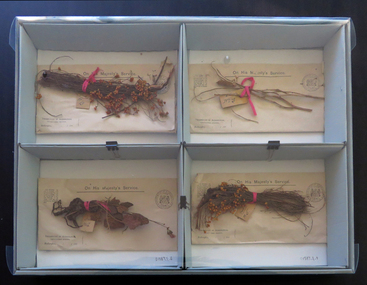
... Four botanical specimens as follows: .1) Unidentified dried plant specimen with attached handwritten tag ' I Grade/ No. 3' and tied with pink ribbon. .2) Originally housed inside buff coloured envelope, printed on front 'On His Majesty's Service' (underlined) and 'Department of Agriculture,/ Viticultural Station,/ Rutherglen / / 190'. .3) Unidentified dried plant specimen with attached handwritten tag ' Grade 1/ No.5' and tied with pink ribbon. .4) Originally housed inside buff coloured envelope, printed on front 'On His Majesty's Service' (underlined) and 'Department of Agriculture,/ Viticultural Station,/ Rutherglen / / 190'. .5) Unidentified dried plant specimen with attached handwritten tag ' Grade 1/ No.7' and tied with pink ribbon. .6) Originally housed inside buff coloured envelope, printed on front 'On His Majesty's Service' (underlined) and 'Department of Agriculture,/ Viticultural Station,/ Rutherglen / / 190'. .7) Unidentified dried plant specimen (possibly identical to .2) with attached handwritten tag ' Grade 1/ No.13' and tied with pink ribbon. .8) Originally housed inside buff coloured envelope, printed on front 'On His Majesty's Service' (underlined) and 'Department of Agriculture,/ Viticultural Station,/ Rutherglen / / 190'. .9) Leather covered board with remnant elastic. Possibly used for displaying...Four botanical specimens as follows: .1) Unidentified dried plant specimen with attached handwritten tag ' I Grade/ No. 3' and tied with pink ribbon. .2) Originally housed inside buff coloured envelope, printed on front 'On His Majesty's Service' (underlined) and 'Department of Agriculture,/ Viticultural Station,/ Rutherglen / / 190'. .3) Unidentified dried plant specimen with attached handwritten tag ' Grade 1/ No.5' and tied with pink ribbon. .4) Originally housed inside buff coloured envelope, printed on front 'On His Majesty's Service' (underlined) and 'Department of Agriculture,/ Viticultural Station,/ Rutherglen / / 190'. .5) Unidentified dried plant specimen with attached handwritten tag ' Grade 1/ No.7' and tied with pink ribbon. .6) Originally housed inside buff coloured envelope, printed on front 'On His Majesty's Service' (underlined) and 'Department of Agriculture,/ Viticultural Station,/ Rutherglen / / 190'. .7) Unidentified dried plant specimen (possibly identical to .2) with attached handwritten tag ' Grade 1/ No.13' and tied with pink ribbon. .8) Originally housed inside buff coloured envelope, printed on front 'On His Majesty's Service' (underlined) and 'Department of Agriculture,/ Viticultural Station,/ Rutherglen / / 190'. .9) Leather covered board with remnant elastic. Possibly used for displaying ...Possibly used for testing students plant knowledge. Four botanical specimens as follows: .1) Unidentified dried plant specimen with attached handwritten tag ' I Grade/ No. 3' and tied with pink ribbon. .2) Originally housed inside buff coloured envelope, printed on front 'On His Majesty's Service' (underlined) and 'Department of Agriculture,/ Viticultural Station,/ Rutherglen / / 190'. .3) Unidentified dried plant specimen with attached handwritten tag ' Grade 1/ No.5' and tied with pink ribbon. .4) Originally housed inside buff coloured envelope, printed on front 'On His Majesty's Service' (underlined) and 'Department of Agriculture,/ Viticultural Station,/ Rutherglen / / 190'. .5) Unidentified dried plant specimen with attached handwritten tag ' Grade 1/ No.7' and tied with pink ribbon. .6) Originally housed inside buff coloured envelope, printed on front 'On His Majesty's Service' (underlined) and 'Department of Agriculture,/ Viticultural Station,/ Rutherglen / / 190'. .7) Unidentified dried plant specimen (possibly identical to .2) with attached handwritten tag ' Grade 1/ No.13' and tied with pink ribbon. .8) Originally housed inside buff coloured envelope, printed on front 'On His Majesty's Service' (underlined) and 'Department of Agriculture,/ Viticultural Station,/ Rutherglen / / 190'. .9) Leather covered board with remnant elastic. Possibly used for displaying specimens. Envelope printed on front top centre 'On His Majesty's Service' (underlined), Bottom left 'Department of Agriculture,/ Viticultural Station,/ Rutherglen / / 190 ', Top right 'Department of Agriculture. Victoria. Frank Stamp', top left, 'This envelope can only be lawfully used by Government officials on public business. Any use by officials on private business, or by others under any circumstances, is punishable'. Embossed on envelop seal with the word 'Victoria' enclosed in a buckle and belt, crown in centre.botanical specimen,, department of agriculture, rutherglen, school of mines, ballarat, ballarat school of mines, botany, rutherglen, speciman, plant, plant identification -
 Blacksmith's Cottage and Forge
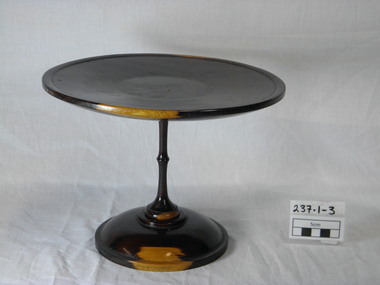
Cake Stand, Beginning of the 20th Century
... plants produces a beautiful toned affect of dark brown and yellow/orange when turned and polished. The significance of this cake stand is that it has been carved from the osage orange which grows well in Bacchus Marsh although originated in America. Mr Simon made many items from this wood. This gives it local significance. turned wood osage orange food stand food display ...This cake stand was hand turned from osage orange wood. The wood was sourced from a grove of osage orange trees in the Fisken/Taverner Street area. This grove was planted by Mr A C Simon, an orchardist, who brought the seeds from North America in the 1860's to create a protective hedge for his plants The wood from these plants produces a beautiful toned affect of dark brown and yellow/orange when turned and polished. The significance of this cake stand is that it has been carved from the osage orange which grows well in Bacchus Marsh although originated in America. Mr Simon made many items from this wood. This gives it local significance.This polished wooden stand would have been used for cake to be displayed It consists of a round 'plate' of wood as the top, with a fine narrow turned wood pedestal and a round base. The stand is made of osage orange giving it the unique tones of dark brown and orange wood.turned wood, osage orange, food stand, food display, brown orange wood, wooden, cake stand, parlour item, table centre piece, polished wood, ornamental stand -
 The Beechworth Burke Museum
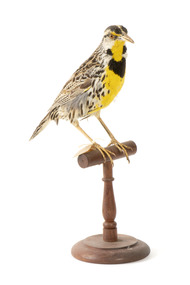
Animal specimen - Eastern Meadowlark, Trustees of the Australian Museum, 1860-1880
... plants. In winter, these birds may choose to forage in flocks. This specimen is part of a collection of almost 200 animal specimens that were originally acquired as skins from various institutions across Australia, including the Australian Museum in Sydney and the National Museum of Victoria (known as Museums Victoria since 1983), as well as individuals such as amateur anthropologist Reynell Eveleigh Johns between 1860-1880. These skins were then mounted by members of the Burke Museum Committee and put-on display...plants. In winter, these birds may choose to forage in flocks. This specimen is part of a collection of almost 200 animal specimens that were originally acquired as skins from various institutions across Australia, including the Australian Museum in Sydney and the National Museum of Victoria (known as Museums Victoria since 1983), as well as individuals such as amateur anthropologist Reynell Eveleigh Johns between 1860-1880. These skins were then mounted by members of the Burke Museum Committee and put-on display ...Eastern Meadowlarks live throughout the grasslands and farms in eastern North America. On the ground, their brown-and-black dappled upperparts camouflage the birds among dirt clods and dry grasses. When in flight or perching, they reveal bright-yellow breasts and bellies, and a striking black chevron across the chest. The Eastern Meadowlark has a diet which consists of mainly insects and seeds. These birds forage by walking on the ground and taking insects and seeds from the ground and from low plants. In winter, these birds may choose to forage in flocks. This specimen is part of a collection of almost 200 animal specimens that were originally acquired as skins from various institutions across Australia, including the Australian Museum in Sydney and the National Museum of Victoria (known as Museums Victoria since 1983), as well as individuals such as amateur anthropologist Reynell Eveleigh Johns between 1860-1880. These skins were then mounted by members of the Burke Museum Committee and put-on display in the formal space of the Museum’s original exhibition hall where they continue to be on display. This display of taxidermy mounts initially served to instruct visitors to the Burke Museum of the natural world around them, today it serves as an insight into the collecting habits of the 19th century.This specimen is part of a significant and rare taxidermy mount collection in the Burke Museum. This collection is scientifically and culturally important for reminding us of how science continues to shape our understanding of the modern world. They demonstrate a capacity to hold evidence of how Australia’s fauna history existed in the past and are potentially important for future environmental research. This collection continues to be on display in the Museum and has become a key part to interpreting the collecting habits of the 19th century. This Eastern Meadowlark has a yellow breast and throat with black plumage in the shape of a 'V' on it's throat. This particular specimen has a long pointed bill which is in the shape of a spear. The crown of the bird is a dark brown and it also has lighter brown/yellow stripes on the brow. The back, wings, and tail are light brown with dark brown mottling. This specimen stands upon a wooden platform and has an identification tag tied around its leg. The legs are long and the specimen has been styalised in an upright position.Label: [illegible] Ant-Eating Thrush / Catalogue, Page 66. /taxidermy mount, taxidermy, animalia, burke museum, beechworth, australian museum, skin, reynell eveleigh johns, bird, american birds, eastern meadowlark, meadowlark -
 The Beechworth Burke Museum
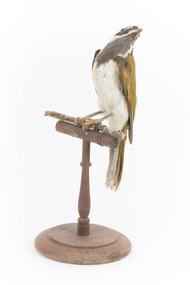
Animal specimen - Blue-faced Honeyeater, Trustees of the Australian Museum, 1860-1880
... plants. This specimen is part of a collection of almost 200 animal specimens that were originally acquired as skins from various institutions across Australia, including the Australian Museum in Sydney and the National Museum of Victoria (known as Museums Victoria since 1983), as well as individuals such as amateur anthropologist Reynell Eveleigh Johns between 1860-1880. These skins were then mounted by members of the Burke Museum Committee and put-on display...plants. This specimen is part of a collection of almost 200 animal specimens that were originally acquired as skins from various institutions across Australia, including the Australian Museum in Sydney and the National Museum of Victoria (known as Museums Victoria since 1983), as well as individuals such as amateur anthropologist Reynell Eveleigh Johns between 1860-1880. These skins were then mounted by members of the Burke Museum Committee and put-on display ...The Blue-faced Honeyeater is commonly located in northern and eastern mainland Australia. It is also found in Papua New Guinea. This species prefer to reside in tropical locations or those which are sub-tropical and wetter temperate or semi-arid zones. It can be located in open forests and woodlands close to water. Due to these locations along with it's propensity for feeding on the fruit and flowers of the banana in northern Queensland, this species is colloquially known as the "Bananabird". These birds commonly reside in pairs, family groups or small flocks. They can often be found socialising with other species including the yellow-throated miner and the Little Friarbird. The Blue-faced Honeyeater feed on insects and invertebrates, but also may eat nectar and fruit from native and exotic plants. This specimen is part of a collection of almost 200 animal specimens that were originally acquired as skins from various institutions across Australia, including the Australian Museum in Sydney and the National Museum of Victoria (known as Museums Victoria since 1983), as well as individuals such as amateur anthropologist Reynell Eveleigh Johns between 1860-1880. These skins were then mounted by members of the Burke Museum Committee and put-on display in the formal space of the Museum’s original exhibition hall where they continue to be on display. This display of taxidermy mounts initially served to instruct visitors to the Burke Museum of the natural world around them, today it serves as an insight into the collecting habits of the 19th century.This specimen is part of a significant and rare taxidermy mount collection in the Burke Museum. This collection is scientifically and culturally important for reminding us of how science continues to shape our understanding of the modern world. They demonstrate a capacity to hold evidence of how Australia’s fauna history existed in the past and are potentially important for future environmental research. This collection continues to be on display in the Museum and has become a key part to interpreting the collecting habits of the 19th century.The blue-faced Honeyeater is large in size with bright white and black colouring. The bird also has golden olive-green colouring on it's rear, tail and wings. Around the eyes is strikingly blue coloured skin which has faded significantly on this particular specimen. It also has a pair of glass eyes to replace the original which do not survive the taxidermy process. There is a patch of dark colouring on the plumage of the stomach and neck of the bird. This dark batch is surrounded by white plumage which also forms a white band across the back of the neck. This specimen is stylized placed on a wooden mount. The bird's feet are attached to a thin stick and the stick attached to the mount.taxidermy mount, taxidermy, animalia, burke museum, beechworth, australian museum, skin, reynell eveleigh johns, honeyeater, blue-faced honeyeater -
 The Beechworth Burke Museum
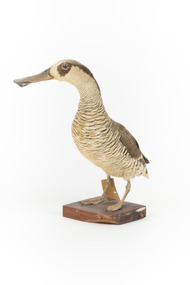
Animal specimen - Pink-Eared Duck, Trustees of the Australian Museum, 1860-1880
... plants and animals from the water which makes up the birds diet. This specimen is part of a collection of almost 200 animal specimens that were originally acquired as skins from various institutions across Australia, including the Australian Museum in Sydney and the National Museum of Victoria (known as Museums Victoria since 1983), as well as individuals such as amateur anthropologist Reynell Eveleigh Johns between 1860-1880. These skins were then mounted by members of the Burke Museum Committee and put-on display...plants and animals from the water which makes up the birds diet. This specimen is part of a collection of almost 200 animal specimens that were originally acquired as skins from various institutions across Australia, including the Australian Museum in Sydney and the National Museum of Victoria (known as Museums Victoria since 1983), as well as individuals such as amateur anthropologist Reynell Eveleigh Johns between 1860-1880. These skins were then mounted by members of the Burke Museum Committee and put-on display ...The Pink-eared Duck can be found throughout Australia, commonly in locations that are timbered and near water. This species of Duck prefers to reside in areas which are shallow, temporary waters and on occasion may venture into open wetlands if with a large flock; however, this species is highly dispersive and often nomadic. The special bill of this Duck is designed to enable the bird to catch their food. The bill is fringed with grooves which filter out microscopic plants and animals from the water which makes up the birds diet. This specimen is part of a collection of almost 200 animal specimens that were originally acquired as skins from various institutions across Australia, including the Australian Museum in Sydney and the National Museum of Victoria (known as Museums Victoria since 1983), as well as individuals such as amateur anthropologist Reynell Eveleigh Johns between 1860-1880. These skins were then mounted by members of the Burke Museum Committee and put-on display in the formal space of the Museum’s original exhibition hall where they continue to be on display. This display of taxidermy mounts initially served to instruct visitors to the Burke Museum of the natural world around them, today it serves as an insight into the collecting habits of the 19th century.This specimen is part of a significant and rare taxidermy mount collection in the Burke Museum. This collection is scientifically and culturally important for reminding us of how science continues to shape our understanding of the modern world. They demonstrate a capacity to hold evidence of how Australia’s fauna history existed in the past and are potentially important for future environmental research. This collection continues to be on display in the Museum and has become a key part to interpreting the collecting habits of the 19th century.The Pink-Eared Duck is named for the small pink spot of feathers which feature on the sides of the drake's head. Another name for this bird is Zebra Duck because of the striking bold black and white striped plumage which decorates the duck's neck, breast and stomach. The bill is spoon shaped and the eyes are made of dark coloured glass and surrounded by brown colouring. The bird has brown wings and light coloured legs with webbed toes. This particular specimen stands on a wooden square platform. There are signs of damage on the platform and a wooden identification tag is tied to the upper right leg of the bird.6a./ Pink-eyed Duck / See Catalogue, page 39 / taxidermy mount, taxidermy, animalia, burke museum, beechworth, australian museum, skin, reynell eveleigh johns, bird, australian birds, duck, pink-eyed duck, pink-eared duck -
 The Beechworth Burke Museum
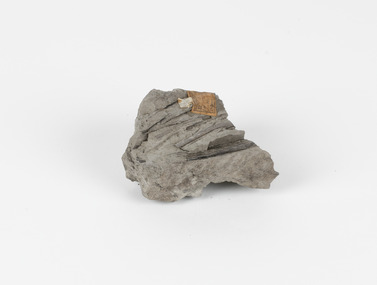
Geological specimen - Fossiliferous Mudstone, Unknown
... it has an imprint of a leaf in the rock itself, displaying the fossil of the plant. ...it has an imprint of a leaf in the rock itself, displaying the fossil of the plant. This specimen is unique due to the leaf impression within the stone itself. ...This specimen was found in Cape Patterson, Vic. Cape Paterson is a cape and seaside village located near the town of Wonthaggi, 132 kilometres southeast of Melbourne, in the Bass Coast Shire of Gippsland, Victoria, Australia. These dark, fossiliferous Mudstones were deposited in slow-moving water associated with sedimentary basins & continental shelves. They are rich in carbon which makes them almost black. This is typical of an anoxic, reducing environment such as deep water or stagnant conditions where carbon-rich material would remain unoxidised during subsequent deposition & diagenesis. it has an imprint of a leaf in the rock itself, displaying the fossil of the plant. This specimen is unique due to the leaf impression within the stone itself. Imprint fossils are formed from an organism moving in some way, leaving behind a trace or track. These tracks are preserved when the clay/silt dries slowly and is covered by other sediment. Plants can also leave imprint fossils when they are covered by sediment. The leaf tissue degrades, leaving an imprint of where the leaf once was. This specimen is part of a larger collection of geological and mineral specimens collected from around Australia (and some parts of the world) and donated to the Burke Museum between 1868-1880. A large percentage of these specimens were collected in Victoria as part of the Geological Survey of Victoria that begun in 1852 (in response to the Gold Rush) to study and map the geology of Victoria. Collecting geological specimens was an important part of mapping and understanding the scientific makeup of the earth. Many of these specimens were sent to research and collecting organisations across Australia, including the Burke Museum, to educate and encourage further study.These dark, fossiliferous Mudstones were deposited in slow moving water associated with sedimentary basins & continental shelves. They are rich in carbon which makes them almost black. This is typical of an anoxic, reducing environment such as deep water or stagnant conditions where carbon rich material would remain unoxidised during subsequent deposition & diagenesis. FOSSILIFEROUS MUDSTONE / Locality: Cape Patterson, Victoria | Descriptive catalogue / Pg 27 No 95 / "Grey Clay, / Cape Paterson with leaf impressions' / 15/4/21 C. William /mudstone, cape patterson, leaf imprint, fossilised leaf, fossiliferous mudstone -
Federation University Historical Collection
Book - Book - Scrapbook, Ballarat Institute of Advanced Education: Scrapbook of newspaper cutting, Book 5, August 1971 to December 1971
... The cuttings cover the period from 19 August 1971 to 1 December 1971. ballarat institute of advanced education biae employment advertisements application for enrolment outline of courses smb finances concern mildura visitors testing new wind tunnel derek vine zig placina excellent year for association jack barker biae art show woman on a bike letters to the editor re art show 1500 trees planted biae students call strike new courses approved new physics equipment apartheid history explained derek viner talk student protest backed ballarat trades and labor council support prahran college of technology seeks supporters role of colleges threatened teacher training new regional office - education dept clay pit plans equipment for biae art display by smb students teachers to conduct assessment experiment undermining our sold foundation pioneer experiment at biae national diploma controls needed f r hornby colleges and students - 1972 helping hand for overseas students gordon smith teachers' colleges accommodation at technical schools victorian teachers' union concerns exceptions in an imperfect world student housing local degree courses on secondary studentships problem for school leavers $250000 for biae union building death of harry arblaster - former smb principal model of building project engineers' seminar at ballarat Book with orange cover, front. ...Newspaper cuttings relating to Ballarat Institute of Advanced Education. These are from various newspapers and include The Age, Ballarat Courier, The Australian, The Herald. The cuttings cover the period from 19 August 1971 to 1 December 1971. Book with orange cover, front. Spiral bound. Large tear back cover.ballarat institute of advanced education, biae, employment advertisements, application for enrolment, outline of courses, smb finances concern, mildura visitors, testing new wind tunnel, derek vine, zig placina, excellent year for association, jack barker, biae art show, woman on a bike, letters to the editor re art show, 1500 trees planted, biae students call strike, new courses approved, new physics equipment, apartheid history explained, derek viner talk, student protest backed, ballarat trades and labor council support, prahran college of technology seeks supporters, role of colleges threatened, teacher training, new regional office - education dept, clay pit plans, equipment for biae, art display by smb students, teachers to conduct assessment experiment, undermining our sold foundation, pioneer experiment at biae, national diploma controls needed, f r hornby, colleges and students - 1972, helping hand for overseas students, gordon smith, teachers' colleges, accommodation at technical schools, victorian teachers' union concerns, exceptions in an imperfect world, student housing, local degree courses on secondary studentships, problem for school leavers, $250000 for biae union building, death of harry arblaster - former smb principal, model of building project, engineers' seminar at ballarat -
 Flagstaff Hill Maritime Museum and Village
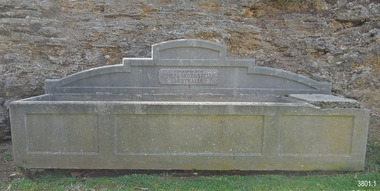
Container - Horse trough, Annis & George Bills, circa Dec. 1932
... plants. By February 2013 the horse trough had been transferred to Flagstaff Hill for display in the Maritime Village’s grounds. ...plants. By February 2013 the horse trough had been transferred to Flagstaff Hill for display in the Maritime Village’s grounds. ...This horse trough is the only survivor of the two troughs originally installed in Raglan Parade, Warrnambool, in 1932. It was later moved to the Pony Club at Albert Part, near the north corner of Coulstock and Craig Streets. Over the time there its purpose was changed from a horse watering trough to a colourful garden bed of agapanthus plants. By February 2013 the horse trough had been transferred to Flagstaff Hill for display in the Maritime Village’s grounds. This trough is one of hundreds provided by the Annis and George Bills Estate Trust since 1927 for the welfare of working horses and dogs. The original concrete cap over the small compartment is still retained. There are also markings on the right side of the trough where it probably had a birdbath, tap or a dish for the horseman’s dog, similar to other troughs donated elsewhere by the Trust. Less than half of the troughs produced for the Annis and George Bills Trust still survive. In 2017 Felicity Watson, National Trust Victoria’s advocacy manager, said that the troughs were treasures and becoming rare, with more than a dozen across Victoria now being heritage protected. ABOUT ANNIS AND GEORGE BILLS The 1927 Will of George Bills included setting up the Annis and George Bills Estate Trust, which provided for hundreds of horse troughs to be supplied and installed throughout Australia, Britain, USA and other parts of the world for the welfare of horses. Town and city councils could apply to the Trustees for a horse trough for their communities. George “Joe” Bills was born in Brighton, England, in 1859. The family migrated first to New Zealand then to Australia in 1873, settling in the Echuca-Moama district. George moved to Brisbane in 1882 where he met Annis Swann, formerly from Sheffield. Both were animal lovers. George and Annis married 1885 and moved to Sydney to join George’s brother Henry in his mattress wire weaving business, later known as the Bills Brothers. They patented their own machine in 1893 and the business became very profitable. George was able to donate to charities that supported his passion to improve animal welfare. He and Annis joined the Victorian Society for the Protection of Animals and in 1924 George received a Life Membership with the RSPCA. George retired in 1908. The couple moved to Hawthorn, Victoria, in 1910, where they donated troughs for the work horses of Melbourne. During a visit to England Annis passed away. In 1927 George moved from Hawthorn to Camberwell, where he passed away at the end of that year. George had requested in his Will that a trust fund be set up from his estate "…construct and erect and pay for horse troughs wherever they may be of the opinion that such horse troughs are desirable for the relief of horses and other dumb animals either in Australasia, in the British Islands or in any other part of the world subject to the consent of the proper authorities being obtained." The troughs were to bear a plaque inscribed “Donated by Annis and George Bills, Australia”. In 1927 the cost to make a trough was about £13 (which converts to about $1079 in 2020 ), plus transport and installation costs. Most of the troughs were installed between 1930 and 1939 in Victoria and New South Wales. It is estimated that over that time around 500-700 Bills Horse Troughs were installed in Australia and another 50 overseas. Most of the troughs made in Victoria had three moulded front panels like this trough, and no panels moulded on the rear, whereas troughs made in NSW had four panels on the front and five on the back. Victorian troughs were made by a Bills’ relative, J H Phillips. Later, other manufactures for the Trust’s troughs included Rocla Concrete Pipes Ltd, in Auburn Road, Hawthorn, Victoria, who produced to the same original design. No further troughs produced after the end of World War II. A memorial to Annis and George Bills was first erected in Hawthorn in 1929. It included a drinking fountain and a dog dish. Its current location is unknown. In 1964 the George Bills RSPCA Resource Centre opened in Burwood East. This Bills horse trough is nationally significant as one of the surviving examples of the standard Bills memorial horse troughs that still has its compartment cap and evidence of it once having had attached fittings, possibly for a birdbath or dog dish. This trough has State historical significance for being produced in the early 1930s by a business in Hawthorn, Victoria. This example of a Bills horse trough is significant for being in comparatively good condition. The trough is locally significant for being the sole survivor of the two Bills horse troughs installed in the City of Warrnambool in 1932, originally installed on Raglan Parade and continued to be used in the community at the Pony Club, then finally transferred to its current location at Flagstaff Hill by early 2013. It is culturally significant as it represents the community’s dependence on horses for travel and transportation previous to motorised vehicles. It is morally significant as a generous gift from a couple concerned with the welfare of animals.Horse trough; a long narrow rectangular container used for storing water. Trough is made from pre-cast concrete with one large open compartment and a small covered compartment. The base of the small compartment is raised slightly above the base of the trough and is covered by a removable concrete cap. The design of the front of the trough includes three panels moulded into it that align with the shape of the back pediment (panel). The pediment is shaped with side arcs that step up to a wide centre arc. A rectangular concrete plaque is cast into the centre of the pediment and is engraved with the names of the original donors, Annis and George Bills. The trough was made in Hawthorn, Victoria, by J H Phillips circa 1932. “DONATED BY / ANNIS & GEORGE BILLS / AUSTRALIA”flagstaff hill, warrnambool, shipwrecked coast, flagstaff hill maritime museum, maritime museum, shipwreck coast, flagstaff hill maritime village, great ocean road, annis and george bills, bills trust, j h phillips, rocla concrete pipes ltd, hawthorn, water trough, watering trough, horse trough, animal welfare, bills horse trough -
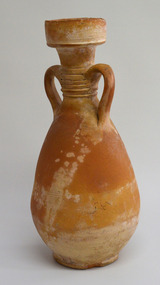 Flagstaff Hill Maritime Museum and Village
Ceramic - Amphora, mid-to-late 19th century
... planting marram grass for Mr Duncan. An article in the Warrnambool Standard newspaper of December 21, 1985, states that the amphora may be linked to the wooden sailing ship called the Mahogany Ship (also called the Ancient Wreck). Thermoluminescence testing indicates the relic was made in the mid-to-late 19th century, and experts suggest it was of North African origin. The presence of the amphora in the dunes, and the amphora itself, is still a mystery. The amphora was donated to Flagstaff Hill on a long-term loan by the Duncan family and displayed...planting marram grass for Mr Duncan. An article in the Warrnambool Standard newspaper of December 21, 1985, states that the amphora may be linked to the wooden sailing ship called the Mahogany Ship (also called the Ancient Wreck). Thermoluminescence testing indicates the relic was made in the mid-to-late 19th century, and experts suggest it was of North African origin. The presence of the amphora in the dunes, and the amphora itself, is still a mystery. The amphora was donated to Flagstaff Hill on a long-term loan by the Duncan family and displayed ...This amphora or jug has a silhouette shaped like a woman with her hands on her hips, wearing a long, flared-out skirt. The design was used in ancient Greece for pottery storage jars, the neck being narrower than the body. According to reports, this amphora was discovered in 1934 by Joe O'Keeffe, in a sand blowout, or sand hummocks, west of Levy's Point, west of Warrnambool, while he was planting marram grass for Mr Duncan. An article in the Warrnambool Standard newspaper of December 21, 1985, states that the amphora may be linked to the wooden sailing ship called the Mahogany Ship (also called the Ancient Wreck). Thermoluminescence testing indicates the relic was made in the mid-to-late 19th century, and experts suggest it was of North African origin. The presence of the amphora in the dunes, and the amphora itself, is still a mystery. The amphora was donated to Flagstaff Hill on a long-term loan by the Duncan family and displayed to the public for the first time on December 21, 1985. The exhibition continued until February 2023, when the objects on display in the Assistant Lighthouse Keepers Cottage (Shipwreck Museum) were returned to storage to rest, and the redevelopment of the Cottage began. A search for members of the Duncan Family was undertaken by Flagstaff Hill and stakeholders to resolve the loan term, but the family at that time was unknown. As such, to properly care for the amphora, it has been registered until ownership can be determined. The amphora is currently on display in the Great Circle Gallery, where members of the Duncan family recognised it and have since made contact with the museum. The amphora's presence in the hummocks remains an intriguing and tantalising mystery, yet to be solved!The amphora is significant for the mystery it holds. Its origin and connection with the local area have led to local speculation since it was discovered in 1934. Amphora or jug; earthenware, orange clay with areas of cream. The vessel has a wide mouth, a deep lip, two opposing handles between the neck and shoulder, and a bulbous body. The curved handles have a design of six bands between them. There are three rings of small dots encircling the body. The underside has concentric circles in the clay, an uneven edge and pinhole markings. The amphora is kindly on loan from the Duncan family.Pinhole patterns: [3 holes above 3 holes] opposite [3 holes above 3 holes], 1 hole] [ 1 hole above 2 holes] flagstaff hill maritime museum and village, warrnambool, great ocean road, shipwreck coast, amphora, jug, mahogany ship, ancient wreck, joe o'keefe, duncan, thermoluminescence, north africa, levy point, pottery, storage jar, flagstaff hill, maritime museum, maritime village, shipwreck artefact, relic, shipwreck museum, pottery jar, ancient jar, egyptian water pot, greek jar, ceramic jar, mystery, exotic jar, mystery antique, historic jug, 1934, joe o’keefe, marshall duncan, port fairy, 1935, 1985, marshall mckenzie duncan, mac duncan, duncan family, 1981, dan madden, scientific investigation, scientific analysis, scientific dating, north african origin, mid-late 19th century, marram grass, levy’s point -
 Glenelg Shire Council Cultural Collection
Plant specimen - Coral - Zebra type, n.d
... Displayed in History House. One branch of zebra (black and white striped) coral. Plant specimen Coral - Zebra type ...Displayed in History House.One branch of zebra (black and white striped) coral. -
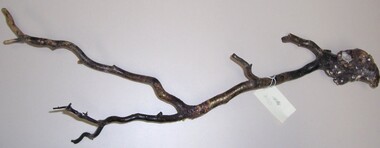 Glenelg Shire Council Cultural Collection
Plant specimen - Black Coral, n.d
... Displayed at History House One branch of black coral. Measures 72 cm long Plant specimen Black Coral ...Displayed at History HouseOne branch of black coral. Measures 72 cm long -
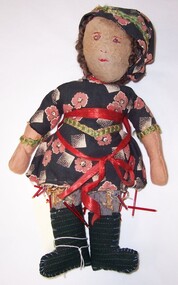 Glenelg Shire Council Cultural Collection
Craft - Rag Doll, c. 1910
... Displayed at History House toy doll childhood Hand-made fabric doll. Cotton body (stocking material?), cotton print fabric (red and white flowers and squares on black background) for dress. Embroidered belt (green and gold), bonnet and cuffs. Felt boots with blue and green stitching. Beading at base of skirt in red, white, green, yellow and clear beads (plastic). Stuff with dried plant ...Displayed at History HouseHand-made fabric doll. Cotton body (stocking material?), cotton print fabric (red and white flowers and squares on black background) for dress. Embroidered belt (green and gold), bonnet and cuffs. Felt boots with blue and green stitching. Beading at base of skirt in red, white, green, yellow and clear beads (plastic). Stuff with dried plant material. Red ribbon tied around waist. Curly brown hair (human?). Embroidered face.toy, doll, childhood
