
Showing 118 items matching "plant production"
-
 Moorabbin Air Museum
Document (item) - CAC Collection - Historical Review And Survey Of Plant And Production Aspects Of The GAF Engine Factory Lidcombe NSW
... CAC Collection - Historical Review And Survey Of Plant And Production Aspects Of The GAF Engine Factory Lidcombe NSW...CAC Collection - Historical Review And Survey Of Plant And Production Aspects Of The GAF Engine Factory Lidcombe NSW...Prepared 1st May 1957 CAC Collection - Historical Review And Survey Of Plant And Production Aspects Of The GAF Engine Factory Lidcombe NSW Document CAC Collection - Historical Review And Survey Of Plant And Production Aspects Of The GAF Engine Factory Lidcombe NSW ...Prepared 1st May 1957 -
University of Melbourne, Burnley Campus Archives
Document, Production of plant propagating material free from bacterial,fungal and nematode infections, 1963
... Production of plant propagating material free from bacterial,fungal and nematode infections...p.r. smith plant propagation infections Reprint of article by P.R. Smith, Journal of Dept. of Agriculture, Vic., July 1963 Production of plant propagating material free from bacterial,fungal and nematode infections Document ...Reprint of article by P.R. Smith, Journal of Dept. of Agriculture, Vic., July 1963 p.r. smith, plant propagation, infections -
University of Melbourne, Burnley Campus Archives
Album - 35mm Colour slides, Kodachrome, A Nursery, 1986
... ...plant production...nursery plants plant production 20 colour slides Nov 86. Appear to be of a Nursery, not Burnley A Nursery Album 35mm Colour slides Kodachrome ...20 colour slides Nov 86. Appear to be of a Nursery, not Burnleynursery, plants, plant production -
 Bendigo Historical Society Inc.
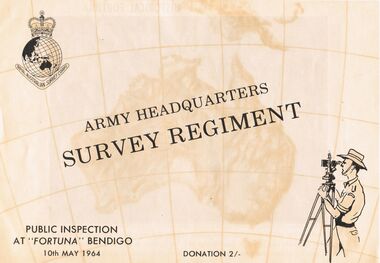
Document - ARMY HEADQUARTERS SURVEY REGIMENT, BENDIGO, 10 May, 1964
... Music Room and Villa. mansion was occupied by Australian Survey Corps and 'Fortuna' site of the base map production plant Australian Army war. sixteen million maps Australian Territories and theatres of operation in the South West Pacific Area...In 1942 the mansion was occupied by the Australian Survey Corps and 'Fortuna' became the site of the base map production plant of the Australian Army for the remainder of the war years. ...In 1942 the mansion was occupied by the Australian Survey Corps and 'Fortuna' became the site of the base map production plant of the Australian Army for the remainder of the war years. ...Army Headquarters Survey Regiment, Bendigo. Public Inspection at 'Fortuna', 10 May 1964. Donation 2/-. Includes photos of the Entrance Hall, Music Room and Villa. 3 army photos. In 1942 the mansion was occupied by the Australian Survey Corps and 'Fortuna' became the site of the base map production plant of the Australian Army for the remainder of the war years. During this period approximately sixteen million maps of Australian Territories and theatres of operation in the South West Pacific Area, were produced for use by the Allied Services. This function was continued as a peace time role in the post war years, and in 1951 ''Fortuna'' was purchased by the Commonwealth Government. As the largest unit of the Royal Australian Survey Corps, AHQ Survey Regiment carries out mapping in all parts of the Commonwealth and Territories including Papua and New Guinea. The Regiment is not only capable of doing its own field surveys but is responsible for the drawing and printing of map compilations from Royal Australian Survey Corps units in all States. . . . Includes map of grounds.buildings, residential, fortuna villa, army headquarters survey regiment, bendigo. public inspection at 'fortuna', 1964. photos of the entrance hall, music room and villa. mansion was occupied by australian survey corps and 'fortuna' site of the base map production plant australian army war. sixteen million maps australian territories and theatres of operation in the south west pacific area, were produced for use by the allied services. 1951 ''fortuna'' was purchased by the commonwealth government. royal australian survey corps, ahq survey regiment mapping commonwealth and territories including papua and new guinea. royal australian survey corps units in all states. map of grounds -
University of Melbourne, Burnley Campus Archives
Sign - Display, Photo display board for Student Activities Horticultural Education, 1988-1993
... Victorian College of Agriculture and Horticulture, Burnley Horticultural Education - Student Activities Student Project Nursery Production Flower production Plant science Arboriculture Revegetation of Yarra Bank...Student display teaching display VCAH Burnley Horticultural education advertising Victorian College of Agriculture and Horticulture, Burnley Horticultural Education - Student Activities Student Project Nursery Production Flower production Plant science Arboriculture Revegetation of Yarra Bank Rigid cardboard display of 6 photographs Entitled with descriptive labels Photo display board for Student Activities Horticultural Education Sign Display ...Rigid cardboard display of 6 photographs Entitled with descriptive labelsVictorian College of Agriculture and Horticulture, Burnley Horticultural Education - Student Activities Student Project Nursery Production Flower production Plant science Arboriculture Revegetation of Yarra Bankstudent display, teaching display, vcah burnley, horticultural education, advertising -
 Bendigo Historical Society Inc.
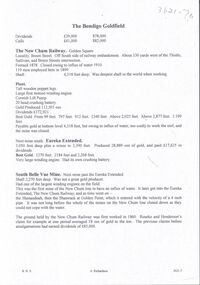
Document - MINING IN BENDIGO COLLECTION: THE BENDIGO GOLDFIELD
... Mentioned in the noes are: Depth of shaft, Formed, Closed, Best Gold, production and plant....Mentioned in the noes are: Depth of shaft, Formed, Closed, Best Gold, production and plant. Document MINING IN BENDIGO COLLECTION: THE BENDIGO GOLDFIELD ...Handwritten notes on the Deborah Mine, the North Deborah, The Central Deborah, the New Chum Railway, Eueka Extended and the South Belle Vue. Mentioned in the noes are: Depth of shaft, Formed, Closed, Best Gold, production and plant.document, gold, mining in bendigo, mining in bendigo, the bendigo goldfield, deborah mine, north deborah, central deborah, new chum railway, eureka extended, south belle vue, shenandoah, shamrock, rourke and henderson's claim -
 Bendigo Historical Society Inc.
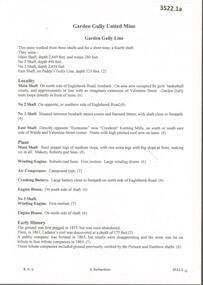
Document - GARDEN GULLY UNITED MINE - NOTES ON THE GARDEN GULLY UNITED MINE
... Notes include depth of shafts, locality, early history,plant, leading mine, gold production, references on typed copies. ...MINE Gold garden gully united mine Garden Gully United Mine Garden Gully Line of Reef Paddy's Gully Line Economic now crestknit Knitting Mills Roberts & Sons Ladam's Reef Tribute Companies Possum Shaft Rainbow Shaft gold production leading mine Pandora Reef Rosalind Park Dr H L Atkinson I E Dyason W Hunter G Lansell E Mueller Bendigo Amalgamated Company Bendigo City Council W H Taylor Mines Dept Booklet 'Bendigo Goldfields' Geo Brown 1936 Annals of Bendigo 1873 & 1874 Annals of Bendigo Dividend Records from 1873 to 1935 A Richardson Bendigo Minicipal Library Booklet 'Healthy Golden Bendigo' One hand written and four typed copies of notes on the Garden Gully United Mine and a spare last typed page. Notes include depth of shafts, locality, early history,plant ...One hand written and four typed copies of notes on the Garden Gully United Mine and a spare last typed page. Notes include depth of shafts, locality, early history,plant, leading mine, gold production, references on typed copies. One typed copy, with Typed at Mines Dep't written at the top has a number of corrections/inclusions and a hand drawn locality map attached to the back.mine, gold, garden gully united mine, garden gully united mine, garden gully line of reef, paddy's gully line, economic now crestknit knitting mills, roberts & sons, ladam's reef, tribute companies, possum shaft, rainbow shaft, gold production, leading mine, pandora reef, rosalind park, dr h l atkinson, i e dyason, w hunter, g lansell, e mueller, bendigo amalgamated company, bendigo city council, w h taylor, mines dept booklet 'bendigo goldfields' geo brown 1936, annals of bendigo 1873 & 1874, annals of bendigo dividend records from 1873 to 1935, a richardson, bendigo minicipal library booklet 'healthy golden bendigo' -
 Bendigo Historical Society Inc.
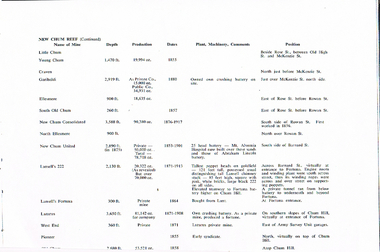
Document - LONG GULLY HISTORY GROUP COLLECTION: NEW CHUM REEF MINE STATS
... Listed is the name of Mine, Depth, Production, Dates, Plant, Machinery, Comments and Position. ...Listed is the name of Mine, Depth, Production, Dates, Plant, Machinery, Comments and Position. ...Copy of a page titled New Chum Reef (Continued). Listed is the name of Mine, Depth, Production, Dates, Plant, Machinery, Comments and Position. Mines listed are:- Little Chum, Young Chum, Craven, Garibaldi, Ellesmere, South Old Chum, New Chum Consolidated, North Ellesmere, New Chum United, Abraham Lincoln Battery, Lansell's 222, Fortuna Battery, Lansell's Fortuna, Lazarus, Lazarus, West End and Pioneer,bendigo, history, long gully history group, the long gully history group - new chum reef mine stats, little chum, young chum, craven, garibaldi, ellesmere, south old chum, new chum consolidated, north ellesmere, new chum united, mt alvernia hospital, abraham lincoln battery, lansell's 222, fortuna battery, fortuna, private tunnel, lansell's fortuna, lunt, lazarus, chum hill, lazarus, west end, army survey unit, pioneer -
 Wodonga & District Historical Society Inc
Domestic object - TILLEY Paraffin Pressure Iron, Tilley Lamp Company, 1950s to 1970s
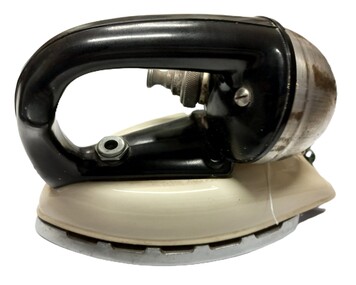
... During WW1 they started to use paraffin as a lamp fuel in pressurised containers. A production plant was established at Hendon, just north of London, and the first commercial lamps were produced after World War 1. ...During WW1 they started to use paraffin as a lamp fuel in pressurised containers. A production plant was established at Hendon, just north of London, and the first commercial lamps were produced after World War 1. ...Irons such as this were very popular prior to the widespread introduction of electricity in Australia. It was manufactured by the Tilley Lamp Company Ltd. In 1818 John and William Henry Tilley established W. H. Tilley, in Stoke Newington, London, England. During WW1 they started to use paraffin as a lamp fuel in pressurised containers. A production plant was established at Hendon, just north of London, and the first commercial lamps were produced after World War 1. During the 1920s the company diversified into domestic lamps. This expanded to other appliances such as heaters and eventually to irons. The use of paraffin or kerosene as a fuel was a much cleaner form of heat, especially when compared to older flat irons which used coal.This item is significant because it is representative of domestic appliances used in the Wodonga District prior to the introduction of electricity throughout the area.Cream coloured iron with a black Bakelite handle which attaches to the fuel tank. It has a steel sole plate. The heat of the iron is provided by a paraffin burner.On Metal plate: Model D.N. 250 Made in England British Pat. 524719 Australian Pat. 114305 On Knob at rear: ON/OFF TILLEYdomestic appliances, tilley paraffin iron, tilley lamp company ltd. -
 The Beechworth Burke Museum
Photograph, 1910
... plant appears to be relatively small with the structure resembling a shack or cottage built from iron and positioned upon a floating pontoon. This is known as dredge sluicing, essentially a floating factory, that was capable of covering large areas of the lake and dams. As this dredge was compact it could maneuver in tight spaces, which larger structure could not. The size of the figures at the front opening, which appears to be a doorway, indicate the scale of this very modest production...plant appears to be relatively small with the structure resembling a shack or cottage built from iron and positioned upon a floating pontoon. This is known as dredge sluicing, essentially a floating factory, that was capable of covering large areas of the lake and dams. As this dredge was compact it could maneuver in tight spaces, which larger structure could not. The size of the figures at the front opening, which appears to be a doorway, indicate the scale of this very modest production ...This photograph depicts Cocks Pioneer Gold & Tin Sluicing Company, N.L. (no liabilities) site No.3 and is looking from the east side of the site. The image is captured within a small valley creek bed and presents the conditions in which mining was evolving in the early 1900s. In the foreground are remnants of components such as flume pipes, timber and iron pieces, mixed with rocks and rubble. These appeared to have connections to the small processing sluice plant featured in the background. The scale of the processing plant appears to be relatively small with the structure resembling a shack or cottage built from iron and positioned upon a floating pontoon. This is known as dredge sluicing, essentially a floating factory, that was capable of covering large areas of the lake and dams. As this dredge was compact it could maneuver in tight spaces, which larger structure could not. The size of the figures at the front opening, which appears to be a doorway, indicate the scale of this very modest production plant. Scaffolding on the roof and to the left process alluvial from the stream floor into sluicing boxes, which filtered deposits passing over a series of ripples to collect the heavier material such as gold. A faded sepia rectangular photograph printed on matte photographic paper mounted on grey green cardCocks pioneer G&T S.L. Co. N.L./ 1910/ No.3 site looking eastsluicing, el dorado, beechworth, water race, flume pipes, cocks pioneer gold and tin sluicing company no liabilities, dredging -
 City of Moorabbin Historical Society (Operating the Box Cottage Museum)
Manufactured Object, Torch 'Eveready' c1950, c1950
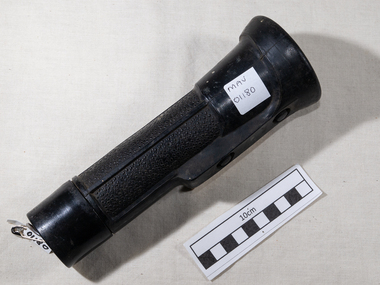
... On March 1, 1980, it was rebadged under its current name, Energizer. 2019 production plant in Portage, Wisconsin, but the majority of batteries are made in China and there are also numerous production facilities outside the US. ...On March 1, 1980, it was rebadged under its current name, Energizer. 2019 production plant in Portage, Wisconsin, but the majority of batteries are made in China and there are also numerous production facilities outside the US. ...George Reed was a draftsman living in the City of Moorabbin c 1950 1899, David Misell, invented this "electric device" ( torch / flashlight) powered by "D" batteries laid front-to-back in a paper tube with the light bulb and a rough brass reflector at the end. Misell assigned his invention over to the American Electrical Novelty and Manufacturing Company owned by Conrad Hubert. In 1905, Hubert changed the name again to The American Ever Ready Company, selling torches / flashlights and batteries under the trademark Ever Ready. In 1906 the British Ever Ready Electrical Company was formed for export of batteries; it became independent in 1914. The American Ever Ready Company became part of National Carbon Company in 1914. The trademark was shortened to Eveready. In 1986, Union Carbide sold its Battery Products Division to Ralston Purina Company becoming the Eveready Battery Company, Inc. and in 1992, it bought the British Ever Ready Electrical Company. Prior to March 1, 1980, the company's alkaline battery had been called the Eveready Alkaline Battery (1959–1968), Eveready Alkaline Energizer (1968–1974) and Eveready Alkaline Power Cell (1974–February 29, 1980). On March 1, 1980, it was rebadged under its current name, Energizer. 2019 production plant in Portage, Wisconsin, but the majority of batteries are made in China and there are also numerous production facilities outside the US. This is an industrial strength Eveready Torch made in England and was used by George Reed, a draftsman, who lived in Bentleigh , City of Moorabbin in mid 20th CLarge 'Eveready' industrial hand torch/ flashlight with rubber protective coverEVEREADY /MADE IN ENGLAND clothing, manufactured lace, dressmaking, blouses, theatrical props, lights, torches, lighting, early settlers, moorabbin shire, mechanics institute cheltenham, postworld war 11 settlers, housing estates moorabbin 1950, bentleigh, ormond, moorabbin, cheltenham, , clark judy, reed gladys, reed george -
 Wodonga & District Historical Society Inc
Photograph - Uncle Bens of Australia, c1970
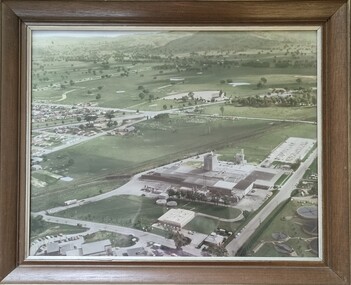
... The plant launched with a production run of 1,000 cans of pet food daily and an initial workforce of approximately 200 employees. ...The plant launched with a production run of 1,000 cans of pet food daily and an initial workforce of approximately 200 employees. ...The world-wide Mars Group built its first Australian manufacturing plant, Uncle Bens of Australia in Wodonga. From humble beginnings in a small house in Hovell Street Wodonga construction began in 1965 with production starting in March 1967. It was led by the vision of Dr Henry Nowik, a passionate believer in the need for decentralisation of Australian industry. The plant launched with a production run of 1,000 cans of pet food daily and an initial workforce of approximately 200 employees. By 1991, the site was producing 2 million cans of pet food daily. By its 30th anniversary in 1997, annual sales reached $700 million, with 30% consisting of exports. When the company celebrated its 30th year of production in 1997, it employed 530 people in manufacturing and 230 in support services and the national office. Now know as Mars Petcare Australia, the Wodonga plant has undergone a major expansion in 2025 to implement new production lines and advances in technology. This will enable it to become the first large-scale steam-based manufacturing site in Australia to deploy a 100% renewable energy solution for its operation.This photo is signifivant because it captures the early stages of the development of Uncle Bens Wodonga, a major manufacturer in Wodonga from the late 1960s until the present.A large coloured aerial photograph of the Uncle Bens of Australia site in Wodonga. The photograph has a wooden frame and is behind glass.uncle bens wodonga, wodonga industries -
 Wodonga & District Historical Society Inc
Mixed media - Mars Petcare Australia 40 years
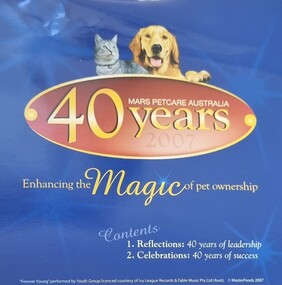
... The plant launched with a production run of 1,000 cans of pet food daily and an initial workforce of approximately 200 employees. ...The plant launched with a production run of 1,000 cans of pet food daily and an initial workforce of approximately 200 employees. ...The world-wide Mars Group built its first Australian manufacturing plant, Uncle Bens of Australia in Wodonga. From humble beginnings in a small house in Hovell Street Wodonga construction began in 1965 with production starting in March 1967. It was led by the vision of Dr Henry Nowik, a passionate believer in the need for decentralisation of Australian industry. The plant launched with a production run of 1,000 cans of pet food daily and an initial workforce of approximately 200 employees. By 1991, the site was producing 2 million cans of pet food daily. By its 30th anniversary in 1997, annual sales reached $700 million, with 30% consisting of exports. When the company celebrated its 30th year of production in 1997, it employed 530 people in manufacturing and 230 in support services and the national office. This DVD was created in 2007 to celebrate 40 years of the company it Wodonga. It looks back at people instrumental in the company's development over that period. 2007 was also a time of celebration with the opening of a new, more extensive manufacturing plant officially opened on 6th February 2007 by The Honourable John Brumby, Treasurer of Victoria and Linda Mars.This item is significant because it was to produce to record and celebrate 40 years of a major manufacturing industry in Wodonga.A DVD containing two short videos 1. "Reflections - 40 Years of Leadership and 2. "Celebrations - 40 Years of Success". It was produced to celebrate the 40th anniversary of Mars Petcare in Wodonga in 2007. The DVD is accompanied by a letter from David Ansell, Vice President - Petcare at Wodonga.MARS PETCARE AUSTRALIA 40 Years 2007 Enhancing the MAGIC of pet ownershipmars petcare wodonga, uncle bens wodonga, manufacturing industries wodonga -
 Bendigo Historical Society Inc.
Document - LONG GULLY HISTORY GROUP COLLECTION: NEW CHUM REEF
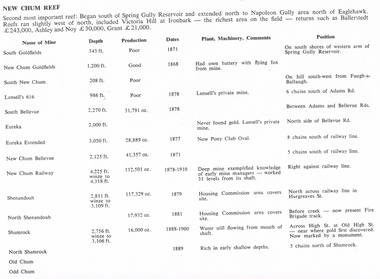
... The mines are mentioned in a table with the Name of Mine; Depth; Production; Dates; Plant, Machinery, Comments and Position. ...The mines are mentioned in a table with the Name of Mine; Depth; Production; Dates; Plant, Machinery, Comments and Position. ...Six pages titled New Chum Reef. No number on the first page, the others are 109 to 113. Mentions location of the reef and some of the rich mines. The mines are mentioned in a table with the Name of Mine; Depth; Production; Dates; Plant, Machinery, Comments and Position. Ballerstedt, Ashley and Noy, and Grant were three of the successful miners. Mines mentioned are: South Goldfields, New Chum Goldfields, South New Chum, Lansell's 616, South Bellevue, Eureka, Eureka Extended, New Chum Bellevue, New chum Railway, Shenandoah, North Shenandoah, Shamrock, Old Chum, Little Chum, Young Chum, Craven, Garibaldi, Ellesmere, South Old Chum, New Chum Consolidated, North Ellesmere, New Chum United, Lansell's 222, Lansell's Fortuna, Lazarus, West End, Pioneer, Old Chum, New Chum Victoria, North Old Chum, Lansell's Big 180, Sterry, Victoria Quartz, South Adventure, Great Central Victoria, Ballerstedt No 3, Adventure, Humbold, British and American, Midway, Victoria Consuls, Victoria absorbed by Ironbark, Hercules and Energetic, Victoria Pilot, North Hercules and Energetic, Great Extended Hercules, Pearl, Southern Victoria, Great Extended Victoria, Young Victoria, New Catherine Victoria, Weatern Victoria, New Victoria St Mungo, Surprise, Mystery, Duke of Edinburgh, New St Mungo, Duchess Tribute, South Devonshire, Duchess of Edinburgh, West United Devonshire, Albert, United Devonshire, Saxon and Celt, Hopewell, Prince of Wales, Phoenix, Unicorn, South St Mungo, Princess Alice, Lady Barkly, North Devonshire, Ranzeau, St Mungo, Dublin and Cornwall, Sadowa, Eastwood, Ellenborough, Belmont and Saxeby, Snobs Hill, York and Durham, La bElle, Old Williams United, Arcadia, Williams United, South Catherine, Central Catherine, Catherine United, Murchison, New Franklin, Catherine Extended, Pony Club Oval, Housing Commission, Mt Alvernia Hospital, Fortuna, Lunt, Army Survey Unit, Wybrandt, John Brown Factory, Canterbury, Hercules and Energetic and the North Red White and Blue.bendigo, history, long gully history group, the long gully history group - new chum reef, ballerstedt, ashley and noy, grant, south goldfields, new chum goldfields, south new chum, lansell's 616, south bellevue, eureka, eureka extended, new chum bellevue, new chum railway, shenandoah, north shenandoah, shamrock, old chum, little chum, young chum, craven, garibaldi, ellesmere, south old chum, new chum consolidated, north ellesmere, new chum united, lansell's 222, lansell's fortuna, lazarus, west end, pioneer, old chum, new chum victoria, north old chum, lansell's big 180, sterry, victoria quartz, south adventure, great central victoria, ballerstedt no 3, adventure, humbold, british and american, midway, victoria consuls, victoria absorbed by ironbark, hercules and energetic, victoria pilot, north hercules and energetic, great extended hercules, pearl, southern victoria, great extended victoria, young victoria, new catherine victoria, weatern victoria, new victoria st mungo, surprise, mystery, duke of edinburgh, new st mungo, duchess tribute, south devonshire, duchess of edinburgh, west united devonshire, albert, united devonshire, saxon and celt, hopewell, prince of wales, phoenix, unicorn, south st mungo, princess alice, lady barkly, north devonshire, ranzeau, st mungo, dublin and cornwall, sadowa, eastwood, ellenborough, belmont and saxeby, snobs hill, york and durham, la belle, old williams united, arcadia, williams united, south catherine, central catherine, catherine united, murchison, new franklin, catherine extended, pony club oval, housing commission, mt alvernia hospital, fortuna, lunt, army survey unit, wybrandt, john brown factory, canterbury, hercules and energetic, north red white and blue -
 Flagstaff Hill Maritime Museum and Village
Container - Ink Bottle, Second half of 19th Century or first half of the 20th Century
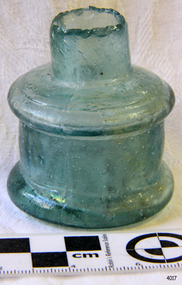
... In the United States, large-scale production of bottles was pioneered by Caspar Wistar in 1739 at his New Jersey plant. ...In the United States, large-scale production of bottles was pioneered by Caspar Wistar in 1739 at his New Jersey plant. ...Although glass containers for wine and beer are probably 1,600 years old, much of their use began only in the late 17th century. In the United States, large-scale production of bottles was pioneered by Caspar Wistar in 1739 at his New Jersey plant. In the 1770s the carbonation process for producing soft drinks was developed, and so began an entirely new bottling industry. At the Great Exhibition of 1851 in the Crystal Palace in London, one million “pop” bottles were consumed. The first beer pasteurised in glass was produced in Copenhagen in 1870. Pasteurisation of milk followed soon after. The moulding of a screw thread on a container was invented by John Mason in 1858. The principles of the “press-and-blow” process for making wide-mouth jars were shown in the United States by Philip Arbogast in 1882, and the “blow-and-blow” process for making narrow-neck containers was demonstrated by Howard Ashley in England in 1885. These processes employed manual delivery; fully automatic jar forming by a suction-and-blow process was perfected by Michael Owens over the period 1895–1917 at the Toledo (Ohio) Glass Company, which subsequently became the Owens Bottle Machine Company. The automatic single-gob feeder was developed in 1919–22 by Karl Peiler at the Hartford-Fairmont Company in Connecticut. Fully automatic machines followed, but the true rugged survivor, utilising fully automatic gob delivery to the maximum versatility, was the Individual Section, or IS, machine invented by Henry Ingle at the Hartford Empire Company in 1925. Source: https://www.britannica.com/topic/glass-properties-composition-and-industrial-production-234890/History-of-glassmakingUnlike item 4018, this is a much smaller ink bottle, and was probably used by an individual, as against the supply of ink to pupils from a much larger bottle.Cotton Reel Ink Bottle, green glass, small, chipped around the lip, bubbles in glass.None.flagstaff hill, warrnambool, shipwrecked-coast, flagstaff-hill, flagstaff-hill-maritime-museum, maritime-museum, shipwreck-coast, flagstaff-hill-maritime-village, ink, bottle, glass -
 Flagstaff Hill Maritime Museum and Village
Functional object - Hand operated embossing document press, 1910
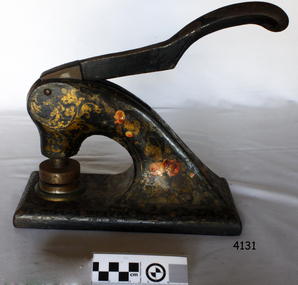
... A plant upgrade in 1922 for machinery to make worsted fabric drained profits, which, with a fall in demand, led to a loss in 1925. Profits were restored by the 1930s, despite the Depression, mostly due to tight management and robust marketing. Production...A plant upgrade in 1922 for machinery to make worsted fabric drained profits, which, with a fall in demand, led to a loss in 1925. Profits were restored by the 1930s, despite the Depression, mostly due to tight management and robust marketing. Production ...The woollen mill was a vital part of Warrnambool for all but 22 years of the town’s history since it's the establishment in 1847 when the first land sales were held and white settlement began. In 1869 the Warrnambool Meat Preserving Company began operations on the mill site, in 1875, shareholders of the then defunct Warrnambool Meat Preserving Company happily sold the land and buildings on the Merri river to Warrnambool Woollen Mill Company Ltd for £5,000. The site was sold again in 1876 to grazer Robert Hood of Sherwood, who was chairman of directors of the failed company, which couldn’t raise sufficient capital to keep the works operating. The entrepreneurial Hood then used the existing plant to turn his own wool into tweed cloth. But just as the mill was starting to show a profit, a fire destroyed the building and plant on the night of 25 March 1882. So again, the mill was operational for six short years. Insurers only paid a fraction over 10% of the damage, Hood couldn't raise sufficient capital to rebuild on his own, and so the site lay unused until 1910. In 1908 Marcus Saltau and Peter John McGennan convinced the Warrnambool Chamber of Commerce to invest in a secondary industry with local capital. A public meeting in September 1908 agreed to raise £40,000, electing Saltau chairman of directors, a post he held for 34 years. A year later, using mostly local money, the Warrnambool Woollen Mill Company dispatched its first manager, John E. Bennett, to buy a plant and recruit 20 experienced staff from the Yorkshire woollen industry in December 1909. Another year more, the new mill was officially opened on 14 November 1910 by Marcus Saltau as company chairman and town mayor. Eighteen months on, in May 1912, the mill paid its first half-yearly dividend of 2 ½%. It was now working two shifts, with a year's orders to fill. In 1914 the mill ordered its own generator, providing the town with electricity and effectively doubling its plant size by October 1915, six months after Gallipoli. Thereafter, government orders for cloth and military supplies assured the mill’s success right through the First World War and on until 1923. A plant upgrade in 1922 for machinery to make worsted fabric drained profits, which, with a fall in demand, led to a loss in 1925. Profits were restored by the 1930s, despite the Depression, mostly due to tight management and robust marketing. Production boomed again during the Second World War, but soon foreign competition bit into profits, forcing the company to consolidate operations. The ‘50s and ‘60s were golden years for the mill. Security and growth gave the company confidence to trial Australia’s first electric blanket in 1958 and to install Swiss Sulzer looms in 1965. Over time, the building facades took on the modern look that the mill presented until it closed. The Dunlop company bought the mill in 1968, fending off a challenge from Onkaparinga in South Australia, and continued to expand by adding Wendouree Woollen Mill in the same year and Dream-spun Textiles a decade later, in 1979. Soon after that purchase, however, the mill began its slippery slide into decline. Dunlop sold to its former rival bidder Onkaparinga Woollen Co. Ltd in 1982, which in turn was taken over by Macquarie Worsted's only a year later, in 1983. Operations remained stable for a decade until 1994 when the Macquarie Group signaled that its newly rationalised operations left no room for the Warrnambool investment. The final operator of the mill was The Smith Family charity group, which ran the site by agreement with the Warrnambool City Council and a state government grant in that same year, 1994. The mill became more of a fabric recycler than a manufacturer. The site was sold to private operators in February 2003 and rezoned four months later to allow for the mixed housing development. The embossing press is significant for its association with the Warrnambool Woollen Mills 1910-1968, a major employer in the Warrnambool district. The press is also significant as an example of commercial office equipment used in the 19th and 20th century.Press, metal, for Company seal of Warrnambool Woollen Mill, stamping their brand as Western District Worsted Mills Pty Ltd. Metal is black with red and gold floral markings. Inscription of stamp reads "WESTERN DISTRICT WORSTED MILLS PROPRIETRY LIMITED" flagstaff hill, warrnambool, shipwrecked-coast, flagstaff-hill, flagstaff-hill-maritime-museum, maritime-museum, warrnambool woollen mills, western district worsted mills proprietry limited, worsted fabric, printing press, logo printing press, stamp printing press, shipwreck-coast, flagstaff-hill-maritime-village -
 Flagstaff Hill Maritime Museum and Village
Domestic object - Sewing Machine, Singer Sewing Machine Company, 1922
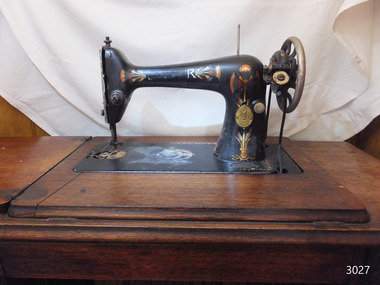
... Demand for sewing machines outstripped production at the new plant and by 1873 a new larger factory was completed near Bridgeton Cross. ...Demand for sewing machines outstripped production at the new plant and by 1873 a new larger factory was completed near Bridgeton Cross. ...In 1867 the Singer Company decided that the demand for their sewing machines in the UK was sufficiently high to open a local factory. Glasgow was selected for its iron-making industries, cheap labour, and possibly because at the time the General Manager of the US Singer Sewing Machine Company was George McKenzie, who was of Scottish descent. The company obtained a lease on land near Queen Street Station and machinery and machine parts were shipped over from the US. Demand for sewing machines outstripped production at the new plant and by 1873 a new larger factory was completed near Bridgeton Cross. By now Singer employed over 2,000 people in Scotland but still, they could not produce enough machines. In 1882 George McKenzie, the soon to become President of the Singer Sewing Machine Company undertook the ground breaking ceremony on 46 acres of farmland at Kilbowie, Clydebank and the largest Singer factory in the world started to be built. Originally two main buildings were constructed. Built above the middle wing of the factory was a huge clock tower with the 'Singer' name displayed for all to see from miles around. Many miles of railway lines were laid throughout the factory to connect the different departments and to aid in the shipping of their goods. Railway lines from the factory connected Glasgow, Dumbarton, and Helensburgh stations. The factory was regarded as the most modern facility in Europe at that time. As different departments in the factory were completed, the workers moved from the old sites to the new one at Kilbowie and the factory was finally finished in 1885. With nearly a million square feet of space and almost 7,000 employees producing on average 13,000 machines a week, making it the largest sewing machine factory in the world. The Clydebank factory was so productive that in 1905 the US Singer Company set up the Singer Manufacturing Company Ltd. as a UK registered company. The invention of the sewing machine had several very significant impacts on the lives of many people. It changed the domestic life of many women as more households began to own sewing machines, women as the ones who traditionally stayed home to do chores including making and repairing clothing, found themselves with more free time. Previously several days a week would be dedicated to sewing clothing for herself and her family, a housewife could now complete her sewing in merely several hours, allowing for more free time to pursue hobbies and attain new skills. Sewing and clothing production, in general, became more industrialized activities, taking place less in the home and more in large factories. Industrial sewing machines, in combination with the cotton gin, the spinning jenny, and the steam engine, made clothing production much easier and much cheaper. Sewing machine, treadle operated, "Branded Premier" 5-7-9-2-0-0-" Serial Number Y6243048 (denotes 1922 year of manufacture) flagstaff hill, warrnambool, shipwrecked-coast, flagstaff-hill-maritime-museum, maritime-museum, shipwreck-coast, flagstaff-hill-maritime-village, sewing machine, hand operated, dressmaking, textile machinery, portable, premier sewing machine, premier, singer treadle sewing machine -
 Flagstaff Hill Maritime Museum and Village
Domestic object - Sewing Machine, Singer Sewing Machine Company, 1907 -1920 (see note section this document for further information regards model identification)
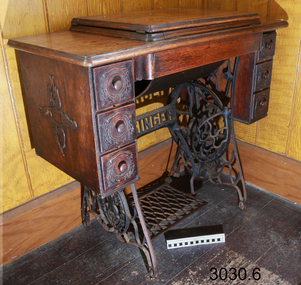
... Demand for sewing machines outstripped production at the new plant and by 1873 a new larger factory was completed near Bridgeton Cross. ...Demand for sewing machines outstripped production at the new plant and by 1873 a new larger factory was completed near Bridgeton Cross. ...In 1867 the Singer Company decided that the demand for their sewing machines in the UK was sufficiently high to open a local factory. Glasgow was selected for its iron-making industries, cheap labour, and possibly because at the time the General Manager of the US Singer Sewing Machine Company was George McKenzie, who was of Scottish descent. The company obtained a lease on land near Queen Street Station and machinery and machine parts were shipped over from the US. Demand for sewing machines outstripped production at the new plant and by 1873 a new larger factory was completed near Bridgeton Cross. By now Singer employed over 2,000 people in Scotland but still, they could not produce enough machines. In 1882 George McKenzie, the soon to become President of the Singer Sewing Machine Company undertook the ground breaking ceremony on 46 acres of farmland at Kilbowie, Clydebank and the largest Singer factory in the world started to be built. Originally two main buildings were constructed. Built above the middle wing of the factory was a huge clock tower with the 'Singer' name displayed for all to see from miles around. Many miles of railway lines were laid throughout the factory to connect the different departments and to aid in the shipping of their goods. Railway lines from the factory connected Glasgow, Dumbarton, and Helensburgh stations. The factory was regarded as the most modern facility in Europe at that time. As different departments in the factory were completed, the workers moved from the old sites to the new one at Kilbowie and the factory was finally finished in 1885. With nearly a million square feet of space and almost 7,000 employees producing on average 13,000 machines a week, making it the largest sewing machine factory in the world. The Clydebank factory was so productive that in 1905 the US Singer Company set up the Singer Manufacturing Company Ltd. as a UK registered company. The invention of the sewing machine had several very significant impacts on the lives of many people. It changed the domestic life of many women as more households began to own sewing machines, women as the ones who traditionally stayed home to do chores including making and repairing clothing, found themselves with more free time. Previously several days a week would be dedicated to sewing clothing for herself and her family, a housewife could now complete her sewing in merely several hours, allowing for more free time to pursue hobbies and attain new skills. Sewing and clothing production, in general, became more industrialized activities, taking place less in the home and more in large factories. Industrial sewing machines, in combination with the cotton gin, the spinning jenny, and the steam engine, made clothing production much easier and much cheaper. Singer sewing machine treadle type wooden stand with six drawers plus instruction manual Lotus decoration to machinewarrnambool, shipwrecked-coast, flagstaff-hill, flagstaff-hill-maritime-museum, shipwreck-coast, flagstaff-hill-maritime-village, sewing-machine, clothes repair, singer sewing machine -
 Federation University Historical Collection
Booklets, Melbourne Movie Club
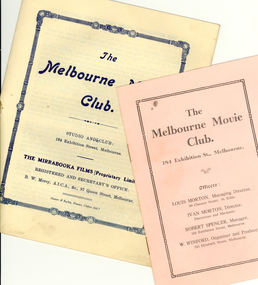
... productions, dramatic art, to have a jolly good time, etc.' The Melbourne Movie Club has a spacious premises at 184 Exhibition Street, Melbourne, with a floor space of 10,000 square feet, where scenes and sets were erected for the use of Club Members. The Club had full moving picture producing equipment such as big light plant...productions, dramatic art, to have a jolly good time, etc.' The Melbourne Movie Club has a spacious premises at 184 Exhibition Street, Melbourne, with a floor space of 10,000 square feet, where scenes and sets were erected for the use of Club Members. The Club had full moving picture producing equipment such as big light plant ...Mirrabooka means Southern Cross. The Melbourne Movie Club was established for those interested in Moving Pictures and all its branches. 'A place to go to spend a few leisure hours, a select dance, parties, picnics, amusements, to learn the art of picture acting and make up, to take part in the Company's productions, dramatic art, to have a jolly good time, etc.' The Melbourne Movie Club has a spacious premises at 184 Exhibition Street, Melbourne, with a floor space of 10,000 square feet, where scenes and sets were erected for the use of Club Members. The Club had full moving picture producing equipment such as big light plant, stage effects, scenery, and cameras. The Melbourne Movie Club saw themselves ad the nursery and basis for a National Film Industry. .1) The secretary was Burnard W. Morey (AICA), the director was L. Morton, and the Managing director of Mirrabooka Films was James Weston. .2) The Managing Director was Louis Morton, the director was Ivan Morton, the Manager Robert Spencer and the organiser and Producer was W. Winford.Two booklets relating to the Melbourne Movie Club. .1) Eight page white booklet of the Melbourne Movie Club - The Mirrabooka Films Pty Ltd. The booklet discusses the place of film in Australia. .2) Eight page pink booklet of the Melbourne Movie Club.melbourne movie club, movie, theatre, james weston, mirrabooka, mirrabooka films, burnard morey -
 Flagstaff Hill Maritime Museum and Village
Domestic object - Baby Feeding Bottle, Allen & Handbury's, 1891-1920
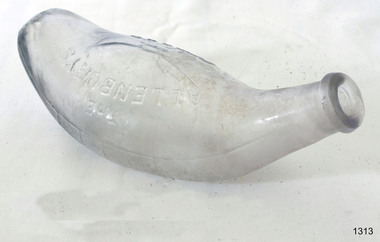
... production of pastilles, and thus the Ware factory also produced Allenburys Glycerine and Black Currant Pastilles, amongst another 80 different kinds of medicated and crystallised pastilles. Allen and Hanburys were one of the first manufacturers of cod liver oil in Great Britain, and owned factories in the Lofoten Islands (Norway) as well as at Hull and Aberdeen taking cod directly from the North Sea. The Bethnal Green factory carried much of the administrative and scientific side of the business, which included research, analytical control, chemistry, pharmacy, and pharmacology. In this plant...production of pastilles, and thus the Ware factory also produced Allenburys Glycerine and Black Currant Pastilles, amongst another 80 different kinds of medicated and crystallised pastilles. Allen and Hanburys were one of the first manufacturers of cod liver oil in Great Britain, and owned factories in the Lofoten Islands (Norway) as well as at Hull and Aberdeen taking cod directly from the North Sea. The Bethnal Green factory carried much of the administrative and scientific side of the business, which included research, analytical control, chemistry, pharmacy, and pharmacology. In this plant ...Allen & Hanburys was founded in 1715 in Old Plough Court, Lombard Street, London, by Silvanus Bevan, a Welshman, apothecary, and a Quaker. Bevan and his brother, Timothy, who became his partner and later succeeded him, were known for their just dealings and the integrity and quality of their drugs. The company grew into a respected pharmaceutical center and had established a strong reputation with American doctors by the late 18th century. William Allen, FRS, also a Quaker, and well-known scientist, joined the firm in 1792 and rose quickly to become the dominant personality. His second wife was a member of the Hanbury family who had produced several learned scientists. On Allen's death, the Hanbury family assumed control of the company. The growth of the company was continuous, but it was in the second part of the 19th century that developments on a large scale took place. Factories were built at Ware, Hertfordshire, and Bethnal Green in East London. The factory at Ware specialised in infants' foods, dietetic products, medicated pastilles, malt preparations as well as galenical preparations, beginning production in 1892. The brands included Allenburys Nº1 and Nº2 foods (essentially milk foods for babies up to six months), and Allenburys Nº 3 (malted farinaceous food, six months and older). Allenburys Rusks was a suitable first solid food for infants. Allenburys claimed to be pioneers in Great Britain in the production of pastilles, and thus the Ware factory also produced Allenburys Glycerine and Black Currant Pastilles, amongst another 80 different kinds of medicated and crystallised pastilles. Allen and Hanburys were one of the first manufacturers of cod liver oil in Great Britain, and owned factories in the Lofoten Islands (Norway) as well as at Hull and Aberdeen taking cod directly from the North Sea. The Bethnal Green factory carried much of the administrative and scientific side of the business, which included research, analytical control, chemistry, pharmacy, and pharmacology. In this plant, galenical preparations, pills, tablets, capsules, and other classes of pharmaceutical and medical goods were prepared. The company had overseas branches in Lindsay, Ontario, Durban, India, Shanghai, Australia, and Buenos Aires, and agencies in many other countries. The company address was for many years at 37 Lombard Street, London EC. Allen and Hanburys Ltd were absorbed by Glaxo Laboratories in 1958 under the name Glaxo Smith Kline, the company, used the Allen and Hanburys name for the specialist respiratory division until it was phased out in 2013.An early baby feeding bottle was made by the Allen & Hanburys company between 1891 to around 1920. The item is significant as it was used to feed babies the new manufactured baby milk formula's made by Allen & Hanburys that were gaining in popularity towards the end of the Victorian era.Baby feeding bottle clear glass curved with flat bottom and measuring scale, teat opening at one end and filling hole without stopper at the other end.Allenburys Feeder AD 1715warrnambool, shipwrecked-coast, flagstaff-hill, flagstaff-hill-maritime-museum, maritime-museum, shipwreck-coast, flagstaff-hill-maritime-village, baby feeding bottle, bottle, domestic object -
 Flagstaff Hill Maritime Museum and Village
Container - Box for seeds, ca. 1880s
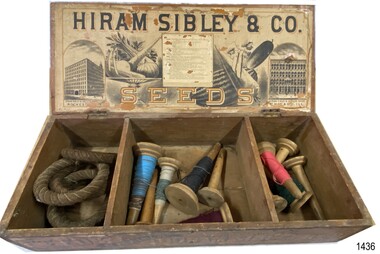
... In this area he used his skills to engineer seeds that were stronger and develop plants that produced more seeds. The production of seeds became his main business. ...In this area he used his skills to engineer seeds that were stronger and develop plants that produced more seeds. The production of seeds became his main business. ...This seed box was made for Hiram Sibley for his seed house business. He sold seeds priced by the weight or the space they took up e.g. bushel. This box allowed for seeds to be divided by type, size or even date. The box was strong and easy to cart and store. It was also a handy item to 'recycle' as a storage container for other items. The Sibley seed box is a desirable collectors' item. A large variety of sizes and shapes are still available today in various stages of condition. Hiram Sibley developed seeds that were strong and the plants that grew from these seeds produced many seeds. Varieties of Sibley seeds and plants are still advertised for sale in modern times. HIRAM SIBLEY (1807-1888) - Hiram Sibley was born in America. He had a natural mechanical ability and became skilled in many trades. He and his partner Don Watson opened a sawmill then a machine shop and foundry. He became involved with Alfred Vale and Samuel Morse and their work on the telegraph. Eventually he became the first president of the Western Union Telegraph Company. Later, after leaving Western Union in the early 1860s, Sibley bought and sold railroads, manufactured sold, ran timber mills, and became involved in farming and seed supply. In this area he used his skills to engineer seeds that were stronger and develop plants that produced more seeds. The production of seeds became his main business. He bought land cheaply and improved to soil so that he could produce seed and grain, and graze herds of cattle. He became the owner of 14 large farms. Hiram Sibley earned the reputation "as the most extensive farmer and seedsman in this country". The business of Hiram Sibley & Co. was conducted his warehouse in Rochester and his seed house in Chicago. One department of the business sold farming equipment, another department imported ornamental plants from overseas countries Sibley went on to invest a large amount of money in a bank, and to be financially involved in the community by making large donations to public services such as a library and a school of music. At one point he was the richest man in Monroe county.This box is significant for its historic connection with Hiram Sibley, who is famous for many reasons, among which is his very profitable business of seed engineering to improve the production of crops. This box also represents the value of containers used for selling products in the 1880s, being re-used for other useful purposes. The box is an example of goods imported for use in Australia. The text and images of the box are an example of 1880s advertisingBox, wooden, with two brass hinges joining lid to base. Base has two wooden partitions, divided into three unequal sized compartments. Lid's underside has label with drawings of buildings and produce, text with maker's name and description of vegetables. Front edge of box has stencilled text and diagrams. Outside lid, and the other three sides, have no inscriptions. Made by Hiram Sibley & Co., USA. (Box is currently used to store quoits 1436.2 and cones of cotton thread 1436.3.)Marked "HIRAM SIBLEY & CO / SEEDS", "WAREHOUSE - "ROCHESTER N.Y. ", "SEED HOUSE - CHICARGO, ILL.", "SEEDS BY WEIGHT & MEASURE", "PUT UP BY / HIRAM SIBLEY & CO. / ROCHESTER, N.Y. AND CHICARGO, ILL."flagstaff hill, warrnambool, maritime village, maritime museum, flagstaff hill maritime museum & village, hiram sibley & co, rochester n.y., seeds, wooden seed box, seed box, seedsmen, arable farming, chicargo illinois, seed house, seed engineering, seed distribution, seeds by weight and measure -
 Flagstaff Hill Maritime Museum and Village
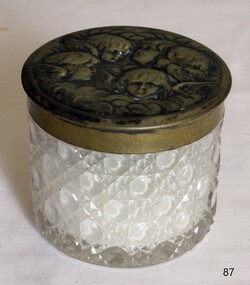
Domestic object - Vanity Jar, 1920s
... plant juice, In the 1700s, face toners and scented water were popular. Cold cream made with scented oils, spermaceti, and wax mixed with rose water and ambergris was a common toilette preparation. But it was the 20th century when face cosmetics entered their golden era and mass production...plant juice, In the 1700s, face toners and scented water were popular. Cold cream made with scented oils, spermaceti, and wax mixed with rose water and ambergris was a common toilette preparation. But it was the 20th century when face cosmetics entered their golden era and mass production ...Skincare cosmetics used for ageing skin have been a priority for over 3000 years, in ancient times masks were used to cleanse and maintain the moisture of the skin. The Egyptians used anti-wrinkle creams made with the essential oil of frankincense which claimed to possess anti-inflammatory properties. Thick creams use on the face were created to preserve moisture on mature skin. And were formulated from resin, wax, oil, grass, and plant juice, In the 1700s, face toners and scented water were popular. Cold cream made with scented oils, spermaceti, and wax mixed with rose water and ambergris was a common toilette preparation. But it was the 20th century when face cosmetics entered their golden era and mass production made cosmetics available to women of all classes. An item used to store face cream from the 1920s when face creams and other cosmetics started to become available to all classes of women and no longer were these types of preparations only available to women of financial means.Clear glass jar with "hobnail" pattern and brass lid used to hold face cream cosmetics.Lid decorated with a relief design of 5 cherub heads and cloudsflagstaff hill, warrnambool, shipwrecked coast, flagstaff hill maritime museum, maritime museum, shipwreck coast, flagstaff hill maritime village, great ocean road, glass jar, cosmetics jar, toilet article -
 Flagstaff Hill Maritime Museum and Village
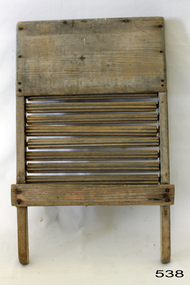
Domestic object - Washboard, 1900-1920s
... In addition to the washboards, the plant specialised in sawing walnut logs and forming them into roughs for gun stocks. Throughout the 1920s, the Mother Hubbard Washboard factory was busy, but production ceased after 1935, once the electric washing machine became popular. ...In addition to the washboards, the plant specialised in sawing walnut logs and forming them into roughs for gun stocks. Throughout the 1920s, the Mother Hubbard Washboard factory was busy, but production ceased after 1935, once the electric washing machine became popular. ...This washboard with horizontal fulted rollers appears to be a variation on the patented Hubbard Roller Washboard system, which had rollers with vertical flutes. The rollers appear to be maple wood, which indicates an American manufacturer. The Mother Hubbard Roller Washboard was very popular in America in the early 1900s. The patented design, sold door-to-door, featured threaded maple rollers that rolled in opposite directions. It required only a light touch from the launderer, as the rollers did the work. It was awarded the Good Housekeeping Seal of Approval. The first roller washboard was made by the Hubbard brothers in Dover, Illinois, where they were born. As sales increased, they moved their large sawmill to Lamoille in 1904 for better shipping facilities. In 1916, they moved their sawmill to Mendota, Illinois. In addition to the washboards, the plant specialised in sawing walnut logs and forming them into roughs for gun stocks. Throughout the 1920s, the Mother Hubbard Washboard factory was busy, but production ceased after 1935, once the electric washing machine became popular. An unusual washboard with horizontal fluted rollers, different to the patented Hubbard Brothers washboards with vertical fluted rollers. It makes the item rare and possibly made in Australia in the early 1900s. The washboard gives insight into how various companies tried to improve or get around other manufacturers' patented designs. The washboard is also significant in the evolution of household laundry equipment designed to reduce labour. Washboard: a rectangular wooden frame with two legs enclosing horizontal, rotating rollers with flutes. flagstaff hill, flagstaff hill maritime museum and village, warrnambool, maritime museum, maritime village, great ocean road, shipwreck coast, washboard, laundry, clothes washing, clothes cleaning, washing, household item, washing equipment, laundering equipment, laundering, roller washboard, hubbard brothers, domestic laundry, mother hubbard washboard, rollers with horizontal flutes -
 The Beechworth Burke Museum
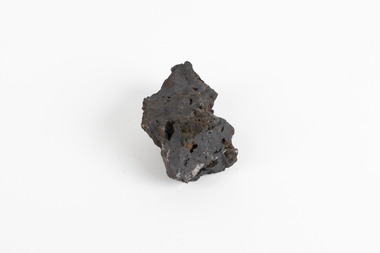
Geological specimen - Hematite (iron oxide)
... Local production of pig iron began when the first blast furnace was opened at Whyalla in 1941, and construction of an integrated iron and steel plant began there in 1958." ...Local production of pig iron began when the first blast furnace was opened at Whyalla in 1941, and construction of an integrated iron and steel plant began there in 1958." ...Hematite is an iron ore significant for its high iron content (70%) and as being one of the two main iron oxide minerals, the other being magnetite. Hematite has a rating of 5-6 on the Moh's hardness scale and is often found as an accessory mineral in many igneous rocks. (an accessory mineral being "any mineral in an igneous rock not essential to the naming of the rock" - Britannica) Hematite has historically been the mainstay of South Australia’s iron ore production. (Magnetite: South Australia’s potential) Making up the eastern section of the Gawler Rangers, the Middleback Range is a mountain range on the eastern side of Eyre Peninsula in South Australia that has been a source of iron ore (its main commodity in minerals) for over a century. (see https://www.mindat.org/loc-22576.html). "Large reserves of high-grade iron ore were identified in 1890 in the Middleback Range, west of Whyalla. From 1915 these ores were shipped to Newcastle and later to Port Kembla, both in New South Wales. Local production of pig iron began when the first blast furnace was opened at Whyalla in 1941, and construction of an integrated iron and steel plant began there in 1958." (Britannica, South Australia: Resources and power). This area is home to 24 mines/mineral deposits (according to mindat.org, thought the Sarig Map provided by SA gov on their Energy and Mining website indicates significantly more mining leases).This mineral specimen was collected from the Middleback Ranges before the area was identified as holding large reserves of iron ore and being commercially mined and is representative of South Australia's significant and ongoing history of iron ore mining, and its contribution to Australia's steel manufacturing industry of the early 20th century (this specimen being collected in the prelude to these events).A small ferric oxide mineral composition a mid-blue-grey in colour with specks of rust-brown throughout.HEMATITE / (iron oxide) / Locality: Middleback Ranges, S. Aust.middleback ranges, iron ore mining, mining, south australia -
 Federation University Historical Collection
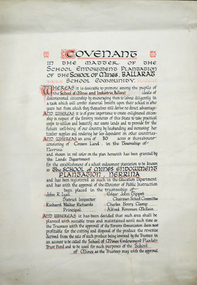
Certificate, Ballarat School of Mines Endowment Plantation, Nerrina Covenant, c1958, c1958
... Those planted to radiata pine that have limited value as a teaching resource although satisfactory for wood production may continue to be used for such production, but should be reviewed when the pines are harvested. ...Those planted to radiata pine that have limited value as a teaching resource although satisfactory for wood production may continue to be used for such production, but should be reviewed when the pines are harvested. ...Throughout the Nerrina district numerous areas of public land were set aside as school endowment plantations as part of various schools’ educational resources. The plantations were initially established to instil through community involvement a love of forests and an appreciation of their value, and in fact many of them are well suited for regular use as a teaching resource of this nature. It was expected that this use will increase as courses embracing various aspects of environmental science are developed. Many school plantations have been planted to radiata pine, and revenue from the sale of produce used to provide amenities required by the schools. In some cases, however, these plantations have not been very successful in providing revenue, as the sites are unsuitable for economic growth or the plantations are too small or the location too far from processing centres to allow economic harvesting. In some instances, radiata pine plantations have failed due to poor management. In 1982 the Land Conservation Council believed that all the existing plantations should be assessed in order to establish their value as a teaching resource. Those not needed or that are unsuitable for teaching purposes for some reason, such as their location, should be terminated. Those planted to radiata pine that have limited value as a teaching resource although satisfactory for wood production may continue to be used for such production, but should be reviewed when the pines are harvested. (http://www.veac.vic.gov.au/reports/354-Ballarat-Study-Area.pdf, acccessed 30/03/2017) The School Endowment Plantation Scheme was established in 1922 as a joint venture between the Education Department and the FCV. It was administered by the Education Department with technical supervision by the Commission. While some plantations were established on private land donated or leased for the purpose, most were established on Crown Lands or Reserved Forest made available, without cost, by the State. (https://www.victoriasforestryheritage.org.au/community/schools.html, accessed 26 September 2020)Covenant in the matter of the School Endowment Plantation of the School of Mines Ballarat School Community.nerrina pine plantation, ballarat school of mines endowment plantation, nerrina, pine plantation, nerrina, john r. lyall, richard w. richards, dick richards, edgar j. tippett, charles h. clamp, alfred k. mcbain, endowment plantation -
 Federation University Historical Collection
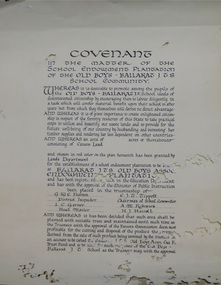
Certificate, Ballarat Junior Technical School Old Boys Association Endowment Plantation, c1928, c1928
... Those planted to radiata pine that have limited value as a teaching resource although satisfactory for wood production may continue to be used for such production, but should be reviewed when the pines are harvested. ...Those planted to radiata pine that have limited value as a teaching resource although satisfactory for wood production may continue to be used for such production, but should be reviewed when the pines are harvested. ...The School Endowment Plantation Scheme was established in 1922 as a joint venture between the Education Department and the FCV. It was administered by the Education Department with technical supervision by the Commission. While some plantations were established on private land donated or leased for the purpose, most were established on Crown Lands or Reserved Forest made available, without cost, by the State. (https://www.victoriasforestryheritage.org.au/community/schools.html, accessed 26 September 2020) Throughout the Nerrina district numerous areas of public land were set aside as school endowment plantations as part of various schools’ educational resources. The plantations were initially established to instil through community involvement a love of forests and an appreciation of their value, and in fact many of them are well suited for regular use as a teaching resource of this nature. It was expected that this use will increase as courses embracing various aspects of environmental science are developed. Many school plantations have been planted to radiata pine, and revenue from the sale of produce used to provide amenities required by the schools. In some cases, however, these plantations have not been very successful in providing revenue, as the sites are unsuitable for economic growth or the plantations are too small or the location too far from processing centres to allow economic harvesting. In some instances, radiata pine plantations have failed due to poor management. In 1982 the Land Conservation Council believed that all the existing plantations should be assessed in order to establish their value as a teaching resource. Those not needed or that are unsuitable for teaching purposes for some reason, such as their location, should be terminated. Those planted to radiata pine that have limited value as a teaching resource although satisfactory for wood production may continue to be used for such production, but should be reviewed when the pines are harvested. (http://www.veac.vic.gov.au/reports/354-Ballarat-Study-Area.pdf, acccessed 30/03/2017)Covenant in the matter of the School Endowment Plantation of the Ballarat Junior Technical School Old Boys Association Endowment Plantation.pine plantation, alfred k. mcbain, g.w.e. pearson, i.c. garner, a.m. robinson, h.j. hassell, ballarat junior technical school old boys association endowment plantation, ballarat junior technical school, alumni -
 Federation University Historical Collection
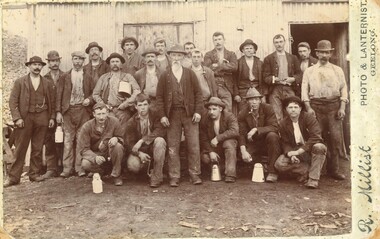
Photograph, R. Millist, Hanlon Consols Mine Rokewood, 1901
... plant sold. From what they discovered, the manager concluded that the mine sat at the edge of an ancient coastline and the gold was in a beach deposit. The total gold production...plant sold. From what they discovered, the manager concluded that the mine sat at the edge of an ancient coastline and the gold was in a beach deposit. The total gold production ...The photo depicts one shift of mine hands at Hanlon Consols Mine Rokewod in 1901. ist on the left is George Edgar Yung. George was born in Ararat the son of Yohann Godlip and Christina (b Weller)Yung. They lived at Happy Valley near Linton. and Piggoreet. Yohann was a miner and died in the All Nations Mine collapse at Derwnt Jack's in 1877. Interesting to note in the following information that the Hanlon Consol mamager, William Maughan was also the manager of the Try Again Mine in Piggoreet. He was also on the six man school committee of Piggoreet Common School No. 726. (Is this why George Yung ended up working in Rokewood because of a previous connection at Piggoreet? George married Clara Emma Smith from Happy Valley and worked in a mine at Allendale. They later moved to Yendon) About the Hanlon gold mining company near Rokewood. 1901 - Information Bendigo Prospecting Club, 21/08/2020. Information provided once again by Peter McCarthy. Christopher Hanlon had put down a line of bores south of the Rokewood main street, looking for a continuation of the Break O’Day lead which had been worked for two or three miles with highly payable results, though in a primitive manner. Ground was being paddocked 30 feet deep and made to pay. The bores suggested the sinking would be about 70 feet and a shaft site was selected at the back of Stanbrook’s Hotel. The Hanlon Gold Mining Company was formed in March 1895 and the shaft was bottomed at 68 feet, getting just over an ounce of gold from the shaft bottom. By January 1896, the poppet heads were up, and steam plant was nearly ready. The mine produced 846 oz by September, which was not as good as expected, but they installed a second puddling machine. The mine was profitable for the next three years, with periods of prospecting and the need to install steam pumps in 1897. A second shaft was sunk in 1899, which bottomed at 86 feet on good wash and was sunk on to 109 feet. 1743 oz of gold had been produced in six months to September 1899, but the No1 shaft was let on tribute as the No2 workings were opened and machinery installed the following year. The No1 shaft tributors broke even in 1900 and in 1901 the shaft was shut down, with the No1 shaft machinery sold late in 1902. By September 1901, the mine had produced gold worth £66,124 and the No2 shaft main drive was in 346 feet, with gold being found mainly in crevices in the hard floor. Mining continued, but once the No2 shaft workings met up with the old No1 shaft workings at the end of 1902 there was not much wash remaining. The mine was let on tribute in June 1903 and a drive was put in to test deeper ground. The company was wound up in February 1904 and the plant sold. From what they discovered, the manager concluded that the mine sat at the edge of an ancient coastline and the gold was in a beach deposit. The total gold production from the mine was worth £73,294. J Lee Archer JP, shareholder, was the manager of the Bank of Victoria in Ballarat. Born in Tasmania, he came to Victoria with his parents and first came to Ballarat in 1855 as a junior clerk with the bank. He died in 1902 aged 64. Alexander J. Peacock was a legal manager and a share broker. In 1897 Peacock, born in Creswick, had been elected as one of the Victorian delegates to the Constitutional Convention which wrote the Australian Constitution. He later became a politician, state treasurer and three times state premier of Victoria and was knighted KCGM. He died in 1933 aged 72. William Maughan, director, was an English miner who came to Victoria in the 1850s and became a mine manager, managing the Try Again at Piggoreet, Ryan’s Freehold and the Madam Berry, among others. He died in Williamstown in 1915 aged 85. Sepia photographRhs front of photo: R. Millist Phto & Lanternist Geelong Verso (upside down): ONE SHIFT OF MINE HANDS HANLON CONSOLS MINE ROKEWOOD 1901 Grandfather Yung 1st on left rokewood, hanlon consols mine, shift of mine workers 1901, gold mines, george edgar godlip yung, william maughan -
Federation University Historical Collection
Document, Allum Lovell, Former Ballarat Brewery Conservation Analsysis, c1990
... In the mid 1980s CUB transferred the production of Blalarat Bertie to the Abbotsford plants and started producing Guimes under license in the Ballarat plant. ...In the mid 1980s CUB transferred the production of Blalarat Bertie to the Abbotsford plants and started producing Guimes under license in the Ballarat plant. ...Carlton and United Breweries purchased the Ballarat Brewering Company Limited site in 1958, including its chain of 114 hotels. In the mid 1980s CUB transferred the production of Blalarat Bertie to the Abbotsford plants and started producing Guimes under license in the Ballarat plant. On 30 June 1989 CUB closed the Ballarat site.Report conducted by Allum Lovell for the Ballarat School of Mines. former ballarat brewery, conservation management plan, james coglan, william kenna, tulluch and mclaren, phoenix brewery, chimney, brew tower, cooling tower, carlton and united breweries, brewery building -
 Flagstaff Hill Maritime Museum and Village
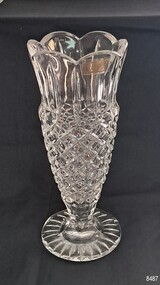
Decorative object - Vase, ca. 1970s
... From 1992, structural changes in the company resulted in the loss of production, which stopped altogether in May, 2008. Minex CEI SA bought the plant in 2011 and operated it until the end of 2018....From 1992, structural changes in the company resulted in the loss of production, which stopped altogether in May, 2008. Minex CEI SA bought the plant in 2011 and operated it until the end of 2018. ...This beautiful hand-cut crystal vase was made in Poland by Violetta Crystal Glassworks. Its design is decorative and functional. It reflects vases produced in the late 19th and early 20th century when hand-cut lead Crystalware was popular in England. The lead content in the glass makes the glass softer and easier to hand-cut. The crystal clear glass sparkles in the light. Crystalware was kept for special occasions such as weddings and religious events. The Violetta Crystal Glassworks was founded in 1864 by Franz Losky, at the district of in Stronie Śląskie. Its original name was Oransko-Nassawska Glassworks, then later named Oranienhütte. The Glassworks came under Poland's rule after World War II. In 1950 it was subject to the Central Board of the Glass Industry and Precious Ceramics, with its seat in Sosnowiec, and the Glassworks was called United Glassworks of the Lower Silesia Region – State Crystal Glassworks in Stronie Śląskie.In 1953 it began exporting its products. In 1970 the name was changed to Violetta Crystal Glassworks in the Polish district of Stronie Śląskie. The firm became the major exporter of Polish glass. From 1992, structural changes in the company resulted in the loss of production, which stopped altogether in May, 2008. Minex CEI SA bought the plant in 2011 and operated it until the end of 2018.This hand-cut lead crystal vase design reflects that of vases produced in the late-19th and early-20th centuries. It is representative of decorative domestic items used during that era, particularly for important and special occasions such as weddings and religious events. Crystalware was cherished for its beauty. The vase is also significant for its association with the renowned Violetta Crystal Glassworks established in 1864 by Franz Losky, which was at one time the greatest exporter of hand-cut crystal made in Poland.Vase; clear hand-cut glass, 24 per cent lead crystal. The vase is wide at the top with a scalloped edge. It tapers inwards to a round foot. A clear rectangular label with gold text is attached. It is branded Violetta hand-cut crystal, made in Poland. On the label: "MADE IN POLAND" "Violetta" "Hand cut 24 % lead crystal" "(R)" within a circleflagstaff hill maritime village, shipwreck coast, flagstaff hill, warrnambool, flagstaff hill museum and village, domestic object, decorative object, functional object, vase, crystal vase, cut glass vase, hand-cut glass, violetta, violetta glassworks, polish glassworks, made in poland, vase with scalloped edge, crystal glassworks, franz losky, oransko-nassawska glassworks, oranienhütte, stronie śląskie, hand-cut crystal, crystalware -
 City of Moorabbin Historical Society (Operating the Box Cottage Museum)
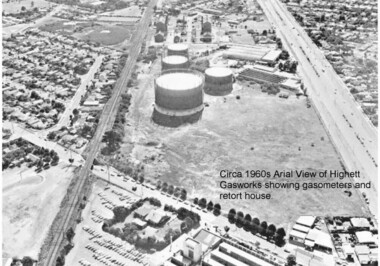
Photograph - Photographs of Highett Gasworks, Gasometer, Retort House and Coal Store at Highett Gasworks, 1974 and 1960
... production facilities to Highett where it had purchased 45 acres of land adjacent to the Melbourne-Frankston railway line. A gasholder with a capacity of 750,000 cubic feet was erected on the Highett land in 1927 and connected with high pressure mains to the Brighton works. Three years later the company directors decided to proceed with the construction of a vertical retort house and coal store. Following a "lull" during the Great Depression work recommenced in 1936 and by 1939 the first complete gas-making plant...production facilities to Highett where it had purchased 45 acres of land adjacent to the Melbourne-Frankston railway line. A gasholder with a capacity of 750,000 cubic feet was erected on the Highett land in 1927 and connected with high pressure mains to the Brighton works. Three years later the company directors decided to proceed with the construction of a vertical retort house and coal store. Following a "lull" during the Great Depression work recommenced in 1936 and by 1939 the first complete gas-making plant ...Gasometers resulted from complex engineering design evolving from primitive gasholders first used in 1824 in England to power street lights. The 20th century gasometer, (as used at the Highett Gasworks), was comprised of a series of large interconnected, telescopic, cylindrical vessels or lifts, which rose and fell depending on the volume of gas stored. The gasholder operated on a basic principle of a gas-filled floating vessel, rising and falling in a seal of water. The Highett Gasworks had its beginning in 1939 but its beginnings commenced sixty-two years earlier when the privately owned Brighton Gas Company was floated in 1877. By 1880 the company was performing well and making excellent profits. The company was welcomed by residents wanting to replace the shadowy light of a kerosene lamp with the bright luminescence of "modern" gas lamps. The land developers of the day were also keen supporters. But by 1884 people became disgrunted because either the gas had not reached them yet or because the quality of the supply had diminished due to the increasing use. In 1885 a second private gas company, the Central Brighton and Moorabbin Gas Co, Chaired by "Tommy" Bent was floated and for many years the two gas companies enjoyed a shared monopoly in supplying gas from their New Street Works. In the 1930s the company expanded its gas production facilities to Highett where it had purchased 45 acres of land adjacent to the Melbourne-Frankston railway line. A gasholder with a capacity of 750,000 cubic feet was erected on the Highett land in 1927 and connected with high pressure mains to the Brighton works. Three years later the company directors decided to proceed with the construction of a vertical retort house and coal store. Following a "lull" during the Great Depression work recommenced in 1936 and by 1939 the first complete gas-making plant was completed, and gas making commenced. Over the next twenty one years other significant extensions occurred, including an amenities block to accomodate 100 workers. In 1969 Esso commenced the introduction of natural gas to residents homes and the gradual decommissioning of the Highett Gasworks commenced. Part of the old Highett Gasworks site is now a council owned parkThe photos of the Higett Gasworks, now demolished, recall their long history, that originated in the 1800s with the production of gas to supply homes with a new, much improved light source, and later it's other applications such as for stoves etc. The arrival of gas in the Shire of Moorabbin was a huge step forward that encouraged further building and development in the area.Three Photographs of the Highett Gasworks. Two are coloured photos taken in 1974, and one is black and white taken in the 1960s. All are in good conditionOn the back of the two coloured photographs "Highett Gasworks 1974" No inscription on the black and white aerial photograph.brighton, moorabbin, highett, bent thomas, gasometer, highett gasworks, engineering design, brighton gas company, central brighton and moorabbin gas company, great depression, lamp kerosene
