
Showing 1312 items matching "police station"
-
 Ballan Shire Historical Society
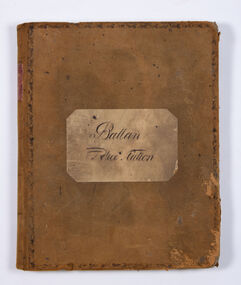
Book - Ballan Police Station - Occurrence Book, Ballan Police Station, 1860 - 1864
... Ballan Police Station - Occurrence Book...Ballan Police Station...Ballan - Police Station...The internal pages are one week to an opening, marked Diary of Duties and Occurrences at the Ballan Police Station, with the left page for Police Duty and the right page for Horses. ...Ballan Police Station...Ballan - Police Station Police daily records Ballan Police Station A large journal with hard covers of soft suede leather, brown, with very faded scrolled borders. ...A large journal with hard covers of soft suede leather, brown, with very faded scrolled borders. The internal pages are one week to an opening, marked Diary of Duties and Occurrences at the Ballan Police Station, with the left page for Police Duty and the right page for Horses. The pages are ruled into columns with various headings.Ballan Police Stationballan - police station, police daily records -
 Wodonga & District Historical Society Inc
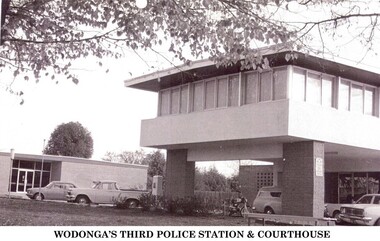
Photograph - Codling Collection 01 - Wodonga's 3rd Police Station and Court House
... Codling Collection 01 - Wodonga's 3rd Police Station and Court House...Codling Collection 01 - Wodonga's 3rd Police Station and Court House......Wodonga Police station...WODONGA's 3rd Police Station and Court House were constructed in Elgin Street, Wodonga. ...2 images of the 3rd police station built in Wodonga with the courthouse in the background....WODONGA's 3rd Police Station and Court House were constructed in Elgin Street, Wodonga. ...Miss Olive Codling was a Foundation Member and a Life Member of the Wodonga Historical Society. Many of her prize-winning photos are held in the Society Collection. She also held a range of roles and committee positions in a wide range of Wodonga community organisations. WODONGA's 3rd Police Station and Court House were constructed in Elgin Street, Wodonga. The Court House had to be relocated after the earlier building had been destroyed by a fire in 1964. In 1966, the new Wodonga Police Station was built but lay empty and idle for about three months. The reason given was that no furniture was available. After this situation was remedied the station was opened on December 23, 1966. The previous police station was vacated and pulled down. The new station was built in front of the new court house, which had been operating for approximately 12 months. The Police and Court House continued to operate on this site until they were again relocated in 2002. They are now located in Hovell Street, Wodonga.This photo collection is significant as it documents how the businesses and buildings in Wodonga have evolved and contributed to community throughout the 20th century.2 images of the 3rd police station built in Wodonga with the courthouse in the background.wodonga businesses, wodonga police station, wodonga court house -
 Wodonga & District Historical Society Inc
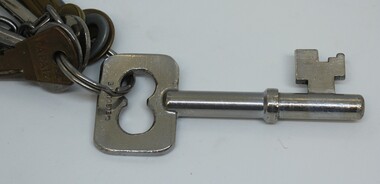
Functional object - Keys - Wodonga Police Station
... Keys - Wodonga Police Station...Keys - Wodonga Police Station......Wodonga Police station...These keys were used to ensure security at the Wodonga Police Station in Elgin Street which opened in 1966. ...A bunch of assorted keys from the Police Station in Elgin Street, Wodonga. They include keys for the main cell door as well as the exercise yard and gate room....These keys were used to ensure security at the Wodonga Police Station in Elgin Street which opened in 1966. ...These keys were used to ensure security at the Wodonga Police Station in Elgin Street which opened in 1966. They were used for approximately 40 years at this police station which moved to a new location in Hovell Street, Wodonga in 2002. They may have originated from the earlier police which was located in High Street, Wodonga and opened in the 1870s. The keys were created by J. Hubball, a locksmith based at 474 Little Lonsdale Street, Melbourne. He was also known as Joseph or Josh Hubball. He operated from these premises from the early 1920s until at least the 1940s. He gained a contract to provide locks and keys for many prisons throughout Australia, including Pentridge Gaol in Melbourne, Victoria and Caboolture Police Station in Queensland. His company also created keys used at Mayday Hills in Beechworth, Victoria. On 28th of March 1947, Hubball applied for a certificate of Incorporation of a Company in his name. The Directors of this company were William Hubball & Alfred Hubball.This key comes from the Police Station in Wodonga and was used for at least 40 years to secure the premises. It was created by a well-known Melbourne locksmith.A bunch of assorted keys from the Police Station in Elgin Street, Wodonga. They include keys for the main cell door as well as the exercise yard and gate room.On largest key 'Hubball" and on the reverse "Melbourne"wodonga police, wodonga police station -
 Lakes Entrance Historical Society
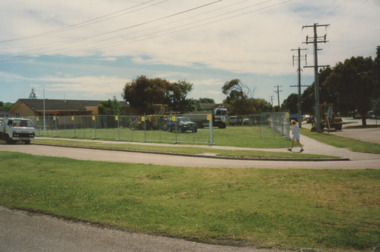
Photograph - Police Station corner of Roadknight and Myers Street Lakes Entrance Victoria, M Holding, 1998
... Police Station corner of Roadknight and Myers Street Lakes Entrance Victoria...Police Station corner of Roadknight and Myers Street Lakes Entrance Victoria...new Police Station corner of Roadknight and Myers Street with previous police Station on rear of the block Lakes Entrance Victoria...Colour photograph of work commencing on new Police Station corner of Roadknight and Myers Street with previous police Station on rear of the block Lakes Entrance Victoria...new Police Station corner of Roadknight and Myers Street with previous police Station on rear of the block Lakes Entrance Victoria Police Law and order Community facilities Colour photograph of work commencing on new Police Station corner of Roadknight and Myers Street with previous police Station on rear of the block Lakes Entrance Victoria Police Station corner of Roadknight and Myers Street Lakes Entrance Victoria Photograph Police Station corner of Roadknight and Myers Street Lakes Entrance Victoria M Holding ...new Police Station corner of Roadknight and Myers Street with previous police Station on rear of the block Lakes Entrance VictoriaColour photograph of work commencing on new Police Station corner of Roadknight and Myers Street with previous police Station on rear of the block Lakes Entrance Victoriapolice, law and order, community facilities -
 Federation University Historical Collection
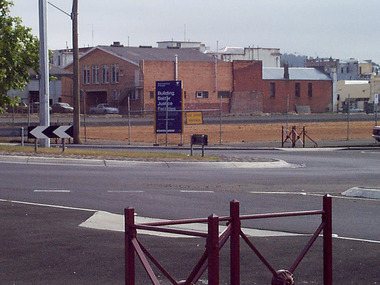
Photograph - Site of a New Ballarat Police Station and Court House
... Site of a New Ballarat Police Station and Court House...Site of a New Ballarat Police Station and Court House......Ballarat Police Station...Photograph of the site of the yet to be built Ballarat Court and Police Station, Dana Street....Site of a New Ballarat Police Station and Court House Photograph Site of a New Ballarat Police Station and Court House ...The Ballarat SChool of MInes Time Capsule should have been opened in 2020 for the 150th anniversary since the establishment of the Ballarat School of Mines, but due to the Covid 19 pandemic and the associated lockdowns it was not opened untll 2022. This image was on a CD-ROM in the time capsule. Photograph of the site of the yet to be built Ballarat Court and Police Station, Dana Street.time capsule, ballarat court, ballarat police station -
 Wodonga & District Historical Society Inc
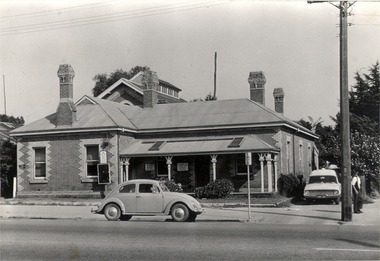
Photograph - Mann Collection Album - Old Police Station and Courthouse, C1964
... Mann Collection Album - Old Police Station and Courthouse...Mann Collection Album - Old Police Station and Courthouse......Woldonga Police Station...This was Wodonga's second police station, built in 1900. It was built on High Street, next to Bond Street. ...High St Wodonga Woldonga Police Station Wodonga Court House Bond Store This was Wodonga's second police station, built in 1900. ...Elaine Mann was married to David Mann, a successful Wodonga businessman and community leader who passed away in Wodonga in June 2012. David was a member of the Mann family who began their business in Wodonga in 1920. Elaine was a teacher in Wodonga for many years and an active member of the community.This photo collection is of significance as it documents how the businesses and buildings in Wodonga have evolved and contributed to community throughout the late 20th century.This was Wodonga's second police station, built in 1900. It was built on High Street, next to Bond Street. The Court House can be seen in the background. The building was formerly used as a custom-house or bond store where people paid import duties on goods coming into Victoria from other states, including N.S.W. This is reflected in the street name. The Court House was destroyed by fire in 1964. This police station was in use until a move was made into a new police station in Elgin Street (next to Elgins Hotel) in December 1967. This area is now part of the newly developed Junction Place Precinct.high st wodonga, woldonga police station, wodonga court house, bond store -
 Wodonga & District Historical Society Inc
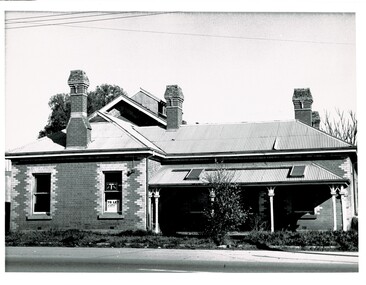
Photograph - Codling Collection 01 - Wodonga's Second Police Station
... Codling Collection 01 - Wodonga's Second Police Station...Codling Collection 01 - Wodonga's Second Police Station...Opposite the police station was a boarding house which supplied meals to prisoners. ...Two black and white photos of the 2nd Police Station built in Wodonga with the former Bond Store in the background....Codling Collection 01 - Wodonga's Second Police Station Photograph Codling Collection 01 - Wodonga's Second Police Station ...Miss Olive Codling was a Foundation Member and a Life Member of the Wodonga Historical Society. Many of her prize-winning photos are held in the Society Collection. She also held a range of roles and committee positions in a wide range of Wodonga community organisations. WODONGA'S SECOND POLICE STATION - This building was located on the west side of High Street near the railway line at the corner of High Street and Bond Street. The building in the background was the Bond Store which was later repurposed to become the Court House. This Police Station, which began operation on this site c1905, had originally been the house of the customs officer. It had a front office and a Sergeant's and an Inspector's office as well as 2 barrack rooms and a laundry at the rear. In the backyard was a blue stone cell block and a night soil toilet, as well as a stable used previously for horse and carriage. Opposite the police station was a boarding house which supplied meals to prisoners. This police station was in use until its move to Elgin Street, Wodonga in December 1967.This photo collection is significant as it documents how the businesses and buildings in Wodonga have evolved and contributed to community throughout the 20th century.Two black and white photos of the 2nd Police Station built in Wodonga with the former Bond Store in the background.high st wodonga, police stations wodonga -
 Kew Historical Society Inc
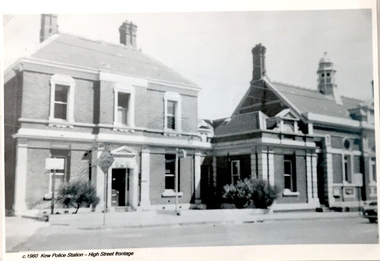
Postcard, Kew Police Station, c.1960
... Kew Police Station......kew police station -- high street -- kew (vic.)...In the first decade of the twenty-first century, the police station and court house were offered for sale. ...Kew Police Station at left and Kew Court House at right. ..."c.1960. Kew Police Station. High Street Frontage"...Kew Police Station. High Street Frontage" Kew Police Station at left and Kew Court House at right. ...In c.1960, when the photograph was taken on which the postcard is based, both buildings were still owned by the Victorian Government and were a functioning police station and court house. In 1900, ownership of the post office had been transferred to the new Commonwealth Government. In the first decade of the twenty-first century, the police station and court house were offered for sale. They were subsequently purchased and renovated by the City of Boroondara. The Kew Historical Society raised over $5000,000 as a contribution to the restoration.Kew Police Station at left and Kew Court House at right. Monochrome (copied) postcard showing two buildings which are part of a larger complex (once including a post office) built by the Government of Victoria in 1888. The buildings are located at the junction of High Street and Cotham Roads in Kew. The frontages shown face High Street. "c.1960. Kew Police Station. High Street Frontage"kew court house -- high street -- kew (vic.), kew police station -- high street -- kew (vic.), public offices -- kew (vic), queen ann revival -- architectural style -
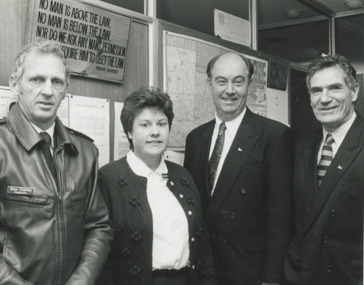 Lakes Entrance Historical Society
Photograph - plans for new Police Station Lakes Entrance Victoria, Lakes Post Newspaper, 1/07/1996 12:00:00 AM
... plans for new Police Station Lakes Entrance Victoria...plans for new Police Station Lakes Entrance Victoria...announcement of plans for new Police Station L to R Inspector Alan Chaffey, Jacqueline Lalor, David Treasure MP, Bill McGrath Minister for Police and Corrective Services Lakes Entrance Victoria...Black and white photograph at announcement of plans for new Police Station L to R Inspector Alan Chaffey, Jacqueline Lalor, David Treasure MP, Bill McGrath Minister for Police and Corrective Services Lakes Entrance Victoria...announcement of plans for new Police Station L to R Inspector Alan Chaffey, Jacqueline Lalor, David Treasure MP, Bill McGrath Minister for Police and Corrective Services Lakes Entrance Victoria Police Community facilities Law and order Black and white photograph at announcement of plans for new Police Station L to R Inspector Alan Chaffey, Jacqueline Lalor, David Treasure MP, Bill McGrath Minister for Police and Corrective Services Lakes Entrance Victoria plans for new Police Station Lakes Entrance Victoria Photograph plans for new Police Station Lakes Entrance Victoria Lakes Post Newspaper ...announcement of plans for new Police Station L to R Inspector Alan Chaffey, Jacqueline Lalor, David Treasure MP, Bill McGrath Minister for Police and Corrective Services Lakes Entrance VictoriaBlack and white photograph at announcement of plans for new Police Station L to R Inspector Alan Chaffey, Jacqueline Lalor, David Treasure MP, Bill McGrath Minister for Police and Corrective Services Lakes Entrance Victoriapolice, community facilities, law and order -
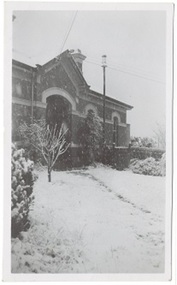 Buninyong & District Historical Society
Photograph - Original B/W Photograph, Old Police House/Station with snow, Scott St, Buninyong, 1951, 19/07/1951
... Old Police House/Station with snow, Scott St, Buninyong, 1951......Police Station...Unusually heavy snow in the side garden of the old Police Station/House. Building constructed by Rennie (rare example of his work)....Snow in front yard of Old Police House/Station in Scott St, 1951...Reverse is stamped Police Station Buninyong, date stamped 19 Jul 1951, handwritten inscription SNOWING AT BUNINYONG...Buninyong Police Station garden snow Scott St Police House Rennie Reverse is stamped Police Station Buninyong, date stamped 19 Jul 1951, handwritten inscription SNOWING AT BUNINYONG Snow in front yard of Old Police House/Station in Scott St, 1951 Old Police House/Station with snow, Scott St, Buninyong, 1951 Photograph Original B/W Photograph ...Unusually heavy snow in the side garden of the old Police Station/House. Building constructed by Rennie (rare example of his work).Rare photo of old police station/house in Scott St, under snow. Building is representative of Rennie's construction style.Snow in front yard of Old Police House/Station in Scott St, 1951Reverse is stamped Police Station Buninyong, date stamped 19 Jul 1951, handwritten inscription SNOWING AT BUNINYONGbuninyong, police station, garden, snow, scott st, police house, rennie -
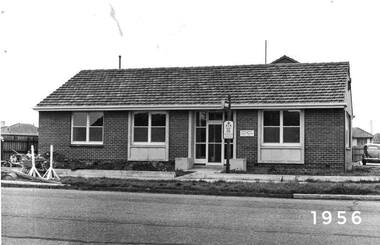 Sunshine and District Historical Society Incorporated
Photograph - Maidstone Police Station Ballarat Road Cnr Short Street 1956 Photographs
... Maidstone Police Station Ballarat Road Cnr Short Street 1956 Photographs...Maidstone Police Station...The earliest Maidstone Police Station operated on Ballarat Road, address later confirmed as 130 Ballarat Road. ...5358.01 - Maidstone Police Station Ballarat Road Cnr Short Street 1956 Photo 01.jpg 5358.02 - Maidstone Police Station Ballarat Road Cnr Short Street 1956 Photo 01.jpg...The earliest Maidstone Police Station operated on Ballarat Road, address later confirmed as 130 Ballarat Road. ...The earliest Maidstone Police Station operated on Ballarat Road, address later confirmed as 130 Ballarat Road. Heritage discussions note that the station moved around the corner into Short Street in 1956. It is possible the Ballarat Road building was extended at the rear, facing Short Street, and the operational entrance shifted. The station served Maidstone and Braybrook during the peak years of public housing expansion. Both the Ballarat Road and Short Street police station buildings are now private residencesLocals recall it as the place where many residents obtained their driver’s licences in the 1960s–1970s.5358.01 - Maidstone Police Station Ballarat Road Cnr Short Street 1956 Photo 01.jpg 5358.02 - Maidstone Police Station Ballarat Road Cnr Short Street 1956 Photo 01.jpgmaidstone police station, ballarat road, maidstone -
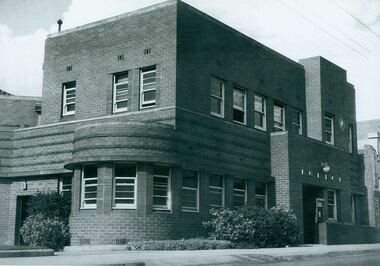 Camberwell Historical Society
Photograph, Camberwell police station, Victoria, c. 1960
... Camberwell police station, Victoria...Print of photograph with inscription 'Camberwell police station, Victoria c. 1960' ...Camberwell police station, Victoria c. 1960...Camberwell police station, Victoria c. 1960 Print of photograph with inscription 'Camberwell police station, Victoria c. 1960' Camberwell police station, Victoria Photograph Photograph ...Print of photograph with inscription 'Camberwell police station, Victoria c. 1960' Camberwell police station, Victoria c. 1960 -
 Port Melbourne Historical & Preservation Society
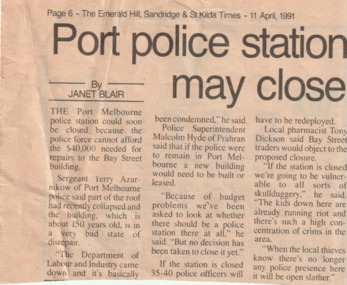
Newspaper - Port Police Station may close, Emerald Hill & Sandridge Times, 11 April 1991
... Port Police Station may close...Port Melbourne Police Station...Due to repair costs of $40,00 for the Port Melbourne Police Station in Bay Street was slated for closure in 1991. ... A small newspaper cutting regarding the possible closure of the Port Melbourne Police Station....Due to repair costs of $40,00 for the Port Melbourne Police Station in Bay Street was slated for closure in 1991. ...Due to repair costs of $40,00 for the Port Melbourne Police Station in Bay Street was slated for closure in 1991. Part of the roof of the century old building had collapsed and the building was in a bad state of repair. Local pharmacist, Tony DICKSON, objected to the closure becaus eof the high concentration of criminals in the area. A small newspaper cutting regarding the possible closure of the Port Melbourne Police Station.victoria police, port melbourne police station, tony dickson -
 Sunshine and District Historical Society Incorporated
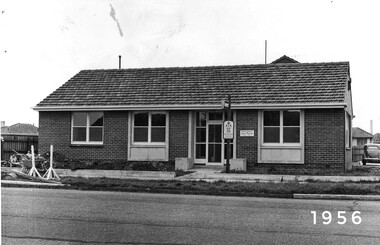
Photograph - Ballarat Rd 130 - Maidstone Police Station, 1956
... Ballarat Rd 130 - Maidstone Police Station......Maidstone Police Station...There were two Maidstone Police Stations, with the earlier one operating in Ballarat Road, before 1956, though the exact address isn’t given in the retrieved material. ...5676 - Ballarat Rd 130 - Maidstone Police Station 1956 Photo 01.jpg ...Ballarat Road Maidstone Maidstone Police Station Short Street 5676 - Ballarat Rd 130 - Maidstone Police Station 1956 Photo 01.jpg Digital photograph Photograph Ballarat Rd 130 - Maidstone Police Station ...There were two Maidstone Police Stations, with the earlier one operating in Ballarat Road, before 1956, though the exact address isn’t given in the retrieved material. A Facebook heritage discussion notes that the station moved around the corner into Short Street in 1956. Perhaps the Ballarat Road building was extended out the back which faced Short Street. This picture appears to be Ballarat Road site. Both sites are now private residences. This photographs records the old small police stations that served the local community.5676 - Ballarat Rd 130 - Maidstone Police Station 1956 Photo 01.jpg ballarat road, maidstone, maidstone police station, short street -
 Flagstaff Hill Maritime Museum and Village
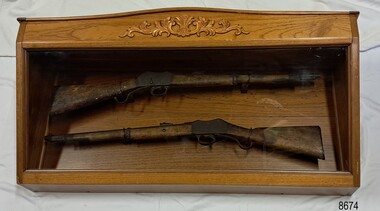
Weapon - Historic Rifles, Royal Small Arms Factory, 1877-1900
... ...Woodford Police Station...In 1915, police authorities announced that they would be replacing patrol horses with bicycles and would also close some smaller police stations. This affected Woodford Police Station, which closed in 1917. ...They were used by Victoria Police mounted troops at the Woodford Police Station, Victoria. The black and white photographs were taken in 1946. ...Woodford was proclaimed a township in 1854 and a police quarters was established there in 1857. The police station remained until 1917 when it was closed and police service from then on was provided from Warrnambool. ...Woodford Police Station, Victoria, Australia...In 1915, police authorities announced that they would be replacing patrol horses with bicycles and would also close some smaller police stations. This affected Woodford Police Station, which closed in 1917. ...Martini-Henry Artillery Carbin rifles were made by the Royal Small Arms Factory at Enfield, Britain, from 1877 until 1900. Many were distributed to the British Colonies, including this pair, which was allocated to the Woodford Police, Victoria Police District of Warrnambool, Southwest Victoria. The Carbine model rifles were shorter than the standard rifles and more suited to mounted police and troopers. It is likely that in the early 20th century, Victoria Police replaced the two carbines with more modern firearms, and the outdated guns were stored in the stables. The rifles were left there and likely forgotten about due to changes in police staff. In 1915, police authorities announced that they would be replacing patrol horses with bicycles and would also close some smaller police stations. This affected Woodford Police Station, which closed in 1917. The forgotten firearms remained in the stables and were noticed by schoolboy Robert Jellie in 1940 and seen again in 1946. In 1995, the property was sold by the Education Department to a private owner. The Woodford Community donated the pair of Martini-Henry Carbines to the Victoria Police Museum in the late 1990s for mounting and display, which was funded by the Victoria Police Historical Society Inc. The decorative wood and glass display case and frame were designed to preserve the significant history of the guns. On November 1st 1999, the display was presented to Warrnambool Police and the local community due to the historical significance of the Woodford Police Station. In 2025, these items were formally deaccessioned by the Victoria Police Museum, and ownership was transferred to the Warrnambool Police Station. On March 10th, 2025, the display was transferred to Flagstaff Hill Maritime Museum and Village, where the historical story of the Martini-Henry Carbines could continue to be preserved and accessed by local families, the community, visitors to the area, and online visitors. WOODFORD POLICE: - The small settlement at Woodford was established in the 1840s around the Merri River where there was a ford across the water and a bridge from 1848 to 1851. The area was settled very early in Victoria’s history, and the river crossing provided travellers with access to the early route between Port Fairy (named Belfast at that time), Warrnambool and Melbourne. Occasionally, a Warrnambool police trooper would ride through Woodford and the district. In December 1854, Woodford Police barracks and stables were built on the hill by the Merri River on Bridge Road east, where Jubilee Park now stands. A local mounted trooper kept law and order in the area. In 1856, a lock-up was installed, and the first Woodford Police Station was in action in 1857. By 1871, the police station had been moved from the hill to land across the Merri River bridge, on the southern side of Bridge Road west, near Mill Street. In 1890, the police residence there was replaced by a stone Edwardian-style building with the stables and lock-up behind it and the old police station at the rear. The police continued to have a presence in Woodford until it was closed by the Police Commissioner in July 1917 for economic reasons. The residence was used for government housing until 1923, when it was taken over by the Education Department for the school teacher’s home. In 1995, it became privately owned. THE MARTINI-HENRY ARTILLERY CARBINE: - The Martini-Henry rifles were made in Britain from 1871 at the Royal Small Arms factory at Enfield and were stamped with the symbol of the Royal Cipher (Crown over VR) over ENFIELD to identify their origin. They were named after two of several people who helped design this method: Swiss Friederich von Martini and Scotsman Alexander Henry. The design was breech-loaded, and the inner barrel was rifled. A thumb rest was incorporated into the top right of the bullet receiver’s chamber. The small teardrop lever on the right side of the rifle showed whether the rifle was ready to be shot. In 1877, the shorter, lighter-weight Carbine version of the firearm was produced for mounted troops and artillery. Its official name was “Carbine, B.L., Rifled, Martini-Henry.” The bullets were slightly lighter in weight than those used for the longer rifle. The sight position was adjusted for the shorter gun, and wings were added to the sight on the tip, making it easier to slide the rifle back into a saddle bag. Some of the later Carbines also had leather sight covers screwed to the stock to prevent them from catching on the saddle bags. The Carbines had accessories available, such as barrel extensions with bayonets and swivels for adding slings. The Martini-Henry Carbine designs were later modified to fire the British .303 ammunition. Eventually, by 1900, the Martini-Henry Carbines were replaced by the Lee Enfield gun design. The pair of Martini-Henry Carbine firearms represents policing in the early pre-1900 days of colonial settlement; Woodford was one of the first townships settled in Victoria, and it had a police presence from 1854 until 1917. The rifles and display provide a historic connection between the location of Woodford and relatives and associates. The carbine rifles show a stage in the evolution of weapon design, adapted to suit mounted troops, and adding features to streamline use and storage. The ammunition was also improved during this progression. The carbines are important for their connection to policing law and order in a remote area. They are significant for their association with the township of Woodford, which was important to travel in the southwest Victoria district, providing access across a river for a road between Port Fairy and Melbourne, and later Warrnambool, and supplying food, goods and accommodation for the travellers. A pair of mounted rifles is mounted behind glass in a timer case, accompanied by a framed display of two photographs and an account of the rifles’ history. The case and display each have a horizontal board with a gently curved edge and carved decorations added. The identical firearms are British-made Martini Henry Carbine breach-loaded rifled guns, supplied by Britain to its Colonial troops from around 1877. The rifles are lever-action, single-shot .500 calibre weapons. They have a teardrop lever on their right side. They were used by Victoria Police mounted troops at the Woodford Police Station, Victoria. The black and white photographs were taken in 1946. The left photograph has a circled area; the right photograph is an enlarged view of the circled area, showing the Woodford Police Station in detail. The printed text is on textured paper with the Victoria Police watermark. It gives a summary of the rifle’s history. There is an inscription on the left photograph. Left photograph, handwritten in white pen: “WOODFORD” Document’s print: “During the late 1840s the small town of Woodford grew around the crossing of the Merri River on the Melbourne/Port Fairy Rad. Woodford was proclaimed a township in 1854 and a police quarters was established there in 1857. The police station remained until 1917 when it was closed and police service from then on was provided from Warrnambool. The building was then used as a school residence and is now privately owned. In !940 Robert JELLIE, then a schoolboy, observed two rifles mounted on the wall of the disused stable at the rear of the old police building. Following the devastating flood of 1946 (see photograph above) the rifles were again seen in the room next to the stable but were not seen again until the building was sold by the Education Department many years later. It was a recognition of the historical value of the rifles which led to their donation to the Warrnambool Police Complex. The rifles have been authenticated by the Victoria Police Armoury as being Victoria Police issue some time before 1900. The rifles are an identical pair of the famous British-made Martini Henry, a .500 inch calibre military weapon widely used by British Colonial troops. Victoria Police and the wider community of Warrnambool are indebted to the members of the Woodford community for their fine gesture in donating the rifles for mounting so that their historical importance can be preserved and they can be displayed for generations to come. This display was funded by the Victoria Police Historical Society Incorporated, and presented on the first day of November, 1999.”flagstaff hill maritime museum and village, great ocean road, shipwreck coast, martini henry, victoria police, woodford police station, rifle, carbine, display case, british, martini henry carbine, breech-loaded, rifled, colonial, single-shot, .500 calibre, weapon, gun, 1877, troops, mounted troops, merri river, victoria police woodford, victoria police warrnambool, victoria police melbourne, police quarters, robert jellie, school residence, stable, 1946 flood, victoria police armoury, identical pair, british colonial troops, victoria police historical society incorporated, woodford, bicycles, found by a schoolboy, edwardian-style building, victoria police museum, warrnambool police station -
 Kew Historical Society Inc
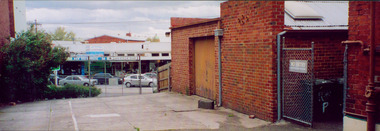
Photograph - Former Kew Police Station : Carpark, 1996
... Former Kew Police Station : Carpark...Kew Police Station...The Post Office was transferred to the new Commonwealth Government in 1901. The Police Station and Court House, sold by the Victorian Government to the City of Boroondara in 2007, are now a community cultural centre and performing arts venue....View of the carpark at the rear of the Kew Police Station which faces Cotham Road. The garage is a twentieth century addition....Photograph Former Kew Police Station : Carpark ...A civic campaign for new public offices developed in Kew in the 1880s. After much deliberation, the location chosen was the junction of Bulleen and Cotham Roads. The buildings were designed by George Watson and John Henry Harvey, architects within the Department of Public Works (Victoria). Building was commenced in 1887, and after one year, the buildings were opened. The Post Office was transferred to the new Commonwealth Government in 1901. The Police Station and Court House, sold by the Victorian Government to the City of Boroondara in 2007, are now a community cultural centre and performing arts venue.The buildings were listed on the Victorian Heritage Register Register (HO885) in 1991. They are historically and architecturally significant to the State of Victoria because Watson and Harvey's designs exhibit diversity in integrating civil offices, they accommodate the apex of road junctions, and they demonstrate a departure from the contemporaneously favoured High Victorian Classical to the Queen Anne style in the design of civic buildings.View of the carpark at the rear of the Kew Police Station which faces Cotham Road. The garage is a twentieth century addition.Nilkew police station, kew court house, public office - kew (vic.) -
 Kew Historical Society Inc
Photograph - Former Kew Police Station : East facing facade, 1996
... Former Kew Police Station : East facing facade......kew police station...The Post Office was transferred to the new Commonwealth Government in 1901. The Police Station and Court House, sold by the Victorian Government to the City of Boroondara in 2007, are now a community cultural centre and performing arts venue....Exterior view of the east facing red brick facade of the former Kew Police Station in High Street, Kew....Photograph Former Kew Police Station : East facing facade ...A civic campaign for new public offices developed in Kew in the 1880s. After much deliberation, the location chosen was the junction of Bulleen and Cotham Roads. The buildings were designed by George Watson and John Henry Harvey, architects within the Department of Public Works (Victoria). Building was commenced in 1887, and after one year, the buildings were opened. The Post Office was transferred to the new Commonwealth Government in 1901. The Police Station and Court House, sold by the Victorian Government to the City of Boroondara in 2007, are now a community cultural centre and performing arts venue.The buildings were listed on the Victorian Heritage Register Register (HO885) in 1991. They are historically and architecturally significant to the State of Victoria because Watson and Harvey's designs exhibit diversity in integrating civil offices, they accommodate the apex of road junctions, and they demonstrate a departure from the contemporaneously favoured High Victorian Classical to the Queen Anne style in the design of civic buildings.Exterior view of the east facing red brick facade of the former Kew Police Station in High Street, Kew.kew court house, public offices -- kew (vic), kew police station -
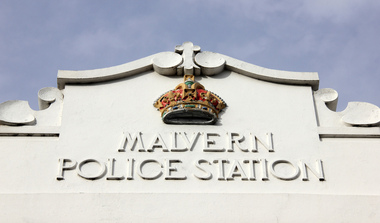 Ballarat Heritage Services
Photograph - Digital photographs, L.J. Gervasoni, Malvern Police Station, 2013
... Malvern Police Station......police station...Colour photograph of Malvern Police Station. ...malvern police station Colour photograph of Malvern Police Station. ...Colour photograph of Malvern Police Station. malvern, police station -
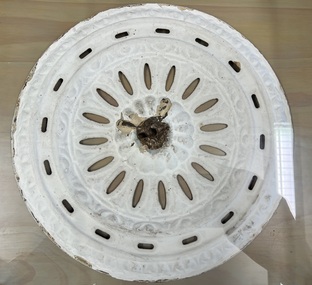 Kew Historical Society Inc
Decorative object - Former Kew Police Station : Ceiling rose, 1888
... Former Kew Police Station : Ceiling rose...Kew Police Station...The Post Office was transferred to the new Commonwealth Government in 1901. The Police Station and Court House, sold by the Victorian Government to the City of Boroondara in 2007, are now a community cultural centre and performing arts venue....Metal ceiling rose from the Kew Police Station, removed during renovations, 2007-11. ...Decorative object Former Kew Police Station : Ceiling rose ...A civic campaign for new public offices developed in Kew in the 1880s. After much deliberation, the location chosen was the junction of Bulleen and Cotham Roads. The buildings were designed by George Watson and John Henry Harvey, architects within the Department of Public Works (Victoria). Building was commenced in 1887, and after one year, the buildings were opened. The Post Office was transferred to the new Commonwealth Government in 1901. The Police Station and Court House, sold by the Victorian Government to the City of Boroondara in 2007, are now a community cultural centre and performing arts venue.The buildings were listed on the Victorian Heritage Register Register (HO885) in 1991. They are historically and architecturally significant to the State of Victoria because Watson and Harvey's designs exhibit diversity in integrating civil offices, they accommodate the apex of road junctions, and they demonstrate a departure from the contemporaneously favoured High Victorian Classical to the Queen Anne style in the design of civic buildings.Metal ceiling rose from the Kew Police Station, removed during renovations, 2007-11. From original, now concealed ceilings.kew police station, ceiling roses, architectural fittings -
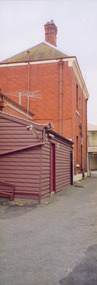 Kew Historical Society Inc
Photograph - Former Kew Police Station : rear of building, 1996
... Former Kew Police Station : rear of building......kew police station...The Post Office was transferred to the new Commonwealth Government in 1901. The Police Station and Court House, sold by the Victorian Government to the City of Boroondara in 2007, are now a community cultural centre and performing arts venue....Colour print positive photograph of the rear of the Kew Police Station before its acquisition by the City of Boroondara. ...Photograph Former Kew Police Station : rear of building ...A civic campaign for new public offices developed in Kew in the 1880s. After much deliberation, the location chosen was the junction of Bulleen and Cotham Roads. The buildings were designed by George Watson and John Henry Harvey, architects within the Department of Public Works (Victoria). Building was commenced in 1887, and after one year, the buildings were opened. The Post Office was transferred to the new Commonwealth Government in 1901. The Police Station and Court House, sold by the Victorian Government to the City of Boroondara in 2007, are now a community cultural centre and performing arts venue.The buildings were listed on the Victorian Heritage Register Register (HO885) in 1991. They are historically and architecturally significant to the State of Victoria because Watson and Harvey's designs exhibit diversity in integrating civil offices, they accommodate the apex of road junctions, and they demonstrate a departure from the contemporaneously favoured High Victorian Classical to the Queen Anne style in the design of civic buildings.Colour print positive photograph of the rear of the Kew Police Station before its acquisition by the City of Boroondara. The wooden addition was demolished at the time of the renovation.kew court house, public offices -- kew (vic), kew police station -
 Whitehorse Historical Society Inc.
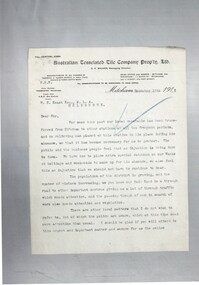
Correspondence, Mitcham Police Station, 1916 - 17
... Mitcham Police Station......mitcham police station...Copies of correspondence regarding the staffing of the Mitcham Police Station....walker e. e. australian tesselated tile co. pty ltd police stations mitcham police station shire of nunawading Copies of correspondence regarding the staffing of the Mitcham Police Station. ...Copies of correspondence regarding the staffing of the Mitcham Police Station.walker, e. e., australian tesselated tile co. pty ltd, police stations, mitcham police station, shire of nunawading -
 Surrey Hills Historical Society Collection
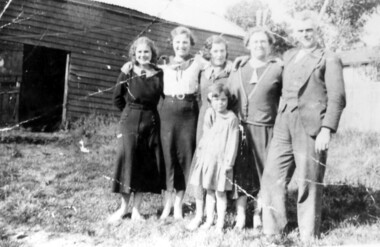
Photograph, McPhie family at back of Mounted Police Station, 5 Suffolk Road, Surrey Hills
... McPhie family at back of Mounted Police Station, 5 Suffolk Road, Surrey Hills...surrey hills mounted police station...David McPhie and some of his family/at Suffolk Road Mounted Police Station./Stables are shown in background....David McPhie, with five female members of his family, standing in front of the stables of the Mounted Police Station at 5 Suffolk Road, Surrey Hills....David McPhie and some of his family/at Suffolk Road Mounted Police Station./Stables are shown in background. ..."Sgt. David McPhie and some of his family/at Suffolk Road Mounted Police Station./Stables are shown in background./Courtesy - Mrs. P. Scales (nee McPhie)." The police established a station at 5 Suffolk Road in 1889. The first policeman was Constable Patrick Healey soon after assisted by Sgt Wilson. Constable David McPhie (1887-1963) was married to Jessica Beatrice McErvale (1891-1962) in 1914. They had a son - Angus (1916-1971) and a daughter Jean Cameron (1918-1985); she was born in Surrey Hills. In 1919 electoral rolls David McPhie is listed as a policeman at 5 Suffolk Road. Police gazettes list him as discharged on 2/11/1923. The family continue to live at 5 Suffolk Road and thereafter he is listed as a labourer. Entry in 'Surrey Hills In Celebration of the Centennial 1883-1983' states there was a mounted troopers' station at 5 Suffolk Road from 1889-1914. It was later at 5 Essex Road and then in 1923 moved to 171 Union Road (later the doctor's surgery and residence) and then to 93 Union Road where it stayed until 1947. It is not known how the donor was related to David McPhie.Image of a man, identified as Sgt. David McPhie, with five female members of his family, standing in front of the stables of the Mounted Police Station at 5 Suffolk Road, Surrey Hills.people, families, family groups, police, policemen, surrey hills mounted police station, horses, stables, suffolk road, david mcphie, miss jessie beatrice mcervale, mrs jessie beatrice mcphie -
 Whitehorse Historical Society Inc.
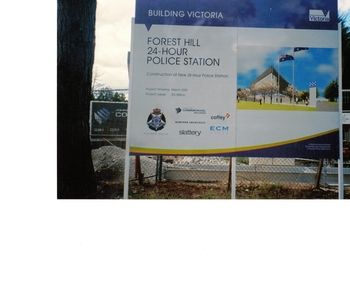
Photograph - B/W Photograph, Forest Hill Police Station
... Forest Hill Police Station......Police Station...Forest Hill Police Station Springvale Road Forest Hill...Forest Hill Police Station Springvale Road Forest Hill Police Station Springvale Road Forest Hill Forest Hill Police Station Photograph B/W Photograph ...Forest Hill Police Station Springvale Road Forest Hillforest hill, police station, springvale road -
 Glenelg Shire Council Cultural Collection
Document - Memo from Sale Police Station Victoria 1914, 20/05/1914
... Memo from Sale Police Station Victoria 1914...Sale Police Station historic records....Memo from superintendent Sale Police Station to superintendent at Hamilton Police Station regarding an escaped prisoner....Sale Police Station historic records. Memo from superintendent Sale Police Station to superintendent at Hamilton Police Station regarding an escaped prisoner. ...Sale Police Station historic records.Memo from superintendent Sale Police Station to superintendent at Hamilton Police Station regarding an escaped prisoner. -
 Kew Historical Society Inc
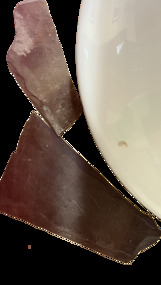
Functional object - Former Kew Police Station : Slates, 1888
... Former Kew Police Station : Slates...Kew Police Station...The Post Office was transferred to the new Commonwealth Government in 1901. The Police Station and Court House, sold by the Victorian Government to the City of Boroondara in 2007, are now a community cultural centre and performing arts venue....Two pieces of broken slate from the roof of the Kew Court House / Kew Police Station, formerly the Kew Public Offices. ...Functional object Former Kew Police Station : Slates ...A civic campaign for new public offices developed in Kew in the 1880s. After much deliberation, the location chosen was the junction of Bulleen and Cotham Roads. The buildings were designed by George Watson and John Henry Harvey, architects within the Department of Public Works (Victoria). Building was commenced in 1887, and after one year, the buildings were opened. The Post Office was transferred to the new Commonwealth Government in 1901. The Police Station and Court House, sold by the Victorian Government to the City of Boroondara in 2007, are now a community cultural centre and performing arts venue.The buildings were listed on the Victorian Heritage Register Register (HO885) in 1991. They are historically and architecturally significant to the State of Victoria because Watson and Harvey's designs exhibit diversity in integrating civil offices, they accommodate the apex of road junctions, and they demonstrate a departure from the contemporaneously favoured High Victorian Classical to the Queen Anne style in the design of civic buildings.Two pieces of broken slate from the roof of the Kew Court House / Kew Police Station, formerly the Kew Public Offices. The slate roof was replaced during renovations between 2007-11.kew police station, architectural fittings, slates, kew court house -
 Whitehorse Historical Society Inc.
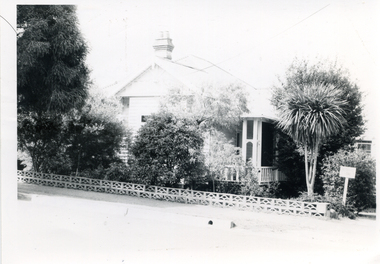
Photograph - Black and white photograph, Blackburn Police Station Blackburn
... Blackburn Police Station Blackburn ...blackburn police station...Black and white photo of original Police station in Blackburn. Constable Costello in charge....blackburn police station costello constable Black and white photo of original Police station in Blackburn. ...Black and white photo of original Police station in Blackburn. Constable Costello in charge.blackburn police station, costello, constable -
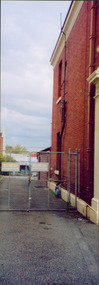
 Kew Historical Society Inc
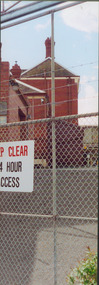
Photograph - Former Kew Police Station : Parking lot, 1996
... Former Kew Police Station : Parking lot......kew police station...The Post Office was transferred to the new Commonwealth Government in 1901. The Police Station and Court House, sold by the Victorian Government to the City of Boroondara in 2007, are now a community cultural centre and performing arts venue....View through the old wire gates into the parking lot behind the former Kew Police Station and Court House. This was the entrance from Cotham Road with which supplies, prisoners, and police cars would enter....Photograph Former Kew Police Station : Parking lot ...A civic campaign for new public offices developed in Kew in the 1880s. After much deliberation, the location chosen was the junction of Bulleen and Cotham Roads. The buildings were designed by George Watson and John Henry Harvey, architects within the Department of Public Works (Victoria). Building was commenced in 1887, and after one year, the buildings were opened. The Post Office was transferred to the new Commonwealth Government in 1901. The Police Station and Court House, sold by the Victorian Government to the City of Boroondara in 2007, are now a community cultural centre and performing arts venue.The buildings were listed on the Victorian Heritage Register Register (HO885) in 1991. They are historically and architecturally significant to the State of Victoria because Watson and Harvey's designs exhibit diversity in integrating civil offices, they accommodate the apex of road junctions, and they demonstrate a departure from the contemporaneously favoured High Victorian Classical to the Queen Anne style in the design of civic buildings.View through the old wire gates into the parking lot behind the former Kew Police Station and Court House. This was the entrance from Cotham Road with which supplies, prisoners, and police cars would enter.kew court house, public offices -- kew (vic), kew police station -
 Kew Historical Society Inc
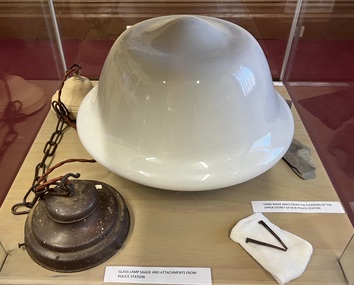
Functional object - Former Kew Police Station : Ceiling light and fitting, 1930-1945
... Former Kew Police Station : Ceiling light and fitting......Kew Police Station...The Post Office was transferred to the new Commonwealth Government in 1901. The Police Station and Court House, sold by the Victorian Government to the City of Boroondara in 2007, are now a community cultural centre and performing arts venue....Ceiling fixture, chain, metal cap and large white glass shade from the former Kew Police Station, removed during renovations in 2007-11, and presented to the Kew Historical Society by the City of Boroondara...Light fittings Kew Police Station Ceiling fixture, chain, metal cap and large white glass shade from the former Kew Police Station, removed during renovations in 2007-11, and presented to the Kew Historical Society by the City of Boroondara Functional object Former Kew Police Station : Ceiling light and fitting ...A civic campaign for new public offices developed in Kew in the 1880s. After much deliberation, the location chosen was the junction of Bulleen and Cotham Roads. The buildings were designed by George Watson and John Henry Harvey, architects within the Department of Public Works (Victoria). Building was commenced in 1887, and after one year, the buildings were opened. The Post Office was transferred to the new Commonwealth Government in 1901. The Police Station and Court House, sold by the Victorian Government to the City of Boroondara in 2007, are now a community cultural centre and performing arts venue.The buildings were listed on the Victorian Heritage Register Register (HO885) in 1991. They are historically and architecturally significant to the State of Victoria because Watson and Harvey's designs exhibit diversity in integrating civil offices, they accommodate the apex of road junctions, and they demonstrate a departure from the contemporaneously favoured High Victorian Classical to the Queen Anne style in the design of civic buildings.Ceiling fixture, chain, metal cap and large white glass shade from the former Kew Police Station, removed during renovations in 2007-11, and presented to the Kew Historical Society by the City of Boroondaralight fittings, kew police station -
 Kew Historical Society Inc
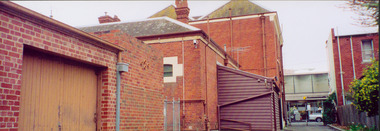
Photograph - Former Kew Police Station : outbuildings, 1996
... Former Kew Police Station : outbuildings......Kew Police Station...The Post Office was transferred to the new Commonwealth Government in 1901. The Police Station and Court House, sold by the Victorian Government to the City of Boroondara in 2007, are now a community cultural centre and performing arts venue....View of the rear of the former Kew Police Station in High Street, Kew. In the foreground is a red brick garage; a later addition to the building. ...Public Offices -- Kew (Vic.) Kew Police Station View of the rear of the former Kew Police Station in High Street, Kew. ...A civic campaign for new public offices developed in Kew in the 1880s. After much deliberation, the location chosen was the junction of Bulleen and Cotham Roads. The buildings were designed by George Watson and John Henry Harvey, architects within the Department of Public Works (Victoria). Building was commenced in 1887, and after one year, the buildings were opened. The Post Office was transferred to the new Commonwealth Government in 1901. The Police Station and Court House, sold by the Victorian Government to the City of Boroondara in 2007, are now a community cultural centre and performing arts venue.The buildings were listed on the Victorian Heritage Register Register (HO885) in 1991. They are historically and architecturally significant to the State of Victoria because Watson and Harvey's designs exhibit diversity in integrating civil offices, they accommodate the apex of road junctions, and they demonstrate a departure from the contemporaneously favoured High Victorian Classical to the Queen Anne style in the design of civic buildings.View of the rear of the former Kew Police Station in High Street, Kew. In the foreground is a red brick garage; a later addition to the building. Immediately behind that is the back of the cell block. The two storey building facing High Street was originally the Police Sergeant's residence. public offices -- kew (vic.), kew police station -
 Stawell Historical Society Inc
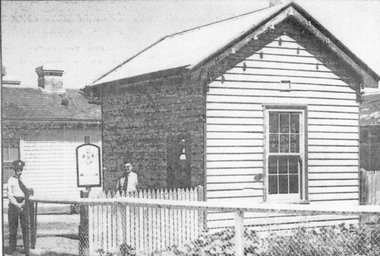
Photograph, Police Station article 1955
... Police Station article 1955...Police Station Clemes Street. Sergeant W McCurrach on right. ...On Back. Stawell Police Station Clemes St Stawell. The Stawell Times Friday February 25 1955. ...Police Law On Back. Stawell Police Station Clemes St Stawell. The Stawell Times Friday February 25 1955. ...Police Station Clemes Street. Sergeant W McCurrach on right. Left is Constable Jack Nisbet. On Back. Stawell Police Station Clemes St Stawell. The Stawell Times Friday February 25 1955. On right Sgt W McCurrach on left Constable Jack Nisbet.police, law
