
Showing 24 items matching "poplar trees"
-
 Malmsbury Historical Society
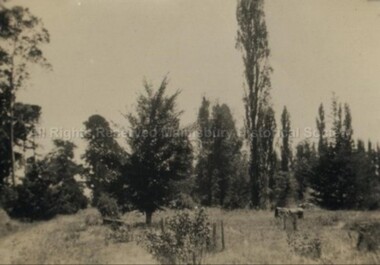
Photograph (Item), B/W Landscape In Malmsbury With Tall Poplar & Trees, Malmsbury c1934
... B/W Landscape In Malmsbury With Tall Poplar & Trees, Malmsbury c1934...Buildings - Trees B/W Landscape In Malmsbury With Tall Poplar & Trees, Malmsbury c1934 Photograph Photograph ...Buildings - Trees -
 University of Melbourne, Burnley Campus Archives
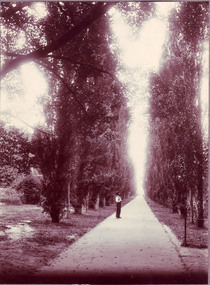
Photograph - Black and white or sepia print, Fitzroy Gardens, Unknown
... ...poplar trees...Black and white/sepia photograph of an avenue of Poplar trees in a Public Garden. A man standing in the middle of a wide path. ...Probably Fitzroy Gardens according to Georgina Whitehead who was writing a book on Public Gardens of Melbourne City Council, 1991. avenue poplar trees fitzroy gardens georgina whitehead public gardens melbourne city council Black and white/sepia photograph of an avenue of Poplar trees in a Public Garden. ...Probably Fitzroy Gardens according to Georgina Whitehead who was writing a book on Public Gardens of Melbourne City Council, 1991.Black and white/sepia photograph of an avenue of Poplar trees in a Public Garden. A man standing in the middle of a wide path. Some iron fencing.avenue, poplar trees, fitzroy gardens, georgina whitehead, public gardens, melbourne city council -
 Eltham District Historical Society Inc
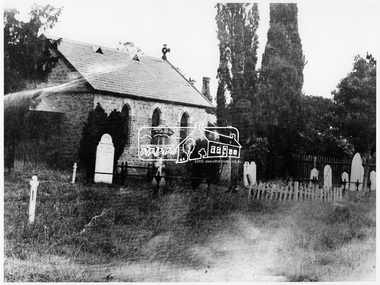
Photograph, Church at St. Helena built by Major Beale
... ...poplar trees...Helena then migrated to Australia. Poplar trees near present bridge (at Hurstbridge?) ...Helena then migrated to Australia. Poplar trees near present bridge (at Hurstbridge?) ..."Church at St. Helena built by Major Beale who was paymaster at St. Helena then migrated to Australia. Poplar trees near present bridge (at Hurstbridge?) are supposed to be cuttings brought out by Major Beale and given to Robert Gray Hurst." - Mrs. Ferguson.This photo forms part of a collection of photographs gathered by the Shire of Eltham for their centenary project book,"Pioneers and Painters: 100 years of the Shire of Eltham" by Alan Marshall (1971). The collection of over 500 images is held in partnership between Eltham District Historical Society and Yarra Plenty Regional Library (Eltham Library) and is now formally known as the 'The Shire of Eltham Pioneers Photograph Collection.' It is significant in being the first community sourced collection representing the places and people of the Shire's first one hundred years.Digital imagesepp, shire of eltham pioneers photograph collection, other areas, church, major beale, st. helena, poplar trees -
 Greensborough Historical Society
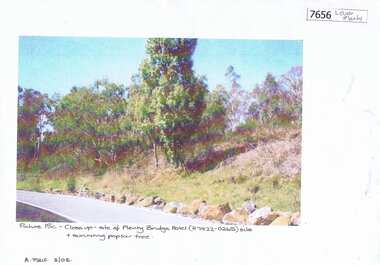
Photograph - Photograph (Copy), Anne Paul, Plenty Bridge Hotel site, 2003_03
... Although the Hotel burnt down, poplar trees still exist on the site....On colour photograph: Close-up site of Plenty Bridge Hotel (H7922-0265) and surviving poplar tree. A. Paul 3/03...Although the Hotel burnt down, poplar trees still exist on the site. plenty bridge hotel lower plenty plenty river On colour photograph: Close-up site of Plenty Bridge Hotel (H7922-0265) and surviving poplar tree. ...21st century photograph of heritage site: former Plenty bridge Hotel and Tollhouse, situated on the eastern side of Old Lower Plenty Road, near the Old Lower Plenty Road Bridge on the east bank of the Plenty River. Although the Hotel burnt down, poplar trees still exist on the site.3 pages, 1 x colour photograph printed on paper, 1 x Heritage Inventory (text) and 1 historic black and white photo.On colour photograph: Close-up site of Plenty Bridge Hotel (H7922-0265) and surviving poplar tree. A. Paul 3/03plenty bridge hotel, lower plenty, plenty river -
 Marysville & District Historical Society
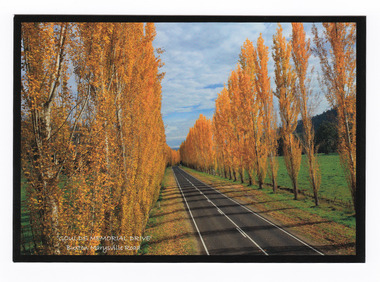
Postcard (item) - Colour postcard, Donovan Wilson, 'GOULDS MEMORIAL DRIVE'- Buxton Marysville Road, Post 2009
... ...poplar trees...This postcard was produced by Donovan Wilson Photography as a souvenir of Marysville. marysville buxton poplar trees gould memorial drive donovan wilson postcard souvenir marysville-buxton road Gould Memorial Drive/ Buxton Marysville Road/ Marysville Donovan Wilson/ Photography Place/ Stamp/ Here A colour photograph taken of Gould Memorial Drive on the Buxton Marysville Road in Victoria. ...A colour photograph taken of Gould Memorial Drive on the Buxton Marysville Road in Victoria.A colour photograph taken of Gould Memorial Drive on the Buxton Marysville Road in Victoria. The planting of the avenue of Lombardi Poplars was initiated by Mrs Joy Gould and the trees were planted by workers of the Gould Mill. The intention was for the avenue to extend from Marysville to Buxton. However, this was never fully realised. In Autumn the trees turn a brilliant yellow and are a major tourist attraction. This postcard was produced by Donovan Wilson Photography as a souvenir of Marysville.Gould Memorial Drive/ Buxton Marysville Road/ Marysville Donovan Wilson/ Photography Place/ Stamp/ Heremarysville, buxton, poplar trees, gould memorial drive, donovan wilson, postcard, souvenir, marysville-buxton road -
 Marysville & District Historical Society
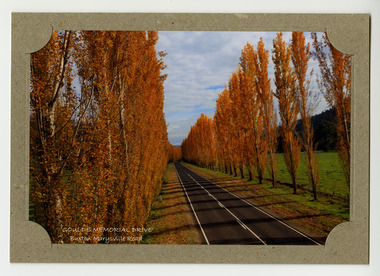
Photograph (item) - Colour photograph, Donovan Wilson, 'GOULDS MEMORIAL DRIVE'- Buxton Marysville Road, Post 2009
... ...poplar trees...In Autumn the trees turn a brilliant yellow and are a major tourist attraction. marysville buxton poplar trees gould memorial drive donovan wilson postcard souvenir marysville-buxton road A colour photograph taken of Goulds Memorial Drive on the Buxton Marysville Road in Victoria. ...A colour photograph taken of Goulds Memorial Drive on the Buxton Marysville Road in Victoria.A colour photograph taken of Goulds Memorial Drive on the Buxton Marysville Road in Victoria. The planting of the avenue of Lombardi Poplars was initiated by Mrs Joy Gould and the trees were planted by workers of the Gould Mill. The intention was for the avenue to extend from Marysville to Buxton. However, this was never fully realised. In Autumn the trees turn a brilliant yellow and are a major tourist attraction. marysville, buxton, poplar trees, gould memorial drive, donovan wilson, postcard, souvenir, marysville-buxton road -
 University of Melbourne, Burnley Campus Archives
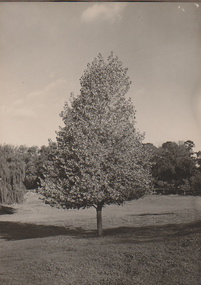
Photograph - Black and white print, A.W. Jessep, Golden Poplar, 1931
... golden poplar...trees...golden poplar trees lantern slides lagoon paddock Handwritten on reverse, "Golden Poplar 1931," "Slide" (glass slide). ...Black and white photograph. Golden Poplar in the Lagoon Paddock. See B11.0339(9)Handwritten on reverse, "Golden Poplar 1931," "Slide" (glass slide). golden poplar, trees, lantern slides, lagoon paddock -
 Box Hill Historical Society
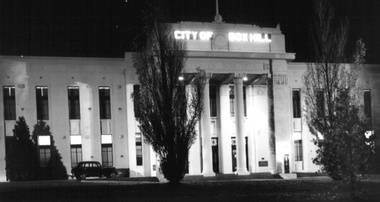
Photograph - Box Hill Town Hall facade, c.1952
... ...Poplar trees...City of Box Hill Box Hill Town Hall Poplar trees Town halls B & W photo taken at night Photograph Box Hill Town Hall facade ...Box Hill Town Hall facade taken at night. As well as external lighting there is an illuminated sign "CITY OF BOX HILL" above the portico. To one side of the portico is a Vauxhall car, c. late 1940s. It is thought that the lights above the portico were erected to celebrate the 25th anniversary of the City 1952. Time capsule buried and Foundation Stone laid, August 1934.B & W photo taken at nightcity of box hill, box hill town hall, poplar trees, town halls -
 Clunes Museum
Photograph
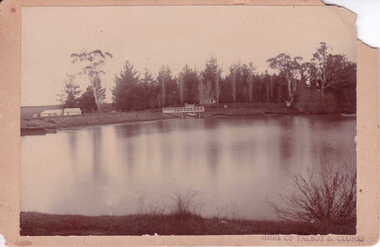
... SEPIA PHOTOGRAPH OF NEWLYN RESERVOIR SHOWING SMALL BRIDGE - TWO BUILDINGS AND PINE AND POPLAR TREES SURROUNDS....NEWLYN RESERVOIR - WATER SUPPLY TO CLUNES TOWNSHIP local history photography photographs water supply SHIRE OF TALBOT AND CLUNES SEPIA PHOTOGRAPH OF NEWLYN RESERVOIR SHOWING SMALL BRIDGE - TWO BUILDINGS AND PINE AND POPLAR TREES SURROUNDS. Photograph PHOTOGRAPH ...NEWLYN RESERVOIR - WATER SUPPLY TO CLUNES TOWNSHIPSEPIA PHOTOGRAPH OF NEWLYN RESERVOIR SHOWING SMALL BRIDGE - TWO BUILDINGS AND PINE AND POPLAR TREES SURROUNDS.SHIRE OF TALBOT AND CLUNESlocal history, photography, photographs, water supply -
 Whitehorse Historical Society Inc.
Photograph, Eckermann's Poultry Farm, c1960
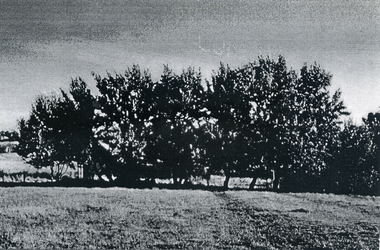
... View from Eckermann's Poultry Farm. Poplar trees and Mrs. White's house taken from the Cow Bail....Poultry farmers included Messrs Boyce, Gallos, Foote,Grimsley, Greenwood and Dudley|Slides scanned as a 'tiff' at 300dpi to CD Rom and cleaned and adjusted by Ted Arrowsmith. eckermann's eckermann frank poultry farms nunawading greenwood forest hill canterbury road mount pleasant road nunawading boyles white bruer's View from Eckermann's Poultry Farm. Poplar trees and Mrs. White's house taken from the Cow Bail. ...Photographs relate to the Poultry Farms that existed in Nunawading and Forest Hill in the1950s and 1960s. Photos taken in 1961-62. Poultry farmers included Messrs Boyce, Gallos, Foote,Grimsley, Greenwood and Dudley|Slides scanned as a 'tiff' at 300dpi to CD Rom and cleaned and adjusted by Ted Arrowsmith.View from Eckermann's Poultry Farm. Poplar trees and Mrs. White's house taken from the Cow Bail.eckermann's, eckermann frank, poultry farms, nunawading, greenwood, forest hill, canterbury road, mount pleasant road nunawading, boyles, white, bruer's -
 Lakes Entrance Historical Society
Photograph - Tambo River bridge Swan Reach Victoria 1990
... Boats at jetty on left, vegetation on each bank, poplar trees on right. Swan Reach Victoria...Boats at jetty on left, vegetation on each bank, poplar trees on right. Swan Reach Victoria Photograph Tambo River bridge Swan Reach Victoria 1990 ...Colour photograph showing view of the Tambo River at Swan Reach looking upstream. Boats at jetty on left, vegetation on each bank, poplar trees on right. Swan Reach Victoriabridges, waterways -
 Warrnambool and District Historical Society Inc.
Framed Paintings, 1 The Frame Shop, Fairfield, Melbourne .2 Kardinia Picture Framing, Geelong, 1Warrnambool Botanical Gardens .2 Hopkins River, Warrnambool, 1953
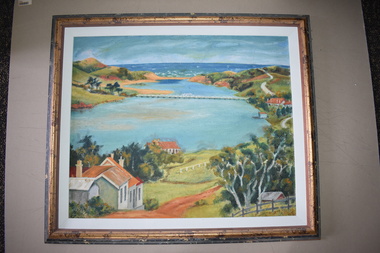
... .1 An art work (oil on artboard) – the Warrnambool Botanical Gardens with bridge and reflections, a gum tree and a poplar tree, all in green and orange tonings. ...Dr Don Edgar sociologist author and educator Warrnambool Art Gallery History of Warrnambool .1 Don Edgar 1953 Don Edgar 1953 (High School Student) .2 D.E. 53 Don Edgar 1953 (High School Student) .1 An art work (oil on artboard) – the Warrnambool Botanical Gardens with bridge and reflections, a gum tree and a poplar tree, all in green and orange tonings. ...These two works of art are by Dr Don Edgar, a sociologist, educator and author. He taught sociology at Stanford University, the University of Chicago, Monash University and La Trobe University and was the founding Director of the Australian Institute of Family Studies. In the 1950s Dr Edgar was a student at Warrnambool High School and these works of art were produced at that time. For a school project he researched the early history of the Warrnambool Art Gallery and some of its collection, dating from the 19th century. In 2019 he published a book, ‘Art For the Country’, the story of Victoria’s regional art galleries and the book includes information on the founding and the later history of the Warrnambool Art Gallery.These works of art are of interest as they were painted by Dr Don Edgar, a noted academic and author today and a former resident of Warrnambool. The two works of art also have historical interest as they depict Warrnambool scenes painted over 60 years ago. .1 An art work (oil on artboard) – the Warrnambool Botanical Gardens with bridge and reflections, a gum tree and a poplar tree, all in green and orange tonings. The wooden frame has a light varnish with gold and white trim .2 An art work (oil on artboard) – multi-coloured view of the mouth of Hopkins River with the Hopkins River bridge, Lyndoch bungalow and boathouse. The frame is wooden with a mottled varnish and a white insert edging. .1 Don Edgar 1953 Don Edgar 1953 (High School Student) .2 D.E. 53 Don Edgar 1953 (High School Student) dr don edgar, sociologist, author and educator, warrnambool art gallery, history of warrnambool -
 Melbourne Tram Museum
Photograph - St Kilda Road, prior to electrification - set of 2, Sutcliffe Pty Ltd, c1925
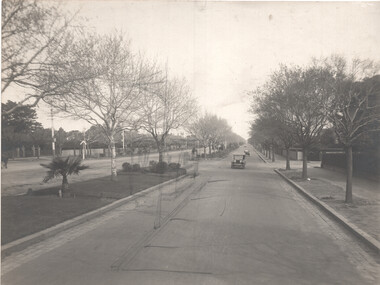
... The palms and poplar trees were removed in the 1940s due to the palms drawing up too much water, affecting the plane leaf trees, and the poplars dropping branches. 2 - Photo looking down St.Kilda Road with at least one or two cable trams partially in view. ...The palms and poplar trees were removed in the 1940s due to the palms drawing up too much water, affecting the plane leaf trees, and the poplars dropping branches. 2 - Photo looking down St.Kilda Road with at least one or two cable trams partially in view. ...The photo shows two views prior to the electrification of the cable tram lines in St Kilda Road, probably to show the pre-work condition of the roadways. 1 - St. Kilda Road Winter time - Photo shows some of the Poplars and Canary Island Date Palms (Phoenix Canariensis) on the left and the Dutch elm trees on the right. There is a “Hails Cars Here” sign on the pole. The palms and poplar trees were removed in the 1940s due to the palms drawing up too much water, affecting the plane leaf trees, and the poplars dropping branches. 2 - Photo looking down St.Kilda Road with at least one or two cable trams partially in view. Note the original Oriental Plane leaf trees (Platanus Orientalis), which were replaced by mainly London Plane Leaf trees (Platanus Acerifolia) in the mid-1920s due to disease caused by Gloesporium Nervisequum.Yields information about the appearance of St Kilda Road prior to conversion to electric trams.Black and white image with photographer's stamp on the rear. Second print has notes on the rear.Has the stamp of Sutcliffe Pty Ltd Cromwell buildings on the rear. 2nd print - 4) Tramway poles erected, palms removed, Melb side looking sth along motor track"tramways, st kilda rd, cable converion, electrification -
 Bendigo Historical Society Inc.
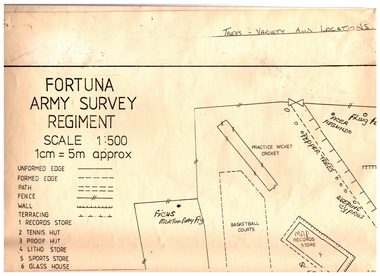
Administrative record - Ex-Fortuna Survey Association Collection: Conservation Management Plans, 1994-96
... The property covers 6.7 hectares and contains many mature trees, including palms, poplars, pepper trees, Norfolk Island pines, and various specimen trees. ...The property covers 6.7 hectares and contains many mature trees, including palms, poplars, pepper trees, Norfolk Island pines, and various specimen trees. ...'Fortuna' was developed by George Lansell, the 'Quartz King', from the 1870s to 1906. The estate features a mansion, a notable Italian water garden with imported elements, and a large lake originally used for mining. The property covers 6.7 hectares and contains many mature trees, including palms, poplars, pepper trees, Norfolk Island pines, and various specimen trees. Since 1942 to the 1980s, the Department of Defence has owned and maintained the property. General Considerations are to: 1 Preserve and restore the heritage value and history of the gardens to complement historic buildings. Maintain plant health and species diversity to enhance the area's character. 2 Address financial constraints, human use, military requirements, and stakeholder engagement. 3 Employ qualified experts to prepare the plan. 4 Address historical significance, plant health, heritage value, remedial works, and visual character (including maintaining views and screening modern structures). 5 Restore garden design to its original character where possible. 6 Recommend measures for future works to protect garden health and significant trees. 7 Identify and map significant plants and recommend suitable species for replanting. Consultant to start in September 1994 and complete by December 1994 with Regular meetings with a steering committee and encourage public involvement. The plan aims to ensure the long-term preservation, enhancement, and appropriate use of the heritage gardens, balancing historical, ecological, recreational, and military needs. In 1996 Fancine Gilfedder and Associates produced the Garden Conservation Management Plan for the Department of Defence: This Conservation Management Plan for the historic Fortuna Bendigo Garden outlines its historical development, significance, and strategies for preservation and management. 1. The plan was commissioned by the Department of Defence and prepared by Francine Gilfedder & Associates in 1996. It covers the Fortuna Garden site, its heritage status, and the methodology used for assessment. 2. Historical OverviewProvides a detailed chronology of the garden's development and its phases. Identifies significant materials, features, and architectural elements. 3. Site AssessmentSurveys existing site conditions, including plant and tree inventories.Documents architectural features and general landscape conditions. 4. Assesses the garden's heritage value using established criteria (e.g., Burra Charter, AHC criteria). Identifies elements of significance and provides comparative analysis with similar sites. 5. Summarizes the heritage value and unique aspects of the Fortuna Garden. 6. Outlines statutory and non-statutory requirements, user needs, and physical constraints affecting management. 7. Recommends general and component-specific policies for conservation. 8. Implementation Provides guidelines and specific recommendations for development and ongoing management. 9. Details best practices for tree, shrub, rose, and lawn care, as well as maintenance of paths and structures.Fortuna Villa Conservation Management Plans This Document Contains the following Items: 11231.4a This document is a draft brief by the army, 1994. It outlines the brief for a conservation management plan for the heritage gardens and surrounds of Fortuna Villa in Bendigo. It's three pages outlines Purpose, Background History and General Considerations, requirements and a summary. Seven first pages reproduced here. 11231.4b This Conservation Management Plan for the historic Fortuna Bendigo Garden outlines its historical development, significance, and strategies for preservation and management. Black Fabric Binding of approximately 110 pages (printed on both sides), photocopy with photos and plans. The first four pages showing the cover and index are shown here. 11231.4c Undated. This document is a horticultural report providing suggestions for improving the grounds and gardens at 'Fortuna', a historic estate now used by the Army Survey Regiment in Bendigo. The black and white report of approx 100 pages is "Spiralex" bound. It contains - it is compiled for the army by Karl Liffman (TAFE horticulture department) and Ian Huxley (experienced horticulturist and garden designer), with input from gardening apprentices. It contains many photos with new suggestions overlyared on top of them. The report addresses only the grounds and gardens visible to visitors: main drive, car parks, front garden, and areas around the lake. Recommendations are from a horticultural perspective, emphasizing plant variety and practical maintenance over formal landscape architecture.PurposeAims to guide the Army in developing and maintaining Fortuna’s gardens, recognizing the property's heritage and its value for public relations. 11231.4d An unbound copy of the above 11231.4e A letter to Range Control, Department of Defence, Puckapunyal, from Francine Gilfedder and Associates, Landscape Architect and Horticulturist, 15 Dover St Richmond; and a 18 page management plan. The plan aims to guide the conservation and management of the Fortuna Villa gardens, focusing on heritage values and preservation needs. May 1995. 11231.4f March 1996 five page document which outlines a conservation and restoration proposal for the Pompeii Fountain and adjacent heritage structures at Fortuna, Golden Square, Victoria. The fountain's steel column was severely rusted; rendered surfaces and marble font were deteriorating; adjacent garden walls and staircases were failing. 11231.4g Copy of above 11231.4h A five page document which contains key points from the conservation and restoration plan for Fortuna Villa. 1990s. 11231.4i A 30 page document. Part of the conservation policy and management plan for the Fortuna estate: 11231.4j A six page document is a conservation management plan and tree health report for Fortuna Villa in Bendigo, focusing on diagnosing tree diseases, assessing tree conditions, and recommending removal or treatment actions. Prepared by Francine Gilfedder and Associates, Landscape Architect and Horticulturist, 15 Dover St Richmond for the army. 11231.4k The one page document is a tree inspection report for a Sierra Redwood at Fortuna Villa, Bendigo, prepared in response to concerns about the tree's stability after the removal of a nearby specimen. Prepared by Trevor Lawrence Tree Surgeon, 830 Barkley St Ballarat. July 1995 11231.4l A 15 page document which provides an interpretive plan and historical overview for Fortuna Villa, a heritage site in Bendigo, focusing on its history, significance, and strategies for visitor engagement. 1995 prepared by Dianne Bish, Eaglehawk 11231.4m A large army plan of the Fortuna Grounds with prominent trees marked.bendigo, fortuna villa, history, army survey regiment, gardens, conservation management -
 City of Melbourne Libraries
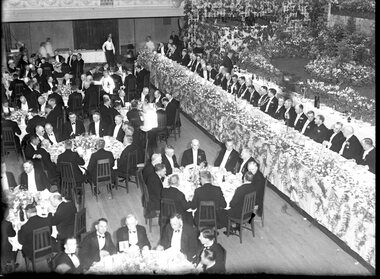
Photograph, Bull, Hugh Jones, 1897-1993, Lord Mayor's Dinner, Melbourne Town Hall
... Slender Japanese maples and poplar trees grew from the higher slopes amid thickets of hostas, while a fascinating illusion was created by the lofty conservatory windows, which formed the background, and which were tinted cerulean blue to simulate the sky seen through glass. ...Slender Japanese maples and poplar trees grew from the higher slopes amid thickets of hostas, while a fascinating illusion was created by the lofty conservatory windows, which formed the background, and which were tinted cerulean blue to simulate the sky seen through glass. ...Photographer notations on slide: "General View Of Lord Mayor's Dinner At Town Hall Nov 1936 B112" Published: The Age, Tuesday 10 November 1936, page 13 Published title: LORD MAYOR'S BANQUET Published caption: The brilliant scene inside the Melbourne Town Hall last night during the Lord Mayor’s banquet. Trove article identifier: http://nla.gov.au/nla.news-article205939431 Description: 700 guests (all men) are seated around numerous tables in the Melbourne Town Hall for the Lord Mayor's dinner in November 1936. Before the stage is a top table of 35 men, all dressed smartly in black dinner suits, with either a black or white bow tie. Many are wearing their medals. The Lord Mayor has on his Mayoral chains, and to his right is the Governor of Victoria, Lord Huntingfield. The stage is heavily decorated with fresh flowers. Research by project volunteer, Louise McKenzie: This image takes up one quarter of the photographic space on page 13 of The Age on 10 November 1936, reflecting the importance of the event and also the sheer dramatics of the image: 700 guests (all men), a top table of 35, and all dressed smartly in black dinner suits, with either a black or white bow tie. Many are wearing their medals. The Lord Mayor has on his Mayoral chains, and to his right is the Governor of Victoria, Lord Huntingfield. Further to his right is a man with an impressive sash across his chest. It is a very animated, and rather informal, moment. Banks of fresh flowers smother the stage, which is decorated in the manner of a terrace at an English stately home. Tables are laden with food, drink and decorations, and the wait staff (men and women) are also formally dressed, in the manner of Downton Abbey. It is spectacular, dramatic, and luxurious, and perpetuates the proud descriptor of “Marvellous Melbourne” as conferred by London Journalist George Augustus Sala when he visited the city in 1885. During its 1880s boom, Melbourne was the second-largest city in the British Empire, after London, and reputedly the richest city in the world. At times the expression was used with some irony, but "...in Victoria’s centenary year, 1934, with the city mired in another depression, a publisher bravely entitled a book of souvenir photographs Marvellous Melbourne, claiming that the subject ‘still finds apt expression in the happy one-time sobriquet’.” This photo seems to reflect an ongoing pride in Melbourne and a desire for it to live up to its descriptor and celebrate its post-centenary era in style. So it is no surprise to find that on page 11 of The Age on the same day, a second photo is to be found – a cropped view of one table – along with a very detailed description of the night, its purpose, and a surprise announcement. But, who was the Lord Mayor in whose honour the dinner was held? In 1934, the Lord Mayor of Melbourne was Cr. Alexander George Wales, (born Richmond, 11 October 1885, died Elsterwick, 31 May 1962). His father was a contractor and quarry-owner, but was blinded in an industrial accident in 1899. Consequently Alexander, then aged 14, left Brunswick State School to become a railway labourer working at a quarry, and in 1903 joined the Commonwealth public service as a clerk and began studying at night school, determined to improve himself. In 1907 he was appointed secretary of the Albion Quarrying Co. (in which the family had an interest), then its managing director and chairman. As the Australian Dictionary of Biography notes, he was instrumental in expanding the company’s interests, "...becoming director of the Hardware Co. of Australia Pty Ltd, the Twentieth Century Building and Investment Society, the Albion Sand Co. and the Geelong Brick Co.”. His public career began in 1914 when he was elected to the Brunswick council. He was mayor 1917-18, and in 1925 progressed to the Melbourne City Council where he remained for 29 years, being a member of most council committees. He served three successive terms as lord mayor (1934-37), was Chairman of the council’s decorations committee for Melbourne’s centenary, president of the Metropolitan Fire Brigades Board (1936), and Chairman of the Public Works Committee (1937-39). In 1936 he was elected to the Legislative Council with United Australia Party support, but later resigned over possible State government contract tender irregularities. Wales received "the customary reward” of a knighthood and was invested at Buckingham Palace by King George VI whose coronation he attended in 1937. He was an early director of what is now Ampol, and helped the development of the petroleum industry in Australia after visiting the USA in 1943 and 1946. He was impressed by that country’s wartime shipbuilding efforts and supported closer ties with the USA. “While president (1947-48) of the Melbourne Chamber of Commerce, Wales was a vocal critic of the Federal Labor Government, ...a staunch anti-socialist ... and a focus for conservative opposition to the Curtin and Chifley governments...” He is described as “a natural leader in business and civic politics,... a powerful force in the Melbourne City Council... opposing democratic reforms such as the creation of a Greater Melbourne Council and the abolition of plural voting, but advocat[ing] the redevelopment of city-owned property like the Eastern and Western markets...” So, this Lord Mayor’s dinner marks the third successive term in office for Governor Cr. A G Wales. The room is filled with powerful and influential men, and provided a platform for the Premier of Victoria, Albert Dunstan (1882-1950, United Country party) to announce that if the City Council would bear half the cost the State Government would build a bridge at Punt Road “at once”. He announced that the Government proposed to have the bridge built by the Country Roads Board, and allow the City Council to pay its share on convenient terms, and further, it would investigate the shared provision of more Yarra bridges. The proposal for the Punt Road Bridge was met with applause as the Yarra River constituted a serious traffic barrier. On 12 November 1936, two days after the Lord Mayor’s dinner, The Age published an article, “Building without a Plan”. It questions the appropriateness of the next Yarra bridge being the one at Punt Road, and encourages a “proper procedure” to look at the provision of additional Yarra bridges as a whole. But in fact this topic had been canvassed back in August when Melbourne City Council’s public works committee had recommended the replacement of the footbridge at Punt Road with a bridge, and if the Country Roads Board would declare this portion of Punt Road, including the river crossing, a State Highway, this could give the Board authority to construct the bridge and allocate the cost. Hence the reference at the dinner to a shared expense. Still an integral part of traffic management today, the Hoddle Bridge carries Punt Road over the Yarra River between Richmond and South Yarra in Melbourne. It is a five-lane road bridge with narrow footpaths on either side. It is of continuous reinforced concrete T-beam construction with five segmental arched spans, supported on transverse piers, and linked by concrete cross-beams. “The piers terminate in a series of tapered concrete pillars with Art Deco-styled steamlined decoration. Each pillar supports a Victorian-style lamp. The infill railings are geometric-patterned painted metal. Construction began in late 1937, and it was opened by Premier Albert Dunstan on 22 December 1938. It replaced an earlier footbridge, which in turn had replaced a punt service. The bridge (originally referred to as Punt Road Bridge) was named after Robert Hoddle, who planned central Melbourne’s Hoddle Grid, the grid of streets which form Melbourne’s central business district. Hoddle arrived in Australia from the UK in 1823 and went on to carry out surveys in NSW and Queensland before arriving in Melbourne in 1837. He designed layouts for both Melbourne and Williamstown, and later Geelong and other Victorian country areas. He was keen that major streets be at least 30 metres wide. ”With remarkable foresight he provided for wide boulevards from the city to the suburbs, but the subdivisions of early speculators in inner suburbs created the bottle-necks of today. After the separation of the colony in 1851, he became Victoria’s first surveyor-general... and advocated the provision of three-chain (60 m) roads and the widening of all existing main roads from one (20 m) to three chains." However, he was met with constant opposition and in 1853, was eased out of office. As a small and interesting aside: Hoddle was appointed auctioneer for the first sale of crown land in Melbourne on 1 June 1837. His commission was 57 pounds 12s 7d. and he bought two allotments for himself at a cost of 54 pounds. After he died his second wife married Richard Buckhurst Buxton, a member of the family which in 1860s Melbourne established the Australian property dynasty of Buxton Real Estate, Becton, MAB Corporation etc. Returning to the dinner and The Age article of 10 November 1836: Another topic of the after-dinner speeches was a reference to the upcoming Armistice Day. “The Minister of Customs (Mr White) said the proximity of Armistice day reminded us that eighteen years ago we had high hopes of prolonged peace.” The term “Armistice Day” was coined after WWI: “At 11 am on 11 November 1918, the guns on the Western Front fell silent after more than four years of continuous warfare. The Germans called for an armistice (suspension of fighting) in order to secure a peace settlement. They accepted the allied terms on unconditional surrender. Therefore on the 11th hour of the 11th day of the 11th month, a minute’s silence is observed and dedicated to those soldiers who died fighting to protect the nation. Originally known as Armistice Day, it was renamed Remembrance Day after World War Two to commemorate those who were killed in both World Wars. Today it refers to the loss of Australian lives from all wars and conflicts, accompanied by the words, "We will remember them, Lest we forget"." There was comment at the dinner about the need to remain firm in supporting the “democratic government in the British Empire to avoid a “plunge into savagery”. There was a grave responsibility on the British people to keep democracy alive, and that could not be done without adequate defence forces... Many weak governments in non-British countries had been swept aside by strong-fisted dictators, who now were the real threat to peace”. With the benefit of hindsight these were very pertinent comments and tragically prophetic. The Melbourne Shrine of Remembrance had only been dedicated two years earlier, at a ceremony attended by the Duke of Gloucester, son of King George V. Over 300,000 citizens attended: one third of the population of Melbourne. It became the location for the Anzac Day Dawn Service. Originally the march travelled from the Shrine into the city, however, in 1936, this was reversed, and the Shrine became the termination point for Anzac Day Marches. Also significant in 1936, was the installation of a statue in the west forecourt of the Shrine: “The Man with the Donkey” (aka 'Private John Simpson and his Little Donkey'). The work is said to represent the “valour and compassion of the Australian soldier”. Its full citation, according to the City of Melbourne City Collection is: West Side of Base: "The / Man with his Donkey / Gallipoli, April 25 to May 19 / in Commemoration / of the valour and compassion / of the Australian Soldier" AFTER LANDING AT GALLIPOLI, SIMPSON, WITH HIS LITTLE DONKEY, WORKED ALONE, DAY AND NIGHT TAKING WATER TO THE FRONT LINE AND CARRYING THE WOUNDED BACK TO THE DRESSING STATIONS. HE AND HIS DONKEY WERE KILLED BY A SHRAPNEL SHELL ON THE 19TH MAY, 1915. SIMPSON WAS MENTIONED IN DISPATCHES BY SIR IAN HAMILTON, COMMANDER-IN-CHIEF OF THE MEDITERRANEAN EXPEDITIONARY FORCE. / Erected by Public Subscription under auspices of the / Red Cross Society. East Side of Base: Private John Simpson." Their summary in background states: "A bronze figure of Simpson and his donkey with a wounded man on the donkey's back on a granite pedestal. Private John Simpson Kirkpatrick’s intrepid and short-lived exploits during the Gallipoli campaign have made him a popular figure of World War One. He has been mythologised to represent the lauded values of the digger, and he symbolises all those who went into battle unarmed. Born in England in 1892, he came to Australia in 1910. He enlisted to make his way back to England, but as a member of the 3rd Field Ambulance AIA was sent to Gallipoli. After just three weeks of bearing wounded soldiers across Shrapnel Gully on the back of his donkey, Simpson was killed by shrapnel fire. Simpson’s story became a powerful propaganda tool for enlistment in Australia, but following the war he was quickly forgotten. With the Shrine of Remembrance nearing completion in 1933, the memory of Simpson was rekindled to commemorate all who gave their lives to help others during the war. One plaque reads: ‘The / Man with his donkey / Gallipoli … / In commemoration / of the valour and compassion / of the Australian soldier’. In 1935, Wallace Anderson’s design for the memorial was selected though a competition organised by the Australian Red Cross. Anderson had served during the war and worked at the Australian War Memorial after his return. His Man with the Donkey was cast in Italy, and after some debate was sited near the shrine. Unveiled 20th June, 1936." The sculptor, Victorian-born William Wallace Anderson (1888-1975), served in France during WWI and afterwards produced a number of bronze war memorials and memorial portraits, predominantly in Victoria. “His most famous work is that of Simpson and his Donkey (1935), which he completed after winning a competition conducted by the Victorian Division of the Australian Red Cross. Anderson’s fee was 350 pounds; the cast, made by the Chiurazzi Foundry, Naples, Italy, cost 40 pounds. The work... has become well known as a symbol of the Anzac tradition.” A debate as to the siting of the statue arose from a strong view expressed by General Sir John Monash that no representation of individual members of the Australian Defence Force be located on the Shrine itself. Hence its location off to the northwest of the forecourt, in a garden of rosemary. And finally we return to the photo of the grand Lord Mayor’s dinner! An article in The Argus of 4 November 1936 refers to “Brilliant Scene at Lord Mayor’s Ball – Hall Becomes a Garden”. So now it becomes clear why the Town Hall, location of the Lord Mayor’s Dinner on 10 November 1934, only 6 days later, is so lavishly decorated. The floral decorations from the Ball are still in place - an early example of “recycling”, which is gratifying to note at a time of Depression. The reporter has captured the scene with enthusiasm: “Hundreds of tiny rose lights, hidden among pink roses, transformed the Melbourne Town Hall into a magical garden last night, when the Lord Mayor and Lady Mayoress (Councillor A. C. Wales, M.L.C., and Mrs. Wales) entertained about 3,500 guests at a ball. His Excellency the Governor (Lord Huntingfield) and Lady Huntingfield were present, while Rear-Admiral and Mrs. Lane Poole and officers from the visiting squadron were among the special guests. The balconies all round the hall were hidden by a white trellis, covered with pink blossoms and greenery. Rosy flowers were issued up every pillar, and great golden lamps, hanging from the door, were seated in greenery and trails of sweet peas. The organ gallery was converted into a terrace garden with stone steps leading to banks of pink azaleas, pink pelargoniums, masses of calceolarias, and the lovely deep mauve and blue of cinerarias. Slender Japanese maples and poplar trees grew from the higher slopes amid thickets of hostas, while a fascinating illusion was created by the lofty conservatory windows, which formed the background, and which were tinted cerulean blue to simulate the sky seen through glass. Large fern baskets hung from the conservatory roof, and the whole scene was enclosed in trellises of blossom. In the entrance palm green shrubs stood like sentinels round the passed floor, and flowers bloomed in misty golds. The long corridor upstairs leading to the council chamber was lined with an avenue of poplar trees in tubs. In the Lower Town Hall great banks of calceolarias and azaleas decked the upper dais, and each supper table was adorned with a different coloured flower with sprays of roses and Japanese maple laid on the snowy cloths. The adjoining supper-rooms were fragrant with the scent of huge bowls of stock in mauve, purple, and pink, while the white walls were covered with palm leaves and flowers. The roof garden below the clock tower was enclosed as a buffet with rose wreathed walls, and flowers were arranged attractively in the Lady Mayoress's rooms." References: LORD MAYOR'S BANQUET. CENTURY MAKERS AT THE M.C.G. BEFORE THE CHANGE. (1936, November 10). The Age (Melbourne, Vic. : 1854 - 1954), p. 13. Retrieved September 4, 2024, from http://nla.gov.au/nla.news-article205939431 'Portrait of Sir George Wales (Lord Mayor 1934-1937)', City Collection, City of Melbourne, https://citycollection.melbourne.vic.gov.au/portrait-of-sir-george-wales-lord-mayor-1934-37/ Graeme Davison, 'Marvellous Melbourne', eMelbourne, https://www.emelbourne.net.au/biogs/EM00906b.htm THE LORD MAYOR'S BANQUET. (1936, November 10). The Age (Melbourne, Vic. : 1854 - 1954), p. 11. Retrieved September 26, 2024, from http://nla.gov.au/nla.news-article205939643 BRILLIANT SCENE AT LORD MAYOR'S BALL Hall Becomes a Garden (1936, November 4). The Argus (Melbourne, Vic. : 1848 - 1957), p. 14. Retrieved September 26, 2024, from http://nla.gov.au/nla.news-article11932746 'Hoddle Bridge', Wikipedia, https://en.wikipedia.org/wiki/Hoddle_Bridge 'Hoddle Bridge', Victorian Heritage Database Report, Victorian Heritage Council, https://vhd.heritagecouncil.vic.gov.au/places/195689/download-report David Dunstan, 'Wales, Sir Alexander George (1885–1962)', Australian Dictionary of Biography, National Centre of Biography, Australian National University, https://adb.anu.edu.au/biography/wales-sir-alexander-george-8951/text15737, published first in hardcopy 1990, accessed online 26 September 2024. Marjorie J. Tipping, 'Hoddle, Robert (1794–1881)', Australian Dictionary of Biography, National Centre of Biography, Australian National University, https://adb.anu.edu.au/biography/hoddle-robert-2190/text2823, published first in hardcopy 1966, accessed online 26 September 2024. BUILDING WITHOUT A PLAN. (1936, November 12). The Age (Melbourne, Vic. : 1854 - 1954), p. 8. Retrieved September 26, 2024, from http://nla.gov.au/nla.news-article205949762 NEW BRIDGE AT PUNT ROAD (1936, August 12). The Argus (Melbourne, Vic. : 1848 - 1957), p. 10. Retrieved September 26, 2024, from http://nla.gov.au/nla.news-article11902131 'The Shrine of Remembrance', Beaconsfield’s Soldiers: https://beaconsfield.org.au/digitalmemorial/shrine-introduction/ 'Shrine of Remembrance', Wikipedia, https://en.wikipedia.org/wiki/Shrine_of_Remembrance Ken Scarlett, 'Anderson, William Wallace (1888–1975)', Australian Dictionary of Biography, National Centre of Biography, Australian National University, https://adb.anu.edu.au/biography/anderson-william-wallace-9362/text16441, published first in hardcopy 1993, accessed online 26 September 2024. 'Man with the Donkey', City Collection, City of Melbourne, https://citycollection.melbourne.vic.gov.au/man-with-the-donkey-aka-private-john-simpson-and-his-little-donkey/ 'Remembrance Day', Australian Army, https://www.army.gov.au/about-us/history-and-research/traditions/remembrance-day Photographer notations on slide: "General View Of Lord Mayor's Dinner At Town Hall Nov 1936 B112".melbourne town hall, mayors, lord mayors, centenaries, bridges, dinners, clothing and dress, festive decorations, dances and balls, eating and drinking, shrine of remembrance, governors, monuments and memorials, 1930-1939, plants -
 Marysville & District Historical Society
Photograph (Item) - Colour photograph, Unknown
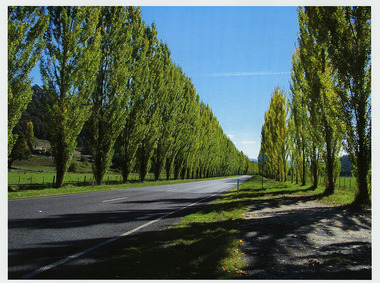
... The planting of the avenue of Lombardi Poplars was initiated by Mrs Joy Gould and the trees were planted by workers of the Gould Mill. ...A colour photograph of Gould Memorial Drive which is on the Marysville-Buxton Road near Marysville in Victoria.A colour photograph of Gould Memorial Drive which is on Marysville-Buxton Road just outside Marysville in Victoria. The planting of the avenue of Lombardi Poplars was initiated by Mrs Joy Gould and the trees were planted by workers of the Gould Mill. The intention was for the avenue to extend from Marysville to Buxton. However, this was never fully realised. In Autumn the trees turn a brilliant yellow and are a major tourist attraction. john lloyd gould, joy gould, gould mill, gould memorial drive, marysville-buxton road, marysville, buxton, victoria, photograph, lombardi poplars -
 Marysville & District Historical Society
Photograph (Item) - Colour photograph, Unknown
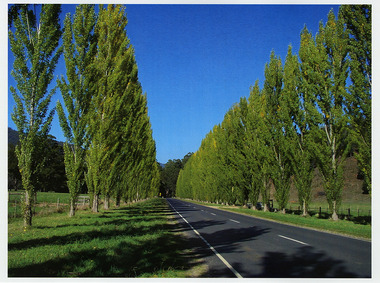
... The planting of the avenue of Lombardi Poplars was initiated by Mrs Joy Gould and the trees were planted by workers of the Gould Mill. ...A colour photograph of Gould Memorial Drive which is on the Marysville-Buxton Road near Marysville in Victoria.A colour photograph of Gould Memorial Drive which is on Marysville-Buxton Road just outside Marysville in Victoria. The planting of the avenue of Lombardi Poplars was initiated by Mrs Joy Gould and the trees were planted by workers of the Gould Mill. The intention was for the avenue to extend from Marysville to Buxton. However, this was never fully realised. In Autumn the trees turn a brilliant yellow and are a major tourist attraction. john lloyd gould, joy gould, gould mill, gould memorial drive, marysville-buxton road, marysville, buxton, victoria, photograph, lombardi poplars -
 Marysville & District Historical Society
Photograph (Item) - Colour photograph, Unknown
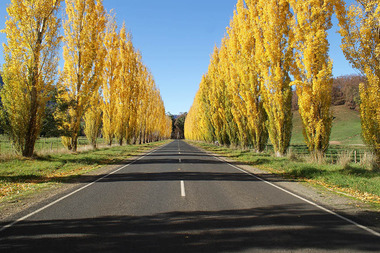
... The planting of the avenue of Lombardi Poplars was initiated by Mrs Joy Gould and the trees were planted by workers of the Gould Mill. ...A digital copy of a colour photograph of Gould Memorial Drive which is on the Marysville-Buxton Road near Marysville in Victoria.A digital copy of a colour photograph of Gould Memorial Drive which is on Marysville-Buxton Road just outside Marysville in Victoria. The planting of the avenue of Lombardi Poplars was initiated by Mrs Joy Gould and the trees were planted by workers of the Gould Mill. The intention was for the avenue to extend from Marysville to Buxton. However, this was never fully realised. In Autumn the trees turn a brilliant yellow and are a major tourist attraction. john lloyd gould, joy gould, gould mill, gould memorial drive, marysville-buxton road, marysville, buxton, victoria, photograph, lombardi poplars -
 Eltham District Historical Society Inc
Photograph, The Australasian, Eltham - A series of four scenes of the local district, 2 May 1903
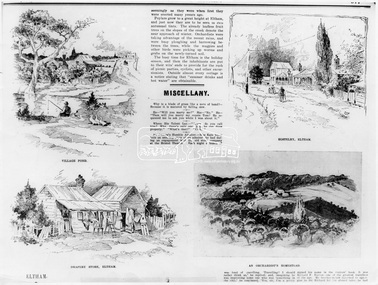
... There is the village pond (so essentially English), reflecting in its clear water a quaint cottage, dwarfed by a huge gum tree, an old smithy, and a hostelry, built quite fifty years ago, the flooring-boards of which the landlord informed me with pride were of Singapore cedar, and quite fit for another fifty years' wear. Then there are the village school, the shoemaker's, the drapery store, and the butcher's shop, all seemingly as they were when first they were erected many years ago. Poplars...There is the village pond (so essentially English), reflecting in its clear water a quaint cottage, dwarfed by a huge gum tree, an old smithy, and a hostelry, built quite fifty years ago, the flooring-boards of which the landlord informed me with pride were of Singapore cedar, and quite fit for another fifty years' wear. Then there are the village school, the shoemaker's, the drapery store, and the butcher's shop, all seemingly as they were when first they were erected many years ago. Poplars ...Australasian (Melbourne, Vic. : 1864 - 1946), Saturday 2 May 1903, page 25 ________________________________________ ELTHAM A POPULAR HOLIDAY SPOT. By L.J.J. The village of Eltham, with its 377 in habitants, is prettily situated on Diamond Creek, a tributary of the Yarra, 16 miles from Melbourne. Yet, in spite of it being so easily accessible from town, few people are aware of the beauties of this early settlement. Prior to June last year one had to journey by coach from Heidelberg to Eltham, but now the railway conveys passengers through from Melbourne to Eltham, first-class return, for 1/9. The opening of this extension to Eltham was the last ceremony performed by Lord Hopetoun, on June 5, 1902, prior to his departure from Australia. Sauntering through the township one autumn morning recently I was constantly reminded of scenes characteristic of Surrey or Sussex villages. There is the village pond (so essentially English), reflecting in its clear water a quaint cottage, dwarfed by a huge gum tree, an old smithy, and a hostelry, built quite fifty years ago, the flooring-boards of which the landlord informed me with pride were of Singapore cedar, and quite fit for another fifty years' wear. Then there are the village school, the shoemaker's, the drapery store, and the butcher's shop, all seemingly as they were when first they were erected many years ago. Poplars grow to a great height at Eltham, and just now they are to be seen in rich autumnal tints. The already leafless fruit trees on the slopes of the creek denote the near approach of winter. Orchardists were taking advantage of the recent rains, and were busy ploughing and harrowing between the trees, while the magpies and other birds were picking up worms and grubs on the newly-turned soil. The busy time for Eltham is the holiday season, and then the inhabitants are put to their wits' ends to provide for the rush of picnic parties, cyclists, and other excursionists. Outside almost every cottage is a notice stating that "summer drinks and hot water" are obtainable. Sketches illustrating the article: VILLAGE POND. DRAPERY STORE, ELTHAM. ON DIAMOND CREEK. HOSTELRY, ELTHAM. AN ORCHADIST'S HOMESTEAD. ON THE HEIDELBERG-ROAD IN AND AROUND ELTHAM.This photo forms part of a collection of photographs gathered by the Shire of Eltham for their centenary project book,"Pioneers and Painters: 100 years of the Shire of Eltham" by Alan Marshall (1971). The collection of over 500 images is held in partnership between Eltham District Historical Society and Yarra Plenty Regional Library (Eltham Library) and is now formally known as the 'The Shire of Eltham Pioneers Photograph Collection.' It is significant in being the first community sourced collection representing the places and people of the Shire's first one hundred years.Digital image Print B&W 20 x 25 cmsepp, shire of eltham pioneers photograph collection, drapery store, hostelery, orchardist's homestead, village pond, eltham, dalton street, evelyn hotel, hostelry, jarrold cottage, john street, main road, maria street, white cloud cottage -
 University of Melbourne, Burnley Campus Archives
Photograph - Black and white and colour slides, D. Johnstone, Decay Detection, 1995
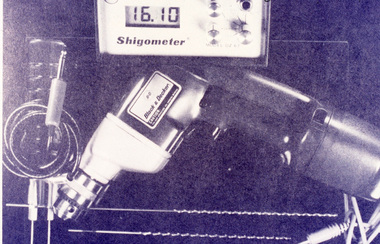
... decay detection instruments d. johnstone trees arboriculture shigometer resistograph arborsonic tester quadrant metriguard fractometer tyromyces ganodderma poplar 95 formes 24 black and white and colour slides labelled "Decay Detection" showing instruments used. 1 dated '95. ...24 black and white and colour slides labelled "Decay Detection" showing instruments used. 1 dated '95. Some labelled D. Johnstone. 1. Shigometer. 2. Resistograph. 3. Fractometer. 4.Device (Arborsonic Tester). 5. Plug. 6. Quadrant. 7.Metriguard. 8.Fractometer. 17. Tyromyces. 22. Eucalypt. 23. Ganodderma. 24. Poplar '95 Formes.decay detection, instruments, d. johnstone, trees, arboriculture, shigometer, resistograph, arborsonic tester, quadrant, metriguard, fractometer, tyromyces, ganodderma, poplar 95 formes -
 University of Melbourne, Burnley Campus Archives
Photograph - 35mm Colour slides, D. Johnstone, Diseases, 2000
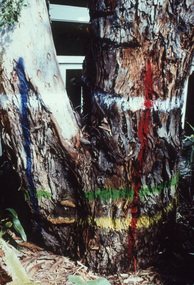
... tree diseases...cypress canker...teprioadium...tremetes versicolour...Armillaria...poplar...d. johnstone arboriculture tree diseases cypress canker teprioadium tremetes versicolour Armillaria poplar 95 formes laetiporus potentotus 27 colour slides labelled "Diseases". ...27 colour slides labelled "Diseases". Some individually labelled. Some also labelled "D. Johnstone". 8 June 2000. 1-4. appear to be part of B20.0157. 6-12 Cypress Canker. 13. Teprioadium. 14. "Paint" fungus. 15. Tremetes versicolour. 16. Armillaria (old). 17-18. Laetiporus portentotus. 20. Poplar 95 formes. d. johnstone, arboriculture, tree diseases, cypress canker, teprioadium, tremetes versicolour, armillaria, poplar 95 formes, laetiporus potentotus -
 University of Melbourne, Burnley Campus Archives
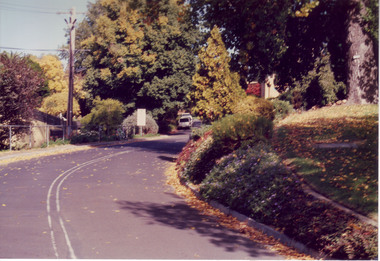
Album - Colour print, Poplar, c. 1985
... poplars trees garden view drive Colour photograph. ...Colour photograph. Poplar in a bed on the right of the drive, that has since been removed.poplars, trees, garden view, drive -
 University of Melbourne, Burnley Campus Archives
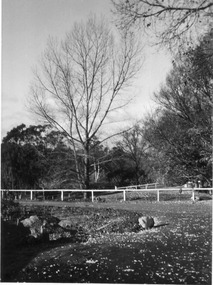
Photograph - Black and white print, E.M. Gibson, Lagoon Paddock, 1948
... Black and white photograph of the view looking towards the Lagoon Paddock (Grazing Paddock) from the Plant Research Laboratory. Tree is a Poplar (Cootonwood)....lagoon paddock grazing paddock plant research laboratory e. m. gibson collection 263/7 27 Black and white photograph of the view looking towards the Lagoon Paddock (Grazing Paddock) from the Plant Research Laboratory. Tree is a Poplar (Cootonwood). Lagoon Paddock Photograph Black and white print E.M. ...Black and white photograph of the view looking towards the Lagoon Paddock (Grazing Paddock) from the Plant Research Laboratory. Tree is a Poplar (Cootonwood).263/7 27lagoon paddock, grazing paddock, plant research laboratory, e. m. gibson collection -
 Box Hill Historical Society
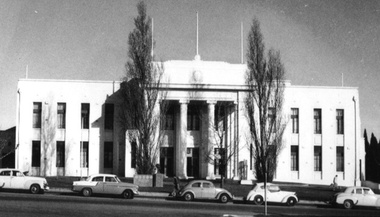
Photograph - Box Hill Town Hall, c.1960s
... The Box Hill Town Hall taken about 1960's, or earlier, showing 2 trees (like a poplar) in the foreground. Also an FJ Holden, EH Holden, a VW, a Singer motor vehicle, parked in front....The Box Hill Town Hall taken about 1960's, or earlier, showing 2 trees (like a poplar) in the foreground. Also an FJ Holden, EH Holden, a VW, a Singer motor vehicle, parked in front. ...The Box Hill Town Hall taken about 1960's, or earlier, showing 2 trees (like a poplar) in the foreground. Also an FJ Holden, EH Holden, a VW, a Singer motor vehicle, parked in front.B&w phototransport, town halls, box hill town hall, whitehorse road
