
Showing 35 items matching "protest movement"
-
 National Vietnam Veterans Museum (NVVM)
Memorabilia - Medallion, FTA anti-war
... Protest Movement...Soldiers in Vietnam often converted the slogan to "F-ck The Army ". Protest Movement Antiwar Vietnam FTA Free the Army War is Hell protest anti-war Round Medallion with large FTA in middle, circled by inscription' War is Hell' at top/ 'Why Not' at bottom. ...Medallion supporting anti-war activists. 'Free the army' believed to have been used as a spoof of the American Army recruitment campaign 'Fun, Travel and Adventure'. Soldiers in Vietnam often converted the slogan to "F-ck The Army ".Round Medallion with large FTA in middle, circled by inscription' War is Hell' at top/ 'Why Not' at bottom.protest movement, antiwar, vietnam, fta, free the army, war is hell, protest, anti-war -
 Emerald Museum & Nobelius Heritage Park
Photograph - Photograph - Emerald Community House group, 2017
... ...protest movement...This outcome was accepted by the protesters. The Victorian Neighbourhood House movement was born in the early 1970s during the Whitlam era of significant social change. ...The Emerald Community House has been a significant and valued contributor to community life since its inception in 1974. photographs Emerald Community House Bus shelter protest movement 2016 Colour photograph of Emerald Community House (ECH) group of sixteen supporters and staff in front of newly installed shelter decorated with original mosaics following the resolution of a dispute with Cardinia Shire Council which had decided to demolish the shelter and replace it with a new bus shelter which would meet community safety and disability compliance standards. ...In 2016, the Cardinia Shire Council decided to replace an existing bus shelter outside the Emerald Community House (ECH) - this shelter had been decorated with mosaics - with a bus shelter compliant with the current safety regulations. This caused a strong protest by people who did not wish to lose their loved bus shelter. Protesters, supported by the ECH, completed all-night vigils and garnered considerable publicity. Eventually, the Council agreed that, although the planned bus shelter would go ahead, the mosaics from the original shelter would be saved and a shelter approximating the original would be built close to the ECH. This outcome was accepted by the protesters. The Victorian Neighbourhood House movement was born in the early 1970s during the Whitlam era of significant social change. It grew out of local community need, particularly the isolation of women in the community, with a vision to bring people together and enhance the opportunities of people and communities. Another initial emphasis was to provide an informal, non-threatening and nurturing environment that supported individualised learning. The Emerald Community House (ECH) began in 1974 - one of the oldest continuously running incorporated community houses in Victoria. The State Government changed service providers for the ECH in 2025. The previous service providers have donated records of the ECH including this photograph.The Emerald Community House has been a significant and valued contributor to community life since its inception in 1974.Colour photograph of Emerald Community House (ECH) group of sixteen supporters and staff in front of newly installed shelter decorated with original mosaics following the resolution of a dispute with Cardinia Shire Council which had decided to demolish the shelter and replace it with a new bus shelter which would meet community safety and disability compliance standards.photographs, emerald community house, bus shelter, protest movement, 2016 -
 National Vietnam Veterans Museum (NVVM)
Newsletter, Vietnam Action Committee News Letter
... protest...peace movement...Based primarily in Sydney and associated with university campuses, it organized early, influential street protests demanding the immediate withdrawal of Australian and U.S. troops, paving the way for later large-scale moratorium movements. peace Vietnam Action Committee anti-war anti-conscription protest peace movement Oakley moratorium ....IN SOUTH VIETNAM A four page extract taken from the North Vietnam weekly newspaper called the "Vietnam Courier". ...The Vietnam Action Committee (VAC) was the first major organization formed in Australia (circa 1965–1966) to oppose the Vietnam War and conscription. Based primarily in Sydney and associated with university campuses, it organized early, influential street protests demanding the immediate withdrawal of Australian and U.S. troops, paving the way for later large-scale moratorium movements.A four page extract taken from the North Vietnam weekly newspaper called the "Vietnam Courier". ....IN SOUTH VIETNAMpeace, vietnam action committee, anti-war, anti-conscription, protest, peace movement, oakley, moratorium -
 Federation University Historical Collection
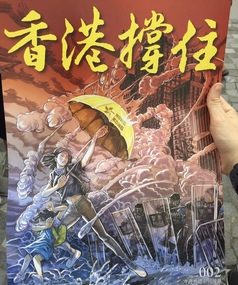
Photograph - Colour, Jarrod Watt, Hong Kong Street Flyer by an unknown artist, 2019, 06/2019
... The Hong Kong Protests are a leaderless, digital movement.There is no single leader or group deciding on or steering the strategy, tactics and goals of the movement. ...The Hong Kong Protests are a leaderless, digital movement.There is no single leader or group deciding on or steering the strategy, tactics and goals of the movement. ...Carrie Lam, Hong Kong’s chief executive, had plenty of political support in the territory’s pro-Beijing legislature to pass a bill that would allow extraditions to mainland China. The legislators were set to begin discussing the bill in early June, and intended to vote on it just weeks later. A series of protests took place, and after a June 16 protest saw the largest turnout yet, Ms. Lam made a major concession: She postponed the bill, at least temporarily. It was an undeniable victory for the protesters — but it did little to quell the unrest. Since the bill could later be reintroduced, protesters felt they remained in danger. The police tactics to break up the demonstrations on June 12, including the use of more than 150 tear gas canisters to push protesters far away from the government office, created a new set of demands from the protesters. Now, instead of just calling for the withdrawal of the bill and Ms. Lam’s resignation, they said they wouldn’t be content unless there was an independent investigation of officers’ conduct. They also wanted the release of protesters arrested on June 12, and for the government to rescind its description of the demonstrations as a “riot,” a designation that carries legal significance. None of that has happened. Many analysts say Ms. Lam is unlikely to step down, nor would Beijing accept her resignation if she offered it. She has more wiggle room on the other demands, but has not indicated any willingness to budge. The Hong Kong Protests are a leaderless, digital movement.There is no single leader or group deciding on or steering the strategy, tactics and goals of the movement. Instead, protesters have used forums and messaging apps to decide next steps. Anyone can suggest a course of action, and others then vote on whether they support it. The most popular ideas rise to the top, and then people rally to make them happen. At its best, this structure has empowered many people to participate and have their voices heard. Protesters say it keeps them all safe by not allowing the government to target specific leaders. Their success in halting the extradition bill, which was shelved by the territory’s chief executive, speaks to the movement’s power. Despite the lack of a clear leader, protesters have shown extensive coordination at the demonstrations, having planned the specifics online beforehand. Supply stations are set up to distribute water, snacks, gloves, umbrellas and shields made of cardboard. Volunteer first aid workers wear brightly colored vests. People form assembly lines to pass supplies across long distances, with protesters communicating what they need through a series of predetermined hand signals. Anyone walking in dangerous areas without a helmet or a mask is quickly offered one. No individual can speak on behalf of the protesters, which makes negotiations difficult, if not impossible. (https://www.nytimes.com/2019/07/02/world/asia/hong-kong-protest-explained.html, accessed 07/07/2019) Hong Kong’s amended extradition law would allow the extradition of suspects to mainland China for the first time. Supporters say the amendments are key to ensuring the city does not become a criminal refuge, but critics worry Beijing will use the law to extradite political opponents and others to China where their legal protections cannot be guaranteed. The government claims the push to change the law, which would also apply to Taiwan and Macau, stems from the killing last year of a Hong Kong woman while she was in Taiwan with her boyfriend. Authorities in Taiwan suspect the woman’s boyfriend, who remains in Hong Kong, but cannot try him because no extradition agreement is in place. Under the amended law, those accused of offences punishable by seven years or more in prison could be extradited. The new legislation would give Hong Kong’s leader, known as the chief executive, authority to approve extradition requests, after review by the courts. Hong Kong’s legislature, the legislative council, would not have any oversight over the extradition process. Many Hong Kongers fear the proposed extradition law will be used by authorities to target political enemies. They worry the new legislation spells the end of the “one country, two systems” policy, eroding the civil rights enjoyed by Hong Kong residents since the handover of sovereignty from the UK to China in 1997. Many attending the protests on Sunday said they could not trust China as it had often used non-political crimes to target government critics, and said they also feared Hong Kong officials would not be able to reject Beijing’s requests. Legal professionals have also expressed concern over the rights of those sent across the border to be tried. The conviction rate in Chinese courts is as high as 99%. Arbitrary detentions, torture and denial of legal representation of one’s choosing are also common. Many in the protests on Sunday 09 June 2019 said they felt overwhelmed by a sense of helplessness in the face of mainland China’s increasing political, economic and cultural influence in Hong Kong. Hong Kong’s top political leader is not elected by ordinary voters but by a 1,200-strong election committee accountable to Beijing. Half of its legislature are chosen through indirect electoral systems that favour pro-Beijing figures. Many Hong Kongers also cited the jailing of leaders and activists from the 2014 Occupy Central movement– a 79-day mass civil disobedience movement – as well as the disqualification of young localist lawmakers as signs of the erosion of civil freedoms. Resentment towards China has been intensified by soaring property prices – with increasing numbers of mainland Chinese buying properties in the city – as well as the government’s “patriotic education” drive, and the large numbers of mainland tourists who flock to Hong Kong. Many Hong Kongers are also concerned about China’s growing control over the city’s news media, as they increasingly self-censor and follow Beijing’s tacit orders. https://www.theguardian.com/world/2019/jun/10/what-are-the-hong-kong-protests-about-explainerPhotograph of a street art poster taken on the streets of Hong Kong during the protests against legislation to allow Hong Kong suspects to be extradited to mainland Chinese carrie lam, hong kong protests, extraditions, poster art, posters -
 Federation University Historical Collection
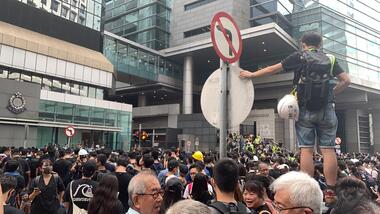
Photograph - Colour, Jarrod Watt, A thousand protestors surround Hong Kong's main police headquarters on Arsenal Street in Wan Chai on June 26th 2019, 21/06/2019
... The Hong Kong Protests are a leaderless, digital movement.There is no single leader or group deciding on or steering the strategy, tactics and goals of the movement. ...The Hong Kong Protests are a leaderless, digital movement.There is no single leader or group deciding on or steering the strategy, tactics and goals of the movement. ...Carrie Lam, Hong Kong’s chief executive, had plenty of political support in the territory’s pro-Beijing legislature to pass a bill that would allow extraditions to mainland China. The legislators were set to begin discussing the bill in early June, and intended to vote on it just weeks later. A series of protests took place, and after a June 16 protest saw the largest turnout yet, Ms. Lam made a major concession: She postponed the bill, at least temporarily. It was an undeniable victory for the protesters — but it did little to quell the unrest. Since the bill could later be reintroduced, protesters felt they remained in danger. The police tactics to break up the demonstrations on June 12, including the use of more than 150 tear gas canisters to push protesters far away from the government office, created a new set of demands from the protesters. Now, instead of just calling for the withdrawal of the bill and Ms. Lam’s resignation, they said they wouldn’t be content unless there was an independent investigation of officers’ conduct. They also wanted the release of protesters arrested on June 12, and for the government to rescind its description of the demonstrations as a “riot,” a designation that carries legal significance. None of that has happened. Many analysts say Ms. Lam is unlikely to step down, nor would Beijing accept her resignation if she offered it. She has more wiggle room on the other demands, but has not indicated any willingness to budge. The Hong Kong Protests are a leaderless, digital movement.There is no single leader or group deciding on or steering the strategy, tactics and goals of the movement. Instead, protesters have used forums and messaging apps to decide next steps. Anyone can suggest a course of action, and others then vote on whether they support it. The most popular ideas rise to the top, and then people rally to make them happen. At its best, this structure has empowered many people to participate and have their voices heard. Protesters say it keeps them all safe by not allowing the government to target specific leaders. Their success in halting the extradition bill, which was shelved by the territory’s chief executive, speaks to the movement’s power. Despite the lack of a clear leader, protesters have shown extensive coordination at the demonstrations, having planned the specifics online beforehand. Supply stations are set up to distribute water, snacks, gloves, umbrellas and shields made of cardboard. Volunteer first aid workers wear brightly colored vests. People form assembly lines to pass supplies across long distances, with protesters communicating what they need through a series of predetermined hand signals. Anyone walking in dangerous areas without a helmet or a mask is quickly offered one. No individual can speak on behalf of the protesters, which makes negotiations difficult, if not impossible. (https://www.nytimes.com/2019/07/02/world/asia/hong-kong-protest-explained.html, accessed 07/07/2019) Hong Kong’s amended extradition law would allow the extradition of suspects to mainland China for the first time. Supporters say the amendments are key to ensuring the city does not become a criminal refuge, but critics worry Beijing will use the law to extradite political opponents and others to China where their legal protections cannot be guaranteed. The government claims the push to change the law, which would also apply to Taiwan and Macau, stems from the killing last year of a Hong Kong woman while she was in Taiwan with her boyfriend. Authorities in Taiwan suspect the woman’s boyfriend, who remains in Hong Kong, but cannot try him because no extradition agreement is in place. Under the amended law, those accused of offences punishable by seven years or more in prison could be extradited. The new legislation would give Hong Kong’s leader, known as the chief executive, authority to approve extradition requests, after review by the courts. Hong Kong’s legislature, the legislative council, would not have any oversight over the extradition process. Many Hong Kongers fear the proposed extradition law will be used by authorities to target political enemies. They worry the new legislation spells the end of the “one country, two systems” policy, eroding the civil rights enjoyed by Hong Kong residents since the handover of sovereignty from the UK to China in 1997. Many attending the protests on Sunday said they could not trust China as it had often used non-political crimes to target government critics, and said they also feared Hong Kong officials would not be able to reject Beijing’s requests. Legal professionals have also expressed concern over the rights of those sent across the border to be tried. The conviction rate in Chinese courts is as high as 99%. Arbitrary detentions, torture and denial of legal representation of one’s choosing are also common. Many in the protests on Sunday 09 June 2019 said they felt overwhelmed by a sense of helplessness in the face of mainland China’s increasing political, economic and cultural influence in Hong Kong. Hong Kong’s top political leader is not elected by ordinary voters but by a 1,200-strong election committee accountable to Beijing. Half of its legislature are chosen through indirect electoral systems that favour pro-Beijing figures. Many Hong Kongers also cited the jailing of leaders and activists from the 2014 Occupy Central movement– a 79-day mass civil disobedience movement – as well as the disqualification of young localist lawmakers as signs of the erosion of civil freedoms. Resentment towards China has been intensified by soaring property prices – with increasing numbers of mainland Chinese buying properties in the city – as well as the government’s “patriotic education” drive, and the large numbers of mainland tourists who flock to Hong Kong. Many Hong Kongers are also concerned about China’s growing control over the city’s news media, as they increasingly self-censor and follow Beijing’s tacit orders. https://www.theguardian.com/world/2019/jun/10/what-are-the-hong-kong-protests-about-explainerMore than a thousand protestors surround Hong Kong's main police headquarters on Arsenal Street in Wan Chai on June 26th following a peaceful rally at Edinburgh Place in Central. Doors to the complex were barricaded by protestors, who left after a six hour siege in protest at police violence at a prtest held earlier on 12 June 2019. Protesters ended a six-hour siege of Hong Kong’s police headquarters – their second in a week over the now-suspended extradition bill – early on Thursday morning. More than 1,000 were involved at the height of the protest, which began after 10pm on Wednesday. Around 100 were left at the end and dispersed without a fight when officers with riot shields emerged from the building in Wan Chai at 4am on Thursday. After a peaceful rally attended by thousands earlier at Edinburgh Place in the Central business district, hundreds descended on Arsenal Street, blocking the junction with Lockhart Road to all traffic and sealing the entrances to the police base. (https://www.scmp.com/news/hong-kong/politics/article/3016238/hong-kong-police-under-siege-again-protesters-surround )carrie lam, hong kong protests, extraditions, protest, protestors -
 Federation University Historical Collection
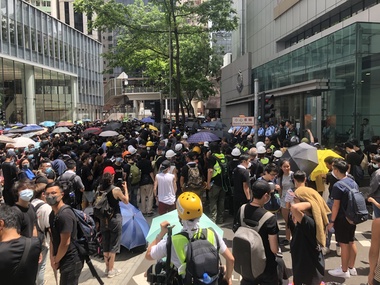
Photograph - Photograph - Colour, Jarrod Watt, Seven police officers stand guard in front of Hong Kong's main police headquarters on Arsenal Street in Wan Chai, 2019, 21/06/2019
... The Hong Kong Protests are a leaderless, digital movement.There is no single leader or group deciding on or steering the strategy, tactics and goals of the movement. ...The Hong Kong Protests are a leaderless, digital movement.There is no single leader or group deciding on or steering the strategy, tactics and goals of the movement. ...Carrie Lam, Hong Kong’s chief executive, had plenty of political support in the territory’s pro-Beijing legislature to pass a bill that would allow extraditions to mainland China. The legislators were set to begin discussing the bill in early June, and intended to vote on it just weeks later. A series of protests took place, and after a June 16 protest saw the largest turnout yet, Ms. Lam made a major concession: She postponed the bill, at least temporarily. It was an undeniable victory for the protesters — but it did little to quell the unrest. Since the bill could later be reintroduced, protesters felt they remained in danger. The police tactics to break up the demonstrations on June 12, including the use of more than 150 tear gas canisters to push protesters far away from the government office, created a new set of demands from the protesters. Now, instead of just calling for the withdrawal of the bill and Ms. Lam’s resignation, they said they wouldn’t be content unless there was an independent investigation of officers’ conduct. They also wanted the release of protesters arrested on June 12, and for the government to rescind its description of the demonstrations as a “riot,” a designation that carries legal significance. None of that has happened. Many analysts say Ms. Lam is unlikely to step down, nor would Beijing accept her resignation if she offered it. She has more wiggle room on the other demands, but has not indicated any willingness to budge. The Hong Kong Protests are a leaderless, digital movement.There is no single leader or group deciding on or steering the strategy, tactics and goals of the movement. Instead, protesters have used forums and messaging apps to decide next steps. Anyone can suggest a course of action, and others then vote on whether they support it. The most popular ideas rise to the top, and then people rally to make them happen. At its best, this structure has empowered many people to participate and have their voices heard. Protesters say it keeps them all safe by not allowing the government to target specific leaders. Their success in halting the extradition bill, which was shelved by the territory’s chief executive, speaks to the movement’s power. Despite the lack of a clear leader, protesters have shown extensive coordination at the demonstrations, having planned the specifics online beforehand. Supply stations are set up to distribute water, snacks, gloves, umbrellas and shields made of cardboard. Volunteer first aid workers wear brightly colored vests. People form assembly lines to pass supplies across long distances, with protesters communicating what they need through a series of predetermined hand signals. Anyone walking in dangerous areas without a helmet or a mask is quickly offered one. No individual can speak on behalf of the protesters, which makes negotiations difficult, if not impossible. (https://www.nytimes.com/2019/07/02/world/asia/hong-kong-protest-explained.html, accessed 07/07/2019) Hong Kong’s amended extradition law would allow the extradition of suspects to mainland China for the first time. Supporters say the amendments are key to ensuring the city does not become a criminal refuge, but critics worry Beijing will use the law to extradite political opponents and others to China where their legal protections cannot be guaranteed. The government claims the push to change the law, which would also apply to Taiwan and Macau, stems from the killing last year of a Hong Kong woman while she was in Taiwan with her boyfriend. Authorities in Taiwan suspect the woman’s boyfriend, who remains in Hong Kong, but cannot try him because no extradition agreement is in place. Under the amended law, those accused of offences punishable by seven years or more in prison could be extradited. The new legislation would give Hong Kong’s leader, known as the chief executive, authority to approve extradition requests, after review by the courts. Hong Kong’s legislature, the legislative council, would not have any oversight over the extradition process. Many Hong Kongers fear the proposed extradition law will be used by authorities to target political enemies. They worry the new legislation spells the end of the “one country, two systems” policy, eroding the civil rights enjoyed by Hong Kong residents since the handover of sovereignty from the UK to China in 1997. Many attending the protests on Sunday said they could not trust China as it had often used non-political crimes to target government critics, and said they also feared Hong Kong officials would not be able to reject Beijing’s requests. Legal professionals have also expressed concern over the rights of those sent across the border to be tried. The conviction rate in Chinese courts is as high as 99%. Arbitrary detentions, torture and denial of legal representation of one’s choosing are also common. Many in the protests on Sunday 09 June 2019 said they felt overwhelmed by a sense of helplessness in the face of mainland China’s increasing political, economic and cultural influence in Hong Kong. Hong Kong’s top political leader is not elected by ordinary voters but by a 1,200-strong election committee accountable to Beijing. Half of its legislature are chosen through indirect electoral systems that favour pro-Beijing figures. Many Hong Kongers also cited the jailing of leaders and activists from the 2014 Occupy Central movement– a 79-day mass civil disobedience movement – as well as the disqualification of young localist lawmakers as signs of the erosion of civil freedoms. Resentment towards China has been intensified by soaring property prices – with increasing numbers of mainland Chinese buying properties in the city – as well as the government’s “patriotic education” drive, and the large numbers of mainland tourists who flock to Hong Kong. Many Hong Kongers are also concerned about China’s growing control over the city’s news media, as they increasingly self-censor and follow Beijing’s tacit orders. https://www.theguardian.com/world/2019/jun/10/what-are-the-hong-kong-protests-about-explainerSeven police officers stand guard in front of Hong Kong's main police headquarters on Arsenal Street in Wan Chai as an estimated one thousand protestors surround on 26 June 2019. Protestors take turns to step up and hurl abuse at the officers, in a protest lasting 6 hours before peacefully dispersing. The protesters chanted 'Release the martyrs' and 'Stop police violence' in reference to violent clashes with police in the days previous. ( https://www.scmp.com/news/hong-kong/politics/article/3016238/hong-kong-police-under-siege-again-protesters-surround)carrie lam, hong kong protests, extraditions, protest, protestors, police, wan chai -
 Federation University Historical Collection
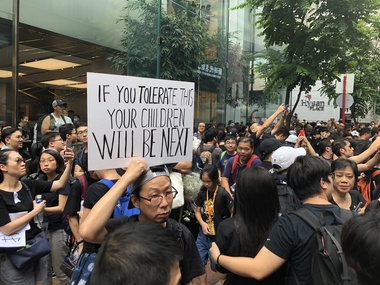
Photograph - Colour, Jarrod Watt, Crowds Gather on June 16 on the Streets of Causeway Bay, 2019, 17/06/2019
... The Hong Kong Protests are a leaderless, digital movement.There is no single leader or group deciding on or steering the strategy, tactics and goals of the movement. ...The Hong Kong Protests are a leaderless, digital movement.There is no single leader or group deciding on or steering the strategy, tactics and goals of the movement. ...Carrie Lam, Hong Kong’s chief executive, had plenty of political support in the territory’s pro-Beijing legislature to pass a bill that would allow extraditions to mainland China. The legislators were set to begin discussing the bill in early June, and intended to vote on it just weeks later. A series of protests took place, and after a June 16 protest saw the largest turnout yet, Ms. Lam made a major concession: She postponed the bill, at least temporarily. It was an undeniable victory for the protesters — but it did little to quell the unrest. Since the bill could later be reintroduced, protesters felt they remained in danger. The police tactics to break up the demonstrations on June 12, including the use of more than 150 tear gas canisters to push protesters far away from the government office, created a new set of demands from the protesters. Now, instead of just calling for the withdrawal of the bill and Ms. Lam’s resignation, they said they wouldn’t be content unless there was an independent investigation of officers’ conduct. They also wanted the release of protesters arrested on June 12, and for the government to rescind its description of the demonstrations as a “riot,” a designation that carries legal significance. None of that has happened. Many analysts say Ms. Lam is unlikely to step down, nor would Beijing accept her resignation if she offered it. She has more wiggle room on the other demands, but has not indicated any willingness to budge. The Hong Kong Protests are a leaderless, digital movement.There is no single leader or group deciding on or steering the strategy, tactics and goals of the movement. Instead, protesters have used forums and messaging apps to decide next steps. Anyone can suggest a course of action, and others then vote on whether they support it. The most popular ideas rise to the top, and then people rally to make them happen. At its best, this structure has empowered many people to participate and have their voices heard. Protesters say it keeps them all safe by not allowing the government to target specific leaders. Their success in halting the extradition bill, which was shelved by the territory’s chief executive, speaks to the movement’s power. Despite the lack of a clear leader, protesters have shown extensive coordination at the demonstrations, having planned the specifics online beforehand. Supply stations are set up to distribute water, snacks, gloves, umbrellas and shields made of cardboard. Volunteer first aid workers wear brightly colored vests. People form assembly lines to pass supplies across long distances, with protesters communicating what they need through a series of predetermined hand signals. Anyone walking in dangerous areas without a helmet or a mask is quickly offered one. No individual can speak on behalf of the protesters, which makes negotiations difficult, if not impossible. (https://www.nytimes.com/2019/07/02/world/asia/hong-kong-protest-explained.html, accessed 07/07/2019) Hong Kong’s amended extradition law would allow the extradition of suspects to mainland China for the first time. Supporters say the amendments are key to ensuring the city does not become a criminal refuge, but critics worry Beijing will use the law to extradite political opponents and others to China where their legal protections cannot be guaranteed. The government claims the push to change the law, which would also apply to Taiwan and Macau, stems from the killing last year of a Hong Kong woman while she was in Taiwan with her boyfriend. Authorities in Taiwan suspect the woman’s boyfriend, who remains in Hong Kong, but cannot try him because no extradition agreement is in place. Under the amended law, those accused of offences punishable by seven years or more in prison could be extradited. The new legislation would give Hong Kong’s leader, known as the chief executive, authority to approve extradition requests, after review by the courts. Hong Kong’s legislature, the legislative council, would not have any oversight over the extradition process. Many Hong Kongers fear the proposed extradition law will be used by authorities to target political enemies. They worry the new legislation spells the end of the “one country, two systems” policy, eroding the civil rights enjoyed by Hong Kong residents since the handover of sovereignty from the UK to China in 1997. Many attending the protests on Sunday said they could not trust China as it had often used non-political crimes to target government critics, and said they also feared Hong Kong officials would not be able to reject Beijing’s requests. Legal professionals have also expressed concern over the rights of those sent across the border to be tried. The conviction rate in Chinese courts is as high as 99%. Arbitrary detentions, torture and denial of legal representation of one’s choosing are also common. Many in the protests on Sunday 09 June 2019 said they felt overwhelmed by a sense of helplessness in the face of mainland China’s increasing political, economic and cultural influence in Hong Kong. Hong Kong’s top political leader is not elected by ordinary voters but by a 1,200-strong election committee accountable to Beijing. Half of its legislature are chosen through indirect electoral systems that favour pro-Beijing figures. Many Hong Kongers also cited the jailing of leaders and activists from the 2014 Occupy Central movement– a 79-day mass civil disobedience movement – as well as the disqualification of young localist lawmakers as signs of the erosion of civil freedoms. Resentment towards China has been intensified by soaring property prices – with increasing numbers of mainland Chinese buying properties in the city – as well as the government’s “patriotic education” drive, and the large numbers of mainland tourists who flock to Hong Kong. Many Hong Kongers are also concerned about China’s growing control over the city’s news media, as they increasingly self-censor and follow Beijing’s tacit orders. https://www.theguardian.com/world/2019/jun/10/what-are-the-hong-kong-protests-about-explainerPhotograph crowds gathering on June 16 on the streets of Causeway Bay before an estimated 2 million people take part in march protesting the government's push for extradition laws to China and demanding an apology from the chief executrive Carrie Lam. Nearly 2 million’ people take to streets, forcing public apology from Hong Kong leader Carrie Lam as suspension of controversial extradition bill fails to appease protesters. (https://www.scmp.com/news/hong-kong/politics/article/3014737/nearly-2-million-people-take-streets-forcing-public-apology )carrie lam, hong kong protests, extraditions, protest, protestors -
 Federation University Historical Collection
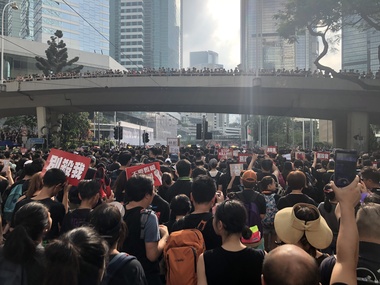
Photograph - Photograph - Colour, Jarrod Watt, Street Protests in Hong Kong against proposed extradition laws, 2019, 17/06/2019
... The Hong Kong Protests are a leaderless, digital movement.There is no single leader or group deciding on or steering the strategy, tactics and goals of the movement. ...The Hong Kong Protests are a leaderless, digital movement.There is no single leader or group deciding on or steering the strategy, tactics and goals of the movement. ...Carrie Lam, Hong Kong’s chief executive, had plenty of political support in the territory’s pro-Beijing legislature to pass a bill that would allow extraditions to mainland China. The legislators were set to begin discussing the bill in early June, and intended to vote on it just weeks later. A series of protests took place, and after a June 16 protest saw the largest turnout yet, Ms. Lam made a major concession: She postponed the bill, at least temporarily. It was an undeniable victory for the protesters — but it did little to quell the unrest. Since the bill could later be reintroduced, protesters felt they remained in danger. The police tactics to break up the demonstrations on June 12, including the use of more than 150 tear gas canisters to push protesters far away from the government office, created a new set of demands from the protesters. Now, instead of just calling for the withdrawal of the bill and Ms. Lam’s resignation, they said they wouldn’t be content unless there was an independent investigation of officers’ conduct. They also wanted the release of protesters arrested on June 12, and for the government to rescind its description of the demonstrations as a “riot,” a designation that carries legal significance. None of that has happened. Many analysts say Ms. Lam is unlikely to step down, nor would Beijing accept her resignation if she offered it. She has more wiggle room on the other demands, but has not indicated any willingness to budge. The Hong Kong Protests are a leaderless, digital movement.There is no single leader or group deciding on or steering the strategy, tactics and goals of the movement. Instead, protesters have used forums and messaging apps to decide next steps. Anyone can suggest a course of action, and others then vote on whether they support it. The most popular ideas rise to the top, and then people rally to make them happen. At its best, this structure has empowered many people to participate and have their voices heard. Protesters say it keeps them all safe by not allowing the government to target specific leaders. Their success in halting the extradition bill, which was shelved by the territory’s chief executive, speaks to the movement’s power. Despite the lack of a clear leader, protesters have shown extensive coordination at the demonstrations, having planned the specifics online beforehand. Supply stations are set up to distribute water, snacks, gloves, umbrellas and shields made of cardboard. Volunteer first aid workers wear brightly colored vests. People form assembly lines to pass supplies across long distances, with protesters communicating what they need through a series of predetermined hand signals. Anyone walking in dangerous areas without a helmet or a mask is quickly offered one. No individual can speak on behalf of the protesters, which makes negotiations difficult, if not impossible. (https://www.nytimes.com/2019/07/02/world/asia/hong-kong-protest-explained.html, accessed 07/07/2019) Hong Kong’s amended extradition law would allow the extradition of suspects to mainland China for the first time. Supporters say the amendments are key to ensuring the city does not become a criminal refuge, but critics worry Beijing will use the law to extradite political opponents and others to China where their legal protections cannot be guaranteed. The government claims the push to change the law, which would also apply to Taiwan and Macau, stems from the killing last year of a Hong Kong woman while she was in Taiwan with her boyfriend. Authorities in Taiwan suspect the woman’s boyfriend, who remains in Hong Kong, but cannot try him because no extradition agreement is in place. Under the amended law, those accused of offences punishable by seven years or more in prison could be extradited. The new legislation would give Hong Kong’s leader, known as the chief executive, authority to approve extradition requests, after review by the courts. Hong Kong’s legislature, the legislative council, would not have any oversight over the extradition process. Many Hong Kongers fear the proposed extradition law will be used by authorities to target political enemies. They worry the new legislation spells the end of the “one country, two systems” policy, eroding the civil rights enjoyed by Hong Kong residents since the handover of sovereignty from the UK to China in 1997. Many attending the protests on Sunday said they could not trust China as it had often used non-political crimes to target government critics, and said they also feared Hong Kong officials would not be able to reject Beijing’s requests. Legal professionals have also expressed concern over the rights of those sent across the border to be tried. The conviction rate in Chinese courts is as high as 99%. Arbitrary detentions, torture and denial of legal representation of one’s choosing are also common. Many in the protests on Sunday 09 June 2019 said they felt overwhelmed by a sense of helplessness in the face of mainland China’s increasing political, economic and cultural influence in Hong Kong. Hong Kong’s top political leader is not elected by ordinary voters but by a 1,200-strong election committee accountable to Beijing. Half of its legislature are chosen through indirect electoral systems that favour pro-Beijing figures. Many Hong Kongers also cited the jailing of leaders and activists from the 2014 Occupy Central movement– a 79-day mass civil disobedience movement – as well as the disqualification of young localist lawmakers as signs of the erosion of civil freedoms. Resentment towards China has been intensified by soaring property prices – with increasing numbers of mainland Chinese buying properties in the city – as well as the government’s “patriotic education” drive, and the large numbers of mainland tourists who flock to Hong Kong. Many Hong Kongers are also concerned about China’s growing control over the city’s news media, as they increasingly self-censor and follow Beijing’s tacit orders. https://www.theguardian.com/world/2019/jun/10/what-are-the-hong-kong-protests-about-explainerPhotograph of a crowd or protestors against proposed extradition laws gathering on the streets of Causeway Bay, Hong Kong, leading down to the gathering area. carrie lam, hong kong protests, extraditions, protest, protestors -
 Federation University Historical Collection
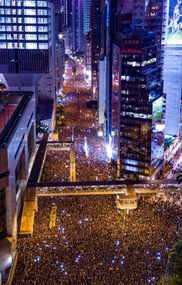
Photograph - Colour, Jarrod Watt, Street Protests in Hong Kong against proposed extradition laws, 2019, 17/06/2019
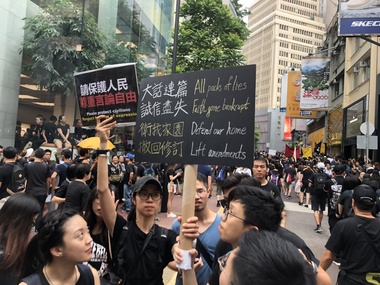
... The Hong Kong Protests are a leaderless, digital movement.There is no single leader or group deciding on or steering the strategy, tactics and goals of the movement. ...The Hong Kong Protests are a leaderless, digital movement.There is no single leader or group deciding on or steering the strategy, tactics and goals of the movement. ...Carrie Lam, Hong Kong’s chief executive, had plenty of political support in the territory’s pro-Beijing legislature to pass a bill that would allow extraditions to mainland China. The legislators were set to begin discussing the bill in early June, and intended to vote on it just weeks later. A series of protests took place, and after a June 16 protest saw the largest turnout yet, Ms. Lam made a major concession: She postponed the bill, at least temporarily. It was an undeniable victory for the protesters — but it did little to quell the unrest. Since the bill could later be reintroduced, protesters felt they remained in danger. The police tactics to break up the demonstrations on June 12, including the use of more than 150 tear gas canisters to push protesters far away from the government office, created a new set of demands from the protesters. Now, instead of just calling for the withdrawal of the bill and Ms. Lam’s resignation, they said they wouldn’t be content unless there was an independent investigation of officers’ conduct. They also wanted the release of protesters arrested on June 12, and for the government to rescind its description of the demonstrations as a “riot,” a designation that carries legal significance. None of that has happened. Many analysts say Ms. Lam is unlikely to step down, nor would Beijing accept her resignation if she offered it. She has more wiggle room on the other demands, but has not indicated any willingness to budge. The Hong Kong Protests are a leaderless, digital movement.There is no single leader or group deciding on or steering the strategy, tactics and goals of the movement. Instead, protesters have used forums and messaging apps to decide next steps. Anyone can suggest a course of action, and others then vote on whether they support it. The most popular ideas rise to the top, and then people rally to make them happen. At its best, this structure has empowered many people to participate and have their voices heard. Protesters say it keeps them all safe by not allowing the government to target specific leaders. Their success in halting the extradition bill, which was shelved by the territory’s chief executive, speaks to the movement’s power. Despite the lack of a clear leader, protesters have shown extensive coordination at the demonstrations, having planned the specifics online beforehand. Supply stations are set up to distribute water, snacks, gloves, umbrellas and shields made of cardboard. Volunteer first aid workers wear brightly colored vests. People form assembly lines to pass supplies across long distances, with protesters communicating what they need through a series of predetermined hand signals. Anyone walking in dangerous areas without a helmet or a mask is quickly offered one. No individual can speak on behalf of the protesters, which makes negotiations difficult, if not impossible. (https://www.nytimes.com/2019/07/02/world/asia/hong-kong-protest-explained.html, accessed 07/07/2019) Hong Kong’s amended extradition law would allow the extradition of suspects to mainland China for the first time. Supporters say the amendments are key to ensuring the city does not become a criminal refuge, but critics worry Beijing will use the law to extradite political opponents and others to China where their legal protections cannot be guaranteed. The government claims the push to change the law, which would also apply to Taiwan and Macau, stems from the killing last year of a Hong Kong woman while she was in Taiwan with her boyfriend. Authorities in Taiwan suspect the woman’s boyfriend, who remains in Hong Kong, but cannot try him because no extradition agreement is in place. Under the amended law, those accused of offences punishable by seven years or more in prison could be extradited. The new legislation would give Hong Kong’s leader, known as the chief executive, authority to approve extradition requests, after review by the courts. Hong Kong’s legislature, the legislative council, would not have any oversight over the extradition process. Many Hong Kongers fear the proposed extradition law will be used by authorities to target political enemies. They worry the new legislation spells the end of the “one country, two systems” policy, eroding the civil rights enjoyed by Hong Kong residents since the handover of sovereignty from the UK to China in 1997. Many attending the protests on Sunday said they could not trust China as it had often used non-political crimes to target government critics, and said they also feared Hong Kong officials would not be able to reject Beijing’s requests. Legal professionals have also expressed concern over the rights of those sent across the border to be tried. The conviction rate in Chinese courts is as high as 99%. Arbitrary detentions, torture and denial of legal representation of one’s choosing are also common. Many in the protests on Sunday 09 June 2019 said they felt overwhelmed by a sense of helplessness in the face of mainland China’s increasing political, economic and cultural influence in Hong Kong. Hong Kong’s top political leader is not elected by ordinary voters but by a 1,200-strong election committee accountable to Beijing. Half of its legislature are chosen through indirect electoral systems that favour pro-Beijing figures. Many Hong Kongers also cited the jailing of leaders and activists from the 2014 Occupy Central movement– a 79-day mass civil disobedience movement – as well as the disqualification of young localist lawmakers as signs of the erosion of civil freedoms. Resentment towards China has been intensified by soaring property prices – with increasing numbers of mainland Chinese buying properties in the city – as well as the government’s “patriotic education” drive, and the large numbers of mainland tourists who flock to Hong Kong. Many Hong Kongers are also concerned about China’s growing control over the city’s news media, as they increasingly self-censor and follow Beijing’s tacit orders. https://www.theguardian.com/world/2019/jun/10/what-are-the-hong-kong-protests-about-explainerPhotograph of a crowd on the streets of Hong Kong to protest against proposed extradition laws, heading towards Admiralty. carrie lam, hong kong protests, extraditions, protest, protestors, admiralty -
 Federation University Historical Collection
Photograph - Colour Photograph, Street Protests in Hong Kong against proposed extradition laws, 2019, 17/06/2019
... The Hong Kong Protests are a leaderless, digital movement.There is no single leader or group deciding on or steering the strategy, tactics and goals of the movement. ...The Hong Kong Protests are a leaderless, digital movement.There is no single leader or group deciding on or steering the strategy, tactics and goals of the movement. ...Carrie Lam, Hong Kong’s chief executive, had plenty of political support in the territory’s pro-Beijing legislature to pass a bill that would allow extraditions to mainland China. The legislators were set to begin discussing the bill in early June, and intended to vote on it just weeks later. A series of protests took place, and after a June 16 protest saw the largest turnout yet, Ms. Lam made a major concession: She postponed the bill, at least temporarily. It was an undeniable victory for the protesters — but it did little to quell the unrest. Since the bill could later be reintroduced, protesters felt they remained in danger. The police tactics to break up the demonstrations on June 12, including the use of more than 150 tear gas canisters to push protesters far away from the government office, created a new set of demands from the protesters. Now, instead of just calling for the withdrawal of the bill and Ms. Lam’s resignation, they said they wouldn’t be content unless there was an independent investigation of officers’ conduct. They also wanted the release of protesters arrested on June 12, and for the government to rescind its description of the demonstrations as a “riot,” a designation that carries legal significance. None of that has happened. Many analysts say Ms. Lam is unlikely to step down, nor would Beijing accept her resignation if she offered it. She has more wiggle room on the other demands, but has not indicated any willingness to budge. The Hong Kong Protests are a leaderless, digital movement.There is no single leader or group deciding on or steering the strategy, tactics and goals of the movement. Instead, protesters have used forums and messaging apps to decide next steps. Anyone can suggest a course of action, and others then vote on whether they support it. The most popular ideas rise to the top, and then people rally to make them happen. At its best, this structure has empowered many people to participate and have their voices heard. Protesters say it keeps them all safe by not allowing the government to target specific leaders. Their success in halting the extradition bill, which was shelved by the territory’s chief executive, speaks to the movement’s power. Despite the lack of a clear leader, protesters have shown extensive coordination at the demonstrations, having planned the specifics online beforehand. Supply stations are set up to distribute water, snacks, gloves, umbrellas and shields made of cardboard. Volunteer first aid workers wear brightly colored vests. People form assembly lines to pass supplies across long distances, with protesters communicating what they need through a series of predetermined hand signals. Anyone walking in dangerous areas without a helmet or a mask is quickly offered one. No individual can speak on behalf of the protesters, which makes negotiations difficult, if not impossible. (https://www.nytimes.com/2019/07/02/world/asia/hong-kong-protest-explained.html, accessed 07/07/2019) Hong Kong’s amended extradition law would allow the extradition of suspects to mainland China for the first time. Supporters say the amendments are key to ensuring the city does not become a criminal refuge, but critics worry Beijing will use the law to extradite political opponents and others to China where their legal protections cannot be guaranteed. The government claims the push to change the law, which would also apply to Taiwan and Macau, stems from the killing last year of a Hong Kong woman while she was in Taiwan with her boyfriend. Authorities in Taiwan suspect the woman’s boyfriend, who remains in Hong Kong, but cannot try him because no extradition agreement is in place. Under the amended law, those accused of offences punishable by seven years or more in prison could be extradited. The new legislation would give Hong Kong’s leader, known as the chief executive, authority to approve extradition requests, after review by the courts. Hong Kong’s legislature, the legislative council, would not have any oversight over the extradition process. Many Hong Kongers fear the proposed extradition law will be used by authorities to target political enemies. They worry the new legislation spells the end of the “one country, two systems” policy, eroding the civil rights enjoyed by Hong Kong residents since the handover of sovereignty from the UK to China in 1997. Many attending the protests on Sunday said they could not trust China as it had often used non-political crimes to target government critics, and said they also feared Hong Kong officials would not be able to reject Beijing’s requests. Legal professionals have also expressed concern over the rights of those sent across the border to be tried. The conviction rate in Chinese courts is as high as 99%. Arbitrary detentions, torture and denial of legal representation of one’s choosing are also common. Many in the protests on Sunday 09 June 2019 said they felt overwhelmed by a sense of helplessness in the face of mainland China’s increasing political, economic and cultural influence in Hong Kong. Hong Kong’s top political leader is not elected by ordinary voters but by a 1,200-strong election committee accountable to Beijing. Half of its legislature are chosen through indirect electoral systems that favour pro-Beijing figures. Many Hong Kongers also cited the jailing of leaders and activists from the 2014 Occupy Central movement– a 79-day mass civil disobedience movement – as well as the disqualification of young localist lawmakers as signs of the erosion of civil freedoms. Resentment towards China has been intensified by soaring property prices – with increasing numbers of mainland Chinese buying properties in the city – as well as the government’s “patriotic education” drive, and the large numbers of mainland tourists who flock to Hong Kong. Many Hong Kongers are also concerned about China’s growing control over the city’s news media, as they increasingly self-censor and follow Beijing’s tacit orders. https://www.theguardian.com/world/2019/jun/10/what-are-the-hong-kong-protests-about-explainerCrowds mass on Queens Way in Hong Kong as an estimated 2 million people march in protest at the government's refusal to withdraw a controverisal law allowing people to be extradited to mainland China. Chants demanded the chief executive apologise and the legislation be withdrawn, while many held signs protesting police violence. Nearly 2 million protesters flooded the streets of Hong Kong on Sunday, organisers claimed, delivering a stunning repudiation of Chief Executive Carrie Lam Cheng Yuet-ngor’s governance and forcing a public apology out of the city’s leader over her campaign to bulldoze a controversial extradition bill through the legislature. A day after Lam suspended her push for the bill, expecting it to defuse a crisis that has seen violent clashes between mostly young protesters and police, the centre of Hong Kong was brought to a complete standstill as the masses marched to chastise her for refusing to withdraw the bill or apologise when first asked to, and declaring that nothing short of her resignation would satisfy them now. (https://www.scmp.com/news/hong-kong/politics/article/3014737/nearly-2-million-people-take-streets-forcing-public-apology ) carrie lam, hong kong protests, extraditions, protest, protestors, admiralty -
 Kiewa Valley Historical Society
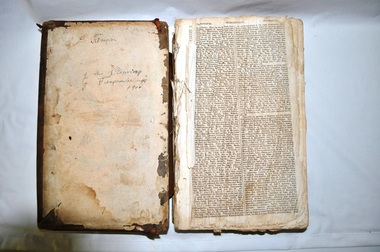
Bible - Family, Brown's Superb Bible, circa early 1800's to 1900
... He and his family were devout Christians and he helped establish the Evolution Protest Movement. bible rev. john brown old and new testament christianity Hand written inscriptions are in ink on the inside front cover, " J Tangam" at the top, "J A Fleming" underneath "Tangambalanga" and below that "1900". ...This item represents one of the most important spiritual references available to a settler in countryside Australia in the period 1800s to 1900s. This is the family bible and relates to the major religious beliefs of the early settlers who pioneered British/European colonial settlements. Although the first pages are missing the family name is written on the inside cover (J.A. Fleming). Most of these bibles (of this era) showed the family genealogical record of births, baptism and deaths, however this bible has the relevant pages missing. This bible would have provided the spiritual strength needed in bad times. Throughout this bible there are copies of specially commissioned lithographic engravings, each published between March 1812 to December 1813. These photographs were provided to visualise the theme of the each chapter.This item is significant because it shows that spiritualism of a small group (family in this case) is a vital part of the cohesive forces which holds a family(the basic subgroup of society) together, against all odds, and external pressures. It demonstrates that even in isolated or sparsely populated areas, the mores of a christian community is as strong as that of the cities. Mountains (Victorian Alps) have throughout the enlightened Ages been of extreme spiritual significance and this beholds those who live in this area.The families in the Kiewa Valley fall into the "isolated rural area" when this bible was first in use. This bible contains as its introduction,scripture history starting from 4004 BC "God created all things" to 2900 AD end of the World. There is a high degree of probability that this bible belonged to a member or members of the John Ambrose Flemming extended family who resided in the Kiewa Valley. J.A. Flemming (a famous English electrical engineer and physicist) invented the first diode in 1904). He and his family were devout Christians and he helped establish the Evolution Protest Movement.Leather bound bible. Leather in some areas is in tatters revealing the thick multi-layered cardboard backing. Front and back covers are held together by the thin leather binding. The lettering of the bible is large.Hand written inscriptions are in ink on the inside front cover, " J Tangam" at the top, "J A Fleming" underneath "Tangambalanga" and below that "1900". There are penciled dates "1937 1900" which have at one point in time been scribbled over in pencil. Although not marked on cover, the bible was known as "Brown's Bible" after the Author, the Rev. John Brown. Each of the major chapters is introduced by a copy of a lithographic print detailing the relevant religious picture and all are headed by "Brown's Superb Bible" and the date of the print. bible, rev. john brown, old and new testament, christianity -
 Eltham District Historical Society Inc
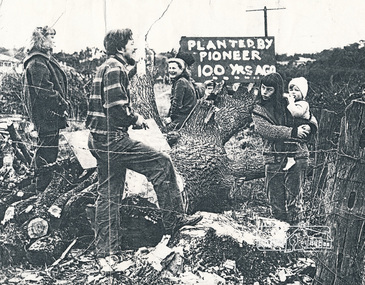
Photograph, Protesters against tree felling, Eltham, 1958, 1956
... L-R: Matcham Skipper, Lesley Martin, Margot Knox with with Hamish" Protest against the depradations of the State Electricty Commission 1956 - Alistair Knox (1980), We are what we stand on, pp48-49 “The fact that the number of trees in central Eltham has more than doubled since 1945 is an indication of how universal and powerful the movement has been. ...L-R: Matcham Skipper, Lesley Martin, Margot Knox with with Hamish" Protest against the depradations of the State Electricty Commission 1956 - Alistair Knox (1980), We are what we stand on, pp48-49 “The fact that the number of trees in central Eltham has more than doubled since 1945 is an indication of how universal and powerful the movement has been. ..."Photocopy of original owned by Lesley Martin. L-R: Matcham Skipper, Lesley Martin, Margot Knox with with Hamish" Protest against the depradations of the State Electricty Commission 1956 - Alistair Knox (1980), We are what we stand on, pp48-49 “The fact that the number of trees in central Eltham has more than doubled since 1945 is an indication of how universal and powerful the movement has been. Eltham was fighting the S.E.C. and other government authorities in the 40's and 50's over the retention of indigenous trees. In the Christmas season of 1956 our conflict with them came to a dramatic confrontation that made headline news in all the daily papers for a week. It started in the Herald, was repeated in the Sun and taken up by the Age two days later. After four days, it was appearing in the New York Times. Some S.E.C. workers cut down two 100-year-old oak trees in Franklin Street. The inner Eltham community launched a frontal attack on bureaucratic bungling and arrogance that they have never forgotten. When the chairman of the Commission delivered his New Year's speech some weeks later, he emphasised that the commission's first responsibility was to protect trees. This was the antithesis of their previous attitude. For many years to come, tree-lopping Commission workers always pretended they were not there when our small explosive group passed by. With Council assistance, we also carried out free native tree plantings on the nature strips of most roads in the Central Riding in the l 950's, when the rhododendron and the gladioli flanked by pampas grass and flowering fruit trees were still being introduced into the most 'desirable' eastern suburbs.”Photocopy of original owned by Lesley Martin. L-R: woman?, Matcham Skipper, Lesley Martin, Margot Knox with baby Hamishevents, matcham skipper, leslie martin, margot knox, hamish knox, trees, lesly martin -
 Eltham District Historical Society Inc
Photograph, Protesters against tree felling, Eltham, 1956
... "Photocopy of an original which was published in the Herald 2 Aug 1956 showing a group of Eltham residents protesting against tree felling undertaking a ceremonial tree planting L-R foreground (adults): Susan, Mavis and Laurel Gill; Hal Peck; Alistair Knox (centre); Tim Burstall; Jack Gill; Gordon Ford; Matcham Skipper" Protest against the depradations of the State Electricty Commission 1956 - Alistair Knox (1980), We are what we stand on, pp48-49 “The fact that the number of trees in central Eltham has more than doubled since 1945 is an indication of how universal and powerful the movement has been. ..."Photocopy of an original which was published in the Herald 2 Aug 1956 showing a group of Eltham residents protesting against tree felling undertaking a ceremonial tree planting L-R foreground (adults): Susan, Mavis and Laurel Gill; Hal Peck; Alistair Knox (centre); Tim Burstall; Jack Gill; Gordon Ford; Matcham Skipper" Protest against the depradations of the State Electricty Commission 1956 - Alistair Knox (1980), We are what we stand on, pp48-49 “The fact that the number of trees in central Eltham has more than doubled since 1945 is an indication of how universal and powerful the movement has been. ..."Photocopy of an original which was published in the Herald 2 Aug 1956 showing a group of Eltham residents protesting against tree felling undertaking a ceremonial tree planting L-R foreground (adults): Susan, Mavis and Laurel Gill; Hal Peck; Alistair Knox (centre); Tim Burstall; Jack Gill; Gordon Ford; Matcham Skipper" Protest against the depradations of the State Electricty Commission 1956 - Alistair Knox (1980), We are what we stand on, pp48-49 “The fact that the number of trees in central Eltham has more than doubled since 1945 is an indication of how universal and powerful the movement has been. Eltham was fighting the S.E.C. and other government authorities in the 40's and 50's over the retention of indigenous trees. In the Christmas season of 1956 our conflict with them came to a dramatic confrontation that made headline news in all the daily papers for a week. It started in the Herald, was repeated in the Sun and taken up by the Age two days later. After four days, it was appearing in the New York Times. Some S.E.C. workers cut down two 100-year-old oak trees in Franklin Street. The inner Eltham community launched a frontal attack on bureaucratic bungling and arrogance that they have never forgotten. When the chairman of the Commission delivered his New Year's speech some weeks later, he emphasised that the commission's first responsibility was to protect trees. This was the antithesis of their previous attitude. For many years to come, tree-lopping Commission workers always pretended they were not there when our small explosive group passed by. With Council assistance, we also carried out free native tree plantings on the nature strips of most roads in the Central Riding in the l 950's, when the rhododendron and the gladioli flanked by pampas grass and flowering fruit trees were still being introduced into the most 'desirable' eastern suburbs.”Photocopy of an original which was published in the Herald 2 Aug 1958 showing a group of Eltham residents protesting against tree felling undertaking a ceremonial tree planting L-R foreground (adults): Susan, Mavis and Laurel Gill; Hal Peck; Alistair Knox (centre); Tim Burstall; Jack Gill; Gordon Ford; Matcham Skipperevents, susan gill, mavis gill, laurel gill, jack gill, hal peck, tim burstall, gordon ford, matcham skipper, alistair knox, trees -
 Eltham District Historical Society Inc
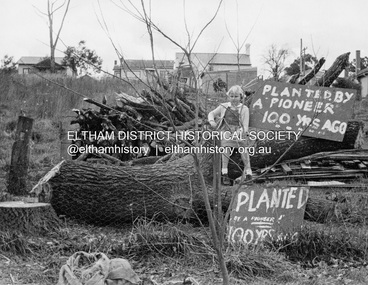
Photograph - Black and White Print, George W. Bell, Tree Protest, Franklin Street, Eltham, 1956
... You can read about online at https://alistairknox.org/chapters/45 “Protest against the depradations of the State Electricity Commission 1956” - Alistair Knox (1980), We are what we stand on, pp48-49 “The fact that the number of trees in central Eltham has more than doubled since 1945 is an indication of how universal and powerful the movement has been. ...You can read about online at https://alistairknox.org/chapters/45 “Protest against the depradations of the State Electricity Commission 1956” - Alistair Knox (1980), We are what we stand on, pp48-49 “The fact that the number of trees in central Eltham has more than doubled since 1945 is an indication of how universal and powerful the movement has been. ...This was a protest that came about when some S.E.C. workers cut down two 100-year old Oak trees in Franklin Street. We have examined aerial photos from February 1956 and two large trees are present near where number 91 is today and were gone in a January 1960 image. Alistair Knox wrote about their protest against the depradations of the State Electricty Commission in his 1980 book, We are what we stand on, pp48-49. You can read about online at https://alistairknox.org/chapters/45 “Protest against the depradations of the State Electricity Commission 1956” - Alistair Knox (1980), We are what we stand on, pp48-49 “The fact that the number of trees in central Eltham has more than doubled since 1945 is an indication of how universal and powerful the movement has been. Eltham was fighting the S.E.C. and other government authorities in the 40's and 50's over the retention of indigenous trees. In the Christmas season of 1956 our conflict with them came to a dramatic confrontation that made headline news in all the daily papers for a week. It started in the Herald, was repeated in the Sun and taken up by the Age two days later. After four days, it was appearing in the New York Times.” “Some S.E.C. workers cut down two 100-year-old oak trees in Franklin Street. The inner Eltham community launched a frontal attack on bureaucratic bungling and arrogance that they have never forgotten.” “When the chairman of the Commission delivered his New Year's speech some weeks later, he emphasised that the commission's first responsibility was to protect trees. This was the antithesis of their previous attitude. For many years to come, tree-lopping Commission workers always pretended they were not there when our small explosive group passed by. With Council assistance, we also carried out free native tree plantings on the nature strips of most roads in the Central Riding in the l 950's, when the rhododendron and the gladioli flanked by pampas grass and flowering fruit trees were still being introduced into the most 'desirable' eastern suburbs.” The protest involved personalities such as Matcham Skipper; Lesley Martin; Alistair and Margot Knox and youn Hamish; Jack, Susan, Mavis and Laurel Gill; Hal Peck; Tim Burstall and Gordon Ford The location is about halfway between Main Road and Bible Street looking north, around number 91. Looking up the hill in a northerly direction, the house on the left is George Stebbing's original cottage at 88 Pitt Street, built around 1861. Little is recorded of this early Eltham builder and we have no picture of him. He arrived from England in August 1857 and settled at Eltham after a short period at Kangaroo Ground. His occupation is often listed as a farmer but he built a number of important buildings between 1860 and 1880. Those remaining include Shillinglaw Cottage (c.1858), St. Margaret’s Church (1860), Uniting Church (formerly Methodist Church 1880) and his house at 88 Pitt Street (1861). This photo was possibly used in a presentation by Russell Yeoman to the 10 November 2004 Society meeting on "Significant Trees, Wildflowers and Local Gardens" - Research by Peter Pidgeon, EDHS, June 2026 Black and white print on photo paper Also black and white slide copy of print Mount - white 7 dots (Technodia Italy)trees, eltham, protests, george w bell collection, significant tree, alistair knox, george w. bell collection, gordon ford, hal peck, hamish knox, jack gill, laurel gill, lesley martin, margot knox, matcham skipper, mavis gill, stebbing cottage, susan gill, tim burstall -
 Bendigo Historical Society Inc.
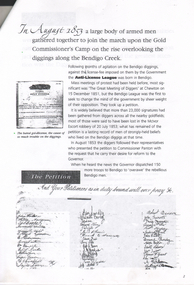
Document - The Red Ribbon Rebellion and the Bendigo Petition
... protest on the Victorian diggings. Mining Sandhurst Red Ribbon Rebellion Agitation Denovan LaTrobe miners license fee diggers Nine page photocopy of document titled: ' The Red Ribbon Rebellion & the Bendigo Petition. A proposal to commemorate a significant event in the history of Bendigo'. Contents includes a brief history of the Red Ribbon movement ...The discovery of gold in Victoria in 1851 initially overwhelmed the Colonial administration. Towns appeared almost overnight and it was challenging to keep law and order. To keep some control over the gold seekers and help pay for the administration of the goldfields, Lieutenant-Governor La Trobe introduced gold licences in September 1851. Miners paid 30 shillings per month (later reduced to £1 per month or £8 per year) for the right to dig a small ‘claim’, usually about eight feet square (2.4m²). Not surprisingly the licence system was unpopular. The licence was expensive – 30 shillings was a substantial sum for most diggers, who might spend months digging for gold without success. Resistance to the licence fee spread throughout the fields. A Miner’s Association was formed at Mount Alexander (Castlemaine) in December 1851 and at Bendigo in 1853 the Red Ribbon Rebellion was led by the Anti-Gold Licence Association. Diggers wore red ribbons in their hats as a sign of protest, refused to pay their licences and collected a ‘monster’ petition which was presented to Lieutenant-Governor La Trobe. The petition demanded immediate reform of government administration, a reduction in the licence fee, the right to vote and land reform (with poor returns from diggings, miners wanted affordable land on or near the goldfields). This proposal to commemorate a significant event in the history of Bendigo, is for the creation of a permanent installation in Bendigo that will commemorate the valour and integrity of the Bendigo diggers, who stood fast against the Government in the early days of protest on the Victorian diggings. Nine page photocopy of document titled: ' The Red Ribbon Rebellion & the Bendigo Petition. A proposal to commemorate a significant event in the history of Bendigo'. Contents includes a brief history of the Red Ribbon movement; description of the Digger's Banner; information on Governor LaTrobe; William Dixon Campbell Denovan and an outline of the proposed project to commemorate the event. The imposition of a license fee imposed upon the miners, by the Government of Victoria, cause a major agitation on the Bendigo diggings and the Anti-License League was born in Bendigo. Signatures were gathered for a petition: 'It is widely believed that more than 23,000 signatures had been gathered from diggers across all the nearby goldfields; most of those were said to have been lost in the McIvor Escort Robbery of 20 July 1853'. The proposal was prepared by Geoff Hocking in consultation with the Bendigo Historical Society and Jim Evans of the Red Ribbon Repertory Co.mining, sandhurst, red ribbon rebellion, agitation, denovan, latrobe, miners, license fee, diggers -
 Monbulk RSL Sub Branch
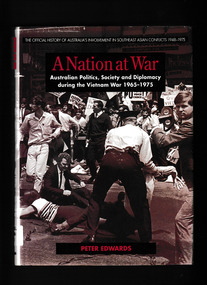
Book, Allen & Unwin, A Nation at War : Australian Politics, Society and Diplomacy during the Vietnam War 1965-1975, 1997
... The book traces the growth of the protest movement against the War and conscription, giving the most detailed account yet published of the three Moratorium protests in which tens of thousands of Australians demonstrated. ...The Vietnam War, together with the selective form of national service which sent thousands of young conscripts to fight in Vietnam, dominated Australian politics for ten years." "A Nation At War tells the story of Australia during this tumultuous decade. It shows how the initial support for the Vietnam commitment was eroded until a majority of the population came to think that it was mistaken, if not immoral. The book traces the growth of the protest movement against the War and conscription, giving the most detailed account yet published of the three Moratorium protests in which tens of thousands of Australians demonstrated. A Nation At War discusses the decisions of the Menzies, Holt, Gorton, McMahon and Whitlam Governments, as they responded to these unprecedented protests while wrestling with diplomatic pressures emanating from powerful allies and strife-torn neighbours. The book also analyses the incidents which shaped the debate and which long remained in public memory - the alleged 'water torture' incident, the episodes involving conscientious objectors like Simon Townsend and William White, and many moreIndex, notes, ill, p.386.non-fictionThe Vietnam War, together with the selective form of national service which sent thousands of young conscripts to fight in Vietnam, dominated Australian politics for ten years." "A Nation At War tells the story of Australia during this tumultuous decade. It shows how the initial support for the Vietnam commitment was eroded until a majority of the population came to think that it was mistaken, if not immoral. The book traces the growth of the protest movement against the War and conscription, giving the most detailed account yet published of the three Moratorium protests in which tens of thousands of Australians demonstrated. A Nation At War discusses the decisions of the Menzies, Holt, Gorton, McMahon and Whitlam Governments, as they responded to these unprecedented protests while wrestling with diplomatic pressures emanating from powerful allies and strife-torn neighbours. The book also analyses the incidents which shaped the debate and which long remained in public memory - the alleged 'water torture' incident, the episodes involving conscientious objectors like Simon Townsend and William White, and many morevietnam war 1961-1975 – australian involvement, australia - foreign relations - 1961-1975 -
 Monbulk RSL Sub Branch
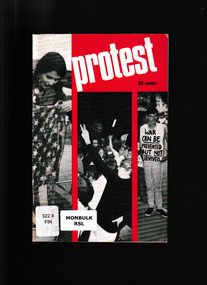
Book, Hawthorn Press, Protest politics and psychological warfare : the communist role in the Anti-Vietnam War and anti-conscription movement in Australia, 1968
... Protest politics and psychological warfare : the communist role in the Anti-Vietnam War and anti-conscription movement in Australia...Vietnam war - 1961-1975 - Politics and government - Australia Political movements - Australia Examines the communist role in the Anti-Vietnam War and anti-conscription movement in Australia Ill, p.63. Protest politics and psychological warfare : the communist role in the Anti-Vietnam War and anti-conscription movement in Australia Book Hawthorn Press PT Findlay ...Examines the communist role in the Anti-Vietnam War and anti-conscription movement in AustraliaIll, p.63.non-fictionExamines the communist role in the Anti-Vietnam War and anti-conscription movement in Australiavietnam war - 1961-1975 - politics and government - australia, political movements - australia -
 Bendigo Historical Society Inc.
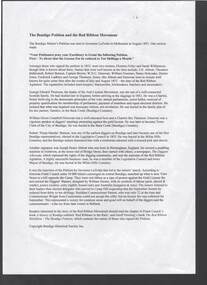
Document - RED RIBBON COLLECTION: DOCUMENT THE BENDIGO PETITION AND THE RED RIBBON MOVEMENT 1853
... A protest gathering in Pall Mall marched to the Government camp on Camp Hill but this was a peaceful event again to no real avail. EVENT The Bendigo Petition and the Red Ribbon Movement 1853 Governor La Trobe Florence Foley Sarah Williamson J H Abbott Theodore Ballerstedt Robert Benson Captain Brown W D C Denovan William Froomes Henry Holyoake Doctor Jones Frederick Ladbury George Thomson George Edward Thomson Anti-License Movement Sanders William Dixon Campbell Denovan City of Bendigo Back Creek (Bendigo) Cemetery White Hills Cemetery Joseph Henry Abbott The Diggers Advocate Frank Cusack Gold License fee Diggers' Banner William Dexter Commissioner Panton Commissioner Wright A History of Bendigo Frank Cusack Geoff Hocking The Red Ribbon Rebellion - The Bendigo Petition Bendigo Historical Society Inc Typed notes on The Bendigo Petition and the Red Ribbon Movement. ...In 1853, Bendigo Miners protested against the 30 shilling miners licence the had to pay the government. They wore red ribbons to show their protest and shopkeepers hung red ribbons outside their premises in support. Thousands of miners signed a petition to Governor LaTrobe to no avail. A protest gathering in Pall Mall marched to the Government camp on Camp Hill but this was a peaceful event again to no real avail.Typed notes on The Bendigo Petition and the Red Ribbon Movement. Amongst the petitioners were two women, Florence Foley and Sarah Williamson. Others include J H Abbott, Theodore Ballerstedt, Robert Benson, Captain Brown, W D C Denovan, William Froomes, Henry Holyoake, Doctor Jones, Frederick Ladbury and George Thomson. Also mentioned is how the petition was resolved. Further reading mentioned is: Frank Cusack's book 'A History of Bendigo entitled 'Red Ribbons in the Rain', and Geoff Hocking's book 'The Red Ribbon Rebellion - The Bendigo Petition, which contains names of those who signed the Petition. Written by the Bendigo Historical Society Inc.event, the bendigo petition and the red ribbon movement 1853, governor la trobe, florence foley, sarah williamson, j h abbott, theodore ballerstedt, robert benson, captain brown, w d c denovan, william froomes, henry holyoake, doctor jones, frederick ladbury, george thomson, george edward thomson, anti-license movement, sanders, william dixon campbell denovan, city of bendigo, back creek (bendigo) cemetery, white hills cemetery, joseph henry abbott, the diggers advocate, frank cusack, gold license fee, diggers' banner, william dexter, commissioner panton, commissioner wright, a history of bendigo, frank cusack, geoff hocking, the red ribbon rebellion - the bendigo petition, bendigo historical society inc -
 Bendigo Historical Society Inc.
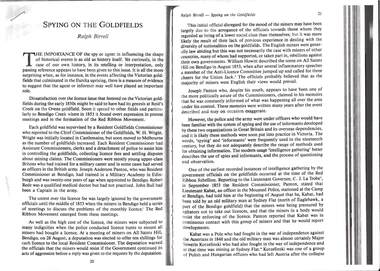
Document - SPYING ON THE GOLDFIELDS BY RALPH BIRRELL
... Soon it spread to other fields and particularly to Bendigo Creek where in 1853 it found overt expression in protest meetings and in the formation of the Red Ribbon Movement. Published in the Victorian Historical Journal, Vol.66, No.1, June 1995....Soon it spread to other fields and particularly to Bendigo Creek where in 1853 it found overt expression in protest meetings and in the formation of the Red Ribbon Movement. Published in the Victorian Historical Journal, Vol.66, No.1, June 1995. ...Document, Spying on the Goldfields by Ralph Birrell, Dissatisfaction over the licence issue that festered on the Victorian Goldfields during the early 1850s, might be said to have its genisis at Reid's Creek on the Ovens goldfield. Soon it spread to other fields and particularly to Bendigo Creek where in 1853 it found overt expression in protest meetings and in the formation of the Red Ribbon Movement. Published in the Victorian Historical Journal, Vol.66, No.1, June 1995.Ralph Birrelldocument, names of bendigo pioneers, bendigo -
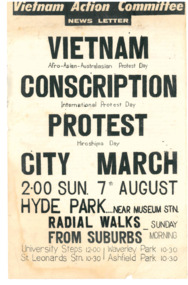 National Vietnam Veterans Museum (NVVM)
Newsletter, Vietnam Action Committee News Letter
... Based in Sydney, it was involved in publishing anti-war literature and organising the protests that led to the Moratoriums of the 1970s. Publication Vietnam Cartoon anti-Vietnam anti-war peace peace movement Oakley Vietnam Action Committee Newsletter No.12, August 1966 A typed and then copied foolscap publication, 6 double- sided pages with a selection of articles and cartoons. ...This is a publication of the Vietnam Action Committee (VAC), a key Australian anti-war organisation formed in 1966 to oppose the Vietnam War and conscription. Based in Sydney, it was involved in publishing anti-war literature and organising the protests that led to the Moratoriums of the 1970s.A typed and then copied foolscap publication, 6 double- sided pages with a selection of articles and cartoons. Yellowed, aged paper and inconsistent inking throughout. Front page promotes a Conscription Protest March in Hyde Park, Sydney, Sunday 7th August 1966Vietnam Action Committee Newsletter No.12, August 1966publication, vietnam, cartoon, anti-vietnam, anti-war, peace, peace movement, oakley -
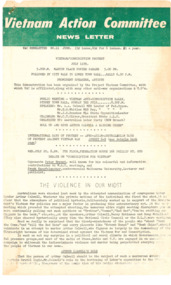 National Vietnam Veterans Museum (NVVM)
Newsletter, Vietnam Action Committee News Letter
... Based primarily in Sydney and associated with university campuses, it organised street protests demanding the immediate withdrawal of Australian and U.S. troops, paving the way for later large-scale moratorium movements. Newsletter Vietnam peace movement ...This political paper opposing the involvement of Australian soldiers in Vietnam was written in late June 1966, just after Labor and Opposition Leader Arthur Calwell was shot at while campaigning for the 1966 federal election. He had just addressed an anti-conscription rally at Mosman Town Hall in Sydney where Peter Kocan, a 19-year-old factory worker, had waited for him, a sawn-off .22 calibre rifle concealed under his coat. The Vietnam Action Committee (VAC) was the first major organisation formed in Australia to oppose the Vietnam War and conscription. Based primarily in Sydney and associated with university campuses, it organised street protests demanding the immediate withdrawal of Australian and U.S. troops, paving the way for later large-scale moratorium movements.A typed newsletter on foolscap paper. The heading is printed in green ink, text in black on faded white paper. The newsletter consists of six double-sided pages. VAC Newsletter no.11, June 15c, 60c for 6 issues, $1 a yearnewsletter, vietnam, peace movement, anti-war, antiwar, anti-vietnam, oakley, arthur calwell, anti-conscription, calwell, whitlam -
 National Vietnam Veterans Museum (NVVM)
Book, Halstead, Fred, Out Now! : A Participant's Account of the American Movement Against the Vietnam War
... Vietnam War (1961-1975) - United States 1961-1975 - Demonstrations - United States Vietnam War 1961-1975 - Protest Movements - United States Out Now brings back vividly the whole story of the struggle to end the Vietnam War. Out Now! : A Participant's Account of the American Movement Against the Vietnam War. ...Out Now brings back vividly the whole story of the struggle to end the Vietnam War.Out Now brings back vividly the whole story of the struggle to end the Vietnam War.vietnam war (1961-1975) - united states, 1961-1975 - demonstrations - united states, vietnam war, 1961-1975 - protest movements - united states -
 National Vietnam Veterans Museum (NVVM)
Book, Nicosia, Gerald, Home To War: A history of the Vietnam Veterans' Movement
... Protest movements - United States South East Asia Agent Orange Home to War is a superbly researched book that needed to be written. It sets forth in compelling detail a whole other dimension of America's tragic war in vietnam, which, until now, has never been completely captured. Home To War: A history of the Vietnam Veterans' Movement ...Home to War is a superbly researched book that needed to be written. It sets forth in compelling detail a whole other dimension of America's tragic war in vietnam, which, until now, has never been completely captured.Home to War is a superbly researched book that needed to be written. It sets forth in compelling detail a whole other dimension of America's tragic war in vietnam, which, until now, has never been completely captured.vietnam veterans against the war - history, vietnamese conflict, 1961-1975 - protest movements - united states, south east asia, agent orange -
 National Vietnam Veterans Museum (NVVM)
Book, Brodie, Scott, Australia in the Vietnam War (Copy 1)
... I was a teenager during that most turbulent of times, but feel most of the impact of the protest movement passed me by as it did so many of my contemporaries. ...I grew up in the Vietnam era. I was a teenager during that most turbulent of times, but feel most of the impact of the protest movement passed me by as it did so many of my contemporaries.I grew up in the Vietnam era. I was a teenager during that most turbulent of times, but feel most of the impact of the protest movement passed me by as it did so many of my contemporaries.vietnamese conflict, 1961-1975 - paticipation, australian -
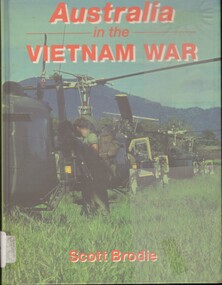 National Vietnam Veterans Museum (NVVM)
Book, Brodie, Scott, Australia in the Vietnam War (Copy 3)
... I was a teenager during that most turbulent of times, but feel most of the impact of the protest movement passed me by as it did so many of my contemporaries. ...I grew up in the Vietnam era. I was a teenager during that most turbulent of times, but feel most of the impact of the protest movement passed me by as it did so many of my contemporaries.I grew up in the Vietnam era. I was a teenager during that most turbulent of times, but feel most of the impact of the protest movement passed me by as it did so many of my contemporaries.vietnamese conflict, 1961-1975 - participation, australian -
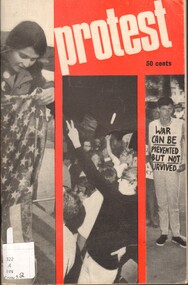 National Vietnam Veterans Museum (NVVM)
Book, Findlay, P. T, Protest Politics And Psychological Warfare (Copy 2)
... Vietnam War 1961-1975 - Protest movements - Australia Propaganda Communist - Australia The Communist role in the Anti-vietnam and Anit-Conscription movement. ...The Communist role in the Anti-vietnam and Anit-Conscription movement.The Communist role in the Anti-vietnam and Anit-Conscription movement.vietnam war, 1961-1975 - protest movements - australia, propaganda, communist - australia -
 National Vietnam Veterans Museum (NVVM)
Book, Findlay, P. T, Protest Politics and psychological Warfare
... Vietnam War 1961-1975 - Protest movements - Australia Propaganda Communist - Australia The Communist role in the anti-Vietnam War and Anti-Conscription Movement In Australia Protest Politics and psychological Warfare. ...The Communist role in the anti-Vietnam War and Anti-Conscription Movement In AustraliaThe Communist role in the anti-Vietnam War and Anti-Conscription Movement In Australiavietnam war, 1961-1975 - protest movements - australia, propaganda, communist - australia -
 Sunshine and District Historical Society Incorporated
Archive - Gwen Goedecke Collection - War Peace Activism
... Nuclear Primacy|publication of the Medical Association for Prevention of War (Australia) 2007 titled ' Understanding the Nuclear Non-Proliferation Treaty'|Australian Nuclear Free Zones Secretariat including minutes and correspondence - Sunshine Council|Non- Proliferation Legislation Amendment Bill 2003 (Australia) Uranium Mining - protest groups meetings, rally notices, newspaper articles, Atomic Energy in Australia magazines Volume 18, number 4 |Campaign for International Co-Operation and Disarmament (CICD) - Australia's longest runing peace movement, founded in 1959 by unionists, church leaders and peace activists (originally called World Congress for Disarmament and International Co-Operation) |United Nations - Australia and the United Nations Annual Report Card (2007) - report by Gwen Goedecke (1995) - 50th Anniversary Conference : The United Nations - Between Sovereignty and Global Governance - (La Trobe University)|UNITY - newsletters, publications of the UN Association of Australia -#274 (September 2001) AND #331 (March 2003) -compiled from Federal Parliamentary and other sources relevant to Australia's obligations to the UN | Arms Race/Spending: Newspaper clippings '70s to 2008 Senate Motion on National Missile Defence (200?) ...Nuclear Primacy|publication of the Medical Association for Prevention of War (Australia) 2007 titled ' Understanding the Nuclear Non-Proliferation Treaty'|Australian Nuclear Free Zones Secretariat including minutes and correspondence - Sunshine Council|Non- Proliferation Legislation Amendment Bill 2003 (Australia) Uranium Mining - protest groups meetings, rally notices, newspaper articles, Atomic Energy in Australia magazines Volume 18, number 4 |Campaign for International Co-Operation and Disarmament (CICD) - Australia's longest runing peace movement, founded in 1959 by unionists, church leaders and peace activists (originally called World Congress for Disarmament and International Co-Operation) |United Nations - Australia and the United Nations Annual Report Card (2007) - report by Gwen Goedecke (1995) - 50th Anniversary Conference : The United Nations - Between Sovereignty and Global Governance - (La Trobe University)|UNITY - newsletters, publications of the UN Association of Australia -#274 (September 2001) AND #331 (March 2003) -compiled from Federal Parliamentary and other sources relevant to Australia's obligations to the UN | Arms Race/Spending: Newspaper clippings '70s to 2008 Senate Motion on National Missile Defence (200?) ...Gwyneth "Gwen" Goedecke collectionHiroshima|Historical articles, Hiroshima Day Speech (Rally 2007) Melbourne|Campaign for International Co-operation & Disarmament (CICD) - 40 years on - Commemoration (1985) |Nuclear Disarmament - People for Nuclear Disarmament (PND) including the Footscray Sunshine PND group|signed petition World Disarmament Campaign (1982) sponsored by the UN Association of Australia|Scottish Campaign for Nuclear Disarmament (post 2007) - Why the US is targeting Russia and Iran ...... Nuclear Primacy|publication of the Medical Association for Prevention of War (Australia) 2007 titled ' Understanding the Nuclear Non-Proliferation Treaty'|Australian Nuclear Free Zones Secretariat including minutes and correspondence - Sunshine Council|Non- Proliferation Legislation Amendment Bill 2003 (Australia) Uranium Mining - protest groups meetings, rally notices, newspaper articles, Atomic Energy in Australia magazines Volume 18, number 4 |Campaign for International Co-Operation and Disarmament (CICD) - Australia's longest runing peace movement, founded in 1959 by unionists, church leaders and peace activists (originally called World Congress for Disarmament and International Co-Operation) |United Nations - Australia and the United Nations Annual Report Card (2007) - report by Gwen Goedecke (1995) - 50th Anniversary Conference : The United Nations - Between Sovereignty and Global Governance - (La Trobe University)|UNITY - newsletters, publications of the UN Association of Australia -#274 (September 2001) AND #331 (March 2003) -compiled from Federal Parliamentary and other sources relevant to Australia's obligations to the UN | Arms Race/Spending: Newspaper clippings '70s to 2008 Senate Motion on National Missile Defence (200?) Submission re Australian involvement in Missile Defence dated? Defence White Paper Community Consultation Process and correspondence (July to September 2008) Exposing the Bare Essentials Behind the Arms Trade: Connecting Women's Rights & The Peace Process - by Yum Lee, Women's International League for Peace and Freedom (1995) Various articles on arms/disarmaments/national security/defence spending including Senate Questions (1994 &1995) Australian Controls on the Export of Defence & Related Goods - Guidelines for Exporters - Department of Defence (1992) World Action to Stop the Deadly Arms Race - report isssued by Alf Watt for the Australian Socialist Group NSW (post 1975) Anti US/Foreign bases in Australia - '80s to 2000 Anti US bases in Australia and the Paciic including PINE GAP newspaper - Oceania (1986) |East Timor Article by Vera Butler (PHD, Political Science, Uni of Melbourne) on Australia, East Timor and The Clinton Doctrine - September 1999 |Middle East List of UN Resolutions against Israel (1955-1992) Map of Middle East Theatre of War, from the Centre for Research on Globilisation, Canada (2003) Brief - Middle East highlights (1973) by Israel Press Ltd., Tel Aviv |Iraq War (1998-2004 Newspaper arlticles Flyers protesting the war, rally notices Reports, emails, correspondence, media releases, petitions, newsletters Socialist Worker pamphlet - 'Is the UN an alternative to the US Empire?' Report by Dr Carmen Laswrence MP - 'What War?' (April 2003) A.N.S.W.E.R Coalition response to President Bush's National TV address of September 7, 2003 |Peace andTerror World Peace Council Presidential Committee meeting, Stockholm (1975) (2 reports) 'Challenging the Cold War' - an analysis of the motivation and strategies of the Victorian Peace Council in the 1950's, by Nancy Florence Phillips B.A. (Oct 1986) Palm Sunday Peace Rally & Festival poster (1988) Media Report (2003 'Managing Terror in the Media', together with Gwen's notespeace -
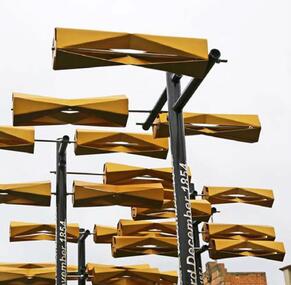 City of Ballarat
Artwork, other - Public Artwork, Aaron Robinson et al, Flow by Holly Grace and Aaron Robinson, 2014
... December Charles La Trobe resigns as Lt-Governor but he is not relieved until 1854/ July – December/ Unrest builds on the various goldfields with protest meetings held in Bendigo and Castlemaine. Bendigo’s Red Ribbon Movement is active on the goldfields and the Bendigo Petition is presented to Lt-Governor./ December/ Charles Hotham is appointed Lt-Governor/ 1854 March/ A bill to extend the Elective Franchise is passed by the Legislative Council and sent to London for the assent of the British Parliament. 22nd June/ Lt-Governor Sir Charles Hotham arrives in Victoria. ...December Charles La Trobe resigns as Lt-Governor but he is not relieved until 1854/ July – December/ Unrest builds on the various goldfields with protest meetings held in Bendigo and Castlemaine. Bendigo’s Red Ribbon Movement is active on the goldfields and the Bendigo Petition is presented to Lt-Governor./ December/ Charles Hotham is appointed Lt-Governor/ 1854 March/ A bill to extend the Elective Franchise is passed by the Legislative Council and sent to London for the assent of the British Parliament. 22nd June/ Lt-Governor Sir Charles Hotham arrives in Victoria. ...Water is key to a thriving community and it is through the representation of water Flow enlivens the space at Bakery Hill. Historically ‘water races’ ran through the valleys of the Greater Ballarat area unearthing the minerals that forged prosperity and wealth. This water still flows today unearthing new possibilities for the community. Possibilities focusing on sustainability, ecology, health and prosperity. Flowing over the site a series of kinetic turbines flutter in the wind creating a contemporary water race. The interactive elements offer visual stimulation enticing people to connect with the artwork and in turn the surrounding spaces. Bakery Hill has great historical significance. It’s connection to the Eureka Stockade and the series of events that were to unfold during the 1850’s was to become the turning point in Australian political history. The placement of each turbine is to mirror a point of history in the timeline of events that occurred during the Eureka Stockade. The Water Race is a symbol of possibilities, the ones created by history and those of modern society. It is a visual timeline that can be read by traversing the site. The connecting turbines that flow and turn in sync are a representation of time passing and the interconnectedness of history with the community that surrounds it. The gateway to Bridge Mall is framed through the placement of each turbine allowing the sense of prosperity and wealth to flow through to the surrounding community. This gateway also references the significance of Bakery Hill reinvigorating the historical site by reconnecting it back to its town centre. The artwork is of aesthetic and historical significance to the people of BallaratTwelve steel turbines set on poles with dates attached and a large bronze 'timeline' plaqueFLOW/ Plotting the motion of Wind, Water, History and Time/ by Holly Grace and Aaron Robinson/ This site has great historical significance. It’s connection to the Eureka Stockade and the series of events that unfolded in the 1850’s was to become the turning point in Australian history. The placement of each turbine within this artwork mirrors a point of history in the events that led up to the Eureka Stockade. It is a visual timeline that can be read by traversing the site. The connecting turbines that flow and turn in sync are a representation of time passing. They are a symbol of the community’s connection to their history. 1851 June James Esmond makes the first discovery of gold in Victoria at Clunes./ 1st July The Port Phillip District separates from New South Wales and becomes the Colony of Victoria. It is still subject to British rule./ August Gold is discovered at Buninyong and at Golden Point, Ballarat. Lt-Governor La Trobe introduces the Gold Licence system in an attempt to reduce the colony’s debt./ 20th September First gold licences issued in Ballarat. / 1852 August/ Eureka Lead discovered on the Ballarat goldfields. December Charles La Trobe resigns as Lt-Governor but he is not relieved until 1854/ July – December/ Unrest builds on the various goldfields with protest meetings held in Bendigo and Castlemaine. Bendigo’s Red Ribbon Movement is active on the goldfields and the Bendigo Petition is presented to Lt-Governor./ December/ Charles Hotham is appointed Lt-Governor/ 1854 March/ A bill to extend the Elective Franchise is passed by the Legislative Council and sent to London for the assent of the British Parliament. 22nd June/ Lt-Governor Sir Charles Hotham arrives in Victoria. The colony faces mounting debt and Hotham orders weekly licence hunts in an attempt to increase income./ August/ Hotham is acclaimed during his visit to the Ballarat goldfield./ 13th September? Hotham orders twice-weekly licence hunts to further increase revenue./ September – October/ Miners are experiencing problems – no shafts bottomed on the Eureka Lead for five weeks./ 7th October/ James Scobie is murdered outside the Eureka Hotel. Many diggers believe that publican James Bentley is responsible./ 9th October/ At Scobie’s inquest, Bentley is acquitted, despite strong evidence of his guilt./ 10th October/ Father Smythe’s servant is beaten up by authorities and falsely arrested for not holding a licence./ 15th October/ Mass meeting of miners on Bakery Hill. Catholic miners meet after Mass. // 17th October/ A meeting of up to 10,000 Diggers is held near the Eureka Hotel to protest against Bentley’s acquittal. The meeting results in the burning of the hotel. Three diggers, Westerby, Fletcher and McIntyre, are arrested. Hotham dispatches 400 soldiers to Ballarat. 22nd October/ Another large meeting is held to address grievances. The Catholics send their leaders, Hayes, Kennedy and Manning to meet Rede. The Government Camp is under siege 11th November/ A public meeting on Bakery Hill results in the formal establishment of the Ballarat Reform League and adoption of the League’s proposals./ 21st November/ The enquiry into the Bentley affair is published. It recommends the dismissal of the judge and the establishment of a Royal Commission. 23rd November/ Westerby, Fletcher and McIntyre are convicted of burning the hotel. The Ballarat Reform League demands their release. 27th November/ A deputation from The Ballarat Reform League, including Humffray, Black and Kennedy, meet with Hotham to demand the release of the three prisoners. Hotham does not believe the diggers have the right to “demand anything”, Rede requests reinforcements in Ballarat. 28th November/ Miners attack the troop reinforcements and wagons passing near the Eureka diggings. A drummer boy is seriously wounded. 29th November/ A “Monster Meeting” attended by more than 10,000 diggers is held on Bakery Hill. The Southern Cross flag is flown for the first time. Peter Lalor addresses the miners and a number of diggers burn their licences. 30th November/ A licence hunt occurs in the morning at the order of Commissioner Rede. Another meeting of radical miners is held on Bakery Hill. Peter Lalor becomes leader of the diggers and calls for volunteers. Many diggers wear an oath to defend their rights and liberties under the Southern Cross flag. A number of diggers move to the Eureka Lead and start to erect a stockade. 3rd December In the early hours of Sunday morning 296 soldiers and police led by Captain Thomas proceed from the Government Camp to the Eureka Lead and attack the Stockade. 22 diggers and 7 military are officially listed as being killed. Many others are wounded. Approximately 120 diggers are arrested and marched to the Government Camp. 4th December/ Funeral of some of the fallen diggers and soldiers. Martial Law is proclaimed in Ballarat. Henry Seekamp, editor of the Ballarat Times is charged with seditious libel. 6th December/ Major General Sir Robert Nickle, commander-in-chief of the military forces in the Australian colonies, arrives in Ballarat. 9th December/ General Nickle repeals martial law. 14th December/ The Gold Fields Commission sits for the first time. 18th December/ The first Ballarat sitting of the Gold Fields Commission is held at Bath’s Hotel. 1855 23rd January/ Henry Seekamp is found guilt of sedition and sentenced to three months in prison. 22nd February/ The Eureka trials starts in Melbourne. February to March/ 13 prisoners are tried and acquitted amid great public rejoicing. 27th March Report of the Royal Commission recommends miners’ rights and significant reforms. 10th November/ Peter Lalor and John Basson Humffray are nominated for seats in the legislative Council. 31st December Sir Charles Hotham dies before his resignation takes effect. flow, aaron robinson, holly grace, public art, eureka stockade, bakery hill -
 Unions Ballarat
Photograph: Labour Day March - Ballarat - 2019, 11/3/19
... movement - eight hours for work, eight hours for recreation, and eight hours for rest. On 21 April 1856 Stonemasons and building workers on building sites around Melbourne, Australia, stopped work and marched from the University of Melbourne to Parliament House to achieve an eight-hour day. Their direct action protest...movement - eight hours for work, eight hours for recreation, and eight hours for rest. On 21 April 1856 Stonemasons and building workers on building sites around Melbourne, Australia, stopped work and marched from the University of Melbourne to Parliament House to achieve an eight-hour day. Their direct action protest ...Labour Day originates from the eight-hour day movement - eight hours for work, eight hours for recreation, and eight hours for rest. On 21 April 1856 Stonemasons and building workers on building sites around Melbourne, Australia, stopped work and marched from the University of Melbourne to Parliament House to achieve an eight-hour day. Their direct action protest was a success, and they are noted as the first organised workers in the world to achieve an eight-hour day with no loss of pay, which subsequently inspired the celebration of Labour Day and May Day. (Wikipedia, 12 March 2019: https://en.wikipedia.org/wiki/Public_holidays_in_Australia#Labour_Day) The eight-hours campaign ran contemporaneously in Ballarat. -------- The Labour day parade is an annual event in Ballarat. All unions and individuals are welcome to attend. Ballarat Labour Day march is held at the same date as the Begonia Festival parade; inception of the Begonia Festival was several decades later in 1953. -------- Photo 1 Labour Day march: We are Union banner and AMIWU banner with people. Photo 2 Labour Day march: We are Union, Trades Hall, Free West Papua banners, Trades Hall ute, various individuals including Don Henderson, Jenny Beacham, Tracey Brown, Simon Hammersley, Moses, Ben Davison, Angela McCarthy, Eddie Beacham, Gary Carton, Bob Bassett, Colin Muir, et al. Photo 3 Labour Day march: We are Union, ANMF, Trades Hall banners, various individuals including Don Henderson, Jenny Beacham, Tracey Brown, Simon Hammersley, Moses, Ben Davison, Angela McCarthy, Eddie Beacham, Gary Carton, Bob Bassett, Colin Muir, Ron Woods et al. Photo 4 Labour Day march: Change the Rules and AMIWU banners, various persons including Chris Kelly, Angela McCarthy, Ross Kenna, et al. Photo 5 Labour Day barbeque: Various persons including Allen Townsend, Fred Ladiges, Cameron McIntyre, Judy Henderson, Don Henderson, Cameron Bannam, Janine Brownlee, Dave Brownlee, Bernie Constable, Ian Fullerton, Ben Davison, et al. Photo 6 Labour Day barbeque group photograph: Various persons including Moses, Emma Pritchard, Kamuda, Allen Townsend, Tess Marshall, Chris Kelly, Fred Ladiges, Ross Kenna, Ben Davison, Don Henderson, Judy Henderson, Gabriel Waldron, Cameron McIntyre, Orry Pilven, Lana Cormie, Bob Bassett, Clinton Bannam, Angela McCarthy, Tracey Brown, Ron Woods, Ian Fullerton, Colin Muir, et al. Photo 7 Labour Day barbeque group photograph: Various persons including Moses, Emma Pritchard, Kamuda, Allen Townsend, Tess Marshall, Chris Kelly, Fred Ladiges, Ross Kenna, Ben Davison, Don Henderson, Judy Henderson, Gabriel Waldron, Cameron McIntyre, Orry Pilven, Lana Cormie, Bob Bassett, Clinton Bannam, Angela McCarthy, Tracey Brown, Ron Woods, Ian Fullerton, Colin Muir, et al. Photo 8 Labour Day March: We are Union banner, various persons including Chris Kelly, Angela McCarthy, Clinton Bannam, Orrie and Gem Pilven, Janine Brownlee, et al.Significant to the inception of the eight hour day, history of unions and campaigns in Australia and the current Change the Rules campaign.8 colour photographs; soft copy.btlc, ballarat trades hall, ballarat trades and labour council, labour day - 2019, unions - delegates, change the rules, amiwu, anmf, we are union, unions - campaigns, early closing association, begonia festival - ballarat
