
Showing 18 items matching "queenscliff pier"
-
 Queenscliffe Maritime Museum
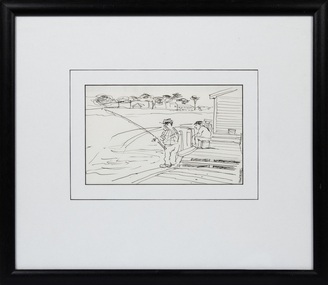
Artwork, other - Illustrations, Ron Tandberg, Queenscliff Pier, 30 November 1995
... Queenscliff Pier......Queenscliff pier...Hand drawn pen and ink sketches of fishermen fishing off Queenscliff pier...Three framed sketches of fishermen fishing off a pier in Queenscliff...Tandberg, Queenscliff pier, 30/11/1995...Fishermen Queensclff Queenscliff pier Tandberg sketch Tandberg, Queenscliff pier, 30/11/1995 Three framed sketches of fishermen fishing off a pier in Queenscliff Queenscliff Pier Artwork, other Illustrations Ron Tandberg ...Hand drawn pen and ink sketches of fishermen fishing off Queenscliff pierRon Tandberg, Queenscliff resident artist and long time cartoonist for The Age newspaper presented these framed sketches as a gift to the QMM. Three framed sketches of fishermen fishing off a pier in QueenscliffTandberg, Queenscliff pier, 30/11/1995fishermen, queensclff, queenscliff pier, tandberg, sketch -
 Queenscliffe Maritime Museum
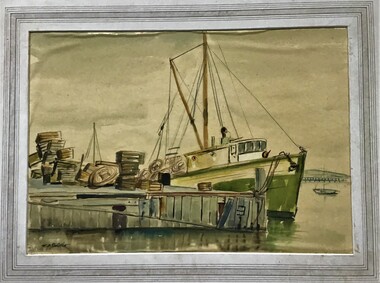
Painting - Framed Watercolour, Fishermen's Pier Queenscliff
... Fishermen's Pier Queenscliff...Pier...Queenscliff...Queenscliff’s first pier, then known as the Fishermen’s Pier, was completed in 1857. ...Watercolour painting of Fishermen's Pier in Queenscliff...Queenscliff’s first pier, then known as the Fishermen’s Pier, was completed in 1857. ...Queenscliff’s first pier, then known as the Fishermen’s Pier, was completed in 1857. It was not until some thirty years later that the second Steamer Pier was constructed adjacent to the former and periodically extended from the mid to late 1880s to cope with the demand in pleasure bay steamer services. The last of these extensions was to provide a dog-leg construction and the extant shelter shed. 1960 witnessed the demolition of the original Fishermen’s Pier - by this time having been extended in the late nineteenth and early twentieth centuries to the equivalent length of the Steamer Pier - and saw the relocation of its 1926-29 lifeboat house to the Steamer Pier, now Queenscliff Pier. The mid to late 2000s saw Queenscliff Harbour undergo large-scale redevelopment in order to deepen its waters for pleasure craft and increase its berths to over 300. This was met with strong community opposition, largely with concerns for neighbourhood character and perceived cause for gentrification its stakeholders would impart. With early construction estimates of $20 million dollars, this figure had almost doubled upon realisation. (Lovell Chen Architects. ‘Individual Property Citation’, Queenscliffe Heritage Study, 2009.) (Freya Mitchell, ‘Queenscliff residents fight a tide of development sweeping the historic town’ ABC radio, 15 April 2005).Fishermen's Pier Watercolour painting of Fishermen's Pier in Queenscliffwatercolour, fishermen's pier, queenscliff -
 Allan Doney Collection, Bendigo Historical Society Inc.
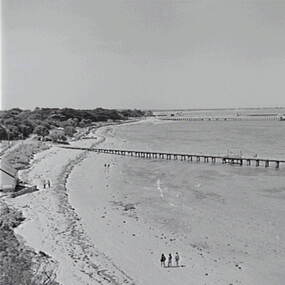
Negative - Queenscliff - Pier, Allan Doney, 1950 -1970
... Queenscliff - Pier...Although he travelled to many other places in Northern Victoria and beyond in search of subjects for his art, he seemed to always return to Bendigo for inspiration. Negative Queenscliff - Pier Allan Doney ...In the years of Allan Doney’s photography, landmark buildings succumbed to fire, neglect and redevelopment. He photographed the grey sand hills from Bendigo’s mining past, the streetscapes, poppet heads, miners’ cottages, gracious homes with ornate verandahs, trams and much more. Above all, his photographs show how much of the city has survived from the 19th century – and how much has not. Through two decades of great change, Allan Doney was there to capture ways people interacted with it. Although he travelled to many other places in Northern Victoria and beyond in search of subjects for his art, he seemed to always return to Bendigo for inspiration. -
 Queenscliffe Maritime Museum
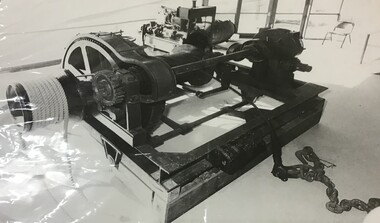
Photograph - Motor Winch
... ...Queenscliff Pier...The winch was relocated to the Queenscliff Maritime Museum when the shed was moved from Fishermen's Pier [when demolished] and relocated to its present location at the end of the Queenscliff Pier. ...Queenscliff. It once was located on the now demolished Fishermen's Pier and relocated to the current Queenscliff Pier. ...The winch was relocated to the Queenscliff Maritime Museum when the shed was moved from Fishermen's Pier [when demolished] and relocated to its present location at the end of the Queenscliff Pier. The Lifeboat shed is an iconic building for the township of Queenscliff. It once was located on the now demolished Fishermen's Pier and relocated to the current Queenscliff Pier. However, the motor winch that used to be housed there is now in pride of place adjacent to the Queenscliffe lifeboat which it served for many years. Photograph of a motor winch from the 'Queenscliffe' Lifeboat Shed.queenscliffe lifeboat service, lifeboat shed, fishermen's pier, queenscliff pier -
 Queenscliffe Maritime Museum
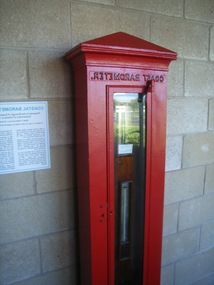
Instrument - Coastal Barometer, 1866
... Coastal Barometer No. 5 was installed on the Queenscliff pier in 1866. The purpose was to provide weather data to the Professional Fisherman. ...Coastal Barometer No. 5 was installed on the Queenscliff pier in 1866. The purpose was to provide weather data to the Professional Fisherman. ...Coastal Barometer No. 5 was installed on the Queenscliff pier in 1866. The purpose was to provide weather data to the Professional Fisherman. ...Coastal Barometer No. 5 was installed on the Queenscliff pier in 1866. The purpose was to provide weather data to the Professional Fisherman. It was later installed in the slipway winch shed. Instrument is housed in a cast iron case.Only one left in existanceCoastal Barometer No. 5 was installed on the Queenscliff pier in 1866. The purpose was to provide weather data to the Professional Fisherman. It was later installed in the slipway winch shed. Instrument is housed in a cast iron case.Instrument: J Grimaldi, Case: Langlands Broscoastal barometer, queenscliffe, fishing industry -
 Inverloch Historical Society
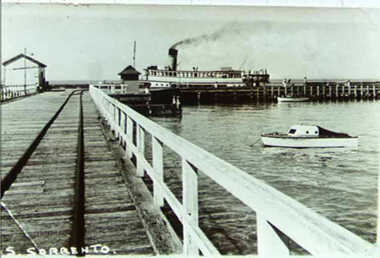
000538 - Photograph - Queenscliff - SS Sorrento at pier - from Clyde Newton
... 000538 - Photograph - Queenscliff - SS Sorrento at pier - from Clyde Newton...000538 - Photograph - Queenscliff - SS Sorrento at pier - from Clyde Newton ... -
![Original fishermen's waiting shed from the Queenscliff Pier containing paintings of ships most of which had passed through the heads, with a few prominent exceptions whimsically added [eg Titanic]. paintings attributed to Henry Zanoni, a prominent local fisherman. The shed and paintings are listed by the Victorian Heritage database.](/media/collectors/4f729f7e97f83e03086018d1/items/4f72bc7a97f83e03086063a8/item-media/506914242162ef09fc8f08fe/item-fit-380x285.jpg?cb=6) Queenscliffe Maritime Museum
Queenscliffe Maritime MuseumFunctional object - Fisherman's Waiting Shed, Henry Zanoni, 1856
... Originally located on the Queenscliff Pier from 1856. It was known as the waiting shed for registered fishermen. ...Originally located on the Queenscliff Pier from 1856. It was known as the waiting shed for registered fishermen. ...Originally located on the Queenscliff Pier from 1856. It was known as the waiting shed for registered fishermen. It was moved from Queenscliff pier to near slipway in 1960, then to Princess Park in the 1970s and to the museum in late 1980. Henry Zanoni, a fisherman was responsible for painting the many pictures of ships on the inside walls.Waiting Shed for Registered Fishermen Weatherboard - Timber Cream Weatherboards and Brown Trimfishermen waiting shed, queenscliff -
 Queenscliffe Maritime Museum
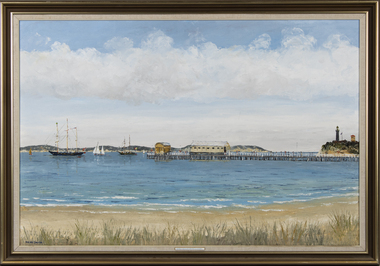
Painting - Oil Painting, Dacre Smyth, 1. 'Queenscliffe' in open shed. 2. 1988 Tall Ships at Queenscliff; Leeuwin, Asgard
... Hand written on back: Tall Ships at Queenscliff; 'The sail training barquentine "Leeuwin" from West Australia and the Republic of Ireland brigantine "Asgard II" at anchor off Queenscliff prior to the "Arrival Convoy" in Melbourne of a number of the Tall Ships, all bound eventually for Sydney via Hobart for Australia's 1988 bicentenary. The Queenscliff pier with the old lifeboat shed and the Blacklight (Queenscliffe's High Light) alongside the old signal tower are also depicted. ...Hand written on back: Tall Ships at Queenscliff; 'The sail training barquentine "Leeuwin" from West Australia and the Republic of Ireland brigantine "Asgard II" at anchor off Queenscliff prior to the "Arrival Convoy" in Melbourne of a number of the Tall Ships, all bound eventually for Sydney via Hobart for Australia's 1988 bicentenary. The Queenscliff pier with the old lifeboat shed and the Blacklight (Queenscliffe's High Light) alongside the old signal tower are also depicted. ...Tall Ships at Queenscliff; 'The sail training barquentine "Leeuwin" from West Australia and the Republic of Ireland brigantine "Asgard II" at anchor off Queenscliff prior to the "Arrival Convoy" in Melbourne of a number of the Tall Ships, all bound eventually for Sydney via Hobart for Australia's 1988 bicentenary. The Queenscliff pier with the old lifeboat shed and the Blacklight (Queenscliffe's High Light) alongside the old signal tower are also depicted. Port Phillip Heads in the disctance. By Dacre Smyth 29 Dec 1987.A barquentine or schooner barque is a sailing vessel with three or more masts; with a square rigged foremast and fore-and-aft rigged main, mizzen and any other masts. A brigantine is a two-masted sailing vessel with a fully square-rigged foremast and at least two sails on the main mast: a square topsail and a gaff sail mainsail (behind the mast). The main mast is the second and taller of the two masts.Oil painting in frame of the Leeuwin and Asgard tall ships in Queenscliff 1988.On front: Tall Ships at Queenscliff (LEEUWIN and ASGARD). Hand written on back: Tall Ships at Queenscliff; 'The sail training barquentine "Leeuwin" from West Australia and the Republic of Ireland brigantine "Asgard II" at anchor off Queenscliff prior to the "Arrival Convoy" in Melbourne of a number of the Tall Ships, all bound eventually for Sydney via Hobart for Australia's 1988 bicentenary. The Queenscliff pier with the old lifeboat shed and the Blacklight (Queenscliffe's High Light) alongside the old signal tower are also depicted. Port Phillip Heads in the disctance. By Dacre Smyth 29 Dec 1987'.leeuwin, barquentine, queenscliff, dacre smyth, brigantine -
 Queenscliffe Maritime Museum
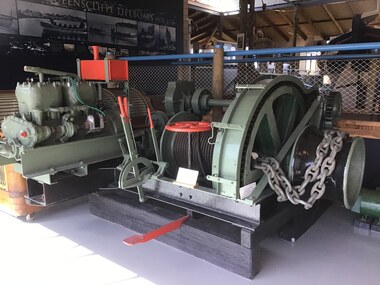
Equipment - Winch
... It was originally installed in the lifeboat shed on the pier in Queenscliff...It was originally installed in the lifeboat shed on the pier in Queenscliff This winch was removed from the Queenscliff Pier Lifeboat shed and moved the the QMM Winch Lifeboat Queenscliff Wisconsin 4 cylinder engine powered winch Equipment Winch ...Winch used for retrieving the lifeboat Queenscliffe from the water. It was originally installed in the lifeboat shed on the pier in QueenscliffThis winch was removed from the Queenscliff Pier Lifeboat shed and moved the the QMMWisconsin 4 cylinder engine powered winchwinch, lifeboat, queenscliff -
 Queenscliffe Maritime Museum
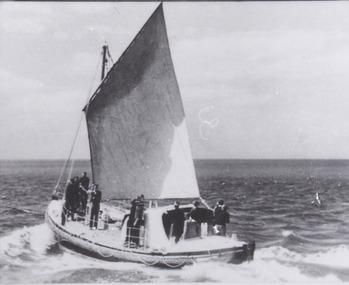
Photograph - Queenscliff Lifeboat under sail, 06 March 1926
... Some of the vessels and calls for help the lifeboat attended were: 1960 - Army Commandos lost in the Rip 1967 - The search for the late Prime Minister Harold Holt 1974 - The last attendance to a vessel was to the Brisbane Trader which was on fire The shed which housed the lifeboat is located on the Queenscliff 'New' or 'Steamer' Pier (built in 1884). This shed includes the internal section of the slipway used to launch and retrieve the lifeboat. ...Some of the vessels and calls for help the lifeboat attended were: 1960 - Army Commandos lost in the Rip 1967 - The search for the late Prime Minister Harold Holt 1974 - The last attendance to a vessel was to the Brisbane Trader which was on fire The shed which housed the lifeboat is located on the Queenscliff 'New' or 'Steamer' Pier (built in 1884). This shed includes the internal section of the slipway used to launch and retrieve the lifeboat. ...The Lifeboat Queenscliffe was built in Adelaide and commenced service at Queenscliff in 1926. She was taken out of service in 1976 by the Marine Board of Victoria and subsequently offered to the Borough of Queenscliffe for care and display. The Lifeboat is listed on the Australian Register of Historic Vessels (ARHV). To view the classification follow the link to the Queenscliffe page on the ARHV site. During her 50 years of service the Queenscliffe attended many calls for assistance both inside and outside the Heads. Some of the vessels and calls for help the lifeboat attended were: 1960 - Army Commandos lost in the Rip 1967 - The search for the late Prime Minister Harold Holt 1974 - The last attendance to a vessel was to the Brisbane Trader which was on fire The shed which housed the lifeboat is located on the Queenscliff 'New' or 'Steamer' Pier (built in 1884). This shed includes the internal section of the slipway used to launch and retrieve the lifeboat. The external slipway and some other structures associated with the lifeboat shed have been removed. Originally fitted with two masts, the stern mast being removed in the 1960's. A retractable centre plate was used when under sail. Delivered with an 80 hp Wayburn petrol motor which was later replaced by a 72 hp Gardiner diesel. Top speed of 7.5 knots and a range of 350 miles.Photograph of lifeboat Queenscliff at sea under sailQueenscliffelifeboat, a. macfarlane & sons -
 Queenscliffe Maritime Museum
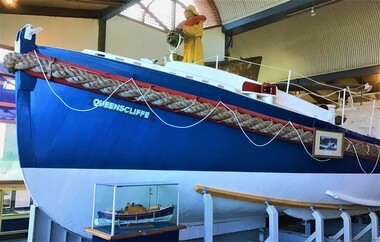
Vehicle - Lifeboat, A McFarlane and Sons, Lifeboat Queenscliffe, 1926
... Some of the vessels and calls for help the lifeboat attended were: 1960 - Army Commandos lost in the Rip 1967 - The search for the late Prime Minister Harold Holt 1974 - The last attendance to a vessel was to the Brisbane Trader which was on fire The shed which housed the lifeboat is located on the Queenscliff 'New' or 'Steamer' Pier (built in 1884). This shed includes the internal section of the slipway used to launch and retrieve the lifeboat. ...Some of the vessels and calls for help the lifeboat attended were: 1960 - Army Commandos lost in the Rip 1967 - The search for the late Prime Minister Harold Holt 1974 - The last attendance to a vessel was to the Brisbane Trader which was on fire The shed which housed the lifeboat is located on the Queenscliff 'New' or 'Steamer' Pier (built in 1884). This shed includes the internal section of the slipway used to launch and retrieve the lifeboat. ...QUEENSCLIFFE was built in 1926 to a Royal National Lifeboat Institution (RNLI) design called the Watson Class. The double-diagonal planked vessel was built by A McFarlane and Sons in Port Adelaide SA, commissioned on the 6th of March 1926, and then officially named and launched on the 9th of April 1926. The original Wayburn petrol engine was replaced with a Gardner diesel. This gave QUEENSCLIFFE a top speed of 7.5 knots with a range of 350 miles. The equipment carried aboard included a VHF Radio Telephone, HF radio transceiver, visual signals, life rafts, hand rocket gun, flare gun, generator, search light and first aid supplies. In the tradition of many shore based lifeboats, QUEENSCLIFFE had its own shed and slipway and was always ready for launching when required to go to sea in response to an emergency call. Its area of operation included 'the Rip' at Port Phillip Heads and the Bass Strait seas immediately offshore. She was taken out of service in 1976 by the Marine Board of Victoria and subsequently offered to the Borough of Queenscliffe for care and display. The Lifeboat is listed on the Australian Register of Historic Vessels (ARHV). During her 50 years of service the Queenscliffe attended many calls for assistance both inside and outside the Heads. Some of the vessels and calls for help the lifeboat attended were: 1960 - Army Commandos lost in the Rip 1967 - The search for the late Prime Minister Harold Holt 1974 - The last attendance to a vessel was to the Brisbane Trader which was on fire The shed which housed the lifeboat is located on the Queenscliff 'New' or 'Steamer' Pier (built in 1884). This shed includes the internal section of the slipway used to launch and retrieve the lifeboat. The external slipway and some other structures associated with the lifeboat shed have been removed. Originally fitted with two masts, the stern mast being removed in the 1960's. A retractable centre plate was used when under sail. Delivered with an 80 hp Wayburn petrol motor which was later replaced by a 72 hp Gardiner diesel. Top speed of 7.5 knots and a range of 350 miles.QUEENSCLIFFE is a wooden lifeboat built in 1926 in South Australia. It has a long association with the Victorian port of Queenscliff. It was manned voluntarily by their local fishermen and is therefore closely attached to families of the Queenscliff community. It is a rare surviving example of the coastal shore-based lifeboats that were based around the Australian coastline.The lifeboat 'Queenscliffe' a Watson Class LifeboatQueenscliffelifeboat, rescue, watson class boat -
 Flagstaff Hill Maritime Museum and Village
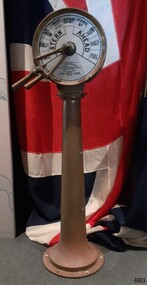
Equipment - Ship's Telegraph section, Chadburn & Sons, 1875-1898
... Queenscliff, Sorrento, Portsea, Dromana, Rosebud, Rye, and Mornington. It joined the Ozone and the Weeroona, all three described as being glamorous, powerful and fast. Its ticket office was on the pier...Queenscliff Borough remembers the Hygeia by naming a road near the pier Hygeia Drive. ...The ship’s telegraph section was once part of the navigational equipment of the famous paddle steamer, PS Hygeia, and was later installed on Flagstaff Hill’s exhibit, the steamer Rowitta. This is the Bridge Section of a ship’s telegraph, a Duplex Gong model, made by Chadburn & Son of Liverpool. The gong sounded two signals whenever the navigational commands to change the speed or direction were given by the ship’s pilot. Communication between the ship’s pilot and the engine room in the late 19th to the mid-20th centuries was made with a system called an Engine Order Telegraph (E.O.T.) or ship’s telegraph. The equipment has two parts, the Bridge Section and the Engine Room Section. The Bridge Section was usually mounted onto a pedestal, and the Engine Room Section was attached to a vertical surface. The standard marine commands were printed or stamped around the face of the dial and indicated by a pointer or arrow that was usually moved by a rotating brass section or handle. The ship’s pilot stationed on the Bridge of a vessel sends his Orders for speed and direction to the Engine Room with the E.O.T. He moves the lever or levers, depending on the number of engines the ship has, to change the indicator on the Bridge Section’s dial to point in the new direction and speed of travel. This change causes the Orders to be duplicated on the Engine Room Section’s dial and a bell or bells to signal the change at the same time. The engineer then adjusts the ship’s engines and steering equipment to follow the pilot’s Order. CHADBURN & SON, Liverpool- Chadburn Brothers, William and C.H., were joint inventors and well-established makers of optical and scientific instruments and marine gauges. The firm was granted the Prince Albert Royal Warrant in the late 19th century. In 1870, William Chadburn applied for a patent for his navigational communication device for use on ships. By 1875, Chadburn & Son was producing the brass Engine Order Telegraph in its plant at 71 Lord Street, Liverpool. In 1911, the ship, RMS Titanic, was launched, fitted with Chadburn & Sons E.O.T. The Chadburn Ship Telegraph Company Limited was registered in 1898 to take over Chadburn & Sons. In 1903, a large factory at Bootle, near Liverpool, and its products were being sold overseas. In 1920, electric-powered telegraphs were developed. In 1944, the name changed to Chadburn’s (Liverpool) Limited. In 1968, the company became Chadburn Bloctube Ltd. In 2000, the company, now Bloctube Marine Limited, was still manufacturing ship telegraphs. The P.S. HYGEIA 1890-1932: - This ship’s telegraph was installed on the new paddle steamer, PS Hygeia, one of three iconic pleasure steamers famous for providing regular services in Port Phillip Bay, Victoria, to thousands of passengers between the ports of Queenscliff, Sorrento, Portsea, Dromana, Rosebud, Rye, and Mornington. It joined the Ozone and the Weeroona, all three described as being glamorous, powerful and fast. Its ticket office was on the pier itself. The P.S. Hygeia was built in Yorker, Scotland, in 1890, by Napier, Sharks & Bell. It was registered in Melbourne, Australia, by Hubbart, Parker & Co. in 1891. The steel ship was 92 metres long, able to travel at 22 knots, and licensed to carry over 1600 passengers in luxury, with even a barber shop on board. The regular service between the ports in Port Phillip Bay, Victoria, continued for over 40 years. With the decline in passenger demand, the service wound down. The Hygeia was sold to H.M. Morris in 1931 for demolition and breaking up. Equipment, fittings, and even lifebuoys were sold, with many items purchased by people who had some connection to the Hygeia. On August 25th, 1931, what was left of the vessel departed Port Melbourne and eventually, in June 1932, it was laid to rest at the ships’ graveyard outside Port Phillip Heads. The SS ROWITTA 1909-2015: - The ship’s telegraph was originally installed on the PS Hygeia. It was purchased when the Hygeia was broken up in 1931 and later installed, in 1975, on Flagstaff Hill’s SS Rowitta, an exhibit greatly enjoyed by the public until it was demolished in 2015. The ferry “SS Rowitta” was built in 1909 in Hobart, Tasmania. The timber steam ferry was built using planks of Huon and Karri wood. It was a favourite with sightseeing passengers steaming along Tasmania’s Tamar and Derwent rivers for 30 years. Rowitta was also known as Tarkarri and Sorrento and had worked as a coastal trading vessel between Devonport and Melbourne, and Melbourne, Queenscliff and Sorrento. The vessel had given over 100 years of service and pleasure. This Bridge section of a ship’s Engine Order Telegraph, used with an Engine Room section, represents late-19th-century change and progress in communication and navigation at sea. This type of equipment was still in use in the mid-20th century. It is significant for its association with its maker, Chadburn & Son, of Liverpool, a well-known marine instrument maker whose work was recognised by English Royalty, and whose products were selected to supply similar equipment for use on the RMS Titanic. The ship’s telegraph is also significant for its association with the paddle steamer PS Hygeia, one of three iconic steamers that transported thousands of passengers from port to port within Port Phillip Bay, Victoria, for over 40 years from the 1890s to the 1930s. Queenscliff Borough remembers the Hygeia by naming a road near the pier Hygeia Drive. The Hygeia is registered on the Victorian Heritage Database as a vessel of significance, VHR S329. In 1901, Hygeia had the privilege of carrying their Royal Highnesses, the Duke and Duchess of York, from Mornington to St Kilda Pier, Melbourne, during their Royal visit celebrating the Federation of Australia. The ship’s telegraph is also important for its connection with the Rowitta, a large exhibit on display at Flagstaff Hill Maritime Village, aiding maritime education for over 40 years. It represented the importance of coastal traders to transport, trade and communication along the coast of Victoria, and before the availability of rail and motor vehicles, serving many roles. Bridge section of a Ship’s Telegraph or Engine Order Telegraph (E.O.T.). The round, double-sided, painted glass dial is inside a brass case behind glass. It is fitted onto an outward tapering brass pedestal with a round base. The brass indicator arrows between the handles point simultaneously to both sides of the dial when moved. An oval brass maker’s plate is attached to the top of the case. The dial’s faces have inscriptions that indicate speed and direction, and the front face and plate include the maker’s details. A serial number is stamped on the collar where the dial is fitted to the pedestal. The ship’s telegraph is a Duplex Gong model, made by Chadburn & Son of Liverpool. It was originally part of the navigational fittings on the paddle steamer, PS Hygeia.Dial, maker’s details: “PATENT “DUPLEX GONG” TELEGRAPH / CHADBURN & SON / TELEGRAPH WORKS / PATENTEES & MANUFACTURERS / 11 WATERLOO ROAD / LIVERPOOL” LONDON / 105 FENCHURCH STREET” “NEWCASTLE / 85 QUAY + SIDE” “GLASGOW / 69 ANDERSON QUAY” “PATENT” Dial instructions: “FULL / HALF/ SLOW / FINISHED WITH ENGINES / STOP STAND BY / SLOW / HALF / FULL / ASTERN / AHEAD” Maker’s plate: “CHADBURN / & SON / PATENT / LIVERPOOL” Serial number: “22073”flagstaff hill, warrnambool, maritime village, maritime museum, shipwreck coast, great ocean road, engine order telegraph, e.o.t., navigational instrument, communication device, ship’s telegraph, engine room section, bridge section, rms titanic, chadburn & son, chadburn brothers, william chadburn, chadburn ship telegraph company, chadburns, duplex gong, liverpool, ss rowitta, navigation, marine technology, pilot’s orders, steam power, hobart, tasmania, devonport, tasmanian-built, ferry, steam ferry, steamer, 1909, early 20th century vessel, passenger vessel, tamar trading company, launceston, george town, sorrento, tarkarri, speculant, peter mcgennan, p j mcgennan & co. port phillip ferries pty ltd, melbourne, coastal trader, timber steamer, huon, karri, freighter, supply ship, charter ferry, floating restaurant, prawn boat, lakes entrance, ps hygeia, paddle steamer, pleasure steamer, port phillip bay, queenscliff, portsea, dromana, rosebud, rye, mornington, hubbart parker & co, 1890, 1903, h.m. morris, hygeia -
 Queenscliffe Maritime Museum
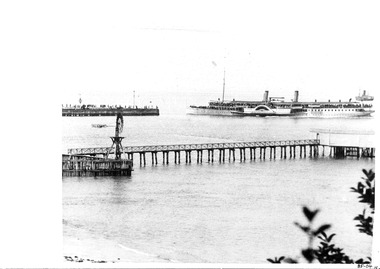
Photograph, Photographer unknown, 1903
... This Bay excursion paddle steamer traveled from Station Pier down the Bay to Mornington, Sorrento, Queenscliff and Portarlington from the turn of the 20th century to the Second World War. ...The Hygeia was used built in 1890 and could carry 2000 passengers.It was used to transport passengers from Melbourne to Queenscliffe as well as English Royalty at times.RealismBlack & white photograph of the "HYGEIA" at Queenscliffe wharfHYGEIA 1903 on the reversesteam ship, "hygeia, queenscliffe wharf -
 Queenscliffe Maritime Museum
Leisure object - Model Yacht
... Hand made by Henry A Zanoni around 1936 - 38 The Fisherman's Shed, which is now situated behind the Queenscliff Maritime Museum originally sat on Fisherman's Pier. Fisherman's Pier was constructed in 1856, but it is not known when the shed was constructed on the pier. ...Hand made by Henry A Zanoni around 1936 - 38The Fisherman's Shed, which is now situated behind the Queenscliff Maritime Museum originally sat on Fisherman's Pier. Fisherman's Pier was constructed in 1856, but it is not known when the shed was constructed on the pier. Registered fishermen used to shelter in this shed and it was used as a clubhouse and later as a meeting place for the Fishermen's Union. Between 1895 and 1946 fisherman Henry Zanoni painted a mural featuring the ships and ferries that were coming into Queenscliff, on the interior walls of the shed. Fisherman's Pier was demolished around 1960 and the Fisherman's Shed was relocated twice, most recently to behind the Queenscliffe Maritime Museum.Model Yacht with blue hull and white superstructuremodel, yacht, henry a zanoni -
 Queenscliffe Maritime Museum
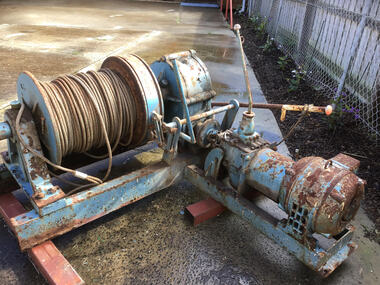
Machine - Drum Winch
... Queenscliff. It was situated on the slip way on the fishermen's pier....Queenscliff. It was situated on the slip way on the fishermen's pier. This drum winch was used by the Pilot Service when it was situated on the slip way on the fishermen's pier in Queenscliff. winch port phillip sea pilots Drum winch used by the Port Phillip Pilots Machine Drum Winch ...This drum winch was used by the Pilot Service to haul dinghies into the work shed in Tobin Drive Queenscliff. It was situated on the slip way on the fishermen's pier.This drum winch was used by the Pilot Service when it was situated on the slip way on the fishermen's pier in Queenscliff.Drum winch used by the Port Phillip Pilotswinch, port phillip sea pilots -
Queenscliffe Maritime Museum
Photograph - Landed Shark
... Queenscliff Fishing Industry 20 Beach Street Queenscliffe. Debbie O'Hare? [illegible]. Back of Glenuse Reef in Point Lonsdale. Whole salmon for bait 5am. In creek on crane. 2,100Lbs, 8'6" Girth Laminated photograph of a shark on the crane on Fishermans Pier circa 1938 Photograph Landed Shark ...Shark fishing was important to the Queenscliff Point Lonsdale fishing industry since early 1900s. It is still a popular activity in the area today.Fishing of all kind has been an important industry in the Queenscliff region. Although commercial fishing has greatly diminished, recreational fishing is still an important activity.Laminated photograph of a shark on the crane on Fishermans Pier circa 193820 Beach Street Queenscliffe. Debbie O'Hare? [illegible]. Back of Glenuse Reef in Point Lonsdale. Whole salmon for bait 5am. In creek on crane. 2,100Lbs, 8'6" Girthshark, shark fishing, queenscliff, fishing industry -
 Bendigo Historical Society Inc.
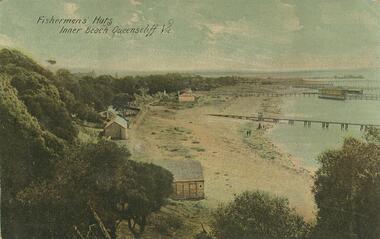
Postcard - GLADYS DEAN COLLECTION: POSTCARD, 1906 - 1908
... There are several piers and jetties stretching out into the water, one with two buildings. The words Fishermen's Huts Inner Beach Queenscliff Vic are printed on the top left hand side. ...There are several piers and jetties stretching out into the water, one with two buildings. The words Fishermen's Huts Inner Beach Queenscliff Vic are printed on the top left hand side. ...Coloured photographic postcard. Image is of a curve of beach with fishermen's huts against a background of trees. There are several piers and jetties stretching out into the water, one with two buildings. The words Fishermen's Huts Inner Beach Queenscliff Vic are printed on the top left hand side. The reverse is addressed to Miss Gladys Dean "Esmond" McKenzie Street Golden Square. Handwriting covers the opposite side. The words VSM Series are printed bottom left hand side.VSM Seriespostcard -
 Ithacan Historical Society
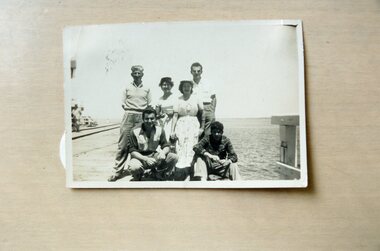
Photograph, Family picnic, 1950
... Enjoying a family outing at Queenscliff are (l-r) Spiros Papadopoulos (Skiomenos), Tasia Paizis-Alpitsis, Irini Pappas, Spiro Paizis; front (l-r) Nick Lappas and Nick Papas A print of a photograph of two ladies and four men standing on a pier beside the water. ...Enjoying a family outing at Queenscliff are (l-r) Spiros Papadopoulos (Skiomenos), Tasia Paizis-Alpitsis, Irini Pappas, Spiro Paizis; front (l-r) Nick Lappas and Nick PapasA print of a photograph of two ladies and four men standing on a pier beside the water. The picture has been taken from another photograph.
