
Showing 126 items matching "recondition"
-
 Moorabbin Air Museum
Manual - Summary - Planning & Time Estimate + Operation Sheet, Exhaust Valve Recondition PartNo. 11619 71167 O/H
... Exhaust Valve Recondition PartNo. 11619 71167 O/H...Exhaust Valve Recondition PartNo. 11619 71167 O/H Manual Summary - Planning & Time Estimate + Operation Sheet ... -
Moorabbin Air Museum
Manual - Summary - Planning & Time Estimate + Operation Sheet, Master Rod Assy - Recondition Part No. 31721 O/H
... Master Rod Assy - Recondition Part No. 31721 O/H...Master Rod Assy - Recondition Part No. 31721 O/H Manual Summary - Planning & Time Estimate + Operation Sheet ... -
Moorabbin Air Museum
Manual - Summary - Planning & Time Estimate + Operation Sheet, Assy Master Rod - Recondition Part No. 31721 O/H Book 2
... Assy Master Rod - Recondition Part No. 31721 O/H Book 2...Assy Master Rod - Recondition Part No. 31721 O/H Book 2 Manual Summary - Planning & Time Estimate + Operation Sheet ... -
Moorabbin Air Museum
Manual - Summary - Planning & Time Estimate + Operation Sheet, Assy Knuckle Pin - Recondition Part No. 15318 O/H
... Assy Knuckle Pin - Recondition Part No. 15318 O/H...Assy Knuckle Pin - Recondition Part No. 15318 O/H Manual Summary - Planning & Time Estimate + Operation Sheet ... -
Moorabbin Air Museum
Manual - Summary - Planning & Time Estimate + Operation Sheet, Master Rod Assembly - Recondition
... Master Rod Assembly - Recondition...Master Rod Assembly - Recondition Manual Summary - Planning & Time Estimate + Operation Sheet ... -
Moorabbin Air Museum
Manual - Summary - Planning & Time Estimate + Operation Sheet, Assembly Master Rod - Recondition
... Assembly Master Rod - Recondition...Assembly Master Rod - Recondition Manual Summary - Planning & Time Estimate + Operation Sheet ... -
Moorabbin Air Museum
Manual - Summary - Planning & Time Estimate + Operation Sheet, Exhaust Valve - Recondition
... Exhaust Valve - Recondition ...Exhaust Valve - Recondition Manual Summary - Planning & Time Estimate + Operation Sheet ... -
Moorabbin Air Museum
Manual - Summary - Planning & Time Estimate + Operation Sheet, Assembly Knuckle Pin - Recondition
... Assembly Knuckle Pin - Recondition ...Assembly Knuckle Pin - Recondition Manual Summary - Planning & Time Estimate + Operation Sheet ... -
Moorabbin Air Museum
Document (item) - CAC Collection - Technical Information - ATAR 09 B And 09 C Engines
... Vibrations On The Compressor 1st Stage Blades Reconditioning Solutions...Vibrations On The Compressor 1st Stage Blades Reconditioning Solutions CAC Collection - Technical Information - ATAR 09 B And 09 C Engines Document CAC Collection - Technical Information - ATAR 09 B And 09 C Engines ...Vibrations On The Compressor 1st Stage Blades Reconditioning Solutions -
 Flagstaff Hill Maritime Museum and Village
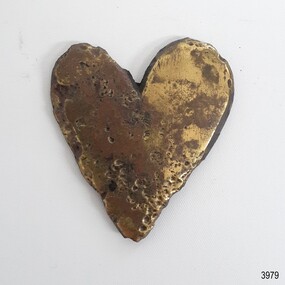
Equipment - Horse Brass
... Heart shaped horse harness embellishment, brass. It has been reconditioned. It was recovered from the wreck of the Schomberg....Flagstaff Hill Flagstaff Hill Maritime Museum and Village Warrnambool Maritime Museum Maritime Village Great Ocean Road Shipwreck Coast Schomberg 1855 clipper ship James Baines & Co Black Ball line luxury ship emigrant ship Captain Forbes Bully Forbes SS Queen Peterborough shipwreck harness fittings horse harness harness embelishments horse brass heart horse brass Heart shaped horse harness embellishment, brass. It has been reconditioned. It was recovered from the wreck of the Schomberg. ...Amongst the cargo of the Shomberg were horse harness fittings and embellishments. Many of these were recovered from the wreck of the Schomberg over one hundred years later. ABOUT THE SCHOMBERG (October 6 to December 27, 1855)- When the ship Schomberg was launched in 1855, she was considered the most perfect clipper ship ever to be built. James Baine’s Black Ball Line had commissioned her for their fleet of passenger liners. The Aberdeen builders designed her to sail faster than the clippers designed the three-masted wooden clipper ship to be fast. The timber used for the diagonal planking was British oak with layers of Scottish larch. This luxury emigrant vessel was designed for superior comfort. She had ventilation ducts to provide air to the lower decks and a dining saloon, smoking room, library and bathrooms for the first-class passengers. The master for Schomberg’s maiden voyage was Captain ‘Bully’ Forbes. He drunkenly predicted at her launch that he would make the journey between Liverpool and Melbourne in 60 days. Schomberg departed Liverpool on 6 October 1855 with 430 passengers and 3000 tons of cargo including iron rails and equipment intended the build the Geelong Railway and a bridge over the Yarra from Melbourne to Hawthorn. The poor winds slowed Schomberg’s sail across the equator. She was 78 days out of Liverpool when she ran aground on a sand spit near Peterborough, Victoria, on 27 December; the sand spit and currents were not marked on Forbes’s map. The ship’s Chief Officer spotted the coastal steamer SS Queen at dawn and sent a signal. The master of the SS Queen approached the stranded vessel and all of Schomberg’s passengers safely disembarked. In 1975, 120 years after the Schomberg was wrecked, divers from Flagstaff Hill found an ornate communion set at the wreck site along with many other artefacts. In 1978 a diamond ring was discovered under the concretion in the lid of the communion set, which is currently on display. Former Director of Flagstaff Hill, Peter Ronald, had salvaged most of the artefacts from the wreck. This object is significant as an example of an item in common use in the mid-19th century. The Schomberg collection as a whole is of historical and archaeological significance at a State level. Flagstaff Hill’s collection of artefacts from the Schomberg is also significant for its association with the Victorian Heritage Registered shipwreck (VHR S 612). The collection is of prime significance because of the relationship between the objects salvaged, as together they help us to interpret the story of the Schomberg. The collection as a whole is historically significant for representing aspects of Victoria's maritime history and its potential to interpret social and historical themes. Heart shaped horse harness embellishment, brass. It has been reconditioned. It was recovered from the wreck of the Schomberg.flagstaff hill, flagstaff hill maritime museum and village, warrnambool, maritime museum, maritime village, great ocean road, shipwreck coast, schomberg, 1855, clipper ship, james baines & co, black ball line, luxury ship, emigrant ship, captain forbes, bully forbes, ss queen, peterborough shipwreck, harness fittings, horse harness, harness embelishments, horse brass, heart horse brass -
 Flagstaff Hill Maritime Museum and Village
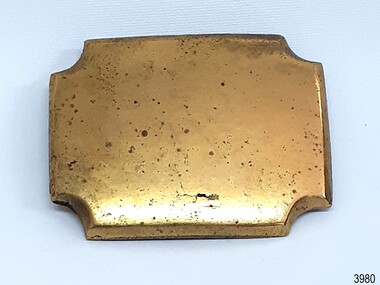
Equipment - Horse Brass
... Shield shaped horse harness embellishment, brass. It has been reconditioned. It was recovered from the wreck of the Schomberg....Flagstaff Hill Flagstaff Hill Maritime Museum and Village Warrnambool Maritime Museum Maritime Village Great Ocean Road Shipwreck Coast Schomberg 1855 clipper ship James Baines & Co Black Ball line luxury ship emigrant ship Captain Forbes Bully Forbes SS Queen Peterborough shipwreck harness fittings horse harness harness embelishments horse brass shield horse brass Shield shaped horse harness embellishment, brass. It has been reconditioned. It was recovered from the wreck of the Schomberg. ...Amongst the cargo of the Shomberg were horse harness fittings and embellishments. Many of these were recovered from the wreck of the Schomberg over one hundred years later. ABOUT THE SCHOMBERG (October 6 to December 27, 1855)- When the ship Schomberg was launched in 1855, she was considered the most perfect clipper ship ever to be built. James Baine’s Black Ball Line had commissioned her for their fleet of passenger liners. The Aberdeen builders designed her to sail faster than the clippers designed the three-masted wooden clipper ship to be fast. The timber used for the diagonal planking was British oak with layers of Scottish larch. This luxury emigrant vessel was designed for superior comfort. She had ventilation ducts to provide air to the lower decks and a dining saloon, smoking room, library and bathrooms for the first-class passengers. The master for Schomberg’s maiden voyage was Captain ‘Bully’ Forbes. He drunkenly predicted at her launch that he would make the journey between Liverpool and Melbourne in 60 days. Schomberg departed Liverpool on 6 October 1855 with 430 passengers and 3000 tons of cargo including iron rails and equipment intended the build the Geelong Railway and a bridge over the Yarra from Melbourne to Hawthorn. The poor winds slowed Schomberg’s sail across the equator. She was 78 days out of Liverpool when she ran aground on a sand spit near Peterborough, Victoria, on 27 December; the sand spit and currents were not marked on Forbes’s map. The ship’s Chief Officer spotted the coastal steamer SS Queen at dawn and sent a signal. The master of the SS Queen approached the stranded vessel and all of Schomberg’s passengers safely disembarked. In 1975, 120 years after the Schomberg was wrecked, divers from Flagstaff Hill found an ornate communion set at the wreck site along with many other artefacts. In 1978 a diamond ring was discovered under the concretion in the lid of the communion set, which is currently on display. Former Director of Flagstaff Hill, Peter Ronald, had salvaged most of the artefacts from the wreck. This object is significant as an example of an item in common use in the mid-19th century. The Schomberg collection as a whole is of historical and archaeological significance at a State level. Flagstaff Hill’s collection of artefacts from the Schomberg is also significant for its association with the Victorian Heritage Registered shipwreck (VHR S 612). The collection is of prime significance because of the relationship between the objects salvaged, as together they help us to interpret the story of the Schomberg. The collection as a whole is historically significant for representing aspects of Victoria's maritime history and its potential to interpret social and historical themes. Shield shaped horse harness embellishment, brass. It has been reconditioned. It was recovered from the wreck of the Schomberg.flagstaff hill, flagstaff hill maritime museum and village, warrnambool, maritime museum, maritime village, great ocean road, shipwreck coast, schomberg, 1855, clipper ship, james baines & co, black ball line, luxury ship, emigrant ship, captain forbes, bully forbes, ss queen, peterborough shipwreck, harness fittings, horse harness, harness embelishments, horse brass, shield horse brass -
 Bendigo Historical Society Inc.
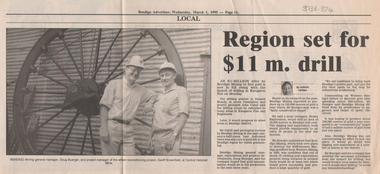
Newspaper - Kangaroo Flat Gold Mine Collection: Central Deborah Bendigo Mining
... ...recondition...'Gold mine wheels turn in motion' Central Deborah Gold Mine re-instals reconditioned sheave wheels on the poppet head. ...'Gold mine wheels turn in motion' Central Deborah Gold Mine re-instals reconditioned sheave wheels on the poppet head. ...Bendigo Advertiser articles on one page, 1st March,1995, titled: 1 'Region set for $11 m. drill'. Bendigo Mining has commenced drilling in Hansell Mundy, in South Carshalton, and the drilling will be 'extended to many areas in Kangaroo Flat and Eaglehawk. 2. 'Gold mine wheels turn in motion' Central Deborah Gold Mine re-instals reconditioned sheave wheels on the poppet head. Doug Buerger and Geoff Brownfield are pictured standing in front of one of the wheels prior to reinstallation. It was the first time in 50 years that the wheels had been removed. 'Last week Bendigo Mining had taken delivery of 9.3 metre long timber logs which will be used to replace the rotted timber at the mine's poppet head'. Photo on bottom of article shows a poppet head wheel being put back into place, being lowered by a crane to the top of the poppet head where a man is standing to position it. Third article, Bendigo Advertiser 24th January 1995, describes how the wheels (sheaves) at the top of the Central Deborah Gold Mine poppet head have been removed for maintenance and the poppet head is being timbered.gold mining, bendigo, doug buerger, geoff brownfield, sheave wheels, central deborah gold mine, poppet head, recondition -
 Flagstaff Hill Maritime Museum and Village
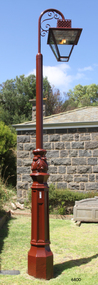
Functional object - Lamp Light, late 19th - early-20th century
... Street light, one of the last gas street lights removed from Melbourne. (Reconditioned by Friends of Flagstaff Hill, 2013)...Street light, one of the last gas street lights removed from Melbourne. (Reconditioned by Friends of Flagstaff Hill, 2013) Functional object Lamp Light ...This gas lamp light and stand came from the original manufacturer in Melbourne. Gas street lights such as this one were used in Melbourne from the mid-19th century. The lights enabled safer after-dark travel for pedestrians and vehicles and were a deterrent to crime. A lamp lighter was employed to keep the lamps lit, sometimes with little success due to weather conditions and the pranks of youths. WARRNAMBOOL Gasworks In Warrnambool prior to 1874 there were about twenty rare, individually lit street lights in Warrnambool, each with its own supply of kerosene. These lamps were in the central business area of Timor, Koroit and Liebig Streets. The Warrnambool Gas Company Ltd. was registered as an incorporated company in 1873. It was a private, locally owned business. It was located at 209-215 Merri Street, Warrnambool, on the land, which is just west of the later-built railway station. The first managers of the Gas Company lived in a substantial stone house on site, but later the managers lived in a residence in Henna Street between Merri and Timor Streets. The original home, which still stands, became a residence for the Railway Station Master from about 1890. In August 1874 the construction of the gasworks was complete and at the end of that month gas was supplied to all of the existing lamps in Warrnambool for the first time. The Warrnambool Gas Company wound up in 1880-1881 and was purchased by the Warrnambool Borough Council with money raised by a loan – the Borough’s first ‘loan transaction’. The Council established a piped network to supply gas to other street connections. The gasworks were privatised and upgraded in 1952. In 1972 the town supply was converted to liquid petroleum gas and by the early 1980s the gasworks were closed down. In 1986 Warrnambool was supplied with natural gas from a site near Port Campbell. The Warrnambool gasworks supplied all street and shop lighting and most domestic lighting until 1923 when electricity was available for lighting. Bromfield Street in Warrnambool was named after the director of the gasworks, James Astley Bromfield (1823-1903). He arrived in Warrnambool from Worcestershire, England, in 1852 and was very active in the local council and community. Cockman Street was named after the first secretary of the gasworks in 1874, Walter Cockman (c.1821-1892). He was a Mayor and businessman. The second Manager, Luther Rodgers, worked for the gas company for about twenty years and both Rodger Place and Rodgers Road in Warrnambool have been named after him. LAMP LIGHTS IN MELBOURNE In the 1820s Melbourne's innkeepers were legally required to have a lamp light outside their premises from sunset to sunrise. This was the first instance of street lamps being used in Melbourne. In 1847 the first oil lamp was used in the city. In 1849 a gas lamp was installed on the Swanston Street Bridge and much of the city had oil lamps installed by then. In August 1857 the installation of street gas lamps began in Melbourne. They were welcomed for the much brighter illumination they gave. By 1860 there were 414 lamp pillars. The phrase was quoted often - "A light was as good as a policeman". The first gas burners used for street lighting were called 'fishtail' gas burners. These were replaced in the early 1900s by gas mantles. The City of Melbourne Gas Coke Company was formed in 1850 but due to the Gold Rush the manufacture and distribution of the gas supply was delayed until January 1856. By the 1890s the gas supplying the lights was supplied by three companies in Melbourne. In 1879 a football match was played at the MCG under electric lighting and gradually electric arc lights were installed inside and outside buildings in the city. Lamp lights such as the one in Flagstaff Hill’s collection were no longer needed. (References: John Lindsay re Lamp Light history 2019-01-29, Former Warrnambool Gas Company Limited, Victorian Heritage Database Report, Heritage Number 149746 https://vhd.heritagecouncil.vic.gov.au/places/149746/download-report ) The lamp light is representative of the lamps used in Melbourne from the mid-nineteenth century to light the streets at night and make Melbourne a safer city. The lamp is also representative of the gas street lighting in Warrnambool from the mid-1870s-1920s.Lamp light or gas light. Street light, one of the last gas street lights removed from Melbourne. (Reconditioned by Friends of Flagstaff Hill, 2013)flagstaff hill, warrnambool, shipwrecked coast, flagstaff hill maritime museum, maritime museum, shipwreck coast, flagstaff hill maritime village, great ocean road, lamp light, gas light, gas lamp, street lamp, street light, gas street light, melbourne street lighting, warrnambool street lighting, melbourne gas street light, warrnambool gas company, warrnambool gasworks, james bromfield, walter cockman, luther rodgers, city of melbourne gas coke company -
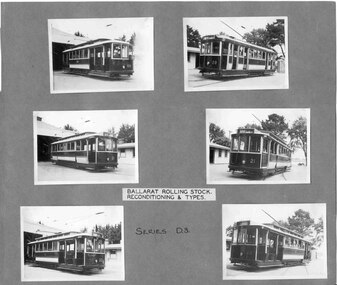 Ballarat Tramway Museum
Photograph - Black and White photograph/s - mounted, State Electricity Commission of Victoria (SECV), c1936
... Set of six black and white prints of the reconditioning of the tramcars during 1936 mounted onto a grey light cardboard sheet. ...Marked as "Series D3" in ink and a label - in on white paper - "Ballarat Rolling Stock / Reconditioning & Types" at the top of the sheet. ...Demonstrates an aspect and yields information about the reconstruction and presentation of the tramcar fleet during the reconstruction by the SEC of the Ballarat Tramway system.Set of six black and white prints of the reconditioning of the tramcars during 1936 mounted onto a grey light cardboard sheet. Each photo about 65 x 90. Marked as "Series D3" in ink and a label - in on white paper - "Ballarat Rolling Stock / Reconditioning & Types" at the top of the sheet. Produced by the SEC c1936. Photographed at the depot. See Reg Items 1359, 541, and 1360 for larger prints of these photographs. Features trams 21, 22, 29 and Adelaide 69 prior to reconditioning and after. See Reg Item 4289 for a separate photo of No. 69 See Reg item 9332 & 9335 for large format prints See image i2 for tram 21trams, tramways, depot, reconstruction, tramcars, adelaide, tram 21, tram 22, tram 29, tram 69 -
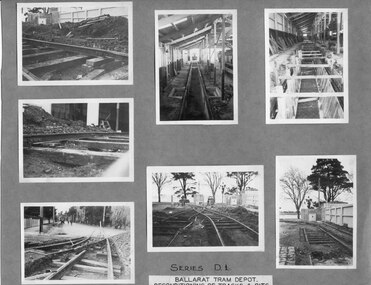 Ballarat Tramway Museum
Photograph - Black and White photograph/s - mounted, State Electricity Commission of Victoria (SECV), c1936
... Set of seven black and white prints of the reconditioning of the tramway depot tracks and pits during 1936 mounted onto a grey light cardboard sheet. ...Marked as "Series D1" in ink and a label - in on white paper - "Ballarat Tram Depot / Reconditioning of Tracks & Pits" at base of sheet. ...Demonstrates an aspect and yields information about the reconstruction of the depot during the reconstruction by the SEC of the Ballarat Tramway system.Set of seven black and white prints of the reconditioning of the tramway depot tracks and pits during 1936 mounted onto a grey light cardboard sheet. Each photo about 65 x 90. Marked as "Series D1" in ink and a label - in on white paper - "Ballarat Tram Depot / Reconditioning of Tracks & Pits" at base of sheet. Produced by the SEC c1936. See Reg Items 1351 and 1352 for larger prints of these photographs.trams, tramways, depot, reconstruction, wendouree parade, trackwork -
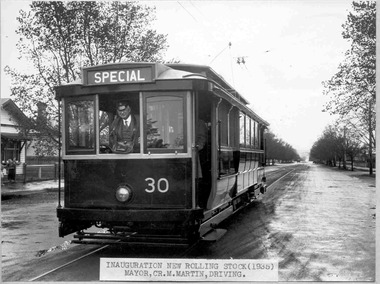 Ballarat Tramway Museum
Photograph, Richards & Co Ballarat, Inauguration of the new rolling stock, Sep. 1935
... Item 3000 - Photo Album produced by the SEC in 1935 titled "Photographs of Ballarat Tramways Rolling Stock & Track Reconditioning Works"....Item 3000 - Photo Album produced by the SEC in 1935 titled "Photographs of Ballarat Tramways Rolling Stock & Track Reconditioning Works". Inauguration of the new rolling stock Photograph Richards & Co Ballarat ...Black and white photograph, of Cr. M. Martin driving No. 30 during the inauguration of the new Ballarat rolling stock during 1935. The Councillor is wearing a SEC drivers cap and a conductors cash bag. See also Reg. Item 3010 for the Official Party photograph. Photographed in Drummond St. North? with a crossing loop behind. Tram has "Special" showing. In the bottom right hand corner of the photograph has the imprint "Richards & Co Ballarat". See Reg Item 2965 for the same photo of this item in SEC May 1936 issue of "Contact", which gave the date of September 1935. 3011.1 - Digital image from the Wal Jack Ballarat Album of the same photograph. Photos not to be taken out of the album unless for photographic copying. Use image files. Yields information about the rehabilitation of the Ballarat tram fleet and new trams acquired and refurbished by the SEC from Melbourne, in particular No. 30. Taken at the time of the official launch of the tram by the SEC with the Mayor of Ballarat at the front of the tram.Black and White photograph contained within Reg. Item 3000 - Photo Album produced by the SEC in 1935 titled "Photographs of Ballarat Tramways Rolling Stock & Track Reconditioning Works".Has a TMSV Copyright stamp on the rear, which has been crossed out.tramways, trams, secv, tramcars, ballarat, rehabilitation, conversion, launch, drummond st nth?, tram 30 -
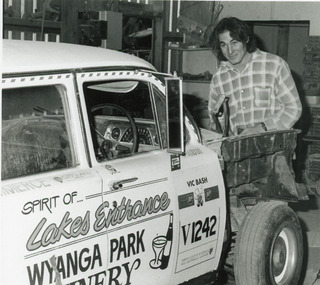 Lakes Entrance Historical Society
Photograph - Variety Club Bash, Lakes Post Newspaper, 1994
... Black and white photograph, Shannon Brown standing in front of reconditioned motor vehicle EH Wagon, Spirit of Lakes Entrance, entry in Variety Club Bash. ...see page 4 Lakes Post Newspaper 24 May 1995 Clubs Vehicles People Black and white photograph, Shannon Brown standing in front of reconditioned motor vehicle EH Wagon, Spirit of Lakes Entrance, entry in Variety Club Bash. ...see page 4 Lakes Post Newspaper 24 May 1995Black and white photograph, Shannon Brown standing in front of reconditioned motor vehicle EH Wagon, Spirit of Lakes Entrance, entry in Variety Club Bash. Lakes Entrance Victoriaclubs, vehicles, people -
 Greensborough Historical Society
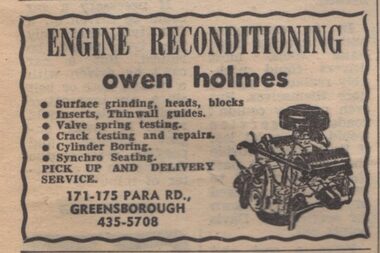
Advertisement - Digital image, Diamond Valley News, Owen Holmes - Engine Reconditioning, Greensborough, 1973, 21/08/1973
... Advertisement for Owen Holmes - Engine Reconditioning, 171 Para Road Greensborough, 1973....Owen Holmes - Engine Reconditioning, Greensborough, 1973 Advertisement - Digital image Diamond Valley News ...Advertisement for Owen Holmes - Engine Reconditioning, 171 Para Road Greensborough, 1973.Digital copy of newspaper advertisement.owen holmes, para road greensborough -
Moorabbin Air Museum
Manual (Item) - RAAF Mirage Iii Hydraulic Reservoirs (Messier) Type 420X594 22797/Omi V1 And 420X594 22798/Omi V1
... Information Repair & ReCondition or completenessing Level of Importance: . ...Information Repair & ReCondition or completenessing Level of Importance: . ...Description: Mirage hydraulic System Components - Gen. Information Repair & ReCondition or completenessing Level of Importance: . -
Port Melbourne Historical & Preservation Society
Letter - Port Melbourne Bowling Club re billiard table, Alcock, Thomson and Taylor P/L Quotation, 28 Jul 1939
... Four page quotation including cloth sample swatches and two illustrations, for supply of new or reconditioned billiard table to Mr. J HARRISON of Port Melbourne Bowling Club 28 July 1939...Sport - Billiards Sport - Lawn Bowls Societies Clubs Unions and other Organisations Port Melbourne Bowling Club Alcock Thomson & Taylor J HARRISON Four page quotation including cloth sample swatches and two illustrations, for supply of new or reconditioned billiard table to Mr. J HARRISON of Port Melbourne Bowling Club 28 July 1939 Alcock, Thomson and Taylor P/L Quotation Letter Port Melbourne Bowling Club re billiard table ...Four page quotation including cloth sample swatches and two illustrations, for supply of new or reconditioned billiard table to Mr. J HARRISON of Port Melbourne Bowling Club 28 July 1939sport - billiards, sport - lawn bowls, societies clubs unions and other organisations, port melbourne bowling club, alcock thomson & taylor, j harrison -
Moorabbin Air Museum
Manual (Item) - Illustrated Parts Breakdown Mirage Iii 0 Book 1 Text
... Description: Publisher: CAC Pages: 25 Keywords: Mirage ReCondition or completenessed Items Summary Level of Importance: National. ...Description: Publisher: CAC Pages: 25 Keywords: Mirage ReCondition or completenessed Items Summary Level of Importance: National. ...Description: Publisher: CAC Pages: 25 Keywords: Mirage ReCondition or completenessed Items Summary Level of Importance: National. -
 Flagstaff Hill Maritime Museum and Village
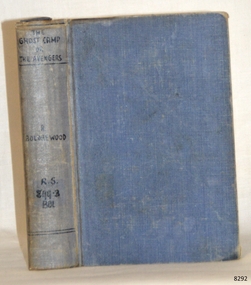
Book, The Ghost Camp
... The spine is handwritten in black ink giving the books name, authors name, and R.S. 899.3 BOL Front loose endpaper has a sticker from Warrnambool Public Library that notes that this book was reconditioned in 1955 ...The Warrnambool Mechanics' Institute’s publication collection is of both local and state significance. flagstaff hill warrnambool shipwrecked coast flagstaff hill maritime museum maritime museum shipwreck coast flagstaff hill maritime village great ocean road book pattison collection warrnambool library warrnambool mechanics’ institute ralph eric pattison corangamite regional library service warrnambool city librarian mechanics’ institute library victorian library board warrnambool books and records warrnambool children’s library The Ghost Camp Rolf Boldrewood The Ghost Camp Or The Avengers The spine is handwritten in black ink giving the books name, authors name, and R.S. 899.3 BOL Front loose endpaper has a sticker from Warrnambool Public Library that notes that this book was reconditioned in 1955 The Ghost Camp Author: Rolf Boldrewood Publisher: MacMillan & Co Ltd Date: 1902 Further Information: The Ghost Camp Or The Avengers The Ghost Camp Book Book ...This book was part of a large group of books referred to as the Pattison Collection, which belonged to the Warrnambool Public Library, part of the Warrnambool Mechanics’ Institute. About RALPH ERIC PATTISON and the ‘PATTISON COLLECTION’ The ‘Pattison Collection’ is a collection of books and records that was originally owned by the Warrnambool Mechanics’ Institute, founded in Warrnambool in 1853. By 1886 the Warrnambool Mechanics’ Institute (WMI) had grown to have a Library, Museum and Fine Arts Gallery, with a collection of “… choice productions of art and valuable specimens in almost every branch and many wonderful national curiosities are now to be seen there, including historic relics of the town and district.” It later included a School of Design. Although it was very well patronised, the WMI was led to ask the City Council to take it over in 1911 due to lack of financial support. In 1935 Ralph Pattison was appointed as City Librarian to establish and organise the Warrnambool Public Library as it was then called. Ralph Eric Pattison was born in Rockhampton, Queensland, in 1891. He married Maude Swan from Warrnambool in 1920 and they set up home in Warrnambool. In 1935 when Pattison accepted the position as City Librarian for the Warrnambool City Council his huge challenge was to make a functional library within two rooms of the Mechanics’ Institute. He tirelessly cleaned, cleared and sorted a disarrayed collection of old books, jars of preserved specimens and other items reserved for exhibition in the city’s museum. He developed and updated the library with a wide variety of books for all tastes, including reference books for students; a difficult task to fulfil during the years following the Depression. He converted all of the lower areas of the building into a library, reference room and reading room for members and the public. The books were sorted and stored using a cataloguing and card index system that he had developed himself. He also prepared the upper floor of the building and established the Art Gallery and later the Museum, a place to exhibit the many old relics that had been stored for years for this purpose. One of the treasures he found was a beautiful ancient clock, which he repaired, restored and enjoyed using in his office during the years of his service there. Ralph Pattison was described as “a meticulous gentleman whose punctuality, floorless courtesy and distinctive neat dress were hallmarks of his character, and ‘his’ clock controlled his daily routine and his opening and closing of the library’s large heavy doors to the minute.” Pattison took leave from 1942 to 1945 to serve in the Royal Australian Navy, Volunteer Reserve as Lieutenant. A few years later he converted one of the Museum’s rooms into a Children’s Library, stocking it with suitable books for the younger generation. This was an instant success. In the 1950’s he had the honour of being appointed to the Victorian Library Board and received more inspiration from the monthly conferences in Melbourne. He was sadly retired in 1959 after over 23 years of service, due to the fact that he had gone over the working age of council officers. However, he continued to take a very keen interest in the continual development of the Library until his death in 1969. THE NEW WARRNAMBOOL LIBRARY When the WMI building was pulled down in 1963 a new civic building was erected on the site and the new Warrnambool Library, on behalf of the City Council, took over all the holdings of the WMI. At this time some of the items were separated and identified as the ‘Pattison Collection’, named after Pattison. Eventually, the components of the WMI were distributed from the Warrnambool Library to various places, including the Art Gallery, Historical Society and Flagstaff Hill. Later some were even distributed to other regional branches of Corangamite Regional Library and passed to and fro. It is difficult now to trace just where all of the items have ended up. The books at Flagstaff Hill Maritime Village generally display stamps and markings from Pattison as well as a variety of other institutions including the Mechanics’ Institute itself. WARRNAMBOOL PUBLIC LIBRARY The Warrnambool Mechanics’ Institute (WMI) was formed by a voluntary community group in 1863, within six years of Warrnambool’s beginnings, and its Reading Room opened in 1854. The WMI operated until 1963, at which time it was one of the oldest Mechanics’ Institutes in Victoria. Mechanics’ Institutes offered important services to the public including libraries, reading rooms and places to display and store collections of all sorts such as curiosities and local historical relics. In 1886 a Museum and Fine Arts Gallery were added to the WMI and by the beginning of the 20th century, there was also a billiards room and a School of Art. By this time all Mechanics’ Institutes in country Victoria had museums attached. Over the years the Warrnambool Mechanics’ Institute Library was also known as the Warrnambool Public Library the Warrnambool Library and the Free Library. Early funding from the government was for the “Free Library”. The inscription in a book “Science of Man” was for the “Warrnambool Public Library”, donated by Joseph Archibald in 1899. Another inscription in the book “Catalogue of Plants Under Cultivation in the Melbourne Botanic Gardens 1 & 2, 1883” was presented to the “Warrnambool Library” and signed by the author W.R. Guilfoyle. In 1903 the Warrnambool Public Library decided to add a Juvenile Department to library and stock it with hundreds of books suitable for youth. In 1905 the Public Library committee decided to update the collection of books and added 100 new novels plus arrangements for the latest novels to be included as soon as they were available in Victoria. In July 1911 the Warrnambool Council took over the management of the Public Library, Art Gallery, Museum and Mechanics’ Institute and planned to double the size of the then-current building. In 1953, when Mr R. Pattison was Public Librarian, the Warrnambool Public Library’s senior section 10,000 of the 13,000 books were fiction. The children’s section offered an additional 3,400 books. The library had the equivalent of one book per head of population and served around 33 per cent of the reading population. The collection of books was made up of around 60 per cent reference and 40 per cent fiction. The library was lending 400 books per day. In 1963 the Warrnambool City Council allocated the site of the Mechanics’ Institute building, which included the Public Library, Museum and Art Gallery, for the new Municipal Offices and the Collections were dispersed until 1971. The Warrnambool Library took over the Mechanics’ Institute Library’s holdings on behalf of the Warrnambool City Council. Since the closure of the Warrnambool Mechanics’ Institute the exact location and composition of the original WMI books and items have become unclear. Other materials have been added to the collection, including items from Terang MI, Warrnambool Court House and Customs House. Many of the books have been identified as the Pattison Collection, named after the Librarian who catalogued and numbered the books during his time as Warrnambool Public Librarian in the time before the Mechanics’ Institute closed. It seems that when Warrnambool became part of the Corangamite Regional Library some of the books and materials went to its head office in Colac and then back to Warrnambool where they were stored at the Art Gallery for quite some time. Some then went to the Warrnambool Historical Society, some stayed at the Art Gallery and some were moved to Flagstaff Hill Maritime Village. The various stamps and labels on the books held at Flagstaff Hill show the variety of the collection’s distribution and origin. The books in the collection at Flagstaff Hill Maritime Village date from the 1850s to the late 1950s and include rare and valuable volumes. Many of the books are part of the “Pattison Collection” after the Warrnambool’s Public Librarian, Mr R. Pattison. Rolf Boldrewood (1826-1915) ‘Rolf Boldrewood’ is the pen-name used by Thomas Alexander Browne as a writer. Browne was the eldest child of Captain Sylvester John Brown and Elizabeth Angell nee Alexander. He was born in London on 6th August 1826 and arrived in Australia with his parents and siblings when he was 5 years old and grew up in Sydney. In the 1860s Browne added the ‘e’ to his surname. As a 17-year-old Browne took up land in the Western District of Victoria between Portland and Port Fairy on a property named “Squattlesea Mere”. He remained there until 1858, enjoying the squatters’ life on his 32,000-acre property, growing potatoes and running cattle and horses. He sold in 1858 and purchased a sheep station on the Murray River near Swan Hill. He later sold this and bought another sheep station near Narrandera until bad seasons and severe droughts eventually caused him to change his career after 25 years as a squatter. Over the next 25 years Browne held the position of Police Magistrate and as a gold commissioner in various locations. His third career as an author lasted approximately 40 years. In 1865 he wrote two articles on pastoral life while he was recovering from a riding accident. In the 1870’s his writing was bringing in the income to support his family, changing his focus to the writing of novels. A series of these was written for the Australian market and published in The Sydney Mail and the Centennial Magazine. His later novels were aimed at the overseas markets. His best known novel “Robbery Under Arms” was written from 1882 to 1883 and has been serialised on radio in Australia and Britain. The novel was filmed in 1907, 1920 and 1957, and in 1985 it was made into a television series. It is now an Australian Classic. He also wrote short stories, several nonfiction graziers’ guides, and an autobiography named “Old Melbourne Memories” in 1884. [This information has been taken from Wikipedia; Australian Authors-Perry Meddlemiss; Australian Dictionary of Biography, Browne, Thomas Alexander (1826-1915)] The Pattison Collection, along with other items at Flagstaff Hill Maritime Village, was originally part of the Warrnambool Mechanics' Institute’s collection. The Warrnambool Mechanics’ Institute Collection is primarily significant in its totality, rather than for the individual objects it contains. Its contents are highly representative of the development of Mechanics' Institute libraries across Australia, particularly Victoria. A diversity of publications and themes has been amassed, and these provide clues to our understanding of the nature of and changes in the reading habits of Victorians from the 1850s to the middle of the 20th century. The collection also highlights the Warrnambool community’s commitment to the Mechanics’ Institute, reading, literacy and learning in the regions, and proves that access to knowledge was not impeded by distance. These items help to provide a more complete picture of our community’s ideals and aspirations. The Warrnambool Mechanics Institute book collection has historical and social significance for its strong association with the Mechanics Institute movement and the important role it played in the intellectual, cultural and social development of people throughout the latter part of the nineteenth century and the early twentieth century. The collection of books is a rare example of an early lending library and its significance is enhanced by the survival of an original collection of many volumes. The Warrnambool Mechanics' Institute’s publication collection is of both local and state significance. The Ghost Camp Author: Rolf Boldrewood Publisher: MacMillan & Co Ltd Date: 1902 Further Information: The Ghost Camp Or The AvengersThe spine is handwritten in black ink giving the books name, authors name, and R.S. 899.3 BOL Front loose endpaper has a sticker from Warrnambool Public Library that notes that this book was reconditioned in 1955 flagstaff hill, warrnambool, shipwrecked coast, flagstaff hill maritime museum, maritime museum, shipwreck coast, flagstaff hill maritime village, great ocean road, book, pattison collection, warrnambool library, warrnambool mechanics’ institute, ralph eric pattison, corangamite regional library service, warrnambool city librarian, mechanics’ institute library, victorian library board, warrnambool books and records, warrnambool children’s library, the ghost camp, rolf boldrewood, the ghost camp or the avengers -
 Ballarat Tramway Museum
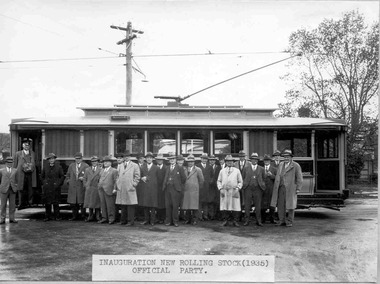
Photograph, Richards & Co Ballarat, Inauguration of the new rolling stock, Sep. 1935
... Item 3000 - Photo Album produced by the SEC in 1935 titled "Photographs of Ballarat Tramways Rolling Stock & Track Reconditioning Works". Second copy mounted with donation name and price....Item 3000 - Photo Album produced by the SEC in 1935 titled "Photographs of Ballarat Tramways Rolling Stock & Track Reconditioning Works". Second copy mounted with donation name and price. ...Black and white photograph, of a large group of gentlemen (Official Party - 24) standing along No. 30 (see Reg. Item 3011 for launch photo) during the inauguration of the new rolling stock in 1935. Note the Mayor Cr. Martin standing in the front doorway of the tram wearing a cap and a conductor's bag. Has a caption "Inauguration New Rolling Stock (1935) - Official Party", which has been adhered to the bottom of the photograph. In the bottom right-hand corner of the photograph is the imprint "Richards & Co Ballarat". See Reg. Item 2965 for date of photo - 9/1935. Yields information about the rehabilitation of the Ballarat ESCo trams and new trams acquired and refurbished by the SEC from Melbourne and in particular No. 30 and the official launch of the tram by the SEC with a large number of officials and invited guests.Black and White photograph contained within Reg. Item 3000 - Photo Album produced by the SEC in 1935 titled "Photographs of Ballarat Tramways Rolling Stock & Track Reconditioning Works". Second copy mounted with donation name and price.For 2nd copy - see images.tramways, trams, secv, tramcars, ballarat, rehabilitation, conversion, tram 30 -
 Flagstaff Hill Maritime Museum and Village
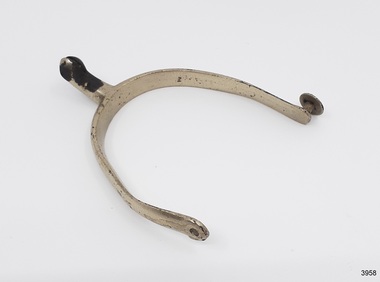
Equipment - Spur, Ca. 1855
... It was recovered from the wreck of the Schomberg and has since been reconditioned....It was recovered from the wreck of the Schomberg and has since been reconditioned. Equipment Spur ...Amongst the items of cargo recovered from the wreck of the Schomberg were riding spurs. This spur has been restored to show the type of finish the Spurs would have had when they were new. ABOUT THE SCHOMBERG- When the ship Schomberg was launched in 1855, she was considered the most perfect clipper ship ever to be built. James Blaine’s Black Ball Line had commissioned her to be built for their fleet of passenger liners. The Aberdeen builders designed her to sail faster than the quick clippers designed by North American Donald McKay. She was a three-masted wooden clipper ship, built with diagonal planking of British oat with layers of Scottish larch. Schomberg departed Liverpool for Melbourne on 6 October 1855 under her master Captain ‘Bully’ Forbes, with 430 passengers and 3000 tons of cargo including iron rails and equipment intended the build the Geelong Railway and a bridge over the Yarra from Melbourne to Hawthorn. Schomberg’s journey was slower than the predicted 60 days. She was 78 days out of Liverpool when she ran aground on an uncharted sand spit near Peterborough, Victoria, on 27 December. Overnight, the crew launched a lifeboat to find a safe place to land the ship’s passengers. The scouting party returned to Schomberg and advised Forbes that it was best to wait until morning because the rough seas could easily overturn the small lifeboats. The ship’s Chief Officer spotted SS Queen at dawn and signalled the steamer. The master of the SS Queen approached the stranded vessel and all of Schomberg’s passengers were able to disembark safely. The Black Ball Line’s Melbourne agent sent a steamer to retrieve the passengers’ baggage from the Schomberg. Other steamers helped unload her cargo until the weather changed and prevented the salvage teams from accessing the ship. Local merchants Manifold & Bostock bought the wreck and cargo but did not attempt to salvage the cargo still on board the ship. They eventually sold it on to a Melbourne businessman and two seafarers. After two of the men drowned when they tried to reach Schomberg, salvage efforts were abandoned.This spur is significant as an example of an item in common use in the mid-19th century. The Schomberg collection as a whole is of historical and archaeological significance at a State level. Flagstaff Hill’s collection of artefacts from the Schomberg is also significant for its association with the Victorian Heritage Registered shipwreck (VHR S 612). The collection is of prime significance because of the relationship between the objects salvaged, as together they help us to interpret the story of the Schomberg. The collection as a whole is historically significant for representing aspects of Victoria's maritime history and its potential to interpret social and historical themes. Spur; wish-bone shaped metal with a knob on one end, a drilled hole on the other and a hook shaped extension in the centre that has a hole through it. The edges are smooth and rounded. It was recovered from the wreck of the Schomberg and has since been reconditioned.warrnambool, flagstaff hill, maritime village, maritime museum, great ocean road, shipwreck coast, shipwreck artefact, schomberg, clipper ship, black ball line, 1855 shipwreck, aberdeen clipper ship, captain forbes, peterborough shipwreck, silver plated spur, horse riding, spur, cargo, riding equipment -
Broadmeadows Historical Society & Museum
Furniture - Bureau desk
... Top is a bureau style with velvet (reconditioned) writing pad and pigeon holes of various sizes Bottom piece is a two door cabinet with a top drawer. ...Top is a bureau style with velvet (reconditioned) writing pad and pigeon holes of various sizes Bottom piece is a two door cabinet with a top drawer. ...John Thomas Raw, Broadmeadows School, EducationPresented to the outgoing headmaster of the Broadmeadows School.Two piece bureau style desk (third piece missing). Top is a bureau style with velvet (reconditioned) writing pad and pigeon holes of various sizes Bottom piece is a two door cabinet with a top drawer. All lock with a key.White metal plaque enscribed: Presented to / J. T. Raw esq: / By his friends in the Broadmeadows district / As a mark of respect / Feb 24th 1888. Locks engraved: Mobbs & Co London / Lever / Machine made.education, presentation -
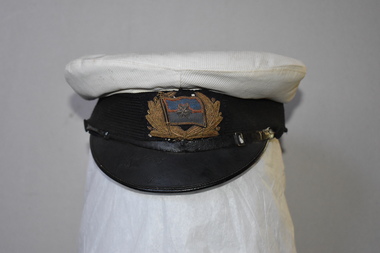 Warrnambool and District Historical Society Inc.
Hat, Navy Officer's, Mid 20th century
... This navy officer’s hat has been reconditioned and this alteration may have been done for theatrical purposes. ...This navy officer’s hat has been reconditioned and this alteration may have been done for theatrical purposes. ...This navy officer’s hat has been reconditioned and this alteration may have been done for theatrical purposes. No information is available on its original owner or his country or rank.This hat is of minor interest as it is no longer in its original condition and has no known local provenance. This is a Navy officer’s hat with a white cloth circular top and a black material base and a band lined with black material. It has a Bakelite peak. The black band has an off-centre cloth badge of metallic thread featuring decorative feathers and a flag with a blue and red six-pointed star. The hat appears to be a re-conditioning of an original hat and the badge is probably not an original one. The edges of the hat are frayed and soiled. The hat has a leather lining with the maker’s name inside the hat but this is illegibleSouthhamptonaustralian navy uniform, history of warrnambool -
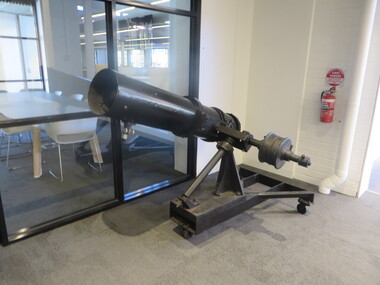 Federation University Historical Collection
Instrument - Object, Telescope
... The telescope was reconditioned by former staff member Graeme Hood. ...The telescope was reconditioned by former staff member Graeme Hood. telescope observatory On the back of the mirror are the following words "G M Riley Sunshine 1922" Black telescope with 9 inch mirror and large counterweight. ...This telescope was used at the Ballarat School of Mines, and used to be located on the roof of the Ballarat Technical Art School (Gribble Building) at the Ballarat School of Mines. The telescope was reconditioned by former staff member Graeme Hood. Black telescope with 9 inch mirror and large counterweight. On the back of the mirror are the following words "G M Riley Sunshine 1922"telescope, observatory -
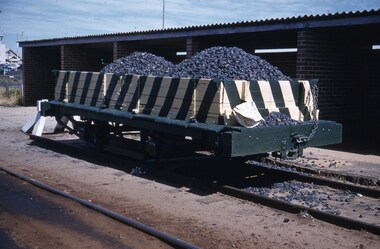 Melbourne Tram Museum
Slide, Keith Kings, 9/01/1960 12:00:00 AM
... Keith's notes - Ballast trailer (resurrected and reconditioned), Essendon Aerodrome terminus. ...Keith's notes - Ballast trailer (resurrected and reconditioned), Essendon Aerodrome terminus. ...Colour slide, Kodak, white cardboard of one of the MMTB Ballast Trailers at the Essendon Aerodrome airport terminus siding. Has the shelter in the background. 9/1/1960. Keith's notes - Ballast trailer (resurrected and reconditioned), Essendon Aerodrome terminus. Slide Number K(q)(283)Extensive handwriting on rear in ink and that it was photographed at 1/125 f5.6.trams, tramways, essendon aerodrome, essendon airport, ballast wagons, shelters -
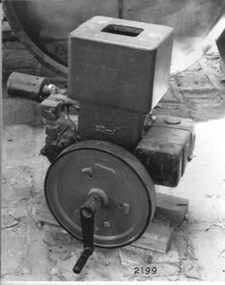 Whitehorse Historical Society Inc.
Equipment - Stationary Motor
... Tom did some reconditioning and preservation on the unit....Tom did some reconditioning and preservation on the unit. rural industry farm machinery machinery engines - internal combustion Bronze plate 'The Rosebery Engine C25387 RPM 1000 HP3 manufacturer Westinghouse Rosebery Ltd Sydney. 3C-103 on water jacket; 3D-1 on engine housing; 3C-15 on flywheel. 3 HP 4 cycle motor primarily used to belt drive other equipment such as pumps and machinery on a farm etc. ...Used by Ted Beddiscomb of Gormandale near Traralgon, brother in law of donor. Ted was a dairy farmer and used the motor for about 10 years to pump water. It is possible it was on his farm for some years prior to this. Tom did some reconditioning and preservation on the unit.3 HP 4 cycle motor primarily used to belt drive other equipment such as pumps and machinery on a farm etc. Petrol driven, magneto ignition and water cooled.Bronze plate 'The Rosebery Engine C25387 RPM 1000 HP3 manufacturer Westinghouse Rosebery Ltd Sydney. 3C-103 on water jacket; 3D-1 on engine housing; 3C-15 on flywheel.rural industry, farm machinery, machinery, engines - internal combustion -
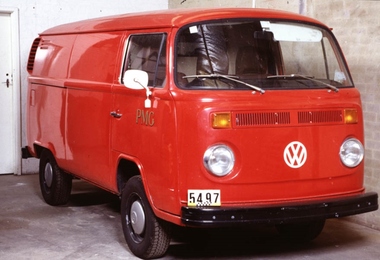 National Communication Museum
Vehicle - Van, Volkswagen, 1972
... Despite its age, the van is in excellent condition having been reconditioned in 1987....In 1987, the vehicle was extensively reconditioned and some original parts were presumably replaced. ...This van was used in Western Australia by linesmen and for mail pickup between 1972 and 1991. When transferred to the collection, it was the very last surviving vehicle of its type owned by the company. Despite its age, the van is in excellent condition having been reconditioned in 1987.This Volkswagen Transporter, 2nd generation, is commonly known as a kombi van; named as such after the German word Kombinationskraftwagen, meaning multi-purpose vehicle. This van is believed to have been used by linesmen and for mail collection from 1972 to 1991 in Western Australia, before being donated to the, then, Telstra Collection. Conflicting accounts from John Moynihan, PMG Engineer and author, suggest the van was used by cable jointers from the 1960s. Owing to this unclear use, the van’s historical significance is low though provenance from the Postmaster General’s Department to Telecom, then Telstra, is established. In 1987, the vehicle was extensively reconditioned and some original parts were presumably replaced. It is not, however, in working order or in good condition; the body carries several areas of rust, rubber seals have suffered plasticiser migration, a mirror is missing and there are marks from use. The hand lettered “P.M.G.” inscription is indicative of a Postmaster General fleet vehicle, as is the red colour of the vehicle paint. Though it is in poor condition, the van’s aesthetic style is of some significance. The van is representative of the type of Volkswagen vehicle used by the Postmaster General’s Department and other private businesses and government branches of the era. The vehicle may, therefore, carry social significance for those that lived in this era, where their communication service provider travelled in a Volkswagen van. Indeed, Volkswagen vans were used into the Telecom era, as evidenced by an image (6681153) in the National Archives of Australia collection. While many of these vehicles may exist today, there are few to no examples which survive in museum collections. In 1966, the Post Office (Postmaster General’s Department) had the largest fleet in Australia, totalling nearly 11,000 vehicles (The Canberra Times, 29 September 1966, p. 34). Though in the late 1960s Volkswagen vehicles accounted for just over 500 of these vehicles, with the remainder represented by Ford, General Motors, Chrysler, and others, the multi-purpose nature of the van is significant as a metaphor for the multi-directional services of the Postmaster General’s Department. Archival images show a variety of models and adaptations including roof racks, bull bar and door configurations. Its conflicted history of use may in fact attest to the vehicles variety of application in the duties of the Postmaster General‘s Department.Red Volkswagen Kombi van with stencilled gold lettering on doors. Scratches on bumpers indicate duck-egg blue undercoat. Single sliding door on left side of vehicle body with secondary opening at rear with horizontally divided doors. Mirror missing on right front. Western Australia registration sticker in front windscreen..1: "PMG" .2: "ROYAL" .3-.4 "PMG" .5-.6: "MAIL" .7,.8: "ER" .9: "C OF A / ZEH 622"transport, kombi van, linesman van, postal van, postmaster general’s department
