
Showing 101 items matching "recorded cassettes"
-
 Bendigo Military Museum
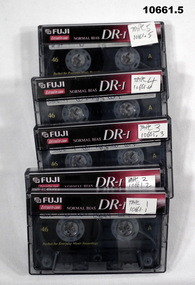
Mixed media - CASSETTES, AUDIO, Bendigo District RSL Sub - Branch Inc, c.2000-2010
... ...Recorded Cassettes...Oral history recorded of “Kevin” Each cassette is in its own case....Oral history recorded of “Kevin” Each cassette is in its own case. Mixed media CASSETTES, AUDIO Bendigo District RSL Sub - Branch Inc. ...1. Robert Mundy (born Flemington) 3793591, served Vietnam with C Sqd LAD 14.1.1969 - 10.2.1969, B Sqd LAD 11.2.1969 - 14.1.1970. 2. Brian Patten, (born Castlemaine) L.A.C RAAF A317583, served Vietnam with No. 2 Sqd 25.3.1971 - 2.6.1971 and No. 35 Sqd 2.6.1971 - 5.2.1972. 3. Richard Penna, (born Bendigo) 3798767, served Vietnam RAEME LAD with 4th Field Regt 26.11.1970 - 30.10.1971. 4. David John Matheson (born Melbourne) 3795690, served Vietnam with 8 R.A.R. 17.11.1969 - 12.11.1970. 5. Kevin John Anthony Mooney (born Melbourne) 3793696, served Vietnam with 5 R.A.R. 8.2.1969 - 1.12.1969 (WIA twice) LAD (Light Aid Detachment)These cassettes are all the same - FUJI, Normal Bias, DR-1 46. 1. Oral history recorded of “Mr Bob Mundy” 2. Oral history recorded of “Brian” 3. Oral history recorded of “Richard” 4. Oral history recorded of “David” 5. Oral history recorded of “Kevin” Each cassette is in its own case.As above.vietnam war, australian defence force, mixed media, recorded cassettes -
 Cockatoo History & Heritage Group
Recording, Dave Oliver recording on the history of Cockatoo 1995
... Audio File, originally recorded on cassette...Dot Griffin recorded many of Cockatoo's earlier residents so their stories weren't lost like so much of Cockatoo's written history. recording Cockatoo Cockatoo Creek audio file Audio File, originally recorded on cassette Dave Oliver recording on the history of Cockatoo 1995 Recording ...After the devastating fires that hit Cockatoo on February 16th 1983. Dot Griffin recorded many of Cockatoo's earlier residents so their stories weren't lost like so much of Cockatoo's written history. Audio File, originally recorded on cassetterecording, cockatoo, cockatoo creek, audio file -
 Truganina Explosives Reserve Preservation Society Inc (TERPS)
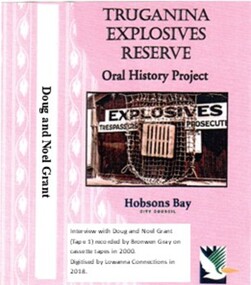
Digitised Oral History – Truganina Explosives Reserve - Tape 1 Doug and Noel Grant, 2018
... Digital copy of original cassette recorded in 2000 and digitised in 2018...A primary source of information on memories of the Truganina Explosives Reserve and Altona,Victoria hobsons bay altona galvanised iron fence picket fence golf course altona school margaret grant bill grant explosives magazine lighters joe hyde alex grant pines scout camp maribynong river 1896 inspector of explosives pier point wilson werribee sewerage farm george grant lighterman huia argonaut pirie alma doepel merton street altona horse jessie grant jean grant sandal kilmartin lewis currie todd robinson balwyn Digital copy of original cassette recorded in 2000 and digitised in 2018 Digitised Oral History – Truganina Explosives Reserve - Tape 1 Doug and Noel Grant ...The interviews were recorded in 2000 by Bronwen Gray and Alan Young for the production of Unreserved, Stories from Truganina Explosives Reserve, animated stories from past residents, workers and interested people of the Reserve (subject to copyright 2004). Doug and Noel Grant’s Grandfather, Don Grant, was officer in charge of Truganina Explosives Reserve from 1910-1930. On his retirement, his son, William (known as Bill) took over the position until 1956. Along with their two older brothers and younger sister, Doug and Noel Grant grew up, first in the assistant manager’s weatherboard cottage and then in the brick house which was set aside for the officer in charge, until they married and moved into their own homes in their early 1920s. On returning from the second world war, Noel Grant worked as a magazine assistant of explosives on the site from 1946, When the site had closed down in 1962 he worked as an inspector of explosives at the Explosives Branch in Melbourne until he retired in 1985. During that time Noel was asked to move back on site, meaning that three generations of Grants have lived on the site during the twentieth century. Doug Grant worked for ICI/Nobel in head office in 1940 and their older brother Alan worked at the Nobel Explosive Company in Deer Park from 1937. After returning from the Second World War, Alan bought a transport business that had once had the licence to cart explosives in and around the state. They discuss their memories of the living at Truganina Explosives Reserve and the workings of the Reserve, including the names of men who worked there, ships which carried the explosives and life in and around Altona. A primary source of information on memories of the Truganina Explosives Reserve and Altona,VictoriaDigital copy of original cassette recorded in 2000 and digitised in 2018hobsons bay, altona, galvanised iron fence, picket fence, golf course, altona school, margaret grant, bill grant, explosives magazine, lighters, joe hyde, alex grant, pines scout camp, maribynong river, 1896, inspector of explosives, pier, point wilson, werribee sewerage farm, george grant, lighterman, huia, argonaut, pirie, alma doepel, merton street altona, horse, jessie grant, jean grant, sandal, kilmartin, lewis, currie, todd, robinson, balwyn -
 Truganina Explosives Reserve Preservation Society Inc (TERPS)
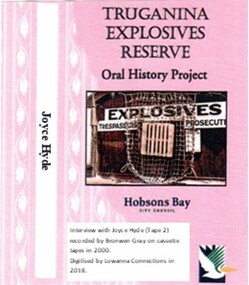
Digitised Oral History – Truganina Explosives Reserve - Tape 2 Joyce Hyde, 2018
... Digital copy of original cassette recorded in 2000 and digitised in 2018...A primary source of information on memories of the Truganina Explosives Reserve and Altona,Victoria altona upton street altona harrington court coal mine horse trough mr piper diggers hall owen hyde clive hyde joe hyde salt works horse drawn explosives trucks Digital copy of original cassette recorded in 2000 and digitised in 2018 Digitised Oral History – Truganina Explosives Reserve - Tape 2 Joyce Hyde ...The interviews were recorded in 2000 by Bronwen Gray and Alan Young for the production of Unreserved, Stories from Truganina Explosives Reserve, animated stories from past residents, workers and interested people of the Reserve (subject to copyright 2004). Joyce Hyde was married to Joe (Lesley) Hyde, the last Officer in Charge of the Truganina Explosives Reserve. They moved into the weather board house on 11 December 1952 when Joe was the assistant manager of the Reserve. They moved into the brick house when Joe was appointed Officer in Charge in 1956. Even though the site closed in 1962 and Joe was transferred to the head office in Spencer Street as Explosives Inspector, the Hyde family continued to live in the brick house. Joyce discusses her life at the Explosives Reserve and the early development of Altona. A primary source of information on memories of the Truganina Explosives Reserve and Altona,VictoriaDigital copy of original cassette recorded in 2000 and digitised in 2018altona, upton street altona, harrington court, coal mine, horse trough, mr piper, diggers hall, owen hyde, clive hyde, joe hyde, salt works, horse drawn explosives trucks -
 Truganina Explosives Reserve Preservation Society Inc (TERPS)
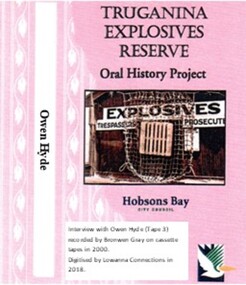
Digitised Oral History – Truganina Explosives Reserve - Tape 3 Owen Hyde, 2018
... Digital copy of original cassette recorded in 2000 and digitised in 2018...A primary source of information on memories of the Truganina Explosives Reserve and Altona,Victoria Hobsons Bay draught horses Explosives Reserve Pier myxomatosis pine trees Queen Street Altona Edwardian garden government superintendent houses McDonald Commonwealth Bank Dr John Lewin Altona Summer of the Seventeenth Doll Leslie George Hyde Joe Hyde George Grant Clive Hyde Williamstown Technical Mrs Cronin Angus and Robertson Pier fire Dutch migrants communist party laboratory brass nails Digital copy of original cassette recorded in 2000 and digitised in 2018 Digitised Oral History – Truganina Explosives Reserve - Tape 3 Owen Hyde ...The interviews were recorded in 2000 by Bronwen Gray and Alan Young for the production of Unreserved, Stories from Truganina Explosives Reserve, animated stories from past residents, workers and interested people of the Reserve (subject to copyright 2004). Owen and Clive Hyde are the sons of Joe and Joyce Hyde. Joe was the last Officer in charge of the Truganina Explosives Reserve. The family moved to the reserve on 11 December 1952 and continued to live there after the Reserve closed in 1962. Owen lived at the house until his early twenties. He discusses growing up at the Reserve. The voice of Joyce Hyde can also be heard during the interview. A primary source of information on memories of the Truganina Explosives Reserve and Altona,VictoriaDigital copy of original cassette recorded in 2000 and digitised in 2018hobsons bay, draught horses, explosives reserve pier, myxomatosis, pine trees, queen street altona, edwardian garden, government superintendent houses, mcdonald, commonwealth bank, dr john lewin, altona, summer of the seventeenth doll, leslie george hyde, joe hyde, george grant, clive hyde, williamstown technical, mrs cronin, angus and robertson, pier fire, dutch migrants, communist party, laboratory, brass nails -
 Truganina Explosives Reserve Preservation Society Inc (TERPS)
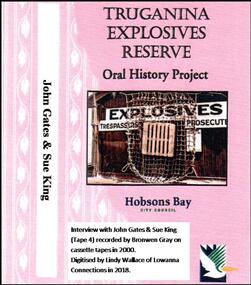
Digitised Oral History – Truganina Explosives Reserve - Tape 4 John Gates and Sue King, 2018
... Digital copy of original cassette recorded in 2000 and digitised in 2018...A primary source of information on memories of the Truganina Explosives Reserve and Altona,Victoria Hobsons Bay City Council Pier Street Altona Alma Doepel explosives Lighters Gates Court Altona Meadows Christmas picnic Digital copy of original cassette recorded in 2000 and digitised in 2018 Digitised Oral History – Truganina Explosives Reserve - Tape 4 John Gates and Sue King ...The interviews were recorded in 2000 by Bronwen Gray and Alan Young for the production of Unreserved, Stories from Truganina Explosives Reserve, animated stories from past residents, workers and interested people of the Reserve (subject to copyright 2004). John Gates began working at the Truganina Explosives Reserve handling explosives at the magazines in 1946. He was appointed assistant manager in 1956. When the site closed in 1962 he was retrained and worked at the Births, Deaths and Marriages offices. In this interview he and his step-daughter, Sue King, talk of life in Altona, life on the Explosives Reserve and some of the people who worked there. A primary source of information on memories of the Truganina Explosives Reserve and Altona,VictoriaDigital copy of original cassette recorded in 2000 and digitised in 2018hobsons bay city council, pier street altona, alma doepel, explosives, lighters, gates court altona meadows, christmas picnic -
 Truganina Explosives Reserve Preservation Society Inc (TERPS)
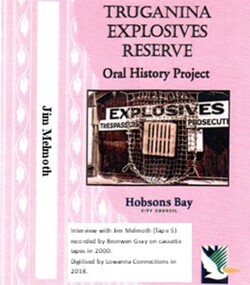
Digitised Oral History – Truganina Explosives Reserve - Tape 5 Jim Melmoth, 2018
... Digital copy of original cassette recorded in 2000 and digitised in 2018...A primary source of information on memories of the Truganina Explosives Reserve and Altona,Victoria Hobsons Bay City Council explosives air raid shelters Altona Pier brown coal camouflaged fences World War Two gelignite horse drawn wagons clysdale horses lighters Williamstown Upton Street Altona water tower adze John Gates Public Works Department explosives pier Cherry Lake Altona Altona Meadows Lennie Finley Digital copy of original cassette recorded in 2000 and digitised in 2018 Digitised Oral History – Truganina Explosives Reserve - Tape 5 Jim Melmoth ...The interviews were recorded in 2000 by Bronwen Gray and Alan Young for the production of Unreserved, Stories from Truganina Explosives Reserve, animated stories from past residents, workers and interested people of the Reserve (subject to copyright 2004). Edgar James (Jim) Melmoth began work at the Truganina Explosives Reserve at age 19 (1952) as part of the maintenance crew – painting, tram line maintenance, storm damage clearance. He helped build the pier extension and the water tower. In this interview he describes some incidents and some amusing stories of the clysdale horses. A primary source of information on memories of the Truganina Explosives Reserve and Altona,VictoriaDigital copy of original cassette recorded in 2000 and digitised in 2018hobsons bay city council, explosives, air raid shelters, altona pier, brown coal, camouflaged fences, world war two, gelignite, horse drawn wagons, clysdale horses, lighters, williamstown, upton street altona, water tower, adze, john gates, public works department, explosives pier, cherry lake, altona, altona meadows, lennie finley -
 Truganina Explosives Reserve Preservation Society Inc (TERPS)
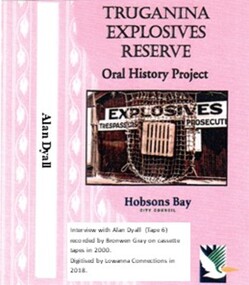
Digitised Oral History – Truganina Explosives Reserve - Tape 6 Alan Dyall, 2018
... Digital copy of original cassette recorded in 2000 and digitised in 2018...A primary source of information on memories of the Truganina Explosives Reserve and Altona,Victoria Albert Street Williamstown Rabbits Point Cook Homestead Truganina Explosive Reserve Lighterman Ports and Harbours Charlie Curry Lighter ICI Deer Park The Strand Williamstown Stevedores Hob nails Rope soled shoes Rifle Range Snowy Jorgensen Sailmaker Digital copy of original cassette recorded in 2000 and digitised in 2018 Digitised Oral History – Truganina Explosives Reserve - Tape 6 Alan Dyall ...The interviews were recorded in 2000 by Bronwen Gray and Alan Young for the production of Unreserved, Stories from Truganina Explosives Reserve, animated stories from past residents, workers and interested people of the Reserve (subject to copyright 2004). Alan Dyall reminisces on his childhood during the 1930s/40s in Williamstown and Altona in the 1960s. His father, Bill, worked as a lighterman at the Truganina Explosives Reserve. A primary source of information on memories of the Truganina Explosives Reserve and Altona,VictoriaDigital copy of original cassette recorded in 2000 and digitised in 2018albert street williamstown, rabbits, point cook homestead, truganina explosive reserve, lighterman, ports and harbours, charlie curry, lighter, ici, deer park, the strand williamstown, stevedores, hob nails, rope soled shoes, rifle range, snowy jorgensen, sailmaker -
 Truganina Explosives Reserve Preservation Society Inc (TERPS)
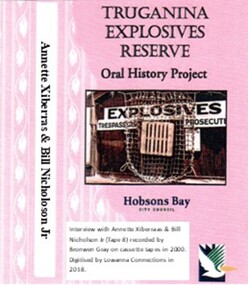
Digitised Oral History – Truganina Explosives Reserve - Tape 8 Annette Xibarras and Bill Nicholson Jnr, 2018
... Digital copy of original cassette recorded in 2000 and digitised in 2018...A primary source of information on memories of the Truganina Explosives Reserve and Altona,Victoria Julia Jones Princess Balam Balam archaeological survey middens Wurundjeri Kulin Nations Coranderrk Braybrook sacred sites Mt William Bunurong Museum Victoria Altona Martha Nicholson Digital copy of original cassette recorded in 2000 and digitised in 2018 Digitised Oral History – Truganina Explosives Reserve - Tape 8 Annette Xibarras and Bill Nicholson Jnr ...The interviews were recorded in 2000 by Bronwen Gray and Alan Young for the production of Unreserved, Stories from Truganina Explosives Reserve, animated stories from past residents, workers and interested people of the Reserve (subject to copyright 2004). Annette Xibarras and Bill Nicholson Jnr discuss the indigenous significance of the Truganina Explosives Reserve. At the time of the interview Annette was the manager of the Kulin Nations Cultural Heritage Organisation. Bill, a Wurundjeri Elder, was a Wurundjeri Cultural Officer. They discussed their childhood, aboriginal customs, connection with the land and the locating of aboriginal remains at the Museum of Victoria and the re-burial at the site where they were found. A primary source of information on memories of the Truganina Explosives Reserve and Altona,VictoriaDigital copy of original cassette recorded in 2000 and digitised in 2018julia jones, princess balam balam, archaeological survey, middens, wurundjeri, kulin nations, coranderrk, braybrook, sacred sites, mt william, bunurong, museum victoria, altona, martha nicholson -
 Truganina Explosives Reserve Preservation Society Inc (TERPS)
Digitised Oral History – Truganina Explosives Reserve - Tape 9 Andrew Shannon and Judy Hindle, 2018
... Digital copy of original cassette recorded in 2000 and digitised in 2018...A primary source of information on memories of the Truganina Explosives Reserve and Altona,Victoria Chirnside explosives tin fence coastal vegetation Parks Victoria Joan Kirner Cheetham Wetlands Doug Grant gahnia salt marsh sand ridges Rob Andrew Nessie Hardy aboriginal middens Altona Truganina Swamp Digital copy of original cassette recorded in 2000 and digitised in 2018 Digitised Oral History – Truganina Explosives Reserve - Tape 9 Andrew Shannon and Judy Hindle ...The interviews were recorded in 2000 by Bronwen Gray and Alan Young for the production of Unreserved, Stories from Truganina Explosives Reserve, animated stories from past residents, workers and interested people of the Reserve (subject to copyright 2004). Judy Hindle and Andrew Shannon worked jointly on saving the Truganina Explosives Reserve from being sold for development by the State Government. Judy was an Altona resident and Andrew was an environment planner, first with Parks Victoria and then the local council. Their motivation was to not only save the site for open space but to capture what Judy described as the only in-tact historical site in the area. A primary source of information on memories of the Truganina Explosives Reserve and Altona,VictoriaDigital copy of original cassette recorded in 2000 and digitised in 2018chirnside, explosives, tin fence, coastal vegetation, parks victoria, joan kirner, cheetham wetlands, doug grant, gahnia, salt marsh, sand ridges, rob andrew, nessie hardy, aboriginal middens, altona, truganina swamp -
 Truganina Explosives Reserve Preservation Society Inc (TERPS)
Digitised Oral History – Truganina Explosives Reserve - Tape 10 Hugh Basset, 2018
... Digital copy of original cassette recorded in 2000 and digitised in 2018...He was struck by the industrial, environment and indigenous significance of the site A primary source of information on memories of the Truganina Explosives Reserve and Altona,Victoria Nessie Hardy Cheetham Salt Works migratory birds explosives reserve explosives Point Gellibrand National Trust tin fence sand ridges Altona Skipper Butterfly middens aboriginal occupation Judy Hindle Digital copy of original cassette recorded in 2000 and digitised in 2018 Digitised Oral History – Truganina Explosives Reserve - Tape 10 Hugh Basset ...The interviews were recorded in 2000 by Bronwen Gray and Alan Young for the production of Unreserved, Stories from Truganina Explosives Reserve, animated stories from past residents, workers and interested people of the Reserve (subject to copyright 2004). As the then President of the Inner West Branch of the National Trust, Hugh was unaware of the Truganina Explosives Reserve until contacted by Nessie Hardy about the proposed sale of the site by the State Government. He was struck by the industrial, environment and indigenous significance of the site A primary source of information on memories of the Truganina Explosives Reserve and Altona,VictoriaDigital copy of original cassette recorded in 2000 and digitised in 2018nessie hardy, cheetham salt works, migratory birds, explosives reserve, explosives, point gellibrand, national trust, tin fence, sand ridges, altona skipper butterfly, middens, aboriginal occupation, judy hindle -
 Truganina Explosives Reserve Preservation Society Inc (TERPS)
Digitised Oral History – Truganina Explosives Reserve - Tape 11 Rob Andrew, 2018
... Digital copy of original cassette recorded in 2000 and digitised in 2018...A primary source of information on memories of the Truganina Explosives Reserve and Altona,Victoria Native grasses explosives Cheetham Wetlands Cheetham Salt Works Doug Grant Chirnside Cliff Gibson lava plain brown coal sand ridges Selwyn Fault Rowsley Fault Victorian Coastal Strategy aboriginal stone artefacts aboriginal habitation aboriginal remains red gums casuarinas Altona Skipper Butterfly Orange Bellied Parrot Digital copy of original cassette recorded in 2000 and digitised in 2018 Digitised Oral History – Truganina Explosives Reserve - Tape 11 Rob Andrew ...The interviews were recorded in 2000 by Bronwen Gray and Alan Young for the production of Unreserved, Stories from Truganina Explosives Reserve, animated stories from past residents, workers and interested people of the Reserve (subject to copyright 2004). Rob Andrew’s career was as an Environmental Health Officer with various councils around Victoria. As an Altona resident he became interested in the Truganina Explosives Reserve when he heard the site was to be sold. He was concerned that because of the prospect of commercial development the community would lose tranquil open parklands. Through his involvement with the Reserve he realised the historical, geomorphic, flora and fauna significance of the site. A primary source of information on memories of the Truganina Explosives Reserve and Altona,VictoriaDigital copy of original cassette recorded in 2000 and digitised in 2018native grasses, explosives, cheetham wetlands, cheetham salt works, doug grant, chirnside, cliff gibson, lava plain, brown coal, sand ridges, selwyn fault, rowsley fault, victorian coastal strategy, aboriginal stone artefacts, aboriginal habitation, aboriginal remains, red gums, casuarinas, altona skipper butterfly, orange bellied parrot -
 Eltham District Historical Society Inc
Audio - Audio Compact Cassette Tape, Harry Gilham, Audio Recording; Eltham Library History presented by Harry Gilham, 1994
... Digital file only recorded from Audio Cassette tape on loan Converted to MP3 file; 11.1MB, 0:08:49...See also EDHS_02111 Eltham Library Opening Harry Gilham Harry Gilham Collection 1994 Audio Cassette Audio Recording Digital file only recorded from Audio Cassette tape on loan Converted to MP3 file; 11.1MB, 0:08:49 Audio Recording; Eltham Library History presented by Harry Gilham Audio Audio Compact Cassette Tape Harry Gilham ...The new Eltham Library was opened 22 May 1994 and celebrates its 30th anniversay in 2024. This audio recording, presented by Harry Gilham, President of Eltham District Historical Society at the time of the opening is a summarised history of the Eltham Library service to 1994. Eltham Library Service 1930s - 1994 Originally collated by Harry Gilham, President, Eltham District Historical Society Inc (1993-2009) (edited 2022) In the Eltham township area, in the early 1930s, library books for adults were available from E J Andrew's newsagency in Main Road. In the newsagency come haberdashery, some shelves were set aside for a lending library of adults' books. In 1935, Mr & Mrs JC Rains purchased the newsagency and continued the lending service until the late 1940s. At this time the business was extended from haberdashery to sell ladies' and men's clothing. The library section was discontinued. In the 1930s a mobile book library was also run by a Mr Foster of Bible Street, Eltham. In the 1950s adult books were available from racks in the foyer of the Eltham Shire Offices which was then located beside the Eltham Hall on the comer of Arthur Street and Main Road. In the early 1950s a referendum of ratepayers was called to seek public opinion on the issue of raising money for a public library for which the rates would have to be increased - the motion was defeated. On 11 November 1965 Eltham Shire Council, in conjunction with the City of Heidelberg and the Shire of Diamond Valley, met to form the Heidelberg Regional Library Service. Eltham was represented by Councillors Charis Pelling and John Lewis. The first library service for the Shire of Eltham from this group came in the shape of a bookmobile van which had, amongst others, a central stopover near the Shillinglaw trees outside the newly opened Shire offices at 895 Main Road, the original site of Shillinglaw Cottage and the former Shillinglaw farm. Present-day Wingrove Park was another stopover and the many recorded requests for this service can be read as denoting the areas of population or gathering points at that period throughout the Shire. 1968 saw the Shire convert the ‘Brinkkotter’ house in Dudley Street to house both adult and children's books. This library was originally staffed from the City of Heidelberg Library and records of committee meetings range from borrowing Heidelberg's old library shelving to trying to increase the Government's subsidy to a dollar for dollar basis. Book loans in the period 1966-67 totalled 30,400 and the following year ran to 52,113. With 2 books plus 1 paperback the limit per person, it was overcrowded and unable to house the range of other services which had become common library stock. Planning to extend the Shire Offices by the addition of the south wing was an opportunity to re-house the Shire's Library. The opening of the library in the extension was carried out on 17th August 1971 by the Hon R J Hamer ED, MP, Chief Secretary of Victoria. Cr Geoffrey Dreverman officiated as the Shire President. The Heidelberg Regional Library Service continued until September 1985 when it disbanded. On 21 November 1985 the Yarra Plenty Regional Library Service was established. At that time Eltham was represented by Councillors Mary Grant and Robert Manuell. By 1987, over-crowding of the Eltham Library and an inability to house the range of other services yet again rose to prominence. At a Council meeting held on 1 June 1987, the Councillors supported a resolution which threatened to close the library on 30 September 1987. Council's frustration arose from yet another re-run of the annual State Government versus Council Library funding and records show first arose in Eltham Council in 1967 with the Government of 1he day. After prolonged public anger and petitions the motion to close the library was rescinded in August 1987. Council, considering the community's concern, set up a ‘Library Review Working Party’ which a year later became the Library Occasional Committee with direct access to Council. This Committee investigated the workings of the 386 square metre library and found inadequate space for storage and display, lack of equipment, out-of-date furniture together with an increasing patronage which resulted in queues of borrowers becoming longer no matter when the library was open. Community consultation took the form of 1,000 questionnaires sent to users and non-users along with noticeboard reminders of what was planned. Council developed a strategy to set aside capital funds from 1988 on an annual basis so that preliminary planning and consultative expenses could be met, and construction could be completed early 1997. The Committee visited metropolitan libraries which were catering for a similar population as was projected for Eltham. Australia-wide Federal Government funding grants under the Local Capital Works Program became available from October 1992 for community projects endorsed by local Councils. The Eltham Council submitted a proposal, based on library findings and requirements accumulated by the Library Occasional Committee, to the Federal Grants Committee to build a new Eltham Library. The Federal Grants Committee supported the funding request allowing commencement of the library project three years earlier than planned. With finance finalised, the Council set up its Eltham Library Re-development Special Committee which was given the task of overseeing what could be the last major expansion of the Shire's Library Service as Eltham's population nears its projected maximum. The new library was designed by Gregory Burgess and Peter Ryan of Gregory Burgess Pty Ltd. Construction of the library commenced in 1993 and was officially opened May 22nd, 1994. The library building was designed to reflect its parkland setting. External features include: the roof which includes interesting aspects when viewed from Main Road; verandahs which provide ramp access and give a sheltered entrance to the building; walls which feature locally made mudbricks, conventional bricks and copper panels; and space for an outdoor courtyard/reading area which will be developed later. Internally there are several features. The building includes a foyer with a fireplace suitable for displays including artwork, a community multi-purpose room suitable for meetings or functions and an outdoor cafeteria. The ceilings are lined with Victorian Ash. The shapes for the ceiling give a free-flowing form to the building. Brush Box has been used for the circulation and information desks. The tree trunk columns are Grey lronbark from New South Wales. Arches and various-shaped windows add interest to the internal structure. The carpet design reflects the Eltham environment and compliments the natural colours and timbers used in the building. Tiles by artist Felix Bosari feature in the building and additional art by local artists added externally and internally to the building. Since 1994 the library has undergone a major extension to cater for children’s services and others. See also EDHS_02111Digital file only recorded from Audio Cassette tape on loan Converted to MP3 file; 11.1MB, 0:08:49eltham library, opening, harry gilham, harry gilham collection, 1994, audio cassette, audio recording -
Federation University Historical Collection
Equipment - Cassette Tape Recorder, Sanyo, Sanyo Cassette Tape Recorder
... Although pre-recorded cassettes were widely available, many users would combine (dub) songs from their vinyl records or cassettes to make a new custom mixtape cassette. ...Although pre-recorded cassettes were widely available, many users would combine (dub) songs from their vinyl records or cassettes to make a new custom mixtape cassette. ...Early recorders were intended for dictation and journalists, and were typically hand-held battery-powered devices with built-in microphones and automatic gain control on recording. Tape recorder audio-quality had improved by the mid-1970s, and a cassette deck with manual level controls and VU meters became a standard component of home high-fidelity systems.[1] Eventually the reel-to-reel recorder was completely displaced, in part because of the usage constraints presented by their large size, expense, and the inconvenience of threading and rewinding the tape reels - cassettes are more portable and can be stopped and immediately removed in the middle of playback without rewinding. Cassettes became extremely popular for automotive and other portable music applications. Although pre-recorded cassettes were widely available, many users would combine (dub) songs from their vinyl records or cassettes to make a new custom mixtape cassette. (http://en.wikipedia.org/wiki/Cassette_deck) Black and silver electric or battery powered plastic tape recorder wit 5 black and 1 red push button to operate and record on the equipment. The recorder also has a counter and a rec.batter light. electronics, cassetter recorder, recording, tape recorder -
Whitehorse Historical Society Inc.
Audio - History Talk, MCKIRDY Lindsay, History of the Victorian Deaf and Dumb Society, 11/02/2006
... The talk was recorded by audio cassette and written document and later transcribed to a digital format....The talk was recorded by audio cassette and written document and later transcribed to a digital format. ...Copies of a talk on the history of the Victorian Deaf and Dumb Society given to the Whitehorse Historical Society by Lindsay McKirdy on 11 February 2006. The talk was recorded by audio cassette and written document and later transcribed to a digital format.non-fictiondeaf society, blackburn lake, mckirdy lindsay, whitehorse historical society meeting, abrahams ernest, flower farms -
The Beechworth Burke Museum
Audio - Oral History, Jennifer Williams, Desmond McIntosh, 27 July 2000
... This is a digital copy of a recording that was originally recorded on a cassette tape. The cassette tape is black with a horizontal white strip and is currently stored in a clear flat plastic rectangular container. ...Desmond McIntosh This is a digital copy of a recording that was originally recorded on a cassette tape. The cassette tape is black with a horizontal white strip and is currently stored in a clear flat plastic rectangular container. ...Desmond (Des) McIntosh was born in Beechworth in the old goldfield’s hospital in 1940. He was the third child born in a family of five children. His great-grandparents moved from Scotland to Yackandandah in the 1930s to pursue wealth in the gold boom, but only just made a living out of it. His grandfather eventually moved and lived in the Woolshed Valley, where Desmond’s parents came from. His family continued to live in the Woolshed Valley as dairy farmers until the 1950s and then moved to Beechworth. Desmond went to school in Wooragee but left when he was 15 to work as a salesman at Freeman’s Store in Beechworth. He worked there for nine years, and then started working in the prison service in Beechworth at what is now known as the Old Beechworth Gaol, or HM Prison Beechworth, where he worked for 27 years. Desmond was an active member of the Beechworth community outside of the Prison in the church and an APEX member (which is a social justice program run across Australia). In prison, he led work programs for the prisoners such as a gardening program where they grew the fresh vegetables and fruit that they would eat. This oral history recording was part of a project conducted by Jennifer Williams in the year 2000 to capture the everyday life and struggles in Beechworth during the twentieth century. This project involved recording seventy oral histories on cassette tapes of local Beechworth residents which were then published in a book titled: Listen to what they say: voices of twentieth century Beechworth. These cassette tapes were digitised in July 2021 with funds made available by the Friends of the Burke.Mr. Desmond McIntosh’s account of his life in Beechworth and the local area during the 20th century is historically and socially significant to the cultural heritage of the region. He details some of the change that occurred across Beechworth over time, as well as details about the management of the Old Goal Beechworth. His account is important to the region's history in terms of social issues and the effect WWII has on Beechworth. This oral history account is socially and historically significant as it is a part of a broader collection of interviews conducted by Jennifer Williams which were published in the book 'Listen to what they say: voices of twentieth-century Beechworth.' While the township of Beechworth is known for its history as a gold rush town, these accounts provide a unique insight into the day-to-day life of the town's residents during the 20th century, many of which will have now been lost if they had not been preserved.This is a digital copy of a recording that was originally recorded on a cassette tape. The cassette tape is black with a horizontal white strip and is currently stored in a clear flat plastic rectangular container. It holds up to 40 minutes of recordings on each side. Mr. Desmond McIntoshlisten to what they say: voices of twentieth century beechworth, beechworth, oral history, burke museum, desmond mcintosh, old goal beechworth, apex, wooragee, hm prison beechworth, woolshed valley, scotland, dairy farmer, freeman's store, gardening, garden, social justive -
 The Beechworth Burke Museum
Audio - Oral History, Jennifer Williams, Sister Elizabeth McGovern, Sister Mary Lacey, Sister Mary Griffiths, Sister Gerardus Thistlewaite, 18th March 2000
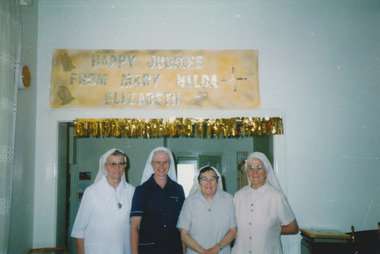
... This is a series of digital recordings that were originally recorded on multiple cassette tapes. The cassette tapes are black with a horizontal white strip and are currently stored in a clear flat plastic rectangular container. ...Listen to what they say Listen to what they say: voices of twentieth century Beechworth nuns brigidine sisters brigidine convent school religion prison boarding school modernization food women's history teaching teachers Education hospitals beechworth hospital charity old priory Father Stockdale easter Beechworth 1950s Sister Elizabeth McGovern, Sister Mary Lacey, Sister Mary Griffiths, Sister Gerardus Thistlewaite This is a series of digital recordings that were originally recorded on multiple cassette tapes. The cassette tapes are black with a horizontal white strip and are currently stored in a clear flat plastic rectangular container. ...Sister Elizabeth McGovern, Sister Mary Lacey, Sister Mary Griffiths, and Sister Gerardus Thistlewaite were all nuns of the Brigidine Order in Beechworth in the second half of the twentieth century. They had backgrounds in teaching and office work. As nuns, their contributions to the community included teaching, running camps, being there for community members wishing to talk to them or pray, and visiting prisons and hospitals. During their time in the order, the role of the nuns in Beechworth shifted due to the closing down of the Priory School, and changes in where housing for nuns was provided. The oral history also includes stories of boarding at the convent in the 1950s, and reflections on how the experience of being a nun has changed due to increasing immersion in the modern world, and the move from convent to house. This oral history recording was part of a project conducted by Jennifer Williams in the year 2000 to capture the everyday life and struggles in Beechworth during the twentieth century. This project involved recording seventy oral histories on cassette tapes of local Beechworth residents which were then published in a book titled: Listen to what they say: voices of twentieth century Beechworth. These cassette tapes were digitised in July 2021 with funds made available by the Friends of the Burke.Sister Elizabeth McGovern, Sister Mary Lacey, Sister Mary Griffiths, and Sister Gerardus Thistlewaite's interview with Jennifer Williams is revealing of the history of the Brigidine order in Beechworth, and the role religion and nuns played in the wellbeing, education, and life of the community in the latter half of the twentieth century. It is significant both for what it illustrates about the lives and motivation of the Sisters, and for what it tells us about how the role of religious education and figures shifted in Beecjhworth from 1950 onward. It is especially illuminating about the experience of women in education. This oral history account is socially and historically significant as it is a part of a broader collection of interviews conducted by Jennifer Williams which were published in the book 'Listen to what they say: voices of twentieth-century Beechworth.' While the township of Beechworth is known for its history as a gold rush town, these accounts provide a unique insight into the day-to-day life of the town's residents during the 20th century, many of which will have now been lost if they had not been preserved.This is a series of digital recordings that were originally recorded on multiple cassette tapes. The cassette tapes are black with a horizontal white strip and are currently stored in a clear flat plastic rectangular container. They up to 40 minutes of recordings on each side.Sister Elizabeth McGovern, Sister Mary Lacey, Sister Mary Griffiths, Sister Gerardus Thistlewaitelisten to what they say, listen to what they say: voices of twentieth century beechworth, nuns, brigidine sisters, brigidine convent, school, religion, prison, boarding school, modernization, food, women's history, teaching, teachers, education, hospitals, beechworth hospital, charity, old priory, father stockdale, easter, beechworth 1950s -
Kew Historical Society Inc
Audio - Interview with Dolly Stainer, 12/08/1987
... Oral History record. Interview on cassette, later digitised of an interview with Ms Dolly Stainer, a long term resident of Kew Cottages. ...This is a rare record of a resident of Kew Cottages, recorded in 1987, captured in an oral history interview. kew cottages (kew, vic.) mental health oral history cliff judge collection dolly Stainer Oral History record. Interview on cassette, later digitised of an interview with Ms Dolly Stainer, a long term resident of Kew Cottages. ...At four years of age Dolly Stainer was admitted to Kew Cottages, an institution for the intellectually disabled situated in suburban Melbourne. The Cottages were Dolly's home for the next seventy-five years. Dolly was unable to read or write but she like to talk. In her old age she co-operated in the making of a series of tape recordings about her life. Kew Cottages: The World of Dolly Stainer is based on these recordings and places them in the context of the wider Cottages' history.This is a rare record of a resident of Kew Cottages, recorded in 1987, captured in an oral history interview.Oral History record. Interview on cassette, later digitised of an interview with Ms Dolly Stainer, a long term resident of Kew Cottages. The early parts of the tape are difficult to hear clearly but the interviewer and interviewee are clearer as the audio file progresses. kew cottages (kew, vic.), mental health, oral history, cliff judge collection, dolly stainer -
Vision Australia
Administrative record - Text, The Association for the Blind Illawarra Community Centre manager reports 7/11/1978 to 6/6/1993, 1978-1993
... The newsletter from Geelong Branch committee is also been included. 3/9/1979 it was reported that after receiving written permission the Geelong Advertiser, sections of the paper have been recorded onto cassette, on a weekly basis, and made available to low vision members. 7/7/1980 it was reported that a detailed scale model of Illawarra has been constructed as an aid to assist visually and other handicapped members to become orientated to the Centre. ...The newsletter from Geelong Branch committee is also been included. 3/9/1979 it was reported that after receiving written permission the Geelong Advertiser, sections of the paper have been recorded onto cassette, on a weekly basis, and made available to low vision members. 7/7/1980 it was reported that a detailed scale model of Illawarra has been constructed as an aid to assist visually and other handicapped members to become orientated to the Centre. association for the blind Illawarra Community Centre 1 paper register of handwritten notes The Association for the Blind Illawarra Community Centre manager reports 7/11/1978 to 6/6/1993 Administrative record Text ...The Manager reports are a general overview of the activities, programs, statistics, personnel, policies, repairs, volunteers and updates of the Illawarra Community Centre. The newsletter from Geelong Branch committee is also been included. 3/9/1979 it was reported that after receiving written permission the Geelong Advertiser, sections of the paper have been recorded onto cassette, on a weekly basis, and made available to low vision members. 7/7/1980 it was reported that a detailed scale model of Illawarra has been constructed as an aid to assist visually and other handicapped members to become orientated to the Centre. 1 paper register of handwritten notesassociation for the blind, illawarra community centre -
 Whitehorse Historical Society Inc.
Audio - Sacred Music Recordings, Blackburn Baptist Church Choir (now Crossways), Blackburn Baptist Church Choir and Robert Colman, 27/06/1984 (Messiah) 19/07/1984 (Hymns)
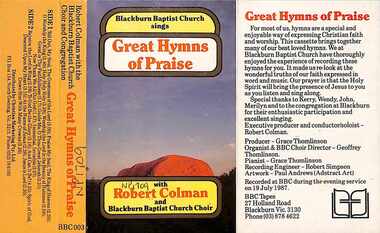
... It was recorded onto audio cassette at the church on 19 July 1987. ...It was recorded onto audio cassette at the church on 19 July 1987. ...The "Instant" Messiah (Pt 1&2) by GF Handel was sung by the Churches of Nunawading at the Nunawading Festival of Music on June 27th 1984 at the Blackburn Baptist Church. Conductor: Douglas Haywood. While the album, "Great Hymns of Praise" was recorded with Robert Colman and the Blackburn Baptist Church Choir and Congregation at the Blackburn Baptist Church on 19th July 1987 during evening service.The "Instant" Messiah by GF Handel was sung by the Churches of Nunawading at the Nunawading Festival of Music on June 27th 1984 at the Blackburn Baptist Church. The festival was organized by the Mayor of Nunawading at the time, Cr. Ken Barelli. Conductor: Douglas Haywood. Organist:Peter Nicholls. Solo Trumpet: Ian Williams. Soloists: Cherle Kirby (soprano), David Russell (alto), Christopher Begg (tenor), Douglas Phillips (base). Orchestra: Members of the Camerata Orchestra. It is recorded on audio cassette in two parts and digitally converted to MP3 format. The third audio file, "Great Hymns of Praise" was sung by Robert Colman and the Blackburn Baptist Church Choir . It was recorded onto audio cassette at the church on 19 July 1987. A list of the hymns is provided in the transcript. non-fictionThe "Instant" Messiah (Pt 1&2) by GF Handel was sung by the Churches of Nunawading at the Nunawading Festival of Music on June 27th 1984 at the Blackburn Baptist Church. Conductor: Douglas Haywood. While the album, "Great Hymns of Praise" was recorded with Robert Colman and the Blackburn Baptist Church Choir and Congregation at the Blackburn Baptist Church on 19th July 1987 during evening service. colman robert, blackburn baptist church choir, handel, hymns, nunawading festival of music, barelli ken cr -
 Vision Australia
Photograph - Image, James Pegler
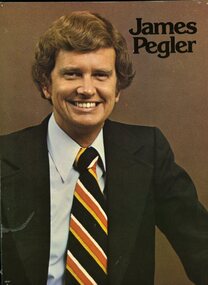
... James Pegler The following top selling James Pegler recordings are available from Phonogram: Record number/ / Music cassette equivalant 2907 002 James Pegler 3204 001 2907 003 Love is a morning sunrise 3204 003 2907 007 Top of the world 3204 007 2907 011 With you in my mind 3204 011 2486 086 It's a beautiful world 3195 139 2907 015 From Britain with love 3204 015...Carols by Candlelight James Pegler James Pegler The following top selling James Pegler recordings are available from Phonogram: Record number/ / Music cassette equivalant 2907 002 James Pegler 3204 001 2907 003 Love is a morning sunrise 3204 003 2907 007 Top of the world 3204 007 2907 011 With you in my mind 3204 011 2486 086 It's a beautiful world 3195 139 2907 015 From Britain with love 3204 015 Col. image on cardboard of James Pegler James Pegler Photograph Image ...Image of James Pegler supplied by his record company, for inclusion in the Carols by Candlelight program.Col. image on cardboard of James PeglerJames Pegler The following top selling James Pegler recordings are available from Phonogram: Record number/ / Music cassette equivalant 2907 002 James Pegler 3204 001 2907 003 Love is a morning sunrise 3204 003 2907 007 Top of the world 3204 007 2907 011 With you in my mind 3204 011 2486 086 It's a beautiful world 3195 139 2907 015 From Britain with love 3204 015carols by candlelight, james pegler -
 Plutarch Project
Machine - Shortwave Radio Antenna, Active Antenna, circa late 1980's
... Using the Shortwave Antenna we could get the latest news from Athens on shortwave radio directly and within an hour these news were recorded on a cassette tape and taken to the Tricom Group P.L. offices in Melbourne (1155 Malvern Road, Malvern 3144). ...Using the Shortwave Antenna we could get the latest news from Athens on shortwave radio directly and within an hour these news were recorded on a cassette tape and taken to the Tricom Group P.L. offices in Melbourne (1155 Malvern Road, Malvern 3144). ...This antenna was used between 1989 and 1990 to help receive the daily news service in the Greek language directly from Athens, Greece. At the time, news from Greece for the Greek people in Australia were arriving in Melbourne a week late, on newspapers from Athens sent through air-mail. These newspapers were displayed at Salapatas and Carras newsagents at Lonsdale street in Melbourne. One thing that was a problem for this service was that the news came at least 7 days late. Using the Shortwave Antenna we could get the latest news from Athens on shortwave radio directly and within an hour these news were recorded on a cassette tape and taken to the Tricom Group P.L. offices in Melbourne (1155 Malvern Road, Malvern 3144). The tape was loaded onto a system which allowed people to call a local phone number and listen to the latest news with a cost of a local call, or a little bit more. As this was prior to the Internet being established around the globe, it was the fastest news service directly from Greece, in the Greek language. It was used for a span of about 12 months, until Tricom closed down their dial-in services, sometime in 1990. The service was captured and loaded onto the system by Iakovos Garivaldis, then an employee of the Tricom Group which was a subsidiary of Southern Cross TV.The Primary significance of this object is of its historical value, social and informative value for the first generation of Greeks in Victoria"World Tuner AT4 SW" antenna with a 920mm fully extended aerial, a tuned circuit and two transistors to prevent loading of the antenna and boost signal output. It is made of plastic, black in colour with the aerial being made of steel. The signals picked up by the antenna are fed via a 15pF ceramic capacitor to a tuned circuit consisting of either VC1a or VC1b and either L1, L2, L3 or L4. The slider switch S1 selects the band to be tuned. The band range is normally from 3 to 30MHz. When S1 is in position A, L1 and VC1a are selected and the antenna can be tuned from 3-9MHz. Similarly positions B, C, and D select higher frequencies up to 30MHz. It was purchased by Iakovos Garivaldis for this use for $119.WORLD TUNER AT4 SW "Amplituned" Shortwave Antennaantenna, radio, short-wave, language, greek -
The Beechworth Burke Museum
Audio - Oral History, Jennifer Williams, Mr John Clemens, 2000
... The interviews were recorded to cassette, before being digitised in 2021. john clemens burke museum beechworth bonegilla migrants camp beechworth hospital murray breweries billson's breweries zwar bros. tannery This is a digital copy of a recording that was originally captured on a cassette tape. ...Mr John Clemens was born in 1913 to Australian parents. His father worked in building roads which led to the family's move from Sunnyside Gen Willis to Beechworth. His father was part of the road making team on the Buffalo River Road between Myrtleford and Beechworth. John worked as a motor mechanic in his early years, having left school in sixth grade. He later worked carting wood (independently) and drinks for Murray Breweries/Billson's Breweries. He delivered drinks and wood to the Old Hospital after its relocation in 1940, to Bonegilla Migrants Camp and got to know most of the townspeople. He recounts his interactions with various members of the community, highlighting the importance of the Zwar Tannery, which John recounts as employing approximately 200 people (dating this recollection to approximately 1938). This oral history recording was part of a project conducted by Jennifer Williams in the year 2000 to capture the everyday life and struggles in Beechworth during the twentieth century. This project involved recording seventy oral histories on cassette tapes of local Beechworth residents which were then published in a book titled: Listen to what they say: voices of twentieth century Beechworth. These cassette tapes were digitised in July 2021 with funds made available by the Friends of the Burke.John's interview demonstrates the dynamics of the Beechworth township in the 1920s-1940s, showing the important industries and connections of the town which he was involved in. His mention of the Model T Ford, produced 1908-1927, shows his experience with early cars in the town, which were owned by the richer people. He talks about the dominance of the Zwar Bros. Tannery over the town, by employing hundreds of people (dating John's recollection to approximately 1938). John's interview shows the changed that the town has gone through through his experiences as a driver for wood and drinks. It can be interpreted as historically significant to the Beechworth local area but also to a wider audience; Zwar Tannery supplies leather to General Motors Holden, the brewery was one of the largest in the country, and the Bonegilla Migrants Camp was the largest and longest running migrant camp in Australia. John's everyday interactions with all of these places and people within makes his story significant. The project is significant for its recording of stories from members of the local Beechworth community before they are lost. It tells of the everyday stories of the people and their memories of the town. The recordings were done in 2000, with interviewees such as John being in their 80s when interviewed. The interviews were recorded to cassette, before being digitised in 2021. This is a digital copy of a recording that was originally captured on a cassette tape. The cassette tape is black with a horizontal white strip and is currently stored in a clear flat plastic rectangular container. It holds up 40 minutes of recordings on each side. john clemens, burke museum, beechworth, bonegilla migrants camp, beechworth hospital, murray breweries, billson's breweries, zwar bros. tannery -
 The Beechworth Burke Museum
Audio - Oral History, Jennifer Williams, Mrs Pam Croswaite, 2000
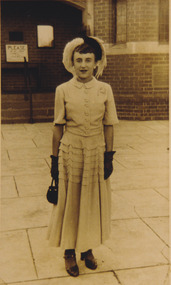
... records locally important stories and memories of the township in the 1900s. By recording the memories of some of the older members of the community, information on Beechworth's evolution as a township can be preserved. beechworth burke museum beechworth lunatic asylum mayday hills zwar bros. tannery beechworth tannery pharmacist This is a digital copy of a recording that was originally captured on a cassette tape. ...Mrs Pam Croswaite was born 1928 in Beechworth. Her father was one of the Zwar brothers who co-owned the Beechworth Tannery until it was sold in the 1950s. Her grandfather was the founder of the Zwar Bros. Tannery and one of the first car owners in Beechworth. Pam went to university to become a pharmacist, studying in Beechworth and Melbourne. She returned to Beechworth to raise her family after quitting her work and travelling with her navy husband to England twice. In 1984 she returned to work as a pharmacist at Mayday Hills psychiatric facility, the former 'Beechworth Lunatic Asylum'. Her grandfather, on her mother's side, was the former superintendent of the psychiatric facility. She retired in 1993, but remained active in the community in the choir and book clubs. This oral history recording was part of a project conducted by Jennifer Williams in the year 2000 to capture the everyday life and struggles in Beechworth during the twentieth century. This project involved recording seventy oral histories on cassette tapes of local Beechworth residents which were then published in a book titled: Listen to what they say: voices of twentieth century Beechworth. These cassette tapes were digitised in July 2021 with funds made available by the Friends of the Burke.Pam's story is significant because of her familial links to the Zwar Bros, who owned the tannery and employed a large percentage of the township and her work as a pharmacist in the Mayday Hills facility. She was the granddaughter of the tannery's founder and daughter of one of the three brothers who owned it until the 1950s. She become a pharmacist after studying in Melbourne and via correspondence from home, which demonstrates how university study was conducted in the 1940s. She worked in the psychiatric facility Mayday Hills, the former 'lunatic asylum', as a pharmacist after her separation form her husband from 1984 to 1993. Pam's story also demonstrated the expectation of women to leave their work to raise their families and the general expectations of women during the 1930s,40s and 50s. The project is significant because it records locally important stories and memories of the township in the 1900s. By recording the memories of some of the older members of the community, information on Beechworth's evolution as a township can be preserved. This is a digital copy of a recording that was originally captured on a cassette tape. The cassette tape is black with a horizontal white strip and is currently stored in a clear flat plastic rectangular container. It holds up 40 minutes of recordings on each side.beechworth, burke museum, beechworth lunatic asylum, mayday hills, zwar bros. tannery, beechworth tannery, pharmacist -
The Beechworth Burke Museum
Audio - Oral History, Jennifer Williams, Gwen and Jack Scott, 24th February 2000
... cassette tapes were digitised in July 2021 with funds made available by the Friends of the Burke. Gwen and Jack Scott’s account of their lives in Beechworth is historically and socially significant to the cultural heritage of the region. Gwen and Jack in reflecting on their everyday experiences of operating a family business, availability of work, leisure opportunities, interaction with migrants, and access to maternal health care provide essential economic, social, and healthcare insights. Gwen and Jack Scott’s oral history recording is part of a larger collection of oral histories recorded ...Jack Scott was born in Beechworth on the 24th January 1919 into a third generation Beechworth family who had migrated from Scotland, Cornwall and Ireland during the 1860s. Also present during the oral history recording is Jack’s wife, Gwen Scott. In 1878 Jack’s grandfather established the carrier business - R. Scott Carriers. Jack’s grandfather secured a contract with the Zwar Brothers' Beechworth Tannery to transport all goods between the tannery and train station via horse and cart. Jack’s father and uncle carried on the family business, before Jack and his brother eventually joined after the Second World War. The company expanded from a single horse and cart short route to multiple trucks operating interstate routes. Prior to joining the family carrier business, Jack on leaving school started work at the tannery and served in the air force during the Second World War. When asked about the working conditions at the tannery, Jack recalls while they did have union representatives, it was not particularly effectual. The union representatives were often placated by sharing multiple whiskies with the Zwar brothers when in their offices to discuss workers’ issues. Gwen’s father also worked for the tannery for a period of time, and she enjoyed the annual picnics the tannery provided for employee families. Both Jack and Gwen’s connections to the tannery reinforces the tannery’s role as a major employer and presence in the Beechworth community. Prior to marrying Jack, Gwen worked in a range of roles including at the Ovens and Murray Hospital for the Aged, managing the family home when her parents both worked during the Second World War, and apprenticed with her sister as a hairdresser. Jack and Gwen provide some insight into maternal health issues in brief discussions of hospital birthing trends and awareness of contraception and family planning. Both Jack and Gwen recalled attending the open-air cinema at ‘The Rock’ in their childhoods. Gwen remembers that the ‘elites’ would sit on chairs at the front, and Gwen’s family sat on a rug at the back, while Jack would jump the fence and get in for nothing. Jack and Gwen discuss attitudes towards both Chinese Australians and Italian migrants in Beechworth. They did not notice any racism and from their perspective felt they were accepted in the town. Jack did note that Italian employees lost their jobs at the tannery during the Second World War, but believed they all stayed within the area and found stonemason and concrete work in the interim. Jack socialised with members of the Italian community and joyfully recalled attending their homes for music nights with lots of drinking and instruments being played. This oral history recording was part of a project conducted by Jennifer Williams in the year 2000 to capture the everyday life and struggles in Beechworth during the twentieth century. This project involved recording seventy oral histories on cassette tapes of local Beechworth residents which were then published in a book titled: Listen to what they say: voices of twentieth century Beechworth. These cassette tapes were digitised in July 2021 with funds made available by the Friends of the Burke. Gwen and Jack Scott’s account of their lives in Beechworth is historically and socially significant to the cultural heritage of the region. Gwen and Jack in reflecting on their everyday experiences of operating a family business, availability of work, leisure opportunities, interaction with migrants, and access to maternal health care provide essential economic, social, and healthcare insights. Gwen and Jack Scott’s oral history recording is part of a larger collection of oral histories recorded by Jennifer Williams in 2000, collectively they provide invaluable insights into Beechworth during the 20th century, much of the information in these oral histories would be lost if not documented and missed in the interpretation of tangible objects. This is a digital copy of a recording that was originally captured on a cassette tape. The cassette tape is black with a horizontal white strip and is currently stored in a clear flat plastic rectangular container. It holds up 40 minutes of recordings on each side.Mrs Gwen and Mr Jack Scott jack scott, gwen scott, r. scott carriers, scott brothers, zwar brother's beechworth tannery, zwar tannery, beechworth tannery, ovens and murray hospital for the aged, benevolent asylum, open-air cinema, the rock cinema, italians beechworth, hospital births 1920s, wang tech, wangaratta tech, nell scott, jennifer williams, oral history, listen to what they say: voices of twentieth century beechworth, tannery union -
 The Beechworth Burke Museum
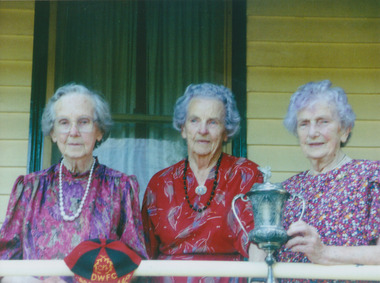
Audio - Oral History, Jennifer Williams, Mrs Grace Irvine, 20th April 2000
... These cassette tapes were digitised in July 2021 with funds made available by the Friends of the Burke. The oral history record of Mrs Grace Irvine is a rare and representative insight into life in Beechworth from the turn of the 20th century to the 21st century, specifically in the descriptions of the everyday, commerce, business, family, and leisure activities for residents of the town throughout war-time and the Depression. ...Mrs Grace Irvine was born in 1907 as one of eight children to the Shennan family in Silver Creek, a town three kilometres east of Beechworth that was considered a part of the town. Her father was a 'wood-carter', contracted to deliver wood to the mining dredges at Silver Creek and the Mayday Hills asylum. Wife to Dick, and mother to four children, Mrs Irvine spent her life in Beechworth, recalling many transformations in its history and living through wars and the Depression. This oral history recording was part of a project conducted by Jennifer Williams in the year 2000 to capture the everyday life and struggles in Beechworth during the twentieth century. This project involved recording seventy oral histories on cassette tapes of local Beechworth residents which were then published in a book titled: Listen to what they say: voices of twentieth century Beechworth. These cassette tapes were digitised in July 2021 with funds made available by the Friends of the Burke.The oral history record of Mrs Grace Irvine is a rare and representative insight into life in Beechworth from the turn of the 20th century to the 21st century, specifically in the descriptions of the everyday, commerce, business, family, and leisure activities for residents of the town throughout war-time and the Depression. Mrs Irvine's recollections have a social value to the Irvine family who have a long enduring history with Beechworth, and so also provide significance to the social and cultural history of the town. This oral history account is socially and historically significant as it is a part of a broader collection of interviews conducted by Jennifer Williams which were published in the book 'Listen to what they say: voices of twentieth-century Beechworth.' While the township of Beechworth is known for its history as a gold rush town, these accounts provide a unique insight into the day-to-day life of the town's residents during the 20th century, many of which will have now been lost if they had not been preserved.This is a digital copy of a recording that was originally captured on a cassette tape. The cassette tape is black with a horizontal white strip and is currently stored in a clear flat plastic rectangular container. It holds up 40 minutes of recordings on each side.Mrs Grace Irvine /listen to what they say, beechworth, oral history, burke museum, irvine, grace irvine -
The Beechworth Burke Museum
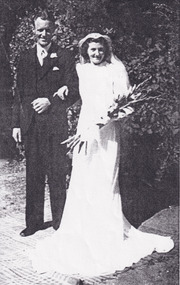
Audio - Oral History, Jennifer Williams, Mrs Helen Jackson, 9th March 2000
... These cassette tapes were digitised in July 2021 with funds made available by the Friends of the Burke. The oral history record of Mrs. ...Mrs. Helen Jackson, originally from Melbourne, moved to Beechworth in the 1950s for the purpose of her husband's employment with the Mayday Hills asylum as a vegetable gardener. Living in Beechworth for over 40 years, Mrs. Jackson spent her time as a devoted full-time mother raising her family of biological and foster children where she has fond memories of Beechworth being a safe and fun place to live - "Oh it was, life was fun!". This oral history recording was part of a project conducted by Jennifer Williams in the year 2000 to capture the everyday life and struggles in Beechworth during the twentieth century. This project involved recording seventy oral histories on cassette tapes of local Beechworth residents which were then published in a book titled: Listen to what they say: voices of twentieth century Beechworth. These cassette tapes were digitised in July 2021 with funds made available by the Friends of the Burke.The oral history record of Mrs. Helen Jackson is a representative insight into life in Beechworth from the 1950s onwards, specifically in the descriptions of commerce, business, family, and leisure activities for residents of the town during the post-war period until the present day. Mrs. Jackson's recollections have a social value to the town of Beechworth as a local perspective on its development and contributes to its cultural and social history. This oral history account is socially and historically significant as it is a part of a broader collection of interviews conducted by Jennifer Williams which were published in the book 'Listen to what they say: voices of twentieth-century Beechworth.' While the township of Beechworth is known for its history as a gold rush town, these accounts provide a unique insight into the day-to-day life of the town's residents during the 20th century, many of which will have now been lost if they had not been preserved.This is a digital copy of a recording that was originally captured on a cassette tape. The cassette tape is black with a horizontal white strip and is currently stored in a clear flat plastic rectangular container. It holds up 40 minutes of recordings on each side.Mrs Helen Jackson /listen to what they say, beechworth, oral history, burke museum, jackson, helen jackson, linda peacock, mayday hills -
 The Beechworth Burke Museum
Audio - Oral History, Jennifer Williams, Mrs May Sewell, 23rd November 2000
... cassette tapes were digitised in July 2021 with funds made available by the Friends of the Burke. Miss May Sewell’s account of her life in Beechworth is historically and socially significant to the cultural heritage of the region. May in reflecting on her experiences of leisure opportunities, town festivals, work available for women, leaving the workforce once married, the tannery, post-natal care, grief and child mortality provide essential historic, economic, social, and healthcare insights. May’s oral history recording is part of a larger collection of oral histories recorded ...May Sewell was born in Beechworth in 1917, her paternal grandparents had come to Beechworth from Ireland and her maternal grandparents from Scotland. She was the youngest of five siblings and the only one to be born in a hospital rather than at home. May loved growing up and living in Beechworth, and fondly recalls knowing all her neighbours, meeting friends at the pictures, attending girl guides, picking wildflowers around the gorge, participating keenly in the Church of England choir and dances, and the big Easter festivals. May worked various jobs before getting married. After leaving school at fifteen, May learnt dressmaking with Lal Anderson (and was delighted with her wage of two and six pence a week) and then went on to learn tailoring with Mr Charles. May then worked in the dining rooms at the Commercial Hotel and Hotel Nicholas. May was at the Hotel Nicholas for seven years but stopped when she got married as female employees were not asked to stay once they were married. May married her husband in 1944 and had known him since school. They went on to have six children, sadly three did not live past infancy. Her first children were twin girls who died six hours after birth. May briefly discusses the difficulty in grieving her twin daughters, the lack of available support, and the expectancy to carry on. Her next child, a son named Ian James, died when he was only ten months old from a tumour. May described Ian James as a lovely boy. May had multiple connections to the Zwar Brothers' Beechworth Tannery. Her father and then her three brothers worked there, and also her husband for a short period of time. The tannery was a major employer in Beechworth, and May having multiple family members employed by the tannery underlines the significant role of the tannery in Beechworth. May described her husband as very hardworking, he worked as a cleaner overnight at the Ovens and Murray Hospital for the Aged while during the day tended his cattle and sheep farm. This oral history recording was part of a project conducted by Jennifer Williams in the year 2000 to capture the everyday life and struggles in Beechworth during the twentieth century. This project involved recording seventy oral histories on cassette tapes of local Beechworth residents which were then published in a book titled: Listen to what they say: voices of twentieth century Beechworth. These cassette tapes were digitised in July 2021 with funds made available by the Friends of the Burke. Miss May Sewell’s account of her life in Beechworth is historically and socially significant to the cultural heritage of the region. May in reflecting on her experiences of leisure opportunities, town festivals, work available for women, leaving the workforce once married, the tannery, post-natal care, grief and child mortality provide essential historic, economic, social, and healthcare insights. May’s oral history recording is part of a larger collection of oral histories recorded by Jennifer Williams in 2000, collectively they provide invaluable insights into Beechworth during the 20th century, much of the information in these oral histories would be lost if not documented and missed in the interpretation of tangible objects. This is a digital copy of a recording that was originally captured on a cassette tape. The cassette tape is black with a horizontal white strip and is currently stored in a clear flat plastic rectangular container. It holds up 40 minutes of recordings on each side.Mrs May Sewellmay sewell, oral history, jennifer williams, listen to what they say: voices of twentieth century beechworth, beechworth church of england, easter festival, beechworth girl guides, hospital birth 1917, lal anderson, tailor beechworth, commercial hotel, hotel nicholas, zwar brother's beechworth tannery, ovens and murray hospital for the aged, dressmaking beechworth, beechworth cinemas, paul voglis -
Glenelg Shire Council Cultural Collection
Functional object - Cassette - Ken Robertson Portland, Victoria, n.d
... Ken Robertson's Portland Vic songs. 11 songs about Portland and surrounds, written and recorded by Ken Robertson of Swan Hill Functional object Cassette - Ken Robertson Portland, Victoria ...Ken Robertson's Portland Vic songs. 11 songs about Portland and surrounds, written and recorded by Ken Robertson of Swan Hill -
 Greensborough Historical Society
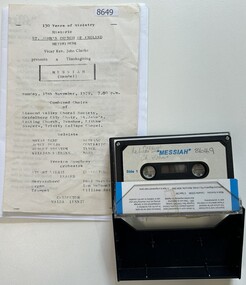
Mixed media - Audio Cassette and Program, Diamond Valley Choral Society, Handel's Messiah, performed by Diamond Valley Choral Society 1979, 18/11/1979
... This performance by the Diamond Valley Choral Society and combined choirs was recorded at St John's Church of England, Heidelberg 18/11/1979 to celebrate 150 years of ministry at St John's. diamond valley choral society Messiah (oratorio) st john's church of england heidelberg Handwritten on case: "79 Messiah - St Johns, Commercial tape" 2 audio cassettes in clear plastic case and 3 copies of a printed program Handel's Messiah, performed by Diamond Valley Choral Society 1979 Mixed media Audio Cassette and Program Diamond Valley Choral Society ...A recording of 'Messiah', an English language oratorio by George Frederic Handel, composed in 1741. The text was compiled from the King James Bible; it contains 3 parts and part 2 ends with the 'Hallelujah' chorus. This performance by the Diamond Valley Choral Society and combined choirs was recorded at St John's Church of England, Heidelberg 18/11/1979 to celebrate 150 years of ministry at St John's. 2 audio cassettes in clear plastic case and 3 copies of a printed programHandwritten on case: "79 Messiah - St Johns, Commercial tape"diamond valley choral society, messiah (oratorio), st john's church of england heidelberg
