
Showing 23 items matching "rubber processing"
-
 Moorabbin Air Museum
Booklet - Rubber in aircraft
... ...Rubber processing...Rubber in aircraft Rubber as engineering material Rubber processing Aircraft tyres De-icing equipment Hydraulic applications & oil seals Insulation suspension Hose & tubing Fuel tanks Misc.uses Overview of the use of rubber in various aircraft components, circa 1950 Rubber in Aircraft Booklet Rubber in aircraft ...Overview of the use of rubber in various aircraft components, circa 1950non-fictionOverview of the use of rubber in various aircraft components, circa 1950rubber as engineering material, rubber processing, aircraft tyres, de-icing equipment, hydraulic applications & oil seals, insulation suspension, hose & tubing, fuel tanks, misc.uses -
 Flagstaff Hill Maritime Museum and Village
Equipment - Stencil Set, Mid-20th century
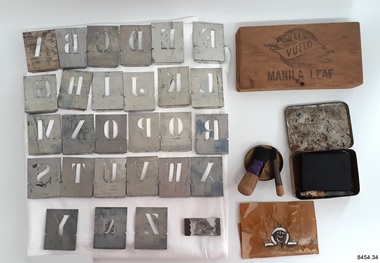
... The phrase is not to be confused with the 1900-1950s firm Rubberset but ''rubber set" is the process of setting the bristles of a brush into rubber to keep them together and hold them in place. ...The phrase is not to be confused with the 1900-1950s firm Rubberset but ''rubber set" is the process of setting the bristles of a brush into rubber to keep them together and hold them in place. ...The stencil set has signs of use, with ink on the metal and paper stencils, and in the mixing lid and the block and tube of ink have been used too. The larger brush in this set is labelled "rubber set". The phrase is not to be confused with the 1900-1950s firm Rubberset but ''rubber set" is the process of setting the bristles of a brush into rubber to keep them together and hold them in place. This stencil set once belonged to Dr William Roy Angus. He habitually labelled his possessions with his name - this stencil set may have been used for that purpose. This set is now part of Flagstaff Hill’s comprehensive W.R. Angus Collection, donated by the family of Dr W R Angus, 1901-1970, surgeon and oculist. The W.R. Angus Collection: - The W.R. Angus Collection includes historical medical equipment, surgical instruments and material belonging to Dr Edward Ryan and Dr Thomas Francis Ryan, (both of Nhill, Victoria) and Dr Angus’ own belongings. The Collection’s history spans the medical practices of the two Doctors Ryan, from 1885-1926 plus that of Dr Angus, up until 1969. It includes historical medical and surgical equipment and instruments from the doctors Edward and Thomas Ryan of Nhill, Victoria. Dr Angus married Gladys in 1927 at Ballarat, the nearest big city to Nhill where he began as a Medical Assistant. He was also Acting House surgeon at the Nhill hospital where their two daughters were born. During World War II He served as a Military Doctor in the Australian Defence Force. Dr Angus and his family moved to Warrnambool in 1939, where Dr Angus operated his own medical practice. He later added the part-time Port Medical Officer responsibility and was the last person appointed to that position. Both Dr Angus and his wife were very involved in the local community, including the planning stages of the new Flagstaff Hill and the layout of the gardens there. Dr Angus passed away in March 1970.This stencil set is an example of objects belonging to Dr. W. R. Angus, 1901-1970, surgeon and oculist. It shows the keeness of the owner to label his posessions. The W.R. Angus Collection is significant for still being located at the site it is connected with, Doctor Angus being the last Port Medical Officer in Warrnambool. The Collection includes historical medical objects that date back to the late 1800s.Stencil set with 27 metal cut stencils of the 26 letters of the Alphabet plus an ‘&’, and a metal clip to hold the set together (.1 - .28). The set also has two wooden handled brushes (large with a purple band .29, small with grey band .30) a solid block of black ink and a tube of black paint (.31 and .32) in a green tobacco tin, and a round metal lid used for mixing the inks. The set is contained in a vintage wooden cigar box with a hinged lid. Another stencil (8452.33) is made from stiff waxed paper and reproduces the medical symbol [serpent wound around a rod or cross]. This set is part of the W. R. Angus Collection.Stamped on a large brush "PURE BRISTLE" "RUBBER SET" and a logo (looks like the head of an animal) On small brush "- - - ER" On the wooden box lid and inside the lid "EL VUELO" within a round logo with leaves, "MANILLA LEAF" and on the long side "PERLAS" "25" On wooden box end handwritten in pencil "STENCIL" On ink in a tin "The "GREYS" "SILK CUT VIRGINIA TOBACCO" On the round lid "‘Cellona’"flagstaff hill, warrnambool, maritime village, maritime museum, shipwreck coast, great ocean road, flagstaff hill maritime museum and village, dr w r angus, dr ryan, w.r. angus collection, stencils, stencil set, bristle brushes, rubber set brush, metal stencils, waxed paper stencil, black ink block, black ink tube, stencil ink, labelling equipment, el vuelo, manilla leaf cigars, the greys, virginia tobacco, silk cut virginia tobacco -
 Flagstaff Hill Maritime Museum and Village
Functional object - Rubber Washer, Ca. 1878
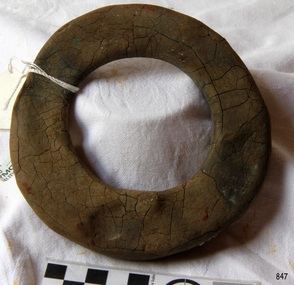
... processes). The collection is also historically significant for its association with the LOCH ARD, which was one of the worst and best known shipwrecks in Victoria’s history. flagstaff hill warrnambool shipwrecked coast flagstaff hill maritime museum maritime museum shipwreck coast flagstaff hill maritime village great ocean road loch line loch ard captain gibbs eva carmichael tom pearce glenample station mutton bird island loch ard gorge rubber washer rubber ring Rubber washer, brown ring, non-uniformed shape, has a crack through it. ...HISTORY OF THE LOCH ARD The LOCH ARD belonged to the famous Loch Line which sailed many ships from England to Australia. Built in Glasgow by Barclay, Curdle and Co. in 1873, the LOCH ARD was a three-masted square rigged iron sailing ship. The ship measured 262ft 7" (79.87m) in length, 38ft (11.58m) in width, 23ft (7m) in depth and had a gross tonnage of 1693 tons. The LOCH ARD's main mast measured a massive 150ft (45.7m) in height. LOCH ARD made three trips to Australia and one trip to Calcutta before its final voyage. LOCH ARD left England on March 2, 1878, under the command of Captain Gibbs, a newly married, 29 year old. She was bound for Melbourne with a crew of 37, plus 17 passengers and a load of cargo. The general cargo reflected the affluence of Melbourne at the time. On board were straw hats, umbrella, perfumes, clay pipes, pianos, clocks, confectionary, linen and candles, as well as a heavier load of railway irons, cement, lead and copper. There were items included that intended for display in the Melbourne International Exhibition in 1880. The voyage to Port Phillip was long but uneventful. At 3am on June 1, 1878, Captain Gibbs was expecting to see land and the passengers were becoming excited as they prepared to view their new homeland in the early morning. But LOCH ARD was running into a fog which greatly reduced visibility. Captain Gibbs was becoming anxious as there was no sign of land or the Cape Otway lighthouse. At 4am the fog lifted. A man aloft announced that he could see breakers. The sheer cliffs of Victoria's west coast came into view, and Captain Gibbs realised that the ship was much closer to them than expected. He ordered as much sail to be set as time would permit and then attempted to steer the vessel out to sea. On coming head on into the wind, the ship lost momentum, the sails fell limp and LOCH ARD's bow swung back. Gibbs then ordered the anchors to be released in an attempt to hold its position. The anchors sank some 50 fathoms - but did not hold. By this time LOCH ARD was among the breakers and the tall cliffs of Mutton Bird Island rose behind the ship. Just half a mile from the coast, the ship's bow was suddenly pulled around by the anchor. The captain tried to tack out to sea, but the ship struck a reef at the base of Mutton Bird Island, near Port Campbell. Waves broke over the ship and the top deck was loosened from the hull. The masts and rigging came crashing down knocking passengers and crew overboard. When a lifeboat was finally launched, it crashed into the side of LOCH ARD and capsized. Tom Pearce, who had launched the boat, managed to cling to its overturned hull and shelter beneath it. He drifted out to sea and then on the flood tide came into what is now known as LOCH ARD Gorge. He swam to shore, bruised and dazed, and found a cave in which to shelter. Some of the crew stayed below deck to shelter from the falling rigging but drowned when the ship slipped off the reef into deeper water. Eva Carmichael had raced onto deck to find out what was happening only to be confronted by towering cliffs looming above the stricken ship. In all the chaos, Captain Gibbs grabbed Eva and said, "If you are saved Eva, let my dear wife know that I died like a sailor". That was the last Eva Carmichael saw of the captain. She was swept off the ship by a huge wave. Eva saw Tom Pearce on a small rocky beach and yelled to attract his attention. He dived in and swam to the exhausted woman and dragged her to shore. He took her to the cave and broke open case of brandy which had washed up on the beach. He opened a bottle to revive the unconscious woman. A few hours later Tom scaled a cliff in search of help. He followed hoof prints and came by chance upon two men from nearby Glenample Station three and a half miles away. In a state of exhaustion, he told the men of the tragedy. Tom returned to the gorge while the two men rode back to the station to get help. By the time they reached LOCH ARD Gorge, it was cold and dark. The two shipwreck survivors were taken to Glenample Station to recover. Eva stayed at the station for six weeks before returning to Ireland, this time by steamship. In Melbourne, Tom Pearce received a hero's welcome. He was presented with the first gold medal of the Royal Humane Society of Victoria and a £1000 cheque from the Victorian Government. Concerts were performed to honour the young man's bravery and to raise money for those who lost family in the LOCH ARD disaster. Of the 54 crew members and passengers on board, only two survived: the apprentice, Tom Pearce and the young woman passenger, Eva Carmichael, who lost all of her family in the tragedy. Ten days after the LOCH ARD tragedy, salvage rights to the wreck were sold at auction for £2,120. Cargo valued at £3,000 was salvaged and placed on the beach, but most washed back into the sea when another storm developed. The wreck of LOCH ARD still lies at the base of Mutton Bird Island. Much of the cargo has now been salvaged and some was washed up into what is now known as LOCH ARD Gorge. Cargo and artefacts have also been illegally salvaged over many years before protective legislation was introduced. One of the most unlikely pieces of cargo to have survived the shipwreck was a Minton porcelain peacock - one of only nine in the world. The peacock was destined for the Melbourne International Exhibition in 1880. It had been well packed, which gave it adequate protection during the violent storm. Today, the Minton peacock can be seen at the Flagstaff Hill Maritime Museum in Warrnambool. From Australia's most dramatic shipwreck it has now become Australia's most valuable shipwreck artefact and is one of very few 'objects' on the Victorian State Heritage Register. Flagstaff Hill’s collection of artefacts from LOCH ARD is significant for being one of the largest collections of artefacts from this shipwreck in Victoria. It is significant for its association with the shipwreck, which is on the Victorian Heritage Register (VHR S417). The collection is significant because of the relationship between the objects, as together they have a high potential to interpret the story of the LOCH ARD. The LOCH ARD collection is archaeologically significant as the remains of a large international passenger and cargo ship. The LOCH ARD collection is historically significant for representing aspects of Victoria’s shipping history and its potential to interpret sub-theme 1.5 of Victoria’s Framework of Historical Themes (living with natural processes). The collection is also historically significant for its association with the LOCH ARD, which was one of the worst and best known shipwrecks in Victoria’s history. Rubber washer, brown ring, non-uniformed shape, has a crack through it. Recovered from the wreck of the Loch Ard. flagstaff hill, warrnambool, shipwrecked coast, flagstaff hill maritime museum, maritime museum, shipwreck coast, flagstaff hill maritime village, great ocean road, loch line, loch ard, captain gibbs, eva carmichael, tom pearce, glenample station, mutton bird island, loch ard gorge, rubber washer, rubber ring -
 Flagstaff Hill Maritime Museum and Village
Domestic object - Wash trough, Melvin Newton Lovell, Mangle was Patented June 10, 1898 by Lovell Trough is possibly of later manufacture by a local unknown cabinet maker between 1900-1920
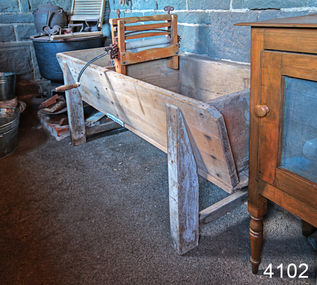
... Lovell was also one of the organizers and stockholders of the Combination Roll & Rubber Manufacturing Co, of New York, which was formed to manufacture his patents, with headquarters in New York and a factory at Bloomfield, New Jersey. A significant household item used in the process ...Melvin Newton Lovell was born in Allegheny, Venango county, Pennsylvania, on 31 August 1844, to Darius T. Lovell (1815-1855) and Susan B. (Conover) Lovell (1827-1883). When Melvin Lovell was a boy, the family removed to Kerrtown, a village located in the vicinity of Titusville, PA. There Melvin served an apprenticeship at the carpenter's trade, and his natural mechanical talent enabled him to become a skilled workman. He followed his trade during the major portion of his term of residence in Kerrtown. In 1861, at seventeen years of age, Melvin Lovell left his home and, without parental authority, and entered the Union army soon after the outbreak of the Civil war. In August 1862, he was enlisted as a private in the 127th Pennsylvania Volunteer Infantry and saw active service until receiving his discharge at the end of May 1863. In 1865 he took up his residence in Erie, where he worked at the carpenter's trade for several years thereafter. In 1869 Melvin Lovell invented and patented several useful articles for household use, and in that year he began the manufacturing of certain of these inventions, in partnership with Franklin Farrar Adams, another inventor. Among the principal products of the original factory were washing machines and step-ladders. In 1881 Lovell individually began manufacturing other of his patents, including spring beds, and from modest inception, his Lovell Manufacturing Company grew to be one of the largest industrial concerns of its kind in the country and was recognized as being the most extensive manufacture of clothes-wringers in the entire world. In connection with his manufacture of domestic items, Lovell established sales agencies for his products in all parts of the country, and these branches were known as the Lovell stores. These goods were sold on the instalment plan and after his business had already been established becoming a substantial concern Lovell invented and patented the famous wringer which bears his name under the “Anchor” brand, and in later years he confined his operations largely to the manufacture of this very superior household invention. Lovell was also one of the organizers and stockholders of the Combination Roll & Rubber Manufacturing Co, of New York, which was formed to manufacture his patents, with headquarters in New York and a factory at Bloomfield, New Jersey.A significant household item used in the process of washing clothes by a man who had started in 1869, as a young carpenter and later he became a successful businessman and manufacturer of household items. Lovell was granted numerous patents for various devices during his career including several patents for adding machines (cash registers). This item is now sought by collectors and is even rarer due to it's combination with a Lovell clothes wringer. Wooden wash trough with 2 troughs & attached a Lovell wringer (or mangle Anchor Brand) Hard to make out as worn off with useflagstaff hill, warrnambool, shipwrecked-coast, flagstaff-hill-maritime-museum, flagstaff-hill-maritime-village, wash trough, wringer, mangle, laundry, cleaning, washing, housework, domestic, melvin newton lovell, wooden was trough -
 Flagstaff Hill Maritime Museum and Village
Domestic object - Wringer/Mangle, Melvin Newton Lovell, 1898 -1900
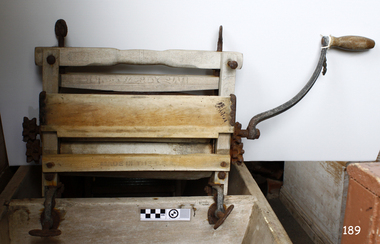
... Lovell was also one of the organizers and stockholders of the Combination Roll & Rubber Manufacturing Co, of New York, which was formed to manufacture his patents, with headquarters in New York and a factory at Bloomfield, New Jersey. A significant household item used in the process ...Melvin Newton Lovell was born in Allegheny, Venango county, Pennsylvania, on 31 August 1844, to Darius T. Lovell (1815-1855) and Susan B. (Conover) Lovell (1827-1883). When Melvin Lovell was a boy, the family removed to Kerrtown, a village located in the vicinity of Titusville, PA. There Melvin served an apprenticeship at the carpenter's trade, and his natural mechanical talent enabled him to become a skilled workman. He followed his trade during the major portion of his term of residence in Kerrtown. In 1861, at seventeen years of age, Melvin Lovell left his home and, without parental authority, and entered the Union army soon after the outbreak of the Civil war. In August 1862, he was enlisted as a private in the 127th Pennsylvania Volunteer Infantry and saw active service until receiving his discharge at the end of May 1863. In 1865 he took up his residence in Erie, where he worked at the carpenter's trade for several years thereafter. In 1869 Melvin Lovell invented and patented several useful articles for household use, and in that year he began the manufacturing of certain of these inventions, in partnership with Franklin Farrar Adams, another inventor. Among the principal products of the original factory were washing machines and step-ladders. In 1881 Lovell individually began manufacturing other of his patents, including spring beds, and from modest inception, his Lovell Manufacturing Company grew to be one of the largest industrial concerns of its kind in the country and was recognized as being the most extensive manufacture of clothes-wringers in the entire world. In connection with his manufacture of domestic items, Lovell established sales agencies for his products in all parts of the country, and these branches were known as the Lovell stores. These goods were sold on the instalment plan and after his business had already been established becoming a substantial concern Lovell invented and patented the famous wringer which bears his name under the “Anchor” brand, and in later years he confined his operations largely to the manufacture of this very superior household invention. Lovell was also one of the organizers and stockholders of the Combination Roll & Rubber Manufacturing Co, of New York, which was formed to manufacture his patents, with headquarters in New York and a factory at Bloomfield, New Jersey.A significant household item used in the process of washing clothes by a man who had started in 1869, as a young carpenter and later he became a successful businessman and manufacturer of household items. Lovell was granted numerous patents for various devices during his career including several patents for adding machines (cash registers).Wringer (or mangle); portable wooden washing wringer with rubber rollers, manually driven by iron set of gears and handle. Includes iron clamps and adjusting screws for attaching. Marked on frame "382", "12 x 1 3/4" Anchor Brand "Made in USA" flagstaff hill, warrnambool, shipwrecked coast, flagstaff hill maritime museum, flagstaff hill maritime village, great ocean road, mangle, clothes wringer, washing equipment, laundry, wringer, domestic, washing mangle -
 Flagstaff Hill Maritime Museum and Village
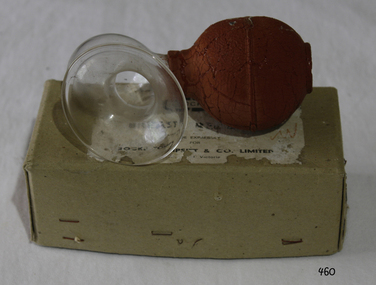
Expresser, c. 1947
... process. More modern breast pumps operate using electricity. This personal milk expresser or breast pump/reliever is complete with its box. It represents equipment used by lactating mothers over decades. flagstaff hill warrnambool shipwrecked-coast flagstaff-hill flagstaff-hill-maritime-museum maritime-museum shipwreck-coast flagstaff-hill-maritime-village expresser breast pump milk expresser breast reliever medicine breast feeding equipment motherhood breast care lactation mastitis baby care "Guaranteed CORONET English Made" Expresser and box. Clear glass horn shaped milk expresser with red rubber ...Breast expressers or breast pumps are used by lactating mothers to remove breast milk. The milk can be stored for later use, perhaps allowing carers to take over feeding the baby if the mother is not available. The milk may also be removed if the mother has excess milk that causes discomfort and can lead to painful Mastitis. This particular breast pump works by suction. The excess milk is gathered in the glass chamber during the process. More modern breast pumps operate using electricity.This personal milk expresser or breast pump/reliever is complete with its box. It represents equipment used by lactating mothers over decades.Expresser and box. Clear glass horn shaped milk expresser with red rubber bulb (commonly called a breast pump or breast reliever). Coronet brand, made in England. "Guaranteed CORONET English Made"flagstaff hill, warrnambool, shipwrecked-coast, flagstaff-hill, flagstaff-hill-maritime-museum, maritime-museum, shipwreck-coast, flagstaff-hill-maritime-village, expresser, breast pump, milk expresser, breast reliever, medicine, breast feeding equipment, motherhood, breast care, lactation, mastitis, baby care -
 The Beechworth Burke Museum
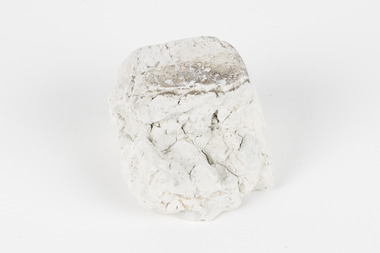
Geological specimen - Kaolin, unknown
... rubbers and plastics. There are many kaolin deposits in Victoria but many of these have been mined out and there is not much Kaolin left. Rocks that have a high amount of Kaolinite and it can be formed through the decomposition of other materials. There are two types of Kaolin; hard and soft kaolin. Soft kaolin's are coarse but have a soapy texture. It can also break easily. The hard kaolins have an earthly texture and are finer grained. This means that they are harder to break, unlike the soft kaolin. Hard kaolin's are formed by flocculation in salt water, a process...rubbers and plastics. There are many kaolin deposits in Victoria but many of these have been mined out and there is not much Kaolin left. Rocks that have a high amount of Kaolinite and it can be formed through the decomposition of other materials. There are two types of Kaolin; hard and soft kaolin. Soft kaolin's are coarse but have a soapy texture. It can also break easily. The hard kaolins have an earthly texture and are finer grained. This means that they are harder to break, unlike the soft kaolin. Hard kaolin's are formed by flocculation in salt water, a process ...Kaolin is also known as china clay. This specimen came from Dunolly, Victoria and was donated to the Museum in 1868 as part of the Geological Survey of Victoria. This survey helped map and study the geology of Victoria. In Victoria, Kaolin is particularly used as a filler and coating material in paper manufacture. It can also be used in paints, ceramics, rubbers and plastics. There are many kaolin deposits in Victoria but many of these have been mined out and there is not much Kaolin left. Rocks that have a high amount of Kaolinite and it can be formed through the decomposition of other materials. There are two types of Kaolin; hard and soft kaolin. Soft kaolin's are coarse but have a soapy texture. It can also break easily. The hard kaolins have an earthly texture and are finer grained. This means that they are harder to break, unlike the soft kaolin. Hard kaolin's are formed by flocculation in salt water, a process that in basic terms, bonds particles together. Kaolin is a common material in Victoria and that is why it is significant. While this specimen was mined in Dunolly, Victoria Kaolin can also be found Pittong, Pakenham, Bulla, Hallam and Ballarat as well as many other places throughout Victoria. This specimen represents the presence of Kaolin deposits in this region of Australia. It is also significant because Kaolin has many uses and is largely beneficial to many manufacturing processes in Victoria. This specimen is part of a larger collection of geological and mineral specimens collected from around Australia (and some parts of the world) and donated to the Burke Museum between 1868-1880. A large percentage of these specimens were collected in Victoria as part of the Geological Survey of Victoria that begun in 1852 (in response to the Gold Rush) to study and map the geology of Victoria. Collecting geological specimens was an important part of mapping and understanding the scientific makeup of the earth. Many of these specimens were sent to research and collecting organisations across Australia, including the Burke Museum, to educate and encourage further study.Two pieces of Kaolinite mineral with shades of white and graygeological specimen, geology, geology collection, burke museum, beechworth, kaolin, china clay, dunolly, geological survey of victoria, kaolinite, victoria, mining, mining deposits, geology of victoria, australia, filler, coating material, paper manufacture, paint, ceramics, rubbers, plastics, decomposition, materials, soft kaolin, hard kaolin, flocculation, particles, salt water -
 Flagstaff Hill Maritime Museum and Village
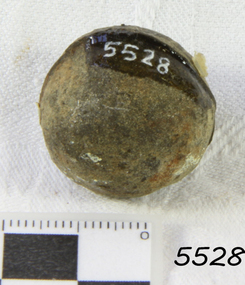
Rubber Ball
... processes). The collection is also historically significant for its association with the LOCH ARD, which was one of the worst and best known shipwrecks in Victoria’s history. flagstaff hill warrnambool shipwrecked coast flagstaff hill maritime museum maritime museum shipwreck coast flagstaff hill maritime village great ocean road loch line loch ard captain gibbs eva carmichael tom pearce glenample station mutton bird island loch ard gorge rubber ball ball Small hard, perished rubber ball with a seam visible. ...Ref: LA (417) 4 49 276 HISTORY OF THE LOCH ARD The LOCH ARD belonged to the famous Loch Line which sailed many ships from England to Australia. Built in Glasgow by Barclay, Curdle and Co. in 1873, the LOCH ARD was a three-masted square rigged iron sailing ship. The ship measured 262ft 7" (79.87m) in length, 38ft (11.58m) in width, 23ft (7m) in depth and had a gross tonnage of 1693 tons. The LOCH ARD's main mast measured a massive 150ft (45.7m) in height. LOCH ARD made three trips to Australia and one trip to Calcutta before its final voyage. LOCH ARD left England on March 2, 1878, under the command of Captain Gibbs, a newly married, 29 year old. She was bound for Melbourne with a crew of 37, plus 17 passengers and a load of cargo. The general cargo reflected the affluence of Melbourne at the time. On board were straw hats, umbrella, perfumes, clay pipes, pianos, clocks, confectionary, linen and candles, as well as a heavier load of railway irons, cement, lead and copper. There were items included that intended for display in the Melbourne International Exhibition in 1880. The voyage to Port Phillip was long but uneventful. At 3am on June 1, 1878, Captain Gibbs was expecting to see land and the passengers were becoming excited as they prepared to view their new homeland in the early morning. But LOCH ARD was running into a fog which greatly reduced visibility. Captain Gibbs was becoming anxious as there was no sign of land or the Cape Otway lighthouse. At 4am the fog lifted. A man aloft announced that he could see breakers. The sheer cliffs of Victoria's west coast came into view, and Captain Gibbs realised that the ship was much closer to them than expected. He ordered as much sail to be set as time would permit and then attempted to steer the vessel out to sea. On coming head on into the wind, the ship lost momentum, the sails fell limp and LOCH ARD's bow swung back. Gibbs then ordered the anchors to be released in an attempt to hold its position. The anchors sank some 50 fathoms - but did not hold. By this time LOCH ARD was among the breakers and the tall cliffs of Mutton Bird Island rose behind the ship. Just half a mile from the coast, the ship's bow was suddenly pulled around by the anchor. The captain tried to tack out to sea, but the ship struck a reef at the base of Mutton Bird Island, near Port Campbell. Waves broke over the ship and the top deck was loosened from the hull. The masts and rigging came crashing down knocking passengers and crew overboard. When a lifeboat was finally launched, it crashed into the side of LOCH ARD and capsized. Tom Pearce, who had launched the boat, managed to cling to its overturned hull and shelter beneath it. He drifted out to sea and then on the flood tide came into what is now known as LOCH ARD Gorge. He swam to shore, bruised and dazed, and found a cave in which to shelter. Some of the crew stayed below deck to shelter from the falling rigging but drowned when the ship slipped off the reef into deeper water. Eva Carmichael had raced onto deck to find out what was happening only to be confronted by towering cliffs looming above the stricken ship. In all the chaos, Captain Gibbs grabbed Eva and said, "If you are saved Eva, let my dear wife know that I died like a sailor". That was the last Eva Carmichael saw of the captain. She was swept off the ship by a huge wave. Eva saw Tom Pearce on a small rocky beach and yelled to attract his attention. He dived in and swam to the exhausted woman and dragged her to shore. He took her to the cave and broke open case of brandy which had washed up on the beach. He opened a bottle to revive the unconscious woman. A few hours later Tom scaled a cliff in search of help. He followed hoof prints and came by chance upon two men from nearby Glenample Station three and a half miles away. In a state of exhaustion, he told the men of the tragedy. Tom returned to the gorge while the two men rode back to the station to get help. By the time they reached LOCH ARD Gorge, it was cold and dark. The two shipwreck survivors were taken to Glenample Station to recover. Eva stayed at the station for six weeks before returning to Ireland, this time by steamship. In Melbourne, Tom Pearce received a hero's welcome. He was presented with the first gold medal of the Royal Humane Society of Victoria and a £1000 cheque from the Victorian Government. Concerts were performed to honour the young man's bravery and to raise money for those who lost family in the LOCH ARD disaster. Of the 54 crew members and passengers on board, only two survived: the apprentice, Tom Pearce and the young woman passenger, Eva Carmichael, who lost all of her family in the tragedy. Ten days after the LOCH ARD tragedy, salvage rights to the wreck were sold at auction for £2,120. Cargo valued at £3,000 was salvaged and placed on the beach, but most washed back into the sea when another storm developed. The wreck of LOCH ARD still lies at the base of Mutton Bird Island. Much of the cargo has now been salvaged and some was washed up into what is now known as LOCH ARD Gorge. Cargo and artefacts have also been illegally salvaged over many years before protective legislation was introduced. One of the most unlikely pieces of cargo to have survived the shipwreck was a Minton porcelain peacock - one of only nine in the world. The peacock was destined for the Melbourne International Exhibition in 1880. It had been well packed, which gave it adequate protection during the violent storm. Today, the Minton peacock can be seen at the Flagstaff Hill Maritime Museum in Warrnambool. From Australia's most dramatic shipwreck it has now become Australia's most valuable shipwreck artefact and is one of very few 'objects' on the Victorian State Heritage Register. Flagstaff Hill’s collection of artefacts from LOCH ARD is significant for being one of the largest collections of artefacts from this shipwreck in Victoria. It is significant for its association with the shipwreck, which is on the Victorian Heritage Register (VHR S417). The collection is significant because of the relationship between the objects, as together they have a high potential to interpret the story of the LOCH ARD. The LOCH ARD collection is archaeologically significant as the remains of a large international passenger and cargo ship. The LOCH ARD collection is historically significant for representing aspects of Victoria’s shipping history and its potential to interpret sub-theme 1.5 of Victoria’s Framework of Historical Themes (living with natural processes). The collection is also historically significant for its association with the LOCH ARD, which was one of the worst and best known shipwrecks in Victoria’s history. Small hard, perished rubber ball with a seam visible. Recovered from the wreck of the Loch Ard. Artefact reg No LA/31.flagstaff hill, warrnambool, shipwrecked coast, flagstaff hill maritime museum, maritime museum, shipwreck coast, flagstaff hill maritime village, great ocean road, loch line, loch ard, captain gibbs, eva carmichael, tom pearce, glenample station, mutton bird island, loch ard gorge, rubber ball, ball -
 Flagstaff Hill Maritime Museum and Village
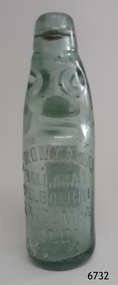
Domestic object - Codd neck bottle, E. Rowlands, 1921
... process that he patented as "Codd's patented globe stopper bottle" in 1872. The Codd-neck bottle (commonly called Codd or marble bottle) is manufactured in two parts. The body of the bottle is cast in two sections. At the time of joining the sections, glass marble and rubber...process that he patented as "Codd's patented globe stopper bottle" in 1872. The Codd-neck bottle (commonly called Codd or marble bottle) is manufactured in two parts. The body of the bottle is cast in two sections. At the time of joining the sections, glass marble and rubber ...The design of the bottle is called a Codd, sometimes referred to as a marble bottle or "Codd's patent bottle". During the mid-to-late 1800s, there were many inventions to keep the fizz in carbonated drinks such as ginger ale, soda water, and fruit drinks. Hiram Codd, an English engineer invented a successful process that he patented as "Codd's patented globe stopper bottle" in 1872. The Codd-neck bottle (commonly called Codd or marble bottle) is manufactured in two parts. The body of the bottle is cast in two sections. At the time of joining the sections, glass marble and rubber seal are inserted into the neck section. The lip is then applied to the top of the bottle. The Codd bottle is filled upside down as the pressure of the gas from the carbonated liquid holds the marble up and out of the way. When the bottle stands upright the gas pushes the marble up against the washer, creating a firm seal to keep the fizz inside. The bottle is opened by pushing the marble down firmly to allow some of the gas to escape. The marble drops down and is caught in a depression formed in the neck. When the bottle is tilted to pour or drink the liquid the marble rests in a dimple. Two Ballarat miners, Evan Rowland and Robert Lewis started manufacturing mineral and aerated waters, bitters, cordials, and liqueurs in 1854, in a tent on the shores of Lake Wendouree Ballarat. Another 13 firms at that time employed manual operations, whereas they introduced Taylor's No. 1 machine that speeded up the process and laid the foundation for their fortune. Evan Rowland was a pioneer in the aerated water trade in Australia. He was born on August 2, 1826, in North Wales. In 1852, during the gold rush, he emigrated to Melbourne, and in 1854 he went to Ballarat and formed a partnership with Robert Lewis, the firm being called ‘‘Rowlands & Lewis’’. Their next step was to secure a supply of pure water. Using mineral Waters that they found via a natural spring at Warrenheip, Victoria. From the outset, the beverages made from this water gained repute and were in great demand. Their business prospered so well that in 1858 they were able to build a factory at the corner of Sturt and Dawson Streets, Ballarat, and to fit with the most up-to-date machinery then in use. By 1870 their business had increased so much and demand had grown to such an extent that Mr. Rowlands erected another factory, covering over an acre of ground at the corner of Dana and Doveton Streets, costing £13,000. The factory was fitted with the most modern equipment of the time to manufacture cordials and aerated water. In 1873 Rowlands established an agency at 116 Collins St, Melbourne, because the demand for the products of the Melbourne factory became so large. The company expanded to Sydney opening a factory at the corner of Burns & Hay Streets Darling Harbour obtaining spring water to supply this plant from Katoomba in the Blue Mountains. The water was brought to Sydney by rail. In the meantime, the Melbourne concern had progressed so rapidly that in 1888 a magnificent factory embodying all the latest ideas and equipment was built in King Street Melbourne. Robert Lewis was a fellow Welshman born in 1816, and he arrived in Port Phillip in 1853 and became a partner in the early day with Evan Rowland but with lesser and shorter involvement in the firm, from which he retired in 1876. Robert Lewis was perhaps better known as Ballarat's first mayor and a Member of the Legislative Assembly. He was a strong supporter of local charities, president/treasurer of the Eisteddfod Committee, a major force in the development of the Ballarat Hospital, and he was the mayor of Ballarat five times, the first in 1863, (having been a counsellor as early as 1859) and for the last time in 1881. Lewis died in 1884 of a stroke in Ballarat. Rowlands continued in the firm and invented and patented an improved soda water bottle. The water used in Rowlands products was filtered four times but his attempts to use local corks failed on quality grounds. He was a stickler for quality, which was so good that many outside Victoria were prepared to pay the 'premium' imposed by inter-colonial customs duty payable at that time. By the 1890s, Rowlands had factories in Ballarat, Melbourne, Sydney, and Newcastle. He died in 1894 but his company continued until well after the Second World War when it was sold to Schweppes. Bottles such as this popular brand, containing soda water, were often used on paddle steamers for refreshments.An early manufacturing process producing the first mineral waters in Australia was invented and developed by an early Welsh migrant to Australia. The Evan Rowlands story gives an insight into the early development of manufacturing industries in Australia that allowed their workers and the towns they were situated in to prosper and develop into what they are today. A good example of hand blown glass.Bottle; clear glass Codd neck bottle with small marble in top. Once contained soda water or soft drink. Manufactured in 1921 by E. Rowlands of Ballarat, Melbourne, Katoomba and Sydney. The bottle is 'recyclable' - the message on the base says that it remains the property of E. Rowlands Pty Ltd. Inscriptions on three adhesive labels at time of donation"E. ROWLANDS BALLARAT MELBOURNE KATOOMBA AND SYDNEY". Imprinted into bas "1921" "THIS BOTTLE REMAINS THE PROPERTY OF E. ROWLANDS PTY LTD" On adhesive labels (3) " 1921 ON BASE (LASTED 1924) CODD PATENT 702" "SMALL SIZE. MARBLE TOP SODA WATER PAPER LABEL. USED" "ON PADDLE STEAMERS. POPULAR BRAND"flagstaff hill, warrnambool, shipwrecked-coast, flagstaff-hill, flagstaff-hill-maritime-museum, maritime-museum, shipwreck-coast, flagstaff-hill-maritime-village, bottle, codd bottle, hiram codd, glass marble bottle, e. rowlands bottle manufacturer, soda bottle australia, early recyclable bottle, codd's patent bottle, marble bottle, refreshments, soda water, marble top, 1920s, codd patent 702, handmade, blown -
 Flagstaff Hill Maritime Museum and Village
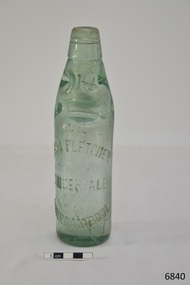
Container - Bottle, c. 1905
... process that he patented as “Codd’s patented globe stopper bottle” in 1872. The Codd-neck bottle (commonly called Codd or marble bottle) is manufactured in two parts. The body of the bottle is cast in two sections. At the time of joining the sections, a glass marble and rubber...process that he patented as “Codd’s patented globe stopper bottle” in 1872. The Codd-neck bottle (commonly called Codd or marble bottle) is manufactured in two parts. The body of the bottle is cast in two sections. At the time of joining the sections, a glass marble and rubber ...This bottle once contained John Fletcher’s ginger cordial. It was found in August 2014 in the sand dunes at Levy's Point, near McKinnon's quarry, Warrnambool. ABOUT JOHN FLETCHER of WARRNAMBOOL John Fletcher Cordial (or Beverage) Co.. Warrnambool supplied cordial and aerated drinks to the Western District of Victoria. John Fletcher was named as a cordial manufacturer in the Warrnambool Standard of June 13th 1895, when he attended a Publican’s Association meeting. Mr John Fletcher, aerated water and cordial manufacturer of Koroit Street, Warrnambool, had a summary of his factory printed in a short article in the Advocate, Melbourne, in February 1901. The article said, “one of the most complete plants outside the metropolis … spacious … well appointed …old-established business … noted for the excellence of the quality … a trial [of the beverage] is solicited.” John Fletcher and Harold Caffin, trading as J.S. Rowley & Co, cordial manufacturers in 1903, were prosecuted in September that year when the Board of Health found an analysed sample of Raspberry Vinegar to contain coal tar colouring, which could be injurious to health, particularly to the kidneys. The factory was still in operation in December 1924, when sadly, Mr S. Fletcher, who was carrying bottles of aerated water at Mr John Fletcher’s cordial factory, sustained an eye injury when one of the bottles burst. Later, the eye had to be removed at the Warrnambool Base Hospital. ABOUT CODD BOTTLES Many inventions during the mid-to-late 1800s kept the fizz in carbonated drinks, such as ginger ale, soda water, and fruit drinks. Hiram Codd, an English engineer, invented a successful process that he patented as “Codd’s patented globe stopper bottle” in 1872. The Codd-neck bottle (commonly called Codd or marble bottle) is manufactured in two parts. The body of the bottle is cast in two sections. At the time of joining the sections, a glass marble and rubber seal are inserted into the neck section. The lip is then applied to the top of the bottle. The Codd bottle is filled upside down as the pressure of the gas from the carbonated liquid holds the marble up and out of the way. When the bottle stands upright, the gas pushes the marble up against the washer, creating a firm seal to keep the fizz inside. The bottle is opened by pushing the marble down firmly to allow some of the gas to escape. The marble drops down and is caught in a depression formed in the neck. When the bottle is tilted to pour or drink the liquid, the marble rests in a dimple. Some have said that the bottle is a character, the shape having a face with its mouth keeping the marble out of the drink and eyes that catch the marble so that it doesn’t roll into the mouth of the drinker. The Codd bottle was expensive to produce, and children loved to destroy the marbles to play with the marbles inside. Many shops and factories added a deposit to the cost of buying the drink to encourage children to return the bottles rather than break it for the marble. Codd bottles are still being produced in India and Japan for soft drinks. A Codd bottle with the same markings as this one is valued on today’s Australian auction sites from AUD 35 - $75. Bottle, aqua/green glass, with glass marble inside. John Fletcher's Ginger Ale, Warrnambool. Container is often called a "Codd neck bottle", “marble bottle” or “Codd’s patent bottle”. Bottle made by Dobson. Inscription on bottle and base. c. 1905Marks moulded into glass; "JOHN FLETCHER / GINGER ALE / WARRNAMBOOL" and “DOBSON” and on base “G”. flagstaff hill, warrnambool, shipwrecked coast, flagstaff hill maritime museum, maritime museum, shipwreck coast, flagstaff hill maritime village, great ocean road, codd bottle, codd neck bottle, marble bottle, ginger beer bottle, john fletcher soft drinks, warrnambool soft drinks and cordials, john fletcher cordial (or beverage) co ., codd neck bottle, glass stopper bottle, hiram codd, antique bottle, harold caffin, john fletcher -
 Flagstaff Hill Maritime Museum and Village
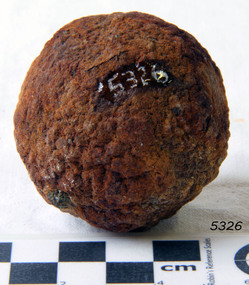
Rubber ball, 19th century
... processes). The Fiji collection meets the following criteria for assessment: Criterion A: Importance to the course, or pattern, of Victoria’s cultural history. Criterion B: Possession of uncommon, rare or endangered aspects of Victoria’s cultural history Criterion C: Potential to yield information that will contribute to an understanding of Victoria’s cultural history. 1891 china shipwrecked coast flagstaff hill flagstaff hill maritime museum maritime museum shipwrecked artefact flagstaff hill maritime village shipwreck coast warrnambool porcelain moonlight head wreck bay cargo bisque toys miniature animals rubber ball Rubber ball salvaged from the wreck of the Fiji. ...This rubber ball was part of the cargo from the Fiji and amongst the articles salvaged from the wreck. A press report notes that the balls collected from the Fiji’s cargo were originally red and white. The three-masted iron barque Fiji had been built in Belfast, Ireland, in 1875 by Harland and Wolfe for a Liverpool based shipping company. The ship departed Hamburg on 22nd May 1891 bound for Melbourne, under the command of Captain William Vickers with a crew of 25. The ship’s manifest shows that she was loaded with a cargo of 260 cases of dynamite, pig iron, steel goods, spirits (whisky, schnapps, gin, brandy), sailcloth, tobacco, coiled fencing wire, concrete, 400 German pianos (Sweet Hapsburg), concertinas and other musical instruments, artists supplies including brushes, porcelain, furniture, china, and general cargo including candles. There were also toys in anticipation for Christmas, including wooden rocking horses, miniature ships, dolls with china limbs and rubber balls. On September 5th, one hundred days out from Hamburg in squally and boisterous south west winds the Cape Otway light was sighted on a bearing differing from Captain Vickers’ calculation of his position. At about 2:30am, Sunday 6th September 1891 land was reported 4-5 miles off the port bow. The captain tried to put the ship on the other tack, but she would not respond. He then tried to turn her the other way but just as the manoeuvre was being completed the Fiji struck rock only 300 yards (274 metres) from shore. The place is known as Wreck Bay, Moonlight Head. Blue lights were burned and rockets fired whilst an effort was made to lower boats but all capsized or swamped and smashed to pieces. Two of the younger crewmen volunteered to swim for the shore, taking a line. One, a Russian named Daniel Carkland, drowned after he was swept away when the line broke. The other, 17 year old able seaman Julius Gebauhr, a German, reached shore safely on his second attempt but without the line, which he had cut lose with his sheath-knife when it become tangled in kelp. He rested on the beach a while then climbed the steep cliffs in search of help. At about 10am on the Sunday morning a party of land selectors - including F. J. Stansmore, Leslie Dickson (or Dixon) and Mott - found Gebauhr. They were near Ryans Den, on their travels on horseback from Princetown towards Moonlight Head, and about 5km from the wreck. Gebauhr was lying in the scrub in a poor state, bleeding and dressed only in singlet, socks and a belt with his sheath-knife, ready for all emergencies. At first they were concerned about his wild and shaggy looking state and what seemed to be gibberish speech, taking him to be an escaped lunatic. They were reassured after he threw his knife away and realised that he was speaking half-English, half-German. They gave him food and brandy and some clothing and were then able to gain information about the wreck. Some of the men took him to Rivernook, a nearby guest house owned by John Evans, where he was cared for. Stansmore and Dickson rode off to try and summon help. Others went down to the site of the wreck. Messages for rescuing the rest of the crew were sent both to Port Campbell for the rocket rescue crew and to Warrnambool for the lifeboat. The S.S. Casino sailed from Portland towards the scene. After travelling the 25 miles to the scene, half of the Port Campbell rocket crew and equipment arrived and set up the rocket tripod on the beach below the cliffs. By this time the crew of the Fiji had been clinging to the jib-boom for almost 15 hours, calling frantically for help. Mr Tregear from the Rocket Crew fired the line. The light line broke and the rocket was carried away. A second line was successfully fired across the ship and made fast. The anxious sailors then attempted to come ashore along the line but, with as many as five at a time, the line sagged considerably and some were washed off. Others, nearly exhausted, had to then make their way through masses of seaweed and were often smothered by waves. Only 14 of the 24 who had remained on the ship made it to shore. Many onlookers on the beach took it in turns to go into the surf and drag half-drowned seamen to safety. These rescuers included Bill (William James) Robe, Edwin Vinge, Hugh Cameron, Fenelon Mott, Arthur Wilkinson and Peter Carmody. (Peter Carmody was also involved in the rescue of men from the Newfield.) Arthur Wilkinson, a 29 year old land selector, swam out to the aid of one of the ship’s crewmen, a carpenter named John Plunken. Plunken was attempting to swim from the Fiji to the shore. Two or three times both men almost reached the shore but were washed back to the wreck. A line was thrown to them and they were both hauled aboard. It was thought that Wilkinson struck his head on the anchor before s they were brought up. He remained unconscious. The carpenter survived this ordeal but Wilkinson later died and his body was washed up the next day. It was 26 year old Bill Robe who hauled out the last man, the captain, who had become tangled in the kelp. The wreck of the Fiji was smashed apart within 20 minutes of the captain being brought ashore, and it settled in about 6m of water. Of the 26 men on the Fiji, 11 in total lost their lives. The remains of 7 bodies were washed onto the beach and their coffins were made from timbers from the wrecked Fiji. They were buried on the cliff top above the wreck. The survivors were warmed by fires on the beach then taken to Rivernook and cared for over the next few days. Funds were raised by local communities soon after the wreck in aid of the sufferers of the Fiji disaster. Captain Vickers was severely reprimanded for his mishandling of the ship. His Masters Certificate was suspended for 12 months. At the time there was also a great deal of public criticism at the slow and disorganised rescue attempt to save those on board. The important canvas ‘breech buoy’ or ‘bucket chair’ and the heavy line from the Rocket Rescue was in the half of the rocket outfit that didn’t make it in time for the rescue: they had been delayed at the Gellibrand River ferry. Communications to Warrnambool were down so the call for help didn’t get through on time and the two or three boats that had been notified of the wreck failed to reach it in time. Much looting occurred of the cargo that washed up on the shore, with nearly every visitor leaving the beach with bulky pockets. One looter was caught with a small load of red and white rubber balls, which were duly confiscated and he was ‘detained’ for 14 days. Essence of peppermint mysteriously turned up in many settlers homes. Sailcloth was salvaged and used for horse rugs and tent flies. Soon after the wreck “Fiji tobacco” was being advertised around Victoria. A Customs officer, trying to prevent some of the looting, was assaulted by looters and thrown over a steep cliff. He managed to cling to a bush lower down until rescued. In 1894 some coiled fencing wire was salvaged from the wreck. Hundreds of coils are still strewn over the site of the wreck, encrusted and solidified. The hull is broken but the vessel’s iron ribs can be seen along with some of the cargo of concrete and pig iron. Captain Vickers presented Bill Robe with his silver-cased pocket watch, the only possession that he still had, as a token for having saved his life and the lives of some of the crew. (The pocket watch came with 2 winding keys, one to wind it and one to change the hands.) Years later Bill passed the watch to his brother-in-law Gib (Gilbert) Hulands as payment of a debt and it has been passed down the family to Gilbert Hulands’ grandson, John Hulands. Seaman Julius Gebauhr later gave his knife, in its hand crafted leather sheath, to F. J. Stansmore for caring for him when he came ashore. The knife handle had a personal inscription on it. A marble headstone on the 200m high cliffs overlooking Wreck Beach, west of Moonlight Head, paying tribute to the men who lost their lives when Fiji ran aground. The scene of the wreck is marked by the anchor from the Fiji, erected by Warrnambool skin divers in 1967. Amongst the artefacts salvaged from the Fiji are bisque (or china) toys, (including miniature animals, limbs from small bisque dolls), rubber balls, a slate pencil, a glass bottle, sample of rope from the distress rocket and a candlestick holder. These items are now part of the Fiji collection at Flagstaff Hill Maritime Museum, along with Captain Vickers’ pocket watch and Julius Gebauhr’s sheath knife. This toy rubber ball is classified as Fiji 3 on the SWR Flagstaff Hill’s Fiji collection is of historical significance at a State level because of its association with the wreck Fiji, which is on the Victorian Heritage Register VHR S259. The Fiji is archaeologically significant as the wreck of a typical 19th century international sailing ship with cargo. It is educationally and recreationally significant as one of Victoria's most spectacular historic shipwreck dive sites with structural features and remains of the cargo evident. It also represents aspects of Victoria’s shipping history and its potential to interpret sub-theme 1.5 of Victoria’s Framework of Historical Themes (living with natural processes). The Fiji collection meets the following criteria for assessment: Criterion A: Importance to the course, or pattern, of Victoria’s cultural history. Criterion B: Possession of uncommon, rare or endangered aspects of Victoria’s cultural history Criterion C: Potential to yield information that will contribute to an understanding of Victoria’s cultural history. Rubber ball salvaged from the wreck of the Fiji. The rubber is perishing and the surface is pitted and bumpy. The material is tan in colour with a slightly pitted surface. 1891, china, shipwrecked coast, flagstaff hill, flagstaff hill maritime museum, maritime museum, shipwrecked artefact, flagstaff hill maritime village, shipwreck coast, warrnambool, porcelain, moonlight head, wreck bay, cargo, bisque, toys, miniature animals, rubber ball -
 Flagstaff Hill Maritime Museum and Village
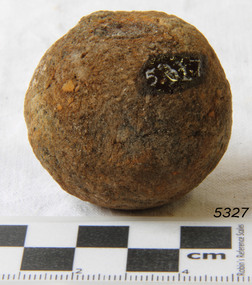
Rubber ball, 19th Century
... processes). The Fiji collection meets the following criteria for assessment: Criterion A: Importance to the course, or pattern, of Victoria’s cultural history. Criterion B: Possession of uncommon, rare or endangered aspects of Victoria’s cultural history Criterion C: Potential to yield information that will contribute to an understanding of Victoria’s cultural history. warrnambool shipwrecked coast flagstaff hill flagstaff hill maritime museum maritime museum shipwreck coast flagstaff hill maritime village shipwrecked artefact wreck bay moonlight head 1891 cargo rubber ball toy fiji captain vickers william vickers Rubber ball salvaged from the wreck of the Fiji. ...This rubber ball was part of the cargo from the Fiji and amongst the articles salvaged from the wreck. A press report notes that the balls collected from the Fiji’s cargo were originally red and white. The three-masted iron barque Fiji had been built in Belfast, Ireland, in 1875 by Harland and Wolfe for a Liverpool based shipping company. The ship departed Hamburg on 22nd May 1891 bound for Melbourne, under the command of Captain William Vickers with a crew of 25. The ship’s manifest shows that she was loaded with a cargo of 260 cases of dynamite, pig iron, steel goods, spirits (whisky, schnapps, gin, brandy), sailcloth, tobacco, coiled fencing wire, concrete, 400 German pianos (Sweet Hapsburg), concertinas and other musical instruments, artists supplies including brushes, porcelain, furniture, china, and general cargo including candles. There were also toys in anticipation for Christmas, including wooden rocking horses, miniature ships, dolls with china limbs and rubber balls. On September 5th, one hundred days out from Hamburg in squally and boisterous south west winds the Cape Otway light was sighted on a bearing differing from Captain Vickers’ calculation of his position. At about 2:30am, Sunday 6th September 1891 land was reported 4-5 miles off the port bow. The captain tried to put the ship on the other tack, but she would not respond. He then tried to turn her the other way but just as the manoeuvre was being completed the Fiji struck rock only 300 yards (274 metres) from shore. The place is known as Wreck Bay, Moonlight Head. Blue lights were burned and rockets fired whilst an effort was made to lower boats but all capsized or swamped and smashed to pieces. Two of the younger crewmen volunteered to swim for the shore, taking a line. One, a Russian named Daniel Carkland, drowned after he was swept away when the line broke. The other, 17 year old able seaman Julius Gebauhr, a German, reached shore safely on his second attempt but without the line, which he had cut lose with his sheath-knife when it become tangled in kelp. He rested on the beach a while then climbed the steep cliffs in search of help. At about 10am on the Sunday morning a party of land selectors - including F. J. Stansmore, Leslie Dickson (or Dixon) and Mott - found Gebauhr. They were near Ryans Den, on their travels on horseback from Princetown towards Moonlight Head, and about 5km from the wreck. Gebauhr was lying in the scrub in a poor state, bleeding and dressed only in singlet, socks and a belt with his sheath-knife, ready for all emergencies. At first they were concerned about his wild and shaggy looking state and what seemed to be gibberish speech, taking him to be an escaped lunatic. They were reassured after he threw his knife away and realised that he was speaking half-English, half-German. They gave him food and brandy and some clothing and were then able to gain information about the wreck. Some of the men took him to Rivernook, a nearby guest house owned by John Evans, where he was cared for. Stansmore and Dickson rode off to try and summon help. Others went down to the site of the wreck. Messages for rescuing the rest of the crew were sent both to Port Campbell for the rocket rescue crew and to Warrnambool for the lifeboat. The S.S. Casino sailed from Portland towards the scene. After travelling the 25 miles to the scene, half of the Port Campbell rocket crew and equipment arrived and set up the rocket tripod on the beach below the cliffs. By this time the crew of the Fiji had been clinging to the jib-boom for almost 15 hours, calling frantically for help. Mr Tregear from the Rocket Crew fired the line. The light line broke and the rocket was carried away. A second line was successfully fired across the ship and made fast. The anxious sailors then attempted to come ashore along the line but, with as many as five at a time, the line sagged considerably and some were washed off. Others, nearly exhausted, had to then make their way through masses of seaweed and were often smothered by waves. Only 14 of the 24 who had remained on the ship made it to shore. Many onlookers on the beach took it in turns to go into the surf and drag half-drowned seamen to safety. These rescuers included Bill (William James) Robe, Edwin Vinge, Hugh Cameron, Fenelon Mott, Arthur Wilkinson and Peter Carmody. (Peter Carmody was also involved in the rescue of men from the Newfield.) Arthur Wilkinson, a 29 year old land selector, swam out to the aid of one of the ship’s crewmen, a carpenter named John Plunken. Plunken was attempting to swim from the Fiji to the shore. Two or three times both men almost reached the shore but were washed back to the wreck. A line was thrown to them and they were both hauled aboard. It was thought that Wilkinson struck his head on the anchor before s they were brought up. He remained unconscious. The carpenter survived this ordeal but Wilkinson later died and his body was washed up the next day. It was 26 year old Bill Robe who hauled out the last man, the captain, who had become tangled in the kelp. The wreck of the Fiji was smashed apart within 20 minutes of the captain being brought ashore, and it settled in about 6m of water. Of the 26 men on the Fiji, 11 in total lost their lives. The remains of 7 bodies were washed onto the beach and their coffins were made from timbers from the wrecked Fiji. They were buried on the cliff top above the wreck. The survivors were warmed by fires on the beach then taken to Rivernook and cared for over the next few days. Funds were raised by local communities soon after the wreck in aid of the sufferers of the Fiji disaster. Captain Vickers was severely reprimanded for his mishandling of the ship. His Masters Certificate was suspended for 12 months. At the time there was also a great deal of public criticism at the slow and disorganised rescue attempt to save those on board. The important canvas ‘breech buoy’ or ‘bucket chair’ and the heavy line from the Rocket Rescue was in the half of the rocket outfit that didn’t make it in time for the rescue: they had been delayed at the Gellibrand River ferry. Communications to Warrnambool were down so the call for help didn’t get through on time and the two or three boats that had been notified of the wreck failed to reach it in time. Much looting occurred of the cargo that washed up on the shore, with nearly every visitor leaving the beach with bulky pockets. One looter was caught with a small load of red and white rubber balls, which were duly confiscated and he was ‘detained’ for 14 days. Essence of peppermint mysteriously turned up in many settlers homes. Sailcloth was salvaged and used for horse rugs and tent flies. Soon after the wreck “Fiji tobacco” was being advertised around Victoria. A Customs officer, trying to prevent some of the looting, was assaulted by looters and thrown over a steep cliff. He managed to cling to a bush lower down until rescued. In 1894 some coiled fencing wire was salvaged from the wreck. Hundreds of coils are still strewn over the site of the wreck, encrusted and solidified. The hull is broken but the vessel’s iron ribs can be seen along with some of the cargo of concrete and pig iron. Captain Vickers presented Bill Robe with his silver-cased pocket watch, the only possession that he still had, as a token for having saved his life and the lives of some of the crew. (The pocket watch came with 2 winding keys, one to wind it and one to change the hands.) Years later Bill passed the watch to his brother-in-law Gib (Gilbert) Hulands as payment of a debt and it has been passed down the family to Gilbert Hulands’ grandson, John Hulands. Seaman Julius Gebauhr later gave his knife, in its hand crafted leather sheath, to F. J. Stansmore for caring for him when he came ashore. The knife handle had a personal inscription on it. A marble headstone on the 200m high cliffs overlooking Wreck Beach, west of Moonlight Head, paying tribute to the men who lost their lives when Fiji ran aground. The scene of the wreck is marked by the anchor from the Fiji, erected by Warrnambool skin divers in 1967. Amongst the artefacts salvaged from the Fiji are bisque (or china) toys, (including miniature animals, limbs from small bisque dolls), rubber balls, a slate pencil, a glass bottle, sample of rope from the distress rocket and a candlestick holder. These items are now part of the Fiji collection at Flagstaff Hill Maritime Museum, along with Captain Vickers’ pocket watch and Julius Gebauhr’s sheath knife. This toy rubber ball is classified as Fiji 3 on the SWR Flagstaff Hill’s Fiji collection is of historical significance at a State level because of its association with the wreck Fiji, which is on the Victorian Heritage Register VHR S259. The Fiji is archaeologically significant as the wreck of a typical 19th century international sailing ship with cargo. It is educationally and recreationally significant as one of Victoria's most spectacular historic shipwreck dive sites with structural features and remains of the cargo evident. It also represents aspects of Victoria’s shipping history and its potential to interpret sub-theme 1.5 of Victoria’s Framework of Historical Themes (living with natural processes). The Fiji collection meets the following criteria for assessment: Criterion A: Importance to the course, or pattern, of Victoria’s cultural history. Criterion B: Possession of uncommon, rare or endangered aspects of Victoria’s cultural history Criterion C: Potential to yield information that will contribute to an understanding of Victoria’s cultural history. Rubber ball salvaged from the wreck of the Fiji. The rubber is perishing and the surface is pitted and bumpy. The material is tan in colour with a slightly pitted surface. warrnambool, shipwrecked coast, flagstaff hill, flagstaff hill maritime museum, maritime museum, shipwreck coast, flagstaff hill maritime village, shipwrecked artefact, wreck bay, moonlight head, 1891, cargo, rubber ball, toy, fiji, captain vickers, william vickers -
 Geoffrey Kaye Museum of Anaesthetic History
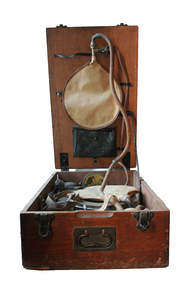
Equipment - Draeger Pulmotor, c.1920
... process and gases were sucked from the lungs by negative pressure created by a Venturi effect. This device came with a facemask and harness, with a caution that the operator should take care to prevent air entering the stomach. Inspiratory Expiratory Pulmotor Negative pressure Draeger resuscitation kit, inside wooden case with handle. Case contains small heavy gas cylinder with large beige handwritten 'S. M E' inscription on one side. Due to water damage case missing pieces of plywood in corner and floor of case bubbled and swollen.|Rubber ...The Dräeger Pulmotor was developed in 1907. It addressed previous concerns about lung injury, by limiting both the inspiratory and expiratory pressures. Although still controversial, the Pulmotor was widely distributed and commercially successful. Oxygen from cylinders provided both the inspiratory gas flow and the driving mechanism. Expiration was an active process and gases were sucked from the lungs by negative pressure created by a Venturi effect. This device came with a facemask and harness, with a caution that the operator should take care to prevent air entering the stomach.Draeger resuscitation kit, inside wooden case with handle. Case contains small heavy gas cylinder with large beige handwritten 'S. M E' inscription on one side. Due to water damage case missing pieces of plywood in corner and floor of case bubbled and swollen.|Rubber decomposed rigidinspiratory, expiratory, pulmotor, negative pressure -
 Geoffrey Kaye Museum of Anaesthetic History
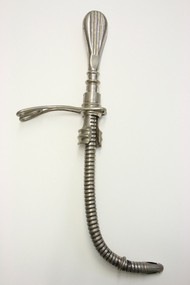
Equipment - Tube, Endotracheal, Kuhn, Circa 1900
... process. Franz Kuhn (1806-1929), a head and neck surgeon working in Kassel, Germany, between 1902 and 1911, is said to have done more than any other to obtain general recognition for endotracheal anaesthesia. Kuhn's tube, is a flexible metal one inserted on a stilette which was then withdrawn. The tube was then secured with an elastic neck strap and connected by a rubber...process. Franz Kuhn (1806-1929), a head and neck surgeon working in Kassel, Germany, between 1902 and 1911, is said to have done more than any other to obtain general recognition for endotracheal anaesthesia. Kuhn's tube, is a flexible metal one inserted on a stilette which was then withdrawn. The tube was then secured with an elastic neck strap and connected by a rubber ...The evolution of endotracheal intubation for anaesthesia was a slow process. Franz Kuhn (1806-1929), a head and neck surgeon working in Kassel, Germany, between 1902 and 1911, is said to have done more than any other to obtain general recognition for endotracheal anaesthesia. Kuhn's tube, is a flexible metal one inserted on a stilette which was then withdrawn. The tube was then secured with an elastic neck strap and connected by a rubber tube to a Trendelenburg cone. The glottis was packed with oiled gauze. Metal spiral tube with elaborate handle at one end and rounded at the other. There is a metal clasp at the base of the handle which all forms part of the endotracheal tube. Inside the tube is a curved metal piece that functions as an introducer.kuhn, endotracheal, airway, intubation -
 Bendigo Historical Society Inc.
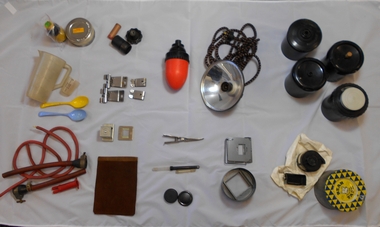
Mixed media - DONEY COLLECTION: DARKROOM EQUIPMENT
... Allan Doney darkroom collection: 40a dark room equipment collection 40b four film developing cannisters, adapts to adjustable film sizes (35mm, 120mm etc.) 40c spool winder in two parts, stored in scotch tape tin 40d developer lens holder and fil/negative constraint for enlarging photos 40e darkroom light shade with electricity chord 40f red darkroom safety light for developing film with the darkroom 40g three developing items - two lens caps, thermometer caps/containers, & photo developing tongs 40h leather pouch for protection of flat ground glass panes 40i steel slide cover & bracket 40j two sets of steel film weights to hold/hang developed photograph films 40k rubber tubes and syphons 40l two plastic measuring beakers & two (yellow & blue) plastic spoons for developing process 40m KODAK film flow solution (Keogh's Camera Store $1.02) & KODAK plus-X pan film tin container 40n three darkroom miscellaneous items (includes Uniprint equipment knob)...Allan Doney photograph Allan Doney darkroom collection: 40a dark room equipment collection 40b four film developing cannisters, adapts to adjustable film sizes (35mm, 120mm etc.) 40c spool winder in two parts, stored in scotch tape tin 40d developer lens holder and fil/negative constraint for enlarging photos 40e darkroom light shade with electricity chord 40f red darkroom safety light for developing film with the darkroom 40g three developing items - two lens caps, thermometer caps/containers, & photo developing tongs 40h leather pouch for protection of flat ground glass panes 40i steel slide cover & bracket 40j two sets of steel film weights to hold/hang developed photograph films 40k rubber tubes and syphons 40l two plastic measuring beakers & two (yellow & blue) plastic spoons for developing process 40m KODAK film flow solution (Keogh's Camera Store $1.02) & KODAK plus-X pan film tin container 40n three darkroom miscellaneous items (includes Uniprint equipment knob) Mixed media DONEY COLLECTION: DARKROOM EQUIPMENT ...Allan Doney darkroom collection: 40a dark room equipment collection 40b four film developing cannisters, adapts to adjustable film sizes (35mm, 120mm etc.) 40c spool winder in two parts, stored in scotch tape tin 40d developer lens holder and fil/negative constraint for enlarging photos 40e darkroom light shade with electricity chord 40f red darkroom safety light for developing film with the darkroom 40g three developing items - two lens caps, thermometer caps/containers, & photo developing tongs 40h leather pouch for protection of flat ground glass panes 40i steel slide cover & bracket 40j two sets of steel film weights to hold/hang developed photograph films 40k rubber tubes and syphons 40l two plastic measuring beakers & two (yellow & blue) plastic spoons for developing process 40m KODAK film flow solution (Keogh's Camera Store $1.02) & KODAK plus-X pan film tin container 40n three darkroom miscellaneous items (includes Uniprint equipment knob)allan doney, photograph -
 National Wool Museum
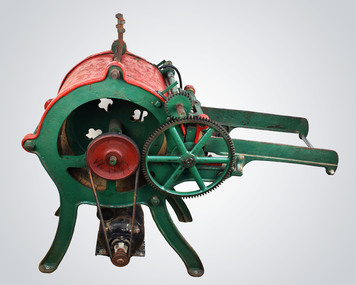
Picker
... processing Black texter. On top of drum. Wording: HG3707 Wording. Imprint: BRACEWIND BLYN On motor. Wording AEI Red and green machine with four green legs currently attached to a wooden pallet with wheels for easy movement. The green legs lead up to a red central circular barrel from which many attachments are present. Also present on the wooden pallet is a small black motor which is attached by a rubber ...Wool picking machine designed to separate locks of wool before it is carded and spun. The picker opens the wool’s locks which makes it easier to send the fleece through a carding machine. It does this by teasing the fibres (which can also be done by hand just by pulling the lock structure apart), but a picker does this in bulk and much quicker than what can be done by hand. It is possible to spin fibres directly after the picking stage; however, it is usually more desirable to card and blend them with other fibres. Typically, at a textile mill, a picking machine can separate enough lengths of fibre for a full day’s work after just a single hour. It will also help to remove any vegetation matter or other any unwanted elements that may be present in the wool. The quality of the casting on this machine suggest that it was made locally, either in Australia or New Zealand. Mike Leggett, the donor of the machine, acquired it from New Zealand where the seller said it had been used by his father to pick wool to make hand stuffed horse saddles. Mike attempted to used it a couple of times to pick alpaca hair, but the speed of the attached motor caused damage to the fibres. The motor is thought to be an added attachment, sometime around the 1960s judging by its age, while the machine itself is thought to be dated around the 1920s. The machine works by inserting wool through the rollers. Initially there was a conveyor belt feeder system which was powered by the handle on the side. This conveyor belt has been removed however, most likely due to age and deterioration. Wool is now fed through the initial teeth and is met by a spiked rotating drum which works to separate the fibres. The separated fibres would then complete a loop of the drum before being dispatched somewhere below, around where the motor presently sits, at a rapid rate of speed. Typically this wool will be collected in a closet or large catchment area, as can be seen from the 8:47 minute marker in the linked video (link - https://www.youtube.com/watch?v=kMjx-t3tH3A). It is not apparent how the wool is collected with this machine. Red and green machine with four green legs currently attached to a wooden pallet with wheels for easy movement. The green legs lead up to a red central circular barrel from which many attachments are present. Also present on the wooden pallet is a small black motor which is attached by a rubber belt to the central drum inside the red barrel. The belt spins the wooden drum via a dark red circular plate attached to the side of the drum. On the other side of the red barrel, a green handle extends for turning the picker’s conveyor belt feeder system. Two green walls extend forward from the central red barrel, guarding either side of where the conveyor belt would have been. At the start of these walls is a wooden cylinder, which the conveyor belt would have wrapped around, followed by two interlocking gears which rotate and accept the fed wool. The red roof extends over the central cylinder from here, securing the wool inside and protecting hands from the heavily spiked internal wooden cylinder which rotates and separates (picks) the wool. Extending over the top of this red roof is a green handle which reaches to the back of the machine (not pictured). Here it accepts a weight to ensure pressure is always present for the initial feeder interlocked gear teeth. There are two large gear cogs on the rubber belt side of the machine and 3 small gear cogs on the handle side of the machine, all coloured green. A green handle is also present at the rear of the machine, below the location from which the weight is hanging. A power cable extends from the motor and there are two adjustable metal rods on the top of the machine, the purpose of these rods is presently unknown. Black texter. On top of drum. Wording: HG3707 Wording. Imprint: BRACEWIND BLYN On motor. Wording AEIwool picking, textile manufacturing, wool processing -
Moorabbin Air Museum
Book - Aircraft materials, Aircraft Materials and Processes
... Aircraft materials Testing Steel & its alloys Surface hardening Metal shaping Corrosion Plastics Rubber Titanium & its alloys Material selection Essential information on materials/processes used in aircraft construction circa 1956 Aircraft Materials and Processes Book Aircraft materials ...Essential information on materials/processes used in aircraft construction circa 1956non-fictionEssential information on materials/processes used in aircraft construction circa 1956testing, steel & its alloys, surface hardening, metal shaping, corrosion, plastics, rubber, titanium & its alloys, material selection -
 Tarnagulla History Archive
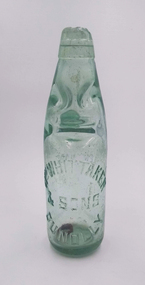
Codd Bottle - Whittaker & Sons, Lemonade, Dunolly
... Hiram Codd, an English engineer invented a successful process that he patented as “Codd’s patented globe stopper bottle” in 1872. This type of bottle has a closing design in which a glass marble is held against a rubber seal, which sits within a recess in the lip. ...Hiram Codd, an English engineer invented a successful process that he patented as “Codd’s patented globe stopper bottle” in 1872. This type of bottle has a closing design in which a glass marble is held against a rubber seal, which sits within a recess in the lip. ...David Gordon Collection. A Codd-neck bottle is a type of bottle used for carbonated drinks. Hiram Codd, an English engineer invented a successful process that he patented as “Codd’s patented globe stopper bottle” in 1872. This type of bottle has a closing design in which a glass marble is held against a rubber seal, which sits within a recess in the lip. The Codd-neck bottle was designed and manufactured with thick glass to withstand internal pressure, and a chamber to enclose a marble and a rubber washer in the neck. The bottles are filled upside down, and pressure of the gas in the bottle forced the marble against the washer, sealing in the carbonation. The bottle is pinched into a special shape to provide a chamber into which the marble is pushed to open the bottle. This prevents the marble from blocking the neck as the drink is poured. The bottles were regularly produced for many decades, but gradually declined in usage. Since children smashed the bottles to retrieve the marbles, vintage bottles are relatively scarce and have become collector items, particularly in the UK. William Whittaker's son Joseph Whittaker operated a cordial factory at Tarnagulla for many years. It was located at the southern end of Commercial Road, and was the last business premises on the eastern side of the road. Joseph Whittaker was a leading citizen at Tarnagulla for many years, and was a leading supporter of sporting activities including cricket and rifle clubs, as well as a strong patron of the fire brigade. He was known by some as Ginger Beer Joe. -
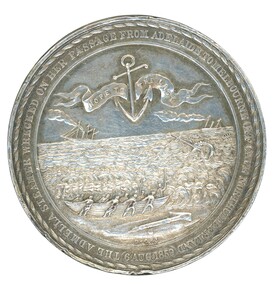 Glenelg Shire Council Cultural Collection
Medal - Medal - Admella Shipwreck - awarded to John Dusting, Brush and MacDonnell, 1859
... Rubber lifebelts kept below deck were instantly lost. Cape Northumberland Lighthouse near Port McDonnell was about 24 km away so Captain McEwan ordered rocket flares to be fired to gain attention. However, all the ship’s rockets were damp. Only one ignited but soon fizzled out. The Captain attempted to make a raft but was unsuccessful and nearly drowned in the process...Rubber lifebelts kept below deck were instantly lost. Cape Northumberland Lighthouse near Port McDonnell was about 24 km away so Captain McEwan ordered rocket flares to be fired to gain attention. However, all the ship’s rockets were damp. Only one ignited but soon fizzled out. The Captain attempted to make a raft but was unsuccessful and nearly drowned in the process ...On Friday 5 August 1859, the steamship, Admella, left Adelaide bound for Melbourne. IT carried 82 passengers, a crew of 31 and 4 racehorses. he Admella was a 395 ton screw steamer built at Port Glasgow, Scotland in 1857. Her name is said to be derived from the ports she served - Adelaide, Melbourne and Launceston. It took her 42 hours to travel between Adelaide and Melbourne, usually stopping at Portland, Port Fairy and Warrnambool, making her the fastest ship to travel this route. The Admella’s final journey was her 36th voyage. Admella had been built with watertight bulkheads, riveted to the hull. These were designed as a special safety feature, but when the ship grounded on Carpenters Rocks it took only 15 minutes for the hull to break in three along the rivet lines. Many people were drowned immediately, and six horses stabled on deck tried to swim to shore. At least one of them made it alive. On Saturday August 6 1859, at 5am, Admella struck a reef. The three onboard lifeboats were washed away as were the four cork lifebelts kept on deck. Rubber lifebelts kept below deck were instantly lost. Cape Northumberland Lighthouse near Port McDonnell was about 24 km away so Captain McEwan ordered rocket flares to be fired to gain attention. However, all the ship’s rockets were damp. Only one ignited but soon fizzled out. The Captain attempted to make a raft but was unsuccessful and nearly drowned in the process. The ship was only about a kilometre from shore, but the surf, currents, cold water and sharks resulted in five men dying trying to reach safety. It wasn’t until Sunday afternoon that two sailors, managed to get to shore using a raft. It took them three hours and they then had to walk about 32 kilometres along the shore in the dark to Northumberland Lighthouse without shoes. They were met by Ben Germein the lighthouse keeper. His horse had died so he had to walk to a nearby station to borrow a horse. The horse he chose threw him off so in the end the station owner, Peter Black, rode the 24 km to the Mount Gambier telegraph station to share the news of the disaster. After several unsuccessful rescue attempts, eight days after the initial disaster, 19 people were rescued by the Portland Lifeboat and three people, including Captain McEwan were rescued in one of Admella’s lifeboats which had been found on the shore and fixed. It was captained by Ben Germein with six volunteer oarsmen. This was Germain’s sixth attempt to reach the wreck in the damaged boat. Of the 113 people on board Admella at the time of her wreck only 24 survived. At the official enquiry into the disaster, fog, lightning, compasses and bad mapping were all considered as the cause, but finally the swift and unpredictable currents which run between Cape Jaffa and Cape Northumberland were given the official blame. This medal is associated with one of Australia's worst maritime disasters, the wreck of SS Admella. This incident is significant to Portland because the Portland Lifeboat and its crew took part in a heroic rescue. 19 people were rescued by the crew of the Lifeboat. The Portland Lifeboat is listed on Victoria's State Heritage Register.Round silver medal awarded to John Dusting by the Victorian Colonists for his heroic efforts as part of the crew of the Portland Lifeboat in the rescue of survivors of the Admella Shipwreck. Admella wrecked off the South Australian Coast in 1859. This silver medal was one of only 39 silver medals awarded. There were 3 gold medals awarded. The medal is presented in a blue box. The box has beveled edges. Inside the lid is a fabric insert with details of the silversmith printed. The medal sits in a circular insert with a blue ribbon for taking the medal out with ease.Obverse: Scene of shipwreck near the coastline. In the foreground there is the Portland Lifeboat with crew. Above is an anchor with ribbon. Text around the edge of the medal reads 'The Admella Steamer wrecked on her passage from Adelaide to Melbourne off Cape Northumberland'. Across the ribbon - Hope to the last Reverse: Wreath around the edge. Beams of light from the sky. Text reads: Awarded to John Dusting/ By the Victorian Colonists / For / Heroic Exertions / In Saving Life / (Under divine providence) / From the wreck of the Admellaportland lifeboat, admella, shipwrecks, admella shipwreck, admella medals, dusting, glenelg shire council cultural collection, portland -
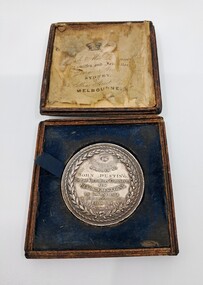 Glenelg Shire Council Cultural Collection
Medal - Box for Medal - Admella Shipwreck - awarded to John Dusting, Brush and MacDonnell, 1859
... Rubber lifebelts kept below deck were instantly lost. Cape Northumberland Lighthouse near Port McDonnell was about 24 km away so Captain McEwan ordered rocket flares to be fired to gain attention. However, all the ship’s rockets were damp. Only one ignited but soon fizzled out. The Captain attempted to make a raft but was unsuccessful and nearly drowned in the process...Rubber lifebelts kept below deck were instantly lost. Cape Northumberland Lighthouse near Port McDonnell was about 24 km away so Captain McEwan ordered rocket flares to be fired to gain attention. However, all the ship’s rockets were damp. Only one ignited but soon fizzled out. The Captain attempted to make a raft but was unsuccessful and nearly drowned in the process ...On Friday 5 August 1859, the steamship, Admella, left Adelaide bound for Melbourne. IT carried 82 passengers, a crew of 31 and 4 racehorses. he Admella was a 395 ton screw steamer built at Port Glasgow, Scotland in 1857. Her name is said to be derived from the ports she served - Adelaide, Melbourne and Launceston. It took her 42 hours to travel between Adelaide and Melbourne, usually stopping at Portland, Port Fairy and Warrnambool, making her the fastest ship to travel this route. The Admella’s final journey was her 36th voyage. Admella had been built with watertight bulkheads, riveted to the hull. These were designed as a special safety feature, but when the ship grounded on Carpenters Rocks it took only 15 minutes for the hull to break in three along the rivet lines. Many people were drowned immediately, and six horses stabled on deck tried to swim to shore. At least one of them made it alive. On Saturday August 6 1859, at 5am, Admella struck a reef. The three onboard lifeboats were washed away as were the four cork lifebelts kept on deck. Rubber lifebelts kept below deck were instantly lost. Cape Northumberland Lighthouse near Port McDonnell was about 24 km away so Captain McEwan ordered rocket flares to be fired to gain attention. However, all the ship’s rockets were damp. Only one ignited but soon fizzled out. The Captain attempted to make a raft but was unsuccessful and nearly drowned in the process. The ship was only about a kilometre from shore, but the surf, currents, cold water and sharks resulted in five men dying trying to reach safety. It wasn’t until Sunday afternoon that two sailors, managed to get to shore using a raft. It took them three hours and they then had to walk about 32 kilometres along the shore in the dark to Northumberland Lighthouse without shoes. They were met by Ben Germein the lighthouse keeper. His horse had died so he had to walk to a nearby station to borrow a horse. The horse he chose threw him off so in the end the station owner, Peter Black, rode the 24 km to the Mount Gambier telegraph station to share the news of the disaster. After several unsuccessful rescue attempts, eight days after the initial disaster, 19 people were rescued by the Portland Lifeboat and three people, including Captain McEwan were rescued in one of Admella’s lifeboats which had been found on the shore and fixed. It was captained by Ben Germein with six volunteer oarsmen. This was Germain’s sixth attempt to reach the wreck in the damaged boat. Of the 113 people on board Admella at the time of her wreck only 24 survived. At the official enquiry into the disaster, fog, lightning, compasses and bad mapping were all considered as the cause, but finally the swift and unpredictable currents which run between Cape Jaffa and Cape Northumberland were given the official blame. This medal is associated with one of Australia's worst maritime disasters, the wreck of SS Admella. This incident is significant to Portland because the Portland Lifeboat and its crew took part in a heroic rescue. 19 people were rescued by the crew of the Lifeboat. The Portland Lifeboat is listed on Victoria's State Heritage Register.The medal is presented in a blue box. The box has beveled edges. Inside the lid is a fabric insert with details of the silversmith printed. The medal sits in a circular insert with a blue ribbon for taking the medal out with ease.portland lifeboat, admella, shipwrecks, admella shipwreck, admella medals, dusting, glenelg shire council cultural collection, portland -
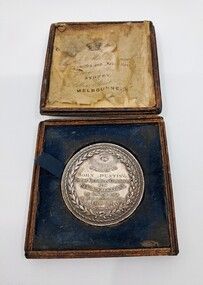 Glenelg Shire Council Cultural Collection
Medal - Medal - Admella Shipwreck - awarded to John Dusting, Brush and MacDonnell, 1859
... Rubber lifebelts kept below deck were instantly lost. Cape Northumberland Lighthouse near Port McDonnell was about 24 km away so Captain McEwan ordered rocket flares to be fired to gain attention. However, all the ship’s rockets were damp. Only one ignited but soon fizzled out. The Captain attempted to make a raft but was unsuccessful and nearly drowned in the process...Rubber lifebelts kept below deck were instantly lost. Cape Northumberland Lighthouse near Port McDonnell was about 24 km away so Captain McEwan ordered rocket flares to be fired to gain attention. However, all the ship’s rockets were damp. Only one ignited but soon fizzled out. The Captain attempted to make a raft but was unsuccessful and nearly drowned in the process ...On Friday 5 August 1859, the steamship, Admella, left Adelaide bound for Melbourne. IT carried 82 passengers, a crew of 31 and 4 racehorses. he Admella was a 395 ton screw steamer built at Port Glasgow, Scotland in 1857. Her name is said to be derived from the ports she served - Adelaide, Melbourne and Launceston. It took her 42 hours to travel between Adelaide and Melbourne, usually stopping at Portland, Port Fairy and Warrnambool, making her the fastest ship to travel this route. The Admella’s final journey was her 36th voyage. Admella had been built with watertight bulkheads, riveted to the hull. These were designed as a special safety feature, but when the ship grounded on Carpenters Rocks it took only 15 minutes for the hull to break in three along the rivet lines. Many people were drowned immediately, and six horses stabled on deck tried to swim to shore. At least one of them made it alive. On Saturday August 6 1859, at 5am, Admella struck a reef. The three onboard lifeboats were washed away as were the four cork lifebelts kept on deck. Rubber lifebelts kept below deck were instantly lost. Cape Northumberland Lighthouse near Port McDonnell was about 24 km away so Captain McEwan ordered rocket flares to be fired to gain attention. However, all the ship’s rockets were damp. Only one ignited but soon fizzled out. The Captain attempted to make a raft but was unsuccessful and nearly drowned in the process. The ship was only about a kilometre from shore, but the surf, currents, cold water and sharks resulted in five men dying trying to reach safety. It wasn’t until Sunday afternoon that two sailors, managed to get to shore using a raft. It took them three hours and they then had to walk about 32 kilometres along the shore in the dark to Northumberland Lighthouse without shoes. They were met by Ben Germein the lighthouse keeper. His horse had died so he had to walk to a nearby station to borrow a horse. The horse he chose threw him off so in the end the station owner, Peter Black, rode the 24 km to the Mount Gambier telegraph station to share the news of the disaster. After several unsuccessful rescue attempts, eight days after the initial disaster, 19 people were rescued by the Portland Lifeboat and three people, including Captain McEwan were rescued in one of Admella’s lifeboats which had been found on the shore and fixed. It was captained by Ben Germein with six volunteer oarsmen. This was Germain’s sixth attempt to reach the wreck in the damaged boat. Of the 113 people on board Admella at the time of her wreck only 24 survived. At the official enquiry into the disaster, fog, lightning, compasses and bad mapping were all considered as the cause, but finally the swift and unpredictable currents which run between Cape Jaffa and Cape Northumberland were given the official blame.This medal is associated with one of Australia's worst maritime disasters, the wreck of SS Admella. This incident is significant to Portland because the Portland Lifeboat and its crew took part in a heroic rescue. 19 people were rescued by the crew of the Lifeboat. The Portland Lifeboat is listed on Victoria's State Heritage Register. Only 39 silver medals were awarded after the incident. Three gold medals were awarded.Round silver medal awarded to John Dusting by the Victorian Colonists for his heroic efforts as part of the crew of the Portland Lifeboat in the rescue of survivors of the Admella Shipwreck. Admella wrecked off the South Australian Coast in 1859. This silver medal was one of only 39 silver medals awarded. There were 3 gold medals awarded. The medal is presented in a blue box. The box has beveled edges. Inside the lid is a fabric insert with details of the silversmith printed. The medal sits in a circular insert with a blue ribbon for taking the medal out with ease.Obverse: Scene of shipwreck near the coastline. In the foreground there is the Portland Lifeboat with crew. Above is an anchor with ribbon. Text around the edge of the medal reads 'The Admella Steamer wrecked on her passage from Adelaide to Melbourne off Cape Northumberland'. Across the ribbon - Hope to the last Reverse: Wreath around the edge. Beams of light from the sky. Text reads: Awarded to John Dusting/ By the Victorian Colonists / For / Heroic Exertions / In Saving Life / (Under divine providence) / From the wreck of the Admellaadmella, portland, glenelg shire council cultural collection, portland lifeboat, admella shipwreck, shipwreck -
Emerald Museum & Nobelius Heritage Park
Equipment - Fowlers Vacola bottling set, Circa 1915
... The ‘Fowler’s method’ of preserving relied on the natural acidity of fruits and the heating process to achieve a safe product. The filled jars were sealed with a rubber ring, lid and clip and heated for an hour in a boiler on top of the stove. ...The ‘Fowler’s method’ of preserving relied on the natural acidity of fruits and the heating process to achieve a safe product. The filled jars were sealed with a rubber ring, lid and clip and heated for an hour in a boiler on top of the stove. ...Fowler’s kits became a household essential during the Great Depression when it was so important to be frugal with food. In 1934, Fowlers Vacola Manufacturing Co. Ltd. became a public company. Fowlers Vacola continues to offer preserving systems today, although electric versions have replaced the old stove-top pan. The ‘Fowler’s method’ of preserving relied on the natural acidity of fruits and the heating process to achieve a safe product. The filled jars were sealed with a rubber ring, lid and clip and heated for an hour in a boiler on top of the stove. The lids allowed air to escape during heating but created a vacuum seal as the contents cooled.Processing excess produce at home for consumption in the off season would have been an essential task for local housewives especially in the first half of the 20th century.Large metal round pot for preserving fruit and vegetables. Also includes various size jars with corresponding lids and clips.On top of metal lids is Fowlers Vacola Reg. No. 28195 with corresponding lid size in inches. Glass jars are embossed with the words Fowlers Vacolapreserving, fowler's -
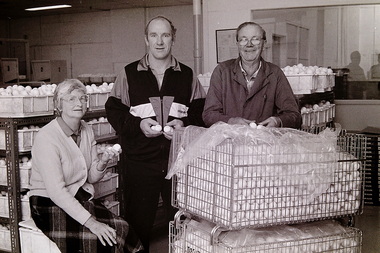 Sunshine and District Historical Society Incorporated
Photograph - Spaldings Employees Ballarat Road Sunshine North 1991 Photographs, Sharon Cavanagh, 9th May 1991
... rubber components for Ford and International Harvester, along with hoses for Massey Ferguson and Connor Shea. Spalding was one of the last major manufacturing factories to close in Sunshine, following the decline of many of the area's industrial employers. Its closure reflected broader changes in Australian manufacturing, including the globalisation of production to lower-cost countries, trade liberalisation and reduced tariff protection, increasing international competition, advances in technology that required substantial investment in new equipment and processes, rising labour and operating costs, and industry consolidation, whereby large corporations centralised production or relied on specialist suppliers rather than maintaining diverse local manufacturing operations....rubber components for Ford and International Harvester, along with hoses for Massey Ferguson and Connor Shea. Spalding was one of the last major manufacturing factories to close in Sunshine, following the decline of many of the area's industrial employers. Its closure reflected broader changes in Australian manufacturing, including the globalisation of production to lower-cost countries, trade liberalisation and reduced tariff protection, increasing international competition, advances in technology that required substantial investment in new equipment and processes, rising labour and operating costs, and industry consolidation, whereby large corporations centralised production or relied on specialist suppliers rather than maintaining diverse local manufacturing operations. ...These photograph, taken by The Advocate in 1991, were published as part of the newspaper’s ongoing column profiling local traders and businesses across the district. These photographs are of three long time serving employees of the Spaldings Factory located at Ballarat Road North East Corner of McIntyre Road, Sunshine North. The photograph features employees Phyllis Shimmin, Barry Priest (Supervisor, Golf Ball Department) and Tom Tribe (Machine Setter and Operator). When the image was taken, Phyllis had accumulated 43 years of service and Tom an outstanding 53 years of continuous service with the company. As the factory faced difficult times, the three long-serving employees reminisced about its peak years. During its most successful period, the factory produced a wide range of sporting goods, including tennis and squash equipment, shuttlecock bases, table tennis tables, baseball and softball products, and doggie bell balls for pet shops. It also served major industrial clients, manufacturing rubber components for Ford and International Harvester, along with hoses for Massey Ferguson and Connor Shea. Spalding was one of the last major manufacturing factories to close in Sunshine, following the decline of many of the area's industrial employers. Its closure reflected broader changes in Australian manufacturing, including the globalisation of production to lower-cost countries, trade liberalisation and reduced tariff protection, increasing international competition, advances in technology that required substantial investment in new equipment and processes, rising labour and operating costs, and industry consolidation, whereby large corporations centralised production or relied on specialist suppliers rather than maintaining diverse local manufacturing operations.The Sunshine Advocate’s feature on local traders and businesses was a modest yet well‑liked column that played a meaningful role in strengthening community identity. Through these regular profiles, the newspaper promoted local businesses and helped shape Sunshine’s understanding of its developing commercial district.7392.01 - Spaldings Employees Ballarat Road Sunshine North 1991 Photographs (Advocate 187.3).JPG 7392.02 - Spaldings Employees Ballarat Road Sunshine North 1991 Photographs (Advocate 187.3).JPGspaldings, ballarat road, sunshine north
