
Showing 213 items matching "school 60"
-
 Northern District School of Nursing. Managed by Bendigo Historical Society Inc.
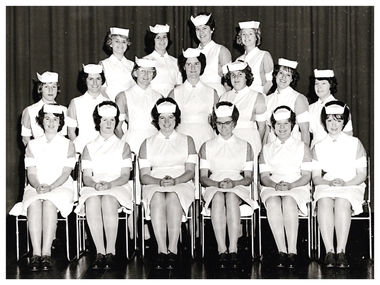
Photograph - P.T.S. Training School 60, 1963
... P.T.S. Training School 60......school 60...School 60 commenced 9/20/1963 17 Female Nurses are in uniform. ...Photograph P.T.S. Training School 60 ...The Northern District School of Nursing opened in 1950 to address the issues around nurse recruitment, training and education that had previously been hospital based. The residential school was to provide theoretical and in-house education and practical training over three years. The students would also receive practical hands-on training in the wards of associated hospitals. The Northern District School of Nursing operated from Lister House, Rowan Street, Bendigo. It was the first independent school of nursing in Victoria and continued until it closed in 1989.School 60 commenced 9/20/1963 17 Female Nurses are in uniform. Three rows, the front row seated and the second and third row standing.nurse training, ndsn, lister house, lister house dining room, school 60 -
 Northern District School of Nursing. Managed by Bendigo Historical Society Inc.
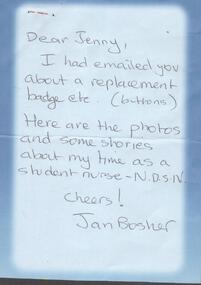
Document - Stories of NDSN nursing home, School 60 by Jan Bosher
... Stories of NDSN nursing home, School 60 by Jan Bosher ...One page of anecdotes of student nurses of the NDSN by Jan Bosher together with covering note and photo of School 60....Northern District School of Nursing Nursing NDSN One page of anecdotes of student nurses of the NDSN by Jan Bosher together with covering note and photo of School 60. Document Stories of NDSN nursing home, School 60 by Jan Bosher ...Northern District School of NursingOne page of anecdotes of student nurses of the NDSN by Jan Bosher together with covering note and photo of School 60.nursing, ndsn -
 Clunes Museum
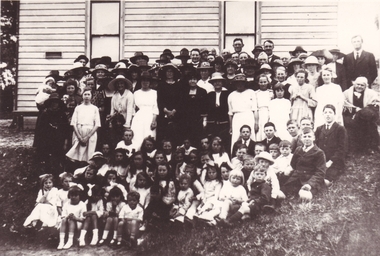
Photograph, OCT. 1922
... GROUP OF PRESBYTARIAN SUNDAY SCHOOL PUPILS AT 60 YEARS JUBILEE 1922....JUBILEE OF PRESBYTERIAN CHURCH SUNDAY SCHOOL. 60 YEARS. OCT. 1922....GROUP OF PRESBYTARIAN SUNDAY SCHOOL PUPILS AT 60 YEARS JUBILEE 1922. LOCAL HISTORY PHOTOGRAPHY PHOTOGRAPHS CHURCHES PRESBYTERIAN JUBILEE OF PRESBYTERIAN CHURCH SUNDAY SCHOOL. 60 YEARS. ...GROUP OF PRESBYTARIAN SUNDAY SCHOOL PUPILS AT 60 YEARS JUBILEE 1922.ORIGINAL PHOTOGRAPH AND COPY OF PRESBYTERIAN CHURCH SUNDAY SCHOOL, OCT. 1922JUBILEE OF PRESBYTERIAN CHURCH SUNDAY SCHOOL. 60 YEARS. OCT. 1922.local history, photography, photographs, churches, presbyterian -
 Northern District School of Nursing. Managed by Bendigo Historical Society Inc.
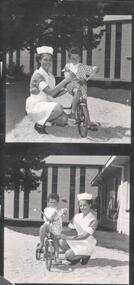
Photograph - School 77 February 1971 - 60 Nurses
... School 77 February 1971 - 60 Nurses...Black edging separating proofs Photograph School 77 February 1971 - 60 Nurses ...Nr Janis Hart - School 75 - with patient on bike. 02/02/1970Black and white proof with 2 photos of nurse with child one with child on right and one with child on left. Black edging separating proofsNames written on back of photonursing history, nursing information -
 Bendigo Historical Society Inc.
Document - National Trust Collection: Former Supreme Court (Gymnasium Bendigo High School), 1974 -1982
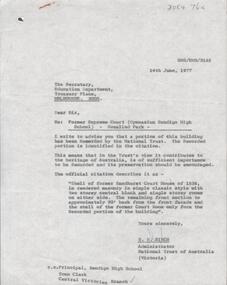
... Bendigo High School gymnasium 1959-60...school and is used as a gymnasium. E B&W photograph of old entry to the Old Court House, now part of BHS, circa 1958-60. ...Old Court House Bendigo High School gymnasium 1959-60 National Trust Collection: Former Supreme Court (Gymnasium Bendigo High School) A 3084.75A -14 June 1977 - to The Secretary Education Department from S.R. ...National Trust Collection: Former Supreme Court (Gymnasium Bendigo High School) A 3084.75A -14 June 1977 - to The Secretary Education Department from S.R. Birch, Administrator National Trust of Australia B Undated Police Record - the Old Police Barracks, linked to the Old Court House, is now incorporated in the Bendigo High School C Undated - history of the Old Court House, after opening of the new Law Courts in Pall Mall, the Old Court House was used by the school (from Domestic Arts, Girl's High School, gymnasium for the BHS) D Undated Old Court House - Supreme Court; the Old Court House building in Georgian Style is now incorporated in the Bendigo High school complex now built across the road joining intact as part of the school and is used as a gymnasium. E B&W photograph of old entry to the Old Court House, now part of BHS, circa 1958-60. F B&W photograph of old entry to the Old Court House, now part of BHS, circa 1958-60.old court house, bendigo high school gymnasium 1959-60 -
 Greensborough Historical Society
Newspaper Clipping, Diamond Valley Leader, Young scientist jumps into great national award, 16/01/2019
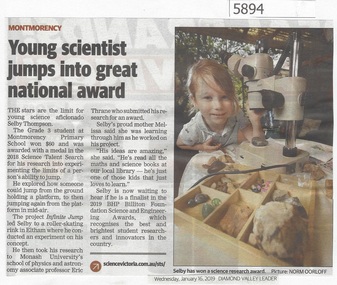
... The Grade 3 student at Montmorency Primary School won $60 and was awarded with a medal in the 2018 Science Talent Search for his research into experimenting the limits of a person's ability to jump....The Grade 3 student at Montmorency Primary School won $60 and was awarded with a medal in the 2018 Science Talent Search for his research into experimenting the limits of a person's ability to jump. selby thompson montmorency primary school 2018 science talent search News article 1 page, black text and colour image . ...The stars are the limit for young science aficionado Selby Thompson. The Grade 3 student at Montmorency Primary School won $60 and was awarded with a medal in the 2018 Science Talent Search for his research into experimenting the limits of a person's ability to jump.News article 1 page, black text and colour image .selby thompson, montmorency primary school, 2018 science talent search -
 Broadmeadows Historical Society & Museum
Furniture - School Desk
... Early → late 60's School desk, Primary school?...Early → late 60's School desk, Primary school? Used for majority of 20th century Education School Furniture Two seat wooden school desk with metal frame, Top of each side of desk lifts to reveal storage space, two ceramic ink wells Furniture School Desk ...Early → late 60's School desk, Primary school?Used for majority of 20th centuryTwo seat wooden school desk with metal frame, Top of each side of desk lifts to reveal storage space, two ceramic ink wellseducation, school, furniture -
 Northern District School of Nursing. Managed by Bendigo Historical Society Inc.
Photograph - School 77 February 1971
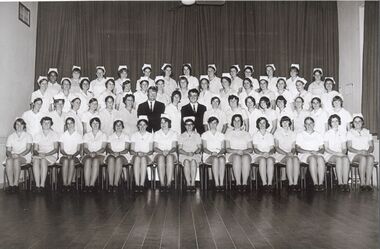
... School 77 February 1971 - 60 Nurses - Sourced by Paula Doolan...School 77 February 1971 - 60 Nurses - Sourced by Paula Doolan Nursing Uniform Nursing History Nursing Information Black and White photo - 4 rows of nurses- 2nd row from bottom has 2 males in the middle - 60 Nurses Photograph School 77 February 1971 ...School 77 February 1971 - 60 Nurses - Sourced by Paula DoolanBlack and White photo - 4 rows of nurses- 2nd row from bottom has 2 males in the middle - 60 Nursesnursing uniform, nursing history, nursing information -
 Ballarat Clarendon College
Book, John Bunyan, The pilgrim's progress and other works, c1890
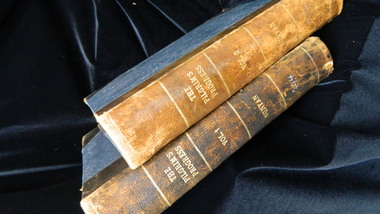
... Personal property of Miss Elinor Morcom, pianist and school piano teacher 1957 - 60, 66-70. ...Personal property of Miss Elinor Morcom, pianist and school piano teacher 1957 - 60, 66-70. elinor-morcom music-teacher clarendon-presbyterian-ladies-college Handwritten on flyleaf of volume one: E Morcom, 424 Creswick Road, Ballarat Two volumes of the works of John Bunyan, including Pilgrim's Progress, The Holy War and To the Chief of Sinners beautifully illustrated with graved plates. ...Personal property of Miss Elinor Morcom, pianist and school piano teacher 1957 - 60, 66-70. Two volumes of the works of John Bunyan, including Pilgrim's Progress, The Holy War and To the Chief of Sinners beautifully illustrated with graved plates. Bound in half leather with gilt lettering and decoration; inter-leaved engraved plates and numerous in-text illustrations. With an engraved frontispiece and title page. Condition: The binding is generally tight and firm. The hinges are just starting but still generally firm. There is light browning and background foxing. Handwritten on flyleaf of volume one: E Morcom, 424 Creswick Road, Ballaratelinor-morcom, music-teacher, clarendon-presbyterian-ladies-college -
 Bendigo Historical Society Inc.
Document - GRAND VARIETY CONCERT, J. B. OSBORNE THEATRE, 15 September 1984
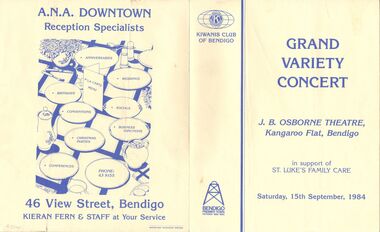
... School of Dancing... Heather Lindhe... Melinda Wilcock... Bryan Roberts... Megan Beckwith... Kennington & Epsom Primary Schools (60...Bendigo Theatre Co., Fred Trewarne, Margaret's School of Dancing, Heather Lindhe, Melinda Wilcock, Bryan Roberts, Megan Beckwith, Kennington & Epsom Primary Schools (60 Students Conductor: David Tunley, Piano Accompaniment: Eileen Hetherington), The Niyama Dancers, Family Gospel Singing Group (Wendy, Peter, Andrea, Sally, and Paula. ...Fred Trewarne Margaret's School of Dancing Heather Lindhe Melinda Wilcock Bryan Roberts Megan Beckwith Kennington & Epsom Primary Schools (60 Students Conductor: David Tunley Piano Accompaniment: Eileen Hetherington) The Niyama Dancers Family Gospel Singing Group (Wendy Peter Andrea Sally and Paula. ...Grand Variety Concert, J. B. Osborne Theatre, Kangaroo Flat, Bendigo in support of St. Luke's Family Care. Saturday, 15th September, 1984. KIWANIS Club of Bendigo. Bendigo Premier Town Victoria 1982-1985. Les Roberts, President, Kiwanis Club, Bendigo. Bendigo Theatre Co., Fred Trewarne, Margaret's School of Dancing, Heather Lindhe, Melinda Wilcock, Bryan Roberts, Megan Beckwith, Kennington & Epsom Primary Schools (60 Students Conductor: David Tunley, Piano Accompaniment: Eileen Hetherington), The Niyama Dancers, Family Gospel Singing Group (Wendy, Peter, Andrea, Sally, and Paula. Piano Accompaniment: Peter Somerville), Fred Trewarne, Bendigo Country Talent Club, Patricia Lyon (Piano Accompaniment: Leila Watson), Miss Margaret's School of Dancing. Allan Stewart, Executive Director, St Luke's Family Care. Bendigo Community Theatre & Arts, Piano Accompaniment: Kath Veitch. Acknowledgements: Alan Williams, Sound Systems Specialist., Greg Harris & Danny Mulqueen, Central Victoria Video Productions. A.N.A. Downtown.Bendigo Modern Pressperforming arts, music, kiwanis club of bendigo, grand variety concert, j. b. osborne theatre, kangaroo flat, bendigo st. luke's family care, 1984. kiwanis club of bendigo. bendigo premier town victoria 1982-1985. les roberts, president, kiwanis club, bendigo. bendigo theatre co., fred trewarne, margaret's school of dancing, heather lindhe, melinda wilcock, bryan roberts, megan beckwith, kennington & epsom primary schools (60 students conductor: david tunley, piano accompaniment: eileen hetherington), the niyama dancers, family gospel singing group (wendy, peter, andrea, sally, and paula. piano accompaniment: peter somerville), fred trewarne, bendigo country talent club, patricia lyon (piano accompaniment: leila watson), miss margaret's school of dancing. allan stewart, executive director, st luke's family care. bendigo community theatre & arts, piano accompaniment: kath veitch. acknowledgements: alan williams, sound systems specialist., greg harris & danny mulqueen, central victoria video productions. a.n.a. downtown -
 Northern District School of Nursing. Managed by Bendigo Historical Society Inc.
Photograph - Third Year Nurses Studying, c1963
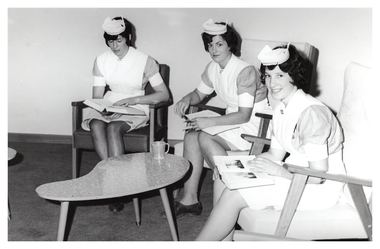
... Christina Kossopolous, School 61, Barbara McMaster ? School 59-60. Yvonne Baily School 62 Bendigo...Christina Kossopolous, School 61, Barbara McMaster ? School 59-60. Yvonne Baily School 62 Bendigo Photograph Third Year Nurses Studying ...The Northern District School of Nursing opened in 1950 to address the issues around nurse recruitment, training and education that had previously been hospital based. The residential school was to provide theoretical and in-house education and practical training over three years. The students would also receive practical hands-on training in the wards of associated hospitals. The Northern District School of Nursing operated from Lister House, Rowan Street, Bendigo. It was the first independent school of nursing in Victoria and continued until it closed in 1989.Schools 59, 61, 62. Two black and white photos of nurses studying. Nurses are sitting in modern 1960s chairs around a coffee table. 8590.31a On rear of photo: Kristina Kossopolous, Barabara McMaster, School 59 (P.T.S. Aug 1963) Yvonne Johnstone - Bailey (Dixon) Tutor NDSN 20/11/74 to 4/7/1976 Bendigo, Bendigo Base Students 8590.31b L. Christina Kossopolous, School 61, Barbara McMaster ? School 59-60. Yvonne Baily School 62 Bendigonurse training, ndsn, lister house, school 61, school 59, school 62 -
Northern District School of Nursing. Managed by Bendigo Historical Society Inc.
Administrative record - Northern District School of Nursing List of Students in Preliminary Training Schools (53-60), 1960s
... Northern District School of Nursing List of Students in Preliminary Training Schools (53-60)...Northern District School of Nursing List of Students in Preliminary Training Schools (53-60) 3 pages This item contains the following document: 3791.17a This document provides a detailed record of participants in a series of Preliminary Training Schools held in the 1960s, Schools 53 to 60. ...Administrative record Northern District School of Nursing List of Students in Preliminary Training Schools (53-60) ...Managed by a committee including hospital administrators, medical professionals, and nursing leaders from several regional hospitals. Associated with major hospitals in the Northern District, including Bendigo Base, Mildura Base, Castlemaine, Echuca, Swan Hill, St. Arnaud, and Kyneton District Hospitals. Provide high-quality theoretical and practical nursing training. Raise the standard of nursing education in the region. Maintain the highest principles of nursing practice. Applicants must be at least 17 years old and hold a Proficiency Certificate or higher educational qualification. Application involves submitting forms, certificates, an interview, an aptitude test, and a medical examination. A three-month probationary period follows initial acceptance. Preliminary Training School: Four-week introductory course covering basic nursing, anatomy, hygiene, and practical skills. Practical experience in various hospital departments, guided by senior staff. Study Block Plan: Includes several blocks of theoretical and practical instruction throughout the three-year program. Regular school exams and two state exams (First Professional and Final State) are required for progression and graduation. Nurses work a 40-hour week with at least one or two days off per week and three weeks of annual leave. Accommodation is provided in comfortable hostels with good facilities. Uniforms are supplied free; nurses provide their own shoes and stockings. Salaries and allowances are regulated, with deductions for board and free medical care. Additional Information Post-Graduate Opportunities. Senior positions require further experience and additional certificates (e.g., Midwifery, Infant Welfare).Diploma courses available in administration, teaching, and specialized nursing fields. Bursaries are available for advanced study.Career Prospects: Graduates can pursue roles in administration, teaching, ward and departmental leadership, district and visiting nursing, industrial and school nursing, and more. Opportunities exist both within hospitals and in community or specialized settings.FAQs and Practical Details. Minimal training costs (mainly exam fees and personal items).Living out allowances and travel expenses are covered. Four training intakes per year; waiting periods are short if qualifications are met.Northern District School of Nursing List of Students in Preliminary Training Schools (53-60) 3 pages This item contains the following document: 3791.17a This document provides a detailed record of participants in a series of Preliminary Training Schools held in the 1960s, Schools 53 to 60. Multiple training schools were conducted, each identified by a number (e.g., 45, 46, 47, etc.) and specific dates. Sessions occurred regularly throughout the 1960s. Each entry lists the participant's name, address, and the location or center they were associated with during training (e.g., Mildura, Bendigo, Castlemaine, Echuca, Swan Hill, St. Arnaud).Participants came from various towns and regions, including both urban and rural areas, and occasionally from outside Australia (e.g., Ipoh, Malaysia). Training centers were spread across several locations, with Mildura and Bendigo appearing most frequently as training sites. Other centers included Castlemaine, Echuca, Swan Hill, and St. Arnaud.nurse training, lister house, list of students -
 Federation University Art Collection
Painting - Artwork - Painting, Guy Stuart, 'November Apple' by Guy Stuart, 2005
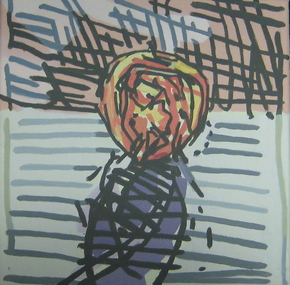
... Guy STUART (1942 - 06 June 2024 ) Born Canberra, Australia Guy Stuart was a student of John Brack at Melbourne Grammar School (1955-60), and attended RMIT where he studied Painting from 1961-1962. ...Guy STUART (1942 - 06 June 2024 ) Born Canberra, Australia Guy Stuart was a student of John Brack at Melbourne Grammar School (1955-60), and attended RMIT where he studied Painting from 1961-1962. ...Guy STUART (1942 - 06 June 2024 ) Born Canberra, Australia Guy Stuart was a student of John Brack at Melbourne Grammar School (1955-60), and attended RMIT where he studied Painting from 1961-1962. Stuart held his debut exhibition in 1968, at the height of new abstraction, and sold out the entire show of figurative works. 'November Apple' was part of a travelling exhibition called 'Imaging the Apple' which travelled from 2004 to 2005. This item is part of the Federation University Art Collection. The Art Collection features over 2000 works and was listed as a 'Ballarat Treasure' in 2007.Framed painting of an apple exhibited in the travelling exhibition 'Imaging the Apple.art, artwork, guy stuart, stuart, apple, fruit, imaging the apple -
 Northern District School of Nursing. Managed by Bendigo Historical Society Inc.
Photograph - Coral Dulcie Toey, 1960
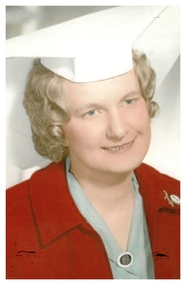
... Coral Dulcie Toey of Training School 46 26/4/60 colour photograph head and shoulders, in uniform with captails (student nurse). ...Nurse Training NDSN Lister House school 46 1960 Coral Dulcie Toey Coral Dulcie Toey of Training School 46 26/4/60 colour photograph head and shoulders, in uniform with captails (student nurse). ...The Northern District School of Nursing opened in 1950 to address the issues around nurse recruitment, training and education that had previously been hospital based. The residential school was to provide theoretical and in-house education and practical training over three years. The students would also receive practical hands-on training in the wards of associated hospitals. The Northern District School of Nursing operated from Lister House, Rowan Street, Bendigo. It was the first independent school of nursing in Victoria and continued until it closed in 1989.Coral Dulcie Toey of Training School 46 26/4/60 colour photograph head and shoulders, in uniform with captails (student nurse). On rear of photo written in ink: * Coral Dulcie Toey Born 30/3/1943 at Pyramid Hill, PTS School 46 (20/4/60) * Married Ian James Broad 31/1/1940 * Daughter Kristen Janelle (9 months) May 1974 * All three killed in car accident Swan Hill Kerang Road ? at Lake Boga on Jan 4 1975 * Buried Durham Ox Cemetery * One report says the accident April 1st. nurse training, ndsn, lister house, school 46 1960, coral dulcie toey -
 Warrnambool and District Historical Society Inc.
Plate, Warrnambool Congregational Church, Early 20th century
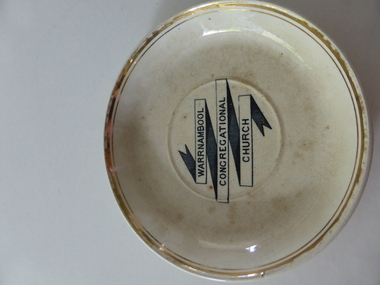
... Samuel Nettleton was a notable early church member, being Superintendent of the Sunday School for 60 years. A new church was opened in Henna Street in 1940. ...Samuel Nettleton was a notable early church member, being Superintendent of the Sunday School for 60 years. A new church was opened in Henna Street in 1940. ...This plate comes from the Congregational Church in Warrnambool. It was probably part of a set of crockery used by church members at social events. The Warrnambool Congregational Church was established in 1862 when Robert Winton and Thomas Nayler set up a meeting to discuss the possibility of establishing an Independent Church in Warrnambool. The first minister was William Pentland and the first church was opened in 1864 in Liebig Street. Samuel Nettleton was a notable early church member, being Superintendent of the Sunday School for 60 years. A new church was opened in Henna Street in 1940. In 1973 the Congregational Church merged with the Methodist Church to form the Uniting Church in 1977. In 1976 the former Congregational Church in Henna Street was sold to the Salvation Army. This plate is of interest as a memento of the former Congregational Church in Warrnambool. In the early to mid 20th century this church was a strong and influential force in the Warrnambool community. This is a cream-coloured dinner plate made of china. The gold bands around the edge of the plate are now almost obliterated. The lettering in the middle of the plate is black and white. The plate has several chips on the edge and is somewhat stainedWarrnambool Congregational Church’warrnambool congregational church -
 Warrnambool and District Historical Society Inc.
Plate, Saucer, Early 20th century
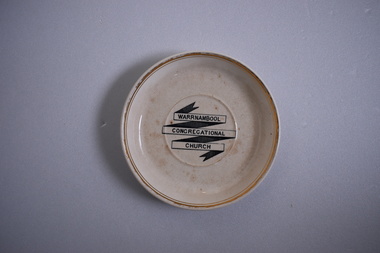
... A notable member of the Congregational Church was Samuel Nettleton who was the Superintendent of the Sunday School for 60 years. In 1940 a new church was opened in Henna Street. ...A notable member of the Congregational Church was Samuel Nettleton who was the Superintendent of the Sunday School for 60 years. In 1940 a new church was opened in Henna Street. ...This saucer came from the Warrnambool Congregational Church and was probably part of a set of crockery used by the church members at social gatherings. The Warrnambool Congregational Church was founded in 1862 when Robert Winton and Thomas Nayler conducted a meeting in Warrnambool to consider the possibility of forming a local Independent church. The first minister was William Pentland and the first church was in Liebig Street. A notable member of the Congregational Church was Samuel Nettleton who was the Superintendent of the Sunday School for 60 years. In 1940 a new church was opened in Henna Street. In 1973 there was a merger of the Congregational Church and the Methodist Church, resulting in the formation of the Uniting Church in 1977. In 1976 the former Congregational Church in Henna Street was sold to the Salvation Army. This saucer is of interest as a memento of the former Congregational Church in Warrnambool. It comes from the early 20th century days when the church would have had a strong following in the city. This is a cream-coloured saucer with double gold edging around the outer rim. The lettering in the middle of the saucer is black and white. The inside of the saucer is much stained. ‘Warrnambool Congregational Church’warrnambool congregational church, history of warrnambool -
 Warrnambool and District Historical Society Inc.
Plate, Warrnambool Congregational Church, Early to mid 20th century
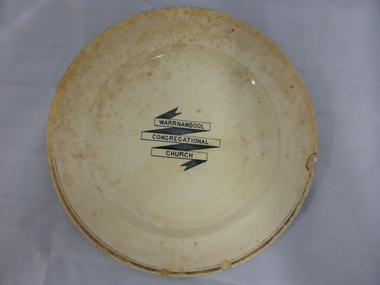
... Samuel Nettleton was a notable member of the congregation, being the Superintendent of the Sunday School for 60 years. In 1940 the Congregational Church moved to a building in Henna Street and in 1973 the Congregational Church merged with the Methodist Church to form what is known today as the Uniting Church. ...Samuel Nettleton was a notable member of the congregation, being the Superintendent of the Sunday School for 60 years. In 1940 the Congregational Church moved to a building in Henna Street and in 1973 the Congregational Church merged with the Methodist Church to form what is known today as the Uniting Church. ...This plate was probably part of a crockery set used by the Warrnambool Congregational Church for church functions and receptions. The Warrnambool Congregational Church began when two men, Robert Winton and Thomas Nayler, met in 1862 to discuss the possibility of establishing a church of the Independent order. As a result the first Congregational Church was opened in Liebig Street, Warrnambool in 1864 with William Pentland as the first Minister. Samuel Nettleton was a notable member of the congregation, being the Superintendent of the Sunday School for 60 years. In 1940 the Congregational Church moved to a building in Henna Street and in 1973 the Congregational Church merged with the Methodist Church to form what is known today as the Uniting Church. In 1976 the former Congregational Church building in Henna Street was sold to the Salvation Army. This plate is of interest as a memento of the Warrnambool Congregational Church, an institution that no longer exists under that name. This is a cream-coloured china plate with a gold trim around the outer edges and the name of the church in the centre in a black and white scroll pattern. The gold trim is now almost obliterated. The edges of the plate are chipped in several places and the plate is much stained and blotched. ‘Warrnambool Congregational Church’ congregational church, warrnambool, history of warrnambool -
 Hume City Civic Collection
Book, Sixty Number Games for the Infant Classes by Jane Spencer, 1951
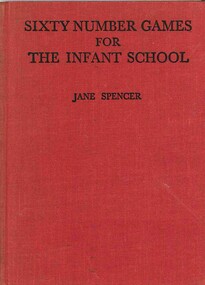
... It is a compilation of a series of number games designed to introduce infant children to the concepts of numbers and to be used by pre-school and lower primary school teachers. There are 60 games in the collection. ...It is a compilation of a series of number games designed to introduce infant children to the concepts of numbers and to be used by pre-school and lower primary school teachers. There are 60 games in the collection. ...A series of number games designed for teaching arithmetic to young children.A slim cloth bound grammar textbook with an orange cover with the title printed in black on the front and along the spine..non-fictionA series of number games designed for teaching arithmetic to young children.mathematics, number games, jane spencer -
 Ringwood and District Historical Society
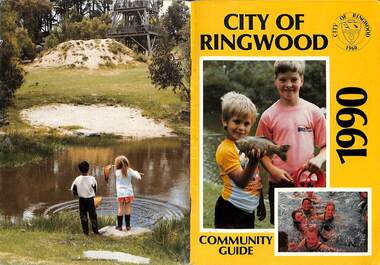
Booklet, City of Ringwood 1990 Community Guide, 1990
... LOCAL COMMUNITY SERVICES Accommodation 42 Aged Accommodation 42 Alcoholism 42 Arthritis Foundation 43 Arts and Crafts 43 Blind 43 Care Force 43 Catholic Family Welfare Bureau 43 Central Ringwood Community Centre 43 Childbirth and Parenting Association 44 Churches 45 Community Services Victoria 47 Day Centres and Drop-in Centres 48 Disabled Facilities 49 Do Care 50 Drugs 50 Elderly Day Care 50 Emergency Housing 51 Family Planning Services 51 Financial Counselling 52 Hearing Aid Service 53 Hospitals 54 Housing 54 Information 55 Legal 55 Literacy 55 Lone Parents 57 Marriage Celebrants 57 Maroondah Social Health Centre 57 Neighbourhood Mediation Centre - Outer East 57 North Ringwood Community House 53 Nursing 59 Optometric Services 59 Playgroups 60 Pre-Schools 60 Red Cross 61 Retirement 62 Ringwood Croydon Advisory Service 62 Schools 63 Senior Citizens' Centres 65 Transport 66 Twins 66 Unemployment 66 Volunteering 66 Youth Accommodation Project (Maroondah) 67 Youth Emergency Services 67 ...LOCAL COMMUNITY SERVICES Accommodation 42 Aged Accommodation 42 Alcoholism 42 Arthritis Foundation 43 Arts and Crafts 43 Blind 43 Care Force 43 Catholic Family Welfare Bureau 43 Central Ringwood Community Centre 43 Childbirth and Parenting Association 44 Churches 45 Community Services Victoria 47 Day Centres and Drop-in Centres 48 Disabled Facilities 49 Do Care 50 Drugs 50 Elderly Day Care 50 Emergency Housing 51 Family Planning Services 51 Financial Counselling 52 Hearing Aid Service 53 Hospitals 54 Housing 54 Information 55 Legal 55 Literacy 55 Lone Parents 57 Marriage Celebrants 57 Maroondah Social Health Centre 57 Neighbourhood Mediation Centre - Outer East 57 North Ringwood Community House 53 Nursing 59 Optometric Services 59 Playgroups 60 Pre-Schools 60 Red Cross 61 Retirement 62 Ringwood Croydon Advisory Service 62 Schools 63 Senior Citizens' Centres 65 Transport 66 Twins 66 Unemployment 66 Volunteering 66 Youth Accommodation Project (Maroondah) 67 Youth Emergency Services 67 Community information booklet issued by City of Ringwood for 1990 - covering the facilities and activities of the Ringwood Council and other local organisations and associations. ...Community information booklet issued by City of Ringwood for 1990 - covering the facilities and activities of the Ringwood Council and other local organisations and associations.CONTENTS: (page no.) 1. COUNCIL SERVICES After School Programme 33 Aged Services 33, 34,35 Aquatic Centre 15,16,17 Aquatic Centre Bonus Vouchers 17 Biological Wasp Control 24 Budget 13,14 Building information 26 By-Laws 29 Chief Executive's Message 9 Children's Services 44 Citizenship 35 Civic Centre 4 Committees of Council 5 Common Questions 39 Council Meeting Dates 4 Council Representatives 8 Councillors 6,7 Dogs 29 Emergency Telephone Numbers 67 Family Day Care 32 Fire Hazards 29 Garbage 37 Golf Course 19 Health and Environmental Services 24 Home Handyman Services 54 Home Help 33 Immunisation 25 incinerators 29 Knaith Road Child Care Centre 32 Library 22 Library Service Senior Citizens 34 Maternal and Child Health 31 Mayoral Message - Cr. Lillian Rosewarne 3 Meals on Wheels 33 Members of Parliament 40 Parks and Gardens 22,23 Rates 28 Residential Development Provisions 12 Ringwood Bypass Road 11 Ringwood Convention Centre & Performing Arts Centre 20 Ringwood District Centre 13 Ringwood Festival 21 Shopping Bus 34 Staff 10 Town Planning 26 Works Depot 36 Youth Outreach Worker 36 2. LOCAL COMMUNITY SERVICES Accommodation 42 Aged Accommodation 42 Alcoholism 42 Arthritis Foundation 43 Arts and Crafts 43 Blind 43 Care Force 43 Catholic Family Welfare Bureau 43 Central Ringwood Community Centre 43 Childbirth and Parenting Association 44 Churches 45 Community Services Victoria 47 Day Centres and Drop-in Centres 48 Disabled Facilities 49 Do Care 50 Drugs 50 Elderly Day Care 50 Emergency Housing 51 Family Planning Services 51 Financial Counselling 52 Hearing Aid Service 53 Hospitals 54 Housing 54 Information 55 Legal 55 Literacy 55 Lone Parents 57 Marriage Celebrants 57 Maroondah Social Health Centre 57 Neighbourhood Mediation Centre - Outer East 57 North Ringwood Community House 53 Nursing 59 Optometric Services 59 Playgroups 60 Pre-Schools 60 Red Cross 61 Retirement 62 Ringwood Croydon Advisory Service 62 Schools 63 Senior Citizens' Centres 65 Transport 66 Twins 66 Unemployment 66 Volunteering 66 Youth Accommodation Project (Maroondah) 67 Youth Emergency Services 67 rinx -
 Federation University Historical Collection
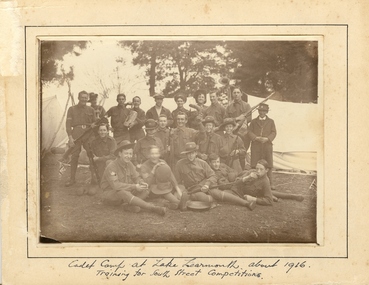
Photograph - Photograph - Sepia, Ballarat School of Mines Cadets, 1916, c1916
... Senior Cadets were organised by Training Areas, administered by Area Officers. If a school had at least 60 senior cadets, they could form their own units. ...Senior Cadets were organised by Training Areas, administered by Area Officers. If a school had at least 60 senior cadets, they could form their own units. ...Field Marshal Viscount Kitchener of Great Britain was invited by Prime Minister Deakin in 1909 to visit Australia and advise on the best way to provide Australia with a land defence. Kitchener’s report echoed the bill, introduced to Parliament in 1909 and supported by the Opposition Labor Party at its 1908 conference, to introduce compulsory military training in peace time (referred to as universal training). On 1 January 1911, the Commonwealth Defence Act 1911 (Cth) was passed as law and all males aged 12 to 26 were required to receive military training. Men were divided according to age, with junior cadets comprising boys 12-14 years of age, senior cadets comprising boys 14-18, and young men aged 18-26 assigned to the home militia defence. The support of schools was vital to the success of the scheme, since the system of cadet training began in the primary schools, with physical training prescribed by military authorities. Junior cadet training was entirely in the hands of school teachers, who had first been trained by military officers. This early training was less military in nature than focused on physical drill and sport. It also acted to inculcate boys with the notions of loyalty to country and empire. At this age, uniforms were not worn, although there were schools with pre-existing uniformed cadet units, who continued to do so. Senior Cadets were organised by Training Areas, administered by Area Officers. If a school had at least 60 senior cadets, they could form their own units. Unlike their junior counterparts, Senior Cadets were issued uniforms, a rifle, and learned the foundations necessary for service in any arm of the defence forces. Boys and men could be exempted from compulsory training if they lived more than five miles from the nearest training site, or were passed medically unfit. Those who failed to register for training were punished with fines or jail sentences, and the severity of this punishment generated some of the strongest opposition to the scheme. While institutions such as the political parties and most churches generally supported universal training, some in the broader labour movement were less enthusiastic, as evidenced in the Daily Herald newspaper’s editorials and letters. Universal military training persisted after the conclusion of World War 1, with the Junior Cadet scheme the first to go, in 1922. Senior cadets and service with the militia was suspended in November 1929. (http://guides.slsa.sa.gov.au/content.php?pid=575383&sid=4788359, accessed 29/10/2015) According to Neil Leckie, Manager of the Ballarat Ranger Military Museum: * Originally 12 – 14 year olds went to Junior Cadets attached to their school. * From age 14 – 17 they were Senior Cadets attached to the local militia unit. * After 1 July of the year a Cadet turned 18, the Cadet left the Senior Cadets and became a member of the Citizen Military Force. * In October 1918 the AIF, Militia and Cadets were renamed to give some connection to the AIF battalion raised in the area. Ballarat saw: 8th Australian Infantry Regiment comprising: * 8th Battalion AIF renamed 1st Battalion 8th Australian Infantry Regiment * 70th Infantry Militia renamed 2nd Battalion 8th Australian Infantry Regiment * 70th Infantry Cadets renamed 3rd B, 8th Australian Infantry. 39th Australian Infantry Regiment comprising: * 39th Battalion AIF renamed 1st Battalion 39th Australian Regiment * 71st Infantry Militia renamed 2nd Bn, 39th Australian Infantry Regiment * 71st Infantry Cadets renamed 3rd Bn, 39th Australian Infantry Regiment Prior to the reorganisation in 1918 the 18th Brigade was the 70th, 71st and 73rd Infantry. It is thought that the 18th Brigade Cadet units in 1920 were those that came from the old: * 69th Infantry (Geelong/Queenscliff) * 70th Infantry (Ballarat/Colac) * 71st Infantry (Ballarat West) * 72nd Infantry Warrnambool) * 73rd Infantry (NW Vic) The next name change came in 1921!Mounted sepia photograph of 21 young males. They are the Ballarat School of Mines Cadets on a training camp at Lake Learmonth. Back row left to right: Harold Wakeling; ? ; T. Wasley; H. Witter; H.V. Maddison (staff); Lieutenant S.J. Proctor, Joe ? ; ? ; B.C. Burrows. Centre left to right: Howard Beanland; ? ; F.N. Gibbs; H. Siemering; P. Riley; ? : E. Adamthwaite. Front row left to right: Albert E. Williams; Francis Davis (RAAF Dec.); A. Miller; W. Shattock; T. Rees From the Ballarat School of Mines Magazine, 1916 "Our Competition Team, 1916 At a parade, held on the 25th August competition teams were called from from the three colleges - Ballarat College, St Patrick's College, and the School of Mines. In each case, a large muster was obtained, twenty-nine volunteering fro the School of Mines. On account of the number in a team being limited to 21, some had to be weeded out. The team decided to have a camp at Learmonth in the vacation for the benefit of training for the coming competitions. The tents, within our baggage, were brought to the Junior Technical School at 10 a.m. on Monday, 11 September. Everything was carted to the station on a lorry, which was very kindly lent by Mr C. Burrow. ... Arriving at our camp, which was in the Park, we first raised the tents. This was done in record time. Three large tents, A.B.C., were pitched one behind the other. We also pitched a smaller one to act as a provisions tent. The provisions supplied by each cadet were placed in this tent. Dinner was ready by 3.30, and was prepared by the three senior non-coms., who also acted as orderlies. Things went alright Monday night, the two senior non-coms. acting as sentries for the first two hours. On Tuesday morning Reville sounded at 7. There was no need for it, however, as nearly all the cadets were up before daylight, owing to their beds being too hard. After physical exercises were gone through we had breakfast. We then had rifle exercises until Messrs A.W. Steane and F.N. King arrived. The former put the team through the table of physical exercises set down for competition work, many valuable points being obtained. The visitors remained for dinner, afterwards returning to Ballarat. Wednesday was uneventful, until the soldiers arrived at about 11 a.m., stopping at the park for lunch. As we handed over the coppers, etc., to them, our lunch was delayed. Two more visitors arrived after lunch, and after taking a few photos returned home. That night we had a "Sing-a-long" in C Tent until "Lights out" sounded at 9.30. After physical exercises ad breakfast on Thursday, we went for a six mile route march round the lake, doing skirmishing on the way. In the afternoon we practised rifle exercises and the march past. A concert was arranged for that night, the chief singers being cadets H. Siemering and W. Shattock. Supper was served at the end of the entertainment. On Friday, Reveille sounded at 6.30 instead of 7, and, as usual, we had physical exercises before breakfast, after which the team went through skirmishing at the reserve. In the afternoon, section drill and the march past were practised. Friday night, being our last night in camp, leave was granted until 10 p.m., "lights out" sounding at 11. Reveille sounded on Saturday at 4.30, the reason being that all kits, tents, etc., had to be packed away ready to catch the 8.15 train to Balalrat. At 7.30 we were all ready to leave for the station. We had a very enjoyable time in the train, each cadet having a chip in at the patriotic songs. On arriving at Ballarat, we found the lorry awaiting us. The luggage was carted to the Junior Technical School, the team following. The team were here dismissed, everyone feeling that he had had a very good time. F.G. Davis"Written in ink on front 'cadet camp at Lake Learmonth about 1916. Training for South Street Competitions. ballarat school of mines, cadets, ballarat school of mines cadets, lake learmonth, world war one, boomerang, camp, cadet camp, h.g. wakeling, harold wakeling, f.g. davis, albert w. steane, f.n. king, h. siermering, w. shattock, francis davis, harold wakeling, t. wasley, h. witter, h.v. maddison, s.j. proctor, b.c. burrows, howard beanland, f.n. gibbs, h. siemering, p. riley, e. adamthwaite, albert e. williams; francis davis, a. miller, w. shattock, t. rees, photography, foto, boxing gloves -
 Federation University Historical Collection
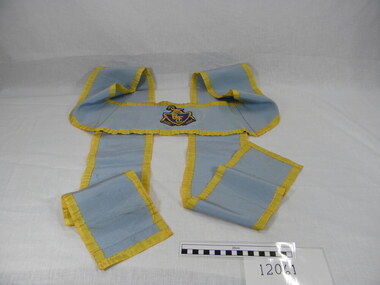
Ballarat Teachers' College Ceremonial Collar, Unknown
... School. Manual Art students continued till 1930 when, on grounds of economy, their training was concentrated at Melbourne Teachers’ College. During the four succeeding years, approximately 60...School. Manual Art students continued till 1930 when, on grounds of economy, their training was concentrated at Melbourne Teachers’ College. During the four succeeding years, approximately 60 ...Worn by the principal of Ballarat Teachers' College over black academic gown at formal assemblies. Ellwood was the Principal of the Ballarat Teachers' College. Ballarat Teachers’ College was opened on 04 May 1926, at S.S. 33 Dana Street, with an enrolment of 61 students. Its original staff consisted of the Principal, Mr W.H. Ellwood, M.A., M.Ed. (Chairman of the Teachers’ Tribunal from its inception in 1946 until 1954), Miss A. Bouchier, B.A., and Mr A.B. Jones, BA., (lecturers). In 1927 Miss P.A. Hamano joined the staff. In 1927 the college moved to the old Ballarat East Town Hall (remodelled for their use) in Barkly Street. During 1927 the numbers in the College were augmented by 26 Manual Arts students, who had formerly received their training at Ballarat High School. Manual Art students continued till 1930 when, on grounds of economy, their training was concentrated at Melbourne Teachers’ College. During the four succeeding years, approximately 60 students annually entered the primary course. Inclusive of Manual Arts students, and private fee-paying students, exactly 400 trainees passed through the College in its brief span of life (1926-1931). Five per cent of each year’s students were granted an extension of their studentship to enable them to proceed to Melbourne Teachers’ College, and to take the first year’s course for a University degree. With the advent of the economic depression of the ‘thirties, Ballarat Teachers' College closed its doors in December, 1931. Fourteen years were to pass before the College opened again on February 2nd, 1946. The college re-commenced at SS Dana Street, under the guidance of Mr W.F. Lord, M.C., M.M., B.A., Dip. Ed., (acting, later Principal 1946-1950) and a staff consisting of Miss E.B. Hughes, B.A., Dip. Ed., Mr C.B. Bryan, B.A., B. Com., Dip. Ed., Miss Monica H. Miller, L.Mus.A., and Miss G. Kentish, Dip. Phys. Ed. The opening ceremony was performed by the Minister of Education at that time, the Hon. F. Field, M.L.A., accompanied by the Hon. T.T. Hollway, M.L.A., and the then Director of Education, Mr J.A. Seitz. It was originally intended to cater for women students only but, at the last moment, men resident in Ballarat were also accepted. A co-educational college was thus set up instead, and it has continued as such. 1951 saw the introduction of the two-year course, successful students being presented with the Trained Primary Teacher’s Certificate at the final College Assembly each year. In December 1955, College held its first Graduation Ceremony, with its own Graduation Hymn, the words of which were written by Miss C.M. (Mavis) Canty of the staff. Lord remained as principal until 1951 when he transferred to establish a teachers' college at Toorak. Tom William Turner was Lord's successor. A highlight of his term was the construction of new college buildings at Gillies Street with the students commencing their lessons there in February 1958. Turner retired in 1970, having overseen a period of substantial growth in the institution. In that year alone more than one hundred and forty students completed their primary teaching qualification to meet a severe shortage of teachers. Doug Watson commenced as principal in 1971. In 1973 Ballarat Teachers' College became the State College of Victoria at Ballarat. Three years later Ballarat College of Advanced Education was formed and the teacher education students moved to the Mount Helen Campus. In 1990 Ballarat College of Advanced Education became Ballarat University College, an affiliated college with the University of Melbourne. The University of Ballarat was formed in January 1994.Light blue grosgrain sash, bound in yellow taffeta, sewn by machine. Two mitred seams, one at each shoulder, hand sewn and two seams machine stitched on straight part of sash. A BTC insignia is placed in the centre back. The insignia is stitched in yellow, royal blue and dark blue cotton. This sash is hand sewn at the end of one side length, in order to shorten it. Extra Muros (Beyond the Wall) on insignia BTC (Ballarat Teachers' college)education, teaching, assembly, btc, ballarat teachers college, university of ballarat, regalia, ceremony, graduation, stoll, balalrat teachers' college -
 Federation University Historical Collection
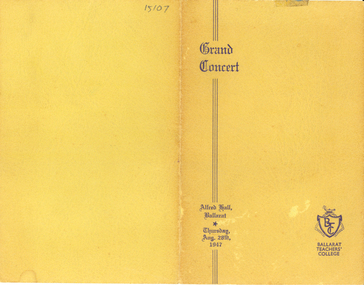
Programme, Ballarat Teachers' College, Ballarat Teachers' College Grand Concert, 1947, 1947
... School. Manual Art students continued till 1930 when, on grounds of economy, their training was concentrated at Melbourne Teachers’ College. During the four succeeding years, approximately 60...School. Manual Art students continued till 1930 when, on grounds of economy, their training was concentrated at Melbourne Teachers’ College. During the four succeeding years, approximately 60 ...Ellwood was the Principal of the Ballarat Teachers' College. Ballarat Teachers’ College was opened on 04 May 1926, at S.S. 33 Dana Street, with an enrolment of 61 students. Its original staff consisted of the Principal, Mr W.H. Ellwood, M.A., M.Ed. (Chairman of the Teachers’ Tribunal from its inception in 1946 until 1954), Miss A. Bouchier, B.A., and Mr A.B. Jones, BA., (lecturers). In 1927 Miss P.A. Hamano joined the staff. In 1927 the college moved to the old Ballarat East Town Hall (remodelled for their use) in Barkly Street. During 1927 the numbers in the College were augmented by 26 Manual Arts students, who had formerly received their training at Ballarat High School. Manual Art students continued till 1930 when, on grounds of economy, their training was concentrated at Melbourne Teachers’ College. During the four succeeding years, approximately 60 students annually entered the primary course. Inclusive of Manual Arts students, and private fee-paying students, exactly 400 trainees passed through the College in its brief span of life (1926-1931). Five per cent of each year’s students were granted an extension of their studentship to enable them to proceed to Melbourne Teachers’ College, and to take the first year’s course for a University degree. With the advent of the economic depression of the ‘thirties, Ballarat Teachers' College closed its doors in December, 1931. Fourteen years were to pass before the College opened again on February 2nd, 1946. The college re-commenced at SS Dana Street, under the guidance of Mr W.F. Lord, M.C., M.M., B.A., Dip. Ed., (acting, later Principal 1946-1950) and a staff consisting of Miss E.B. Hughes, B.A., Dip. Ed., Mr C.B. Bryan, B.A., B. Com., Dip. Ed., Miss Monica H. Miller, L.Mus.A., and Miss G. Kentish, Dip. Phys. Ed. The opening ceremony was performed by the Minister of Education at that time, the Hon. F. Field, M.L.A., accompanied by the Hon. T.T. Hollway, M.L.A., and the then Director of Education, Mr J.A. Seitz. It was originally intended to cater for women students only but, at the last moment, men resident in Ballarat were also accepted. A co-educational college was thus set up instead, and it has continued as such. 1951 saw the introduction of the two-year course, successful students being presented with the Trained Primary Teacher’s Certificate at the final College Assembly each year. In December 1955, College held its first Graduation Ceremony, with its own Graduation Hymn, the words of which were written by Miss C.M. (Mavis) Canty of the staff. Lord remained as principal until 1951 when he transferred to establish a teachers' college at Toorak. Tom William Turner was Lord's successor. A highlight of his term was the construction of new college buildings at Gillies Street with the students commencing their lessons there in February 1958. Turner retired in 1970, having overseen a period of substantial growth in the institution. In that year alone more than one hundred and forty students completed their primary teaching qualification to meet a severe shortage of teachers. Doug Watson commenced as principal in 1971. In 1973 Ballarat Teachers' College became the State College of Victoria at Ballarat. Three years later Ballarat College of Advanced Education was formed and the teacher education students moved to the Mount Helen Campus. In 1990 Ballarat College of Advanced Education became Ballarat University College, an affiliated college with the University of Melbourne. The University of Ballarat was formed in January 1994.Yellow folded card programme for the Ballarat Teachers' College Grand Concert held at Alfred Hall Ballarat on Thursday 28 August 1947. Student Teachers from the 1947 class performed, including Jessie Batson, Ruth Tozer, Joy Love, N. Kerr, Arthur Lelean, D. Cooper, John Collins, Ann McKinnnon, Peg Purdue, Lindsay Harley.ballarat teachers' college, education, alfred hall -
 Federation University Historical Collection
Programme, Ballarat Teachers' College Reunion Programme, 1934, 1934
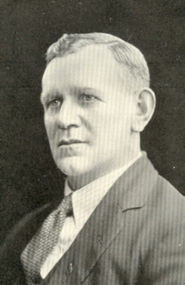
... School. Manual Art students continued till 1930 when, on grounds of economy, their training was concentrated at Melbourne Teachers’ College. During the four succeeding years, approximately 60...School. Manual Art students continued till 1930 when, on grounds of economy, their training was concentrated at Melbourne Teachers’ College. During the four succeeding years, approximately 60 ...Ellwood was the Principal of the Ballarat Teachers' College. Ballarat Teachers’ College was opened on 04 May 1926, at S.S. 33 Dana Street, with an enrolment of 61 students. Its original staff consisted of the Principal, Mr W.H. Ellwood, M.A., M.Ed. (Chairman of the Teachers’ Tribunal from its inception in 1946 until 1954), Miss A. Bouchier, B.A., and Mr A.B. Jones, BA., (lecturers). In 1927 Miss P.A. Hamano joined the staff. In 1927 the college moved to the old Ballarat East Town Hall (remodelled for their use) in Barkly Street. During 1927 the numbers in the College were augmented by 26 Manual Arts students, who had formerly received their training at Ballarat High School. Manual Art students continued till 1930 when, on grounds of economy, their training was concentrated at Melbourne Teachers’ College. During the four succeeding years, approximately 60 students annually entered the primary course. Inclusive of Manual Arts students, and private fee-paying students, exactly 400 trainees passed through the College in its brief span of life (1926-1931). Five per cent of each year’s students were granted an extension of their studentship to enable them to proceed to Melbourne Teachers’ College, and to take the first year’s course for a University degree. With the advent of the economic depression of the ‘thirties, Ballarat Teachers' College closed its doors in December, 1931. Fourteen years were to pass before the College opened again on February 2nd, 1946. The college re-commenced at SS Dana Street, under the guidance of Mr W.F. Lord, M.C., M.M., B.A., Dip. Ed., (acting, later Principal 1946-1950) and a staff consisting of Miss E.B. Hughes, B.A., Dip. Ed., Mr C.B. Bryan, B.A., B. Com., Dip. Ed., Miss Monica H. Miller, L.Mus.A., and Miss G. Kentish, Dip. Phys. Ed. The opening ceremony was performed by the Minister of Education at that time, the Hon. F. Field, M.L.A., accompanied by the Hon. T.T. Hollway, M.L.A., and the then Director of Education, Mr J.A. Seitz. It was originally intended to cater for women students only but, at the last moment, men resident in Ballarat were also accepted. A co-educational college was thus set up instead, and it has continued as such. 1951 saw the introduction of the two-year course, successful students being presented with the Trained Primary Teacher’s Certificate at the final College Assembly each year. In December 1955, College held its first Graduation Ceremony, with its own Graduation Hymn, the words of which were written by Miss C.M. (Mavis) Canty of the staff. Lord remained as principal until 1951 when he transferred to establish a teachers' college at Toorak. Tom William Turner was Lord's successor. A highlight of his term was the construction of new college buildings at Gillies Street with the students commencing their lessons there in February 1958. Turner retired in 1970, having overseen a period of substantial growth in the institution. In that year alone more than one hundred and forty students completed their primary teaching qualification to meet a severe shortage of teachers. Doug Watson commenced as principal in 1971. In 1973 Ballarat Teachers' College became the State College of Victoria at Ballarat. Three years later Ballarat College of Advanced Education was formed and the teacher education students moved to the Mount Helen Campus. In 1990 Ballarat College of Advanced Education became Ballarat University College, an affiliated college with the University of Melbourne. The University of Ballarat was formed in January 1994. Programme for the 1934 Ballarat Teachers' College Reunion run by the Ballarat teachers' College ex- Students Association. Inside the programme is an image of W.H. Ellwood and copy of his 14 points. ballarat teachers' college, ellwood, reunion, w.h. elwood, elwood's fourteen points -
 Federation University Historical Collection
Booklet, Collingwood Technical School Prospectus, 1914, 1914
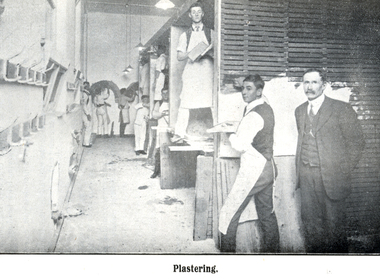
... 60 pages. Contents include: List of President, Council and staff, constitution, aim of the school, scholarships, evening classes, advice to parents, Railway fares, tram fares, free travel, general rules for students. syllabus of work, evening work. ...(http://victoriancollections.net.au/organisations/northern-melbourne-institute-of-tafe) collingwood technical school collingwood tafe nmit northern metropolitan institute of tafe carpentry bricklaying plastering turning and fitting Red soft covered book of 60 pages. ...In the early years of the 20th century adequate technical education was lacking and became a focus in the Victorian Parliament. After much debate and discussion among politicians and educationalists, the 1910 Education Act No 2301 was passed, making possible the establishment of new technical schools to address the dearth of skilled trades people. In July 1912 Collingwood Technical School opened in the modified bluestone buildings at 35 Johnston St, originally built in 1853 as the Collingwood Town Hall and Court House. Within three weeks, there were 57 boys enrolled - studying preliminary carpentry and pattern-making, plumbing, engineering, sheet iron work and bricklaying. They attended two hours a night on three evenings a week. In 1913, the school opened its doors to juniors and took residence in new permanent buildings erected on the site. It was classified as a trades school by the State Education Department. Two years later courses in electrical wiring and electrical and mechanical engineering were introduced. In 1988 Preston College of TAFE and Collingwood College of TAFE merged to become Northern Metropolitan Institute of TAFE (NMIT). (http://victoriancollections.net.au/organisations/northern-melbourne-institute-of-tafe)Red soft covered book of 60 pages. Contents include: List of President, Council and staff, constitution, aim of the school, scholarships, evening classes, advice to parents, Railway fares, tram fares, free travel, general rules for students. syllabus of work, evening work. Images include carpentry class, Bricklaying, plastering and Turning & Fitting classcollingwood technical school, collingwood, tafe, nmit, northern metropolitan institute of tafe, carpentry, bricklaying, plastering, turning and fitting -
 Federation University Historical Collection
Medal - Numismatics, 'Dead Man's Penny' for Edwin Joseph 'Ted' Cannon, c1919
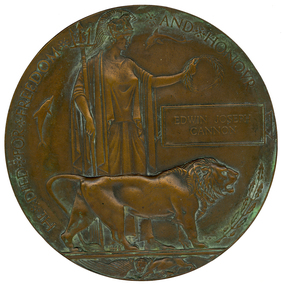
... School. During the Battle of Pozieres on the Western Front Ted Cannon worked with the Scout Platoon sketching the enemy's gun emplacements. Ted proved invaluable to the Brigade and brought he came under the attention of the Australian High Command. On 13 September 1916 Ted was given a special assignment for General C.B.B. White. Ted was sent out forward of the Old Mill at Verbrandenmolen (in the Ypres Salient) to draw a panorama of the German lines in the area from Hill 60...School. During the Battle of Pozieres on the Western Front Ted Cannon worked with the Scout Platoon sketching the enemy's gun emplacements. Ted proved invaluable to the Brigade and brought he came under the attention of the Australian High Command. On 13 September 1916 Ted was given a special assignment for General C.B.B. White. Ted was sent out forward of the Old Mill at Verbrandenmolen (in the Ypres Salient) to draw a panorama of the German lines in the area from Hill 60 ...The Dead Man’s Penny is a commemorative medallion which was presented to the next-of-kin of the men and women from England and the Empire who died during World War One. The Dead Man’s Penny was accompanied by a letter from King George V, stating ‘I join with my grateful people in sending you this memorial of a brave life given for others in the Great War’.[http://nma.gov.au/blogs/education/2010/11/14/dead-mans-penny/] Popularly known as the "Dead Man’s Penny", because of the similarity in appearance to the somewhat smaller penny coin. 1,355,000 plaques were issued, which used a total of 450 tonnes of bronze, and continued to be issued into the 1930s to commemorate people who died as a consequence of the war. [http://en.wikipedia.org/wiki/Memorial_Plaque_(medallion)] It was decided that the design of the plaque was to be picked from submissions made in a public competition. Over 800 designs were submitted and the competition was won by the sculptor and medallist Edward Carter Preston with his design called Pyramus, receiving a first place prize of £250.[http://en.wikipedia.org/wiki/Memorial_Plaque_(medallion)] They were initially made at the Memorial Plaque Factory, 54/56 Church Road, Acton, W3, London from 1919. Early plaques did not have a number stamped on them but later ones have a number stamped behind the lion's back leg. [http://en.wikipedia.org/wiki/Memorial_Plaque_(medallion)] Ted Cannon's plaquette does not have a stamped number. Ted Cannon was a gifted artist and cartoonist who studied at the Ballarat School of Mines Technical Art School. During the Battle of Pozieres on the Western Front Ted Cannon worked with the Scout Platoon sketching the enemy's gun emplacements. Ted proved invaluable to the Brigade and brought he came under the attention of the Australian High Command. On 13 September 1916 Ted was given a special assignment for General C.B.B. White. Ted was sent out forward of the Old Mill at Verbrandenmolen (in the Ypres Salient) to draw a panorama of the German lines in the area from Hill 60 to The Bluff. It was a hazardous task and Ted was warned to be careful. Tragically he was sniped by an enemy machine-gunner and sustained severe abdominal wounds. Stretcher-bearers rushed him to the 17th Casualty Clearing Station where he was operated on by the doctors at 8.30 that night. With little chance of success, but ever resilient, Ted remained conscious almost to the end. He died early in the morning of the 14 September 1916. His body was buried in the large Military Cemetery at Lijssenthoek. The effects of the late Ted Cannon were returned to his parents. These were an autograph book, three brushes, prayer book, housewife, whistle, book, hymn book, curios. Another listing gives his effects as "identity disc, letters, photos, wallet, 2 books, Mexican Dollar, 1 cent (Ceylon), 3 German Straps, Fountain Pen, Cigarette-holder, Franc Note, 50 centimes Note, devotional book, mirror, rosary, scapula, metal ring, two combs, book of views, nail clippers, badges, tie clip, Egyptian stamp.[http://recordsearch.naa.gov.au/scripts/Imagine.asp?B=3202589] Ted Cannon was an only child. It is not known how the 'Dead Man's Penny' came into the ownership of the donor, but it is thought that it may have been left in a house owned by the donor's mother. Further information on Ted Cannon can be found at http://bih.ballarat.edu.au/index.php/Edwin_J._Cannon and http://www.ballarat.edu.au/about-ub/history/art-and-historical-collection/ub-honour-roll/c/edwin-joseph-ted-cannon-1895-1916Large bronze medallion or plaquette featuring an image of Lady Britannia surrounded by two dolphins (representing Britain’s sea power) and a lion (representing Britain) standing over a defeated eagle (symbolising Germany). Around the outer edge of the medallion are the words ‘He died for freedom and honour’. Next to Lady Britannia is the deceased solider’s name, with no rank provided to show equality in their sacrifice. (http://nma.gov.au/blogs/education/2010/11/14/dead-mans-penny) The plaque was distributed throughout the British Empire, and the first plaques were distributed in Australia in 1922 "Returned home" by W. & O. Mayne, 2013. ted cannon, edwin joseph cannon, cannon, world war 1, world war -
 Federation University Historical Collection
Book, Records of Meterological Data for Ballarat 1892-1897, 1892 - 1897
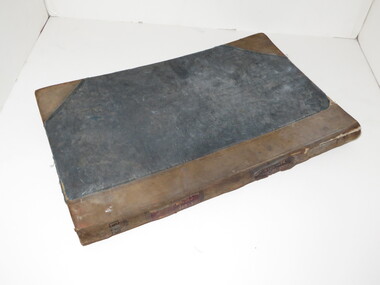
... School of Mines Ballarat" also in gold lettering. Written on inside front page: "Elevation of barometer 1420ft above Sea Level. To reduce barometric readings to Sea Level When Thermometer stands at 40 add 1.606 (to barometer) 45 " 1.590 50 " 1.574 55 " 1.559 60 " 1.543 65 " 1.528 70 " 1.528 80 " 1.499 85 " 1.471 90 " 1.457 95 " 1.444 100 " 1.431 Lightly hand written in pencil on the next page: "J. ...School of Mines Ballarat" also in gold lettering. Written on inside front page: "Elevation of barometer 1420ft above Sea Level. To reduce barometric readings to Sea Level When Thermometer stands at 40 add 1.606 (to barometer) 45 " 1.590 50 " 1.574 55 " 1.559 60 " 1.543 65 " 1.528 70 " 1.528 80 " 1.499 85 " 1.471 90 " 1.457 95 " 1.444 100 " 1.431 Lightly hand written in pencil on the next page: "J. ...A summary of meteorological data appears in the Ballarat School of Mines Annual Report for 1887 (P.35, 50). The last such summary appears in the Ballarat School of Mines Calendar 1901-2 (p58), which contains the data for the year 1900. No references have been found re names and job duties/positions of data collectors. The data was recorded by J. Matsen and A. Kiedahl.A charcoal grey hard covered, 120 page ledger, with brown leather spine and corners. The ledger has 31 special column heading, with the observed data added by hand. The column headings are: (AM) Date, Barometer, Ther. of Bar., Wet Bulb., Dry Bulb, Maxim., Minim, Rainfall, Wind, Remarks and State of Weather (PM) Date, Barometer, Ther. of Bar., Wet Bulb., Dry Bulb, Maxim., Minim, Rainfall, Wind, Remarks and State of Weather.Gold lettering on spine "Meteorological Observations: and on a glued on leather patch "School of Mines Ballarat" also in gold lettering. Written on inside front page: "Elevation of barometer 1420ft above Sea Level. To reduce barometric readings to Sea Level When Thermometer stands at 40 add 1.606 (to barometer) 45 " 1.590 50 " 1.574 55 " 1.559 60 " 1.543 65 " 1.528 70 " 1.528 80 " 1.499 85 " 1.471 90 " 1.457 95 " 1.444 100 " 1.431 Lightly hand written in pencil on the next page: "J. Matsen Feb 1891 to Feb 1894 - 3 years A. Kildahl Feb 1894 - " A circle has been place around the hottest temperature for the month. ballarat school of mines, smb, meteorology, j. matsen, a. kiedahl, kiedahl, matsen, rain, weather, meteorological data -
 Federation University Historical Collection
Book, Cassell and Company, Ltd, Australian War Photographs, 1917
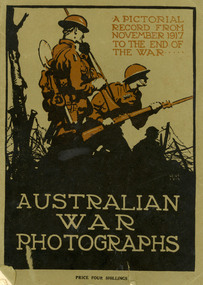
... School of Mines. (See http://guerin.ballarat.edu.au/aasp/is/library/collections/art_history/honour-roll/honourroll_cannon.shtml) chatham family collection chatham world war one world war 1 world war i france trenches front line birdwood mark ridgeay harold williamson flanders poziers somme becourt mouquet farm rupert whiteley ypres montauban field cooker gueudecourt band bapaume bullecourt h. murray hindernburg wire messines howitzer w. holmes. canon ted canon hill 60 gas masks siege battery menin road ambulance dressing station glencorse wood prisoners pigeons australian commonwealth military forces sgs Chatham - Holmes Family Archive Photographic history of Australians during World War One 129 page book with soft beige, brown and black cover depicting three soldiers at the front during World War One. ...Photographic history of Australians during World War One129 page book with soft beige, brown and black cover depicting three soldiers at the front during World War One. The book includes many photographs and artwork of Australians at the French front from November 1917 until the end of the war. Photographers include Frank Hurley, E. Brooks, H.F. Baldwin and G.H. Wilkins. Artists include Crozier, W.L. King, Alan Lewis, Lothian, John Davis, S. Perks, I. Picking, Daryl Lindsay, Alf Saville, L.H. Howie, Stuart Shaw, P. Huthnance, Stiggo, S. Perks, C.H. Gould, Ted Canon, Bernie Bragg, S. Shaw, Will Dyson, An introduction is written by W. Birdwood, France, 28 September 1917. A number of pages have written notes on them by someone who had obviously been on the French Front. (These pages have been scanned and uploaded onto Victorian Collections. non-fictionPhotographic history of Australians during World War Onechatham family collection, chatham, world war one, world war 1, world war i, france, trenches, front line, birdwood, mark ridgeay, harold williamson, flanders, poziers, somme, becourt, mouquet farm, rupert whiteley, ypres, montauban, field cooker, gueudecourt, band, bapaume, bullecourt, h. murray, hindernburg wire, messines, howitzer, w. holmes. canon, ted canon, hill 60, gas masks, siege battery, menin road, ambulance, dressing station, glencorse wood, prisoners, pigeons, australian commonwealth military forces, sgs, chatham - holmes family archive -
 The Beechworth Burke Museum
Audio - Oral History, Jennifer Williams, Miss Elaine Howell, 11th May 2000
... schools to further her education and learnt how to shorthand type. This skill provided her with a job at shire as clerk to the shire secretary. This is the only job she ever had. Her story also offer significant insight into Beechworth life and the dances and job prospects at the time (which was not a lot in the 60's). ...Miss Elaine Howell was born in Beechworth. Her mother was born in Stanley and her father in Myrtleford. Her mother's father was born in England and her other grandparents in Australia. She is one of four daughters. Miss Howell completed school and went on to the Convent to do her leaving. She then learnt shorthand typing and got a job at the shire where she was the clerk to the Shire Secretary. This oral history recording was part of a project conducted by Jennifer Williams in the year 2000 to capture the everyday life and struggles in Beechworth during the twentieth century. This project involved recording seventy oral histories on cassette tapes of local Beechworth residents which were then published in a book titled: Listen to what they say: voices of twentieth century Beechworth. These cassette tapes were digitised in July 2021 with funds made available by the Friends of the Burke.Miss Elaine Howell provides an insight into a life of an educated Beechworth woman in around the 1950's she also provides a perspective from the town shire (the complaints and plans that occurred throughout the year). She went to two schools to further her education and learnt how to shorthand type. This skill provided her with a job at shire as clerk to the shire secretary. This is the only job she ever had. Her story also offer significant insight into Beechworth life and the dances and job prospects at the time (which was not a lot in the 60's). This oral history account is socially and historically significant as it is a part of a broader collection of interviews conducted by Jennifer Williams which were published in the book 'Listen to what they say: voices of twentieth-century Beechworth.' While the township of Beechworth is known for its history as a gold rush town, these accounts provide a unique insight into the day-to-day life of the town's residents during the 20th century, many of which will have now been lost if they had not been preserved.This is a digital copy of a recording that was originally captured on a cassette tape. The cassette tape is black with a horizontal white strip and is currently stored in a clear flat plastic rectangular container. It holds up 40 minutes of recordings on each side.Miss Elaine Howell /listen to what they say, beechworth, oral history, burke museum, elaine howell, howell, stanley, myrtleford, school, convent, leaving, shorthand, typing, shire, clerk, shire secretary -
 Federation University Historical Collection
Book - Scrap Book, Ballarat School of Mines Scrap Book, 1924 - 1929, c1931
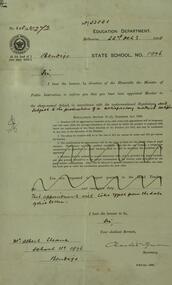
... Galloway - An Australian Abroad - Tragic end. 1929 - Technical Education 17 October 1929 - Agricultural Engineering 15 February 1930 - Ballarat School of Mines Student Association 20 February 1930 - 61s Annual Meeting of the Ballarat School of Mines 02 June 1930 - R. Young in Belgium and visits battlefields including Hill 60. 19 February 1931 - School Hostel Suggested 14 April 1931 - Frank Pinkerton Obituary 15 October 1921 - Life at Mt Isa (E. ...Galloway - An Australian Abroad - Tragic end. 1929 - Technical Education 17 October 1929 - Agricultural Engineering 15 February 1930 - Ballarat School of Mines Student Association 20 February 1930 - 61s Annual Meeting of the Ballarat School of Mines 02 June 1930 - R. Young in Belgium and visits battlefields including Hill 60. 19 February 1931 - School Hostel Suggested 14 April 1931 - Frank Pinkerton Obituary 15 October 1921 - Life at Mt Isa (E. ...The Ballarat School of Mines was a predecessor institution of Federatin University Australia. The scrap books were kept by the librarians and related to topics of interest to the Ballarat School of Mines, its students and its staff. 17 December 1954 - Ballarat Junior Technical School Headmaster's Report 05 February 1925 - Ballarat School of Mines Museum closure 25 February 1925 - War Trophies Museum 06 May 1925 - Ballarat's Museum. Where is it? Some Interesting Facts 14 May 1925 - White Flat Reserve 21 June 1928 - Ballarat School of Mines Procession 14 March 1929 - Mr A.D.R. Galloway - An Australian Abroad - Tragic end. 1929 - Technical Education 17 October 1929 - Agricultural Engineering 15 February 1930 - Ballarat School of Mines Student Association 20 February 1930 - 61s Annual Meeting of the Ballarat School of Mines 02 June 1930 - R. Young in Belgium and visits battlefields including Hill 60. 19 February 1931 - School Hostel Suggested 14 April 1931 - Frank Pinkerton Obituary 15 October 1921 - Life at Mt Isa (E. Loveland) 18 February 1932 - Discussion on Teachers College (Ballarat Teachers' College) 11 July 1931 - Phoenix Model Locomotive donation to the Ballarat School of Mines 06 May 1932 - The Mt Isa Country 11 Oct 1932 - Death of F.W. Alsopp (former SMB student) 21 January 1933 - Education In Victoria: Will a New Era Open 28 September 1933 - New Teaching System Explained by the Minister 17 February 1934 - Trip to New Guinea (A.F. Heseltine) 19 April 1934 - Early Ballarat - Address by Nathan Spielvogel 30 August 1934 - Ballarat Junior Technical School Tennis Court 23 August 1934 - Welding plant and Battery 17 June 1935 - Men about Town - A.F. Heseltine 21 June 1935 - Vocational Guidance 16 July 1935 - Ballarat School of Mines (history) 03 August 1935 - Men About Town - William H. Middleton 10 August 1935 - A.E.C. Kerrballarat school of mines, martha pinkerton, scrap book, a.w. nicholson, john lynch (junior), mount lyell, leslie evans, leslie blake evans, herald shield for athletics, ballarat school of mines museum, motor mechanics' classes for ladies, farm engineering, villers bretonneux carvings, trengrove, museum, port pirrie, j.i. simpson, reuben s. russelll, ballarat technical art school, charles harvey, elliott gower, la gerche, c. curnow, applied art, macroberston scholarship, ballarat school of mines procession, rag, vale park tree planting, smb ball, pottery classes, delineascope, mica smith scholarship, james peart, burma mnies, smb excursion to western australia, kalgoorlie, elsie mckissock, war trophies, warwick smith, spencer street bridge, war museum, richard j. young, alfred mica smith obituary, reginald callister, john rowell, sewerage installation, h.h. smith, w.h. middleton, olive scott, dolly whitehead, vale park, ballarat war museum opening, repatriation classes, sewerage at the ballarat school of mines, australian coals, j.p. ellsworth, yallourn, w.g. walker, reunion, norfolk island pine, mica smith memorial, jessice smith, harry fern, t. henderson, bhp, john adam, ols students' association, l.b. curnow, laura crouch, signwriting, excursion, port pirrie excursion, albert potter, pearl fricke, technica school sports, percy trompf, ballarat school of mines battery, albert mclean, a.d.r. galloway, alan douglas richard galloway, r.j. young, alan ludbrook, r. timpe, ballarat ironworkers and polytechnic association, h. jolly, carpentry, harold jolly, millinery classes, phoenix model locomotive, s.j. morgan, r.d. bannister, juvenile industrial exhibition, w.h. shaw, j.c. winds, f.h. davis, h.r. worland, w.t. magee, l. george, l. balhausen, white flat oval, resue from yarrowee creek, e. berriman, ballarat teachers' college, reg mcconnell, mount lyell co, munro reaper, munro reaper model, weaving classes, mervyn trimmings, briquette dust, edna findlay, jean rogers, n. mccallum, jessie glass, classroom ventilation, art metal, charles fenner, levi molyneux, olice scott, poster competition, kerr grant, w.h. steane, h. caddy, colvin smith, claude creelman, robert colins, stan hillman, n.c. heathcote, egg collection, john alexander, nornie gude, charles deane, graham hopwood, roswald john dart, max wilson, new battery, jess hopwood, william middleton, a.e.c. kerr, hand weaving classes, m. martin, a.h. leeson, mona rogerson, lorna bailey, prospectors classes, edwin robinson, kalgoorlie vist, railway locomotive -
Federation University Historical Collection
Document - Document - Design, E J Barker: University of Melbourne: Bachelor of Mechanical Engineering; Civil Engineering 1 and 1A; Design of Welded Plate Girder, 1946
... school of mines ballarat...smb...diploma in education...vice principal...principal...foundation director...ballarat college of advanced education...bcae...bachelor of mechanical engineering...library...mount helen campus...engineering drawing...design...specifications...manufacture...civil engineering...welded plate girder...60...60 feet centre to centre. It needs to carry its own weight plus specified loads. This was part of Civil Engineering 1A . Jack chose to do Engineering while still at Footscray Technical School as it gave access to Diploma Courses and tertiary studies. ...60 feet centre to centre. It needs to carry its own weight plus specified loads. This was part of Civil Engineering 1A . Jack chose to do Engineering while still at Footscray Technical School as it gave access to Diploma Courses and tertiary studies. ...Assessment No 2 Project was to design a welded plate girder required in a building to span between two steel columns which have to be spaced 60 feet centre to centre. It needs to carry its own weight plus specified loads. This was part of Civil Engineering 1A . Jack chose to do Engineering while still at Footscray Technical School as it gave access to Diploma Courses and tertiary studies. This enabled him to enter the University of Melbourne and do a Bachelor in Mechanical Engineering - 1945, 1946, and 1947. In 1948 he did a Diploma in Education at Melbourne University. From this path he was able to follow a career in teaching and his first appointment was at the School of Mines in Ballarat, (SMB) 1949. He became the first Vice Principal of SMB in 1960 and then Principal in 1964 to 1976. From 1976 to his retirement in 1987, he was the Foundation Director of Ballarat College of Advanced Education (BCAE). The Library building at Mount Helen Campus is named after him.Manila folder with design assessment. Written descriptions and detailed drawings.e j barker, jack barker, melbourne university, engineering, diploma of mechanical engineering, diploma of electrical engineering, school of mines ballarat, smb, diploma in education, vice principal, principal, foundation director, ballarat college of advanced education, bcae, bachelor of mechanical engineering, library, mount helen campus, engineering drawing, design, specifications, manufacture, civil engineering, welded plate girder, 60 feet, steel columns
